Christianity and Islam are leading competitors for spiritual influence in Africa, and the US and China are leading competitors for diplomatic influence. The US’s President’s Emergency Plan for AIDS Relief (PEPFAR) program has been a humanitarian success in Africa, saving many lives, but it has also won friends for America. China is going about a different way of influencing people: surging ahead in the market for electric three-wheel vehicles. Here’s a report from Nyamapanda, Zimbabwe.
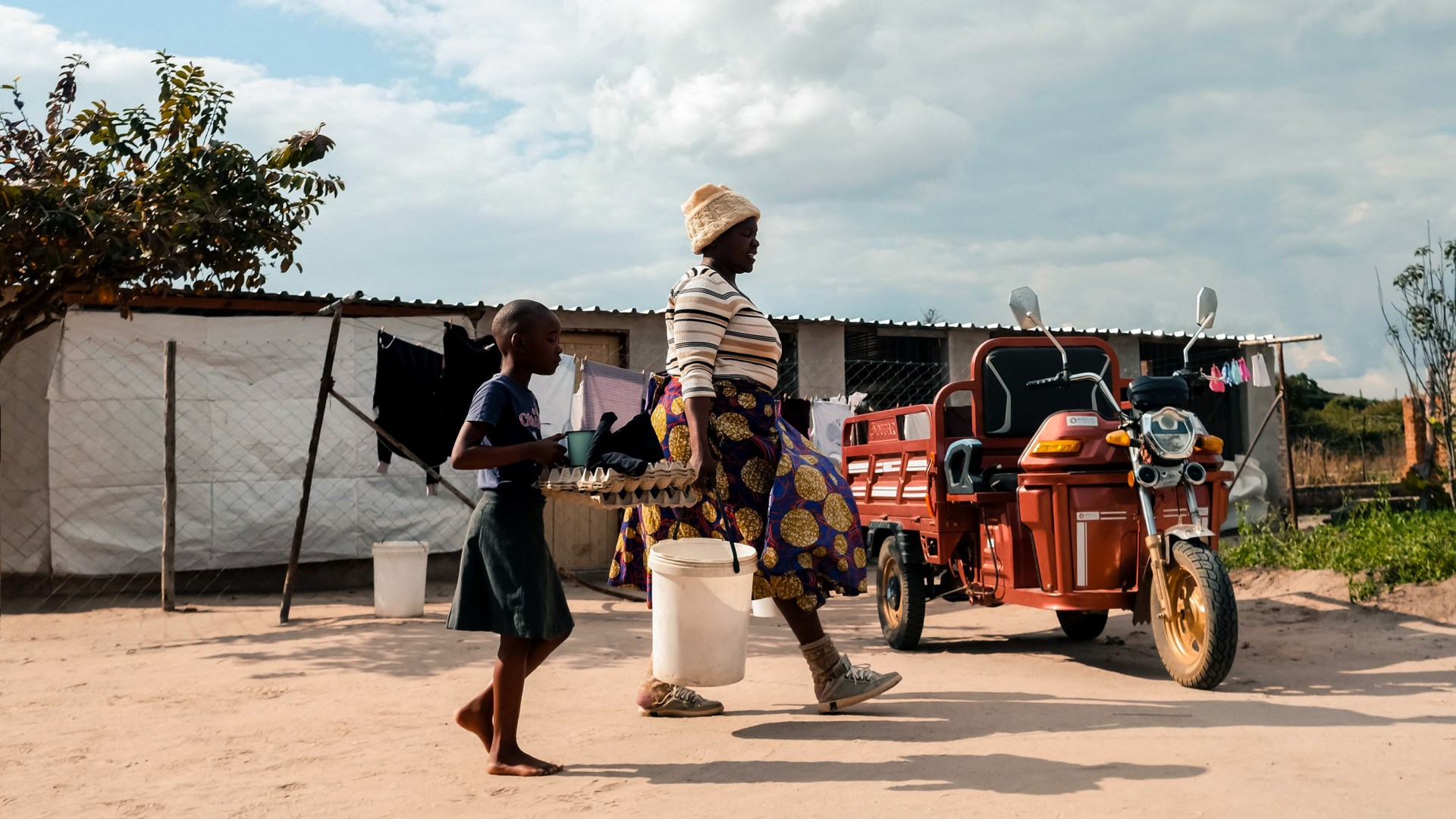
Marcy Gede sprints around in a cheap, Chinese-made, electric three-wheeler, providing rides to passengers or delivering everything from bottled gas to baby food. A dozen times each day, she loads passengers or goods into the tiny trailer hitched on the back, then cranks up the wheeler’s battery-powered engine. Gede’s trailer can carry one passenger at a time, bags included. Plumes of dust swirl behind her vehicle as she starts down the stony roads of Nyamapanda in rural northeast Zimbabwe. Like scores of other women in the region, this 44-year-old mother is shifting the makeup of Zimbabwe’s rural rideshare and delivery market.
“We are the female Ubers of rural Zimbabwe in a country without Uber,” she told Christianity Today with a laugh.
Chinese electric vehicles (EVs) have enabled a growing network of female riders in Zimbabwe to care for their families. They’ve also reached consumers long neglected by Western and Japanese used-car sellers. By popularizing these small, affordable EVs, Chinese traders have not only benefitted their own businesses and nation but also allowed more gig workers to stake a claim in Africa’s chaotic but growing ride-hail economy.
In 2023, around 803 million Africans lived in rural areas, representing about 55 percent of Africa’s population at the time. Car companies selling traditional gasoline-powered vehicles have long overlooked the needs of rural Africans due to their low purchasing power and dilapidated or nonexistent infrastructure.
While the relationship between Africans and Chinese residents has been complicated, Gede said, “They are our saviors.”
Chinese dealerships set low prices, making profits by selling large quantities of low-end electric three-wheelers. By doing so, they have gotten ahead of Western and Japanese companies that have “hardly thought of EV wheelers,” according to Carter Mavhiza, a leading auctioneer in Harare, Zimbabwe’s capital.
“Rural women are saying, ‘Look; our communities can’t afford cars, EVs or gasoline ones. Cheap Chinese EV wheelers are our first breakthrough,’” he said.
The Chinese have seen a “massive opening across Africa,” Mavhiza added. He cites the 7.6 million motorcycle exports the US Department of Commerce says China shipped to Africa, Latin America, and Asia in 2022. China surpassed Japan as the world’s largest auto exporter in 2023.
Although few Africans value EVs for their green energy, environment expert Shamiso Mupara said, rural Africans will buy EVs if they provide reliable and affordable transportation.
Mahiza said the cheapest used American or Japanese car would cost around $4,000, and motorcycles $1,400. Chinese traders have priced their EV motorcycles and three-wheelers in the $500–$700 range. They also extend informal credit and offer peer-to-peer lending models, such as loan clubs for rural riders.
Unlike traditional car dealers in urban areas, Chinese dealers don’t demand paystubs, proof of employment, or car insurance from buyers. Instead, they ask rural African women to pool their finances and purchase three-wheeler EVs for each member of the pool, one or two members at a time, Gede explained.
“They can even take small grams [of] gold ore as payment,” she said.
The thousands of Chinese traders living among rural populations in Zimbabwe and Mozambique can see the roads filled with potholes and gullies—conditions that prevent conventional cars and buses from using rural highways. Chinese three-wheelers fill an acute need for transportation to the big cities, where most of the functional hospitals, banks, universities, and food and gas markets are located.
“The Chinese know that their EV wheelers don’t need gasoline to drive and can pass the most rotten roads even in flood times,” Mavhiza said.
The quality of the vehicles might be questionable, but for now, Gede said she is happy that “the money from EV wheelers is keeping my kids in school.”