In this series


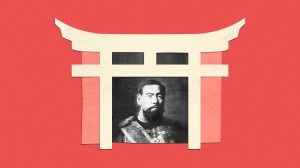


Christianity Today speaks with Yoichi Yamaguchi, director of the International Mission Center at Tokyo Christian University, on how Shinto poses a barrier to the Christian faith and what believers can do to evangelize more effectively in Japan.
Christians make up less than 1 percent of the Japanese population despite missions to the country since 1549. Do you think the presence of Shinto is one reason Christianity has struggled to spread in Japan?
Yes, Shinto contributes significantly to that difficulty. Shinto lacks dogma or a prescriptive moral code. If something feels right to a person’s heart, it is accepted as good.
This intuitive approach to religion permeates Japanese cultural consciousness. Japanese people are not naturally inclined to think about religion in doctrinal terms. The idea of consciously worshiping God, hearing God’s Word, and entering into a covenantal relationship with God is foreign to many.
There are also emotional and communal attachments that people may find hard to eradicate. In Japan, family members are expected to participate in Shinto rituals like funeral rites, visits to shrines, and care for their ancestors’ graves in Shinto graveyards. If people are asked to convert to Christianity, they might say, “I can’t cut off my connection to my ancestors” or “I can’t leave my family grave unattended.”
Ultimately, the largest obstacle to evangelism in Japan may be a deeply internalized identity of “Japaneseness,” which is inevitably entangled with a Shinto worldview. To become Christian would be to step outside of that cultural and familial framework. Becoming a Christian in Japan involves a level of personal commitment. It means going against familial and local expectations, as well as tradition. It is never a casual decision.
How should evangelicals approach people with a Shinto worldview when doing missions or evangelism in Japan?
Missionaries have tried to implement models of Christian discipleship from places like South Korea, but they often fail to gain traction in Japan. That’s not to say such models are wrong, but Japan is a culture where religion functions primarily as a matter of conscience. Nothing takes root unless it resonates deeply with an individual’s inner “heart.”
Of course, conscience can become distorted and is not sufficient on its own. But without it, I believe one cannot encounter God, pray, worship, or form a true relationship with the divine. Authentic conscience is not autonomy—it is conscience under God’s grace.
Because Japanese people consider religion in terms of the heart and not in terms of doctrine, a theological reflection on conscience may provide a bridge between the heart and the mind. This would be helpful for evangelism and discipleship.
What assumptions or misunderstandings about Shinto should evangelicals in Japan and abroad be more aware of?
Some devout evangelicals in Japan fear that simply passing through a torii gate, situated at the entrance to a shrine, is spiritually defiling. At the other extreme are those who become emotionally drawn to Shinto aesthetics.
In my Reading Japanese Christianity article series, I observed that a believer’s shift toward Shinto syncretism often begins with affective experiences. For instance, a person may look up at the morning sun and be moved to tears, and from that moment on, that person may turn toward a Shinto worldview, which equates nature with the gods, rather than seeing nature as God’s creation.
The traditional Japanese emotion aroused in such an encounter is called mono no aware, a bittersweet awareness of the impermanence of life—and not a reverence for the creator God.
The key is balance. We must avoid both excessive fear and uncritical sentimentalism of Shinto. It’s vital to understand what historical functions Shinto shrines have served in Japan.
Personally, I enjoy visiting shrines. I ask, “What are the people who come here seeking?” When I see someone praying earnestly at a shrine, I wonder, “What prevents them from coming to church and praying there?” This kind of inquiry is important. Christians should regard Shinto with respect and caution.
Read about how Christianity and Shinto interacted in Japan, what historical and contemporary influences Shinto had on Japanese society, and what Shinto’s key teachings are.