The people walking in darkness have seen a great light.” Those prophetic words of Isaiah 9:2 continue to have a powerful resonance for us today. They came true supremely, for the whole world, at Christmas when Christ the Light of the World was born for us in a stable. But they also come true for us time and again in our individual lives when, at times seemingly against all odds, the light of Christ shines anew for us.
I am someone who occasionally experiences the real darkness of depression. Often there seems to be no outward reason for it. It is as though the light in my world suddenly dims or goes out altogether, and I feel that I am stumbling in the dark—or worse, not even stumbling; I can hardly get out of bed or even breathe. But I hold on. I “keep on keeping on,” as Bob Dylan says, and I pray through clenched teeth.
I wrote about that experience once in an Advent poem about Isaiah’s promises that Christ would be given “the key to the house of David” (22:22) and set the prisoners free (61:1):
Even in the darkness where I sit
And huddle in the midst of misery
I can remember freedom, but forget
That every lock must answer to a key.
I go on to confess in that poem:
I cry out for the key I threw away
That turned and over turned with certain touch
And with the lovely lifting of a latch
Opened my darkness to the light of day.
And he does come. After I wrote that poem, the darkness began to lift a little. By way of recovery, I went and stayed a few days on the little sailboat I kept on the River Orwell, on the east coast of England. After a night on the boat, I got up very early in the morning and stood on the foredeck to watch the sun rise over the river. I recited the ancient Advent Antiphon prayer “O Oriens” (O Dayspring), which goes like this:
O Dayspring, splendor of light eternal and sun of Righteousness:
Come and enlighten those who dwell in darkness and the shadow of death.
As the sun rose and I watched the path of its light on the river, my prayer was answered and my inner darkness lifted completely. I celebrated that in another sonnet:
First light and then first lines along the east
To touch and brush a sheen of light on water,
As though behind the sky itself they traced
The shift and shimmer of another river …
So every trace of light begins a grace
In me, a beckoning. The smallest gleam
Is somehow a beginning and a calling;
“Sleeper awake, the darkness was a dream
For you will see the Dayspring at your waking,
Beyond your long last line the dawn is breaking.”
(Poems from Sounding the Seasons, Canterbury Press, 2012, pp. 10–11)
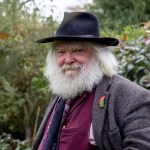
Malcolm Guite is a poet-priest who lectures widely in England and North America on theology and literature and has published various books on poetry, theology, and literary criticism.
Related