

Ideas

Redlining, Monasteries, and Refugees

Staff Editor

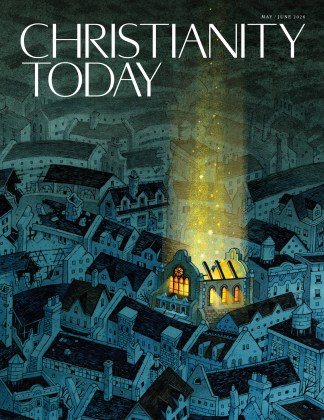
A note from CT’s editorial director in our November/December issue.


A man fully embraced by nature, houses, and churches.

While many of us like to think of ourselves as self-made individuals, we are not so neatly defined or isolated. Our DNA bears genetic material from generations past. We pass along family stories at the dinner table. From food preferences to sports rivalries, we take on the stories, songs, and palates of our people.

Places shape our affections too—from homes, neighborhoods, and nations to flora, fauna, and topography. While we may recall how our childhood homes influenced us (Did you slide down the banister on Christmas morning?), often what we no longer notice exerts defining power over what we consider “normal.” 

The import of place can easily go unnoticed. Some of a place’s constraints are given by governments or institutions—consider how sidewalks, zoning laws, and church buildings shape our daily and weekly rhythms—while other constraints offer us more creativity and agency, such as starting a garden plot, picking a paint color, or hosting a holiday party. (Don’t miss  hospitality recommendations on page 26.) 

What might a place, with its particular quirks, teach us?

In this issue, you’ll read about a monastery on the island of Patmos  from architect Kyle Dugdale. He explains how quiet, thick places are primed for revelation (p. 44). Andrew Faulk’s photo essay on an Ethiopian pilgrimage site will open your eyes to the sacredness of place (p. 52). Three book reviews also consider how very different places—Ukraine, Colorado Springs, and urban inner cities—shape our learning and ministries (p. 64). 

But places aren’t always invitations. Ann Voskamp chronicles displacement in the faces of refugees while noting that God’s will is the surest place in which to find ourselves (p. 58). You’ll read about redlining from city planner Mark Bjelland (p. 71) and, from Deborah Haarsma, how the immensity of outer space challenges any simplistic understanding of who God is (p. 34).

Finally, read Andy Olsen’s excellent reporting in his sweeping story “An American Deportation” (p. 74). You’ve likely noticed an uptick in CT’s coverage of immigration and deportation since earlier this year. This reported feature is a multigenerational saga of one immigrant family, the Gonzalezes. 

And CT is uniquely poised to tell it. Although “An American Deportation” dovetails with much mainstream coverage on immigration issues, it digs into more complexities than are often told. It traces the cracks in the system and in each human heart and reminds us that policies always have a human face. 

It is also a redemption tale—of personal salvation and of a church who rallied, prayed, and supported a family in need. It reminds us that, no matter where we call home, no matter if we are literally or figuratively out of place, we have a place to belong with Christ and his people. 

As you gather around a table this holiday season, pay attention to the people around your table—but also pay attention to what sort of place you’re a part of. Who isn’t at your table? Who could be? What sort of story does your place tell? We hope the words you read here are a call to a generous posture of hospitality and welcome, wherever you find yourself.

Ashley Hales is editorial director, features at Christianity Today.

Also in this issue

As we enter the holiday season, we consider how the places to which we belong shape us—and how we can be the face of welcome in a broken world. In this issue, you’ll read about how a monastery on Patmos offers quiet in a world of noise and, from Ann Voskamp, how God’s will is a place to find home. Read about modern missions terminology in our roundtable feature and about an astrophysicist’s thoughts on the Incarnation. Be sure to linger over Andy Olsen’s reported feature “An American Deportation” as we consider Christian responses to immigration policies. May we practice hospitality wherever we find ourselves.

They Led at Saddleback Church. ICE Said They Were Safe.

Are ‘Unreached People Groups’ Still a Thing?

A Place for the Placeless

The Incarnation Sheds Light on Astrophysics

Deborah Haarsma

Recalibrating What ‘People’ and ‘Place’ Mean

Chris Howles

God Is Your Father, Not Your Dad

The ‘Unreached’ Aren’t Over There

Samuel Law

The Architecture of Revelation

Kyle Dugdale

Review

Picking Up Snakes and Putting Down Roots

Geography Matters More Than You Think

Matthew Hirt

News

Immigrants Welcome in Thomas Kinkade Paintings

People Always Ruin Christmas

Clare Coffey

The Anteroom of Christmas

Lanier Ivester

Review

The Rise and Fall of the ‘Evangelical Vatican’

John G. Turner

Review

A Ukrainian Seminary’s Resilience

Rick Ostrander

Review

The Urban Church’s Junior Partners

Brian Key

The Will of God Is a Place

Text by Ann Voskamp and Photos by Esther Havens

All I Want for Christmas Is a Time Machine

Testimony

Journalism Was My Religion. Then I Encountered Jesus Christ.

Charity Begins with Zoning Reforms

Mark D. Bjelland

Qualms & Proverbs

How Can I Find a Nondenominational Ministry Job?

Karen Swallow Prior, Kevin Antlitz, and Kiara John-Charles

‘Can We Just Ignore It? Nope.’

Kate Lucky

Carving Out Faith

Photo essay by Andrew Faulk

View issue

Our Latest

Artemis II Showed Us What Integrity Looks Like

Four astronauts remind us that our humanity is both a gift from God and a joy.

The Bulletin

Hungary’s Hopeful Election, Congressional Resignations, and Trump’s AI Blasphemy

Clarissa Moll, Russell Moore

Magyar gathers coalition to defeat Orban, Reps. Swalwell and Gonzales resign for sexual assault allegations, and the Trump Jesus AI meme.

News

An Unsung Iran Peace Initiative Grapples with Failure

For 20 years, Mennonites fostered dialogue between North America and the Islamic republic. Their conversations couldn’t stop the bombs.

Review

A Map Through Natural Theology

Three theology books on natural theology, the transfiguration of Christ, and a classic must-read.

Black Immigrants Are Diversifying the American Church

Jessica Janvier

African Americans have long ministered to Black people abroad. Those communities are now increasingly migrating to the US.

Church-Crisis Content Didn’t Help Me

It offered the certitude of a pat narrative when what I needed was music and literature to interrogate myself.

News

Strait of Hormuz Closure Is Hurting Global Aid

Christian aviation and relief groups say increased fuel costs and shipping disruptions make it difficult for them to help the world’s most vulnerable.

What Is Godly Resistance?

Exodus’s midwives can teach us a lot about how to fear God more than the king.

addApple PodcastsDown ArrowDown ArrowDown Arrowarrow_left_altLeft ArrowLeft ArrowRight ArrowRight ArrowRight Arrowarrow_up_altUp ArrowUp ArrowAvailable at Amazoncaret-downCloseCloseellipseEmailEmailExpandExpandExternalExternalFacebookfacebook-squarefolderGiftGiftGooglegoogleGoogle KeephamburgerInstagraminstagram-squareLinkLinklinkedin-squareListenListenListenChristianity TodayCT Creative Studio Logologo_orgMegaphoneMenuMenupausePinterestPlayPlayPocketPodcastprintremoveRSSRSSSaveSavesaveSearchSearchsearchSpotifyStitcherTelegramTable of ContentsTable of Contentstwitter-squareWhatsAppXYouTubeYouTube