Last year, Nahla Ishak drove about three hours from Damascus, Syria, to attend a fundraising conference in Amman, Jordan. As the founder of Generations Over Crisis, a nonprofit supporting Syrian families affected by trauma, Ishak relies on these trainings to sustain her organization’s work.
In the early hours of December 8, 2024, she received news that a coalition of Islamist rebel forces from Idlib in northern Syria had entered Damascus and toppled the 24-year rule of President Bashar Assad. Ishak felt a cocktail of emotions: shock, worry, anxiety, and fear.
Family and friends from her Baptist church in Damascus cautioned her not to return right away. But two days later, with the Syria-Jordan border closed, Ishak flew to Beirut and drove across the Lebanese border to get home.
“Logic tells you that the ship’s captain is in the ship during a storm,” she said.
The Damascus Ishak returned to was not the one she’d left. Vehicles broadcasting Islamic messages by loudspeaker roamed the capital’s streets. Syrians were defacing and tearing down once-ubiquitous posters of Assad and his father, Hafez Assad, formerly an illegal action.
Today, on the one-year anniversary of the Assad government’s collapse, the storm has passed, but the wreckage left behind after Syria’s nearly 14-year civil war is immense. An estimated 90 percent of Syrians are living in poverty, with one in four unemployed and one in three residential buildings severely damaged or destroyed, according to the United Nations Development Programme.
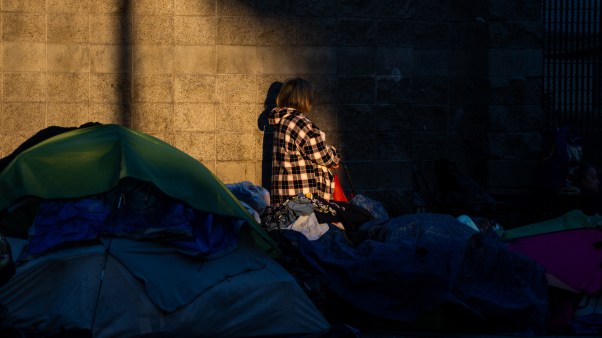
Poverty is pushing young men toward radicalism and theft and forcing young women to sell their bodies so they can feed their families, Ishak said. Destitute civilians beg in the streets of Damascus, some maimed by wartime injuries. Economic pressures, combined with the trauma of war, split families through divorce and immigration.
As they did throughout the civil war, many Syrian evangelicals are serving their neighbors of all backgrounds. Though uncertain about the future under the new Islamist-led government, Christians like Ishak believe the church must be outward focused, bringing light to the darkness.
“Our work has doubled,” Ishak said. “It’s not enough for us to tell people, ‘Come to church.’ We have to go out.”
Syria’s civil war began in early 2011, when Assad’s security forces violently cracked down on civilian demonstrators calling for freedom and the end of his regime. The resulting armed conflict, paired with the brief but brutal ISIS takeover of Raqqa and other parts of Syria in 2014 and 2013, decimated the nation’s historic Christian community. Syria boasted an estimated 1.5 million Christians before the war, mainly from Orthodox and Catholic backgrounds. Today only around 300,000 Christians remain, with thousands finding refuge in Europe, Australia, and Canada, Ishak says.
Ishak stayed in Syria, citing God’s call to serve her nation’s people. She described Assad as a dictator with corrupt politics but emphasized that he respected minorities and did not discriminate based on sect or religion. Political opposition raised his ire and led to surveillance, arrests, imprisonment, and deaths, staining Syria’s human rights record.
“Those of us [Christians] who stayed in the country decided it was better for us to sit on the side and not say a word,” Ishak said.
Minorities in Syria—including the Christian, Kurd, Druze, and Alawite communities—worry how the new government, led by interim president Ahmed al-Sharaa, will treat them. Formerly connected to al-Qaeda, al-Sharaa has drawn scrutiny from both inside and outside Syria.
In the past year, attacks on minorities compounded this fear. In March, government forces killed around 1,700 Alawites in Syria’s coastal areas while attempting to squelch a rebellion against the new government. In June, a suicide bomber killed 25 worshipers in a Greek Orthodox church in Damascus. In July, deadly feuding broke out between Sunni Bedouin and Druze militias in Sweida. When government forces intervened, the fighting had displaced nearly 200,000 and killed hundreds, including a Druze-background pastor and his extended family.
Yet in the wake of the Assad regime’s fall, Ishak said many are responding to God’s love by putting their faith in Christ, especially those from Syria’s Druze and Alawite communities For the safety of these individuals, she requests that their stories not be shared.
Through her work with Generations Over Crisis in the past decade, Ishak has interacted with hundreds of impoverished families while delivering food and clothing to families impacted by disasters, including the February 2023 earthquake in Syria and Türkiye. Ishak and her volunteers run a women’s empowerment center, four annual conferences focused on mental health, and an educational program for teenagers who have dropped out of school because of poverty and displacement.
In Latakia, on Syria’s western coast, Ishak recalls recently meeting a 16-year-old Muslim boy who lost his father and mother during the war. He told her he was angry with Allah, asking him why he was punishing Syrians. Since she and other volunteers were serving in a non-Christian area, Ishak said they did not announce their religious identity, but they did proclaim God’s love.
“I told him, ‘We’re coming to show you that God loves you,’” Ishak recalled. “He said it was the first time that someone explained God’s love to him.”
Esper Yaqoub, a pastor of a Christian and Missionary Alliance church in the Damascus suburbs, said that since he became a church leader in 2022, his congregation has seen men and women from Alawite and Sunni Muslim backgrounds come into the kingdom.
One Alawite woman came to Yaqoub’s church seeking to understand the dreams she’d had. In one, she saw a paper with two words written on it in a language she didn’t know. When she woke up, she wrote the words in her diary before she forgot their appearance. Yaqoub said that when he looked up the words, they translated to “Holy Bible” in Syriac. This woman also described a dream where she followed a trail of breadcrumbs to a desk with a glass of wine.
“I told her about the blood of Jesus and that his blood was poured for her salvation,” Yaqoub said.
According to Yaqoub, most Syrian Christians are afraid of Muslims, as the Assad regime sowed fear to divide societal groups and maintain its control. But like Ishak, Yaqoub believes in showing the love of God to his fellow Syrians, who have suffered so much.
Yaqoub recently met a Muslim family in the street. He could tell by their dress that they were strictly observant. Yaqoub chose to smile and greet them, which led to a conversation. Yaqoub then invited the man to drink coffee with him at church.
Building bridges like these has led to spiritual fruit. Yet Yaqoub worries that with the Islamist tendencies of the new government, the evangelical church may lose its freedoms in the coming years.
“The Assad regime, they didn’t care about religious issues. … They just cared about domination, political privilege,” Yaqoub said. “So for us, it was easy to preach the gospel among non-Christians. Nowadays we don’t know what the future carries for us, but for sure we put our faith in our Lord Jesus Christ.”
Unlike many other Syrian Christians, Yaqoub deeply opposed the Assad government and wept with joy when a friend called him to tell him the regime had fallen. He chided Christians who under Assad’s regime valued their comfort more than freedom from oppression and corruption.
“I was telling them, ‘A dog can eat, and a dog can take a trip,’” Yaqoub recalled. “We are not animals. It’s not about having food, and it’s not just about going to the shore. It’s something deeper.”
But now, Yaqoub and other minorities in Syria fear how al-Sharaa’s government will legislate Islamic practice and implement sharia law in non-Muslim communities.
In a September interview with 60 Minutes, al-Sharaa explained that he joined al-Qaeda as a teenager and broke ties with it in 2016 because he no longer agreed with its principles. And while he acknowledged the myriad problems facing Syria, he chose to emphasize all that his government has accomplished in the last year: giving refugees and displaced peoples hope to return home, expelling Hezbollah and Iranian militias, confronting ISIS, and freeing captives from notorious prisons like Sednaya.
“Are these acts of terrorism or noble deeds?” al-Sharaa asked the interviewer rhetorically.
The international community seems to be cautiously accepting him. In a turn of foreign policy, US president Donald Trump lifted sanctions on Syria in May, saying he wants to “give them a chance at greatness.” On September 24, al-Sharaa presented a liberated Syria to the UN—the first Syrian president to address the General Assembly in nearly 60 years. On November 10, al-Sharaa met with Trump in the Oval Office, the first Syrian head of state to do so.
In spite of these positive steps, Ishak wonders what will develop as Syria establishes laws in the coming years. Christians used to bring pork and alcohol products from abroad into Syria, but under the new government, this has been unofficially prohibited. In the future, she wonders if non-Muslim women will be forced to wear hijabs in public. Will concerts be banned? Will public celebrations of Easter and Christmas be forbidden as well?
“Everyone here now is living a contradiction,” she said. “We’re happy that the corruption, the original problems, and the domination of [the previous regime] are gone, but we don’t know what the future will do to us.”
Religious freedom is crucial for Syria’s future, Yaqoub believes—even more important than financial support or food. As in many Arab countries, Syrians cannot choose their official religion. Government-issued ID cards bear the religion of their carriers—a descriptor inherited from one’s parents that cannot be legally changed.
This lack of religious choice, present under Assad’s regime as well, makes Yaqoub concerned about the future of families in his church. What challenges will they face as they raise children whose ID cards label them as Muslim or Alawite? He thinks of a Muslim-background friend displaced in Lebanon who would like to marry a Christian woman. That would require going to an Islamic court and speaking the shahada, the Muslim creed of faith, which he refuses to do as a committed follower of Christ.
Though Yaqoub said it’s almost incomprehensible to imagine a Syria where people can freely choose their religion, he views the former government’s collapse as evidence of a sovereign, miracle-working Lord.
“I believe in our God, who can change what is unchangeable,” he said.
Ishak agreed that Syria needs miraculous, divine intervention. Right now, Syrians have so much need, she said. War shattered the health sector. That’s why she runs her personal dental clinic for free and offers medical clinics through Generations Over Crisis.
Yaqoub said that in the last year, electricity costs have risen, though power is now available in Damascus for two or three hours at a time, an improvement from the past decade. Low salaries make daily life difficult for Syrians. Rent on an inexpensive apartment can cost around $100, equal to a schoolteacher’s monthly income.
Both Ishak and Yaqoub say that Syrians from all backgrounds come to churches for help. During the war, foreign Christian organizations supported Syrians by funneling money through churches. Unfortunately, this sometimes led to corruption and theft by Christian leaders, Ishak and Yaqoub said. Some Syrians in physical need started to view churches as aid centers rather than places to have spiritual needs met.
With sanctions on Syria suspended, Yaqoub looks forward to Western nonprofits establishing centers to supply humanitarian aid, which will allow the church to return its focus to spiritual needs.
Meanwhile, Ishak feels that Western nations are mainly talking rather than delivering practical action to help Syria rebuild.
“The country needs healing,” she said. “It needs people to dress its wounds more than people theorizing and giving promises they can’t keep.”
Related