Trials dark on ev’ry hand and we cannot understand
All the ways that God would lead us to that blessèd Promised Land,
But he guides us with his eye, and we’ll follow till we die,
For we’ll understand it better by and by. —Charles Tindley
In the song “We’ll Understand It Better By and By,” the eminent pen of the Black Methodist minister and composer Charles Tindley tells how to reconcile the reality of the Christian life to divine mystery. Find peace in the face of unanswered questions, Tindley wisely advises, and contentment even when stricken by struggles without clear meaning.
As a recent conversation between atheist author Sam Harris and Catholic New York Times columnist Ross Douthat reminded me, atheism often has no place for such mystery. It skeptically denies the existence of God instead of coming to terms with the Creator’s prerogatives and our human limitations. And while the believer ought not give up the search for understanding, we can and sometimes must fill the gaps with faith, trusting that God’s timing is more fruitful than our immediate gratification.

Racial Unity Is Out of Style
But thankfully, the Christian life isn’t all mystery. God has revealed the truths necessary for a meaningful, just, and moral life (Eph. 3:3–5). Moreover, there are moments in time when God reveals his beauty and character through humanity with striking clarity. There are moments when he blesses us with an unmistakable expression of his ways and his response to human brokenness. On occasion, like Saul’s spellbinding encounter with Christ on the road to Damascus, God melts the fog and shakes us out of our slumber with an inescapably vivid representation of his form in the public square.
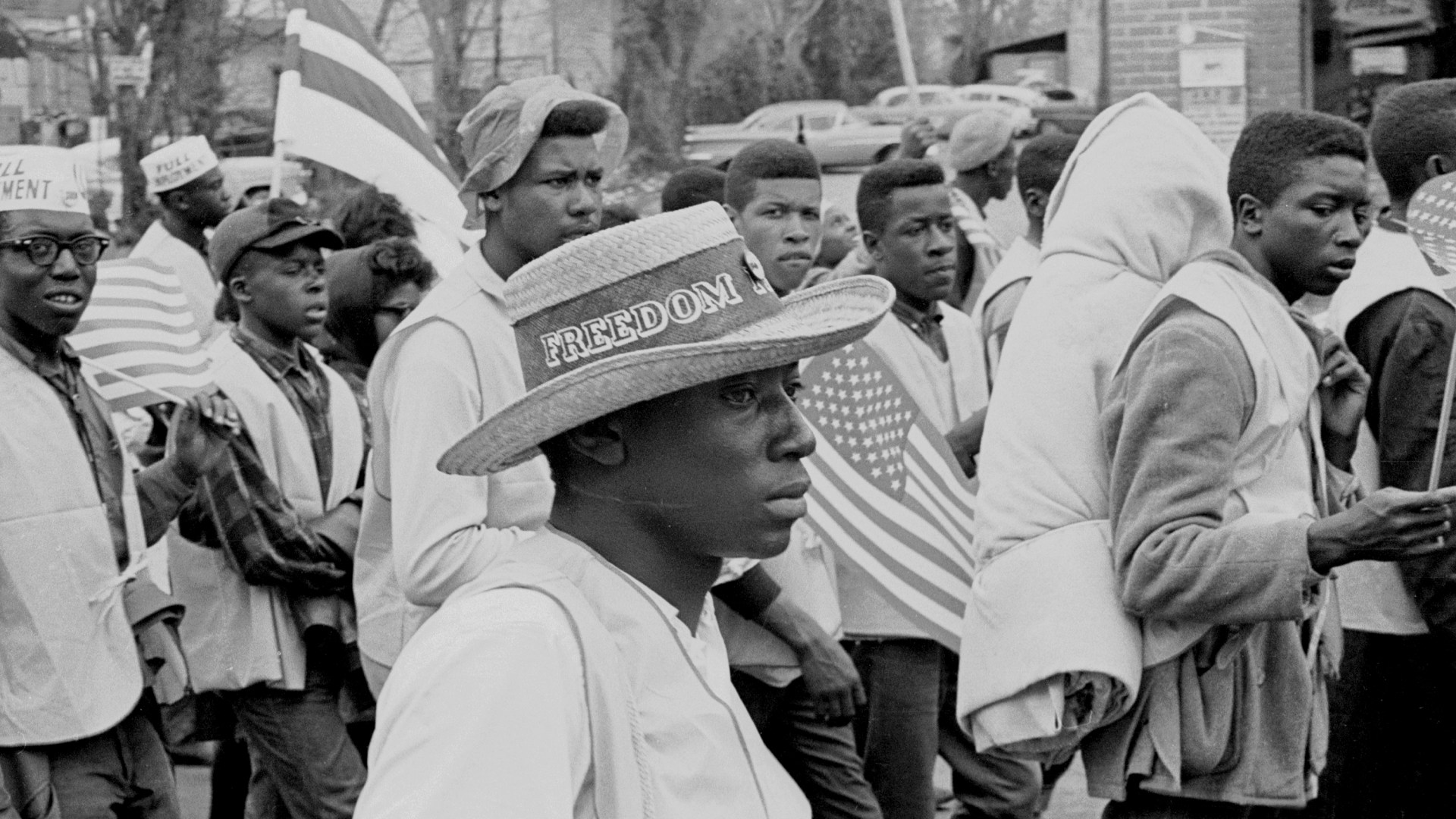
I believe the Civil Rights era was one of those rare moments. Reading about love, humility, courage, and fortitude is one thing, but here, through the Civil Rights generation, God offered the world a living proof of concept.
For anyone who earnestly wanted to know how to face wickedness, here was God roaring what love of neighbor, love of enemy, and soldiering for the Lord and for liberation look like today. God used imperfect believers as a beacon of moral clarity. We might debate the efficacy of integration and other activism strategies or policy goals, but the Christlike spirit of the movement—and the gospel message in its oratory, demeanor, and tactics—were crystal clear.
America is still very much in need of that kind of conscience and moral anchor today, not least as this administration makes a spectacle out of the pain of immigrants. However, I can’t help but fear that those who’ve claimed the Civil Rights mantle are squandering that extraordinary legacy. I fear that much of Christian social engagement has taken an ill-advised turn. Our moral clarity has become murky and double-minded.
One challenge is a loss of Christian distinctiveness. The Civil Rights generation always worked with people who were not Christians—which is good—yet led with confidence and an unapologetically gospel-centered value system. The redemptive nature of their Christian ethic was clearly different from the ethic of contemporaries like Barry Goldwater or Harvey Milk. But much of today’s engagement has become so entangled with secular progressivism that it’s difficult to tell the two apart.
While justice-oriented Christians tend to be a step or two behind secular activists in their agendas, they’ve adopted their allies’ rhetoric and worldview. I’ve personally had to debate other Christians about why the nuclear family is a good thing and why it’s the center of the extended family, which is also important. If the secular left despises all traditional viewpoints, some Christians are all too inclined to follow suit. If other political progressives treat their political opposition with contempt, some Christians thoughtlessly join them.


A core part of the problem was captured by theologian David F. Wells in his 1994 book, No Place for Truth: Or Whatever Happened to Evangelical Theology?. In too many Western churches, he said, there’s been a “shift from God to the self as the central focus.”
Accordingly, some Christians’ public engagement has abandoned a sound theological foundation for a more religiously ambiguous approach focused on self-expression. The freedom to enjoy our God-given, inalienable rights through racial and economic justice has been mashed together with the freedom to indulge the flesh without cultural opposition or critique. The rightful freedom that the Southern Christian Leadership Conference fought to secure has been conflated with the sinful license of the sexual revolution.
This is not the moral clarity of the Civil Rights generation—nor is it an orthodox embrace of divine mystery. When the Christian left authorizes liberties that the Bible clearly prohibits, often sins of the flesh (Gal. 5:19–21), it is not understanding God’s will better by and by. It is jettisoning the authority of Scripture to embrace an ideological agenda.
And once a Christian movement isn’t fully aligned with the Bible, what’s the authority for its work? What dictates its principles? Is it the spirit of the day? Algorithms? Tindley’s song rightly recognized that humanity’s knowledge is incomplete, and, therefore, we’re mistaken in following our own ways (Prov. 3:5–6). Like the Civil Rights generation that followed him, Tindley was committed to following God through his Word and Spirit. Are we?
In No Place for Truth, Wells also called out the inability of some Christians to “think incisively about the culture.” This too remains a timely warning. I’ve found many of my peers are more comfortable being apologists for popular American culture than thoughtfully critiquing its excesses. We’ll defend our favorite influencer from Christian critique but won’t defend everyone else from that influencer’s lewd messages. We’ll call out rappers for aligning with the wrong political group quicker than we’ll call them out for encouraging debauchery.

Nannie Helen Burroughs, a Black Christian who advocated for women’s rights in the early 20th century, once askedwhat “our brand of Christianity and … the Church [is] for” if we can’t be moved to tackle human degeneracy. Christians cannot refuse to expose the darkness in the culture with love and truth (Eph. 5:8–14). We do not have to neglect biblical standards of personal morality—including chastity, modesty, and self-control—to fight for racial and economic justice.
There is a legacy of faithfulness to preserve here, and it is incumbent on us to preserve it. How could we fail to imitate and honor as excellent a display of God’s character as the Civil Rights Movement? How can we stand to lose the plot of a story told in such bright and definite terms? This kind of fumble is disheartening—but not new. After all, Israel lost the Book of the Law, and disciples denied Jesus while he was still alive (2 Kings 22–23; Luke 22:54–62).
Now as then, all is not lost. But Christians must regain our distinctiveness and reclaim our moral clarity. What we don’t understand should humble us, but when God shines his light clearly in a historical moment, we must seize that understanding, hold on to it, and build upon it. And when we do, God might just use us to shock the conscience of the world by and by.
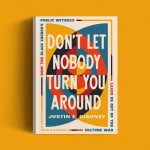
Justin Giboney is an ordained minister, an attorney, and the president of And Campaign, a Christian civic organization. He’s the author of Don’t Let Nobody Turn You Around: How the Black Church’s Public Witness Leads Us out of the Culture War.