This piece was adapted from CT’s books newsletter. Subscribe here.

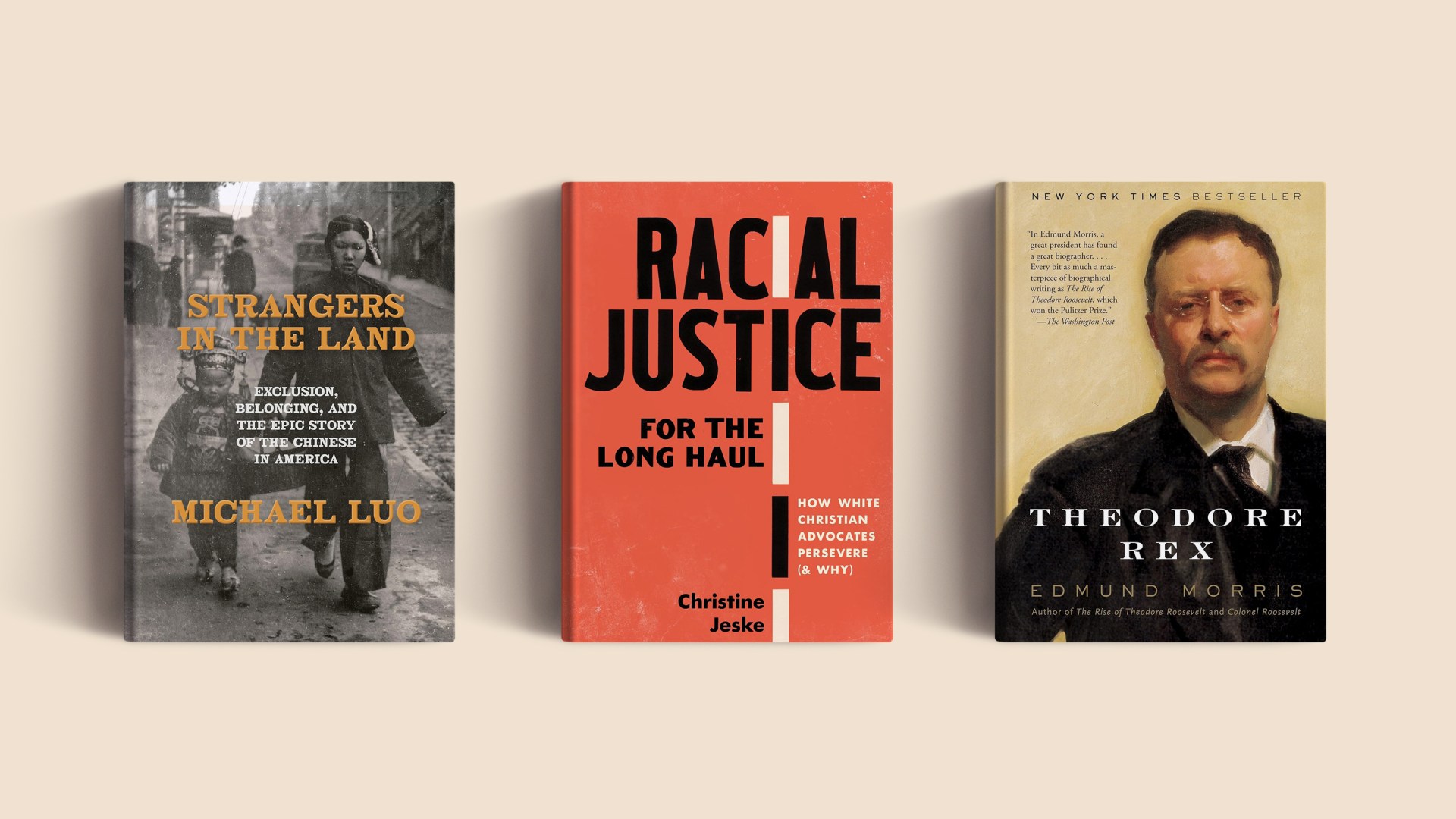
Racial Justice for the Long Haul: How White Christian Advocates Persevere (and Why)
IVP Academic
312 pages
Christine Jeske, Racial Justice for the Long Haul: How White Christian Advocates Persevere (and Why) (IVP Academic 2026)
Racial Justice for the Long Haul has a very specific audience in mind, one that is likely a minority among Christians, as the author herself seems to acknowledge. “By becoming Christians who cared about racial justice, they became their own kind of numerical minority among the wider body of White Christians,” writes Christine Jeske, associate professor of anthropology at Wheaton College.
But Jeske offers those who do find their way to her work a unique anthropological approach to studying repair across racial divides in a faith context. She bypasses easy platitudes and feel-good sentiments to drill down practicalities: what has sustained over 70 individuals who bring their Christian faith and a proven history of work in this thorny area.
Along the way, Jeske explores how race interacts with key theological concepts, including suffering, hope, and grace. Many of the stories she shares are unsparing reminders of how messy relationships can be between Christians of color and their white counterparts. But it’s precisely that discomfort into which Jeske invites readers to lean. Her hope shines through—far from Pollyannaish—that her book will be a resource for those desiring to forge stronger, more redemptive relationships across racial barriers. But as she suggests, it might land only with readers already committed to her framework for race relations.
Michael Luo, Strangers in the Land: Exclusion, Belonging, and the Epic Story of the Chinese in America (Doubleday 2025)
In the 19th century, tens of thousands of Chinese laborers hoping to better their lives traveled to Gum Shan, or the American West’s “Gold Mountain.” An initial welcome swiftly soured, and these new immigrants faced entrenched prejudice, white mob violence, and exclusionary federal laws.
Michael Luo’s debut book is a delight to read, characterized by precision, authority, and a knack for landing on fascinating characters even as he pulls no punches in detailing the numerous tragedies that color this history. The New Yorker writer’s painstaking eye for detail illuminates every page.
Along the way, Luo relates horrifying incidents of racial terror, from efforts to expel Chinese laborers from nearly 200 Western communities to graphic details about the 1871 Los Angeles massacre.
A Christian himself, Luo has an eye for the role faith played in this complicated history. Some clergy sought to aid their new neighbors, acting as intermediaries, championing their education, or defending them in the public square. Others, suspicious of the “heathens,” inflicted persecution and preached exclusion.
“Perhaps the biggest obstacle of all to the spread of the gospel among the Chinese … was the abuses they experienced,” Luo wrote as he told the story of Huie Kin, a Chinese American Presbyterian minister.
Strangers in the Land ably depicts how America’s struggle over “the Chinese question,” which often failed to live up to democracy’s stated ideals and promises, nevertheless proved the grit and determination of those under scrutiny.

Edmund Morris, Theodore Rex (Random House, 2002)
“It is a horrible thing,” wrote one former White House aide, “to realize that we have a bully in the White House.”
That is just one of the many strong reactions provoked by Theodore Roosevelt, the “accidental president” whose two terms in office left an indelible mark on his country and the world order.
The late biographer Edmund Morris won a Pulitzer Prize for the first installment of a tripartite series on America’s 26th president. His second book, Theodore Rex, focuses on Roosevelt’s time in office. This most “extraordinary President … more powerful than a king” is portrayed vividly, whether skinny-dipping in Rock Creek Park; stirring scandal by dining with a Black man—abolitionist Frederick Douglass—at the White House; or using his bully pulpit to bend a recalcitrant Congress to his bidding.
Deeply researched, the biography follows Roosevelt’s rapid consolidation of power as he expanded the Monroe Doctrine, interfered in Latin America, reckoned with racial strife, secured an end to the Russo-Japanese War, and scrapped with big monopolistic interests.
But Morris is equally interested in exploring Roosevelt’s personality and the way he alternatively bulldozed, persuaded, and alienated other powerful figures in his day—from his diplomatic adventures with career politicians to his clashes with businessmen like J. P. Morgan. Along the way, Morris weaves in colorful anecdotes, such as the story of a Mississippi hunting trip that led to small stuffed bears everywhere being christened “Teddy Bears.”
The overall disposition of the book is quite favorable toward Roosevelt, but it does relate moments of poorer judgment, most notably a circumvention of justice to Black service members in the 1906 Brownsville incident. Morris is rather too prone to quote contemporary extracts at length. Some of the language he uses to refer to racial minorities and some violent passages (such as the mob burning of a Black man) make the book best suited for mature audiences. Overall, it is a worthwhile read.
Harvest Prude is national political correspondent at Christianity Today.