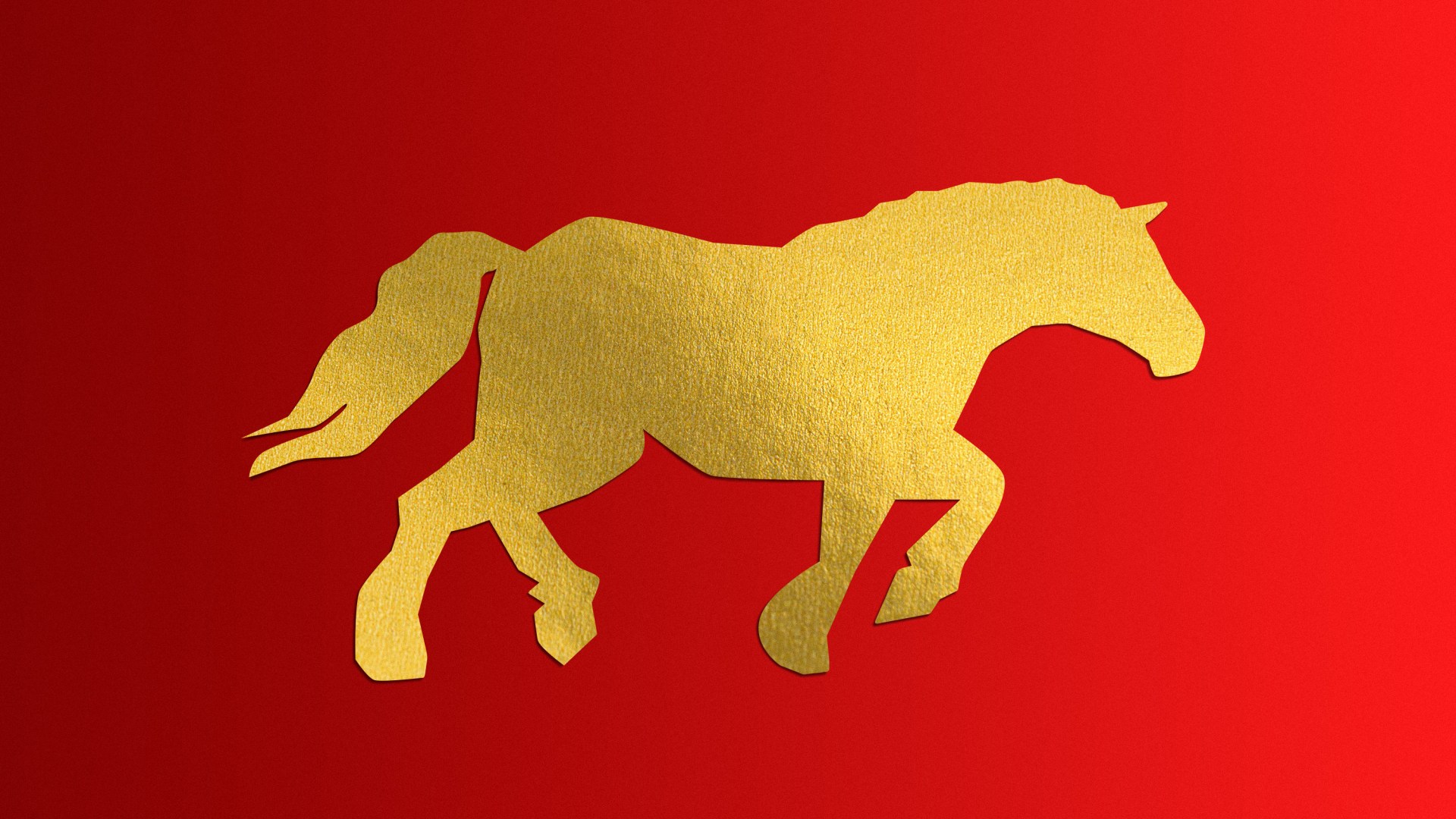
I moved to Australia from China three decades ago. One reason I felt drawn to live in the country was seeing wild horses running freely on vast, dusty plains. Their carefree spirits charmed me to move away from the concrete jungle I grew up in.
Today, my experiences with feeding and riding brown-haired colts along the beach have become a treasured part of sabbath rest for me in the busyness of life and ministry.
Scripture often portrays the horse as a symbol of military power, royal authority, and fearlessness in battle. The NIV translation, for instance, mentions the animal 176 times.
In the Old Testament, we encounter the mighty Egyptian horses and riders that God hurled into the sea in Exodus 15 and the 12,000 horses (or charioteers) that King Solomon possessed as a sign of his riches in 1 Kings 10. In the Wisdom Literature, God interrogates Job about the source of a horse’s strength and fearlessness, vividly describing its leaps, snorts, and fierce charges towards the enemy (39:19–25).
In the prophetic books, visions of horses as agents of divine action and triumph recur, like the four spirits of heaven appearing in the form of red, black, white, and dappled horses in the Book of Zechariah (1:8; 6:1–8). And in the Book of Revelation, the image of Christ and the heavenly armies riding white horses showcases the pinnacle of God’s authority (19:14).
Yet for all its positive depictions of horses, the Bible exhorts us not to trust in the strength of a steed but rather to trust in God’s might and sovereignty, as Proverbs 21:31 declares, “The horse is made ready for the day of battle, but victory rests with the Lord.”
This verse offers a rich perspective on what victorious living ought to look like for Chinese Christians who celebrate the Year of the Horse this Lunar New Year. Scripture exhorts us not to define victory as attaining personal or political success but to regard it as Christ does: a giving up and surrendering to God’s plan and purposes.
related

Like Scripture, Chinese culture holds the horse in high regard. The Chinese zodiac says that people born this particular year are hardworking, active, and energetic and are supposedly best suited to be architects or entrepreneurs.
Popular Chinese idioms use the horse (ma) to signify vigor and vitality at an individual and communal level. One idiom, ma dao cheng gong, describes achieving success through persistent effort and confidence in one’s abilities—much like a horse triumphantly galloping toward the finish line in a race. Another idiom, long ma jing shen, articulates how a person or community is filled with a vigorous and courageous spirit.
Decorative depictions of the horse are also a mainstay in many Chinese homes and offices. Statues of the fierce, sleek beast are often displayed facing doors or windows to attract positive qi (energy) as a means of boosting wealth and fortune, according to feng shui (Chinese geomancy).
These modern-day perceptions of horses in Chinese culture arise from the ways that political and national strength have been defined in Chinese civilization across the centuries.
Ancient Chinese people regarded horses as a key resource for transportation, productivity, and warfare. The Terracotta Army, which was created in the late third century BC to protect the first emperor of China, Qinshi Huang, in the afterlife, comprises life-sized sculptures of soldiers, horses, and chariots. The golden age of the Tang Dynasty (AD 618–917) was also famous for producing decorative glazed horses in sancai (three-color style) to extol the nation’s prowess over others.
China may not rely on the horse anymore, but it still seeks to exert its power through transport and industry. The Belt and Road Initiative (BRI), a massive worldwide project implemented by the Chinese government in 2013 that is also known as the New Silk Road, aims to connect China with Eurasian countries via roads, railways, ports, and maritime routes.
Chinese Christians have expressed enthusiasm about BRI, noting that it may offer opportunities for believers to live and work among communities with limited access to the gospel. However, this view underestimates the pitfalls in sharing the gospel cross-culturally, particularly when intermingled with economic and political power.
Such evangelism and outreach may well make the same mistakes that colonial-era missions have made in history. This form of missions risks imposing a culturally and socially bound gospel without an attentiveness toward, and empowerment of, local believers.
Proverbs 21:30 reminds us that “there is no wisdom, no insight, no plan that can succeed against the Lord.” Victory—or how to carry out missions effectively as Chinese Christians in this case—is found in the knowledge that it is the Holy Spirit, not political, economic, or social influence, that causes fruit to flourish on hard ground and causes the gospel to spread.
related


Within the Chinese church, our understanding of what being “horse-like” is can also backfire. Just as a horse’s value lies almost entirely in what it can carry and how far it can go, Chinese Christians may unconsciously operate with a similar framework in how they relate to God and ministry.
Here, a person’s commitment to ministry is often measured by his or her level of perseverance, endurance, and ability to bear hardship (or “eat bitterness”). In such environments, victory tends to be defined by refusing to rest until every task or commitment is completed. Consequently, people experience exhaustion and burnout, especially in paternalistic church structures where it may be hard to disregard an elder or pastor’s authority as a church member.
But Proverbs 21:31 subverts this cultural inclination to rely on our own “horsepower” (human effort) as a symbol of strength and victory. While discipline and obedience are valuable, the verse resists the illusion that our individual abilities are what help us secure success.
The danger lies not in the hard work we do in building up the kingdom of God, but in allowing this work to become ultimate. Work without reliance and rest quietly shifts faith from God to human capability.
This proverb shapes a posture of humble readiness within us. God’s people are to serve him faithfully while surrendering outcomes they cannot control to him. Fruitfulness is not guaranteed by strategy or strength but is received as a gift. We are not to treat people as “workhorses” but walk alongside them at the pace and revelation of God’s love.
The truth that “victory rests with the Lord” in Proverbs 21:31 frees us to act wisely without anxiety or coercion. We are called to work diligently and prepare fully for “the day of battle”—fighting against dark spiritual forces threatening Christian faith and unity—and recognize God’s presence and provision all the way.
Still, victory is not merely winning wars, whether physical or spiritual; rather, it is placing our full trust in the Lord who alone gives life, joy, and peace.
One of the clearest illustrations of what strength and victory ought to look like for Chinese believers comes from Jesus entering Jerusalem on a humble donkey, rather than a fearsome horse (Matt. 21:5).
Here, the reign of God is established not by force, conquest, or relentless forward momentum, but through self-giving love expressed in compassion, peace, and justice. Jesus’ authority, in stark contrast to worldly powers, is expressed in meekness, an unassuming persistence that accomplishes God’s purposes over time.
The counter-cultural image of Jesus riding a donkey in this Bible passage also speaks of an intentional lowliness, a downward mobility that Christ invites us to imitate. What would it look like for Chinese believers to become a lowly “donkey” ridden by the Lord? Can we become “the foolish things of the world” God chose to shame the wise (1 Cor. 1:27)?
The horse remains a powerful symbol of courage and might in Scripture. These are virtues the church should not abandon. But the gospel reframes how we ought to understand depictions of the horse in Chinese culture.
Chinese Christians are not to function merely as war horses driven toward success. In all we do for God, we are to be shaped by love, bounded by humility, and sustained by rest.
Like the prophet Jeremiah, who committed his life wholeheartedly in response to God’s call to “run with the horses,” as Eugene Peterson puts it (Jer. 12:5), we can pursue life with purpose and excellence, resting in the confidence that God already holds the ultimate victory over sin and evil through Jesus Christ.
Xiaoli Yang is an Australian Chinese theologian, spiritual director, and poet. Her recent publications include Chinese Christian Witness: Identity, Creativity, Transmission and Poetics.