Ian Simiyu was struggling to find enough day-labor jobs to provide for his family in Eldoret, Kenya, when he came across a Facebook ad last April recruiting Kenyan citizens to work as cleaners in Russia. His younger sister had taken a job as a housemaid in Qatar, so the idea of working abroad and earning more money to send back home appealed to him.
The ad said the company would provide a Russian work visa and an airline ticket. Excited, he worked to get his passport, but the paperwork and fees bogged down his efforts to go abroad.
What he didn’t realize was that other Kenyans had responded to similar ads and traveled to Russia to work as drivers or security guards only to find themselves coerced into joining the country’s army.
Several months later, as Simiyu waited for his passport, he saw a video released by the Ukrainian army of a 36-year-old Kenyan man—identified only as “Evans”—appealing for release after being captured and detained on the frontlines. Evans said a sports agent tricked him into traveling to Russia on a tourist visa, only to force him into the Russian army. Shocked by Evans’s story, Simiyu realized the job he had been hoping for was likely a scam.
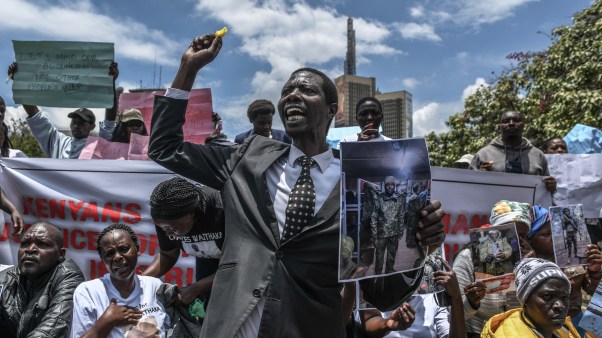
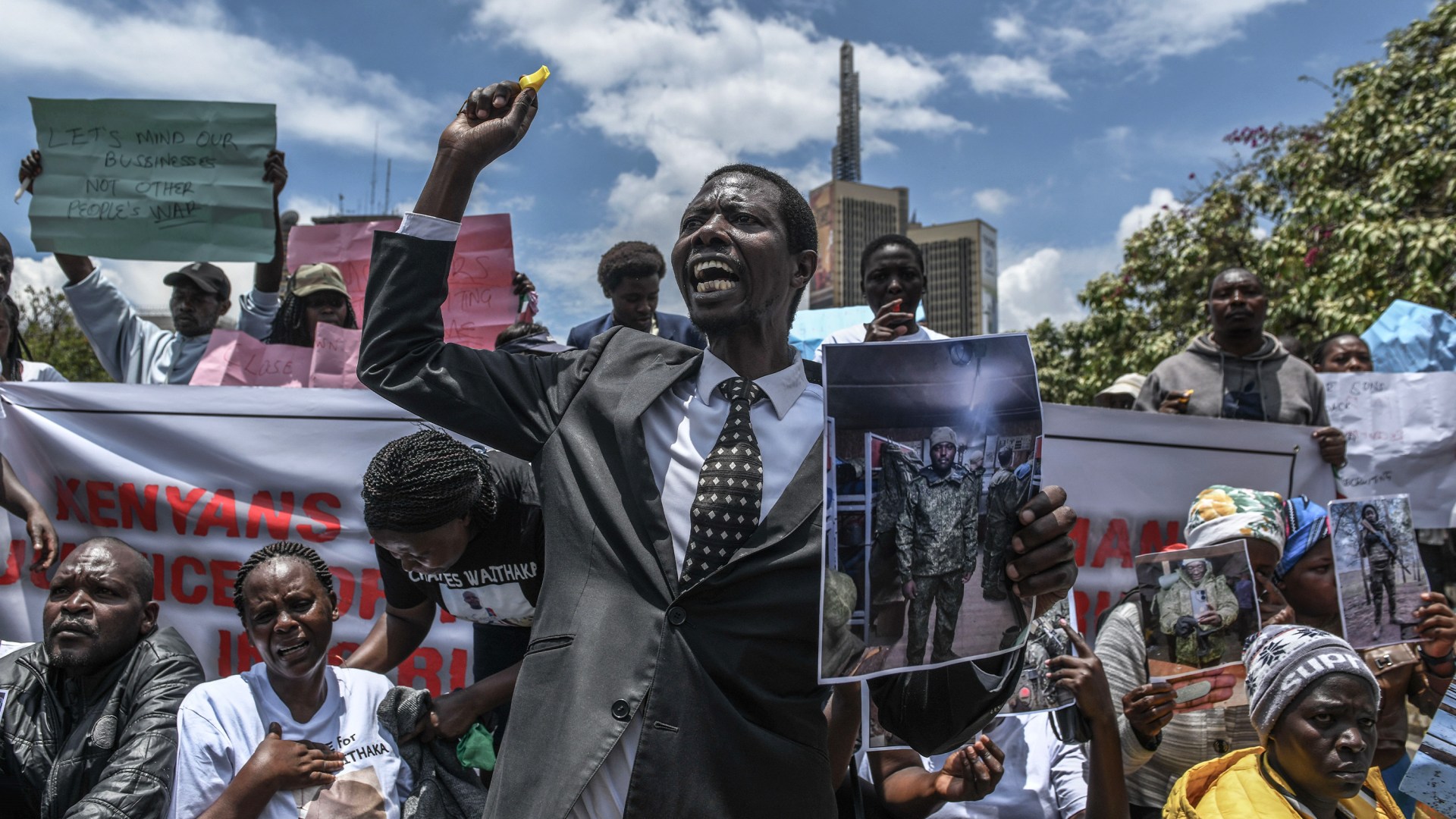
A February report by Kenyan intelligence officers estimated more than 1,000 Kenyans have fought in Russia’s war against Ukraine—some voluntarily and others, like Evans, tricked into it. The intelligence officers also alleged corrupt Kenyan and Russian officials colluded with recruitment agencies to fraudulently press unsuspecting workers to join the military. After an outcry from the families of the duped Kenyan recruits, foreign minister Musalia Mudavadi met with his Russian counterpart this month. They agreed Kenyans would no longer be able to join the army.
At least one Kenyan, Charles Waithaka Wangari, has died in the war, while 39 have been hospitalized and 28 are missing in action. The Russian Embassy in Nairobi, Kenya, denied accusations of embassy officials’ involvement and called such reports propaganda.
Human rights group Vocal Africa alleged individuals connected with the Russian Orthodox Church in Kenya promoted work opportunities in Russia. In recent years, the Russian church has expanded in Africa, growing to 350 parishes across over 30 countries. A professor of ecumenism said the church is part of Russia’s “soft power” in the continent, as the church aligns closely with the state.
Yet a Russian Orthodox priest in Nairobi told Religion News Service the church sends seminary students to Ukraine only for religious studies, and it warns them that military recruitment can happen there.
Most church leaders in Kenya contacted by CT declined to comment on potential recruitment by the Russian Orthodox Church until reports receive further confirmation.
One Christian, Justus Wazlala, said, “If … the Russian Orthodox Church was involved in this human trafficking, then it is high time the government started monitoring foreign churches in country, just like it is with Islamic groups.”
According to Ukraine’s February estimates, Russia has recruited over 1,700 soldiers from 36 African countries, and reports of fraudulent recruitment have surfaced in other nations, including South Africa and Zimbabwe. The daughter of Jacob Zuma, South Africa’s former prime minister, resigned from her position as a member of Parliament after accusations that she helped fraudulently recruit Africans into the Russian army.
Human rights advocate Stephen Lempaa told CT that high unemployment and poverty in Kenya leave young men susceptible to recruitment into foreign armies. The Kenya Poverty Report of 2022, released in 2024, shows over 20 million Kenyans lived below the poverty line. Unemployment and poverty in Kenya have forced many to look for work abroad and have made young people prime targets for recruitment by terrorist organizations like al-Shabaab.
In one case reported by The Kenyan Daily Post in early March, a man named Dennis Mokaya Mong’are left Kenya in November and traveled to Moscow then Belarus for promised work as a cleaner, only to have his passport confiscated after arrival. Mongare said he was forced to sign documents in Russian before military personnel sent him to the frontlines. After sustaining injuries in a February 5 drone strike, Mongare reportedly pled with the Kenyan government to rescue him and others coerced into joining the conflict.
Lempaa said desperation also influences voluntary recruitment. Some jobless young men searching for purpose end up fighting in Russia or other African countries—such as the Democratic Republic of the Congo and South Sudan. Lempaa said many Kenyan youths have fled the stagnant economy at home with a common slogan: “I [would] rather die of a bullet than die of poverty.”
Anecdotal evidence suggests social media may influence some youth to consider foreign army service, especially in Russia. In late February, when Kenya’s National Intelligence Service arrested Festus Arasa Omwamba—a prime suspect in Russian recruitment of Kenyans—young men on social media asked for information about joining the Russian army.
“How do I reach this man for greener pastures[?]” wrote a user named Baraka John Mwas, a single man from Nairobi, Kenya.
“Please I need his contact,” wrote Bamah Emzo from Cameroon. “I want to go fight for Russia.”
Senator Okiya Omtatah from Busia County, Kenya, pointed to a June 2023 government initiative to increase youth employment abroad and questioned whether the program was used to deliberately send Kenyans to Russia. He called for the government “to come clean.”
Ian Simiyu said he believes God prevented him from taking the job offer in Russia. Instead of going abroad, Simiyu decided to farm a two-acre plot of family land. Now he grows kale and onions, selling them to urban markets and hotels. His profits bring in enough to feed his family, help his younger siblings, and give a tithe to his church.
“God has opened me another door,” said Simiyu. “I don’t know if I would be alive, had I gone to Russia.”