I’m not sure when I first knew I was in love with South Africa.
Perhaps it was the afternoon I stood in a wide field outside Durban, watching an entire village sing a bride down the aisle. Or perhaps it was later, in a Western Cape township church, where a pastor with a scarred leg preached forgiveness for the very people who had tried to break him. Or maybe it was beneath a Limpopo sunset that turned the sky gold.
I only know that somewhere between those moments, my affection deepened into something more complicated and costly.
In 2013, I arrived in a rural town in KwaZulu-Natal, preparing to welcome a team from New York City who would spend two weeks at an orphanage for children whose parents had died mostly because of AIDS. On the ground, my role was organizing the trip and juggling logistics, schedules, and the many details to keep everything running smoothly. Nokubonga, a young Zulu woman studying agriculture, was there for a different purpose: She was working on a fledgling farm project, a loving attempt to make the orphanage self-sustaining.
We shared a tiny cottage set apart from the children’s rows of homes—close enough to hear laughter drifting at night but far enough to feel like guests. Despite a 20-year age difference and an ocean between our cultures, we became fast friends. We shared humor, curiosity, and an appetite for conversations that ranged from politics to nail polish. When she invited me to her “white wedding” two years later, I was honored—and briefly horrified. Did this mean guests were supposed to wear white? In my Southern upbringing, wearing white to someone else’s wedding bordered on felony. I later learned that in South Africa, a “white wedding” distinguishes a Western-style ceremony from traditional African weddings.

Relieved, I climbed into a car with other guests and headed toward the ceremony. When we arrived, I stood in amazement. It felt as though an entire village had gathered. Hundreds of people spilled outward in color and motion: elaborate headdresses, gleaming fabrics, elders leaning on canes, children darting between chairs.
Then a charismatic emcee stepped into the aisle and began calling out in Zulu. The crowd sang, clapped, and rose to their feet. Women released that unmistakable ululation, a rolling, joyful lalalala sound that would have been shushed immediately at any American wedding I had attended. Noise was not disruption here but devotion.
Bridesmaids in turquoise danced down the aisle in synchronized rhythm. Groomsmen followed in sunglasses and playful choreography. When Nokubonga finally appeared, radiant and entirely in white, I cried.
I had traveled before, docking in unfamiliar ports and flying off the beaten path. But at this wedding I was a participant, and I was welcomed as someone who belonged. Standing in that field, swept up in music I didn’t understand and joy that required no translation, I felt something loosen inside me. The scene was unapologetically jubilant. Despite a complicated history, nothing could mute a celebration.
I would later understand that this was my first lesson: Joy here is defiance.
If the wedding taught me that joy can be defiant, Pastor Peter taught me that forgiveness can be as well.
The first time I heard him tell his story, we were sitting in a church sanctuary in the Nomzamo township outside the coastal city of Strand. Peter spoke gently, but the childhood he described was anything but gentle. He was 14 when he joined hundreds of Black schoolchildren protesting apartheid-era school conditions in Cape Town. Police encircled the crowd with barbed wire. Tear gas filled the air. Children scattered.

Peter ran for the fence and tried to climb it. His pant leg caught on the barbed wire, flipping him upside down. A policeman dragged him down, tearing flesh from his leg, which remained tangled in the wire. An older man collapsed dead on top of him, murdered, his blood spilling across Peter.
Rage took root in him, not only toward the system but also toward white people in general. For years, Peter drank alcohol to forget, threw stones at strangers, and witnessed violence nearly every day. Then a white missionary walked through his township. She returned again and again, handing out food parcels, tutoring children, and visiting poor families.
Peter’s certainty crumbled. He returned to school, worked long hours, and attended a church camp in college. There he prayed, and something unexpected happened. A sense of peace arrived, filling his being, giving him purpose.
“Once you’ve received grace,” he told me later, “it’s impossible to keep walking with hatred.”
The scar on his leg remains deep. So does the history behind it. But the church he planted in 2007 now feeds hundreds of locals weekly and educates children, all while Peter mentors younger pastors in his new role as bishop of the REACH-SA denomination (Reformed Evangelical Anglican Church of South Africa) across the Western Cape.
If I had learned from my friends that joy and forgiveness could be defiant, the land itself taught me something quieter: Beauty can soften what still aches.
In Limpopo, 89,000 acres of Bushveld unfolded around me, grassy plains stretching toward a horizon so vast that by night, it seemed to gather every star in the firmament.

Lions rested in the shade. Elephants moved with grave authority. Rhinos and giraffes crossed the dust with ancient patience. At sunset, the sky ignited, scorched gold, molten orange, before dissolving into a darkness so complete it felt almost primordial. One evening, a herd of wildebeests moved slowly across the last ribbon of light, their silhouettes etched in flame. I took photographs, knowing even then the pictures would fail. Some beauty resists capture. It must simply be received.
For a country marked by dispossession and contested land, the bush holds its own deeper truth. It belongs to everyone and no one. It existed before flags and will endure after them.
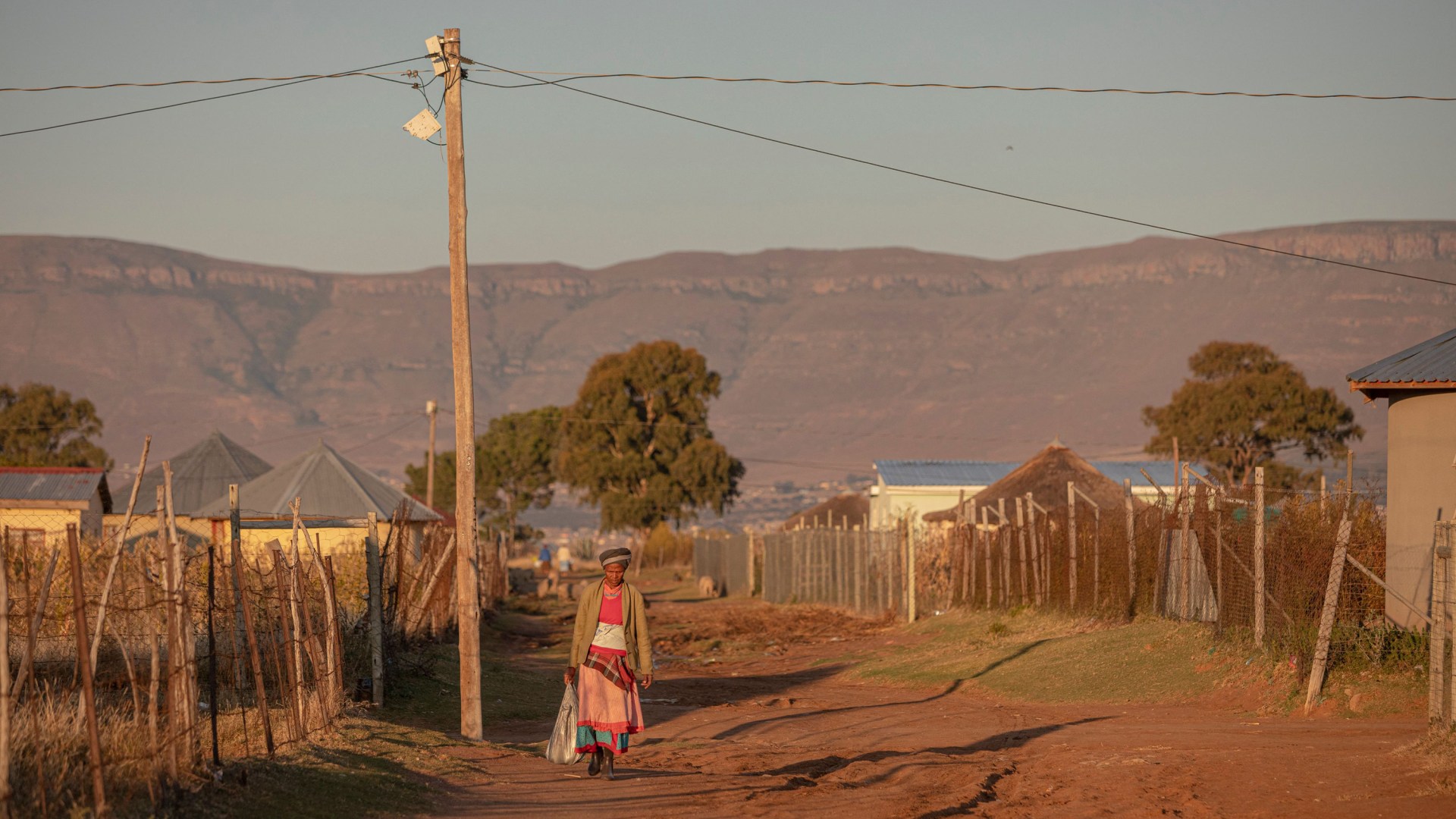
Since 2010, I have returned nearly every year—sometimes with teams, sometimes with friends, sometimes with just my husband—often staying for a month or more at a time. Through the years, the country stopped feeling like a destination and began to feel like a second home.
Attachment to another country enlarged my loyalties and my sense of shared humanity. For years, that attachment felt uncomplicated.
But relations between the United States and South Africa have grown tense in the past year. The US government froze foreign-assistance funding for the country and prioritized resettlement for white Afrikaners seeking to move to the United States, citing claims of persecution that many analysts and South African officials dispute. Leaders have traded accusations back and forth, and rhetoric has hardened on both sides.
Disagreement between nations is nothing new, and analysts disagreeing about claims of widespread persecution doesn’t discount very real, alarming instances of violence in South Africa. But hearing leaders in the United States, my own country, speak in these ways about a place I had come to love felt disorienting. South Africa is not perfect, but neither is my own country.
I am still an American, and I love my country deeply. But loving South Africa has changed the lens with which I see it. When we speak about another people, we must speak carefully, as if they were listening—because they are. We must refuse to caricature those we disagree with.
Nations are more than the policies, rhetoric, or viral arguments that dominate the news. They are lands steeped in beauty and history, filled with people like Nokubonga and Pastor Peter—and, well, me—everyday people on life’s journey, striving every day and possessing the dignity God has bestowed on us all.
I still cannot name the exact moment I fell in love with South Africa. What I do know is this: Loving another country sharpens your love for your own home. It deepens your gratitude and challenges you to want your country to be better. Seeing another place’s joys and struggles holds up a mirror, showing both what works and what can be improved, without diminishing the beauty of either.
True patriotism is caring enough to see your own country clearly—and to see God’s love for humanity in every other place as well.
Christina Ray Stanton was the short-term Missions Coordinator for Redeemer Presbyterian, NYC for over a decade, and is the founder of Loving All Nations.