Key Updates
May 4, 2026
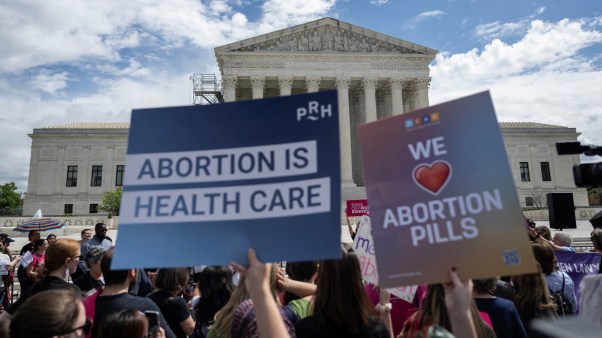
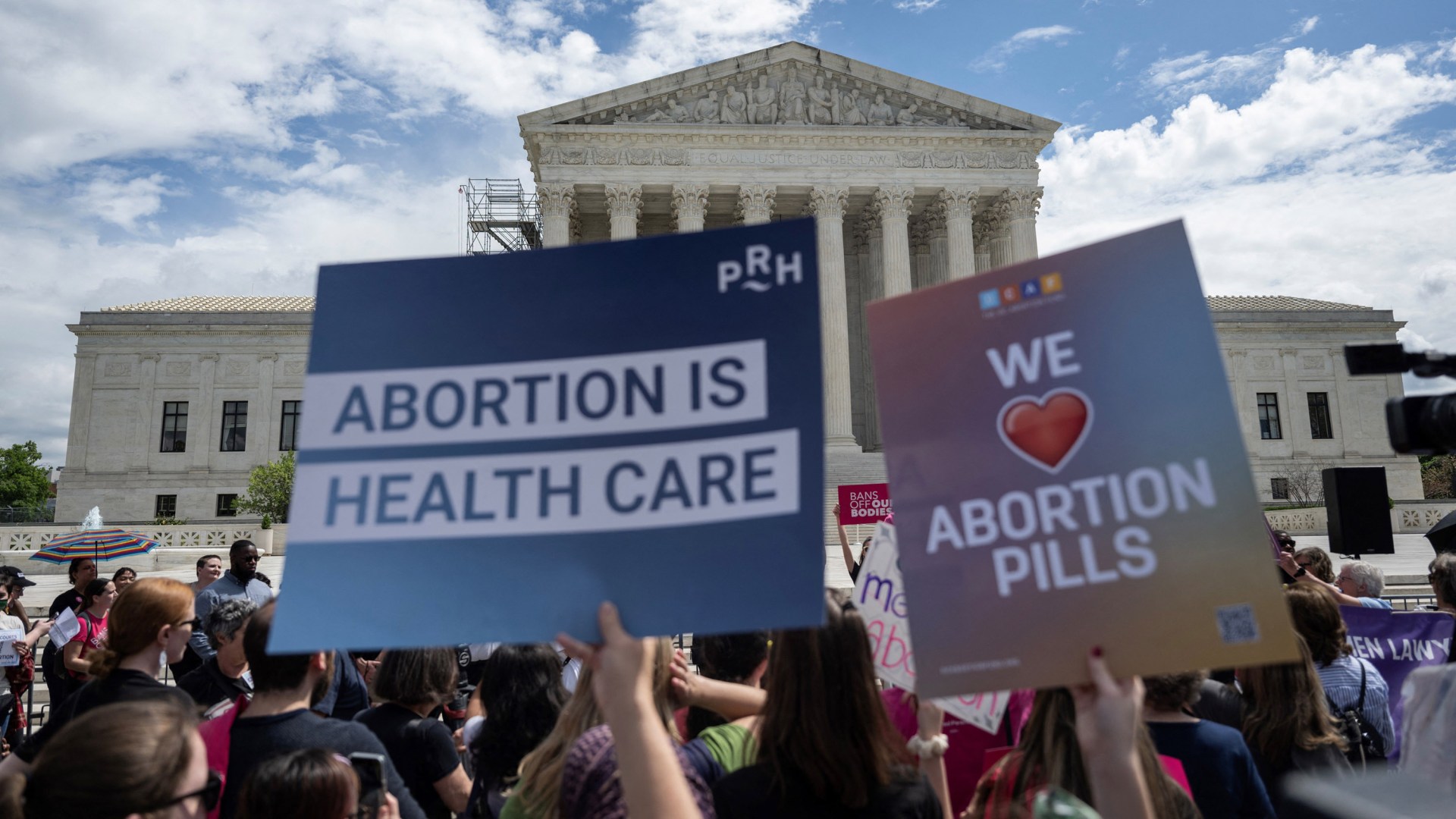
The Supreme Court on Monday restored nationwide access to the abortion pill mifepristone, in a rapid reversal of a lower court ruling that blocked women from obtaining the abortion drug unless they first had in-person doctor’s visits.
The one-sentence order, signed by Justice Samuel Alito, will allow women seeking abortions to obtain mifepristone at pharmacies, through telehealth, or through the mail. In effect until May 11, the order allows parties on both sides time to file briefs so the full court can consider the issue.
Two companies that manufacture mifepristone, Danco Laboratories and GenBioPro, had asked the justices to intervene after the US Court of Appeals for the Fifth Circuit’s ruling. The stay does not signal how the full court may ultimately rule on the merits of the case.
“We’re no less confident today and optimistic today than we were on Friday,” when the Fifth Circuit briefly restricted access to mifepristone, Kelsey Pritchard, a spokesperson for Susan B. Anthony Pro-Life America, told CT. “Eventually, life and the law and the Constitution will prevail in this case.”
The Trump administration faces the prospect of defending the loosened abortion pill regulations in court at a time when pro-lifers have expressed disappointment that the administration has not taken more steps to curb the availability of the drug.
May 4, 2026
Pro-life organizations are celebrating their biggest legal win since Dobbs v. Jackson Women’s Health Organization—and praying it holds up under appeal.
On Friday, the US Court of Appeals for the Fifth Circuit paused mail-order access to mifepristone, one of the most commonly prescribed medications for abortion. The court granted a motion by the state of Louisiana, which is suing the Food and Drug Administration (FDA) to temporarily restrict access to the drug while courts weigh a more permanent restriction.
At issue is a 2023 policy that removed the requirement that patients see doctors in person to receive mifepristone. Since then, women seeking abortions have been able to receive a mifepristone prescription via telemedicine and could have the drug sent by mail.
Two companies that make the abortion pill immediately asked the Supreme Court to restore access to the drug. The emergency appeal, which would be part of the court’s “shadow docket,” could be decided within weeks.
Americans United for Life CEO John Mize told CT he is encouraged by the immediate win and hopes the Supreme Court will uphold the decision.
“From our perspective, it honors pro-life states whose citizens have voted to protect the dignity of preborn children in the womb,” he said. “And it also, really importantly, addresses a significant gap in the quality of care and the safety of women who are receiving these drugs online.”
Other pro-life groups were also quick to praise the Fifth Circuit’s decision.
Susan B. Anthony Pro-Life America called it “a huge victory.” “Women and children suffer and state sovereignty is violated every day the FDA allows abortion drugs to flood the mail—harms that are no mere accident, but predictable outcomes of the FDA’s unscientific removal of safeguards like in-person doctor visits,” president Marjorie Dannenfelser said in a statement.
The court’s judges agreed with Louisiana that mailing abortion drugs circumvents the state’s laws.
“Every abortion facilitated by FDA’s action cancels Louisiana’s ban on medical abortions and undermines its policy that ‘every unborn child is human being from the moment of conception and is, therefore, a legal person,’” the decision states.
In 2022, when the Supreme Court’s Dobbs decision overturned Roe v. Wade, states with pro-life legislatures began passing laws to protect the unborn. But the FDA’s 2023 policy allowed women in those states to access medication abortions through virtual appointments with doctors in states where abortion is legal and to order the drugs by mail. The decision noted that in Louisiana nearly 1,000 women a month were taking the pills.
Abortion advocates argue a ban on mail-order drugs would upend the industry and sow chaos for women seeking abortions. According to the pro-choice Guttmacher Institute, 63 percent of abortions in 2023 were by medication. Roughly a quarter of abortions in the United States are provided through telehealth services.
Pro-life organizations say mifepristone is dangerous and prescribing it over the phone only increases risks for women. They argue that women who don’t see doctors in person could have ectopic pregnancies—where a fertilized egg implants outside the uterus—could be further along in their pregnancies than they realize, or could suffer other complications.
A study by the Ethics and Public Policy Center in 2025 reviewed medical files of more than 865,000 women prescribed mifepristone between 2017 and 2023 and found more than 10 percent experienced a severe adverse side effect such as hemorrhaging or sepsis. The Trump administration has said the FDA is reviewing the drug, but it has not said publicly whether it supports or opposes mail-order abortion access.
In 2024, the Supreme Court ruled against a group of doctors that had sued to end the FDA’s approval of mifepristone. The American College of Obstetricians and Gynecologists maintains that mifepristone is safe.
“Mifepristone is one of the most studied medications on the market and is conclusively safe, including when prescribed through telehealth and dispensed via mail,” the group’s chief legal officer, Molly Meegan, said in a statement. “The Court’s decision to restrict access to this medication infringes on patients’ access to health care, especially for people who rely on telehealth or face barriers to care.”
Regardless of whether the FDA’s review eventually concludes that mifepristone is safe for virtual prescriptions, Mize of Americans United believes the full faith and credit clause of the US Constitution requires states to honor other states’ laws.
“If the citizens of Louisiana, just like any other pro-life state, vote to protect the dignity of human life, that’s the way it’s got to be,” Mize said. “To try to skirt that is, in my opinion, an affront to the people of that state.”
Americans have mixed views on whether mifepristone is safe, and more than two-thirds oppose banning it, according to the health policy research group KFF.
Mize believes there is growing public support for restrictions. “In the aftermath of Dobbs, this is really the first big culture-shifting opportunity in our country in the direction that honors the dignity of human life,” he said.
Additional reporting by Harvest Prude.