Over the past few years, I started noticing a pattern in my life.

If my housemates didn’t wash their dishes quickly enough, I would jump in and do them myself.
If my fiancé didn’t communicate weekend plans enough in advance, I would barrage him with a half-dozen ideas and desires.
If my boss started micromanaging me, I retreated into insecurity and passivity.
If the circumstances in my life felt chaotic, I would focus extra attention on diet and exercise.
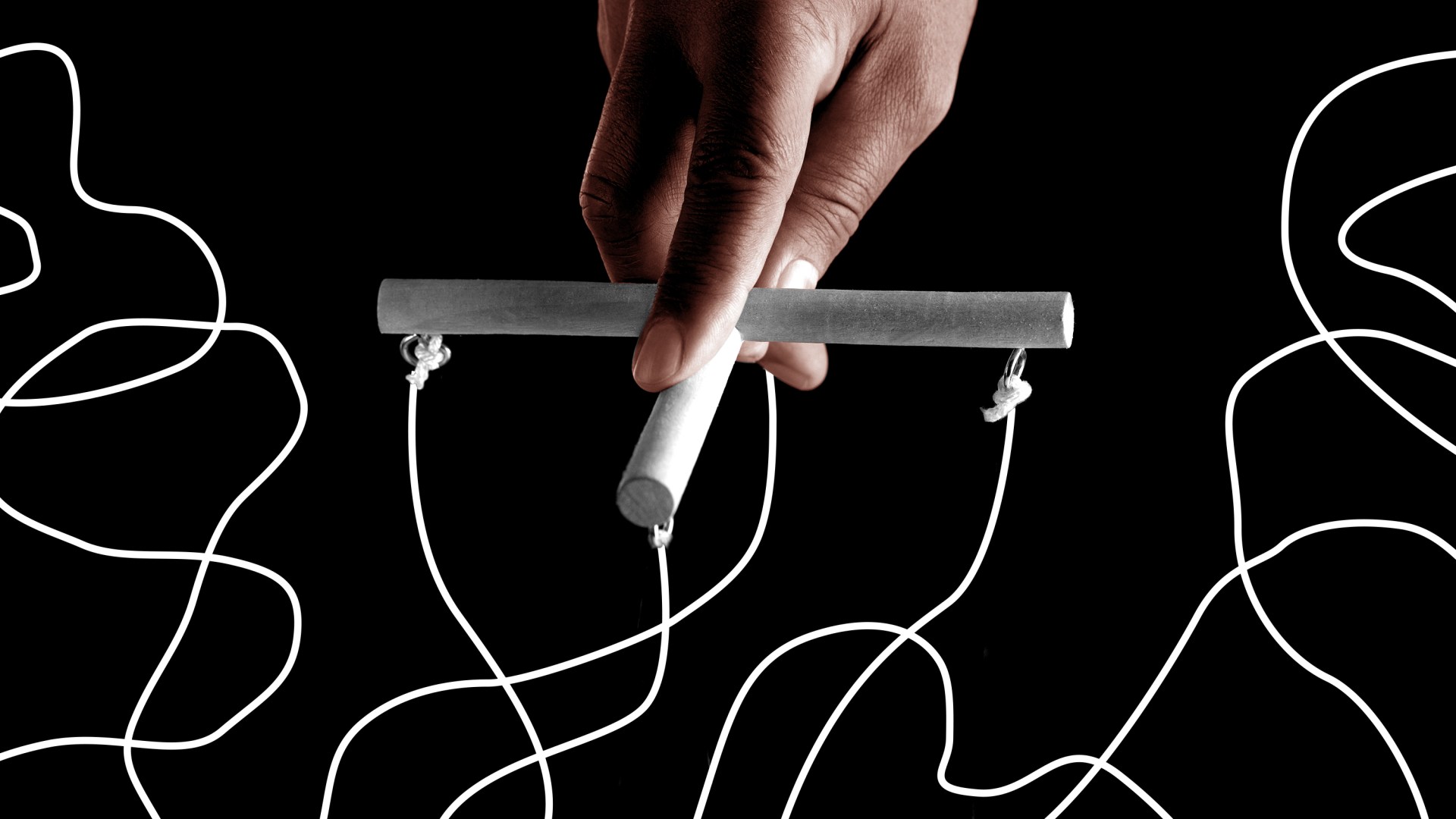
The thread I noticed was one of control: of other people, my body, my work, or my future. Simultaneously, I was noticing that I experienced regular anxiety over work projects, relational conflicts, or fears about the future. I know I’m not alone. According to one widely cited statistic from the Centers for Disease Control, about one-third of adults experienced symptoms of anxiety during the height of the pandemic.
Others have noticed this connection, including Sharon Hodde Miller, a teaching pastor at Bright City Church in Durham, North Carolina. In her latest book, The Cost of Control: Why We Crave It, the Anxiety It Gives Us, and the Real Power God Promises, Miller examines our often destructive relationship with control and points us to solutions in Christ.
“When the pandemic robbed us of certainty and predictability, it laid bare an idol that had been strangling us, invisibly, for years,” Miller writes. That idol is our illusion of control, which she argues is one underlying reason that our culture is chronically anxious, and many people—not just teenagers!—are feeling the effects of burnout.
Illusions of control
Miller defines control as “the power to influence the world around us and the sense of empowerment that gives.” She examines the topic in four parts: Why we control, how we control, what control costs us, and finally, the true power found in Christ.
We try and control our own lives and those of others, she says, by wielding knowledge, power, money, autonomy theology, or shame. With innovations like on-demand streaming platforms, anti-aging skin creams, and web access to almost any piece of information we might desire, our Western culture disciples us into the illusion of near-complete authority over our circumstances.
The problem, Miller writes, is that “our daily rhythms are rhythms of control, not rhythms of truth and reality. … We are living as if our control over the world has grown by miles when it has really only grown by inches.”
This inherent and very human desire to be in control goes back to the Garden of Eden. Adam and Eve desired to rule over their own lives, ultimately leading them to separation from God and a broken relationship with each other.
But Miller believes that the topic is worth a fresh look in today’s age. Our society’s relationship with control “has shifted and evolved because of our particular cultural moment, and that change has had consequences that are new,” she writes.
Miller does well in diagnosing the problem; I was very convicted by her early chapters on why and how we control others. We might try to control our futures by gathering information (which usually just makes us more anxious) or control others by feeding them information meant to nudge them toward our way of thinking.
Ironically, Miller points out, studies have shown that using information to shift others’ opinions often has the opposite affect: People double down, especially if the information feels like an attack on something central to their perceived identity.
But it’s not just information that we wield to get our way. We use tools like money, emotional manipulation, and even theology to form people into our image or bid them to do our will. Miller only confirms what we already know: that these sinful tendencies lead to negative consequences, like broken relationships, burnout, and anxiety. And “when we use control to fix things,” she writes, “we end up breaking them even more.”
Active trust
Miller’s book isn’t meant as a comprehensive diagnosis of the symptoms of anxiety. She acknowledges early on that she is addressing the spiritual implications of control and anxiety as a pastor.
However, I was left wanting a bit more of a solution. Miller weaves biblical reflection throughout each chapter and often concludes her discussions by pointing us to our identity in Christ. Yet she spends fewer than 30 pages toward the end of the book discussing biblically supported ways of exercising control, and how our anxieties can strengthen our hope in Christ.
Scripture frequently warns against the abuse of power, and the Book of James emphasizes the futility of trying to control our circumstances (4:13–15). But the Bible also commends forms of good control, such as stewardship in work and society, or exercising control over our actions and over our tongue (James 3:3). “I discipline my body and keep it under control, lest after preaching to others I myself should be disqualified,” writes the Apostle Paul (1 Cor. 9:27, ESV).
Miller acknowledges that “let go and let God” isn’t the solution to our idol of control. Trust in God and others—and entrusting ourselves to God and others—takes active willpower, not passivity. Toward the end of the book, Miller points to Scripture’s words about control by discussing human agency, underlining our capacity to practice self-control and patience, take responsibility for our actions, and trust in God.
Her brief but practical words of advice—set limits, say no when needed, and take stock of how you’re feeling or where you’re at—were not new to me, but they were a balm to my soul all the same. I could have used expansion on these topics.
Miller frequently cites Diane Langberg, a noted Christian psychologist, as someone curious readers might consult for a deeper or more technical dive into counseling issues. But The Cost of Control serves as a first step—and a necessary one—for believers who are ready to take a self-reflective look at our need for control.
Kara Bettis is associate features editor at Christianity Today.