 I was sitting at my friend Andrew’s dining table in the mid afternoon. I had stopped by to pick up a book I needed for a writing project and decided to stay and work with him a while. It was quiet and peaceful and he was bent intently over his work. I slipped slowly into the silence and wiggled my way into its corners. After a short spell I looked up at him from across our computer screens and said, “Tell me there’s nothing wrong with me.” I cupped one side of my face in my hand, smudging vulnerability like a shoddy makeup job.
“What do you mean?” he asked cautiously but tenderly.
“I mean, with Sam, not wanting … Tell me … “
He interrupted softly, ” … that you’re not inadequate?”
I nodded and looked down at the keyboard where I knew the slow but open tears would soon land.
He spoke slowly. “I think you are beautiful. And I think you love people fiercely. That is an amazing gift.” I was both surprised and grateful that he hadn’t repeated his usual praise about my intellectual and creative gifts. Somehow he heard me speaking from that shier crevice of my heart, the one easily layered with “shoulds” and “ought tos,” the one whose fragile fractures are habitually hidden.
“I. Think. You. Are. Beautiful,” he repeated.
I nodded rapidly, still looking away as the tears came. “I know, I know,” I whispered. “I know.” I could feel his caramel colored eyes trying to stare these truths into my heart. I could feel how quickly I wanted to bypass his words because some part of me still struggled to hear it.
We sat quietly across the table from one another. I wept freely into the small cradle of comfort his words had carved for me. I knew he believed what he had told me and somehow I felt that seeping back into me as I cried. I felt alone and held all at once. Without moving from his side of the table, without touching me, without breaching the space of sorrow that could only rightfully be mine at that moment, I felt held and re-membered by his friendship in a matter of moments.
Andrew and I have been good friends for the past year. I am still growing into this sliver of space our friendship provides. We met when we were both single and immediately hit it off. We enjoy one another’s company intellectually and socially, and we both find the other physically attractive. Yet there was no assumption that our new and enriching acquaintance would lead to a romantic relationship. We simply spent several months getting to know one another through conversation and sharing activities together and with groups of mutual friends. Yes, we have since had some conversations around boundaries and expectations. We have had to, because neither of us has been well formed by our culture or Christian traditions to imagine healthy platonic relationship between two single people as good enough.
Many would look at our friendship and wonder why we aren’t pursuing a romantic relationship. The truth is that sometimes, romantic relationships are all about timing and part of discernment is honoring what seems fitting for particular seasons of our lives. Andrew and I met when neither of us felt inclined to pursue romance for our own respective reasons. I have come to believe that platonic male-female friendships can be a life-giving, healthy corrective to our culture’s and churches’ overemphasis on romance.
This summer, the movie Friends with Benefits (Justin Timberlake, Mila Kunis) revisited the timeless question famously posed by When Harry Met Sally: Can a man and woman be “just” friends? Meg Ryan and Billy Crystal spend years trying to prove that they can have a platonic relationship. They sleep together, awkwardly pretend the sex never happened, and then eventually start dating. At the center of these movies is the premise that any good emotional connection between a single man and woman should evolve into a sexual relationship. It is not that different in churches and Christian youth culture, where most relationship discussions revolve around preparing for marriage, courtship dating, and abstinence. Rarely do Christian resources focus on the importance of cultivating friendships in general, let alone cross-gender ones. It’s no wonder that heterosexual men and women fumble over how to live into mutual life-giving and respectful non-sexual relationships with one another.
Desire is beautiful. No denying we are sexual beings, and intellectual and emotional attraction can easily lead to sexual attraction between friends. But being single and feeling something toward someone else who happens to be single does not mean that we should act on our desires. We each come with unique personal histories; sometimes it takes a while to figure out what lies behind certain desires. It may have little to do with the person in front of me and more to do with misdirecting specific unmet needs. Part of the conversation around nurturing male-female friendships has to include how we order and discipline our desires.
I believe my friendship with Andrew will have a positive impact on my next romantic relationship. But it is also beautiful for its own sake, without thought of its broader utility. He is teaching me to argue better, to share my discontent in less hurtful ways. I am learning that deepening our friendship means not shying away from difficult conversations. I cannot hide behind verbal jabs offered in pseudo jokes. He speaks forthrightly to me and mirrors his desire for me to be transparent, to say what I mean and to not couch my emotional needs in half-truths. I hear him and often still stifle in defense. It is risky to nurture the kind of friendship that compels us to reach out from our fears and insecurities. Friendship takes courage, even the ones that offer to reminds us of who we are, and who we are created to be.
As a culture we do not know very much about discipline. We assume that if something or someone is accessible to us, there is usually no good reason why we should not lay claim to it. We are not well trained in saying no. At different seasons in our lives, denying sexual desires in particular can open up space for a life-giving platonic friendship, as well as for new gifts and opportunities for growth.
Enuma Okoro was born in the United States and raised in Nigeria, Ivory Coast, and England. She holds a Master of Divinity from Duke Divinity School where she served as director for the Center for Theological Writing. The author of Reluctant Pilgrim and co-author of Common Prayer (with Shane Claiborne and Jonathan Wilson-Hartgrove), Enuma lives in Raleigh, North Carolina. She blogs at EnumaOkoro.com.
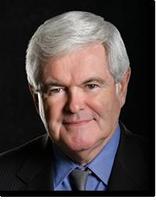
Former House speaker and Newt Gingrich is shooting a documentary about Pope John Paul II’s 1979 trip to Poland and how it helped to lay the groundwork for bringing down the Soviet Union, writes Dan Gilgoff of U.S. News & World Report on his God & Country blog.
Nine Days That Changed the World will release this fall under Gingrich Productions. Gingrich also discussed his conversion to Christianity with Gilgoff, saying the influence of popes JPII and Benedict affected him deeply.