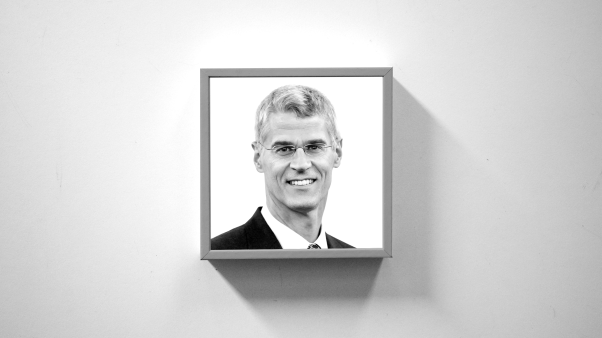
In his 25 years at Trinity Western University, Harro Van Brummelen says he has been free to teach as he chooses.
The fact that Trinity requires him to affirm the Bible as the final authority without error frees him to pursue truth from a Christian perspective. “In a sense, I have more academic freedom here than I would have in other situations,” said Van Brummelen, professor of education at the British Columbia school.
But Trinity’s faith statement for faculty puts it at the center of a national debate on whether such confessional standards are compatible with academic freedom.
The Canadian Association of University Teachers (CAUT) says they are not. The 65,000-member advocacy group has found that Trinity, Canada’s largest evangelical college with 4,000 students, imposes “unwarranted and unacceptable constraints on academic freedom,” and noted that other religious universities impose no such limits.
“I understand they feel they must have these constraints,” said Penni Stewart, CAUT president and associate professor of sociology at York University. “In the end we disagree. It’s a clash of values, really.”
Trinity president Jonathan Raymond called the report “an arbitrary attack” and a “blacklist[ing]” that makes faculty appear “less worthy in Canadian academia.”
CAUT is investigating other flagship Christian colleges with required faith statements, a move that worries some Christian scholars. They are concerned the report could hurt Trinity’s standing with the Association of Universities and Colleges of Canada (AUCC), a prestigious body that has endorsed the school’s academic practices.
“The danger is that it will provoke the AUCC to reconsider the membership of these confessional schools,” said John Stackhouse, a theologian at Regent College in Vancouver. “That would be the equivalent of having your accreditation withdrawn.”
The CAUT report could have a “chilling effect” on other Christian colleges if it leads AUCC to reconsider their status, said Robert Sweetman, interim president of the Institute for Christian Studies, a Toronto graduate school.
The controversy is a new wrinkle in the long-standing tension between Christian and secular higher education in Canada. In 2001, the Supreme Court of Canada overturned the British Columbia College of Teachers’ refusal to accredit Trinity’s teacher education program because the school prohibited gay relationships.
Trinity is the first school cited by CAUT under a 2006 policy on ideological or faith tests.
Some Christian scholars say CAUT’s definition of academic freedom ignores the synergy that arises from shared beliefs.
“I have no problem with the idea of signing up to a confessional belief,” said David Lyon of Queen’s University, a secular Ontario school. “We all come to our research and teaching with particular sets of assumptions.”
Copyright © 2010 Christianity Today. Click for reprint information.
Related Elsewhere:
Other recent education stories include:
Fight Between Erskine College and Its Denomination Will Head to Court | Associate Reformed Presbyterian Church fired board members, alleging mission drift. (March 17, 2010)
The Litmus Test | Trustee ban on “advocacy of homosexual practice and same-sex marriage” stirs up Calvin faculty. (October 28, 2009)
Liberty Unbound | How Jerry Falwell’s ambitious sons have led the Lynchburg university to financial success and a burgeoning student body. (September 10, 2009)