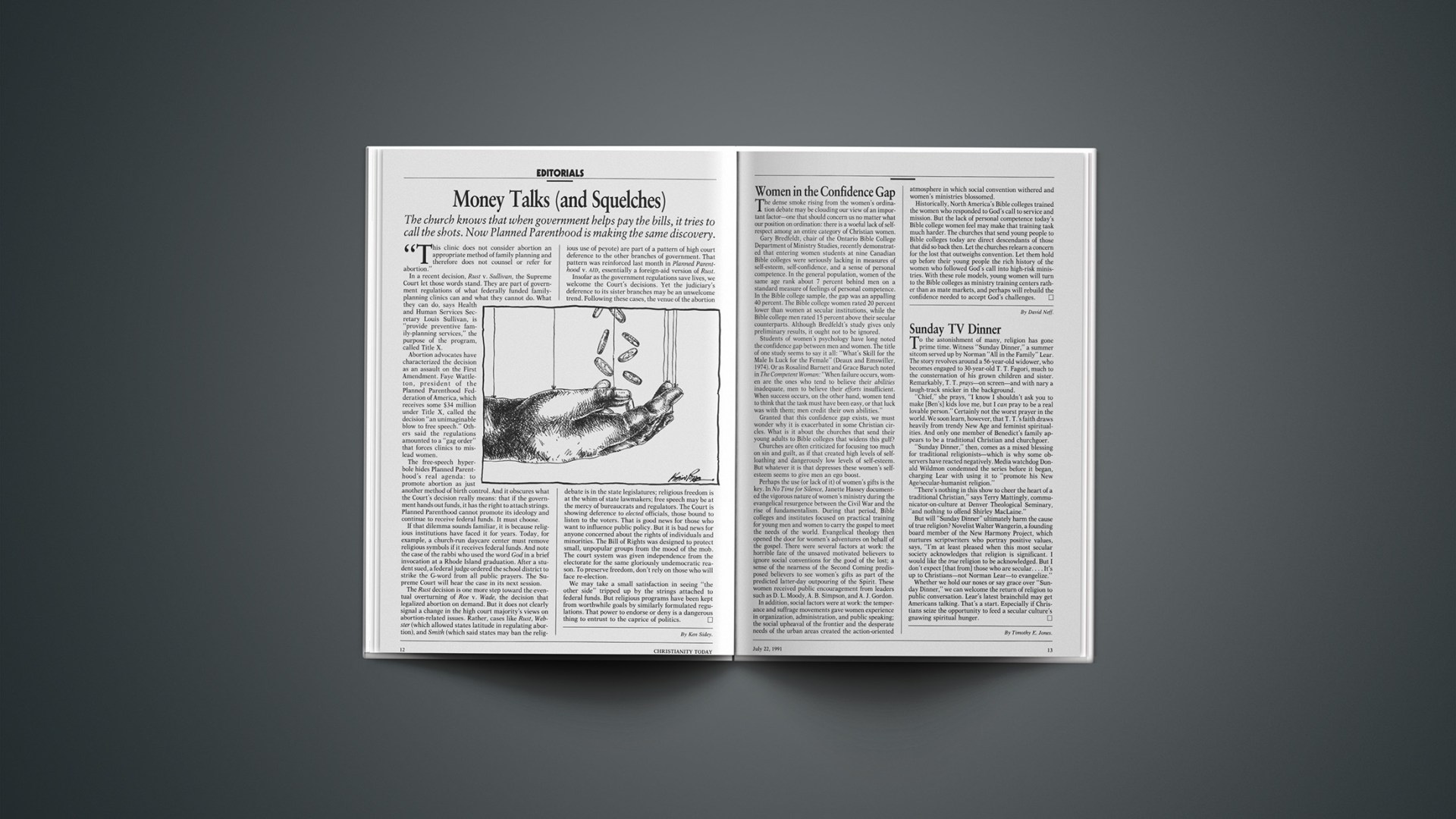

Money Talks (And Squelches)
The church knows that when government helps pay the bills, it tries to call the shots. Now Planned Parenthood is making the same discovery.
“This clinic does not consider abortion an appropriate method of family planning and therefore does not counsel or refer for abortion.”
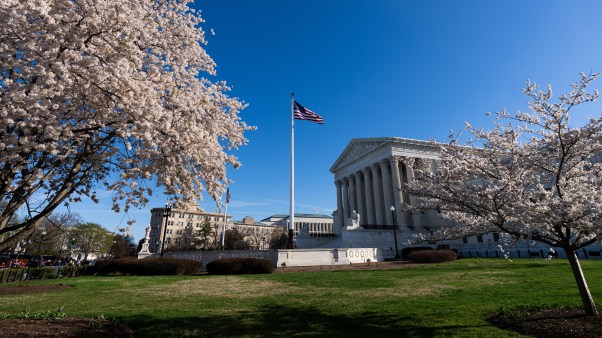
In a recent decision, Rust v. Sullivan, the Supreme Court let those words stand. They are part of government regulations of what federally funded family-planning clinics can and what they cannot do. What they can do, says Health and Human Services Secretary Louis Sullivan, is “provide preventive family-planning services,” the purpose of the program, called Title X.
Abortion advocates have characterized the decision as an assault on the First Amendment. Faye Wattleton, president of the Planned Parenthood Fedderation of America, which receives some $34 million under Title X, called the decision “an unimaginable blow to free speech.” Others said the regulations amounted to a “gag order” that forces clinics to mislead women.
The free-speech hyperbole hides Planned Parenthood’s real agenda: to promote abortion as just another method of birth control. And it obscures what the Court’s decision really means: that if the government hands out funds, it has the right to attach strings. Planned Parenthood cannot promote its ideology and continue to receive federal funds. It must choose.
If that dilemma sounds familiar, it is because religious institutions have faced it for years. Today, for example, a church-run daycare center must remove religious symbols if it receives federal funds. And note the case of the rabbi who used the word God in a brief invocation at a Rhode Island graduation. After a student sued, a federal judge ordered the school district to strike the G-word from all public prayers. The Supreme Court will hear the case in its next session.
The Rust decision is one more step toward the eventual overturning of Roe v. Wade, the decision that legalized abortion on demand. But it does not clearly signal a change in the high court majority’s views on abortion-related issues. Rather, cases like Rust, Webster (which allowed states latitude in regulating abortion), and Smith (which said states may ban the religious use of peyote) are part of a pattern of high court deference to the other branches of government. That pattern was reinforced last month in Planned Parenthood v. AID, essentially a foreign-aid version of Rust.
Insofar as the government regulations save lives, we welcome the Court’s decisions. Yet the judiciary’s deference to its sister branches may be an unwelcome trend. Following these cases, the venue of the abortion debate is in the state legislatures; religious freedom is at the whim of state lawmakers; free speech may be at the mercy of bureaucrats and regulators. The Court is showing deference to elected officials, those bound to listen to the voters. That is good news for those who want to influence public policy. But it is bad news for anyone concerned about the rights of individuals and minorities. The Bill of Rights was designed to protect small, unpopular groups from the mood of the mob. The court system was given independence from the electorate for the same gloriously undemocratic reason. To preserve freedom, don’t rely on those who will face re-election.
We may take a small satisfaction in seeing “the other side” tripped up by the strings attached to federal funds. But religious programs have been kept from worthwhile goals by similarly formulated regulations. That power to endorse or deny is a dangerous thing to entrust to the caprice of politics.
By Ken Sidey.