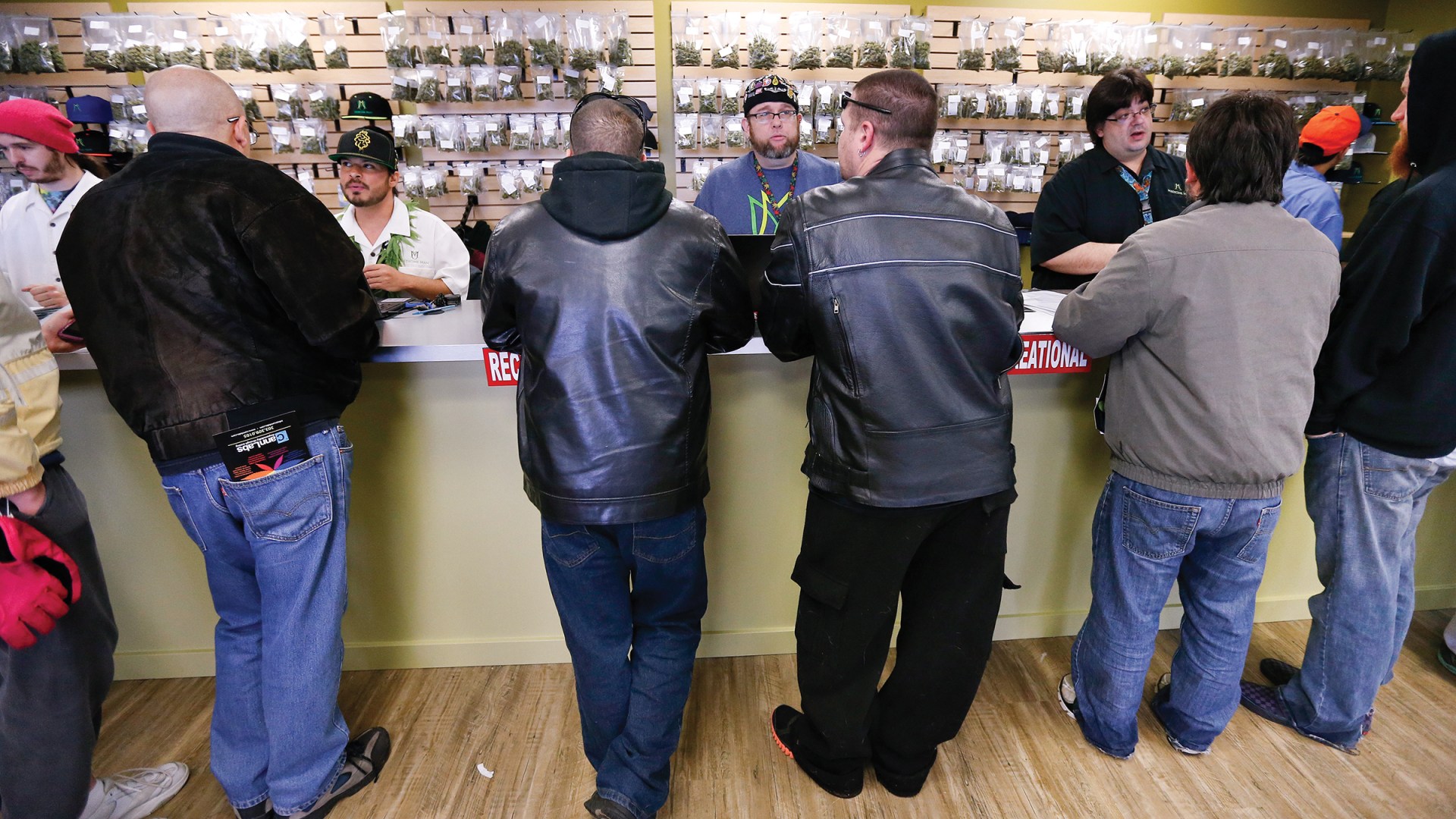

On January 1, Colorado stores selling recreational marijuana opened their doors. Within a week, The Denver Post reported, nearly 100,000 people—about 30 percent of them from out of state—had bought the drug.
Until New Year's Day, marijuana dispensaries could sell only to customers with a doctor's recommendation and a state-issued medical marijuana card. Now, any Colorado resident 21 and over can purchase marijuana.
Many Coloradans celebrate the legalization as a landmark victory in the war on drugs. The courts won't be clogged with recreational users, and sales will generate an estimated $27.5 million per year for schools. With both a 25 percent state tax and 2.9 percent sales tax, state officials expect to yield a total of $67 million a year and total sales of nearly $580 million in revenues.
The buying spree may have slowed since its first week, but the church is thinking about how to respond to the new multimillion-dollar industry.
Jason Malec, founding pastor of New Denver Church and an American Bible Society executive, said it's too early to discern a cultural shift among Colorado Christians.
"No one has come to me saying, 'Because pot is legal at the state level, is it okay for us?' That probably will happen, but it's too new for us," he said. "Most Christians I know just shrug their shoulders. Rarely do I hear people talking about it."
But Jared Mackey, a pastor at the Next Level Church in Englewood, said the legalization has caught the attention of his church, which includes both recovering alcoholics and brewers. They are having deep discussion "about substance use and abuse" and "issues of the heart, rather than focusing merely on external behaviors."
Similarly, Alan Briggs, director of Frontline Church Planting and a pastor at Vanguard Church in Colorado Springs, believes the legalization has created opportunities to talk about the motives behind marijuana use.
"Most times Christians look at the what of marijuana, but we don't talk much about the why," said Briggs. "It promises to dull physical pain, but most people use it to cope with relational and personal pain."
He is optimistic that the legalization will create chances to discuss personal suffering and point people to the gospel.
There are other reasons some Christians see opportunity in the new laws.
Jason Janz, a pastor at Providence Bible Church in downtown Denver, said the legalization will "decrease the incarceration rates, especially among minorities." His church works with nearly a thousand ex-offenders, and he laments how minorities are criminalized more harshly than whites.
"When you live in a community under the burden of mass incarceration, you're glad for the legalization," said Janz, "whether you use marijuana or not."
Janz wonders, however, if people are aware of the drawbacks. "I talked to two Denver police officers about the legalization, and they said, 'The argument was we would eliminate the black market, but it [has] created the largest multistate black market in the West.'"
Malec, along with others, notes legalization also presents challenges for parents. "I have three children—from ages 8 to 12—and every one of them knows the smell of marijuana," he said. "Walking down the street, they can pick out who is smoking it and whether it's a strong strain. As parents and believers, we will have to confront questions and ethical dilemmas in ways my parents didn't have to."