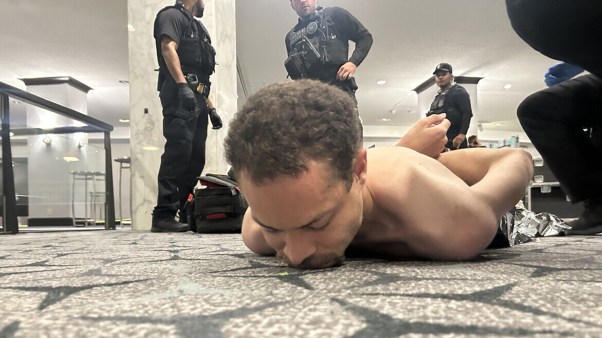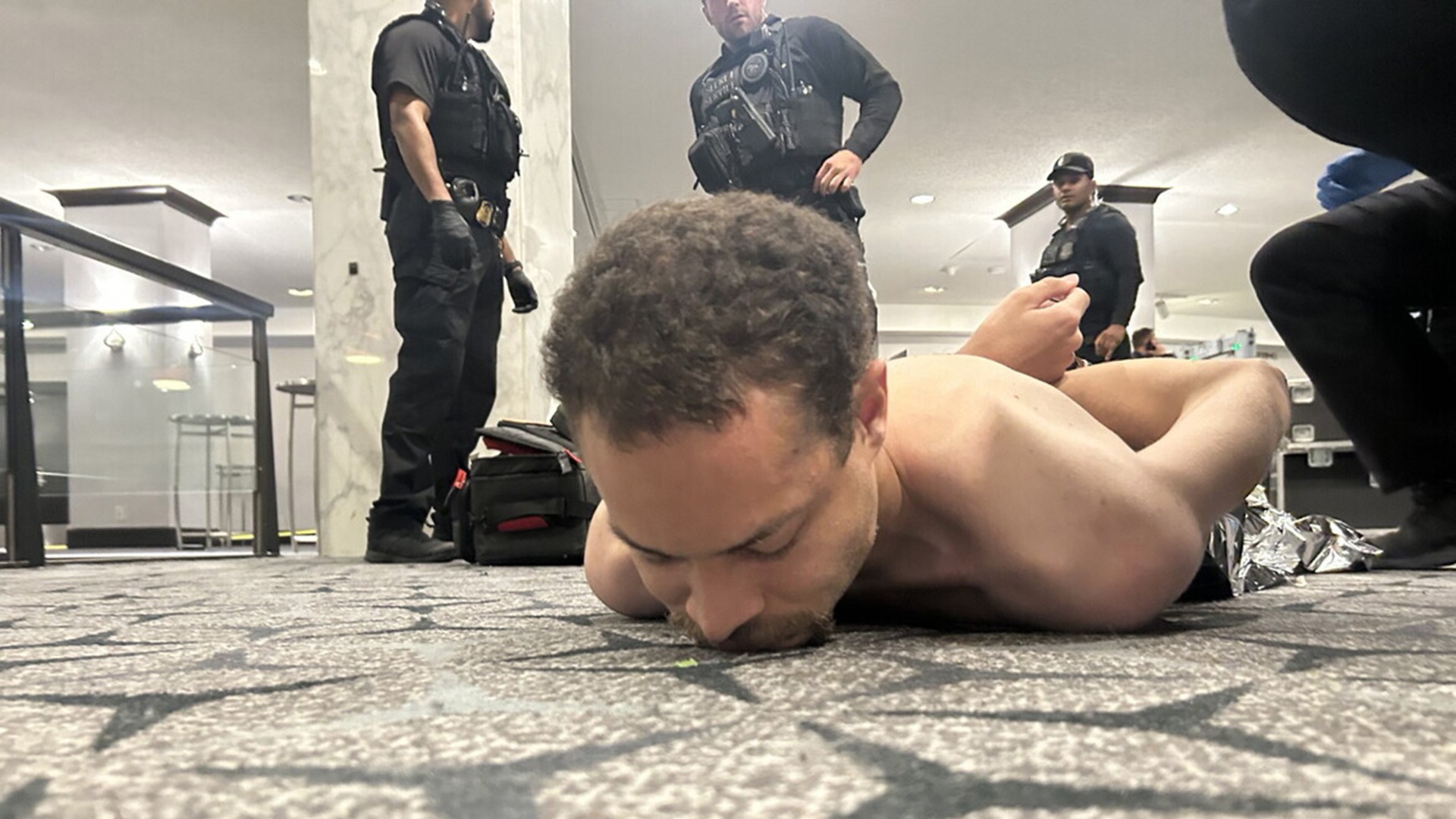
The first thing I noticed about the manifesto of Cole Tomas Allen, the suspect in the foiled assassination attempt on President Donald Trump at the White House correspondents’ dinner (WHCD), is how very online it sounds. And not just online in general, but online in a particular nice, nonthreatening, progressive, young man kind of way.
The tells are subtle but unmistakable. There’s the way Allen uses exclamation points: “Hello everybody!” he begins, with a cheerful incongruity. Or the indirectness (“but can hardly call that not a self-inflicted status,” he writes instead of something straightforward, like but that’s my fault). Or the refusal to explicitly mention Trump, instead referring to him repeatedly as “a pedophile, rapist, and traitor,” as if the name itself held some mystic power. Or the apologies Allen gives but doesn’t actually owe, like his strange mea culpa to the people who handled his luggage as he traveled by train to DC.
Or notice how the first full sentence starts with “So,” which has a softening effect and presents the speaker as thoughtful, tentative, considered. This tic was first documented among programmers (which Allen is) and other very online types at the turn of the century and has since migrated to “members of the explaining classes—the analysts, scientists and policy wonks who populate the Rolodexes of CNBC and The PBS NewsHour,” and other, more contemporary outlets. Allen writes like the media he almost certainly consumes.
All of this is recognizable because it’s a very common way of talking online. I know people who speak just like this, people who probably share Allen’s policy preferences but would never condone assassination, as much as they oppose—maybe even hate—Donald Trump. As Reason magazine editor Katherine Mangu-Ward observed, “This is normie rhetoric and not normie behavior.”
That differentiation rings true to me, but it’s cold comfort. Allen didn’t come to talk and, more importantly, think this way all on his own.
That context doesn’t negate a whit of his personal responsibility for what looks to be attempted mass murder, not only of Trump but also of many other administration officials. But surely it’s telling: Insofar as the manifesto is an honest account of his rationale for this attack, he appears to have been immersed in the popular progressive discussion of Trump and, crucially, to have drunk deeply of American incoherence around acceptable political violence.
Because we are incoherent. After every horrific incident like this, we all say there’s no place for political violence in America. But the fact is we do cheer political violence sometimes. We endorse the violent overthrow of oppressive governments abroad. Would you expect many American tears shed if the people of North Korea arose and forcibly established a constitutional democracy tomorrow? Or in Iran, our government is involved in a war of pseudo–regime change right now.
We cheer some political violence in our own history too. Why did we have a revolution against England? You know the slogans: “No taxation without representation.” “Don’t tread on me.” “Give me liberty or give me death.” “Sic semper tyrannis.” America’s founders had an undeniably political vision they ultimately accomplished by violent means.
related


That history is reflected in our language. Five years ago, soon after the January 6, 2021, storming of the US Capitol, I pointed out the common use of violent metaphors in politics (“fight” for your agenda, “take back our country,” and the like). Few object to this language until someone aligned with their political rivals makes the violence real. That inconsistent outrage has become par for the course: An attacker with a right-wing manifesto sparks left-wing castigation of Republicans’ reckless rhetoric. An assassin from the left prompts right-wing announcements that blood is on Democrats’ hands.
Setting aside our inconsistency, though, I think there’s something to take seriously here. People in my political corner like to quote the Founding Fathers saying things like “a little rebellion now and then is a good thing” or that the “tree of liberty must be refreshed from time to time with the blood of patriots and tyrants.”
We quote this stuff metaphorically, as a harmless rah-rah for small government and the Constitution. But Thomas Jefferson, who wrote both of those lines, wasn’t speaking in metaphor. He was perfectly sincere. As the context of the “tree of liberty” quote makes undeniable, he thought that sometimes you needed to kill some people in the government to keep them in line. “What signify a few lives lost in a century or two?” Jefferson mused.
This is not how we think about political violence today, nor should it be. These assassination attempts are indefensible, frightening, chaotic—every bad thing. Allen tried to justify his choice in Christian terms, claiming on biblically superficial and ethically ignorant grounds that he had cause to set aside the command of Christ and instruction of Scripture. He was wrong.
Yet his self-justification did not emerge in a vacuum. With a moral imagination furnished by incoherence about political violence and a decade of constant, extravagantly pitched denunciations of Trump, he acted. In a sense, he called the bluff of everyone who speaks as if Trump (or any political figure they deplore) deserves death, despite not really believing it—the kind of fundamentally unserious people who cast, say, stealing four lemons from Whole Foods as a strike against tyranny.


That’s not what sic semper tyrannis means. As for what it does mean, well, most of us don’t have the stomach for it anymore.
I say that thankfully, as someone grateful to live with the constitutional rights and liberties the founding generation bequeathed but also happy to live in a society that usually doesn’t match our violent words with violent deeds, that often allows us to live the “quiet life” Paul advised for Christians in 1 Thessalonians 4:11—the “good lives” of proper respect and love that Peter said could introduce even hostile pagans to God (1 Pet. 2:11–12, 17).
Our society is as calm, stable, humane, and free as it is precisely because of two millennia of the influence of Christianity, and I would strongly prefer it stay that way. But I worry it won’t if we cannot learn to tame our tongues.
Bonnie Kristian is deputy editor at Christianity Today.