
I was a teenager trying to entertain 2-year-old Laura as she squirmed in her high chair. Thinking myself a clever babysitter, I held up her laminated placemat, which featured a photograph of Mickey and Minnie Mouse.
"Is this a picture of Donald and Daisy Duck?" I asked.
"No," she giggled.
"Is it Goofy and Pluto?"
"Nuh-uh!" she squealed.
"Well, who are they?" I asked, gearing up for the inevitable right-answer celebration. But her reply caught me off guard.
"Strangers in costumes."
Laura is grown now, but I've been thinking about the pragmatism she exhibited as a toddler. Her no-nonsense take on the world (at least the world of Disney) is a perfect example of what sociologist Philip Rieff and philosopher Allan Bloom both described as a "low symbolic hedge."
I encountered this idea in The Shattered Lantern, a book by Catholic writer Ronald Rolheiser. If many Westerners have trouble perceiving God's presence in daily life, then perhaps, says Rolheiser, the problem is that our culture lacks potent symbols.
The ability to use symbols distinguishes humans from other animals. Consider eating. All animals use food for sustenance and pleasure. But humans can employ candlelight, china, toasts, and blessings to imbue a meal with significance. Through symbols, eating can embody romance, friendship, honor, or celebration.
I must confess: I usually have neither the time nor the inclination to bother with such symbols. When, for instance, I eat on the run, my symbolic hedge is low; food is just fuel, and the day is just a succession of hours to manage or endure.
But Rolheiser warns that a low symbolic hedge drains the meaning out of experience. To illustrate, he imagines a middle-aged man beset by chronic back pain.
What does this pain mean? It can mean that he has arthritis, a medical symbol; or it can mean he is undergoing some midlife crisis, a psychological symbol; or it can mean that he is undergoing the paschal mystery, that this is his cross, a religious symbol. Or it might mean all three. The symbols with which we enter and interpret our experience can be low (suffering arthritis) or high (being part of the paschal mystery!).
God's apparent absence in ordinary experience is intimately connected to the diminished height of our symbolic hedge.
I came to Rolheiser's book because two friends—a Christian and a skeptic—had confessed to longing for a sharper awareness of God's presence. Their failure to "feel" God left both women wounded.
The Shattered Lantern reminded me that sensing God's presence is not the same thing as faith. God is near whether we feel him or not. "Blessed are those who have not seen and yet have believed," Jesus declares (John 20:29). Saint John of the Cross famously wrote of the "dark night of the soul," claiming that sometimes God withdraws his presence.
Still, John of the Cross noted that in other cases the problem has more to do with our "blindness." Given that Jesus encourages us to seek in order to find (Luke 11:9), Rolheiser would have us cultivate a contemplative receptivity to God—trusting that, in general, we can sense his presence.
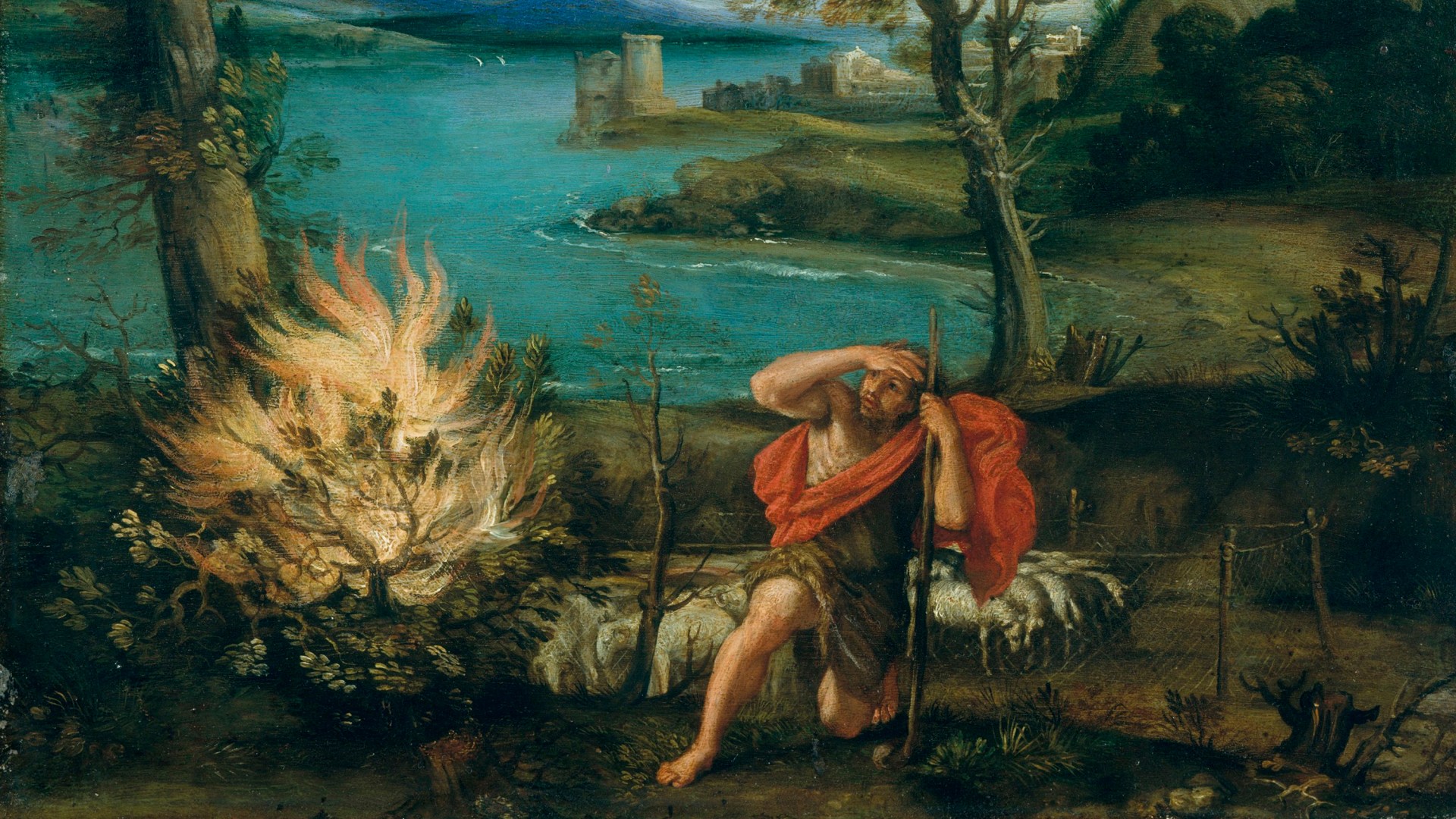
In a culture of narcissism, pleasure-seeking, and restlessness, that receptivity can seem futile. A low symbolic hedge is both a cause and a symptom of our problem. Where earth once seemed, in the words of Elizabeth Barrett Browning, "crammed with heaven," it now often appears as flat as a laminated placemat. Where the poet saw "every common bush afire with God," we see only shrubs.
Our low symbolic hedge is, in part, a byproduct of the modern dogma that nature is all there is. But it's also the fruit of our Reformation heritage, with its wariness of superstition. After all, Laura was right: Mickey and Minnie really are just strangers in costumes. It's foolish to pretend otherwise.
But what about cases when there's truly more than meets the eye? When bread and wine are not just food and drink, but emblems of a body broken? When baptismal waters plunge us into death and resurrection?
The ancient Israelites were not above raising the symbolic hedge when they needed to awaken themselves to God. In 1 Samuel 7, they pour out buckets of water to express repentance, and build "ebenezers" out of rocks to memorialize God's provision and deliverance. Sometimes water is more than water, stone more than stone.
Much has been made of young evangelicals leaving "low" Protestant congregations for more liturgical churches. Maybe part of what they're seeking is a higher symbolic hedge. What would happen if our worship enveloped them with biblically grounded symbolism? Certainly, we should remain wary of counterfeit "strangers in costumes." But we must also help ourselves remember that we've been invited into the drama of a mysterious and wonderful gospel—a truth stranger (in the best possible way) than fiction.