
After one of my recent lectures, a Christian college student approached me and asked if black people are uncomfortable with the fact that Jesus is white. I responded, “Jesus is not white. The Jesus of history likely looked more like me, a black woman, than you, a white woman.”
I wasn’t shocked by this student’s assumption that Jesus was of European descent, or the certitude with which she stated it. When I am in US Christian spaces, I encounter this assumption so often that I’ve come to believe it is the default assumption about Jesus’ appearance. Indeed, white Jesus is everywhere: a 30-foot-tall white Savior stands at the center of Biola University’s campus; white Jesus is featured on most Christmas cards; and the recent History Channel mini-series The Bible dramatically introduced a white Jesus to more than 100 million viewers. In most of the Western world, Jesus is white.
While Christ the Lord transcends skin color and racial divisions, white Jesus has real consequences. In all likelihood, if you close your eyes and picture Jesus, you’ll imagine a white man. Without conscious intention or awareness, many of us have become disciples of a white Jesus. Not only is white Jesus inaccurate, he also can inhibit our ability to honor the image of God in people who aren’t white.
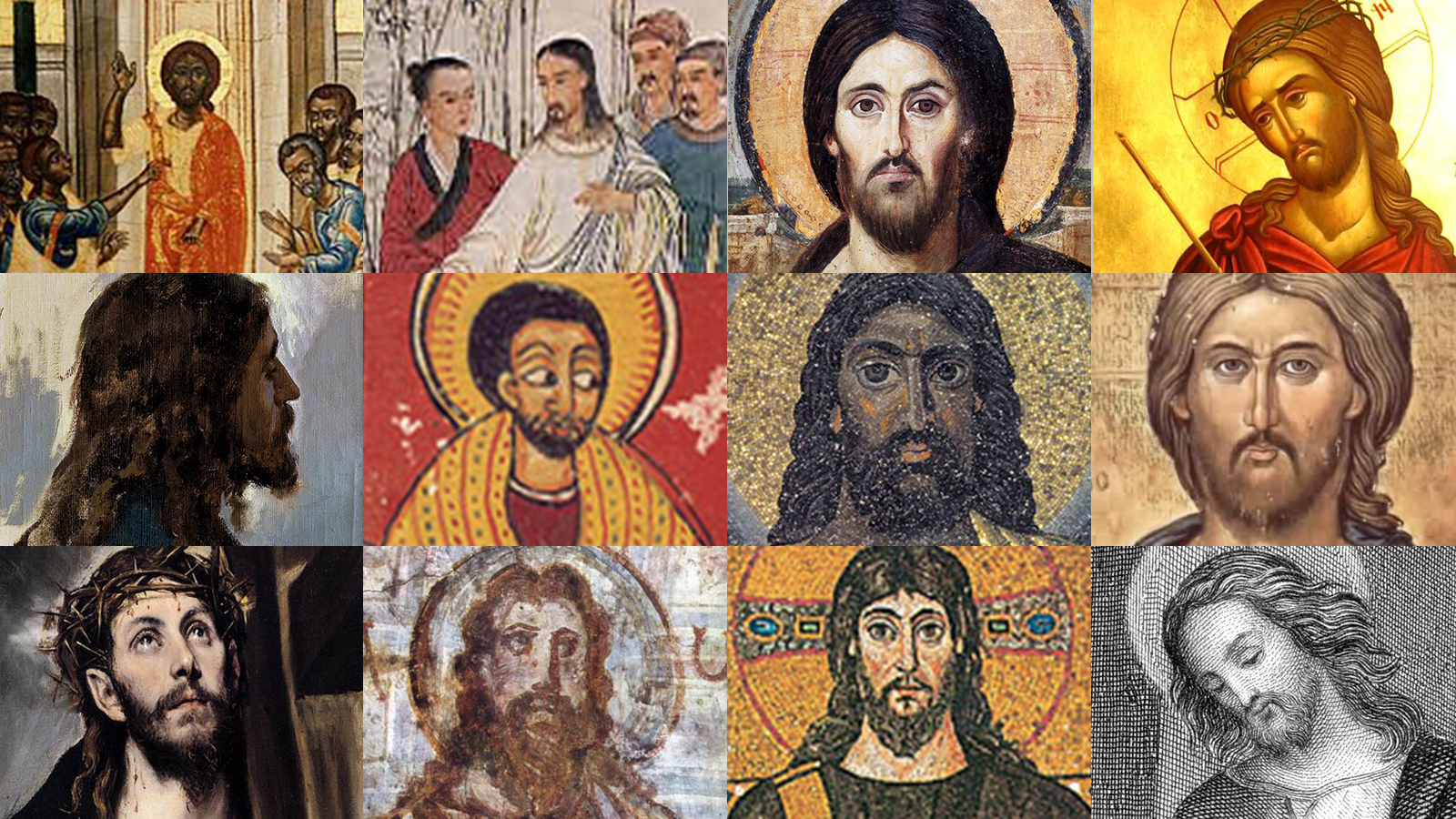
Jesus of Nazareth likely had a darker complexion than we imagine, not unlike the olive skin common among Middle Easterners today. Princeton biblical scholar James Charlesworth goes so far as to say Jesus was “most likely dark brown and sun-tanned.” The earliest depictions of an adult Jesus showed him with an “Oriental cast” and a brown complexion. But by the sixth century, some Byzantine artists started picturing Jesus with white skin, a beard, and hair parted down the middle. This image became the standard.
In the colonial period, Western Europe for the most part exported its image of a white Christ worldwide, and white Jesus often shaped the way Christians understood Jesus’ ministry and mission. Some 19th-century Christians, eager to justify the cruelties of slavery, went out of their way to present Jesus as white. By negating his true identity as a dark-skinned, oppressed minority, slaveholders were better able to justify the master-slave hierarchy and forget Jesus’ ministry to set the oppressed free (Luke 4:18).
As a Jew, Jesus was an ethnic minority in the Roman Empire. Jews were marginalized by Romans, Greeks, and other non-Jewish groups in many imperial cities. As an infant, Jesus was a target of ruler-sanctioned infanticide, fled to Egypt as a refugee, and faced Roman tax collectors’ exploitation. Throughout his life, he knew the pain of being a member of an ethnic group whose culture, religion, and experiences were marginalized by those in power.
Since Jesus belonged to an ethnic minority, we are compelled to re-evaluate who Jesus was and with whom he identified as he fulfilled his mission. When people who were on the outskirts gathered, Jesus was among them—not only because he ministered to them but because he was one of them. As an ethnic minority, Jesus didn’t simply care about people who were victims of Rome-sanctioned violence, he was a victim of Rome-sanctioned violence. Jesus didn’t simply care about refugees, Jesus was a refugee. Jesus didn’t simply care about the poor, he was poor. To Jesus, ministry meant knowing from the inside the pain of society’s most marginalized.
In order to follow Jesus in his mission today, we often must choose a love that is based in solidarity. Many well-meaning Christians minister across a social gap, but whites can minister to people of color without truly seeing them as equals, and higher-income people can serve lower-income people while knowing little about their daily lives. Jesus’ ethnic identity and social location require that we must not only minister to people who are marginalized, we must stand with them as Jesus stands with them.
This involves seeing non-European cultural perspectives and customs as valid and valuable, listening to people who are marginalized, and demonstrating with our words and actions that both spiritual and social liberation are central to the gospel.
But first, those who still perceive a white Christ must ask whether they can and will worship a dark-skinned Jesus.
Christena Cleveland is associate professor of the practice of reconciliation at Duke University’s Divinity School.