In this series



Evangelicals are the only religious group in the United States that has not developed a better reputation over the past few years. And Americans have become less likely to know an evangelical—more so than any other faith tradition.
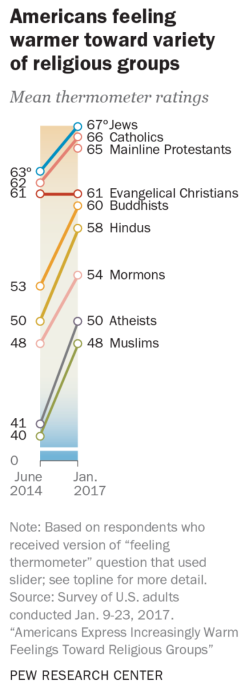
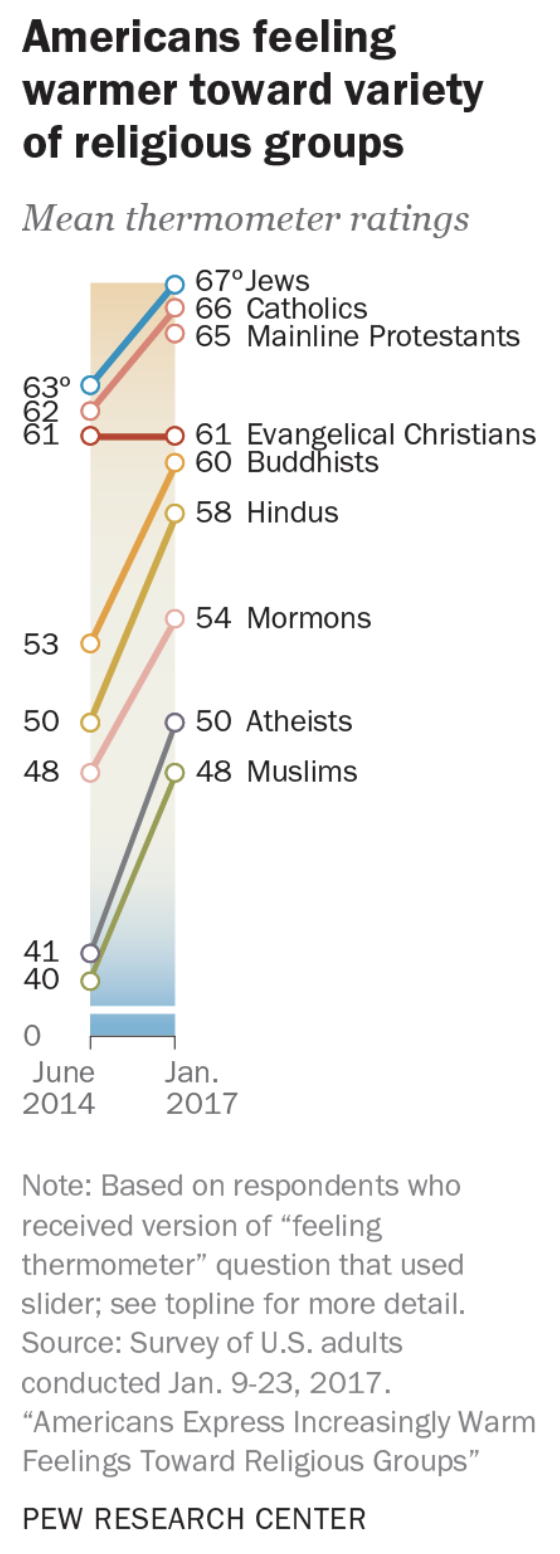
While feelings toward evangelicals have remained stable (even among Democrats), Americans gave warmer responses to every other faith group this year than they did in 2014, according to Pew Research Center findings released today.
Jews, Catholics, Buddhists, Hindus, and Mormons all improved their standings, with the two lowest-rated affiliations—atheists and Muslims—seeing some of the largest gains.
Pew’s “feeling thermometer” survey of more than 4,200 adults found that even without any increase, evangelicalism remains one of the most-liked faith tradition in the country—behind Jews, Catholics, and mainline Protestants. However, the movement’s popularity is largely due to positive ratings from evangelicals themselves.
Overall, 44 percent of Americans feel positively about evangelicals, while 38 percent feel neutral and 18 percent feel negatively. The ratings fall when responses from fellow evangelicals, who made up more than 1 in 4 of respondents, are removed: Just under a third of non-evangelicals (32%) have warm feelings towards the group.
Part of the reason for evangelicals’ middling ratings is lack of exposure. The proportion of Americans who say they know an evangelical dropped by 9 percentage points from 2014 to 2017, down to 61 percent today. (A 2013 study hinted at the lack of exposure: 1 in 5 non-evangelicals in North America said they did not personally know an evangelical.) Meanwhile, knowing an evangelical increases their rating by 12 degrees on Pew’s feeling thermometer.
Though a majority of Americans still know at least one evangelical, the group experienced the most significant decline in familiarity. Among non-evangelicals, millennials (45%) and African Americans (33%) were least likely to know someone who identifies as evangelical.
One factor behind the drop-off may be a growing reluctance to use the label over the baggage it carries, especially for those outside the church. A CT Pastors survey conducted late last year found that pastors were more likely to call themselves evangelical around other Christians (70%) than non-Christians (52%). “I still employ the term evangelical within academic circles, but I avoid the term elsewhere,” one Evangelical Free Church pastor admitted.
Following the election, Calvin College political science professor Kevin den Dulk speculated that due to the association between Republicans, Trump, and evangelicals, evangelicals who supported Hillary Clinton may have become less likely to self-identify that way following the election. At various points in the campaign and election, Christian leaders challenged the usefulness of the label (and defended it).
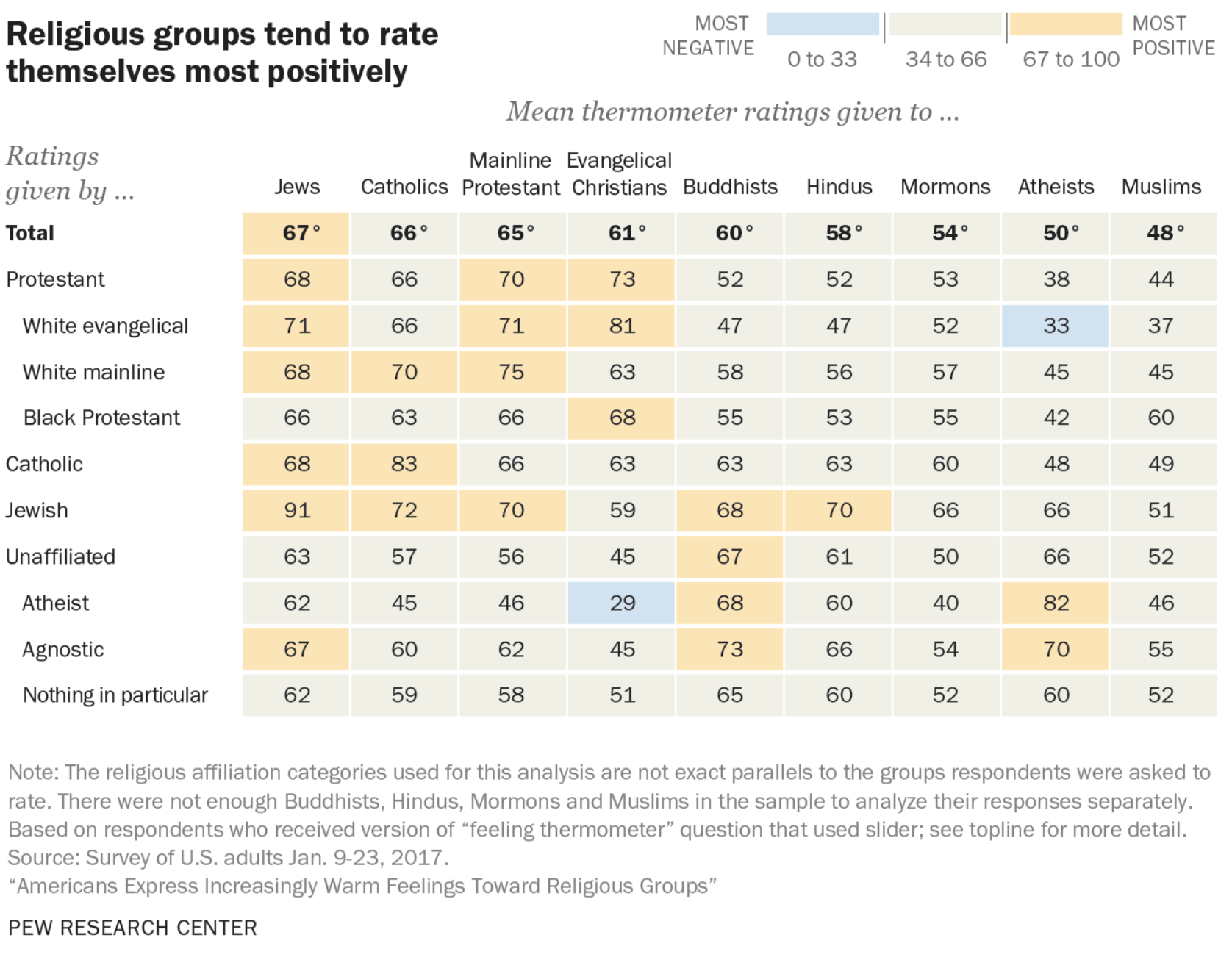
When broken down by political party, both Republicans’ and Democrats’ ratings for evangelicals were unchanged, Pew reported. However, evangelicals were the highest-rated religious group among Republicans, but the second-lowest among Democrats, who now like atheists and Muslims more than evangelicals (Mormons came in last).
The only groups to rate evangelicals positively were white evangelicals, Protestants overall, and black Protestants; both of the latter categories include a significant proportion of self-identified evangelicals. By comparison, the majority of Americans from most religious affiliations rated Jews positively. (Pew counted a positive rating as the warmest third (67 degrees or higher) of the feeling thermometer.)
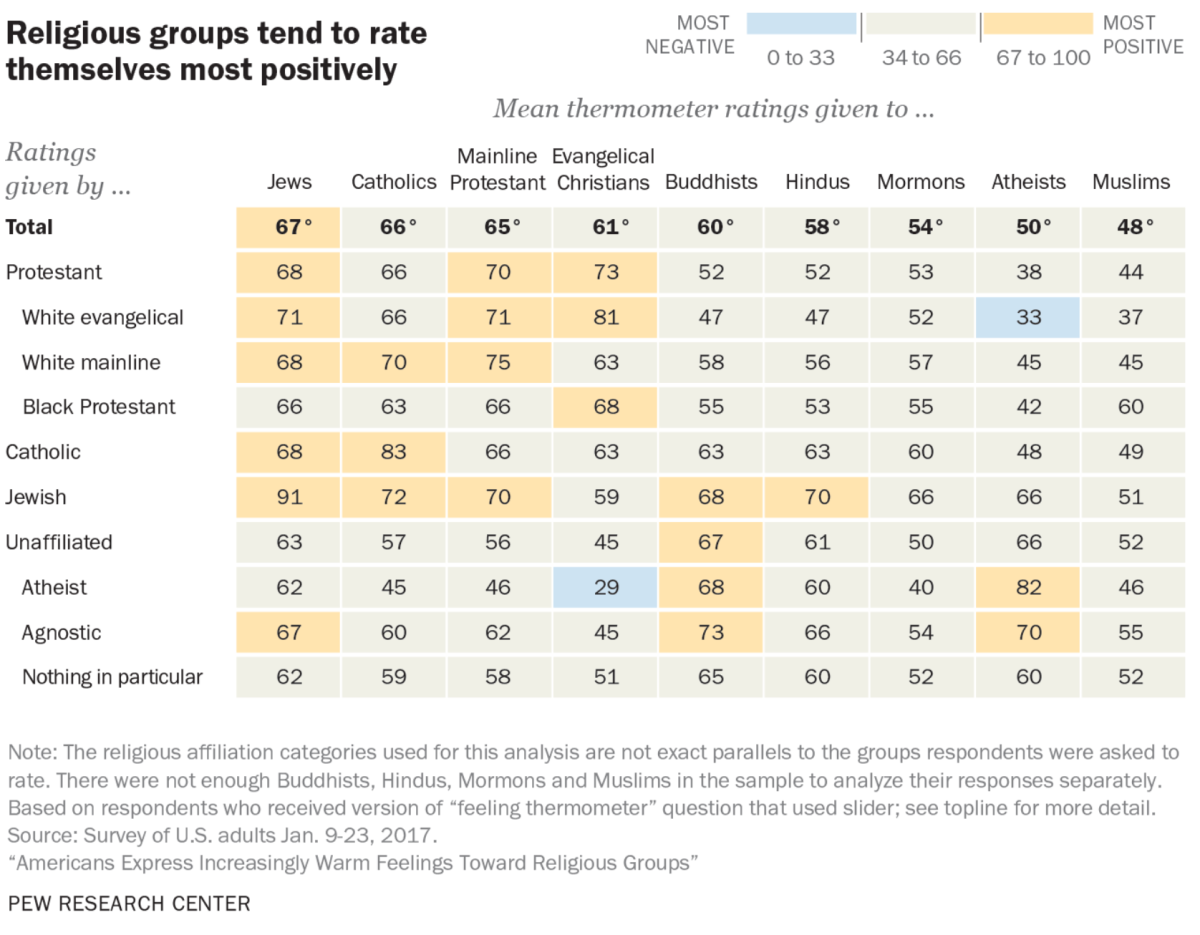
Evangelicals received the most critical ratings from atheists, and vice versa. They are the only two traditions to have “chilly” feelings toward one another. (Pew counted a negative rating as 33 degrees or lower on the feeling thermometer). However, Pew noted that evangelicals have “warmed up slightly” to atheists, rating them at 33 degrees in 2017 versus 25 degrees in 2014.
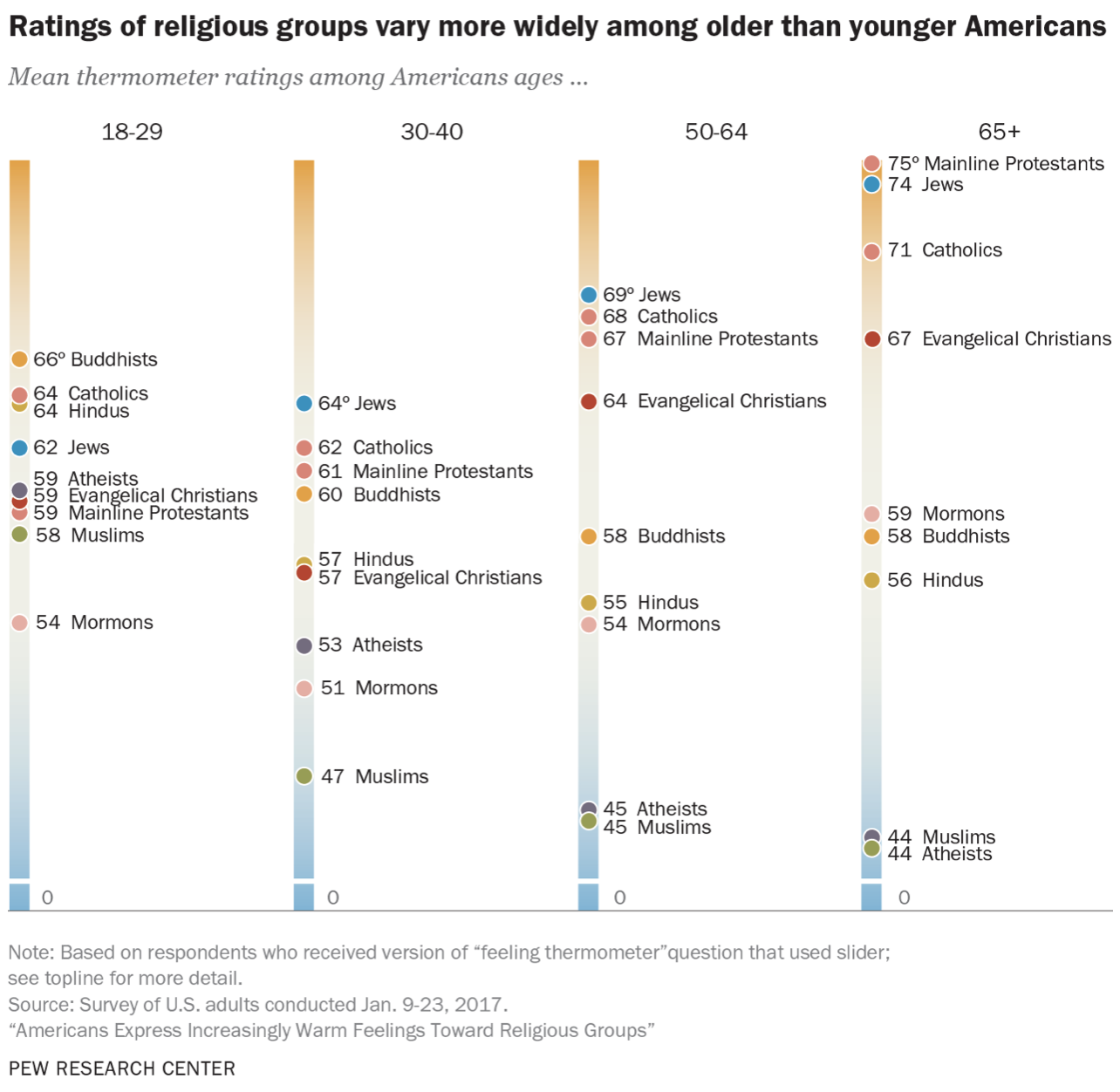
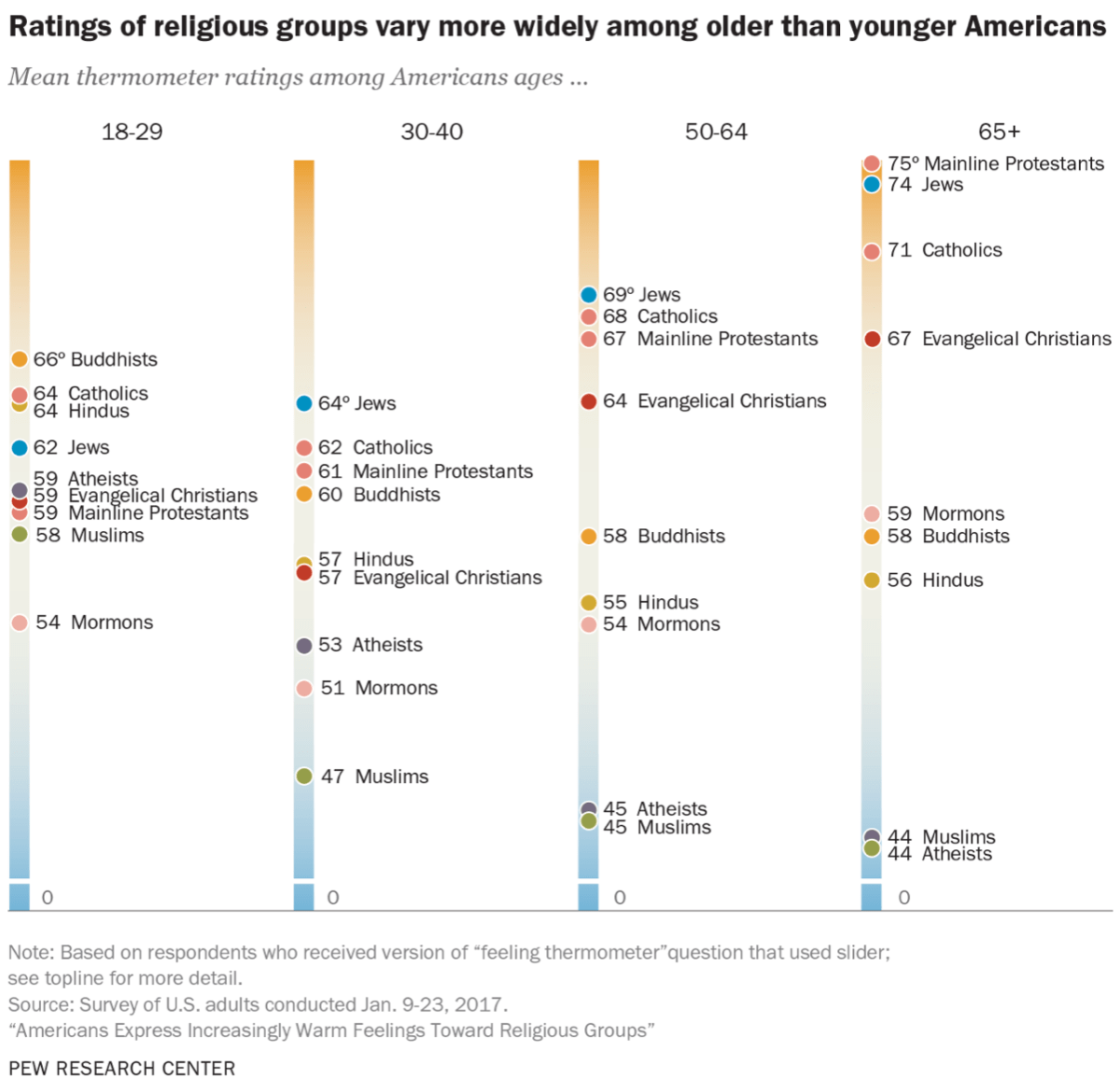
Evangelicals earned the most favorable ratings from Americans ages 50–64 and 65 and over. The older groups also gave the worst ratings to atheists and Muslims. Meanwhile, millennials now feel equally toward atheists and Muslims as toward evangelicals (with Mormons trailing behind).
Previous ratings have prompted a range of responses; some may look at the same report and champion evangelicals’ popularity while others lament society’s negative views, as sociologist Brad Wright wrote for CT in 2011. His conclusion:
Ultimately, evangelical Christians might do well not to spend too much time worrying about what others think of us. Christians in general, and evangelical Christians in particular (depending on how you ask the question), are well-regarded in this country. If nothing else, there's little we can do to change other people's opinions anyway. Telling ourselves over and over that others don't like us is not only inaccurate, it also potentially hinders the very faith that we seek to advance.