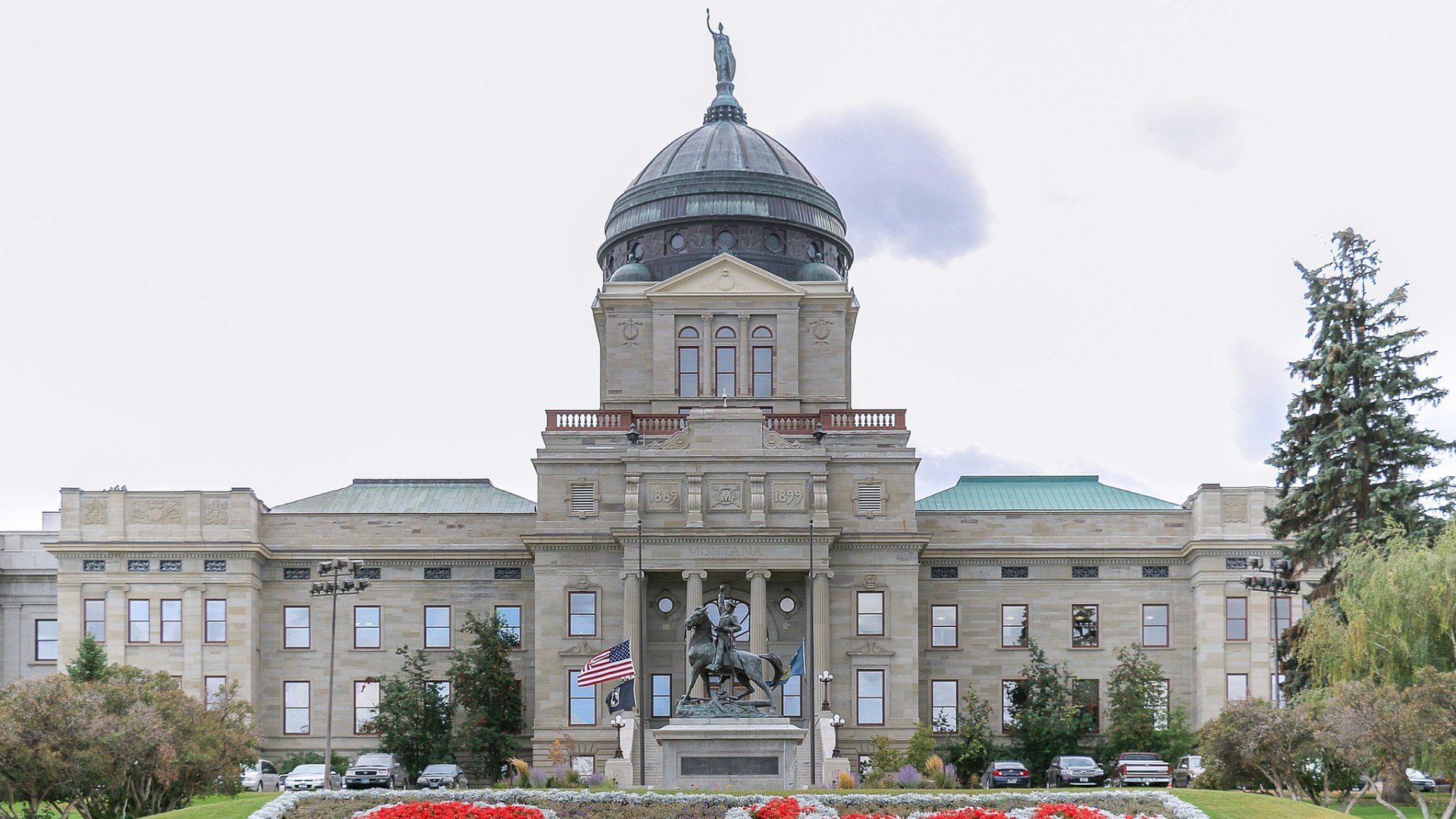
The Montana Supreme Court this week unanimously reversed a $35 million judgment against the Jehovah’s Witnesses for not reporting sexual abuse to authorities, saying church representatives fell within a clergy exception found in the state’s mandatory child abuse reporting law.
Montana law requires officials, including clergy, to report child abuse to state authorities when there is reasonable cause for suspicion. However, the state’s law exempts clergy from reporting when the actual or suspected abuse is discovered in the course of a confidential conversation—such as confession—that is protected by the clergy-penitent privilege.
The high court said in its 7–0 decision that the Jehovah’s Witnesses fall under the exception in this case, which involves a woman who had been abused as a child in the mid-2000s. The congregation handled the allegations internally in accordance with church practices.
The ruling overturns a 2018 jury verdict awarding compensatory and punitive damages to the woman, who accused the church’s national organization of ordering Montana clergy members not to report her abuse to authorities. Jehovah’s Witnesses officials testified “its process for addressing these reports is strictly confidential, notwithstanding the involvement of numerous church clergy and congregants,” Justice Beth Baker wrote in the opinion, issued Wednesday.
“Clergy are not required to report known or suspected child abuse if the knowledge results from a congregation member’s confidential communication or confession and if the person making the statement does not consent to disclosure,” Justice Baker said.
Despite the recent Montana ruling, some states continue moving to expand reporting obligations in the wake of recent national sex abuse scandals, including those revealed through the 2018 grand jury report detailing abuse cover-ups in Catholic dioceses across Pennsylvania and last year’s Houston Chronicle investigation uncovering abuse in the Southern Baptist Convention.
In more than half the country—26 states—clergy are specifically named among those who are legally required to report actual or reasonably suspected cases of child abuse, according to Mandatory Child Abuse Reporting Laws, a resource by Church Law & Tax (a fellow CT publication). All but four of those states provide an exemption for the clergy-penitent privilege like Montana does.
In 15 other states, all adults are considered mandatory reporters, which makes clergy members included by default; over half (8) provide an exemption via the clergy-penitent privilege.
Historically, abuse-reporting laws are a fairly recent phenomenon. Child abuse was not a widely held public concern in the US until the early 1960s. The first mandatory reporting laws applied to doctors and nurses, and then were expanded over the years. Many states also broadened the definitions of abuse (most notably to include sexual abuse) and stiffened penalties (usually a criminal misdemeanor or felony charge carrying a small fine and/or brief jail sentence) for those who fail to fulfill their duty.
Clergy have been among the professions commonly added to the laws of many states throughout recent decades, as have school principals, teachers, daycare operators, and childcare workers.
The recent attention toward abuse in the church represents another wave of awareness and legal review. Illinois, for instance, adopted new changes effective January 1, 2020. Among them: expanded reporting obligations for clergy members (though some exceptions tied to the clergy-penitent privilege still remain) and obligatory annual training for all mandatory reporters.
Church leaders and clergy members must be familiar with these state provisions and make certain they are ready to comply, said attorney and Church Law & Tax senior editor Richard Hammar. Whenever uncertainty arises about whether to report, he said, “Resolve any and all doubts in favor of reporting.”
All states recognize “permissive reporting,” meaning anyone—including clergy—can make a good-faith report, even if the law does not compel them to do so.
Matthew Branaugh is editor of content and business development for Christianity Today’s Church Law & Tax. With reporting by Matt Volz of the Associated Press.