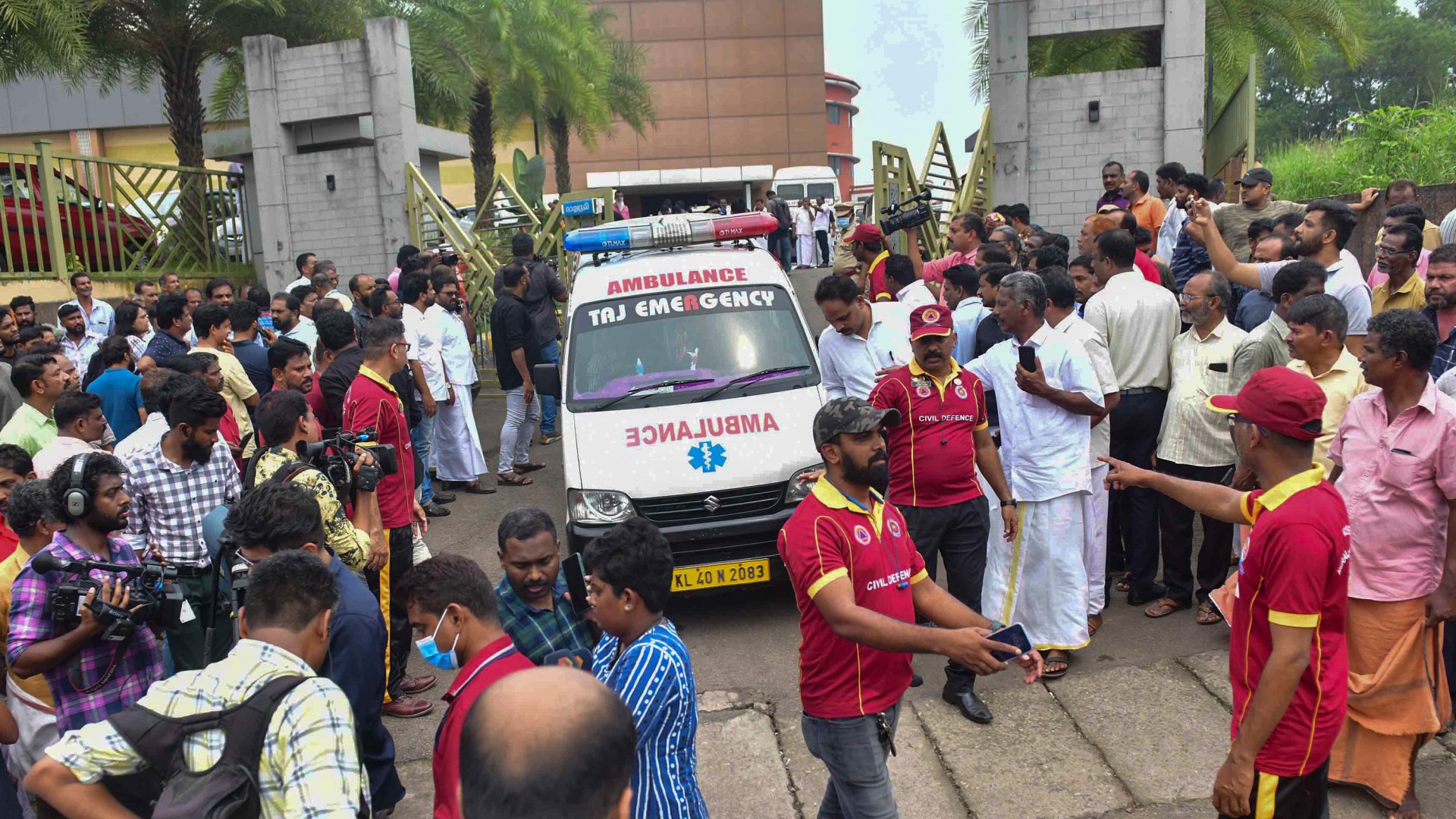
Kingdom halls reopened for in-person gatherings on Sunday near the area of an October 29 fatal bomb attack at a Jehovah’s Witnesses prayer convention in Kochi, a city in the Indian southern state of Kerala.
“We decided to return to physical meetings from today to remove the fear from people’s minds. The online meetings were held only for a few days following the blasts,” T. A. Sreekumar, a spokesperson for the community, told The Times of India.
Four people lost their lives and more than 50 were injured in a series of explosions that tore through a packed conference. About 2,300 people, including many families with children, were attending the three-day event. The bombs went off immediately following the conclusion of a prayer session.
Authorities identified Leyona Paulose (55), Kumari Pushpan (53), Libina Pradeepan (12), and Molly Joy (61) as victims of the attack.
The police investigation was initially centered on covert operatives of radical Islamist fringe outfits seen as adversaries to pro-Israel evangelical groups. But the investigation took a turn after a local resident turned himself into the police station that same day and confessed to the crime. He has been detained by the police as a suspect and has been described as a “disenchanted” member of Jehovah’s Witnesses.
The casualties would have been higher, but the organizers had conducted a mock drill for the participants earlier that weekend, claimed Manoj K. Das, one of the first journalists on the scene.
“The devotees had a rather clear idea of where the exit points were,” said Das. “Now this has definitely helped in evading a stampede in the chaos that followed. Otherwise, we would have been dealing with a disaster of a greater magnitude.”
In a meeting of the state’s political parties convened by Kerala chief minister Pinarayi Vijayan, leaders unanimously urged citizens to refrain from “baseless accusations, speculative campaigns, and rumor-mongering” and emphasized the importance of unity in maintaining Kerala’s social harmony.
Indian Christians trace their faith back to Kerala, where they believe St. Thomas arrived with the gospel in the first century. Today Kerala has the largest Christian population with six million believers, or about 22 percent of the country’s Christians. Jehovah’s Witnesses identify as Christians, but their beliefs differ from other Christians in significant ways, such as rejecting the Trinity and Jesus’ divinity.

This attack was the second act of violence against Jehovah’s Witnesses this year by someone with connections to the community. In March, a German gunman shot and killed six people at a kingdom hall in Hamburg. Like the bombing suspect, he also was reported to have had a previous relationship with the community he attacked.
Jehovah’s Witnesses have been present in India since 1905. Today they claim roughly 56,000 adherents and have 947 churches in India. In recent years, the Witnesses have worked to translate their official Bible translation into numerous Indian languages.
Activists have long seen governments’ treatment of Jehovah’s Witnesses as a bellwether of their tolerance for free speech and freedom of religion. While Witnesses accept civil government, they do not vote or lobby, and are opposed to serving in the military or saluting the flag.
In 1985 three siblings in Kerala were suspended after refusing to sing the Indian national anthem, claiming it violated their Jehovah’s Witnesses faith. Their father filed a writ petition to the state’s high court, saying that the suspension violated his children’s fundamental right to expression and their right to life or personal liberty.
The top court ultimately ruled the suspension unconstitutional and identified the case’s key question to be whether their belief would allow them to stand for the national anthem.
“The students who are Witnesses do not sing the Anthem though they stand up on such occasions to show their respect to the National Anthem,” it said. “They desist from actual singing only because of their honest belief and conviction that their religion does not permit them to join any rituals except it be in their prayers to Jehovah their God.”
The Bijoe Emmanuel case has been cited in subsequent religious freedom rulings.
In 2016 the government arrested six Witnesses in Karnataka who were going door to door handing out religious tracts. Two right-wing Hindu groups complained that they were forcibly converting others.
Sajan K. George, president of the Global Council of Indian Christians, defended their religious rights and argued that the police often leans “towards the local extreme right-wing groups and charges Christians and others on false charges.”
Editor's Note: A previous version of this article incorrectly stated the number of Jehovah's Witnesses in India. That number has been corrected.