





The Spiritual Danger of Depicting Depravity
Cultural tastemakers enjoy mocking Christian art and entertainment for projecting a squeaky-clean image. Christians themselves are often looking to rewrite this narrative, reasoning that any art worthy of the name should behold the world in all its messiness rather than perfuming it for the sake of some “family friendly” ideal.
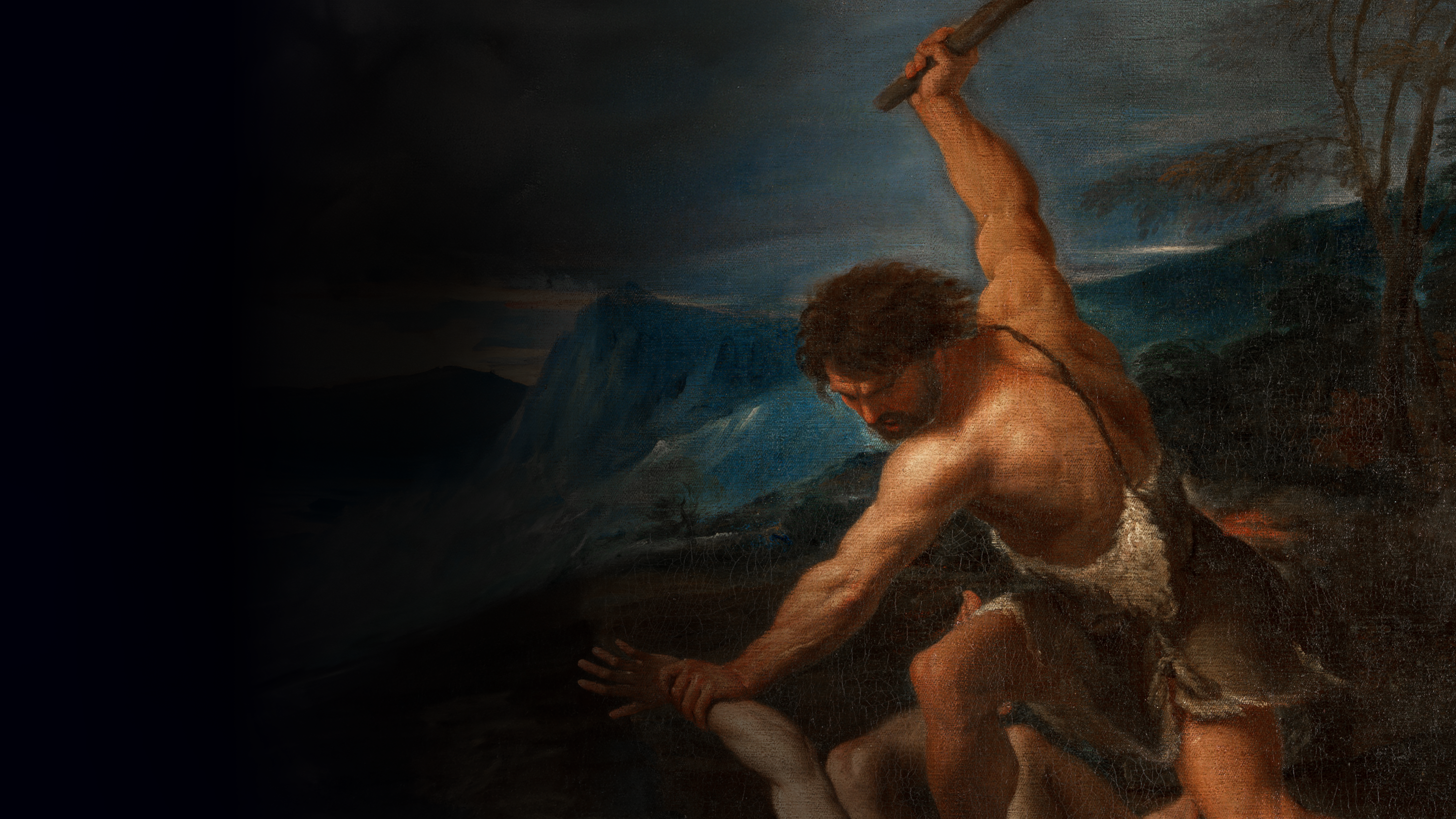
Some of today’s finest, most thoughtful Christian artists look squarely at human depravity and try to imagine where it fits in the scheme of God’s redemptive work. This is good, Christ-honoring work. But depicting evil can risk coarsening the hearts of those involved in both the depicting and the viewing.
Andrew Klavan, a writer and political commentator whose novels deal frankly with violence and criminality, knows these risks are real. Yet his new book, The Kingdom of Cain: Finding God in the Literature of Darkness, focuses attention on the possible dividends: an unsentimental view of human perversion and a deeper grasp of how divine truth and beauty can prevail despite it.
In his review for CT, Grove City College English professor and Front Porch Republic editor Jeffrey Bilbro wonders whether Klavan’s artistic philosophy takes sufficient spiritual precautions.
“A persistent source of frustration in reading Klavan’s potted summaries of paintings, books, and films is his assumption that artists merely reflect their culture,” writes Bilbro. “If you find a work of art lacking or degenerate, he writes, ‘don’t blame the artist, blame the spirit of the age.’ This is, of course, the villain Edmund’s defense in King Lear when he declares that ‘men / Are as the time is,’ thus rationalizing his murderous deeds. Yet culture is never monolithic; Dostoevsky and Flannery O’Connor situate sin and evil in very different narratives than do Nietzsche or Woody Allen.
“Even if a work of art brilliantly reveals ‘man’s soul in the age through which it is living,’ that doesn’t necessarily make it worth our attention. Psycho may portray a ‘penitent sinner joyfully washing her sins away until she is murdered for the voyeur’s sadistic pleasure by a man dressed up as a woman.’ But even if this is ‘a prophetic picture of the days to come,’ I don’t see how that makes it ‘a work of art indeed’ or how I would be edified by watching it.
“And how much more dangerous might it be to create such dark narratives? Klavan describes being sucked into sadomasochist pornography while doing research for a character in one of his novels. When the novel was finished, he writes, his connection to this character ‘snapped,’ and his porn addiction abruptly ended too. But he told his wife he was done writing novels: ‘I can’t keep going into every dark corner of my mind just to get a story out of it. It’s not a sane way to live.’
“Of course, as a writer, Klavan can no more stop writing stories than an endurance runner can stop running, but he doesn’t seem to take seriously the dangers his dark narratives may pose to his own soul. The gory spectacles that unfolded in the Roman Colosseum certainly reflected the decadence of the late empire, but Augustine’s Confessions doesn’t condone Alypius’s disordered desire to drink in their violence.”
Thrilled and Disappointed with C. Everett Koop
C. Everett Koop, who served as America’s surgeon general under Ronald Reagan, is one of the most consequential figures ever to hold that position. He’s also one of the most consequential evangelical figures ever appointed within a presidential administration.
But Koop’s relationship with evangelicals, both during and after the Reagan era, was never entirely warm. In Dr. Koop: The Many Lives of the Surgeon General, bioethics writer Nigel M. de S. Cameron explores why pro-life Christians were thrilled by his nomination but disappointed in how his tenure played out.
Daniel K. Williams, an Ashland University professor known for nuanced studies of evangelical involvement in American politics, reviewed the book for CT.
“Koop’s strong anti-abortion convictions led some people to mistake him for a Christian culture warrior,” writes Williams, “but this judgment misread the makeup of the early pro-life movement. When Koop embraced the pro-life cause in 1970, its ranks were still overwhelmingly Catholic, with some proponents identifying as liberal Democrats. It had yet to become synonymous with political conservatism or culture-war politics. In fact, few evangelicals were interested in talking about abortion, and no evangelical denomination had yet passed a pro-life resolution.
“Koop refused to be pegged as either a conservative or a liberal since he believed that science, not ideology, should guide his work in public health. And he said that he opposed abortion not because of the Bible or Christian theology but because of his duty as a doctor to save human life. At the time, he was surgeon in chief at Children’s Hospital of Philadelphia, and he reasoned that saving children’s lives after they were born committed him to saving their lives before they were born as well.
“As long as the pro-life movement kept its distance from conservative politics or the culture wars, Koop was comfortable giving public speeches against abortion and supporting pro-life organizations. But this distance was diminishing around the time of Reagan’s election and Koop’s appointment as surgeon general. At the very moment Koop ascended to a position of political power, he found himself out of step with the movement that had championed his ascent.
“Koop disapproved of anti-abortion laws because he believed that pro-life campaigns should focus on public persuasion rather than legal coercion. And he also believed in following the scientific evidence wherever it led. When the Reagan administration commissioned him to produce a report on the physical and mental health of women who had abortions, Koop stuck to what he thought the data showed, denying any conclusive evidence of substantive harm on women’s well-being. Pro-lifers were dismayed, but Koop thought he was simply following the evidence.”


sponsored content
“She opens her mouth with wisdom, and the teaching of kindness is on her tongue.” Proverbs 31:26
This Mother’s Day, honor her wisdom with the gift of spiritual nourishment. Christianity Today’s 2025 Moms, Dads & Grads Gift Guide curates books that become faithful companions in the midst of a busy life. These aren’t just books—they’re doorways to understanding, wonder, and transformation.
don’t miss
I don’t watch horror films or read gritty murder mysteries. My favorite detective stories are Alexander McCall Smith’s decidedly tame tales in his The No. 1 Ladies’ Detective Agency series.…

Of the Christian conservatives whom Ronald Reagan appointed to high office after winning the presidency in 1980, none excited evangelicals like his pick for surgeon general, C. Everett Koop. Koop,…
CT Partners are making a global impact through the One Kingdom Campaign
So much has already been accomplished since the launch of the One Kingdom Campaign in September 2024. From beautiful storytelling that lifts our eyes to Jesus working in our midst to global reporting that reminds readers of the cost of following Jesus around the world, God is at work through our generous CT Partners.
See what God is doing through the One Kingdom Campaign and how you can participate in this important community. Learn more.
in the magazine

It’s easy to live in a state of panic, anxiety, and fear, from the pinging of our phones to politics and the state of the church. In this issue, we acknowledge panic and point to Christian ways through it. Russell Moore brings us to the place of panic in Caesarea Philippi with Jesus and Peter. Laura M. Fabrycky writes about American inclinations toward hero-making. Mindy Belz reports on the restorative work of Dr. Denis Mukwege for rape victims in Congo. We’re also thrilled to give you a first look at the Global Flourishing Study, a multiyear research project about what makes a flourishing life across the globe. While panic may be profitable or natural, we have a sure and steady anchor for our souls in Jesus.
more from christianity today
related newsletters
CHRISTIANITY TODAY WEEKLY: CTWeekly delivers the best content from ChristianityToday.com to your inbox each week.
CT PASTORS: Each weekly CT Pastors issue equips you with the best wisdom and practical tools for church ministry.
CT books
Each issue contains up-to-date, insightful information about today’s culture, plus analysis of books important to the evangelical thinker.
Delivered free via email to subscribers weekly. Sign up for this newsletter.
You are currently subscribed as no email found. Sign up to more newsletters like this. Manage your email preferences or unsubscribe.




Christianity Today is a 501(c)(3) nonprofit organization.
“Christianity Today” and “CT” are the registered trademarks of Christianity Today International.
Copyright ©2025 Christianity Today, PO Box 788, Wheaton, IL 60187-0788
All rights reserved.