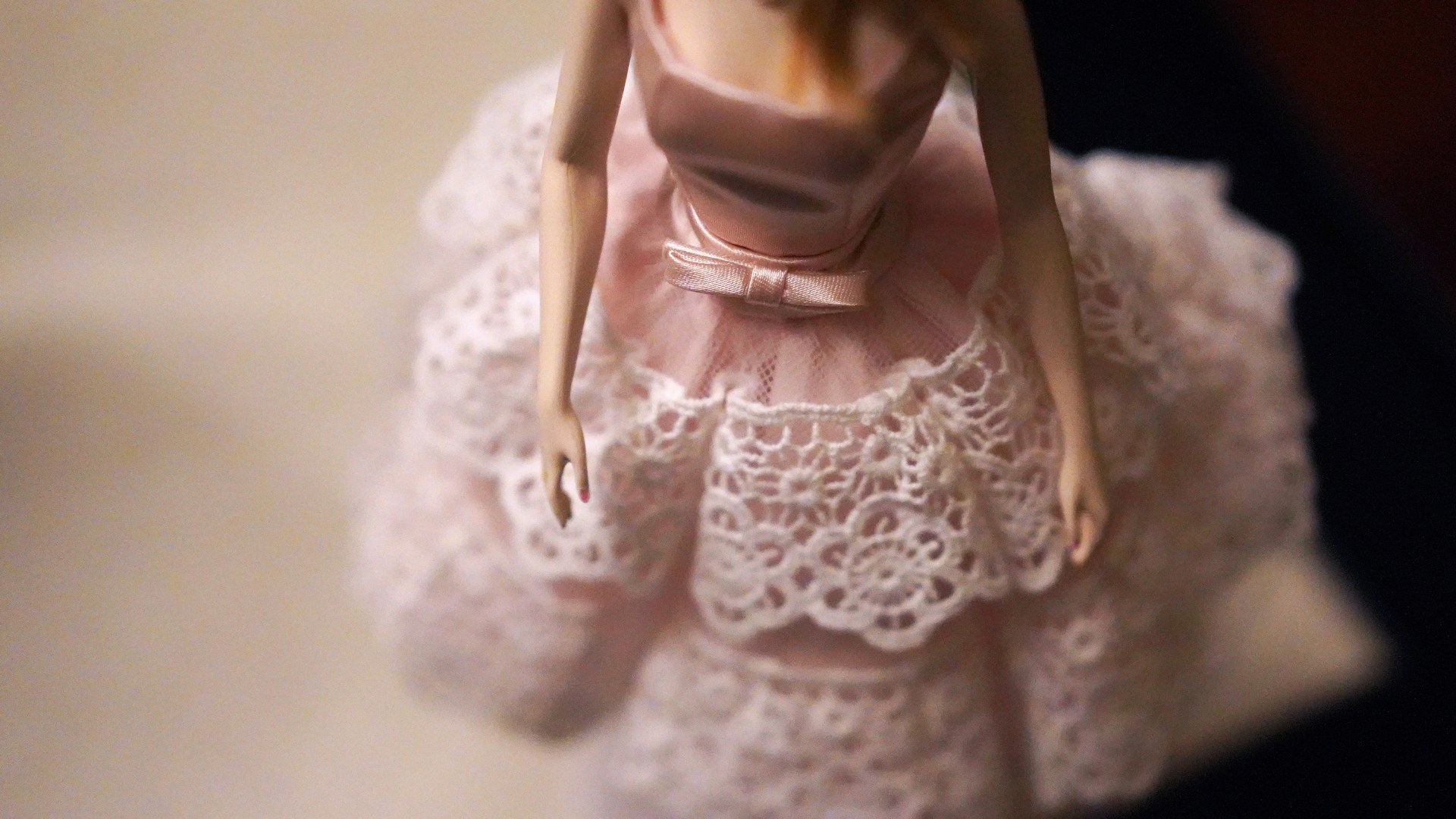
Last week in a coffee shop, a complete stranger felt compelled to show me an article in the local newspaper. It was an article about career-oriented Barbie dolls. The Wall Street Journal (WSJ) reports that a recent poll on Mattel’s website asked people to vote on what career the next Barbie doll in the “I Can Be …” category should have.
“Mattel gave them a choice of architect, anchorwoman, computer engineer, environmentalist and surgeon,” the WSJ reports, resulting in more than 600,000 votes during a four-week period. “Girls the world over overwhelmingly cast their ballot for anchorwoman Barbie …. But by the end of the first week, a growing flood of adult votes for computer engineer Barbie trumped the popular choice. Female computer engineers who learned about the election launched a viral campaign on the Internet to get out the vote and ensure Barbie would join their ranks.” Both dolls are now available on the Mattel website.
The kind, quirky woman brandishing a page out of her newspaper seemed far more excited about Barbie’s new career aspirations than I did, but the WSJ story suggests that a lot of women feel strongly about the symbolism of Barbie. What is it about these dolls that women take so personally?
Perhaps I would be more interested if Barbie’s career path more closely mirrored my own. In Ohio, a female Episcopal priest recently took that matter into her own hands, creating her own version of career Barbie: the High Church Reverend. Although she’s not available for sale by Mattel, this Barbie has attracted 6,000 friends on her Facebook page and a story by the Religion News Service last week.
My first thought on reading about the Rev. Barbie was hesitation over the idea of encouraging girls to “aspire” to priesthood. Isn’t that a calling rather than a career?
Then again, any career path we take should be God-ordained, regardless of where it goes. “I Can Be …” sounds inspiring on the surface, but the drawback is that only God’s aspirations will fulfill our heart’s desires.
That day in the coffee shop, the article sparked a conversation on the controversial topic of Barbie as a role model. “I thought for a minute she was talking about Mattel making a Barista Barbie,” I said to the other barista there.
“Nobody thinks girls should aspire to be baristas,” she replied. I didn’t argue with her, because I knew she was probably right. But that’s silly, because even though there might not be a plastic icon to it, it is entirely possible to have a profound impact on the people around you no matter where you are or what career you have.
There’s something compelling about an iconic representation of who we are. But a plastic doll can, of course, represent only the most tangible qualities: she is defined by what she does (her career) and how she looks (much has already been written about that). Even the Rev. Barbie is only characterized by the physical tools of her trade: her clothes and the items of her sacristy.
It may not translate well into plastic, but the Christian life is defined in far different terms than “I can be …” For instance: “I am the righteousness of Christ” (1 Cor. 1:30). And “I am the seed of Abraham” (Gal. 3:29). Our relationship with God is not a status accessory. It’s a good thing for us that the Barbie standard is manufactured, and that Jesus didn’t wait for us to measure up to save us.
We can’t expect Mattel to represent faith in plastic, or to encourage girls to look for a calling beyond a career. Yet evidently, Barbie continues to have an impact on female culture and childhood imagination, and so I wonder: How do intangible qualities such as faithfulness and wisdom connect with girlhood dreams of being a grown-up woman?