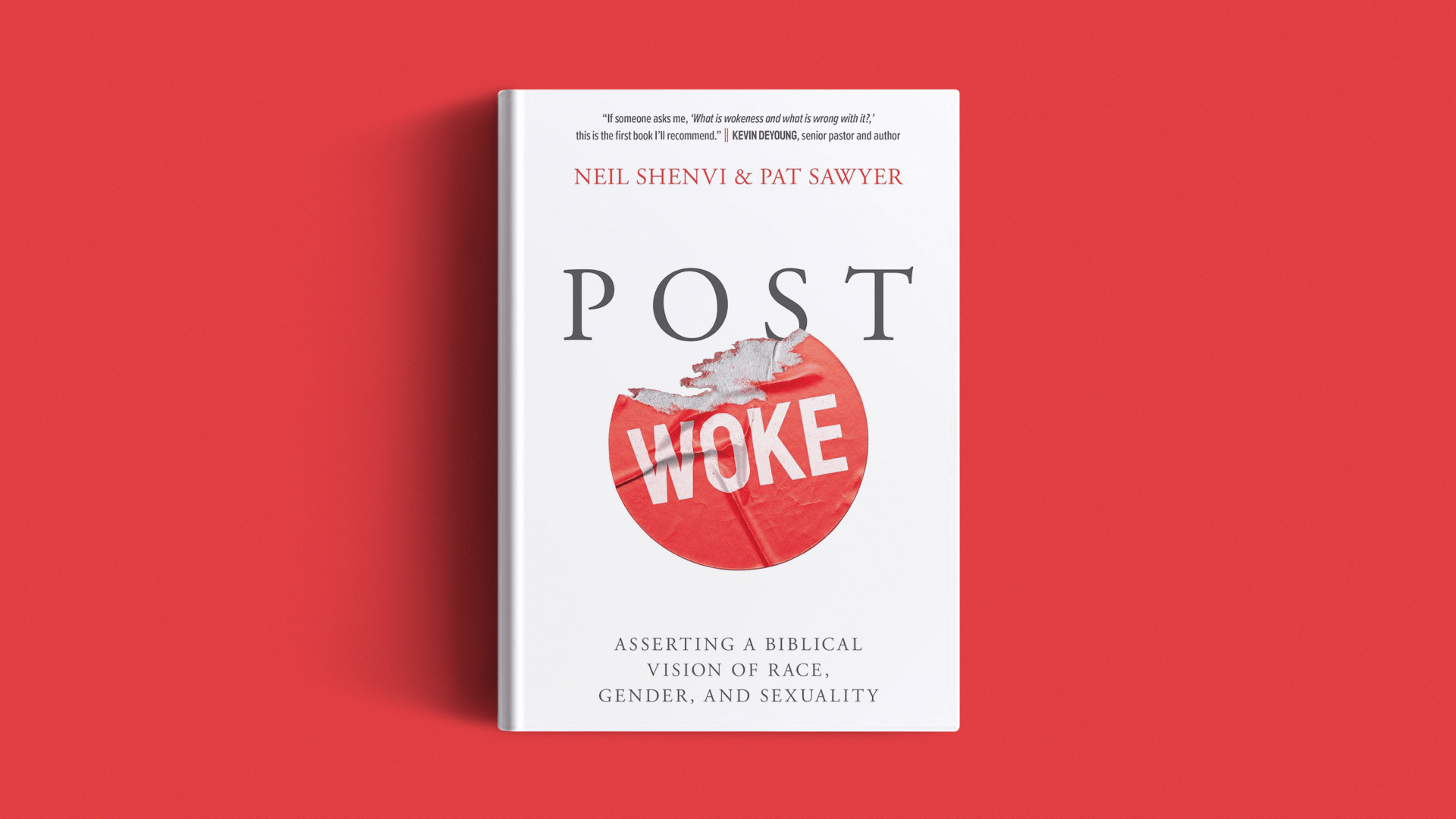
Wokeness is the contemporary cultural expression of critical theory, a set of academic ideas that has come to function as a comprehensive worldview. It offers a vision of social reality, knowledge, identity, morality, and justice. It is driven by utopian dreams and longings. It catechizes young people into its central precepts via social media and gender studies classes. And then it sends them out to be its witnesses in Hollywood, and in all California and America, and to the ends of the earth.
This new religion is fundamentally incompatible with Christianity. Its basic assumptions will constantly run up against core biblical truths about God, man, revelation, truth, sin, redemption, authority, hierarchy, gender, and sexuality. These are serious problems that Christians cannot overlook. Yes, we need to think carefully. But we also need to take action.
Therefore, we’d like to offer two admonitions and an encouragement when it comes to opposing woke ideology. First, we need to speak out against critical theory in the public square. Second, we need to keep critical theory out of the church. And finally, we need to trust in God’s sovereignty, love, and power.
One of our goals as Christians should be to influence society for good. Because Christianity is true, the incompatibility of contemporary critical theory and Christianity puts contemporary critical theory at odds with reality itself, inevitably leading to bad policy prescriptions.
For example, contemporary critical theory views all disparities as evidence of systemic oppression and sees unequal treatment as the remedy to be applied as needed until outcomes are equal. This approach guarantees injustice, partiality, and strife all in the name of social justice.
Similarly, contemporary critical theory views all expressions of gender and sexuality as equally valid, views gender roles as inherently oppressive, and believes in questioning all moral norms. This attitude has accelerated the breakdown of the family, producing neglected children, generational poverty, and existential emptiness.
Consequently, we as Christians should be public in our criticism of critical theory and our promotion of a Christian worldview.

Racial Unity Is Out of Style
One major obstacle to some Christians’ engagement with critical theory is their innate aversion to what is called the culture war—the endless, internecine battle between conservatives and progressives over their vision of public morality, justice, government, and the common good. Some evangelicals view this debate as a distraction from the primary spiritual work of Christians: to preach the gospel. However, this aversion is a mistake.
Jesus expects us not merely to believe the gospel but to live out and act on our beliefs in a way that will positively affect the culture around us. He calls us to be “the light of the world,” “a city set on a hill,” and a “light … on a stand … [that] gives light to all in the house” so that people “may see [our] good works and give glory to [our] Father who is in heaven” (Matt. 5:14–16, ESV throughout). In the same way, Peter writes, “Keep your conduct among the Gentiles honorable, so that when they speak against you as evildoers, they may see your good deeds and glorify God on the day of visitation” (1 Pet. 2:12).
Our good works are meant to be seen and recognized by non-Christians who, even if they reject Christianity and revile us, will be shown what is good and right by our actions.
Christians should do good not merely in the cultural sphere but in the political sphere. Throughout the Bible, God commands earthly rulers to wield their power justly and to do good to those under their authority (Lev. 19:15; Prov. 29:4; Rom. 13:4–5).
Therefore, Christians with any kind of authority ought to strive to do what is right and just in their public office. Yet even Christians without public offices cannot withdraw from working for the common good. In a representative democracy, Christians should try to elect leaders who will do what is right and just.
Laws and public policies affect our neighbor in a myriad of ways. They will affect his education, his access to health care, his living conditions, his safety, and his income. Therefore, Christians should use their vote to elect officials they believe are most likely to enact good laws that will honor God and bless their neighbor.
Here, we should start small. Too many of us ignore local politics and pay attention only to national or statewide elections where, ironically, our votes are the least impactful. So don’t confine “political activity” to pulling a lever once a year. Write a letter to your school superintendent. Speak up at a city council meeting. Send an email to your state representative.
Despite these arguments, some Christians will still reject any kind of cultural and political involvement as worldly. However, they are rarely consistent. Normally, they will still look back on the abolition of slavery in the UK and in the US as a great act of justice and righteousness. But in both cases, Christians were deeply politically involved and invested in dismantling the unjust laws that permitted those systems.
Just laws do not change human hearts and cannot save anyone. But they can genuinely improve the lives of both Christians and non-Christians alike. As Martin Luther King Jr. said, “It may be true that the law cannot make a man love me … but it can restrain him from lynching me.”
Here, it is helpful to distinguish the mission of the church from the work of individual Christians. We agree that the church, as the church, should not be deeply invested in politics. Its primary duty is to preach the gospel to a lost world, administer the ordinances of baptism and the Lord’s Supper, call believers together for corporate prayer and worship, and disciple Christians.
However, individual Christians have callings that go beyond the primary mission of the institutional church. The church is not called to be a doctor or a lawyer or an engineer or a mechanic or a teacher or a janitor. But an individual Christian may be called to any of these vocations. While the church should never turn into a political action committee, it should teach Christians how to steward all of their resources and abilities, including their right to vote, for the glory of God and the good of their neighbor.
Finally, Christians do not need to choose between promoting Christian values in our culture and preaching the gospel. Mere “cultural Christianity” does not save anyone. A person can imbibe and even promote biblical values and still be dead in their sin. If we love our neighbor, we will want them to live in a society where Christian values are widespread even if the people embracing them are not Christians.

Sermons with Benefits
What does it look like for Christians to oppose contemporary critical theory in the public square?
Individually, it means one-on-one conversations that don’t avoid hot-button issues like race, class, gender, and sexuality. Of course, the gospel should always be central. But we can’t always avoid all other topics to avoid giving offense. Remember, bad ideas hurt people.
Your neighbors with a transgender-identified daughter may be desperate for someone to offer them a perspective that differs from the 3,000-member Facebook moms group urging them to start puberty blockers. Your coworker may need marriage advice that doesn’t come from The View. You can be gentle and kind and confident and forthright all at the same time.
Culturally, opposing critical theory means opposing it not just in private conversations but in public spaces, where the risk is often greater. In interpersonal contexts, you can establish some level of trust with your interlocutor. When speaking out in the presence of strangers, that trust will not necessarily exist. You may be called racist for criticizing critical race theory. You may be called a bigot for opposing transgenderism. You may be called lots of names. You cannot let that silence you.
By all means, interrogate your own heart. Test your motives. Be honest with God about your own sin. Take the log out of your own eye. But then be willing to tell the truth.
Taking a public stand against critical theory doesn’t mean that we should only be known for this opposition. We can put most of our energy into sharing the gospel, showing hospitality, defending the truth of Christianity, visiting prisoners, or caring for the poor. What we must not do is to refuse to take a stand on issues of great significance merely because they are controversial.
Excerpted from: Post Woke. Copyright © 2026, Neil Shenvi and Pat Sawyer. Published by Harvest House Publishers, Eugene, Oregon 97408. www.harvesthousepublishers.com