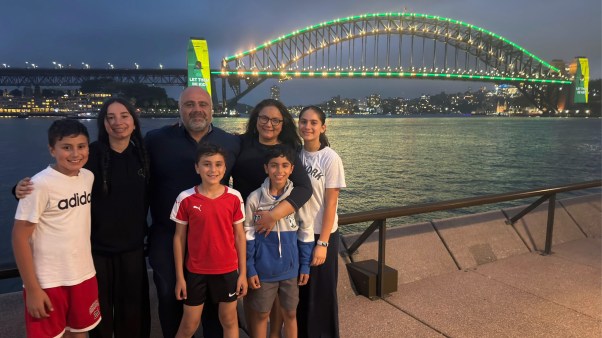
Mansour Khajehpour and his wife, Nahid Sepehri, understand what is at stake in the ongoing Iranian protests. They remember the 12 days they spent in a Tehran prison for their faith two decades ago.
In the ’90s, the Islamic regime launched a wave of intense persecution directed primarily against Christians involved in evangelism and church ministries. One of Khajehpour and Sepehri’s Iranian Christian friends received death threats before he was found dead. Authorities arrested the couple, leaders at a Presbyterian church in Tehran, in 1996.
After the courts released them on bail, Khajehpour fled the country. His wife and young daughter followed him three months later.
Today, they live in a Seattle suburb but still have relatives in Iran. They also serve a large network of Iranian house churches through their church, Crossroads at Lake Stevens, and through Sepehri’s work as executive director of the Iranian Bible Society.
They and other overseas Iranian ministry leaders noted that Christians in Iran—who number close to 1 million, according to some estimates—are voicing their support for the recent wave of protests. This is a recent shift, as Iranian Christians in the past tended to stay away from politics. Compared to previous protest movements, this one is more widespread, with support from a broader cross section of the population. For many, it has brought hope for change.
“The message that I hear from the Christians in Iran is a message of solidarity—a message of the theology of resistance,” Khajehpour said.
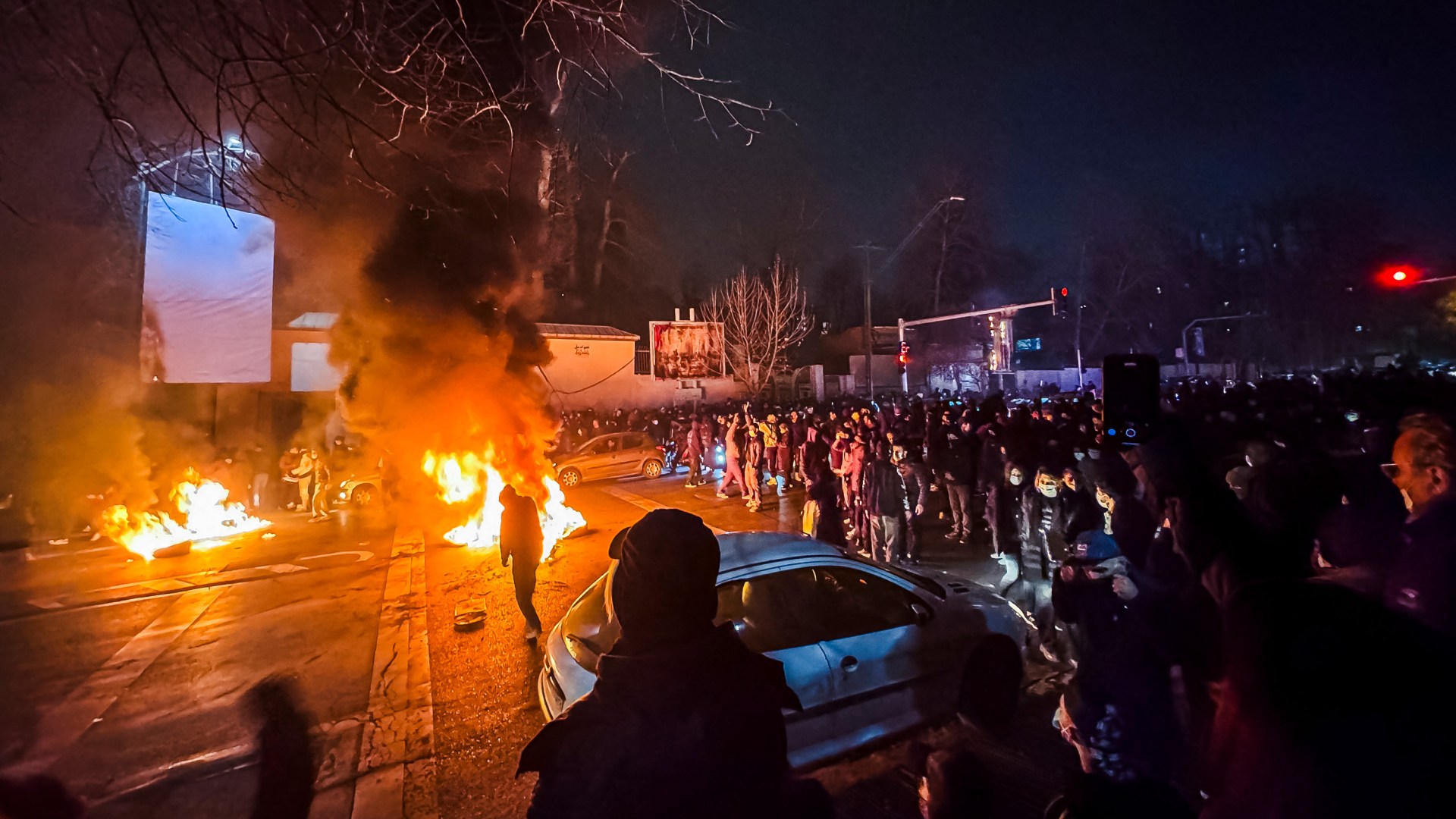
Since December 28, tens of thousands of Iranians have flooded city streets across all 31 provinces to protest against the regime. They have set mosques ablaze, torn open bags of rice—throwing the contents into the air—and chanted for the return of the former shah’s son.
The Islamic regime has responded with brutality. Casualties mounted in recent days as the death toll rose to at least 2,000, with some estimates placing the total closer to 20,000. The regime shut down the internet on January 8, but some Iranians found ways to bypass the blackout to post videos on social media showing widespread uprisings and the regime’s bloody crackdown. One of Khajehpour’s Seattle church members said police shot two of his nephews—Christians from the city of Shiraz—but both are recovering.
“It’s come to the boiling point right now, so people are fed up,” said Sasan Tavassoli, cofounder of Pars Theological Center, a London-based virtual seminary for Iranian church leaders. “They want a complete break with the Islamic regime, and they want the regime to be gone.” Tavassoli is a former Shiite Muslim from Iran who came to faith in Christ in 1985 and now lives in the United States.
The protests began when the bazaari—merchants and traders who have historically been aligned with the Shiite clerical establishment—in Tehran took to the streets as Iran’s rial dropped to a record low of 1.42 million to the dollar. Bazaari played an important role in the 1979 Islamic Revolution that ousted the shah and placed Islamists in power.
While uprisings since then have focused on election reform or greater freedoms, the current protests are anchored in basic survival needs. Beyond the plummeting of Iran’s currency, the nation is also undergoing an acute energy and water crisis. In November, Iran’s president discussed relocating Tehran—a city of nearly 10 million people—to the southern coast due to the severity of the water shortage.
David Yeghnazar, executive director of Elam Ministries, a US-based organization supporting the Iranian church, said a Christian inside Iran told him it was “impossible for people to know what it’s like unless they come and live here.” The Christian went on to say, “So much hope has been drained from people that it’s almost like they’re numb to life.”
Yeghnazar, a native of Iran, said unprecedented US support has emboldened protesters, but “time will tell” whether the movement succeeds. In the past week, US president Donald Trump threatened to respond if the regime used brutal force against protestors.
Since the 2022 protests, which erupted after 22-year-old Mahsa Amini died in police custody after allegedly violating Iran’s hijab law, the geopolitical landscape has shifted dramatically, injecting new hope into Iran’s resistance movement. Israel’s surgical strikes in Lebanon and Syria have crippled Iranian proxy groups, and separate but coordinated US and Israeli strikes in June degraded Iran’s nuclear and ballistic-missile program.
In the wake of the US intervention in Venezuela, the Trump administration warned that it will no longer tolerate the presence of Tehran and its proxy group Hezbollah in the South American country.
Iranian Christians are speaking up too.
“The people have endured oppression and pain for so many decades, and across the country, there’s a deep longing for justice and freedom that is shared by many, including Iran’s Christians,” Yeghnazar said.
Iranian believers have historically distanced themselves from protests, Tavassoli said. During the 2009 Green Movement, a series of protests sparked by disputed election results, he remembers Christian television networks airing praise-and-worship programs for their viewers inside and outside Iran as the regime fired at protesters, killing 30 people. Despite the regime’s efforts to block communication, the interference wasn’t continuous, and some viewers still had occasional access to Christian television programming.
“Back then, Christians thought that we shouldn’t be involved in politics,” Tavassoli noted. “That’s not our place in society.”
In 2022, Iranian churches and Christian leaders openly criticized the regime for the first time during the “Women, Life, Freedom” protests that resulted in more than 550 deaths. Now Tavassoli said he is seeing even more proactive anti-regime and pro-democracy voices from Iranian churches inside the country and Christian media outlets outside the country.
“It’s just becoming a lot more accepted that we need to show solidarity with what’s going on in Iran,” he said. Ministry leaders are also addressing concerns about the Islamic regime in a more confrontational way in their teaching, preaching, and social media posts, he added. They are praying more explicitly for the fall of the country’s rulers and promoting a free Iran in which Christians can return and help rebuild the nation.
Yeghnazar said his team organized a prayer call last Friday with 160 Iranian ministry leaders, including one or two from inside Iran. “There’s such heartfelt pain for the people that have suffered for so long,” he said.
Yeghnazar, who is based in the United Kingdom, said Iranians are sharing the gospel with people in the midst of the protests. He hears reports of Iranians experiencing dreams and visions of Jesus and said some are coming to faith.
Yet over in Seattle, Khajehpour is concerned about the dark days ahead. “We have a group of people inside Iran that are the masterminds who trained Hamas leaders,” he said, referring to the Islamic Revolutionary Guard Corps, the country’s elite military and security force. He believes this group is behind the bloody crackdown in recent days and will strike again. He also noted the lack of peaceful transitions of power during the past 1,400 years of Islamic history.
“Let’s pray that God places this on President Trump’s heart to get involved,” Khajehpour said.
Over the weekend, Trump said it “looks like” Iran crossed the administration’s red line of brutal crackdowns, forcing Washington to consider “strong options” against the regime. “Iran is looking at FREEDOM, perhaps like never before,” the president wrote on social media. “The USA stands ready to help!!!”
Iranian Parliament speaker Mohammad Bagher Qalibaf responded by threatening to strike US military assets and Israel if the United States used force against Iran. Iranian supreme leader Ayatollah Ali Khamenei accused Washington of igniting the uprising.
Yeghnazar said the unrest could endanger Christians because the regime often blames external powers and accuses believers of foreign influence. “They’re told to sign … confessions saying they’re Zionists or they’re working against the government,” he said, adding that many Christians are resisting the pressure. “So at a time like this, anyone who is not supporting the government is under greater risk.”
He believes several hundred Christians are currently imprisoned in Iran for their faith.
Still, Tavassoli said a newfound hope exists among both Christians and non-Christians in Iran, partly centered on the potential return of the shah’s son, Reza Pahlavi, who has spent most of his life in the US in exile.
Tavassoli has observed strong support for Pahlavi among Christians inside Iran, noting that the crown prince has expressed his desire to serve as a transitional figure who respects the will of the people. Last April, Pahlavi acknowledged on social media the persecution of Christians in Iran and extended Easter greetings to the Christian community.
As events unfold in Iran, Christians are praying for justice and for the church to remain anchored in its mission.
“It is right to pray that every Iranian would live in a free and just country,” Yeghnazar said. “But there’s a real deep understanding among many believers that whatever change might come, the deepest longings of every Iranian can only be met in Christ.”
Correction: An earlier version of this article misstated the number of deaths from the 2022 protests.
Related