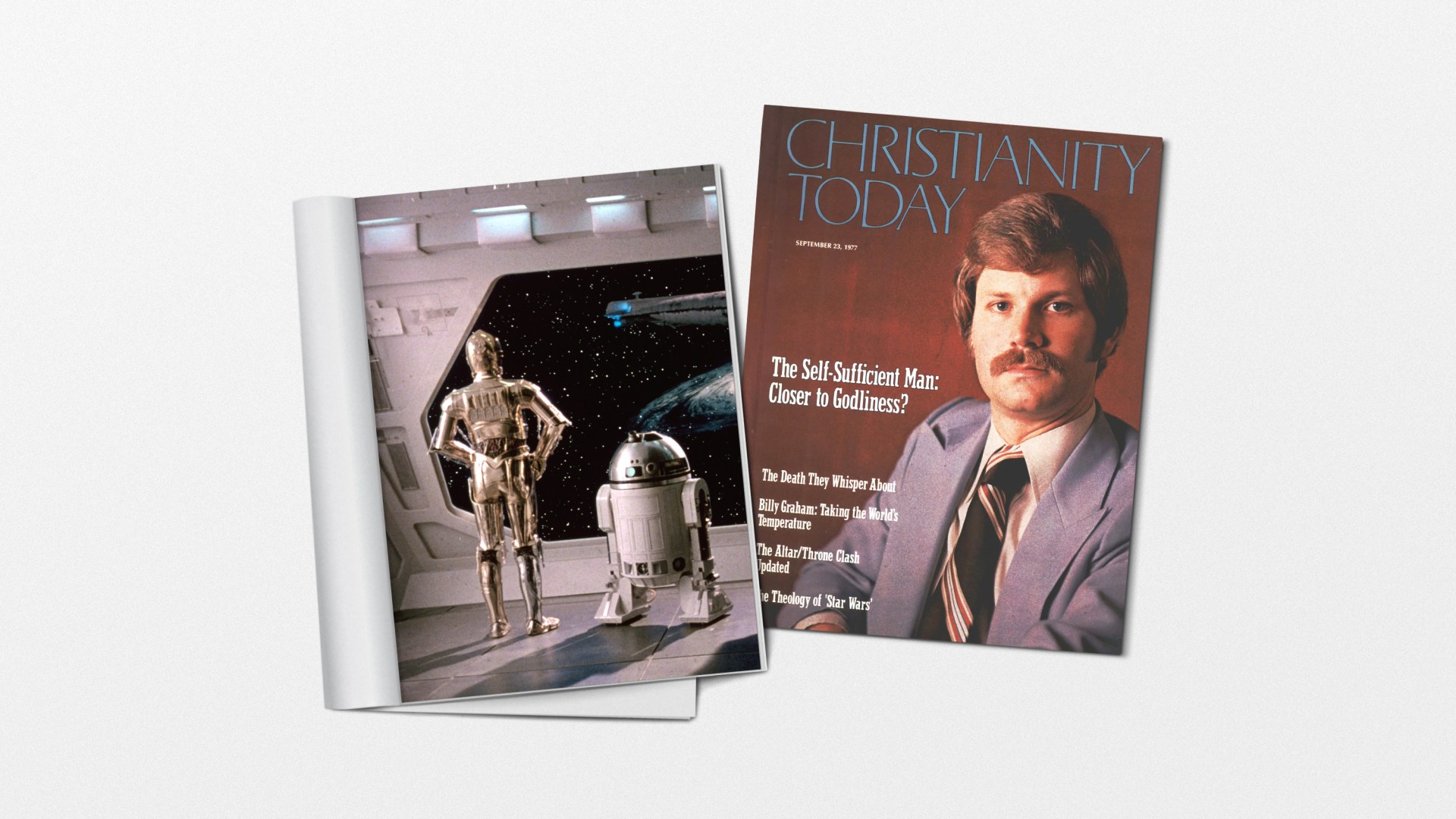
In 1977, CT asked an evangelical theologian to visit “a galaxy far, far away” and review Star Wars. The Trinity Evangelical Divinity School professor was surprised by Star Wars—“the first work of genuine science fiction to become a film sensation”—and encouraged by its popularity.
The idea in the Star Wars plot is epic, the struggle of good and evil with religious overtones on a cosmic scale. The three male heroes—teen-ager Luke Skywalker, the hardened and yet somehow good-at-heart adventurer Han Solo, and the noble, mature warrior monk Ben (Obi-Wan) Kenobi—have many prototypes in both Greek and knightly epic. …
To the simplicity of the plot—a tyrannical galactic empire threatens universal rule by terror and mass destruction—is added simplicity of heart. Luke is the pure young knight postulant, Kenobi the old, bruised, yet faithful warrior. And even Han Solo, who appears first as the experienced and cynical man of the universe, is transformed by his contact with the other two—and his admiration for the dynamic, sovereign, virtuous captive princess, Leia Organa—from a perfect knave into another perfect knight. …
A fair measure of the response to Star Wars must result from the fact that it presents, in exaggerated but unmistakably recognizable images, the clash of good and evil, youthful idealism, feminine beauty—and strength—mature manly virtue, and a romantic love-motif that is pure and self-sacrificial rather than carnal and self-seeking. Perhaps few of those who view Star Wars look or act much like Luke, Leia, or Ben Kenobi. But apparently millions—no doubt far more than filmmakers expected—admire them and want to think that there is room for them in the universe.
Another major cultural event happened that summer when Elvis Presley died at his home in Memphis at 42. One CT editor reflected on the moment:
As I grew up it seemed that my peers, male and female, were divided into two camps—those who followed Elvis and those who didn’t. But even those kids who weren’t full-fledged fans, and I was one of that group for a time, were affected by his music.
He transformed the top forty from the leftovers of the big band and croon era into what we now know as rock. He took homegrown American music—rhythm and blues, the black sound, and gospel—and melded it into a new musical form. He paved the way for the Beatles, and nearly every major rock group today claims to have been heavily influenced by Elvis. It would be too much to say that he created a culture for teenagers, but he certainly epitomized it. Anyone who wants to understand rock music—a pivotal element in the generation gap—must understand Elvis.
People nicknamed him “Elvis the Pelvis” because of his hard-driving beat and holy roller style movements, which he said he learned in his pentecostal church. But his real contribution was through the blues ballad. … When he sang gospel songs he put feeling into faith, and helped people hope despite a world of sorrows. Perhaps that’s why his gospel albums were his best sellers last month.
The year brought significant change to CT. The magazine relocated from its offices in Washington, DC, to Carol Stream, Illinois. Some readers criticized the move, worrying that CT was giving up its influence in the nation’s capital and retreating to an “evangelical ghetto,” safe in the suburbs. Editor in chief Harold Lindsell acknowledged the criticism with a playful note.
Our mailbag and our telephones have kept us busy discussing the pro’s and con’s of our move to Carol Stream, Illinois. … On issues like this there is always a division of the house—readers, editors, board members—but the board had to make the final decision and did. I’m writing this from Florida, which, at least in the wintertime, I prefer to both Chicago and Washington!
As part of the transition, founding editor Carl F. H. Henry submitted his final CT column.
Christianity Today had not a single subscriber, not even an office, when God had led me in 1956 to accept the proffered editorship. On a beautiful California night my wife Helga and I drove, in silence and with clasped hands, to post the acceptance in the last outgoing mail.
The magazine’s intended audience was clear. Sample issues went to Protestant clergymen of all affiliations, and then to intellectually alert lay leaders who, by keeping abreast of theological trends, might join in the battle for modern man’s wavering mind. … We were a sturdy team, welding evangelical links in a time when liberalism was unraveling and neo-orthodoxy was sounding increasingly discordant notes.
The magazine put a Black Christian on the cover for the first time that summer, promoting a 3,000-word interview with civil rights leader Jesse Jackson.
Q. Do you consider yourself an evangelical?
A. I consider myself an evangelical, but white evangelicals don’t. They shy away from me because of my social activism.Q. Do you believe in the virgin birth of Jesus Christ?
A. Yes. It can’t be disproved. God is capable of all things. …Q. Do you believe in the bodily resurrection of Christ?
A. Well, you know, I do. If that tomb was guarded by military soldiers and they were not able to report that they were overthrown by some element and left, something happened. The disciples would not have lied to the point of each of them being destroyed through some violent death. They not only came back to protect themselves; they came back with enough convictions themselves to be crucified.Q. Do you believe that Jesus Christ is the Son of God?
A. Oh yes, I do. I don’t believe Jesus is the only son of God. I think God’s world is too big for that.
Jackson wasn’t the most controversial Black Christian that CT caught up with in 1977. That title belonged to Eldridge Cleaver, former leader of the Black Panthers and one-time advocate of violent revolution. He had a born-again experience while hiding from American authorities and considered himself—for the moment—an evangelical.
I am thrilled with the history of the black church and its stability. I feel awed by how magnificent it is. It would be easy to criticize it, but I don’t feel it would be helpful. … When I was in jail, one bishop of the African Methodist Episcopal Zion Church came to see me, and we had some good fellowship. But he was unique. He wasn’t from California. Other black ministers here wouldn’t touch me with a ten-foot pole. Many white preachers, though, came to see me. …
There are some Christians who need to be more concerned with encouraging new Christians, instead of putting banana peels under their feet. Some people don’t want to accept me into the family of the church. A white preacher, for instance, said I should go to jail even if I am innocent in order to set a good example. That threw me for a loop. A lot of people are going around with their own home-baked theologies.
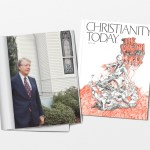
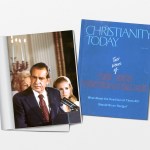
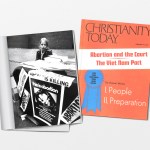
The magazine continued to voice concern about abortion, calling on President Jimmy Carter to make it a priority to reduce the number of abortions and pass legislation protecting the rights of unborn children. CT also called on Christians to embrace adoption and encourage people to welcome children into their families.
Here is the answer to the problem of unwanted babies, the alternative to the burgeoning abortion mills of our land! Tens of thousands of couples would gladly welcome these babies into their hearts and homes. … How much better to accept the consequences of pregnancy and then permit the babies to be welcomed into the hearts and homes of the childless! This may be “inconvenient,” but I believe it is the “Christian” way out of a difficult situation.
CT’s biggest concern in 1977 was the health of the American family. The magazine reported that the new president, Jimmy Carter, brought the issue to national attention.
“I intend to construct an administration that will reverse trends we have seen toward a breakdown of the family in our country,” he said.
The surprising thing is not that he spoke those words, but that he is following through on his pledge. In a recent interview he said that the integrity of the family ought to be a factor in almost every program his Administration puts forward. …
One Sunday while his wife was on a diplomatic visit to Latin America, Carter taught a Sunday-school lesson at First Baptist Church in Washington. In it he urged married persons to be faithful to their partners. Even, he added in words reminiscent of the prophet Hosea, when their partners are not faithful to them.
CT asked Methodist theologian Will Willimon to explain why “Christian marriage has become a subversive activity,” and asked Campus Crusade staffer Phillip Yancey to share his research on marital minefields.
I spent a year studying the first five years of marriage, the period when the divorce rate is highest. I began by interviewing nine couples who revealed to me the struggles of their first five years. … Unresolved conflicts oozed open. Often a session intended to gather helpful information for others turned into a plea for help.
Listening to them, I sometimes questioned the whole notion of marriage. We have placed greater demands on marriage now than in previous generations. Besides satisfying the need for asexual relationship, marriage is now being asked to supply needs for comradeship and partnership as well. Added to this is the weight of ideals our romanticizing culture excites in us. It’s no wonder many marriages cannot bear the strain. …
The Bible at first reading seems to say little about marriage, but I found that God does show us what marriage requires and how we are to exercise the principles that build sound marriages. God himself embodies the ideal.
The magazine also noted a flurry of Christian books on sex and marriage in 1977. Evangelicals were beginning to focus on the family.