
In April 2013, my family vacationed in South Texas. My wife and I holed up with our one-year-old in a cabin on the banks of the Guadalupe River in the small town of Comfort. An underwhelming body of water near its origin, the Guadalupe begins in low-slung hills northwest of San Antonio and runs in a disorienting scribble to the Gulf of Mexico. Next to our cabin that spring, the river was mostly a series of rocky pools. We sat on boulders and splashed our feet in the middle of it.
This was surely the type of retreat envisioned by Bible campers and their families who suffered at the whims of a very different Guadalupe River in the summer of 1987. The deadly flash flood is still vivid in the region’s memory so many years later. Just two miles upstream of where my own child played, a too-familiar story arc unfolded: What was intended for good turned to evil.
The digital age has significantly numbed us to tragedy, but we still recoil when death strikes cherished institutions of safety and joy like churches, schools, and parks. To grapple with such injustice is human—no matter our level of learning on theodicy and no matter whether we walk with the God of perfect love or have never heard of him.
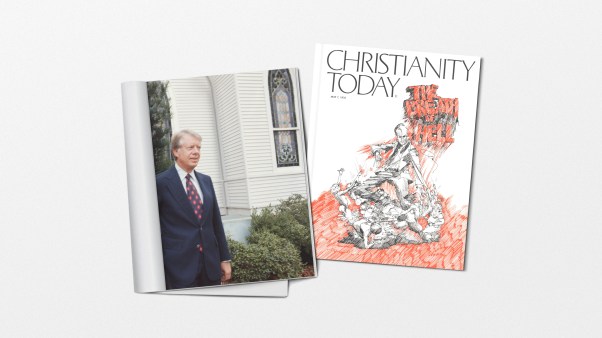
At CT, we publish more pieces about God and suffering than perhaps any other topic. It’s arguably the biggest question that humans ask of faith. We know at least anecdotally that in times of disproportionate evil—think post-World War I Europe—waves of people turn from God. And data suggest that, in recent decades, the problem of evil is increasingly cited as the chief reason for abandoning faith (see our cover story).
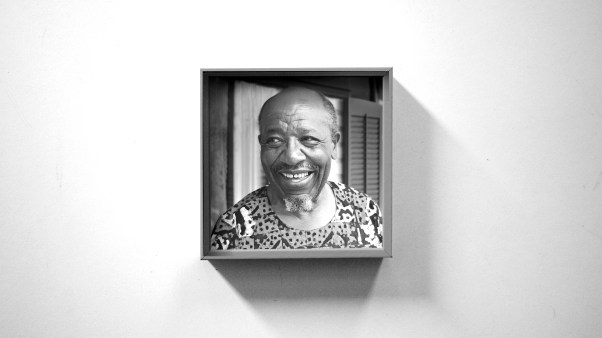
In featuring the Comfort tragedy this month, we set aside all the philosophy about God and evil and examine, instead, what suffering does to our personal view of God. By coupling recent research on the psychology of religion with the narratives of three Comfort survivors, writer Brittney Martin offers a new angle from which to explore age-old questions. Deeper into the magazine, author and pastor Caleb Kaltenbach approaches the same questions from yet another perspective.
Redundancy is anathema to the news business. We avoid repeating stories—our own or from other news outlets—because readers expect us to deliver new ideas and conversation starters. But that doesn’t prevent us from covering a theme from multiple perspectives. Jesus’ teaching is full of this tactic. The kingdom of God? Well, it’s like seeds. And weeds. And yeast. And like a pearl. So in this issue, you’ll find multiple takes not only on suffering but on tactile friendship and on church and the arts. Because some questions are too big to ask only once.
Andy Olsen is Managing Editor of Christianity Today. Follow him on Twitter @AndyROlsen.