History

From the Archives: Nero’s Cruelties

An account from Roman historian Tacitus (C. 115)

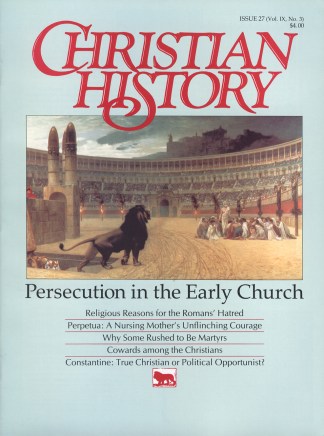
But all the endeavors of men, all the emperor’s largesse and the propitiations of the gods, did not suffice to allay the scandal or banish the belief that the fire [the great fire of Rome, summer 64] had been ordered. And so, to get rid of this rumor, Nero set up as the culprits and punished with the utmost refinement of cruelty a class hated for their abominations, who are commonly called Christians Christus, from whom their name is derived, was executed at the hands of the procurator Pontius Pilate in the reign of Tiberius.

Checked for the moment, this pernicious superstition again broke out, not only in Judea, the source of the evil, but even in Rome, that receptacle for everything that is sordid and degrading from every quarter of the globe, which there finds a following. Accordingly, arrest was first made of those who confessed [to being Christiansl; then, on their evidence, an immense multitude was convicted, not so much on the charge of arson as because of hatred of the human race. Besides being put to death they were made to serve as objects of amusement; they were clad in the hides of beasts and torn to death by dogs; others were crucified, others set on fire to serve to illuminate the night when daylight failed. Nero had thrown open his grounds for the display, and was putting on a show in the circus, where he mingled with the people in the dress of a charioteer or drove about in his chariot. All this gave rise to a feeling of pity, even toward men whose guilt merited the most exemplary punishment; for it was felt that they were being destroyed not for the public good but to gratify the cruelty of an individual.

— Annales, XV.44

Copyright © 1990 by the author or Christianity Today/Christian History magazine. Click here for reprint information on Christian History.

Our Latest

Turn Toward Each Other and Away from the Screen

Perhaps technology has changed everything. But God is still here, still wiring humans for connection and presence.

The Call to Art, Africa, and Politics

In 1964, CT urged Christians to “be what they really are—new men and women in Christ.”

The Bulletin

Pete Hegseth’s Future, Farmers on Tariffs, and Religious Decline Stalls

Mike Cosper, Clarissa Moll

Hegseth scrutinized for drug boat strikes, farmers react to Trump’s tariffs, and a Pew report says religious decline has slowed.

The Debate over Government Overreach Started in 1776

Three books to read this month on politics and public life.

Devil and the Deep Blue Sea

BONUS: Amanda Knox on the Satanic Panic and Wrongful Convictions

How elements of the satanic panic and conspiratorial thinking shaped a wrongful conviction.

The Chinese Christian Behind 2,000 Hymns

X. Yang

Lü Xiaomin never received formal music training. But her worship songs have made her a household name in China’s churches.

Death by a Thousand Error Messages

Classroom tech was supposed to solve besetting education problems. The reality is frustrating for students and costly for taxpayers.

The Surprising Joys of a Gift-Free Christmas

Ahrum Yoo

Amid peak consumerism season, I prayed for ways to teach my children about selfless giving.

Apple PodcastsDown ArrowDown ArrowDown Arrowarrow_left_altLeft ArrowLeft ArrowRight ArrowRight ArrowRight Arrowarrow_up_altUp ArrowUp ArrowAvailable at Amazoncaret-downCloseCloseEmailEmailExpandExpandExternalExternalFacebookfacebook-squareGiftGiftGooglegoogleGoogle KeephamburgerInstagraminstagram-squareLinkLinklinkedin-squareListenListenListenChristianity TodayCT Creative Studio Logologo_orgMegaphoneMenuMenupausePinterestPlayPlayPocketPodcastRSSRSSSaveSaveSaveSearchSearchsearchSpotifyStitcherTelegramTable of ContentsTable of Contentstwitter-squareWhatsAppXYouTubeYouTube