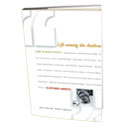
If Clifford Geertz would have been able to phone a Books & Culture reader, he could have been a millionaire. Life Among the Anthros, a posthumous collection of his essays, reveals the panoramic range of subjects on which he could speak with authority. Geographically, the focus traverses from China to the Amazon. Intellectually, it ranges from American feminism to Moroccan Islam.

Geertz was an anthropologist, and it would be fair to call his subdiscipline the anthropology of religion. His first book was entitled The Religion of Java. (Of which he quips in a discussion of the will-o’-the-wisp of defining religion: “It is still not clear what its subject was.”) When he starts in with a barrage of technical, in-house words to describe shades of Islamic belief and practice, one can rest assured he has got it right. It is only Christianity that seems beneath Geertz’s painstaking attentiveness. His one gesture at Christian theology comes in 2005 when he draws attention to “recent” work in this field by commending Paul Tillich’s The Courage to Be (1952). (And if you want to catch a trendy new play when you are London, think about going to Agatha Christie’s The Mouse Trap.) In his one reference to evangelicalism, he makes the (careless) journalist’s mistake of writing “evangelism.” (Tellingly, in its original publication, this error made it past the editor of the Journal of the Royal Anthropological Institute).
Alas, it is too late for Geertz to learn from us, but not us from him, his haunting dictum notwithstanding: “There is nothing so dead as a dead academic.” Geertz had a genius for needling, spot-on summations. He described Karen Armstrong’s Islam, for example, as “a short, self-confident book by an English ex-nun with an urge to instruct.” Invited to give the Sir James Frazer Memorial Lecture, he identified the honoree as “a cloistered Edwardian don who devoted his life to a Causabon-like compilation of the world’s exotica.” Gandhi was the kind of man who “recommends his character to the world as a saving revelation.”
Geertz also had an eye for the absurd detail. My favorite was his review of Richard Posner’s Catastrophe: Risk and Response, in which an attempt is made to motivate the reader by a cost-benefit analysis: “Suppose the cost of extinction of the human race … can be very conservatively estimated at 600 trillion dollars.”
Although some are suspicious of collections of published work, part of the power of this volume is its time-capsule quality. It is precisely because we know what comes thereafter that adds drama to witnessing Geertz measure new ideas in real time. What was said about Foucault, for example, in an immediate review? (He is “a nonhistorical historian”; “he is what any French savant seems to need to be these days: elusive.”) You can justify reading this book on the grounds of learning from the intoxicating analysis, all the while covertly enjoying the razor-wire writing.
Timothy Larsen, McManis Professor of Christian Thought at Wheaton College, is the author of Crisis of Doubt: Honest Faith in Nineteenth Century England (Oxford Univ. Press). His new book, about the Bible in the 19th century, is forthcoming from Oxford University Press.
Copyright © 2010 Books & Culture. Click for reprint information.