News

Iranian Christians Celebrate and Pray for the Hope of a Free Iran

US-Israel strikes killed supreme leader Khamenei, whose Islamic regime has long persecuted believers.

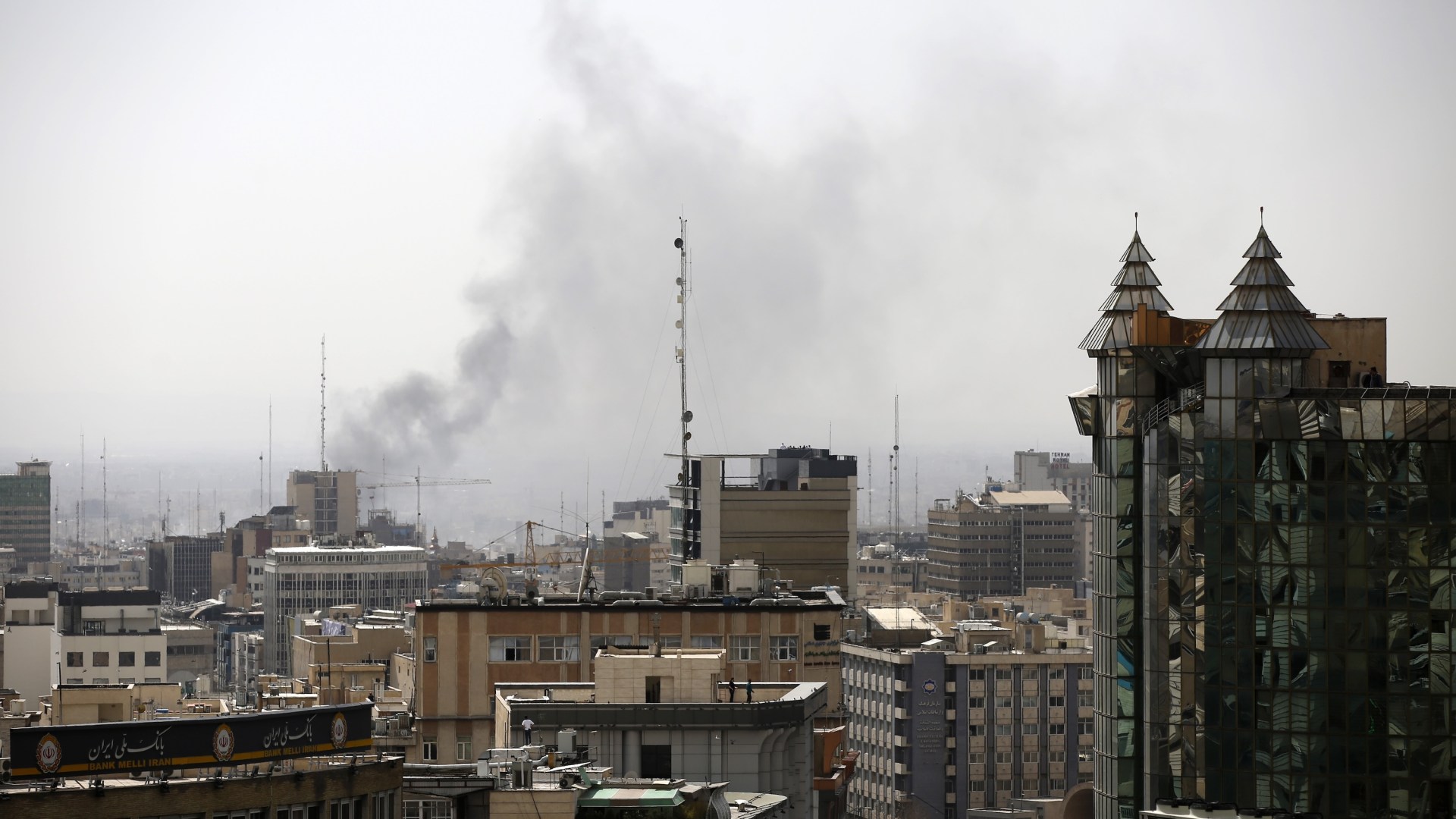
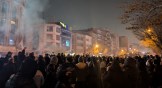
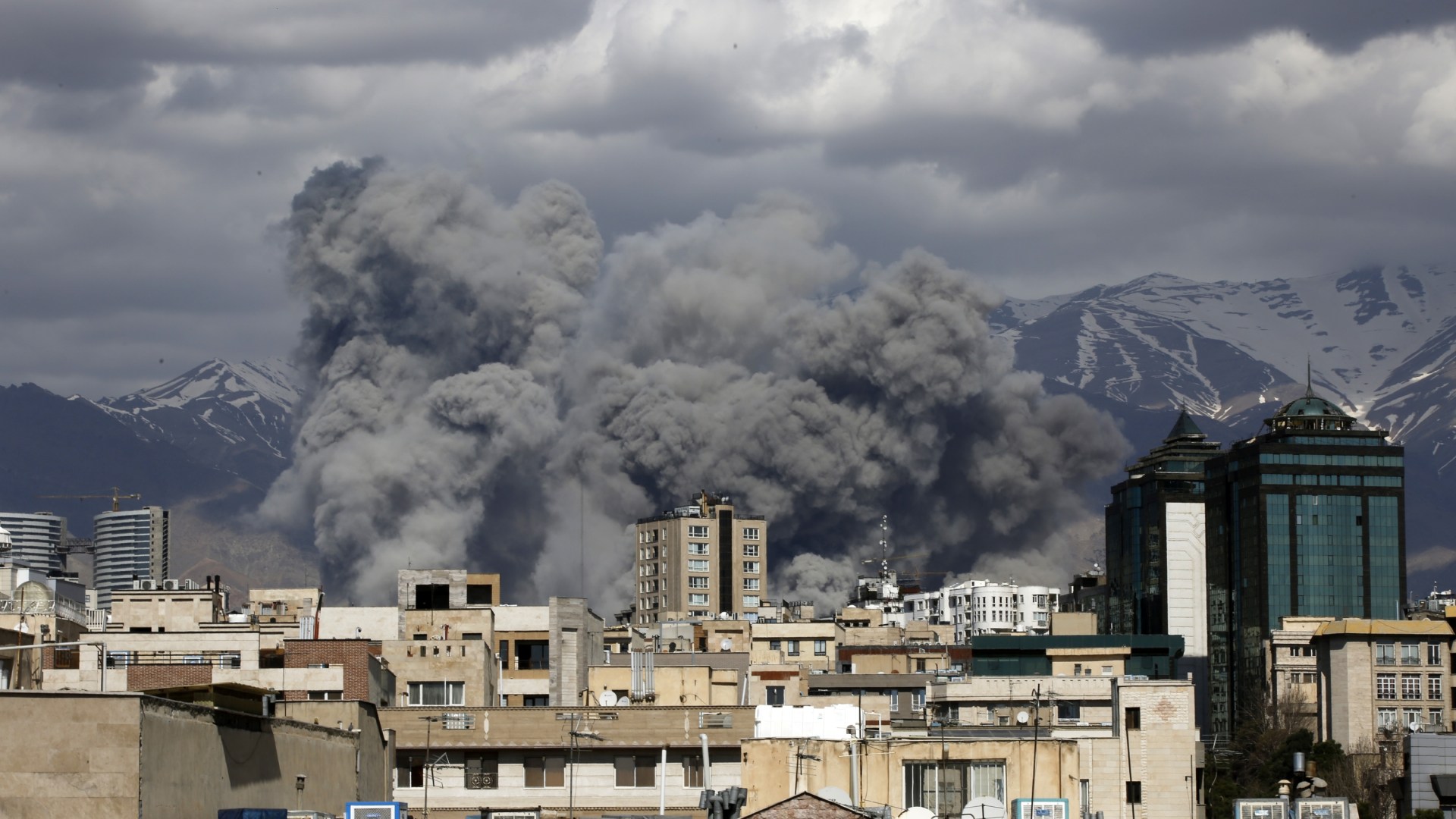
Smoke rises in Tehran after Israeli airstrikes hit Iranian capital.

Smoke rises in Tehran after Israeli airstrikes hit Iranian capital.

Christianity Today March 1, 2026
Fatemeh Bahrami / Anadolu via Getty Images

The United States and Israel launched a major coordinated campaign against Iran Saturday, killing Iranian supreme leader Ayatollah Ali Khamenei and striking more than a thousand targets across the country, according to the US military.

Since then, diaspora Iranian Christian ministries have struggled to connect with the church in Iran. Mansour Borji, director of the London-based Iranian religious freedom advocacy organization Article 18, has received only a few messages from Christians in the country due to the near-total internet blackout.

Most of the messages that did get through celebrated the news of the attacks and the “anticipation of an end to the tyranny,” Borji said. Other messages expressed concerned about the days ahead. “Some fear the United States may try to reach a deal and extend the life of a ‘wounded wolf,’” he said.

Meanwhile, Hormoz Shariat, founder of Iran Alive Ministries, struggled to get Christian programming into the country. Since Thursday, two days before the war began, Iranian authorities have blocked satellite television channels and restricted internet access. Shariat noted that his ministry had recently seen a surge of Iranians coming to faith in Christ.

“They do not want people to be influenced, informed, and led by outside influencers,” Shariat said.

He is concerned the communication blackout might isolate Iranians in their homes and prevent them from uniting because they have no way to connect or obtain news updates. It’s part of the government’s plan to “feed them lies and control them with fear, confusion, and isolation,” he said.

Following the US-Israel joint attack, Iran retaliated with drones and waves of ballistic missiles directed at Israel and US military bases in the region.

Iran fired at nearby Arab countries as well, and debris from missile intercepts rained down in countries including Qatar, Jordan, Kuwait, Saudi Arabia, and the United Arab Emirates, where a hotel caught fire in Dubai’s Palm Jumeirah district. Seven countries across the Middle East, including Israel, closed their airspace.

Three US service members were killed in the operation, according to US Central Command. Iran’s state broadcaster reported 201 dead, citing the Iranian Red Crescent Society. The figure could not be independently verified.

President Donald Trump urged Iranians to seek shelter and later rise up to take over their government, describing this moment as likely their “only chance for generations.” Roughly 14 hours after the operation began, Trump announced the death of Khamenei, who was 86 and had ruled since 1989.

Many Iranians—both in the country and overseas—celebrated. In London, Jews and Iranians in the diaspora celebrated together.

“Khamenei, one of the most evil people in History, is dead,” Trump posted on Truth Social. Israeli and US intelligence agencies identified a rare opportunity to attack senior political and military leaders gathering for three meetings and launched a surprise daylight attack, according to The Wall Street Journal. Israeli prime minister Benjamin Netanyahu said dozens of senior Iranians officials died in the strikes.

Days after Tehran massacred tens of thousands of protesters on January 8–9, Trump posted on social media that help was on its way. For weeks afterward, Iranians watched the buildup of US military assets in the region, wondering if Trump would strike the Islamic regime in Tehran.

After negotiations between Washington and Tehran failed to produce a nuclear deal Friday, the United States and Israel launched their assault.

Trump cited a litany of terror operations committed by the regime as justification, including the 1979 American hostage crisis, the 1983 US Marine barracks bombing in Beirut, attacks on US forces and vessels in the Middle East, Iran’s nuclear weapons program, and the funding of terrorist proxy groups, including Hamas.

Democrats and a few Republicans, including Rep. Thomas Massie of Kentucky, opposed the strikes because Trump acted without the approval of Congress and a plan for what comes next. Many fear a protracted conflict like the US involvement in Iraq. Next week, Congress plans to vote on measures to rein in Trump’s power to wage war against Iran, seen as a referendum on the conflict.

“Congressional debate and authorization is important to define the scope and objectives of the war for our military,” Massie said. “We owe this to our soldiers.”

After the strike, many Iranians gained a newfound hope. “Those being treated secretly at home for bullet wounds they received during protests are hopeful that their ordeal may be over soon,” said Borji. Many injured protesters had been afraid to seek medical help at hospitals.

According to multiple Christian ministry leaders, Iranians—including many Christians—have been advocating for a regime change and calling for a targeted strike on the Islamic government. Calls for the return of the former shah’s son, Reza Pahlavi, have grown.

Meanwhile in Israel, Elisha Lazarus—a Messianic Jew and reservist in the Israel Defense Forces (IDF)—was off-duty and checking on his parents when the war began.

Like millions of Israelis, Lazarus and his family moved in and out of their bomb shelter multiple times over the weekend. An Iranian ballistic missile evaded Israel’s defense system on Sunday, striking a synagogue and nearby shelter, killing at least nine people.

Khamenei had repeatedly threatened to destroy Israel. “It’s so easy to just let fear come in and let it take you over, but as a soldier who believes in Yeshua, I’m out here, and I have peace, even in this uncertainty,” said Lazarus, who serves in Israel’s Iron Dome defense unit.

Lazarus returns to his base on Thursday and anticipates long days and nights ahead. The military call-ups, he said, are often hard on mothers caring for young children. Lazarus has a 7-year-old daughter, and his commander’s wife is pregnant with her family’s fourth child. Some of the religious soldiers he serves alongside have as many as seven children. “I think the wives carry this country the most,” Lazarus said.

He praised Israel’s defense systems but said his ultimate confidence lies elsewhere. “I hold on to Psalm 9—God is my refuge and my fortress—and I stand on that promise as I’m sure millions have been standing on that promise for centuries,” he said.

David Zadok, pastor of Grace and Truth Congregation in Kanot, Israel, said he moved his Saturday-morning worship service online. After opening with Psalm 91, he cut his sermon short due to incoming rockets that forced him and his congregants to hurry to bomb shelters. Later, he drove his son back to his military base as part of a massive reserve mobilization.

“The three countries that I have loved most and lived most of my life [in] are in a war with each other,” said the pastor, who lived in Iran with his aunt and uncle from the ages of 3 to 16. Zadok’s relatives, fearing his safety as an Israeli Jew, sent him to California several months before revolutionaries toppled Iran’s secular monarch and established an Islamic republic in 1979.

Zadok completed high school in the United States and attended San Diego State University, where he became a Christian through the campus ministry The Navigators. After graduation, he moved to Israel for his mandatory military service.

Zadok served in the IDF for nearly two decades. “In most countries, there are two or four seasons,” he said. “In Israel, we have three: winter, summer, and war.”

He prays for regime change and increased freedom for the people of Iran but feels some reservation about what that could mean for the country’s growing Christian church—which numbers about 1 million people, according to some estimates. “History teaches us that when prosperity and too much freedom comes, people have a tendency to get away from the church, from the faith, and from God,” Zadok said.

Tymahz Toumadje, policy analyst for the National Union for Democracy in Iran, told CT that Iranian Christians have long suffered under the Islamic republic. A December report by his organization said Iran’s Ministry of Intelligence labels Christian converts as “Zionist missionaries” and claims to have arrested 53 converts after the June war on trumped-up charges of accumulating weapons.

“Even as Iran’s underground church is widely regarded as one of the fastest-growing Christian movements in the world, hundreds of thousands have been forced to live in secret, fearing persecution while praying for the day they can openly and freely live out their faith,” Toumadje said.

As strikes weaken the regime in Tehran, he believes a free Iran will “pave the way for an even greater blossoming of Christianity in the country than we’ve seen in recent years.”

In the meantime, Shariat asked the global church to pray. “Please pray that fear and confusion will not control the hearts and the minds of the Iranian Christians in Iran,” he said, “that they will be led by God’s love and empowered by the Holy Spirit to boldly share the gospel and lead tens of thousands of souls to Christ.”

Ideas

Iran After the Ayatollah

Pray that the Iranian people will have real hope of a peaceful future without systemic repression and fear.

Smoke rises over Tehran after US and Israeli airstrikes on February 28, 2026.

Smoke rises over Tehran after US and Israeli airstrikes on February 28, 2026.

Christianity Today February 28, 2026
Fatemeh Bahrami / Anadolu via Getty Images

How should American Christians think about Iran, which US and Israeli forces are now attacking with the stated aim of overthrowing its Islamist regime? 

Saturday night, President Donald Trump announced that Iranian supreme leader Ayatollah Khamenei had been killed in a strike, and Iranian state media soon confirmed it. And since late December, Iran’s dictatorship has reportedly killed thousands of anti-government protesters, which has been typical of its repressive theocratic rule across 47 years.

Historically known as Persia, Iran is a rare nation to have endured since Bible times. Straddling the crossroads of the world, it sits on the Persian Gulf, with Russia to the north, Pakistan and Afghanistan to the east, Iraq and Turkey to the west, and the wealthy oil sheikhdoms to the south.

Americans of a certain age will recall Iran’s 1979 revolution, in which Islamist followers of Ayatollah Ruhollah Khomeini overthrew the pro-US monarchy, which the CIA had helped install, and established a murderous theocratic dictatorship led by mullahs. Since then, Tehran’s reigning ideology has defined itself against the United States and Israel. Its first self-created crisis was taking 52 American diplomats hostage for over a year, helping to doom President Jimmy Carter’s reelection in the process.

In the subsequent 47 years, Iran has been a continuous thorn in the flesh for every American president. The Iran-Contra affair—in which weapons were covertly sold to Iran in exchange for supposed help in freeing American hostages held in Lebanon by Iran’s allies—proved catastrophic for the Reagan administration. Every subsequent American leader has contended with Iranian hostility and support for militant proxies in Iraq, Syria, Lebanon, Yemen, and Gaza. 

American presidents have also consistently held that Tehran’s sinister ruling ideology—which demands the destruction of Israel and is weaponized by religious fanaticism—makes the prospect of Iranian nuclear weapons unacceptable. The Obama administration negotiated limits on Iran nuclear enrichment in exchange for loosened sanctions. The first Trump administration withdrew from that agreement, ending the concord in favor of renewed economic pressure. Iran’s nuclear program expanded uranium enrichment after US withdrawal from the deal, despite ongoing Israeli covert operations against many of its scientists. 

In June of last year, US B-2 bombers hit some Iranian nuclear facilities. Those strikes weakened but did not finish Iran’s regime, which was already reeling from defeats of its allies: Hamas in Gaza, Hezbollah in Lebanon, and the Assad regime in Syria. Another Iranian ally, Russia, has been preoccupied with war against Ukraine. 

The current US military strikes seem to be markedly more ambitious, presumably again targeting Iran’s nuclear and ballistic missile developments but also seeking to decapitate the regime’s leadership, beginning with Khamenei.

US bombing is expected to continue, likely for some time. Iran “has been, in only one day, very much destroyed and, even, obliterated,” Trump posted. “The heavy and pinpoint bombing, however, will continue, uninterrupted throughout the week or, as long as necessary to achieve our objective of PEACE THROUGHOUT THE MIDDLE EAST AND, INDEED, THE WORLD!”

Nearly all Americans will rejoice if the ayatollah’s regime falls—and rightly so. Almost any alternative government will be less oppressive. This government has retained complete power across nearly five decades through murder, torture, incarceration, corruption, and suppression of public conversation. The recent mass protests evince the regime’s unpopularity among Iranians too, not only for its tyranny but also due to a stagnant economy and adversarial relations with much of the world.

The shine has long since worn off of the theocratic revolution of 1979, in which millions of youthful demonstrators rejected the autocratic but comparatively liberal, secular, Western-aligned shah. The imposition of theocratic rule, though first popular, has created a collapse in religious belief in Iran, as Islam is conflated with the nation’s diabolical, corrupt, and inept rulers. Street protesters—and, no doubt, many other Iranians—have hoped for help from America to overthrow their government. 

Now, it seems, they have that help. Yet even with Khamenei’s death confirmed and the possible killings of other key Iranian leaders, it’s unclear what the aftermath will be: Another dictatorship? Some form of democracy? A power vacuum in which new and insidious groups emerge? Or long-term American involvement like in Afghanistan or Iraq?

Reza Pahlavi, the US-based crown prince, son of the late shah, has emerged as the most prominent voice of Iranian protest and swiftly celebrated reports of Khamenei’s demise. Could he lead a constitutional monarchy? Or might the Iranian military or remains of its Islamic Revolutionary Guard Corps seize control?

Any successor regime in Iran, even if dictatorial, would likely be less hostile to America, Israel, and the West. Most Arab states would welcome the change too. Both Russia and China would lose an ally. And, most importantly, the Iranian people would have some real hope of a future without systemic repression and fear.

Here are spiritual and political lessons from Iran. Much if not most of Iran rejected the shah, despite unprecedented prosperity and relative freedom, because his banal secularism did not offer the spiritual purpose and drama of Islamist rule. Iran’s mullahs delivered old-time religion and plenty of excitement—but also murdered thousands, plundered the national treasury, and plunged Iran into decades of futile conflict with its neighbors and much of the world. Theocratic rule discredited religion, ironically creating a more socially secular Iran.


As American Christians, we must pray that Iran is delivered from conflict and oppression. May its people again prosper and live in peace, without fear. We can also learn from Iran’s trials and self-inflicted wounds. We can be grateful for what we have—a stable, constitutional government, however flawed—and decline to chase utopian dreams of a perfected society that ignores human nature and delivers only misery, demonization, and war.

We can also pray that the US and Israeli strikes will, like the 1999 NATO air strikes that led to the overthrow of dictator Slobodan Milošević, enact the downfall of Iran’s ruling mullahs without prolonged war or wider chaos. And afterward, Americans must have a national conversation about presidential war powers and the role of congressional authorization—or at least serious consultation, which we have not seen from the Trump administration in the run-up to these strikes.

Finally, the theocracy in Tehran reminds us that a brutal regime governed by supposed religious principles will corrupt and discredit religion. On this side of the eschaton, we Christians should pray for peace, healthy compromise, mutual forbearance, and the free space to practice and share our faith, amid the possibility of prosperity for all. Let’s pray that Iran and America will soon be friends again.

Mark Tooley is president of the Institute on Religion and Democracy and editor of its foreign policy and national security journal, Providence.

News

How Mexican Cartel Violence Disrupted a Guadalajara Church

Christians call for peace and prayer after the killing of drug kingpin El Mencho led to violence across the country.

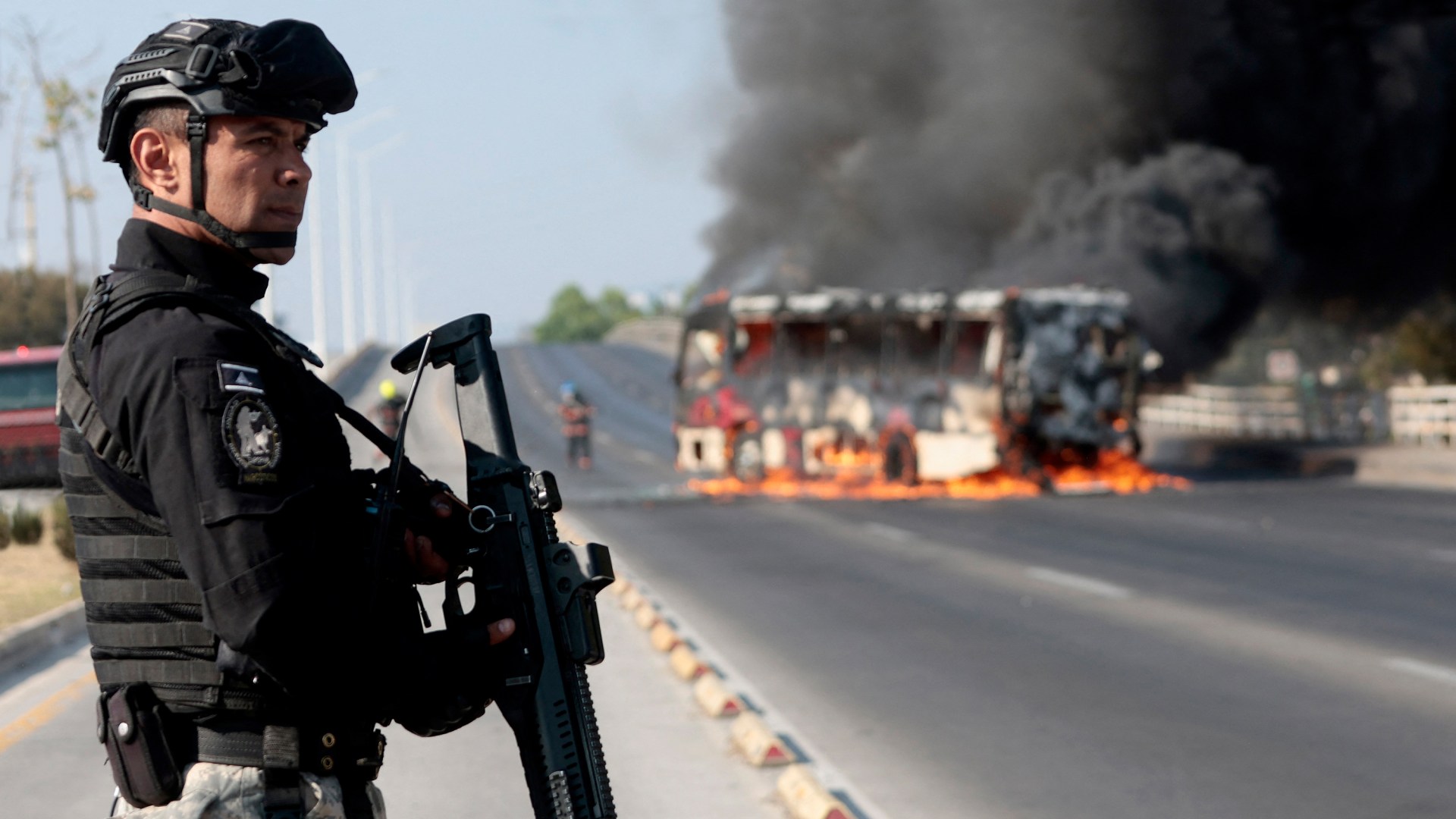
A member of the Prosecutor's Office stands guard near a burning bus after it was set on fire by organized crime groups in response to an operation to arrest a high-priority security target in Mexico.

A member of the Prosecutor's Office stands guard near a burning bus after it was set on fire by organized crime groups in Mexico.

Christianity Today February 27, 2026
Ulises Ruiz / Getty

Before the Sunday-morning service on February 22, pastor Constantino Varas sensed something was wrong.

Several members of his church, Iglesia Bautista Gracia & Amor in Guadalajara, Mexico, sent text messages reporting problems getting to the building. These were not the expected disruptions caused by that morning’s half marathon but rather narcobloqueos, or blockades consisting of burning cars, trucks, and buses set on fire by Mexican drug cartels.

“I told them to try to go back home, stay safe, and pray,” Varas said. By the pastor’s count, at least 40 people—nearly half the congregation—couldn’t make it to church that morning due to the roadblocks. Although this type of disturbance is not uncommon—criminal cartels have used narcobloqueos for years as a strategy to demonstrate their local power and as a response to police operations—the extent of the blockades on Sunday was exceptional.

Hours earlier, an operation involving the Mexican Air Force and special forces killed Nemesio “El Mencho” Oseguera Cervantes, leader of the Cártel Jalisco Nueva Generación (CJNG) in Tapalpa, about 80 miles southwest of Guadalajara. Security forces also killed six other members of the criminal organization, according to a statement from Mexico’s defense secretary. The CJNG is one of the most powerful crime organization in the country, with more than 15,000 members. Last year, the US State Department officially designated it a terrorist organization.

The cartel’s response began just hours later, with narcobloqueos and confrontations with authorities across 20 of Mexico’s 31 states. Armed cartel members defended their fiery blockades and clashed with police and armed forces who were trying to clear the roads.

By Monday, authorities acknowledged that at least 25 members of the National Guard and 30 operatives from criminal groups had been killed. As the capital city of the Jalisco state, birthplace of the CJNG, Guadalajara was at the epicenter of the violence.

Although only 50 church members occupied the padded wooden chairs of Gracia & Amor church on Sunday, the 10 a.m. service still began on time. Half an hour in, as the worship band played “Confiando Plenamente en Dios” (Trusting Fully in God), people heard gunshots outside.

Varas made a series of urgent decisions. Church members locked the doors to the church to prevent any armed assailants from entering. Staff called on Sunday school teachers to calm the children. The social media coordinator sent out a prayer request for the city on the church’s Facebook page.

When Varas stepped up to the microphone for the sermon a little later, he first asked the congregation to take out their phones and send messages to family members to let them know everyone was safe. Before preaching his prepared sermon on 1 Thessalonians 2:13–19, he led the church in prayer for the population of Guadalajara; for the governor of Jalisco, Pablo Lemus; and for Mexican president Claudia Sheinbaum.

After the service, the congregation decided to remain in the church for another hour, waiting for news about what was happening outside. The worship band played again, and people took turns praying. At the end, they left in groups. Each family that departed the church committed to informing the others about the route they had taken and the street conditions.

“When I left, there was no one on the streets. Everything was deserted,” Varas said. Earlier that morning, while they were in church, the state government had issued a code red alert, equivalent to a curfew.

The curfew was lifted later that day. Yet schools remained closed for part of the week, and some stores stayed shut. “The city came to a standstill unlike anything we saw even during the pandemic,” Varas said. “There is an apparent calm, waiting for trouble.”

Mexican Christians often face violence caused by drug trafficking. Street evangelists and pastors are aware that sentinels working for local drug dealers frequently follow their steps. Young people in poor neighborhoods are targets of the cartels’ forced recruitment. It’s dangerous for everyone who lives in areas under the influence of cartels, but life can be particularly risky for those, like church leaders, whose role is to promote peace. The widespread presence of criminal groups has led Mexico to become the 30th most dangerous place to be a Christian, according to the World Watch List.

Yet even those who are always under pressure of gang violence noted that the scale of this week’s events was unprecedented. Christians from different denominations united in prayer for the country and sought to support those who suffered from the blockades and the clashes.

“All of this comes at a very high emotional cost,” said Israel Gonzalez, a psychologist and pastor of Iglesia Peña de Horeb in Monterrey. “Being under a gun’s sight, being in the middle of a road blocked by trucks on fire is terrible. All this and not knowing if there’s something better ahead is terrible. Our churches need to help those who don’t know Jesus to find hope in this landscape.”

In a statement published on social media, bishop Enrique Treviño Cruz of the Anglican Diocese of Cuernavaca urged Christians to seek peace. “Jesus never promised us that life in this world would be a bed of roses. We are exposed to moments of affliction and conflict, but the certainty that Jesus triumphed over all evil should fill us with hope to persevere in prayer but also in action,” he wrote. “I especially urge you to encourage one another to remain in fervent prayer with the firm hope of finding the loving response of our Lord.”

Another concern among churches is the spread of false information, which results in further tension and panic buying. Varas noted that on Monday, the city’s gas stations were empty, causing many to buy and stockpile fuel “out of fear of what the future might hold.”

The College of Bishops of the Methodist Church of Mexico called for peace and asked believers not to spread fake news.

“We exhort our churches to remain united, to avoid spreading fear and disinformation, and to be instruments of reconciliation in their surroundings, ‘endeavoring to keep the unity of the Spirit in the bond of peace’ (Ephesians 4:3),” the group said in a statement.

Varas called on believers to take as their own God’s promise to Jerusalem in Zephaniah 3:15–16: “The Lord has taken away your punishment, he has turned back your enemy. The Lord, the King of Israel, is with you; never again will you fear any harm. On that day they will say to Jerusalem, ‘Do not fear, Zion; do not let your hands hang limp.’”

“In this time of crisis, we hang on to God through prayer,” said Varas. “But I think this situation gives us an opportunity as Christians to transform prayer into a culture, not merely something to cling to during a crisis.”

Correction: An earlier version of this article misstated the level of government that issued the code red alert.

Ideas

ICE Is Devastating Some Latino Churches

One of America’s leading Hispanic Christians witnesses the devastating effect of immigration politics on church life.

An image of ICE agents and an image of an empty church.
Christianity Today February 27, 2026
Illustration by Christianity Today / Source Images: Getty

I recently visited multiple congregations across Minnesota, including River Valley Church. As I stood inside each church, what I witnessed was not anecdotal or exaggerated. It was empirical and deeply troubling. As national immigration-enforcement politics evolve, churchgoers across the Midwest are feeling the consequences far from the border.

One of the largest Latino churches in the state, which previously held four Sunday services, is down to one service at roughly 60 percent capacity. Approximately 75 to 80 percent of this church body has stopped attending services altogether. 

This is not a story about declining faith or spiritual apathy. It is a story about fear. The Latino church is hemorrhaging, and the cause is increasingly clear.

Pastors repeatedly told me the same story: Families staying home. Parents afraid to drive. Elderly members afraid to leave their neighborhoods. Small-business owners closing early. Mothers sending their children to church, unsure whether they themselves would be able to return home safely.

These are not criminals hiding in the shadows. They are congregants who have lived in the same communities for a decade, two decades, or more. They are hardworking, God-fearing, contributing members of society. They do not depend on government subsidies. They worship faithfully, raise families, and love this country.

Fear has replaced fellowship, and silence has replaced singing. Sadly, the church—especially the Latino church—is paying the cost.

I do not write this as an activist or partisan. I write as a pastor who has spent decades on the frontlines of the intersection of faith, immigration, and public policy, in the process advising George W. Bush, Barack Obama, and Donald Trump. Across administrations, parties, and ideologies, one truth has remained consistent: Immigration policy works best when it is guided by both moral clarity and strategic wisdom.

Border security and the rule of law matter. National sovereignty is critical. But broad, indiscriminate, and unfocused enforcement without clear prioritization is not only ineffective but also counterproductive.

Immigration and Customs Enforcement (ICE) should operate with clear targets and disciplined focus, pursuing those who pose real threats and leaving everyone else alone. A targeted, surgical approach would restore trust, protect communities, and avoid unnecessary collateral damage.

When enforcement lacks discernment, everyone loses. Law enforcement loses community cooperation. Churches lose their congregations. Children lose stability. And the nation loses moral credibility.

Faith communities—especially immigrant churches—have historically been among the strongest allies of public safety. Churches teach responsibility, respect for authority, family stability, and civic engagement. When these institutions are destabilized, the social fabric weakens.

This is not theoretical. I saw it with my own eyes: empty sanctuaries, pastors preaching to half-filled rooms, congregations once marked by joy now marked by anxiety.

In recent months, I have argued alongside faith leaders and policy experts that America must resist the temptation to treat all undocumented immigrants as if they are criminals. Scripture does not permit such moral shortcuts. We must remember justice requires discernment, mercy requires wisdom, and order requires precision.

Individuals who have been here for decades, put down roots, raised children, built businesses, and contributed to the common good should not be treated the same as those committing crimes. Conflating the two undermines both justice and public safety.

This is why bipartisan solutions deserve serious consideration. One such proposal is the Dignity Act. If passed, it would strengthen border security, mandate verification of work authorization, hold employers accountable, and provide a structured and earned pathway for long-term undocumented immigrants who meet strict criteria.

It is not amnesty. It is accountability with compassion, order with humanity, and law with dignity. These pairings are important. 

Under such a framework, criminals are swiftly removed, the border is decisively secured, and long-term residents are given the opportunity to come out of the shadows, pay restitution, work legally, and contribute fully to the nation they already call home.

This approach reflects a biblical ethic that values both truth and grace. Scripture consistently upholds the rule of law while commanding care for the sojourner. The two are not enemies; they are partners.

There is also a political reality we must acknowledge. Indiscriminate enforcement provokes backlash. History teaches us that overreach fuels reaction. And reaction often hands power back to ideologies that undermine public safety, weaken borders, and marginalize faith altogether.

No administration benefits from alienating one of the most faith-driven, family-oriented, and civically engaged communities in the nation.

There is still time to change course. 

The goal should not be fear-driven compliance but law-abiding cooperation. In place of mass anxiety, we must strive for measured justice. And instead of pushing for collective punishment, we should seek targeted accountability.

The Latino church is not asking for special treatment; it is asking for fair treatment. It is asking that the line between criminality and community be honored and that faith-filled families not become collateral damage in a debate too often stripped of nuance and humanity.

What I witnessed in Minnesota should concern every Christian and every policymaker.

Churches are more than buildings. They are anchors of hope, centers of service, and incubators of virtue. When they empty, the country loses something much deeper than attendance.

America can do better. We must do better.

We can secure the border and preserve dignity. We must enforce the law, protect families, and uphold justice while restoring trust.

The question is not whether immigration enforcement should exist. The question is whether we can be wise enough to distinguish between those who threaten our nation and those who strengthen it.

Right now, the Latino church is sending a clear and painful message.

We should listen.

Samuel Rodriguez is the lead pastor of New Season, a multisite nondenominational church based in California, and president of the National Hispanic Christian Leadership Conference, which represents millions of Christians worldwide. He has written 12 books and produced seven faith-based films.

Ideas

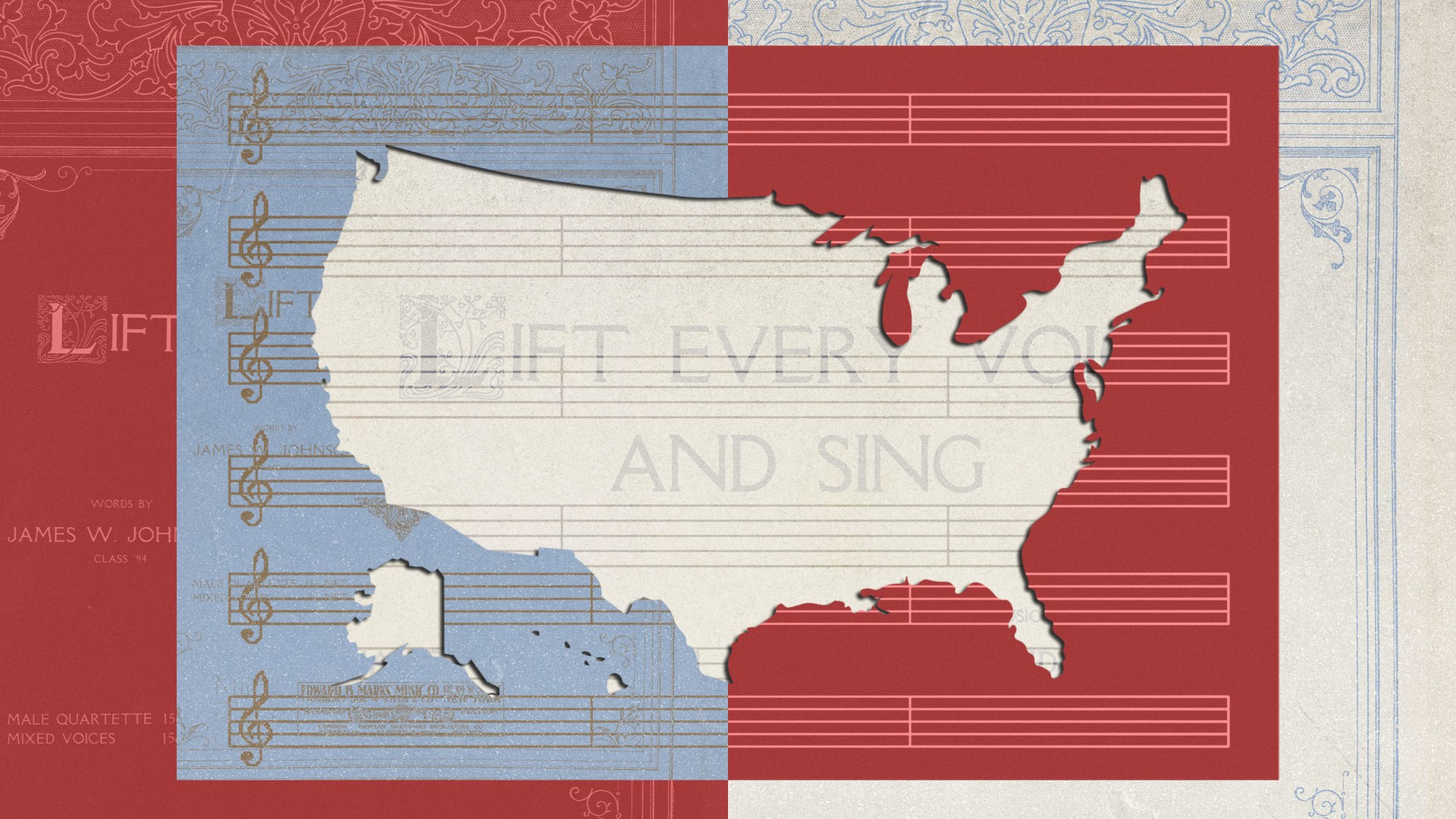
‘Lift Every Voice and Sing’ Should Be for All Americans

Contributor

Commonly referred to as the Black national anthem, the Christian hymn is part of our shared inheritance.

A collage of the United States, sheet music, and a hymn.
Christianity Today February 27, 2026
Illustration by Elizabeth Kaye / Source Images: Getty, WikiMedia Commons

This piece was adapted from the Mosaic newsletter. Subscribe here.

The hymn “Lift Every Voice and Sing” has officially been drafted into the culture war, becoming yet another prominent symbol of the political and racial divisions in the US.

For those who might not be aware of the ongoing controversy, here’s some background: The iconic hymn was composed in 1900 and has long been recognized by African Americans as a solemn yet hopeful anthem of our story. For more than a century, the song has been an integral part of Black culture. It then experienced a cultural resurgence of sorts in recent years, being sung at marches, concerts, and prominent football games, including the most recent Super Bowl.

Like almost every other cultural symbol and topic that has to do with race, the song’s growing presence quickly created fissures along racial and political lines. Some people on the left see it as a symbol of political resistance. On the right, many believe the song, especially when sung before or after the national anthem, divides the country and inappropriately draws attention to the nation’s troubled racial past during moments of civic pride.

But anyone who pays close attention to the hymn knows both views have flaws. The “Black national anthem,” as it is commonly known, is a song of gratitude, resilience, and covenantal memory. It speaks of faithfulness through suffering, of discipline through adversity, and of loyalty to a God who “has kept us thus far on the way.” It was not composed as a protest song and does not rage against the nation. Instead, it is a hymn of prayer for America to live up to its highest ideals and of praise for the considerable distance we have come on that long journey.

“It’s America’s music,” musicologist Naomi André said two years ago while discussing a federal bill that unsuccessfully sought to recognize the song as a national hymn. “If it were only sung by Black folks, then it would be limiting. This is music that’s not meant to divide people. In fact, it’s just the opposite: It’s about bringing people together.”

I agree with André. If the song is embraced by all Americans, as it has long been by a subset of the population, it could be one drop in a vast sea of changes that could inch us closer to reconciliation. I am not proposing that “Lift Every Voice and Sing” be designated as a co-anthem or displace any existing national symbol. But there is room within the rarified opus of deeply American music for one more song to be widely sung and shared. 

For the hymn to serve as a bridge, however, sacrifice will be required from more than one side. Those who have come to love the song would need to allow it to belong to a broader audience and see it not as a partisan or ideological emblem but as a shared inheritance. They would also need to trust that allowing it to be an American (instead of a merely African American) song does not dilute its history. 

On the other side, those who instinctively resist what they perceive as cultural displacement would need to embrace a hymn that’s not ingrained in their collective memory. They also need to see that the song does not champion splitting America into two nations. Instead, it draws us deeper into national unity by doing the almost impossible task of acknowledging suffering without denigrating the country.

It’s rare to see people lay down their arms like this in politics and culture. But it’s something our country needs to practice if we truly want a healthy public arena.

In some ways, the story of the song offers a model we can follow. The hymn was created by two brothers who had differing religious views but still worked together toward one goal.

James Weldon Johnson, who wrote the lyrics, grew up in a Christian home and later described himself as agnostic. Still, he was influenced by Christianity and wrote words that were filled with faith and hope. Meanwhile, his brother, J. Rosamond Johnson, composed the music and remained deeply rooted in the Black Protestant heritage.

The result is something remarkable: The song moves easily in secular spaces while carrying unmistakable biblical themes. The NAACP adopted it in the early 20th century, and it was sung in Black churches, civic gatherings, school assemblies, and movement meetings as a hymn of endurance and aspiration. The song offered theology without coercion and exemplified the kind of contribution biblical Christianity has historically made to American public life—not through domination but by helping us embrace new ways of thinking.

If you’re convinced so far, you might be wondering how exactly a song becomes part of America’s musical canon, at least culturally. What history shows is that it doesn’t happen too often, and it’s also not always immediate.

Take the national anthem: The 117-year journey of “The Star-Spangled Banner” from wartime poem to America’s official song was neither instant nor inevitable. Francis Scott Key wrote the verses in 1814, but the song did not become the official anthem until 1931. Its elevation unfolded gradually—through deep appreciation, popular adoption, and eventual political recognition.

Then, there are other songs that have helped define the American soundscape: “Hail, Columbia,” “My Country, ’Tis of Thee,” and “America the Beautiful.” None of them has erased the others. But each has added its own layer of meaning to our country’s evolving story. In the same way, we can add “Lift Every Voice and Sing” to the list.

Apart from its history, one reason I love the hymn so much is that it refuses despair—which is something our country, and even we as Christians, sorely need right now. We have become skilled at narrating our grievances, but less so at showing gratitude. We are fluent in accusation, but we lack shared aspirations with others, especially those with whom we ideologically disagree. This path, however, is not sustainable. A nation cannot indefinitely endure on critique alone. It must also cultivate thanksgiving and resolve among its people.

If America is to be more than a marketplace of grievances, we will need common practices that do not require total agreement. Singing together has historically been one of those practices, and singing this song together would require us to admit something humbling: that America’s story includes both glory and grave injustice, both aspiration and failure.

The hymn would require some to sing of a “dark past” they’d rather sanitize, minimize, or forget. It would ask others to sing about a turning of the page and the start of a hopeful “new day” in America that’s not defined by the horrors of our past. In an era of constant division, accomplishing that would be no small thing.

Chris Butler is a pastor in Chicago and the director of Christian civic formation at the Center for Christianity & Public Life. He is also the co-author of  Compassion & Conviction: The And Campaign’s Guide to Faithful Civic Engagement

Books
Review

Parenting Takes Courage. These Books Offer Hope.

Three books on parenting and family to read this month.

Three books on a yellow background.
Christianity Today February 27, 2026
Illustration by Christianity Today

This piece was adapted from CT’s books newsletter. Subscribe here.

Laurie Krieg, Raising Wise Kids in a Sexually Broken World (IVP, 2026)

Raising Wise Kids in a Sexually Broken World lays out how to teach our kids a biblical sexual ethic without ever losing sight of the gospel or the freedom we have in Christ. While the topics of sex and sexuality often evoke fear in parents, Laurie Krieg and Matt Krieg are full of gentleness and hope, encouraging parents to look upon the goodness of God. It’s both practical and deeply theological.

This book proclaims that all of us experience broken sexuality in various ways, and we need the gospel for healing, not shame. The law gives us a picture of wholeness and what is good, and the gospel is the avenue of that healing. I especially loved how the authors see our sexuality as part of our vocations, whether that is in marriage or singleness, rather than the source of our holiness, which comes from Christ. Our bodies, made by God, are in service to his mission. And the church, also a body, has many parts, and there is diversity in how that plays out.

The conversation is especially tender and vulnerable around LGTBQ issues in this book. It gives an accessible framework of both explaining to kids how God’s design for marriage is between a man and a woman, but also showing how to love and speak to LGTBQ people within our reach in appropriate ways—as beloved human beings made in the image of God. Krieg also addresses gender identity, solidly rooted in physical biology as well as Christian freedom to express those genders in the full range that God allows, rather than cultural stereotypes.

James Traub, The Cradle of Citizenship (W. W. Norton & Company, 2026)

As a mom of six who homeschooled for over a decade and also used both public and private schools for my children, I often find myself in an ideological no-man’s-land, where educational tribes are set against one another. I believe in Christian freedom in this area, as well as in a civic duty to our neighbors. It is that civic responsibility—ensuring an educated democracy—that makes this next book especially relevant.

The author is a journalist specializing in educational issues and has been disturbed by the glaring lack of civics education in the public schools, leading to the political situation we find ourselves in now. He talks about a move away from history and facts to skills mastery—to the detriment of basic knowledge of government processes. This book is a thorough history of the educational civic movements within our country, as overcorrections have swung back and forth.

He marks out the shift of schools becoming an instrument used by various factions for social change and whitewashed patriotism rather than a look at civic virtue through the lens of historical founding documents and circumstances of our country.

Like me, Traub doesn’t seem to fit a traditional political tribal mold when it comes to education. Both of us would like to “amen” for a return to a classical model of education. Yet I agree with his view that some current classical Christian movements wear the “veil” of classical education when they are actually pushing political agendas, becoming the very thing they critique on the far left. Readers may be triggered by his open disdain for President Trump’s moral character being antithetical to the development of civic virtues, and his critique of both far-right and far-left agendas within education.

However, this book calls us back to the foundational goals of a civilized society and warns us of the enduring truth that those who neglect history are bound to repeat its mistakes.

Melissa Kruger, Parenting with Hope (‎Harvest House Publishers, 2024)

The Gospel Coalition’s Melissa B. Kruger offers a gentle picture of parenting teens that involves generous hospitality, instilling biblical values, and rooting our kids in the gospel. Rather than fearing the teen years, Kruger presents a different picture where truths taught start to take root.

Some parenting books are full of data and give academic or exegetical arguments. The tone of this book is personal, as an experienced mom imparting her wisdom on younger parents with kids just entering the teen years. I especially appreciated Kruger’s points on providing an atmosphere of grace and cultivating a home where your teen can rest from the world.

In a culture that draws parenting knowledge from studies that optimize human performance, Kruger offers a more biblical approach that makes space for teens to just be human, living in the knowledge and grace of God. Sports are good, but they are not the end. Failures are part of the learning process, and also not the end.

The Lutheran in me would have liked to see better law-and-gospel distinctions, as definitions of each tend to get muddled together. I would also like to glean from the author more about walking our children through inevitable suffering, as most parenting books like this focus on flourishing—a less scary subject. But I can’t help but find this book to be incredibly encouraging, firmly fixing our eyes on Jesus. It would make a great resource for studies in small groups as well as individuals or couples. There are so many topics addressed that would be ideal discussion points for parents to work through together.

Gretchen Ronnevik is the author of Ragged: Spiritual Disciplines for the Spiritually Exhausted and cohost of the Freely Given podcast.

History

Confronting Evils

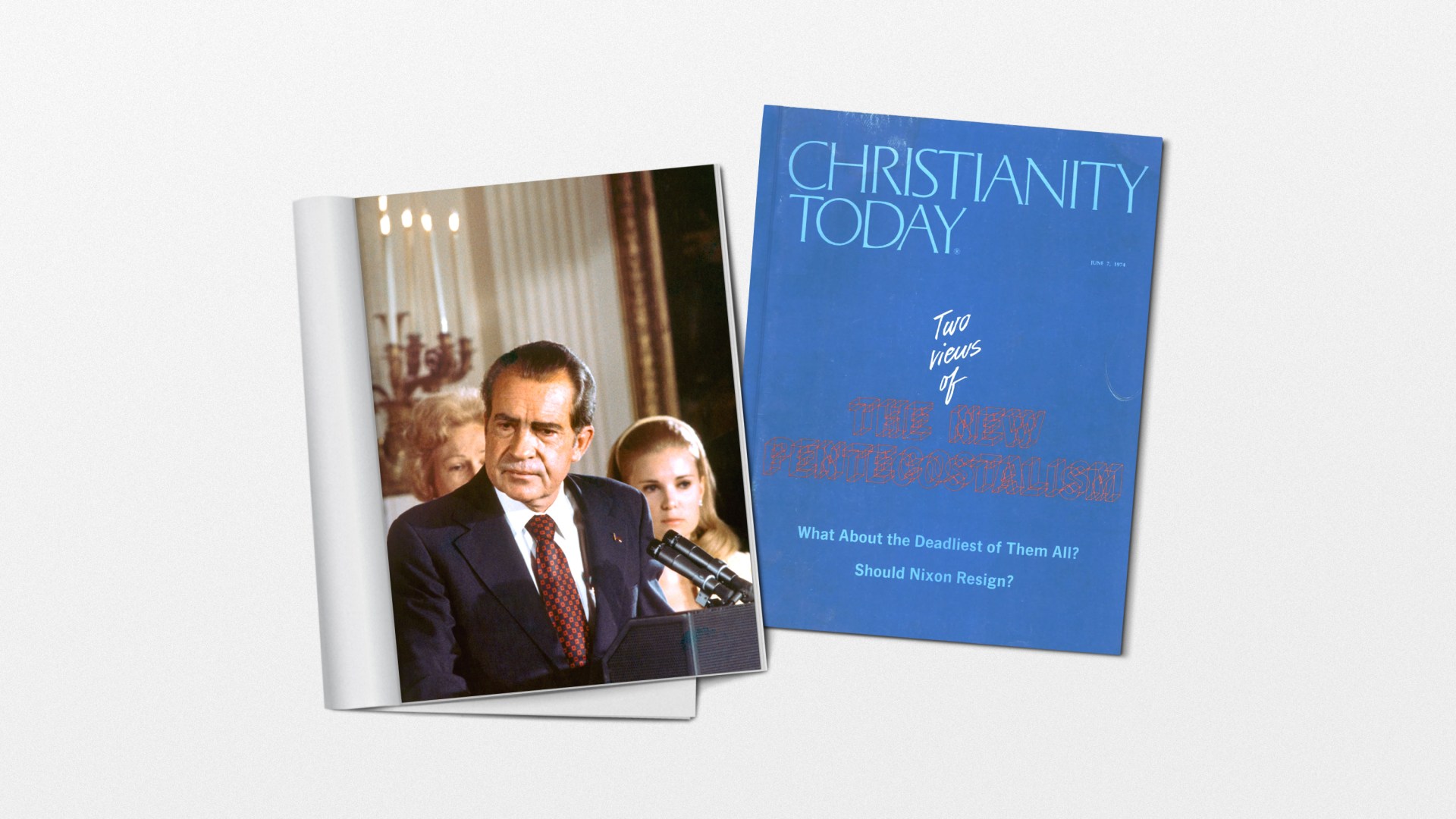
In 1974, CT saw trouble in the White House, Chile, and Cyprus, and in the American fascination with exorcists.

An image of Richard Nixon and a CT magazine cover from 1974.
Christianity Today February 27, 2026
Illustration by Christianity Today / Source Images: Getty, CT Archives

The Watergate scandal grew worse in 1974—and then worse still. CT looked at President Richard Nixon’s ethical lapses, revealed in the publication of transcripts of secret tapes he had in the White House, and asked, “Should Nixon resign?

There can be no doubt that a large percentage of those who voted for Richard Nixon in November, 1972, no longer have confidence in him, and that his capacity to execute the functions of his office has been considerably reduced. Whether guilty or innocent of impeachable offenses—“treason, bribery, or other high crimes and misdemeanors”—he bears the ultimate responsibility for what Watergate has come to stand for.

Mr. Nixon’s problems were greatly intensified by his release of the transcripts of the tapes. Up to that time the major if not the only question was a legal one: Did he have advance knowledge of Watergate and was he involved in the cover-up? To that has been added a large question of morality. The transcripts show him to be a person who has failed gravely to live up to the moral demands of our Judeo-Christian heritage. We do not expect perfection, but we rightly expect our leaders, and especially our President, to practice a higher level of morality than the tapes reveal. … 

We now have a President who is under House scrutiny for possible impeachment and whose moral flaws have been revealed. A legal question lies at the root of the call for impeachment; a moral question, at least superficially and theoretically, lies at the root of the call for resignation. If the President were to resign, the legal question would not be resolved. Yet the Constitution does not provide for the removal of a President because of moral flaws. To resign would be to leave the presidency for other than a constitutional offense. …

Superficially a case can be made for resignation based on the immediate best interests of the nation. But the long-run disadvantages might outweigh any immediate benefits.

When Nixon did resign—the first (and, to-date, only) president in American history to step down in disgrace—CT paused to reflect on the troubled era and express hope for the next president, Gerald Ford.

During the last decade and a half John F. Kennedy was assassinated; the armed forces fought in Viet Nam and finally came home; Lyndon B. Johnson was eliminated from the 1968 presidential campaign by the pressures of an unpopular war despite his election in 1964 by a great landslide; Robert Kennedy was assassinated at a time when his candidacy for the office of president was reaching a high tide; Richard Nixon won the election in 1968 with the promise to end the war in Viet Nam and bring peace to the world. The end of Nixon’s first term was marred by the Watergate charges. …

Early in his second term Nixon succeeded in bringing U.S. participation in the Viet Nam war to a conclusion. Not long thereafter came the exposure and finally the resignation from the vice-presidency of Spiro Agnew, whose “law and order” mentality was grossly at variance with his personal practices. Meanwhile the Watergate situation was moving slowly but inexorably to a climax, which finally came on the evening of August 8, when President Nixon announced to the nation that he would resign the following day. … 

America’s new president, Gerald Ford, seems to have grasped the central demand of the nation from the ethical standpoint: the need for truth, honesty, and integrity in the White House and throughout the government. He has promised to make these principles the pole-stars of his administration. No government can long stand when these virtues have disappeared. We hope that Mr. Ford will clearly exemplify them, that in his conduct of the government there will be an openness and honesty and an obvious commitment to righteousness.

President Ford would be well advised to choose men and women of Christian faith and prayer to work with him—not just career bureaucrats, businessmen, and financiers.

In 1974, CT also reported on struggles around the world. Theologian René Padilla, a regular columnist, wrote about the military coup in Chile in a piece titled “The Church and Political Ambiguity.” 

For many Latin Americans the former President of Chile, Salvador Allende, was a symbol of hope. Democratically elected in 1970, he was for them the embodiment of a cherished desire for revolution without bloodshed. … 

But the experiment was doomed to failure. Whatever one may think of the ideological color of Allende’s revolution, the fact remains that no small nation in the Third World is truly free today to follow its own course and to keep its economy unaffected by international pressures at the same time. Add to this the internal pressures created not only by the political conservatives but also by the extreme leftists, and you will easily understand the great economic chaos that overtook Chile in the months preceding the military blow of September, 1973. … 

I will not attempt here to explain the factors that precipitated the military blow led by General Augusto Pinochet and his colleagues (all of them professing Roman Catholics) last year. According to a common opinion, it would have never taken place aside from the encouragement of the U. S. State Department. Be that as it may, Allende’s Marxist experiment came to an end marked by his own suicide and followed by a systematic effort to reverse the revolution that he had initiated.

As soon as the military had taken over, several evangelical leaders expressed their adherence to the new government. That God had directly intervened to deliver the country from Communism was a widespread view among evangelical Christians. And I know of at least one missionary statesman whose interpretations of the military takeover as God’s doing was widely circulated abroad. Nothing was said, however, about the negative aspects of the whole situation and particularly about the appalling cruelty displayed by the military regime in dealing with its political opponents.

CT also tried to help readers understand the political tumult happening in Cyprus, where a military coup overthrew a president who was also an Eastern Orthodox archbishop:

To write about Cyprus is not easy, partly because of the complexity of the situation, partly because of the marked (but understandable) unhelpfulness I experienced in Nicosia from British and American information agencies, but also because of my dismay, felt in 1965 and recently renewed in Nicosia, that the dual role of Makarios should perpetuate old antagonisms. That one man should officially represent both church and state calls for a Solomonic wisdom and impartiality that the president/archbishop shows little signs of possessing.

“Render unto Caesar the things that are Caesar’s, and unto God the things that are God’s” is a word that the apostles may well have proclaimed to the Cypriot proconsul Sergius Paulus. Makarios and his troubled island vividly demonstrate the folly of ignoring that divine injunction.

Evangelicals were thinking globally in 1974 thanks, in part, to the International Congress on World Evangelization held in Lausanne, Switzerland. CT treated the event as a monumental moment in evangelical history and covered the gathering from beginning to end. Billy Graham laid out the purpose in a 5,600-word article, “Why Lausanne?”  

God is at work in a remarkable way. Never have so many people been so open to the Gospel. In parts of Asia, there are evidences of the outpouring of God’s Spirit in evangelism. In Korea, the churches are increasing four times faster than the population. In certain parts of northeast India, Christians now form a majority of the population and are bringing about a whole new dimension of civic righteousness. In Papua, New Guinea, a land where the Gospel was virtually unknown before this generation, a large percentage of the people now profess faith in Christ. Latin Americans are responding to the Gospel in unprecedented numbers, and evangelical churches in many parts of Latin America are multiplying vigorously.

In North America, especially the United States, there has been a remarkable upsurge of interest in the Gospel in the last decade—especially among youth. It is true that old denominations with theologically liberal tendencies are declining; yet the more evangelical denominations such as the Southern Baptist Convention (America’s largest Protestant denomination) are showing a steady growth. Similarly the evangelical theological seminaries and Bible schools are overflowing while the more liberal schools are seeing a dramatic drop in enrollment. Scores of para-church evangelistic organizations are flourishing as never before. 

Editor Harold Lindsell offered an optimistic appraisal after the meeting:  

Lausanne dealt substantively with two questions: (1) What is it that evangelicals believe and are called upon to do? and (2) What strategies and methods can evangelicals, working together, use to complete the task God has called them to do?

Lausanne brought together many of the finest evangelical minds and the most devoted and committed servants of God. The excellence of the program, the wide range of small strategy and study groups, the mingling of men and women across racial, class, and denominational lines, and the free expression of differing opinions on some questions were hallmarks of the congress. … 

At Lausanne the Gospel was tied to the mission of the Church, and that mission was defined as the evangelization of the world. … The spirit of sacrifice required to do this job was emphasized, and covenant signers were called upon to cultivate “a simple lifestyle in order to contribute more generously to both relief and evangelism.” …

At Lausanne, social action was not put on the same plane with the proclamation of the Gospel, nor was it given standing as a substitute for the Gospel. But it surfaced again and again, and Christians were called to work for justice for all mankind. 

Other spiritual developments of the era were more troubling. CT said the success of the film The Exorcist spurred widespread interest in demons, prompting many Americans to ask, “Exorcism: Is it for real?

Experiential realization of Satan’s existence is not hard to come by either, in our century of world holocausts (nobody wants war, but war is everywhere), genocide, and a humanity bent on self-destruction. … If one accepts the biblical evidence for the ontological reality of the devil, one is simultaneously committed to the reality of demon possession, for the demons of the New Testament do not remain outside human life, with their hideous countenances pressed as it were against the windowpanes of the soul; they can break through the glass and take up residence within. … 

Possession by demons is one of the most constant and universal religious phenomena, experientially confirmed among primitive peoples and civilized moderns alike, as the classical treatises on the subject fully attest ….

Whatever the forms employed in exorcism, everything must focus upon the power and strength of Christ. An exorcist, no matter how sound in doctrine and sanctified in life, is no personal match for supernatural evil. Just as some witnessing battles are lost while others are won, so some exorcisms succeed while others do not. 

The maturity of The Exorcist as book and film was nowhere better demonstrated than in its recognition that in the last analysis, where all else fails, only Substitution rids man of the evil powers arrayed against him. Thus the final appeal must always be made to the Great Substitute, who on the cross, “having spoiled principalities and powers, made a shew of them openly, triumphing over them in it” (Col. 2:14, 15). 

There and there alone we have an Exorcist who (thank God!) does not need to be paid to prevent repossession. What he did for us can never be repaid. And one day even our failures will be redeemed, for from the heights of heaven to the lowest depths of hell every knee shall bow and every tongue confess that Jesus Christ is Lord.

News

Housing Doesn’t Solve Homelessness

At California’s Orange County Rescue Mission, a two-year program provides far more than a roof over residents’ heads.

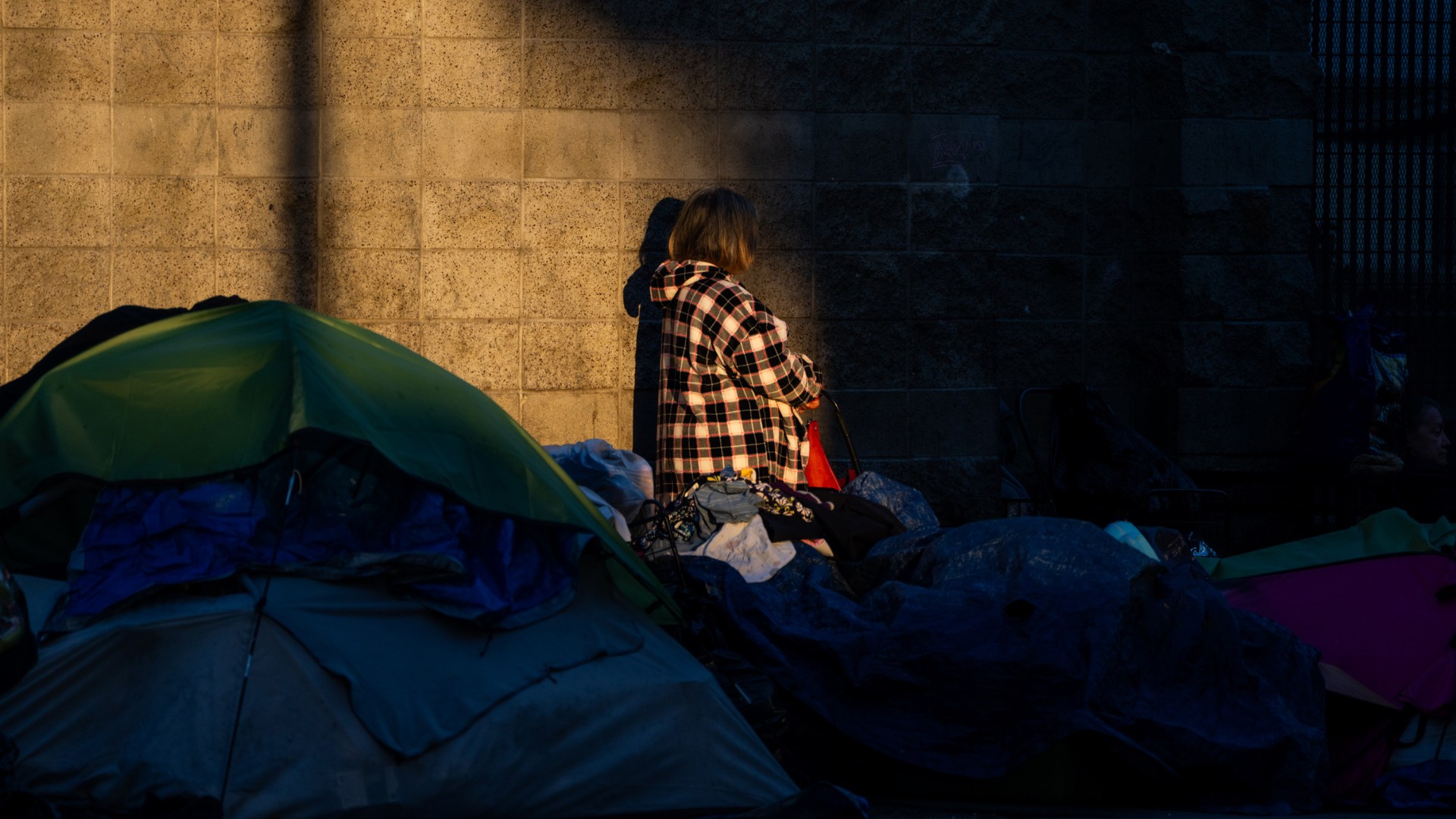
Homeless people and tents on a sidewalk in Los Angeles, California on July 24, 2025.

Homeless people and tents on a sidewalk in Los Angeles, California on July 24, 2025.

Christianity Today February 26, 2026
VCG / Contributor / Getty

California Governor Gavin Newsom regularly repeats his mantra: “Shelter solves sleep; housing solves homelessness.” Hmm. From 2022 to 2025, I wrote weekly columns about homelessness and gained insight by living for three weeks in shelters. Based on that I can say: In general, it is not true that housing solves homelessness. 

Maybe it solves homelessness for people who are not addicts, alcoholics, mentally ill, or victims of abusive childhoods, but most homeless people are in one or more of those four categories. Maybe housing solves homelessness if the rest of us don’t like to see homeless people: Get them out of sight and they can be out of mind. 

Invisibility benefits those who have homes. Unseen homeless folks don’t ask us for money, so we are free from giving what often goes to buy drugs or alcohol, or from not giving and feeling heartless. But for those who are out of theirminds for various reasons, housing does not solve homelessness.

Augustine 1,600 years ago famously said regarding God, “Our hearts are restless until they rest in you.” The earthbound equivalent is “Our bodies are restless until they reside in a home.” For many, though, walls and a roof alone do not make a home.

Instead, hiding away addicts or alcoholics inside an apartment leaves many apart from everything except a needle or a bottle. Hiding away the severely mentally ill leaves them apart from everything except walking nightmares. People who are desperately ill need to be together with someone who can offer compassionate help. 

That’s one reason a chart used at the Orange County Rescue Mission (OCRM) in Tustin, California, impressed me. It’s one of the places I lived at for a few days in January to gain some street-level understanding of these issues. Instead of using one marker to assess progress in coming out of homelessness—a signed apartment lease, say—OCRM evaluates a more holistic list of ten, including: “spiritual … sobriety/substance abuse (if applicable) … mental health … shelter/housing … social/family relationships … income and employment … physical health, food, and nutrition.” (This quotation and those that follow are from the OCRM “Outcome Assessments,” and I’ve seen that actions back up those words.)

OCRM calls its residents “students” and helps them move from freshman to senior status during what is often a two-year stay until graduation. To move from one class to another, students need to make progress in the various areas, going from “stuck” to “accepting help” to “believing” to “learning” to “thriving.” 

The “believing” is most clearly applicable to spiritual formation. Some homeless people might avoid discussions about faith and Christianity or aggressively dismiss opportunities to participate or learn more. However, when they enter OCRM, they need to be “willing to attend Bible studies/church events and engage in discussions about Christianity.” The big change comes with attending church, involvement in church community, and—in God’s mercy—coming to faith. 

For those contending with sobriety/substance abuse, “stuck” means a life of alcohol, drugs, and unwillingness to discuss that or get support. That often accompanies a belief that change won’t happen and a tendency to miss appointments. A move to “accepting help” begins with the realization that “I’m fed up with the negative impact of alcohol or drugs.” 

“Believing” comes with understanding that change is essential and the willingness to access support to maintain sobriety, set goals, and keep appointments. To graduate, participants need to understand what triggers them to drink or take drugs and to find new ways to cope with the causes. They thrive when faith, family, friends, and support groups, plus their own strategies, help them maintain sobriety. The compassionate help that begins at OCRM radiates out in these community connections to support the still vulnerable, yet newly focused, graduates. 

A typical pre-OCRM social or family life is often described like this: “I am always alone or with people who exploit me, and I will not discuss this.” Through ongoing relational care at OCRM, students begin to articulate a shift. “I want to find more positive relationships. … I am talking to one or more people I can trust. … I’m recognizing that my relationships revolved around alcohol, drugs, or negative behavior.” Then comes “I need support to maintain/build positive contacts but am learning,” and “I feel connected and supported. … If I am in contact with my family, the relationship is healthy.” New, trusting relationships developed in the shelter give students confidence to try new skills and take wise relational risks as they rebuild social and family connections outside the shelter’s walls.

Crucially, OCRM’s ten steps out of homelessness are not vague wishes but measurable outcomes. Regarding “income and employment,” a first step is often starting work on a GED or high school diploma, as necessary, and starting a volunteer work assignment. Then comes more learning and training, completing a job readiness workshop, gaining a diploma, developing a personal budget, meeting with a financial accountability partner, and starting and continuing full-time employment. 

On legal matters, pre-entrants often combine missed court appearances with denial of responsibility. Eventually they learn “how to avoid high-risk people situations. I’m learning my triggers and how to manage my behavior. … I have no outstanding issues with the police or courts.” Each step equips a student with the skills necessary to succeed long-term when housing becomes a viable option. 

Regarding “physical health, food and nutrition,” the movement being fostered is from bad health and risky behavior to action for improvement, including taking daily prescribed medications, seeking nutritious food, and visiting doctors and dentists as needed. 

Students receive evaluations at months 3, 9, 13, and 19. It’s hard: Most who enter head back to the streets during those first 3 months, but 7 out of 10 who stick around past that go all the way to graduation. According to OCRM, in 2025, 100 percent of graduates secured full-time employment and housing, and since 2018, 85 percent of alumni have maintained sobriety and employment. One-fourth of entrants do not have a high school diploma, but graduates have one or the GED equivalent. The hardest thing is that OCRM works for some but not for others.

The work of organizations like OCRM reveals the oversimplification embedded in Newsom’s mantra. For most, the journey from homeless to homed is a long and winding one that only reaches its end with the compassionate help of many trained supporters. Solving homelessness requires far more than available housing units and a way to cover the monthly rent. OCRM’s practical program readies homeless men and women for not a temporary tent but a permanent home on earth and perhaps in heaven.

Ideas

Duvall’s ‘The Apostle’ Treated Evangelicals With Empathy

In the late actor’s hands, Christian conversion was not something to be lampooned or deconstructed but an object of wonder.

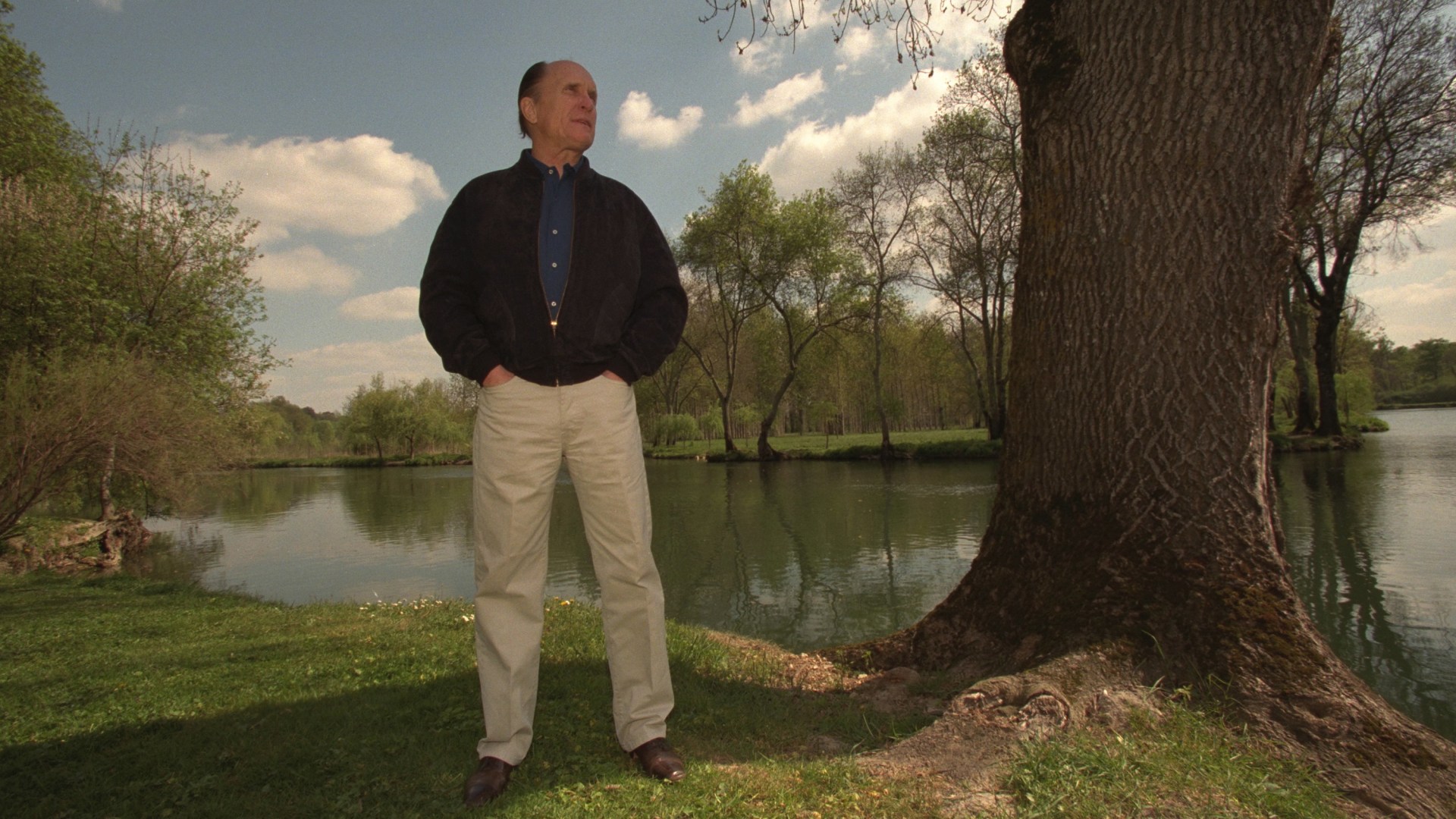
Robert Duvall at the 15th Cognac Crime Film Festival in 1997.

Robert Duvall at the 15th Cognac Crime Film Festival in 1997.

Christianity Today February 26, 2026
Eric Robert / Contributor / Getty

Robert Duvall died last week at the age of 95. An acting legend, he starred in memorable roles in classic films, such as The Godfather and Apocalypse Now. But Duvall was also an expert interpreter of American evangelicalism.

His 1997 film The Apostle, which he wrote, directed, and starred in, was far less popular than Francis Ford Coppola–directed blockbusters, and it almost wasn’t made. Duvall ended up spending $5 million of his own money to produce the film after initially failing to land Hollywood interest. I’m glad he forged ahead. For me, as a historian of American religion and someone who grew up in Southern evangelicalism, The Apostle remains a powerful example of how filmmaking can treat a religious subject with critical empathy.

The film centers on Sonny, a Pentecostal revivalist and pastor played by Duvall. Sonny has a successful preaching ministry and oversees a large church in southeastern Texas. He is also married to Jessie, played brilliantly by Farrah Fawcett, with whom he has two young children. Sonny discovers Jessie has been sleeping with a fellow minister and has orchestrated a takeover of the church, effectively removing him from leadership. He gets drunk and shows up to his son’s baseball game, whereupon he flies into a rage and, in a shocking scene, assaults his wife’s lover with a baseball bat. (We learn later the lover dies from his injuries.)

Sonny then goes on the run from the law. Ditching his car in a river along the way, he baptizes himself and takes the name Apostle E. F. He winds up in a rural Louisiana town and announces his intention to start a new church. The church welcomes both Black and white residents, becoming a site of belonging for townspeople on the margins (including the now-famous Walton Goggins in one of his first roles) and receiving the ire of a local white supremacist (played by Billy Bob Thornton). Sonny rebukes the racist, inspires his church community, serves those who are in need, and seems to have remade his own life and ministry in a humbler, gentler style. But eventually he is found out. He preaches one last sermon, then gives himself up to the police who wait outside the church.

What is most striking about the film is not the plot or even the rich character studies; instead, it’s Duvall’s depictions of Pentecostal worship and sophisticated explorations of Southern evangelical ministry and practice. Duvall not only acts well in the film, but he also cast and surrounded himself with actual Pentecostals.

“I didn’t want to come in and tell them what to do. I wanted them to show me what they do,” Duvall later said. In the film, he literally hands these men and women the microphone, and they preach, pray, and worship on camera as they would any given Sunday. Unlike most Hollywood depictions of evangelical faith, The Apostle’s “qualified realism,” as Patton Dodd has put it, lingers on the preachers and congregants in these moments, showcasing the beauty and rhetorical power of radical evangelical preaching and worship.

Sonny himself embodies evangelicals’ dispositions and ministry style. This is all the more remarkable given that Duvall hailed from a very different background, that of Christian Science. Yet he understood the weight and internal logic of classic evangelicalism.

This is clear in the film’s first few minutes, when Sonny and his mother (played by an elderly June Carter Cash) come upon a car wreck on the side of the road. Duvall runs to the crashed vehicle, Bible in hand, and prays with the seriously injured young driver. “I want you to know the Lord loves you,” he tells the man, before asking him to pray in his mind and ask Jesus into his heart so he might go to heaven. The man, in shock, barely able to speak and possibly on death’s door, nods in agreement with Sonny’s exhortations and whispers, “Thank you.”

On paper, this scene probably shouldn’t work. Indeed, it is fashionable to criticize American evangelicals for moments like these, where an individual’s simple moment of decision, offered as a kind of “get to heaven and out of hell” card, overlooks the much more expansive vision of the Christian life in its practical, communal, and complex fullness. Many evangelicals and ex-evangelicals alike have been burned by exactly this kind of exhortation, laser-focused on the afterlife, to get right with God by asking Jesus into your heart. But The Apostle shows in this moment the deep power of evangelical faith for confronting the most wrenching of horrors, even death itself. It doesn’t matter if you have never thought a wit about God; when the chips are down, Jesus stands ready to receive you still.

God can do it for the man in the car. And, the film suggests, God can do it for Sonny—though whether he accepts that call is another matter. In Duvall’s hands, the evangelical conversion experience is something to be not lampooned or deconstructed but marveled at.

At the same time, The Apostle showcases evangelical violence and harm. This is true not only of Sonny’s deadly assault on a fellow minister but also of his relationships with others, especially women. Though he rages against his wife’s infidelity, Sonny admits he has been unfaithful himself. He also pursues a younger woman later in the film, trying (though never succeeding) to sleep with her. Sonny might be a skilled preacher with a remarkable church, but as my students have said to me when I show them the film, he is also a major creep. And given his own dishonesty and reluctance to disclose his past, it’s not a stretch to say his entire ministry is built on lies.

Sonny’s ongoing sinfulness, as well as the fact that he never takes responsibility for it, indicates that this is not a simple story of redemption, a term that comes up time and again in early reviews of the film. But I don’t think that is quite right. Duvall clearly understood something about the constant temptations evangelicals face in the realms of sex and worldly power—and in the flexibility of evangelical self-definition, of never having to say sorry.

I have often wondered whether the marketers behind the film hoped evangelical audiences would overlook this fact, given that some of the movie’s promotion branded it as a feel-good, redemptive Christian story, with Steven Curtis Chapman as the lead single on the soundtrack to boot.

Though some viewers may see the story as pro-Christian propaganda, and others as a takedown, The Apostle is a powerful film that holds up because it doesn’t try to escape these tensions. It offers a mirror: Evangelicals are Christians with spiritual gifts to offer a hurting world, and they are sinners with their own temptations and patterns of corruption. Duvall gave us a gift with The Apostle, not because it celebrates or bashes evangelicals but because it shows us as we are.

Aaron Griffith is Assistant Professor of American Church History at Duke Divinity School. He is the author of God’s Law and Order: The Politics of Punishment in Evangelical America

News

Trump’s SOTU Heralded a Revival. The Data Is Mixed.

In a State of the Union focused on immigration and domestic policy, the president’s mention of Christianity was brief and debatable.

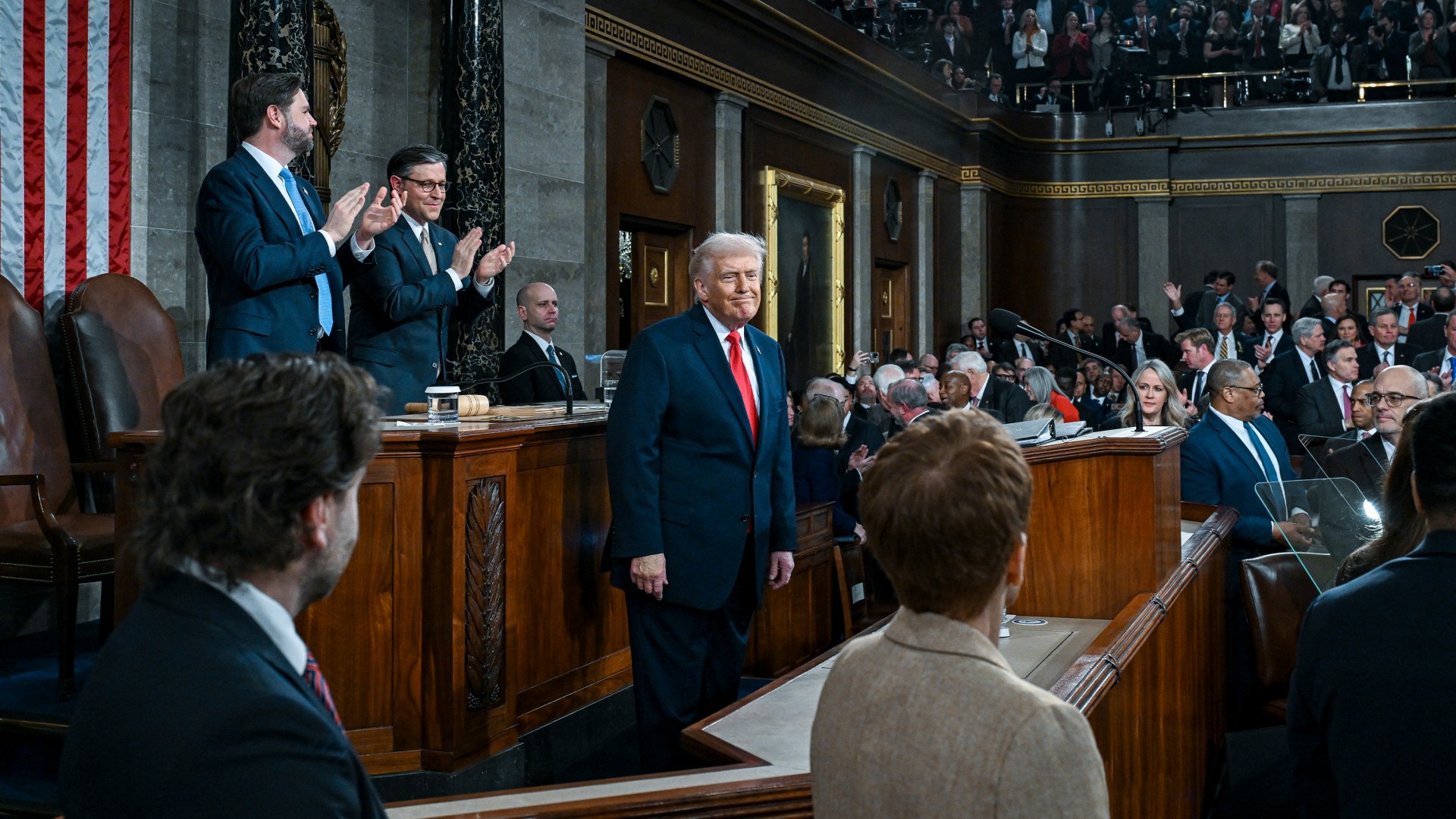
President Donald Trump delivers the State of the Union address during a joint session of Congress at the Capitol in Washington, DC on February 24, 2026.

Pool / Getty

Christianity Today February 25, 2026
President Donald Trump delivers the State of the Union address during a joint session of Congress at the Capitol in Washington, DC on February 24, 2026.

In his joint session address to Congress Tuesday, President Donald Trump said that since he took office a year ago, the United States has experienced a religious revival.

“There has been a tremendous renewal in religion, faith, Christianity, and belief in God,” he said at the State of the Union (SOTU) address.

“We love religion, and we love bringing it back,” he added. “And it’s coming back at levels that nobody actually thought possible. It’s really a beautiful thing to see.”

Eric Loepp, assistant professor of politics at the University of Wisconsin Whitewater, said Trump’s mention may have been more “aspirational” than grounded in evidence: “Religion served as one of the pillars supporting President Trump’s overarching theme: that America is enjoying widespread renewal and entering a ‘golden age’ not only in economic terms but in spiritual and cultural ones as well.”

Trump said the surge was “especially true among young people,” and gave credit for that to conservative political activist Charlie Kirk, whom Trump said had been “martyred for his beliefs.”

At that point in the speech, Trump invited Kirk’s widow, Erika, one of his featured guests at the address, to stand. The chamber’s Republicans stood, whistled, and applauded, with some chanting, “Charlie, Charlie, Charlie.”

“In Charlie’s memory, we must all come together to reaffirm that America is one nation under God,” Trump said. He circled back to religion at the conclusion of his speech: “When God needs a nation to work his miracles, he knows exactly who to ask.”

While Christians said they hope to see a broader cultural interest in faith, political scientists doubt the United States is experiencing the kind of enthusiastic resurgence in Christianity that the president described.

“There’s just no empirical evidence that points to that conclusion,” said Ryan Burge, a professor at the John C. Danforth Center on Religion and Politics at Washington University. “No matter what metric you look at—belief, attendance, or religious affiliation—there’s nothing that points to the conclusion that Gen Z is seeing a revival.”

Daniel Bennett, political science professor at John Brown University, said the president’s remarks “seem to be referencing a vibe shift more than concrete evidence or supporting data.” He added, “On the contrary, there’s plenty of data out there to cast doubt on these sorts of statements, however encouraging they would be if true.”

Pew Research Center’s latest survey from its Religious Landscape Study found that a long-term decline in religiosity in America had relatively stabilized from 2019 to 2024. While the decline doesn’t show signs of dramatically reversing, the share of Americans who identify as Christians has stayed somewhere around 60 and 64 percent from 2019 to 2024.

Around 45 percent of Gen Z Americans identify as Christian, according to Pew—that’s a 10 percent decline from a decade before.

Last year, Gallup found a 17-point drop in the percentage of US adults who say that religion was an important part of their daily life over the last decade, and reported that the share of Americans who actively attend church has also declined.

“It is not surprising that any president may focus on a specific data point or narrow band of activity rather than larger trends if it better aligns with their political narrative,” Loepp said. “Time will tell if President Trump’s vision in last night’s speech will become a reality. At the macro level, I doubt we will see a sudden resurgence to peak levels of religiosity.”

But Loepp said he wouldn’t be surprised if some people were to become more religious, particularly given rapidly changing technology and other challenges of modern life.

“It will not surprise me at all if some segments of the population increasingly turn to religion to help find meaning in their lives,” he added. “Recent developments, particularly among younger Americans, could indicate that the conventional wisdom will evolve.”

While acknowledging that research is divided on the subject, Daniel Darling, director of The Land Center for Cultural Engagement at Southwestern Baptist Theological Seminary, said he’s seen some encouraging signs when it comes to the interest in faith. He mentioned Bible sales and anecdotes of college students having an increased interest in church and Christianity.

“I do think something is stirring, which would be characteristic of God to bring forth a fresh wave of spiritual life in the midst of a tumultuous time,” Darling said. “Ultimately, we will see if this season bears fruit, but we can rejoice even in the pockets of revival we might be witnessing.”

Young people seem to be buying Bibles in greater numbers compared to other age groups, and book tracker Circana Bookscan found in 2024 that Bible sales had increased 22 percent over a year’s time.

Barna Group also found last year that younger churchgoers tend to attend services more frequently than older generations. The survey did not look at the number of people identifying as Christian.

Overall, Trump spent a larger amount of time talking about immigration and the border than religion. In explicit detail, he described crimes committed by individual illegal immigrants against American citizens. He claimed undocumented immigration had fallen to “zero” admissions in the past nine months. Although border crossings are at record low levels, in January, there were still over 6,000 illegal crossings at the US-Mexico border.

Pro-life issues traditionally of interest to evangelicals received scant attention. Abortion received zero mentions. Trump made brief mention of in vitro fertilization (IVF) while highlighting one of his guests who is undergoing IVF treatments, Catherine Rayner. He also touched briefly on transgender policies in schools, highlighting one of his guests, college student Sage Blair.

Bennett characterized Trump’s references to gender ideology and religion as “fleeting” in comparison with his focus on immigration.

“It’s striking that the president’s attention to culture-war issues tended to center on crimes committed by undocumented immigrants,” he said.

“Trump leaned heaviest into the most polarizing issues,” said Mark Caleb Smith, director of the Center for Political Studies at Cedarville University. “These are also the issues where Trump can claim something closer to majority support in some ways. Most Americans agree that a closed border is important, but there is growing concern with how immigration enforcement is happening domestically.”

Democrats’ response to the speech was mixed. Some nodded off, some left early, and around 50 Democrats boycotted to attend counterprotests elsewhere. Virginia governor Abigail Spanberger delivered the Democratic response in a brisk 12 minutes.

Chris Butler, director of Christian civic formation at the Center for Christianity and Public Life, said Trump “probably oversells his claim.”

But he thinks that ultimately, numbers tell only part of the story: “Personally, I think the character of Christianity in America matters more to the nation’s future than its size.”

addApple PodcastsDown ArrowDown ArrowDown Arrowarrow_left_altLeft ArrowLeft ArrowRight ArrowRight ArrowRight Arrowarrow_up_altUp ArrowUp ArrowAvailable at Amazoncaret-downCloseCloseellipseEmailEmailExpandExpandExternalExternalFacebookfacebook-squarefolderGiftGiftGooglegoogleGoogle KeephamburgerInstagraminstagram-squareLinkLinklinkedin-squareListenListenListenChristianity TodayCT Creative Studio Logologo_orgMegaphoneMenuMenupausePinterestPlayPlayPocketPodcastprintremoveRSSRSSSaveSavesaveSearchSearchsearchSpotifyStitcherTelegramTable of ContentsTable of Contentstwitter-squareWhatsAppXYouTubeYouTube