Ideas

The Algorithm Is Changing How We Speak—and Strive

“Algospeak” capitalizes on our desire for attention and status. We should turn to God for both.

A group of people speaking in hashtags and social media phrases.
Christianity Today May 1, 2026
Illustration by Sara Tran / Source Image: Getty

I’ll typically start formulating ideas around 7 a.m. Thanks to a steady stream of information from my doctoral studies, my first instinct is to dig through the past 24 hours of reading to check for a properly sized diamond—size actually mattering in this case, since anything more than four sentences is pushing it.

If nothing comes to mind, I’ll check a Word file titled “thoughts” that currently extends to approximately 98 pages. I’ll pray for discernment as my eyes glide downward. Sometimes an aphorism is just right. Other times I’ll shut the file and just stare at the ceiling and sound out words in my head until something feels sticky, interesting, insightful, or, what invariably performs best: funny.

Once something settles in, I type it out. There’s a specific rhythm and cadence that works. Bold-faced font for what’s important. Use an em dash and colon wherever possible. John-Mark-Comer-space your sentences. But the hardest part—the challenge to the moral backbone—is the tension between doing what works and what’s earnest and meaningful. Being online brings the dedicated poster, predictably, into that weird space between selling one’s own soul for exposure and offering sincere thoughts that resonate.

I hit Send and then delete the Substack app so I can get back into undistracted flow.

This is a morning in the life of a part-time content creator. I prefer the term writer, but even for a writing-driven platform like Substack, writers have to become, effectively, content creators to get in front of readers. I’m in the content grind with plenty of other writers, artists, and creatives, chipping away at the void, submitting to the yoke of platform-building in attempts to get the industry to take our work seriously.

But after keeping this habit for a while, I noticed something strange: The more data I gathered from analyzing what kinds of posts “worked,” the more the cadence, style, and rhythm of my short online writing seeped into everything else I did—my lectures, sermons, and emails.

Even more troubling, social media algorithms were also shaping what I wanted to say. Beyond just influencing little quirks of formatting and grammar, my desire to get ahead of the algorithm was influencing my other desires, and, consequently, my vision of the good life.

I didn’t realize how common this was until academic linguist Adam Aleksic (better known as Etymology Nerd) provided an overview in his book Algospeak.

“Algospeak” is essentially how social media algorithms transform our communication. Sometimes this looks like self-censoring content so that it doesn’t get “shadowbanned” (when a post gets hidden because the algorithm detects inappropriate or controversial language). Kill becomes unalive, for example.

Beyond euphemisms, though, algospeak is also about prioritizing trendy keywords. Starting a TikTok video with the phrase No because or I’m sat for this has more potential for virality because the algorithm knows those phrases attract more engagement.


This is not just slang for slang’s sake; users learn to speak in code to give their content the chance to perform well. Algorithms implicitly teach us which words capture or repel attention. And as anyone who spends time around young people knows, algospeak has bled offline.

I asked my friend Jenna Mindel how algospeak influences her own work. Not only does she have an audience on Substack, Instagram, and TikTok, but she’s also a content specialist who oversees pop-culture and teen slang for Axis. “I keep the algorithmic model in the back of my head as I make content,” she told me.

Having majored in journalism, she said, “it’s not all that different from how a journalist approaches an article.” She starts with a hook to keep a viewer interested, then does her best to make sure the rest of the video creates value and payoff.

Surprisingly, Mindel also said that starting a video with popular slang phrases doesn’t really cross her mind as “inauthentic”—as if it’s a sly trick to boost engagement. As a 24-year-old woman, those terms are so in the water that it just feels like a natural way to talk. (And, of course, these phrases often originate within various real-world communities before later bleeding into the broader culture through social media. But without the internet, I fear, many of us wouldn’t be jokingly punctuating sentences with “I fear.”)

Perhaps some Not Very Online readers are thinking, Okay, but this isn’t really relevant for me. Yet, Aleksic emphasizes, “whether you’re on social media or not, you’re still in a café or a bar, and you hear a Sabrina Carpenter song that got popular because of [social media] algorithms. The language that you end up adopting, or that your kids end up adopting, is still going to be coming from [an online platform’s] algorithm, whether you like it or not. You can’t just bury your head in the sand and pretend it doesn’t exist.”

Culture is now downstream from algospeak.

Is this an issue? Or is it just natural? After all, younger generations have always dreamed up new ways of speaking to differentiate themselves from adults.

But I think the urge to use algospeak creates a big problem, particularly for the church. As I’ve seen in my personal life, algospeak reinforces and capitalizes on our desire for attention and status. Perhaps if I change the way I write or post, people will notice me? Perhaps I will become an established sigma via mogging my writing competitors?

Morphing our own patterns of communication to fit some ever-changing algorithm turns us into people who speak the same language, want the same things, and measure ourselves by the same metrics. Even if an artfully crafted 7 a.m. post pops off on the Substack algorithm, I can’t help but think: Are these aspirations going to lead me deeper into a flourishing life?

Anyone who gets sucked into algorithms—myself very much included—is confronted with this reality sooner or later: Algorithms can’t make us happy. They can’t provide a satisfaction that lasts any longer than a scroll through our notifications.

Thankfully, Jesus’ vision of the good life didn’t include seeking popularity. While other ancient thinkers like Aristotle taught that honor was the highest of the worldly goods, the Gospels depict worldly honor as something corrosive. Jesus’ abundant life involved becoming so unconcerned about praise from others that we only crave reward from God (Matt. 6:1–18). He says when you pray, don’t make a show of it; instead, pray to your Father in secret and he will reward you (vv. 5–6).

When we think “reward,” we often think material or social gain—as if God might reward us by magically granting us the corner office or influencing our crushes to requite our unrequited affections. But New Testament scholar Frederick Dale Bruner notes that this “reward” is relational. He even argues that we should think of it as meaning “impressed.” That’s shocking to think about, that we can impress a God who has parted seas and raised the dead.

But what father isn’t impressed with his child’s magic tricks or piano recitals? Maybe God delights in our attempts to do things that delight him and him alone—not seeking praise from the world—simply by virtue of our childish desire to please him (Matt. 18:3).

And just like a child seeking a father’s approval, it’s good and healthy for us to want God’s.

Other worldviews like Stoicism argue for suppressing our desire for attention. Christianity, by contrast, teaches that human beings are made in God’s image, and part of that design involves our desire to feel noticed and loved. Jesus asks us to redirect our desire for recognition away from people who can never satisfy and toward the only one who can fulfill us with his love.

Remembering this can be the best medicine against creating content for the sole purpose of boosting exposure, writing for the sake of clickbait, or catering our preaching toward viral sound bite clips. We are called to create for the only one whose attention really satisfies.

This isn’t to suggest we can’t have redemptive goals in making content. Mindel, like myself, is cautiously optimistic. “It’s hard to stay authentic on social media,” she said. “I think it’s fair to say it’s impossible to do it perfectly. But you can still be yourself while sharing your message in the particular shape that a platform asks you to conform to.”

There are healthy ways to be online. We have to stay vigilant—taking days off and reminding ourselves why we’re really doing what we’re doing.

Most mornings I still delete the app. And also most mornings I still redownload it sooner than I’d like to admit to check the numbers. But I’m trying to become more interested in a different audience than the one the algorithm can give me. We have a God who is genuinely looking forward to whatever clumsy, half-formed prayer or journal entry we bring him. And aspiring toward that will never let us down. It’s a better reward than anything an algorithm can offer.

Griffin Gooch is a writer, speaker, and professor currently working on his doctorate at the University of Aberdeen. He writes most frequently on Substack.

Books
Review

When Faith Feels Cloudy

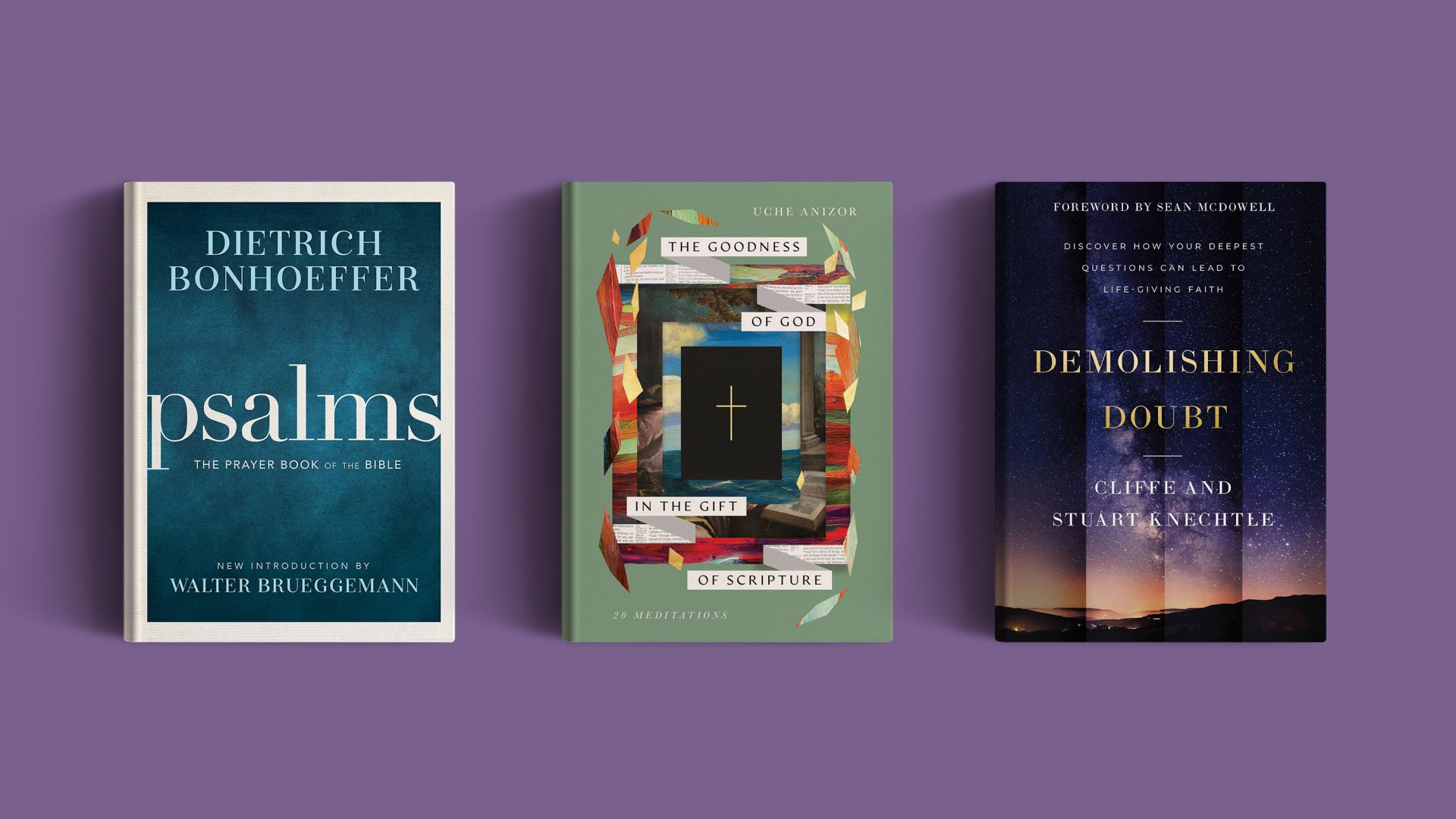
Three books for the doubting Christian.

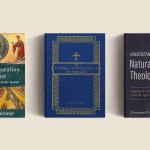
Three books on a purple background.
Christianity Today May 1, 2026
Illustration by Christianity Today

This piece was adapted from CT’s books newsletter. Subscribe here.

Cliffe Knechtle and Stuart Knechtle, Demolishing Doubt: Discover How Your Deepest Questions Can Lead to Life-Giving Faith (Zondervan, 2026)

Demolishing Doubt: Discover How Your Deepest Questions Can Lead to Life-Giving Faith

Demolishing Doubt: Discover How Your Deepest Questions Can Lead to Life-Giving Faith

Zondervan

272 pages

For many, the beginning of a faith journey is marked by certainty. We may not have a full grasp on every theological detail, but we are certain that Jesus is the only way to eternal life. Then something intersects our path that leads us to start asking questions. It could be a season of suffering or an unexpected conversation with a skeptic. Either way, what once seemed clear is now cloudy. Where we were so certain, we now are struggling with doubt.

The real issue, though, is not the doubt itself—it is how we handle it. As tempting as it might be to avoid anxious thoughts, if we choose to actively engage our doubt, we are bound to find a deeper, more radiant faith on the other side.

Cliffe and Stuart Knechtle’s new devotional directs us into this type of honest engagement. They begin by reframing doubt as an inevitable tunnel we’ll walk through on our journey to truth. “I don’t understand how any person could express deep and authentic belief in God and somehow make it through this life without encountering skepticism at some point,” the father-son duo write. “There’s so, so much we as human beings will never know. There’s always room for humility. There’s always room for doubt.”

But the Knechtles don’t leave the reader swimming in uncertainty. With winsome clarity, they walk through the most common questions our skepticism might lead us to ask, including ones about the existence of God, the trustworthiness of Scripture, and the resurrection of Jesus.

While they provide evidence grounded in research, the Knechtles also invite the reader to challenge the validity of their questions. Our doubts, they suggest, can sometimes be our attempt to “reshape Jesus to fit our naturalistic presuppositions or culturally conditioned skepticism.” It’s easy to believe that human progress has made us wiser than those who have come before us. I am grateful for how they answered common questions while graciously critiquing their roots.

Uche Anizor, The Goodness of God in The Gift of Scripture (Crossway, 2026)

The Goodness of God in the Gift of Scripture: 20 Meditations

Where the Knechtles’ book addresses the rational validity of our faith, Uche Anizor addresses the question of whether life with God is actually good. Eventually in our spiritual walk, most of us will quietly wrestle with whether the instructions, promises, and truth God has expressed through Scripture lead to the flourishing life we long for.

Rooted in Psalm 119, Anizor’s book answers this question by offering meditative reflections on the multifaceted ways God’s Word is “a gift given for our earthly and eternal happiness.” In each chapter, the reader will see how the blessings we receive through God’s Word connect to the longings we have as humans. Whether it is peace, hope, joy, or wisdom, the Scriptures point us to the truth that what our hearts desire can only be found in God.

The compounding nature of this book left me rejoicing that God was gracious enough to speak to us through his Word to show us this truth. As Anizor writes, “This book of meditations is meant to be just that: meditations, reflections on God’s many-splendored kindness in giving his word. The goal is to simply fuel our love and appreciation for all that God’s word is to us and all that God wants to be for us through his word.”

Dietrich Bonhoeffer, Psalms: The Prayer Book of the Bible (1940)

Psalms: The Prayer Book of the Bible

Psalms: The Prayer Book of the Bible

Broadleaf Books

98 pages

Dietrich Bonhoeffer’s book addresses a final important question—how we can experience more of God. Using the Psalter as a guide, it provides time-tested wisdom, showing how we can deepen our intimacy with God in the way he desires.

Each brief chapter covers a specific type of psalm, showing how they uniquely train us to pray according to the way God speaks, thereby transforming our hearts to align with his. With each reflection, we are invited to linger in a space of remembrance, confession, and exhalation for the riches that God bestows on us through Christ.

Bonhoeffer writes, “Prayer does not mean simply to pour out one’s heart. It means rather to find the way to God and to speak with him, whether the heart is full or empty. No one can do that on one’s own. For that, one needs Jesus Christ.” His book leaves readers with a refreshed imagination for how the Psalms teach us to pray like Jesus and, in doing so, draw us into deeper fellowship with God.

For readers in a season of spiritual doubt, these three books offer a space to wrestle without shame. Designed to be read slowly, each one meets people in their skepticism, disappointment, or disillusionment and guides them to the other side, where a deeper faith and anchored truth reside.

Elizabeth Woodson is a Bible teacher, a theologian, an author, and the founder of The Woodson Institute, an organization that equips Christians to understand and grow in their faith.

News

The Christian Migrants Feeding the Displaced in Lebanon

The war left many domestic workers jobless and homeless. Some Christians see a chance to serve their community.

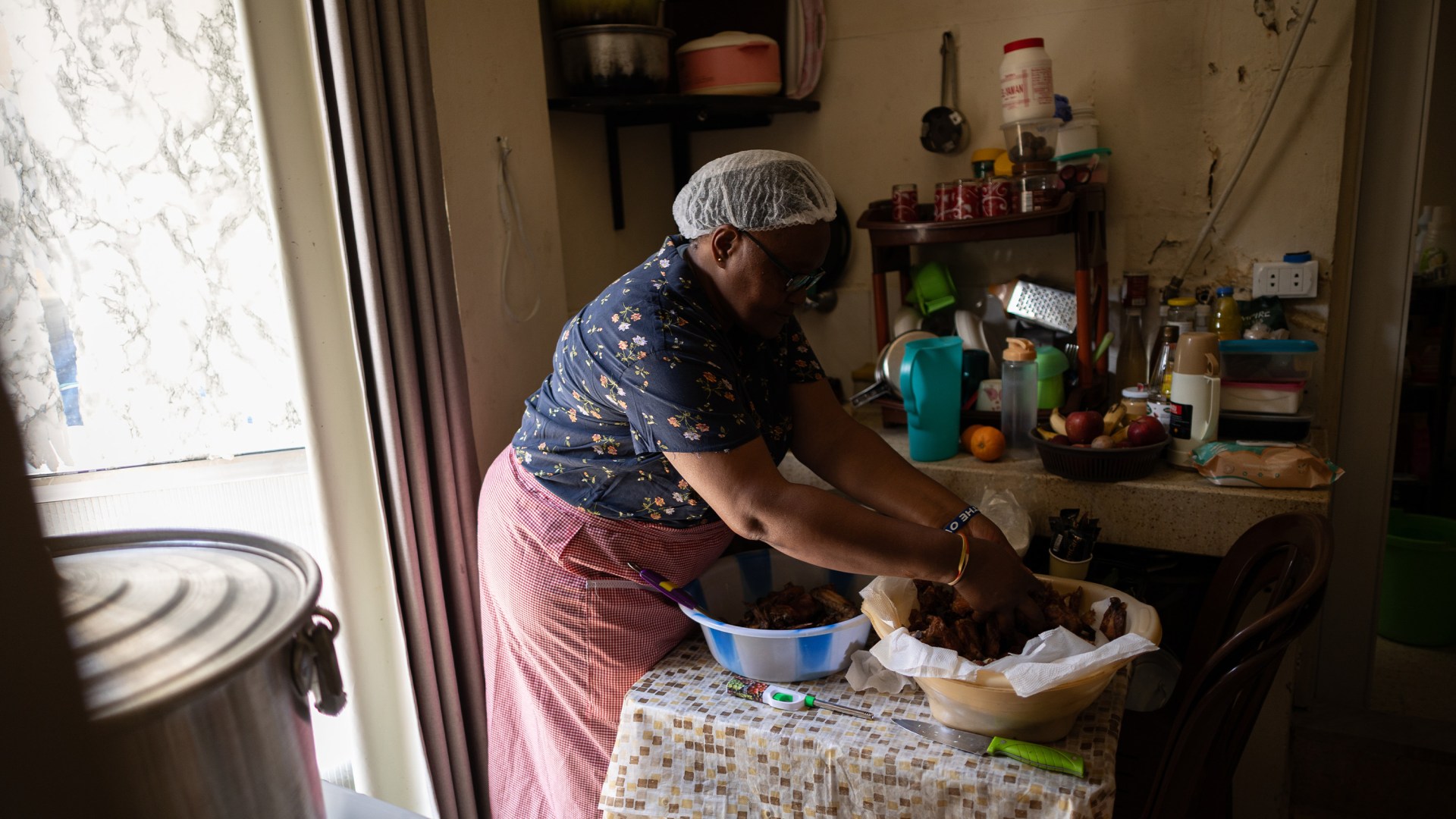
Mercy cooking meals to distribute with members of her organization, Women of Purpose.

Mercy cooking meals to distribute with members of her organization, Women of Purpose.

May 1, 2026
Photo by Hunter Williamson

On February 28, Grace woke up happy. After months of searching, she had finally found a steady job with a cleaning company. It was Saturday, but Grace, a migrant domestic worker, didn’t care. She had come to Lebanon three years ago to work and provide for her daughter back in Kenya.

That morning, the company took her to a home in Beirut. As she cleaned, she heard people discussing the US and Israel’s joint attack on Iran. Grace continued her work. She was accustomed to war—since arriving in Lebanon in October 2023, war had become a constant fixture of her life. (CT agreed to only use Grace’s first name as she is currently undocumented in Lebanon because of an unscrupulous ex-employer.)

The following Monday, she woke up early, excited to begin her second day of work. But as she arrived at the office, her employers told her they were laying her off. In the early hours of morning, Hezbollah had attacked Israel, entangling Lebanon in the Middle East war. With bombs falling on Beirut and tens of thousands of people fleeing their homes, the company let go of all their new hires.

“Only one day I worked,” Grace lamented. For 8 hours of deep cleaning, the company paid her $15.

Since the start of the Hezbollah and Israel war on March 2, migrant workers across Lebanon have found themselves caught in the middle of the conflict. Due to widespread bombings and evacuation orders, many lost their jobs and an estimated third of them ended up displaced or living in high-risk areas, according to the International Organization for Migration. In total, the war has displaced 1.2 million people in Lebanon.

Migrant workers, largely from African and South and Southeast Asian countries, are marginalized by Lebanese society and overlooked by the government and often their own embassies. With little outside help, the migrant community is helping one another in wartime with the support of local nonprofits. Christian migrants see this as an opportunity to provide food, shelter, and the hope of the gospel to those in need.

An estimated 164,000 migrant workers live in Lebanon, playing a critical role in the country as domestic and service workers. Yet they are employed through the kafala system, which ties the migrant’s residency and employment status to an individual employer, and are excluded from Lebanon’s labor laws. This leaves them vulnerable to abuses including not getting paid, being forced to work excessive hours, and having their identification documents taken away. Some face physical and sexual abuse.

Grace had faced these issues firsthand. She first heard about the opportunity to work in Lebanon in August 2023 while she still lived in Kenya. A friend who was working there told Grace about an opportunity to make up to $700 a month as a caregiver in a home north of Beirut. Gathering nearly all the money she and her family had saved, Grace paid a recruiting agency in Kenya to prepare the documents she needed to work in Lebanon.

She arrived in Lebanon in October 2023. Though treated well by her employer, Grace was overworked. She sought a new employer and ultimately found one in the southern coastal city of Tyre. There her life took a turn for the worse. As conflict escalated between Hezbollah and Israel in southern Lebanon, Grace regularly heard the terrifying sound of airstrikes and explosions.

“I was not even sleeping,” she said. “Every time, I was crying, because in my country I never heard a sound like this.”

War wasn’t the only challenge she faced. Grace said that she also faced abuse and threats from the siblings of her employer. Fearing for her life, Grace decided to run away. Using $90 of the $110 she had on hand, Grace paid a taxi to drive her to Beirut.

With $20, she started over in Lebanon’s capital.

Two years on, her circumstances remain challenging. Grace’s former employer still has her passport, leaving her at risk of arrest and deportation. After initially refusing to return it, the employer eventually agreed—on the condition that Grace pay $2,000, an amount that she can’t afford.

Lebanon’s latest war has only exacerbated the situation for her and other migrants. After losing her cleaning job, Grace returned home upset. Lying in bed, she started to cry, asking God why he had allowed this to happen, she recalled.


She called her friend Njoki, a fellow Kenyan she met at a local evangelical church in Beirut, and shared her woes. Njoki—who prefers to go by her Christian name Mercy—invited Grace to her home to chat. CT agreed to use only her first name due to her legal status in the country.  
“Don’t worry,” Mercy told her. “Everything that happens, good or bad, God knows the reason.”

As a migrant community leader, Mercy had heard many stories like Grace’s. Since moving to Lebanon in November 2012, she has experienced her own share of abuse, exploitation, and discrimination. For the past several years, she has used these experiences to support other migrants working in the country.

As war erupted in March, Mercy assessed the needs of the people who had ended up on the streets. Along Beirut’s waterfront, she found people displaced from across the country due to the fighting. Among them were migrants whom employers had abandoned as they fled to safer parts of Lebanon or left the country all together.

With government-organized displacement shelters prioritizing Lebanese citizens, many migrants had nowhere to go. Mercy opened her home to eight female migrants, all of them undocumented as their employers had kept hold of their passports to ensure they would resume working once the employers eventually returned or settled in a new place. She connected other migrants with local organizations and community groups providing shelter and assistance.

Seeing that the displaced—both migrants and locals—had little or nothing to cook with, Mercy decided to make and distribute meals with members of her organization, Women of Purpose, and volunteers.

“We didn’t have a choice,” Mercy said. “We needed to respond. The streets were overwhelmed.”

To pay for ingredients and transportation, the women pooled money from other migrants. People donated what they could: $3 here, $5 there. They raised enough to cook 50 meals per day. As support came in from other migrants and local nonprofits, the African-inspired meals increased to 100 or more, depending on needs.

“We cannot do much,” Mercy said, “but we do the little we can.”

Mercy’s response stemmed from multiple convictions. One was her faith. As a Christian, she felt it was her duty to help those in need and considered her work a form of evangelism. Through serving meals and distributing aid, she sought to not only talk about Jesus to the people she met but to reflect him too.

“This is a moment to tell people that God is love, God is great, and God is not done with you,” she said.

In addition to her faith, Mercy said she is also driven to support migrants and fight for reform of the kafala system. By helping local Lebanese in their time of need, she hoped to leave a lasting positive impression regarding migrants. She believes this could lead to legal reform of the system and give more rights and protections to migrants.

“When things get back to normal, when they get back on their feet, they will be the driving force for the kafala to change,” Mercy said.

Along with food, Women of Purpose has also distributed hygiene kits, feminine pads, and adult diapers provided by Insaaf     , an evangelical organization that supports migrants. Since the start of the war, Insaaf has come alongside community leaders like Mercy to respond to needs that exceed its ability to meet.

Insaaf has also continued Christian outreach programs that form a core part of its mission, providing spiritual support to migrants as they face fear, stress, and anxiety.

On the first day of the cease-fire in mid-April, Insaaf hosted a Bible study after a two-week hiatus for Easter holidays. That morning, around 10 women from the Philippines and African countries like Kenya, Nigeria, and Ethiopia gathered at the organization’s office in Beirut. Seated in rows of chairs, they listened to worship music. Then Insaaf director Melanie Baggao, a Filipino American, stood up and led the Bible study. She began by asking the women how they were doing.

“We survived the war,” one Filipina woman replied.

Throughout the meeting, the war was a recurring theme. During one of the discussion breaks, two women spoke about airstrikes that hit near their homes. One mentioned how her trust in God grew stronger in the past years. “It’s not that I got used to the war, but now my faith has become deeper,” she told the group.

According to Baggao, the dangers posed by the war, which comes on the heels of dire political and economic crises in Lebanon in recent years, emphasize the importance of Insaaf’s spiritual programs.

“I cannot imagine going through any one of these crises, including this one, without that spiritual aspect,” Baggao said. “I do feel very strongly that it is one of the strongest parts of our ministry that really holds us together.”

As ongoing clashes between Hezbollah and Israel undermine the US-brokered cease-fire agreement, more than 1 million people remain displaced in Lebanon. So Mercy and her companions continue to cook.

On a weekday morning in late April, Grace sat in Mercy’s living room, peeling and cutting potatoes for another meal distribution. Since losing her job, Grace has used her free time to volunteer with Mercy.

Mattresses, boxes, and other items lined the walls, leaving little space to move. The eight women that Mercy took in at the start of the war still lived with her in the apartment, sharing her two rooms and one bathroom. That morning, the women were away, working temporary cleaning jobs made available by the cease-fire’s relative stability.

Over the course of the morning and afternoon, Grace and Mercy worked diligently, speaking together in Swahili as they prepared 100 meals of rice and chicken stew. Note cards filled with Scripture, essential parts of Mercy’s prayer life, hung around the house.

Late that afternoon, they took the meals by taxi to a public beach in Beirut where displaced families have stayed since the start of the war. They noticed less people in the area, as some had returned home while others had found housing through friends or relatives. But for those who remained, the needs were still just as dire.

As Mercy, Grace, and two other migrant women arrived, children ran up to them, followed by their parents. Mercy had supported some of them since the start of the war, including Asem Al-Ali, a Syrian displaced from southern Lebanon. Mercy had previously given him a tarp that he used to cover the back of his pickup truck where he, his pregnant wife, and their two children slept. With their home destroyed, Ali had nowhere else to take his family. After receiving food from Mercy, Ali told CT, “Sometimes, we rely only on this meal she gets us.”

Mercy sees this kind of work as her calling. “I found my purpose,” she said. No matter the challenges, she remains committed to sharing the hope of Christ, supporting migrant workers, and fighting against the kafala system.

“As long as there are people on the streets, we’re going to do the cooking,” she said. “And as long as we have the resources, we’re going to do the cooking.”

Ideas

Desperately Seeking Alternatives to Arrogance

Editor in Chief

The Trump administration’s critique of elite universities is worthwhile, but government control is problematic. Good news: Christian study centers are multiplying at major universities.

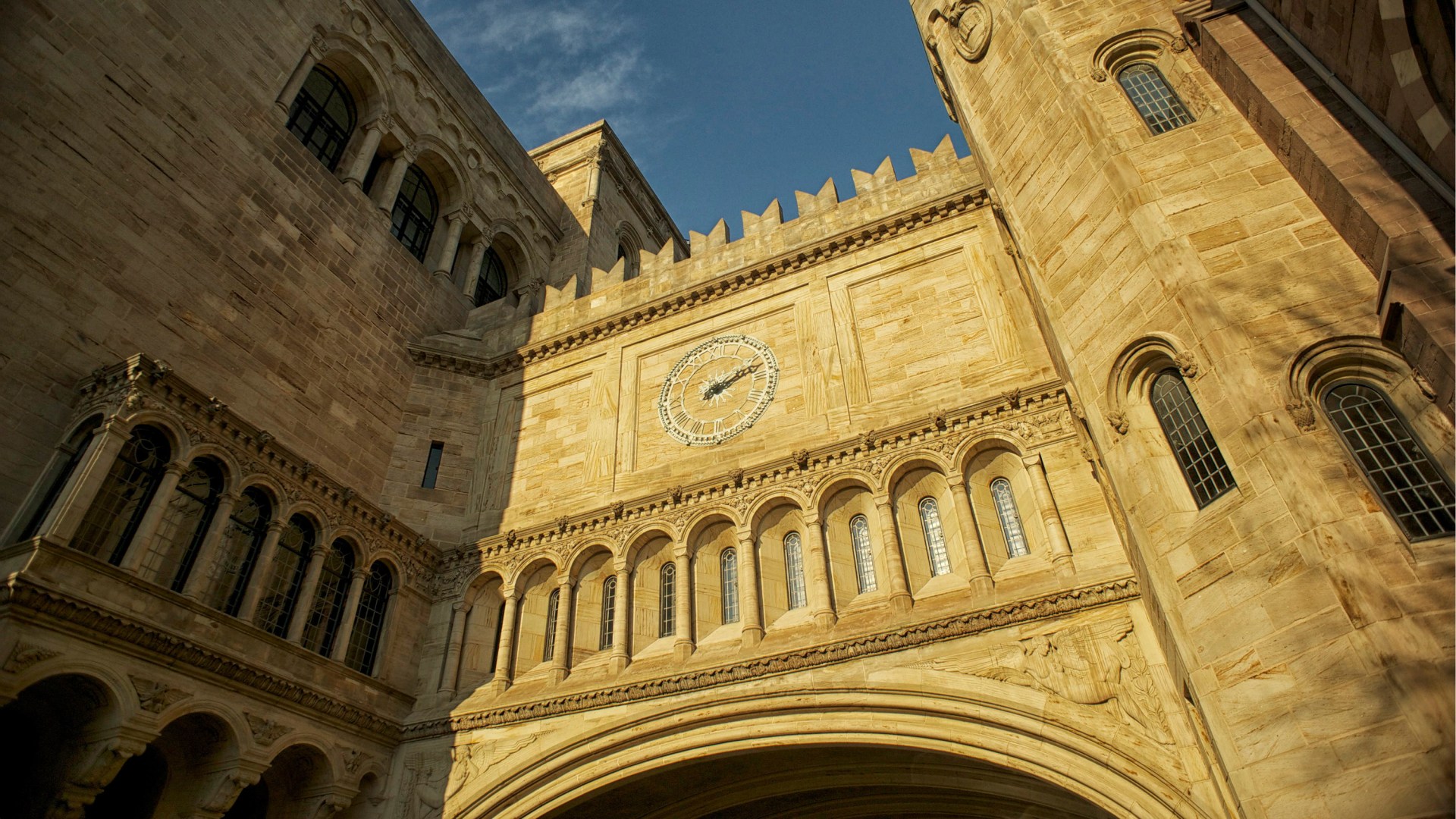
Yale University Art Gallery in New Haven, Connecticut.

Yale University Art Gallery in New Haven, Connecticut.

Christianity Today May 1, 2026
Kathryn Donohew Photography / Contributor / Getty

Some universities have pushed back against Trump administration pressures to reshape curriculum and programs. Others have given in to threats of withholding billions in research funds. Yale University has chosen a third way: issuing a report acknowledging that studies show a huge faculty tilt to the left and pledging “a self-study regarding diversity of perspectives in the curriculum.” 

The ten professors who produced the “Report of the Yale Committee on Trust in Higher Education” began by acknowledging a problem: A decade ago, most Americans expressed confidence in higher education, but 70 percent of people in 2025 said higher ed is heading in the wrong direction. The committee said Yale itself has a problem with academic freedom: “In a 2025 survey by the university, nearly a third of undergraduate respondents disagreed with the statement that ‘I feel free to express my political beliefs on campus.’” 

Conservative students were more likely to express discomfort, and the committee reported one estimate that may explain why: “Registered Democrats outnumber Republicans 36 to 1 across the Faculty of Arts Sciences, the Law School, and the School of Management.” Nationwide among faculty, registered Democrats apparently outnumber registered Republicans 10 to 1.

The report’s recommendation of departmental self-study is supposed to begin this fall. That’s nice, but I’m skeptical. I was a student at Yale and still have some contact. It has long been a self-satisfied place, and self-study by the self-satisfied rarely leads to change. 

The report also examined other concerns, such as grading practices: 

Over the past several decades, grading across many institutions has steadily lost its meaning. In 1963, ten percent of grades in Yale College were an A or A-. In 2022–23, that number was seventy-nine percent. Today, the median student at Yale receives an A. Peer institutions are similar.

Why? Faculty face pressures when promotion “depends largely on student enrollments and evaluations. … No individual faculty member wants to be the strict grader.”

So true. For 25 years, I was a professor at The University of Texas at Austin, where grade inflation also makes student averages as large as longhorns. I admire this line in the Yale report: “Nearly everyone inflates and no one can stop.” That could be a reference to academic egos.

The problem is what to do about it. The Trump administration has tried to cut some big university budgets run wild. My academic experience leads me to give that initiative one cheer, but I do not trust the federal government to know what is best in education. Nor do I trust faculties that are often one-dimensional. As Christians, we should wish plagues on no one, but if we were to make an exception some political and university houses would qualify. 

Donors particularly should beware. My own sense is that evangelicals who make undesignated contributions to many major universities are making a mistake. Let big football programs—and prestigious but ideologized departments—rise or fall on their own. Instead, support the privately funded Christian study centers that now exist at or adjacent to 37 major universities.

The Rivendell Institute at Yale is one of those centers. I know well and esteem Hill House, two blocks off the campus of UT Austin. Other centers at Cornell and Duke, Michigan and Minnesota, Virginia and Wisconsin, and other key institutions are also growing. 

The study centers are hubs of Christian community, hospitality, and learning. They serve as havens and launching pads by offering Bible studies, lectures, reading or film discussion groups, and fellowship meals.

Many such groups are members of the Consortium of Christian Study Centers, which promotes “integrated and transformational knowledge and callings” among Christians who study and work at major universities. Formed in 2008, the consortium had 19 member centers in 2015 and has 37 now, with others at Rice and elsewhere on the way

Christian colleges are crucial. But so is this Christian presence at influential secular universities. Consortium participants can “take up the historic mission of the college as an educational institution pursuing the moral and intellectual formation of persons.” They can reject arrogance from academia and the government alike.

Marvin Olasky is editor in chief of Christianity Today.

News

Black Churches Urge Congregants to Mobilize After Supreme Court Ruling

Denominational leaders say the latest weakening of protections for minority voters is discouraging but not cause for despair.

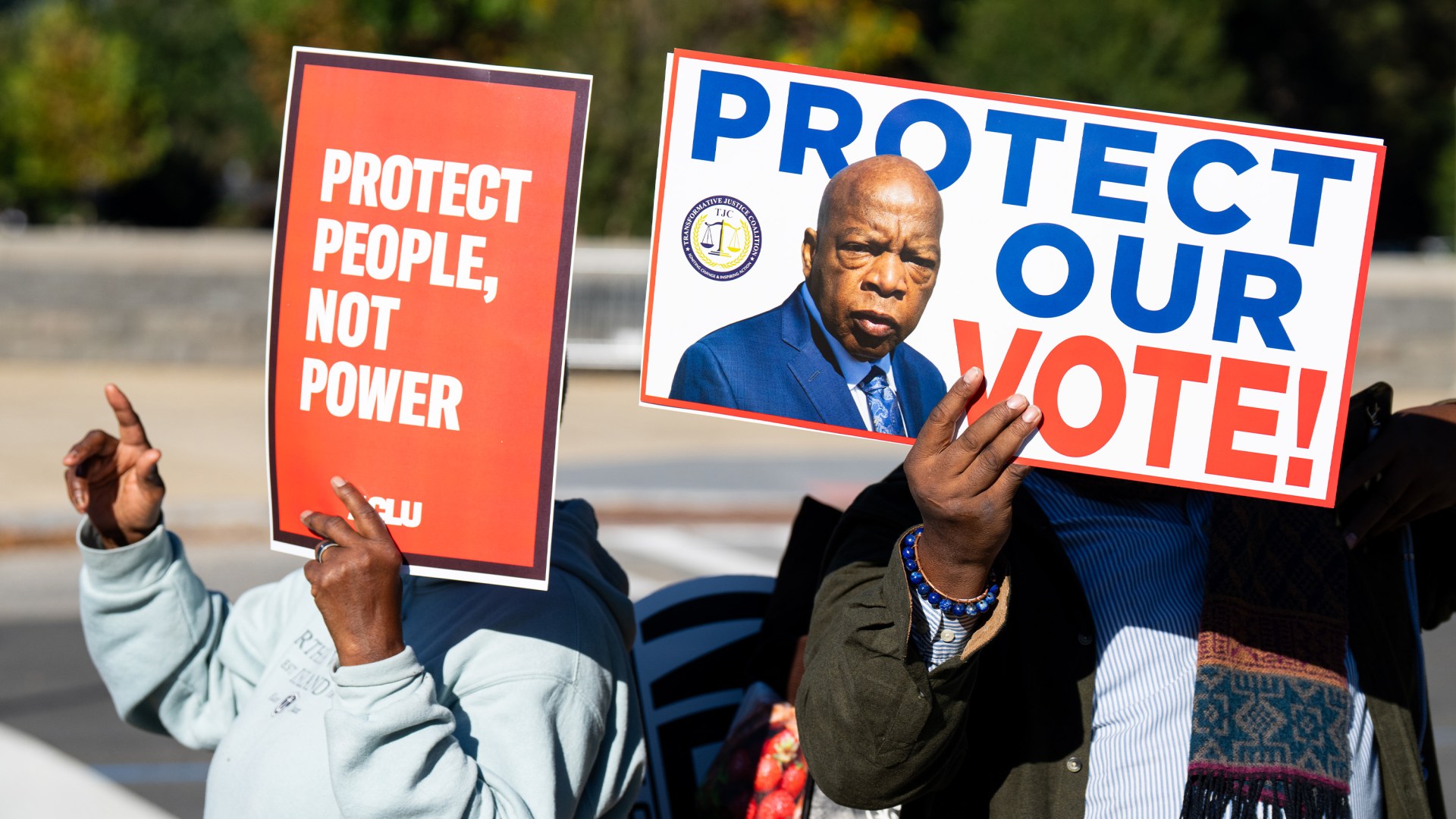
Voting rights activists protest outside the U.S. Supreme Court as it prepares to hear a case challenging Louisiana's congressional map on Wednesday, October 15, 2025.

Voting rights activists protest outside the U.S. Supreme Court as it prepares to hear a case challenging Louisiana's congressional map on Wednesday, October 15, 2025.

Christianity Today April 30, 2026
Bill Clark / Contributor / Getty

In the hours after the Supreme Court struck down a Louisiana congressional map and weakened protections given to minority voters under the Voting Rights Act, a bishop overseeing historically Black African Methodist Episcopal (AME) churches in Louisiana wrote a message to her district.

By limiting how race can be used in drawing congressional districts, the court’s decision Wednesday—which fell along ideological lines—“strikes at one of the primary tools that has been used for decades to protect the political voice and voting strength of Black communities,” Erika Crawford said in an email titled “Remember. Resist. Respond.”

She recounted the church’s role in voting and civil rights history, from the rise of itinerant elder Hiram Rhodes Revels as the first Black US senator to marchers congregating in a Selma church on Bloody Sunday. To meet the moment, the church must remember its history, resist cynicism, and respond “not as partisans, but as people of conscience,” she wrote, encouraging people to organize, mobilize, and vote.

“This is not the end, it’s not over,” Crawford, who also oversees AME churches in Mississippi, told CT in an interview. “We cannot sit down, back up, or hide under the porch.”

Following the court’s ruling, other Black church leaders also said they will redouble efforts to educate and mobilize congregants, which predominantly Black churches often do during election seasons under slogans like “Souls to the Polls” and “COGIC Counts.”

How effective those efforts will be amid an expected surge in new redistricting efforts remains to be seen.

In sum, the decision by the court’s conservative majority this week makes it more difficult for Americans to challenge redistricting that they believe dilutes minority power and makes it harder for states to create majority-minority districts, which have been used for decades to boost minority representation in Congress.

The ruling will also call into question the legal viability of dozens of districts and could lead to less racial diversity in Congress.

On Wednesday, bishops from the African Methodist Episcopal Zion Church, a 1.5-million-member denomination that is separate from the AME, met to discuss how to respond. Darin Moore, a North Carolina–based bishop with the AME Zion, told CT that leaders were “gravely disappointed, but not surprised” by the ruling from the court. “We have to employ our anger and deploy our people so they can be educated about the issues and respond by bringing new energy—positive energy—into mobilizing people,” he said.

The Church of God in Christ (COGIC), the largest Pentecostal denomination in the US, struck a similar tone. In a statement released Thursday, J. Drew Sheard, COGIC’s presiding bishop, said the erosion of the Voting Rights Act was a “direct contradiction” of Scripture’s teaching to “speak up for those who cannot speak for themselves and to defend the rights of the poor and needy.”

He also urged federal lawmakers “to act with urgency to restore and strengthen voting rights protections” and called on faith leaders and congregations to mobilize “in defense of democracy.”

The case tied to the decision, Louisiana v. Callais, stems from a dispute about a congressional map that was redrawn in Louisiana following the 2020 census. Even though a third of Louisianans are Black, the map had only one majority-Black congressional district out of six allotted for the state. A group of Black voters sued, arguing state lawmakers had diluted minority votes in violation of Section 2 of the Voting Rights Act, which has outlawed race-based discrimination in voting since 1965.

Federal courts agreed and compelled Louisiana to draw a new map. State lawmakers then created a second Black-majority district. But a group who called themselves “non-African-American voters” sued over the newly drawn map, saying what Louisiana did amounted to racial gerrymandering. A three-judge federal court agreed, and the Supreme Court affirmed that ruling this week.

In the opinion for the conservative majority, Justice Samuel Alito wrote that section 2 of the Voting Rights Act applies when states “intentionally” draw districts that are racially discriminatory, not when they’re seeking a “partisan advantage” in their gerrymandering efforts. He added that additional considerations were not necessary because the country had made racial progress since the law was first implemented and that Black voters were now participating in elections at similar rates as the rest of the electorate.

The liberal justices issued a strong dissent, noting the courts have always acknowledged the ways in which racial identity and political preferences were often linked in America.

Writing for the minority, Justice Elena Kagan said Wednesday’s decision marked “the now-completed demolition of the Voting Rights Act.” The majority’s new interpretation of the law will make it almost impossible to successfully challenge redistricting that dilutes minority voting power, particularly because proving discriminatory intent is “well-nigh impossible,” Kagan said.

Some observers have mixed feelings about the outcome. Chris Butler, a Chicago-based pastor who leads a predominately Black congregation, said the court’s decision could make it challenging for advocates who are trying to protect Black voting rights, particularly in the South. The ruling won’t push the United States toward a more just outcome, he said.

But after years of working in Chicago politics, Butler has soured on gerrymandering and thinks it should be done away with entirely. He also noted that Democrats, who are typically on the side of Black voters on this issue, were accused in 2021 of diluting minority voting power in Illinois to secure a partisan advantage. In that case, the NAACP and other organizations sued Illinois and lost.

“The narrative that we are going back to 1965”—an idea similar to a statement by US Senator Raphael Warnock and others—“is not true,” said Butler, who also leads Christian civic formation at the Center for Christianity & Public Life and is a contributor to CT. The Supreme Court ruling “is not a good decision, but that kind of hopeless language designed to stir up people’s fear and anger is unhelpful in the conversation.”

About three years ago, the Supreme Court sided with Black voters who argued a congressional map in Alabama diluted their political power. At that time, the court left the Voting Rights Act alone. But it has also made a series of other decisions to weaken the law.

The previous most prominent blow to the statute came in 2013, when the conservative majority struck down a provision of the law that required states with a history of discrimination in voting to seek approval from Washington before changing their election rules. In response, several states implemented restrictive voting laws that advocates say have made it more challenging to vote.

Theology

We Need the Doctrine of Hell

Columnist; Contributor

The harsh reality shows us our depths of depravity and the depth of Christ’s redemption.

Kilauea Volcano by Jules Tavernier

Kilauea Volcano by Jules Tavernier

Christianity Today April 30, 2026
WikiMedia Commons

I accidentally read three books on hell last month. I hadn’t planned to read any of them. What I discovered from the novel, the biography, and the piece of literary criticism is that we still need the Christian doctrine of hell.

We need it for our own good and for the good of our neighbors—because it reveals the horror of sin, the ways in which we are deceived into thinking hell is smaller than it is, and the truth of what happens when it is left unchecked by divine grace. In a culture that treats sin flippantly at best and enthusiastically at worst, we need a scriptural vision of the self-absorbed, self-justifying, self-pitying, and self-destructive trajectory it sends us down and the terrifying destination it ultimately reaches. Undercooked doctrines of hell generate undercooked doctrines of sin, and vice versa.

Let’s start with the novel. R. F. Kuang’s Yellowface was one of my favorite reads in 2024, so I was eager to read Katabasis. The premise is bizarre: A young academic descends into the underworld to find and rescue her former supervisor. But it works, thanks to a combination of dark humor, nonlinear storytelling, interesting characters, clever plotting, and Kuang’s satirical observations on how the structures of academic institutions mirror the circles of hell. Her underworld draws on a variety of tales about the afterlife, from Greek mythology to Hindu religion, but her primary referent is Christianity, especially as it’s portrayed in Dante Alighieri’s Inferno.

Dante is also the dominant figure in The Way of Dante, a book of literary criticism where Richard Hughes Gibson travels through The Divine Comedy with three Christian writers (C. S. Lewis, Dorothy L. Sayers, and Charles Williams), exploring its portrayals of hell, purgatory, and heaven. These 20th-century friends and writers influenced each other in translating, debating, recreating, and spiritually relating to Dante’s work. While I expected to read much about hell in The Way of Dante, I was not expecting to learn so much about it from this 14th-century Italian poem, nor to find Dante so fresh in his insights.

The third book portrays a very different and much more tangible hellscape. Stephen Kotkin’s Stalin: Waiting for Hitler, 1929–1941 takes us into the grinding bureaucracy and dictatorial paranoia of the Soviet Union in the 1930s. It is a haunting tale of forced collectivization, mass starvation, military purges, Siberian labor camps, a pact with the Nazis, suicides, abduction, torture, and murder. This was where a sizable portion of humanity came about as close to hell as people on this planet ever have.

When we think about radical evil, we usually think first of Hitler, who was clearly evil from the moment he arrived on the political scene. Yet the frightening thing about Stalin is that in many ways, he grew into evil. That makes the hell he created seem more avoidable and therefore scarier—as readers realize we too could grow increasingly hellish.

Each of these three visions of hell—Kuang’s university underworld, Dante’s Inferno, and Stalinist Russia—is hellish in its own way, and each illuminates an aspect of how the Bible talks about hell. In Katabasis, what knits the narrative together is self-deception. The characters delude themselves that being exceptional requires—and even justifies—terrible acts of exploitation, manipulation, pettiness, and spite. (This provides the context for the novel’s best line: “Hell is a campus.”) The result in many cases is a self-justifying listlessness, a dusky torpor that blankets the landscape of hell and the individuals in it.

There is plenty of self-deception in Inferno too. But at the heart of Dante’s hell is its self-selected and poetic justice, whereby sinners are stuck for eternity in the houses they chose to build for themselves. The lustful are blown around by passions. The gluttonous wallow in filth. The violent are assaulted. Satan has moved so far from the light and warmth of God’s love that he is trapped in ice. “All get what they want” was how Lewis put it after working through Dante for himself. “They do not always like it.”

The most hellish thing about the Stalinist purges (and there are plenty of candidates) is the climate of accusation, suspicion, and guilt by association that took hold, particularly in the military and the security services. At the peak of the terror, these institutions resembled nothing so much as a circular firing squad, with everyone desperate to accuse someone else before they were found guilty themselves. Quotas existed for treason. Show trials were commonplace, due process disappeared, people were guilty until proven innocent, and a million people were executed or died in custody. It is often pointed out that the Hebrew word satan simply means “accuser.” When accusation takes over a society, it becomes satanic by definition.

In Scripture, hell is characterized by all three of these features. That is how evil works. We deceive and justify ourselves, which requires accusing others to excuse our own faults (a point central to the Fall story in Genesis 3:1–19, as well as in Paul’s summary of human sinfulness in Romans 1:18–3:20).

The devil is “the father of lies” (John 8:44) and deceiver of the whole world (Rev. 12:9), as well as the accuser of the brothers and sisters (v. 10), so his kingdom is full of guilt and delusion—in contrast to the kingdom of Christ, who is “full of grace and truth” (John 1:14). When we choose death rather than life and idols rather than God, we are then handed over to the consequences of our choices, reaping the fruit of what we have sown (Deut. 28:15–68; Rom. 1:18–32; Gal. 6:7–8).

On the face of it, there would not seem to be much in common between a 14,000-line medieval religious poem, an Asian American novel about contemporary academia, and a biographical history of the late 1930s. Yet each one sketches evil—and hell—in ways that bear witness to what happens when we turn our backs on what Dante called “the love which moves the sun and other stars.”  We exchange the truth about God for a lie, and light for darkness. Initially it may seem as if nothing much has changed. But a lie about God generates lies about ourselves—in self-justification or redefinition—which then involves accusing others. Eventually the lies become our truth, to the degree that we cannot remember they are lies at all. “Wretched man that I am! Who will deliver me from this body of death?” (Rom. 7:24, ESV).

The great difference between The Divine Comedy on the one hand and the worlds of Katabasis and Stalinist Russia on the other is that Dante goes on to show us what a world without sin looks like. There is no meaningful redemption in Katabasis, and the story of the Soviet Union turns still darker in the early 1940s, but Dante saw the love of God in Christ, and it changed everything. The Paradiso includes some of the most beautiful descriptions of joy that have ever been written.

For the Christian, Jesus has condemned condemnation and vanquished hell. Truth has come in person and has driven out the great liar. The “not your will, but mine” of the Garden of Eden has been overwritten by the “not my will, but yours” of the Garden of Gethsemane (Luke 22:42). The accuser of the brothers and sisters has been hurled down forever (Rev. 12:10). “Thanks be to God … through Jesus Christ our Lord!” (Rom. 7:25).


Andrew Wilson is teaching pastor at King’s Church London and author of Remaking the World: How 1776 Created the Post-Christian West. Follow him on Twitter @AJWTheology.

News

Extremist Attacks Leave Dozens of Christians Dead in Afghanistan

A Pakistani pastor who baptized several of the victims continues shepherding church members living under Taliban rule.

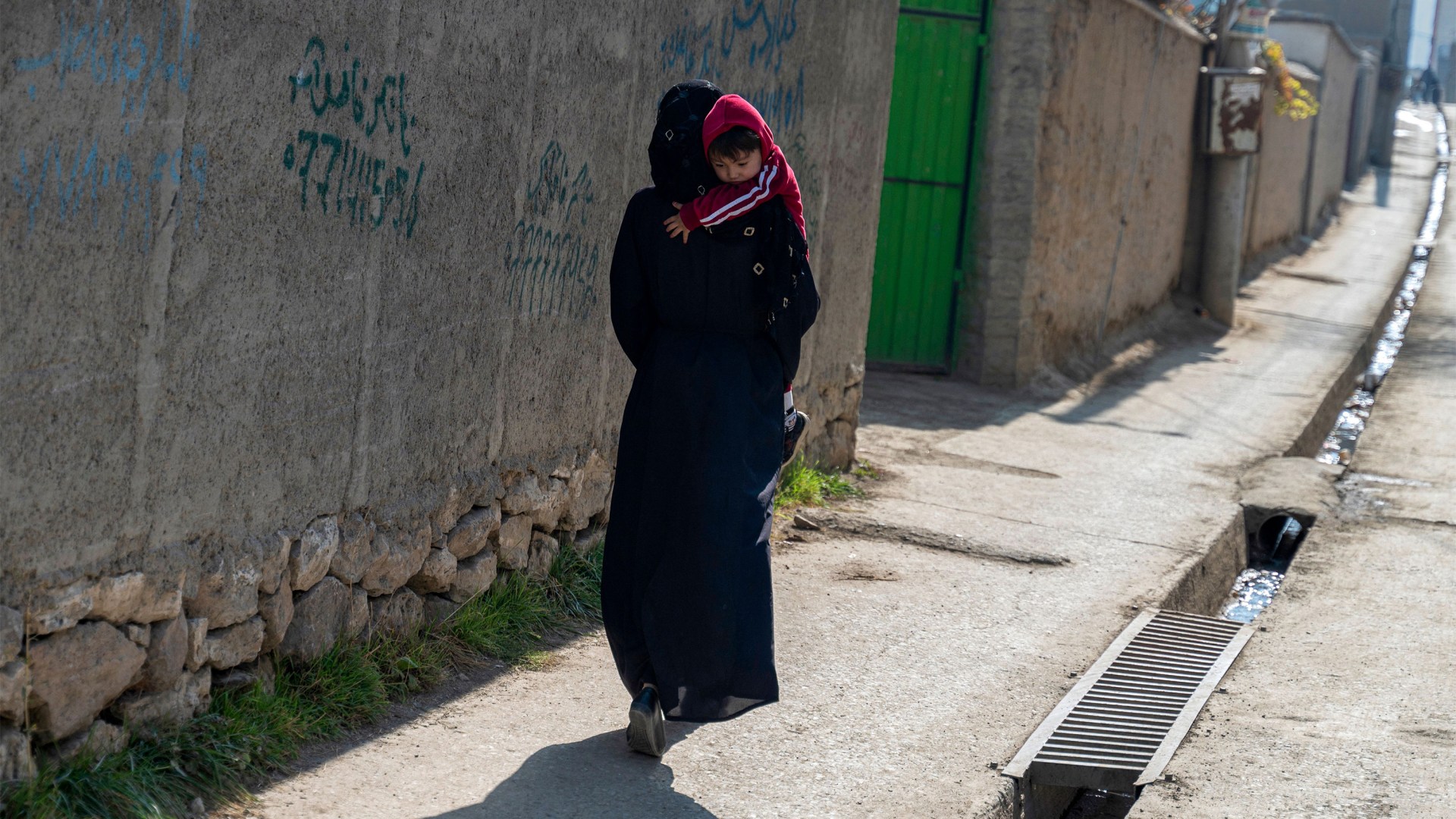
An Afghan Hazara woman carrying her child along a street in Dasht-e-Barchi in Kabul.

An Afghan Hazara woman carrying her child along a street in Dasht-e-Barchi in Kabul.

Christianity Today April 30, 2026
Wakil Kohsar / Contributor / Getty

On a Sunday in late January, pastor Irfan was preaching at a Bible seminar in Quetta, Pakistan, when he received panicked messages from members of an underground church in Afghanistan to which he is connected. Muslim extremists had discovered the location of the church near the city of Bamiyan and had killed around 24 Christian converts from the Hazara ethnic community.

Most died from bullet wounds, but the attackers slit the throat of one young man who was around 20 years old, Irfan said. Then they burned down the house church. 

The news broke Irfan, and he struggled to speak at the seminar the next day after weeping the entire night. For a week, he slept only two or three hours a night, he recalled. 

Irfan started traveling to Afghanistan in 2009 to build relationships and share the gospel. From his initial converts, the underground church has grown to hundreds of families. Although many have since immigrated to Europe, the United States, and Iran, Irfan now shepherds 85 families—60 Hazara and 25 Sunni Zadran families—who fled to Pakistan in 2021 before facing deportation back to Afghanistan years later. Due to the danger of Irfan’s work, CT is using only his first name.

Afghans are drawn to the Christian faith in part because they confront a religious system that often “blends faith with coercion, fear, and at times violence,” Irfan noted. Since the 2021 US military withdrawal from Afghanistan, the Taliban and other extremist groups have sought to punish those who leave Islam. 

“When they encounter the gospel, they encounter a radically different revelation: not a system of merit or religious performance but the proclamation of salvation accomplished through the finished work of Christ,” Irfan said.

He disciples the underground church by sending voice messages with sermons and discussion questions through virtual private networks. Video calls are unsafe and unreliable, Irfan noted, but voice messages are relatively secure and easy to delete. Occasionally he crosses the border to visit the underground church, although he hasn’t been able to enter the country since early 2025 due to increased fighting between Afghanistan and Pakistan along the border. 

“They are facing so many challenges, and there are so many hardships,” the pastor said of Afghan Christians. On April 16, he heard extremists had killed another 10 Hazara converts in a separate attack. “The families are trying to hide and are seeking support.” 

One Christian couple missed the January church service in Afghanistan because their young daughter was in the hospital. When they learned of the violent assault, they immediately fled the city and contacted Irfan, saying they feared the Taliban was looking for them. 

The attackers abducted two young women from the church, sisters who are about 18 and 21 years old, Irfan said. The women’s parents and three younger siblings—including a boy around age 4—all died in the attack. 

Irfan recalled baptizing the family nearly four years ago after they fled to Pakistan in the wake of the Taliban takeover. In a photograph of the baptism, Irfan is next to the girls’ father, who is standing in a small inflatable swimming pool. The family had since returned to Afghanistan after the Pakistani government began deporting undocumented foreigners. 

At least 600,000 Afghans have fled to Pakistan since 2021, and Irfan was part of the humanitarian efforts to resettle them. Many arrived with “no clothes, no resources, and no hope,” he noted, so his network in Pakistan sourced housing and helped them start small businesses. Many have hidden themselves among the Pakistani Hazara community—including 35 Christian families whom Irfan pastors.

Some were already Christians, and others converted after encountering Irfan’s preaching. Yet in November 2023, Pakistani authorities began a nationwide operation to deport undocumented Afghan refugees, a trend that has recently intensified due to the ongoing war between the two countries.

During the April 16 attack in the Afghan city of Herat, extremists killed 30 people from the Hazara community, including 10 converts to Christianity who were directly connected to Irfan’s underground ministry network. He said the extremists slit the throats of the Christians, who were in their early 30s, inside their homes. 

Irfan knew the men and said one of them had previously worked with local hospitals that operated under international organizations when American troops were in Afghanistan. “He had already been receiving threats, as the Taliban were actively searching for individuals associated with such work,” Irfan said. Another victim had gone back to Afghanistan in 2024—leaving his family behind in Pakistan—during one of the country’s deportation waves.

Hazara are a persecuted minority in Afghanistan, yet Irfan believes the men were likely identified as Christians and targeted because of their faith. The Hazara community makes up 10 to 20 percent of Afghanistan’s 45 million people. The ethnic and religious minority group is predominantly Shiite Muslim and is despised by radicals in a country where Sunni Muslims are the majority. 

The Taliban and extremists have persecuted Hazara for decades, said Joel Veldkamp, director of public advocacy for human rights group Christian Solidarity International (CSI). Yet in recent years the attacks have increased.

“Unfortunately, they have suffered a lot of violence,” Veldkamp said. He added that Hazara are easy to spot because “their facial features are very distinctive.” 

Those who convert to Christianity take on increased risk. 

Veldkamp said Christians in Afghanistan pretend to be Muslims unless they live in remote regions far from Taliban control: Men must attend prayers at local mosques and grow beards, and women can’t leave their homes unless they are completely covered and are with a male escort. Those who fail to comply risk questioning or various forms of punishment.

In January, the Taliban clarified sharia law codes to permit forms of slavery and to allow husbands to beat their wives, Veldkamp added. Another particularly chilling expansion, article 58, applies to apostates. “A woman who has left Islam for another religion—she is supposed to be imprisoned for life and given ten lashes every three days until she returns to Islam,” Veldkamp said. 

It’s difficult to know how many Christians remain in Afghanistan. According to CSI, some estimates suggest around 20,000 lived in Afghanistan at the time of the US troop withdrawal in August 2021. 

The withdrawal followed 20 years of bipartisan war fatigue, though critics blamed the Biden administration for its poor execution, which created the conditions for a quick Taliban takeover. Before that, the US-backed Islamic Republic of Afghanistan governed the country. Its collapse led to more than 1,000 civilian deaths, widespread displacement, and a decline in freedoms. 

Nina Shea, director of the Center for Religious Freedom at Hudson Institute, helped evacuate Christians after the Taliban takeover and said many were fearful of the growing Islamic extremism. 

“There are terror groups that are even more radical than the Taliban that are going through. And when they find out that there is a secret church … they’ll kill them,” Shea said. “I dealt with a number of Christians during that period in 2021, and they were just terrified.”

Shea said many Christians lived on the roofs of abandoned buildings and came down only for food and water. Even some of those who stayed inside safe houses grew paranoid as Shea—in connection with Glenn Beck’s Nazarene Fund—couldn’t reveal to them their evacuation plans due to security concerns. They feared they wouldn’t be able to leave the country.

Even before the Taliban takeover, Christians in Afghanistan faced persecution, Shea noted. In the years that followed, escape routes out of the country decreased as human rights violations increased. 

In 2024, the US Commission on International Freedom recommended the State Department designate Afghanistan as a “country of particular concern,” but US refusal to recognize the Taliban as a legitimate government has complicated the process. The World Watch List ranks Afghanistan as the 11th-most-dangerous country in the world for Christians, as discovered believers likely face beating, torture, and even death.

Irfan encourages Afghan Christians by preaching about the church in Smyrna—the persecuted but faithful believers in Revelation 2:8–11—and the life of Daniel. 

Veldkamp said Christians can support the underground church by advocating within their own countries’ legal systems for asylum pathways for persecuted believers and by supporting underground networks of support and aid. “It’s a very, very tall order, but there are lots of church workers in Pakistan who are willing to help with this, and I think we really need to take them up on that,” he said. 

Veldkamp urges Christians to pray for the Afghan church. “God has promised us that he will hear our prayers for our brothers and sisters,” he said. “Prayer…molds our hearts to be passionate about the things that the Lord is passionate about so that our hearts will break when his heart breaks.”

Ideas

Black Hope Faces a Crisis

An influential academic theory says anti-Black racism won’t change. As it trickles into popular culture, the church should be ready to respond.

A chain broken by a glow of light.
Christianity Today April 30, 2026
Illustration by Elizabeth Kaye / Source Images: Getty

The Black church survived on a wager. The bet was that the God who raised Jesus from the dead would do something with all the suffering that African Americans have experienced throughout the country’s history. It was a bet that the lynching tree was not the last word. And that the God who brought Israel through the Red Sea would bring his people through whatever America had planned for them next.

That wager has held for more than two centuries, from the earliest slave congregations to the present. But a generation of young Black men and women who love Jesus are now wondering if it still holds. These are Christians who have looked at the distance between what the church proclaims and what their lives contain and have begun to question whether the whole apparatus of Christian hope is a mechanism for enduring what should be confronted. Some are angry. And I sense many Black Americans—Christian or not—are just tired.

That tiredness doesn’t always have a name, but it has created a climate in which an academic philosophy called Afropessimism has found oxygen. Frank Wilderson III, a professor at the University of California, Irvine, is the most prominent voice on the theory and has provided the movement’s clearest articulation in his 2020 book on the topic

The argument runs like this: The world is divided between Humans and Slaves. All Black people, regardless of class, station, or nationality, occupy the position of Slave, and that is unlikely to change.

Wilderson argues that abolition was not the end of Black people being treated as subhuman. On the contrary, he says, this abuse has persisted in every society that touches the African diaspora. Anti-Blackness, in this account, transcends every other form of oppression. It undergirds civilization. And because slavery is not just a historical event but a permanent condition, there is no narrative path available to Black suffering. No equilibrium to be restored. No arc bending toward justice.

I don’t agree with Wilderson’s conclusion. However, I do take his views seriously and believe Christian leaders need to formulate a fruitful response not just to his theory but also to the crisis of Black hope at large.

As a pastor, I see this despondency in my own ministry. Recently, a young couple visited my church and stayed after the service. They were both professionals. Both had been raised in the church. The husband told me they had been visiting churches for months, looking for one willing to speak honestly about race, about the world their future children would inherit, about why the headlines seemed trapped in the same terrible loop. But everywhere they went, the answer was essentially the same: Trust God. Stay faithful. Things will get better. “I believe in God,” he said. “I’m just not sure it will get better.”

They weren’t deconstructing. They were simply two people who had done everything the church asked of them and now, sitting in a lobby, were wondering why the spiritual answers they had carried since childhood no longer seemed strong enough for the world they inhabited. They were not self-proclaimed Afropessimists. But they were breathing the air that philosophy describes: that the system is working exactly as designed and that much of what the church has offered has been too thin to account for what Black people see in the news, in their neighborhoods, and in the weary inheritance many are asked to hand to their children.

Afropessimism itself protests false hope and the thin promise that time alone will heal the racial brokenness in our society. And what it gets right, it gets devastatingly right. It will not let America off the hook by treating racism as a problem mostly solved in 1964. It looks at the killing of some unarmed Black people in broad daylight, at the wealth gap, at the incarceration numbers, and it says: This is not a glitch.

Globally, Wilderson’s argument resonates wherever the legacy of the slave trade and colonialism has produced entrenched racial inequality, from Brazil to the United Kingdom to South Africa—where Wilderson spent years as an elected official in the African National Congress.

Outside the church, some critics of Afropessimism argue it gives away too much. Detractors see it as a death knell for Black freedom struggle, multiracial coalition-building in politics, and the moral energy needed to confront present evils. Adolph Reed Jr., a professor at the University of Pennsylvania, argues Afropessimism can treat anti-Blackness as a timeless phenomenon and drift away from addressing both concrete inequalities and political solidarity. Criticism from another academic, Cedric Johnson, runs nearby: When racial identity hardens into the whole story, it can make the broader coalitions required for change harder to build.

Wilderson is honest about the implications. He calls for “the end of the world” but does not define what he means. And without a definition, the logic leads where it leads: separatism or nihilism. The philosophy that begins by honoring Black suffering ends by taking the slaveholder’s definition of Blackness and etching it into the cosmos.

The church can offer something better. We need congregations where young Black men and women can bring their exhaustion, anger, and doubt and find a community that groans with them. We need churches where they can sit long enough for the pain to become prayer and pray long enough for the prayer to become praise. We need to be equipped to talk about the difference between birth and death pains. And to do it well, we will need to look back.

In Jesus and the Disinherited, the book Martin Luther King Jr. carried during the Montgomery bus boycott, Howard Thurman identified the three forces that destroy the oppressed from within: fear, deception, and hate.

Fear comes first. It arises from the violence to which people are exposed and teaches the oppressed to despise themselves. “There is but a step,” Thurman wrote, “from being despised to despising oneself.” Then the underprivileged might deceive themselves about their lives or their surroundings as a coping mechanism. But “if a man continues to call a good thing bad, he will eventually lose his sense of moral distinctions,” Thurman warned. The survival strategy eats the soul, and hate arrives last.

Against all three, Thurman, an unorthodox mystic, set Jesus as a disinherited person who walked through fear without being consumed, who refused deception when it would have saved his life, and who faced the hatred of the empire and loved.

The logic does not stop at Good Friday. Jesus did not come merely to model freedom from fear, deception, and hate. He came to die for sinners and rise again. Only from that finished work does he become the pattern of the redeemed life.

If the way of Jesus is the way of suffering that avoids fear, deception, and hate, then the resurrection is God’s vindication of that way. It is the public, historical, bodily declaration that the strategy of the Cross was not naive and that the disinherited one who refused to let empire set the terms of his inner life was right. And more than right. He defeated all that holds the world in bondage (Col. 2:15) and shares his risen life with his church as the living King and “the hope of glory” (Col. 1:27, ESV throughout).

The Black church carried this hope. Our ancestors believed the God who raised Jesus was present with them, making them spiritually free even when their circumstances were not. The spirituals gave that hope a voice: “Didn’t my Lord deliver Daniel? And why not every man?” That is a theological declaration that the lions do not get the last word.

While the Black church has historically been one of the most powerful forces for justice, many American Christians have acted in ways that silenced the cry of justice on earth. And Black churches, for all their prophetic power, have also had their own flaws and failures. 

The whole creation groans, Paul says. Believers groan. The Spirit groans. But God also subjected creation to futility “in hope” (Rom. 8:20). Our world is inching toward full liberation, which is the counterclaim to Afropessimism in its most precise form. Where Wilderson says anti-Blackness is ontological, Paul says the futility of creation itself is temporary. It is bounded by God and destined to give way to “the freedom of the glory of the children of God” (v. 21). “For in this hope we were saved.” (v. 24).

This kind of hope bypasses optimism, which can be destroyed by circumstances or data, and puts its anchor in the fact that God has acted and will act again. But we need more than hope that only points to the renewed world. After all, the Spirit who groans alongside me does not tell the suffering to wait quietly. He commissions all of us because the whole gospel—Christ crucified for sinners, Christ raised in triumph, Christ present by his Spirit, and Christ returning in glory—is a reality that demands something in the present.  

Because Christ is raised, we can confront racial injustice knowing the eternal outcome is already secured. Because Christ is present by his Spirit, we can build up the multiethnic church as a sign of the new creation breaking in and as citizens of a kingdom that has already arrived. Because Christ is returning, we can work for justice out of joy, confidence, and obedience, trusting him evermore with our anxieties.

We can recover the double register of the spirituals, singing toward heaven while working to repair the broken pieces of our societies. All of this is critical because the engine of Christian endurance is not only justice-hunger. It is delight in the one who conquered the grave and who promises to make all things new. “The joy of the Lord is your strength” (Neh. 8:10).

Black suffering is real enough to break optimism. The question we now face is whether it is real enough to break resurrection. The church, at its best, has always answered no.

Thomas Anderson is the pastor of disciple making at Grace Community Church in Fulton, Maryland.

Theology

8 Things I’ve Learned About How to Make a Major Life Decision

Russell Moore on the mid-level choices that perplex us.

A road sign pointing in two directions.
Christianity Today April 29, 2026
Kyle Glenn / Unsplash / Edits by CT

This piece was adapted from Russell Moore’s newsletter. Subscribe here.

Not long ago, someone came to me grappling with a life decision. It would affect where he lived and what he did for work, and he didn’t want to get it wrong. “I don’t want to make a mistake I’ll regret,” he said. “How do I know if I can trust myself to make the right decision?”

I said, “How do I know I can trust myself to give you advice about how to trust yourself to make the right decision?” I was only three-fourths of the way kidding. His question was a good one, and it’s one that at some point we all have to ask.

My conversation partner spoke of a “major life decision,” but those aren’t really the hard ones. Most of our important decisions aren’t the huge ones (“Will I deny Christ if I’m forced to fight lions in the Colosseum?”), nor are they the tiny ones (“Should I eat Chick-fil-A today or warm up leftovers at home?”). The most troubling are those middle-weight decisions: “Should I take that job?” or “Should I call that person?” or “Should I attend that church?” or “Should I go to that school?”

Part of the reason these decisions are so hard is because we are typically people who either prize the objective over the subjective or the other way around. I’ve known those who do SWOT exercises (strengths, weaknesses, opportunities, threats) to decide whether to go to Gatlinburg or to Panama City Beach for vacation. And I’ve known people who, when asked to give some money to help kids in their church go to youth camp, spend weeks trying to get “a peace about it.” If you rely on only the objective or only the subjective, you will never make a decision.

In his commentary on the Book of Numbers, Eastern Orthodox priest Patrick Henry Reardon noted that God provided guidance for his people out of Egypt with both the objective, fixed Word of the Torah and the unpredictable, mysterious leading of the pillar of fire and cloud.

“Israel recognized no possibility of conflict between God’s will fixed in the Torah and the more fluid guidance He provided in the cloud and pillar,” Reardon writes. “The divine guidance in the lives of the faithful is ever thus. At no point is God’s revealed will in conflict with the fixed and determined order by which men are ever to be governed, but also at no time is a man justified simply by observing those fixed and permanent norms of the Law. God always guides His people in these two ways.”

I agree, and here are some suggestions I had for the man who asked for my advice in grappling with these sorts of decisions.

1. Rule out first what’s objectively wrong.

You don’t have to pray about whether to train for a new career as a trafficker for a cocaine cartel. If you’re married, you don’t need to seek the Lord’s will about whether to create a Tinder profile for yourself. (The answer to both is no.)

Even with matters that are not straightforwardly moral, part of biblical wisdom is observing the typical outcome of people’s decisions. We ought to know, for example, that taking a dog by the ears is a bad idea (Prov. 26:17). We make many decisions by remembering others who made similar choices for similar reasons and noticing what they saw or missed.

2. Cultivate long-term biblical wisdom.

Most decisions are about choosing between what seem to be morally equivalent options. In those cases, you should be shaped by Scripture, but probably not in the way you think. A search of your Bible app is not going to tell you whether you should change your major to marine biology just because you happen to be reading Jonah. Most of your reading of Scripture is not going to seem relevant to the decisions you are making, because it’s not a set of tarot cards.

Like invisible yeast fermenting, the Word shapes you to have the kind of conscience and intuition to make decisions, and that happens over a long period of time. What you are reading and praying now is usually getting you ready for decisions you have not yet faced. 

3. Recognize the ways otherwise good decisions could be wrong for you.

Here’s where the objective and the subjective meet. You have to know not just what is right or wrong but what is right or wrong for you given your temperament, vulnerabilities, and experiences. The recovering alcoholic should probably say no to attending bartending school.

Years ago, I was asked to consider doing a talk-radio call-in program on a regular basis. I’d done it as a fill-in many times, enough to see I would be both personally miserable and professionally bad at doing what that format would require—surfing whatever was outraging the audience at the moment. Some people could do that—and have—without becoming audience-captured hacks. But I think I would have struggled. Saying yes to that opportunity wouldn’t be straightforwardly morally wrong, but it would have put me in a place of temptation I am now quite sure that I couldn’t have handled.

4. Subvert your quirks.

Look back on your decision-making and ask whether your temperament leans more toward impulsiveness or fearfulness. If you typically make rash decisions, tell yourself to slow down. Sometimes that kind of quickness is its own kind of indecisiveness: If I just jump and do it, I don’t have to spend time wondering about it. On the other hand, if you tend to ruminate endlessly on whether to do something, price that in too and realize that no matter when you make a decision, your psyche will scream at you, Why so fast? What if something goes wrong? Resolve not to let that rule you.

If you typically try to gain happiness with some change in venue, recognize that and slow down. If you typically try to find contentment by retreating to a rut, spur yourself into what will feel dangerous for you.

5. Don’t panic at perplexity.

With a lot of decisions, there is a long time of not knowing what to do. That can lead us to feel anxious, as though we will always be uncertain. But our perplexity is a crucial part of the decision-making. We don’t like that. This is one reason some people want a firm, unquestionable answer as to what they should do—whether that’s a set of data points (a personality or aptitude test, for example) or an indisputable, settled peace. We want a solid answer for the same reason people want to read horoscopes: We want the kind of control that removes the risk of making the wrong decision.

Most of the time, though, that sort of immediate clarity would destroy us later. Our Lord’s brother James told us, “If any of you lacks wisdom, let him ask God, who gives generously to all without reproach, and it will be given him” (1:5, ESV throughout). That’s not a one-time ask. We don’t ask for wisdom and then get a lifetime supply. Just as we keep asking for bread daily, we must keep seeking guidance from God.

An essential aspect of the feeding of the 5,000 was Jesus asking his disciple Philip, “Where are we to buy bread, so that these people may eat?” John reported this was not because Jesus did not know the answer, “for he himself knew what he would do” (John 6:5–6). Philip first had to come to the edge of what he could know and do in order to say, There is no way to do this. Your perplexity may well be shaping you into the kind of person you will need to be on the other side of it.

6. Expect a gradual realization more often than a sudden epiphany.

Once, when I was making a personally important decision that was taking a long time, I talked to the late Tim Keller about how to decide. He said, “You don’t need to. You’ve already made this decision. Your conscious mind just hasn’t caught up to the rest of you yet.” He was right. Looking back, I could see how, even in my fear, I was spending more and more time imagining the future that could be. I could see all the little providences that seemed to be getting me ready for it. Often, I’ve found that many decisions seem less like “Let there be light” and more like the sunrise that is so subtle we cannot really see when the night ended and the morning began except by looking back.

7. Seek out third-space advice.

The Book of Proverbs tells us that “in an abundance of counselors there is safety” (11:14), and most of us realize we need advice. But it’s also important that you see the different kinds of counsel you need. Sometimes you need advice from someone who knows you, loves you, and has your best interest in mind. But with some things, that person has too much of a stake in your decision. Sometimes you need advice from someone at a distance, someone who doesn’t know you and can tell you objectively what to choose.

But often you need a third kind of advice. You need counsel from someone who knows your strengths and weaknesses but is distant enough that he or she won’t be affected by what you decide.

8. Take responsibility but lose control.

One of the reasons decisions can provoke such anxiety is that we want to protect ourselves from future hurt or regret. To some degree, that’s healthy. Jesus affirmed that only a foolish king would go to war without first sitting down to “deliberate whether he is able with ten thousand to meet him who comes against him with twenty thousand” (Luke 14:31). But he said this in the context of taking up the cross and following him. That’s not a matter of calculation and control.

Jesus said to Peter, “What I am doing you do not understand now, but afterward you will understand” (John 13:7). In conforming us to himself, Christ does not give us what we want—an ahead-of-time overview of exactly the path he has planned for us.

“Little children, keep yourselves from idols,” the Bible tells us (1 John 5:21). Sometimes that idol can be a refusal to make a decision—expecting to be carried along without ever having to say yes or no. Sometimes that idol can be a refusal to wait for a decision to present itself—wanting some sort of sign to choose for us. For some, the idol can be a refusal to think. For some, the idol can be overthinking. For some, the idol can be trusting themselves too much. For others, it can be second-guessing themselves too much.

An idol is predictable. We make its mouth and give it the words we want to hear. The living God is different. We can ask for guidance, but we cannot peer into every counterfactual. We can take responsibility for our decisions while also trusting that God’s providence includes even all of that.

Russell Moore is editor at large and columnist at Christianity Today as well as host of the weekly podcast The Russell Moore Show from CT Media.

History

In ‘the Year of the Bible,’ Evangelicals Debate Politics, Civil Disobedience

CT emphasized diverse views in ongoing discussions in 1983.

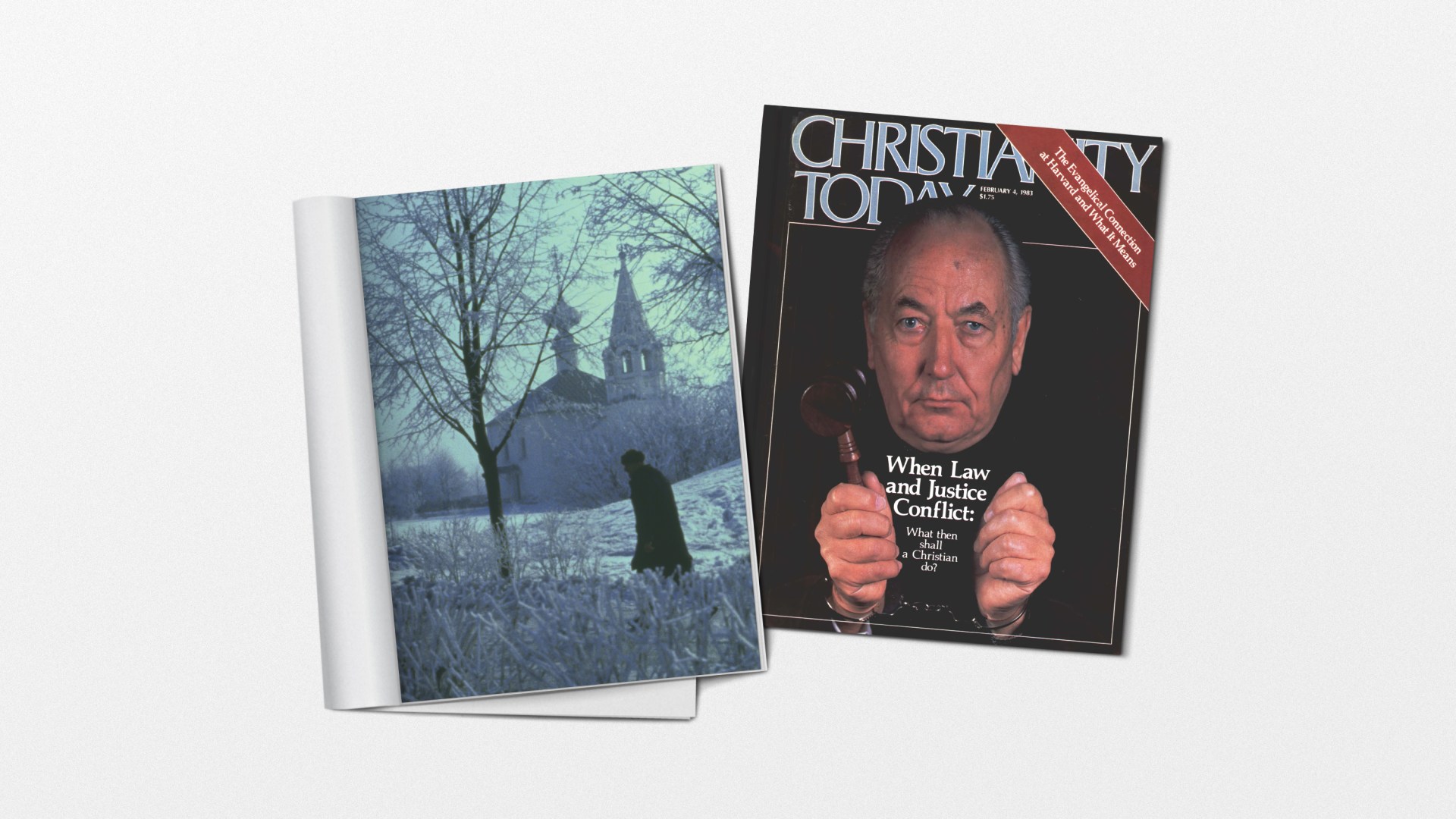
A magazine cover from the CT archives, and a photo from Russia in 1983.
Christianity Today April 29, 2026
Illustration by Christianity Today / Source Images: Getty, CT archives.

Ronald Reagan declared 1983 “the year of the Bible.” CT ran long excerpts of his speech and assessed his accomplishments in his first term.

It is time to ask what impact Reagan has had on the issues so important to evangelical Christians. On specifics, Reagan is likely to come up short, since many campaign promises that put him in office remain unfulfilled, including school prayer and antiabortion legislation, while concern over his handling of welfare issues and national defense has deepened. 

But in ways that cannot be precisely measured, Reagan’s presence in the White House may produce some long-term benefits for the nation. His rhetoric, with its God-centered world view, helps counteract the rampant secularism that would shove religion to the margins of life. In Washington, D.C., Christians in government are making decisions based on their faith. That development alone promises to reestablish moral perspectives in Washington’s policy-shaping networks. …

The legislative scorecard keepers are likely to remain disgruntled, but—win or lose on specifics—people with a Judeo-Christian outlook are involved for the long haul, and the environment in Washington is fertile soil in which to cultivate their growth.

CT reported that “Reagan made a forthright pitch for evangelical allegiance” at a National Association of Evangelicals (NAE) meeting, urging them “to speak out against those who would place the United States in a position of military and moral inferiority.” Evangelical leaders did not all agree.  

The nuclear issue … gave NAE officials a welcome chance to articulate their centrist position—not sold out to the profreeze Left nor aligned with the Religious Right, which backs administration defense policies. The 3.5 million-member group includes pacifist churches such as Mennonites and Brethren in its fold and remains committed to operating by consensus. …

Applause from the enthusiastic audience interrupted Reagan about 18 times during his 32-minute address, which touched on abortion, school prayer, tuition tax credits, and parental notifications for teen contraceptive users. NAE neutrality was clearly telegraphed by Gay. Seated onstage while Reagan spoke, Gay did not applaud the freeze remarks. He estimates that no less than one-quarter of NAE’s members are total pacifists or nuclear pacifists, and says “even if it were only 10 percent, we would have no right to quash that important corrective.”

In the pews, evangelicals were similarly divided on the issue of nuclear weapons

Most evangelicals approve of President Ronald Reagan’s promilitary policies on nuclear arms, yet they would support a nuclear freeze if the conditions were right. These somewhat contradictory results appear in a new Gallup poll commissioned by the National Association of Evangelicals (NAE).

Overall, evangelicals gave answers similar to those of the general public, with one notable exception: on several key questions, between one-fourth and one-third of the evangelicals registered “no opinion.” This is about 10 percentage points higher than the public at large.

As the president promoted conservative ideas of free market economics, evangelicals also debated. CT asked an evangelical in the US Justice department to weigh in with a review of political philosopher Michael Novak’s book, The Spirit of Democratic Capitalism

The views of evangelicals concerning the relationship between Christianity and capitalism could hardly be more diverse. On the Right are views such as those expressed by the Arthur S. DeMoss Foundation in a “Free Enterprise Seminar” that came very close to equating “our Christian heritage” and “our free enterprise system.” 

At the other end of the spectrum are outspoken evangelical academicians and church leaders who couch their anticapitalistic views in equally religious language. These Left-leaning evangelicals point to the materialism and neglect of the poor and disadvantaged as compelling indicators of the unchristian condition of our current economic order.

Clearly, both cannot be correct. … As a conservative, my own vision for the church and society necessarily is rooted in the Right, but I am uneasy when the Right seeks to baptize conservative politics (to which I subscribe) as “biblical.” Perhaps my position on the Right in a subtly defined niche that is “betwixt and between” is the reason I am so enthusiastic about Michael Novak’s new book. … He argues persuasively that democratic capitalism is the economic and political system most compatible with Christianity.

Evangelicals were not divided or ambivalent about abortion. But in 1983, some were wrestling with the best way to oppose abortion. In a three-part series on abortion’s impact on American life, a Baptist teacher argued that “prolife rhetoric is not enough.” 

I base my prolife views on the belief that that heartbeat belongs to a human being, with rights to birth and life. And I believe no one should be deprived of life without due process of law. So I hate what abortion-on-demand does to a helpless child, and to the mother and perhaps the father, too.

This raises a critical question, though. What, by contrast, will be the effects of a prolife alternative? Clearly it will affect the child by guaranteeing him birth. But what then? … We must prepare to deal with the consequences of our commitment.

If right-to-life legislation passes, thousands of babies will annually be born who otherwise would have been aborted. How many? The National Center for Health Statistics has estimated that there are about 1.25 million abortions in the U.S. annually.

Other pro-life Christians were wondering what they were supposed to do if politics was not enough. CT devoted many pages to discussions of civil disobedience, asking, “When should Christians stand against the law?” 

Judge Randall J. Heckman … is a highly regarded probate judge in Grand Rapids, Michigan. As befits his office, he has a solid reputation as a man of law and order. He is also a committed evangelical who not only loves his country, but also seeks to obey Christ and live by Scripture. Last November a 13-year-old girl five months pregnant came before his court, demanding her legal right to abort because she did not want her child. Judge Heckman refused her petition. … 

As a result Judge Heckman himself must now appear before the Michigan Judicial Tenure Commission because of a complaint filed by NOW (the National Organization for Women). The commission has the authority to relieve him of his duties as judge, and he awaits its decision.

He defends his disobedience to the law: “The idea of judges putting themselves above the law should be repugnant to all citizens. … [But what if] a judge is required by law to order Jewish people to concentration camps or gas chambers because the law says that Jews are nonpersons? What if a judge, sitting on a case involving a runaway slave, disagrees with the Supreme Court’s 1856 decision in which black slaves were ruled to be nothing more than chattels?

“Can the judges in these cases escape moral culpability either by obeying the law and saying they were ‘just following orders,’ or by disqualifying themselves so that other judges without their scruples can issue the unjust decrees?” Judge Heckman believes that, if a judge deliberately gives the case to another judge, he remains “a knowing and willing part of the ultimate injustice.”

Another test case arose in Nebraska, where a Baptist pastor refused to obtain a license legally required to run a private school. He went to jail, and his supporters protested. 

Protesting is new for twentieth-century fundamentalists. Blacks, feminists, and antiwar demonstrators all learned two decades ago the skills of protest—marches, sit-ins, boycotts. But most fundamentalists rallied for law and order when blacks took to the streets; they are still opposed to feminism; and they believe the Vietnam War was a mistake only in that it was not fought intensely enough to be won. These conservative Christians are learning about protest quickly … yet civil disobedience, however mild it may have been at Louisville, was no easy thing for the fundamentalists. …

Scripture would advise us … not to take civil disobedience lightly. It must be undertaken only with caution, prayer, and the counsel of the church. It is an act of gravity since it is, in a sense, law breaking. But it is law breaking of a unique kind, an activity that affirms law in general while violating law in the particular case.

CT regular Philip Yancey said evangelicals should learn from Mahatma Gandhi.

Much of Gandhi’s life seems baffling, alien, and incomprehensible to the average Westerner. And yet Gandhi insisted with his prescient voice that civilization must look to the East and not to the West for its ultimate solutions. The Christian church, birthed in the East but formulated and structured in the West, shares many of the crises of Western civilization as a whole.

For perspective, perhaps we need to step back and listen to this enigmatic figure who, although not a Christian, adapted many Christian principles to a modern context. Christian saints before him had followed these same beliefs, but we have grown so accustomed to our Christian saints that we no longer hear their message clearly. When a sound is too loud, sometimes we can discern it better in its echo.

A regional director of World Vision and former legislative assistant for an evangelical senator reminded CT readers that —and sometimes against them. 

Our prayers for and against governmental leaders are at the heart of our dual citizenship in the heavenly and earthly kingdoms. We frequently place too much emphasis on our earthly loyalties, especially as we read the numerous passages in the New Testament about submission to kings and rulers. We would do well to read these passages more carefully. For example, a phrase in one such passage speaks very emphatically about our prior obedience to God: “Live as free men, but do not use your freedom as a cover-up for evil; live as servants of God” (1 Peter 2:16, NIV). …

Our heavenly citizenship compels us to pray for those in authority—not just for their wisdom, prosperity, and longevity, but that they will practice justice and righteousness. Although our prayers begin in the positive, we may in some cases need to begin praying against the ruler, if God so directs. This is the ultimate act of patriotism: caring enough about the people whom God loves to be willing to pray for their deliverance from one so controlled by evil that submission to God is only a remote possibility.

Amid all the political struggles in 1983, CT reminded readers of the importance of evangelism and proclaiming the gospel through Christian life. The president of Multnomah School of the Bible wrote an article called “Lifestyle Evangelism: Winning through Winsomeness.” 

God’s evangelistic strategy is beauty. Evangelism starts with the beauty of God, and it also involves a beautiful bride, the church. God desires that through our lives the world will see his beauty. … 

When an individual, a family, or a corporate body of believers is moving together toward wholeness (holiness), a credible lifestyle emerges, and the potential for effective witness increases dramatically. Because this is true, evangelism is a way of living beautifully, and of opening one’s web of relationships to the nonbeliever.

American evangelicals were also reminded of the dire situation of Christians in other parts of the world. CT published an article on the struggles of Hebrew-speaking Christians in Israel and reported how American attention to believers suffering in Eastern Europe and the Soviet Union could make a difference. 

With his trial just four hours away, a young Romanian Baptist, loan Teodosiu, sat in his cell—waiting. A spokesman for the Committee for the Defense of Religious Freedom in Romania, Teodosiu had been arrested on December 16, 1981. His “crime”: disseminating information about state persecution of Romanian believers. Charged with treason, he waited, expecting a harsh sentence.

The seconds ticked by. Suddenly, the door to his cell swung open and several guards burst in. Thoughts of an eleventh-hour interrogation flashed through his mind. He braced himself for the ordeal. Instead, he heard one of the guards shout, “Come with us! You’ve been released!”

“Released?” Teodosiu asked incredulously. Indeed, he had been released, and all charges against him were dropped. What Teodosiu didn’t know was that halfway around the world, in the United States, action had been taken on his behalf. People aware of his situation had circulated petitions and written to their congressmen. They, in turn, had written to the Romanian Minister of Internal Affairs. It was this concerted pressure that resulted in Teodosiu’s eleventh-hour freedom. … 

Christians in the West do have the power to help suffering Christians in the Soviet Union and Eastern Europe. Using letters, petitions, mass media, and other methods at our disposal, we can protest peacefully on their behalf.

addApple PodcastsDown ArrowDown ArrowDown Arrowarrow_left_altLeft ArrowLeft ArrowRight ArrowRight ArrowRight Arrowarrow_up_altUp ArrowUp ArrowAvailable at Amazoncaret-downCloseCloseellipseEmailEmailExpandExpandExternalExternalFacebookfacebook-squarefolderGiftGiftGooglegoogleGoogle KeephamburgerInstagraminstagram-squareLinkLinklinkedin-squareListenListenListenChristianity TodayCT Creative Studio Logologo_orgMegaphoneMenuMenupausePinterestPlayPlayPocketPodcastprintremoveRSSRSSSaveSavesaveSearchSearchsearchSpotifyStitcherTelegramTable of ContentsTable of Contentstwitter-squareWhatsAppXYouTubeYouTube