Books

Janette Oke Wrote Her First Novel at 42. Then She Wrote 70 More.

The When Calls the Heart author launched the modern Christian romance genre, seeking to tell stories of faith in hardship.

A photo of Janette Oke.
Christianity Today March 3, 2026
Image courtesy of the Oke family.

Janette Oke, author of the popular Christian romance book Love Comes Softly, remembers first hearing Lucy Maud Montgomery’s Anne of Green Gables read aloud while sitting at her wooden desk in a one-room schoolhouse in Alberta, Canada.

Each day after her class’s noon break, her teacher would read to the class a chapter from the book. As she listened, the characters seemed to jump off the page. She recalled identifying with the needy yet loveable Anne as she got into various scrapes and navigated the perils of the transition to adolescence.

Over the course of Oke’s decadeslong career—which spans 75 books and a dozen movie and TV adaptations—she has worked to craft similarly relatable characters. 

“As you write, you must be very conscious of the fact that whoever you create … becomes alive for the reader,” Oke said. “The character must become a person … so you don’t just tell about her, you invite her into the reader’s life.” 

Oke, who recently turned 91, told CT that after the publication of her latest book last year, she’s done writing novels. During her five decades as an author, she wrote stories of faith through hardship, often set in the Canadian frontier, that have inspired readers for generations and launched an industry of evangelical romance books. 

Oke was born in Alberta in 1935 to a farming family. At the time, the Canadian frontier was no distant memory: Canada had only established Alberta as a province 30 years before her birth, and Oke remembers her neighbors living on farms built on land they settled themselves. She noted that the pioneer days were “the base on which our lives were built.”

From the time she was a child, Oke (born Janette Steeves) was interested in writing. When Oke was about 8 years old, her mother fell ill and had to be hospitalized. Oke wrote a poem expressing how much she missed her. While she remembers the poem being “rather silly,” her mother loved it and would later ask her to recite it when friends or neighbors came to visit. 

“It was rather embarrassing for a child,” she said. “On the other hand, it was inspiring because I saw that something I had written had touched the heart of someone else.” 

Oke’s mother, who was a Christian, felt it was important to take her children to a small local church. At age 10, Oke attended a summer Bible camp at the encouragement of her pastor and remembers feeling like she needed to respond during an altar call. She and her sister both stepped forward. 

“That was when I really understood that one had to actually apply your belief to your heart,” Oke wrote. “From then on, I attempted to live according to God’s word and his plan.”

As a teenager, Oke wrote poetry for fun, but after graduating from high school, she decided to attend Mountain View Bible College in Didsbury, Alberta. There, she met her future husband, Edward Oke, through her sister, who helped Edward’s mother with housekeeping to earn some extra money. She remembers a time when he came to help her while she was dusting and sweeping the school’s small chapel. 

“I was surprised,” she said, her smile evident even over the phone.

The pair married after graduation and moved to Indiana, where Edward studied at Bethel College while serving as a youth pastor for a nearby congregation. Soon after their arrival, Oke suffered a miscarriage. Two years later, she gave birth to a baby boy, who then died minutes later. 

“People did not want to keep talking about my baby because they felt it was painful for me and a reminder,” Oke said. “And yet, I felt that was exactly what I needed to do. I felt very empty.” 

The Okes had four more children, three sons and a daughter. In 1960, the family moved back to Canada, where Edward became the pastor of a church in Montgomery. Three years later, he became president of Mountain View Bible College. 

The busyness of motherhood and supporting her husband’s ministry left Oke with little time for writing novels until she was 42. By then, her four children had reached their teenage years, and she felt a prompting from the Lord to finally write the story that had been simmering in the back of her mind for years.

“I had the thought, What would happen to a woman in the days of the pioneers if she were heading west and something happened to her spouse? What options did they have? There were few—if any—suitable jobs available for women, and she wouldn’t have had the money to turn around and go home,” she said. 

Amid all the ruminating, “I felt like I knew the characters well,” Oke said. “I mentally allowed them to visit me. I don’t know how else to say it.”

Oke started writing the book in longhand, stealing bits of time throughout the day. During one family vacation, she wrote during the car ride to their destination, balancing “partially used scribblers from the kids’ school years” on her knee. She finished the first draft of Loves Comes Softly in just two or three weeks.

The story centers around 19-year-old Marty Claridge, who heads out west with her husband, Clem, deeply in love and ready for adventure. But when Clem dies on the journey, Marty receives an offer of marriage from a widower whose young daughter is in need of a mother. The book considers whether love and faith in God are enough to carry a person through life’s greatest difficulties.

The book became a family project. Oke’s four children helped type up a later draft, and Edward visited the library to research information on the publishing industry. During a visit from her sister, the pair worked together at the dining room table, Oke editing one copy as her sister read through the original. While trying to focus on the task at hand, Oke couldn’t help but sneak glances at her sister’s face. 

“That was, I think, a little message from God to me, because I could see in her face different emotions as she was reading through the script. And I could tell it was connecting,” she said.
“God gives us a lot of little boosts if we are being obedient.”

Yet when she pitched her book to publishers, Oke couldn’t find any interest in a Christian romance novel. At the time, Christian publishers were focused on self-help and Bible studies. While Oke sees the value in these types of books, she knew fiction would reach an audience nonfiction could not.

When her manuscript reached the desk of Carol Johnson, then the editorial director of Bethany House, she realized it was something special, Oke said. The other women in the office agreed. Yet Bethany House had never published a novel in its 20-year history.

“The gals kind of had to fight for it,” Oke recalled.

Bethany House decided to publish Love Comes Softly in 1979. It went on to sell more than 1.8 million copies, making it her all-time most popular title. The book and its sequels helped make Bethany House one of the most dominant forces in Christian fiction publishing. 

Love Comes Softly not only launched Janette’s celebrated and remarkable publishing career; it marked the beginning of Bethany House Publishers’ inspirational fiction line and is widely regarded as giving rise to the Christian fiction genre in our market,” said Rochelle Gloege, senior acquisitions editor at Baker Publishing Group, which purchased Bethany House in 2003.

Oke went on to write seven more books in the Love Comes Softly series, following its main characters into old age. Beginning in 2003, the books were adapted into several made-for-TV movies.

In 1983, Oke published When Calls the Heart, a novel about a young woman who takes up a teaching position on the Canadian frontier and finds herself falling in love with a Mountie. To date, the book has sold over 1.2 million copies. The resulting six-book series was adapted into a Hallmark show in 2014 and has recently been renewed for a 14th season. In total, Oke’s books have sold over 30 million copies. 

Despite her novels addressing all kinds of adversity, Oke’s work is at times labeled “feel good” storytelling. Commenting on the When Calls the Heart television series and other similar programs, The Washington Post referred to them as stories where “the main characters do the right thing. The problems get worked out. The guy and girl … always end up together.” This criticism comes from Christians as well, who decry a need for authors to write more about real issues. 

But Oke says it’s been her life’s mission to communicate her faith through her writing, to inspire her readers to believe that if you surrender your life to Jesus, he will be there even in the deepest, darkest valley. Oke hasn’t just written that reality—she’s lived it.

Before coming up with the idea for her most recent novel, Oke thought she was done with writing. But while reading through Revelation and the Gospels more than three years ago, she felt that familiar tug at her heart once more. Oke noticed in the passages the correlation between Christ’s first and second coming and the need for his followers to be ready.

“I heard this voice say, ‘I want you to write that,’” she recalled.

What flowed forth was The Pharisee’s Wife, which follows the story of Mary, a young woman who catches the eye of a Pharisee and gets swept away into the world of the religious elite during the time of Jesus’ ministry on earth. 

Oke said that while writing the book, she felt God’s guidance in a way she hadn’t previously. With other novels, she planned meticulously before beginning to write. But this time, she had less knowledge of what direction the book would take. Yet each next step came to her mind as she wrote. 

At one point, she said, she felt God prompt her to write about a certain character dying for his faith.  

“And I thought, Oh no, Lord! I loved him. I didn’t want anything like that to happen to him. He was my favorite character. But I knew I had to follow that.” 

She added, “Now, I’m not saying that I got it all right, but I felt that I stayed as true to God’s direction as I could.”

Oke hopes The Pharisee’s Wife, which was released in March 2025, will serve as a reminder for readers to be prepared for Jesus’ return. As she draws closer to the end of her life (“I am over the big 9-0 already,”) she hopes that the legacy she leaves isn’t simply her written words but  also how she lived. 

“It’s so important when we go about our day that if we claim to be a follower of Jesus, we talk like it,” she said. “We don’t get angry and upset about little things. We don’t pick at people. We try to show light and present him in a favorable way.” 

In her gentle Canadian voice, she issued a simple challenge: “Can you present to people an image of the Jesus they need to know?”


Books
Review

American Christianity Is More Than Its Politics

Matthew Avery Sutton’s impressive new history is insightful, helpful, colorful—and incomplete.

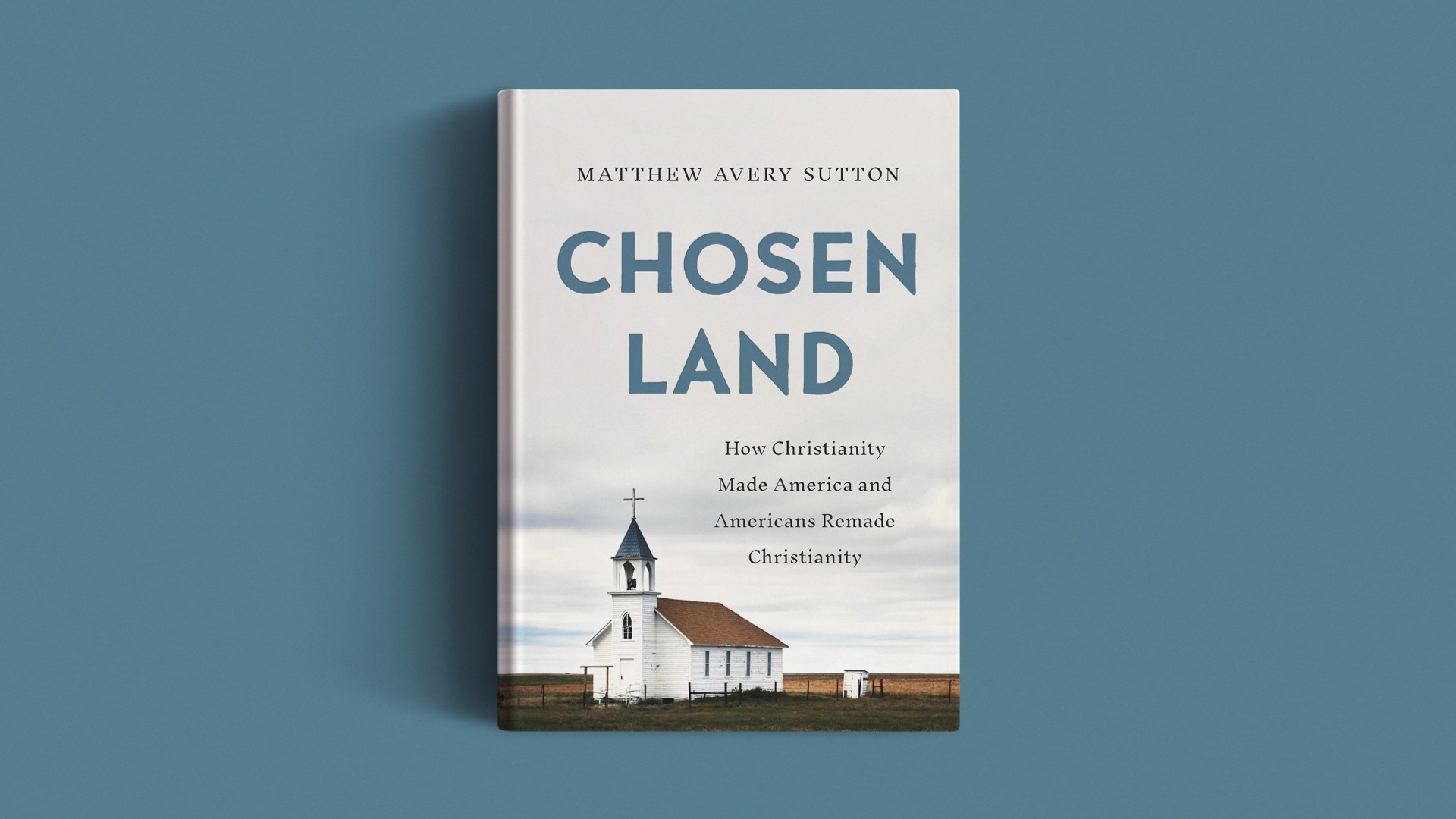
The book on a blue background
Christianity Today March 3, 2026
Illustration by Christianity Today / Source Images: Getty, Basic Books

Writing a comprehensive history of American Christianity is a mammoth undertaking that few historians attempt. It’s been more than half a century since the best-known landmark in the field—Sydney Ahlstrom’s 1,100-page A Religious History of the American People—and after that, some scholars expected we’d never see such an ambitious work again. 

Yet in Chosen Land: How Christianity Made America and Americans Remade Christianity, Matthew Avery Sutton has perhaps accomplished something even more impressive. Not only has he produced a comprehensive history of Christianity in American public life; he has also made it a highly engaging read. And he has done so in half the pages Ahlstrom required. (Full disclosure: I read part of this book in draft form and offered Sutton my feedback before it went to press, which is why my name is listed in the acknowledgments.)

Unlike some magisterial histories, so densely packed with information that they function more as reference works than as readable books, Chosen Land is the type of popular work you can read on a plane or a bus. It’s filled with colorful stories and even more colorful quotations, and it covers an enormously wide range of material. But in its focus on Christian pursuit of power, Sutton’s book offers a better history of American Christian politics than of American Christianity itself.

Beginning with the Spanish Catholics who brought Christianity to the Americas in the 16th century and continuing through the stories of the New England Puritans, the Virginia Anglicans, and the frontier revivalists, Sutton’s 500-year narrative covers all the major Christian leaders in America (and numerous others whose stories are much less remembered). With an eye to telling the stories of the marginalized, Sutton is particularly attentive to the lives of women, racial minorities, and their respective oppressors.

The story of American Christianity, Sutton argues, is the story of America itself, because for most of our history, nearly all the significant political players in every major debate were Christians. It was Christians who made the American nation, and as they did, they created a version of the faith that is uniquely American. They built a country that was uniquely—but not, as many American Christians tend to assume today, monolithically—Christian. Far from propagating an unchanging “Christian worldview,” for most of US history, the nation’s Christianity was a fractious set of competing perspectives. 

Long at the center of those fights, Sutton contends, were four opposing groups of Christians: conservatives, revivalists, liberals, and liberationists. Though all wanted in some way to make America Christian, they had very different views on what that might mean.

For most of their history, conservatives (not to be confused with modern political conservatives, though some have certainly been conservative in politics as well as religion) mainly wanted one thing from the government: to be left alone to practice their own religious tradition. Nearly all 19th- and early 20th-century Catholics fell into this conservative tradition, as did most 19th- and early 20th-century Lutherans, some Dutch Reformed Christians, and some Episcopalians. 

For these conservatives, the historic liturgical practices of the faith—the recitation of the creeds, preservation of the sacraments, and authority of the Christian tradition—were both supremely important and sufficient for salvation. They did not see the church as a liberating social force or an agent of moral reform. They did not join the 19th-century religious campaigns against alcohol or slavery, nor did they campaign for legislation to make America a more overtly Christian nation.

Instead, conscious of their status as religious minorities in a nation that was dominated by Protestant revivalists and liberals, they wanted to protect their own traditions from a potentially hostile state. Only in the 20th century did many of these groups make common cause with revivalists in an effort to defend against liberal attacks on the historic verities of the tradition or the nation’s Christian-inspired moral framework.

Sutton uses the term revivalist to denote Christians whom many other historians have called evangelical. This is the stream of Protestant Christianity that emerged from the Great Awakenings of the 18th and 19th centuries and gave rise to the fundamentalist movement of the early 20th century and the preaching campaigns of Billy Graham in the postwar era.

Unlike Sutton’s conservatives, revivalists were (and are) mission oriented. Driven by a sense that individuals’ relationships with God are sustained not through sacraments, liturgy, and ecclesiastical connections but through conversion and Spirit-induced revivals, revivalists have always wanted to convert the lost at home and abroad. That mission has led them to build large organizations and, at times, to seek political power.

While revivalists want to Christianize the nation, liberals are pluralists and rationalists who historically favored a publicly Christian democracy and educational system only if it could be nonsectarian and harmonized with modern science. Though the number of liberals has shrunk dramatically in recent decades, for much of the late 19th and 20th centuries, they dominated American Christianity, especially in the North. Many 19th-century Congregationalists were liberals in this sense, but so were some Methodists and Northern Baptists. 

Though sometimes incorrectly labeled liberalliberationists were committed not to rationality but to freedom for the oppressed. Consisting disproportionately of African American Christians, liberationists of the 19th and 20th centuries preached a Jesus who emancipated the oppressed and challenged the white power structure. They were the catalyst for the Civil Rights Movement and the voice of justice for the oppressed. 

Today, Sutton argues, these four strands of American Christianity have largely narrowed to two, at least as far as debates about religion in American politics go. 

On one side are those he says want to “reassert Christian dominance in American governance,” a category that now includes most revivalists and conservatives. This group wants to see abortion made illegal, traditional views of sex and gender reflected in public law, and (above all) a Christian-based framework adopted for the nation’s legislation and politics.    

On the other side are liberationist and liberal Christians who believe Christianity has a place in public life but only if it is pluralistic, inclusive, and focused on social justice for the oppressed. In pursuit of policy goals like environmental and racial justice or the rights of immigrants, they’re sometimes in an uncomfortable alliance with a growing group of religious nones who believe Christianity should be excluded altogether from the public square.

Sutton tries to be fair to each of his subjects, but his sympathies are clearly with the marginalized. Thus, for much of his narrative, the liberals seem out-of-touch, the revivalists appear to be agents of oppression, the conservatives cooperate in preserving inequities, and the liberationists alone offer a prophetic word to a society that is structured around the oppression of the weak. 

During the Civil Rights Movement, for instance, liberationists such as Martin Luther King Jr. and Fannie Lou Hamer drew on Christian principles to challenge the nation’s racial injustice. Meanwhile, white liberal churches offered only belated support and denied their “complicity in racism,” Southern revivalists actively opposed the Civil Rights Movement, and conservatives showed little interest in the problem. 

And looking at the two broad streams of today, it’s not difficult to guess which Sutton prefers. As he says, Christians of the late 20th century faced a bifurcated choice: “Would they rally behind Christian nationalism or stand as prophetic voices against injustice?”

Sutton’s 500-year analysis offers a helpful corrective to two historical misconceptions that stem from our unusual contemporary situation of rising irreligiosity paired with minority governance by the conservative-revivalist alliance. 

One misconception is the belief of many nones that American politics were largely secular until the religious right polarized the country beginning in the 1980s. Actually, Sutton correctly contends, American politics and society have always been deeply infused with Christianity, because Christians created and repeatedly reshaped the nation’s culture and politics. 

The second misconception is the unconsidered belief of many Christians that Christianity in our country is monolithic—and that if we could just make society and politics more Christian, a Christian-based morality would automatically follow. 

On the contrary, as Sutton’s narrative reminds us, American Christians have not all believed the same things. There were prominent Christians on both sides of debates over slavery in the 19th century, Prohibition in the 20th, and the gay rights movement in the late 1960s (which received support from some liberal Christian ministers who were gay, even though the vast majority of Christian churches opposed homosexuality). 

This was also the case with abortion rights—a cause that was supported by most mainline Protestant denominations, even as Catholics (and eventually evangelicals) opposed it—and with school-prayer debates too. The organization leading the campaign against religion in public-school classrooms was explicitly religious and was originally named Protestants and Other Americans United for Separation of Church and State. 

Similar conflicts continue today as the conservative-revivalist coalition meets a liberal-liberationist alliance that carries on old battles under a newly nonreligious label.

But what should we as Christians do with all this? It’s discouraging, after all, to realize that the faith we profess has so often been used as an agent of oppression and that American Christians have spent much time infighting on a quest for power.

There’s no question that this is part of the American story, and that should be an admonition for us, especially if we’re tempted to quest for political power ourselves. But the narrative of Chosen Land is not the only story. Sutton’s attention to power makes for a first-rate history of American Christian politics—yet that’s not quite the same thing as a history of American Christianity.

Sutton says very little about theological belief, spiritual practice, and transformed lives. He devotes two pages to Jim and Tammy Faye Bakker, three to David Koresh, five to Donald Trump, and six to Jim Jones, but never mentions the Christian origins of Habitat for Humanity and World Vision or Rick Warren’s announcement that he was giving away 90 percent of his income through “reverse tithing.” Nor does Sutton mention the Bible translations American Christians have read or say much about their prayers or hymns. Perhaps such discussions of religious devotion do not fit into a narrative of “how Christianity made America,” but they are certainly a central part of the American Christian story.

Evangelical historian Mark Noll concluded his history of American Christianity, The Old Religion in a New World, with a chapter titled “Day-to-Day Christian Spirituality and the Bible,” a discussion of Bible reading and sermons. Sutton concludes with a discussion of religious rhetoric at Trump’s second inauguration in 2025 and the observation that the inauguration symbolized what, he claims, American Christianity always was: “a battle for power in order to define the nation’s soul through its politics, policy, and culture.”

If we look only at Christianity’s public face in the United States, Sutton’s observation may be more correct than we’d like to admit. But Noll’s earlier history suggests there is another side of American Christianity that is equally important: the transformation of individual human hearts.

Chosen Land is a superbly written history of American Christians’ political culture and our relationship with the country. It gives us a new understanding of the place of religion in American exceptionalism and public life. It gives us new tools to understand our political history and current moment.

What it doesn’t give us is everything we need to know about American Christians’ faith. Sutton is unsurpassed when he tells us how American Christians have loudly prayed “on the street corners” (Matt. 6:5). That’s a story we need to know. But until we also examine what Christian believers are saying to God when they go into their inner rooms, much more remains to be told of the story of the kingdom of God in America.

Daniel K. Williams is an associate professor of history at Ashland University and the author of books including Abortion and America’s Churches: A Religious History of “Roe v. Wade.”

News

Indian Court Rules Christians Can Hold Home Prayer Meetings

Despite this good news out of the state of Uttar Pradesh, believers remain concerned about the abuse of anticonversion laws.

The inner block of Allahabad high court.

The inner block of Allahabad high court.

Christianity Today March 3, 2026
Subhashish Panigrahi / WikiMedia Commons

A pastor in a remote village in India’s largest state of Uttar Pradesh remembers the Sunday in March 2023 when persecution became real to him. He was leading a group of 13 people in worship as they sat cross-legged on a mat covering the cement floor in his home. In time with the music, he shook a tambourine while parishioners clapped loudly.

Suddenly, about 20 men dressed in saffron entered the small room shouting, “Jai Shree Ram! (Hail the Lord Ram).” They dragged the pastor by his collar out the door as they beat him. Police quietly waited outside as the mob chased out the worshipers. Soon after, authorities booked the pastor under Uttar Pradesh’s anticonversion law, claiming he was forcibly converting Hindus. CT agreed not to use his real name or identifying information, as he fears reprisals for speaking out.

After nearly three years and multiple court hearings, he secured bail under stringent conditions. Charges against him are still pending, even as a Christian relief organization aids him in his legal battle. He is currently stuck in a limbo, neither cleared of the case nor convicted of any wrongdoing. Since he is on bail and charges against him are still being heard, he is cautious about divulging specific information. 

Until that fateful morning, violence against Christians seemed distant to the pastor, something that he would read in the news involving big churches. “I never imagined they would find us,” he said. “We were just worshiping quietly in a remote village in our own home.”

Last month, the Allahabad high court, which has jurisdiction over Uttar Pradesh, ruled in a separate case that prayer meetings held on private property do not require any prior permission. The ruling has encouraged the pastor as well as other Christians arrested for house church gatherings. 

The high court invoked Article 25 of the Indian Constitution, affirming that freedom of religion is a fundamental right and religious prayer meetings within one’s own private premises are not unlawful. 

The ruling is significant given that the number of violent incidents against Christians in Uttar Pradesh has ranged from 100 to 300 in the past five years, according to the United Christian Forum (UCF). Since 2014, when the Hindu nationalist Bharatiya Janata Party (BJP) came to power across the country, Uttar Pradesh has recorded a total of 1,317 incidents, much higher than any other state in India. The real figures could be even higher, as the UCF’s data is based on self-reporting by the victims of persecution.    

“Most attacks are meant to halt the spontaneous and organic growth of Christian faith happening through house churches,” said A. C. Michael, the national coordinator of UCF.

Some hailed the verdict as a landmark development. Others described it as “a warning against arbitrary police action.” A few reacted with more cautious optimism, stressing that reining in vigilante groups and enforcing the court’s order remain a challenge. 

Yet it doesn’t assuage Christians’ main concern: the government’s abuse of anticonversion laws. “I see Christians celebrating the high court verdict, but the elephant in the room is unconstitutional anticonversion laws,” said a Christian lawyer who practices in the Allahabad high court who asked not to be named for security reasons.

In the same week as the Allahabad ruling, the Supreme Court of India issued notices to the central government and 12 states, including Uttar Pradesh, asking for their response to a petition by the National Council of Churches alleging that anticonversion laws violated Christians’ fundamental rights. The development signals a potential constitutional review of the laws. Of the 12 states where these laws are operational, nine are governed by the BJP.

Called the “Freedom of Religion Act” in most states, the anticonversion laws criminalize any form of religious conversion away from Hinduism. Central to these laws are underlying assumptions that conversion to non-Hindu religions is forced and individuals can never accept another faith voluntarily. As a result, the words converted or conversion in India now have pejorative connotations.

Broad and vague language in the acts, such as forced conversion, fraud, and allurement has emboldened Hindu nationalist groups to accuse any gathering of Christians as breaking the law and led police to make arbitrary arrests.

These laws mandate that individuals who want to change their faith must submit a preconversion declaration to local authorities 60 days prior. Police then look into the reason and circumstances leading up to the conversion. Post conversion, the individuals must submit a secondary declaration to formalize their new faith with the state authorities.

These laws reverse the burden of proof, requiring the accused to prove that the conversion was not fraudulent or forced. Anyone can initiate police action over a conversation. 

“The Acts which are in challenge, they are structured in such a manner that it incentivizes certain vigilante groups to take action, because there are rewards out there,” argued Meenakshi Arora, the lead lawyer for petitioners challenging these laws in the Supreme Court. In some instances, Hindu nationalists have even offered bounties for killing Christians. “So even if there is really no case at all,” she said, “someone will make a case, somebody will be arrested, etc., because there is a reward for those on the vigilante side.”

Since the offenses are considered criminal, police can make arrests without a warrant and obtaining bail is extremely difficult. Convictions can result in jail terms ranging from one year to life imprisonment, along with hefty fines.

For instance, the state of Rajasthan enacted the most stringent anticonversion law, punishing offenders with life imprisonment for mass conversion (when two or more people are converted) and fines up to 10 million Indian rupees (about $100,000 USD). Penalties are harsher when the people converted are women, minors, or members from marginalized communities, such as Dalits and Adivasis (Indigenous people).

Yet conviction rates are extremely low. This supports the claim made by Christian leaders that these laws are merely instruments of intimidation meant to disrupt religious activities and prolong the legal battle for the accused. Between November 2020 and July 31, 2024, only four out of 835 conversion cases registered in Uttar Pradesh ended in a conviction. Still, police in the state made 1,682 arrests on charges of unlawful conversion.

In several states, anticonversion laws now shape ordinary Christian life. Pastors organize prayer meetings knowing that it could lead to detention. Social workers live in the shadow of fear, hoping their acts of service are not misread as an inducement to convert someone. Even Christian prayers at birthday parties can lead to arrests, police action, and criminal charges.

Amid the persecution, new converts continue to embrace the Christian faith and find strength in the communities forged through house churches, according to local pastors.

“There is real fear among Christians,” said Vijayesh Lal, general secretary of the Evangelical Fellowship of India. “Yet faith continues. Churches continue. Our posture as Christians is not adversarial. It is constitutional. We seek neither privilege nor exception, only equal protection under the law.”

Theology

The Prosperity Gospel of Comfortable College Grads

Contributor

It’s easy to see the errors of health-and-wealth grifters. But a subtler addition to the gospel misleads many believers.

A collage of Jesus, price tags, and material goods.
Christianity Today March 2, 2026
Illustration by Elizabeth Kaye / Source Images: Getty, Unsplash, WikiMedia Commons

The gospel is good news. Good news, as Martin Luther taught the church, comes in the form of a promise. It is not law, which binds us to our past; it is promise, which opens up our future. It declares, not as a mere possibility but as a glorious fact, that the future shall be such-and-such—that the future is not bound by our failures but comes instead as a free gift from one who loves us.

“Remember not the former things,” the Lord says, “nor consider the things of old. Behold, I am doing a new thing” (Isa. 43:18–19 RSV, here and throughout).

The gospel, then, is God’s good promise to us about our future. We can trust it because it is God himself who speaks. The gospel is God’s Word, and so it is one and the same as the Word that made the heavens and the earth (Gen. 1:1–4). It is, quite literally, omnipotent. As Lutheran pastor Harold Senkbeil likes to put it, God’s Word does what it says. It gets the job done just by being spoken (Isa. 55:10–11).

The church is the creature of this word, which is another way of saying that God uses the gospel to bring the church into existence. And in the words of another Lutheran, the late theologian Robert Jenson, “It is the whole mission of the church to speak the gospel.” 

Speaking the gospel comes in many forms, from public worship to the sacraments to caring for the poor. Just as a hug and a kiss are a kind of nonverbal communication, so are bread and wine. In the famous line attributed to Francis of Assisi, “Preach the gospel at all times; when necessary, use words.”

Everything for the church, then, comes down to one thing: getting the gospel right. In particular, getting the promise of the gospel right. So what is the content of gospel promise?

I’m not going to hold you in suspense, because you already know what I’m going to say—and because, as I sometimes tell my theology students, in this conversation Sunday school answers are welcome. The promise of the gospel is Jesus. Jesus is the gospel and the gospel is Jesus. The good news, the gift of God, the hope of the world—it’s Jesus, Jesus, nothing but Jesus.

Given how simple this is, you’d think we Christians wouldn’t mess it up. If all we did was stick to Jesus in preaching the gospel, we could be confident of being on solid ground! Unfortunately, that’s not what we do. We are perennially tempted to convert the gospel from “Jesus alone” to “Jesus plus ____.”

You can fill in the blank after “plus” any way you like. I started with Luther, so it’s natural for Protestants to think of Reformation controversies: Jesus plus works, or Jesus plus indulgences, or Jesus plus the pope. What I have in mind, though, are some “Jesus plus” temptations that are a little bit closer to home.

The biggest one on offer today is the prosperity gospel. A favorite whipping boy of theologically educated Christians, the prosperity gospel promises your best life now. It proclaims that God is fed up with your unsatisfactory life here on earth, and by his power he is going to turn it around for you. He is going to give you that raise, buy you that car, get you out of that neighborhood, heal you of that illness. All you have to do is believe—that is, believe and pray, by naming it and claiming it in Jesus’ name. (And maybe by donating to the preacher’s ministry; call it seed money.)

It’s easy to mock the fixtures of the prosperity gospel: grifter preachers, basketball stadiums, celebrity fame, private jets, financial scandals. Does anyone really think Jesus came to earth and died on a cross so we can have nice teeth and wear expensive suits? Isn’t this all one big scam?

No doubt it is, sometimes. But as my colleague Richard Beck has pointed out, there’s a reason the prosperity gospel is so popular—not only here in the US but around the world, and not only with certain races or classes, as critics might like to suppose, but across every race and class. Given how difficult it is to define, as well as its substantial overlap with charismatic and Pentecostal traditions, it’s reasonable to conclude that the prosperity gospel is one of the largest and most successful class-crossing, multiethnic, multinational religious movements on the planet. 

And the logic is powerful in its simplicity: The prosperity gospel says that God loves you, wants you to have a good life, and is willing to give it to you—if only you ask him. Because he’s Almighty God, he can. Because he’s a loving Father, he will.

Ask yourself: Are you participating in the prosperity gospel when you pray for a job interview, a successful surgery, or safe travels on the road? Well then, a prosperity advocate might argue, why not pray for everything the same way and see what God does about it? Does God want you to be miserable? Are Christians meant to be masochists?

Things get murky fast in sorting out what God does and doesn’t want for us in this life, what we should and shouldn’t pray for. I know of a venerable Catholic philosopher who once stood up at an academic conference to defend praying for a good parking spot. If God is God, she reasoned, why not?

To be clear, I’m not here to defend the prosperity gospel. At the end of the day, at least in its most naked form, it is a false gospel, for the simple reason that it promises “Jesus plus.” And we know that the only promise the gospel makes is Jesus.

Yet I began with the prosperity gospel because, for many Christians, it is self-evidently a bridge too far. There is a bright red line, and if you cross it for the sake of the prosperity gospel, you have thereby left the faith behind. You have, in the words of the apostle Paul, embraced “another gospel” (Gal. 1:7).

But here’s the rub. In my experience, there’s another version of the prosperity gospel on offer in our churches, and it is quite popular. It is far subtler than the ordinary kind. It appeals to the well-off rather than to the downtrodden, and it uses fancy theological trappings to sound like something other than what it is. 

Here’s what it says: We need to stop focusing so much on the hereafter, on the sweet by-and-by. We’ve had too much talk of heaven—too many altar calls, too much fearmongering and culture warring, too much assuming that this world is going to hell in a handbasket. Too much, you might say, about postmortem life, not enough about premortem life. We need to bring our gaze down from heaven back to earth. We need to look around us. There’s a whole world in need and God wants us to be part of the solution, not part of the problem.

This message is appealing because it has ample theological and biblical warrant. Its proponents look to the Gospels and see Jesus proclaiming God’s kingdom on earth as it is in heaven. They see Jesus pouring out the Spirit at Pentecost. They see Paul calling believers to live out the Lord’s will here and now in the community of the church. This is no delay of life until after death; it’s abundant life in the present tense (John 10:10). The good life the gospel promises is not far off. In Jesus’ words, “The kingdom of God is within you” (Luke 17:21, ASV).

Just as with the more ordinary prosperity gospel, there’s much to commend here. Christian faith is about the present, not just the future. The Spirit is our foretaste of the life of the world to come. Jesus does want justice to roll down like a river, not just in heaven but on earth. The church should practice works of mercy to the poor and oppressed. All this is true.

What’s amiss is not so much what is affirmed as what is denied. The preaching of this “gospel plus” produces a kind of forgetfulness of heaven, rooted in what can only be called an embarrassment about spiritual things. Often as not, one detects the influence of N. T. Wright, although just as often, it is not Wright per se but a misreading of his work. Either way, the gospel is subtly transformed into a message about this life, an upper-middle-class mutation of the prosperity gospel that promises to extend the kind of health, comforts, and affluence enjoyed by educated, prosperous believers to any and all who lack them. 

This, in turn, becomes the mission of the church: to increase the quality of life here on earth. Heaven, if it exists at all, can wait. We’ve got work to do now.

Remove the sophisticated theology, however, and are we really so far from “your best life now”? As with some versions of the social gospel at the turn of the 20th century, the church appears to be a kind of nonprofit or social work operation—at best a spiritual charity. If we aren’t making the world a better place, in this model, then we’re failing at our mission.

But what, again, is the mission? The mission, according to Scripture, is the good news of the gospel, and the gospel is a promise, and the only promise the gospel makes is Jesus. Nothing else, no “plus.” 

The gospel does not promise you health. It does not promise you wealth. It does not promise you anything in this lifeexcept the person and work of Jesus. You may or may not get married; you may or may not have children; you may or may not live long; you may or may not live well. You may suffer trials, you may endure squalor, you may know little more than pain, fear, and isolation. You may be homeless and friendless, utterly abandoned by this cold, dark, unforgiving world. God does not promise to spare you any of it. In fact, Jesus himself promises that some of us, just by being his followers, will suffer these things as a result (John 15:18–16:33).

Jesus does not go on to say that he will protect us from these woes. He says only that he will be with us in the midst of them. It is his presence in the darkness of this life that gives us confidence that he will bring us into the light of the next—eventually.

For, as Paul wrote, “the sufferings of this present time are not worth comparing with the glory that is to be revealed to us” (Rom. 8:18). This from a man who was beaten, rejected, imprisoned, stoned, whipped, shipwrecked, and ultimately beheaded for his faith (2 Cor. 11:16–33). His hope was in Jesus; it was not hope in this life or for this life. “For in this hope we were saved. Now hope that is seen is not hope. For who hopes for what he sees? But if we hope for what we do not see, we wait for it with patience” (Rom. 8:24–25).

For Paul, patience meant groaning: “Here indeed we groan, and long to put on our heavenly dwelling … so that what is mortal may be swallowed up by life.” For now, “we walk by faith, not by sight,” because “while we are at home in the body we are away from the Lord.” It is a terrible thing to be away from the Lord. But groaning does not mean despair. Although “we would rather be away from the body and at home with the Lord,” we know that the one who has prepared a heavenly home for us “is God, who has given us the Spirit as a guarantee” (2 Cor. 5:2–8).

Reading Paul, you almost get the impression that the gospel is about going to heaven when you die. Some of us have been taught not to say such world-denying, world-escaping things; our seminaries and theology textbooks were supposed to have educated us out of them. 

It’s true that Christian hope looks forward to the resurrection of the body and new creation, not the popular picture of harp-playing ghosts in the clouds. Nevertheless, it remains the case that we have allowed a proper biblical corrective to swing the pendulum all the way to the other side—so far, in fact, that we’re left with little more than a this-worldly gospel of making life better by our own efforts.

Let’s return to the hope of the gospel. The gospel gives us Jesus, only Jesus, nothing but Jesus. He is God’s promise to us. He is God’s Word to us. Put your trust in him, and all these things shall be added unto you—if not in this life, then in the next.

Brad East is an associate professor of theology at Abilene Christian University. He is the author of four books, including The Church: A Guide to the People of God and Letters to a Future Saint.

Culture

Joe Espada in Spring Training

Editor in Chief

The Astros manager knows Christ is his Savior, not his win-generator.

Manager Joe Espada of the Houston Astros participates in spring training workouts at CACTI Park in West Palm Beach, Florida on February 14, 2026.

Manager Joe Espada of the Houston Astros participates in spring training workouts at CACTI Park in West Palm Beach, Florida on February 14, 2026.

Christianity Today March 2, 2026
Houston Astros / Contributor / Getty / Edits by CT

This year brings the 50th anniversary of publication of perhaps the most-quoted story series about Christians in sports. Frank Deford—voted U.S. Sportswriter of the Year six times, and known generally for his 37 years of commentary on NPR’s Morning Edition—castigated in three consecutive issues of Sports Illustrated what he called “Sportianity”—“thanking God, paying Him off for getting them another big one in the W column.”

“Jesus, it seems, is coming across as the next best thing to a home-court advantage,” Deford wrote:

Athletes are being used to sell religion. They endorse Jesus much as they would a new sneaker or a graphite-shafted driver. 

Game-day religion has become a sort of security blanket, something on the order of superstitions like not stepping on the foul lines or wearing the same tie when you are on a winning streak.

Well. It is true that postgame interviews more often feature winners rather than losers, so “Thank you, Jesus” comes off that way. 

Yet many Christian managers and athletes I’ve interviewed over four decades are more reflective. One is Joe Espada, manager of the Houston Astros. 

“I try to hold myself from asking for wins,” he told me on February 22, before his spring training home opener at Cacti Park of the Palm Beaches in Florida, “because I know the starting pitcher for the other team is a Christian and is praying for the same thing.”

Instead, Espada said he “prays for health, for peace, for wisdom. God is neutral. He knows who will win or lose, but it’s about getting closer to him. That’s what he wants from us. That’s what I focus on. Being loyal, faithful. His plan is better than mine.” 

“The outcome of the game is secondary,” Espada added. “I know Christ is my Savior.” 

Low-slung Cacti Park features palm trees behind an outfield wall with advertising signs enticing all ages: Unlimited Auto Wash, Florida Atlantic MBA Sport Management, Cleveland Clinic. On a practice field nearby, an instructor with an iPad offered a seminar titled “Identify Your Barrel Zone” to a dozen hitters. In the Astros locker room, players could choose from eight types of sunflower seeds (up from one choice 30 years ago) including KC Style BBQ, Sweet Thai Chili, and Taco Tuesday.

And in his office, manager Espada spoke quietly about how he grew up in a Christian home in Puerto Rico, went to a Baptist school, and professed his own faith at age 14. He said his mother “always reminds me: ‘Pray before you take the field. Talk to Him.’” Espada never made the majors as a player but became the University of Mobile baseball coach and said, “There can’t be a testimony without a test. I’ve been tested, and I love sharing my testimony.”

That testimony includes losses as well as wins. When I asked about resilience, Espada said, “I’m an example. I learned about handling defeat, the everyday grind.” That’s useful when counseling players “who had high school success, they were All-American in college, but now they’re competing with other All-Americans.” 

He said last year, when the Astros failed to reach the playoffs after eight straight years of success, “injuries tested my faith and my ability to communicate. … The biggest test is seeing 2025 not as a failure, but a test. You cannot let one moment, one season, define the future.” 

Pressures have grown with omnipresent sports gambling: “I know there are gambling issues. I stay away from social media. I block it. I won’t listen.” One veteran pitcher, Lance McCullers, had great seasons but then fought injury and received death threats last year after losing a game. McCullers is also a Christian, and Espada said, “We both have a strong foundation. We go to Jesus. And I tell the writers and fans what Lance has meant to this team.”

Espada said, “I have never gotten any death threats. I know stuff is being said. I have two kids, one in high school. They hear comments. I tell them, ‘This too will pass.’”

Then he went outside into the brilliant sunshine and answered questions from a half dozen baseball reporters about last season. Espada pounded his fist in a Rawlings glove while responding in English and Spanish and emphasizing his optimism about this year. 

One reason is the arrival of Japanese star pitcher Tatsuya Imai. A Japanese reporter and film crew watched him warm up on February 21. The “word of the day” on the Astros locker room wall was tomodachi, which means “friend” and implies a personal relationship greater than that between coworkers (nakama) or acquaintances.

Imai did not pitch that day as the Astros lost to the Cardinals, 6-5, while families watched from the sloping wall behind left field. It’s spring training.

Marvin Olasky is editor in chief of Christianity Today.

News

Iranian Christians Celebrate and Pray for the Hope of a Free Iran

US-Israel strikes killed supreme leader Khamenei, whose Islamic regime has long persecuted believers.

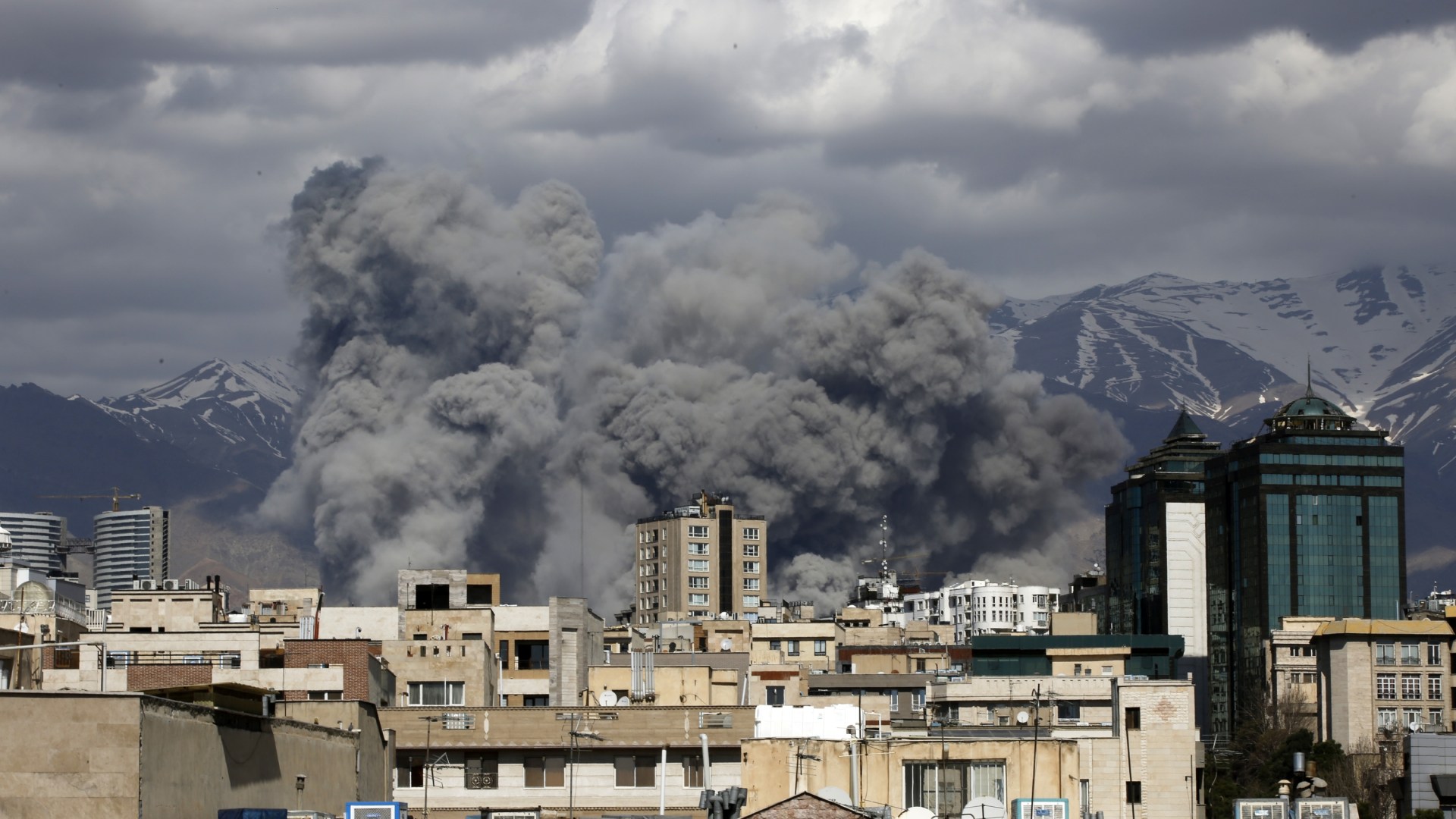
Smoke rises in Tehran after Israeli airstrikes hit Iranian capital.

Smoke rises in Tehran after Israeli airstrikes hit Iranian capital.

Christianity Today March 1, 2026
Fatemeh Bahrami / Anadolu via Getty Images

The United States and Israel launched a major coordinated campaign against Iran Saturday, killing Iranian supreme leader Ayatollah Ali Khamenei and striking more than a thousand targets across the country, according to the US military.

Since then, diaspora Iranian Christian ministries have struggled to connect with the church in Iran. Mansour Borji, director of the London-based Iranian religious freedom advocacy organization Article 18, has received only a few messages from Christians in the country due to the near-total internet blackout.

Most of the messages that did get through celebrated the news of the attacks and the “anticipation of an end to the tyranny,” Borji said. Other messages expressed concerned about the days ahead. “Some fear the United States may try to reach a deal and extend the life of a ‘wounded wolf,’” he said.

Meanwhile, Hormoz Shariat, founder of Iran Alive Ministries, struggled to get Christian programming into the country. Since Thursday, two days before the war began, Iranian authorities have blocked satellite television channels and restricted internet access. Shariat noted that his ministry had recently seen a surge of Iranians coming to faith in Christ.

“They do not want people to be influenced, informed, and led by outside influencers,” Shariat said.

He is concerned the communication blackout might isolate Iranians in their homes and prevent them from uniting because they have no way to connect or obtain news updates. It’s part of the government’s plan to “feed them lies and control them with fear, confusion, and isolation,” he said.

Following the US-Israel joint attack, Iran retaliated with drones and waves of ballistic missiles directed at Israel and US military bases in the region.

Iran fired at nearby Arab countries as well, and debris from missile intercepts rained down in countries including Qatar, Jordan, Kuwait, Saudi Arabia, and the United Arab Emirates, where a hotel caught fire in Dubai’s Palm Jumeirah district. Seven countries across the Middle East, including Israel, closed their airspace.

Three US service members were killed in the operation, according to US Central Command. Iran’s state broadcaster reported 201 dead, citing the Iranian Red Crescent Society. The figure could not be independently verified.

President Donald Trump urged Iranians to seek shelter and later rise up to take over their government, describing this moment as likely their “only chance for generations.” Roughly 14 hours after the operation began, Trump announced the death of Khamenei, who was 86 and had ruled since 1989.

Many Iranians—both in the country and overseas—celebrated. In London, Jews and Iranians in the diaspora celebrated together.

“Khamenei, one of the most evil people in History, is dead,” Trump posted on Truth Social. Israeli and US intelligence agencies identified a rare opportunity to attack senior political and military leaders gathering for three meetings and launched a surprise daylight attack, according to The Wall Street Journal. Israeli prime minister Benjamin Netanyahu said dozens of senior Iranians officials died in the strikes.

Days after Tehran massacred tens of thousands of protesters on January 8–9, Trump posted on social media that help was on its way. For weeks afterward, Iranians watched the buildup of US military assets in the region, wondering if Trump would strike the Islamic regime in Tehran.

After negotiations between Washington and Tehran failed to produce a nuclear deal Friday, the United States and Israel launched their assault.

Trump cited a litany of terror operations committed by the regime as justification, including the 1979 American hostage crisis, the 1983 US Marine barracks bombing in Beirut, attacks on US forces and vessels in the Middle East, Iran’s nuclear weapons program, and the funding of terrorist proxy groups, including Hamas.

Democrats and a few Republicans, including Rep. Thomas Massie of Kentucky, opposed the strikes because Trump acted without the approval of Congress and a plan for what comes next. Many fear a protracted conflict like the US involvement in Iraq. Next week, Congress plans to vote on measures to rein in Trump’s power to wage war against Iran, seen as a referendum on the conflict.

“Congressional debate and authorization is important to define the scope and objectives of the war for our military,” Massie said. “We owe this to our soldiers.”

After the strike, many Iranians gained a newfound hope. “Those being treated secretly at home for bullet wounds they received during protests are hopeful that their ordeal may be over soon,” said Borji. Many injured protesters had been afraid to seek medical help at hospitals.

According to multiple Christian ministry leaders, Iranians—including many Christians—have been advocating for a regime change and calling for a targeted strike on the Islamic government. Calls for the return of the former shah’s son, Reza Pahlavi, have grown.

Meanwhile in Israel, Elisha Lazarus—a Messianic Jew and reservist in the Israel Defense Forces (IDF)—was off-duty and checking on his parents when the war began.

Like millions of Israelis, Lazarus and his family moved in and out of their bomb shelter multiple times over the weekend. An Iranian ballistic missile evaded Israel’s defense system on Sunday, striking a synagogue and nearby shelter, killing at least nine people.

Khamenei had repeatedly threatened to destroy Israel. “It’s so easy to just let fear come in and let it take you over, but as a soldier who believes in Yeshua, I’m out here, and I have peace, even in this uncertainty,” said Lazarus, who serves in Israel’s Iron Dome defense unit.

Lazarus returns to his base on Thursday and anticipates long days and nights ahead. The military call-ups, he said, are often hard on mothers caring for young children. Lazarus has a 7-year-old daughter, and his commander’s wife is pregnant with her family’s fourth child. Some of the religious soldiers he serves alongside have as many as seven children. “I think the wives carry this country the most,” Lazarus said.

He praised Israel’s defense systems but said his ultimate confidence lies elsewhere. “I hold on to Psalm 9—God is my refuge and my fortress—and I stand on that promise as I’m sure millions have been standing on that promise for centuries,” he said.

David Zadok, pastor of Grace and Truth Congregation in Kanot, Israel, said he moved his Saturday-morning worship service online. After opening with Psalm 91, he cut his sermon short due to incoming rockets that forced him and his congregants to hurry to bomb shelters. Later, he drove his son back to his military base as part of a massive reserve mobilization.

“The three countries that I have loved most and lived most of my life [in] are in a war with each other,” said the pastor, who lived in Iran with his aunt and uncle from the ages of 3 to 16. Zadok’s relatives, fearing his safety as an Israeli Jew, sent him to California several months before revolutionaries toppled Iran’s secular monarch and established an Islamic republic in 1979.

Zadok completed high school in the United States and attended San Diego State University, where he became a Christian through the campus ministry The Navigators. After graduation, he moved to Israel for his mandatory military service.

Zadok served in the IDF for nearly two decades. “In most countries, there are two or four seasons,” he said. “In Israel, we have three: winter, summer, and war.”

He prays for regime change and increased freedom for the people of Iran but feels some reservation about what that could mean for the country’s growing Christian church—which numbers about 1 million people, according to some estimates. “History teaches us that when prosperity and too much freedom comes, people have a tendency to get away from the church, from the faith, and from God,” Zadok said.

Tymahz Toumadje, policy analyst for the National Union for Democracy in Iran, told CT that Iranian Christians have long suffered under the Islamic republic. A December report by his organization said Iran’s Ministry of Intelligence labels Christian converts as “Zionist missionaries” and claims to have arrested 53 converts after the June war on trumped-up charges of accumulating weapons.

“Even as Iran’s underground church is widely regarded as one of the fastest-growing Christian movements in the world, hundreds of thousands have been forced to live in secret, fearing persecution while praying for the day they can openly and freely live out their faith,” Toumadje said.

As strikes weaken the regime in Tehran, he believes a free Iran will “pave the way for an even greater blossoming of Christianity in the country than we’ve seen in recent years.”

In the meantime, Shariat asked the global church to pray. “Please pray that fear and confusion will not control the hearts and the minds of the Iranian Christians in Iran,” he said, “that they will be led by God’s love and empowered by the Holy Spirit to boldly share the gospel and lead tens of thousands of souls to Christ.”

Ideas

Iran After the Ayatollah

Pray that the Iranian people will have real hope of a peaceful future without systemic repression and fear.

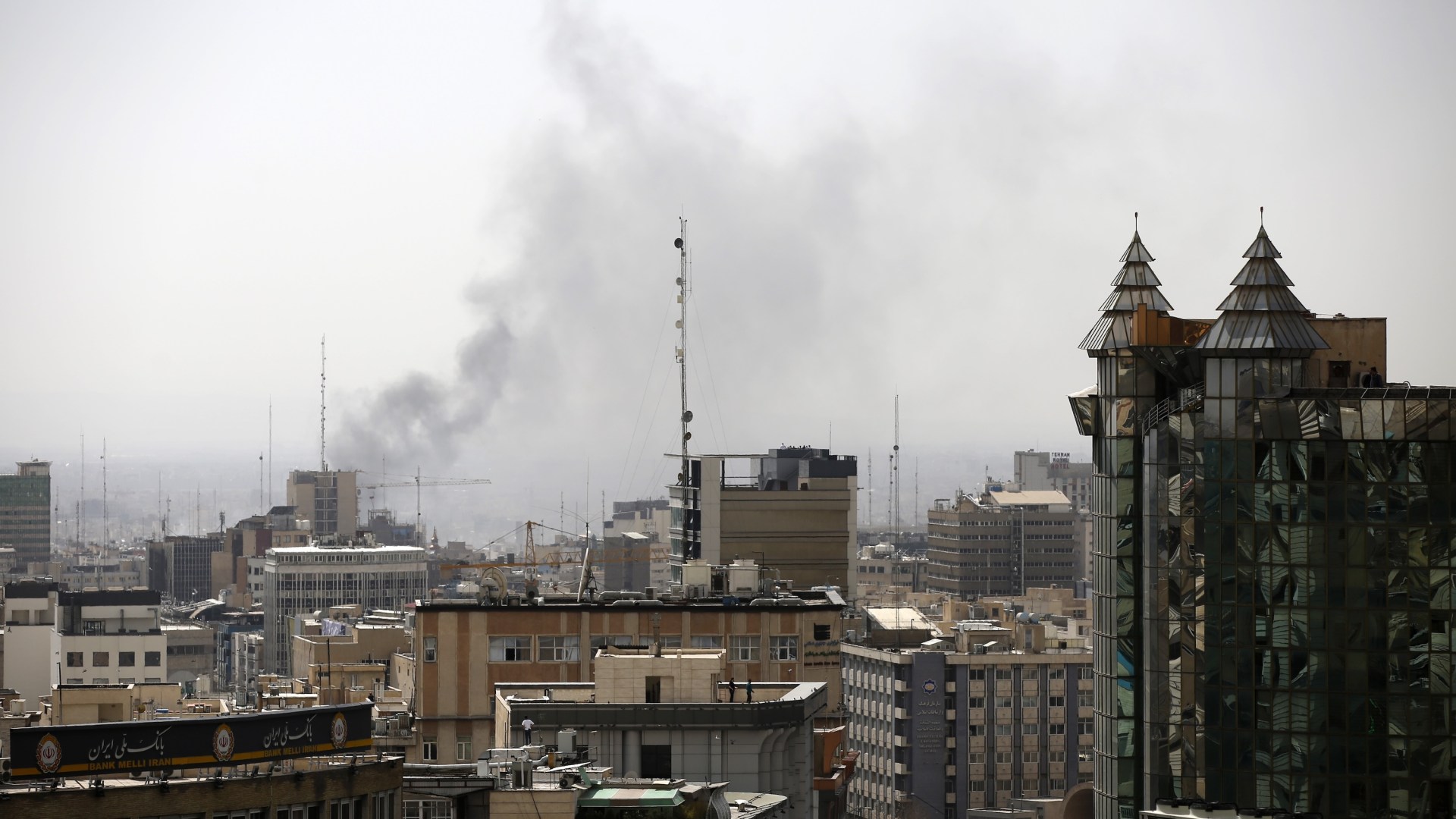
Smoke rises over Tehran after US and Israeli airstrikes on February 28, 2026.

Smoke rises over Tehran after US and Israeli airstrikes on February 28, 2026.

Christianity Today February 28, 2026
Fatemeh Bahrami / Anadolu via Getty Images

How should American Christians think about Iran, which US and Israeli forces are now attacking with the stated aim of overthrowing its Islamist regime? 

Saturday night, President Donald Trump announced that Iranian supreme leader Ayatollah Khamenei had been killed in a strike, and Iranian state media soon confirmed it. And since late December, Iran’s dictatorship has reportedly killed thousands of anti-government protesters, which has been typical of its repressive theocratic rule across 47 years.

Historically known as Persia, Iran is a rare nation to have endured since Bible times. Straddling the crossroads of the world, it sits on the Persian Gulf, with Russia to the north, Pakistan and Afghanistan to the east, Iraq and Turkey to the west, and the wealthy oil sheikhdoms to the south.

Americans of a certain age will recall Iran’s 1979 revolution, in which Islamist followers of Ayatollah Ruhollah Khomeini overthrew the pro-US monarchy, which the CIA had helped install, and established a murderous theocratic dictatorship led by mullahs. Since then, Tehran’s reigning ideology has defined itself against the United States and Israel. Its first self-created crisis was taking 52 American diplomats hostage for over a year, helping to doom President Jimmy Carter’s reelection in the process.

In the subsequent 47 years, Iran has been a continuous thorn in the flesh for every American president. The Iran-Contra affair—in which weapons were covertly sold to Iran in exchange for supposed help in freeing American hostages held in Lebanon by Iran’s allies—proved catastrophic for the Reagan administration. Every subsequent American leader has contended with Iranian hostility and support for militant proxies in Iraq, Syria, Lebanon, Yemen, and Gaza. 

American presidents have also consistently held that Tehran’s sinister ruling ideology—which demands the destruction of Israel and is weaponized by religious fanaticism—makes the prospect of Iranian nuclear weapons unacceptable. The Obama administration negotiated limits on Iran nuclear enrichment in exchange for loosened sanctions. The first Trump administration withdrew from that agreement, ending the concord in favor of renewed economic pressure. Iran’s nuclear program expanded uranium enrichment after US withdrawal from the deal, despite ongoing Israeli covert operations against many of its scientists. 

In June of last year, US B-2 bombers hit some Iranian nuclear facilities. Those strikes weakened but did not finish Iran’s regime, which was already reeling from defeats of its allies: Hamas in Gaza, Hezbollah in Lebanon, and the Assad regime in Syria. Another Iranian ally, Russia, has been preoccupied with war against Ukraine. 

The current US military strikes seem to be markedly more ambitious, presumably again targeting Iran’s nuclear and ballistic missile developments but also seeking to decapitate the regime’s leadership, beginning with Khamenei.

US bombing is expected to continue, likely for some time. Iran “has been, in only one day, very much destroyed and, even, obliterated,” Trump posted. “The heavy and pinpoint bombing, however, will continue, uninterrupted throughout the week or, as long as necessary to achieve our objective of PEACE THROUGHOUT THE MIDDLE EAST AND, INDEED, THE WORLD!”

Nearly all Americans will rejoice if the ayatollah’s regime falls—and rightly so. Almost any alternative government will be less oppressive. This government has retained complete power across nearly five decades through murder, torture, incarceration, corruption, and suppression of public conversation. The recent mass protests evince the regime’s unpopularity among Iranians too, not only for its tyranny but also due to a stagnant economy and adversarial relations with much of the world.

The shine has long since worn off of the theocratic revolution of 1979, in which millions of youthful demonstrators rejected the autocratic but comparatively liberal, secular, Western-aligned shah. The imposition of theocratic rule, though first popular, has created a collapse in religious belief in Iran, as Islam is conflated with the nation’s diabolical, corrupt, and inept rulers. Street protesters—and, no doubt, many other Iranians—have hoped for help from America to overthrow their government. 

Now, it seems, they have that help. Yet even with Khamenei’s death confirmed and the possible killings of other key Iranian leaders, it’s unclear what the aftermath will be: Another dictatorship? Some form of democracy? A power vacuum in which new and insidious groups emerge? Or long-term American involvement like in Afghanistan or Iraq?

Reza Pahlavi, the US-based crown prince, son of the late shah, has emerged as the most prominent voice of Iranian protest and swiftly celebrated reports of Khamenei’s demise. Could he lead a constitutional monarchy? Or might the Iranian military or remains of its Islamic Revolutionary Guard Corps seize control?

Any successor regime in Iran, even if dictatorial, would likely be less hostile to America, Israel, and the West. Most Arab states would welcome the change too. Both Russia and China would lose an ally. And, most importantly, the Iranian people would have some real hope of a future without systemic repression and fear.

Here are spiritual and political lessons from Iran. Much if not most of Iran rejected the shah, despite unprecedented prosperity and relative freedom, because his banal secularism did not offer the spiritual purpose and drama of Islamist rule. Iran’s mullahs delivered old-time religion and plenty of excitement—but also murdered thousands, plundered the national treasury, and plunged Iran into decades of futile conflict with its neighbors and much of the world. Theocratic rule discredited religion, ironically creating a more socially secular Iran.

As American Christians, we must pray that Iran is delivered from conflict and oppression. May its people again prosper and live in peace, without fear. We can also learn from Iran’s trials and self-inflicted wounds. We can be grateful for what we have—a stable, constitutional government, however flawed—and decline to chase utopian dreams of a perfected society that ignores human nature and delivers only misery, demonization, and war.

We can also pray that the US and Israeli strikes will, like the 1999 NATO air strikes that led to the overthrow of dictator Slobodan Milošević, enact the downfall of Iran’s ruling mullahs without prolonged war or wider chaos. And afterward, Americans must have a national conversation about presidential war powers and the role of congressional authorization—or at least serious consultation, which we have not seen from the Trump administration in the run-up to these strikes.

Finally, the theocracy in Tehran reminds us that a brutal regime governed by supposed religious principles will corrupt and discredit religion. On this side of the eschaton, we Christians should pray for peace, healthy compromise, mutual forbearance, and the free space to practice and share our faith, amid the possibility of prosperity for all. Let’s pray that Iran and America will soon be friends again.

Mark Tooley is president of the Institute on Religion and Democracy and editor of its foreign policy and national security journal, Providence.

News

How Mexican Cartel Violence Disrupted a Guadalajara Church

Christians call for peace and prayer after the killing of drug kingpin El Mencho led to violence across the country.

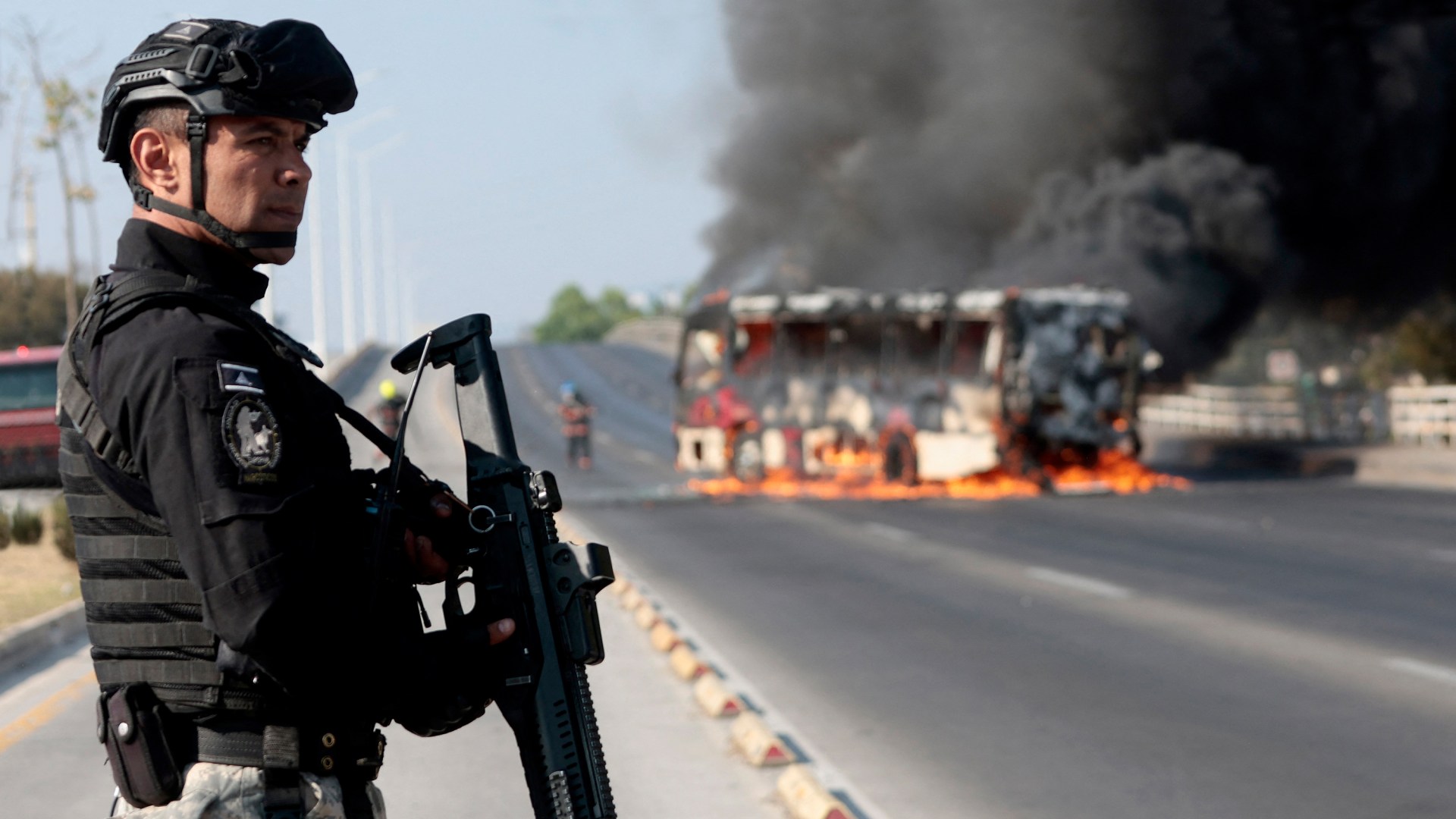
A member of the Prosecutor's Office stands guard near a burning bus after it was set on fire by organized crime groups in response to an operation to arrest a high-priority security target in Mexico.

A member of the Prosecutor's Office stands guard near a burning bus after it was set on fire by organized crime groups in Mexico.

Christianity Today February 27, 2026
Ulises Ruiz / Getty

Before the Sunday-morning service on February 22, pastor Constantino Varas sensed something was wrong.

Several members of his church, Iglesia Bautista Gracia & Amor in Guadalajara, Mexico, sent text messages reporting problems getting to the building. These were not the expected disruptions caused by that morning’s half marathon but rather narcobloqueos, or blockades consisting of burning cars, trucks, and buses set on fire by Mexican drug cartels.

“I told them to try to go back home, stay safe, and pray,” Varas said. By the pastor’s count, at least 40 people—nearly half the congregation—couldn’t make it to church that morning due to the roadblocks. Although this type of disturbance is not uncommon—criminal cartels have used narcobloqueos for years as a strategy to demonstrate their local power and as a response to police operations—the extent of the blockades on Sunday was exceptional.

Hours earlier, an operation involving the Mexican Air Force and special forces killed Nemesio “El Mencho” Oseguera Cervantes, leader of the Cártel Jalisco Nueva Generación (CJNG) in Tapalpa, about 80 miles southwest of Guadalajara. Security forces also killed six other members of the criminal organization, according to a statement from Mexico’s defense secretary. The CJNG is one of the most powerful crime organization in the country, with more than 15,000 members. Last year, the US State Department officially designated it a terrorist organization.

The cartel’s response began just hours later, with narcobloqueos and confrontations with authorities across 20 of Mexico’s 31 states. Armed cartel members defended their fiery blockades and clashed with police and armed forces who were trying to clear the roads.

By Monday, authorities acknowledged that at least 25 members of the National Guard and 30 operatives from criminal groups had been killed. As the capital city of the Jalisco state, birthplace of the CJNG, Guadalajara was at the epicenter of the violence.

Although only 50 church members occupied the padded wooden chairs of Gracia & Amor church on Sunday, the 10 a.m. service still began on time. Half an hour in, as the worship band played “Confiando Plenamente en Dios” (Trusting Fully in God), people heard gunshots outside.

Varas made a series of urgent decisions. Church members locked the doors to the church to prevent any armed assailants from entering. Staff called on Sunday school teachers to calm the children. The social media coordinator sent out a prayer request for the city on the church’s Facebook page.

When Varas stepped up to the microphone for the sermon a little later, he first asked the congregation to take out their phones and send messages to family members to let them know everyone was safe. Before preaching his prepared sermon on 1 Thessalonians 2:13–19, he led the church in prayer for the population of Guadalajara; for the governor of Jalisco, Pablo Lemus; and for Mexican president Claudia Sheinbaum.

After the service, the congregation decided to remain in the church for another hour, waiting for news about what was happening outside. The worship band played again, and people took turns praying. At the end, they left in groups. Each family that departed the church committed to informing the others about the route they had taken and the street conditions.

“When I left, there was no one on the streets. Everything was deserted,” Varas said. Earlier that morning, while they were in church, the state government had issued a code red alert, equivalent to a curfew.

The curfew was lifted later that day. Yet schools remained closed for part of the week, and some stores stayed shut. “The city came to a standstill unlike anything we saw even during the pandemic,” Varas said. “There is an apparent calm, waiting for trouble.”

Mexican Christians often face violence caused by drug trafficking. Street evangelists and pastors are aware that sentinels working for local drug dealers frequently follow their steps. Young people in poor neighborhoods are targets of the cartels’ forced recruitment. It’s dangerous for everyone who lives in areas under the influence of cartels, but life can be particularly risky for those, like church leaders, whose role is to promote peace. The widespread presence of criminal groups has led Mexico to become the 30th most dangerous place to be a Christian, according to the World Watch List.

Yet even those who are always under pressure of gang violence noted that the scale of this week’s events was unprecedented. Christians from different denominations united in prayer for the country and sought to support those who suffered from the blockades and the clashes.

“All of this comes at a very high emotional cost,” said Israel Gonzalez, a psychologist and pastor of Iglesia Peña de Horeb in Monterrey. “Being under a gun’s sight, being in the middle of a road blocked by trucks on fire is terrible. All this and not knowing if there’s something better ahead is terrible. Our churches need to help those who don’t know Jesus to find hope in this landscape.”

In a statement published on social media, bishop Enrique Treviño Cruz of the Anglican Diocese of Cuernavaca urged Christians to seek peace. “Jesus never promised us that life in this world would be a bed of roses. We are exposed to moments of affliction and conflict, but the certainty that Jesus triumphed over all evil should fill us with hope to persevere in prayer but also in action,” he wrote. “I especially urge you to encourage one another to remain in fervent prayer with the firm hope of finding the loving response of our Lord.”

Another concern among churches is the spread of false information, which results in further tension and panic buying. Varas noted that on Monday, the city’s gas stations were empty, causing many to buy and stockpile fuel “out of fear of what the future might hold.”

The College of Bishops of the Methodist Church of Mexico called for peace and asked believers not to spread fake news.

“We exhort our churches to remain united, to avoid spreading fear and disinformation, and to be instruments of reconciliation in their surroundings, ‘endeavoring to keep the unity of the Spirit in the bond of peace’ (Ephesians 4:3),” the group said in a statement.

Varas called on believers to take as their own God’s promise to Jerusalem in Zephaniah 3:15–16: “The Lord has taken away your punishment, he has turned back your enemy. The Lord, the King of Israel, is with you; never again will you fear any harm. On that day they will say to Jerusalem, ‘Do not fear, Zion; do not let your hands hang limp.’”

“In this time of crisis, we hang on to God through prayer,” said Varas. “But I think this situation gives us an opportunity as Christians to transform prayer into a culture, not merely something to cling to during a crisis.”

Correction: An earlier version of this article misstated the level of government that issued the code red alert.

Ideas

ICE Is Devastating Some Latino Churches

One of America’s leading Hispanic Christians witnesses the devastating effect of immigration politics on church life.

An image of ICE agents and an image of an empty church.
Christianity Today February 27, 2026
Illustration by Christianity Today / Source Images: Getty

I recently visited multiple congregations across Minnesota, including River Valley Church. As I stood inside each church, what I witnessed was not anecdotal or exaggerated. It was empirical and deeply troubling. As national immigration-enforcement politics evolve, churchgoers across the Midwest are feeling the consequences far from the border.

One of the largest Latino churches in the state, which previously held four Sunday services, is down to one service at roughly 60 percent capacity. Approximately 75 to 80 percent of this church body has stopped attending services altogether. 

This is not a story about declining faith or spiritual apathy. It is a story about fear. The Latino church is hemorrhaging, and the cause is increasingly clear.

Pastors repeatedly told me the same story: Families staying home. Parents afraid to drive. Elderly members afraid to leave their neighborhoods. Small-business owners closing early. Mothers sending their children to church, unsure whether they themselves would be able to return home safely.

These are not criminals hiding in the shadows. They are congregants who have lived in the same communities for a decade, two decades, or more. They are hardworking, God-fearing, contributing members of society. They do not depend on government subsidies. They worship faithfully, raise families, and love this country.

Fear has replaced fellowship, and silence has replaced singing. Sadly, the church—especially the Latino church—is paying the cost.

I do not write this as an activist or partisan. I write as a pastor who has spent decades on the frontlines of the intersection of faith, immigration, and public policy, in the process advising George W. Bush, Barack Obama, and Donald Trump. Across administrations, parties, and ideologies, one truth has remained consistent: Immigration policy works best when it is guided by both moral clarity and strategic wisdom.

Border security and the rule of law matter. National sovereignty is critical. But broad, indiscriminate, and unfocused enforcement without clear prioritization is not only ineffective but also counterproductive.

Immigration and Customs Enforcement (ICE) should operate with clear targets and disciplined focus, pursuing those who pose real threats and leaving everyone else alone. A targeted, surgical approach would restore trust, protect communities, and avoid unnecessary collateral damage.

When enforcement lacks discernment, everyone loses. Law enforcement loses community cooperation. Churches lose their congregations. Children lose stability. And the nation loses moral credibility.

Faith communities—especially immigrant churches—have historically been among the strongest allies of public safety. Churches teach responsibility, respect for authority, family stability, and civic engagement. When these institutions are destabilized, the social fabric weakens.

This is not theoretical. I saw it with my own eyes: empty sanctuaries, pastors preaching to half-filled rooms, congregations once marked by joy now marked by anxiety.

In recent months, I have argued alongside faith leaders and policy experts that America must resist the temptation to treat all undocumented immigrants as if they are criminals. Scripture does not permit such moral shortcuts. We must remember justice requires discernment, mercy requires wisdom, and order requires precision.

Individuals who have been here for decades, put down roots, raised children, built businesses, and contributed to the common good should not be treated the same as those committing crimes. Conflating the two undermines both justice and public safety.

This is why bipartisan solutions deserve serious consideration. One such proposal is the Dignity Act. If passed, it would strengthen border security, mandate verification of work authorization, hold employers accountable, and provide a structured and earned pathway for long-term undocumented immigrants who meet strict criteria.

It is not amnesty. It is accountability with compassion, order with humanity, and law with dignity. These pairings are important. 

Under such a framework, criminals are swiftly removed, the border is decisively secured, and long-term residents are given the opportunity to come out of the shadows, pay restitution, work legally, and contribute fully to the nation they already call home.

This approach reflects a biblical ethic that values both truth and grace. Scripture consistently upholds the rule of law while commanding care for the sojourner. The two are not enemies; they are partners.

There is also a political reality we must acknowledge. Indiscriminate enforcement provokes backlash. History teaches us that overreach fuels reaction. And reaction often hands power back to ideologies that undermine public safety, weaken borders, and marginalize faith altogether.

No administration benefits from alienating one of the most faith-driven, family-oriented, and civically engaged communities in the nation.

There is still time to change course. 

The goal should not be fear-driven compliance but law-abiding cooperation. In place of mass anxiety, we must strive for measured justice. And instead of pushing for collective punishment, we should seek targeted accountability.

The Latino church is not asking for special treatment; it is asking for fair treatment. It is asking that the line between criminality and community be honored and that faith-filled families not become collateral damage in a debate too often stripped of nuance and humanity.

What I witnessed in Minnesota should concern every Christian and every policymaker.

Churches are more than buildings. They are anchors of hope, centers of service, and incubators of virtue. When they empty, the country loses something much deeper than attendance.

America can do better. We must do better.

We can secure the border and preserve dignity. We must enforce the law, protect families, and uphold justice while restoring trust.

The question is not whether immigration enforcement should exist. The question is whether we can be wise enough to distinguish between those who threaten our nation and those who strengthen it.

Right now, the Latino church is sending a clear and painful message.

We should listen.

Samuel Rodriguez is the lead pastor of New Season, a multisite nondenominational church based in California, and president of the National Hispanic Christian Leadership Conference, which represents millions of Christians worldwide. He has written 12 books and produced seven faith-based films.

addApple PodcastsDown ArrowDown ArrowDown Arrowarrow_left_altLeft ArrowLeft ArrowRight ArrowRight ArrowRight Arrowarrow_up_altUp ArrowUp ArrowAvailable at Amazoncaret-downCloseCloseellipseEmailEmailExpandExpandExternalExternalFacebookfacebook-squarefolderGiftGiftGooglegoogleGoogle KeephamburgerInstagraminstagram-squareLinkLinklinkedin-squareListenListenListenChristianity TodayCT Creative Studio Logologo_orgMegaphoneMenuMenupausePinterestPlayPlayPocketPodcastprintremoveRSSRSSSaveSavesaveSearchSearchsearchSpotifyStitcherTelegramTable of ContentsTable of Contentstwitter-squareWhatsAppXYouTubeYouTube