A Renewed Subscription and a Broadened Perspective

How one Texan lawyer found himself reading CT again and supporting the One Kingdom Campaign.

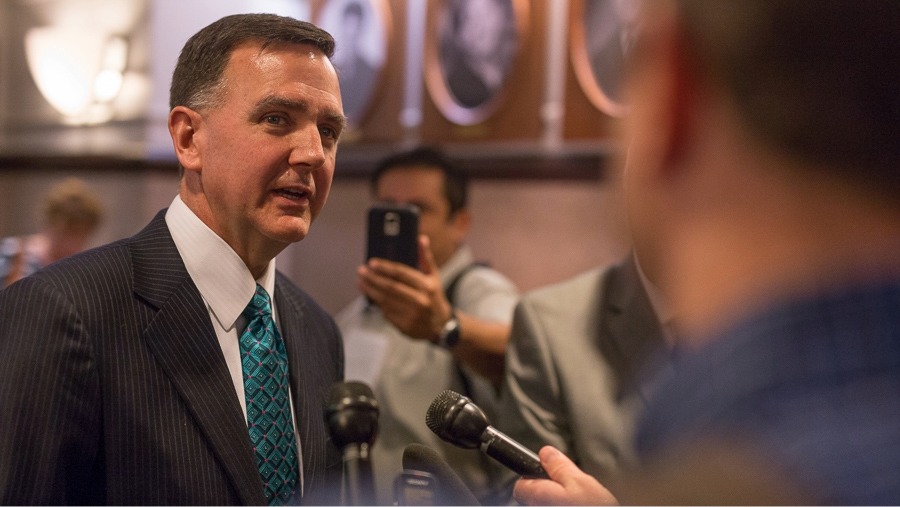
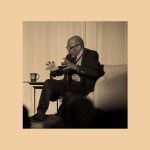
man being interviewed
Scott Ball

In 2017, Brent Perry received a message from a friend with a link to a Christianity Today article, an open door welcoming Brent back to CT after several years away. Brent had ended his CT subscription, as well as all other subscriptions, around 2010. Online news had become more accessible, and he wanted to focus his time on reading more books. Now he found himself reading CT again online weekly. 

“It was a thoughtful reflection on current events from a Christian perspective,” Brent recalled as he considered what had kept him reading CT after his friend’s message. “[It] would make some points or give me a perspective that I didn’t have.” The thoughtful reflection and different perspectives Brent found in CT became increasingly important to him as he—and the rest of the world—dealt with the COVID-19 pandemic and the deepening of political divides. 

Many of the difficulties Brent faced at the beginning of the pandemic seemed to be taking place within the walls of the church his family was attending at the time. “The church wasn’t really much of a refuge at that point,” he said as he described helping a friend in a difficult position while the rest of his church seemed to complain and bicker and spread misleading information about the situation. 

He found in CT examples of reasonable people dealing with similar things. “Having a place to read about what pastors were going through during that time and the stresses of it helped me understand what I was dealing with better,” he said. “To be outside of [my own church’s situation] a little bit was helpful. … CT became a reliable place to read about what’s happening in the Christian community.” 

Outside the church walls, Brent dealt with divisive litigation as a lawyer and watched his law partner suffer from COVID-19 early in 2021, for weeks in the hospital on the brink of death. Not only was CT a hub of information and reflection on current events, it was also an encouragement. “You need some positive input in your life, some way to get away and think,” Brent added after explaining that CT was a place he could center himself. 

Brent also found early in his consistent reading that CT was working to further God’s kingdom by sharing about the broader church. “The One Kingdom Campaign is really trying to enlighten us on what’s going on around the world and remind us that the Church is a lot bigger than what we perceive it,” he said. Because of this, Brent and his wife, Carole, decided to start supporting CT: “I thought I ought to contribute some to [CT] because [CT] was trying to further the kingdom.” 

“Most of what we experience with the kingdom is through our local church,” he said. Having seen such divisiveness in the church in the past, it was helpful for Brent to read CT and get “a bigger picture than just what you’re dealing with on a weekly basis.” He said, “[Reading CT] helps keep you focused on the kingdom instead of on the turmoil. This is a global faith, and I’ve let the American lens kind of create turmoil for me.”

Brent was encouraged to read about the Church globally and see examples of good things happening elsewhere, like the growth of the Church in Africa. It was also helpful for him to read about the global Church for the sake of things closer to home. 

Brent teaches a class at his church for parents of teenagers who represent different nationalities, many of whom are immigrants. In the group is a Hungarian chemistry professor, a couple from Mexico, a Russian–Ukrainian couple, an Ethiopian immigrant, an Indian couple, and a Nigerian nurse who’s a single mom to triplets. Because he works with this group, Brent intentionally reads broadly and pays attention to what’s happening in their home countries. “It’s really affecting them,” he said. “It’s affecting their families.” CT’s global reporting has helped Brent connect with the people in his church from different places. 

Similarly, CT’s reporting has aided Brent in his work. In reference to Andy Olsen’s “An American Deportation” and his own work with a Latino congregation on a governance dispute, Brent said, “Articles like this one give me a real sensitivity to the issues these churches face. [The Latino congregation] want me to speak calmly about their members’ fears of a government that many of them voted for less than two years ago.”

CT’s content has also helped Brent and the parents he teaches connect with people from a different generation: their own kids. As a parent, Brent has been encouraged by the work of Jonathan Haidt, author of The Anxious Generation. Haidt has been a guest a few times on CT’s podcast The Russell Moore Show, and Brent has shared what he’s learned with the parents in his class. “Everybody is just so concerned about ‘What are we going to do so we don’t screw up with our kids?’” he said. But Brent added that what he’s learned from Haidt “has given [him] the courage to encourage [the parents] to loosen their reins and trust God a little bit more with their kids.”

“I really appreciate the broad range of people that [Russell Moore] interviews … the breadth of voices that he brings to speak to the Christian community,” Brent shared when discussing The Russell Moore Show. In so much of CT’s content—across podcasts and the magazine—Brent has found a place that broadens his perspective through a variety of high-quality contributors and content. He said, “CT encourages us, all of us, to think and participate and give more broadly than we otherwise would.” 

“CT helps define [evangelicalism], but it also keeps us informed of all the currents within it and where God is acting around the world,” Brent said about CT’s role in the broader church. “Evangelical Christianity needs [a voice], and [CT] is becoming a more important voice by the work it’s doing now, at a time when it’s really needed.” 

Almost ten years into his renewed subscription, Brent’s go-to reading materials for flights now include CT’s print magazine: “If I’m going on a trip where I don’t want to work on the plane, I pick up the magazine and read it almost from cover to cover.”

Theology

Easter Is Not a Zombie Story

Columnist

Jesus joined us in death—and defeated it.

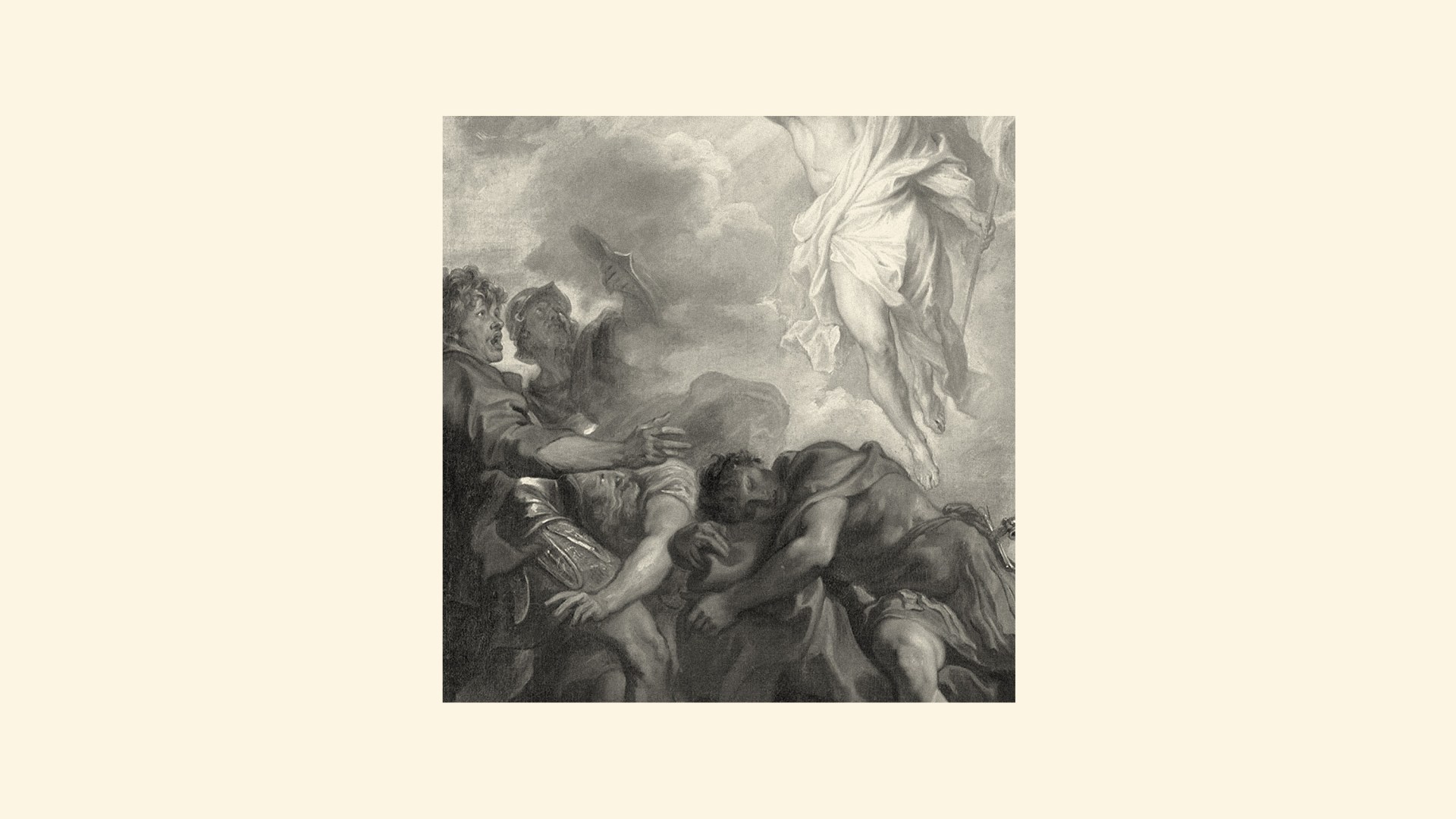
An image of Jesus coming out of the tomb.
Christianity Today April 1, 2026
Illustration by Christianity Today / Source Image: WikiMedia Commons

This piece was adapted from Russell Moore’s newsletter. Subscribe here.

Most unbelievers are civil or even curious when we talk together about the Christian faith, with less than a handful of exceptions. One of those was on a university campus when a man said, “The 21st century is not the time for a zombie story, and that’s what Easter is.” His jab was that, by believing a previously dead man is now alive, we worship a reanimated corpse. “Ah,” I said. “The 21st century is a zombie story, and that’s what Easter undoes.”

My questioner was not stupid. He was right, of course, that we expect dead things to stay dead. That was true in the first century too. And he was right that we have an uncanny dread when we hear stories of things that are supposed to be dead but don’t stay that way. That was also true in the first century.

Even before his death, Jesus had to reassure his own followers that he was not an apparition. When the disciples saw his figure walking on the sea, “they thought it was a ghost, and cried out, for they all saw him and were terrified” (Mark 6:49–50, ESV throughout). When he appeared after the Resurrection, the disciples were again “frightened and thought they saw a spirit,” to which Jesus replied, “See my hands and my feet, that it is I myself. Touch me, and see. For a spirit does not have flesh and bones as you see that I have” (Luke 24:37–39).

A zombie is kind of a ghost in reverse: A ghost is a soul disconnected from a body, and a zombie is a body disconnected from its soul. Both ideas are rooted in our fear of death and of the mysteries of what’s beyond. Ghost stories are usually about some sort of unresolved business—a grievance unavenged or a love unrequited. The concept of presence without embodiment is scary to us. Zombie stories are about corpses that are essentially just meat animated by appetite. There are bodies but no reason or imagination or love, just craving.

Zombies and ghosts are stories we tell about two sides of the same dilemma. Even those who do not recognize the authority of the Bible can see some truth in the ancient account that “the Lord God formed the man of dust from the ground and breathed into his nostrils the breath of life, and the man became a living creature” (Gen. 2:7). We intuitively know that we are made of the same matter that’s in the cosmos around us. At the same time, we can reflect on that reality with a consciousness that transcends our biological makeup.

As Walker Percy wrote a half century ago, we feel sundered from ourselves because we seem to be neither organisms reacting to an environment nor intelligences standing apart from it. So we try to resolve the tension by thinking we are either merely animals, spurred on by conditioning or instinct or repressed sexual urges, or angels, potential gods who can transcend human limits. Our attempt to be all one or the other leads us to be neither: History has shown repeatedly that the refusal to be a creature turns a person into a monster.

And so here we are, over a quarter of the way through the 21st century, and we seem to have the worst of both stories.

We move like ghosts in this digital world—connected but disembodied, present but lonely. Many of us do not know our friends or acquaintances. We merely haunt them, lurking over their Instagram photos or their posts on X.

At the same, we feel like zombies. Our biological appetites are intact, but they are tossed to and fro by algorithms that tap into our limbic responses. Pornography can give the sensation of sexuality without intimacy. Online gambling can give the rush of earning without working. Even shopping can feel like the serendipity of finding exactly what you’ve been wanting—until you realize companies have only made it seem that way.

And what is the end result? Many people feel dead inside, hollowed out. When that gets intolerable, we have ways to try to go all in and become wholly ghosts or zombies. We can get addicted to drugs that speed us up or numb us down. We can become occultists seeking spiritual escape from the world or materialists trying to merge with it. And none of it works. That’s because the forces that offer solutions are the same ones driving the problems.

Zombies, after all, are devoid of reason or reasonableness, imagination or imaginativeness. All that moves them is what they want. And what they want is to feed off the life of others, to bite and devour what they cannot experience. And they are easy to command. All one must do is to find out what they want and drive them toward more of it, making sure there’s never enough.

The Bible actually has a zombie story, or at least a preemptive attack on one. The Serpent of Genesis 3 appeals to both aspects of the human makeup: zombie and ghost. We can act like animals, driven by appetite: “The woman saw that the tree was good for food, and that it was a delight to the eyes, and that the tree was to be desired to make one wise” (v. 6). We can act like gods, free from the created limits of morality (“Did God actually say?” v. 1) or mortality (“You will not surely die,” v. 4). The aftermath the account describes is one of disconnection—from each other, from God, from the world around us, even from our own bodies.
Fallen humanity was then driven from the garden. What most of us do not think about, though, is why:

Then the Lord God said, “Behold, the man has become like one of us in knowing good and evil. Now, lest he reach out his hand and take also of the tree of life and eat, and live forever”—therefore the Lord God sent him out from the garden of Eden to work the ground from which he was taken. He drove out the man, and at the east of the garden of Eden he placed the cherubim and a flaming sword that turned every way to guard the way to the tree of life. (vv. 22–24)

To leave a dying people with access to ongoing life would be leave them in a zombie existence that we can perhaps best describe as hell. Exile from the garden was judgment, yes, but it was also grace.

In the Gospels, the tomb of Jesus is described as being in a garden (John 20:15). Angelic beings are there, but the swordsmen—soldiers Pilate hired to guard the grave—fled the scene. Clothes are shed and folded in the crypt. Jesus approaches a weeping woman and calls her by name. And he tells her to “go to my brothers and say to them, ‘I am ascending to my Father and your Father, to my God and your God’” (v. 17).


In the resurrected Jesus, everything that was pulled apart now holds together—dust and breath, matter and spirit, heaven and earth, humans and God. The curse of death has ended. The covenant promises hold true. And Jesus’ message goes to the very ones who broke from him and fled at the arrest. He is “the firstborn from the dead” (Col. 1:18), whom we cannot follow now but will later.

And follow him where? As a pioneer, he is leading us into the very presence of God. All things are put back together there. And the Tree of Life is there (Rev. 22:2), unguarded and unharmed. It’s with a people who can eat of it, not as mere animals and not in limitless autonomy but as those who can say, “Behold, the dwelling place of God is with man. He will dwell with them, and they will be his people, and God himself will be with them as their God” (21:3).

Jesus is no ghost—and he is no zombie. He’s a living man standing in the presence of God, and his life flows backward to us. We feel the first twitches of life, just enough to make us want to join him where he is. He joined us in our human nature and reconnected it to God. He joined us in our curse and undid it. And he joined us in the sentence of death and reversed it. We hide in the bushes, trembling in shame, when we sense the presence of God. He steps forward and says, “Here am I, and the children God has given me” (Heb. 2:13, NIV).

Easter is no zombie story. It’s the end of one.

Russell Moore is editor at large and columnist at Christianity Today as well as host of the weekly podcast The Russell Moore Show from CT Media.

History

What $18 Would Get You

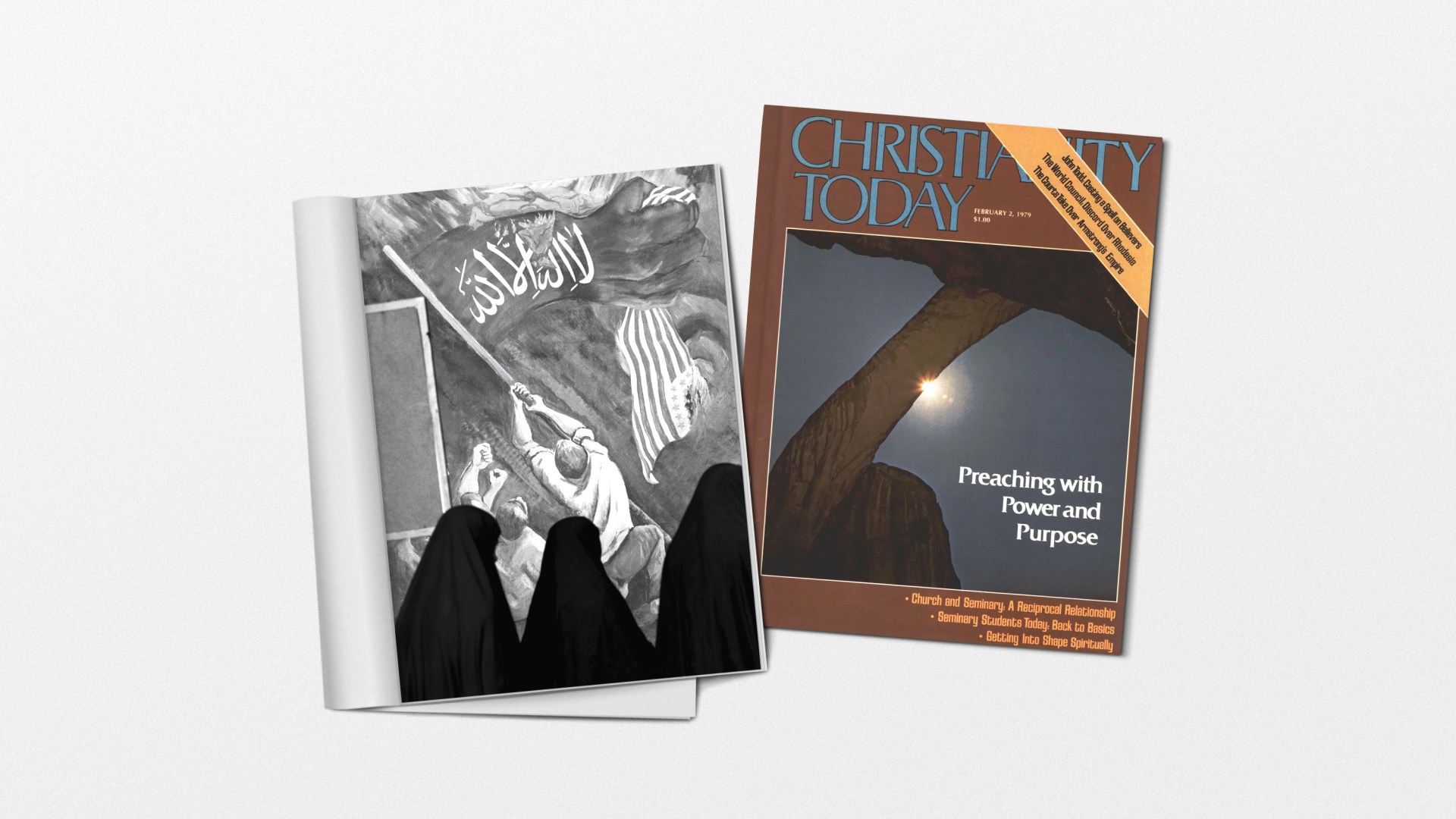
In 1979, CT investigated deceptive Christians, made the case for psychology, and watched Islam with concern.

An image of Iran and a CT magazine cover.
Christianity Today April 1, 2026
Illustration by Christianity Today / Source Images: Getty, CT Archives

CT made the tough decision to hike subscription prices in 1979. The cost of 22 issues per year increased from $15 to $18. 

We’ve all been hit by inflation—25 per cent since 1975. But in that same period, the printing and paper costs for putting out Christianity Today have increased even faster. Postage has gone up an incredible 120 per cent! That’s a per unit cost; it has nothing to do with our circulation growth.

But the worst is yet to come. The post office has decided to greatly increase nonprofit publications’ rates. Talk about planned inflation. In the next three years alone, postage (second class) for mailing the magazine will increase another 160 per cent and for promotional mailings (third class postage) 190 per cent! The figures are so large one feels like rubbing one’s eyes or tossing the papers skyward.

The magazine also put more resources into investigations of conservative Christians. CT reported on ongoing questions about televangelist Jim Bakker’s financial management of PTL (Praise the Lord) Network. CT dug deep into the twisty stories of traveling minister John Todd, who said before he was saved that he was a Grand Druid high priest in the Illuminati. CT found his account didn’t match the facts, and the facts suggested he couldn’t be trusted.

Todd pleaded guilty to contributing to the unruliness of a minor and served two months of a six-month sentence in a county institution.

Todd’s police record shows that a felony warrant was issued against him in New Mexico for passing a bad check. He was arrested in Columbus in 1968 for malicious destruction of property. He was treated for drug overdose at an army installation in Maryland in 1969. A warrant for his arrest awaits him in Ohio, as does a judgment against him for $22,000 in a defamation case. 

Todd claims many of the police are associated with Freemasonry, an Illuminati organization, and therefore should be considered enemies. … 

Todd was given psychiatric examinations twice while in the army. His records indicate evidence of an unstable home background and possible brain damage as a result of beatings. The second examination a few months later labeled his malady “emotional instability with pseudologica phantastica.” Todd finds it difficult to tell reality from fantasy, says a medical report.

Editor in chief Kenneth Kantzer said it was “embarrassing” to have to report on such things, but  necessary as part of  CT’s mission to serve the church.

Several Christian leaders who travel the nation … tell us that Todd is the most talked-about topic of these days. Letters continually land on editorial desks, asking in effect, “Is what John Todd is saying true?” 

No, it is not. …

We can learn too from the response to Todd. Some of us are altogether too gullible—too quick to believe negative reports about those with whom we disagree, and not quick enough to believe substantiated negative reports about people who tell us what we were already inclined to accept. Many unscrupulous individuals take advantage of gullible Christians who would not be duped by a Jim Jones, but then give credence to the claims of a John Todd.

The magazine also profiled several prominent Christian leaders who would go on to shape American evangelicalism in the 1980s, including Francis Schaeffer. CT introduced many readers to James Dobson, reporting his decision to prioritize time with his children.

Men should give their families first priority, said James Dobson last month at the Roman Catholic Religious Education Congress in Anaheim, California. “If the family is going to survive,” he challenged the males in his audience, “it will be because husbands and fathers again begin to assume the lead in the family.”

That being said, the noted pediatrician revealed that he would be taking his own advice. Dobson, who has been making public appearances for the last fifteen years, said this would be his last speaking engagement. He wanted to spend more time with his 10-year-old son and 13-year-old daughter.

On the staff of the University of Southern California School of Medicine and author of such child-rearing books as Dare to Discipline and The Strong-Willed Child, Dobson cited a Cornell University study showing that fathers of preschool children on the average spend 37.7 seconds per day in real contact with their youngsters. In contrast, the study indicated that children watch television approximately fifty-four hours per week.

CT encouraged readers to be open to Christian psychologists, such as Dobson, and listen to their professional advice, as long as Scripture informed it.

Just as truth about God’s created universe may come through natural sciences like medicine, or physics, or philosophical logic, or the insights of students in the humanities, so can truth come by way of psychology, psychiatry, and other social sciences. 

There is, of course, much within psychology that the Christian cannot accept. Some psychological conclusions about man’s nature, for example, some techniques used by professional counselors, and some proposals for altering our future are clearly contrary to Christian ethics and the teaching of Scripture. If we test our psychological conclusions empirically, logically, and against the inspired Word of God, however, we will discover that the psychological sciences contain much of practical value to the Christian seeking to serve Christ both inside and outside the church.

CT tackled marriage-and-family issues facing Christians in 1979, including dealing with singleness, divorce, and second marriages. A counselor wrote about pastoral care for divorced Christians struggling to follow biblical teachings about sex outside of marriage in “Sex and Singleness the Second Time Around.” 

Based on 203 participants (146 women and 57 men), only 9 percent of the men and 27 percent of the women were celibate, although many noted the intimacy had been with only one partner and/or in a “serious” relationship. It is worth noting that 67 percent of the men and 58 percent of the women reported a conflict between their faith and sexual experiences. …. 

The absence of clear, precise teaching frustrates most formerly married Christians. The large numbers of undisciplined Christians and the misuse of Scripture (by foes and advocates alike) fuels the debate between unbelieving realists and unrealistic believers.

If Paul did not flinch in addressing the behavior and attitudes toward sex, why are we so timid?

The magazine also reported a government study on the ethics of in vitro fertilization and research on “test tube babies.” 

Since 1975, the government has banned any new grants for in vitro fertilization research because of the ethical and moral questions involved. … Some observers fear Huxleyan possibilities: manipulation of the reproduction process that would include surrogate mothers for hire. Prolife groups condemn in vitro fertilization as abortion, since fertilized eggs are often discarded in the experimentation process that leads to a successful pregnancy.

With these arguments in mind, the board suggested safeguards for in vitro research: that in vitro fertilization be made available only to married couples who volunteer (scientists promote in vitro fertilization as a means of enabling women with blocked fallopian tubes to have children); that research be funded only if it provides important information that otherwise cannot be obtained; and that research be limited to human embryos in their first fourteen days of development after fertilization—the period before implantation. The ethics board noted that in light of limited government funds more pressing health matters might take precedence over in vitro fertilization research.

Evangelicals were worried about Islam in 1979. CT asked a professor of Islam and world religions to write about the “renaissance of the Muslim spirit.”

The subject is of considerable importance to both the world and the church. Economically, the world is virtually dependent on Arab oil. Politically, many of the world’s trouble spots are Muslim areas: Iran, the Middle East, and much of sub-Saharan Africa. Religiously, Muslims represent one of the great unreached peoples for Christian missions. Certainly, for the church of God, the world’s 700–800 million Muslims are one of the greatest challenges with which it must deal. Let us therefore try to catch a glimpse of the main developments of the fourteenth Islamic century, and their implications for Muslims today. 

The last hundred years of Islamic experience have been the most startling and decisive ones since the religion’s founding. … A powerful mix of internal and external stimuli have brought about this Muslim revival. Granting that the influence of these factors is complex, I would like to suggest three major ones: (1) the influence of modern education, (2) the recovery of economic and political power, and (3) the pressure of Muslim laity for social reform. …. 

It is the task of the church in the days ahead to achieve such a relation with Muslims and to communicate well his powerful message of love. 

An old Arab proverb says: “What comes from the lips reaches the lips; what comes from the heart reaches the heart.” I hope that Christians in the coming century will be able to convey, from their heart to the Muslim heart, God’s message for all people everywhere, in every condition.

The collapse of the government of Iran and success of a radical Muslim revolution grabbed headlines. CT checked in with Christian leaders and missionaries with long experience in the Persian Gulf

Syngman Rhee, missions official in the U.S. office of the United Presbyterian Church, said his denomination had no plans to evacuate its dozen U.S. personnel from Iran. Henry Turlington, a Southern Baptist who pastors an English-speaking church in Teheran, had sent word to his home office that he and his wife would stay. Other Southern Baptist couples, who were outside Iran during the worst of the violence early last month, were advised not to return. 

No Western missionaries had been physically harmed. (An American oil executive was killed in Ahwaz in late December, however.) For the most part, anti-American reaction surfaced in “Yankee Go Home” graffiti on city walls, telephone threats, and letters of warning. But it was enough to send packing 20,000 of 41,000 Americans living in Iran, with more waiting to depart.

Anti-American, rather than anti-Christian sentiments, were behind most problems facing U.S.-based missions agencies and U.S. missionaries. “Although there has been a feeling of anti-Americanism expressed in various ways,” said Rhee in a news release, “there have not been any specific feelings expressed against the church or the presence of missionaries.”

Like many international observers, CT did not know what to expect from the new regime.

The role of religion in the overthrow of the Shah and the perhaps temporary rise of Ruhollah Khomeini is of particular interest to Christians. Our feelings are mixed. On the one hand it is good to see that belief in the transcendent is still very influential in human affairs. On the other hand, ideologically-based governments (whether rooted in a traditional religion or in communist faith) have been notoriously hostile to evangelistic ministries and even to the proper range of shepherding ministries for believers. The fact is that the record of predominantly secular governments, such as most of those in the Western world, is notably better than that of governments that have a close link with some Christian or non-Christian faith. … 

Whether the successor to the Shah’s government in the long run proves less corrupt, less given to torture, less restrictive of certain personal and political liberties remains to be seen. As Christians concerned about freedom to evangelize and to shepherd the relatively few disciples of Christ in that overwhelming Muslim land, we certainly hope so.

At the end of the year, Iranians took 66 Americans hostage at the US embassy in Tehran. The crisis lasted 444 days and became a major issue in the 1980 presidential election.

CT failed to comment on President Jimmy Carter’s big address on what he called a national spiritual and moral crisis. (Critics called it the “malaise speech”). At the end of 1979, though, CT expressed general disappointment in his presidency

Candidate Jimmy Carter, who publicly identified himself as an evangelical, won the nation’s highest office. He was the first evangelical in this century to do so. Yet thus far, to some observers, Carter has failed to demonstrate any significant Christian influence on the federal administration, in spite of his noble-minded human rights campaign and unquestioned personal integrity. The disillusionment of many over the President’s performance has cast a shadow on evangelical hopes of influencing American life from the top down.

While evangelicalism was thus failing to win the leadership of America’s political institutions, despite its momentary appearance of success, America’s political machinery was beginning to make definite challenges to evangelicals and their religious institutions. Indeed, the new evangelical involvement in politics sometimes furnishes the pretext for an expanded governmental interference with religion and the churches. 

Theology

The Eternal Meaning of the Cup

Across the church, our Communion practices reveal a broken world and anticipate the one to come.

Still Life With Grapes by Edith White.

Still Life With Grapes by Edith White.

Christianity Today April 1, 2026
WikiMedia Commons / Edits by CT

Communion, also known as the Eucharist and the Lord’s Supper, is the most central Christian sacrament, yet it is celebrated quite differently in our churches. Setting aside theological debates about its meaning and the matter of frequency, we might examine the different beverages we consume: Some of our church traditions use wine, and others use grape juice (or a nonalcoholic wine).

Rather than seeking uniformity in practice, let’s more deeply reflect on this difference. If Communion is significant to the Sunday gathering, what is a good theological framework that accounts for the diversity in our common practice?

The presence or absence of wine in Communion does not simply reflect a church’s attitudes to drinking alcohol generally. Instead, I find it more helpful to think about this difference in terms of eschatology (or the “end times”). When Jesus instituted the Lord’s Supper, he did so by directly linking it to a time of feasting in the coming kingdom when he will drink wine anew (Matt. 26:29; Luke 22:15–16, 18). If Communion is a foretaste of that future messianic banquet, then it is like an appetizer before the main course arrives.

Communion, as a present experience of the future banquet, occurs in a context mired with sin, evil, and death. Although the coming feast will celebrate the end of those things, the Lord’s Supper is a practice that communicates the tension between the two ages—what theologians call “inaugurated eschatology,” or “the already and the not yet.” The messianic banquet is already experienced in the present, but the celebration is not yet in full swing.

In this sense, both wine and grape juice are important aspects of our common practice as Christians, because together, in their discrete ways, they are witnesses to the promised banquet to come. When some traditions use wine in Communion, they are participating in the foretaste of the wine stored away for us all when God restores all things (Isa. 25:6; Amos 9:13–14; Joel 3:18). To do this is to lean into the “already” of the banquet.

When other traditions use grape juice, by contrast, they are saving up their appetites. They are compelled by the “not yet” of the banquet as reflected in the enduring brokenness of our world. Things are not as they should be (and will be), and so the forces of corruption continue to drag us toward death by way of addiction, abuse, and alcoholism.

Through this lens, one of these Christian practices is not better than the other, since the kingdom is both here and not yet fully here. Indeed, both practices together can offer us a balanced perspective so that we don’t mistakenly err on one side or the other. In both practices, we can see elements of celebration and lament when we come to the table amid our broken world and in anticipation of the one to come.

A dual posture toward the kingdom’s presence and absence is even mirrored in the diets of Jesus and John the Baptist. The crowds perceived both to be approaching food and drink inappropriately. They thought John was demon-possessed because he didn’t eat and drink like Jesus, but they also thought Jesus overdid it and so called him a glutton and a drunkard (Matt. 11:18–19; Luke 7:33–35).

Yet Jesus doesn’t say that his way was better than John’s. Instead, he says, “Wisdom is proved right by her deeds” (Matt. 11:19). In other words, there is wisdom in both approaches, and what demonstrates the wisdom of their respective approaches, even though they’re not identical, is the results that come from them (the “deeds,” or “children” in Luke). Both can be legitimate positions to hold with respect to alcohol.

But the wisdom of abstinence and the wisdom of moderation are not an inherent given. Both can be folly, if folly results from their approach. In context, these two positions also suggest an attitude toward the future messianic kingdom. John the Baptist abstained because the kingdom was near; Jesus feasted because the kingdom was here. They demonstrate the already-and-not-yet tension.

Although John the Baptist is not divine, the diverging choices of John and Jesus suggest that we should expect and allow for a similar diversity of expression when it comes to wine consumption in the light of the kingdom’s simultaneous presence and absence. And so, why wouldn’t that also apply to the use of wine in the Christian ritual that calls for it?

Some might protest that we should all try to imitate the earliest Christian practice, but the problem is that just about every contemporary Communion cup contains something very different from the earliest ones that Christians passed around.

Neither of our Communion practices precisely replicates the earliest Christian practices, because “grape juice” could only be made once a year at harvest in late summer and it would ferment very quickly. Nor was ancient Communion wine like the fortified wines deployed today by traditions that practice a common cup, because distilling spirits hadn’t been developed yet. In other words, we must acknowledge that our Communion practices do not precisely replicate the past (for more on the historical development of wine, see Paul Lukacs, Inventing Wine; Patrick McGovern, Ancient Wine; Hugh Johnson, The Story of Wine).

Wine was the primary Communion practice until pasteurization was invented in the 19th century, but even so, some early Christians used water or refrained from a cup altogether.  

Andrew McGowan of Berkeley Divinity School at Yale University has written the best treatment of this phenomenon in his book Ascetic Eucharists. Most of the groups known for wineless Communions were deemed heretical on other theological grounds, but they share the impulse against using an intoxicant in Communion with many contemporary Christians. Presumably, if those early Christians had access to today’s grape juice, they may have been happy to make use of it in Communion like many churches do today.

As we more deeply consider the practices of the cup, we can look toward Christ’s return. The fact that we practice Communion diversely as the global church with respect to wine and grape juice can be seen as two sides of our witness to each other and our common witness to the world.

John Anthony Dunne (PhD, University of St Andrews) is associate professor of New Testament at Bethel Seminary (Saint Paul, MN) and the author of The Mountains Shall Drip Sweet Wine: A Biblical Theology of Alcohol.

News

Palestinian Christians Prepare for Easter amid War and Settler Violence

Many in the community have moved abroad. Those who stay are barred from visiting holy sites.

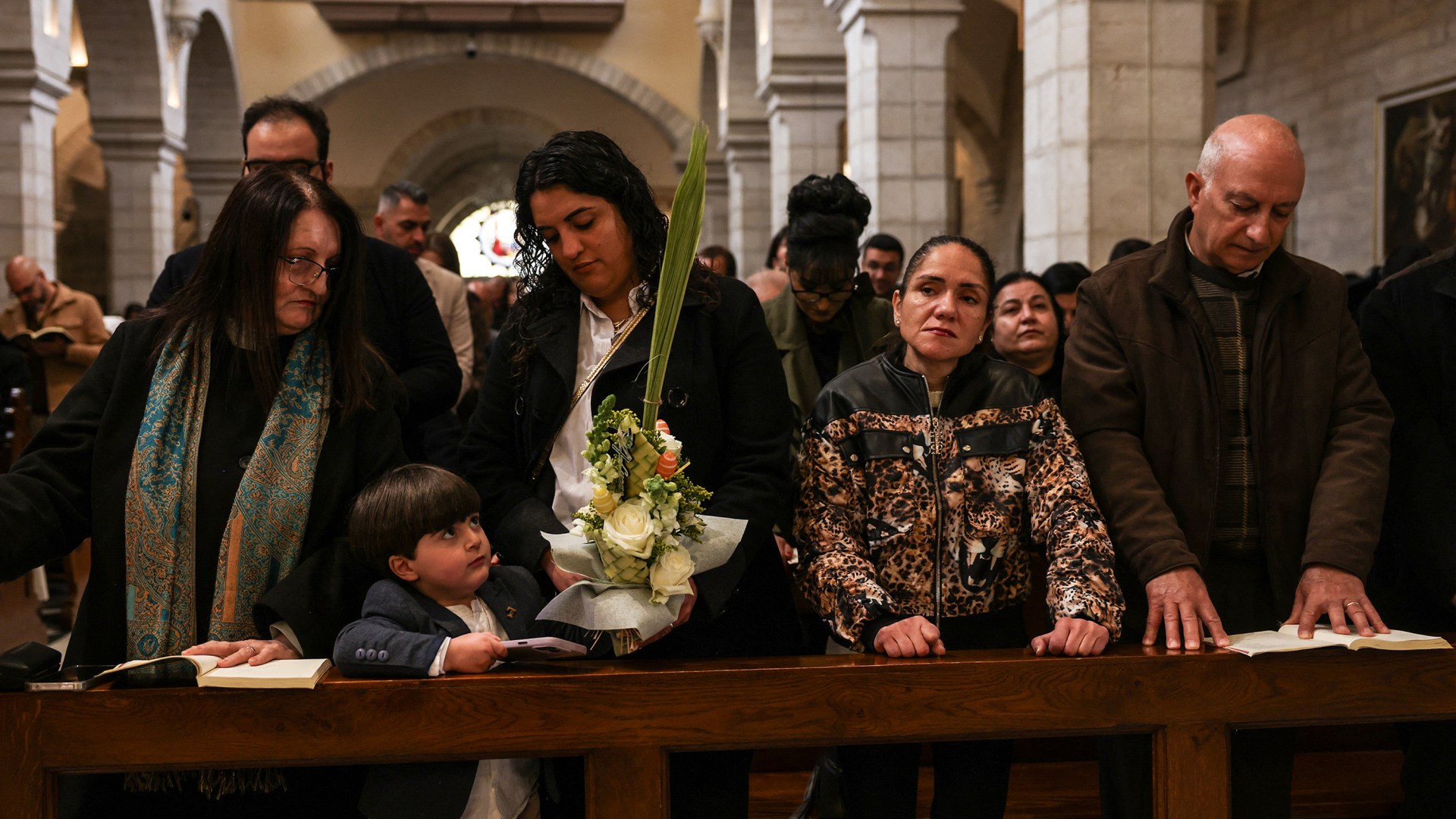
Christians attend Palm Sunday mass at the Catholic Church of Saint Catherine in the occupied West Bank city of Bethlehem on March 29, 2026.

Christians attend Palm Sunday mass at the Catholic Church of Saint Catherine in the occupied West Bank city of Bethlehem on March 29, 2026.

Christianity Today April 1, 2026
Hazem Bader / Contributor / Getty

Looking east on a clear day, Usama Nicola can see Amman, Jordan, from his balcony in Bethlehem. Since Israel and the US jointly attacked Iran on February 28, the father of three has been able to trace the white smoke of incoming Iranian missiles during the daytime. At night, barrages streak across the sky like menacing shooting stars. Every morning, Nicola finds that the decorative letters spelling out L-O-V-E lining a shelf on his balcony have shifted from the impact of missile interceptions.

By the war’s second week, Nicola had deleted the Israeli early warning app on his phone since he could hear the air raid sirens installed in Israeli settlements surrounding Bethlehem. During an incoming barrage, all he and his family can do is shelter in their home. Unlike many Israelis, most Palestinians in the West Bank do not have safe rooms in their homes, and the Palestinian Authority has not provided public shelters for citizens.  

“We are totally in the hands of God,” said Nicola, a Roman Catholic.

Now in its second month, the war has claimed at least 4,500 lives in more than a dozen countries and has sent global energy markets spiraling. President Donald Trump said that talks aimed at ending the conflict are progressing, though Iran denies any direct negotiations. Israel and the US continue to target military and nuclear sites in Iran, while Israelis and Palestinians shelter from an average of 10 Iranian missiles daily, a 90 percent reduction since the beginning of the war.  

Palestinian Christians living in the West Bank, Gaza, and East Jerusalem number fewer than 47,000 and make up just 1 percent of the population. As they prepare for Easter, they find themselves under immense pressure as they face war alongside tightened movement restrictions and continual cycles of settler violence.

At this time of year, Nicola usually leads locals and tourists on hiking tours in the desert east of Jerusalem and Bethlehem. He finds the quiet of the desert healing. Small wildflowers remind him that even in harsh conditions, life continues. Especially during Lent, he enjoys walking in this wilderness—the same one in which Christ was tempted for 40 days—to listen for the voice of God.

This year as the Bethlehem governorate’s 23,000 Christians anticipate Easter celebrations, Nicola cannot go to the desert to relieve stress. Since October 7, 2023, the Israeli government closed more of the desert to Palestinians, he says. New barriers and heavy fines deter them from entering previously accessible areas—though the land is technically part of the West Bank and still open to Israelis. Nicola says that Bethlehemites feel caged.

In addition to the Israeli-built security wall, checkpoints, and roadblocks, about 20 settlements and outposts built on the West Bank’s Area C confine Bethlehem’s residents. Bypass roads, which can only be used by Israelis, connect these communities. Nicola describes this system as a vast net thrown over the West Bank.

Israeli settlements in the West Bank and East Jerusalem house around 737,000 settlers, with 100,000 in the Bethlehem governorate alone. Though the Israeli government legally approves of the settlements, claiming they are necessary for Israel’s national security and are built on “legitimately acquired land,” international law considers them illegal. The UN describes them as built on expropriated land belonging to the future Palestinian state.

For many, life in the West Bank, which Israel occupied in 1967, has become unbearable. Nicola says that every day, he hears about another Palestinian preparing to leave. In the last two and a half years, he estimates that Bethlehem has lost 10 percent of its Christians. Hundreds of families with centuries of history in the Holy Land have emigrated, seeking freedom, better economic opportunities, and a future for their kids.

“I know, personally, leaving is better for me and for my children,” Nicola said. “But I decided to stay because I feel that I am connected to the town of my faith because of the history of my family in this place, because of my church, because of my deep roots. Yes, we lose freedom … but my faith makes me stronger. I need to stay human under all these pressures.”

The steady stream of Christians leaving the Palestinian territories is not new. Statistics show that Bethlehem’s population was more than 80 percent Christian in 1947. By 2017, due to emigration and much lower birthrates in Christian families than in their Muslim counterparts, it was around 10 percent.

Fares Abraham left Beit Sahour, a town east of Bethlehem, in 1998 to study at Liberty University. He committed his life to Christ at a Rick Warren conference, then worked as a contractor for the US government.

Three years later, his family followed him to the United States amid heavy fighting between the Israel Defense Forces and Palestinian armed groups during the Second Intifada. Many nights, his parents and siblings had slept on the floor to avoid the bullets whizzing through their windows. Hours after they left Beit Sahour—temporarily, they said, until things cooled down—Abraham’s uncle called his father to say their home had been shelled by an Israeli tank.

In 2013, Abraham founded Levant Ministries, an international organization that disciples young Arab Christians and mobilizes them to reach their communities with the transforming love of Jesus.

Levant Ministries works with young people in Bethlehem, many of whom feel trapped. “When they can’t find a good paying job, when they can’t find land to build a house on, when they can’t access roads, when they can’t travel freely—that creates a huge vacuum and it creates … a sense of desperation caused by the Israeli military occupation,” Abraham said.

Abraham, who now lives in Orlando, Florida, with his wife and three kids, describes Christian Palestinians as the salt of the earth and the life of Christ’s body in the Holy Land. He believes Christians are poised to speak life and embody biblical principles and values in a conflict-ridden region. Therefore he finds the diminishing Christian presence in Palestine alarming.

A 2020 survey by the Palestinian Center for Policy and Survey Research and the Philos Project found that 60 percent of Palestinian Christians left the region for economic reasons. In Bethlehem, more than half of the city’s Christians work in the tourism industry, which was crippled first by COVID-19 and then the Israel-Hamas war. After October 7, 2023, the Israeli government revoked work permits for nearly 100,000 West Bank Palestinians working in Israel and Israeli settlements. As of July 2025, only 11 percent of those permits had been renewed.

But Palestinians’ concerns are more than economic. More than 80 percent of those surveyed fear settler attacks, deprivation of their civil rights, and expulsion by Israelis from their homes and lands. About 70 percent are concerned about “the endless Israeli occupation.”

“If you want to bless Israel, then bless them with Jesus, and the way you bless them with Jesus is by strengthening the Christian presence,” Abraham said. “For me it’s counter-gospel, it’s anti-gospel, if we support policies that diminish the Christian presence.”

Buthina Khoury, a filmmaker and Greek Orthodox Christian living in Taybeh, describes how some of these policies manifest in her village. With a population of around 1,300, Taybeh, located north of Jerusalem in the Ramallah and Al-Bireh governorate, is considered the last completely Christian village in the West Bank.

As Khoury spoke with CT, an Iranian missile exploded overhead. The war with Iran does not frighten her, she says, especially after watching Palestinians die daily in Gaza during the Israel-Hamas conflict. For her, the real fear comes from radical settler attacks and from Israeli forces controlling movement in and out of Taybeh.

As in Bethlehem, IDF checkpoints and road closures make travel in and around Taybeh extremely difficult. Before her father’s death, Khoury regularly drove him 11 miles to Ramallah for kidney dialysis, frequently getting stuck on the roads for hours. Her nieces and nephews who attend Ramallah schools must leave home at 5:30 a.m. to arrive for classes at 8.

Radical settler violence has pummeled Taybeh as well. Khoury says that sometimes armed settlers raid the village at night, shooting windows and breaking into homes. They’ve set fire to cars and graffitied racist messages on walls. In the fall, settlers shot at Taybeh residents trying to harvest olives in their orchards. Early in the Iran war, they stole her cousin’s horse and pony, which she said were valued at close to $10,000.

On the night of March 21, settlers launched a coordinated attack on Palestinians in 20 locations across the West Bank after a Palestinian-owned truck hit an ATV and an 18-year-old settler in it died. In Taybeh, Khoury says that around 30 settlers occupied a factory at a quarry a few kilometers from her home. They raised an Israeli flag and expelled the owner, telling him he could move to Egypt or Jordan.

Settler violence has skyrocketed since October 7. In 2025, there were 867 recorded incidents of settler violence toward Palestinians, according to The Times of Israel. The IDF and Shin Bet, Israel’s security agency, believe that a group of around 300 radical settlers are responsible for most of the violence. Under far-right security minister Itamar Ben-Gvir, settlers are usually protected by the IDF or the Israeli police, and their crimes usually go unprosecuted.

Palestinians who try to defend themselves or their property against settlers are “shot at, killed, detained, injured, beaten,” Khoury said. Last month, Israeli settlers beat and sexually assaulted a 29-year-old Bedouin shepherd. They also attacked his children, relatives, and an American staying with the family, stealing their valuables and 400 sheep.

Khoury believes in living out Jesus’ commands to love her neighbor, love her enemy, and turn the other cheek. Yet she admits that the amount of violence she has witnessed in the last two and a half years makes her long for the injustice of occupation to be lifted.

“We cannot endure any more violence,” Khoury said. “We cannot endure any more humiliation. We cannot endure to be treated like animals, as they describe us. We cannot accept that anymore. We have paid a high price throughout the years.”

In the meantime, Khoury deals with stress by providing physical and emotional support to other Palestinians—Christian and Muslim—in Gaza and in northern West Bank cities like Jenin, Tulkarem, and Nablus, which have borne the brunt of IDF incursions in recent years.

“To be close to Christ, I have to be close to all those fellow Palestinians who lost their dear ones,” she said.

Traditionally, Khoury says that Taybeh’s Orthodox, Catholic, and Melkite Christians gather on Easter to pray in the ruins of St. George’s Church, built in the fifth century to commemorate Jesus’ visit to the town, then known as Ephraim. After a Lenten fast, Orthodox Christians wait to receive what they claim to be a miraculous holy fire from Jerusalem’s Church of the Holy Sepulchre.

Khoury has not been able to visit the traditional location of Jesus’ crucifixion, burial, and resurrection since 2019. She laments that she cannot get an Israeli permit to go to Jerusalem and pray in the church, though tourists visit with ease.

Nicola’s visit to the Holy Sepulchre on Easter weekend last year turned traumatic. Israel granted Nicola and his then-eighth-grade son Yazan permits to enter Jerusalem, but not his wife and two other children. When the two returned to Bethlehem that evening, Nicola said his return was recorded but his son’s was not. Consequently, authorities blacklisted Yazan, barring him from returning to Jerusalem for months. 

Nicola will not be able to worship at the Holy Sepulchre this year, though he considers visiting Jerusalem inextricably linked with Easter. After the war with Iran started, Israeli authorities closed the holy sites of Al-Aqsa Mosque, the Western Wall, and the Church of the Holy Sepulchre indefinitely.

On Palm Sunday, Israeli police prevented Cardinal Pierbattista Pizzaballa, head of the Catholic Church in the Holy Land, and Francesco Ielpo, the guardian of the Church of the Holy Sepulchre, from entering the church. In response to international uproar, the police and church leaders reached an agreement on Monday that will allow Holy Week services to be broadcast to Christians worldwide—though access to the church will be given only to “representatives of the Churches.”

With shrapnel falling in the Old City recently, Israel calls these restrictions a security precaution. At the same time, Palestinian Muslims and Christians fear these closures set a dangerous precedent of restricting access to holy sites.

“I feel that we Palestinian Christians are still on the Via Dolorosa, at the stations of the cross,” Nicola said. “But we know that in the end, there is an empty tomb, there is a resurrection.”

Books
Review

We Need More Than Generalities About Beauty and Justice

Makoto and Haejin Fujimura’s new book aims to help Christians think deeply about how we live but falls short on details.

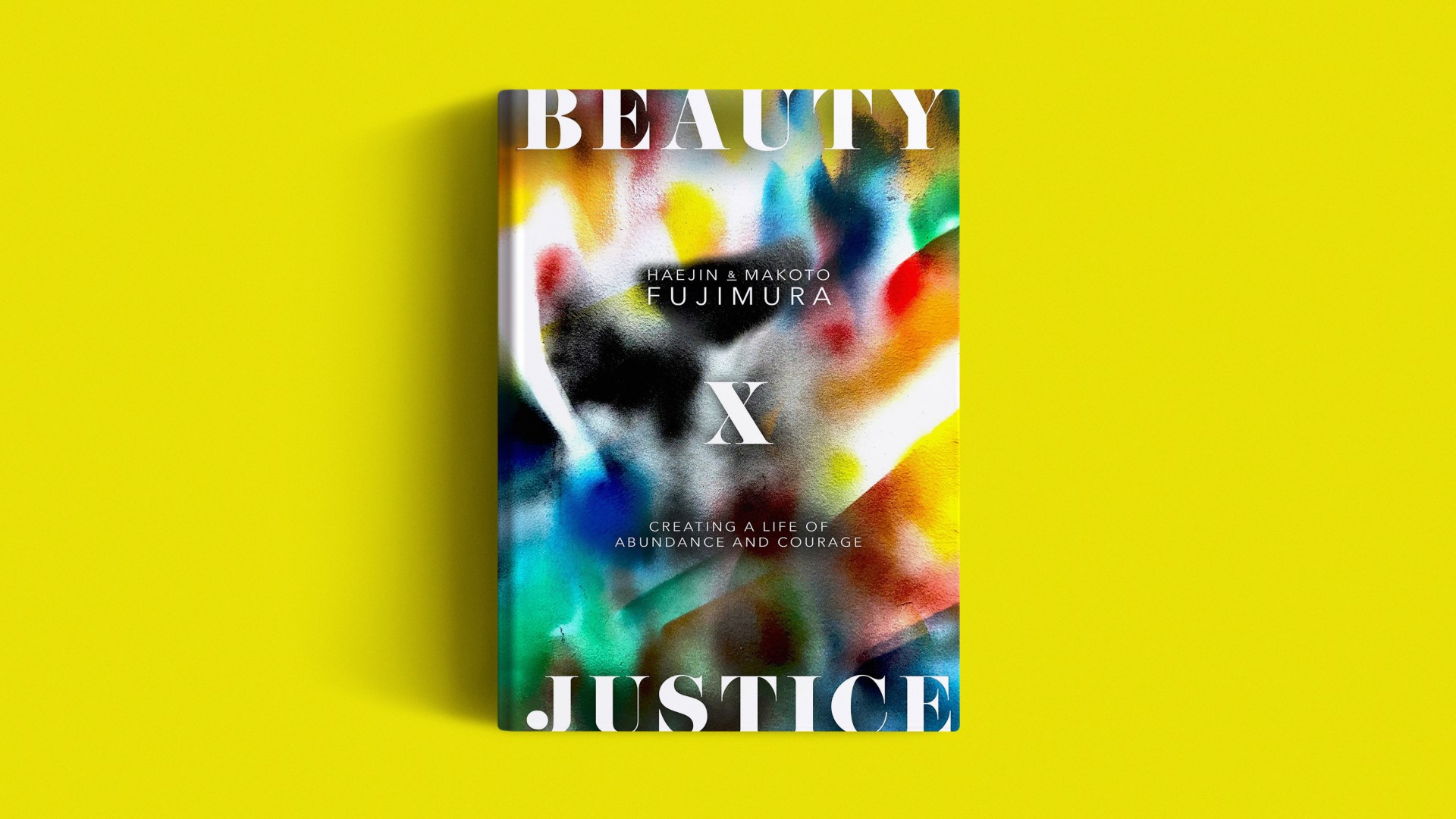
The book on a yellow background.
Christianity Today March 31, 2026
Illustration by Christianity Today / Source Images: Getty, Baker

Haejin and Makoto Fujimura’s coauthored book, Beauty and Justice: Creating a Life of Abundance and Courage, posits that “beauty and justice are two sides of the same coin of the gospel.”  Beauty by its nature will work toward justice, and justice is more than the absence of wrong: It is also beautiful. For readers who see beauty as less important than utility, or the work of justice as always exhausting or strident, the message that both are right responses of all who bear the image of God is welcome.

Beauty and Justice is the marriage of the authors’ vocations. Haejin, a lawyer and entrepreneur, shares stories of the humanitarian justice work her global nonprofit, Embers International, has executed in Indian brothel neighborhoods. Mako, a world-renowned artist, describes the intertwining of justice with his artistic process and the Fujimuras’ work with destitute children.

And the book is also personal. In the afterword, the Fujimuras include their wedding homily on Isaiah 61, given as a charge to them “to proclaim good news to the poor” and “to bestow on them a crown of beauty” (vv. 1, 3). Mako writes about the dissolution of his first marriage, the way he unexpectedly met Haejin in 2020, and their pandemic-era vows. They share glimpses of loss and pain—from Mako’s experiences at Ground Zero on 9/11 and his subsequent PTSD to Haejin rescuing trafficked children who live in despicable squalor. Yet these stories are often told from a distance.

As an observer, I get the sense that Haejin’s and Mako’s work and lives are better together than apart. But when reading a book on beauty and justice, I desire both an aha moment of realization and a story so well-crafted I can feel its beauty in both diction and syntax. While their painting and humanitarian work eminently show rather than tell, the telling in Beauty and Justice doesn’t quite deliver.

Perhaps the book falls short because, frankly, it’s hard to write about beauty and justice. Beauty always seems to catch us off-guard. It’s a feeling in the gut, an electric warmth, a mouth-agape moment that nails our feet to the floor. In a similar way, the longing for justice can feel like fire shut up in our bones: It can be hot, intense, maybe even full of tears. And when we try to pin down these words, they seem to slip away.

Mako agrees. He points out that beauty is “not so much a term to be defined but something to be experienced.” He mentions he’s tried to answer the question “What is beauty?” in all his books but has never felt successful. Even still, I applaud another attempt.

The couple’s vocations focus on what they call “generative living,” pursued in creating beauty and justice, that they define in five movements: genesis moments (creating into the future), grit, generosity, gratitude, and generational stewardship. Although the Fujimuras provide a general outline for this mode of living, echoing what Andy Crouch calls culture making, a reader looking for practical applications may expect more of a guided journey through the five g’s.

Because words like beauty and justice are so hard to pin down, the book kept circling around common themes. For those familiar with Mako’s previous works, much is replayed. Throughout the book he repeatedly returns to the concept of kintsugi, the Japanese art of mending broken vessels with precious materials. Mako championed the art and extended the metaphor to the Christian life over the last several decades, and it has since become ubiquitous in books and sermons.

Throughout, we read a plethora of abstract nouns. Beauty and justice “[require] imagination,” and they are “inherently relational.” “Beauty is a portal” that “can bring justice into our bodies.” Sometimes the images are even combined in one sentence: Haejin says we should believe that we are a new creation, “a winged horse that can and will fly, a Kintsugi vessel that is more beautiful and valuable because of its scars, not despite them. Therefore, we must grow our wings and train them to fly (our new wineskin).”

It’s understandable for writers to keep searching for adequate language for concepts as resonant as beauty and justice. I understand the words’ slipperiness. But at some point, we need stories and concrete language that not only tell but also show us how to make these concepts a reality in our own lives. The sentences in the book sound nice, but ultimately, I’m not sure what they look like on the ground.

Even though the book did not forge new trails, much of it is entirely correct. We read of the redemptive arc of creation, fall into sin, redemption, and unification of beauty and justice in the new heavens and new earth. The authors make thoughtful connections and write true words (“Sacrificial love leads to generative fruit.”)

But at the end of the day, what am I supposed to do with a sentence like that, standing in my kitchen on a Wednesday night with my elbows in dishwater? How do I make the connection between my ordinary chores and sacrificial love, and how do I imagine “generative fruit”? That’s what many Christians want to know.

The challenge for writers is not only to see and do but also to communicate in fresh ways what they have seen and done. One of the most affecting scenes in Beauty and Justice involves Haejin narrating the work of Embers International. Because of the Sahasee Embers Center the nonprofit runs in an Indian slum, a young boy whom Haejin calls Amir has received hope through an education outside thearea. As a low-caste child, he did not have a birth certificate and would have been educated in ways that affirmed generational poverty. Yet Embers International helped him obtain a birth certificate, an education, and a loving community.

On one of Haejin’s prayer walks, a volunteer at the center invited her to see Amir’s home. The stench was overwhelming. Approximately 1.5 million pounds of waste were dumped daily in the nearby landfill. Down a corridor, Haejin saw Amir’s home: a public toilet he shared with his alcoholic father. She knew that aside from Amir’s days at a private school, with both bussing and afterschool care provided by the Sahasee Embers Center, his days were as noxious as the systems that oppressed him.

Haejin, wiping away her tears, made a pinky promise with Amir where he promised to say hello to her the following day at school—she was doing all she could, while giving him dignity, to ensure he would keep coming. His chin glued to his chest in shame, he still grasped her pinky. The authors write, “From the public toilet to a private school to Sahasee Embers Center and back to the public toilet, Amir experiences heaven and hell every day.” I wish the book had more of these stories.

Make no mistake, I am a fan of the Fujimuras. Mako has an illustrious career and has remained faithful to the gospel. I have marveled at his works in person, lingering over their layers. They are breathtaking. My family has a copy of his illuminated Four Holy Gospels on our coffee table. Haejin’s systematic thinking combined with her compassion is a force to be reckoned with—and one of many reasons I wanted to read the book.

Although Beauty and Justice fails to deliver adequate language commensurate with its titular nouns, I commend the attempt. For what else might an artist or advocate—or any of us—do but try to show and tell of the goodness we’ve seen? We all fall short. Gratefully, we’ve got all eternity to witness to the inexplicable reality of both.

Ashley Hales is editorial director for features at Christianity Today.

Ideas

A Case for In-Person Voting

Contributor

As a volunteer at a polling station, I saw what we lose when we choose convenience over communal participation.

One glowing voting booth next to others that are grayed out.
Christianity Today March 31, 2026
Illustration by Elizabeth Kaye / Source Images: Getty

This piece was adapted from the Mosaic newsletter. Subscribe here.

This month, I volunteered as a poll chaplain in Chicago. Illinois residents were casting votes in primary elections for gubernatorial and congressional candidates, and I went to help at a polling place near my home on the city’s south side.

When I walked in around 5 p.m., the election judge at the check-in table was working through a pile of walnuts with an old metal nutcracker. She looked up, slightly startled, as though she hadn’t expected anyone to walk through the door. When I asked about turnout, she told me it was “pretty good.” But if it had been any slower than what I was seeing, I figured she must have had a lot of walnuts, because the place was eerily quiet.

What I saw was far from what I expected. I’m a pastor, and clergy like me sometimes serve as poll chaplains—a role for leaders who want to be a calming presence at polling stations during elections. I had come prepared for the last hectic hours of a contested primary, some of which I vividly remember from my days working in Chicago politics. I expected conflicts to defuse, people to pray with, and maybe a long line of voters who needed encouragement to stay the course. But none of that was needed.

During the last two hours at the polling place, only ten people came in to vote. Outside, there were no campaign workers on the sidewalk making last-minute pitches for their candidates, nor were there political organizers who stopped by carrying hot beverages for faithful precinct workers as they did back in the day. It was just one woman, alone with her walnuts, holding down the machinery of democracy.

The irony is that by every measure, a lot of people were voting in Chicago. On the morning of election day, city officials told a local paper that turnout through early and mail-in voting had outpaced that of from recent midterm primaries. Some 400,000 votes had been cast by that evening, and total primary turnout hit 26 percent (a modest but decent amount) with more mail ballots still to count. Yet the polling place felt abandoned.

This is a paradox I now often see with voting. We have made the process more convenient, and in doing so, we are making democracy a more independent and less communal experience. This is a problem, and Christians can understand something about it that our secular neighbors might be more likely to miss. Throughout Scripture, we see there’s something powerful about presence, physically showing up and being there with people. And extending that awareness to how we see democracy might be one of the greatest contributions we could make to our broader civic life today.

Being among others is most profoundly demonstrated in the Incarnation, which was a statement of God’s presence and closeness. Jesus showed up in a body, in a specific place, and among a specific people, to accomplish redemption. He was tired, hungry, and inconvenienced. Still, he was there, and we imitate him when we gather with other believers every week to display that we are indeed one body.

The church is not America, but the principle that there is something good and dignified about being physically present in meaningful moments, including elections, is not something we can easily set aside. Gathering to vote in person with fellow citizens can foster community and bipartisanship and allow us to carry out simple and unexpected acts of ministry. It shows our democratic way of life is not primarily an idea. It is a practice: local, sometimes inconvenient, communal, and irreplaceable. By reducing it to a transaction—fill out the form, seal the envelope, drop it in the mail—we might be preserving the mechanism while hollowing out its deeper meaning.

That said, independent forms of voting do present some benefits worth acknowledging. A 2020 Stanford study published in the Proceedings of the National Academy of Sciences, one of the most rigorous analyses available, found that universal vote-by-mail modestly increases overall turnout by roughly 2 percent and has no apparent effect on either party’s share of turnout. But the same research found something equally important: Voter interest, not convenience, drives civic engagement. This means most people who vote by mail would vote in person. What mail-in voting changes is how, and with whom, they participate.

That distinction matters, especially for Christians who see their involvement in the democratic process as their type of ministry. Marsha Washington, an African American woman who volunteered to be an election judge in Chicago in the past election, told me she’s been volunteering in the role for more than 20 years. A typical day doing the job, which pays a small stipend, involves fixing broken equipment, dealing with provisional ballots, and enjoying moments of genuine human contact—including assisting people to vote.

During the election this month, Washington told me, she helped a middle-aged man with an intellectual disability who needed help casting his ballot for the first time. She read the ballot to him, which Illinois law allows, and helped him participate in the democratic process. Marsha, who is a Democrat, also told me that when she says goodbye to voters, she makes a point of saying, “Have a blessed day,” so people know she’s a Christian. That kind of civic ministry can happen between the parking lot and the ballot scanner, but it can’t happen through the mail slot.

Nationally, when and how we vote has become the subject of intense debate. On top of the recent Republican-backed SAVE Act, which would stiffen voter-identification requirements and make mail voting more difficult, President Donald Trump’s well-documented but perhaps less-than-principled opposition to mail-in voting (he and his family voted by mail in a special election this month), has created a landscape in which skepticism of mail-in voting feels like partisan territory. But the Stanford research makes clear that this type of voting has virtually no partisan effect. And my concern here is about our participation in the democratic process and whether we are weakening the very thing we claim to value.

The most important loss we suffer when we stop showing up together is the further untethering of Americans from each other. Some of the volunteers I met in Chicago know this and are doing their best to contribute in a meaningful way. Nathaniel Stuart, a 27-year-old man who lives on the south side, told me he became an election judge four years ago and keeps doing it despite unpredictable days, occasional conflict, and very little pay. Why? He said, “It’s a way of expressing love for my neighbors and my community.”

During the most recent election, Stuart watched a teenager come in to cast his first vote in a primary. The election judges in the room were excited and cheered for the teen, who will likely remember that experience for some time to come. Stuart, who is a Republican, also told me he sat next to his Democrat counterpart, a retired Chicago Sun-Times reporter, during the length of the election day and talked about their neighborhood’s problems. By the end of the night, the two were discussing the possibility of starting a local chamber of commerce to help businesses in the area. 

“The more we leave behind in-person voting, the more we forget that our personal lives are located within neighborhoods and around people who have real concerns, who have real fears,” Stuart said.

While I am critical of any system that makes communal experiences feel less essential, there is certainly a need to accommodate voters who are sick, soldiers serving our country overseas, and people who are less mobile or lack transportation. We can’t totally discount convenience, and it’s good to explore other communal paths to increasing turnout, such as creating a federal holiday for voting, expanding polling locations in underserved areas, or otherwise ensuring people have the time to participate. Democracy is a team sport, and the benefit of our current system—a 2 percent bump in ballot returns—is simply not worth the further atomization of our civic life.

This year’s primary season runs through September. If your state has not yet voted, there will soon be elections to determine the candidates who will stand for the general election in November. Both the primaries and the general election represent opportunities for more than simply casting ballots. They are opportunities to remind ourselves that our destinies are tied together as neighbors who inhabit the same community.

You can vote by mail. But you can also choose to show up. However, showing up is so much more than voting in person. You can serve as an election judge. You can volunteer on a campaign for a candidate you support. You can come as a poll chaplain, or a poll watcher, or simply as a neighbor willing to drive someone to vote. You can bring your kids and let them watch what democracy looks like from the inside—not the broadcast or mail-slot version but the walnut-cracking, provisional-ballot-filing, cheering-for-a-teenager version. That’s democracy at its best.

Chris Butler is a pastor in Chicago and the director of Christian civic formation at the Center for Christianity & Public Life. He is also the co-author of  Compassion & Conviction: The And Campaign’s Guide to Faithful Civic Engagement

Ideas

What’s the Fix For the Affordability Crisis?

Baylor University students tell us what they think about Zohran Mamdani, Ezra Klein’s Abundance, and the rising cost of housing.

A row of houses.
Christianity Today March 31, 2026
Illustration by Christianity Today / Source Images: Getty, Unsplash

The Syllabus is a column that features student opinions on timely national and international topics. We aim to highlight how evangelical students in the US are thinking about important issues and how the Christian faith informs their worldview. Students should use this link to submit a response for April’s prompt: “How do you think about AI use, and how are your peers using the technology? What, if anything, do you believe the Christian faith has to say about how we use AI?” Responses are due by April 20.  

For this column, students were asked, “Politicians and pundits offer different ways of solving affordability issues in the US. What do you like—or dislike—about the approach taken by democratic socialist Zohran Mamdani, center-left writers Ezra Klein and Derek Thompson, and the techno-optimist vision of “sustainable abundance” by Elon Musk? Is there another option, more free-market oriented or not, that you believe could help your generation with housing and other costs?” Here is what they said:

Let’s Listen to Klein and Thompson and Build More

A good way to think about housing is the classic example of pricing snow shovels during a storm. Most people feel it is unfair for a store to raise prices when demand spikes, but economically, higher prices help ration limited supply and signal that more inventory is needed. If prices stay too low, a few people can buy everything, leaving others with nothing. It is not perfect, but it helps balance the market.

Housing works in a similar way. This is why the government forcing prices down to make housing affordable for everyone is not a real solution. It only makes shortages worse by reducing the incentive to build and thus limiting supply.

High prices feel frustrating, but they signal that there is not enough supply. We need to build more, and a big part of the problem is that we have made that too difficult. This is the problem Ezra Klein and Derek Thompson highlight, and it’s why their “abundance” approach to make housing more affordable (by building more) makes the most sense to me.

That said, there are important caveats. Real estate moves in cycles, and if too much supply hits at once, you can get rising vacancies and falling profits, which can slow future development. It also matters what we build and where we build it. So the goal should be strategic abundance, reducing barriers and regulations while still being thoughtful about timing, location, and scale.

Lucas Escamilla, senior, Baylor University  

Americans Need to Learn How to Save

Affordability is one of the biggest buzzwords. Open a social media app, and you’ll see headlines declaring that Gen Z will never afford health care, let alone a house. People think sticking taxes on the rich and getting handouts is going to get them out of the hole. But those who climbed their way out of poverty and are now able to afford the unaffordable didn’t expect politicians to solve problems for them. They acted themselves. 

My family immigrated to the US from El Salvador and lived a life where affordability extended far past housing and health care into everyday necessities. Rather than sitting around and passing the torch to politicians, they solved their issues quite simply: They worked. Ask Americans ranting about affordability what their dream jobs are; I doubt any would say working at Taco Bell. It might not be luxurious, but that’s what my family did. They lived minimally, saved, and let their earnings slowly accumulate.

In the book Mere Economics, economists Art Carden and Caleb S. Fuller encourage readers to save money so they can “bake a bigger pie next year.” Working hard is also straight up biblical. The apostle Paul writes, “Mind your own business and work with your hands” (1 Thess. 4:11). The real way to address affordability is to stop passing the blame to others and make it happen for yourself.

Paige Demosthenes, junior, Baylor University

Our Housing Dreams Are Doomed

It’s not hard to see that affordability in the US is becoming the plot of a dystopian novel, where basic needs grow increasingly out of reach. Shelter shouldn’t be a luxury. But in our current political atmosphere, I don’t see a solution for rising housing prices. 

Most of the proposals offered thus far feel like chapters in the same dystopian story rather than actual exits. Democratic socialist Zohran Mamdani’s vision offers the relief of rent control for rent-stabilized housing and the prospect of building more public housing, but it’s just a Band-Aid. On the other hand, Derek Thompson and Ezra Klein’s fight against the vetocracy—by trying to reverse an entire system of housing permitting laws—makes sense on paper. But it is essentially a losing battle against a system designed to say no. A lot of people, for example, don’t want more apartment buildings built in their neighborhoods, and their preference is our downfall.

Then there is Elon Musk’s techno-optimism, which feels the most dystopian. He thinks we would be living in the most optimal world when artificial intelligence and robotics have generated so much economic output that scarcity disappears entirely.

None of these paths feels like a real way out. Between Band-Aid fixes, never-ending fights about permits and zoning laws, and a lifeless robotic future, a true solution seems hopeless. 

Tabitha Dalton, senior, Baylor University 

Mamdani’s Long-Shot Plans Are Good

Zohran Mamdani’s approach to affordability stands out to me because it directly targets everyday costs. He thinks housing, transit, and food are public goods and wants to implement policies like rent freezes, free buses, and city-run grocery stores to help solve the issue in pricey New York City. Instead of relying on markets to gradually lower prices, he aims to immediately reduce costs for working people in a very clear way, which I appreciate. However, he does face major hurdles. Many of his proposals require state approval or billions in funding. So even though he has a strong vision, I do think his plans are not that feasible, at least in the short term.

By contrast, writers like Ezra Klein and Derek Thompson emphasize increasing supply, especially of housing, by reducing regulations. I think their approach is more pragmatic and arguably more achievable, but it can feel slow and less responsive to the immediate challenges people face. Meanwhile, Elon Musk’s tech-fueled, no-work-needed vision is appealing in theory, but it lacks concrete short-term solutions and assumes technology alone will fix structural inequality.

So if I had my pick, I would say Mamdani, but he faces an uphill battle.

Tyler McKinney, senior, Baylor University

The Government Is Making Things Worse

Mamdani, Klein, Thompson, and Musk each identify a real part of the affordability crisis. Mamdani is right to treat high housing costs as urgent. Klein and Thompson are right that scarcity, red tape, and blocked construction drive prices higher. Musk is right that innovation and growth can help. Still, these views miss a deeper problem: Affordability is also about government discipline, misplaced priorities, and a system too often run by career politicians with little incentive to reform it.

Policymakers expect young Americans to accept high rents, delayed family formation, and a lower standard of living even as Washington spends tens of billions of dollars on foreign aid. At the same time, it keeps expanding promises without showing the discipline to manage programs efficiently, reduce waste, or address long-term obligations like Social Security before a crisis forces painful cuts. Good stewardship means using limited public resources responsibly, because affordability is not only an economic issue but also a matter of human dignity and flourishing.

A better answer is a free market with guardrails. Policymakers should make it easier to build by cutting zoning barriers, shortening permit timelines, and reducing fees that discourage new housing. They should encourage competition and supply rather than relying on new public programs first. Congress should also adopt term limits. America should not be governed by lifetime federal politicians who face too little pressure to challenge failed systems. My generation does not need bigger promises. It needs more housing, more accountability, and leaders willing to let markets work while governing with restraint.

Jose Tamez Villarreal, senior, Baylor University

Books
Excerpt

American Presbyterianism Was Born Amid Chaos

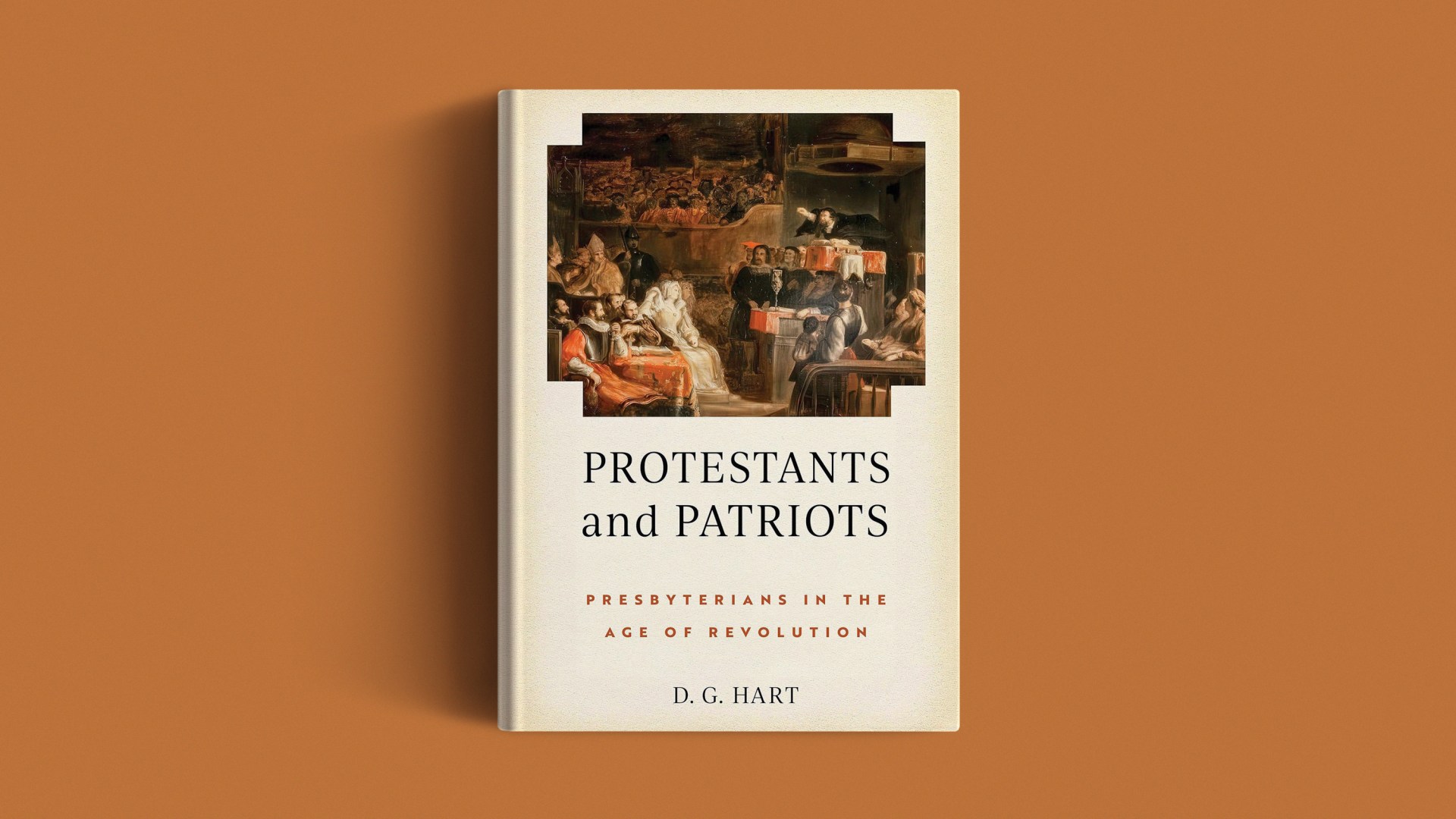
An excerpt from Protestants and Patriots: Presbyterians in the Age of Revolution.

The book on an orange background.
Christianity Today March 31, 2026
Illustration by Christianity Today / Source Images: Getty, University of Notre Dame Press

Francis Makemie is sometimes called the father of American Presbyterianism, and he earned that status thanks to two episodes during the last two years of a life that ran from 1658 to 1708.

The first, in 1706, was his organizing the Presbytery of Philadelphia, a grassroots effort of six other pastors that created structures for ordination and church discipline. It lacked oversight from any Old World ecclesiastical body and owed its New World existence to both the exigencies of colonial existence and the religious freedom that Pennsylvania—a colony founded by Quakers—afforded to Protestants from all over Europe.

The second episode that framed Makemie’s reputation was his defiance of British colonial policies in New York. On the way to Boston during the summer of 1707 to recruit pastors for Presbyterian congregations in Pennsylvania, Maryland, and Virginia, Makemie stopped in New York. He and his companion, John Hampton, received a cordial welcome from the colony’s governor, Edward Hyde, Lord Cornbury. Makemie’s meal with the governor never suggested that Presbyterians were unwelcome in New York.

Makemie had no awareness of restrictions on worship and accepted an invitation to preach in a home of local well-wishers. Because Makemie lacked a license, his preaching was against the law, as Lord Cornbury interpreted it. Local authorities had him arrested and imprisoned. Both Makemie and Hampton were in jail for 46 days. When the case went to trial, Makemie mentioned that Quakers and “Papists” had worshiped without penalty. He also appealed to England’s laws of toleration.

An intriguing angle on this claim was whether the Church of England’s prerogatives applied to the colonies as much as to England itself. These arguments were sufficient for the jury to find Makemie not guilty.

That did not clear him for court costs. In A Narrative of a New and Unusual American Imprisonment of Two Presbyterian Ministers and Prosecution of Mr. Francis Makemie (1707), the pastor (who also conducted trade in the Caribbean) itemized his legal fees. Between jailers, justices of the peace, sheriffs, and travel, Makemie was forced to pay more than 81 pounds (the equivalent of almost $25,000 in 2023).

Born in 1658 in Ramelton, a town in Ireland that boasts the oldest Presbyterian church on the island, Makemie’s roots went back to obscure Ulster Protestants who settled earlier in the 17th century. His family’s Presbyterian convictions were no match for either Oliver Cromwell’s government or the Restoration.

As an outsider to the Church of Ireland, Makemie could not attend Trinity College in Dublin, but he enrolled instead in 1676 at the University of Glasgow. Ordained in 1681 by the Presbytery of Laggan in west Ulster, Makemie left for North America two years later with a commission to plant churches among Presbyterian settlers.

When he left Ireland, prospects for Presbyterianism either in Scotland or Ireland were not encouraging. Nothing in Makemie’s subsequent career, however, suggests an attachment to the cause of Presbyterianism either in Scotland or Ireland.

In fact, the young pastor’s movements within England’s North American colonies indicate a strategy of fitting in more than advocating reformation.

The Presbyterian pastor also aligned himself with the Reformed churches of Geneva, France, Scotland, and England. A few years later, during a business trip to Barbados, Makemie lost the polemical edge that had been a trademark of Presbyterianism. He did so in a pamphlet written in 1697 (published in 1699) to defend Reformed Protestants from claims by Anglicans that Presbyterians were a fringe group of Protestants.

Makemie argued that Presbyterians were in fact the “truest and soundest part” of the Church of England. At the same time, he constructed an “ecumenical bridge” between the two British Protestant rivals. Makemie objected to using “Presbyterian” or “Puritan” as epithets. One important reason was that Presbyterians agreed with the Church of England “in all points of Faith, and Divine Ordinances, or parts of Worship.”

The only differences were in “Ceremonies, Government and Discipline.” Did the colonial setting take some of the edge off Presbyterian zeal?

Whatever the demands of his environment, Makemie’s attempt to find a common cause with other British Protestants was indicative of Presbyterians in the English-speaking world after the Glorious Revolution.

By the 18th century, Presbyterians were recalibrating ecclesiastical ideals to gain a foothold in the emerging structures of liberal society. How central Presbyterianism was to other sectors of national life was the question that church officers and members on both sides of the Atlantic needed to answer.

Two hundred years later (1906), leaders of the Presbyterian Church USA, the communion that sprang from the presbytery that Makemie had organized, gathered in Accomack County, Virginia, to unveil a statue that memorialized the colonial pastor.

Henry Van Dyke, professor of literature at Princeton University, composed a poem for the occasion, “Presbyter to Christ in America.” The Dutch American feted the colonial Ulsterman in American cadences:

To thee, plain hero of a rugged race,
      We bring a meed of praise too long delayed.
      Thy fearless word and faithful work have made
The path of God’s republic easier to trace
In this New World: thou has proclaimed the grace
      And power of Christ in many a woodland glade,
      Teaching the truth that leaves men unafraid
Of tyrants’ frowns, or chains, or death’s dark face.

Oh, who can tell how much we owe to thee,
      Makemie, and to labors such as thine,
      For all that makes America the shrine
Of faith untrammeled and of conscience free?
Stand here, gray stone, and consecrate the sod
Where sleeps this brave Scotch-Irish man of God!

Makemie’s life, and his time in prison, became an easy narrative by which to prove American Presbyterianism’s stake in American independence. But reading Makemie’s life forward into American independence misses the revolutionary politics of the 17th century that shaped the Presbyterian’s life and ministry. Makemie himself belonged to a generation that was still recovering from revolutionary wars in England, Scotland, and Ireland during the 1640s and 1650s, which culminated in the beheading of Charles I.

The Ulster Presbyterian was also living with the fallout of another revolution, this one Glorious, which provided a constitutional framework for the English monarchy. As much as Makemie may have inspired American patriots, his career embodied the religious and political uncertainties that characterized the English-speaking world between 1558 and 1689.

Published with permission from Notre Dame Press, excerpted from Protestants and Patriots: Presbyterians in the Age of Revolution. D. G. Hart is professor of history at Hillsdale College. He is the author of Protestants and Patriots, among other books.

addApple PodcastsDown ArrowDown ArrowDown Arrowarrow_left_altLeft ArrowLeft ArrowRight ArrowRight ArrowRight Arrowarrow_up_altUp ArrowUp ArrowAvailable at Amazoncaret-downCloseCloseellipseEmailEmailExpandExpandExternalExternalFacebookfacebook-squarefolderGiftGiftGooglegoogleGoogle KeephamburgerInstagraminstagram-squareLinkLinklinkedin-squareListenListenListenChristianity TodayCT Creative Studio Logologo_orgMegaphoneMenuMenupausePinterestPlayPlayPocketPodcastprintremoveRSSRSSSaveSavesaveSearchSearchsearchSpotifyStitcherTelegramTable of ContentsTable of Contentstwitter-squareWhatsAppXYouTubeYouTube