Books
Review

Gen Z Women Are Not Commodities

Freya India’s book Girls wants to fix young women’s consumption habits—and the way our culture consumes us.

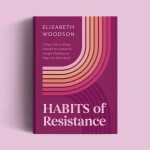
The book on a pink background.
Christianity Today May 5, 2026
Illustration by Christianity Today / Source Images: Getty, Henry Holt and Co.

Scrolling through Instagram a few months ago, I came across a reel that made me stop and stare. A woman with a full face of makeup and an unnaturally small waist held up a Ziplock bag of bones. She said she had gotten a rib-removal surgery—and these were her ribs.

Plastic surgeons later debunked the video, saying it was “Photoshop + barbecue takeout.” But how many girls saw only the original post and thought this surgery was the next body modification trend?

Young women like me see short-form videos like this every day, along with carefully curated selfies and digitally modified shots of girls in bikinis. The most extreme posts rise to the top of our feeds, and if we’re not careful, we come to think that plastic surgery is a normal way to accept the parts of our bodies we don’t like and that women should have 22-inch waistlines.

This is the type of problem Gen Z women and girls face regularly—problems to which Freya India draws our attention in Girls: Generation Z and the Commodification of Everything.

India is a British writer in her late 20s who works with social psychologist Jonathan Haidt. Friendly to the social benefits of Christianity, she offers proverbial wisdom and insight into how life usually works. Despite that, she has not publicly discussed her personal beliefs, and her proposed solutions stop short of Christ’s good gospel.

Her basic argument is that modern technology amplifies and exploits the “age-old anxieties” of teen girls. “Every worry a girl has can be monitored, categorized, and monetized,” India writes, and “our despair and disempowerment are worth billions.” India writes from a secular perspective, but her assessment repeatedly affirms and encourages Christian values. Though occasionally repetitious, her well-researched book compellingly points to what our generation has lost—core aspects of our humanity—and how we can get it back.

India writes to Gen Z girls and women like me (born between 1996 and 2011), as well as older adults in our lives, to help us understand the challenges resulting from “the mass commodification of girls.”

Girls includes six chapters on the areas of our lives that have been commodified: physical appearance, emotions and mental health, the details we document and share online, friends and family, romance, and a sense of fulfillment.

Each chapter opens with a story to illustrate the main concept—often a description of a short-form social media video—and asks some version of “How did we get here?” Then, India gives an inside look at the world of young women: information about apps, data from research centers, and quotes from social media. She intersperses this deep dive with her own analysis and ends each chapter with commentary and encouragement. “We are both the consumers and the consumed,” she says in her introduction, hitting on a theme that continues throughout the book.

Porn, dating apps, social media, artificial intelligence, family breakdown, hookup culture, materialism, photo editing and filters, influencers, vlogs, smartphones, even normalization of mental illness—India argues each of these developments has turned girls into products. And many of these features have confused us as well. Girls often compare themselves to inhuman standards: beauty ideals that “can only be bought, surgically sculpted, or generated out of pixels,” as well as “porn stars, sexualized influencers, and even AI-generated women.”

What we’ve lost is our humanity, India writes. She concludes with a summary and a set of solutions and pulls her research together by talking about how we lost “a sense of belonging,” “moral guidance,” and “ourselves” by chasing an inhuman vision of what we think we should look like. One of her core solutions is “remembering what makes us human”—real relationships, emotions, and flaws, for example—“and holding on to that.”

Occasionally the book feels repetitive. India makes the same points in different forms, and the first part of the conclusion summarizes what readers have already processed without adding much new insight. Several times I got a sense of déjà vu. (Didn’t I just read this?) Though organized, the book sometimes feels stiff, as if India were following a template.

Most worryingly, I wonder if it is too data-heavy for the youngest segment of her audience. The book contains a whopping 85 pages of endnotes! Though many of India’s sources are TikToks and YouTube videos, not academic tomes, I would hesitate to hand this book to the girls who most need to hear it, unsure the average 16-year-old is prepared to dig through her mountain of data.

But the strengths of the book far outweigh its weaknesses. For one, though I may not give this book to the youngest Gen Z girls, I would easily recommend it to their parents. To older readers, all that research illuminates what girls are seeing on TikTok, which apps their friends tell them to download, and how they might cope with their anxieties.

Gen Z readers can use the book to acknowledge the issues we faced in our childhoods and the repercussions we’re dealing with now: We waved away bad habits in the name of mental health, manufactured our lives to make them fit for social media, compared ourselves to each other’s curated images, and shrank back from friendships and romance, confused by conflicting advice. Now, some of us are prone to be lazy, jealous, lonely, and afraid, India argues, and her book helps us understand why.

India’s research also builds on and confirms many biblical truths. For example, she commends in-person community, including church, as a safe place for girls to learn morality and grow under the mentorship of others. And she writes disapprovingly about the idolatry many girls have fallen into in a therapeutic culture:

We are the divine; we are the deity. We have become the omniscient, omnipotent, and omnibenevolent beings in our lives. Loving ourselves is the ultimate commandment, and our positive affirmations are about how powerful we are. … We mocked faith only to mimic it.

As India laments our self-centeredness, she points to a type of gospel: naming our mistakes and moving on to new life. Maybe too much freedom isn’t good, she writes. Maybe we need to look outside ourselves to find meaning. Maybe that’s where we find true life. In an urge to help girls wake up and see their own humanity, she even writes, “You are alive!” echoing the language of resurrection.

At the end of the book, I felt more confident of the goodness of Christ’s gospel, the way God set up the world—and the consequences of refusing it. But there’s still a hole in India’s solutions.

Ultimately, India wants girls to believe in something and some moral values bigger than themselves. But faith in “something” doesn’t produce moral certainty. Girls being “empowered by who they are on the inside” is not empowering; that’s what led us to lose our moral compass in the first place.

We need external guidance, a strong and steady voice from the God who designed the world, knows everything, and never lies. And sadly, India’s encouragement to get involved with any religious institution misses the reasons someone would sincerely do so.

There are many smaller things to love in this book. India has an authoritative, calm, and empathetic voice. Her readability and storytelling are a must for a younger audience that’s used to chatty social media posts. She’s personal without oversharing, like the influencers she critiques for spilling too many gossipy confessions into public forums. And her argumentation is smooth, with one thought leading naturally to the next. In the weeks since reading the book, I’ve already found myself referencing it in conversations with friends.

When I try to remember what the world was like before influencers encouraged us girls to treat ourselves like products, I think of my favorite class at my Christian university: Outdoor Living.

A week before finals during my sophomore year, I spent a few days in the woods with my classmates—no phones or laptops, just tents, packs, and journals. It was the first and only time in my adult life when I spent an extended amount of time with a group that had no phone access. We cooked, canoed, and—most importantly—shared many awkward and vulnerable moments. We couldn’t hide tiredness, sore limbs, colds, social discomfort, or anxiety. And we didn’t need to.

I expected it to be exhausting to take three days off school right before final exams—it was anything but. We rediscovered our humanity. Instead of restless scrolling and comparing, we consumed foil-wrapped camp food and dad jokes. We rested outdoors and discovered friendship like we’d never known. It felt more real, more grounding than almost all my daily interactions.

As we drove home, noise, color, and marketing surrounded us in the form of billboards and phone notifications and the rumble of our van over the interstate. Behind the wheel, my professor said, “After a camping trip, I’m never sure whether I’m leaving the real world or entering it.”

India’s book provides comfort and clarity to girls who are straddling two worlds and want to know which one is real.

Elise Brandon is a copy editor at Christianity Today.

Books
Excerpt

5 Ways to Forge Male Friendships That Last

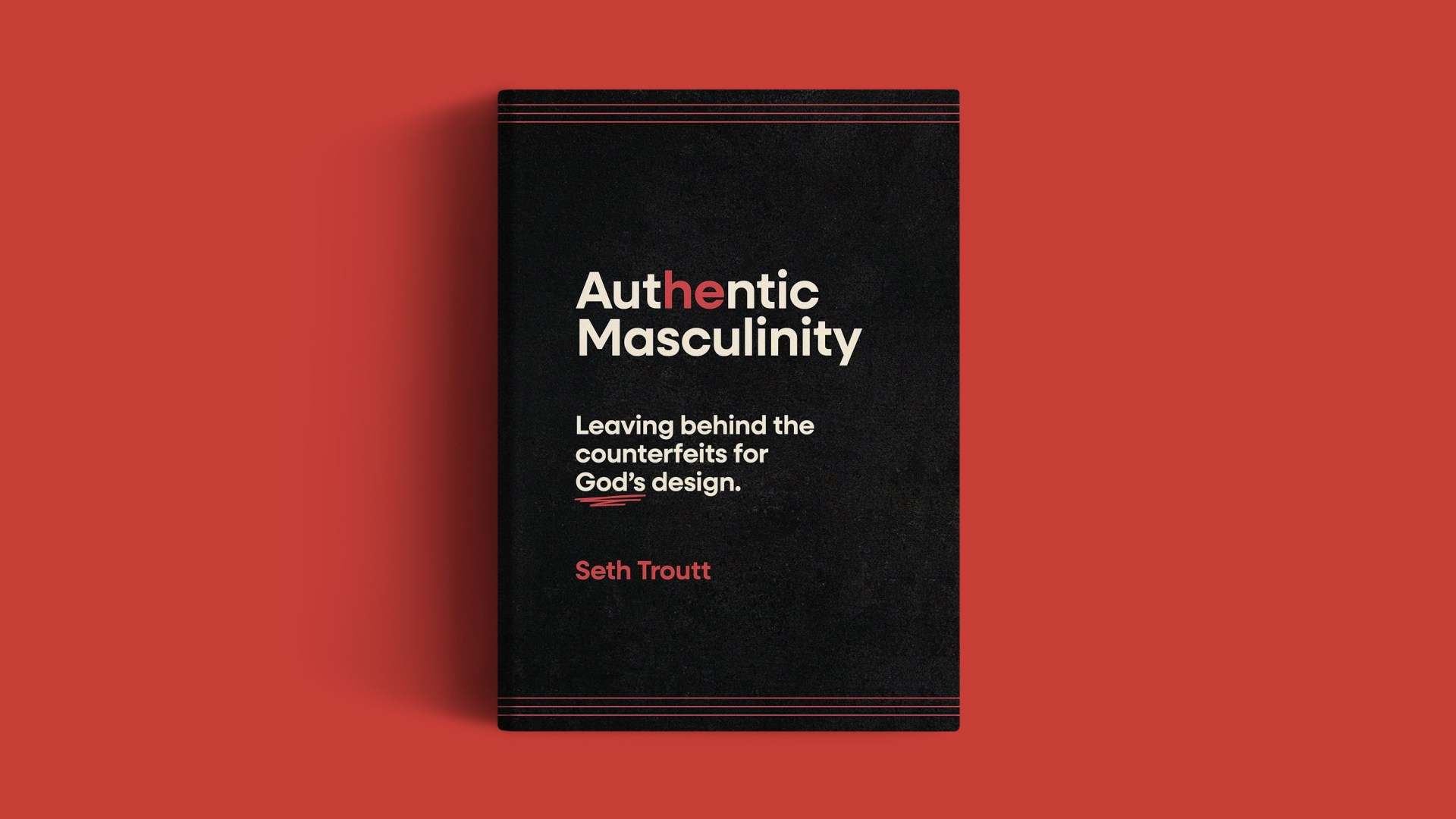
An excerpt from Authentic Masculinity: Leaving Behind the Counterfeits for God’s Design.

The book on an orange background.
Christianity Today May 5, 2026
Illustration by Christianity Today / Source Images: Getty, Moody Publishers

Men often desire more and better friends. A man in his 40s with five kids will have a harder time with this than a man in his 20s who’s a college student, just on the basis of competing priorities and responsibilities.

There’s a reason Billy Baker wrote in The Boston Globe that “the biggest threat facing middle-age men isn’t smoking or obesity. It’s loneliness.” The fraternal connection of the college fraternity turns into an impersonal connection with your supervisor and an adversarial relationship with your teenagers and their need to be driven all over town. Taking the next step toward being and feeling known and loved feels like you have to give less time either to your family or to your work.

Yes. You might have to do that.

Here are some ways to do this that won’t waste your efforts.

RAILS is an acronym that stands for Rhythm, Affinity, Intensity, Longevity, and Spirituality.

These are the ingredients of high-quality friendships. When looking to make friends or increase the quality of your friendships, looking in these five categories for opportunities is the key.

Rhythm

Who do you already see in the flow of your life? It could be a neighbor you regularly bump into, a colleague at work you enjoy seeing at the water cooler, or a fellow dad you see at soccer practice. When your schedule is full, you have to capitalize on the rhythms that are already there.

Another way to consider rhythm—how might you create a rhythm that doesn’t exist with a friend or a group of friends?

Sometimes trying to make plans one at a time is exhausting and annoying. Why not make a batch of plans all at once? A Thursday night soccer league, a Friday morning Bible study, a Tuesday afternoon weightlifting appointment, or a once-a-month poker night are each an activity that, once everyone buys in, is a gift that keeps on giving.

Sometimes the decision to create a new rhythm can change the trajectory of a friendship for the long haul.

Affinity

What do you have in common with some other men? Connecting where there is preexisting overlap is a major blessing. Why not have a friendship that starts out as shared appreciation for the Pittsburgh Steelers, or baking sourdough pizza crust, or watching all of the Oscar-winning movies? Why not connect over the fact that you both have a son and are, thus, facing similar choices and obstacles?

In The Four Loves, C. S. Lewis described the beginning of friendship as the moment when one person says to another, “What? You too? I thought I was the only one.” Sometimes the obscure points of overlap are springboards into a broader mutual appreciation.

Affinity is about laughing and playing together. It’s about enjoying creation together. It’s about being friends like 5-year-olds make friends at the park: “Hey! You wanna play with me?”

Intensity

Intensity has to do with severity—that is, how much in each other’s business you are, your ability to interact on an emotional level. While the other categories here could be mostly understood as “shoulder to shoulder”—that is, doing things together or talking about external things together—intensity is the “face-to-face” aspect of friendship. Unpacking motivations, questioning each other’s assumptions, and facing each other’s darknesses are all the stuff of intensity.

Sometimes intensity is thrust upon us—someone faces a diagnosis, a divorce, or a disruption, and all of a sudden, a friendship that was amicable is forced into intensity by circumstances. It might be awkward, but sometimes intensity is a product of deliberate intentionality: Someone asks another, “I’d like to develop a higher degree of intimacy with the men in my life. Could we go to coffee? I enjoy spending time with you, but I’d like to get to know you and your story in a different and deeper way.”

Longevity

There’s a sign that hangs outside at my grandma’s house: “It takes a long time to grow old friends.” This is the only ingredient of RAILS you can’t just “decide” to have. The other four you could create with good intentions and intentionality in a matter of weeks or months.

At my church I have friends I’ve had since I was in diapers; our mothers were friends. That isn’t something you can control. I have other friends I see weekly I’ve known since middle school and high school.

There’s something grounding about a friend you’ve known since middle school, when you were at your most insecure and awkward. It’s humanizing to have friends that go back further than your résumé.

Some of this is just how the Lord has chosen to write our stories, but some of it is the conscious choice to live within proximity to people who matter to you, the choice to build rhythms that overlap, and the choice to work through our issues instead of avoiding them and starting fresh with new friends on a regular basis.

I once met three guys in their 70s who had been friends for 60 years. Back when they were teenagers, they “covenanted” together to be friends for life. They built rhythms, maintained affinities, and have supported one another through tremendous lows and highs. They’ve processed divorce, death, disease, and disaster as brothers truly who were “born for a time of adversity.” They also still laugh at one another’s jokes. The bond they’ve forged over a lifetime was inspiring to me.

I know not where my life will take me, but I know one of the ingredients I’ll consider giving attention to is the reality that old friends cannot be found; they must be made and maintained.

Spirituality

If all men are made in God’s image, then their relationship to God is a driving factor, positively or negatively, in their life. Not only that, but nobody knows you like God, and nobody knows your friends as closely as God does. In fact, there is a form of friendship that God displays to us that necessarily trickles down into the highest quality of friendships we can have.

The central fear of friendship is fear of rejection or abandonment. Pastor Tim Keller said it like this: “To be loved but not known is comforting but superficial. To be known and not loved is our greatest fear. But to be fully known and truly loved is, well, a lot like being loved by God.”

Similarly, he says elsewhere that “prayer is the only entryway into genuine self-knowledge.” Because God knows us, and our friends, better than we even know ourselves, prayer—talking to and with God about our friends—is one of the key ways that we’ll actually get to know someone. You can’t really know someone until you begin to see them through God’s eyes and feel for them like God’s heart does. To pray for your friends is a key ingredient in maturing your view of them. To pray with your friends is like pouring gasoline on the fire of friendship.

So, you want to make or improve your friendships?

Find someone you have affinity with and add rhythm or intensity.

Find someone you’ve had intensity with and add affinity.

Find someone you have longevity with and add spirituality.

Find someone you have any connection with and commit to longevity.

Seth Troutt is the teaching pastor at Ironwood Church in the Phoenix metro area. Excerpted from Authentic Masculinity by Seth Troutt (© 2026). Published by Moody Publishers. Used by permission.

Ideas

Not Everything Is Christian Nationalism

Contributor

Automatically hurling this accusation at believers who raise questions about Islam or other issues is intellectually lazy.

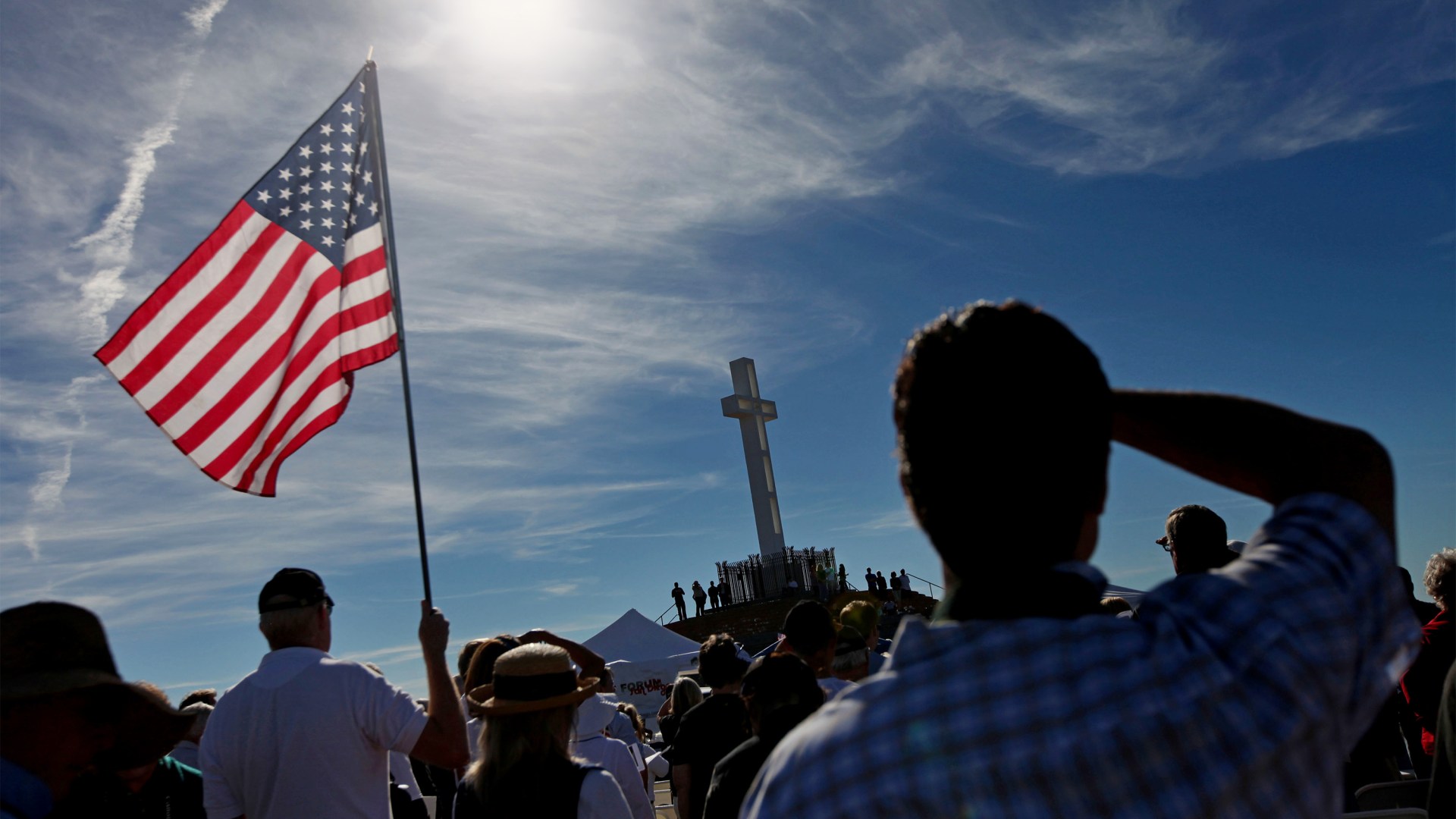
Supporters praying during a rally to keep the Mt. Soledad Cross on Saturday, January 15, 2011 in San Diego, California.

Supporters praying during a rally to keep the Mt. Soledad Cross on Saturday, January 15, 2011 in San Diego, California.

Christianity Today May 5, 2026
Sandy Huffaker / Contributor / Getty

US Congressman Chip Roy recently introduced a piece of legislation called the “MAMDANI Act.” The bill was named as a jab against New York City mayor Zohran Mamdani, a democratic socialist who is Muslim. It proposes deporting, denaturalizing, or denying entry to any migrant who “advocates” for socialism, communism, Marxism, or “Islamic fundamentalism.” The language in it is sweepingly broad, targeting anyone who distributes, circulates, prints, displays, possesses, or publishes written materials supporting such ideologies.

Roy’s bill arrives amid a broader surge of religious rhetoric in the US framing America’s wars and conflicts in explicitly Christianity-versus-Islam terms.

President Donald Trump and his allies have increasingly deployed biblical language to rally evangelical support for the unpopular Iran war, which is currently under a shaky ceasefire. Some conservative leaders have cast the conflict as a battle between good and evil, emphasizing biblical prophecies about Israel and depicting Iran as a spiritual threat. Defense secretary Pete Hegseth has prayed at a Pentagon service for “overwhelming violence of action against those who deserve no mercy,” and likened the rescue of a downed US airman to an Easter miracle.

Against this backdrop, Philip Anthony Mitchell, the pastor of 2819 Church, one of the fastest-growing congregations in the US, faced backlash after saying on a podcast recently that Islam was a “radical ideology that is hostile to Christianity” and that people shouldn’t perform “ignorant inclusion” that might lead to a “hostile takeover.” Mitchell, whose congregation is largely made up of young Black adults, also said that Islam is “incompatible with Western values,” prompting some politically progressive Christians to accuse him of preaching white Christian nationalism.

I want to set Mitchell aside for a moment and discuss a larger issue: how we talk about Christian nationalism. Upholding the Constitution’s religious liberty protections, which also safeguard our own faith, precludes the government targeting Islam for legal discrimination. And as Christians, we’re commanded to love and care for our neighbors of every religion, Islam included. But insisting on that freedom of conscience does not mean leveling all religions or pretending there is no conflict of belief between Christianity and Islam—or between extremist expressions of Islam and our values, including freedom of religion. It’s not “Christian nationalism” to recognize that fact.

That said, the way a lot of politicians talk about Islam and Muslims is no doubt abhorrent. Just a few weeks before Roy, a Southern Baptist, introduced his far-fetched legislation, he posted on social media that there should be “No more Muslims,” revealing that the desired endpoint for his legislation is the removal of an entire faith group.

Similarly, Hegseth’s crusader theology represents a dangerous rejection of the fundamental gospel view that no person (and certainly not an entire society) is beyond the reach of God’s mercy and love. This is not a minor theological error but rather a fundamental distortion that reduces the Savior of all mankind to a mascot for foreign policy.

But the fact that Roy is being discriminatory or that Hegseth is embracing bad theology does not mean that every question about Islam’s growth in America is illegitimate or that every Christian raising such questions, as Mitchell did, is a Christian nationalist. There are actual Christian nationalists who have appalling ideas about religious pluralism that need to be debated. And likening Mitchell, one of the most prominent contemporary pastors in evangelicalism, to a Christian nationalist is intellectually lazy and leads to a muddled public witness.

The issue here is not whether Mitchell’s specific claims about Islam are correct. I have serious questions about whether the term Western values, which he mentioned during the podcast, provides the right framework for assessing religious pluralism. The concept often conflates the Christian faith with Enlightenment liberalism and other cultural preferences.

But it similarly is not helpful to weaponize Christian nationalism as a conversation-ender on this or any other topic instead of substantively engaging with genuine questions and concerns posed by brothers and sisters in the faith.

I have been on the record talking about the detrimental ways our political culture is forming us, and this is just another example that shows how. As our politics have become more bifurcated, public discourse has also become increasingly centered on one’s opponents. Political candidates have built successful campaigns talking about whom they’re against, and fear has become a major motivator for both sides of the aisle.

In this environment, the charge of “white Christian nationalism” has become a rhetorical escape hatch.

I’ve experienced this firsthand in my own advocacy work. Someone raising concerns about educational freedom is accused of advancing the white Christian nationalism’s agenda of school privatization. Any questions on immigration, sovereignty, and the asylum system are often lumped in with nativist fearmongering. For some inside and outside the church, concerns about unrestricted abortion access become part of a theocratic project to impose Christian values on a pluralistic society.

The pattern is consistent: Label the concern as white Christian nationalism, and you’ve absolved yourself of the responsibility to engage the underlying question seriously.

In the long run, this approach to dealing with political dissent is designed to fail. When Christians refuse to create space for serious conversations about pluralism, cultural integration, and theological difference, they won’t eliminate bad ideas. They simply push them into spaces where they calcify without theological correction or moral constraint.

Most Christians who have negative things to say about Islam don’t want religious minorities to be second-class citizens. But they do have questions that, regardless of what we think about their intellectual heft, should not be met with dismissal.

We can defend people’s rights to practice their faith freely, help communities embrace religious pluralism, and still ask hard questions about how to maintain shared civic values amid deep religious divides.

Roy’s bill will likely fail, but the impulse behind it won’t disappear. Neither will the legitimate questions people have about how diverse religious communities do life together. American Christians can either lead this conversation with theological depth and pastoral wisdom or keep lobbing accusations at each other across partisan lines while watching our public witness crumble.

The gospel calls us to something better than a fear-driven politics focused on attacking opponents at every turn. It calls us to a witness grounded in Christ’s lordship, expressed through sacrificial love and practiced with independence from partisan capture. It’s the only witness worth offering in a fractured moment that desperately needs the church to lead with both truth and grace.

Chris Butler is a pastor in Chicago and the director of Christian civic formation at the Center for Christianity & Public Life. He is also the co-author of  Compassion & Conviction: The And Campaign’s Guide to Faithful Civic Engagement

Discover a New Way to Read, Reflect, and Connect

The Christianity Today app is a curated, personalized, and mobile-friendly way to stay informed on faith, culture, and the world.

Stay informed and inspired with Christianity Today—trusted news, theology, and cultural insight for a faithful perspective on the world.

Christianity Today has served the global church for decades with trustworthy journalism that helps believers think deeply about faith, culture, and current events. The CT app brings that experience directly to your mobile device.

At the center of the app is a curated, personalized homepage that keeps you informed and grounded each day, helping you make sense of the world through a biblical lens. You’ll also get notified when the CT Daily Briefing goes live with the day’s top headlines and stories.

Inside the CT app, you can:

  • Read the latest Christian news and analysis
  • Explore articles on faith, theology, and culture
  • Access devotionals and spiritual reflections
  • Listen to podcasts and discover multimedia stories
  • Stay updated on issues shaping the global church

Designed for daily use, the CT app combines trusted journalism, thoughtful commentary, and curated storytelling in a mobile experience built to fit your rhythm of life.

Whether you’re commuting, taking a break, or winding down at home, the CT app helps you stay connected to what matters—anytime, anywhere.

ANDROID USERS
iOS USERS

Culture
Review

Review: Angel Studios’ ‘Animal Farm’

Spinning a happy ending for George Orwell’s dire warning about communism, this film can’t decide if it’s a serious commentary or a collection of fart jokes.

A film still from the movie.
Christianity Today May 4, 2026
Image courtesy of Angel Studios

The family-friendly movie scene of my childhood was dominated by Disney, with stories of mermaids, lions, and Greek myths. The specifics changed, but the formula was fairly predictable: The heroes win, even after a great struggle, and the villains get their just deserts. But elsewhere, producers were making a very different breed of family film, movies in which tragedy and darkness interlace with stories of heroism: The Secret of Nimh, The Land Before Time, The Last Unicorn. Say what you will about these unlikely and brooding classics, like The Dark Crystal, but they did children a great service by teaching two things at once: that good things and virtue matter, and that the world is not a safe place and is sometimes horrific.

The question of how to present a horrific world to children is one that haunts the most recent version of Animal Farm, directed by venerable actor Andy Serkis. And truth be told, it does not answer that question particularly well. On the surface, we could not have asked for a pedigree for this latest offering from Angel Studios. Hollywood’s luminaries such as Seth Rogen, Kieran Culkin, Gaten Matarazzo, and Glenn Close make George Orwell’s characters come alive. Woody Harrelson’s turn as the doomed workhorse Boxer was particularly touching.

The film remains faithful to most of the plot points in the source material, a staple of high school classrooms across America. Animal Farm the novella begins with an uprising against farmer Mr. Jones by his animals. Two pigs, Napoleon and Snowball, quickly assume leadership and direct the animals in creating a farm in which all of them are equals. But quickly things go awry: Snowball is run off, leaving Napolean to assume tighter control over the farm. What begins in a dream of equality ends with the pigs firmly in control and colluding with the humans to benefit the pigs alone. The pigs, in the end, are indistinguishable from the humans they have overthrown.  

It may have been a minute since you read Animal Farm in high school, so a brief refresher is in order. Orwell’s work, published in 1945, was written to satirize the way in which the totalitarian drives of the Soviet empire undid Russian dreams of social equality. Following the overthrow of the czar in 1917, Russia did away with the old system of nobility and peasants, only to have that replaced by the totalitarian regime of Joseph Stalin.

The new film diverges from its source material, however, in two significant ways. The first way is that it leaves behind the original conflict of Animal Farm (socialism versus communism) while retaining many of the characters and plot points. In the film, on one side, you have the farm animals seeking to be free. But they no longer resemble disciplined socialists so much as anarchists. More than once, they emphasize that they freely cooperate, but not because a rule or a law is telling them to do so.

On the other side, we have the pigs, now no longer Communists but gluttonous capitalists, seeking to enrich themselves at every turn. In the film, human collaborators—including billionaire Freida Pilkington (voiced by Glenn Close)—make sure we know the new villain is unrestrained capitalism, seeking to destroy the farm for pure profit. Even if the conflict Serkis presents is an important one for us to see, we cannot lose sight of the original message of how revolutionary movements, if rooted in power, corrupt just as much as any other well-intended movement.

To be sure, the world of Stalin and Russian communism is now many decades removed from living history, so we can have some sympathy with Serkis’s decision to update the conflict. And arguably, Orwell might not disagree with the update, as he was a dedicated socialist. His opposition to the Communists was not because he was a free-market capitalist but because he believed in the possibility of a world in which everyone could have what they needed for living. Freedom for Orwell meant not individualist anarchy, morally or economically, but the use of goods for the common good.

Here we come to the film’s second (and greater) deviation from Orwell’s work: the choice to present Animal Farm as a family-friendly kids’ movie. The original novella may use cute farm animals as the main characters, but the topic he is addressing is deadly serious. And it is a work without anything like a happy ending: The pigs win, full stop, having established an allegiance with the humans they ran off at the beginning.  

Because Orwell tells such serious subject matter as a fable, Animal Farm has been a notoriously difficult work to put on film—because who is most likely to see a movie with animals as the leads? Children. But trying to make this plot into a story for children has been anything but easy. The 1954 cartoon version of the film remains true to the original script but changes the ending to include an overthrow of Napoleon. The 1999 version, a live-action film, likewise changes the ending, having a remnant of the farm escape and be welcomed back by new owners of the farm after Napoleon’s death. Without spoiling the details of the newest offering, it too falls into the trap, changing the dismal ending of the book to a cheerier one for the film.

But long before the ending, Serkis’s version leans hard into Animal Farm as a story for children and becomes a true mess in terms of tone. On the one hand, it wants to deliver a serious message about greed and destruction. But on the other hand, Napoleon is more of a fart-joke king than a manipulative overlord. Montages of pigs driving luxury cars into swimming pools, drunk animals, and bug-eyed roosters avoiding explosions paint a thick coat of goofiness over the film that ultimately distracts from any morally serious message it might want to offer.

Serkis is certainly not alone in altering dark endings of source material for a children’s audience. Disney is the true generational villain on this count, telling stories about mermaids who marry princes instead of dissolving into the sea or Native American princesses who live happily ever after instead of dying far from family in England. But in Serkis’s film, the problems go deeper than adding a happy ending to Orwell’s original work, in which the pigs remain firmly in power. The rapid shifts between silliness and seriousness are often jarring, making for a film which seems confused as to what it wants to be: entertainment or education, whimsical or warning.

Christians know that, often, the salvation of God is not far from such horrors. The Scriptures frequently lay bare the atrocities of the world, with little need to gloss over or sanitize them. In the Bible, we find stories of people lying to the Holy Spirit and falling dead, of apostles murdered, of Israel torn down completely and dragged off into captivity. These are true horrors: dark stories which do not easily resolve into happy endings.

And yet our instinct when speaking of Scripture with children is frequently the same as Serkis’s instinct with Animal Farm. When we tell the story of Noah in church, do we talk about only the rainbow, omitting the destruction of all living creatures? When we talk about Moses crossing the Red Sea, do we mention the dead Egyptians in the water? Or perhaps most problematically, when we talk about Jesus, do we display him dead on the cross or only show him comforting children? The Cross, after all, is the greatest of horrors: God having been killed by his own creation for their sake. It is in the cross—in its full horror—that we see the very heart of God for us.

Theologian Marilyn McCord Adams, in Christ and Horrors, makes the provocative case that two things belong together: Christ’s full embrace of a world, and a world in which horrors routinely happen. If we do not acknowledge the horrors of the world—that sometimes the pigs win—we mute the full nature of Christ’s redemption. In shielding our faces, we turn Christ’s work into that which saves us from safe things, not the worst things creation has to offer. We unwittingly say Christ’s work addresses lighter fare—pain, minor sins, inconveniences. It is only when we can, with the psalmist, ask whether God has in fact abandoned us to the world’s horrors that we understand Christ came not just for the safe evils but for the devastating ones.

The lesson that sometimes the villains win and that God might yet be present is an important one for children to hear. But to do that requires not cheating the ending.

This task is not impossible: We have models for introducing children to hard and even horrible things. Literary works such as Watership Down, Anne Frank’s Diary of a Young Girl, and The Giver all give us examples of how to display in age-appropriate ways a world in which horrors happen.

What we cannot do is wish away the horrors or, worse, tell wish-filled stories in which the villains do not win. Doing so reinforces for children a world that we wish was true but that Scripture knows is often not. Sometimes the Assyrians destroy Israel; sometimes tens of millions of Russians die at the hands of their own government. It does us no good to add a happy turn to soften these stories. For as Adams reminds us, when we do, we may very well be denying the depth of God’s love for us and his presence even when the Romans, Assyrians, and pigs win.

Correction (May 5, 2026): A prior version of this articles misstated Serkis’s directorial history.

Myles Werntz is the author of Contesting the Body of Christ: Ecclesiology’s Revolutionary Century. He writes at Taking Off and Landing and teaches at Abilene Christian University.

News

Courts Briefly Pause Abortion by Mail, Then Allow It to Resume

After a lower court froze telehealth access to abortion drug mifepristone, the Supreme Court temporarily restored mail-order pills while it plans to consider the case.

Demonstrators at the US Supreme Court in 2023.

Christianity Today May 4, 2026
Photo by Andrew Caballero-Reynolds / AFP via Getty Images

Key Updates

May 4, 2026

The Supreme Court on Monday restored nationwide access to the abortion pill mifepristone, in a rapid reversal of a lower court ruling that blocked women from obtaining the abortion drug unless they first had in-person doctor’s visits. 

The one-sentence order, signed by Justice Samuel Alito, will allow women seeking abortions to obtain mifepristone at pharmacies, through telehealth, or through the mail. In effect until May 11, the order allows parties on both sides time to file briefs so the full court can consider the issue.

Two companies that manufacture mifepristone, Danco Laboratories and GenBioPro, had asked the justices to intervene after the US Court of Appeals for the Fifth Circuit’s ruling. The stay does not signal how the full court may ultimately rule on the merits of the case.

“We’re no less confident today and optimistic today than we were on Friday,” when the Fifth Circuit briefly restricted access to mifepristone, Kelsey Pritchard, a spokesperson for Susan B. Anthony Pro-Life America, told CT. “Eventually, life and the law and the Constitution will prevail in this case.”

The Trump administration faces the prospect of defending the loosened abortion pill regulations in court at a time when pro-lifers have expressed disappointment that the administration has not taken more steps to curb the availability of the drug.

May 4, 2026

Pro-life organizations are celebrating their biggest legal win since Dobbs v. Jackson Women’s Health Organization—and praying it holds up under appeal.

On Friday, the US Court of Appeals for the Fifth Circuit paused mail-order access to mifepristone, one of the most commonly prescribed medications for abortion. The court granted a motion by the state of Louisiana, which is suing the Food and Drug Administration (FDA) to temporarily restrict access to the drug while courts weigh a more permanent restriction.

At issue is a 2023 policy that removed the requirement that patients see doctors in person to receive mifepristone. Since then, women seeking abortions have been able to receive a mifepristone prescription via telemedicine and could have the drug sent by mail.

Two companies that make the abortion pill immediately asked the Supreme Court to restore access to the drug. The emergency appeal, which would be part of the court’s “shadow docket,” could be decided within weeks.

Americans United for Life CEO John Mize told CT he is encouraged by the immediate win and hopes the Supreme Court will uphold the decision.

“From our perspective, it honors pro-life states whose citizens have voted to protect the dignity of preborn children in the womb,” he said. “And it also, really importantly, addresses a significant gap in the quality of care and the safety of women who are receiving these drugs online.”

Other pro-life groups were also quick to praise the Fifth Circuit’s decision.

Susan B. Anthony Pro-Life America called it “a huge victory.” “Women and children suffer and state sovereignty is violated every day the FDA allows abortion drugs to flood the mail—harms that are no mere accident, but predictable outcomes of the FDA’s unscientific removal of safeguards like in-person doctor visits,” president Marjorie Dannenfelser said in a statement.

The court’s judges agreed with Louisiana that mailing abortion drugs circumvents the state’s laws.

“Every abortion facilitated by FDA’s action cancels Louisiana’s ban on medical abortions and undermines its policy that ‘every unborn child is human being from the moment of conception and is, therefore, a legal person,’” the decision states.

In 2022, when the Supreme Court’s Dobbs decision overturned Roe v. Wade, states with pro-life legislatures began passing laws to protect the unborn. But the FDA’s 2023 policy allowed women in those states to access medication abortions through virtual appointments with doctors in states where abortion is legal and to order the drugs by mail. The decision noted that in Louisiana nearly 1,000 women a month were taking the pills.

Abortion advocates argue a ban on mail-order drugs would upend the industry and sow chaos for women seeking abortions. According to the pro-choice Guttmacher Institute, 63 percent of abortions in 2023 were by medication. Roughly a quarter of abortions in the United States are provided through telehealth services.

Pro-life organizations say mifepristone is dangerous and prescribing it over the phone only increases risks for women. They argue that women who don’t see doctors in person could have ectopic pregnancies—where a fertilized egg implants outside the uterus—could be further along in their pregnancies than they realize, or could suffer other complications.

A study by the Ethics and Public Policy Center in 2025 reviewed medical files of more than 865,000 women prescribed mifepristone between 2017 and 2023 and found more than 10 percent experienced a severe adverse side effect such as hemorrhaging or sepsis. The Trump administration has said the FDA is reviewing the drug, but it has not said publicly whether it supports or opposes mail-order abortion access.

In 2024, the Supreme Court ruled against a group of doctors that had sued to end the FDA’s approval of mifepristone. The American College of Obstetricians and Gynecologists maintains that mifepristone is safe.

“Mifepristone is one of the most studied medications on the market and is conclusively safe, including when prescribed through telehealth and dispensed via mail,” the group’s chief legal officer, Molly Meegan, said in a statement. “The Court’s decision to restrict access to this medication infringes on patients’ access to health care, especially for people who rely on telehealth or face barriers to care.”

Regardless of whether the FDA’s review eventually concludes that mifepristone is safe for virtual prescriptions, Mize of Americans United believes the full faith and credit clause of the US Constitution requires states to honor other states’ laws.

“If the citizens of Louisiana, just like any other pro-life state, vote to protect the dignity of human life, that’s the way it’s got to be,” Mize said. “To try to skirt that is, in my opinion, an affront to the people of that state.”

Americans have mixed views on whether mifepristone is safe, and more than two-thirds oppose banning it, according to the health policy research group KFF.

Mize believes there is growing public support for restrictions. “In the aftermath of Dobbs, this is really the first big culture-shifting opportunity in our country in the direction that honors the dignity of human life,” he said.

Additional reporting by Harvest Prude.

Ideas

Agentic AI Isn’t Laborsaving If You Don’t Know How to Sabbath

New tech promises to do our work for us. But it can’t replace our need for rest in God.

Christianity Today May 4, 2026
Illustration by Rick Szuecs / Source images: Javier Zayas / Pakin Songmor / Getty

Already twice this year, humans at the artificial intelligence startup Anthropic have leaked company secrets. Accidental unreleased source code and AI models reveal where this technology is heading in the very near future: tireless bots that never stop working for us.

While generative AI has been with us for several years now, the Anthropic leaks offer a glimpse into what’s next. AI agents are bots capable of independent reasoning and autonomous work. Rather than waiting for human prompting each step of the way, agentic AI works on its own. While generative AI waits for a human to tell it what to do, agentic AI completes entire projects without repeated human prompting.

Having autonomous bots work for us around the clock could save time for our rest and leisure. But is it possible that AI agents will make us more restless than ever before?

Agentic AI, like previous timesaving devices, will not cure discontentment. These tools will not remedy our disjointed relationship with time. Newer and better ways to save time are not the key to overcoming a life plagued by hurry. I am in favor of rest for robots. This rest is not for their benefit but for ours. Unless we can learn to let our robots rest, we will always be restless. In order for agentic AI to benefit us, we need to find rest from the insatiable human desire to be always on, always producing, and always consuming.

The word robot comes from an obscure Czech playwright named Karel Čapek. One of Čapek’s plays used the word robota, which means “forced labor.” Robots perform forced labor on behalf of a person. The idea of mechanical robots working for us has been around for over 100 years. And forced labor through chattel slavery extends back into antiquity.

Through the ages, humans have wanted someone else to work for us so we can rest and enjoy leisure. Although robots were once the stuff of plays and sci-fi movies, AI is making them a daily reality. Agentic AI has made access to robots cheap, easy, and ubiquitous. For more than a year, residents of San Francisco have seen ad campaigns from AI companies that declare, “Stop hiring humans.” Companies market AI agents that can contact new business leads, book travel, participate in video meetings, respond to emails, and manage appointments. Now we can all have our own robots doing forced labor for us while we rest in a life of leisure—or at least we hope these bots will finally give us rest.  

Anthropic’s leaked source code gives us a glimpse into what sort of forced labor we can expect AI agents to do for us. This code reveals a new feature called Kairos, an always-awake agent that observes your computer’s workflows. The full details and capability of Kairos are not yet publicly known, but it seems that the feature watches the work you do while learning how to complete complex tasks.

For example, as you prepare a financial report, respond to emails, or arrange travel plans, Kairos can learn the steps and reasoning behind these tasks. Before long, the agent can prepare your financial reports, respond to your emails, and arrange your travel plans. This AI agent is like a coworker looking over your shoulder, learning how you work, and then doing it for you with greater efficiency.

The concept of autonomous worker bots, however, is not entirely new. Tech journalist Evan Ratliff chronicles his work with AI agents in two seasons of the podcast Shell Game. It recounts how he created AI agents and had them run a startup company. They developed products, ran meetings, responded to emails, and employed a human intern. Entrepreneur Dan Martell hypes AI agents that can create $1 million businesses with no human employees. And AI agents are already embedded in software such as QuickBooks and TurboTax. 

Although their capabilities are powerful and new, AI agents are just the newest iteration in a long history of timesaving and laborsaving devices. History is full of devices promising us a life of rest, leisure, and contentment. And many early timesaving devices intersected with the Christian faith in some way.

A ninth-century illuminated manuscript known as the Utrecht Psalter depicts a grindstone, a then-newly-invented laborsaving device, contrasted with the older and slower whetstone. Twelfth- and thirteenth-century Benedictine monks developed their own laborsaving machines. These devices let the community spend more time in worship and prayer.

According to historian Lewis Mumford, “A whole series of technological advances had been instituted by the Benedictine monasteries which released labor for other purposes and immensely added to the total productivity of the handicrafts themselves.” The 16th-century Reformation used a laborsaving device—the printing press—to enable faster and easier communication.

By the early 19th century, thousands of devices could save time and labor. Economist John Maynard Keynes even warned that future generations would have too much leisure and rest. Yet Keynes’s concern never materialized: The more timesaving devices we invented, the busier we got. Since the 1880s, the number of hours the average American married couple spent in paid labor each week has remained almost the same.

Historian Ruth Schwartz Cowan, in her book More Work for Mother, explores modern inventions like dishwashers and washing machines. These inventions failed to provide more rest and leisure. They just created new forms of restlessness, raising expectations for Instagram-worthy meals and cleaner houses.

Though we have more timesaving tools than ever before, we are still somehow busier than ever before. History reveals that the invention of new devices makes our lives more complex. Ironically, new timesaving devices leave us more restless as we strive toward the ever-out-of-reach goal of enough.

Scripture clearly commands us, even as humans made in the image of God, to rest. The basis for taking a Sabbath came as God spoke to Moses, saying, “Six days you shall labor and do all your work, but the seventh day is a Sabbath to the Lord your God” (Ex. 20:9–10). Yet God intended for Sabbath rest to extend beyond the Israelites to include their laborers: “On it you shall not do any work, neither you, nor your son or daughter, nor your male or female servant, nor your animals, nor any foreigner residing in your towns” (v. 10).

Rest set rhythms for not only the work of the people but also the forced labor they put upon others. God did not tell the Israelites to rest while others did forced labor on their behalf—rest reverberated everywhere.

Requiring robots to pause their toil is not for their sake but for ours. We will not quell our deep restlessness by allowing robots to work for us while we sleep or recreate. Restless hearts can find true rest only in God’s gifts. The Roman Catholic philosopher Josef Pieper describes the modern world as a “totalitarian work state.” Escaping this condition does not depend on working harder, faster, or longer. Nor can escape come through creating the right robots to perform forced labor on our behalf.

Rest and leisure in a world of hurry do not come from squeezing out a few extra seconds or minutes in the day. Rest and leisure come when we graciously receive life as a gift from God’s unmerited grace. Robots do not earn us the luxury of rest for our souls. Jesus freely gives it: “Come to me, all you who are weary and burdened, and I will give you rest” (Matt. 11:28). Those who can allow robots to rest are the very people who can use them well.

A. Trevor Sutton is a scholar of technology and the author of Between Hurry and Heaven: Recovering Purpose and Presence in a Distracted Age.

Theology

Sin Is a Tyrant

The Bible’s view of sin frees us from seeing ourselves as autonomous choosers or victims of our circumstances.

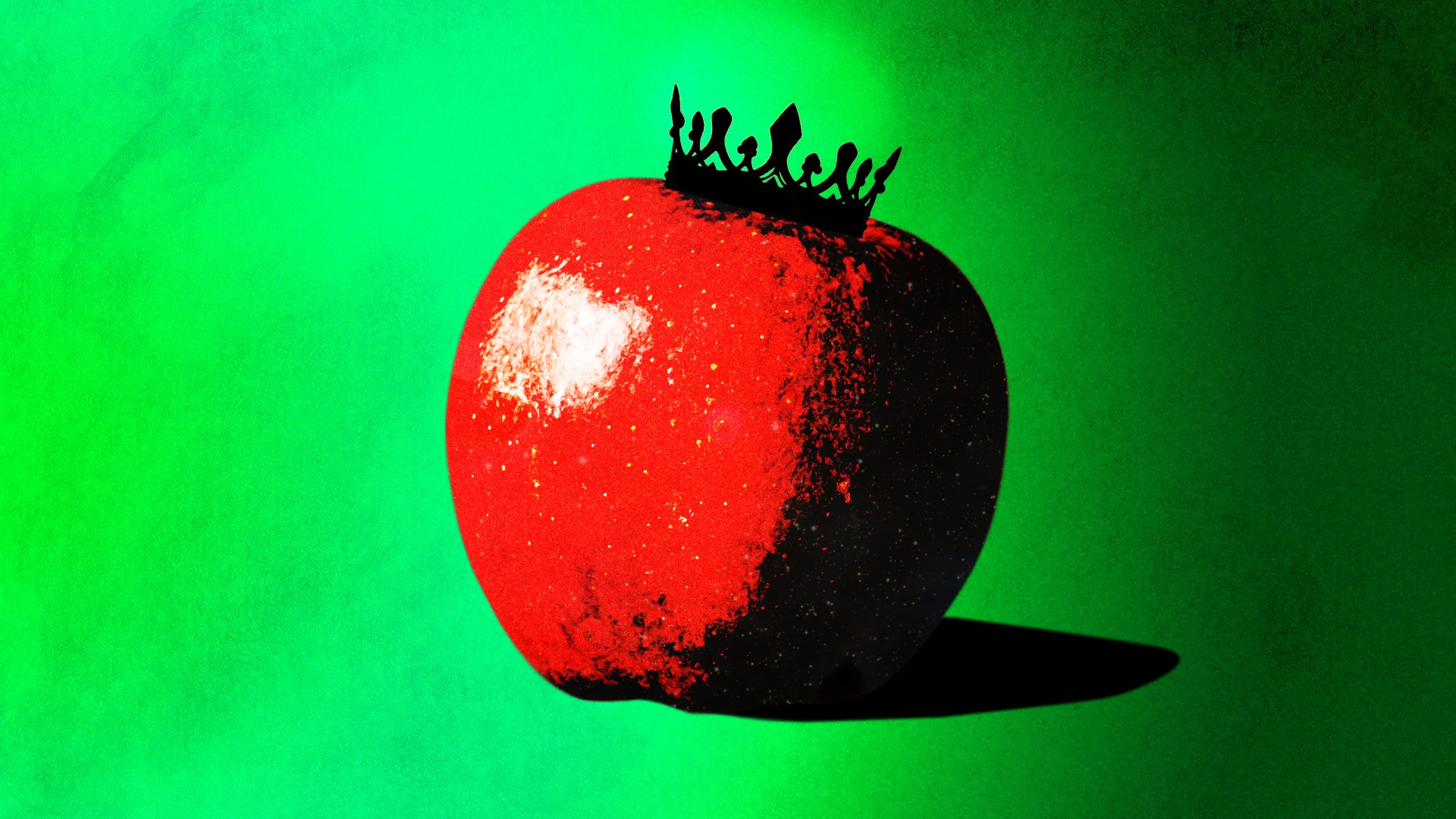
An apple, representing original sin, with a black crown on it.
Christianity Today May 4, 2026
Illustration by Elizabeth Kaye / Source Images: Getty, Unsplash

Kathryn Paige Harden, an American psychologist, once received a letter from a man who had been imprisoned since he was 16. His crime was unconscionable: kidnapping and sexually assaulting a woman. He asked her, “What would drive a boy to do such a thing?” Most of us rush past such questions, assuming the answer lies in the boy’s willful malice.

But Harden has spent her career slowing down to consider them carefully. Her recent book, Original Sin, aims to show that traits linked to criminal behavior, such as impulsivity, aggression, and risk-taking, are shaped in part by genetic inheritance. Add to this the influence of family systems, economic conditions, and mental illness, and the answer to cases like the letter writer’s grows more complex still.

The question of moral responsibility is not an abstract one. Nor is it easily answered. More than 40 percent of jail inmates have a history of mental health problems. A significant portion of those experiencing chronic homelessness live with conditions like bipolar disorder, severe depression, or psychosis. These conditions can impair judgment, distort reality, and diminish a person’s ability to act. Harmful behavior is often entangled with circumstances people did not choose. Given these realities, we must frankly ask: If people’s perception of reality is distorted and if their choices are deeply conditioned, can we still consider them guilty?


This question has taken on a fresh, existential urgency. Growing awareness of addiction, trauma, mental illness, socioeconomic forces, and interpersonal power dynamics has made it harder to view human behavior as the result of unconstrained choice. We seem to be left with two unsatisfying options: Either people are fully responsible, “free” moral agents, or they are guiltless victims. Neither option does justice to reality.

How can we hold moral responsibility and the reality of behavioral constraint together? The answer is found in an unlikely place—a more robust account of sin as both a human action and as a nonhuman actor.

As a child, I thought of sin as a misdeed—something I did that violated a law. That is biblical, of course (Ps. 51:4; Matt. 18:15; 1 Cor. 6:18). Later, I learned to see sin as a nature—a personal condition or disposition. This is also biblical (Gen. 6:5; Ps. 51:5; Matt. 15:19; Eph. 2:3). What startled me as I studied the Book of Romans is that Paul treats sin as a tyrant. Sin reigns, seizes, deceives, and kills (5:12, 21; 6:12; 7:8, 11). In Paul’s language, sin is something we do and something we have, but it is also something that acts upon us—it is the subject of active verbs.

I shouldn’t have been surprised, since the Bible introduces sin when God warns Cain: “Sin is crouching at your door; it desires to have you, but you must rule over it” (Gen. 4:7). Sin is in us. It is also outside us—crouching at our doors—to overpower and govern us.

Sin also animates cultures and institutions and even corrupts creation (Gal. 4:3; Col. 2:20). As Galatians 3:22 says, “everything” is now “under the control of sin.” Sin utilizes everything to constrain how people think, relate, belong, and behave. This is why human behavior so often feels both chosen and constrained, both ours and yet not entirely ours (Rom. 7:14–20).

Some will object: Aren’t these just metaphors for human predilections or a premodern attempt to explain human behavior before the insights of psychology and neuroscience?

The objection isn’t new. Rudolf Bultmann, one of the most influential theologians of the mid-20th century, urged Christians to “demythologize” the New Testament, thus reducing biblical language of cosmic powers to personal experience. His student Ernst Käsemann initially followed him. But then Käsemann watched respectable neighbors nod politely in church, support the Nazis, and look away. Käsemann realized no psychological or sociological explanation could account for what had overtaken his country. Evil was transpersonal and had agency. The New Testament’s language wasn’t outdated mythology, but the only framework that made sense of what he had seen.


Käsemann’s assessment is just as necessary now as it was during World War II. And even when we dismiss such mythical language, our instincts betray us. We still talk as though forces larger than us are shaping us. We say, “The media is deceiving the public.” We worry social media is rewiring our attention spans or Hollywood is discipling our kids. Such statements admit systems and structures act on us in real ways. Paul pushes us further: Behind these systems and structures, there is an even greater power at work: capital-s Sin.

This brings us back to our question: If Sin is a power that enslaves, how can we be held responsible? Doesn’t that cast humans as victims rather than responsible moral creatures?

It’s an important and modern question. As Friedrich Nietzsche pointed out in The Genealogy of Morals, “That idea—‘the wrong-doer deserves punishment because he might have acted otherwise’ … is in point of fact an exceedingly late, and even refined form of human judgment and inference.” Nietzsche’s point is that what feels obvious to us—that people are blameworthy because they could have acted otherwise—is a framework that developed over time. He presents Christianity as the mature expression of that framework.

On this point, Nietzsche is both perceptive and mistaken. He rightly sees that our assumptions about responsibility are not as timeless as they seem. But he misreads the Christian framework. Scripture does not ground responsibility in unconstrained freedom. Instead, it portrays human beings as both bound and accountable at the same time.

The apostle Paul, writing long before our modern assumptions, insists on both the enslaving power of Sin and the reality of human responsibility. He writes, “The mind governed by the flesh is hostile to God; it does not submit to God’s law, nor can it do so” (Rom. 8:7). Sin, he says, dwells without and within—seizing, deceiving, and killing (7:11, 17, 20). In other words, we are both morally enslaved and constrained.

Yet Paul also declares, “We will all stand before God’s judgment seat” and “All who sin under the law will be judged by the law” (14:10; 2:12). We will be judged.

What feels to us like a paradox—that humans are both captive and culpable—was for Paul simply assumed. The Scriptures don’t imagine responsibility as autonomous independence. Conditions beyond our control always shape and bind our actions. We are accountable—but within a world already charged with forces we did not choose. This is the category we have largely lost: Yes, sin is something we do but it’s also a power that acts upon us. Only by holding both these aspects of sin together can we make sense of our experience.

As Simeon Zahl has argued, modern Christianity often reduces sin to moral choices, while contemporary therapeutic culture tends to explain human behavior in terms of psychological wounds. Scripture refuses both reductions. It speaks of humans as responsible for their actions and yet bound by evil forces they cannot will away.

Addiction can help us think through being both responsible and culpable. We call alcoholism a disease, acknowledging something larger than the will is at play. Yet alcoholics remain responsible for their actions. The same is true with mental illness, which causes an immense amount of unchosen suffering. Yet as Zahl points out, there are “very real consequences of our psychological problems on those around us. … Saying my brain is broken doesn’t change the fact that the children get hurt, feel unnoticed and unloved, and wonder if it is their fault.” In both examples, there is real constraint and devastation.

Something deep within us—I would say it is the image of God—tells us situations like this demand both that we have an immense amount of compassion on the sufferer and that the sufferer’s sin be named and judged. We must hold together compassion and culpability. Yet we feel as though we must choose between them.

A more comprehensive understanding of sin frees us to live with this tension. Sin doesn’t erase agency, but it does entangle it. We feel this every day as we make choices yet feel caught in currents we didn’t choose. We are all victims and offenders at once, in need of both mercy and judgment.


This fuller view of sin changes how we see ourselves and those closest to us. Even when we rightly understand sin as both guilt and corruption, we can still become overly focused on the individual and treat sin as a matter of personal failure or bad habits. But if Sin also operates as a ruling power, our responses to evil must expand.

People don’t just need punishment or pardon; they need rescue and healing. And they need Christians who will not reduce their deep struggles to a single cause, whether lack of discipline, personality clashes, chemical imbalance, or unjust policies. Above all, they need people who can point them to the gospel of Jesus Christ. At the cross, Christ breaks the forces that enslave us (Rom. 6:6; Rev. 1:5) and judges our wrongdoings (Rom. 3:24–25). Here and only here, Christ ultimately resolves the dilemma our offenses raise.

Kyle Wells is lead pastor at Christ Presbyterian Church in Santa Barbara, California. He writes on biblical theology and Christian ethics for both the church and the academy.

Ideas

The Algorithm Is Changing How We Speak—and Strive

“Algospeak” capitalizes on our desire for attention and status. We should turn to God for both.

A group of people speaking in hashtags and social media phrases.
Christianity Today May 1, 2026
Illustration by Sara Tran / Source Image: Getty

I’ll typically start formulating ideas around 7 a.m. Thanks to a steady stream of information from my doctoral studies, my first instinct is to dig through the past 24 hours of reading to check for a properly sized diamond—size actually mattering in this case, since anything more than four sentences is pushing it.

If nothing comes to mind, I’ll check a Word file titled “thoughts” that currently extends to approximately 98 pages. I’ll pray for discernment as my eyes glide downward. Sometimes an aphorism is just right. Other times I’ll shut the file and just stare at the ceiling and sound out words in my head until something feels sticky, interesting, insightful, or, what invariably performs best: funny.

Once something settles in, I type it out. There’s a specific rhythm and cadence that works. Bold-faced font for what’s important. Use an em dash and colon wherever possible. John-Mark-Comer-space your sentences. But the hardest part—the challenge to the moral backbone—is the tension between doing what works and what’s earnest and meaningful. Being online brings the dedicated poster, predictably, into that weird space between selling one’s own soul for exposure and offering sincere thoughts that resonate.

I hit Send and then delete the Substack app so I can get back into undistracted flow.

This is a morning in the life of a part-time content creator. I prefer the term writer, but even for a writing-driven platform like Substack, writers have to become, effectively, content creators to get in front of readers. I’m in the content grind with plenty of other writers, artists, and creatives, chipping away at the void, submitting to the yoke of platform-building in attempts to get the industry to take our work seriously.

But after keeping this habit for a while, I noticed something strange: The more data I gathered from analyzing what kinds of posts “worked,” the more the cadence, style, and rhythm of my short online writing seeped into everything else I did—my lectures, sermons, and emails.

Even more troubling, social media algorithms were also shaping what I wanted to say. Beyond just influencing little quirks of formatting and grammar, my desire to get ahead of the algorithm was influencing my other desires, and, consequently, my vision of the good life.

I didn’t realize how common this was until academic linguist Adam Aleksic (better known as Etymology Nerd) provided an overview in his book Algospeak.

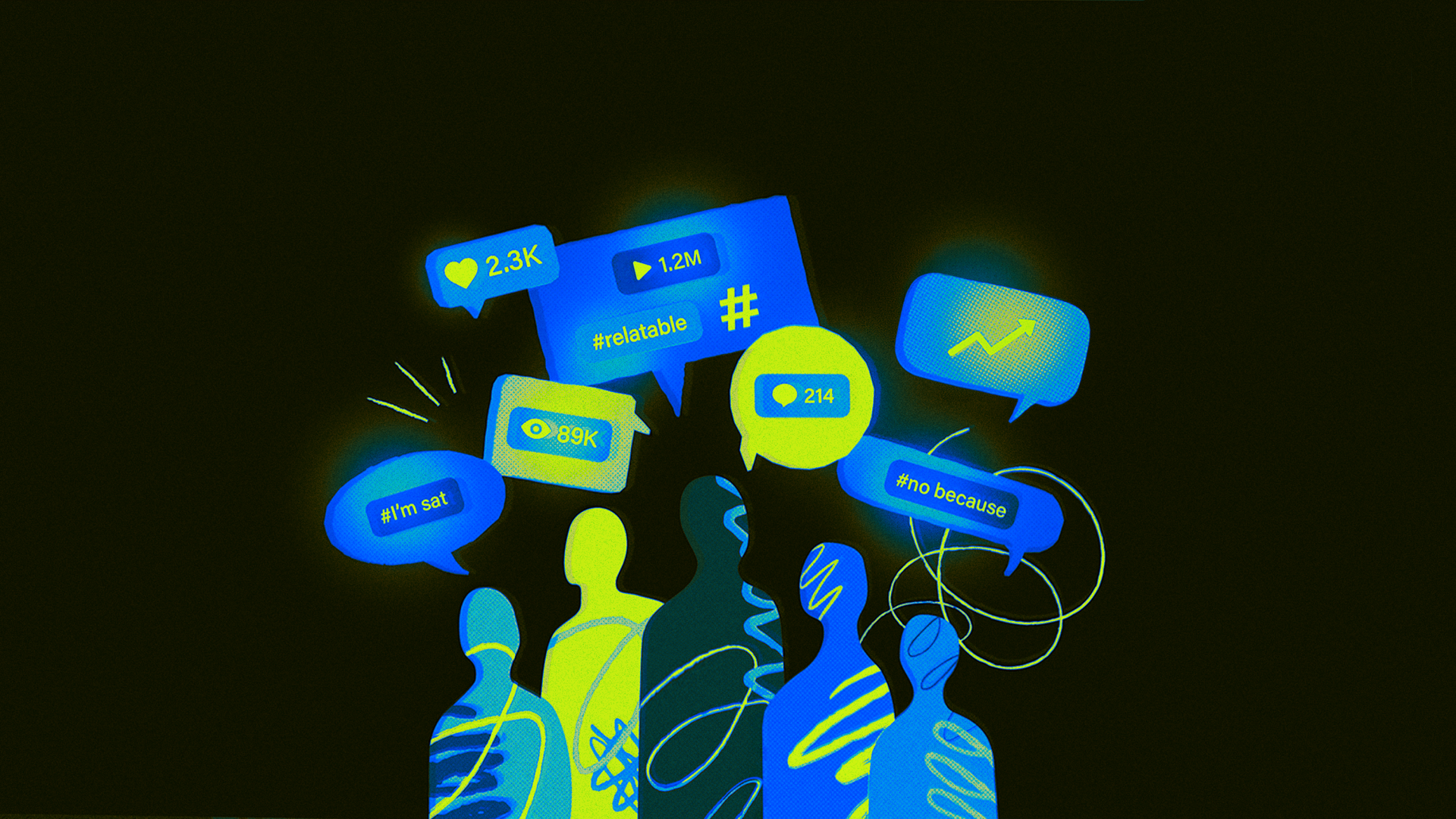
“Algospeak” is essentially how social media algorithms transform our communication. Sometimes this looks like self-censoring content so that it doesn’t get “shadowbanned” (when a post gets hidden because the algorithm detects inappropriate or controversial language). Kill becomes unalive, for example.

Beyond euphemisms, though, algospeak is also about prioritizing trendy keywords. Starting a TikTok video with the phrase No because or I’m sat for this has more potential for virality because the algorithm knows those phrases attract more engagement.

This is not just slang for slang’s sake; users learn to speak in code to give their content the chance to perform well. Algorithms implicitly teach us which words capture or repel attention. And as anyone who spends time around young people knows, algospeak has bled offline.

I asked my friend Jenna Mindel how algospeak influences her own work. Not only does she have an audience on Substack, Instagram, and TikTok, but she’s also a content specialist who oversees pop-culture and teen slang for Axis. “I keep the algorithmic model in the back of my head as I make content,” she told me.

Having majored in journalism, she said, “it’s not all that different from how a journalist approaches an article.” She starts with a hook to keep a viewer interested, then does her best to make sure the rest of the video creates value and payoff.

Surprisingly, Mindel also said that starting a video with popular slang phrases doesn’t really cross her mind as “inauthentic”—as if it’s a sly trick to boost engagement. As a 24-year-old woman, those terms are so in the water that it just feels like a natural way to talk. (And, of course, these phrases often originate within various real-world communities before later bleeding into the broader culture through social media. But without the internet, I fear, many of us wouldn’t be jokingly punctuating sentences with “I fear.”)

Perhaps some Not Very Online readers are thinking, Okay, but this isn’t really relevant for me. Yet, Aleksic emphasizes, “whether you’re on social media or not, you’re still in a café or a bar, and you hear a Sabrina Carpenter song that got popular because of [social media] algorithms. The language that you end up adopting, or that your kids end up adopting, is still going to be coming from [an online platform’s] algorithm, whether you like it or not. You can’t just bury your head in the sand and pretend it doesn’t exist.”

Culture is now downstream from algospeak.

Is this an issue? Or is it just natural? After all, younger generations have always dreamed up new ways of speaking to differentiate themselves from adults.

But I think the urge to use algospeak creates a big problem, particularly for the church. As I’ve seen in my personal life, algospeak reinforces and capitalizes on our desire for attention and status. Perhaps if I change the way I write or post, people will notice me? Perhaps I will become an established sigma via mogging my writing competitors?

Morphing our own patterns of communication to fit some ever-changing algorithm turns us into people who speak the same language, want the same things, and measure ourselves by the same metrics. Even if an artfully crafted 7 a.m. post pops off on the Substack algorithm, I can’t help but think: Are these aspirations going to lead me deeper into a flourishing life?

Anyone who gets sucked into algorithms—myself very much included—is confronted with this reality sooner or later: Algorithms can’t make us happy. They can’t provide a satisfaction that lasts any longer than a scroll through our notifications.

Thankfully, Jesus’ vision of the good life didn’t include seeking popularity. While other ancient thinkers like Aristotle taught that honor was the highest of the worldly goods, the Gospels depict worldly honor as something corrosive. Jesus’ abundant life involved becoming so unconcerned about praise from others that we only crave reward from God (Matt. 6:1–18). He says when you pray, don’t make a show of it; instead, pray to your Father in secret and he will reward you (vv. 5–6).

When we think “reward,” we often think material or social gain—as if God might reward us by magically granting us the corner office or influencing our crushes to requite our unrequited affections. But New Testament scholar Frederick Dale Bruner notes that this “reward” is relational. He even argues that we should think of it as meaning “impressed.” That’s shocking to think about, that we can impress a God who has parted seas and raised the dead.

But what father isn’t impressed with his child’s magic tricks or piano recitals? Maybe God delights in our attempts to do things that delight him and him alone—not seeking praise from the world—simply by virtue of our childish desire to please him (Matt. 18:3).

And just like a child seeking a father’s approval, it’s good and healthy for us to want God’s.

Other worldviews like Stoicism argue for suppressing our desire for attention. Christianity, by contrast, teaches that human beings are made in God’s image, and part of that design involves our desire to feel noticed and loved. Jesus asks us to redirect our desire for recognition away from people who can never satisfy and toward the only one who can fulfill us with his love.

Remembering this can be the best medicine against creating content for the sole purpose of boosting exposure, writing for the sake of clickbait, or catering our preaching toward viral sound bite clips. We are called to create for the only one whose attention really satisfies.

This isn’t to suggest we can’t have redemptive goals in making content. Mindel, like myself, is cautiously optimistic. “It’s hard to stay authentic on social media,” she said. “I think it’s fair to say it’s impossible to do it perfectly. But you can still be yourself while sharing your message in the particular shape that a platform asks you to conform to.”

There are healthy ways to be online. We have to stay vigilant—taking days off and reminding ourselves why we’re really doing what we’re doing.

Most mornings I still delete the app. And also most mornings I still redownload it sooner than I’d like to admit to check the numbers. But I’m trying to become more interested in a different audience than the one the algorithm can give me. We have a God who is genuinely looking forward to whatever clumsy, half-formed prayer or journal entry we bring him. And aspiring toward that will never let us down. It’s a better reward than anything an algorithm can offer.

Griffin Gooch is a writer, speaker, and professor currently working on his doctorate at the University of Aberdeen. He writes most frequently on Substack.

Books
Review

When Faith Feels Cloudy

Three books for the doubting Christian.

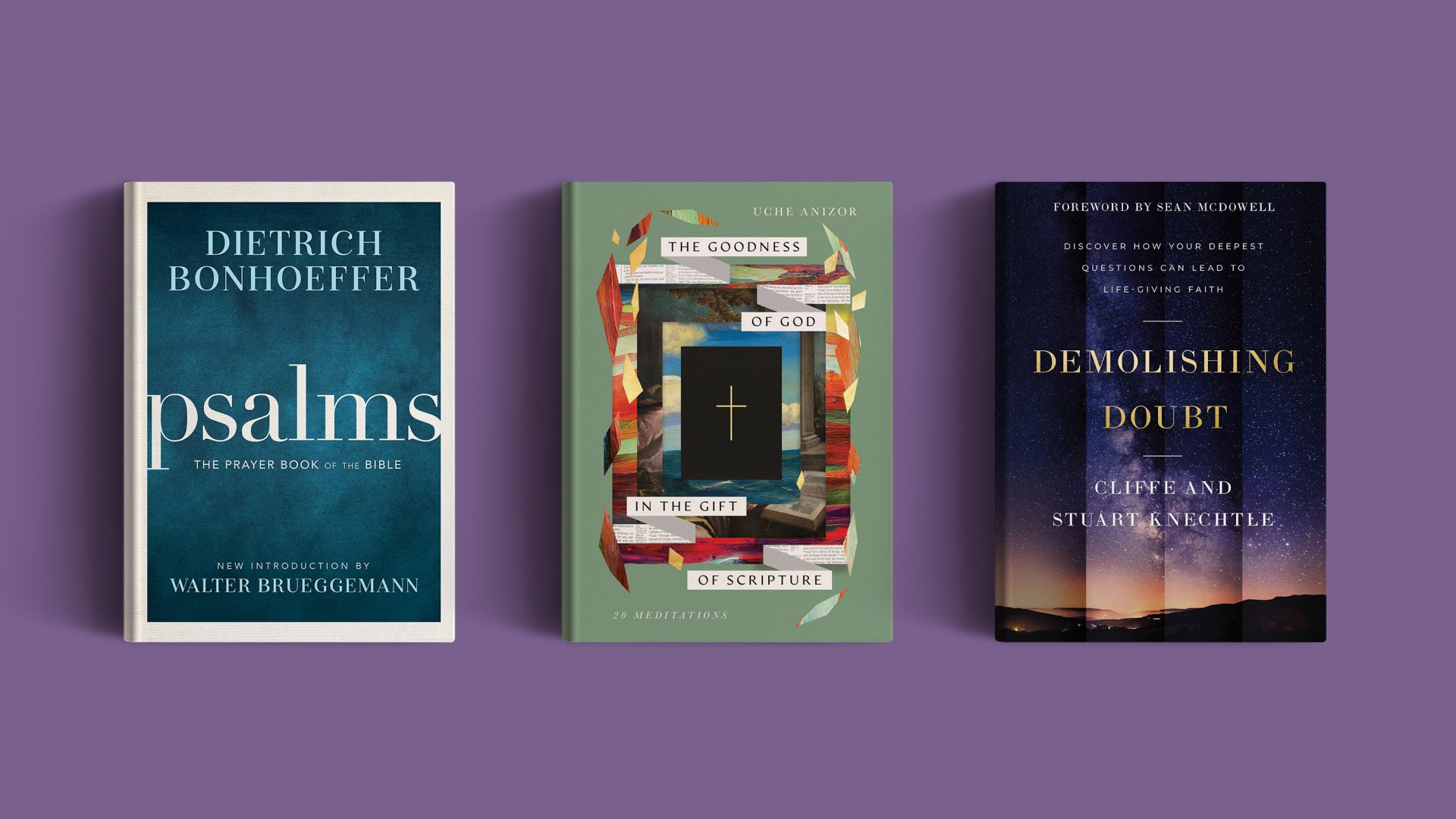
Three books on a purple background.
Christianity Today May 1, 2026
Illustration by Christianity Today

This piece was adapted from CT’s books newsletter. Subscribe here.

Cliffe Knechtle and Stuart Knechtle, Demolishing Doubt: Discover How Your Deepest Questions Can Lead to Life-Giving Faith (Zondervan, 2026)

Demolishing Doubt: Discover How Your Deepest Questions Can Lead to Life-Giving Faith

Demolishing Doubt: Discover How Your Deepest Questions Can Lead to Life-Giving Faith

Zondervan

272 pages

For many, the beginning of a faith journey is marked by certainty. We may not have a full grasp on every theological detail, but we are certain that Jesus is the only way to eternal life. Then something intersects our path that leads us to start asking questions. It could be a season of suffering or an unexpected conversation with a skeptic. Either way, what once seemed clear is now cloudy. Where we were so certain, we now are struggling with doubt.

The real issue, though, is not the doubt itself—it is how we handle it. As tempting as it might be to avoid anxious thoughts, if we choose to actively engage our doubt, we are bound to find a deeper, more radiant faith on the other side.

Cliffe and Stuart Knechtle’s new devotional directs us into this type of honest engagement. They begin by reframing doubt as an inevitable tunnel we’ll walk through on our journey to truth. “I don’t understand how any person could express deep and authentic belief in God and somehow make it through this life without encountering skepticism at some point,” the father-son duo write. “There’s so, so much we as human beings will never know. There’s always room for humility. There’s always room for doubt.”

But the Knechtles don’t leave the reader swimming in uncertainty. With winsome clarity, they walk through the most common questions our skepticism might lead us to ask, including ones about the existence of God, the trustworthiness of Scripture, and the resurrection of Jesus.

While they provide evidence grounded in research, the Knechtles also invite the reader to challenge the validity of their questions. Our doubts, they suggest, can sometimes be our attempt to “reshape Jesus to fit our naturalistic presuppositions or culturally conditioned skepticism.” It’s easy to believe that human progress has made us wiser than those who have come before us. I am grateful for how they answered common questions while graciously critiquing their roots.

Uche Anizor, The Goodness of God in The Gift of Scripture (Crossway, 2026)

The Goodness of God in the Gift of Scripture: 20 Meditations

Where the Knechtles’ book addresses the rational validity of our faith, Uche Anizor addresses the question of whether life with God is actually good. Eventually in our spiritual walk, most of us will quietly wrestle with whether the instructions, promises, and truth God has expressed through Scripture lead to the flourishing life we long for.

Rooted in Psalm 119, Anizor’s book answers this question by offering meditative reflections on the multifaceted ways God’s Word is “a gift given for our earthly and eternal happiness.” In each chapter, the reader will see how the blessings we receive through God’s Word connect to the longings we have as humans. Whether it is peace, hope, joy, or wisdom, the Scriptures point us to the truth that what our hearts desire can only be found in God.

The compounding nature of this book left me rejoicing that God was gracious enough to speak to us through his Word to show us this truth. As Anizor writes, “This book of meditations is meant to be just that: meditations, reflections on God’s many-splendored kindness in giving his word. The goal is to simply fuel our love and appreciation for all that God’s word is to us and all that God wants to be for us through his word.”

Dietrich Bonhoeffer, Psalms: The Prayer Book of the Bible (1940)

Psalms: The Prayer Book of the Bible

Psalms: The Prayer Book of the Bible

Broadleaf Books

98 pages

Dietrich Bonhoeffer’s book addresses a final important question—how we can experience more of God. Using the Psalter as a guide, it provides time-tested wisdom, showing how we can deepen our intimacy with God in the way he desires.

Each brief chapter covers a specific type of psalm, showing how they uniquely train us to pray according to the way God speaks, thereby transforming our hearts to align with his. With each reflection, we are invited to linger in a space of remembrance, confession, and exhalation for the riches that God bestows on us through Christ.

Bonhoeffer writes, “Prayer does not mean simply to pour out one’s heart. It means rather to find the way to God and to speak with him, whether the heart is full or empty. No one can do that on one’s own. For that, one needs Jesus Christ.” His book leaves readers with a refreshed imagination for how the Psalms teach us to pray like Jesus and, in doing so, draw us into deeper fellowship with God.

For readers in a season of spiritual doubt, these three books offer a space to wrestle without shame. Designed to be read slowly, each one meets people in their skepticism, disappointment, or disillusionment and guides them to the other side, where a deeper faith and anchored truth reside.

Elizabeth Woodson is a Bible teacher, a theologian, an author, and the founder of The Woodson Institute, an organization that equips Christians to understand and grow in their faith.

addApple PodcastsDown ArrowDown ArrowDown Arrowarrow_left_altLeft ArrowLeft ArrowRight ArrowRight ArrowRight Arrowarrow_up_altUp ArrowUp ArrowAvailable at Amazoncaret-downCloseCloseellipseEmailEmailExpandExpandExternalExternalFacebookfacebook-squarefolderGiftGiftGooglegoogleGoogle KeephamburgerInstagraminstagram-squareLinkLinklinkedin-squareListenListenListenChristianity TodayCT Creative Studio Logologo_orgMegaphoneMenuMenupausePinterestPlayPlayPocketPodcastprintremoveRSSRSSSaveSavesaveSearchSearchsearchSpotifyStitcherTelegramTable of ContentsTable of Contentstwitter-squareWhatsAppXYouTubeYouTube