Ideas

To Write Well Is Human

Contributor

Using AI to write is a disordered and deforming means of fulfilling a good desire. The church must offer something better.

A pile of blurry green digital-textured books.
Christianity Today April 9, 2026
Illustration by Elizabeth Kaye / Source Images: Unsplash

A major publisher recently pulled a new novel for a novel reason: a strong suspicion that the book was at least partially written by a generative artificial intelligence app. This is likely to become an increasingly common pattern in the world of trade publishing, and new research suggests AI-generated writing is widely infiltrating American newspapers.

I’m seeing the same pattern firsthand as an editor for Mere Orthodoxy, a contributor to many other publications (like CT), and the director of a master’s degree program in creative writing. I’ve had conversations with multiple frustrated editors from a wide array of publications—large and small, Christian and secular—about the dramatic rise in article submissions they believe to be written with AI. Even publications that don’t pay writers are running into this issue!

Editors now must spend time playing AI detective. This technology is often hailed as a time saver, but it’s taking up editors’ time.

Other writers have already made compelling arguments against using AI in writing and editing, so I won’t rehash those here. Instead, I want to address related questions I’ve not seen sufficiently considered: What does this explosion in AI writing mean for the church specifically? And how should we train Christian writers in the age of AI? 

Before I come to those questions, though, two observations. First, the popularity of AI-generated or AI-assisted writing is in part evidence of a good desire: to write. 

Whether they hope to produce novels, poetry, or essays, many people who write using AI want what writers have always wanted: to take perfectly ordinary words and turn them into something extraordinary. There’s something transcendent and soul-moving to beautiful writing, no matter the genre or shape of the piece, because writing—as other creative endeavors—reflects our basic nature as image bearers of God. Just as our God is a creator, we have a desire to create things of beauty, including with our words. 

This desire is good, but as with so many good and godly human desires after the Fall, the means by which we seek to fulfill it can become disordered. Using AI to generate text is just such a disordered means. Often, it is used in a lie, an attempt to pass off words you did not write as your own. Even if you aren’t plagiarizing—stealing from—another human writer, you are lying to your readers. Many people who use AI to write understand this, I think, which is why they tend to hide it, much like Adam and Eve hid from God after their transgression in Eden. 

Even when writers are open about the AI functions they use, however, the practice remains deceptive—not about the text but about the author. It presents the writer as the kind of person who could produce the insights or arguments on the page while skipping over the time, work, education, or other formative experiences needed to actually make such a person.

This brings me to my second, related observation: Those who turn to AI for writing are seeking help to become better writers, but they’ve chosen a terrible teacher.

I am convinced that many writers who resort to AI would figure out a way to fulfill their vision themselves, without AI assistance, if they had the time and resources to do so. They use AI because they lack the ideas or tools or basic know-how to write on their own. AI offers them a way to create something, but it typically produces subpar work and, more to the point, conveys no real or durable skill. A chatbot can write unlimited essays for you, but it cannot develop moral or aesthetic intuitions for you, because that requires the labor of your own mind and training of your own habits.


So many people have a good desire to write and easy access to a disordered means of fulfilling that desire. This will affect our politics, of course, and indeed our whole civilization. But what about the church? 

As Christians, we are called to love God with all our soul, heart, mind, and strength (Luke 10:27). Using AI to write robs us of opportunities to fulfill this commandment. With enough use over enough time, it will reduce our capacity to read the Bible, to reflect on it, and to teach and preach it to others

The loss here is particularly great for pastors, who must present God’s Word to their flock. The now-ubiquitous availability of AI writing tools presents them with a constant temptation, the promise of a quick fix for late nights of work and the natural slowness and inefficiency of the human mind. It takes time to think, sit with a text, and think even more before penning a sermon—but that time is itself the work of pastoring. It is formative. It is what makes you the kind of person who can offer wise and biblical guidance to a flock.

For the church, then, AI writing is a direct assault on the moral character and growth of believers. It presents a formational threat to Christians, an invitation to take the easy path in our creative work, and in the process deforming our creativity altogether. In this regard, AI in the church may be the culmination of what theologian Carl Trueman describes as the “desecration of man” in his new book by this title.

So how do we train Christian writers in this context? Even if our answers to this question aren’t groundbreaking—none of the resources I’ll mention in a moment are new—we must be ready with answers. 

Faced with a good and godly desire being fulfilled in a disordered way, the church is right to offer something better. “Which of you, if your son asks for bread, will give him a stone? Or if he asks for a fish, will give him a snake?” Jesus said. “If you, then, though you are evil, know how to give good gifts to your children, how much more will your Father in heaven give good gifts to those who ask him!” (Matt. 7:9–11) God’s people can help foster the good gift of creativity by training writers well.

Much training is already available for Christians who want to grow as writers. To name just a few examples, local libraries often offer free workshops, classes, and accountability groups for amateur writers. For pastors and those who write resources for the church, The Gospel Coalition offers writing cohorts led by well-published writers and editors. For those seeking a formal degree, Christian master’s programs (like the one I direct) pair students with writing mentors who help them develop a book-length project in their genre of choice, in service to the church.

Predictions abound about the skills and careers that AI will render obsolete, and perhaps those predictions will prove true. But good thinking—the foundation of good writing—will always be necessary, if not for the economy than for our life in the church, with each other and before God. However the technology develops, this anthropological truth will remain: To write well is human.

Nadya Williams is a homeschool mom, a writer, an editor, and the interim director of the MFA in creative writing at Ashland University. She is the author of Cultural Christians in the Early Churchand Christians Reading Classics and is books editor at Mere Orthodoxy.

Theology

The Bible Doesn’t Justify War Crimes

Columnist

Old Testament warfare ultimately points us to the Cross, where God’s justice and mercy meet in Christ.

U.S. President Donald Trump answers questions during a press conference on Iran on April 06, 2026 in Washington, DC.

U.S. President Donald Trump answers questions during a press conference on Iran on April 06, 2026 in Washington, DC.

Christianity Today April 8, 2026
Illustration by Christianity Today / Source Image: Getty

This piece was adapted from Russell Moore’s newsletter. Subscribe here.

As of my writing this, the United States and Iran have agreed to a two-week cease-fire. Earlier this week, the president posted a profanity-laden Easter message promising that Iranians would be “living in Hell” if they did not reopen the Strait of Hormuz. After that, he threatened to wipe out “a whole civilization” in what would have been at best a war crime and at worst a genocide. Regardless of whether the cease-fire holds, we have crossed a scary threshold in American life. And in this flurry of words, there is one Christians especially should not miss: hell.

Back in the days of hippie counterculture, a song by John Lennon asked the world to envision world peace. All we had to do was “imagine there’s no heaven.” “It’s easy if you try,” Lennon told us—and indeed it is, in this world red in tooth and claw. The result would be people all over the world uniting as one, Lennon sang, “living for today.” The song was silly and utopian and brings to mind how easy it was for Joseph Stalin and Mao Zedong to imagine that above them was “only sky.”

Now we face a mirror image of all that, and it has a bit more truth to it: Imagine there’s no hell. And if there’s not, bombs away.

What’s more is that some of those justifying or looking away from the possibility of war crimes use the Bible to make their claim. One person, in telling me he supported the carpet-bombing of entire civilian populations, told me we would be no less justified in doing so than Joshua was in taking out the Canaanites in the Land of Promise. We can expect to hear that language more in the days to come, whether in the Middle East or elsewhere, whenever someone wants to advocate in a social media attention economy for what any previous American generation would have seen as war crimes.

But that’s not true.

I write those words as someone who is not the least bit embarrassed about Joshua. One of my first sermons was on 1 Samuel 15:33, which says, “And Samuel hacked Agag to pieces before the Lord in Gilgal” (ESV throughout). And I would preach it today exactly the same way. I have no sympathy whatsoever for those who suggest the Old Testament version of God is bloodthirsty and immoral. Instead, I agree with the assessment of Marilynne Robinson: “A great many of us feel an emphatic moral superiority to the God of Abraham, Isaac, and Jacob. This is surely bizarre, since to say the least Jesus shows no impulse at all to dissociate himself from him.”

The problem is not with Joshua but with those who do not read the Bible and then hide behind it to justify what it condemns. This is precisely the problem the Orthodox Presbyterian scholar Edmund Clowney identified in those who try to apply the Bible as a jumble of chaotic examples to follow rather than one coherent story line held together by Christ.

“Dreadful consequences have ensued when blindness to the history of revelation was coupled with the courage to follow misunderstood examples,” Clowney wrote. “Heretics have been hewed to pieces in the name of Christ, and imprecatory psalms sung on the battlefields.”

Joshua against the Canaanites and Samuel against the Amalekites fit into the flow of redemptive history. They were part of a covenant nation with specific revelation from God for those entrusted with the sword of his justice. It is not immoral for God to take life. He holds every breath, and when he takes it away, we die (Ps. 104:29). But it is immoral for someone to take the life of another innocent human being (Ex. 20:13)—even more so when the murderer pretends to speak for God (1 Kings 21:8–19).

The warfare of Joshua and of the kings immediately following him was the warfare of the anointed, those tasked with carrying out God’s judgment, precisely for the purpose of demonstrating what God’s ultimate justice would look like. The warfare of the Old Testament points us not toward future armies of Christian jihadists but to the Cross, where God’s justice and mercy meet over Jesus himself (Rom. 3:21–26).

As Clowney noted, the task of judgment has now been handed to another Joshua: the Lord Jesus Christ. He did not tell us to use a sword—he specifically disarmed the church by telling Peter to put away his weapon (Matt. 26:52–54). Instead, he gave us “keys” (16:19) through a gospel that warns of judgment but offers mercy.

That’s why the apostle Paul applied the language of warfare specifically not against “flesh and blood” (Eph. 6:12) and specifically not to earthly violence (2 Cor. 10:3–4) but to the proclamation and embodiment of the gospel. The Old Testament’s command to the covenant nation to “purge the evil person from among you” now applies not to the civil authorities but to the church, not to physical violence but to spiritual discipline, not to the outside world but to the inside (Deut. 17:7; 1 Cor. 5:1–13).

There is a place for the sword of justice in maintaining order, but God has carefully limited who can carry it, how it can be wielded, and whom it can strike (Rom. 13:1–6). Anyone who claims to speak for God in using means of violence he has forbidden claims an anointing in conflict with Jesus himself—meaning it is, quite literally, anti-Christ. To speak for God where God has not spoken is to take his name in vain. To speak for him to justify what he has forbidden is even worse (Deut. 18:15–22).

Those who would use the Bible to justify setting no moral restrictions on war (other than the power to carry it out) treat the Scriptures much the way a prosperity-gospel evangelist treats the promises of blessing, fertility, and abundance to Israel in the Old Testament. In both cases, the arguer bypasses Christ and goes directly to the believer, as though the blessings and curses were not mediated through the goal to which they pointed: Christ and him crucified (Gal. 3:10–14).

To apply the warfare of Joshua or Saul to the United States or any other military is akin to seeing Solomon’s concubines as an example to apply directly to our own marriages, an option Jesus specifically denied (Matt. 19:3–8).

But in line with the Bible, those who wield the sword are held accountable for the use of it. And that means the language of hell is quite relevant. We can do in God’s name what he forbids only if we really do not believe that he is there, that we will stand in judgment before him. In other words, to do this evil, we must be convinced that there is no hell. When we take that bargain, we had better be right. Otherwise, there’s quite literally hell to pay.

War is complicated, and often it generates morally ambiguous questions with which we must wrestle. Targeting civilian populations and wiping out entire civilizations are not among those hard dilemmas. War is not hell, but war can make us hellish. And the way we wage war can send us there.

Let’s pray for those who make these decisions and for those who must bear the consequences. But let’s also pray for souls. Those who sing “Onward Christian Soldiers” must ever ask in what direction they’re marching.

Russell Moore is editor at large and columnist at Christianity Today as well as host of the weekly podcast The Russell Moore Show from CT Media.

History

The Rise of the Religious Right

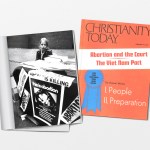
CT called for caution as evangelicals flocked to vote for Ronald Reagan.

An image of Ronald Reagan and a magazine cover from the CT archives.
Christianity Today April 8, 2026
Illustration by Christianity Today / Source Images: Getty, CT Archives

CT has always argued that Christians should be active in the public square and that the Bible has relevant things to say about contemporary life, including politics. But in 1980, editors expressed concerns about simplistic applications of Scripture at the ballot box.

There is no biblical text to tell us which candidate should be president. There is no chapter that contains an economic blueprint for the international economic order in the 1980s. … That does not mean that Christians should derive their economic and political views entirely from secular theories. There are biblical principles that have profound importance for our politics.

Certainly the application of those biblical principles to concrete situations today is an extremely complex task. People equally committed to biblical principle disagree strongly over specific social programs. That disagreement among Christians is legitimate and healthy.

But Christians ought to be willing to regularly discuss these conflicting proposals with those who disagree with them in a spirit of prayer, openness to the Holy Spirit, and unconditional submission to God’s Word. The more deeply our politics are grounded in biblical principles, the more Christian they are.

Founding editor Carl F. H. Henry returned to the pages of the magazine to warn evangelicals about bandwagons and the risks of partisan politics. 

Resurgent evangelical interest in politics is to be welcomed and commended. Yet some observers fear—and with good reason—that this involvement may eventually become as politically misguided as was the activism of liberal Christianity earlier in this century. … 

The grassroots multitudes are calling for leaders of godly character and commitment in national affairs, and for an end to the erosion of biblical values. Complicating the present election debate is the emergence of several evangelical groups professing to provide scriptural guidance for the evangelical community. 

Jerry Falwell’s Moral Majority promotes corporate prayer in public schools, as does Leadership Foundation, whereas the Baptist Joint Public Affairs Committee along with the National Council of Churches resists it. Coalition for Christian Action, Christian Voice, Christian Embassy, and lesser known groups all actively support politically conservative candidates. Heartened by the impact of prolife forces and the Supreme Court’s decision against welfare funding of abortions, evangelical groups hope to expand their campaign against liberal misperceptions of the good. …

Many evangelicals are intellectually unprepared for energetic social engagements. They do not discern the connections between theology and ethical theory and strategy. They wish to go beyond mere negative criticism of controversial ecumenical commitments, yet are largely cast on nonevangelical initiatives.

The magazine offered its own “energetic social engagements” on several important issues in 1980, including the ongoing energy crisis, caused by a drop in Middle East oil production. The president of Moody Bible Institute discussed how Christians should respond

The energy problem should remind us that human solutions have human limitations. We are in a dying world. But how can Christians respond to the energy crisis? First, they should look to God to bring them through the stormy seas that may lie ahead. Our confidence is in the Lord, come what may. He is sovereign, and he can be trusted.

Second, Christians need God’s help to be examples to the world. Wasting energy is as much an act of violence against the poor as refusing to feed the hungry. Since we know that what we have is out of proportion to what other people have, it should make us uncomfortable, motivated to take action.

Americans debated alternatives to oil and coal in 1980, including nuclear power. CT asked an evangelical engineering professor to weigh in

Evangelical faith demands that the consequences of sin be taken seriously. … We will avoid the idea that Eden can be planted in the world without turning to impale ourselves on the flaming sword in a doomed attempt to reenter Eden. We will accept the cursed and temporary status of our earth and work within those limitations. We are at last ready to realize that an infinite growth of both population and living standard is impossible. … 

The realistic appraisal of human nature found in Scripture provides an important part of our protection against abuse. Humans can never be expected to be perfect, and the rule of law is our defense against inevitable consequences. This constructive approach leads to what one might describe as Christian environmentalism: regulation in which continual watchfulness is applied to all our organizations, especially those that are commercial. This watchfulness is institutionalized through government, but when government becomes the agent of romantic environmentalists, its regulation becomes negative and destructive, for it tries to reach the impossible ideal of a risk-free society.

But government regulation can be constructive when it is not chasing an impossible ideal. Considerable gains have already been made in this direction by the environmental movement. As a result, a substantial cleanup of air, water, and land is now under way, involving every industry.

Another big issue was stopping government funding for abortion. CT reported on the legal battle over the Hyde Amendment.

Prolife groups cheered the Supreme Court’s June 30 decision upholding the constitutionality of the so-called Hyde Amendment. Named for its original sponsor, Congressman Henry Hyde (R-Ill.), the four-year-old measure bans Medicaid financing of all abortions except those necessary to save a mother’s life, or in cases of promptly reported rape or incest.

The Supreme Court rejected a January lower court ruling by New York Federal District Court Judge John F. Dooling, Jr., who said the amendment violated the constitutional rights of poor women. While acknowledging a woman’s right to abortion, the Supreme Court declared that this freedom does not give a woman the constitutional claim to money to pay for the abortion. …

When in force, the Hyde Amendment would cut from 300,000 to about 2,000 the number of abortions paid for annually through federal aid. About 1 million abortions are performed every year in the U.S.

Not every issue facing Christians at the start of the new decade was so serious. In a regular column addressing ministers’ questions, CT ran a piece on the importance of pastors getting exercise

Everyone knows the physical benefits of running. Increased energy, lowered risk of heart attack, and reduced weight head the list. The mental benefits—self-confidence, relaxation, and that unspeakable “runner’s high”—are touted from a hundred magazines and books. Those benefits are real and reason enough to keep me going, but as a pastor I have additional reasons to run.

Running humanizes a pastor. So often my people meet me only on spiritual grounds. … On Sundays I am wearing a robe that proclaims my status as ordained, and during the week I am properly attired as befits my reverend dignity. It is easy for them to think that I am a spiritual being inhabiting only a spiritual world. But when they know I run, they realize there is at least one very physical part of me. They may think that my head is in the clouds, but they know my feet are pounding the ground. That knowledge can help bridge the gap that so many church customs tend to establish.

It is hard for me to look ceremonious and holy when I am straining to finish a run. My hair is sticking out wildly, my face flushed, and my shirt drenched. More than once one of my people has seen me in that condition. Their response is to shout and wave. Then they make a special point to tell me they have seen me. Part of the joy in their retelling of the encounter is the tacit statement, “You may fool some of the people by looking so cool and dignified in your black robe, but I have seen the real you.”

CT also found time to praise The Empire Strikes Back and rave about Bob Dylan’s latest album, Slow Train.

“Slow Train” is more than a testimony to Bob Dylan’s completion into the Christian faith: it is a call into the bars, into the streets, into the world, to repentance, to “the man on the cross … crucified for you. Believe in his power, that’s about all you’ve got to do!” …

Bob’s new album is a special success: not only for him personally, as God will contrive to work through him as a person; but also musically, as it reaches for the shadows. It beseeches a decision from the hardest hearted, the one who is hardest to find, the outlaw—that one who never committed himself for fear of being hurt. It is an inspiration to all brothers and sisters.

The magazine published a review of Dallas, the most popular soap opera on prime-time television. A Wheaton College professor argued that the show brought “images of evil back into focus.” 

J. R., the eldest Ewing brother on the TV show Dallas, has become, as they say, “a legend in his own time.” … J. R., like his literary ancestors, is evil: unmitigated, unabashed, pure evil. He, as they, often wears the disguise of virtue, but the audience can always count on the dramatic irony of his corrupt intentions; we know he’s out to pervert and destroy everybody. The more his villainy suggests the diabolical, the more mysterious he becomes. And mystery is in short supply on television—real mystery, not merely suspense.

He is so very attractive because he makes the fictional cosmos of Dallas multidimensional; by his presence he lends the show the structure of Christian cosmology: heaven and earth and hell. And this is what makes the show so unusual (at least before its offspring were born) and so likeable.

In the real-world drama of the election, Republican candidate Ronald Reagan won decisively in November, taking majorities in 44 of 50 state contests. CT commended Religious Right leaders for motivating and mobilizing evangelicals, but also sounded a note of warning. 

We must acknowledge an important role played by Jerry Falwell, Pat Robertson, James Robison, and other representatives of organizations representing politically conservative segments of evangelicalism. We commend them for getting Christians to register and vote; these are clear Christian duties. 

For the first time in half a century, evangelicals generally became involved in a national election. They registered, took sides, worked actively to select candidates they preferred, and voted their choice. And the politically conservative evangelical vote was significant. Particularly in the South and in contests below the level of presidency their votes sometimes proved decisive.

Having said this, however, we must caution politically conservative evangelicals against taking too much credit for the outcome of the election. American evangelicals are a minority in a pluralistic society. Certainly conservatives among them could not alone have elected Mr. Reagan. He had to draw on other groups as well. He came to power partly because he increasingly took a moderate stand, allaying fear that he was an extremist. …

God is not going to work miracles just because of Christian influence in or on the White House. Conservative evangelicals must not place their hope in a “quick fix.” Mr. Reagan will not bring the millennium to America, nor will he restore an imaginary golden age of an earlier day. We should neither expect nor demand this. The wheels of state grind very slowly.

It is not humanly possible to change a social structure overnight. Immense pressures will be placed on Ronald Reagan, and on occasion he will yield. Some compromises are necessary and wise; evangelical Christians should prepare to accept them. Other compromises are harmful. The wisdom of American evangelicals will become evident as they learn when to work with and support a president who makes compromises for the common good, and when to stand up and be counted in opposition because that boundary of the common good has been crossed.

Looking ahead, CT tried to suss out what the election triumph meant for the future of the country and the witness of evangelicals.

Ronald Reagan’s election day sweep raised the hopes of many evangelical Christians for a more conservative, moral course for the country. …

Some Christian lobbyists already predict that a bill granting income tax credits for private school tuition will now have the votes to pass, as will a bill taking jurisdiction over prayer in public schools out of the hands of unfriendly federal courts. 

Somewhat less certain are the odds for the long-stalled antiabortion amendment to the Constitution. The November 4 election brought in a majority of prolife senators and congressmen, but a constitutional amendment requires a two-thirds majority in each house to pass, before it can be sent to the President for his signature and then on to the states, where 38 legislatures must ratify it. “Clearly, we don’t have two-thirds of the Senate now,” said Paul Weyrich, a Washington-wise lobbyist for conservative and religious causes. 

The Reagan floodtide will likely bring many forward for a share of the credit. … Pollster Lou Harris, who most accurately forecast the Reagan victory, attributed it much more to a broad repudiation of the Carter policies than to any call to arms by the Christian fundamentalists. … That accords with the August Gallup Poll, which found that most evangelicals’ views on most of the issues are about the same as everyone else’s.

News

New Dead Sea Scrolls Exhibit Is the Real Deal

The Museum of the Bible celebrates an authentic documents display.‌

A conservator of the Israel Antiquities Authority (IAA) shows fragments of the Dead Sea Scrolls.

A conservator of the Israel Antiquities Authority (IAA) shows fragments of the Dead Sea Scrolls.

Christianity Today April 8, 2026
Menahem Kahana / Contributor / Getty

Most of the people who come to the Museum of the Bible in Washington, DC, to see the Dead Sea Scrolls can’t read the fragments that are on exhibit through September. The scrolls are written in Hebrew, or perhaps ancient Aramaic or Greek. But still people come.

“These are the oldest biblical texts ever discovered,” explained Robert Duke, the museum’s chief curatorial officer. “Our average guest is just blown away knowing that you’re looking at texts that were from the time when the disciples and Jesus were walking the earth.” 

Portions of the Psalms, Numbers, and Lamentations that have never before been exhibited are currently on display, along with five nonbiblical texts. In May they will be swapped with a new set of texts, including a portion of Isaiah, provided by the Israel Antiquities Authority.

This is not the first time the Museum of the Bible has put up a display for the Dead Sea Scrolls. To have such ancient biblical documents in a museum dedicated to the Bible seems like a no-brainer. But much to the museum’s embarrassment, the scrolls it purchased to display when it opened almost a decade ago turned out to be fake.

The museum sponsored an in-depth scientific analysis, and the results of the tests are still found on its website.

This time, there’s no question that the current scrolls on display, owned by the Israel Antiquities Authority, are authentic. Archaeologists excavated them in Dead Sea Scroll caves; the museum didn’t purchase them on the antiquities market. The issue of modern forgeries has quieted down, but it’s still a problem, says Christopher Rollston, chair of the Department of Classical and Near Eastern Languages and Civilizations at George Washington University. He is frequently contacted by people who are convinced they have purchased authentic scroll pieces, and he finds they are almost always fake: “Modern forgeries continue to appear on the antiquities market all the time.”

First discovered in caves along the northwestern shore of the Dead Sea in 1947, mostly in fragmented condition and representing about 900 different documents, the Dead Sea Scrolls include parts of all the Old Testament books except Esther. Some nonbiblical texts were also recovered. The scrolls have given Bible scholars—and readers—a window into the biblical world just before and during the time of Christ.

Just as the Dead Sea Scrolls provide context to the Bible, the Israel Antiquities Authority, working with Running Subway Productions (the company behind Van Gogh: The Immersive Experience and a Lego display of scenes from Jurassic World), has included additional items in this traveling exhibit to give visitors the context of these particular scrolls made available to the public for the first time. 

Risa Levitt, the executive director of Israel’s Bible Lands Museum, was one of the curators who assembled the additional artifacts and informational displays. “We want the public to understand place, geography, and historical context so that by the time you get to the scrolls themselves, you are able to understand them a little better,” she said.

Until 1947, the oldest available collections of Scripture were only about 1,000 years old. To have biblical texts twice as old puts Bible scholars that much closer to the original texts. “The Dead Sea Scrolls push us back more than a millennium,” Rollston said.

That’s not enough to answer all the questions scholars have about biblical texts, but the older texts cleared up some issues—the height of Goliath, for instance.

In your Bible, 1 Samuel 17:4 probably says Goliath was “six cubits and a span,” or perhaps nine and a half feet. That’s based on the Masoretic Hebrew text. The Septuagint (an early Greek translation) and the ancient historian Josephus both say four cubits and a span. A cubit is about 18 inches, and a span is about 8.75 inches.

People were smaller in those days, so six and a half feet could still be a giant. In fact, the Dead Sea Scrolls version of 1 Samuel says four cubits and a span. “That’s the sort of thing that the Dead Sea Scrolls can do,” Rollston said. “They provide us with some early textual material that will often refine the readings that we have in Masoretic texts.”

Most modern Bibles still haven’t reverted to the earlier version of 1 Samuel 17:4, much to Rollston’s disappointment. But at least some provide a footnote.

“If someone has a Bible translation that doesn’t reference Dead Sea Scroll readings, which are the earliest and often the best readings of the Bible that we have, that’s probably not a good translation to use if one wants to study the text in great depth,” he concluded.

Other parts of the exhibit include a paving stone on which people can actually walk—a stone from the Pilgrim’s Road, the recently excavated first-century street that led from the Pool of Siloam up to the temple—and the Magdala Stone, a beautifully decorated yet mysterious stone platform that may have been used to hold the Torah scroll in the first-century synagogue of Mary Magdalene’s hometown along the northwestern shore of the Sea of Galilee. Carved on one of its sides is a depiction of the menorah from the temple in Jerusalem.

As visitors find their way to the end of the museum’s Dead Sea Scrolls exhibit, they encounter one final artifact from Jerusalem, a 4,000-pound stone from the Temple Mount. Duke said they had to call in structural engineers to make sure the stone wasn’t too heavy for the museum’s floors.

“It’s situated in a way that people can actually leave notes, just like you would if you were at the Western Wall in Jerusalem,” he said. “And we see people standing there leaving notes, prayers, and other thoughts. This is a real spiritual experience for people, to see the texts that are our oldest texts ever discovered.”

What may not be as heavily promoted as the Dead Sea Scrolls is the fact that the museum still retains the previous special exhibit, the Megiddo Mosaic, a floor from the oldest church ever discovered, excavated in Israel two decades ago. It’s been moved to a different part of the museum, its stay extended until this coming December.

Duke says this may be the only time some of the oldest biblical texts in the world will be displayed in the same museum as the mosaic floor from the oldest church in the world. It is a remarkable combination that hasn’t gone unnoticed back in Israel.

Risa Levitt recalled a conversation just the other day with one of her fellow curators: “He said, ‘It’s ironic that you have to go to Washington, DC, to see this sort of breadth and depth of an exhibition of the scrolls. Something like this does not exist anywhere in Israel.’”

News

Social Media Addiction Attorneys See Themselves As Good Samaritans

A Q&A with the father-daughters legal team behind the landmark ruling against Meta.

Christianity Today April 8, 2026
Illustration by Rick Szuecs / Source: Envato / Gemini


Last month, a California judge ruled that Meta and Google had endangered a young woman by knowingly creating addictive features in their platforms. This landmark case opens the way for others who are waiting for their day in court to argue that social media has caused significant harms in the lives of teens. The Bulletin’s Clarissa Moll sat down with Mark, Rachel, and Sarah Lanier, attorneys for the plaintiff, for a discussion about social media addiction and how the gospel informs their work. Here are edited excerpts from their conversation in episode 268.


Jesus told the story of the Good Samaritan to a lawyer. From your seat in the courtroom and your experience as a Bible teacher, unpack that for me. What does it mean for a lawyer to hear the parable of the Good Samaritan? 

Mark Lanier: I find it engaging that a lawyer is debating the law with the Lord, the one who wrote the law and gave it to Moses. I never want to be that lawyer who’s so arrogant that I’m in those shoes. I want to be a student.

I love this story because it presents the question of “Who’s your neighbor?” The answer apparent from the story is the person before you, who you see on the road of life that needs help you can give. It causes me to focus on my road of life, while I’m walking from Jerusalem to Jericho, figuratively. Who has God put in my path with needs that I can help address?

In the practice of law, for example, lots of cases come my way, but which case particularly needs me because the others have passed it by or will pass it by? That certainly seemed to be the case with the lawsuit that my daughters and I just finished trying together.


Many of us have seen this trial against Meta in the news. What are the key points for us to understand?

Rachel Lanier: This case was about one plaintiff, Kayley, who is now 20 years old. She is one of thousands of young adults who have grown up in a world where social media accounts are the norm for their friend groups and for their socialization. 

We went to trial against Meta for Instagram and Google for YouTube. These companies targeted kids like Kayley, and they didn’t care how young kids were when they used these apps. These companies didn’t care if they communicated about certain risks. They didn’t warn parents, and they set out to make their apps addictive. It caused mental health harm and damage to Kayley and thousands of other children like her.

Mark: The platform changes your concept of what’s normal. Filters allow young ladies to get on and give themselves the perfect cheekbones, erase teenage acne, smooth the skin out with a glowing tan, and fix their eyes so they’re symmetrical. 

Other features get you on the app at all hours. They’ll send you notifications so that you’ll hear a ding and think, Somebody’s commented on something I’ve done. A kid wakes up in the middle of the night and gets on to check. Pretty soon, their fingers are scrolling, and, before long, it’s three in the morning and this preteen has missed four hours of sleep. The next day, there are behavior and education problems at school, and it snowballs. 

A third of the young children and teenagers on these apps have not just distorted perceptions of self-image but poor sleep, increased depression, anxiety, and social phobia.


Kayley was under the age of 13 when she first got onto these platforms. Is this akin to underage drinking, like having her first beer before she turned 21? She was clearly violating the app’s terms of service. Right?

Sarah Lanier: Where the distinction would lie is in terms of accessibility. For example, you don’t have to input an age when you get into YouTube. It would be the equivalent of young Kayley going to a “serve yourself” bar where they don’t check IDs. Maybe you aren’t placing an order, but you can get whatever you want. While you can’t upload a video unless you say that you’re 13 or older, you can get on YouTube.com without logging into any account, and you can watch any video that you want. 

A lot of platforms like Instagram didn’t ask for people’s ages until relatively recently, so a lot of people who were underage got on the platforms at a time where they weren’t being asked their age. By the time they’re already addicted to it, they know just lying about your age is how you can stay on the app. In some cases, people are never asked at all. 

Kaley’s mom was aware of dangers on Facebook, so she never let her daughter on Facebook. She didn’t want her daughter downloading any apps on her phone that she didn’t know about, so she gave Kaley an old hand-me-down phone from Kayley’s older sister and installed some software on it so Kayley couldn’t download new apps without her mom’s approval. Her mom also put time limits on the phone, so it would shut off after a certain amount of use per day. But Kayley was able to get the apps because her older sister had downloaded them, and even though her mom wiped her phone, Kayley was still able to download the app without needing her mom’s approval. In her mom’s mind, she’s trying her best to prevent access to the phone. 

We’re all sitting here in 2026 where we know a lot about these apps, but we have to think in the minds of these parents. Back in 2012, YouTube was telling parents, Let us be your digital babysitter. Parents need time to cook dinner for their kids. Parents need time to do laundry and clean up after the day. Let us be your babysitter. There was a big misconception around the safety of these apps, but there were also a lot of unknowns. Back in 2012, people thought, What a good way to connect. 


How can you parse this out to identify the platform as the problem? 

Rachel: Nobody comes from a life without any sort of difficulty. Even if a teen’s life was like a dry wilderness with dry branches, that in and of itself doesn’t start a big wildfire. You have to have some sort of spark. For Kayley, the spark was YouTube and social media. Social media just continued to pour gasoline, and it set fire to her life. 

The impact on kids and kids’ brains has been studied and now confirmed: Social media changes the pathways in the brain, and these super-personalized algorithms completely alter the way a child develops. The use of it actually makes it harder for a kid to deal with normal life experiences. Almost every kid has had a negative social interaction with somebody. Sometimes it’s more severe than others—bullying and things like that. Social media actually makes it harder to deal with those types of interactions

Mark: We were privileged to see early YouTube documents because the judge ordered this as part of the lawsuit. In these confidential documents, they wrote, Our goal is not viewership, it’s addiction. That’s what they were after. Their engineers would go to work on those goals, working to get a certain percentage bump each year. Adding an endless scroll where all you have to do is finger swipe and you can scroll, changing the algorithm so that about every tenth scroll you get a video that artificial intelligence says is one you might find enticing and that’ll make you stay on longer. The artificial intelligence would analyze your activity and send you more. All of these are purposely engineered by some of the smartest people on the planet to trap, entice, and addict.

Sarah: Once I saw the internal documents, that’s when it hit me what it means to target teens. If they can hook somebody at that age, they turn that person into a lifelong user and that person then gives them more and more revenue over time. 

Teens also are much more susceptible to social validation and following the crowd. If you get one teen hooked on the platform, their whole friend group’s going to want to get on the platform. That’s where accessibility comes into play as well. As much as you can limit one kid’s access to a device, if somebody at school has a device and they’re on these apps, these companies are able to get into the friend groups, essentially. 

This is a very unique age group that’s been specifically targeted not just in ads and content but algorithms. Look, for example, at the way likes and notifications are distributed in batches on the platforms. When you look at your phone, you see that ten people liked your post. It makes you want to look at your post, at your phone. 

When I tell other Gen Zers we’re arguing about how social media is addictive, their response is always Well, of course it is. Younger generations are very knowledgeable, not only of how it all works, but of the fact that it is addictive and it was designed to be addictive. 


I have seen a reference to the 1996 Communications Decency Act, Section 230, in news related to this ruling. Can you explain its relevance here?

Rachel: Section 230 was originally supposed to be for publications like The New York Times or The Houston Chronicle, so that if they published certain content they wouldn’t be held liable for harm. The goal was freedom of speech and to protect publishers. 

In the internet age and in the age of these platforms, Section 230 has been warped in a way that advantages these companies. They have fought tooth and nail and lobbied to hide behind Section 230 and not be held accountable for any harmful content on their platforms, content like self-harm, suicide, or eating disorders. The companies say they’re just publishers, even though they’ve created an algorithm that elevates that type of content. 

In our case, we focused on the features themselves, because even if you have a kid that’s staring at good content, it’s still not healthy for the developing brain. If a kid’s looking at and scrolling videos of sunshine, rainbows, and butterflies for three hours, it keeps them from playing outside or getting real-life social interaction. There is a lot of science just about that too. 

Mark: We live in a society where there’s little to no regulation if you want to funnel money to politicians for their elections, their campaigns, or their inaugural balls. A lot of people need to own up to the fact they’re not handling business the way they ought to, and I put some responsibility at the feet of the politicians who refuse to change Section 230. I hold up politicians like Senator Josh Hawley from Missouri and Senator Marsha Blackburn from Tennessee, who have fought for these changes, who recognize we need to change Section 230. But how do you get enough votes? 

Luke ends the parable of the Good Samaritan saying, “The expert in the law replied, ‘The one who had mercy on him’” is the neighbor (Luke 10:37). In that single sentence, we see the tug and pull of mercy and justice. 

What do justice and mercy look like for the parent who discovers a child’s social media addiction? And, maybe more difficult, what do justice and mercy look like for tech companies? We want to blame them as though they’re inanimate objects, but they are populated and empowered by humans who are also made in the image of God. 

Mark: Micah 6:8 puts those two terms into one verse. “What does the Lord require of you?” To do justice, love mercy, and walk humbly with your God. Those three aren’t opposites. They all fit together quite well for the believer. 

We live in a world where the greatest mercy we can be for the families, and the greatest mercy we can ultimately be for the companies, is to enforce some measure of justice and accountability so that everybody’s aware of what’s going on and so that people are not allowed to take advantage of others. That extends mercy where it should be, including correction where correction needs to be. 

The parent who never corrects a child is not merciful to that child. They’re actually the opposite. Justice and mercy go hand in hand, and the humility that’s added in Micah 6:8 is our posture under the authority, the control, and the glory of the Lord.

Rachel: Justice requires an actual scale if there’s an imbalance. God commands us to help the marginalized, to help people who have been hurt. Part of justice and mercy and that balance is righting a wrong. When it comes to these companies and the harm that they’ve caused, justice is not just a concept for the courtroom. It’s a reflection of God’s character. The goal of justice is to restore what was imbalanced and right the wrong that took place.

News
Wire Story

Pastors Want More Ways for Immigrants to Arrive and Remain Legally

Study: While pastors are divided on the Trump administration’s deportation campaign, a large majority oppose deporting persecuted Christians and blocking refugees.

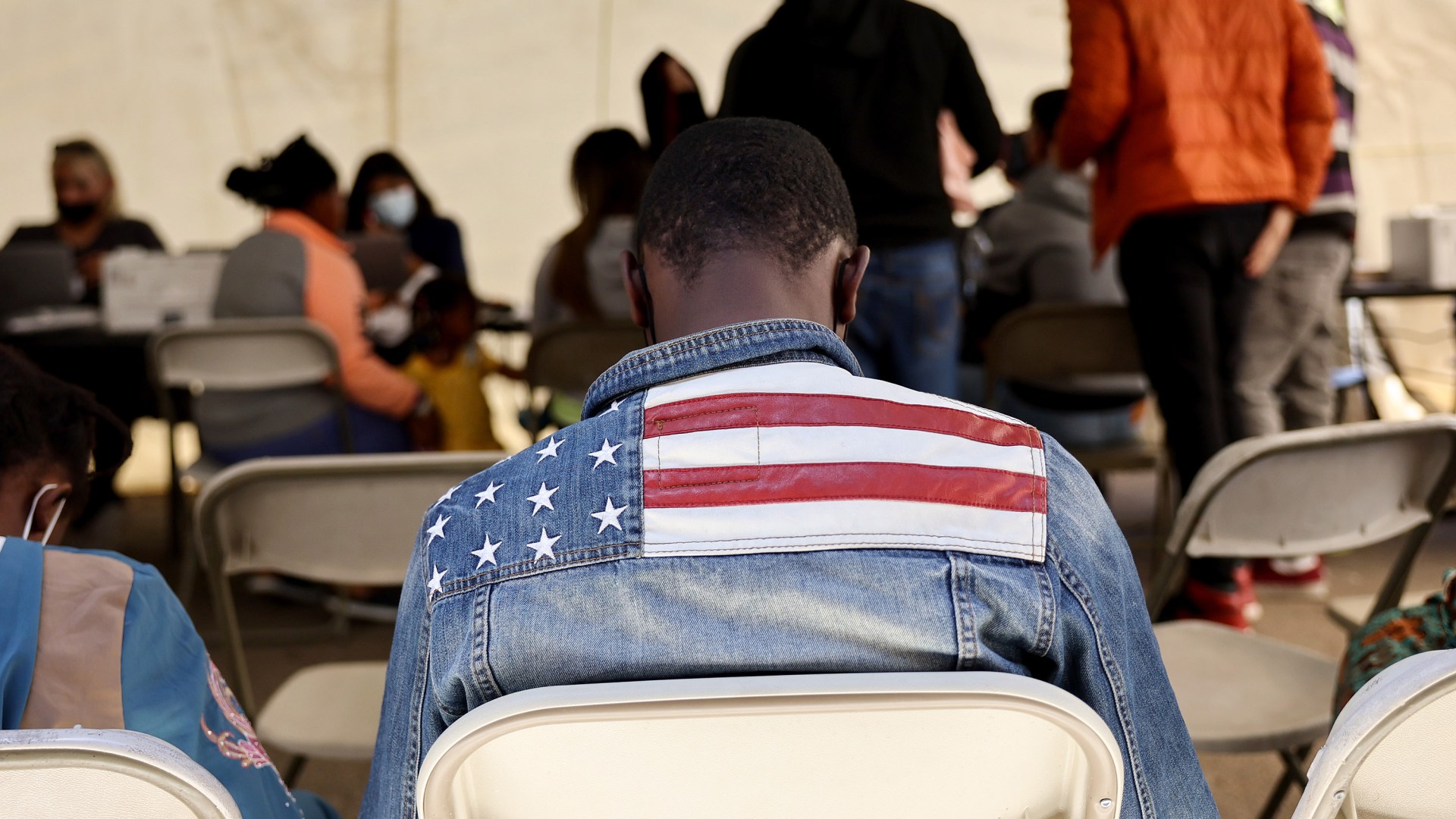
Migrants at an Arizona processing center for asylum seekers in 2023.

Christianity Today April 7, 2026
Mario Tama / Getty Images

Pastors overwhelmingly view legal immigration positively but are more divided over the proper response to those who are in the United States illegally.

Additionally, US Protestant pastors say they favor a path to citizenship for certain undocumented individuals even as they also want to see border security increased, according to a Lifeway Research study sponsored by World Relief.

“Pastors nearly universally believe legal immigration has been a blessing to the country and to the church,” said Myal Greene, president and CEO of World Relief. “As churches have been directly affected by immigration enforcement over the past year, pastors affirm the need for secure borders and deportation of those convicted of violent crimes, but they want to see more humane, family-unity protecting alternatives for other categories of immigrants.”

The study polled 667 American pastors between January and March. Consistent with previous studies of evangelical views on immigration, it found that pastors want an approach to immigration that balances a secure border and respect for the law with respect for individuals and a pathway to citizenship.

Four in 5 US Protestant pastors (82%) would support changes to immigration law that increase border security and establish a process to earn legal status and apply for citizenship, including 47 percent who strongly support those combined changes. In a 2025 Lifeway Research study, 76 percent of US evangelicals supported similar changes that would accomplish both goals.

As far as specific principles guiding immigration legislative reform, almost every pastor (98%) supports legislation that respects the God-given dignity of every person. Close to 9 in 10 also say they support legislation that protects the unity of the immediate family (94%), respects the rule of law (92%), ensures fairness to taxpayers (90%) and guarantees secure national borders (89%).

Almost 4 in 5 pastors (78%) specifically support immigration legislation that establishes a path toward citizenship for those who are here illegally and meet certain qualifications for citizenship.

“Pastors are largely united on principles of legislative reform, signaling they believe changes are needed in America’s immigration laws,” said Scott McConnell, executive director of Lifeway Research. “While they clearly want laws to be followed, they also find fault with the laws that are on the books.”

Pastors likely share both the political perspective and personal experience of their congregations. Three in 5 pastors (59%) describe their political views as conservative, 19 percent moderate and 19 percent liberal. Two in three say the average member of their congregation is conservative, 20 percent moderate and 13 percent liberal.

Around half (47%) of Protestant pastors say they have at least some first-generation immigrants in their church, similar to US evangelicals more broadly.

Immigration attitudes

As pastors think about immigration, 98 percent believe legal immigration is helpful to the United States. Specifically, 53 percent say the country should increase the number of legal immigrants approved in a year. More than a third (35%) believe legal immigration is helpful and that the current level should be maintained. One in 10 believe it is helpful but currently too high.

Pastors are more split on the government’s approach to immigrants already in the country. As the number of immigrants who have been detained and deported has increased in the past year, 38 percent of US Protestant pastors believe the current level of deportation is too high and should be reduced. A quarter (24%) believe the level is right and should be sustained, while 18 percent say it is too low and should be increased. Few (4%) believe no immigrants should be detained or deported.

Pastors say they want the government to prioritize deporting those who have a violent past or pose a security threat. Almost 9 in 10 (89%) believe individuals who have been convicted of violent crimes should be prioritized for deportation. Four in 5 point to those reasonably suspected to present a threat to national security.

Fewer say deportation efforts should prioritize individuals who entered the country in the last five years (30%), who are unwilling or unable to pay a monetary fine as restitution for their violation of the law (27%), or who entered the country more than 10 years ago (13%).

Fewer than 1 in 10 US Protestant pastors believe the government should prioritize for deportation individuals who would be willing to pay a monetary fine as restitution for violating the law (8%), who were brought to the country unlawfully when they were children (7%), who are the parents of at least one US citizen child (7%) or who are married to a lawful resident or citizen (3%).

“Difficult immigration decisions have long been deferred in America, and that makes the solutions less clear. While pastors are divided on the volume of deportations that should be taking place, they are more united on who should and should not be prioritized for deportation,” McConnell said. “More than 9 in 10 pastors rebuff the idea of dividing families or deporting those willing to pay a fine as restitution for not having legal residency.”

Pastors specifically oppose the deportation of Afghans who had converted to Christianity or who supported the US military—some of whom have received notifications advising them to self-deport or risk forced removal. Three in 4 pastors (75%) oppose the deportation of those individuals, including 54 percent who strongly oppose it. Around 1 in 7 (15%) support this group’s deportation.

Congregation responsibilities and reaction

In the last decade, the number of people globally who have been forced to flee their homes because of persecution or conflict has nearly doubled, with more than 120 million currently living displaced. Most pastors believe the US government has a responsibility to refugees, and many say their churches are already serving these individuals.

More than 4 in 5 pastors (82%) believe the US has a moral responsibility to accept refugees, those who are fleeing persecution due to specific factors such as their race, religion or political opinions, including 78 percent of evangelical pastors and 90 percent of mainline Protestant pastors. Seven in 10 evangelicals agree.

Christians who have fled persecution should be a top priority for refugee resettlement, according to 84 percent of pastors. Other refugees whom most pastors said should be a priority for resettlement include those who have family members already resettled in the US (70%), Afghans who face persecution because of their service to the US military (63%), those who have fled persecution on account of their race or ethnicity (60%) and those who have fled war in countries such as Ukraine, Sudan and the Democratic Republic of Congo (57%). Half (51%) felt those fleeing gang violence should be prioritized.

Fewer cited individuals who have fled political persecution (46%) or those fleeing persecution on account of non-Christian religious traditions (44%). Only 18 percent said the members of the Afrikaner ethnic minority group from South Africa should be a priority for resettlement, and almost no pastors (2%) believe no refugees at all should be admitted to the United States.

“The administration’s suspension of all refugee resettlement early in 2025 and then its narrow reopening of refugee resettlement only for ethnically white individuals from South Africa are starkly out of touch with the views of both evangelical and mainline Protestant pastors,” observed Matthew Soerens, vice president of advocacy and policy for World Relief. “If they wanted to appeal to pastors, they would do well to prioritize other groups of refugees, such as those persecuted for their Christian faith, those seeking reunification with family members already in the United States and Afghans at risk because of their service to the US military.”

When those refugees arrive, many congregations look to assist them. Two in 5 churches (41 percent) currently have or have previously had a ministry that serves refugees or other immigrants, including 24 percent of pastors who say their church has an active current ministry.

When asked what three global issues they consider to be the most urgent, pastors place discipleship (71 percent) and evangelism (62 percent) at the top. Pastors are more divided about what other world crises the church should focus on. A quarter of pastors say churches should address global migration, for instance, and 1 in 5 (20%) say they should focus on orphans and vulnerable children. But fewer than 1 in 10 say the church should address climate change (9%) or global health (6%).

“Being asked to pick only three urgent issues on such a list of global needs is difficult. Pastors, no doubt, were trying to balance the size of the need and the fit with the ministry of their churches. The existence of many global Christian ministries addressing these needs allow churches to partner in such work without much effort if they are willing,” said McConnell.

Considering recent cuts to government funding for foreign assistance impacting food, health and humanitarian disaster response programs, almost half of pastors (46%) say their churches have stepped up to do more to address these needs, while 6 percent say they haven’t done so yet but will.

One in 5 (21%) pastors say they have encouraged or will encourage their elected official to restore the funds, and 14 percent have spoken or will speak to their congregation about advocating for the restoration of the funding.

But other pastors support a reduction in foreign aid. More than 1 in 5 (22%) say they fully support the government funding cuts to foreign assistance, while slightly fewer (19%) say they believe some cuts were appropriate but these went too far.

Around a quarter (26%) say the church cannot fill the gap left by the reduction in government funding.

Books
Review

How Can You Live with Yourself After Doing Evil?

Michael Valdovinos’s book offers coping strategies, which are a start. But what we truly need is forgiveness.

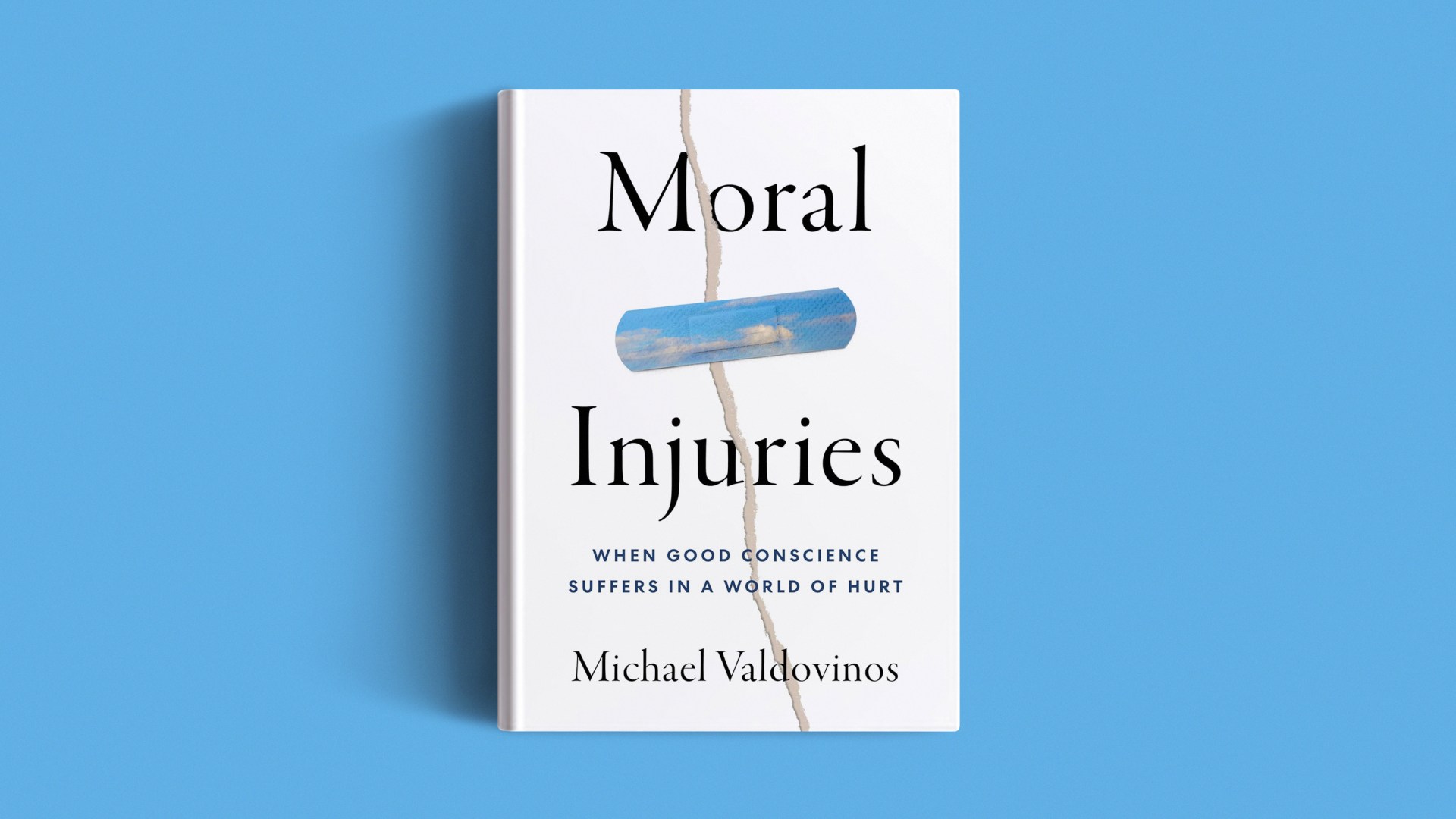
A book on a blue background.
Christianity Today April 7, 2026
Illustration by Christianity Today / Source Images: Getty, Harper

What’s wrong with the world? It seems literally impossible to say. Instead, I find myself wildly gesturing, throwing my hands around to indicate anything and everything. Skyrocketing debt, declining wages, flatlining church attendance, and wars and speculations of wars: It’s hard to know where to begin. 

The problem for many of us is not merely that the world is out of control. It’s that we frequently feel forced to act in that world in ways we know to be unjust. 

For millennia, poets and prophets have tried to name this experience of being put in an impossible moral situation and—importantly—required to act against one’s own conscience. In the aftermath of the Vietnam War, psychologists began to call it moral injury. Veterans returning from war, they observed, had undergone both physical and mental trauma, for they’d been ordered to do things that violated their own moral intuitions. Moral injury came to name a whole collection of experiences linked to these violations: guilt, shame, remorse, and loss of trust in authority that had commanded them to do wicked things. 

Since the 1990s, application of the term has expanded beyond veterans to encompass any number of situations in which people are forced into a conflict between their beliefs and behavior. And the symptoms of moral injury—including detachment, constant second-guessing and attempts to atone, and thoughts of self-harm—are nothing to be trifled with. It is this phenomenon that Michael Valdovinos examines in Moral Injuries: When Good Conscience Suffers in a World of Hurt, not only to explain but also to alleviate. 

Valdovinos’s work focuses on moral injury as a neurobiological reality. Others have examined it with lenses of philosophy or theology, but Valdovinos—as a clinical psychologist—wants us to attend to what moral injury does to our bodies. Like other psychological phenomena, moral injury affects what our bodies are doing: how they’re trained to stay or flee in the face of threats. When we think one way and are forced to act another, our bodies receive mixed messages, Valdovinos writes, even at the biological level.

By sticking with the biological dimensions of our actions, Valdovinos offers a helpful corrective to many popular accounts of the moral life. Too often these amount to little more than Do the right thing! or in Christian circles Just follow Jesus! The will to be good or to be a disciple is important, of course. But we follow God as human creatures with complex psychologies and bodies that don’t always want what is good for reasons involving hormones, neurons, and other physical elements that are only so much under our control. Ethics are for people called to live moral lives in physical bodies, a detail Christian accounts too often forget. 

This being said, the problems of Valdovinos’s book begin early and occur often, always linking back to what we mean by moral

Valdovinos follows the American Psychological Association’s definition, which says moral has to do with “experiences that disrupt one’s understanding of right and wrong, or sense of goodness of oneself, others or institutions.” These experiences indicate a rupture within our sense of self, so moral injury is a violation of “our deepest values—our core moral identity—that … leaves us feeling like an irredeemably bad person.” Moral injury in this definition is a deeply subjective breach in which someone’s personal code conflicts with coercive structures. 

As Valdovinos generally presents it, the substance of that moral code is less important than whether a person has one. Simply having a strong conviction that doesn’t fit your circumstances is enough for moral injury to occur. At one point, Valdovino identifies the three pillars of morality—respect, relationship, and reciprocity—but this does little to clarify what we’re talking about, because morality in his definition first and foremost serves to provide integrity to a person’s life. But what might count as respectful behavior for one person could look like cold disinterest to another; what for me is meant as reciprocity may seem like coercion to someone else. 

If morality is, in the end, nothing more than a code that holds me together, it’s not a subject for serious discussion or debate. It amounts to something like niceness. And anything trying provide some weightier definition to the moral life—say, Christianity—is reckoned by Valdovinos a bad-faith institution, claiming a divine mandate to “safeguard society’s moral and spiritual purity by conducting inquisitions.” It was the Enlightenment, he argues, that saved the world from the benighted moral postures of the “Big Gods.”

This thin definition of morality hides a deeper problem: For Valdovinos, morality is evolutionary biology writ large. At numerous points in the book, he describes respect, relationship, and reciprocity as mere products of evolutionary processes that allowed humans to form complex societies. Moral instincts he likewise casts as the result of evolutionary change in which “loners would die out, while those who stuck together learned that cooperation led to both longer life and strength in numbers.” Valdovinos consistently overplays his evolutionary hand, stating at one point that our DNA determines the degree to which our moral traits function. 

That account aligns with a perspective made popular by best-selling psychologist Jonathan Haidt, for whom morality is only our brains’ attempts to rationalize our gut reactions. And behind both is the 18th-century philosopher David Hume, who argued that our moral language is an attempt to cope with reality, that whenever we say something ought to be, we’re really just trying to make sense with language of what our gut intuitions are saying.

For all three writers, the upshot is that morality is our subjective feelings, with reason filling in the gaps between our desires and the facts on the ground. But for Valdovinos, feelings are extensions of our DNA—listening to your gut is more than a figure of speech here. If I say something isn’t right, in his thinking, that’s just a fancy way of saying my DNA is mismatched for the world in which I live. 

That’s far from hopeful for those suffering moral injury: Not only are they in conflict with the world around them, but also, in Valdovinos’s framework, there’s no immediate way to end that conflict. 

The result is what seems to be an impossible situation for those suffering from having violated their consciences. If our morality is a function of our individual biology, these people cannot share their moral world with others. And if societies are simply collective enactments of evolutionary instincts, those struggling cannot hope society will change to align with their instincts.

In the final chapters, Valdovinos proposes strategies to help people suffering from moral injury to move forward, away from their feelings of guilt and estrangement. But these are cold comfort, for the best people can hope for is to cope well with a mismatch without resolution. 

As a way of talking about a specific kind of harm that happens to people in our world, moral injury is a genuinely helpful concept that can facilitate necessary and important work. But by reducing morality to our biological impulses, Moral Injuries puts it beyond reason or hope of change. Morality here becomes, ironically, something that further estranges us, an individual quirk of personality and biology that isn’t suitable for discussion, advocacy, or argument.

If only there were another account of morality to which all people are summoned regardless of biology (Gal. 3:28), in which the weak and the strong live together in grace (1 Cor. 8). If only there were an account that looks forward to the transformation of our mortal bodies (1 Cor. 15) and teaches how our wills, minds, and affections can be changed (Rom. 12:1–2). If only there were an account of morality that could draw us into a community in which we might not just cope with our pasts but be forgiven. 

Myles Werntz is the author of Contesting the Body of Christ: Ecclesiology’s Revolutionary Century. He writes at Taking Off and Landing and teaches at Abilene Christian University.

Books
Excerpt

How to Debate Faith Around the Table

An excerpt from My Apologetics Dinner Party.

The book on an orange background.
Christianity Today April 7, 2026
Illustration by Christianity Today / Source Images: Getty, IVP

The story below is fictional. Many of the events in the story did happen during dinners I’ve hosted, and all the people in the dialogue are patterned after real people, sometimes in composite form, with whom I have dialogued over the last 25 years. I have written this story, informed by real conversations, to illustrate how discussion about faith, miracles, and the meaning of life might play out with a diverse group of people from different backgrounds and religions.

For many years, I had been hosting an international Thanksgiving potluck at my home. But never before had so many come and from such radically diverse nations, backgrounds, and faith journeys.

My job that day was not so much to answer every question with airtight logic and irrefutable proofs as to clarify what Christians actually do believe, to distinguish the myth from the history, the rumors from the facts, the urban legends from the true stories.

Well, that’s what I would end up doing for most of the evening, but it’s not where I began. All I could think of when the clock struck three was that the person bringing the turkey had not yet arrived. This was somewhat problematic, given that the dinner was scheduled to begin at two o’clock! Since I have learned through my work with internationals that punctuality is an American virtue—or hang-up—not shared by most people outside Northern Europe, I didn’t take it personally.

Still, I had to do something to keep my hungry guests entertained while we waited for the entrée. The fact that my wife was out of town visiting relatives, leaving me in sole charge of the festivities, merely added another layer of butterflies to my stomach.

Luckily, my daughter, Stacey, happens to be a vocal performance major at my university who possesses a wonderfully clear and pure soprano voice. In order to divert attention away from growling stomachs, I lifted up my right hand and announced, with barely concealed pride, that my daughter would perform “Silent Night” for us. In typical fatherly fashion, I didn’t consult her before making the offer, but then she was used to such things. I felt quite sure she wouldn’t let us down … and she didn’t.

While I played the three­chord tune on my piano, Stacey sang the first stanza with a depth of feeling that caused a hush to fall over the room:

Silent night! Holy night!

All is calm, all is bright.

Round yon virgin mother and child

Holy infant so tender and mild,

Sleep in heavenly peace!

Sleep in heavenly peace!

As she sang the last word, I felt all my anxieties melt away. I was not the only person in the room who felt transported, for a brief, shimmering moment, to the manger. Yes, I thought to myself, this is going to be a peaceful Thanksgiving indeed.

I swiveled around on my piano bench to face my guests, all of whom were sitting in a large circle in my den. As I surveyed the room, enjoying the smiles on the faces of those who had been blessed by my daughter’s singing, I noticed that Anthony, one of my old students, looked troubled. He had grown up in a Christian home to parents who had immigrated to Houston from Egypt, but he had always struggled with the issue of miracles. I remember he once shared with me a story about an icon in his Coptic Orthodox church of the Virgin Mary that had started weeping. Apparently, when other icons were placed next to it, they would start weeping as well.

He didn’t ridicule these claims—like most of my Egyptian students, he was a polite young man with an ingrained respect for tradition and authority—but I could tell that he was troubled by the thought that something could happen for which he could find no natural, scientific explanation.

He simply couldn’t square what he read in the Bible with what he had learned in school about the human body and the laws of nature.

“Anthony,” I said, “something seems to be worrying you.”

“It is, Dr. Markos,” he said, “but I feel embarrassed to say it in this group.”

“Please don’t be embarrassed,” I replied. “We’re all friends here, and no question is ever off the table.”

“All right, but remember that I warned you. It’s about the Christmas carol your daughter just sang. It was beautiful, but there’s a phrase in it that bothers me.”

“What phrase is that?”

Virgin Mother.’ Isn’t that an oxymoron?”

Well, well, I thought to myself, this is going to be an interesting Thanksgiving.

“Everybody knows that a woman can’t give birth to a child unless she has sex with a man. That’s simple science. If the people back in Jesus’ day thought his mother was a virgin, that was only because they didn’t understand how procreation works.”

“If you mean they did not know about sperm and eggs, then you are right. But tell me this. When Mary told Joseph that she was pregnant by the Holy Spirit, how did Joseph react?”

“He was upset and was prepared to divorce her in secret?”

“Why did he want to divorce her?”

“Because he thought that she had been unfaithful?”

“Why did he think that?”

“Well, she was pregnant, and Joseph knew he had not had sex with her. That meant she must have slept with another man.”

“Ah, so what you are telling me, Anthony, is that Joseph, though he knew nothing about sperm and eggs, was well aware that women don’t get pregnant if they haven’t had sex?”

“Of course he knew that. … I mean … well … oh my.”

“Don’t worry, Anthony, I can’t tell you how many times I have heard highly educated professors say that the people of the past believed in miracles only because they were ignorant of the laws of nature. I hope you see now the flaw in that argument. The only way a person can recognize that a miracle like the Virgin Birth has occurred is if he is fully aware of the way things normally work in nature.”

“Hasn’t modern science proved that the laws of nature cannot be broken?”

“Good point, Anthony. Modern skeptics are right when they say that the laws of nature can’t be broken.”

“Wait a minute, are you agreeing with me that miracles are impossible?”

“If miracles did in fact break the laws of nature, then I would agree with you. But I don’t agree that they do. Miracles don’t break the laws; they suspend them.”

“What’s the difference?”

I went over to the shelf and plucked down a vase. Then, with the vase in my right hand, I moved to the center of the den. “Anthony,” I asked, lifting up my right hand as high as it would go, “What would happen to this vase if I let it go?”

“It would fall to the ground and shatter.”

“Exactly. We are back to the unbreakable law of gravity. But watch this.”

As everyone in the room gasped with horror, I opened my hand and let the vase fall. Another second and it would have smashed to pieces, but the crash never came. Before the vase could hit the ground, my left hand swooped across and caught it mid­fall.

“Okay, Anthony,” I said with a smile, “did I just break the law of gravity?”

“No.”

“Then what happened?”

“You altered the course of the vase by catching it with your left hand.”

“In other words, I suspended the natural course of gravity by adding in a new factor. What will happen if I open my left hand?”

“Gravity will take over again, and the vase will break.”

“Do you see now the difference between breaking and suspending the laws of gravity? A miracle takes place when the hand of God reaches into our physical world and suspends, for a moment, the natural course of the laws that run it.”

Louis Markos is professor of English and scholar in residence at Houston Christian University, where he holds the Robert H. Ray Chair in Humanities. Taken from My Apologetics Dinner Party by Louis Markos. Copyright (c) 2026 by Louis A. Markos. Used by permission of InterVarsity Press. www.ivpress.com

News

Mobile Food Ministries Adapt to High Gas Prices

Despite soaring costs, two Christian groups in California persevere—and trust for God’s provision

High gas prices are displayed at a downtown Chevron station on March 3, 2026 in Los Angeles, California.

High gas prices are displayed at a downtown Chevron station on March 3, 2026 in Los Angeles, California.

Christianity Today April 7, 2026
Mario Tama / Staff / Getty / Edits by CT

When Teena Smith drives her truck around Long Beach, California, she knows it comes at a cost.

The Golden State has long been the luxury state when it comes to gas prices, which are routinely more than $1 per gallon higher than the national average there. But with the ongoing Iran war, California gas prices are now $6 per gallon on average, with some fuel stations charging up to $8.

Much of Smith’s driving feeds the hungry across Los Angeles County. Through Light & Life Fellowship, a Free Methodist church in Long Beach, she aims to get a week’s worth of groceries into the hands of 200 families each week. Lately, it’s been more like 1,000 per week.

California is also one of the most expensive states for groceries. “You have to make a decision,” Smith said of the pantry’s growing number of visitors. “Are you gonna go grocery shopping this week, or are you gonna put gas in your car? They need help.”

Life & Light Fellowship stocks its pantry with support from local farmers and the Los Angeles Regional Food Bank. It also hosts a free monthly farmer’s market in partnership with Long Beach Unified School District. Every month Smith wonders, Am I gonna have enough?

“Unlike the regular pantry, I don’t have any specific resource for getting the produce for the farmer’s market. I have to go and hustle it up. Every month I’m concerned. And every month God shows up. Every time. I’m talking pallets of things—potatoes, fresh produce, you name it. … I thank God every night.”

Smith, who’s retired, could’ve soaked up the Los Angeles sun doing plenty of easier things. Instead, she keeps serving and sometimes sweating. “This isn’t stuff that’s going bad, rotten,” she said of the farmer’s market supply. “It’s beautiful fresh food. It’s like going to a regular market [where food] would cost an arm and a leg. That’s the thing: He always shows up, and it’s always an abundance.”

April Jacek is the director of operations at Sunrise Christian Food Ministry, a nonprofit based in Citrus Heights, California. Her team redistributes surplus food around Sacramento County, feeding tens of thousands every year, and has a weekday walk-up service for homeless individuals. Sunrise’s opportunities have increased due to California Senate Bill 1383, designed to reduce food waste and methane emissions by diverting scraps from landfills. This has led to far more donations from restaurants, hotels, school districts—any business or organization that might have edible excess food to unload.

That’s a good thing, according to Jacek: Sunrise is receiving more food for more people from Costco, Sam’s Club, and other retail giants. But it also means the organization has to retrieve and preserve those leftovers, when a single fill-up at the fuel pump exceeds $80. Jacek said Sunrise is “recovering 1.5 million to 2 million pounds of food every year, and we’re just one of about 150 food closets in Sacramento County.”

Sunrise receives assistance for purchasing equipment or carrying out specific projects, but not for pesky regular expenses like gas, insurance, and routine vehicle maintenance. “We can’t charge the stores to recover the food and haul it away,” Jacek explained. “They’re getting a tax write-off. So it’s a win-win on their side, but we have costs.”

The gas price surge may eventually require a pivot to electric vehicles, but right now the additional costs affect budgets that were planned “before the [oil] climate changed.” Sunrise has surrendered one of its farther pickup locations to another organization and partnered with a transportation agency to “better use a carpool situation.” Yet, Jacek notes, “As a Christian organization, we’re no strangers to the Holy Spirit just kind of providing. … We have seen an increase in donations. The hedge of protection is going to protect us from everything, including inflation.”

She speaks about this faith from experience: “I came into ministry six or seven years ago, and it was a really hard lesson to learn, but now … I sleep very well at night. I would worry we’re not gonna get enough donations, enough food, enough produce. But then I would realize, Wait, it just keeps coming. I feel like if we lay our burdens on the heart of the Holy Spirit and Jesus, it just shows up for us—and I’m not saying that to be flippant or take the Lord for granted, but he sees we’re the hands and feet and rewards us with peace.”

Jacek said of her volunteers, “Not all of them are Christians, but we’re feeding the Lord’s sheep. I love that we have our faith and fall back on that.”

News

The Anglican Priest Preaching in Kenya’s Nightclubs

As hard-partying culture steals youth from the church, one pastor seeks to bring them back.

Padre Micheal Watenga preaching in a nightclub.

Padre Micheal Watenga preaching in a nightclub.

Christianity Today April 6, 2026
Image courtesy of Micheal Watenga / Edits by CT

On a Sunday night in March at Club Touch On in Kitale, a town in Trans-Nzoia county, Kenya, hundreds of young people dance to loud Afropop music under dim disco lights. Some take swigs from bottles of liquor or drags from their cigarettes. Groups of friends sit around tables laughing and drinking, while others are more interested in attracting the opposite sex.

Then the DJ pauses the music and announces a special guest: padre Micheal Watenga. Two club bouncers escort Watenga, a young Anglican priest in a black robe and cross, into the room as partygoers burst into cheers, whistles, and applause. Holding a Bible, Watenga introduces himself and then begins a six-minute sermon: “I come to you because you are important before God.”

He urges the youth to trust in God, telling them Jesus loved sinners and the church has enough room to accommodate everyone. Then he prays aloud, his “Amen” interrupted by applause. As he leaves the club, youth stretch out their hands to touch his, asking for a blessing. Some follow him, requesting prayers to quit drinking or smoking, deal with relationship failures or rejection at home, or find employment. He speaks to a few and gives his phone number to those who ask.

“This is an important group that needs urgent rescue, yet the church has not done enough to fish them to Christ,” Watenga told CT.

While Watenga reserves Sunday mornings for his regular parish duties, he dedicates every Sunday night to club preaching. Every weekend, he visits a different club in a different town. Last September, Watenga founded Club Mission, a first of its kind ministry targeting young people who have abandoned church and turned to drug or alcohol abuse.

“I am proving that the church is not afraid of darkness,” he said. “I echo the voice through my presence that you’ve not been forgotten by Christ.”

According to Watenga, alcohol and drug addiction is the biggest problem affecting Kenyan youth. A recent report by Kenya’s Ministry of Health showed substance abuse—including use of illicit drugs, prescription medications, tobacco, cannabis, and khat (an evergreen shrub chewed for its stimulant-like effect)—affected nearly 10 percent of youths age 15–24. In February, the National Authority for the Campaign against Alcohol and Drug Abuse (NACADA) reported drug abuse in Kenyan universities has reached crisis levels.

Watenga, who grew up in a Christian family, watched many childhood friends and schoolmates drop out of their education due to excessive alcohol consumption. He said the community just looked on, without bothering to try to stop them.

Many of the youth he meets in clubs are looking for ways to escape from reality. According to Watenga, they feel stuck with their life and dreams on hold—unemployed or socially isolated—and their spirits overwhelmed by pressure from parents, church, and society to succeed. Many of the partiers from wealthy families want to shrug off their parents’ pressure to avoid interacting with people seen as lower class or to take up high-pressure university studies such as law.

Laura Mwangi, 24, a student in Nairobi, is from a religious family but said she sees hypocrisy at home and finds no reason to go to church: “[My] parents are always judging me. I find it hard to share my problems with them, so I go to [a] club where there is peace of mind.”

Sometimes church hurt fuels addiction. According to Baraka Moses, a university student in Eldoret, “The church is not a safe place for many of us. Many of us want to be loved and corrected with … love, not labeled or judged by how we behave or dress. The church shouts at us.”

Moses said he turned to drinking and clubbing after a bad experience at church. Older people criticized Moses, an aspiring musicians, for wearing dreadlocks. They asked him to shave them off or stop coming to church with such a “demonic” hairstyle. Meanwhile, Moses said, the pastor’s son dressed in suits and led opening prayers but often slept around with girls at the church.

In some of the clubs Watenga visits, youth with painful memories of church feel offended just seeing a priest there. At times clubs refuse to let him preach, thinking he just wants to collect money.

Watenga also faces pushback from local Christians who think his work is too dangerous or unlikely to produce converts.

“Some of the Christians see it sinful for me to go to clubs and preach, calling it unconventional,” Watenga said. “Some say I drink. Some of my fellow clergy see me as crossing the boundaries of my vocation and overstepping.”

Watenga said he is inspired by Jesus’ incarnational approach to evangelism—eating, drinking, and sharing tables with sinners and the socially rejected.

“Jesus went where people already were, not where they were expected to be,” Watenga said. “He said those who are well do not need a physician, but those who are sick.”

He avoids unsafe situations and attempts by revelers to give him money as an offering—something he doesn’t want—by keeping sermons to six minutes then slipping out almost immediately afterward.

Watenga said he’s helped more than 200 youth with drug and alcohol addictions begin recovery. He listens to young people talk about wanting to quit, reassures them that Jesus can bring healing, tells them they have worth in society, and then connects them with rehab centers, including one he’s partnered with in Nairobi—Foundation of Hope Addiction Treatment Centre—that will accept youth who can’t afford treatment.

Watenga often visits the youth he meets through his ministry at their homes or calls them on the phone to pray with them. He also counsels their parents about how to help their children.

David Barasa, 25, from Kitale, said he asked Watenga to pray for him to stop drinking. Watenga gave Barasa his phone number and prayed for him during their calls. Over time, Barasa said he felt the urge to drink slowly decrease: “I ended up stopping completely.”

Irine Cherotich, a university student from Eldoret, said she used to go clubbing with a group of girls who would often drink and smoke together until morning. Then Watenga’s sermon at a club in her town touched her. “I got saved that day and stopped going to clubs,” she said.

Watenga said he’s prayed for more than 400 youth from six different counties since he started the club in September. Still, he feels the limits of his ministry. Traveling across the country is difficult, and sometimes he works day and night to balance church duties with traveling to preach in clubs. Often, he struggles to find time to rest.

His phone is always buzzing with calls, texts, and WhatsApp notifications. Watenga said he had to set his WhatsApp to automatically delete messages every 12 hours to make room for new ones. On top of that, his spotty internet service and cheap phone’s two-hour battery life means he’s constantly scrambling to catch up.

“I have so many youths who are reaching out to me,” Watenga said. “But lack of modern equipment prevents me from keeping track of my new converts.”

addApple PodcastsDown ArrowDown ArrowDown Arrowarrow_left_altLeft ArrowLeft ArrowRight ArrowRight ArrowRight Arrowarrow_up_altUp ArrowUp ArrowAvailable at Amazoncaret-downCloseCloseellipseEmailEmailExpandExpandExternalExternalFacebookfacebook-squarefolderGiftGiftGooglegoogleGoogle KeephamburgerInstagraminstagram-squareLinkLinklinkedin-squareListenListenListenChristianity TodayCT Creative Studio Logologo_orgMegaphoneMenuMenupausePinterestPlayPlayPocketPodcastprintremoveRSSRSSSaveSavesaveSearchSearchsearchSpotifyStitcherTelegramTable of ContentsTable of Contentstwitter-squareWhatsAppXYouTubeYouTube