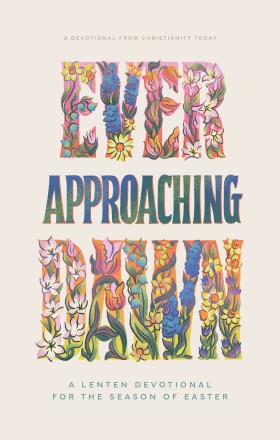
Church Life

Why We Call Death ‘Good’

The corruption of creation is not merely humanity’s burden but a grievous affront to the one who made the world and called it “good.”

Holy Week 2026 - Good Friday
Illustration by Jill DeHaan

The world in which we live is beautiful and awe inspiring. It is also dark and dangerous. We don’t have to wait until adulthood to recognize it or experience it, but the older we get, the more we see of the curse that has fallen on us all. Temptation, sin, failure, futility, disease, and death are not isolated afflictions for a few; they plague everyone. And underneath all of it is an ever-present evil. As Martin Luther wrote in his hymn, “A Mighty Fortress Is Our God,” “This world, with devils filled, should threaten to undo us.”

Yet this darkness is not just in the world but also in our very lives and inside each of us. We know tastes of glory but feasts of grief. The innocent are targeted, the vulnerable are oppressed, and it’s not just the “bad guys” doing bad things. Even the good guys will disappoint, if not destroy, for “the heart is deceitful above all things. … Who can understand it?” (Jer. 17:9). We all wind up being victims or villains—or both.

And while brokenness and betrayal afflict us all, they are a much more heinous assault on God. The Lord is holy, just, and good. He is patient, kind, loving, and forgiving. This means the corruption of creation is not merely humanity’s burden but a grievous affront to the one who made the world and called it “good.”

“The Lord saw how great the wickedness of the human race had become on the earth, and that every inclination of the thoughts of the human heart was only evil all the time. The Lord regretted that he had made human beings on the earth, and his heart was deeply troubled” (Gen. 6:5–6).

Yet as we walk through this gloomy night of this fallen world, God shines a light. In fact, since the very moment sin cast its shadow over creation, God didn’t hesitate to pierce the darkness with the light of his promise—a promise that gives hope to the despairing and comfort to the afflicted, because it is a certainty of redemption. Victims will be vindicated, evil will be crushed, sins will be forgiven, joy will overcome sorrow, and Life will put an end to death.

“The people walking in darkness have seen a great light; on those living in the land of deep darkness a light has dawned” (Isa. 9:2). The light first dawned in the garden to our first parents after their sin brought a curse into creation. The Seed of the woman would arise to defeat the deceiver who led them into unbelief. And as years passed, God repeated his promise, progressively revealing more for every generation. The promise pointed to a Servant—born of a virgin, despised and rejected, yet bearing the sins of many—who would redeem his people from sin, guilt, and death (Isa. 53:3–5).

In the fullness of time, the Light was manifested in the birth of Jesus—the fulfillment of all the promises that had been carrying the weary through their years of waiting and wandering. He came not only to deliver us from the domain of darkness but also to dispel the darkness itself. But to accomplish this, he would not merely enter the valley of the shadow of death; he would bear its full weight in his suffering and death on the cross.

His death, a willing sacrifice, was motivated by love for the undeserving, and by his death, he saves sinners and sufferers. This is why we call his death “good”—not because of the evil inflicted on him by wicked men but because of the divine purpose behind it and what he accomplished through it.

How do we live through the night while knowing that dawn is slowly approaching? We fix our eyes on Jesus, drawing near to him who drew near to us; and in him we find the beauty, awe, and purpose of the Creator in this corrupt creation. Good Friday is ultimately good because it doesn’t end in darkness. The death of the Light of the World brought life and light to all who believe. And after the darkness of his death, the Son rises in triumph over the curse. By faith, the Morning Star rises in our hearts (2 Pet. 1:19), so we no longer walk in darkness but in the light of life.

“I am the light of the world. Whoever follows me will never walk in darkness, but will have the light of life” (John 8:12).

Joe Thorn is the lead pastor of Redeemer Fellowship in St. Charles, Illinois, and the author of several books, including Note to Self: The Discipline of Preaching to Yourself.


Church Life

The Ache of Silence

We trust that the light will dawn because God promises that it will be so, even if all is still darkness here.

Holy Week 2026 - Holy Saturday
Illustration by Jill DeHaan

The women who had come with Jesus from Galilee followed Joseph and saw the tomb and how his body was laid in it. Then they went home and prepared spices and perfumes. But they rested on the Sabbath in obedience to the commandment” (Luke 23:55–56).

Six or so years ago, I became a birder. Now, wherever I go, I am always on the lookout for birds. We birders like to keep lists—birds we’ve seen, birds we’d like to see, and birds that frequent our backyards or parks or beaches. The birding community uses apps and websites to communicate with one another, and I’m always proud to be the first to see a rarity and then invite others to view it too.

Professional ornithologists often use these lists for their research and planning. It’s useful to know just how many house finches or pin-tailed whydahs were in a local park, and since ornithologists can’t be everywhere, they rely on citizen scientists like myself to help gather information. But here’s something fun that I learned recently: They don’t just need lists of birds. They also want data on when we’ve seen no birds.

While overflowing lists of birds are by far the most fun, it turns out that not seeing any birds can teach us too. Absence is a clue. Perhaps pollution or predators have driven the birds away. Maybe foul weather has them quiet and hunkering down. It might be that migration has started early or late due to a change in the weather. Silence is its own type of information.

Holy Saturday is a time of silence. Jesus Christ has been crucified and laid in the tomb. All hope is lost. Between the despair and finality of death and the impossibility and miracle of the Resurrection lies one very long day.

It is significant that Jesus doesn’t die and then rise again moments later, like a divine jack-in-the-box. He has work to do, of course—the harrowing of hell and the defeat of death—but then, God can work outside of time. Time exists for us.

So why are we given this day? Why this macabre, lonely Holy Saturday when we are invited to linger in what has been lost and commune with the disciples in their uncertainty, grief, and despair? Why must we exist within the pain of this pause?

Maybe it is because this pause is where we live our entire lives. Christ has died, and Christ will come again, but right now we exist in the ache—of war and cancer, discord and misinformation, violence and brutality and loneliness. We watch God’s good creation wear out like a garment, sped along by our own lack of stewardship and care. We live between the “now and the not yet,” as N. T. Wright puts it—between being known fully and knowing fully.

T. S. Eliot put it this way in his poem “The Hollow Men”:
Between the idea
And the reality
Between the motion
And the act
Falls the Shadow
For Thine is the Kingdom.

God invites us to linger in the ache of Holy Saturday. To sit beside the women who yesterday saw the dead body of their Lord and went home to prepare spices and perfumes for him. The women who today kept their Sabbath, refraining from work and waiting for the sun to rise on Sunday when they could once again attend to the broken body of their Savior. To watch the tomb that is not yet empty, the world that is not yet healed and whole. To acknowledge the deep, deep pain we feel and face, offering one another the tenderest possible care.

Together we trust that the light will dawn because God promises that it will be so, even if all is still darkness here.

May we live in light of this cosmic truth: that even when all is silent, the birds have flown away, and no hope is visible to us, the deep work of God goes on beneath and through and above it all.

And that same God will hold us fast.

Courtney Ellis is a pastor at Presbyterian Church of the Master in Mission Viejo, California, and the author of six books, most recently Weathering Change: Seeking Peace Amid Life’s Tough Transitions. She also hosts The Thing with Feathers podcast, all about birds and hope. She and her husband, Daryl, have three children.

Church Life

Supposing Him to Be the Gardener

Where Eden was broken and couldn’t save us, Christ has returned as the gardener to make all things new.

Easter 2026 - Easter Sunday
Illustration by Jill DeHaan

The sun has not yet risen above the eastern hill, and here in this dusty blue haze, I am taking the short walk from my porch to the garden gate. The morning air is damp, and the birds have just begun to sing. The true wonder of the garden happens when no one is here to witness it—while we’re on vacation; during a thunderstorm; and in this case, overnight, while we all rested. Today the earth smells fresh and new, the roots have done their work, and the garden has grown without our involvement at all. Fruit has emerged, flowers have budded and are ready to open as soon as the sun breaks through the trees, and I feel as though I am the last one to arrive at the symphony as it rises in a morning crescendo.

Sometimes, the most victorious things happen in the dark.

Here, in this early morning dirt, I think of Mary Magdalene. I think of her, spices in hand, eyes swollen from shock and grief, heading toward the tombs before the sun has even risen. Before the hills are dusted with that vibrant light, she is looking for Jesus. The women have risen early to care for the body of the Man who knew them by name. The Man who looked them in the eye and welcomed them into his followers, who did not snub the lowly, who wasn’t concerned with status and charm, but who instead tended to their hearts as the one who created them.

Anyone near her that morning would realize she is a woman in mourning, as the scent of the herbs would give it away. She is exhausted, afraid, and carrying the heavy weight of grief all the way into that garden cemetery.

Yet, as her eyes begin to adjust to the predawn light, where she expects to find the body of Christ she is met with an empty tomb and a radiant stranger. The flurry brings an abrupt change of plans, and after the disciples have come and gone, she is once again alone in the garden, fumbling still in the wake of grief and confusion. The symphony has already begun, and she’s just about to hear it rise.

It’s here she turns to see a man and thinks he is the gardener (John 20:14–15).

And of course, the beautiful irony is that he was the gardener, and he still is, but not in the sense she imagined. Here, the Gardener himself, the one who tends to all those he has redeemed, is not simply wandering around looking for something to do. He is a man at work with a purpose. Where once a garden was a place of defeat and sorrow, where Eden was broken and couldn’t save us, Christ has returned as the gardener to make all things new.

Christ—who knows Mary’s heart, her eyes, her tears—calls her name.

“Mary.”

We know the voices of the ones who love us. We each know the sound of our name when it rings out in a familiar voice. For Mary, this is the same voice that called forth Lazarus, that spoke the words “Talitha koum” with power (Mark 5:41), that cried “Tetelestai” from the cross (John 19:30).

Mary enters the garden in fear and grief, and in Matthew 28:5, the angel says to her, “Do not be afraid.” This call echoes from Christ’s conception (Luke 1:30) and birth (2:10) to here in the garden tombs, and Christ will announce this once and for all when he returns:

“Do not be afraid. I am the First and the Last. I am the Living One; I was dead, and now look, I am alive for ever and ever! And I hold the keys of death and Hades” (Rev. 1:17–18).

Fear not, those of you who walk in the dark, who rise early and await the brilliance of the morning light, who long to be seen by a Redeemer who knows you by name. Fear not, you who walk amid the aroma of death; you do not need those spices to mask your pain. Here in our dirt, our grief-aroma-filled world, do not mistake him for just the gardener. He is indeed the Gardener, the King of Kings, the Lord of Lords, the one who knows your name better than you know your own soul. Dawn has broken. The Gardener has faithfully brought life in the darkness. The symphony is rising, and we can join the chorus: Christ is risen, and he holds the keys forevermore!

Andrea Burke is an author (A Bit of Earth, Lexham, 2024; The Quiet Resistance, Baker, 2026) and is on staff at Grace Road Church. She is married to Jedediah, and they are raising their two kids, two dogs, two cats, a few strays, six ducks, and a lot of chickens in an old farmhouse near Rochester, New York.

Church Life

The Glory of Resurrection

The Resurrection not only transforms individuals but also redeems cultures with new meaning and purpose in Christ.

Easter 2026 - Easter Monday
Illustration by Jill DeHaan

Easter Monday, a day often overlooked in the US, holds profound meaning across the global church. It is a time for Christians to celebrate the ongoing impact of Christ’s victory over sin and death. In three distinct cultures that offer us a triad of symbols on Easter Monday, we see how the Resurrection not only transforms individuals but also redeems cultures with new meaning and purpose in Christ.

Scotland: Egg Rolling

Easter eggs are a big hit in the US, in part thanks to Scottish Christians who participate in egg-rolling contests on Easter Monday. Originally a pagan tradition meant to seek protection from hailstorms and plead for spring’s fertility, the Scottish church later redeemed its meaning.

The egg retained its symbol of new birth, but the rolling egg came to represent more than just the dawning sun after a dark, wet winter. It now echoed the rolling stone and the dawning of the Son (Mark 16:4). At Christ’s resurrection, the dark “hell storm” passed and the new creation hatched on the horizon.

As Scottish Christians joyfully see whose egg rolls the farthest down the hill each Easter Monday, they celebrate the rolled-away stone of Christ that ushered in an eternal springtime.

Poland: Wet Monday

For Polish people, Easter Monday is synonymous with Smigus-Dyngus (also known as Wet Monday), celebrating the baptism of Poland’s first official ruler, Prince Mieszko, the day after Easter in AD 966. Professor and author Andrzej Buko calls Mieszko’s conversion the “proverbial pebble that caused the avalanche” of Christianity in Poland and Europe.

Water rituals were originally pagan practices of fertility, cleansing, and luck. But Polish Christians found new meaning in them. Jesus’ baptism into the waters of death, his submersion in the tomb, and his reemergence from the proverbial Dead Sea was the pebble that caused the avalanche that changed the entire cosmos forever (Ex. 14; Luke 12:50). Christ’s ultimate baptism didn’t just inaugurate his new life; it birthed a new people—the church, Christ’s nation of nations (Eph. 2:19; 1 Pet. 2:9; Rev. 5:9–10).

Now Polish Christians visit friends and family on Wet Monday to playfully splash each other with water, reflecting on the joy of new life in Christ.

Eastern Orthodox: Bright Monday

The Eastern Orthodox expression of Easter Monday, concentrated in Eastern Europe but practiced globally, focuses on the brightness of the week following Christ’s resurrection. Unlike the usual solemnity of the Office for the Dead—a set of prayers and rituals for the deceased—this week is marked by joy, feasting, and communal celebration.

Genesis 1:1–2 says, “The earth was formless and empty, darkness was over the surface of the deep, and the Spirit of God was hovering over the waters.” How barren and bleak! Yet God’s command “Let there be light” (v. 3) brought his creativity and intellect into visible form. This light, still a mystery to scientists, both illuminates and fascinates us.

Jesus’ appearance was once “disfigured beyond that of any human being” (Isa. 52:14)—formless. He “made himself nothing [and] humbled himself by becoming obedient to . . .death on a cross” (Phil. 2:7–8)—empty. “Darkness came over the whole land” (Luke 23:44)—darkness. How barren and bleak! But on the first day of new creation, Jesus declared, “Did not the Messiah have to su!er these things and then enter his glory?” (Luke 24:26). In other words, the sufferings of Christ, the Light of the World (John 8:12), made way for him to enter the light of his exaltation (Phil. 2:9–11).

Bright Monday, the beginning of Bright Week, invites us not only to reflect on the Resurrection’s glory but also to live in its light—and let that Light live through us.

A Comic Redemption

The resurrection of Christ has brought not just a personal redemption but a cosmic one too. The various cultural traditions of Easter Monday throughout the global church remind us that Christ’s resurrection redeems and transforms cultural customs, infusing them with new meaning.

The stone-rolling, nation-birthing, light-giving Messiah has won the cosmic championship, and his resurrection life is now in us. We’re on the winning team—all cultures, all tribes—and this alone should bring a little more brightness to our Monday!

Rechab Gray is pastor of preaching and spiritual formation at New Creation Fellowship in Orlando, Florida, and a contributor to the book Fulfill Your Student Ministry (Rainer, 2019).

Church Life

Embracing a Sacred Tension

Resurrection is not an escape from the world’s pain but a transformation of how we endure it.

Easter 2026 - Easter Tuesday
Illustration by Jill DeHaan

Easter Tuesday is an often-overlooked day in the Christian calendar, falling in the wake of the Easter celebration. The stone is rolled away, death is defeated, and hope is alive. Yet, just two days later, we often find ourselves back in the thick of the ordinary—emails, doctor visits, broken relationships, physical pain, personal doubts, financial struggles, and a deep longing for what is missing. Easter Tuesday invites us into a sacred tension: the paradox of resurrection joy mingled with the grief of life in a world not yet fully redeemed.

The apostle Peter was undeniably aware of this tension when he identified followers of Jesus in the first century as “elect exiles” (1 Pet. 1:1, ESV). An elect exile is promised to receive an eternal inheritance from an eternal kingdom but currently lives in a broken place that is not home. It is to these elect exiles that Peter wrote these words:

Praise be to the God and Father of our Lord Jesus Christ! In his great mercy he has given us new birth into a living hope through the resurrection of Jesus Christ from the dead, and into an inheritance that can never perish, spoil or fade. This inheritance is kept in heaven for you, who through faith are shielded by God’s power until the coming of the salvation that is ready to be revealed in the last time. In all this you greatly rejoice, though now for a little while you may have had to suffer grief in all kinds of trials. (vv. 3–6)

Peter knew this sacred tension. God’s mercy has provided a living hope through the resurrection of Jesus, bringing an eternal inheritance that is being kept for us (vv. 3–4). It is in this we rejoice (v. 6), and it is in this very hope that Easter Sunday is such a meaningful celebration. But this day of redemption has not yet come. So Peter also reminds us to grieve (v. 6). Sadly, joy and grief often get pitted against each other, especially in the church. But joy and grief should be seen as holy companions in a fallen world.

Easter Tuesday is not an afterthought. Rather, it is a powerful reminder that resurrection is not an escape from the world’s pain but a transformation of how we endure it. Jesus rose, but the wounds remained in his hands. So too, we carry wounds: griefs, losses, pains, betrayals, and unanswered questions. Easter doesn’t erase them; it reinterprets them through the lens of hope. Easter doesn’t solve them but provides a foundation to embrace the sorrow we rightly experience because of them.

On Easter Sunday, we stand in the light of the empty tomb. But by Easter Tuesday, we often find ourselves back in the shadows. The cancer is still there. That financial struggle is not resolved. The depression returns. That relationship is still broken. We might ask, “If Christ is risen, why does the world still feel so broken?” This is not a lack of faith; it’s the honest lament of believers who are learning to walk in the tension of the now and the not yet. Peter reminds the elect exiles in the first century, as well as those of today, of this sacred tension—the same one Paul captured when writing to the Romans: “Rejoice with those who rejoice; mourn with those who mourn” (12:15).

This sacred tension calls us to rejoice and weep on Easter Tuesday. Rejoice that Jesus is risen. We have a living hope. We are promised an eternal inheritance, which is being kept for us by the one who purchased it with his own life. But embrace the grief too. Sadness is the healing emotion of the soul. Sorrow is a gift from God that allows our souls to breathe and cope in a world that aches, longing for restoration. The risen Christ we celebrated on Sunday remains “a man of sorrows and acquainted with grief” (Isa. 53:3, ESV). Jesus sweetly and powerfully meets us in this sacred tension, if we would stop, be still, and go to him today in our time of need (Heb. 4:14–16).

Brian Croft is the founder and executive director of Practical Shepherding. He is also the senior fellow for the Mathena Center for Church Revitalization at The Southern Baptist Theological Seminary and has written or contributed to more than 25 books on pastoral ministry.

Church Life

Christian Athletes to Cheer on at the 2026 Milan Cortina Winter Olympics

Competitors in speedskating, bobsledding, the biathlon, and hockey speak about their faith.

The Olympic rings and five athletes.
Christianity Today February 16, 2026
Illustration by Dakota Fiebranz / Source Images: Getty

Around the world, Christians live out their calling in many ways, including in athletics. These six Olympic athletes have used their global platform as an opportunity to share the gospel. They are competing at an elite level in their sport and use that as a catalyst for telling others about the ways God has worked in their own lives. In a world where division is everywhere, this year’s Winter Olympics provide a chance for global Christians to root for their brothers and sisters in Christ.

Anders Johnson – Speed Skating, Canada

Canadian speed skater Anders Johnson is making his Olympic debut at the Milan Cortina Games. He and his teammates won gold in the men’s team sprint event at the 2024 World Speed Skating Championships, breaking the world record despite their status as underdogs entering the competition. As he reflected on his experiences in competitive skating, Johnson mentioned, “Eric Liddell said when he ran, he felt God’s pleasure. I feel the same way when I am skating.” 

Growing up in a Christian home, Johnson started skating around the age of 3. He is now pursuing a degree in theology from Liberty University while continuing his speed skating career. As a way of putting his degree to use as an athlete, he works to be a light to those around him. “The Lord has opened up really good conversations, and I have been able to share the gospel with teammates and coaches,” he said.

Elana Meyers Taylor – Bobsledding, USA

Milan Cortina is the fifth Olympic Games that Elana Meyers Taylor, a mom of two, has competed in. With three silver and two bronze medals, Taylor is hoping for gold this year. Her husband, Nic, has also competed in the Winter Olympics, and the two met at a Bible study held near the US Olympic Training Center in New York in 2011. Before they got married, the couple got baptized together.

Growing up, Taylor played softball and wanted to become a professional softball player. In college, it became the center of her life, yet she struggled with depression and an eating disorder. She played professionally in Michigan after graduating from George Washington University but still felt like something was missing in her life. She started researching different religions and found Jesus. “All of a sudden I just started crying, I was reading the book and it just hit me that Jesus is the way,” she said. “It was so strong and so powerful.” 

She debuted in the Olympics in 2010, after starting to bobsled in 2007. As she continues in her Olympic career, Taylor said her ultimate aim is to glorify God. “Regardless of whether I win a gold medal or never compete again, I just have to trust that God has a plan for my life and I’m called to be his representative through the sport and outside of the sport,” she said.

Jaccob Slavin –  Hockey, USA

The defenseman for the Carolina Hurricanes qualified for his first Olympic Games in 2026, following a series of injuries that ruled him out of 29 games this NHL season. 

Jaccob Slavin is a father of two and an outspoken Christian. On his Instagram bio, he writes, “All Glory to God … Galatians 1:10.” Only after acknowledging his faith and his family does the athlete recognize his decorated hockey career.

From his hometown of Erie, Colorado, to the Olympic Games in Italy, Slavin has been open about how his faith and athletic career intersect. In both 2021 and 2024, he won the Lady Byng Memorial Trophy in the NHL, which signifies sportsmanship, good conduct, and excellent playing ability. He is now in his 11th season playing in the NHL, and despite his injuries this season, the Olympic committee selected Slavin to play for Team USA this winter.

Slavin emphasized his greater purpose in Christ. “We’re supposed to go evangelize,” he said as he reflected on sharing his faith with a curious teammate. “We’re supposed to share the good news of the gospel.”

Paul Schommer – Biathlon, USA

“Redeemed by Jesus,” reads the Instagram bio of two-time Olympian Paul Schommer.  Schommer competes in the biathlon, an event that combines cross-country skiing and rifle shooting. 

Schommer was originally a wrestler, following in his father’s footsteps. But after his dad passed away in a car accident, the high schooler stopped playing sports. A year later, his brother encouraged him to join a cross-country ski club at their high school. Schommer continued skiing competitively at College of St. Scholastica in Duluth, Minnesota, where he earned All-American.

In college, his coach Chad Salmela, a former Olympic biathlete, began to encourage him to pursue the Olympics.

While reflecting on what he has learned about his relationship with the Lord through his time as an Olympic athlete, he told the Fellowship of Christian Athletes, “The biggest thing I’ve learned is just the faithfulness of God always coming through. Without feeling called and led by God, there would be a good chance I would’ve quit right after I first started the biathlon.”

Tage Thompson – Hockey, USA

Buffalo Sabres’ center Tage Thompson is a team USA men’s hockey player, and this will be his first time competing in the Olympics.

Thompson is no stranger to the international stage, though. He has competed at the International Ice Hockey Federation (IIHF) World Championships in 2018, 2021, and 2025, winning two bronzes and a gold, respectively. In 2018, doctors diagnosed his wife with a rare type of cancer. While she is now cancer free, Thompson has faced many highs and lows over the last few years, both in his career and personal life, that have tested his faith.

Thompson grew up in a Christian home, but his faith became his own while attending college at Yukon University. One of his teammates was a Christian and began inviting him to church and helping answer his questions about faith. “Had he not talked to me about the Bible and about Christ, I might not be as firm of a believer as I am today,” Thompson said.

Teddy Blueger – Hockey, Latvia

Teddy Blueger, a Stanley Cup winner, has played in the NHL since 2018, but at the Winter Olympics this year, he will be representing his birth country, Latvia. 

In a recent Bible reading plan published by Compassion International on YouVersion, Blueger speaks alongside other Christian athletes. “Hebrews 12 calls us to live in peace with everyone and to mutually encourage our brothers and sisters so no bitterness will take root,” he said. “Just as a team can’t win when ‘me’ goes at the forefront, we can’t run our spiritual race well when we’re running it by ourselves.”

Blueger went to an Episcopalian high school but said he did not begin to take his personal faith seriously until about three years ago. “It’s been a couple years, and it’s been an awesome journey. God has done some amazing things in [my] life,” Blueger said. Around the time he was coming to faith in Christ, he was traded to the Vegas Golden Knights. While that felt disorienting for Blueger and his family, that was the season that he helped the team win the Stanley Cup.

Ideas

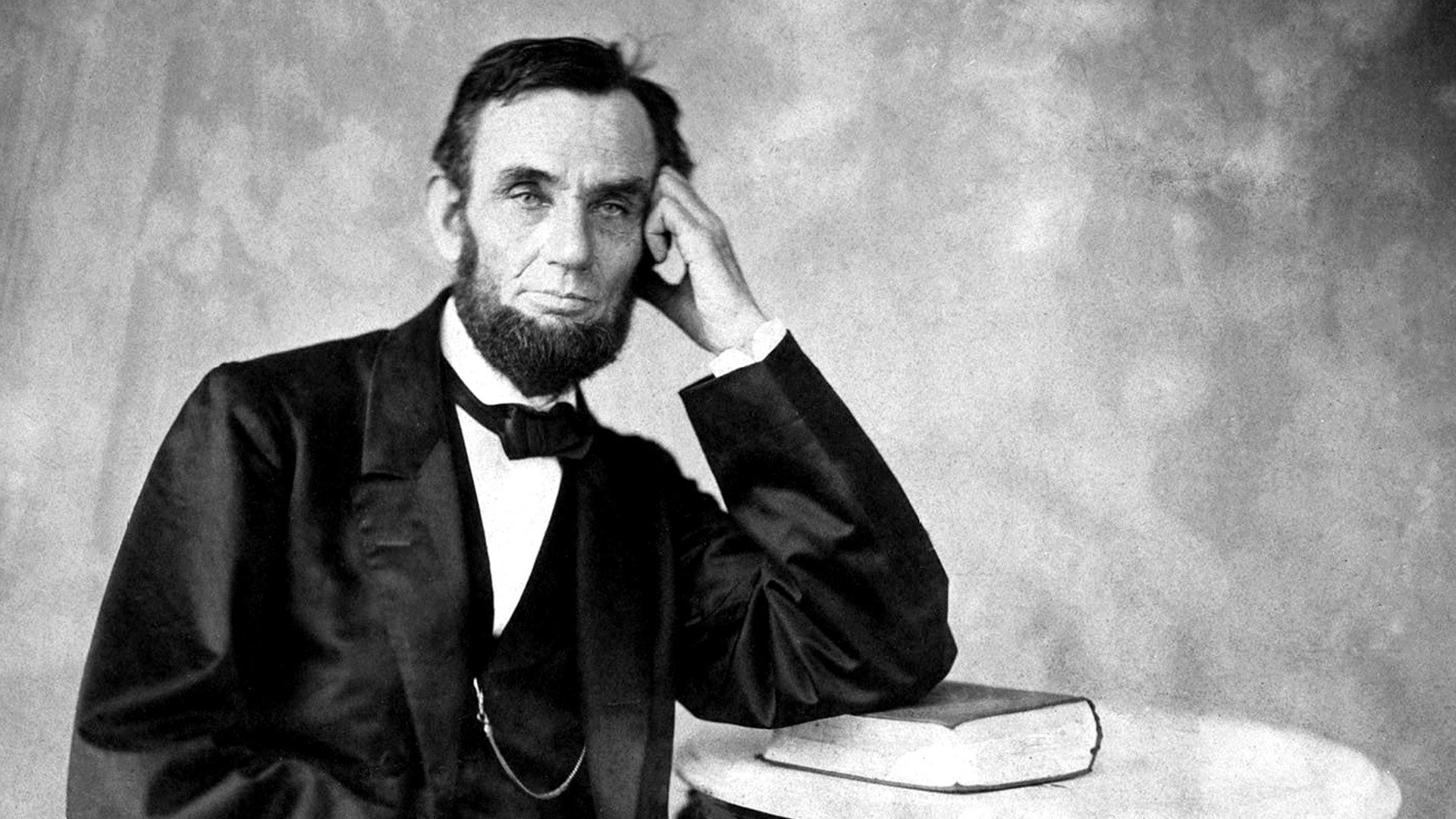
Was Abraham Lincoln a Christian?

Editor in Chief

In his younger years, Lincoln was a skeptic. But as he aged, he turned toward biblical wisdom—and not only when in the public eye.

Abraham Lincoln in 1863

Abraham Lincoln in 1863

Christianity Today February 16, 2026
Wikimedia Commons / Edits by CT

Was Abraham Lincoln a Christian? The book Abraham Lincoln, The Christian (1913) claims he was. Contemporary Lincoln biographer Allen Guelzo said in 2000, “He was not.” It’s a hard question: Lincoln was a skilled politician who understood his public, a compassionate president who agonized about sending soldiers to die, a private man with marriage problems that became public, and a thinker who thought long and hard about God. 

Lincoln, born on February 12, 1809, grew up reading the King James Bible and contrasting its majestic language with the frontier Bible teaching that he treated in a variety of ways. First came parody. When Mr. and Mrs. Thomas Lincoln and daughter Sarah joined the Little Pigeon Baptist Church in 1823, teenaged Abraham did not. He often listened to sermons, though, and mimicked them afterward before a crowd of children until (as one child remembered) Lincoln’s father “would come and make him quit.”

Lincoln continued that practice into his 20s, once giving a memorable imitation of a preacher so plagued by a small blue lizard running up his leg that the preacher took off his pants and shirt while attempting to shoo away the reptile. 

Then he moved from comedy to questioning the accuracy of the Bible and the divinity of Christ. Political competitors called him a deist who “belonged to no church.” Lincoln’s law partnership with William Herndon, a frontier evangelist for transcendentalism, did not help his reputation among Christians.

As Lincoln’s ambition grew, so did his caution in criticizing Christianity. Lincoln, as Whig nominee for Congress in 1846, ran against Peter Cartwright, the well-known traveling evangelist. In response to Cartwright’s charge that he was an infidel, Lincoln issued a statement published in The Illinois Gazette: “That I am not a member of any Christian Church, is true; but I have never denied the truth of the Scriptures; and I have never spoken with intentional disrespect of religion in general, or of any denomination of Christians in particular.”

Lincoln chose his words carefully. He did not say he affirmed scriptural truth, only that he never denied it. He did not state his respect, only that he had not been caught in disrespect. Neither statement was true about his earlier years, but Lincoln did display good manners during the 1840s. He concluded his public statement with a notice that he did not favor those with poorer etiquette: “I do not think I could, myself, be brought to support a man for office whom I knew to be an open enemy of, and scoffer at religion.”

Lincon in 1858 famously said, “A house divided against itself cannot stand.” He did not have to spell out to listeners the meaning of his reference to Matthew 12, where Jesus heals a demon-possessed man. The Pharisees said Jesus did it by using Satanic power, but Jesus responded that “every kingdom divided against itself is brought to desolation; and every city or house divided against itself shall not stand. … But if I cast out devils by the Spirit of God, then the kingdom of God is come unto you” (vv. 25–28, KJV).

Lincoln won Northern votes by implying that the South was evil and the North could somehow bring about the kingdom of God. He shied away from talking about war, but Congressman John Wentworth of Illinois went around proclaiming in 1860 that John Brown the previous year had been like John the Baptist, clearing the way for Lincoln, who “will break every yoke and let the oppressed go free.”

The “house divided” speech and fervent politicking afterward won him the Republican presidential nomination in 1860. To overcome the old accusations of deism, Lincoln included in his stump speech a line about how he could not succeed without “divine help.” Some Northern ministers ignored Lincoln’s previously expressed beliefs because the Republican Party was now the instrument to end slavery through a quick victory.

That did not happen, and for two years the strategies of Lincoln and his generals failed. 

Beginning in 1862, Lincoln attended the New York Avenue Presbyterian Church in Washington on Sundays and sometimes Wednesday prayer meetings. Several long talks with pastor Phineas Gurley helped him go through “a process of crystallization,” which Gurley described as a conversion to Christ. Lincoln himself never said that, but he did tell journalist Noah Brooks, “I have been driven many times upon my knees by the overwhelming conviction that I have nowhere else to go. My own wisdom, and that of all about me, seemed insufficient for that day.”

That may have been for public consumption, but a key bit of evidence is a private note Lincoln wrote just after the Union’s second morale-sapping defeat at Bull Run. His “Meditation on the Divine Will,” a note found on his desk after his death, was not a politically pious missive for public consumption but an attempt to think through what was beyond human understanding. 

“The will of God prevails,” Lincoln wrote. “In great contests each party claims to act in accordance with the will of God. Both may be, and one must be wrong, [for] God cannot be for and against the same thing at the same time.”

Who was right? Lincoln wrote, “In the present civil war it is quite possible that God’s purpose is something different from the purpose of either party…. I am almost ready to say this is probably true—that God wills the contest, and wills that it shall not end yet. By his mere quiet power, on the minds of the now contestants, He could have either saved or destroyed the Union without a human contest. Yet the contest began. And having begun He could give the final victory to either side any day. Yet the contest proceeds.”

Was it God’s will for slaves to be freed? When responding to clergymen from Chicago who asked him to carry out God’s will concerning American slavery, he said, “These are not … the days of miracles, and I suppose it will be granted that I am not to expect a direct revelation.” But Lincoln read the Emancipation Proclamation to his cabinet five days after Union forces stopped the Confederates at Antietam, stating (according to Secretary of the Navy Gideon Welles), “God has declared this question in favor of the slaves.”

In October 1862, he told four visiting Quakers that the war was “a fiery trial” and he was “a humble instrument in the hands of our Heavenly Father.” Lincoln said, “I have desired that all my works and acts may be according to His will, and that it might be so, I have sought his aid.” 

In his “Proclamation Appointing a National Fast Day” in 1863, Lincoln called the war “a punishment inflicted upon us for our presumptuous sins to the needful end of our national reformation as a whole people.” Lincoln still spoke of sins of the whole people, rather than focusing on one particular sin, grievous as it was, in one particular part of the nation.

Lincoln’s proclamation emphasized how Americans had taken for granted God’s kindness: “We have forgotten the gracious Hand which preserved us in peace, and multiplied and enriched and strengthened us; and we have vainly imagined, in the deceitfulness of our hearts, that all these blessings were produced by some superior wisdom and virtue of our own.” That proclamation applied the Old Testament pattern—God’s faithfulness, man’s forgetfulness, God’s discipline—to a new people become “too self-sufficient to feel the necessity of redeeming and preserving grace, too proud to pray to the God that made us.”

Lincoln had not been above using religion for political purposes, but it seems that the war, along with the death of one of his sons, changed him.  After previously questioning prayer, he was becoming a praying man. He told one general that as reports came in from Gettys­burg during the first two days of fighting, “when everyone seemed panic-stricken,” he “got down on my knees before Almighty God and prayed. … Soon a sweet comfort crept into my soul that God Almighty had taken the whole business into His own hands.”

Pastor Gurley announced on one Sunday morning that “religious services would be suspended until further notice as the church was needed as a hospital.” Generals had already made plans. Lumber to be used as flooring on top of pews was stacked outside. But Lincoln stood up—he did that often and also said all prayers should be made standing up—and announced, “Dr. Gurley, this action was taken without my consent, and I hereby countermand the order. The churches are needed as never before for divine services.”

Lincoln needed the church and the Bible. By 1864, Lincoln was even recommending Scripture reading to Joshua Speed, his fellow skeptic from Springfield days. When Speed said he was surprised to see Lincoln reading a Bible, Lincoln told him, “Take all that you can of this book upon reason, and the balance on faith, and you will live and die a happier man.” When the Committee of Colored People in 1864 gave Lincoln a Bible, he responded, “But for this book we could not know right from wrong.”

He told pastor Byron Sutherland of the First Presbyterian Church in Washington that God “has destroyed nations from the map of history for their sins, [but my] hopes prevail generally above my fears for our Republic. The times are dark, the spirits of ruin are abroad in all their power, and the mercy of God alone can save us.” Lincoln increasingly saw no alternative to the spirits of ruin, as the war became one of attrition and the body counts surged. 

Many cite Lincoln’s second inaugural address, with its call to “bind up the nation’s wounds,” as evidence of his emphasis on reconciliation, and that’s true. But the address also showed Lincoln’s sense that God was in charge: “Fondly do we hope—fervently do we pray—that this mighty scourge of war might speedily pass away. Yet … as was said three thousand years ago so still it must be said, ‘the judgments of the Lord, are true and righteous altogether.’”

I haven’t gone here into Lincoln’s marriage, which was a strange story unto itself that also drove him to prayer, but I’ll note one event because it pertains to the end of Lincoln’s earthly story. 

On March 23, 1865, Mary Todd Lincoln, often intensely jealous, exploded at Julia Grant, the victorious general’s wife. When Lincoln intervened, “Mrs. Lincoln repeatedly attacked her husband in the presence of officers,” one of them said. He reported that Lincoln “bore it as Christ might have done, with an expression of pain and sadness that cut one to the heart, but with supreme calmness and dignity. … He pleaded with eyes and tones, till she turned on him like a tigress and then he walked away hiding that noble ugly face so that we might not catch the full expression of its misery.” 

On April 14, when the Lincolns headed to the theater, General and Mrs. Grant did not go with them as originally planned, because Julia Grant refused to spend any more time with Mary Lincoln. Secretary of War Edwin Stanton and his wife had been invited as well, but Mrs. Stanton also refused to sit with Mrs. Lincoln. Finally, Stanton selected young major Henry Rathbone and his fiancée to go with the Lincolns.

Partway through the play, the member of the Metropolitan Police assigned to guard duty, bored and thirsty, wandered away from his post. John Wilkes Booth fired his fatal shot unimpeded.

Mrs. Lincoln was eventually declared legally insane. She did recall that at Ford’s Theatre, just before the shooting, she and the president had talked about a trip they hoped to take to Jerusalem.

This short account draws from two chapters on Lincoln in Marvin Olasky’s Moral Vision (Simon & Schuster, 2024). 

Marvin Olasky is editor in chief of Christianity Today.

Church Life

Killing People Is Not the Same as Allowing Them to Die

Contributor

And the church of Jesus Christ has to offer people a better way of thinking about life and dependence if we want to push against the horrors of euthanasia.

An IV and hospital bed.
Christianity Today February 16, 2026
Illustration by Christianity Today / Source Images: Getty

A recent story from Canada demonstrates the grim reality of euthanasia: A husband suffering from “caregiver burnout” brought his wife to the emergency room. She’d gone back and forth about wanting euthanasia—or, as it is politely called in Canada and some other places where it has been legalized (along with New York’s similar and recently legalized physician-assisted suicide), Medical Assistance in Dying (MAID). After being denied inpatient palliative care, the woman was “urgently” reassessed for euthanasia and killed the very same day—despite the objections of a previous assessor who had seen her the day before.

Caregiver burnout is a real problem, as anyone who has cared for a vulnerable loved one will tell you. Many are exhausted and frustrated when those they love cannot take care of themselves. In these situations, both those carrying this burden and those seeing themselves a burden to others would naturally find euthanasia tempting. This makes it all the more necessary to ensure that there’s no option to end the frustration by killing the person needing care.

Our culture idolizes independence and self-sufficiency to the point that people fear dependence on others more than almost anything else. The feeling of “being a burden” and a pervasive sense of loneliness are major reasons people seek euthanasia. The church of Jesus Christ has to offer people a better way of thinking about life and dependence if we want to push against the horrors of euthanasia.

The pressure to kill people simply because they are a burden on others will get worse in the next few years. As more baby boomers age into a time of life when they can no longer be independent, the strain on personal relationships and public finances will increase. Many people who never had children or are estranged from their families will find themselves alone and suffering. Many middle-aged families will find themselves responsible for caring for multiple parents at the same time. What can churches do?

First, we must find ways to support and encourage families who are taking care of loved ones who are vulnerable. I know many Christians who have spent a season of their life—sometimes a very long season—caring for a relative with dementia, even to the point of spouses switching off Sundays at church for years. Their labor is a witness to God’s love for each of us that does not change if we are more or less mentally and physically dependent. While calling out these quiet acts of heroism by name from the pulpit is probably not appropriate, Christians should celebrate these faithful caregivers with the same vigor that we laud missionaries in foreign lands.

Second, churches should also consider whether they could take more ambitious steps toward caring for people in the waning years of life. The Yes in God’s Backyard movement is focused on creating affordable housing on or around church properties, with some developments specifically designing spaces for the elderly. A “dementia village” in the Netherlands was designed to keep people engaged in community, even mixing them with preschool programs, so the elderly can enjoy time with small children rather than in isolation. Not every church has the resources to do this, but the need for these projects will become more severe. 

For others, something as simple as regularly leading worship at a nursing home or other care facility might be the next step. Heritage Mission is one ministry that helps churches do this sort of work. While it may not be as exciting as other kinds of work, your church might give someone one last opportunity to hear the gospel.

Finally, churches need to equip members to respond to common arguments in favor of euthanasia. One common source of confusion is the difference between killing people and allowing them to die. Since we often choose to stop intensive care interventions when people are nearing death, it’s easy to assume there’s no moral difference between, say, taking people off ventilators and injecting a medication to stop their hearts.

The difference is that when we stop an intervention and the patient dies, we have not caused the death—cancer, dementia, or heart failure caused it. But if we give that patient a lethal dose of medication, the person giving that medication is responsible for causing that person’s death. It is the difference between accepting that God is in control of when a person dies and arrogantly taking that control for ourselves. Books like Kathryn Butler’s Between Life and DeathEwan Goligher’s How Should We Then Die?, and Bill Davis’s Departing in Peace can be helpful in figuring out difficult details for families faced with these decisions.

Many societies in antiquity practiced “exposure”—abandoning children unwanted because of their sex or other unwanted traits. The early church rescued infants who had been exposed, eventually bringing about a moral revolution in a society that had wantonly discarded children and ending the practice. Now, followers of Jesus Christ have an opportunity to seek out those who are suffering and alone at the other end of life, sharing with them the ever-present love of God. It will take time, effort, and money to shoulder this responsibility well, but God has equipped us, wherever we are, to honor his children from the beginning of their lives to the end.

Correction (February 26, 2026): A prior version of this article was unclear on the distinction between euthanasia and assisted suicide.

Matthew Loftus lives with his family in Kenya, where he teaches and practices family medicine at a mission hospital. His book Resisting Therapy Culture: The Dangers of Pop Psychology and How the Church Can Respond is forthcoming from InterVarsity Press.

News

How CT Editors Carl Henry and Nelson Bell Covered Civil Rights

Trying to stake out a sliver of space for the “moderate evangelical,” the magazine sometimes left readers confused and justice ignored.

Newspaper clippings showing Carl Henry, Nelson Bell, and civil rights events.
Christianity Today February 16, 2026
Illustration by Elizabeth Kaye / Source Images: Getty, WikiMedia Commons, Unsplash

A note was scratched out in longhand on a short sheet of paper imprinted with the heading “Memo from the desk of CARL F. H. HENRY” and attached to a newspaper clipping from the November 26, 1957, Washington Post and Times Herald, page A9, under the headline “Churches Get Racial Warning.” The memo addressed to executive editor L. Nelson Bell read simply, “Nelson— You are more or less our conscience on this race issue —Carl.”  

Seventy years ago, as the founding editors of Christianity Today prepared for their first issue in October 1956, they envisioned a heady theological journal addressing difficult cultural issues from a biblical perspective. And Henry, the magazine’s first editor, proposed starting the publication with a series of articles on some of the most volatile issues of the late 1950s: desegregation and racial equality. 

But these articles never came to be. Christianity Today’s treatment of the emerging Civil Rights Movement proved how difficult it was to find consensus amid the differing opinions of evangelical leaders of the day.

Henry’s Uneasy Conscience of Modern Fundamentalism, first published in 1947, had been an early call to social engagement for conservative Protestants. Bell, who joined Christianity Today as its founding executive editor, was a former missionary surgeon in China, a highly influential Southern Presbyterian leader, and father-in-law to evangelist and CT cofounder Billy Graham. Each of those roles gave authority to Bell’s views on race, and he opposed mandatory desegregation in favor of voluntary efforts to integrate schools, churches, and other public spaces.

Henry’s plan for that early series called for each editor—Henry himself, Bell, and associate editor J. Marcellus Kik—to address the Civil Rights Movement, which was then centered on the Montgomery bus boycott and the growing national voice of Martin Luther King Jr. Bell had written extensively on race issues for the Southern Presbyterian Journal and viewed the problem in the South as “one of ratio, not of race,” by which he meant that desegregation was more difficult where there were higher numbers of African Americans. Bell was prepared to argue to readers of Christianity Today that “the matter will not be solved by a cold recourse to law.”

Instead, the plan was scrapped, perhaps due to a desire for a more unified editorial voice. Rather than following Henry’s initial vision of three 1,000-word essays, CT addressed race in scattered articles and editorials in the early years of the magazine.

Indeed, in those first years, civil rights and the international Communist threat were the two most common social issues in CT’s pages. As the Civil Rights Movement organized in the late ’50s and early ’60s, Christianity Today editorials proposed a moderate approach to the growing protest movement over desegregation. 

The first editorial on race and civil rights on March 18, 1957, called for the church to “be the Church” and cry against wrongs in the land. But it also argued that “forced integration is as contrary to Christian principles as is forced segregation” and praised the example of segregated Chinese churches in New Orleans. The editors proposed that “churches in which integration is not practiced may be just as Christian as those where it is found.” CT called for the church to stand against injustice and indifference but isolated that call in the middle of a long article that concluded churches, pastors, and laymen need not worry themselves about changes brought about by the Civil Rights Movement.

In the September 30, 1957, issue, the editorial “Race Relations and Christian Duty” addressed the showdown over the integration of Little Rock Central High School—a standoff which saw President Dwight D. Eisenhower call in federal troops. It called for the church to take a stronger leadership role in such matters.  

A year later, the September 29, 1958, issue published “Desegregation and Regeneration,” which deemed race issues a subset of a greater problem of sin and included an extensive statement Bell had prepared for a conference earlier that year. It described integration as “matter of personal choice, over which the Church has no jurisdiction and into which it should not intrude in the name of Christianity.”

A four-page editorial entitled “Race Tensions and Social Change” in the January 19, 1959, edition presented a position CT editors labeled the “evangelical moderate” stance—an effort to avoid the trap of being either a segregationist or an integrationist. 

The editorial suggested both “radicals” and segregationists “have attacked Billy Graham’s ministry,” and described the difficulty an “evangelical moderate” like Graham would face: “Some Southern clergy have linked the Christian cause as firmly to white citizens’ councils and racist politicians as have some northern clergymen to the NAACP and the Supreme Court.” 

Pressure was growing for Graham, who had integrated his own revivals beginning in 1953, to take a clearer stand on the segregation question. The editors recommended dialogue across racial lines, guarding against the sin of racial prejudice and not forcing individuals to segregate or integrate if they were opposed to doing so. But this was a difficult position to maintain, as it disappointed those on both sides of the issue. 

These 1950s editorials sent mixed signals to readers as they combined the hands-off approach that Bell had often championed with the call to social engagement that marked Henry’s work. The 1959 article, for example, paired enjoinders to moderation with an encouragement to ministers to speak up, because “the Church can … prove impotent in social ethics by neglecting [to condemn] race pride within its own house and fellowship.” And that encouragement stopped short of a call to specific action, contributing to evangelicals’ reputation for talking about social involvement while preserving the status quo—namely, a segregated society. 

Years later, Henry recalled in his memoir that the magazine was never “in the forefront of the [Civil Rights Movement] for several reasons.” Evangelicals were typically not included in some ecumenical efforts on race issues, he wrote, and deep theological differences prevented cooperation. Accordingly, Henry remembered that “we left the evaluation of Martin Luther King’s call for racial justice to Nelson, who held that King preached not the gospel but a message of social change.”

Henry also recalled that CT’s editorial staff took a stand against the “disrespect for law implicit in mob demonstration and resistance,” preferring legal recourse over public protests. This was an honest measure of where many evangelicals stood in the 1950s. And he offered one additional reason for the editors’ approach in that era: “We saw the race problem—rightly, I think—as one dimension of a more comprehensive problem, and not as the cutting edge of a dramatic social reformation.” 

In Bell’s case, however, his outspoken opinions against forced integration reflected Southern white culture and his personal bias. Henry accepted Bell’s rationale and granted him editorial authority for the magazine’s position on the Civil Rights Movement.

The postwar evangelicals had theological and organizational momentum, and Christianity Today was the flagship voice for those efforts. Henry, Bell, and others involved in those early years of CT were never fully comfortable with the Civil Rights Movement and struggled to provide a clear voice for their readers. This early challenge to postwar evangelicalism showed how difficult it was to find consensus on social issues, even with theological agreement. 

Michael D. Hammond, a historian of American Christianity, serves as president of Gordon College. He lives with his wife and six children in Beverly, Massachusetts.

Books
Review

This ‘Screwtape for Our Times’ Will Challenge and Confound You

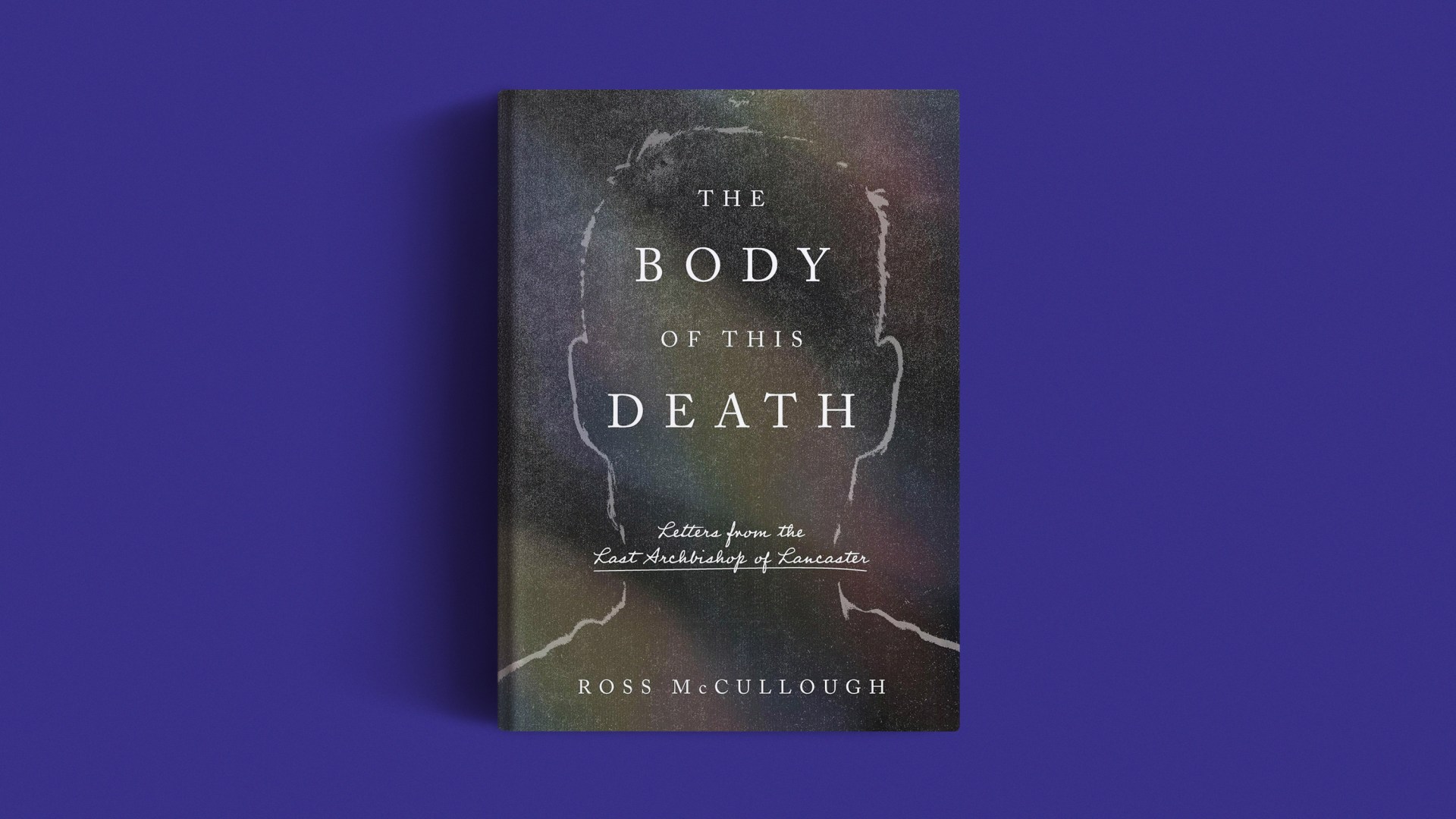
The Body of This Death is difficult to classify, difficult to read, and absolutely worth your time.

The book cover
Christianity Today February 16, 2026
Illustration by Christianity Today / Source Images: Getty, Word on Fire Academic

The Body of This Death is difficult to classify. Authored by Ross McCullough, a theologian in the Honors Program at George Fox University, it is almost—but not quite—a novel, a theological treatise, a collection of aphorisms, a series of correspondence, a science fiction dystopia, and a tract for Roman Catholicism. It is also the best new book you’ll read this year. 

As its subtitle states, the book consists of a series of “Letters from the Last Archbishop of Lancaster.” This framing device brings to mind other epistolary novels, as evidenced by the endorsement of novelist Jeffrey Eugenides, who calls the book “a Screwtape for our times.” Beyond a likeness of format, though, The Body of This Death is reminiscent of The Screwtape Letters in another way: It too is an instant classic of Christian spiritual writing that deserves a wide audience.

The time in which the book is set is unknown. It’s not the near future, but it’s close enough to be recognizable, perhaps a few centuries from now. There has clearly been some break between old and new orders, and McCullough’s English archbishop finds himself penning letters during a time of seismic transition. As the plot unfolds, you learn why he was the last archbishop of Lancaster and why his name has been preserved for posterity.

But the letters don’t come to us straight from their fictional author. We get them from a French scholar, writing in “Year 20 of the New Common Era.” He’s working with a newly discovered manuscript of the cleric’s writings, a one-sided correspondence with a range of addressees: a priest, a nun, an old friend, a struggling agnostic, a Muslim mother. The scholar arranges these letters in roughly chronological order, and they both recount and react to events happening in the writers’ lives and the world around them. These are followed by “posthumous” letters that could not be inserted smoothly in the ordinary correspondence.

With these epistolary snapshots, McCullough tackles an extraordinary range of subjects: from virtual reality, secular liberalism, and the nature of fatherhood to Islam, infant baptism, and the Incarnation. The result is a tour de force: a postmodern Pascal, an American Chesterton, a Catholic Kierkegaard.

Those three loom large in the book, as do Dante Alighieri, Fyodor Dostoevsky, and T. S. Eliot, along with the writings of both the church fathers and the desert fathers. It isn’t only their ideas that appear, though. It’s their style.

McCullough’s writing is not the kind of academic work which cannot help but cut God down to size, but neither is it popular, reaching readers with simple vocabulary and accessible structure. The Body of This Death is unapologetically literary, and while the payoff is worth it, the book demands much of its readers. If it’s deliberately difficult, it’s in imitation of the way Jesus’ parables confound his listeners. The point is the stubborn provocation—unwillingness to comply with the stories we prefer to tell ourselves. Jesus hasn’t failed when his hearers storm off in anger. His hearers have failed, and his parable has succeeded precisely by exposing their failure. 

The letters in The Body of This Death are closer to proverbs than parables. They’re largely aphorisms, for, as the archbishop comments, “Only the aphoristic is adequate to the task” of speaking about the divine mystery, “because only the aphoristic makes plain its [own] inadequacy.” Or, as the German writer Karl Kraus once wrote, “An aphorism never equals the truth. It is a half-truth, or a truth-and-a-half.”

Not for nothing, then, does aphoristic theology have a venerable place in Christian history. Its roots lie in biblical wisdom literature: Proverbs, Ecclesiastes, and Job, books that ask at least as much as they answer. These are not systematic theologies. A proverb is a memorable saying of the wise, sometimes clear, sometimes enigmatic. It pokes and prods the conscience. It resists mastery, summary, and restatement. Its brevity can prove maddening even as it sticks in the mind. As the cow chews the cud, seekers of wisdom grind and suck until the proverb gives up its nourishment.

The desert fathers inherited and continued this tradition with their Apophthegmata, short sayings and anecdotes from the fourth and fifth centuries. These tend to follow a pattern: An abba goes to the desert to pray in solitude and instead attracts all manner of followers eager for his guidance. Some youthful man visits him, hoping to see a miracle, and the miracle he is told to seek is silent prayer alone in a cell. 

Sometimes these accounts involve the spectacular, like fighting demons. But more often at issue is something unspectacular, like avoiding fornication or refraining from gossip. The fathers’ comments are usually brief, witty, and unexpected, even deflating. McCullough’s archbishop follows their lead, taking up the mantle of Solomon and the desert fathers by striving with pithy formulations to gesture at truths that cannot be captured by finite minds.

“These letters are aphorisms,” he writes. Whether as a proverb or apothegm, the aphorism is close to the apophatic, a style of theology suspicious of the closure and finality of human speech. Words cannot but limit and bind, whereas the living God is infinite. His freedom breaks our words open—at times like a bud from a seed, at times like a split atom. We need words to know God, and he has given us trustworthy words by which to know him, yet aphorisms are a necessary check on our pretentions. They discipline our pride by curbing our verbal idolatry.

In the words of Blaise Pascal, “I should be honouring my subject too much if I treated it in order, since I am trying to show that it is incapable of it.” God will not submit to our ordering. He will not be tamed.

Like any correspondence, the book’s letters accumulate their themes, arguments, and wisdom over time, by familiarity and repetition and “real-world” events. In that sense, it gets easier as you go—but there’s no handholding in this book. 

There aren’t even handholds. You’re set down alone in a labyrinth, and you must proceed until you confront—or rather, are confronted by—Christ. As the archbishop writes in a late letter to the “inquisitors” who have imprisoned him on a trumped-up charge, “Do you know, Christ is not nailed to the cross; the cross is nailed to Christ. It is not the savior that flees the world but the world that flees its salvation. You think you are here to discipline me, but perhaps the nails run the other way.”

If the correspondence has a center, it is the cross of Christ. The letters spiral around it—not only the mystery of salvation but also the vocation of all believers to join the Lord in his passion. At one point the archbishop asks, “Why has Christianity lasted so long?” His answer: “It is a religion of suffering well.” One of the shortest letters is devoted entirely to the topic:

Fr. Rodrigues,

Pain is not the wound; pain is the reaction to the wound. Suffering is not alienation from God but a reaction against alienation, a protest that begins from some inarticulate depth inside of us—the depth from which articulations come. That is why it is holy, because it is always already on the side of the angels. In that sense, the suffering of purgatory and the suffering of hell both tend to their own dissolution: the one by overcoming the alienation, the other by silencing the protest.

Here is another, to the same priest:

The Church too gives us little reason for optimism, I’m afraid. Even the Apostles betrayed Jesus—are betraying him.

But optimism is not hope. Optimism sees history held in the hands of the two centurions: and the one after all is faithful beyond Israel, the other was converted by the cross. Hope on the other hand finds history between the two Judases: Iscariot, lost cause; not Iscariot, patron of lost causes.

This last letter is representative: so compact in its allusions it might as well be spring-loaded. If you don’t know one centurion from another or who the patron of lost causes is, the author is not going to let you in on the secret. (Nor am I.) The aim isn’t to keep you in the dark. It’s to draw you out of it. The saints and authors and poetic references are woven together so inseparably they form a single thread. And as with Ariadne and Theseus, this thread is meant to lead you out of the labyrinth—or perhaps toward its center.

The themes and theology of McCullough’s book, combined with how he chose to write it, raise two questions worth pondering for evangelical readers. The first is how, or whether, evangelicals should read Catholic writers. The second is what evangelicals might learn from a book like this: highbrow in style and substance, written in beautiful but stylized prose that is likely to prove unwelcoming, even intractable, to many readers.

I’ve paired the questions together because my answer is the same for both: Evangelicals can become better readers by reading more widely within the church—and not only when authors from outside the fold are safely six feet under.

You know the reading habit I mean. J. R. R. Tolkien, Thomas Merton, G. K. Chesterton, John Henry Newman, even Thomas Aquinas: all widely read by American evangelicals today, and all of them gone on to their reward. Were Chesterton alive today, would evangelicals like him so well? No doubt he’d have racked up quite a few high-profile conversions, much to the chagrin of Protestants wishing he’d quit picking off our best and brightest.

Or even think of C. S. Lewis, who never swam the Tiber but absolutely does not tick the familiar boxes of American evangelicalism. Lewis was an avid smoker who affirmed evolution, denied a young earth, read the early chapters of Genesis as nonhistorical, loved pagan myths and secular literature, and believed in both the priesthood and infant baptism. And yet—rightly—evangelicals celebrate Lewis as a great Christian writer and thinker. Could it be that there are Christians of our own time, in other branches of the family tree, who might instruct and reform us too?

Even if evangelicals remain cautious in their reading habits, The Body of This Death may yet find the readership it deserves. Journalist Arthur Koestler was right to say that “a writer’s ambition should be … to trade a hundred contemporary readers for ten readers in ten years and for one reader in a hundred years.” McCullough writes in that spirit, and I have no doubt this book will outlast our time, just as Lewis’s work has endured.

Writing that lasts is not easy. It is not market-tested by surveys. It is not measured by book sales or median reader taste. It is certainly not vetted by sensitivity readers.

People still read Søren Kierkegaard today—and have their lives overturned by his thought—not because it is digestible but because it is the very opposite. His voice is winding, florid, disorienting, and infuriating. But he speaks to what matters. He is gripped and enthralled by a vision he must communicate to anyone who will listen, with the urgency of life and death. His letters are scrawled in blood, not ink. His work won’t let you go until it’s finished with you.

That’s the kind of book this is. I believe it will prove a classic, but others will be the judge of that. What is indisputable is that McCullough has written a book that aspires to greatness. He sets the terms of encounter, and they are not negotiable. But if you accept the invitation, you won’t be the same again.

Christians need more writing like this—books that aim higher than sales or accessibility. And we need to honor and celebrate them when, in these rare moments, they come along. This is one of those moments. Enter the labyrinth and prepare yourself for the mystery that awaits.

Brad East is an associate professor of theology at Abilene Christian University. He is the author of four books, including The Church: A Guide to the People of God and Letters to a Future Saint.

addApple PodcastsDown ArrowDown ArrowDown Arrowarrow_left_altLeft ArrowLeft ArrowRight ArrowRight ArrowRight Arrowarrow_up_altUp ArrowUp ArrowAvailable at Amazoncaret-downCloseCloseellipseEmailEmailExpandExpandExternalExternalFacebookfacebook-squarefolderGiftGiftGooglegoogleGoogle KeephamburgerInstagraminstagram-squareLinkLinklinkedin-squareListenListenListenChristianity TodayCT Creative Studio Logologo_orgMegaphoneMenuMenupausePinterestPlayPlayPocketPodcastprintremoveRSSRSSSaveSavesaveSearchSearchsearchSpotifyStitcherTelegramTable of ContentsTable of Contentstwitter-squareWhatsAppXYouTubeYouTube