Ideas

Was Abraham Lincoln a Christian?

Editor in Chief

In his younger years, Lincoln was a skeptic. But as he aged, he turned toward biblical wisdom—and not only when in the public eye.

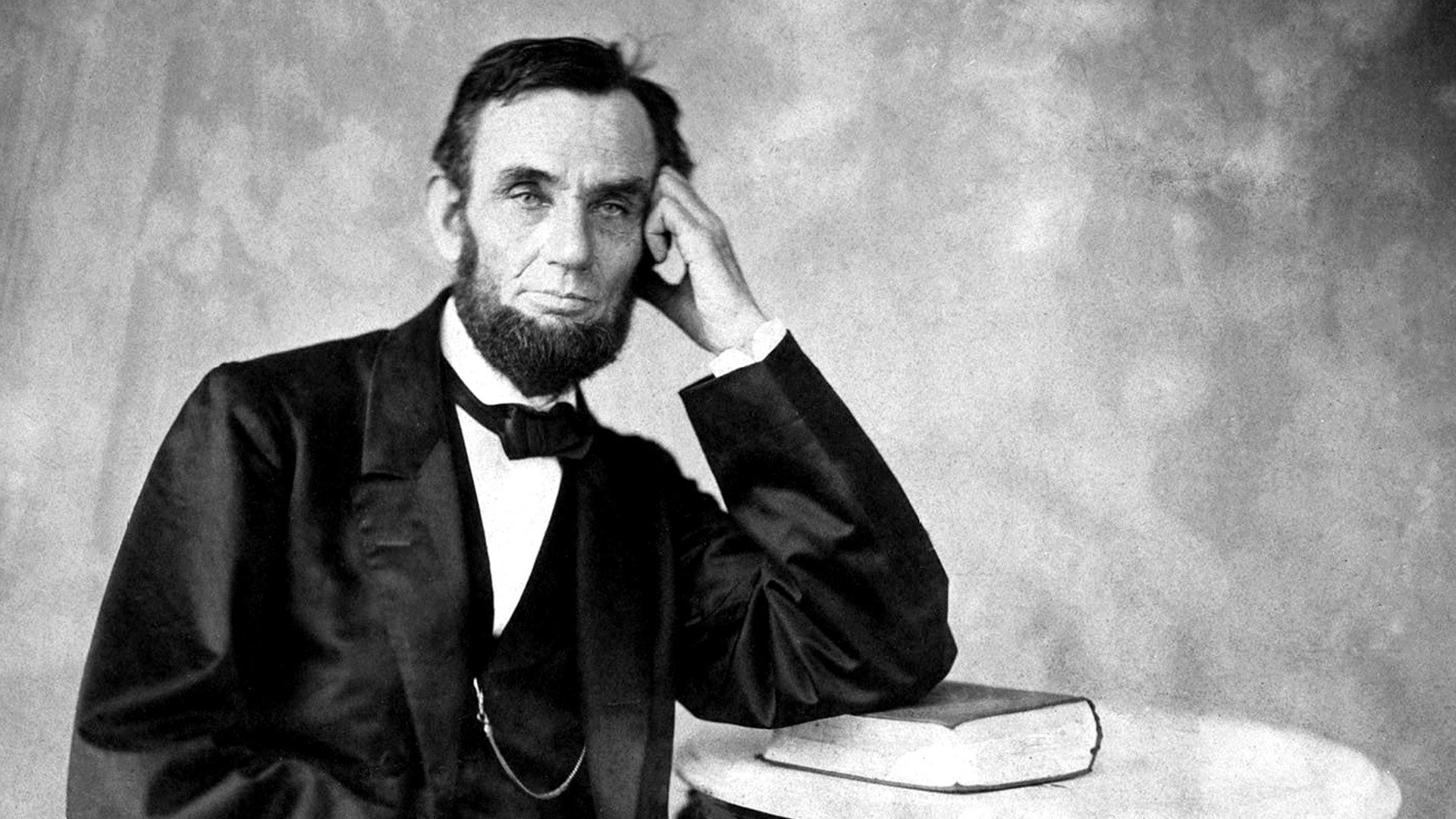
Abraham Lincoln in 1863

Abraham Lincoln in 1863

Christianity Today February 16, 2026
Wikimedia Commons / Edits by CT

Was Abraham Lincoln a Christian? The book Abraham Lincoln, The Christian (1913) claims he was. Contemporary Lincoln biographer Allen Guelzo said in 2000, “He was not.” It’s a hard question: Lincoln was a skilled politician who understood his public, a compassionate president who agonized about sending soldiers to die, a private man with marriage problems that became public, and a thinker who thought long and hard about God. 

Lincoln, born on February 12, 1809, grew up reading the King James Bible and contrasting its majestic language with the frontier Bible teaching that he treated in a variety of ways. First came parody. When Mr. and Mrs. Thomas Lincoln and daughter Sarah joined the Little Pigeon Baptist Church in 1823, teenaged Abraham did not. He often listened to sermons, though, and mimicked them afterward before a crowd of children until (as one child remembered) Lincoln’s father “would come and make him quit.”

Lincoln continued that practice into his 20s, once giving a memorable imitation of a preacher so plagued by a small blue lizard running up his leg that the preacher took off his pants and shirt while attempting to shoo away the reptile. 

Then he moved from comedy to questioning the accuracy of the Bible and the divinity of Christ. Political competitors called him a deist who “belonged to no church.” Lincoln’s law partnership with William Herndon, a frontier evangelist for transcendentalism, did not help his reputation among Christians.

As Lincoln’s ambition grew, so did his caution in criticizing Christianity. Lincoln, as Whig nominee for Congress in 1846, ran against Peter Cartwright, the well-known traveling evangelist. In response to Cartwright’s charge that he was an infidel, Lincoln issued a statement published in The Illinois Gazette: “That I am not a member of any Christian Church, is true; but I have never denied the truth of the Scriptures; and I have never spoken with intentional disrespect of religion in general, or of any denomination of Christians in particular.”

Lincoln chose his words carefully. He did not say he affirmed scriptural truth, only that he never denied it. He did not state his respect, only that he had not been caught in disrespect. Neither statement was true about his earlier years, but Lincoln did display good manners during the 1840s. He concluded his public statement with a notice that he did not favor those with poorer etiquette: “I do not think I could, myself, be brought to support a man for office whom I knew to be an open enemy of, and scoffer at religion.”

Lincon in 1858 famously said, “A house divided against itself cannot stand.” He did not have to spell out to listeners the meaning of his reference to Matthew 12, where Jesus heals a demon-possessed man. The Pharisees said Jesus did it by using Satanic power, but Jesus responded that “every kingdom divided against itself is brought to desolation; and every city or house divided against itself shall not stand. … But if I cast out devils by the Spirit of God, then the kingdom of God is come unto you” (vv. 25–28, KJV).

Lincoln won Northern votes by implying that the South was evil and the North could somehow bring about the kingdom of God. He shied away from talking about war, but Congressman John Wentworth of Illinois went around proclaiming in 1860 that John Brown the previous year had been like John the Baptist, clearing the way for Lincoln, who “will break every yoke and let the oppressed go free.”

The “house divided” speech and fervent politicking afterward won him the Republican presidential nomination in 1860. To overcome the old accusations of deism, Lincoln included in his stump speech a line about how he could not succeed without “divine help.” Some Northern ministers ignored Lincoln’s previously expressed beliefs because the Republican Party was now the instrument to end slavery through a quick victory.

That did not happen, and for two years the strategies of Lincoln and his generals failed. 

Beginning in 1862, Lincoln attended the New York Avenue Presbyterian Church in Washington on Sundays and sometimes Wednesday prayer meetings. Several long talks with pastor Phineas Gurley helped him go through “a process of crystallization,” which Gurley described as a conversion to Christ. Lincoln himself never said that, but he did tell journalist Noah Brooks, “I have been driven many times upon my knees by the overwhelming conviction that I have nowhere else to go. My own wisdom, and that of all about me, seemed insufficient for that day.”

That may have been for public consumption, but a key bit of evidence is a private note Lincoln wrote just after the Union’s second morale-sapping defeat at Bull Run. His “Meditation on the Divine Will,” a note found on his desk after his death, was not a politically pious missive for public consumption but an attempt to think through what was beyond human understanding. 

“The will of God prevails,” Lincoln wrote. “In great contests each party claims to act in accordance with the will of God. Both may be, and one must be wrong, [for] God cannot be for and against the same thing at the same time.”

Who was right? Lincoln wrote, “In the present civil war it is quite possible that God’s purpose is something different from the purpose of either party…. I am almost ready to say this is probably true—that God wills the contest, and wills that it shall not end yet. By his mere quiet power, on the minds of the now contestants, He could have either saved or destroyed the Union without a human contest. Yet the contest began. And having begun He could give the final victory to either side any day. Yet the contest proceeds.”


Was it God’s will for slaves to be freed? When responding to clergymen from Chicago who asked him to carry out God’s will concerning American slavery, he said, “These are not … the days of miracles, and I suppose it will be granted that I am not to expect a direct revelation.” But Lincoln read the Emancipation Proclamation to his cabinet five days after Union forces stopped the Confederates at Antietam, stating (according to Secretary of the Navy Gideon Welles), “God has declared this question in favor of the slaves.”

In October 1862, he told four visiting Quakers that the war was “a fiery trial” and he was “a humble instrument in the hands of our Heavenly Father.” Lincoln said, “I have desired that all my works and acts may be according to His will, and that it might be so, I have sought his aid.” 

In his “Proclamation Appointing a National Fast Day” in 1863, Lincoln called the war “a punishment inflicted upon us for our presumptuous sins to the needful end of our national reformation as a whole people.” Lincoln still spoke of sins of the whole people, rather than focusing on one particular sin, grievous as it was, in one particular part of the nation.

Lincoln’s proclamation emphasized how Americans had taken for granted God’s kindness: “We have forgotten the gracious Hand which preserved us in peace, and multiplied and enriched and strengthened us; and we have vainly imagined, in the deceitfulness of our hearts, that all these blessings were produced by some superior wisdom and virtue of our own.” That proclamation applied the Old Testament pattern—God’s faithfulness, man’s forgetfulness, God’s discipline—to a new people become “too self-sufficient to feel the necessity of redeeming and preserving grace, too proud to pray to the God that made us.”


Lincoln had not been above using religion for political purposes, but it seems that the war, along with the death of one of his sons, changed him.  After previously questioning prayer, he was becoming a praying man. He told one general that as reports came in from Gettys­burg during the first two days of fighting, “when everyone seemed panic-stricken,” he “got down on my knees before Almighty God and prayed. … Soon a sweet comfort crept into my soul that God Almighty had taken the whole business into His own hands.”

Pastor Gurley announced on one Sunday morning that “religious services would be suspended until further notice as the church was needed as a hospital.” Generals had already made plans. Lumber to be used as flooring on top of pews was stacked outside. But Lincoln stood up—he did that often and also said all prayers should be made standing up—and announced, “Dr. Gurley, this action was taken without my consent, and I hereby countermand the order. The churches are needed as never before for divine services.”

Lincoln needed the church and the Bible. By 1864, Lincoln was even recommending Scripture reading to Joshua Speed, his fellow skeptic from Springfield days. When Speed said he was surprised to see Lincoln reading a Bible, Lincoln told him, “Take all that you can of this book upon reason, and the balance on faith, and you will live and die a happier man.” When the Committee of Colored People in 1864 gave Lincoln a Bible, he responded, “But for this book we could not know right from wrong.”

He told pastor Byron Sutherland of the First Presbyterian Church in Washington that God “has destroyed nations from the map of history for their sins, [but my] hopes prevail generally above my fears for our Republic. The times are dark, the spirits of ruin are abroad in all their power, and the mercy of God alone can save us.” Lincoln increasingly saw no alternative to the spirits of ruin, as the war became one of attrition and the body counts surged. 

Many cite Lincoln’s second inaugural address, with its call to “bind up the nation’s wounds,” as evidence of his emphasis on reconciliation, and that’s true. But the address also showed Lincoln’s sense that God was in charge: “Fondly do we hope—fervently do we pray—that this mighty scourge of war might speedily pass away. Yet … as was said three thousand years ago so still it must be said, ‘the judgments of the Lord, are true and righteous altogether.’”

I haven’t gone here into Lincoln’s marriage, which was a strange story unto itself that also drove him to prayer, but I’ll note one event because it pertains to the end of Lincoln’s earthly story. 

On March 23, 1865, Mary Todd Lincoln, often intensely jealous, exploded at Julia Grant, the victorious general’s wife. When Lincoln intervened, “Mrs. Lincoln repeatedly attacked her husband in the presence of officers,” one of them said. He reported that Lincoln “bore it as Christ might have done, with an expression of pain and sadness that cut one to the heart, but with supreme calmness and dignity. … He pleaded with eyes and tones, till she turned on him like a tigress and then he walked away hiding that noble ugly face so that we might not catch the full expression of its misery.” 

On April 14, when the Lincolns headed to the theater, General and Mrs. Grant did not go with them as originally planned, because Julia Grant refused to spend any more time with Mary Lincoln. Secretary of War Edwin Stanton and his wife had been invited as well, but Mrs. Stanton also refused to sit with Mrs. Lincoln. Finally, Stanton selected young major Henry Rathbone and his fiancée to go with the Lincolns.

Partway through the play, the member of the Metropolitan Police assigned to guard duty, bored and thirsty, wandered away from his post. John Wilkes Booth fired his fatal shot unimpeded.

Mrs. Lincoln was eventually declared legally insane. She did recall that at Ford’s Theatre, just before the shooting, she and the president had talked about a trip they hoped to take to Jerusalem.

This short account draws from two chapters on Lincoln in Marvin Olasky’s Moral Vision (Simon & Schuster, 2024). 

Marvin Olasky is editor in chief of Christianity Today.

Church Life

Killing People Is Not the Same as Allowing Them to Die

Contributor

And the church of Jesus Christ has to offer people a better way of thinking about life and dependence if we want to push against the horrors of euthanasia.

An IV and hospital bed.
Christianity Today February 16, 2026
Illustration by Christianity Today / Source Images: Getty

A recent story from Canada demonstrates the grim reality of euthanasia: A husband suffering from “caregiver burnout” brought his wife to the emergency room. She’d gone back and forth about wanting euthanasia—or, as it is politely called in Canada and some other places where it has been legalized (along with New York’s similar and recently legalized physician-assisted suicide), Medical Assistance in Dying (MAID). After being denied inpatient palliative care, the woman was “urgently” reassessed for euthanasia and killed the very same day—despite the objections of a previous assessor who had seen her the day before.

Caregiver burnout is a real problem, as anyone who has cared for a vulnerable loved one will tell you. Many are exhausted and frustrated when those they love cannot take care of themselves. In these situations, both those carrying this burden and those seeing themselves a burden to others would naturally find euthanasia tempting. This makes it all the more necessary to ensure that there’s no option to end the frustration by killing the person needing care.

Our culture idolizes independence and self-sufficiency to the point that people fear dependence on others more than almost anything else. The feeling of “being a burden” and a pervasive sense of loneliness are major reasons people seek euthanasia. The church of Jesus Christ has to offer people a better way of thinking about life and dependence if we want to push against the horrors of euthanasia.

The pressure to kill people simply because they are a burden on others will get worse in the next few years. As more baby boomers age into a time of life when they can no longer be independent, the strain on personal relationships and public finances will increase. Many people who never had children or are estranged from their families will find themselves alone and suffering. Many middle-aged families will find themselves responsible for caring for multiple parents at the same time. What can churches do?

First, we must find ways to support and encourage families who are taking care of loved ones who are vulnerable. I know many Christians who have spent a season of their life—sometimes a very long season—caring for a relative with dementia, even to the point of spouses switching off Sundays at church for years. Their labor is a witness to God’s love for each of us that does not change if we are more or less mentally and physically dependent. While calling out these quiet acts of heroism by name from the pulpit is probably not appropriate, Christians should celebrate these faithful caregivers with the same vigor that we laud missionaries in foreign lands.

Second, churches should also consider whether they could take more ambitious steps toward caring for people in the waning years of life. The Yes in God’s Backyard movement is focused on creating affordable housing on or around church properties, with some developments specifically designing spaces for the elderly. A “dementia village” in the Netherlands was designed to keep people engaged in community, even mixing them with preschool programs, so the elderly can enjoy time with small children rather than in isolation. Not every church has the resources to do this, but the need for these projects will become more severe. 

For others, something as simple as regularly leading worship at a nursing home or other care facility might be the next step. Heritage Mission is one ministry that helps churches do this sort of work. While it may not be as exciting as other kinds of work, your church might give someone one last opportunity to hear the gospel.

Finally, churches need to equip members to respond to common arguments in favor of euthanasia. One common source of confusion is the difference between killing people and allowing them to die. Since we often choose to stop intensive care interventions when people are nearing death, it’s easy to assume there’s no moral difference between, say, taking people off ventilators and injecting a medication to stop their hearts.

The difference is that when we stop an intervention and the patient dies, we have not caused the death—cancer, dementia, or heart failure caused it. But if we give that patient a lethal dose of medication, the person giving that medication is responsible for causing that person’s death. It is the difference between accepting that God is in control of when a person dies and arrogantly taking that control for ourselves. Books like Kathryn Butler’s Between Life and DeathEwan Goligher’s How Should We Then Die?, and Bill Davis’s Departing in Peace can be helpful in figuring out difficult details for families faced with these decisions.

Many societies in antiquity practiced “exposure”—abandoning children unwanted because of their sex or other unwanted traits. The early church rescued infants who had been exposed, eventually bringing about a moral revolution in a society that had wantonly discarded children and ending the practice. Now, followers of Jesus Christ have an opportunity to seek out those who are suffering and alone at the other end of life, sharing with them the ever-present love of God. It will take time, effort, and money to shoulder this responsibility well, but God has equipped us, wherever we are, to honor his children from the beginning of their lives to the end.

Correction (February 26, 2026): A prior version of this article was unclear on the distinction between euthanasia and assisted suicide.

Matthew Loftus lives with his family in Kenya, where he teaches and practices family medicine at a mission hospital. His book Resisting Therapy Culture: The Dangers of Pop Psychology and How the Church Can Respond is forthcoming from InterVarsity Press.

News

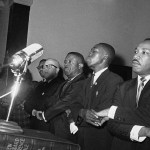
How CT Editors Carl Henry and Nelson Bell Covered Civil Rights

Trying to stake out a sliver of space for the “moderate evangelical,” the magazine sometimes left readers confused and justice ignored.

Newspaper clippings showing Carl Henry, Nelson Bell, and civil rights events.
Christianity Today February 16, 2026
Illustration by Elizabeth Kaye / Source Images: Getty, WikiMedia Commons, Unsplash

A note was scratched out in longhand on a short sheet of paper imprinted with the heading “Memo from the desk of CARL F. H. HENRY” and attached to a newspaper clipping from the November 26, 1957, Washington Post and Times Herald, page A9, under the headline “Churches Get Racial Warning.” The memo addressed to executive editor L. Nelson Bell read simply, “Nelson— You are more or less our conscience on this race issue —Carl.”  

Seventy years ago, as the founding editors of Christianity Today prepared for their first issue in October 1956, they envisioned a heady theological journal addressing difficult cultural issues from a biblical perspective. And Henry, the magazine’s first editor, proposed starting the publication with a series of articles on some of the most volatile issues of the late 1950s: desegregation and racial equality. 

But these articles never came to be. Christianity Today’s treatment of the emerging Civil Rights Movement proved how difficult it was to find consensus amid the differing opinions of evangelical leaders of the day.

Henry’s Uneasy Conscience of Modern Fundamentalism, first published in 1947, had been an early call to social engagement for conservative Protestants. Bell, who joined Christianity Today as its founding executive editor, was a former missionary surgeon in China, a highly influential Southern Presbyterian leader, and father-in-law to evangelist and CT cofounder Billy Graham. Each of those roles gave authority to Bell’s views on race, and he opposed mandatory desegregation in favor of voluntary efforts to integrate schools, churches, and other public spaces.

Henry’s plan for that early series called for each editor—Henry himself, Bell, and associate editor J. Marcellus Kik—to address the Civil Rights Movement, which was then centered on the Montgomery bus boycott and the growing national voice of Martin Luther King Jr. Bell had written extensively on race issues for the Southern Presbyterian Journal and viewed the problem in the South as “one of ratio, not of race,” by which he meant that desegregation was more difficult where there were higher numbers of African Americans. Bell was prepared to argue to readers of Christianity Today that “the matter will not be solved by a cold recourse to law.”

Instead, the plan was scrapped, perhaps due to a desire for a more unified editorial voice. Rather than following Henry’s initial vision of three 1,000-word essays, CT addressed race in scattered articles and editorials in the early years of the magazine.

Indeed, in those first years, civil rights and the international Communist threat were the two most common social issues in CT’s pages. As the Civil Rights Movement organized in the late ’50s and early ’60s, Christianity Today editorials proposed a moderate approach to the growing protest movement over desegregation. 

The first editorial on race and civil rights on March 18, 1957, called for the church to “be the Church” and cry against wrongs in the land. But it also argued that “forced integration is as contrary to Christian principles as is forced segregation” and praised the example of segregated Chinese churches in New Orleans. The editors proposed that “churches in which integration is not practiced may be just as Christian as those where it is found.” CT called for the church to stand against injustice and indifference but isolated that call in the middle of a long article that concluded churches, pastors, and laymen need not worry themselves about changes brought about by the Civil Rights Movement.

In the September 30, 1957, issue, the editorial “Race Relations and Christian Duty” addressed the showdown over the integration of Little Rock Central High School—a standoff which saw President Dwight D. Eisenhower call in federal troops. It called for the church to take a stronger leadership role in such matters.  

A year later, the September 29, 1958, issue published “Desegregation and Regeneration,” which deemed race issues a subset of a greater problem of sin and included an extensive statement Bell had prepared for a conference earlier that year. It described integration as “matter of personal choice, over which the Church has no jurisdiction and into which it should not intrude in the name of Christianity.”

A four-page editorial entitled “Race Tensions and Social Change” in the January 19, 1959, edition presented a position CT editors labeled the “evangelical moderate” stance—an effort to avoid the trap of being either a segregationist or an integrationist. 

The editorial suggested both “radicals” and segregationists “have attacked Billy Graham’s ministry,” and described the difficulty an “evangelical moderate” like Graham would face: “Some Southern clergy have linked the Christian cause as firmly to white citizens’ councils and racist politicians as have some northern clergymen to the NAACP and the Supreme Court.” 

Pressure was growing for Graham, who had integrated his own revivals beginning in 1953, to take a clearer stand on the segregation question. The editors recommended dialogue across racial lines, guarding against the sin of racial prejudice and not forcing individuals to segregate or integrate if they were opposed to doing so. But this was a difficult position to maintain, as it disappointed those on both sides of the issue. 

These 1950s editorials sent mixed signals to readers as they combined the hands-off approach that Bell had often championed with the call to social engagement that marked Henry’s work. The 1959 article, for example, paired enjoinders to moderation with an encouragement to ministers to speak up, because “the Church can … prove impotent in social ethics by neglecting [to condemn] race pride within its own house and fellowship.” And that encouragement stopped short of a call to specific action, contributing to evangelicals’ reputation for talking about social involvement while preserving the status quo—namely, a segregated society. 

Years later, Henry recalled in his memoir that the magazine was never “in the forefront of the [Civil Rights Movement] for several reasons.” Evangelicals were typically not included in some ecumenical efforts on race issues, he wrote, and deep theological differences prevented cooperation. Accordingly, Henry remembered that “we left the evaluation of Martin Luther King’s call for racial justice to Nelson, who held that King preached not the gospel but a message of social change.”

Henry also recalled that CT’s editorial staff took a stand against the “disrespect for law implicit in mob demonstration and resistance,” preferring legal recourse over public protests. This was an honest measure of where many evangelicals stood in the 1950s. And he offered one additional reason for the editors’ approach in that era: “We saw the race problem—rightly, I think—as one dimension of a more comprehensive problem, and not as the cutting edge of a dramatic social reformation.” 

In Bell’s case, however, his outspoken opinions against forced integration reflected Southern white culture and his personal bias. Henry accepted Bell’s rationale and granted him editorial authority for the magazine’s position on the Civil Rights Movement.

The postwar evangelicals had theological and organizational momentum, and Christianity Today was the flagship voice for those efforts. Henry, Bell, and others involved in those early years of CT were never fully comfortable with the Civil Rights Movement and struggled to provide a clear voice for their readers. This early challenge to postwar evangelicalism showed how difficult it was to find consensus on social issues, even with theological agreement. 

Michael D. Hammond, a historian of American Christianity, serves as president of Gordon College. He lives with his wife and six children in Beverly, Massachusetts.

Books
Review

This ‘Screwtape for Our Times’ Will Challenge and Confound You

The Body of This Death is difficult to classify, difficult to read, and absolutely worth your time.

The book cover
Christianity Today February 16, 2026
Illustration by Christianity Today / Source Images: Getty, Word on Fire Academic

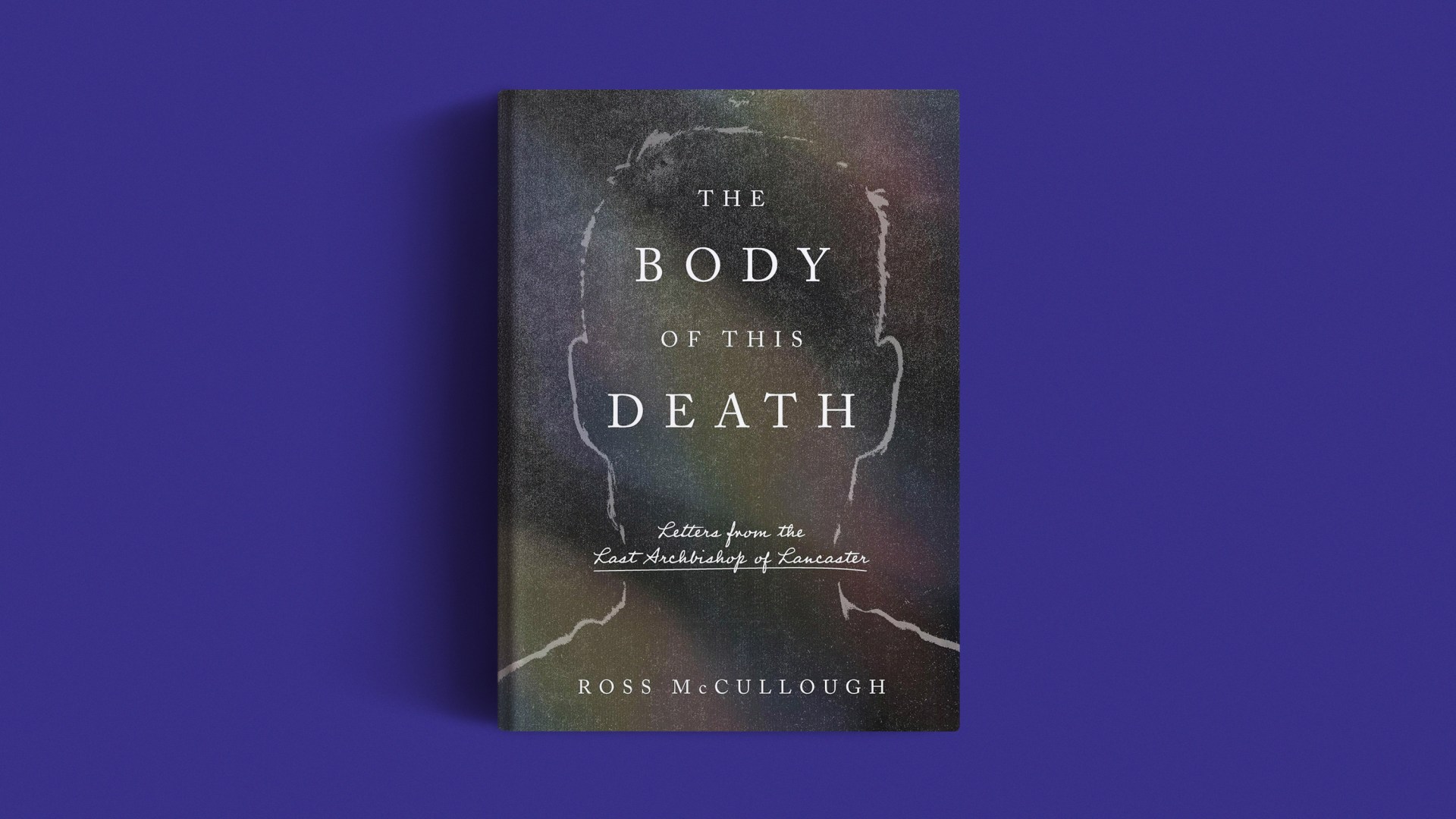
The Body of This Death is difficult to classify. Authored by Ross McCullough, a theologian in the Honors Program at George Fox University, it is almost—but not quite—a novel, a theological treatise, a collection of aphorisms, a series of correspondence, a science fiction dystopia, and a tract for Roman Catholicism. It is also the best new book you’ll read this year. 

As its subtitle states, the book consists of a series of “Letters from the Last Archbishop of Lancaster.” This framing device brings to mind other epistolary novels, as evidenced by the endorsement of novelist Jeffrey Eugenides, who calls the book “a Screwtape for our times.” Beyond a likeness of format, though, The Body of This Death is reminiscent of The Screwtape Letters in another way: It too is an instant classic of Christian spiritual writing that deserves a wide audience.

The time in which the book is set is unknown. It’s not the near future, but it’s close enough to be recognizable, perhaps a few centuries from now. There has clearly been some break between old and new orders, and McCullough’s English archbishop finds himself penning letters during a time of seismic transition. As the plot unfolds, you learn why he was the last archbishop of Lancaster and why his name has been preserved for posterity.

But the letters don’t come to us straight from their fictional author. We get them from a French scholar, writing in “Year 20 of the New Common Era.” He’s working with a newly discovered manuscript of the cleric’s writings, a one-sided correspondence with a range of addressees: a priest, a nun, an old friend, a struggling agnostic, a Muslim mother. The scholar arranges these letters in roughly chronological order, and they both recount and react to events happening in the writers’ lives and the world around them. These are followed by “posthumous” letters that could not be inserted smoothly in the ordinary correspondence.

With these epistolary snapshots, McCullough tackles an extraordinary range of subjects: from virtual reality, secular liberalism, and the nature of fatherhood to Islam, infant baptism, and the Incarnation. The result is a tour de force: a postmodern Pascal, an American Chesterton, a Catholic Kierkegaard.

Those three loom large in the book, as do Dante Alighieri, Fyodor Dostoevsky, and T. S. Eliot, along with the writings of both the church fathers and the desert fathers. It isn’t only their ideas that appear, though. It’s their style.

McCullough’s writing is not the kind of academic work which cannot help but cut God down to size, but neither is it popular, reaching readers with simple vocabulary and accessible structure. The Body of This Death is unapologetically literary, and while the payoff is worth it, the book demands much of its readers. If it’s deliberately difficult, it’s in imitation of the way Jesus’ parables confound his listeners. The point is the stubborn provocation—unwillingness to comply with the stories we prefer to tell ourselves. Jesus hasn’t failed when his hearers storm off in anger. His hearers have failed, and his parable has succeeded precisely by exposing their failure. 

The letters in The Body of This Death are closer to proverbs than parables. They’re largely aphorisms, for, as the archbishop comments, “Only the aphoristic is adequate to the task” of speaking about the divine mystery, “because only the aphoristic makes plain its [own] inadequacy.” Or, as the German writer Karl Kraus once wrote, “An aphorism never equals the truth. It is a half-truth, or a truth-and-a-half.”

Not for nothing, then, does aphoristic theology have a venerable place in Christian history. Its roots lie in biblical wisdom literature: Proverbs, Ecclesiastes, and Job, books that ask at least as much as they answer. These are not systematic theologies. A proverb is a memorable saying of the wise, sometimes clear, sometimes enigmatic. It pokes and prods the conscience. It resists mastery, summary, and restatement. Its brevity can prove maddening even as it sticks in the mind. As the cow chews the cud, seekers of wisdom grind and suck until the proverb gives up its nourishment.

The desert fathers inherited and continued this tradition with their Apophthegmata, short sayings and anecdotes from the fourth and fifth centuries. These tend to follow a pattern: An abba goes to the desert to pray in solitude and instead attracts all manner of followers eager for his guidance. Some youthful man visits him, hoping to see a miracle, and the miracle he is told to seek is silent prayer alone in a cell. 

Sometimes these accounts involve the spectacular, like fighting demons. But more often at issue is something unspectacular, like avoiding fornication or refraining from gossip. The fathers’ comments are usually brief, witty, and unexpected, even deflating. McCullough’s archbishop follows their lead, taking up the mantle of Solomon and the desert fathers by striving with pithy formulations to gesture at truths that cannot be captured by finite minds.

“These letters are aphorisms,” he writes. Whether as a proverb or apothegm, the aphorism is close to the apophatic, a style of theology suspicious of the closure and finality of human speech. Words cannot but limit and bind, whereas the living God is infinite. His freedom breaks our words open—at times like a bud from a seed, at times like a split atom. We need words to know God, and he has given us trustworthy words by which to know him, yet aphorisms are a necessary check on our pretentions. They discipline our pride by curbing our verbal idolatry.

In the words of Blaise Pascal, “I should be honouring my subject too much if I treated it in order, since I am trying to show that it is incapable of it.” God will not submit to our ordering. He will not be tamed.

Like any correspondence, the book’s letters accumulate their themes, arguments, and wisdom over time, by familiarity and repetition and “real-world” events. In that sense, it gets easier as you go—but there’s no handholding in this book. 

There aren’t even handholds. You’re set down alone in a labyrinth, and you must proceed until you confront—or rather, are confronted by—Christ. As the archbishop writes in a late letter to the “inquisitors” who have imprisoned him on a trumped-up charge, “Do you know, Christ is not nailed to the cross; the cross is nailed to Christ. It is not the savior that flees the world but the world that flees its salvation. You think you are here to discipline me, but perhaps the nails run the other way.”

If the correspondence has a center, it is the cross of Christ. The letters spiral around it—not only the mystery of salvation but also the vocation of all believers to join the Lord in his passion. At one point the archbishop asks, “Why has Christianity lasted so long?” His answer: “It is a religion of suffering well.” One of the shortest letters is devoted entirely to the topic:

Fr. Rodrigues,

Pain is not the wound; pain is the reaction to the wound. Suffering is not alienation from God but a reaction against alienation, a protest that begins from some inarticulate depth inside of us—the depth from which articulations come. That is why it is holy, because it is always already on the side of the angels. In that sense, the suffering of purgatory and the suffering of hell both tend to their own dissolution: the one by overcoming the alienation, the other by silencing the protest.

Here is another, to the same priest:

The Church too gives us little reason for optimism, I’m afraid. Even the Apostles betrayed Jesus—are betraying him.

But optimism is not hope. Optimism sees history held in the hands of the two centurions: and the one after all is faithful beyond Israel, the other was converted by the cross. Hope on the other hand finds history between the two Judases: Iscariot, lost cause; not Iscariot, patron of lost causes.

This last letter is representative: so compact in its allusions it might as well be spring-loaded. If you don’t know one centurion from another or who the patron of lost causes is, the author is not going to let you in on the secret. (Nor am I.) The aim isn’t to keep you in the dark. It’s to draw you out of it. The saints and authors and poetic references are woven together so inseparably they form a single thread. And as with Ariadne and Theseus, this thread is meant to lead you out of the labyrinth—or perhaps toward its center.

The themes and theology of McCullough’s book, combined with how he chose to write it, raise two questions worth pondering for evangelical readers. The first is how, or whether, evangelicals should read Catholic writers. The second is what evangelicals might learn from a book like this: highbrow in style and substance, written in beautiful but stylized prose that is likely to prove unwelcoming, even intractable, to many readers.

I’ve paired the questions together because my answer is the same for both: Evangelicals can become better readers by reading more widely within the church—and not only when authors from outside the fold are safely six feet under.

You know the reading habit I mean. J. R. R. Tolkien, Thomas Merton, G. K. Chesterton, John Henry Newman, even Thomas Aquinas: all widely read by American evangelicals today, and all of them gone on to their reward. Were Chesterton alive today, would evangelicals like him so well? No doubt he’d have racked up quite a few high-profile conversions, much to the chagrin of Protestants wishing he’d quit picking off our best and brightest.

Or even think of C. S. Lewis, who never swam the Tiber but absolutely does not tick the familiar boxes of American evangelicalism. Lewis was an avid smoker who affirmed evolution, denied a young earth, read the early chapters of Genesis as nonhistorical, loved pagan myths and secular literature, and believed in both the priesthood and infant baptism. And yet—rightly—evangelicals celebrate Lewis as a great Christian writer and thinker. Could it be that there are Christians of our own time, in other branches of the family tree, who might instruct and reform us too?

Even if evangelicals remain cautious in their reading habits, The Body of This Death may yet find the readership it deserves. Journalist Arthur Koestler was right to say that “a writer’s ambition should be … to trade a hundred contemporary readers for ten readers in ten years and for one reader in a hundred years.” McCullough writes in that spirit, and I have no doubt this book will outlast our time, just as Lewis’s work has endured.

Writing that lasts is not easy. It is not market-tested by surveys. It is not measured by book sales or median reader taste. It is certainly not vetted by sensitivity readers.

People still read Søren Kierkegaard today—and have their lives overturned by his thought—not because it is digestible but because it is the very opposite. His voice is winding, florid, disorienting, and infuriating. But he speaks to what matters. He is gripped and enthralled by a vision he must communicate to anyone who will listen, with the urgency of life and death. His letters are scrawled in blood, not ink. His work won’t let you go until it’s finished with you.

That’s the kind of book this is. I believe it will prove a classic, but others will be the judge of that. What is indisputable is that McCullough has written a book that aspires to greatness. He sets the terms of encounter, and they are not negotiable. But if you accept the invitation, you won’t be the same again.

Christians need more writing like this—books that aim higher than sales or accessibility. And we need to honor and celebrate them when, in these rare moments, they come along. This is one of those moments. Enter the labyrinth and prepare yourself for the mystery that awaits.

Brad East is an associate professor of theology at Abilene Christian University. He is the author of four books, including The Church: A Guide to the People of God and Letters to a Future Saint.

History

CT Reports from Nixon’s Trip to Communist China

In 1972, American evangelicals were concerned about religious liberty around the world and moral decline at home.

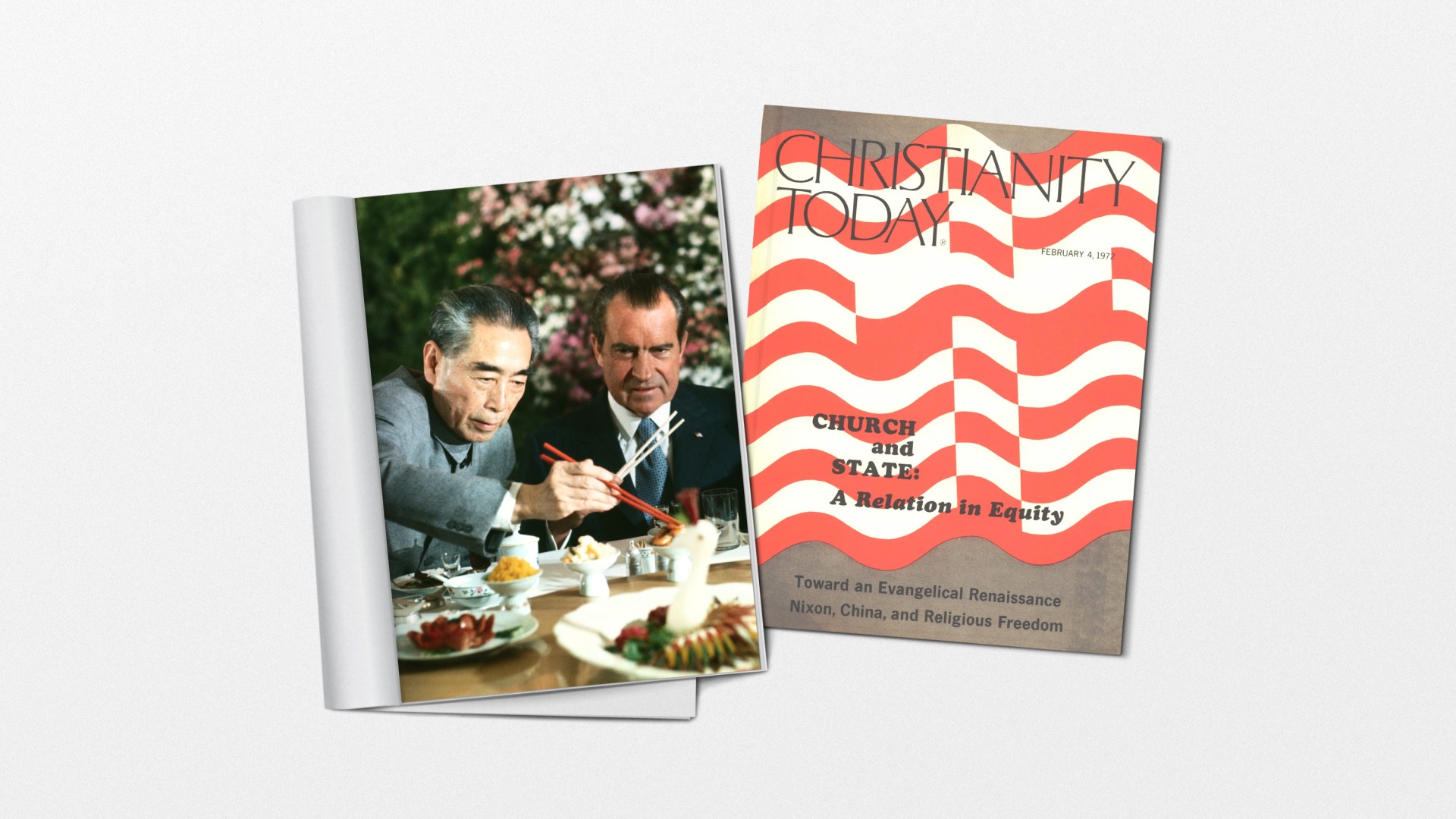
Richard Nixon Eating with Zhou Enlai in 1972.

Richard Nixon Eating with Zhou Enlai in 1972.

Christianity Today February 13, 2026
Illustration by Christianity Today / Source Images: Getty, CT Archives

“The year 1972 promises to be memorable for evangelical Christianity,” said CT editors in January. “Many signs suggest we are on the verge of a major spiritual awakening that will benefit not churches alone but the whole of civilized culture.” 

That editorial quickly moved to one college student’s statement:  

I have always been, or tried to be, a vocal crusader against injustice. But when I became a Christian, I saw the realm of social change in a different light. It was always easy for me to lash out against intangible evils like “the establishment” or the “fascist, racist nation.” But through Christ I’ve come to see that the problem is personal. The “establishment” is my next-door neighbor, my teachers, my employer. 

I’ve come to see that the most effective and lasting change comes through relating to people, changing the portion of the world that I, as a seventeen-year-old Christian, come in contact with. When seen in this light, America with its many ills is no longer some faceless opponent; it looks like the man next door. Changing him is changing America.

The editors concluded,

For many years, churches have been jostled about by the controversy over social gospel versus personal piety. This dispute has produced in many minds a distinction between personal and social ethics that is unreal. The two areas are merely selective emphases, distinguished for purposes of discussion. One cannot exist without the other.

Richard Nixon went to China in 1972. It was one of the Cold War’s most dramatic diplomatic gambits, shifting global calculations and widening the Russian-Chinese rift. CT called it “a pivotal event of history,” but editors wanted greater emphasis on religious liberty.

No issue is more basic than religious liberty. Of all the subjects to be discussed, none could be regarded as more profitable. Religious liberty is foundational to all human rights; yet there is ample evidence that in our supposedly enlightened times the number of people in the world who enjoy any substantial measure of it is declining! 

A discussion of political perspectives or even the physical needs of people is pointless unless the prior claim of religious freedom is acknowledged. If a man cannot live for what he regards as most crucial, then what is the point of living at all? Suppression of religious freedom is the supreme injustice.

CT, reporting on how Christians were faring in another Communist dictatorship, published the observations of two Reformation scholars who visited East Germany. 

Everywhere we turned we experienced the monotonous sloganeering and propaganda of a totalitarian state, and we saw no indication that the rigorous police controls over inhabitants and visitors alike had been relaxed. … One frequently senses he is being watched, and nearly everybody speaks in low tones when in public places. …

The East German regime is fundamentally inimical to Christianity. Although it apparently does not wish an open confrontation with the church, it tries to undermine the influence of religion in the country. … 

Pastor Wilhelm Eisner ministers to a medium-sized congregation in East Berlin. … According to him, church attendance is lower than it used to be, and because of the youth dedication the number of confirmands has dropped off. Nevertheless, the depth of faith of those who remain is greater than before. In his ministry Pastor Eisner has been emphasizing the lordship of Christ and the necessity for the full commitment of one’s life and goods to him. Official pressures have not emptied his church, but the built-in disabilities for believers have made life more difficult for Pastor Eisner’s flock, and for his family as well. His spirit and courage in standing for the integrity of the Gospel in the face of hostility from the regime were most impressive.

The emergence of a new folk hero caused evangelicals concern in 1972. The mysterious “Dan Cooper”  (or D. B. Cooper) hijacked an airplane, demanded $200,000, escaped without the money, and was widely celebrated.

Instead of regarding “Dan Cooper” as an outlaw who had endangered the lives of scores of people in an effort to enrich himself, many people seemed to look at him as a kind of national hero—a modern version of Robin Hood who robbed the rich and kept it all for himself. According to an Associated Press dispatch on November 29, 1971, “most of those responding to questions hoped the daring hijacker would escape.”

A sociology professor at the University of Washington commented that the hijacker won public admiration because he pulled off “an awesome feat in the battle of man against the machine—one individual overcoming, for the time being anyway, technology, the corporation, the establishment, the system” …

All of this is indicative of a strange new mentality that is emerging in our nation. We are living in an age of permissiveness gone to seed—an age when Bonnie and Clyde, Butch Cassidy and the Sundance Kid, are idolized rather than condemned, an age when every man supposedly has a right to do his own thing, lawful or not.

Another sign of shifting morality in America was the decline of prayers before public meals

Protestants in growing numbers are abandoning this form of public worship. Studies have shown … the early 60s saw a resurgence in giving thanks at home but a definite decline in doing so in public. Often children seem willing to pray in a restaurant but the parents are ill at ease. … 

Saying grace can … serve as a witness to the unconverted. This willingness to be different may signify dedication, and in all probability the observing non-believer will feel respect rather than scorn. Paul Little in How to Give Away Your Faith suggests that Christians tactfully explain to an unsaved meal companion what they are doing, being careful not to sound superior or self-righteous.

CT also reported concerns about the disappearance of the Protestant work ethic. Carl F. H. Henry said that critics misunderstood the Christian view

The Bible work ethic is now increasingly indicted on the cheap supposition that the divine assignment to man of dominion over the earth legitimizes depletion of natural resources, pollution of the earth, and the depersonalization of life and culture by empirical scientism. Nothing could be further from the truth. In its radical rejection of Christianity and Reformation theology the mounting post-Christian ethic is motivated more by spiritual rebellion than by ethical earnestness. But Christians must grapple with the work principles the Bible actually gives us, and must square their outlook and behavior with these claims.

CT encouraged evangelicals’ growing concern for the environment and “the emerging food ethic” in 1972.   

Devout Christian believers are realizing that they must look out for the “whole man,” and be good stewards of their own bodies. … People are flocking to health-food stores and are trying to forsake processed foods. “Organically grown” foods, those cultivated without the use of pesticides or what are regarded as chemical, artificial fertilizers, are in great demand. Some foods are being touted as especially healthful, among them wheat germ, soybeans, honey, and sesame seeds.

A great new sensitivity has been developing among consumers toward additives used for coloring, flavoring, preserving, and otherwise conditioning food; some are known to be harmful to human health, and others are suspect. 

Several new names appeared in CT in 1972—writers who would become important to American evangelicalism in the future. Theology student Wayne Grudem wrote “Letter to a Prospective Seminarian.” Pastor Eugene Peterson wrote about the resurrection

There was one resurrection; there are four narratives of it. Matthew, Mark, Luke, and John tell the story, each in his own way. Each narrative is distinct and has its own character. When the four accounts are absorbed into the imagination, they develop rich melodies, harmonies, counterpoint. The four voices become a resurrection quartet.

Yet many people never hear the music. The reason, I think, is that the apologetic style for years has been to “harmonize” the four resurrection stories. But it never turns out to be harmonization. Instead of listening to their distinctive bass, tenor, alto, and soprano voices, we have tried to make the evangelists sing the same tune. Differences and variations in the resurrection narratives are denied, affirmed, doubted, and “interpreted.”

There is a better way. Since we have the four accounts that supplement one another, we can be encouraged to celebrate each one as it is, and to magnify the features that make it distinct from the others. …

1972 was an election year, and CT looked at the evangelical credentials of the far-right candidate running for president. When segregationist George Wallace was asked if he had been born again, “his answer was anything but vague.” 

Wallace testifies that at the age of thirteen he was born again during a little Methodist church revival. In the December issue of the John Birch Society’s American Opinion Wallace was quoted: “I have accepted Christ as my personal Savior. …” 

The Wallace campaign has had an evangelistic atmosphere. One observer reported that Wallace rallies combine “old-time rural evangelism, slick country-music salesmanship, and tried-and-true evangelical oratory.” Baptist preacher George Mangum of Selma, Alabama, travels with the campaigns, opening each rally with a “spiritual conversation with our God about some of the political problems in our country.” And, as in a rural revival, ushers pass buckets through the crowd while Mangum appeals for money.

Many Wallace supporters consider him “a good Christian man.”

Democrat George McGovern had some evangelical support as well. 

One group of evangelicals—aiming to demolish the “conservative-theology-equals-conservative-politics” stereotype—formed an Evangelicals for McGovern (EFM) committee dedicated to raising funds and pushing their candidate as the one who most closely adheres to biblical principles of social justice. The pitch was made to 8,000 evangelical leaders in a letter from EFM chairman Walden Howard, editor of Faith at Work. … 

“Evangelicals should be concerned about social justice from a biblical perspective,” [Howard] said in an interview. “I just don’t believe social justice is a high priority with Nixon. But it’s the heart of McGovern’s motivation.” Howard claimed the McGovern platform “moves at many crucial points in the direction indicated by biblical principles.”

Most evangelicals—and most Americans—voted to re-elect Richard Nixon: His landslide victory, with majorities in 49 states, was “no particular surprise,” according to CT, but editors also called for a full investigation of campaign staff who broke into Democratic Party headquarters and attempted to plant listening devices in the telephones.

There seems little doubt that, whether Nixon knew it or not, a number of his key supporters engaged in a brazen program of political espionage and in unfair attempts to interfere with the nominating and election processes. …

The failure of the White House to counter the charges in any substantial way serves to underscore the impression that much was amiss. We feel that the American people in general do not condone such goings-on and that their return of Nixon to office for a second term should not be so interpreted. 

It is now the President’s obligation to pursue with vigor and candor a full investigation of the alleged misdeeds.

Nixon did not heed such calls.

Ideas

Do Singles Really Have More Time for Ministry?

Contributor

The married and the unmarried both should be concerned with the Lord’s affairs.

A blurry black and white photo of a couple hugging.
Christianity Today February 13, 2026
Illustration by Elizabeth Kaye / Source Images: Unsplash

When I was in my teens, Magic Eye pictures were all the rage. My friends and I would compete to be the first to unlock the 3D image—a sailboat, a school of fish, a mountain range—buried within a page of chaotic, technicolour static. All it took was time, patience, a commitment to stare beyond the visual white noise, and the ability to stay cross-eyed for minutes at a time, and then suddenly the previously hidden image would snap into focus. And once you saw it, you couldn’t unsee it.

As I’ve spent the past decade or so digging deeper into what the Bible teaches about singleness, I’ve had several “Magic Eye” moments—occasions when looking at a familiar biblical passage from a fresh perspective suddenly brought it into new focus. Each time, it felt like I could finally see past the confusing static—the mistaken assumptions and incomplete teachings that often blur our understanding of those passages—and appreciate the full, 3D biblical truth about singleness (and often also marriage) that had been there all along.

One quiet Saturday morning several years ago, I was sitting in a local café, sipping a mediocre chai, when I felt the urge to open 1 Corinthians 7:32–35. I had no particular reason to turn to that passage, but looking back now, I can see that the Holy Spirit was giving me a not-so-gentle prompting.

I would like you to be free from concern. An unmarried man is concerned about the Lord’s affairs—how he can please the Lord. But a married man is concerned about the affairs of this world—how he can please his wife— and his interests are divided. An unmarried woman or virgin is concerned about the Lord’s affairs: Her aim is to be devoted to the Lord in both body and spirit. But a married woman is concerned about the affairs of this world—how she can please her husband. I am saying this for your own good, not to restrict you, but that you may live in a right way in undivided devotion to the Lord.

Here’s how this passage is most often explained: Married Christians have a spouse whose needs they must prioritize, and so they have less time, energy, and capacity for things like their church family, gospel ministry, and even wider relationships. But those who are single (and therefore spouseless) are blessed with more freedom, energy, and capacity to invest in all those areas. Unlike their married counterparts, they don’t have a legitimate reason to be divided in their devotion to God and his people. One author has put it like this: The single Christian is “able to say ‘yes’ to things that require more of you than a married person can afford.”

But if I’m being honest, this interpretation of the passage has always felt a bit unresolved to me. As a never-married Christian woman, I haven’t often found myself with a wonderful surplus of freedom and flexibility. In fact, it sometimes felt like my singleness drained, rather than added to, my capacity to serve. I had been frequently told that my singleness was good because it allowed me to say “yes” to things that required more of me than what married people couldn’t afford.

But what if my relationships and responsibilities meant I couldn’t afford to say yes either? I wasn’t sure I was allowed to admit that to myself, let alone voice it out loud to others.

What’s more, the idea that my married Christian friends couldn’t serve God or his people as effectively, consistently, or readily as I was supposed to also didn’t sit right with me. After all, isn’t serving Jesus wholeheartedly the point and privilege of being his disciple, no matter our situation? Aren’t we all meant to love God with all our heart, soul, strength, and mind? Isn’t loving your spouse meant to be part of a married person’s devotion to the Lord’s affairs, rather than a distraction from it?

But it wasn’t only these real-life questions that left me feeling confused about a usual reading of this passage. I had also always struggled to make sense of it within the immediate and broader context of the Bible’s teaching.

Consider, for example, Paul’s comparison between the married person who is concerned with the world’s affairs and the unmarried person who is concerned with the Lord’s affairs. According to our usual reading of this passage, married Christians are rightto be concerned with these worldly affairs (pleasing their spouse).

Yet in the same letter, Paul had already said quite a lot about how Christians are—and aren’t—to relate to a world he identified as foolish, passing away, and destined for judgment (1 Cor. 1:18–31; 3:19; 11:32). His first letter to the church at Corinth confirms what so many other New Testament passages teach: God’s people are not to be shaped by this world or caught up in its concerns.

So why would the same Paul who warns against worldly troubles and distractions suddenly equate loving one’s spouse with being concerned about things of the world? And why would he commend the married Christian for being absorbed in this?

Then there is the other comparison in the passage—pleasing a spouse versus pleasing the Lord. We may automatically think that spouses shouldbe concerned with “pleasing” each other. Yet none of the New Testament passages that speak about the loving relationship between a husband and wife use that language of “pleasing.” This means there is no reason for us to automatically understand that married people who are concerned with “pleasing” their spouse are concerned with a good thing.

In fact, if pleasing a spouse comes at the expense of pleasing God (which is the comparison in this passage), Paul’s point is surely to warn against it rather than to praise it. This is consistent with how he uses “pleasing God” elsewhere, namely as a shorthand way of describing the life of godly faith in action (Eph. 5:10; Col. 1:10; 2 Cor. 5:9). While he does occasionally speak positively of pleasing others (1 Cor. 10:33), whenever Paul contrasts the impulse to please people with the call to please God, he is very clear: “We are not trying to please people but God, who tests our hearts” (1 Thess. 2:4, Gal. 1:10).

Then why, in this passage, would the apostle suddenly commend married Christians for being concerned with pleasing their spouse over, above, or even instead of pleasing the Lord? Why would he allow their interests to be divided away from pleasing God?

So there I sat, sipping my disappointing chai, when suddenly everything snapped into focus. It really was like one of those Magic Eye moments. For the first time, I glimpsed the full 3D meaning of 1 Corinthians 7:32–35.

A slight shift of perspective allowed me to see that Paul was not identifying important marital obligations but rather warning against particular dangers that can come with marriage in a fallen world. Along with early church fathers such as John Chrysostom and Augustine, I realised that in 1 Corinthians 7:32–35, Paul is actually calling married people to not be divided and distracted by their spouse.

Put another way, instead of saying married Christians can’t afford to be like their undivided single counterparts, the apostle is saying that married Christians can’t afford not to be like them. He wants both single and married Christians “to live in a right way in undivided devotion to the Lord.” My full explanation of my new understanding takes up a whole chapter of my latest book, Single Ever After.

When it comes to singleness and marriage, we’ve too often decided to settle for the somewhat confusing surface meaning of key biblical passages, rather than allowing ourselves to wonder if there might be depths to them that we are conveniently ignoring. We settled into the groove of what we’re comfortable thinking the Bible teaches about them.

This has led us to ignore the fuzzy passages—like deciding it’s okay for some Christians to be concerned with the affairs of a world that is opposed to God. It’s allowed us to pretend the white noise doesn’t exist—like deciding it’s okay for some Christians to be distracted from pleasing God to instead please a certain person.

This is to the great detriment of many single and single-again Christians in our churches. But it has also been very costly for many married Christians, whose relationships with their spouses have been heavily burdened by our—and their—hasty and selective reading of Scripture.

The gospel of Christ imbues both marriage and singleness with wonderful 3D meaning, making them complements rather than competitors. The question for us is whether we’ll look beyond the surface patterns we’re used to seeing until the deeper, richer picture of God’s design for both singleness and marriage comes into wonderful focus.

Danielle Treweek is the author of several books, including Single Ever After: A Biblical Vision for the Significance of Singleness, and the research officer for the Anglican Diocese of Sydney.

Books
Review

Dissent Does Not Division Make

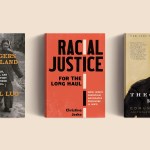
Three books on art and culture to read this month.

Three books on a green background.
Christianity Today February 13, 2026
Illustration by Christianity Today

This piece was adapted from CT’s books newsletter. Subscribe here.

Miroslav Volf and Christian Wiman, Glimmerings: Letters on Faith between a Poet and a Theologian (Harper One, 2026)

Glimmerings: Letters on Faith between a Poet and a Theologian offers a welcome reprieve from polarizing discourse, modeling a healthy approach to disagreements concerning God, prayer, faith, and Holy Writ. The book’s curated email thread between professors Chris Wiman and Miroslav Volf exemplifies Paul’s calls to build up and honor one another above ourselves.

Dissent here does not division make. Towards the book’s end, Wiman cites a letter two centuries old in which fellow poet John Keats proposes negative capability as the mark of a great writer—the willingness to remain “in uncertainties, mysteries, doubts, without any irritable reaching after fact and reason.” Wiman embraces poetry that “remains perpetually open,” particularly verse alluding to the divine. But he trips up at Scripture that demands similar interpretive flexibility—what many Bible readers treat as metaphor, symbol, or indecipherable mystery.

The nature of Christ’s death, Paul’s revivifying Eutychus, the parable of the talents, Christ’s cursing of the fig tree, and Mark’s final 12 verses present Wiman with unsolvable riddles that stymie rather than stoke his faith. Like Keats, he finds constructed and conflicting features of Scripture evidence of errancy, yet he confesses the daily, ineluctable draw of the Jesus drawn in its pages.

Volf’s learned yet equally vulnerable responses provide a master class in compassion. Instead of approaching their dialogue as an argument, he commiserates and highlights common ground when possible, walking alongside a good friend in spirit when conflicting schedules have upended their regular joint strolls around campus.

Crystal L. Downing, The Wages of Cinema: A Christian Aesthetic of Film in Conversation with Dorothy L. Sayers (InterVarsity Press, 2025)

Like Salvation from Cinema (2015), the title of Crystal L. Downing’s new book, The Wages of Cinema: A Christian Aesthetic of Film in Conversation with Dorothy L. Sayers, shows her ongoing effort to challenge criticisms of film that ignore artistry to mostly focus on rejecting questionable content.

Concerned that viewers who generate lists of objectionable material unwittingly blind themselves to the truth and beauty of a film, she enlists mid-20th-century detective writer Dorothy Sayers to build a case for examining the painstaking craft of cinema.

With the help of Wheaton College’s voluminous archives on Sayers, Downing traces the writer’s use of cinematic technique and device in the fiction and plays that followed her brief stint as a screenwriter, spotlighting a persistent attention to style and structure that mirrors the believer’s appreciation of an exquisite, if broken, creation.

Spotlighting the “both/and thinking” that declares Jesus simultaneously fully God and fully human, Downing heralds films like The Bridge on the River Kwai, which leave character motivation shadowed by ambiguity, problematize binary distinctions between good and evil, and encourage viewer identification with the villain’s familiar need for forgiveness. 

Similarly, she prefers the satiric role reversals of the Barbie movie, which critique the objectifying gaze of male desire by making Ken, not Barbie, the one whose confidence crumbles when not propped up by another’s flattering attentions. Titles like Romancing the Stone that redefine virtue as a function of gendered beauty and brawn receive a much-deserved kick in the pants.

Mary Shelley, The Last Man (1826)

In the decade that passed between conceiving Frankenstein and publishing the apocalyptic The Last Man, Mary Shelley suffered the loss of three children, her husband, and a very good friend. Her first and most famous novel, written as a teenager, was shaped by the absence of a mother she never knew and the death of a prematurely born child, spawning the horror of an inexorable force whom neither reason nor careful planning could forestall.

When she later imagined a global pandemic that decimates the human race, she drew from a far deeper well of anguish filled with dysentery, malaria, miscarriage, fatal fevers, and a sudden drowning at sea. Her third novel, which celebrates its bicentenary this year, provided Shelley the same occasion it offers the novel’s frame narrator—and which it supplied my students during the COVID-19 lockdown: the opportunity to temper “real sorrows and endless regrets by clothing these fictitious ones in that ideality which takes the sting from pain.”

Recreating a past peopled with deceased loved ones in this biographical roman à clef (“novel with a key”) allowed Shelley to process her loss. She reimagines her broken circle of friends and family as a tightly knit community whose members take great risks for one another as the world ends. Shelley’s framing of wide-scale catastrophe registers the agony of loss but simultaneously recommends a heartening rejection of despair that holds, as its titular character does, to “the visible laws of the invisible God.”

Paul Marchbanks is a professor of literature and film at California Polytechnic State University. His YouTube channel is “Digging in the Dirt.” 

Church Life

20 Black Leaders Who Inspired the Church

African American Christians reflect on Rebecca Protten, Vernon Johns, and other thinkers who influenced their faith. 

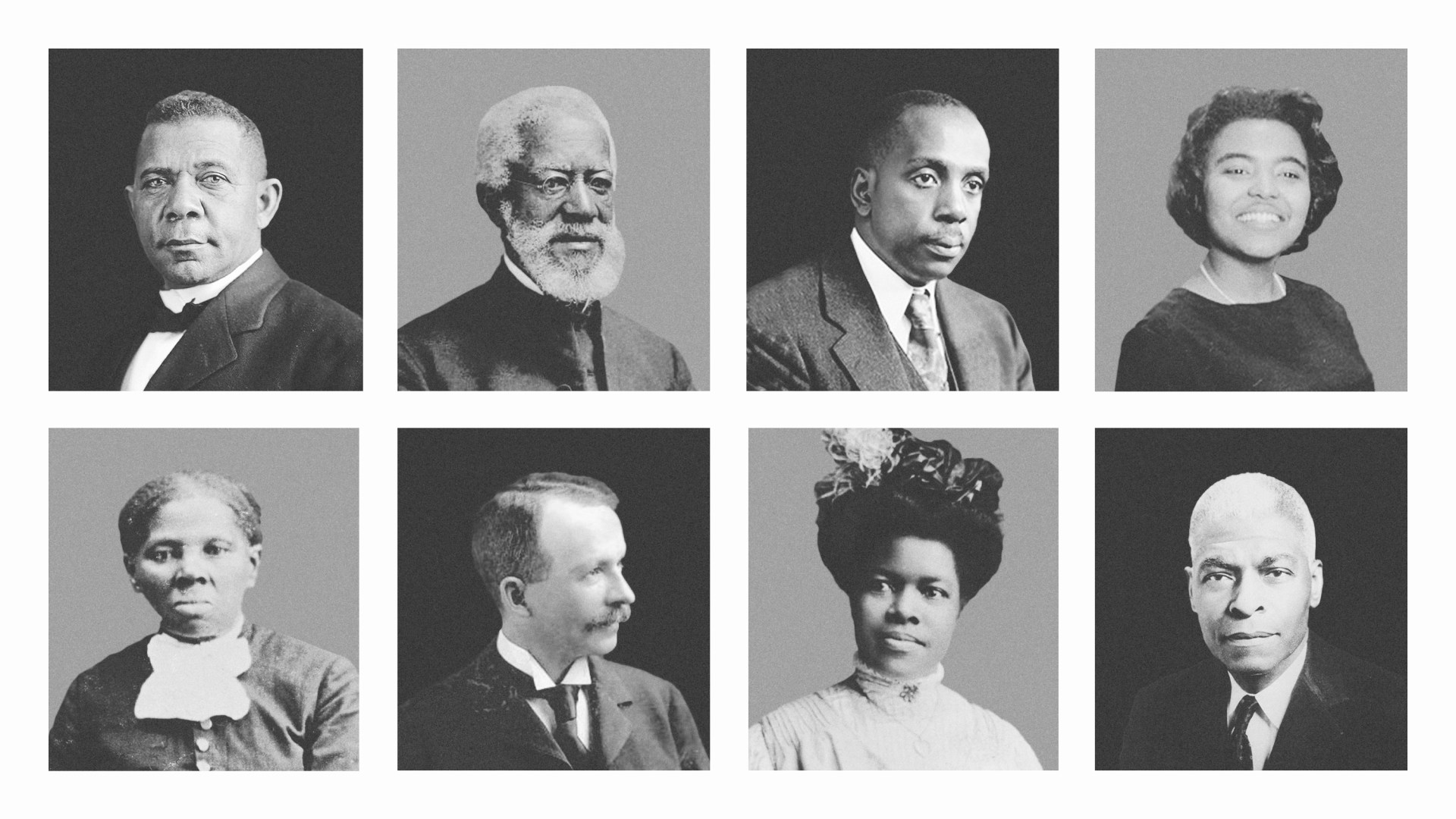
Images of 8 of the black leaders mentioned.
Christianity Today February 12, 2026
Illustration by Elizabeth Kaye / Source Images: Getty, WikiMedia Commons

The Black church and Black Christians have played an indispensable role in shaping American and church history. For hundreds of years, African American congregations have operated as hubs of spiritual formation, community, and activism, fighting for the social change necessary to create a more just society—and helping Christians across the board think more deeply about the Bible, the spread of the gospel, and the call to pursue justice.

In honor of Black History Month, CT asked several African American leaders to share about the thinkers, pastors and theologians who have influenced their lives. Here is what they said.

Rebecca Protten (1718–1780)

Protten, a Moravian teacher and missionary of African and European descent, played a pivotal role in early Protestant missions. She converted through the Moravian movement and became a gifted educator, especially among free and enslaved African women in the Caribbean, where she taught Scripture, literacy, and Christian doctrine. Her ministry embodied the conviction that the gospel transcends race, economic status, and social hierarchy at a time when such beliefs were deeply countercultural. Protten was persecuted with other church leaders for missionary activities and modeled a lived theology of endurance, suffering, and hope in Christ. —K. A. Ellis, director of the Edmiston Center for Christian Endurance at Reformed Theological Seminary in Atlanta

James Earl Massey (1930–2018)

Massey was a pastor-scholar who stood out among his peers and was quite simply, different. He was best known as a holiness preacher whose voice crossed deeply entrenched racial and denominational boundaries—a rarity that’s difficult to grasp today. With near-perfect diction, he defied expectations often placed on African American preachers, combining biblical lessons with practical applications and relating to his listeners while also drawing them to a higher plane of thought. In 2006, Christianity Today named him one of the 25 most influential preachers of the past 50 years. At a time when public trust in pastors has diminished so significantly, we’d benefit from a renewed introduction to a man who so faithfully represented both God and his “skinfolk.” —James Ellis III, Baptist pastor and assistant professor of practical theology at Winebrenner Theological Seminary

Harriet Tubman (1822–1913)

Harriet Tubman has greatly shaped my theology. After I studied and preached from Romans 6, God helped me see the abolitionist—and the call on her life as a prophetic portrait of the gospel—in a new way. She helped people escape physical slavery, and the passage in Romans gave me greater clarity on my own calling as a natural and spiritual abolitionist. As Christians, God has given us the task of spreading the gospel and helping people escape spiritual bondage. Tubman reminds us that we only go back to plantations (in a sense) to help set people free, not submit again to the yoke of slavery. She refused to enjoy the fruits of freedom for herself and withhold that opportunity from others. May that type of heroism, commitment, sacrifice, and love mark my life, and all of ours as well. —Sarita Lyons, author, speaker, Bible teacher, and psychotherapist

Vernon Johns (1892–1965)

Johns grew up poor in Virginia and was able to receive a first-rate theological education, which was rare for his day. He later served as the pastor of Dexter Avenue Baptist Church in Montgomery, Alabama. Martin Luther King Jr., a friend of Johns, succeeded him in the role.  Johns was in many ways a man of contradictions. He preached with insight and intellect, but often in dirty overalls, dispensing pearls of theological wisdom while tracking dirt from the farm into the sanctuary. He spent his ministry as a pastor ruffling feathers and offending the silk-stocking sensibilities of upper-middle-class African American congregations. —Daylan Woodall, writer and senior pastor of First Missionary Baptist Church in Decatur, Alabama

Caesar Arthur Ward Clark (1914–2008)

Clark was a mentor of Martin Luther King Jr. and pastored one congregation—Good Street Baptist Church in Dallas—for 50 years. Clark grew up in Louisiana. There, he encountered racism and poverty, which blocked his chances of being educated until much later in life. But those constraints didn’t stop him from flourishing. He was known for his theological imagination and rich biblicism and became an internationally renowned Baptist revivalist. He had a small stature but left a giant impression on African American preaching and Christianity. —Woodall

Charles Price “C.P.” Jones (1865–1949)

Jones was a pioneer of the Black holiness movement and the most prolific Black American hymnist of all time. He wrote that the Lord encountered him in the late 1890s and said, “You shall write the hymns for your people.” Jones went on to write over 1,000 hymns. His songs are sung primarily in holiness and Pentecostal settings. But I believe that the messages God gave Jones are indeed for “his people”—Black America—and for the global church.  In turbulent times, we need Jones’s prophetic reminder as sung in one hymn: “I will make the darkness light before thee.” —Geoffrey D. Golden, director of worship and arts at The Park Church in Charlotte, North Carolina

Howard Thurman (1899–1981)

Thurman was a 20th-century spiritual luminary who named “the religion of Jesus” as the source of both spiritual and temporal freedom. His pioneering work Jesus and the Disinherited examined the Lord’s life as a member of a marginalized group, positioning Jesus as a model for people who live “with their backs against the wall.” His teachings on nonviolence earned him recognition as a sage of the Black Freedom Struggle, authoring what pastor and activist Otis Moss Jr. described as “the philosophy that creates the march.” Thuman also championed the multiethnic church and saw unity across social boundaries as “the pragmatic test of one’s unity with the Spirit.” —Tryce Prince, writer and director of Abilene Christian University’s Carl Spain Center on Race Studies & Spiritual Action

Nannie Helen Burroughs (1879–1961)

Burroughs dedicated her life to creating educational opportunities for Black women and pursued that ministry through civil rights activism and hands-on classroom instruction. Interestingly, her extraordinary social justice efforts were matched by her commitment to promoting moral improvement in America generally and in her community. Burroughs’s high view of Holy Scripture informed her that an undisciplined, pleasure-seeking lifestyle was just as much of an impediment to true liberation as external injustice was. Today’s Christian would be wise to recapture her willingness to challenge corruption in the American power structure while pushing her people toward a more honest and thorough form of self-examination. —Justin Giboney, president of the AND Campaign

Alexander Crummel (1819–1898)

Crummel was a clergyman, teacher, and missionary who cofounded the American Negro Academy, an organization for Black intellectuals who sought to promote higher education, art, and science among African Americans. Another founding member of the academy was the famous sociologist and writer W. E. B. DuBois. The academy sought to push back against the racism African Americans faced and also reform ethical and moral behaviors within the Black community. —Brian L. Johnson, former president of Warner Pacific University and Tuskegee University

Charles Chesnutt (1858–1932)

Chesnutt was a writer who documented the 1898 Wilmington race riots through his novel Marrow of Tradition. He was a Christian and wrote several novels and essays that communicated biblical themes. The Colonel’s Dream, his most sophisticated novel, tells the story of racial violence in the post–Civil War South through the eyes of a white protagonist. —Johnson

Gardner C. Taylor (1918–2015)

Taylor served for 42 years as pastor of Concord Baptist Church in Brooklyn, where his preaching combined profound theological depth with prophetic clarity on racial justice. Taylor, who is called “the dean of American preaching,” marched alongside Martin Luther King Jr. and maintained relationships across denominational and racial lines—which was rare in his era. He was respected in both Black churches and white evangelical institutions, mentoring generations of pastors and demonstrating that the proclamation of the gospel and the quest for justice are inseparable. Taylor spoke truth that challenged Americans while always pointing to Christ’s redemptive work, refusing to let either the church retreat from justice or activism retreat from the gospel.  —Nicole Martin, president and CEO of Christianity Today.

Prathia Hall (1940–2002)

Hall was a civil rights activist and theologian whose courage and voice shaped both the Civil Rights Movement and the church. In 1962, after white supremacists burned down Mount Olive Baptist Church in Terrell County, Georgia, Hall stood in the charred ruins and prayed a passionate vision of freedom. She began with “I have a dream”—Martin Luther King Jr. heard that prayer, and many believe it inspired his famous speech. Hall organized voter registration drives in the segregated South, survived multiple threats to her life, and later became one of the first African American women to earn a doctoral degree from Princeton Theological Seminary. Her legacy reminds us that the most powerful prayers can echo through generations and movements far beyond their original utterance. —Martin

Clay Evans (1925–2019)

Evans was the planting pastor of Chicago’s Fellowship Missionary Baptist Church. He was unable to speak for the first three years of his life. But his inimitable voice became the trumpet for justice and righteousness in Chicago. In 1966, he defied the edict of then-mayor Richard J. Daley and allowed Martin Luther King Jr. to preach in his pulpit. As a result, institutions that were supporting the construction withdrew financing, which resulted in a nearly decade-long delay in the construction of the church’s new sanctuary. Evans reminds us that standing by the word we preach might cost us more than we had scheduled to pay. —Charlie Dates, senior pastor of Progressive Baptist Church and Salem Baptist Church in Chicago.

Gowan Pamphlet (1748–1807)

After his conversion to Christianity, Pamphlet risked his life to proclaim the gospel of redemption and freedom. He was one of the first ordained Black ministers in the American colonies. And he was determined to challenge church practices that prevented Black people, whether slave or free, from becoming members. He understood the evangelical gospel was for everyone and was thus a forerunner in multiethnic church ministry. —K.J. Washington, lead pastor of New Valley Church in Waynesboro, Virginia


Benjamin Elijah Mays (1894–1984)

Mays has impacted African American theologians by influencing our understanding of the “long civil rights movement.” He trained one of the brightest generations of theologians, many of whom were shaped by his writings on “all of life” theology—the belief that our faith applies to all areas of our lives. Mays engaged the public square and built strong institutions, all for God’s glory. —Washington

George Washington Carver (1864–1943)

Carver is often lauded for his innovation and brilliant mind, but this polymath is rarely recognized as a faithful Christian witness. He refused to claim patents of his inventions because he believed the Lord gave him insights that should not be withheld from others. Luminaries across the globe from Mahatma Gandhi to Franklin D. Roosevelt sought his expertise for their personal lives. His skills were courted by Henry Ford and Thomas Edison. And despite facing discrimination under Jim Crow, he helped Southern farmers by advocating for crop diversification because cotton and tobacco had exhausted the soil. I believe his tombstone states its best: “A life that stood out as a gospel of self-forgetting service. He could have added fortune to fame but caring for neither he found happiness and honor in being helpful to the world.” —Sho Baraka, editor director of CT’s Big Tent Initiative

Tom Skinner (1942–1994)

Skinner was a pioneering evangelist, author, and speaker who bridged the worlds of urban ministry, racial reconciliation, and mainstream evangelicalism. He became a leading voice for a socially engaged, biblically based faith that addressed systemic injustice. He is perhaps best known for his powerful address, “If Christ is the Answer, What are the Questions?” at the 1970 InterVarsity Urbana Student Missions Conference, which challenged a generation of evangelicals to confront racism and poverty. —Jeff Wright, CEO of Urban Ministries Inc.

Melvin Banks Sr. (1934–2021)

Banks was the visionary founder of Urban Ministries Inc. (UMI), one of the largest African American–owned Christian education publishing companies in the United States. After graduating from Moody Bible Institute and Wheaton College in the 1950s, he saw that there was a lack of curriculum that reflected the experiences, culture, and images of Black Christians. In 1970, he started UMI from his basement to fill this void. His work provided biblically sound materials that affirmed Black identity and addressed relevant social issues, all of which bolstered Christian education in Black churches and created a legacy of empowerment and representation. —Wright

Booker T. Washington (1856–1915)

Washington was the founder and president of Tuskegee Institute, a historically Black institution later named Tuskegee University. Washington was a principled Christian leader who advocated for racial uplift, self-determination, and hard work. —Johnson

Charles E. Blake Sr. (1940–present)

Blake was the former presiding bishop of the Church of God in Christ, one of the largest African American denominations in the US. He pastored West Angeles Church of God in Christ, a Pentecostal-holiness congregation in south Los Angeles that I attended as a child. Under his leadership, the church grew from 50 to more than 20,000 members. Blake believed that the Good News addresses both spiritual and physical needs. Because of that belief, he spearheaded many local and international programs, including the West Angeles Christian Academy and a community development corporation. —Chanté Griffin, journalist, author, and artist

Culture

30 Lessons from 30 Years of Marriage

Contributor

After three decades of love, sacrifice, and lessons learned, a marriage instructor offers concrete ways to build a strong marriage.

A silhouette of a couple holding hands
Christianity Today February 12, 2026
Samuel Costa / Unsplash

Tracey and I sailed into marriage three decades ago with considerable wind at our backs. We had dated four years, joined a marriage class, worked through multiple marriage books, and overcome a series of potentially relationship-ending crises, including a death in the family.

All of that wasn’t enough to skirt the storm that nearly swamped us after our honeymoon.

Watching the older relationship of a colleague implode right as our own underwent its first major course correction was both distressing and scary. Distressing, because my friend did not forge an alternative when his wife’s graduate studies presented him with a false binary: to care for his mom in town or pursue his own wife in another city. Scary, because a shared faith, happy dispositions, and teaching jobs at the same Christian school had not proven protection enough for this couple against the arrows of a relentless Adversary.

Their relationship’s sad ending solidified Tracey’s and my determination to privilege our own marriage whatever the future held, to regularly reassess the strength of our bond even as I charged headfirst into the stressors of academia. We also embraced the interdependence God has woven into creation, seeking accountability with other like-minded couples.

Some of what we have learned—and imperfectly practice—through 30 years of marriage follows. Each observation has a pair that elaborates or qualifies its partner, a reminder that no one idea should be taken as absolute.

Family of Origin

  1. The separate pulls of “leave and cleave” and “honor your father and mother” invite us into a dynamic, lifelong tension. Cutting ties to parents to “self-actualize” or more easily pursue the American dream—however we define it—is as troubling as allowing parental opinion to dictate big decisions.
  2. The family-of-origin issues discussed in premarital counseling pop up throughout a long life together. Providing a safe space for spouses to work through new manifestations of the same old issues is a gift.

Change

  1. The advice I offered my younger sister years ago, recorded on a camcorder making the rounds at her wedding reception, is that the person you wed is not the one you wake to a year later: We are always being knit together, even after the womb. Committing to love an ever-evolving person requires flexibility, a willingness to accept unexpected turns not telegraphed by “in sickness and in health.” 
  2. Outside my relationship with Christ, the facets of my identity are negotiable. Oneness presupposes a willingness to change to meet my spouse’s needs.

Conflict

  1. Silence is silver, not golden. The Book of Proverbs reminds us that wisdom knows how to bite its tongue, yes (10:19), but refusing ever to voice your perspective resembles humility only in the short run. Inviting dissent and resolving conflict is far preferable to buried, growing resentment or depression. Iron sharpens iron.
  2. In our dating years, Tracey taught me that timing matters when raising difficult issues. Waiting a few hours to work through a concern—instead of demanding an immediate tête-à-tête and resolution—encourages us to relinquish control, trust God with a potentially lengthy process, and cover the topic in prayer. 

Community

  1. Everyone benefits from relational counsel, whatever their mental health, and therapists provide one among many viable options. Vulnerable small groups, reliable accountability partners, and close friends have blessed Tracey and me with meaningful support over the years.
  2. Discussing fiction with others offers a safe way to broach difficult relational issues without pointing fingers or giving away sensitive information. Book clubs and movie nights allow us to talk indirectly about fraught issues impacting our relationships, laying the groundwork for later dialogue.

Sex

  1. Scheduling sex can feel unromantic to a culture trained by television and film to expect mutually satisfactory, ecstatic encounters born of spontaneous feeling. We have found that regularly setting aside time for intimacy helps prepare us to give our best, to be attentive, patient, and flexible—whatever our current energy levels.
  2. Lovemaking characterized by pleasure and honor—rather than anxiety and shame—requires intentionality. Talking openly about sex every few months helps us reconfigure our efforts and expectations to meet one another’s changing needs as schedules and responsibilities fluctuate.

Walking

  1. Just as taking a walk stirs the creative juices for many facing writer’s block, an extended stroll can provide optimal conditions for problem-solving relational difficulties. Walking together requires finding a shared rhythm, a synchronicity that preserves freedom of movement. We’re less likely to feel trapped when in motion, sustaining engagement and discouraging flight.
  1. It took Tracey and me 20 years to realize we needed to set aside time to discuss logistical matters including scheduling, money, and parenting before our weekly date so they didn’t crop up while attempting to relax together. For the last decade, a midweek “pre-date” walk has protected those precious weekend hours.

Deepening

  1. When we were five years into marriage with our first baby on the way, God revealed that our busy lives had diverged too much into separate, parallel tracks. Setting aside a couple hours every Sunday afternoon for a picnic bookended by prayer, what we called “deepening,” invited regular vulnerability. It also laid the foundation for family time away from the demands of housekeeping once our girls arrived.
  1. Uncertain whether to specialize in Renaissance or Victorian literature in graduate school, I eventually chose the latter because Tracey also loved it. Two years later, my secondary field of interest became Irish fiction, following a shared trip to the Emerald Isle. More recently, we have jointly attended Christianity and literature conferences around the country. Fostering shared interests when possible provides another plank in a seaworthy vessel of marriage.

Adventure

  1. Romance grants unfamiliar pastimes a fresh plausibility when colored by our sweethearts’ enthusiasm, encouraging experimentation with sports, fine arts, games, shows, outdoor activities, and other ventures we might otherwise never attempt. A willingness to at least try—and maybe learn to appreciate—what our spouses love enriches our own experience and improves our understanding of what makes them tick.
  1. Trying new things together can reignite a spirit of adventure. Purchasing ocean kayaks during the COVID-19 lockdown, starting salsa and bachata lessons last year, and recently exploring a new corner of California (“Victorian” Ferndale, highly recommended!) have each renewed romantic passion.

Service

  1. Convinced that our marriage is our most important ministry, Tracey and I try to privilege time together. Before teaching a marriage course, providing premarital counseling, hosting a book club, scheduling a film series, or joining a Bible study, we reset our calendars to protect our relationship. If a crisis makes it clear we have missed the mark, we recalibrate.
  1. Service, like work, can offer us simple affirmation from the people we are helping. Such uncomplicated attention can eventually compete with the more complex, tempered affection of our spouse. Remembering to value the one who sees more facets of our character than those curated ones we show an eager, outside audience is a bulwark against split devotion and infidelity.

Knowledge of the Other

  1. The patience and kindness that open the apostle Paul’s famous definition of love (1 Cor. 13:4) require active listening and observation. Practicing patience is difficult if I am continually surprised by behavioral patterns I have failed to process. Similarly, it’s difficult to anticipate what our spouses will receive as kindness unless we have a rich understanding of their preferences.
  1. Shared experience teaches us much about our spouses’ character, but deciding at any point that we understand them completely prevents us from learning more. Finishing one another’s sentences is less romantic than rom-coms suggest, and it’s often a product of impatience. Better to allow space and time to be surprised by new revelations.

Personality Types

  1. Christ’s constancy (Heb 13:8) does not demand uniform righteousness in his followers. Instead it frees us to exercise the same principle in different ways. Individual expressions of virtues like self-control may differ radically while remaining in line with God’s will. Lacking telepathy, we will never know the many silent choices our spouses make to be faithful to God and keep marriages afloat.
  2. No one’s psyche can be distilled into the categories provided by a personality inventory like the Myers-Briggs Type Indicator or the Enneagram. We are far more than formulas. Such tools do, however, volunteer language and concepts useful for explaining our tendencies to a spouse, particularly when we believe the instrument has nailed some elusive truth about ourselves.

Forgiveness

  1. Keeping “no record of wrongs” (1 Cor. 13:5) becomes more plausible when we consider the biased, highly selective nature of memory. However hurtful a past injury, chances are we played some role in its appearance—which is an inconvenient truth when we cast ourselves as wholly innocent victims. Remembering that everyone processes differently the series of events culminating in a wrong can slow the rush to blame and can facilitate forgiveness.
  2. Forgiving our beloved can feel harder than loving our enemies; the proximity of a spouse salts the open wound. In rare circumstances, forgiveness may require space and time.

Self-Care

  1. The command to love others as we love ourselves implies a vital reciprocity between concern for self and kindness to others. One oft-overlooked benefit of self-care (sleep, exercise, diet, relaxation) is to delay the day our spouses must expend extra resources to care for us. Such self-discipline may even forestall the onset of neurodegenerative disease, a possibility for Tracey and me given our family histories.
  2. No matter how comfortably insular the two of us may become, developing and strengthening other friendships helps us care for ourselves. Humans were designed to be in community. When parental friendships built atop our kids’ camaraderie faded after we became empty nesters, Tracey and I not only bought more two-person board games but also fostered new friendships by hosting Wingspan game nights twice a month.

Trust

  1. The term gaslighting easily flies off young tongues with minimal relationship experience and no contextual awareness of the two films that birthed the concept. Adults overuse the idea too, behaving as though every lie were a malicious attempt to sabotage their mental health. The term’s popularity does, however, underscore an important truth: Trust grants power, power to nurture one another’s emotional well-being—or to poison it. To a great degree, we are our spouses’ keepers.
  2. When our partners can trust us to bear their burdens (Gal. 6:2) and pray for healing following their confession of sin (James 5:16), we provide a tangible reminder of Christ’s mercy. As Elizabeth Barrett Browning observed, “God’s possible is taught by His world’s loving.”

Dreams

  1. Fairness is a useful but imperfect ideal. Once the girls were old enough to express preferences, our family consistently took turns when selecting games, movies, restaurants, and weekend excursions. In marriage, however, a 50-50 mentality can be the death knell to peace and happiness. Demanding that everything be precisely fair invites endless tallying, predicated on the false assumption that two people will ever weigh the same action equally.
  2. Openness about our individual dreams for the future proves easier in the heydays of early romance than after years together have cut ruts in a path that feels inevitable. Seriously reconsidering each other’s long-term goals every few years may alter trajectories and lead to reallocated resources, but it also increases the likelihood of mutual fulfillment years later. Love is not self-seeking.

Extra

  1. At the time of this article’s publication, Tracey and I have actually been married 31 years, so I’ll leave you with an extra, succinct suggestion pulled from Madeleine L’Engle’s A Wind in the Door: “Love isn’t how you feel. It’s what you do.”

Paul Marchbanks is a professor of literature and film at California Polytechnic State University. His YouTube channel is “Digging in the Dirt.” He and Tracey teach a 10-week marriage course for local couples annually.

Theology

Jeffrey Epstein and the Myth of the Culture Wars

Columnist

Some leaders of different political stripes teach us to hate each other, but they’re playing for the same team.

An image of some of the Epstein files.
Christianity Today February 11, 2026
Illustration by Christianity Today / Source Image: Getty

This piece was adapted from Russell Moore’s newsletter. Subscribe here.

People have almost given up on bridging the divides in American life. Republicans and Democrats cannot pass any bipartisan legislation or even watch the same Super Bowl halftime shows. And yet throughout the last two decades of polarization, one figure seems to have discerned the code for bringing both sides of the culture war together. His name was Jeffrey Epstein.

The Epstein files have largely been redacted, with parts of them hidden from us, but we’ve seen enough to know that Epstein and his partner Ghislaine Maxwell were two of the most corrupt and connected sex criminals in American history. Despite how much is still confusing, we can also see this: On at least one important point, the most outlandish theories were right. There really is a global conspiracy of wealthy, elite sexual perverts fleecing the masses. And many of them were people building a following by telling others that there is a global conspiracy of wealthy, elite sexual perverts fleecing the masses.

Reading through the names of those connected with Epstein, one can hardly believe the range listed there. Some were unsurprising: for instance, creepy filmmaker Woody Allen or the man formerly known as Prince Andrew. But even then, the scope is unsettling. Even the Dalai Lama had to put out a statement noting that he was never involved with Epstein. Just as incredible, many of the people listed were partying with those they spend a lot of time telling the rest of us to hate.

Both Donald Trump and Bill Clinton were apparently friendly with Epstein. The New Age syncretist Deepak Chopra is in the documents many times—often with shady, enigmatic phrases—but so are those who accused the pope of New Age syncretism. With Middle Eastern tensions what they are, still the files include both sheikhs and Israelis. All over the files are connections with both left-wing populist provocateur Noam Chomsky and right-wing populist provocateur Steve Bannon. Epstein makes fun of evangelicals yet recommends a James Dobson article.

How can this be?

Maybe one reason is that Jeffrey Epstein figured out the deep, dark secret of this moment: The people who fight culture wars often believe what they say, but the people who lead culture wars often don’t.

The heiress Leona Helmsley, when accused of defrauding the government, famously said in a moment worthy of Marie Antoinette, “Only the little people pay taxes.” Maybe the Epstein class is telling us, “Only the little people have culture wars.”

Chomsky, after all, spent a lifetime arguing that wealth inequality was a moral atrocity, that billionaires in their luxury were taking advantage of the working class. Whatever is later proven about his personal participation, or lack thereof, in crimes, we know already that flying on Epstein’s private jet was not much a problem for his solidarity-with-the-workers-of-the-world conscience.

sign behind Steve Bannon’s seat on YouTube videos of his podcast reads, “There are NO conspiracies, but there are NO coincidences.” Yet in recovered emails, Bannon reportedly told Epstein how he could avoid accountability and put together a populist, nationalist, Catholic, and evangelical coalition—with the implication that it could end the #MeToo movement. He said this kind of coalition could “reverse Alabama,” presumably referring to the rejection of US Senate candidate Roy Moore over allegations of his sexual misconduct with girls.

Referring to the Hollywood-led Time’s Up movement, which argued that men should be held accountable for rape, harassment, and molestation, Bannon wrote to an Epstein already convicted for sex crimes: “This coalition staves off [‘]times up’ for next decade plus.” Even while those in these files sought to mobilize religious people to protect predatory men, Bannon and Epstein in emails reportedly discussed ways to discredit Pope Francis.

The main priority coming out of the Epstein revelations should be justice for the survivors and victims of these crimes and accountability for anyone who participated in them or covered them up. But perhaps we also ought to learn one other thing: that we have all been duped.

Some of the same people on the right who told us culture wars are necessary for sexual virtue and the protection of children could look away when they saw these problems in one of their own.

Some of the same people on the left who told us that the sexual revolution is about empowering women and girls and that the oppressed should be liberated suddenly lost their nerve when the predatory misogynist had their same politics—and a yacht.

Across their political and cultural differences, how can these sketchy figures—almost all of whom have contributed to our cultural state of seeing politics as a religion—pal around this way? The Bible already tells us: “And Herod and Pilate became friends with each other that very day, for before this they had been at enmity with each other” (Luke 23:12, ESV). Their real goal was not policy objectives or cultural well-being; it was power and money and anarchy of the appetite.

Predators know one of the easiest ways to go unseen is to change the moral calculus. As long as we define virtue and vice by a set of political or cultural or “worldview” opinions rather than character and integrity and behavior, they can avert accountability forever.

Holding opinions, after all, is easy. Once a person chooses a tribe, the brain easily adjusts to whatever set of slogans and shibboleths he or she needs to repeat. The pursuit of holiness or even simple human decency and accountability is much more difficult. As long as we can assume that whoever agrees with us on the “defining issues” of the day is good and whoever disagrees is bad, we end up with precisely what we have now: chaos, hatred, a fracturing public order, and the loss of institutions and norms.

People in your church have blocked one another on social media because of how life-or-death important a set of political opinions seems to be. But those who egg them on have not blocked each other. They are laughing themselves all the way to the poolside massage table.

We think we are in the middle of a future-shaping culture war, but the generals of that war are sharing emails making fun of their troops. People look to these titanic figures and assume them to be new George Washingtons or Winston Churchills or even Napoleon Bonapartes or Friedrich Nietzsches when they’re really just Caligulas. They teach us to hate each other on the basis of our red or blue jerseys, but they’re playing for the same team. They incite us to scream at one another over whether we like Bad Bunny or Kid Rock, but they’re listening to their own music.

And worst of all, they are discipling us. They are teaching us to evaluate whether we think fidelity is praiseworthy or weak or whether rape is evil or insignificant on the basis of who’s doing it. They are teaching us to evaluate which children’s screams are worth hearing on the basis of whose side it would help or hurt. The end result is that those who scream about the good of their team and the evil of the other stop believing in good or evil at all. All they come to care about is power.

No man is an island, John Donne told us. But a whole culture can be an island, and that island is Epstein’s.

We don’t have to live this way. We can choose another path. Our country hangs by a slender strand over an abyss. And it might just be that it did not hang itself.

Russell Moore is editor at large and columnist at Christianity Today and leads its Public Theology Project.

addApple PodcastsDown ArrowDown ArrowDown Arrowarrow_left_altLeft ArrowLeft ArrowRight ArrowRight ArrowRight Arrowarrow_up_altUp ArrowUp ArrowAvailable at Amazoncaret-downCloseCloseellipseEmailEmailExpandExpandExternalExternalFacebookfacebook-squarefolderGiftGiftGooglegoogleGoogle KeephamburgerInstagraminstagram-squareLinkLinklinkedin-squareListenListenListenChristianity TodayCT Creative Studio Logologo_orgMegaphoneMenuMenupausePinterestPlayPlayPocketPodcastprintremoveRSSRSSSaveSavesaveSearchSearchsearchSpotifyStitcherTelegramTable of ContentsTable of Contentstwitter-squareWhatsAppXYouTubeYouTube