Ideas

Ben Sasse and a Dying Breed of Politician

The former senator is battling cancer. Losing him would be one more sign that a certain kind of conservatism—and a certain kind of politics—is disappearing.

Ben Sasse on Capitol Hill.
Christianity Today February 20, 2026
Drew Angerer / Staff / Getty

This article is slated to run in our May-June print issue later this year. We decided to share it sooner in light of the remarkable interview Ben Sasse gave to Sola Media’s Know What You Believe podcast, hosted by Michael Horton. Watch that interview below, then read on to learn more about the faith and principles that guided Sasse’s work in Washington. 

On August 27, 2018, two days after Senator John McCain died of brain cancer, Senator Ben Sasse posted a photo of the two of them: Sasse wearing athletic shoes, red shorts, and a white T-shirt, McCain wearing a suit and holding a traditional black leather briefcase. The two appear to be laughing. Sasse captioned the photo, “This looks like a nice picture. In reality, he’s calling me ‘stupid ba—rd’—again.”

That image captures the essence of both senators. McCain, traditionalist to the core despite his reputation as the “Maverick” of the senate and his often foul mouth. Sasse, who called himself the second or third most conservative senator and was a self-deprecating and humorous politician who took his oath seriously but never took himself too seriously. 

The subtext of the photo, in the aftermath of McCain’s death and at a time when McCain had become persona non grata with many on the right for his refusal to revoke Obamacare a year before, signaled who Sasse is. Despite the pressure from President Donald Trump and the MAGA wing to shun McCain, Sasse was showing him respect. 

On December 23, 2025, Sasse made an announcement. “This is a tough note to write,” he posted on X, “but since a bunch of you have started to suspect something, I’ll cut to the chase: Last week I was diagnosed with metastasized, stage-four pancreatic cancer, and am gonna die.”

The loss of Ben Sasse—though, to quote Monty Python, which I think he’d appreciate, he’s not dead yet—is the loss of a rare breed in today’s politics, the principled conservative uninterested in populist trends on the right and, like McCain, driven by a set of internal principles. Many had hoped to see Sasse return to politics when the populist fever breaks. To know he won’t be here for that moment is a tragedy. 

In his first speech on the Senate floor, in November 2015, Sasse essentially gave a lesson on the constitutional order and on the abject failure of modern-day Congress to assert its authority against the administrative state and the executive branch. It’s a remarkable speech, given only after he’d spent a year in the chamber and spoken with many of his colleagues to understand what was going on. 

No one in this body thinks the Senate is laser-focused on the most pressing issues facing the nation. No one. Some of us lament this fact; some are angered by it; many are resigned to it; some try to dispassionately explain how they think it came to be. But no one disputes it. 

As a result, he also said, “The people despise us all.” 

The point of the Senate’s long terms, Sasse concluded, is to “shield lawmakers from obsession with short-term popularity to enable us to focus on the biggest long-term challenges our people face.” And the character of the chamber matters, he explained, “precisely because it is meant to insulate us from short-termism … from opinion fads and the short-term bickering of 24-hour-news-cycles. The Senate was built to focus on the big stuff. The Senate is to be the antidote to sound-bites.”

This would become the message he repeated again and again and again while serving that institution. It’s not merely an indictment of a certain kind of short-term thinking by the Senate; it’s an indictment of the character of our politicians, who come to the chamber not actually to serve their people and solve problems but to leverage the platform, cling to power, reach other offices—governorships, the presidency—or position themselves to serve on high-paying corporate boards when their terms ended. 

He similarly criticized Senate process during the controversial nomination of Justice Brett Kavanaugh, arguing that “every confirmation hearing is … an overblown, politicized circus” because the constitutional system—and particularly the I-alone-can-fix-it style of the modern presidency—is in shambles.

How did we get here and how do we fix it? I want to make just four brief points.

Number one: In our system, the legislative branch is supposed to be the center of our politics. 

Number two: It’s not. Why not? Because for the last century, and increasing by the decade right now, more and more legislative authority is delegated to the executive branch every year. Both parties do it. The legislature is impotent. The legislature is weak. And most people here want their jobs more than they really want to do legislative work. And so they punt most of the work to the next branch. 

The third consequence is that this transfer of power means that people yearn for a place where politics can actually be done. And when we don’t do a lot of big actual political debating here, we transfer it to the Supreme Court. And that’s why the Supreme Court is increasingly a substitute political battleground. It is not healthy, but it is what happens and it’s something our founders wouldn’t be able to make any sense of. 

And fourth and finally: We badly need to restore the proper duties and the balance of power from our constitutional system. 

Sasse made these comments in November 2018. He won reelection in 2020, and then—in a move that shocked many—in October 2022 announced he would leave the Senate in January 2023 to become president at the University of Florida. 

On Sasse’s last day in the Senate, Republican leader Mitch McConnell praised his knowledge and skill on a range of issues, but most of all his passion for “things that bear directly on the future of the American experiment.”

In his own farewell address to the Senate, a speech filled with biblical references, Sasse returned to his theme of limited, constitutional governance. The founders wanted “senators, and presidents who thought of DC as a temporary stay,” he said. “Washington is a place to do a good bit of neighbor loving work, but then to go back home to the more permanent work of life-and-flesh-and-blood whole communities.” Sasse was leaving Congress to do just that.

It’s not entirely surprising that Sasse would leave the Senate for academia. He had left public life under the George W. Bush administration, having served as an assistant secretary in the US Department of Health and Human Services for academic life 12 years earlier. He’d overseen an overhaul of Midland University in Nebraska. But his exit from the Senate seems as tinged with grief about the state of our politics—something Sasse articulated from day one of his time serving there—as about a sense of fit or calling. 

If you spend nine years challenging colleagues to be the grownups in the room and do their jobs, reminding them that the Constitution gives them authority to restrain other branches, reminding them they serve the people (and it’s not the other way around), and if you feel like Sisyphus pushing a rock up a hill every day and starting the next in the same place—well, when the governor of Florida calls and says, “I have a wonderful plan for your life,” you can’t judge the man for taking it. 

At the University of Florida, Sasse helped launch the Hamilton School, a new program focused on civic and classical education. Many conservatives and Jewish groups lauded him for how he handled campus demonstrations after October 7, 2023: He had, essentially, a zero-tolerance policy on antisemitism. But his stint at Florida would be short-lived. 

In July of 2024, Sasse announced he was stepping down from the presidency at the university due to his wife’s health and the needs of his family. “I need to step back and rebuild more stable household systems for a time,” he wrote. “I’m going to remain involved in serving our UF students—past, present, and future—but I need to walk arm-in-arm with my dearest friend more hours of every week.”

Earlier in 2025, he announced he was serving as a fellow with the American Enterprise Institute, a think tank aligned with the Sasse’s principled conservatism. And then a few months later, he discovered he has pancreatic cancer and likely won’t survive it. 

So who is Ben Sasse? A senator who wanted his colleagues to take their eyes off the next election and focus on the American people instead, each of whom is made in the image of God. A college president pushing against academic trends making the Western tradition and the American story villainous. A man who steps away from a prestigious job to care for his wife at a moment of crisis, displaying the essence of “Love your wives as Christ loved the church” (Eph. 5:25, NCV).

And, if you read his announcement of his own terminal disease, you see a man ready to face death with courage and faith. 

It’s a grim metaphor, but Sasse is one of a dying breed. Conservative people of principle—people committed to classical liberalism and the Judeo-Christian Western tradition—are vanishing from the public sphere. 

They may return, and in the meantime—in this mean time—let’s be thankful for Sasse’s witness. That said, I repeat myself: He’s not dead yet. And I pray he’s getting better. 

As he fights, Christians can share his hope, and everyone can witness as he testifies to it. As he put it in his announcement about the cancer, “We hope in a real Deliverer—a rescuing God, born at a real time, in a real place.” True, “the eternal city—with foundations and without cancer—is not yet,” Sasse continued, but already, “the people walking in darkness have seen a great light; on those living in the land of deep darkness a light has dawned….For to us a son is given (Isaiah 9).”

Alexis de Tocqueville wrote in Democracy in America, “Religion in America takes no direct part in the government of society, but it must nevertheless be regarded as the foremost of the political institutions of that country,” and it is “indispensable to the maintenance of republican institutions.” It is men like Sasse who made it indispensable, who kept our institutions grounded in a moral and ethical tradition that made democracy make sense.

Correction (February 23, 2026): A prior version of this article misstated the location of Midland University.

Mike Cosper is senior director of CT Media.

News

Died: Ron Kenoly, ‘Ancient of Days’ Singer and Worship Leader

Kenoly fused global sounds with contemporary worship music, inspiring decades of praise.

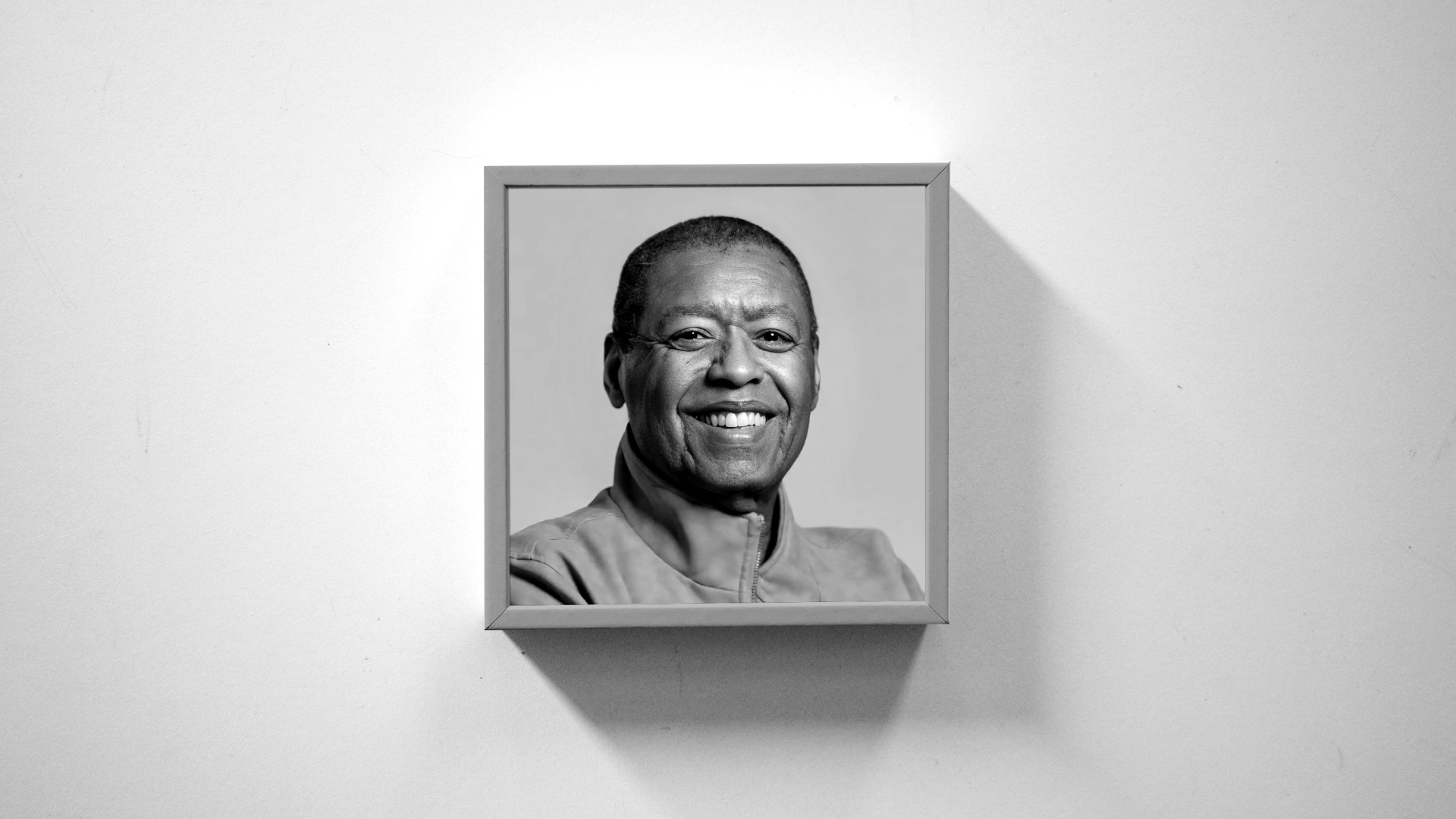
An image of Ron Kenoly.
Christianity Today February 20, 2026
Illustration by Christianity Today / Source Images: Facebook

“A worship leader is the facilitator of the activities that go on in the presence of God,” Ron Kenoly wrote in his 2008 book, The Priority of Praise. Kenoly, one of the first celebrity worship leaders to rise to prominence as a recording artist with Integrity Music, changed the sonic landscape of contemporary worship music during the early 1990s. Kenoly was an energetic performer and song leader, celebrated for his ability to engage a crowd or a congregation and inspire participation. 

His 1992 album Lift Him Up featured high-energy praise songs like “Ancient of Days” that blended gospel and Afro-Caribbean style characteristics and became popular with congregations across denominations and continents. 

“He wanted everyone to be singing,” William McDowell, Kenoly’s former music director, told CT. “He cared deeply about everyone in the room experiencing God in worship.” 

Over the course of his career, Kenoly toured in 123 countries, gaining notoriety as a worship leader in the United States, the United Kingdom, Nigeria, and Ghana. His music blended genres and regional styles, ushering contemporary worship music into a new era of experimentation and expansion. He changed the way worship music was produced and marketed; he was one of the first worship artists to have their face featured on the cover of an album.

“Worship in spirit and truth requires more than fancy vocal aerobics, beautiful poetic lyrics and sweet or hot musical passages on the instruments,” Kenoly wrote. “God is pleased with our talents, but He is not impressed by them. … God is always looking at the true heart of the worshiper.” 

Ron Kenoly died on February 3, 2026, at the age of 81. He is survived by his second wife, Diana, and three sons. 

Kenoly was born in 1944 in Coffeyville, Kansas. He grew up with an often-absent father (a sergeant in the Air Force), five brothers, and a mother who was committed to getting her family to their Baptist church most Sundays. After graduating from high school, Kenoly joined the Air Force and moved to Hollywood. During his service from 1965 to 1968, he performed with a pop cover band called the Mellow Fellows. 

In 1968, Kenoly married his first wife, Tavita (with whom he had three sons), a fellow musician who shared his aspiration to make it in the music industry. He found mixed success, landing record deals with A&M Records and MCA, and started performing and releasing music under the name Ron Keith in the mid-’70s. It seemed like his big break was on the horizon, but it never came.

Chasing success in the music industry took a toll on Kenoly’s personal life. His marriage deteriorated until 1975, when his wife rededicated her life to Christ at a Foursquare church in Los Angeles, which sparked Kenoly’s own spiritual reckoning. “There wasn’t any more fear, only courage, and a joy that I had never seen,” Kenoly said in a 1997 interview. “I wanted what she had, so I did what she had done. I surrendered, turned over all of my dreams, hopes, talents and abilities and said, ‘God, please change me.’” His first marriage lasted 42 years.

Kenoly subsequently gave up performing in nightclubs and took a job as a locker room attendant at the College of Alameda, where he started taking courses and working on a music degree. When administrators at the institution learned of Kenoly’s recording and performing experience, they offered him an accelerated track through a degree program and hired him as a voice teacher. 

Kenoly turned his attention to Christian music in the 1980s, accepting a job as a worship leader at the Jubilee Christian Center (now Redemption Church) in San Jose, California, in 1985. He gained regional popularity as a church musician, and in 1989, then–vice president of Integrity Music Don Moen visited Jubilee and invited Kenoly to record an album with the label. 

His first album with Integrity, Jesus is Alive (1991), sold 400,000 copies. His second, Lift Him Up (1992), sold more than 450,000 copies and spent 70 weeks on the Billboard contemporary Christian chart. 

Lift Him Up was a surprise success, initially proposed as a straightforward recording of a live worship service with a very limited budget. Two of the songs (“Hallowed Be Your Name” and “We’re Going Up to the High Places”) were written or cowritten by Kenoly; the others were selected by Integrity producer and keyboardist Tom Brooks, who also helped assemble a backing ensemble with impressive industry bona fides. 

Drummer Chester Thompson, who played for Genesis, Phil Collins, and Frank Zappa, was in the Lift Him Up ensemble. Respected Latin American percussionist Alex Acuña was also featured, and the team of backing vocalists included heavy hitters like Olivia McClurkin. The quality of the music and the live performance captivated listeners. 

The popularity of Lift Him Up catapulted Kenoly to celebrity status in the contemporary worship world. It also demonstrated that fans of contemporary worship music were enthusiastic about Kenoly’s fusion of global genres. 

“Kenoly transformed people’s imaginations for culturally coded praise and worship,” said Adam Perez, assistant professor of Worship Studies at Belmont University. 

Perez added that, in the 1990s, artists like Marcos Witt were helping expand Integrity’s reach into Spanish-speaking markets, but Kenoly was one of the first Black worship leaders whose music was marketed to a general Christian audience rather than being steered toward the gospel niche. 

Kenoly actively sought to record music that resonated across racial divides, expressing a desire to produce albums and songs for an audience that looked like his diverse congregation. 

“This whole thing was born out of a multi-racial congregation. Jubilee is about 45 to 50 per cent Caucasian, probably about 25 per cent African American and the rest is Hispanic and Asian,” Kenoly said in a 1994 interview. “Somehow, we’re able to present ministry that touches the lives and hearts of all those people … people have come to realise that worship has no colour, age, ethnic or cultural barriers.” 

Stephania Andry Wilkinson, a former Integrity Music marketing executive and founder of Red Alliance Media, told CT that Kenoly was the “ultimate unifier.”

“He showed that worship has no boundaries or color lines,” said Wilkinson. “He was one of the greatest psalmists of all time, and his music still works. It holds up today.” 

British gospel singer Muyiwa Olarewaju said that popular worship artists like Maverick City Music have built on the foundation Kenoly laid with his music. 

“He showed worship leaders that you could be high-energy and orchestrated, yet deeply intimate and scripturally grounded,” said Olarewaju. “There would be no Maverick City today without Ron Kenoly. There would be no Brandon Lake, no Michael W. Smith as we know them today.”

Recording artist and worship leader Israel Houghton told CT that seeing Kenoly lead diverse congregations in worship in a musical style that pushed the boundaries of the genre was an inspiration. 

“To see a Black man lead millions of people from multiple cultures in 1991 quite literally ignited a flame in me,” said Houghton. “He gave me permission to be my cross-cultural self and not have to assimilate into a copy or caricature of someone else.” 

Following Kenoly’s death, worship leaders around the world posted tributes to his music and influence. Worship leader and producer Noel Robinson, who served as music director for one of Kenoly’s tours, called him a “bridge builder” and a leader who was “fearless in his delivery, confident in his calling, and utterly secure in the God he served.” 

Kenoly’s most recent album, Set Apart Is Your Name YaHuWaH, Vol. 2 was released in 2015, but Kenoly continued to tour, teach, and write music into his final months. McDowell said Kenoly was writing songs until the week he died. Kenoly told him that he was experimenting with using the AI platform Suno to arrange some songs that he hadn’t been able to record yet. In January 2026, he led worship at a conference in Jakarta, Indonesia. 

“He’s been all over the world,” McDowell said. “But you’d never know he was that big, talking with him. He was genuine and unpretentious. He had personal and ministerial integrity. And I had a front seat to that.”

Books

‘Theo of Golden’ Offers Winsome Witness

Novelist Allen Levi talks faith, writing, and hope.

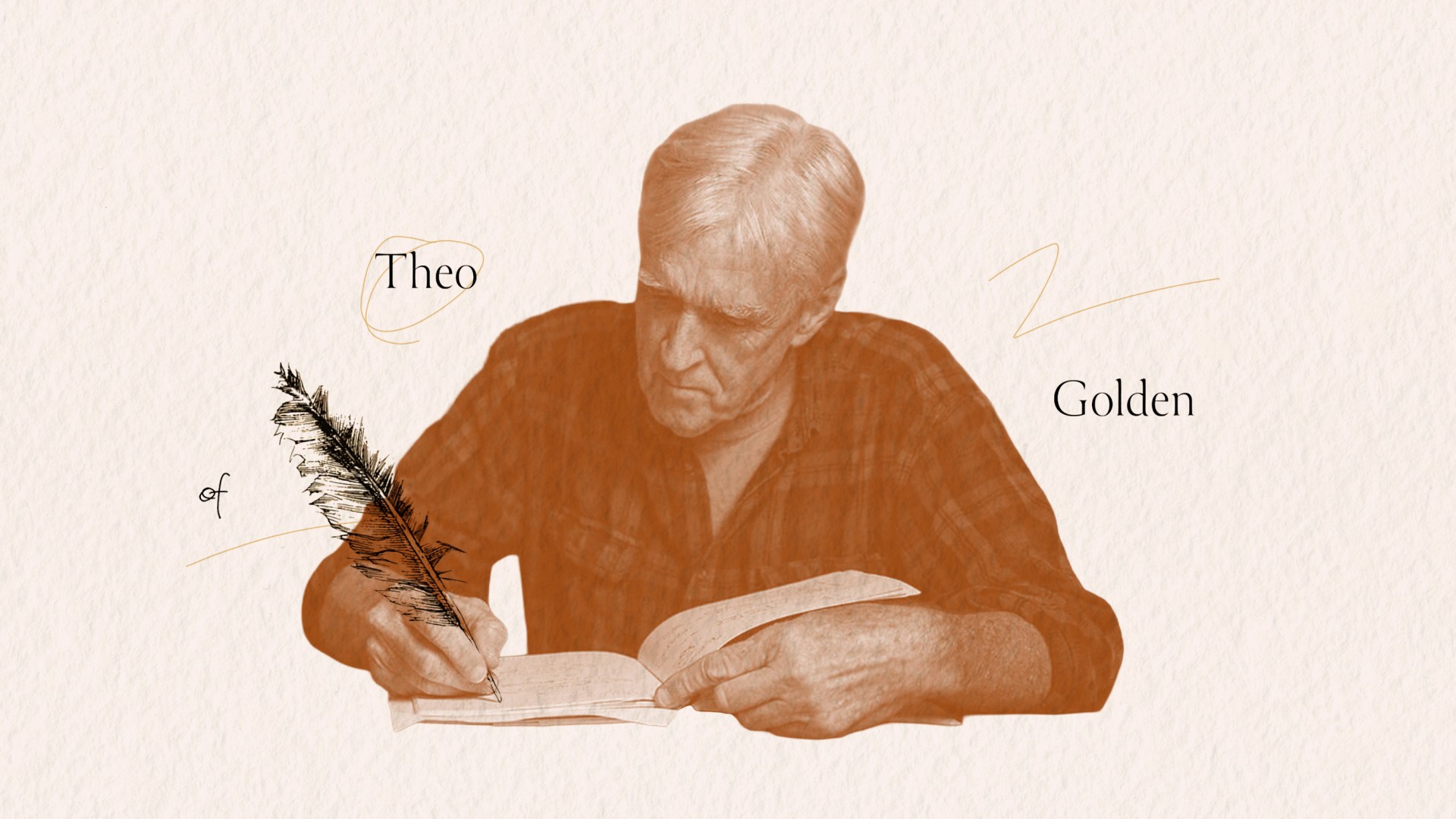
Allen Levi writing.
Christianity Today February 19, 2026
Illustration by Christianity Today / Source Images: allenlevi.com, Unsplash

Allen Levi’s friends wouldn’t let him leave his novel in a drawer collecting dust.

After having the idea for Theo of Golden, Levi wanted to see if he had the “muscle” and “patience” to write a novel. He didn’t have plans to do anything with it afterward. But at his friends’ urging, in October 2023 he self-published the completed book. Since then, its sales have steadily skyrocketed, booming in 2025. This past December, more than two years after publication, the novel reached The New York Times’ paperback trade fiction list. It has remained there for ten weeks.

Theo of Golden’s success is unique in some ways, both as a self-published novel and as a book centering on a Christian character. Theo is full of hope and expresses love “in a winsome way through kindness and generosity,” Levi told Christianity Today. But the character hesitates to have conversations about heaven with a curious non-Christian.

Levi lives on family acreage in Harris County, Georgia, and attends two churches regularly: a young plant that began by meeting on a couple’s farm, with chickens and donkeys, and an African American Baptist church. Levi says his vocation is to “use creative gifts to provoke godward thought.”

Theo of Golden begins with Theo, an elderly Portuguese man, visiting a small Georgia town. He sits down for coffee and is enamored by the 92 portraits on the wall. After talking to the shop owner, he begins a mission to buy the paintings and bestow them on the models.

Levi has worked as a lawyer and judge, is a longtime songwriter, and earned a master’s degree in Scottish fiction while living in Edinburgh. In this conversation, Levi discusses the winding vocational path that brought him to a New York Times bestseller list, the novel’s recent popularity, his faith background, creative and spiritual influences on his life, and plans for his next book.

This conversation has been edited and condensed.

How did Theo of Golden begin? Did the idea just come to you one day?

One day I was in a coffee shop down in Columbus [Georgia], and the coffee shop has 92 portraits on the wall. They’re all done by a dear friend of mine who is a wonderful artist with a particular gift for portraiture. And I was looking at the portraits, as I always do when I go to this particular shop. And the idea that came to me was Wouldn’t it be a lot of fun and interesting to buy the portraits one at a time and give them to the people who are portrayed in the frames? That became the seed corn for a story. That was nothing unusual for me as a songwriter. I was constantly on the prowl for things to write songs about. But I thought, This could be a story.

My thinking was not to write a novel for publication but just to see if I had the muscle and the stamina, the patience, to write a piece of long fiction. I actually bought four of the portraits that day, and they all became characters in the book. I didn’t have a plot. I didn’t have any sort of narrative arc that I was working under, but I started writing scenes, imagining that someone came and bought portraits and did what Theo does in the book. I figured out what I wanted the tone of the book to be, and I started writing in fits and starts.

I would maybe work for a week or two, and then I’d quit for six months. I gave up a dozen times. I said, “I can’t do it, and I don’t have the muscle for it.” But I stuck with it. And when I finished it, I patted myself on the back and said, “I’m done.” I put it in a drawer, and that was going to be the end of it. But some friends of mine who knew I was playing with the idea of writing a book asked if they could read it, and I let them read it. They said, “We really think you should do something with this.” That’s what rescued it from the dustbin.

There’s an interesting tension in the book. You seem eager to share Christian truths, but I’ve heard you in another interview resist the title Christian fiction, and the main character repeatedly resists conversations about heaven with a non-Christian character. Still, there are Christian themes all throughout the book. How did you decide on that approach?

As a musician, I always asked myself when I was getting ready for a gig, “Who is the audience tonight?,” because I played for a really diverse swath of audiences. I could play at a Southern Baptist church on a Sunday evening for an elderly congregation one night and then for a college group three nights later. It just made sense to know who I was going to be singing to, because I was there for them.

I think that’s the right approach for me to take as a creative person, as an artist. They are not there for me. I am there for them, to serve them. Good art does serve. In this, I wanted to write to as wide an audience as I could possibly engage. C. S. Lewis says that the first duty of an artist is to teach and delight. And I wanted to do the “teach” part subtly and delight as winsomely as I possibly could.

I wanted to communicate hope. I certainly wanted to communicate that Theo was a man who loved and he was a man who expressed that in a winsome way through kindness and generosity. But I didn’t want the book to be so steeped in this man’s faith that it would run off readers who don’t share our faith perspective. Out of kindness to that audience, I tried to make the story as engaging as possible without denying that this man was a character of faith.

Theo of Golden is spending its eighth [now tenth] week on the New York Times paperback trade fiction bestseller list. Do you think your approach to Christianity in the book has anything to do with that popularity?

Not really. Let me backtrack just a bit. You mentioned that I resist the label Christian fiction. I’m not quite sure what that is. And if you asked me, “Do I consider this book Christian fiction?” I would have asked you to define the term, because I’ve never quite understood what it means. I know that there are books that have so many buzzwords in them that there is no mistaking it for who the author was and what his or her persuasion was.

When I was a lawyer, sometimes people would come to my office and they would say, “I understand you’re a Christian lawyer.” And even then, I resisted that. I didn’t want people to come to my office because I was a Christian lawyer. I wanted them to come because I was a good lawyer, I excelled in my work. And as a writer, I want people to be drawn to the book because it is excellently written. I did the best I could. Not to say that it’s excellent, but I did the best that I could. And I like the fact that the story, again, reaches a broad spectrum of readers. I don’t want to live in a silo. I want to respect the fact that not everybody in the world sees through the same lens that you and I might see through.

I’ve been interested in its popularity. I have friends who aren’t Christian, and if we have dinner and I start going through the gospel with them, they wouldn’t want to get dinner with me anymore. A lot of American readers might feel the same about a book.

You’ve probably heard the term before: pre-evangelism. Sometimes there are things that maybe the church should do just to express the love of God for people, regardless of a message or a response. I think of the Book of James, where he says if somebody comes to you and they’re hungry, feed ’em. Don’t preach to ’em; feed ’em. You’ve got to feed them first. Maybe sometimes our first responsibility is to feed the hungry, and maybe we don’t feed them the real rich food as the first course. We give them something that prepares the palate, so to speak. And that is not to say that we don’t ultimately want to get to the point that we share the gospel of Christ. We want to do that.

There’s a statement by C. S. Lewis where he says that to love and admire anything outside oneself is to take a “step away from utter spiritual ruin—something along those lines. To write a piece of fiction, a story like Theo that makes a godly man attractive, a character like that who might draw the heart of a reader, is to maybe invite that reader to love and admire something outside themselves. It becomes an enticement of sorts, in a good sense of the word, for someone to come look and see.

Is there one specific moment you can remember when you became a Christian? What’s your relationship to the church today?

I grew up in the church in my hometown of Columbus. We were faithful churchgoers to a Presbyterian church. I’ve got a wonderful mom and dad. I’ve got three wonderful sisters and had a wonderful brother who’s now gone to be with the Lord. Faith was probably a somewhat superficial thing for us. We had a respect for it without much understanding of it. I probably saw it as something that was nice but not necessary. Now I see it as something that is necessary but not always nice. It can be a very uncomfortable thing.

When I went to college, I ended up graduating from the University of Georgia, and while I was there, I met some people who were very unashamed Christians. I saw the gospel in them in a way that I had not seen before. February of 1978 is when I kind of chart the beginning of my surrender to Christ, and it has been push and pull and forward and backward and all of that since then. But ever since then, faith has been deeply rooted in me. I’m very much a work in progress, like all of us.

You’ve said your mission statement is to use creative gifts to provoke godward thought. What creative works have provoked godward thoughts in you? Do they tend to be works created by Christians?

I don’t know if you would call the Scripture creative work. I mean, there’s certainly poetry, and there’s prose, and there are parables, and there is fiction used in the right way in the Scripture. So that, first and foremost. I like to think that everything I read in some way informs my faith, even if it’s from Cormac McCarthy or somebody who is nowhere recognizable on the faith spectrum, because it reminds me of what life might look like if I had not surrendered my life to Christ many years ago.

C. S. Lewis is kind of a perennial favorite for me. I seem to always have something of him in rotation. I love to read C. H. Spurgeon. He was a master with the language. His devotion to Christ was undeniable, and the focus that he had on moving the kingdom forward has always challenged me. Wendell Berry, no doubt, even though he doesn’t wear his faith on his sleeve in a lot of ways, has profoundly impacted my view of the world and my Christian view of the world. Just a sense of stewardship and community and cherishing small things.

I’ve read lots and lots and lots of books over the years. My memory is not terribly good, so things tend to slide off of my memory quickly, but I never feel like it’s been a waste of time. I feel like there’s some imprint that they leave behind that rounds me out.

You’ve said that you’re working on more novels focusing on characters from Theo of Golden, particularly Ellen. Can you tell us how that’s going?

It’s been hard. I wrote Theo as a personal challenge, so there was no pressure whatsoever. I never expected anyone to read it. It was arduous, but I was able to do it at my pace, and I didn’t feel like anyone was breathing down my back. With Ellen, I don’t feel like anyone’s breathing down my back, but given the response that people have had to Theo, I do think there’s probably an expectation. I want to write the best book that I can.

I want to make sure that whatever I write really has something to say. I’m all for delighting people and giving them something to read that doesn’t require a lot of deep thought or reflection, but my preference is always to have something of substance in what I write, be it a silly song or a serious novel. I hope my goal will always comport with my mission statement—that I will use stories to provoke godward thought.

Correction: An earlier version of this piece had the wrong location for the coffee shop, which is in Columbus, Georgia, not Columbus, Ohio.

Books
Review

An Able Reply to the Toughest Challenges to Reformed Theology

A new book on the Reformed tradition commends it as a “generous” home combining firm foundations and open doors.

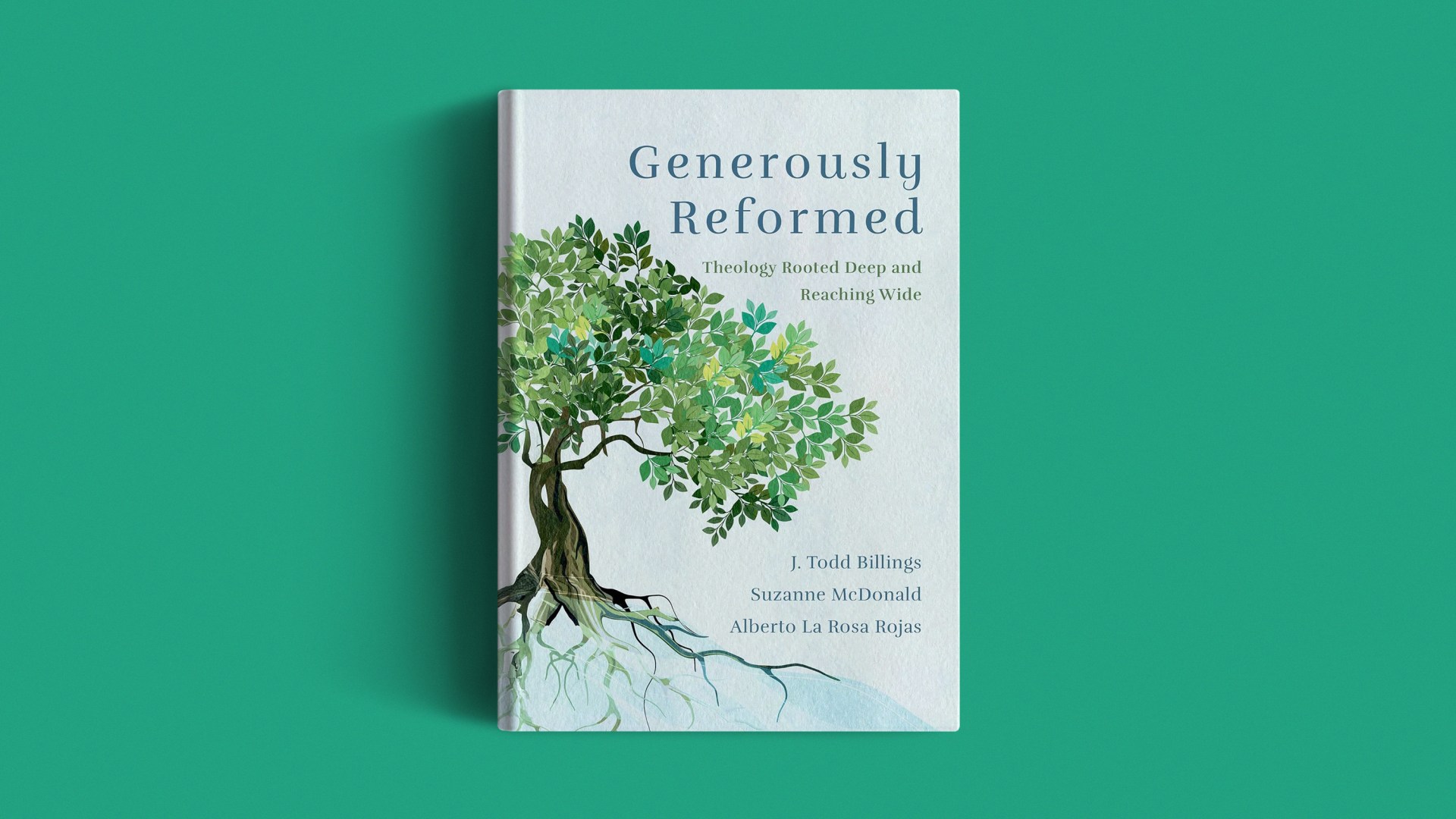
The book on a green background.
Christianity Today February 19, 2026
Illustration by Christianity Today / Source Images: Getty, Baker

Back in my online dating days, I once had a match almost cancel our dinner plans. No, she hadn’t caught me lying about my age, height, or hairline. But an unexpected red flag had surfaced as our correspondence drifted—on eHarmony, mind you, not Tinder—toward contested points of Christian theology. Before agreeing to meet in person, she needed to know where I stood on the doctrine of predestination.

I told her I affirmed it, because the Bible does (Rom. 8:29–30). She told me she couldn’t support any worldview that denies our freedom to embrace the gospel or undercuts our duty to share it. I replied that I didn’t see any conflict between God deciding who receives his gift of saving faith and God’s ambassadors laying it on the table for anyone to claim. And I extended an olive branch: this CT article,written by an avowedly non-Calvinist theologian, that argues likewise.

Détente achieved, we went on our date, enjoying a polite, theology-free meal. And that was that. 

But the story lives on, for me, as one useful illustration of a deep-running aversion to doctrines—like predestination—that emphasize God’s sovereign ordering of human affairs above our free-willed responses. Like me, my eHarmony match took Scripture as her highest authority. But like many other committed believers, she also recoiled at the notion of God fixing every person’s eternal fate before the dawn of creation.

Of course, every Bible-believing denomination and church tradition recognizes divine sovereignty, in some form, as a genuine article of Christian faith. Historically, though, the most emphatic and sophisticated apologias tend to flow from movements carrying the Reformed banner. Theologically and institutionally, Reformed communities exist downstream from Reformation-era stalwarts like John Calvin and Ulrich Zwingli, along with seminal statements like the First and Second Helvetic Confessions (1536 and 1562), the Belgic Confession (1561), and the Westminster Confession of Faith(1643).

I have spent most of my adult life in and around the Reformed universe after stumbling into it almost by accident. I know the reputational baggage Reformed theology carries. Critics often regard it as stern, severe, and cold-hearted. Some see Reformed communities as breeding grounds for dour rigorists who delight in drawing and policing inflexible boundaries.

The three authors of Generously Reformed: Theology Rooted Deep and Reaching Wide are aware of the shadow cast by such stereotypes. J. Todd Billings, Suzanne McDonald, and Alberto La Rosa Rojas are professors at Western Theological Seminary in Michigan. Like me, they discovered the Reformed tradition later in life, and their book is a welcome effort at overturning misconceptions about its historical and theological track record. More importantly, it makes a positive and persuasive case for seeing Reformed Christianity as a gateway into the fullness of historic Christian truth, rather than a fortress of purity to huddle pridefully within. 

Billings, McDonald, and Rojas commend the Reformed tradition as a “spacious” and “expansive” home combining firm foundations and open doors. Like a tree, they write, it “reaches down with deep roots for life outside of itself (in God) and branches out widely to the life of the world in which we live.”

The authors go about demonstrating Reformed spaciousness in two broad movements. First, they trace the contours of Reformed thinking in general. 

As the book readily grants, this can be a frustratingly slippery task. There is no Reformed pope or college of Reformed cardinals acting as supreme authorities on matters of faith and practice. The various Reformed confessions agree with the consensus of the early church as expressed in its foundational creeds and councils. And they agree on a lot else besides. But they differ dramatically on significant subjects, like the proper forms of worship and church governance. 

Those confessions were never meant to command the consciences of Reformed believers in all times and places. In many respects, then, it makes more sense to speak of Reformed habits, tendencies, or emphases than Reformed decrees that apply without exception. Unbound to any one church body, these characteristic modes of faithfulness don’t stay contained among Presbyterians and formally Reformed denominations. Many Baptist, Anglican, charismatic, and independent churches lay claim to parts of this heritage.   

Given its diffuse nature, then, many understandably try to collapse Reformed theology into some person, slogan, or formula. But the authors of Generously Reformed push back on the simplifiers. Reformed teaching, they insist, is not synonymous with historical heroes like John Calvin or contemporary figures like John Piper and R. C. Sproul. Nor is it reducible to the five Reformation “solas,” which distill “some of the pressing theological issues at stake” but leave plenty of areas untouched.

Even the acronym TULIP, arguably the most popular Reformed shorthand, receives a thorough demystifying. Some of the book’s most insightful sections reacquaint readers with TULIP’s historical background, as a localized rebuttal to theological opponents, while cataloging both its rhetorical weaknesses and its insufficiency as a signature statement of Reformed doctrine.

For the authors, the difficulty of setting the Reformed tradition’s boundaries is actually one source of its strength. As they argue, Reformed churches and confessions enjoy a “deep contextual flexibility.” To cite one Reformation rallying cry, the church is a “creature of the Word.” Which means it can’t be held in the proprietary grip of any ethnic faction, geographic region, or ecclesial hierarchy.

Wherever the Word goes, then, believers are empowered to adapt the message of salvation to new contexts and needs. As the authors observe, “Reformed churches around the world—from South Africa to Cuba—have continued to generate confessional documents that clarify the gospel’s witness in their own times and places.” Thus does Reformed theology expand its reach and broaden its appeal while remaining securely anchored in the faith once entrusted to the saints.

After outlining the basic shape of Reformed thought, the book moves toward explaining specific pieces of Reformed theology and practice. Two later chapters—on Reformed approaches to justice and public life and Reformed contributions to end-times debates—struck me as helpful but somewhat secondary. 

The topics themselves are first-order, of course. But the theological deficits the authors address—individualistic views of redemption and escapist notions of eschatology—echo common indictments of evangelicals in general, even if Reformed teachings give valuable guidance. 

(For what it’s worth, I thought the justice sections leaned too heavily on wholistic portraits of the gospel that merge canceled debts and Christlike living, or liberation from sinful hearts and from oppressive conditions. These portraits supply essential correctives. But I don’t see them establishing either the fact or the wisdom of a sweeping mandate for social activism on the church’s part, as distinct from the vocations of individual members.)

To my mind, the book’s finest chapters answer objections to Reformed teachings on predestination, infant baptism, and God’s providential caretaking of everything from cosmic forces to individual lives. In most dialogues with the free-will side of the Christian family, this is where battle lines form. I’m no trained theologian, so I won’t attempt to analyze these sections exhaustively. Instead, I’ll pull on one prominent thread—the pure grace of salvation—that illuminates why I dwell most hospitably in Reformed neighborhoods, despite some lingering attachments to rival zip codes.

Truth be told, I’m a fence-sitting squish on infant baptism. My young son got sprinkled, as our church prescribes. But I got dunked myself, and occasional wavering aside, I still think the dunkers have the better biblical argument.

I’m even a little wobbly on predestination—if not doctrinally, then at least experientially. My childhood church had a custom, after baptizing new believers, of singing “I Have Decided to Follow Jesus.” I still choke up at the memory of that chorus and the heartfelt testimonies that summoned it forth. Today, I cringe at how “decision” language obscures God’s paramount role in quickening dead hearts. But I’m also uneasy about disdaining it as a species of self-deceit.

What resolves these tensions in favor of ongoing fellowship with Reformed congregations? More than anything, it’s the Reformed insistence on saving faith as God’s achievement, through and through. Obviously, other traditions preach grace, not works, as the basis of our admission into God’s family. But robust theologies of predestination and infant baptism slam the door on a temptation to boast. We can’t pretend our meager stores of biblical literacy or spiritual maturity made the slightest difference. We can’t take credit for giving the gospel a fair hearing instead of a cold shoulder.

We’re left, instead, to marvel at the mystery of being chosen by the same God who chose a conniving trickster to multiply his people, a hardened persecutor to grow his church, and “the foolish things of the world to shame the wise” (1 Cor. 1:27). It’s grace all the way down. Hallelujah!

In their introduction, the authors of Generously Reformed clarify the parameters of their project. “The primary focus of this work,” they write, “is the theological dimension of Reformed confession and theology; it is not a work in cultural anthropology, sociology, or church history.”

I’m of a few different minds about this. The first thing to say, without reservation, is that the authors need no permission—certainly not from uncredentialed scribblers like me—to write whatever book they wish to write. Reformed theology, as they acknowledge, isn’t the whole of Reformed spirituality, community, and public witness. But theology shapes those other areas profoundly. And the authors, as theologians, justifiably play to their strengths.

I fear, though, that this strategy avoids grappling with other, equally potent sources of anti-Reformed sentiment. People, after all, encounter this tradition as something more than a body of theological reflection, however nuanced and multilayered. They also encounter it as a network of overlapping subcultures marked by distinct styles of engagement and badges of authenticity. 

Like it or not, actual existing Reformed identity doesn’t always run a direct pipeline from the Belgic Confession or the Heidelberg Catechism. For good or ill, it soaks up the buzzwords and hobbyhorses of podcasters, social media voices, and celebrity figureheads. It pours forth in wildly divergent streams, from the gentle erudition of Tim Keller’s Manhattan pulpit to the theocratic rumblings of Douglas Wilson’s Idaho citadel. 

To see why this matters, consider the book’s chapter on God’s providence, which recalls Reformed reactions to the 2004 tsunami that killed over 200,000 people after battering Indonesia’s coast. 

Assessing a pointed critique from Orthodox commentator David Bentley Hart, the authors agree that certain pastors embarrassed themselves by glibly proclaiming the tragedy an expression of God’s righteous and infallible will. From their perspective, the error owed more to lopsided theology than tone-deaf boorishness: These pastors weren’t wrong about God’s righteousness and infallibility, or his power over the wind and waves. But they had neglected biblical and Reformed precedents for raging against suffering rather than blithely accepting it.

I understand why the authors propose theological remedies for theological missteps. Yet I can’t help wondering if they overlook another possible warping the Reformed witness. Reformed leaders often favor bold, uncompromising postures. And there are good reasons for this. If God’s truth is at stake, you can’t cower before every social and intellectual taboo.   

There’s often a fine line, however, between steadfast conviction and fetishized boldness—between telling the truth, no matter who it offends, and almost reveling in the lack of a gentle, loving spirit. I don’t think most Reformed writers and thinkers are guilty of crossing this line. But the strident minority who do surely bear some blame for making their movement appear more narrow than generous.

Billings, McDonald, and Rojas would doubtless concede that some Reformed exemplars behave crudely, speak intemperately, and otherwise give the tradition a bad name. Indeed, the authors emphasize how sin and prejudice corrupt every branch of Christian faith, including their own. I suspect they think there’s a better way of defeating bad influences than going round for polemical round. Why not drill beneath the terrain of controversialists, present Reformed theology in all its beauty and complexity, and let readers decide who embodies it best?

That sounds about right to me, which is why I can’t fault any hesitation to duke it out with Christian nationalists, the more extreme male headship crowd, or other groups with a presence on the Reformed fringes. There’s a useful analogy, here, with the challenge of defining and defending evangelicalism itself. No, you can’t ignore the ugly stuff—the black marks on civil rights or the lame excuses for Donald Trump’s pagan inclinations. But ultimately, people need to see the inheritance—not just denunciations of the ones squandering it. 

In the same way, Generously Reformed succeeds by digging for deep roots rather than wallowing in the mud. May it remind Reformed readers of the spacious tradition they inhabit, while convincing others that there’s always room someone new.

Matt Reynolds is a writer and a former CT editor. He lives with his wife and son in the suburbs of Chicago.

Culture
Review

MercyMe Holds On to a Hit in ‘I Can Only Imagine 2’

The contemporary Christian film sequel explores life after writing a megahit, asking whether hardship can bear good fruit.

John Michael Finley as Bart Millard and Sammy Dell as his son Sam in I Can Only Imagine 2.

John Michael Finley as Bart Millard and Sammy Dell as his son Sam in I Can Only Imagine 2.

Christianity Today February 19, 2026
Jack Giles Netter / Courtesy of Lionsgate

I teach an undergraduate course called Worship and the Arts during the spring and summer terms. Most of my students in that class aren’t studying theology or religion—the course satisfies a general education requirement in our curriculum. Many of them don’t identify as particularly religious either.

The first week of class, I typically ask the students to write about an encounter with art that has changed their beliefs about or perception of God. The last two times I’ve taught this class, at least one student has mentioned the song “I Can Only Imagine.”

“When I listen to it, I feel like God loves me,” one wrote, “and I have peace about the future.” 

That isn’t surprising, given the song’s popularity: “I Can Only Imagine” is the best-selling Christian record of all time and the first Christian song to go platinum and double platinum on digital platforms. If you tune in to Christian broadcast stations like K-Love for the day, you’re likely to hear it at least once. The listenership of Christian radio skews older, but somehow this nearly-25-year-old song is reaching my students and resonating.

“I Can Only Imagine” is a soaring ballad with lyrics that invite listeners to imagine what it will be like in God’s heavenly presence. Its origin inspired the 2018 film I Can Only Imagine, whichtold the story of MercyMe lead singer Bart Millard’s fraught relationship with his abusive father and their eventual reconciliation. The film’s box office success surprised the industry and critics. It was the third-biggest movie in the US during its opening weekend, behind Black Panther and Tomb Raider.

A sequel, I Can Only Imagine 2, will be released by Lionsgate on February 20. Most of the cast members reprise their roles, including John Michael Finley as Bart Millard, country singer Trace Adkins as band manager Scott Brickell, and Dennis Quaid as Millard’s father. The roster includes a new, high-profile addition in Milo Ventimiglia (of Gilmore Girls and This Is Us) portraying singer-songwriter Tim Timmons.

The sequel starts with a drone shot of a MercyMe concert at Red Rocks Amphitheater, with Finley (as Millard) gripping the microphone.

“What comes next when you’ve gotten all your dreams?” his voice asks. “What do you do when the only thing in the whole world that you have to hold on to is a song?”

It’s an odd way to begin a film that is, essentially, holding on to a hit song and stretching its popularity into a franchise à la the God’s Not Dead films. Despite relying on many of the same tropes and formulas of other faith-based films, I Can Only Imagine 2 doesn’t stoke culture war. It participates in some mythologizing and intentionally pulls on heart strings, but its central conflicts aren’t built on confrontation with a caricatured enemy. The story arc is driven by personal struggles, health crises, and the strange professional aftermath of having written the biggest Christian pop song ever.

We get an early flashback of Millard and his wife, Shannon (Sophie Skelton), reeling from a medical episode in which they find out their son, Sam, has juvenile diabetes. Millard, who has just departed for a tour, rushes home to find his family at the hospital, and he has to learn to check Sam’s blood sugar and give him insulin injections. The experience of causing his son physical pain sparks a flashback in which a young Millard is being attacked by his violent father.

Sam’s diabetes is a key plot point throughout I Can Only Imagine 2. The film takes place during his teenage years, when his parents have trouble helping him manage his disease independently. He forgets to check his blood sugar at the right times; sometimes he forgets to eat. Sam is an aspiring musician who is more interested in practicing guitar than taking charge of his health. An offhand comment by Millard to his manager becomes a last-minute decision to take Sam on tour with MercyMe.

A lot of conflicts, personal dramas, and various themes fight for center stage in this film. It echoes the father-son relational struggle of I Can Only Imagine: We watch Millard come to terms with his own shortcomings as a father and the ways his brokenness left him unprepared to build an authentic relationship with his son. Milo Ventimiglia’s character, Tim Timmons (based on the singer-songwriter of the same name who cowrote the song “Even If” with Millard), is battling a rare form of cancer, which he conceals from Millard as they set out on tour. Timmons and his wife are also expecting their first child.

On tour, we see Timmons reading a book titled The Origin of Hymns—which looks like an old cloth-bound classic but is actually a mockup of a forthcoming book that will release with the film—and he talks at length about his love for the late 19th-century hymn by Horatio Spafford, “It Is Well with My Soul.” As Timmons and Millard share a moment of appreciation for the song and the tragic story that inspired it, Millard remarks, “I wish I could write a song like that.” Timmons replies, “You did, man.”

Is “I Can Only Imagine” a modern-day “It is Well with My Soul”? Unclear. The song is  25 years old, but that’s not really long enough to know its staying power. The comparison feels forced—also potentially unearned—but the film leans on it to argue that great songs emerge from great struggle. Millard’s turbulent relationship with his father and subsequent reconciliation before his death gave us “I Can Only Imagine.” Spafford’s tragic loss of his daughters in a shipwreck gave us “It is Well with My Soul.” The film begs the audience to ask, What great song will emerge from this mutually difficult season for Millard and Timmons?

Timmons chips away at the basic theme and structure of a new song while on tour, inviting Millard to collaborate. But Millard is distracted by Sam and his memories of his own father. Eventually, he listens to Timmons’s rough, bare-bones demo, and the song becomes “Even If,” which the credit montage tells us became MercyMe’s biggest hit after “I Can Only Imagine.”

“Even If” was released by MercyMe in 2017. The song samples the chorus of “It is Well with My Soul” and embraces a challenging message: God may not save you from pain, even death.

I know you’re able, and I know you can
Save through the fire with your mighty hand,
But even if you don’t,
My hope is you alone.

It’s still unlikely that “Even If” will ever top the success of “I Can Only Imagine.” To some degree, the fictionalized Millard seems aware of this, but the film’s arc still feeds the will-they-won’t-they tension around the song Timmons is writing and the band’s flagging popularity.

This film had an opportunity to more deeply explore what it’s like to come down from the high of writing a megahit.

At the start, I wondered if we were going to see the uncomfortable soul-searching many artists face as they realize they may never be able to produce a song that reaches as far or gains as much acclaim as something they’ve already done. For Christian artists, the tension between the pursuit of material success and faithfulness is a fertile ground for character development and inner conflict.

I Can Only Imagine 2 sidesteps that trickier territory in favor of perhaps more universally relatable plot points: Sam’s struggle with diabetes, his dream of becoming a musician (real-life Sam is now a musician who performs as Sam Wesley), the challenge of parenting adolescents and young adults while also dealing with your own trauma, Timmons’s cancer, and his wife’s pregnancy.

The film’s numerous mini sermons might deliver what many viewers are looking for in an inspirational faith-based movie. The characters are also generally likeable. One of the film’s more self-aware moments comes during a post-credit scene in which Trace Adkins’s gruff, no-nonsense character stares placidly at a field with his father. He asks, “Say, Dad, do you ever want to talk about your feelings?” His dad replies stoically, “No, not really.” Adkins ends the brief exchange with a “Yeah, me neither,” a winking acknowledgement of the film’s abundant dialogue and sometimes overly acted soul-searching in other scenes.

The film ends with Millard breaking the fourth wall to answer the rhetorical question he asked at the beginning of the film: “What do you do when the only thing in the whole world that you have to hold on to is a song?” We see that he’s speaking in a grief support group.

He poses the question, then looks straight at the camera and says, “You keep holding on.”

“I Can Only Imagine” is still a mainstay of Christian radio. People ask for it to be played at their funerals. MercyMe isn’t a washed-up contemporary Christian music group trying to reinvent itself or manufacture relevance; its hit song hasn’t faded away.

I Can Only Imagine 2 holds on to that hit song, sometimes focusing on it instead of treading new ground. To be fair, though, its audience is definitely holding on to the beloved song too.

Kelsey Kramer McGinnis is the worship correspondent for Christianity Today.

Theology

Your Understanding of Calling Is About to Change Radically

Columnist

You can do little about what artificial intelligence is doing around you, but you can do something about you.

A compass.
Christianity Today February 18, 2026
Illustration by Christianity Today / Source Image: Pexels

This piece was adapted from Russell Moore’s newsletter. Subscribe here.

You don’t have to seek God’s will for your career anymore.

I’m mostly joking, but not entirely. We must always seek God’s will. But what we meant by this for most of our lives is about to change dramatically. It’s not God or his will that’s changing but the world as we’ve known it—and with it, the outmoded way we’ve thought about “career.”

My teenage years brought with them a series of decisions as I wrestled with “What am I going to do with my life?” and “What is God’s will for me?” As with most of us, a huge part of that was calling. For me, it was a calling to ministry. But as many of us have emphasized and reemphasized for the past 30 years, a calling is not just into full-time Christian service but more generally to a vocation. The stakes of figuring out precisely what that calling was were rather fraught because it determined a cascade of other questions: Should you go to college or trade school or enlist in the military or do something else? If college, what major? If trade school, what discipline? If the military, what branch?

Those decisions determined the scope of your life—even if you pivoted and chose something else later. You felt that that if you got this wrong, you would be wasting your life or ruining your future. That’s a lot of pressure to put on a 17- or 18-year-old. That was the world all of us lived in, as did our parents and our grandparents. But we’re entering a different world now.

Last week, the essay “Something Big Is Happening” hit 60 million views on X within a matter of days and just as quickly became a focus of controversy. The essay, by artificial intelligence industry researcher Matt Shumer, argues that we are in the equivalent of February 2020, paying little attention to the virus that news reports told us was spreading across China. The world, Shumer wrote, is about to change dramatically—with a sea change of job losses and mass unemployment, especially in entry-level positions and among white-collar “knowledge workers.”

Many dismissed Shumer as an alarmist “doomer” or found legitimate problems with some of his predictions. But let’s set all that aside. What should get our attention is not what’s contested in Schumer’s piece but what is not. Dario Amodei, CEO of the AI company Anthropic, recently wrote a memo warning the world about what’s coming, including, as Axios summarized after interviewing him, his belief that “AI could wipe out half of all entry-level white-collar jobs—and spike unemployment to 10-20% in the next one to five years.”

Note that this is not Paul Kingsnorth or another tech skeptic. This is someone who has articulated one of the most hopeful views of the possibilities of AI for a better future for all of us—and even wrote a manifesto called “Machines of Loving Grace.” Amodei still believes in the promise of AI—after all, he’s in charge of one of the most important AI companies in the world. In an interview with Ross Douthat, Amodei explored even more in depth what he sees coming. It’s worth it in the long run, he believes, but the upheaval will be massive.

At the same time, an Anthropic safety researcher published an open letter telling the world he was quitting—and heading to the United Kingdom to write poetry. The letter did not end with “Good night, and good luck,” but that was the feel.

As you know, I have definite views about where I think this is headed, and I have stated and restated my alarm that the church (and Christian ministries and media) seem unwilling or unable to prepare. But here’s one piece of all the ways AI is changing the world that will definitely be the case, regardless of whether the AI doomers, the AI boosters, or those of us in the middle are right: The old pattern of choosing a career and spending a life pursuing it is about to be over.

In some ways, of course, it already is. My father worked for essentially two places for his entire life—the FBI and the Ford Motor Company—and he had a more varied career than many of his peers, who started at a company and retired in the same place. That has shifted. Virtually no one expects a career so stable that they’ll be with the same employer for a lifetime.

But most people thought that even if employment is not that stable anymore, a sense of vocation still is and always will be. If you are a computer programmer, you might go from working at a hospital to working at a law firm. If you’re an accountant, you might go from working for a paper company to working at a county parks-and-recreation department, and so on.

Things are much less fixed and stable now—even for the most educated and specialized. After all, a surgeon in 2026 might well have an unrecognizable skill set when compared to a surgeon in 2046. An effective teacher in 2026 might need the equivalent of an entirely different education to do the job in 2056. And then there are those whose entire fields get raptured in what seems like the twinkling of an eye.

There are lots of dangers, toils, and snares here, and I won’t wave them away. But there’s at least one way in which the shakeup we’re entering might be good for you. I don’t mean good in the sense that medicine or quality of life will be better (although I have no reason to doubt that). I mean the uncertainty itself. Our own uncertainty can help us shake off some assumptions that hurt us.

We have thought of vocation as a definite thing. That mindset may even be behind a lot of the angst we have about discerning God’s will for a career. We think once it’s decided, then the map is set, and now we just set out on it. Of course, that was never really true. Vocations never go the way we plan. That’s true whether a person stays in the same role for a lifetime or moves from job to job to job.

A truck driver might do the same thing he did when he was 25, but it’s an entirely different thing to maintain attention and skill than it was to choose it. Someone might think she knows what it will be like to be an emergency room doctor after interviewing those who’ve done it, but she doesn’t know what it’s like to be an emergency room doctor while going through a divorce or recovering from an addiction.

As Frederick Buechner famously said, “The place God calls you to is the place where your deep gladness and the world’s deep hunger meet.” That’s still true. But the ways and means of joining your gladness to that hunger will change—probably over and over. The unpredictability was always there. Now it’s just recognizable and undisguised.

Maybe you’re worried about figuring out what God is calling you to do. Maybe you’re concerned about how long you can keep working in the calling you chose years ago. In either case, here’s the good news: You can do nothing about the changes around you, but you can do something about you.

Here’s what I mean. Maybe you write code and your job is about to be replaced by an AI model created by another AI model. But you will still be the kind of person who knows how to pay attention to the detail it takes to do what you do, who knows how to discipline yourself to focus on the task in front of you. You still are the person who could do all that while facing all the personal obstacles in front of you at the time.

Maybe those skills will be completely repurposed in ways you never imagined, but you still have them. Maybe it’s time to stop thinking of yourself as a software engineer and to start thinking of yourself as a person who has the kind of mind that can learn and do software engineering—even if you apply it to something you never imagined. You can teach someone else how to do that—even if it is so they can do things you never even considered.

I’m right there with you. AI models can write faster than I can, and I’m sure they can turn out a more attention-grabbing article or sermon than mine would be. Maybe the whole point of my calling wasn’t the writing or the teaching but the preparation for some month in the distant future when my roommate in the nursing home tells me he was hurt by some religion and is scared to die. Maybe my whole calling—all these years of grappling with what to say in sermons or wrestling every week with whether some atrocity in the news cycle was worth writing about here—maybe that was all just a lifetime of preparation for me to be able to know what I need to say to him: “Jesus loves you. This I know, for the Bible tells me so.” Who’s to say? If that is the case, could I live with that? Would it all be worth it? Yes. The same is true for you, whatever you do.

But that contentment requires a certain mindset. In describing Abraham’s faith in response to God’s calling, the Bible says, “And he went out, not knowing where he was going” (Heb. 11:8, ESV throughout). That required Abraham and Sarah and all the other heirs of that promise to “[acknowledge] that they were strangers and exiles on the earth” (v. 13). You don’t know what you will be doing in ten years. You never did.

You can’t predict with certainty what jobs the world will need in ten years—and you certainly can’t find one and freeze it in place. But the world will still need wisdom and integrity and creativity and care. As you learn and practice a craft, you can pay attention to what disciplines that you have enable you to do it. Those who thrive will be those who adapt—who can learn, recalibrate, and see their vocations as lives of serving others with their gifts, not just as job descriptions. Maybe then we can free ourselves of identifying with our callings and see that they were always meant to free us to give and serve.

And in that freedom, we might recover something we’ve lost. Jesus said to his disciples, “Follow me.” And then he said it again. And again. And again. In every case, he repurposed old skills for some new task for which his disciples never even knew they were being prepared.

Jesus’ calling to vocation was never about a blueprint. It was always about a way. It was never about your calling. It is about who is calling you.

Russell Moore is editor at large and columnist at Christianity Today and leads its Public Theology Project.

Theology

Christian Doctrine in 70 Hebrew Words

Columnist; Contributor

Martin Luther called Psalm 110 the core of Scripture for its 7 short verses of foundational doctrine.

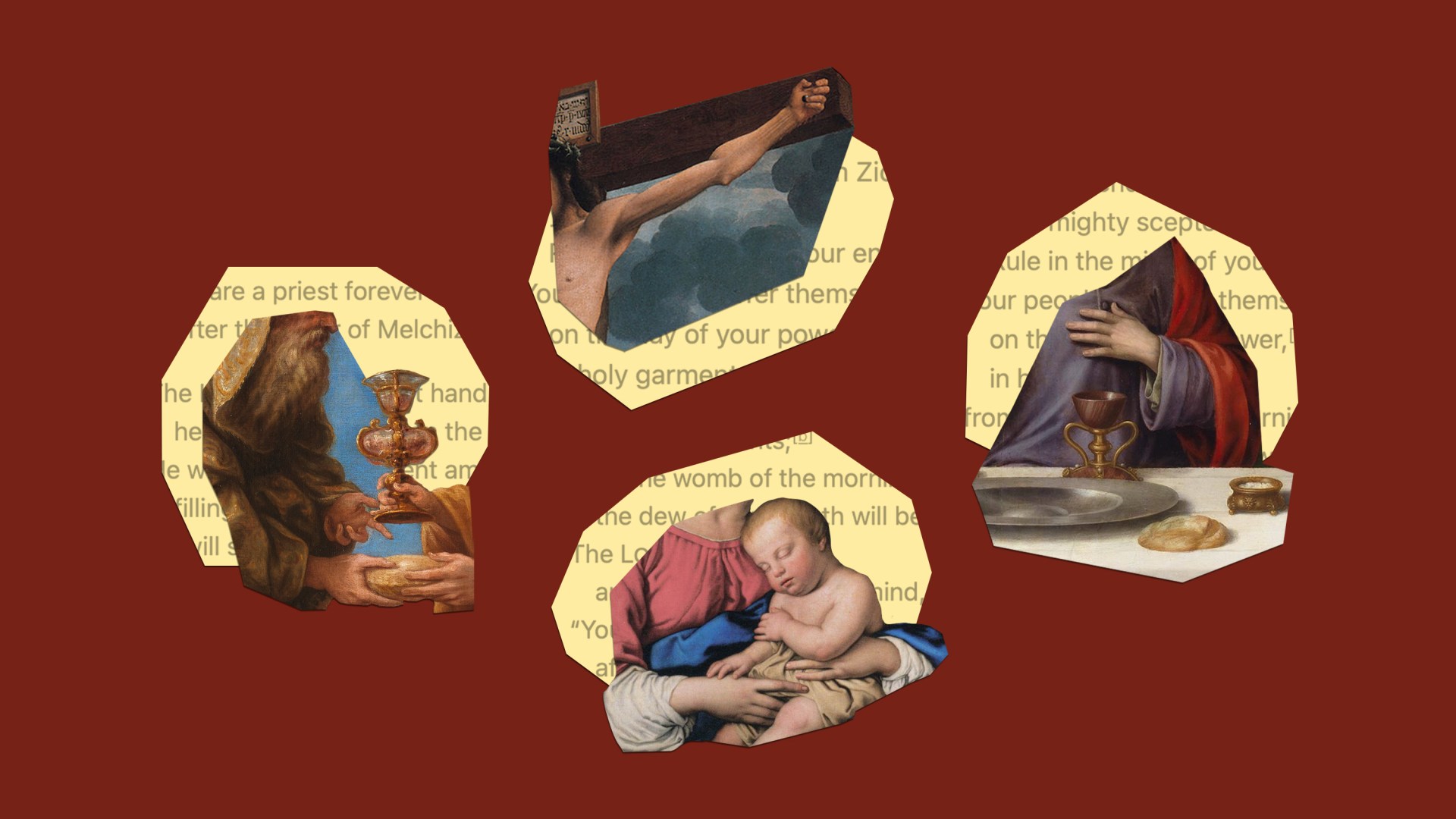
Fragments of Psalm 110 with paintings from the Bible.
Christianity Today February 18, 2026
Illustration by Elizabeth Kaye / Source Images: WikiMedia Commons, Bible Gateway

The Hebrew Bible does not contain a formal creed or systemization of core doctrines, but if it did, it might be Psalm 110. Martin Luther called it “the very core and quintessence of the whole Scripture,” and there is no Old Testament text more quoted or alluded to in the New Testament.

In just seven verses, we find miniature versions of Christian doctrines including the Trinity, the Incarnation, the inspiration of Scripture, the humanity and divinity of Christ, the holiness and unity of the church, and the ministry of Jesus as prophesied Priest and King. The British philosopher A. N. Whitehead famously described European philosophy as a series of footnotes to Plato. We could say something similar: New Testament theology is a series of footnotes to Psalm 110.

Here is the psalm in its entirety (ESV here and throughout):


The LORD says to my Lord:
“Sit at my right hand;
until I make your enemies your footstool.”

The LORD sends forth from Zion
your mighty scepter.
Rule in the midst of your enemies!
Your people will offer themselves freely
on the day of your power,
in holy garments;
from the womb of the morning,
the dew of your youth will be yours.
The LORD has sworn
and will not change his mind,
“You are a priest forever
after the order of Melchizedek.”

The Lord is at your right hand;
he will shatter kings on the day of his wrath.
He will execute judgment among the nations,
filling them with corpses;
he will shatter chiefs
over the wide earth.
He will drink from the brook by the way;
therefore he will lift up his head.

Psalm 110 is like a classic song everyone keeps singing. Jesus, his disciples, and the apostles all quote Psalm 110. For Jesus, Psalm 110 is quite literally a conversation-stopper, a trump card that he plays to silence those who reject his claims. He quotes the first verse and asks the Pharisees: “‘If then David calls him Lord, how is he his son?’ And no one was able to answer him a word, nor from that day did anyone dare to ask him any more questions” (Matt. 22:45–46).

Peter makes Psalm 110 the biblical punchline of his Pentecost sermon (Acts 2:34–36), then does the same thing a short while later in debate with the Jewish council (5:31). Stephen alludes to it as he is about to be stoned (7:56). Paul evokes it frequently, often at crucial moments in his reasoning (Rom. 8:34; 1 Cor. 15:25–27; Eph. 1:20; Col. 3:1). The argument of Hebrews is built on it from start to finish (1:3; 4:14–5:10; 10:11–14; 12:2). It turns up in 1 Peter 3:22 and Revelation 3:21; 19:11–21. It even makes an appearance in the Apostles’ Creed.

The New Testament’s emphasis on Psalm 110 may be puzzling. How did this little poem become so central to Christian thought and doctrine from the very beginning? What do we do with all the Iron Age details we find difficult—dew from the womb of the morning, a priest after the order of Melchizedek, the shattering of kings and the strewing of corpses? And why was this psalm in particular—this psalm that most of us never sing and many of us struggle to understand—so significant to Christ and the apostles?

Much of the answer is found in that magnificent opening verse.

A Psalm of David.
The LORD says to my Lord:
“Sit at my right hand,
until I make your enemies your footstool.”

Jesus, as we have seen, bamboozles the Pharisees with the implications here. If David refers to the Christ as his “Lord,” who sits at the right hand of God with his enemies under his feet, then David surely cannot be referring to a mere human descendant. And if (as the Gospels clearly indicate) Jesus himself is the Christ, and therefore the “Lord” of Psalm 110, then it is hard to escape the conclusion that he is a divine as well as a human figure. As C. S. Lewis put it, by quoting the opening verse in the way that he did, Jesus “was in fact hinting at the mystery of the Incarnation by pointing out a difficulty which only it could solve.”

The psalm goes even further than pointing to Jesus’ divine nature. The opening verse contains not just two characters, but three: “the LORD,” “my Lord,” and the speaker. But if the speaker is “David himself, in the Holy Spirit,” as Jesus puts it, then we have a remarkably clear reference to the Trinity (Mark 12:36). The Spirit is telling us what the Father says to the Son. The intimacy here, as we eavesdrop on conversations between the divine persons, is breathtaking.

Indeed, we may be able to go further still: The psalm references the eternal “begetting” of the Son. If we assume that the person being addressed in verses 1–4 is the Christ/Lord throughout, which seems almost certain, then Christ is promised a global kingdom, daily refreshment, and an everlasting priesthood. The Greek version adds even more fuel to the theological fire: “From the womb, before the dawn-bearing morning star appeared, I begot you” (v. 3, LXX). When you read this alongside Psalm 2, as the early church did, it sounds suspiciously like a statement of the eternal generation (or “begetting”) of the Son.

However, the most dramatic move in the psalm is where the Messiah is identified as a priest. Davidic kings came from the tribe of Judah; priests came from the tribe of Levi. It would be slightly anachronistic to refer to this as a separation of powers within Israel, but only slightly. Yet David is unapologetic:

The LORD has sworn
and will not change his mind,
“You are a priest forever
after the order of Melchizedek.”

This astonishing verse reaches a thousand years backward to the mysterious priest-king Melchizedek who blessed Abram (Gen. 14) and reaches a thousand years forward to the New Testament’s most theologically sophisticated argument (Heb. 7–10). God promised Christ that he would be a priest. And not just any priest: an everlasting, Melchizedekian priest rather than a temporary, Levitical one.

If we read Psalm 110 carefully, Hebrews argues, we know that Christ comes as a priest who is greater than Abraham, qualified by his indestructible life, the source of a better hope and a better covenant than the old ones, able to save us to the uttermost because he always lives to pray for us, and perfect forever (7:4–28). Few doctrines in Scripture are more comforting than the fact that the all-conquering Lord of the world is blameless, indestructible, and permanently praying for you—and that comfort is entirely drawn from an exposition of Psalm 110.

Psalm 110 also provides the basis for a beautiful doctrine of the church:

Your people will offer themselves freely
on the day of your power,
in holy garments. (v. 3)

Here, the people of God are drawn freely to Christ’s sovereignty, rather than coerced or commandeered, and dressed in clothes of priestly holiness. When Christ the royal priest rides out to battle, he is accompanied by a royal priesthood in his train: his church. The comprehensive victory that he wins over the powers and rulers—with nations judged, kings shattered, and chiefs scattered—becomes ours. So, presumably, do the rest and refreshment that come in the final verse:

He will drink from the brook by the way;
therefore he will lift up his head.

These are deep scriptural waters. In just 70 Hebrew words, we are pointed toward the Father Almighty, Jesus Christ his only begotten Son our Lord, the Holy Spirit who spoke by the prophets, and the holy church. We find humanity and divinity, incarnation and exaltation, kingdom and priesthood, victory and sacrifice. Convictions on which our faith depends, from the Trinitarian nature of God to the inspiration of Scripture and the intercession of Christ, are littered throughout this psalm. Joy bubbles forth from it. Given that we will be singing this psalm forever, we might as well start now.

Andrew Wilson is teaching pastor at King’s Church London and author of Remaking the World: How 1776 Created the Post-Christian West.

Church Life

Late to a 1,400-Year-Old Church Tradition? Me Too.

My nondenominational church is having its first Ash Wednesday service today. But why start now?

A pastor holding a bowl of ashes.
Christianity Today February 18, 2026
Stefano Guidi / Contributor / Getty

Tonight, my church will have its first Ash Wednesday service.

It’s a nondenominational evangelical church that meets in a high school in the heart of Hollywood, and after 20 years as a congregation, we’re adopting this centuries-old Christian tradition to mark the start of the season of Lent.

And that’s not just new for my church; it’s new for me too. Growing up in a similarly nondenominational context, I didn’t understand the church calendar or the value of formal liturgy. If anything, I thought it was at odds with my personal relationship with Christ. These scripted practices seemed inauthentic or legalistic, forcing postures I did not feel were honest to my approach to God. Why would the time of year determine my prayers? Why would a calendar tell me to lament when I might be in a season of rejoicing?

I was not alone in my skepticism. American evangelicals don’t usually follow the liturgical calendar, including Ash Wednesday services. According to a 2025 Lifeway study, only one-quarter of Americans observe the season of Lent, a figure unchanged in the last ten years. Catholics are most likely to participate, though some Protestant denominations—such as Anglicans, Episcopalians, Lutherans, and some Methodists—do as well. Research from the Barna Group has likewise found that evangelicals are “least aware” of liturgical practices compared to Catholics and mainline traditions. 

Looking back, despite growing up in the faith, I don’t think I had even heard of Ash Wednesday until my 20s. Even in recent conversations, I have seen indifference toward or heard arguments against Ash Wednesday observance, with my friends saying it is not in the Bible, is not mandated as a sacrament, and comes across as performative.

But my own thinking on the day has changed. Ash Wednesday signifies our desperate need for repentance. The ashes placed on congregants’ foreheads symbolize lament and mourning, such as when “Tamar put ashes on her head and tore the ornate robe she was wearing. She put her hands on her head and went away, weeping aloud as she went” (2 Sam. 13:19). Or when Mordecai “put on sackcloth and ashes, and went out into the city, wailing loudly and bitterly” when he found out about the impending destruction of his people (Esther 4:1). 

These actions show the complete depravity we are mired in apart from God. They help us to mourn sin and its consequences. They take our suffering seriously. From Ash Wednesday on, Lent leads to Christ’s blood poured out on the cross—and eventually the joy and relief of the Resurrection.

Once again, I’m not alone in my shift. There seems to be a newfound curiosity among American evangelicals about holy days like Ash Wednesday, as well as other high-church, liturgical, and traditional church-calendar practices. 

When I went from a Los Angeles public high school to a private Christian college in the Midwest, I was introduced to a whole different world of Christianity. I was around Christians from all sorts of denominations, cracking jokes about predestination or transubstantiation that flew over my head. I was introduced to Christianese, contemporary Christian music, and the church calendar. 

I spent my years in college attending church services hosted by different denominations, and while I do not feel confident in my ability to name all the differences between many traditions, these services challenged my views on liturgy and other high-church practices. I enjoyed services that pointed toward Communion rather than the sermon. I received Communion with wine instead of grape juice for the first time and took a class on spiritual practices where I learned about The Book of Common Prayer. One course started each session with Taizé meditations, and another class ended each lecture with the professor and students singing the Doxology. My time at college was a crash course in facets of Christianity I did not have access to while I was growing up. 

So when I moved back to Los Angeles with my newfound knowledge of these traditions, I was ecstatic that my home church seemed to have grown alongside me. It has slowly been expanding its use of the church calendar. We have been in a rhythm of practicing the four weeks of Advent, Good Friday services, and now our inaugural Ash Wednesday service. 

But why are we having an Ash Wednesday service, and why now? What about 2026 made my church change its mind on a church tradition that started in the seventh century?

In part, it’s practical. Previously, we didn’t have the facilities to meet on a school night (I am not sure we wanted to conduct a service of lament during parent-teacher conferences), and when we finally moved into a more suitable school building a few years ago, the pandemic hit.

Beyond that, I talked with one of our elders, Nathan Potter, about the conversations among leaders that led to our reclaiming the church calendar. He said it has been in the works for a few years as our elders have observed the needs of our congregation. 

The American church is contending for unity amid bitterly divided election cycles, fighting for contentment and joy in the midst of a culture obsessed with consumption, and trying to point our minds toward Christ in a world inundated with social media and other distractions, Potter said. Our elders saw how the spiritual needs of our congregation were tied to the unstable ways of the earthly city.

“We started talking about leaning into the church calendar as an anchoring rhythm in contrast to whatever is going on in the world,” Potter told me. “We are remembering the story of God, that we are a part of something that goes back before the United States, before the current news cycle, before our country was founded, and even before the country that founded our country was founded. Our earnest prayer is that this stabilizes our congregation and how we conceptualize the world and the story God is writing.”

The Ash Wednesday service is partly an answer to questions about how to “counterprogram American individualism,” he said. “Let’s form our people to think in common unity, and that will have a downstream effect on a lot of things.” 

The church calendar is an opportunity for reorientation toward the larger story of God’s creation and his people, a stable pattern of faith to hold on to in an age when we are confronted daily with how little control we have over natural disasters, politics, and governments—not to mention our mental health or strained family and friend relationships. This liturgical rhythm reminds us of God’s providence in chaos, his presence as calm in raging storms.

Ash Wednesday reminds us of our need to repent, both personally and corporately. And as part of the global church observing the liturgical calendar, we do so in the good and grand company of sinners turned saints, rescued by Christ. 

“The idea of being more connected to the global church—and that we are doing this with Christians throughout time and space—is bigger than our congregation,” Potter said. “It brings our own awareness that this is so much bigger than us.”

Mia Staub is editorial project manager at Christianity Today.

News

Cities Church Isn’t Alone in Experiencing Hostility

From arson to armed attacks, North American houses of faith have seen alarming acts of aggression in recent years.

Four churches that recently experienced attacks.
Christianity Today February 17, 2026
Illustration by Christianity Today / Source Images: Getty, AP, Fox 9

When protesters disrupted a worship service at Cities Church in St. Paul in January, the disturbance became the latest example of hostility against churches and places of worship. The Family Research Council tracks acts of aggression against American churches and tallied 415 incidents impacting 383 churches in 2024, the most recent year for which they have analyzed data.

Not every act of aggression is motivated by religious or political antagonism. Sometimes, mental health crises, domestic disputes, and random acts of violence harm churches. And antagonism against Jews far outpaces aggression against Christians. According to the FBI’s Crime Data Explorer, there were 1,380 hate crimes against Jews between January 2025 and January 2026. During the same period, the number of combined hate crimes against Catholics, Eastern Orthodox, Protestants, and other Christians was 265.

Here are some recent episodes of church hostility in North America:

Evangelical churches

In January 2026, Windwood Free Will Baptist Church in southeast Oklahoma City was vandalized and set on fire in an alleged arson attack. The church serves as a local voting precinct, offers its parking lot to the school next door during pickup and dropoff times, and was an emergency supply distribution site after a 2024 tornado. It has been part of its community for nearly 30 years.

On August 30, 2025, an arsonist firebombed St. Mark Missionary Baptist Church in Flint, Michigan, causing extensive damage. Flint Councilwoman Tonya Burns said an individual “purposely brought three gasoline cans, used a metal object and fire bombed the church.” The fire burned several classrooms, and the church also had smoke damage and several broken windows. The church has an outreach center that hosts community events and food drives.

Though authorities have video footage of the suspect, he has not yet been identified or arrested. The suspect also allegedly made threats against Peoples Church of Flint and its pastor, Matthew Hogue-Smith. One week before the fire at St. Mark, Peoples canceled its service due to online threats. 

Pentecostal and Black Protestant churches

Over the weekend of January 10 and 11, 2026, a person vandalized Union Trinity AME Church in north Philadelphia with racist graffiti. Pastor Tianda Smart-Heath said that she saw the spray-painted graffiti on the outside wall after services finished on Sunday, January 11. She said the church has been vandalized before, but never with racist language until this year.

On October 5, 2025, a masked suspect vandalized three houses of worship in the Queens neighborhood of Far Rockaway in New York City. According to the New York Police Department, the suspect painted “anti-Christian statements” on the façades of The Refuge Church of Christ, The City of Oasis Church of Deliverance, and St. Mary’s Star of the Sea Church. The suspect, who wore a pride mask and pride flag, also painted on the faces of two religious statues on the church property at St. Mary’s.

Mainline Protestant churches

In January 2026, someone smashed the stained glass windows of Denver’s Trinity United Methodist Church. It has historical significance as the first church built in Denver. Authorities said vandalism has been a problem in downtown Denver recently, and they arrested a suspect in connection to the destruction of the windows. Police were investigating whether the suspect was connected to other recent acts of vandalism in the area.

In December 2025, Mayflower United Church of Christ in Billings, Montana, was also vandalized with racist language and swastikas. Members scrubbed the graffiti off the church’s exterior walls, believing the vandalism was a response to the church’s progressive beliefs. Days earlier, someone tore down the church’s pride flag.

In the summer of 2024, five Boston-area churches were vandalized: First Congregational Churches in Norwood, Sharon, and Natick; St. Andrew’s Episcopal Church in Framingham; and Christ Lutheran Church in Natick. Vandals tore down pride flags, put up Christian flags and “Jesus is King” banners, and left leaflets denouncing homosexuality.

The Massachusetts Council of Churches released a statement decrying the vandalism. “As the Executive Board of the Massachusetts Council of Churches,” it read, “we are particularly heartbroken that Christians would physically attack one another. Our Savior Jesus Christ calls us to be one. Religious violence is never a solution to theological difference,” the group said.

Catholic churches

In the fall 2025, groups of thieves targeted parishioners at St. Joan of Arc Catholic Church in Minneapolis on two separate occasions. On October 19, police said, two people leaving the church were confronted by a group of seven or eight attackers. Both victims sustained injuries. Less than two weeks later, two people leaving Saturday evening mass were attacked by three men who attempted to take the victims’ car keys.

In August 2025, a shooter opened fire through the window of a Catholic church in Minneapolis. Nearly 200 children were inside Annunciation Church celebrating Mass to mark the beginning of the school year. Two children were killed, and 17 more were wounded.

Aggression against churches in Canada

The chief of the Tk’emlúps te Secwépemc First Nation in British Columbia issued a press release in 2021 announcing the discovery, using ground-penetrating radar, of soil disturbances thought to be the “remains of 215 children who were students of the Kamloops Indian Residential School,” a Catholic-administered institution. After the announcement, Canadian churches faced arson attacks.

A CBC News investigation found 33 fires that destroyed churches in Canada from May 2021 until December 2023, compared with 14 fires that destroyed churches in Canada from January 2019 to May 2021.

Just two of the 33 fires were found to be accidental. Investigators confirmed arsonists set 24 of those fires deliberately, while the others were either deemed suspicious or were still under investigation.

Some sources put the number of churches vandalized or burned between 2021 and 2024 higher than 100. While unmarked graves have been reported at residential schools in the past, to date, there has been no confirmation that the soil disturbances found at the Kamloops Indian Residential School or at other residential schools examined with ground-penetrating radar were human remains. Excavation was undertaken at one such site, and no remains were found.

 Aggression against non-Christian houses of worship

Other houses of worship have experienced violence in recent months, too. On January 10, 2026, an arsonist set the Beth Israel Congregation synagogue in Jackson, Mississippi, on fire. Authorities arrested 19-year-old Stephen Pittman, who pleaded not guilty to federal and state charges of arson. Authorities are prosecuting the arson as a hate crime.

On September 29, 2025, an assailant smashed a pickup into a Church of Jesus Christ of Latter-day Saints building in Grand Blanc Township, Michigan. The attacker then opened fire and set the building ablaze during a crowded Sunday service before being fatally shot by police. Four people died, and eight others were wounded in the attack. Authorities identified the shooter as 40-year-old Thomas Jacob Sanford. The FBI led the investigation and considered the attack an “act of targeted violence,” said Ruben Coleman, a special agent in charge for the bureau.

Correction (February 17, 2026): A prior version of this article miscategorized a denomination.

Correction (February 20, 2026): A prior version of this article imprecisely described the context around the church fires in Canada.

addApple PodcastsDown ArrowDown ArrowDown Arrowarrow_left_altLeft ArrowLeft ArrowRight ArrowRight ArrowRight Arrowarrow_up_altUp ArrowUp ArrowAvailable at Amazoncaret-downCloseCloseellipseEmailEmailExpandExpandExternalExternalFacebookfacebook-squarefolderGiftGiftGooglegoogleGoogle KeephamburgerInstagraminstagram-squareLinkLinklinkedin-squareListenListenListenChristianity TodayCT Creative Studio Logologo_orgMegaphoneMenuMenupausePinterestPlayPlayPocketPodcastprintremoveRSSRSSSaveSavesaveSearchSearchsearchSpotifyStitcherTelegramTable of ContentsTable of Contentstwitter-squareWhatsAppXYouTubeYouTube