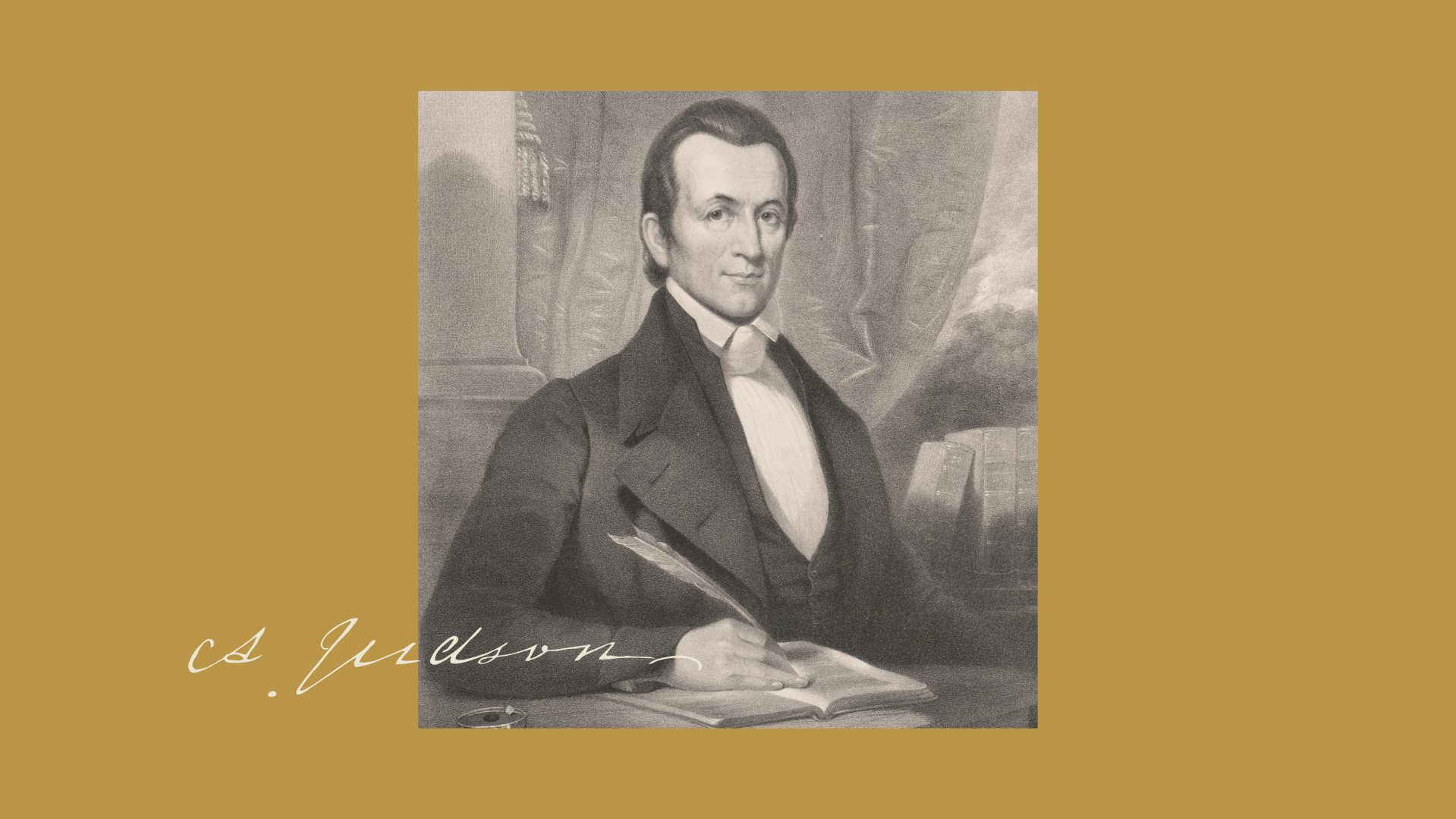
Adoniram and Ann Judson were among the first formally commissioned American missionaries. Arriving in Burma (today’s Myanmar) in 1813, the Judsons labored for six years before they saw anyone convert to Christianity. Determined and diligent, they made extraordinary progress in learning native languages. Then, 11 years into their Burmese ministry, the Judsons’ world collapsed.
In 1824, long-simmering tensions between the British Empire and the Burmese king exploded in the First Anglo-Burmese War (1824–1826). The Judsons themselves sometimes had a difficult relationship with British authorities in South Asia. But in 1824, all English speakers in Burma fell under suspicion as possible spies. Judson knew plenty of British diplomats and merchants, but he was no spy.
Burmese authorities did not believe him. On June 8, 1824, police in the royal city of Ava arrested Judson, marched him to a judge, and convicted him without a trial. The Burmese committed him to the “death prison,” a small, dank building with about a hundred prisoners. The death prison had little ventilation and teemed with rats, roaches, and rotten smells.
During the day the prisoners languished in chains, but at night their captors devised additional means of preventing escape. These measures amounted to unremitting torture. Jailers passed a long bamboo stick between Judson’s legs and those of a lineup of prisoners. They chained the prisoners’ legs to the pole and lifted their bodies in the air, while the men’s shoulders remained on the ground. They left them in that excruciating position all night. Ann frantically sought to secure Judson’s release, but he remained in prison for 17 months.
The history of missions is a history of suffering. From the apostle Paul’s dangers, beatings, and imprisonments to the 1956 deaths of Jim Elliot, Nate Saint, and the other “Auca martyrs” in Ecuador, Christians rightly memorialize their best-known missionaries as people called to endure all things for the gospel. The Judsons knew trials lay ahead when they sailed away from Salem, Massachusetts, in 1812. But they never envisioned the horrors of the death prison or the compounding sufferings yet to come.
Familiarity with missions history is one of the best antidotes to the prosperity gospel—the idea that God will surely bless the faithful with health, wealth, and safety. Missionaries have routinely endured terrible hardships as they obeyed God’s call in the Great Commission (Matt. 28:18–20).
The call to missions—and the call to ministry generally—is also a call to resilience. To be sure, many missionaries have chosen to terminate their missions for good reasons, sometimes before the scheduled end of their service. This can happen when God permits circumstances that make it impossible for them to operate without grave threats to themselves or their families’ lives.
Some missionaries, such as the Judsons’ British contemporary William Carey in India, probably stayed longer in the field than godly wisdom would have dictated. Carey watched as his wife, Dorothy, suffered a protracted slide into violent mental illness. She finally died in India in 1807, after more than a decade of delusions and torment.
Any well-prepared missionary anticipates seasons of deprivation, loneliness, and other stresses. Counsel and prayer are required to know whether God is simply allowing his servants to encounter the normal travails of ministry or is definitively closing a door.
recommended

The missionary impulse is fundamental to biblical faith, as seen in the Great Commission and the Book of Acts. However, following the Reformation of the early 1500s, Protestants generally trailed Catholics in efforts to evangelize outside North America and Europe. Protestants often thought more about their churches’ survival than evangelistic expansion.
Meanwhile, Catholic powers such as Spain and France mobilized missionary orders such as the Jesuits in imperial endeavors in Asia and South and Central America. Certain Protestants, such as the Puritan John Eliot in the mid-1600s and Jonathan Edwards’s protégé David Brainerd in the 1740s, made evangelistic inroads among Native Americans.
More evangelicals professed their faith and planted churches as they moved, without being sent by any particular church or missions organization. These travelers included the Baptist pastor and former slave George Liele, who was a key leader in Black churches in Georgia and South Carolina before moving to Jamaica in the 1780s. There he became one of the founding fathers of Jamaica’s multiplying Baptist churches. But overall, organized Protestant missions were limited until the 1790s.
A turning point in Protestant missions came with Carey’s Enquiry into the Obligations of Christians to Use Means for the Conversion of the Heathens, published in 1792. Carey was one of the first Protestants to cite Christ’s “commission” (in Mark 16:15) to “go into all the world and preach the gospel to every creature” (NKJV). He insisted that this command applied to contemporary churches and believers. Carey was also instrumental in the founding of England’s Baptist Missionary Society (BMS). Arguably the first formal Protestant missionary organization, the BMS sent Carey and other missionaries to work in Serampore, near Calcutta (now Kolkata).
Carey’s work and writings inspired a generation of evangelicals, including the Judsons, to consider overseas missionary work. In 1806, students from Williams College in Massachusetts held an impromptu prayer meeting in the shelter of a haystack, consecrating themselves to the missionary cause. The Haystack Prayer Meeting led to the creation of a zealous missionary cohort amid the fervent atmosphere of the Second Great Awakening.
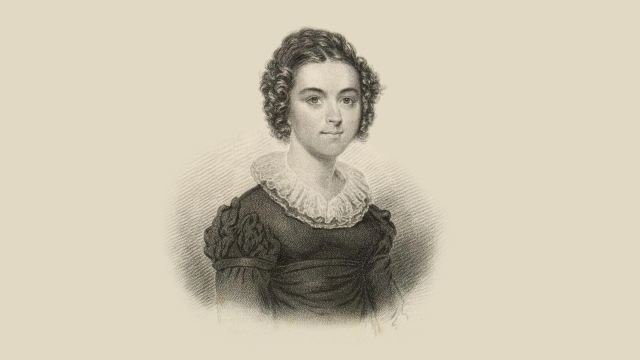 The National Library of Wales. Engraving by Richard Woodman.
That cohort in 1810 founded the American Board of Commissioners for Foreign Missions (ABCFM), America’s first national missionary organization. The ABCFM was the Judsons’ first sending agency. Meanwhile, Judson himself converted in 1808 after a dalliance with religious skepticism as a student at Brown University. In 1812, the ABCFM sent the newly married Adoniram and Ann to South Asia as part of its first group of overseas missionaries.
The Judsons initially thought they might settle in India. At a minimum, they knew they would meet Carey and other British Baptists there. The problem was that the Judsons were Congregationalists and therefore paedobaptists. With plenty of time for study on the journey to India, the Judsons began to research the scriptural issue of baptism. Not long after arriving, they announced that they had become Baptists. This decision effectively cut them off from the ABCFM, their source of funding. Another Congregationalist turned Baptist missionary, Luther Rice, returned to the US and helped form the Triennial Convention, the first national Baptist organization in America.
Judson may have viewed Burma as a likely sphere of operations when they left America, but he and Ann considered several other destinations once it became clear that officials in British India would not allow them to remain. The ongoing War of 1812 made Americans unwelcome in British India.
The Judsons knew the Burmese were, in Ann’s words, “a people who have never heard the sound of the Gospel, or read, in their own language, of the love of Christ.” The prospect of operating among this unreached people was intriguing but intimidating. Certain Catholic and Protestant workers had already made brief forays into Burma, but overall it was a Buddhist kingdom with virtually no Christian influence.
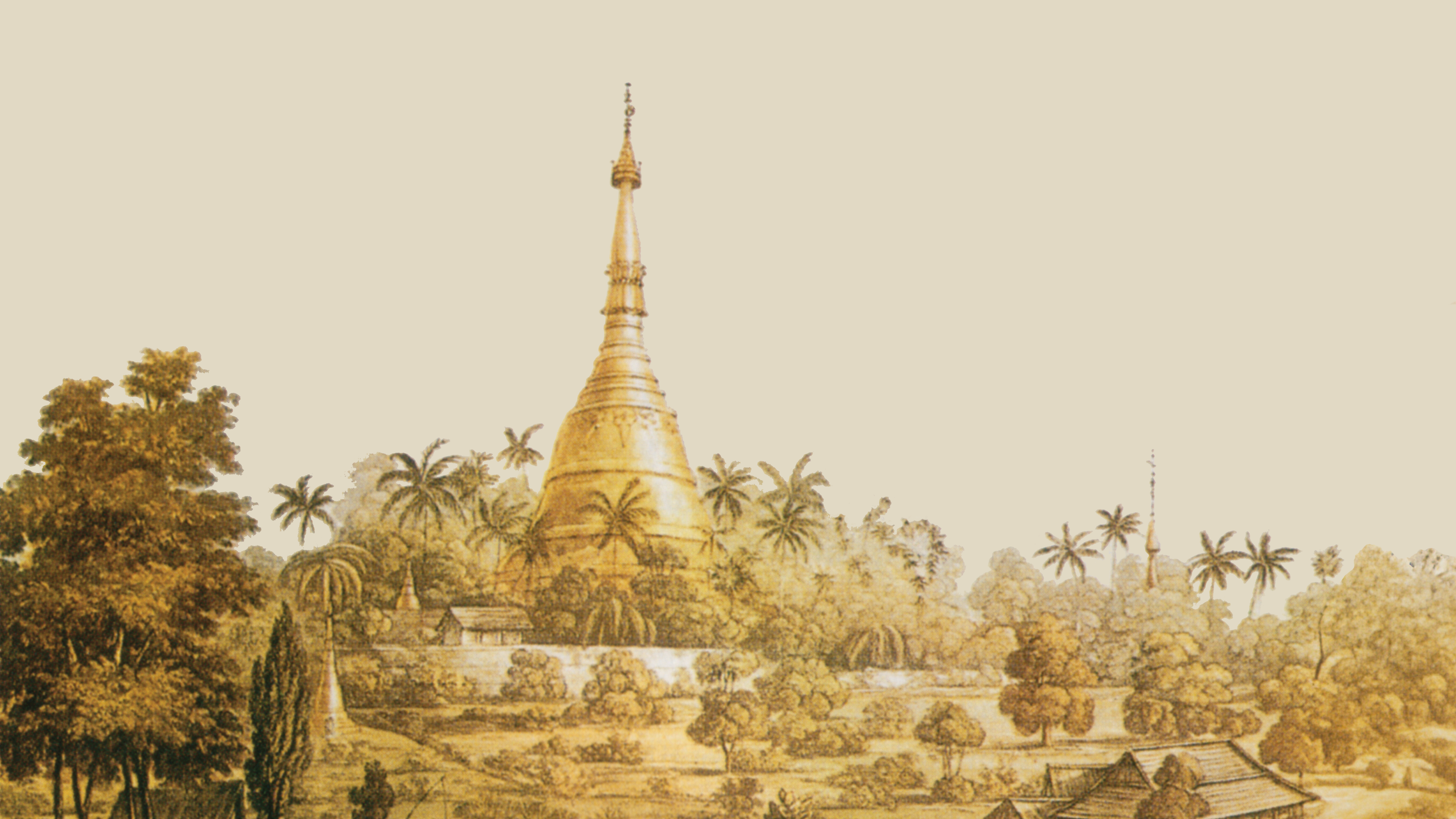
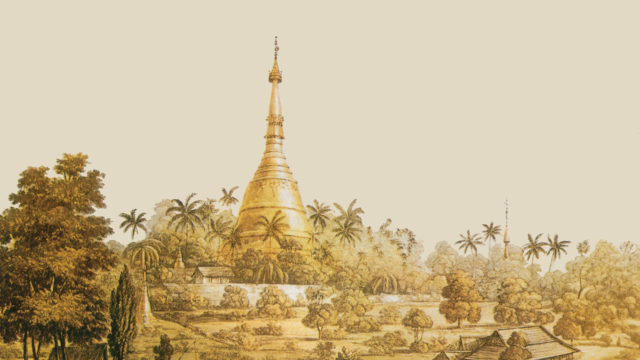
The Judsons moved to Rangoon (Yangon), the main Burmese seaport. Rangoon was physically dominated by Buddhist shrines such as the great Shwedagon Pagoda. The dazzling pagoda held venerated relics, including several strands of hair claimed to be from Siddhartha Gautama, the Buddha himself.
It is difficult to overstate the resolve required for a young married couple from America to settle in South Asia, halfway around the world from friends and family. In Rangoon, they knew almost no English speakers or Christians of any kind. In the era before electronic communication, correspondence with America was achingly slow. In 1815, they received letters from US supporters for the first time in two years.
Perhaps the most daunting aspect of the work was that they knew nothing about the Burmese language. It uses a writing system called an “abugida,” which to Westerners looks like a jumble of squiggly lines. In addition, Judson needed to learn Pali, a traditional language that profoundly colored the type of Buddhism practiced in the country. Many religious terms a Christian translator in Burma needed to know were rooted in Pali, not Burmese.
Today’s missiologists would regard it as utterly irresponsible to send missionaries into a foreign culture with no knowledge of the country’s language. But that’s exactly what the Judsons faced. There were no courses on Burmese in American colleges, and the Judsons did not set out with the express intention of going to Burma anyway. They were pioneers in the most extreme missiological sense. Some American missionaries who followed the Judsons to Burma made little progress in language study, to Judson’s irritation. But the Judsons were incredibly diligent students of the language, and with the help of Burmese instructors they made phenomenal progress.
What purpose did their study serve? First, the Judsons planned to form Burmese-language churches when God blessed the mission with enough converts. Thus, Judson needed to be able to preach in Burmese.
The longer-term goal of studying Burmese and Pali was that Judson intended to translate the whole Bible into Burmese. Some in the missionary community wanted to focus on English-language instruction for natives, who then would read the Bible and hear sermons in English. But modeling the great Protestant principle of Scripture in the vernacular, Judson insisted that a vibrant Burmese church needed a Bible in its own language.
 Wikimedia, Joseph Moore (engraved by T. Fielding, G. Hunt, H. Pyall)
Because of books such as Courtney Anderson’s classic biography To the Golden Shore: The Life of Adoniram Judson (1956), people familiar with Judson see him as an exemplar of missionary courage. And that he was. But he was also one of the brightest and most disciplined Christian scholars ever. We may miss this fact because he applied his scholarship in a foreign mission instead of in the relative comfort of an American church, college, or seminary.
Judson’s imprisonment and the other dangers he faced are compelling stories for readers. But what he did most days—studying and translating Burmese—is not so exciting. Once the Judsons settled in Rangoon, Judson worked on Burmese and Pali 12 hours a day, six days a week, for years on end. If you stopped by their home, Ann wrote, you would invariably find Judson “bent over his table, covered with Burman books, with his teacher at his side.” This steady labor took a toll on Judson’s eyesight, and headaches constantly tormented him. Language study was almost all the Judsons could report in their early years in Burma. The fact that there were no converts caused concern among impatient supporters back home. But Judson’s diligence resulted in a translation of the Gospel of Matthew by 1817.
Ann was no slouch in languages either. She focused more on conversational Burmese than Judson did, and soon she also began to study “Siamese,” or the Thai language. (Thailand is Myanmar’s neighbor to the southeast.) Judson slowly began to produce tracts and books of the Bible in Burmese, works that Ann and her Siamese teacher then translated into Thai.

Judson began more public-facing ministry in the late 1810s. In 1819, he finally baptized his first Burmese convert, a man named Maung Naw. But there was tremendous cultural and legal pressure for ethnic Burmese people not to abandon Buddhism. Judson approached the emperor in 1820 to request greater latitude for evangelizing the Burmese, but to no avail.
Death constantly shadowed the Judsons’ lives, even before his scourging confinement in prison. Their first child was stillborn and died before they arrived in Burma. In 1815, Ann gave birth to Roger Williams Judson (named for the great American Colonial champion of religious liberty). But little Roger lived only eight months. Parents in the 1800s often lost children to disease, but the Judsons had almost no one except themselves and God with whom they could share their grief.
Despite their constant difficulties, by 1823 Judson had completed a draft of the whole New Testament in Burmese, and the Rangoon church had more than a dozen baptized members. Then in 1824 came the horrors of war, prison, and torture.
In addition to appealing for Judson’s release and bringing whatever supplies she could to the prisoners, Ann cared for their baby Maria, conceived just before Judson went to jail.
In 1826, the Burmese finally released Judson, but the bitterest times of his life were yet to come. Just when the reunited couple thought they might resume their ministry, Ann suddenly died. Judson was not even with her at her death, as he had been called away to negotiate a commercial agreement between the British and Burmese. Little Maria died six months later. Judson buried them both in Amherst, Burma, under a large hopea tree that became a pilgrimage site for Western missionaries and Burmese Christians.
Judson had long practiced ascetic Christian disciplines, but Ann’s and Maria’s deaths sent him into a bitter spiral of self-denial and introspection. Emaciated and ill, he on many days ate only a bit of rice. At one point, he dug his own grave and sat on its edge, contemplating the day when his own body would molder there too.
Though his asceticism seemed extreme to some, it was Judson’s way of spiritually coping with his intense losses and grief. At his new mission headquarters at Moulmein, Burma, he plodded away on the full Bible translation, a draft of which he finished in 1834. The next year he married Sarah Boardman, another American missionary who had lost her own husband to death several years earlier.
Judson was not easily satisfied with his translation work, but in 1840 he published a revised version of the complete Bible. Then he turned his attention to a Burmese–English dictionary. The latter project seemed dull even to the bookish Judson, but he knew it was essential for future Anglo-American missionaries to have a reliable guide.
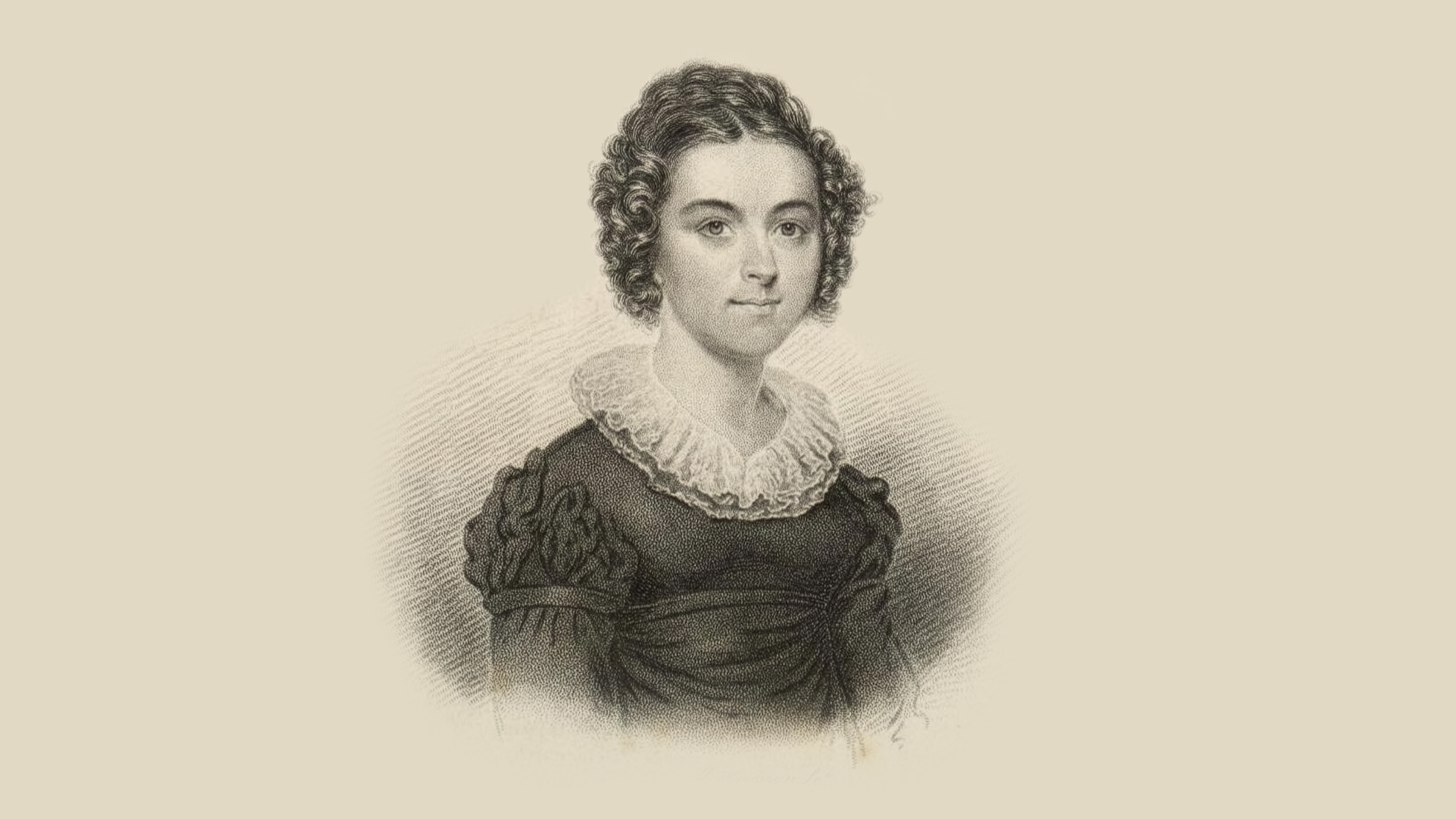
Death stalked his marriage to Sarah too. In 1845 they left Burma for America in hopes of getting health treatment for her. But en route to the US, Sarah died. Judson went on to America, returning to his homeland for the first time in more than three decades. But he found his native country unpleasant. Judson saw many Christians there complacent and morally compromised. He wanted to return quickly to Burma, but before he left, he married a young Christian writer named Emily Chubbuck, who agreed to give up her burgeoning career to become a missionary.
Back in Burma, he and Emily sought to rejuvenate the church in Rangoon, which had effectively ceased operations during and after the First Anglo-Burmese War. But the country’s authorities remained unfriendly to Christians and especially hostile toward Burmese Buddhists who converted. So the Judsons were forced to retreat to Moulmein, which was under British rule.
Judson thought of going to the royal capital of Ava to appeal for religious liberty again, but the Baptist mission board back in the US couldn’t provide the necessary funds to send him. It pained Judson that after all these years, the Baptists in America weren’t able to cover even the basic expenses of his work.
The long-suffering Judson had already outlived two wives, as well as many colleagues and children. But death finally caught up with him in 1850. Doctors suggested a sea voyage to alleviate symptoms of a lung disease, but he died on the trip and was buried at sea. Although there is a memorial in his hometown of Plymouth, Massachusetts, his admirers and descendants have no grave to visit.
Before he died, he told Emily, “I am not tired of my work, neither am I tired of the world yet when Christ calls me home, I shall go with the gladness of a boy bounding away from his school.” Judson’s long missionary career saw no spectacular ingathering of converts. Most converts in Burma during his lifetime came from the Karen (pronounced Ka-REN) tribe, not the ethnic Burmese majority to whom he devoted the most time.
recommended


Judson did receive praise in America for his Bible translation, but of course only the Burmese could read it, so few Americans ever read any of his work. He spent most of his adult life toiling in relative obscurity in Burma and primarily spent the last ten years composing a dictionary. As a missionary, he was not sensational. But he was extraordinarily disciplined and resilient.
And what great fruit his ministry bore! Most obviously, he left a translation of the whole Bible that, for Burmese Christians, was definitive. It remains the default Bible in Burmese churches today. It is not unusual to see portraits of Adoniram and Ann in Burmese churches.
Rarely has a missionary ever become so closely linked with a nation’s churches and Bible as Judson was in Burma. But one obvious disappointment for him was the lack of conversions among the Burmese. This pattern has persisted through to the present day. According to the World Christian Database, less than 1 percent of the ethnic Burmese in Myanmar identify as Christian.
Where the gospel really caught fire was among often-persecuted minority groups, especially the ethnic Karen and Chin. Judson was aware of the surprising conversions among non-Burmese ethnicities, but he didn’t evangelize much among them. Some of his American colleagues did, though, and conversions escalated when native Karen evangelists preached to their own people in the 1830s and ’40s.
Today, about half of the people with a Karen background in Myanmar profess Christian faith. Baptists are the largest Christian denomination in Myanmar, reflecting Judson and his missionary colleagues’ affiliation. Substantial émigré communities from Myanmar have also moved to the US, particularly to Midwestern cities such as Indianapolis and the Twin Cities in Minnesota. Christian immigrants from Myanmar commonly plant churches in America, especially Baptist congregations.
Judson left a profound legacy in Burma, but he did not always see the fruit he initially expected. As one Burmese Christian commented more than 150 years after the publication of Judson’s translation, “Whenever someone mentions the name ‘Judson’ great tears come to our eyes because we know what he and his family suffered for us. . . . Today, there are [millions of] Christians in Myanmar, and every one of us traces our spiritual heritage to one man—the Reverend Adoniram Judson.”
Judson possessed little money at the end of his life. Like the apostle Paul, he poured himself out for the sake of the gospel. More specifically, he endured countless trials to make God’s Word known in a nation with no Bible translation. Judson was not a perfect man. Among other faults, he easily became exasperated with colleagues who didn’t meet his exacting standards for hard work.
But in addition to his brilliance and courage, perhaps his greatest Christian virtues were resilience and hope. He endured profound suffering and spent years on translation work that was the opposite of glamorous. His long years of toil and loss forged a foundation for Burma’s churches, built on the perfect Word of God.
Thomas S. Kidd is research professor of church history at Midwestern Baptist Theological Seminary. He and Midwestern’s provost, Jason Duesing, are writing a biography of Adoniram Judson.