Ideas

We Become Our Friends’ Enemies by Telling Them the Truth

Contributor

Our corrupt political and racial discourse teaches us to judge by identity and ideology instead of honestly testing the spirits and assessing the fruit.

A girl on her phone.
Christianity Today February 11, 2026
Cristina Quicler / Contributor / Getty

Sometimes it seems our opinions on the most polarizing issues have been decided for us before we can examine and reflect. 

When a tragedy or cultural rift appears, each faction in American public life rapidly latches on to a consensus opinion. Like smoke from the flaming trash heap of our toxic political and racial discourse, these reactions smother the search for truth well before all the facts are available. 

Unaware or unconcerned about the angles our algorithms and cultural biases are hiding from us, we see the complicated as easy and the unknown as obvious, all conveniently aligned with our preconceived notions about who’s good or evil, oppressed or oppressive. In a flash, we’re foolishly convinced that we know what we cannot know—or at least cannot know yet—like who initiated a stare-down, whether the election was stolen, or if someone deserved to die

And thou shall not get caught on the wrong side of whatever issue is virusing through social media! Even commercial products like Super Bowl halftime shows can become high-stakes litmus tests where one must assent to a meaning assigned by the mob. Don’t let your tribe take any blame. Always accuse the other side of the most sinister motives. Suppress your deeper questions. Accept lies if that’s what it takes to keep your status in your group.

What does this system of perverse incentives, stereotypes, and partiality look like in practice? It looks like conservative officials and influencers conflating protests with riots and dismissing protesters’ causes out of hand. It looks like progressive custodians of culture comparing every other conflict to Jim Crow and daring anyone to question it. It looks like downplaying the violence done by us to exaggerate the violence done by them. It looks like only selectively recognizing immorality and injustice.

Or ask Beth MooreRussell Moore, and J. D. Greear what happens when you refuse to condone colorblind and MAGA myths moving among white evangelicals. We become our friends’ enemies by telling them the truth (Gal. 4:16). In some circles, having the right politics or the right race narrative has become more important than right doctrine and right ethics. Religious heretics may be condoned, but cultural dissidents are unforgivable. We pronounce right and wrong according to identity and ideology instead of honestly testing the spirits (1 John 4:1–3) and assessing the fruit (Matt. 7:15–20).

John the Baptist took a sledgehammer to this kind of thinking. “Prove by the way you live that you have repented of your sins and turned to God,” he exhorted his people. “Don’t just say to each other, ‘We’re safe, for we are descendants of Abraham.’ That means nothing, for I tell you, God can create children of Abraham from these very stones” (3:8–9, NLT).

Here, John was engaged in righteous but dangerous business. He was knocking down a pillar that upheld his people’s sense of uniqueness—maybe even supremacy—to reveal a truth they did not want to see. Telling the descendants of Abraham that their lineage didn’t make them right with God was cultural blasphemy, and in saying it, John modeled the very kind of courage we need. He put himself squarely outside what C. S. Lewis called the “Inner Ring,” instead choosing truth over ease and “conquer[ing] the fear of being an outsider.”

Anything less would have been cowardly, uncaring, and courting corruption. For, as Lewis knew, “Of all the passions, the passion for the Inner Ring is most skillful in making a man who is not yet a very bad man do very bad things.”

Are we willing to follow John’s example? To be shunned and forgo prominent associations to give useful lies a public death? Only by telling the whole truth and enduring the blowback can we effectively do God’s will and be known for our love for one another. 

In the 1960s, Rep. Shirley Chisholm provided a model for us too. Chisholm rejected false and self-serving claims from all parties and all races. When she challenged Black militants, they reacted by calling her a sellout—among other things. “The easiest thing for anybody to do is to label you,” she answered. “I’m not concerned about labels. I’m concerned about what my behavior and my actions indicated to the Black people … [and] whites in this country. I see myself as a potential reconciler on the American scene.”

Last week, I wondered aloud whether conservatives would try to justify President Donald Trump’s demeaning social media post about the Obamas. Some did, but I was encouraged to see conservatives like Sen. Tim ScottSen. Katie Britt, and commentator Erick Erickson take a principled stand against such vile behavior.
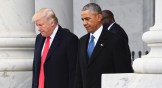
It’s tempting to reduce reality to self-serving narratives the size and depth of bumper stickers. It makes our arguments effortless and our opponents easier to hate. But the breadth and depth of Jesus’ grace and the universality of human sin must always complicate such convenient story lines. The fact is our worst enemies are always redeemable—and we ourselves are never free from mixed motives and prejudice.

To renew our public discourse, love one another, and hold ourselves accountable, we must risk ostracism from our own tribes to seek the truth with patience, diligence, and mercy. In the church and politics alike, lying may be the cost of some associations. Bold truth is the cost of discipleship.

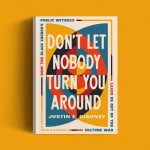
Justin Giboney is an ordained minister, an attorney, and the president of And Campaign, a Christian civic organization. He’s the author of Don’t Let Nobody Turn You Around: How the Black Church’s Public Witness Leads Us out of the Culture War.

Theology

We’re Not Made to Outlast Time

At the Korean Lunar New Year, everyone turns a year older. Psalm 103 frames aging as a sign of God’s sustenance.

A clock face in a bowl of Tteokguk soup.
Christianity Today February 10, 2026
Illustration by Elizabeth Kaye

I remember the first time that celebrating Seollal, the Korean Lunar New Year, felt strange to me as a child. That morning, after I ate tteokguk, a soup made with thinly sliced rice cakes, at the family table, the adults around me smiled and said I was now a year older.

But it was not my birthday. There was no cake, no candles, no sense of having earned anything. Yet something had changed.

On February 17 this year, more than 50 million people in South Korea will grow a year older all at once. The logic is not as strange as it sounds: South Koreans traditionally count age not only by individual birthdays but also with the arrival of the first day of the Lunar New Year.
Seollal’s way of marking time finds a parallel in Psalm 103. The psalm neither interrupts time’s movement nor treats it as a problem to solve. Instead, the psalm depicts how time meets people who are already living inside a God-given mercy that has carried them this far.

Many of us begin a new year by seeking to make the most of our time. In this framework, time becomes something to manage well or risk wasting. We look for goals to set, habits to form, or problems to fix.

Yet days slip by as we measure them in unfinished to-do lists. When plans fall short, the feeling that follows this realization is often less like motivation and more like guilt.

We also struggle with time because it rarely stays abstract. Signs of aging appear in ordinary places: faint lines around the eyes or gray hairs that no longer feel temporary.

“Seeing time as a scarce resource makes us desperate; minutes and hours slip through our fingers,” CT editor Isabel Ong writes in a review of the TV show 3 Body Problem. “Even the best moments of love and connection are fleeting.”

Psalm 103 also describes our lives as brief and fragile: “The life of mortals is like grass, they flourish like a flower of the field;the wind blows over it and it is gone, and its place remembers it no more” (vv. 15–16).

The psalm acknowledges what Seollal assumes, that time moves forward whether or not we are ready. Days accumulate. Years pass without waiting for us to catch our breath. Yet the psalm treats time not as an obstacle to overcome but as the environment within which finite lives unfold. Grass grows where it is planted. Flowers bloom according to their season. Neither is asked to last longer than it can.

Eating tteokguk as a symbol of turning one year older during Seollal reflects Psalm 103’s understanding of time as a precious gift we ought to receive in gratefulness to God, rather than a condition with which we wrangle out of fear or despair.

This simple bowl of soup does not mark a personal achievement or a completed milestone. It marks arrival: You have made it into another year, as everyone else at the table has.

Eating this soup does not cause time to pass; it acknowledges that it already has. This is why Koreans have traditionally joked about measuring age in bowls of soup. Each bowl represents a year crossed, not earned. Age accumulates not through individual progress but through a simple, shared ritual. You eat, and the year counts you in.

This perspective of time and aging disrupts our modern-day penchant for control over the length of our days on earth. In Psalm 103, we recognize that God does not evaluate lives in terms of output or accomplishment. Rather, God sets human brevity alongside divine endurance.

Psalm 103 declares, “But from everlasting to everlasting the Lord’s love is with those who fear him, and his righteousness with their children’s children—with those who keep his covenant and remember to obey his precepts” (v. 17–18).

Here, one generation makes room for the next. What lasts is not speed, effort, or careful planning but God’s steadfast love that moves from generation to generation. Human lives remain short, but they are held within a faithfulness that endures beyond any single lifespan.

Scripture returns elsewhere to this pattern of recognizing time as God given and God ordained. Genealogies move forward without commentary. Scripture offers no explanation, no evaluation, no pause to interpret their meaning. Name follows name, generation gives way to generation, and the list continues. Lives are recorded not for their achievements but for their place within a larger, ongoing story.

Biblical festivals operate similarly. The Passover, the Feast of Weeks, and the Feast of Booths return each year by God’s command, not human consensus, and gather people into remembering God’s faithfulness whether or not they feel ready.

Like genealogies, these festivals assume continuity. They locate individual lives within rhythms that precede them and will continue after them. They show how meaning often emerges not through explanation but through faithful return.

Seollal is also marked by family rituals observed by many Korean households, including Christians. Younger family members bow to elders in sebae as a sign of respect, and elders give sebaetdon, or New Year’s money, typically placed in small envelopes and accompanied by brief words of blessing.

Like the biblical festivals, these practices repeat each year at Seollal with little explanation. They are meant not to motivate personal improvement but to remind people that they belong to a familial story that did not begin with them and will not end with them.

Wisdom literature presses this understanding of time further. Proverbs 16:31 calls gray hair a crown, not because age guarantees virtue but because it bears witness to endurance. This proverb does not romanticize aging. It recognizes that our lifespans, with all their physical and physiological constraints, testify that God sustains all our lives year after year.

Seollal teaches Korean Christians to mark the passage of time as this proverb does. Aging is not an individual achievement but something that occurs communally. The year turns, and nothing about your life is neatly summarized or resolved. You sit at the same table with people who have known you longer than you have known yourself. These people remember versions of you that never make it into your own account of who you are now.

Year after year, parents, aunts, and older relatives use the same titles for me: daughter, niece, the youngest. While the years pass, the way they refer to me does not change. There is a comforting familiarity in these conversations, in how we relate to one another in ways that withstand the test of time.

By beginning with togetherness, Seollal also gives tangible form to this biblical vision of God sustaining life. The festival unfolds over several days, often three, during which schools, offices, and businesses close, making room for families to gather and return home.

In this way, we don’t experience time alone. Years gather meaning as we live them alongside others and as we remember and name each other within our shared lives.

Time does not single out anyone at Seollal. It brings people back to the same table, making visible what is usually easy to forget: that everyone has been carried forward into a new year together.

Psalm 103 gives language to this moment when it says God remembers we are dust (v. 14). The psalm recognizes human life as finite and formed, explaining why mercy frames God’s response to us: “As a father has compassion on his children, so the Lord has compassion on those who fear him” (v. 13).

This year, when I eattteokguk again, I will not feel older in any dramatic sense. What I will feel instead is a solid, secure sense of place. God has given me another year, and he has carried me into it with my family (and millions of other South Koreans).

Psalm 103:14–18 helps me to name my experience of Seollal by offering a different account of time. Time is not an achievement measured by progress or productivity. It is a shared gift we receive within the ordering faithfulness of God, who holds human life within time with full knowledge of its limitations.

Time is not a test imposed upon human life but the medium in which life unfolds under a prior divine recognition of finitude. Within this framework, our brief, frail lives are not conceived as self-contained units competing against the clock. As Psalm 103 shows, God draws us together and carries our lives forward in time. That is something we can celebrate and rejoice in as the people of God.

Bohye Kim is a postdoctoral research associate at the H. Milton Haggard Center for New Testament Textual Studies. 

News

Shutting Down an Addiction Supermarket

Even in San Francisco, some change is possible: The Tenderloin neighborhood is improving.

A broken syringe on top of a photo of San Francisco.
Christianity Today February 10, 2026
Illustration by Elizabeth Kaye / Source Images: Getty, WikiMedia Commons

With all the bad news around, here’s one piece of good news: A contender three years ago for the worst neighborhood in America has improved. 

In 2023, San Francisco’s historic Tenderloin, an area just blocks from City Hall, sported homeless encampments with addicts openly inhaling fentanyl through straws. As I walked through the area during a visit that year, I had to navigate around catatonic users, their bodies and arms twisted in the “fentanyl fold,” a position they might hold for 20 minutes or more. Dealers tried to sell me drugs.

Many users were missing teeth. Some were missing pants. Two government-funded “harm reduction” workers came by pulling what looked like a Radio Flyer wagon, calling out in singsong, “Harm reduction! Need anything?” 

It was bizarre. The purported harm reducers seemed like Good Humor ice cream sellers with circus music, except bearing gifts: foil, straws, glass pipes, clean needles, granola bars, bottles of water, and naloxone to counteract the overdoses they were enabling. 

Last month, when I visited again, the Tenderloin was different. Although the results of the San Francisco January 29 PIT count (its biennial survey of homelessness) isn’t published yet, my January 25 Tenderloin count showed only a few dozen men on cardboard, particularly on Jones Street between Ellis and O’Farrell. Some blocks still displayed feces and dead mice but no restless sleepers. Six San Francisco police cars displayed their “Safety with Respect” slogan. 

Homeless men were no longer in front of the bar at 501 Jones with its “Anti-Saloon League San Francisco Branch” sign—it was a speakeasy during the 1920s—or across the street in front of the Golden Gate Cannabis Co. Nor were any in front of Brenda’s French Soul Food on Polk, with its “Beware of Pickpockets and Loose Women” sign. 

Caveat: Come spring, drug sellers and users might migrate back. But public tolerance of them fell in 2024 as even London Breed, then the ultraliberal mayor of San Francisco, declared that “this compassionate citymakes it too easy for people to be out there on the streets using drugs.” She said she was moving out of her “comfort zone” while “thinking about those who died for drug overdoses.” 

The big move came last year when Daniel Lurie, a Jewish heir to the Levi Strauss fortune, viewed in San Francisco as a “moderate Democrat,” became mayor with 56 percent support in San Francisco’s ranked choice voting. His campaign pitch: “We’ve been too lax. We’ve been too laissez-faire. There are families, there are kids walking down these streets every day seeing people openly use—and, frankly, die.”

Lurie as mayor pushed forward a Fentanyl State of Emergency Ordinance that the city’s ruling Board of Supervisors approved 10–1. He ordered anyone city-paid not to distribute fentanyl paraphernalia: “We stopped freely handing out drug supplies and letting people kill themselves on our streets. It is not a basic right to use drugs openly in front of our kids.”

The Board of Supervisors said the city drug policy’s is “the cessation of illicit drug use and attainment of long-term Recovery from Substance Use Disorders.” Supervisor Matt Dorsey, a former drug user, spoke of “reversing years of perverse incentives that have done more to exacerbate problems than solve them.”

The end to “harm reduction” on the streets did not increase harm but did not lower deaths either: The numbers of fatal drug overdoses in 2024 and 2025 were similar. San Francisco voters have supported the new measures, with 58 percent passing a measure requiring drug screening for city welfare recipients and 64 percent voting for felony charges and increased sentences for possessing some drugs if a defendant has two prior drug convictions.

With support from the supervisors, Lurie also strengthened proof-of-residency requirements for homeless people who receive monthly city payments of $714 (for adults without children). His goal is to stop San Francisco from being a “drug tourism” destination and “magnet for the homeless.” (In better days, the Tenderloin—which in 2008 received a spot in the National Register of Historic Places—was instead a magnet for musicians: It had a famous jazz club, the Black Hawk, at which Dave Brubeck, Miles Davis, Thelonious Monk, and others recorded live albums.)

Lurie said his administration would “fundamentally transform The City’s health and homelessness response and break these cycles of homelessness, addiction, and government failure.” We’ll see: Mary Ellen Carroll, director of San Francisco’s Department of Emergency Management, equated the changes in homeless and addiction to a wildfire—“when we sort of contain an area and we see that there’s movement to others.” 

One justification for the laissez-faire approach Lurie decried is “respect for personal autonomy.” Yet if we understand sanity as the capacity to think and act rationally, fentanyl users are insane. They don’t want to die, but the desire for another hit is strong enough to overwhelm sane behavior, even though the high might lower them into a grave. Instead of offering the tools for suicide, Christians and others should intervene to promote real harm reduction.

Three years ago, walking around the Tenderloin, I often saw notes like this one posted on lampposts: “Mimi—5’, 100 lbs.—we miss you terribly. Please call any family member. Please call [phone number].” I saw no such notes last month. 

News

At least 18 Christians Killed in Crackdown of Iran Protests

Iranians hope for US action after the regime in Tehran killed thousands—perhaps tens of thousands—last month.

Iranian protesters gathering on Enghelab (Revolution) Street during a demonstration in Tehran, Iran, on January 8, 2026.

Iranian protesters gathering on Enghelab (Revolution) Street during a demonstration in Tehran, Iran, on January 8, 2026.

Christianity Today February 10, 2026
SOHRAB / Contributor / Getty

When 42-year-old Mohsen Rashidi saw the Iranian security forces shoot his friend, a two-time national powerlifting champion, he didn’t hesitate. He rushed to his friend’s side. Regime forces rushed there too—then beat Rashidi, forcing him to retreat to safety.

Some witnesses said millions flooded streets in 4,000 locations across Iran on January 8–9, including in Isfahan Province, where Rashidi—a Christian convert and father of three girls—joined the protests. At the same time, the government shut down the internet, cutting off Iran from the rest of the world.

After security forces temporarily retreated on January 9, Rashidi returned to his friend, who lay dead on the street. “Then he tried to carry the body,” said Mansour Borji, director of Article 18, a London-based organization focusing on religious freedom in Iran. Borji said families have reported that authorities refused to release bodies unless relatives paid large sums of money.

As Rashidi attempted to retrieve his friend’s body, security forces shot him in the leg. Several protesters took Rashidi to a hospital, but regime agents refused to grant him entry, and he bled to death, Borji said.

Rashidi was one of 11 Iranian Christians whose deaths Article 18 has confirmed in the wake of bloody crackdowns against protesters last month that rights groups say left more than 6,000 people dead. Borji has also heard about the deaths of at least 7 Christians among the Armenian community in Iran. A weeks-long internet blackout prevented many Iranians from sharing the atrocities they witnessed, but as partial connectivity returned, Borji noted, graphic images and details about the deaths emerged. Two officials of Iran’s Ministry of Health told Time that the actual death toll could be more than 30,000, although reporters could not independently verify that number.

If it is accurate, this was one of the worst killings “not only in Iranian history but perhaps in modern history, in just two days,” Borji said. Meanwhile, Iranian officials put the death toll at about 3,100 people.

What began on December 28 as large-scale protests against Iran’s economic collapse quickly snowballed into a nationwide movement calling for the end of the regime. Reza Pahlavi, the former shah’s son, who spent most of his adult life in exile in the United States, urged Iranians to take to the streets “to fight for their freedom and to overwhelm the security forces with sheer numbers.”

On January 8, US president Donald Trump told radio host Hugh Hewitt that if state forces begin killing people as they have during past protests, “we’re going to hit them very hard.” On January 13, only days after Tehran’s massacre of protesters, Trump posted on social media, “Iranian Patriots, KEEP PROTESTING. … I have cancelled all meetings with Iranian Officials until the senseless killing of protesters STOPS. HELP IS ON ITS WAY.” The president said the regime’s “killers and abusers” would “pay a big price.”

Iranians are still waiting for help from the United States. “That’s probably one of the most frustrating aspects of the whole situation right now,” said Shahrokh Afshar, founder of Fellowship of Iranian Christians. He now pastors an online congregation with Farsi speakers from six countries, including four Christians in Iran. He believes Iranians took Trump’s words literally and anticipated an imminent US attack on the regime’s assets.

“Everyone was hoping he would do something,” Afshar said. Some analysts believe the Trump administration is delaying an attack in order to reinforce air defenses in Israel and at US bases in the region. The aircraft carrier USS Abraham Lincoln and three warships arrived in the Middle East last week amid heightened tensions. On February 3, a US fighter jet shot down an Iranian drone approaching the carrier.

Yet the Trump administration appears to be pivoting toward negotiations, engaging with Iranian officials in talks on Friday about ending Tehran’s enrichment of nuclear fuel. “What sort of deal do you want to make with a government that is as bloodthirsty as this?” Borji said. The two countries made little progress toward a deal but agreed to meet again at an unspecified date.

Secretary of State Marco Rubio said negotiations with Iran must also include discussions about the regime’s ballistic missile program, support for terrorist groups across the region, and attacks on its own people.

Meanwhile, Iranians are attempting to find their loved ones and communicate with the outside world. Reports by locals described bodies piled on top of one another, family members missing, the possibility of mass graves, and security forces shooting the injured inside hospitals.

According to the US-based Human Rights Activists News Agency, the regime has arrested more than 50,000 people and severely injured at least 11,000. One of Afshar’s church members in Turkey was concerned about her nephew, whom authorities detained more than two weeks ago. They released him last week, and his father took him to a local doctor, afraid he may have been poisoned in custody. Some unverified reports claim security forces have poisoned protesters before releasing them. Borji said authorities are arresting doctors treating the wounded and lawyers representing protesters.

Afshar said he hadn’t heard from his four church members in Iran for nearly a month, but the Iranian Christians finally connected with each other over local phone lines last week, and two members left Afshar voice messages on Telegram letting him know all were accounted for. “That’s the best they could do,” Afshar said, noting that Tehran continues to limit internet access. One church member told him the regime is arresting Christians and accusing them of spying for Israel or the United States.

According to Borji, Christians are doubly vulnerable when they attend protests. Iranian authorities already target Christians and have sentenced some to ten or more years in prison for participating in or leading house churches. In 2025, security forces arrested 254 Christians—almost double the number from the year prior. Borji said most of the arrests took place after the 12-day war with Israel in June when the regime was looking for scapegoats.

Of those arrested last year, 57 Christians served sentences of imprisonment, exile, or forced labor, and 43 were still serving their sentences at the end of 2025, Borji added. Others remain in pretrial detention.

The arrests have continued into 2026, Borji said. “What is shocking is even during this time, the Ministry of Intelligence is still arresting and sentencing some of these Christians,” he added.

Borji said Iranians are more united in their calls for the US to strike the Iranian government than they have been in the past due to the regime’s increasingly brutal crackdowns. This has created some theological debate among Iranian Christians about civil disobedience and whether Christians should protest their government. Borji said many Iranian Christians have become more outspoken, and he has heard reports of pastors and priests attending protests and expressing solidarity with victims.

Still, the risks loom large. Afshar said his church members in Iran are understandably worried given the recent bloody crackdowns and ongoing arrests, yet their faith is resilient. One church member told Afshar, “I get on the street and share God’s love with whoever I come across, because the people are desperate and that’s the best I can do. That’s the only thing I can offer them.”

Books
Excerpt

Undragoning the Imagination

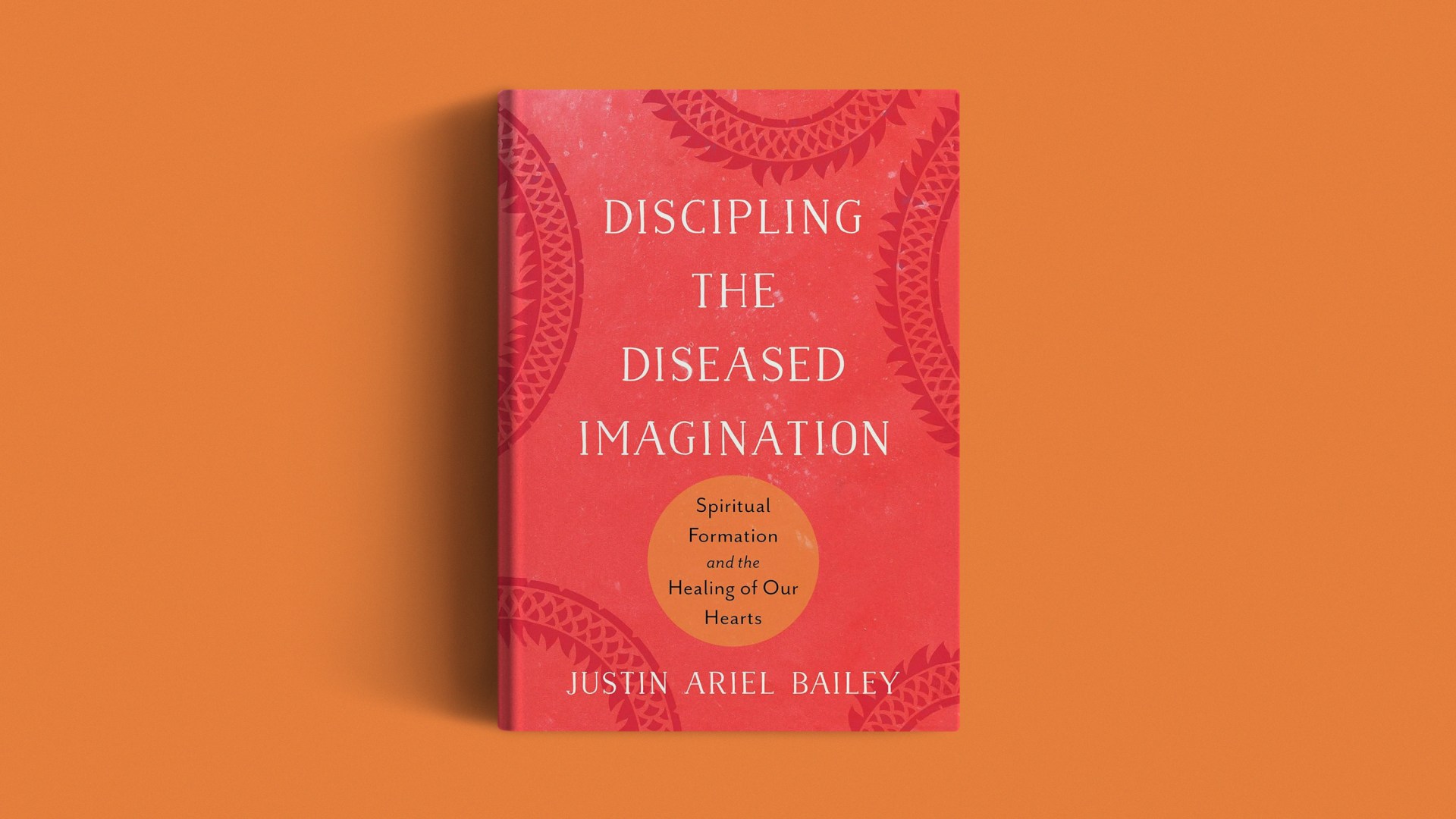
An excerpt from Discipling the Diseased Imagination: Spiritual Formation and the Healing of Our Hearts.

The book cover
Christianity Today February 10, 2026
Illustration by Christianity Today / Source Images: Getty, Baker Academic

I have always loved stories about dragons. Much of my fascination owes to the works of J. R. R. Tolkien, whose legends of Middle-earth tell of dragons like Ancalagon the Black, Glaurung the Golden, and Smaug the Impenetrable. In the tradition of Norse mythology, Tolkien’s dragons are insidious and bewitching, cunning and cruel, living embodiments of the lust for domination and destruction.

We are drawn to stories of dragons because they tell us something true about the world. Indeed, dragons (or something like them) also appear throughout the Bible. They fall into the category of “chaos creatures” and may be found in the depths of the sea, in the wilderness, or in the heavenly places.

Although originally a part of God’s good creation (since nothing is evil in the beginning), these creatures come to represent evil’s rebellion against God as the story continues. It is not for nothing that the book of Revelation names the devil as the “great dragon” and the “ancient serpent” who “leads the whole world astray” (Rev. 12:9). Dragons remind us that we must reckon with evil.

We are also drawn to stories of dragons because they teach us that dragons can be defeated. In Tolkien’s stories, Smaug is killed by Bard’s arrow, Glaurung is slain by Túrin’s sword, and Ancalagon is cast from the sky by Eärendil. In Scripture, the enormous red dragon is identified primarily to assure us of his defeat (v. 2). We are promised that despite the power of evil, it is not strong enough to stop God’s work in the world (v. 8).

Although that is good news, we wonder what it means and what it will take to subdue the dragonish impulses we feel inside us. The way of the dragon is manifest whenever we see our neighbors as obstacles or objects, things to devour or possess. We feel it in our pride and wrath, in our deceit and despair. We find it in the craving for glittering things, the obsession with our own reflections, and the longing to sit atop the pile in the place of God. Who will rescue us from the dragons within?

Think of the incorrigible Eustace Scrubb in C. S. Lewis’s Narnia books. Eustace happens on a dead dragon’s horde and decides to keep it for himself. Falling asleep in the dragon’s cave thinking “greedy dragonish thoughts,” he wakes to realize that he has become a dragon.

The dragoning of Eustace offers a powerful image of the danger we are in. We too live in a world of dragons, and unless we are vigilant, we too may fall asleep in the dragon’s lair and be conformed to the “pattern of this world” (Rom. 12:2).

Can our dragon-sickness be healed? One remedy, Tolkien believed, is to read dragon stories that expose us to the truth. Similarly, Lewis tells us that Eustace might have known better than to fall asleep in a dragon’s cave if he had been raised to read “the right books.”

Both authors held that exercising the imagination with fairy tales might help readers recover their health, training their powers of discernment and cleansing their souls with mythic truth. When we fail to care for our imaginations, stronger medicine is required, an intervention like the undragoning of Eustace. But how do we undragon our imaginations?

Early in my academic journey I was encouraged by a mentor to find a foundational question to orient my vocation, and it didn’t take long for me to find it: What does it mean to disciple the imagination? I became convinced that the imagination is at the heart of discipleship: What we imagine must be transfigured and trained by the true and beautiful story found in Scripture. For the last decade I have been trying to understand how the imagination works and how theology can nurture the imagination for cultural discipleship.

I am still convinced of the value of my keystone question. But in recent years I have started to wonder whether my research question assumes too much. My working model of discipleship was a training regimen composed of gospel truth and spiritual exercise. This is a common thread in books on spiritual formation: We preach truths and prescribe practices in hopes that both will take root in our hearts.

And yet, many well-intended plans for spiritual growth devolve into information transfer and behavior modification. When they succeed, they reinforce our sense of mastery and control; when they fail, they produce frustration and shame. Something has gone wrong.

My new book, Discipling the Imagination, has been borne out of a deep sense of lament at my own failure to be formed, a failure shared by the church more broadly. Why does it seem like so many devout believers have been unable to escape the gravity of more powerful cultural, political, and economic currents? Why are we unable to imagine better futures for ourselves, for our neighbors, and for the places we live? Are our imaginations too diseased to be discipled?

I’m convinced that if the imagination is to be discipled, it must also be healed. Healing and training are not necessarily opposed. But much depends on whether we view discipleship from the perspective of an elite athlete training for a triathlon or an accident survivor relearning to walk. Both kinds of training require discipline and self-denial, but the second kind of training is truer to the overarching story of Scripture.

The imagination enables humans to live creatively in God’s created world. It is precisely because the world is full of possibility that we are always using our imaginations, filling in the gaps so that we can live more securely in the world. The imagination is active when we plan a vacation, rehearse a presentation, or hear a noise late at night. It’s engaged when we listen to a story, read a novel, or exercise empathy in relationships.

I grew up reading the King James Version of the Bible, and like anyone accustomed to its style, I knew that the translators consistently rendered the imagination with negative associations, consistently speaking of human imaginings as “evil” (Gen. 6:5), “wicked” (Prov. 6:18), and “vain” (Rom. 1:21). These passages highlight human creativity gone awry, the way it goes when we ponder the possibilities of life without God. Detached from its anchor in God, the gift of imagination becomes a curse. It misdirects human imagining toward idolatry and injustice.

The prophetic hope is not just for individual renewal but so that one day the nations will no longer walk “after the imagination of their evil heart” (Jer. 3:17, KJV).

We might say that these idolatries are dragonish enchantments, spells that enslave us to evil powers. This brings me to a key term that shifts us from a magical metaphor to a medical one: the diseased imagination. I learned this phrase from Willie Jennings, who invokes “diseased social imagination” when describing how Western Christians constructed the category of race and the institution of race-based slavery.

Racial hierarchy was an imaginative fabrication; it offered an expansive story to justify the colonization and enslavement of nonwhite people groups under the guise of improvement and evangelism. Jennings’s analysis is sobering, especially for someone writing a book about Christian imagination.

It is devastating to read his account of Christian societies imagining, producing, and justifying diabolical practices and institutions. It makes plain how our lust for power and control compels us to embrace the way of dragons, to accept the domination and destruction of others as ordinary, simply “the way things are.”

If slavery seems like a distant example to some readers, let me offer one closer to home. I am a mixed-race, Filipino American man with skin that darkens considerably in the summer months. I grew up in suburban Kansas City, and although I felt different from my peers, I rarely felt unwelcome. In college I became interested in dating a girl who happened to be white, and it was a painful awakening when I heard an argument for racial separation—my separation—on the basis of Scripture for the first time. God made the races, I was told; there must be a reason. So stay in your place.

I would later learn that these lines of interpretation were taken for granted by previous generations, leveraged mostly against Black Americans. I do not for a moment believe that I have borne anything like the burden carried by my Black brothers and sisters. I share my experience to give a personal edge to the diagnosis, to testify to the inability of Christians in the dominant culture to imagine joining their lives with cultures unlike their own.

I do not believe this imaginative failure is exclusive to Christians in general or white Christians in particular. Rather, it represents the enchantments of power and comfort and the way we resist anything that might disrupt our perch at the top of the pile. Dreaming like dragons, we have become unable to imagine anything significantly different from what we have already seen and known.

We must reckon with the severity of the diagnosis before we can be healed, and Jennings tells us the truth: Christians can suffer from a badly diseased imagination. When the light in us is darkness, how great indeed is the darkness (Matt. 6:23)!

But although the diagnosis is painful, it is also a gift for three reasons. First, if the imagination is diseased, then we know that something foreign has taken it captive. Perhaps what has been learned can be unlearned; what has been taken for granted can be called into question.

Second, the diagnosis may make us more hesitant to wallow in shame. This does not mean we have no reason to be ashamed; “all have sinned and fall short of the glory of God” (Rom. 3:23). There is evil we have done and good we have left undone. But tracing sin to a diseased imagination may lead to a more careful, compassionate, and comprehensive approach. Yes, we have sinned. But we have also spent our lives in toxic ecosystems, consuming poisonous food and drink.

Like Eustace, we have not been reading the right books. Enchanted by Mammon and other idols, we no longer see a true image of ourselves, our neighbors, or the places we live.

If the imagination is diseased, the humbling truth is that we cannot fix ourselves through sheer willpower. If sin is more like an addiction or an enchantment, if we are slowly turning into dragons, it will not be enough to say, “Stop it.” We must have help from outside ourselves.

Our great hope is that God is healing all creation.

I have started praying like this: “O God who heals my diseases, heal my diseased imagination.”

The wonderful news of the gospel is that while we are still stumbling in the dark, God comes and finds us. He knows the sickness of our hearts and what we are doing to ourselves. Though we are turning into dragons, God moves to rehumanize us after the pattern of Jesus, the true human.

One of the most beautiful passages in the Narnia stories is when Eustace recounts meeting the great lion Aslan and getting undragoned. Eustace tries to peel his scales off by himself, but no matter how hard he tries, he finds that he is still a dragon. And so he must lie still and submit himself to Aslan’s claws. The lion peels the dragon skin from Eustace, layer by layer, then throws him into the water, signifying a sort of baptismal rebirth. Eustace is undragoned as he embraces a pain that goes “right into his heart” that also ultimately heals it.

Although the healing process is painful—in the Narnia stories and in our world—the amazing thing is that the healer makes sure that the worst of it falls on himself. Despite our failure to see, hear, and feel, the Lion who is also the Lamb (Rev. 5:5–6) shows up all the same. His great act of grace is stronger than the power of dragons, and it is the heart of our hopes to be set free from the way of the dragon. For “by his wounds we are healed” (Isa. 53:5).

Justin Ariel Bailey is a professor of theology at Dordt University. He is the author of Interpreting Your World: Five Lenses for Engaging Theology and Culture and Discipling the Diseased Imagination. Content taken from Discipling the Diseased Imagination by Justin Ariel Bailey, ©2026. Used by permission of Baker Academic.

Culture

We All Want to Be the Right Kind of Parents

Correspondent

Parenting books—even Christian ones—capitalize on fear and longing, sometimes making promises that don’t hold true.

A mother kissing her baby.
Christianity Today February 9, 2026
Vince Fleming / Unsplash / Edits by CT

Professor Harold Hill had to create a problem to sell a solution. The shifty protagonist of the musical comedy The Music Man knew this fabricated dilemma had to be a problem that the parents of River City, Iowa, would care about. They had to care enough not only to listen but also to invest their time and money in the absurd solution he was about to propose: a boy’s marching band.

“We got trouble, right here in River City!” he cried, pointing to the billiard parlor, where a newly installed pool table threatened to send young boys down the path of crude language, beer, and ragtime. Hill’s rousing appeal to unwitting customers was that the boys were at risk of becoming hooligans, and he had the perfect solution.

After he established the enemy (the new pool table) and the danger (hooliganism), he turned to the crowd of mothers and fathers and said earnestly, “Now I know all you folks are the right kind of parents …”

The right kind of parents. Almost every parent wants to be the right kind of parent. Not just a good parent, but the best parent they can be. And every parent can relate to the feeling of taking an infant home and, amid the joy of bringing a new life into the world, sensing a crushing weight of responsibility. This unrelenting pressure sends parents to books, podcasts, blogs, and influencers. To be sure, not every parenting expert is a crook or scam artist, but even the most well-meaning self-appointed writers, coaches, and teachers may sometimes exploit parental fears.

Many new parents worry trouble lurks everywhere, that every day with their baby is an opportunity either to get it right or to fail. As their kids grow, they feel constantly at risk of being too permissive, too authoritarian, too involved, or too hands-off. And many experts, both Christian and otherwise, convince readers that parents are tragically unprepared for what lies ahead.

The most powerful figures in the parenting-advice niche have long built their influence by addressing spiritual, social, even political concerns. They place the day-to-day, relational work of parenting in the context of a larger social project. Discipline, behavior, and even sleep training become proving grounds and indicators of whether one’s family is helping move society in the right direction or contributing to decline.

The stakes feel especially high for Christian parents. We may not be explicitly taught that children—their behavior, health, or salvation—directly reflect our own spiritual goodness, but some come to believe it. Fear and a fervent desire to be the right kind of parents can make people desperate for answers, promises, and a guarantee that their kids will be okay.

Fear and longing make it easy to sell things to parents, too. The runaway success of Baby Einstein is a perfect example. In five years, the company grew from an in-home video project to a multimillion-dollar business, selling to Disney for more than $25 million in 2002. The promise of Baby Einstein was right there in the name: Einstein, shorthand for genius. Even though it turned out there was no evidence that these products were actually better for babies’ brain development than other toys on the market, the promise alone was enough to get parents to buy, just in case there was any truth in those too-good-to-be-true claims.

When I was a new parent, I was particularly susceptible to the marketing of aesthetic baby accessories. Like many other millennial moms, I was drawn to muted color palettes, matte silicone teethers and food trays, creamy beige muslin and linen, and wooden toys. Instagram and its endless stream of targeted advertisements were really good at telling me what motherhood was supposed to feel like. These brands weren’t selling me products by highlighting practical needs. They were selling me a little piece of aspirational motherhood, a filtered image of what my home should look like.

Marketing to parents almost always includes these kinds of promises. Any list of best-selling parenting books reveals the top-of-mind parental concerns of the day: baby brain development, helping children become resilient, kids and diet culture, working during pregnancy, sleep difficulties, or dealing with screen time and mental health. Christian families add their children’s eternal salvation and spiritual health to the list. Many Christian parenting books heighten parental anxiety by suggesting that parents cannot trust their own instincts and need to carefully navigate an ocean of information to find the right formula for success.

In his 1948 bestseller, Baby and Child Care, Dr. Benjamin Spock wrote his now-famous admonition to anxious mothers: “Trust yourself, you know more than you think you do.” But Christian parenting content has often had the opposite message: Don’t trust yourself. That’s helpful for anyone trying to sell a parenting book, if not actually helpful for parents. Nor is it resonant with the full biblical witness, which teaches that we and our children are sinful and fallible—as many Christian parenting books emphasize—but also that God entrusts our children to our care with the clear expectation that we are capable, with his help, of raising them faithfully, patiently, and compassionately.

As a result, many Christian parents, especially evangelicals who faithfully read books like James Dobson’s Dare to Discipline or Tedd Tripp’s Shepherding a Child’s Heart, have come to believe they cannot trust their instincts.

Most parents will admit they often do need tips on how to get a toddler to stay in bed. They don’t necessarily even have an “instinct” when it comes to dealing with picky eating, so they go looking for help. But many Christian parenting experts go beyond offering suggestions. They claim to have the right answers, universally correct for every child in every circumstance. Dobson bolstered his work by assuring parents, “I’m drawing on somebody else’s ideas and that somebody doesn’t make mistakes.” Secular authors, however confident, can’t similarly claim divine providence for their sleep schedule and infant feeding tips.

Pick up any Christian parenting book, new or old, and you will likely find this verse from Proverbs somewhere inside: “Train up a child in the way he should go: and when he is old, he will not depart from it” (22:6, KJV). Many parents in the thick of raising young children read this passage as a command. My job is to train up my child in a certain way, they think. Devout parents of older “prodigals” might see in this promise a sliver of hope that adult children who no longer espouse the Christian faith will someday return to the fold.

Christian parenting resources depend on promises made to parents: If you get it right now, then there will be desired results—if not immediately, then somewhere down the road.

As my coauthor and I interviewed sources for our book, The Myth of Good Christian Parenting, we were struck by how many parents regretted having put so much faith in parenting books. They trusted authors who claimed secular advice would lead them astray, and who argued that if they didn’t treat parental authority as the first principle of the home, their families would descend into chaos. We spoke to adults whose parents had delivered prolonged spankings to “break the will,” leaving bruises. Many felt deceived.

What does it mean to be the right kind of parent? The difficult but perhaps freeing answer is: No author can tell you. No author, however popular, knows you, your child, your family, or your community the way you do. Applying principles from Scripture to daily life raising children is a long, persistent practice, and there aren’t many hacks to make it easier. And despite what some books lead parents to believe, there is no correct application of biblical wisdom that will give them control over their children.

It’s instructive, perhaps, to look at some of the Christian parenting books that came before Dobson’s best-selling Dare to Discipline, which framed parental authority as a remedy for the social upheaval of the late 1960s. For example, Clyde Narramore, a Christian psychologist who founded the magazine and radio show Psychology for Living and helped establish the Rosemead School of Psychology, published Discipline in the Christian Home in 1961.

Compared with the best-selling Christian parenting books of the 1970s and ’80s, it’s rather boring. Narramore doesn’t connect discipline to social order or a moral panic. He qualifies his advice and recommends flexibility on the part of the parent. By the end, a reader might wonder: That’s it? 

By the end of the 1960s, many parents were looking for more strident advice. They were alarmed by social and political upheaval, and the message of Dare to Discipline seemed to meet the moment, as did Larry Christenson’s best-selling The Christian Family (both were published in 1970).

In our current era, the success of Jonathan Haidt’s The Anxious Generation is further evidence that parents want to hear from people who address their worries and confirm that something is wrong. Parents are understandably concerned about the effects of ubiquitous screens and social media. Haidt’s message affirms that this is something to be worried about. That’s not to say that every author or influencer who positions themself this way is a grifter. Haidt and many others offer convincing evidence that our screen-dominated world is harming children. But the fact remains that fearful urgency sells.

It may seem ungenerous to compare parenting authors to The Music Man’s charlatan Harold Hill. But the parallel highlights how foolish it is to allow fear and urgency to dictate parenting decisions—and how someone eager for influence and profit can manufacture panic. It’s harder to generate enthusiasm for parenting advice like “Consider your child’s point of view” or “Hold firm boundaries, but be flexible when it seems reasonable.”

In an era of endless influencer content, books, and op-eds, parents can choose to be more attentive to the particular needs and quirks of their families than to societal concerns voiced by talking heads often far removed from our communities.

We can look first to the example of Christ—how he responded to children and adults, patiently teaching the same lessons more than once. We can strive to be more like him each day. We can resist seeing our kids as pawns in a culture war or avatars of whatever transient public discourse about “the kids these days” happens to be unfolding at the moment. We can respond to the children who climb into bed with us in the morning, pray for wisdom, and trust that with God’s help we are capable of cultivating authentic, connected relationships

Kelsey Kramer McGinnis is the worship correspondent for Christianity Today. She is a coauthor of the book The Myth of Good Christian Parenting and writes broadly on Christian music and the intersection of American Christianity and popular culture. This essay is adapted from the first chapter of The Myth of Good Christian Parenting: How False Promises Betrayed a Generation of Evangelical Families.

News

What Can Pro-Lifers Do in Unchurched States?

Contributor

Pro-life political wins correlate with church attendance rates. So what do you do if most of your neighbors stay home on Sunday morning?

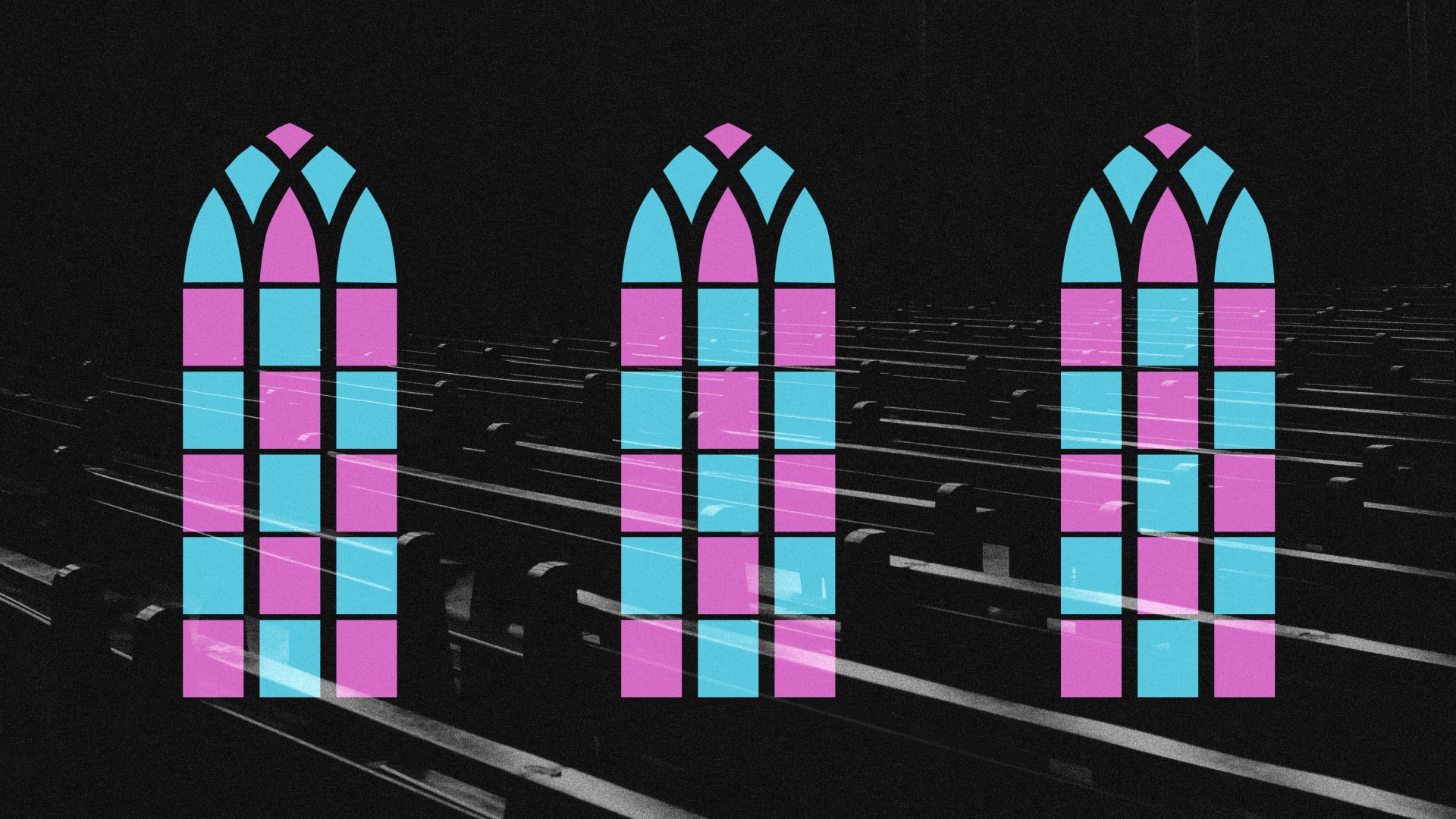
Church pews and pink and blue church windows.
Christianity Today February 9, 2026
Illustration by Christianity Today / Source Images: Pexels

The best way to predict the success of pro-life political strategies in a particular state is to look at that state’s church attendance rate.

In 10 of the 11 states where 40 percent or more of the population goes to church at least once a month, abortion is almost entirely illegal. The lone exception is heavily Mormon Utah, where the state government has adopted an abortion ban, but the courts have blocked it.

On the other hand, in all but two of the 17 states with monthly church attendance rates below 30 percent, abortion is fully legal, with most of these states offering state Medicaid funding for the procedure. 

This is true even in conservative states with low church attendance rates. Alaska, for instance, has voted Republican in every presidential election for the last 60 years, but as a state with a church attendance rate below 30 percent, its policies are strongly pro-choice. The state’s Medicaid program not only covers elective abortions but in some cases also reimburses recipients for travel to an abortion clinic. 

But the largest contingent of states falls somewhere between these extremes. With church attendance rates above 30 percent but below 40 percent, the 22 states in this middle group generally lean pro-choice, with only a few exceptions. About two thirds of these states reliably vote Republican. But the vast majority also allow most or all abortions. Only a few ban abortion before 12 weeks, and most allow nearly unrestricted abortion during most or all of the first two trimesters of pregnancy.

What can pro-lifers do in these largely unchurched states where support for the Republican Party might be strong but few voters want to restrict abortion?

When pro-lifers have tried to ban abortion against the will of their state’s majority, they have failed. In Ohio, a Republican state where only 32 percent of the population attends church even once a month, citizens voted in 2023 by a margin of 57 to 43 percent to make abortion constitutionally protected up to the point of viability. 

Pro-lifers in Ohio have now gone back to the drawing board and proposed modest restrictions on abortion that might win political support in the Republican-controlled legislature. One bill would require a 24-hour waiting period for abortion. Another would require abortion providers to give women a document outlining the risks of an abortion.

Yet to really bring down abortion rates in states like Ohio, pro-life advocates will need to cut off sources of state funding for abortion. Multiple studies have shown that mandatory waiting periods have little, if any, effect on abortion rates. At the same time, studies suggest that Medicaid funding for abortion substantially affects abortion rates. 

In Illinois, a study found the introduction of state Medicaid coverage for abortion in 2018 increased the number of abortions in the state by 18 percent, which amounted to more than 6,000 per year. Conversely, when government funding for abortion is cut, abortion rates drop and Planned Parenthood clinics close. In 2025, three Planned Parenthood clinics in Ohio closed because of cuts in Medicaid funding.

What is happening in Ohio holds lessons for the nation, because when it comes to abortion, the national Republican Party now reflects sentiment in states with modest church attendance rates far more than in the highly churched states of the Bible Belt. President Donald Trump and Republican political leaders in Washington have shown scant interest in pushing for national restrictions on abortion. Instead, Trump even floated the idea in January of compromising on the Hyde Amendment, which restricts federal funding for abortions.

But Republicans in Washington listened to pro-lifers when they insisted that the Hyde Amendment was nonnegotiable. In doing so, pro-lifers probably saved unborn lives, because if the Hyde Amendment were removed, abortion rates would almost certainly increase. 

In an ideal world, this type of lobbying would not be necessary because a national culture of church participation would result in a societal consensus in favor of protecting the unborn. Ultimately, if pro-life Christians can share the gospel and increase the number of churchgoers in their regions, they might be able to do more lasting good for the pro-life cause than any purely political strategy could accomplish.

But in the meantime, pro-life Christians who want to engage in political battles on this issue have to face the reality that church attendance rates in most states are low enough that even Republican politicians are afraid of abortion prohibitions. Yet in such a climate, pro-lifers can still win modest victories and save lives by focusing their efforts on the one area where they have a chance of success—restrictions in abortion funding. Cutting off state or federal Medicaid funds for abortion is not the same as protecting the unborn in public law, but it can still save some.

Daniel K. Williams is an associate professor of history at Ashland University and the author of Abortion and America’s Churches.

Ideas

Trump’s Racist Post Deserves Outrage

CT Staff

Evangelicals who back the president should no longer contort themselves to support a morally bankrupt leader.

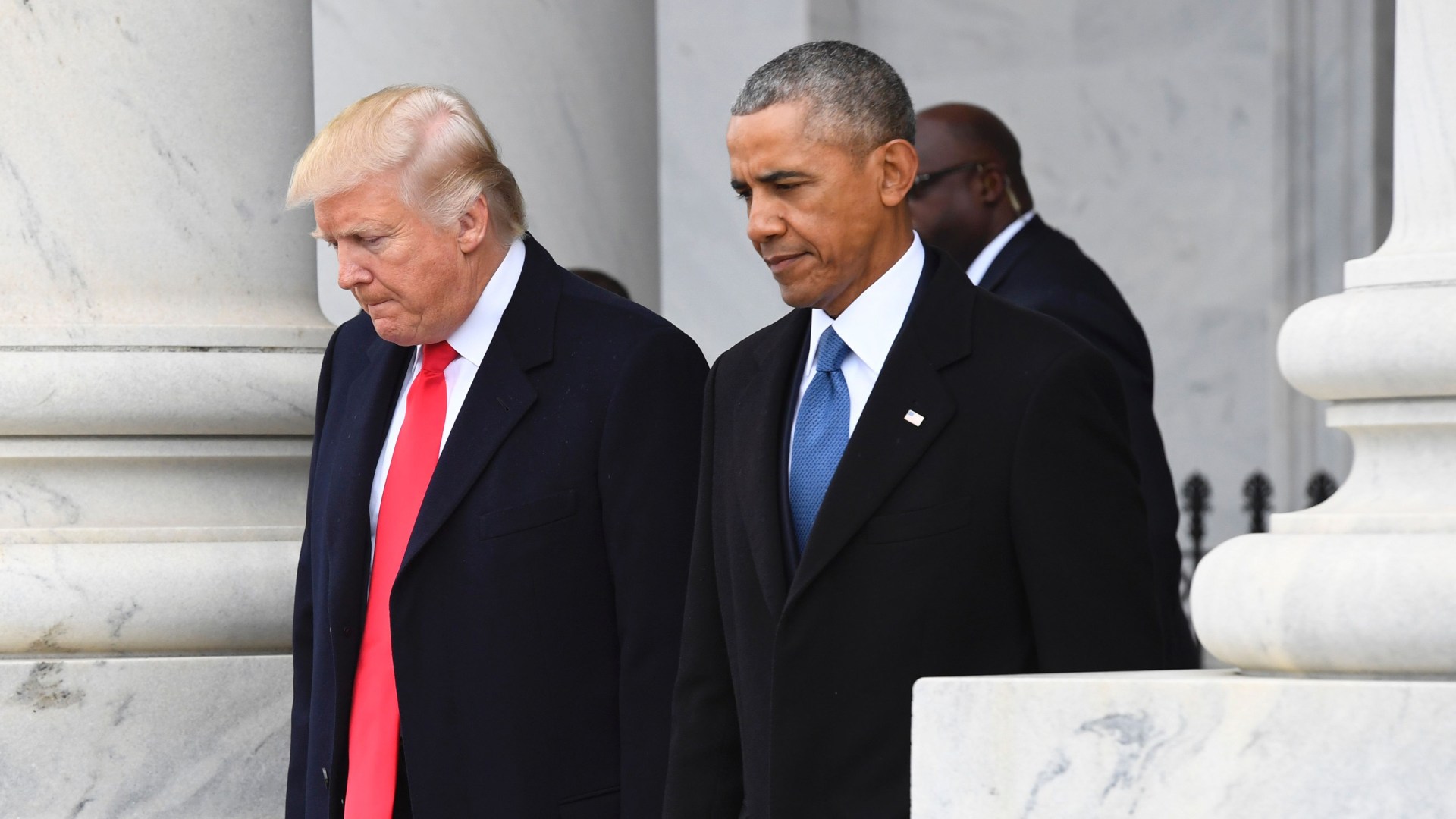
Trump and Obama walking at the White House.
Christianity Today February 7, 2026
AFP / Pool / Getty

Late Thursday evening, President Donald Trump posted an egregiously racist video clip on social media that portrayed former president Barack Obama and his wife, Michelle, as apes.

The AI-generated image of the Obamas as primates—a racist trope that has historically been used to dehumanize Black people and justify slavery—was shown at the end of a 62-second video that promoted conspiracy theories about the 2020 presidential election, which Trump lost and refuses to concede.

When asked about the video on Friday morning, White House press secretary Karoline Leavitt confidently defended the clip, calling complaints about it “fake rage” and saying it only depicted Democrats as “characters from The Lion King” (though there are no apes in the film).

After outcry from Democrats and Republicans, including close allies of the president, the clip disappeared from Trump’s Truth Social account. The White House blamed the post on an anonymous staffer who they say had access to Trump’s account. On Friday evening, Trump told reporters he watched the beginning of the video—and not the part that featured the Obamas—before passing it off to someone else to post. When asked if he condemned the racist imagery, Trump said he did. But he did not apologize. “I didn’t make a mistake,” he said.

If the president doesn’t hold anyone accountable for the video, or offer an apology, it’s safe to assume racism doesn’t bother him. Anyone who follows the news knows this isn’t the first racist thing Trump has posted, or said, since he came on the political scene. But it is important to remind ourselves that this type of behavior and carelessness is not acceptable.

In 2026, Americans shouldn’t get up on a Friday morning and see news reports of racist garbage coming from the highest office in the land. We shouldn’t see the country’s leader sharing a bigoted image of a top House Democrat wearing a sombrero, or hear him call Somalis “garbage.” And we certainly should not see a clip of the first Black president and first lady as apes.

According to news outlets, the clip Trump posted originated from a meme depicting several Democrats as animals who bow down to him. Reading these reports feels like living in a twisted version of George Orwell’s Animal Farm. Like the book’s top hog, Napoleon, Trump incessantly lies and pushes propaganda that reveals autocratic tendencies. The Christians close to him therefore would do him a big service if they let him know there is no eternal king except Jesus.

If evangelical supporters of Trump value the Bible more than their political allegiances, they should be outraged and repulsed, and publicly voice their disapproval over Trump’s behavior—including the lack of apology for the racist post. Those who refuse to do so would only be showing us their true colors as racist sympathizers who rather have proximity to power than uphold biblical principles.

Scripture tells us wise leaders promote virtue and integrity. They should “detest wrongdoing” and be “established through righteousness” (Prov. 16:12). But instead of being a prudent leader, our president often models the insecurities of Herod, who went after his perceived opponents by any means necessary. Trump has long seen the Obamas, particularly Barack, as his enemy. And because he hates his opponents, as he told us last year, dehumanizing them becomes easy.

For Black Americans, and many others, the clip evokes painful periods of America’s history and degrading words said by other presidents about racial minorities. I’m not interested in relitigating dead presidents. But I do want to highlight the moral bankruptcy of Christians who faithfully endorse the dishonorable actions of a leader who operates without any red lines.

The cautionary account of King Saul in 1 Samuel should have been a warning that what our leaders say and do impacts us deeply. Church leaders should imitate the prophet Samuel and shepherd us through moments of turbulence. But many have become partisan cheerleaders and look more like court jesters than prophets.

Evangelical leaders who refuse to criticize Trump should know that a king may give you what you want and also destroy the values you hoped, or claimed, he would uphold. It is never too late to repent from embracing this type of politics. But too often, many choose ethical amnesia or contort themselves to be close enough to the fire of white supremacy that they receive its warmth without being burnt. But the smoke is on their clothes, and we can smell it.

It’s time for conservative Christians to not only call Trump’s actions racist but divest from him completely. Without that, the empty display of faith we see will continue to be a parasite that drains life out of the church. Evangelicals should not aim to be a city on a hill sponsored by an immoral empire. After all, those who cozy up to wickedness will only live off the ill-gotten gains of wicked actors.

How should the church then respond to all of this?

First, the Bible is clear the church is the manifold wisdom of God (Eph. 3:10). It’s difficult to feel that truth when many Christians zealously support a man who often dabbles in pure racism. Ethnic hatred, fear, and discrimination are evils that have been taught to many people, and we must be diligent to purge it from our communities. God calls on us to address these issues head on (Acts 6; Gal. 2:11) and practice radical solidarity.

Second, Christian leaders, artists and anyone indwelled by the Spirit of God can be a prophetic voice when God’s people are being manipulated toward political idolatry. Let us have the courage of Jeremiah, who was called to “go down to the house of the king” and speak words of power so our leaders will “do justice and righteousness.” (Jer. 22:1, 3, ESV).

Let us implore leaders to “do no wrong or violence to the resident alien, the fatherless, and the widow, nor shed innocent blood in this place.” Let us call our leaders to repentance. Let us also trust the Lord, knowing that regardless of what happens in America, his kingdom will endure. 

Sho Baraka is editorial director of the Big Tent Initiative at CT.

Culture

I Have Chronic Pain. I Still Love the Olympics.

After a life-changing injury, I can’t compete like I used to. Watching the Olympics—the newest games starting tonight—brings me joy.

A collage of images from the Olympics and neurons to represent pain.
Christianity Today February 6, 2026
Illustration by Elizabeth Kaye / Source Images: WikiMedia Commons, Unsplash

I am 9 years old, and I have just quit ballet classes because it’s become painfully apparent that I don’t have the basic sense of rhythm the other girls do. But it’s also the 2008 Olympics, and Shawn Johnson is flipping her 4-foot-11-inch self over the balance beam. I roll up a blanket into a makeshift beam on my bedroom floor and practice spinning on it.

Then I am 13 years old, and Gabby Douglas is vaulting to victory, solidifying Team USA’s gymnastics dominance on the world stage. My friend and I practice cartwheels and roundoffs in our backyards for hours and even sign up for a tumbling course, where girls half our age put us to shame. But we don’t care.

Later, I am 17, and Simone Biles is about to shock the world at her first Olympics. I don’t know it yet, but in just a few short weeks, everything in my own life is going to change.

Everything, that is, except for my love of the Olympics.

In my senior year of high school, a tendon strain from the year before came back to haunt me. Only this time, it wasn’t a discrete line tethered to my left elbow but a radiating pain that hopped around from joint to joint like a grasshopper from some biblical plague. Suddenly it was both elbows and both wrists and both shoulders and my neck and my upper back. In a few weeks, pain became my first thought and my final word, my midnight companion and my invisible midday shadow.

Thus began years of going to doctors from every specialty under the sun to try to make sense of how a 17-year-old girl found her life upended by what began as a weightlifting injury. I deferred a college acceptance and then disenrolled completely. I gauged how bad a day was going to be by how much it hurt to lift my toothbrush after breakfast.

I have never been coordinated, and after my failed stint with ballet, I never participated in any organized sports. But I discovered CrossFit in high school and fell in love with the variety of the workouts that can be adapted to most bodies. For the first time in my life, I felt strong. For the first time in my life, I consciously liked having a body.

And then, somehow, the gift of that experience collapsed in on itself and became my greatest curse, and it felt like my body had betrayed me. Or maybe I had inadvertently betrayed my body, done some harm to it that I hadn’t intended, and now it was going to hate me forever.

We have journeyed, my body and I. Now, 10 years later, I have been mercifully brought to a plateau of more manageable levels of pain. The possibility of backsliding, returning to a life where I cannot function, still exists, looming like a sheer cliff a hair’s breadth away. But I am learning to get up each morning in hope anyway. I am learning to see my body as a companion and less as a combatant.

I have fought for years to find beauty in my physical limitations. I have come to love stillness, silence, and hiddenness in a way I never would have without this pain. Pain has made me more attuned to my body, which on my better days I am able to recognize as a great gift. Without it, I would steamroll over this hunk of flesh without thinking twice. I would notice less pain, yes, but also less pleasure. Now I am acutely aware of the grace of warm water sliding over my skin, the release of a tight muscle, the endorphin rush of a hug. So much of who I am—so many of my favorite things about myself—have been shaped by embracing this new normal of disability.

Every couple of years, though—and today, again, with the opening ceremony of the winter Olympics—I wonder: Am I abandoning all that progress when I turn on the Olympics? Is watching these athletes is a guilty pleasure? Am I speaking out of both sides of my mouth to celebrate limitations while also praising the people whose bodies take them beyond the breaking point, who shatter limits?

How can the spectacle of everything I can’t do be such a source of joy and even comfort?

In the harrowing one-man play Sea Wall (performed here by Andrew Scott), a religious skeptic claims that science has found not one hint of God, for all its incredible discoveries. His believing father-in-law contends otherwise. Our protagonist demands: “Where is God then? Is he at the farthest reaches of our universe?”

His father-in-law responds: 

He’s in the feeling of water. Sometimes there’s the shape of the roll of the land. He’s in the way some people move. He’s in the light falling over a city at the start of an evening. He’s in the space between two numbers.

He’s in the way some people move.

I love the Olympics because in the way these athletes move, I get to see a glimpse of God—the God who designed tendons and ligaments, fast-twitch muscles and red blood cells. The God who crafted some bodies to seem untethered from gravity, free from friction and strain. And this Godward gaze, directed toward the maker of these athletes and not the athletes themselves, lifts me out of myself and into his work in the world.

It is what Tim Keller calls, inspired by the writings of the apostle Paul, the freedom of self-forgetfulness. This is not a forgetfulness of being embodied; it’s a forgetfulness of the false narrative that I and my experience are the sum total of reality or the primary lens through which I should see life.

“The world is charged with the grandeur of God,” poet Gerard Manley Hopkins wrote. I can choose to celebrate this or to twist my attention in on myself until my disappointment is the only reality I see. The movement of great athletes is a kinetic psalm of praise, and to my great relief, it can’t be silenced by my pain.

In 2022, I held my breath as American figure skater Nathan Chen started his free skate, the second of two skating competitions that combine to give figure skaters their final score. It’s seemingly impossible, what skaters attempt to do, notching one thin blade into ice for less than a second and, from that briefest moment of contact, generating enough power to soar through the air for yards while also spinning like a top—and then landing precisely on one foot. But Chen did that incredible feat over and over again. By the end of the program, in a sport where winning often depends on fractions of a point, he’d taken the lead by over 22 full points, shattering the world record.

I watched Chen move with that bewitching combination of power, speed, and grace, alchemizing ice and metal into art, harmonizing his whole body into a visual song. Four years earlier, he had fallen catastrophically several times and missed the podium. This time, he knew he had won 30 seconds before the program was over. Even now, as I rewatch that skate, I feel not a single shred of bitterness that I can’t do something like that.

It is enough that someone can do it, that someone’s dream came true. That someone’s body didn’t break—even if it’s not mine.

As I watch people perform the seemingly impossible, for a moment it doesn’t matter that I—or the vast majority of those watching—will never be able to shoot a bullseye or run 26.2 miles in under two and a half hours. Because the greatness we witness is for all of us to enjoy and be inspired by.

Obviously, the opposite can happen. Jealousy and vainglory can corrode our souls, whether as competitors or devoted fans. And ecstasy about humanity and its excellence, turned into an idol, can delude us into forgetting about our Maker.

But all the same, I have experienced moments of joy at the mere fact that some people’s bodies move in marvelous ways, moments that have lifted me outside of my own circumstances and reminded me that I, simply due to my existence as a human being, am part of something glorious, a people made in God’s image.

David Foster Wallace once wrote in a brilliant article about the tennis master Roger Federer that “great athletes seem to catalyze our awareness of how glorious it is to touch and perceive, move through space, interact with matter.”

I love the Olympics because I often feel my body is a prison, a foe, a letdown; I resent being bound by matter; I am suspicious of touch because it is more often associated with pain than with pleasure. But when I watch people who are so completely at home in, at one with, their bodies, I remember that being embodied is a gift too. I share in the dignity and gift of being an embodied human, even though the details of my experience are different from an Olympian’s. I get a taste of experiencing the Edenic truth that my body is good.

I will not pretend I do not dream of the day, either somehow here on this Earth or in the new creation, when I am turning cartwheel after cartwheel again, swimming upstream, and perfecting my pull-ups. I and other people with disabilities sometimes aren’t sure that healing is even an accurate or helpful term to describe what will happen to some conditions we have. Will we retain some or all of these traits in the new heavens and the new earth? Are people “disabled” or “differently abled”? There are certainly differences between conditions we are born with and conditions we acquire, but even then, as I have found for myself, there are aspects of my acquired, unasked-for condition that I have come to count as precious and essential to me.

Jesus’ healing of physical, mental, emotional, and spiritual sorrows was a hallmark of his now-and-not-yet kingdom throughout his ministry. As Paul writes in Romans 8:23–4, “We groan within ourselves, eagerly waiting for the adoption, the redemption of our body. For we were saved in this hope.”

We were saved in the hope of redeemed bodies, which implies some kind of positive change from their current state.

Even so—Jesus is also scarred. I do not think those scars cause him pain (Rev. 21:4), but they exist. They are, in some way, “imperfections.” If the new heaven and the new earth were a promise of photoshopped, ultra-fit bodies fit for magazine covers or big screens, Jesus’ resurrected body would not fit that picture.

My current theory is this: In the new heaven and the new earth, the gifts of our disabilities or different abilities will be preserved, while the sorrows of them will melt away. Jesus ate. He could be touched. He had scars. He could also appear and disappear in different places, no longer bound by time and space in the ways we are. Old and new. A return and an inauguration. A homecoming and a breaking of new ground.

This is where I must quibble with Foster Wallace. Right after his quote about great athletes catalyzing our awareness of the glories of touch and matter, he adds, “Granted, what great athletes can do with their bodies are things that the rest of us can only dream of. But these dreams are important—they make up for a lot.”

Dreams may well make up for a lot, but I disagree that dreams are all we have, or even that they make up for a lot. I’m not content with dreams. I want more. Through Christ, we are promised not ephemeral fantasies of physical ability but instead confidence that one day our real, flesh-and-blood bodies in this real, earth-and-sky world will carry ease, strength, and freedom that we cannot imagine.

So I hold the gifts of my disability and how it has shaped me close to myself, trusting that those gifts will be preserved when I rise again, like scars that no longer hurt. And this week, I’ll watch the Olympics in hope—hope for healing in God’s presence. I watch the Olympics to rejoice in the embodiment that I share with these athletes, going beyond my own experience. And I watch these games in awestruck wonder at our God, who does all things well.

Aberdeen Livingstone lives in Vancouver, British Columbia, where she is pursuing a master’s of theology at Regent College. Her poetry and essays have been published in Plough, Ekstasis, and Fare Forward, among others. She published her debut poetry collection, Velocity: Zero last year. She writes regularly for her Substack at Awaken Oh Sleeper

History

Looking Past Bell Bottoms, Beads, Coffeehouses, and Communes

In 1971, CT said the Jesus People were not just another baby boomer fad.

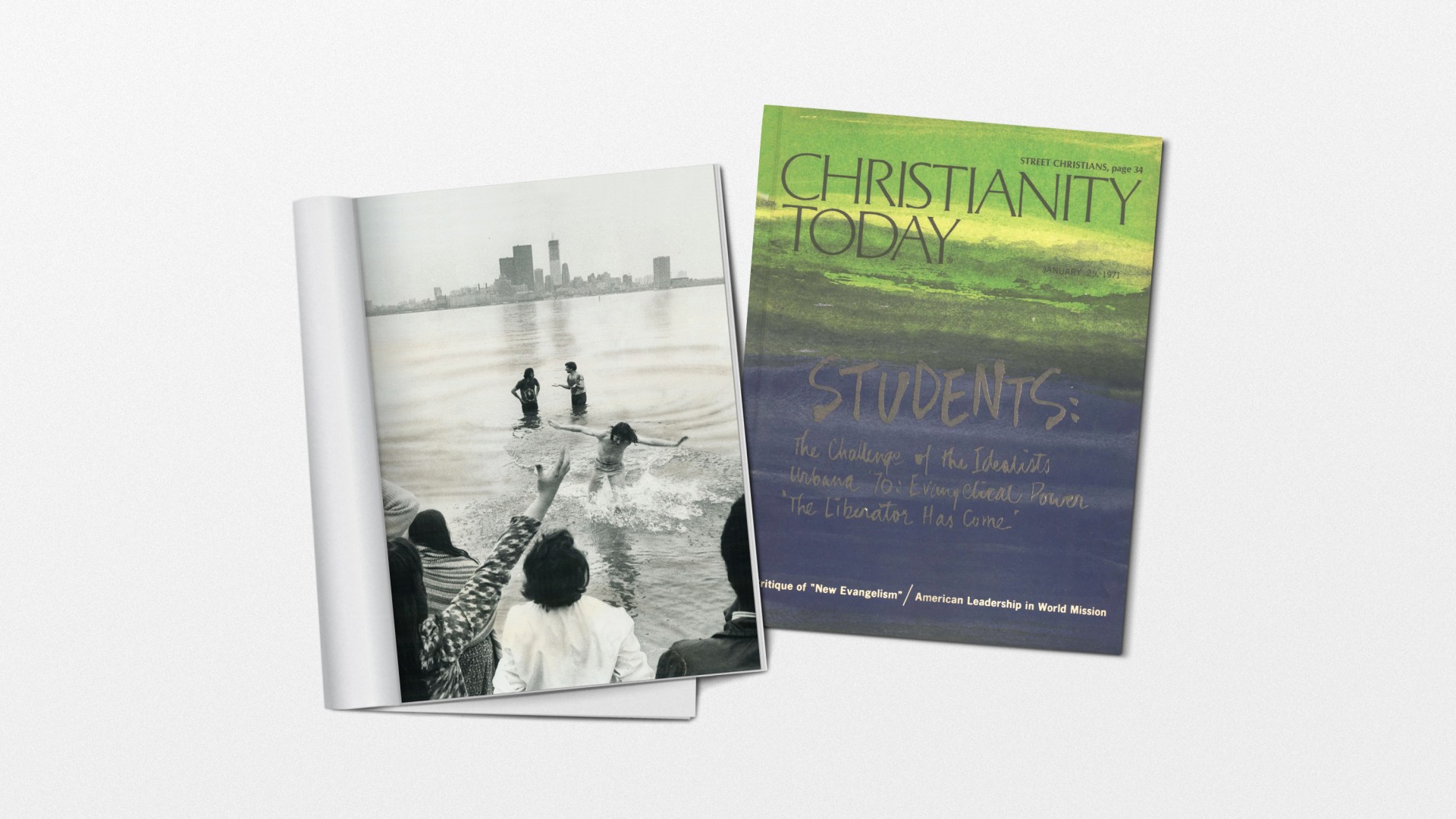
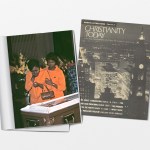
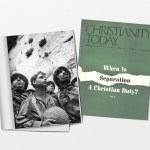
A photo from the Jesus Movement and a CT magazine cover from 1971.

A Jesus People convert returns to shore on the Toronto Islands after being baptized in September, 1971.

Christianity Today February 6, 2026
Illustration by Christianity Today / Source Images: Getty, CT Archives

CT kicked off 1971 with a startling report from Washington State

Thousands of young people in the Pacific Northwest are forsaking pot to follow Christ. Spokane, Washington, is the latest big city to feel the impact of the movement, which is largely outside the churches. …

Scores of young Bible-toting hip and straight types … take to the streets daily to share their faith. Often they kneel on sidewalks to pray with peers who want to receive Jesus. They show up in strength at community dances and other events to talk about him, stage “Jesus marches” and outdoor rallies, and hold forth in Bible study and outspoken witness sessions in the area’s twelve public high schools. …

The Jesus People opened the “I Am” coffeehouse and two communal “houses”: the House of Abraham and the House of Sarah. … Nearly 300 miles away in Seattle, revival fires have burned brightly in the underground for two years. Numerous communes and coffeehouses have sprung up there and spawned ministries elsewhere in the Northwest and British Columbia. The largest coffeehouse is “The Catacombs,” across the street from the Space Needle. … It attracts up to 400 on weekend nights for gospel rock, Jesus “rapping,” and friendship. A heavy program of Bible studies and training classes is offered the rest of the week.

CT decoded some of the new converts’ lingo and told readers to look past the “freaked out” style and not get distracted by all the “bell bottoms, beads … coffeehouses and communes.”

The Jesus movement must be given more than a cheap sociological and psychological explanation. 

Where did it all begin? Out of the ashes of Haight-Ashbury? As an aftermath to the Sunset Strip riots? Among the disillusioned of the drug culture? Yes, and much more. The movement began spontaneously over a wide front. In the last three years, the West Coast, the supposed center of sensual pleasure, has ironically reached a flash point of despair over this world and spiritual longing for another. …

The same hip teen-ager who last year turned his friends on to drugs may now be turning them on to Jesus. In an era when students have led the protest against war and racism, we should not be surprised that they have taken the Gospel of Christ and moved it into their world. Tens of thousands evangelize today rather than just a few paid professionals. …

The Gospel of the incarnation is being acted out again in the youth culture, as the Word becomes flesh in these particular lives and their particular style. … Whether the churches can embrace these authentic Christians in their own culture is an open question, and with the answer rests much of the future.

CT also reported on “Jesus rock,” Jesus People music festivals, and evangelical  in 1971. While many commentators said the whole thing seemed like another Baby Boomer fad, the magazine argued there was more to it

With so many thousands of young people involved, and given the reality of group-identity pressures, it can reasonably be assumed that cases of band-wagon Christianity do exist. Faddism is furthered by commercial exploitation—for example, a “Jesus People’s wrist-watch” marketed by a church for $14.95. But it can also be the product of church neglect or inability to follow through with new converts.

On a wide front, however, the movement defies description as a fad. Many of the counter-culture converts—the “street Christians”—of the years 1967–70 are still hanging in there, spiritually stronger than ever. 

CT kept readers apprised of other religious developments as well, including a major debate between two Catholic theologians in Germany. 

The debate between Hans Küng and Karl Rahner is surely one of the most remarkable events within today’s remarkable period of Roman Catholic history. … Küng has insisted that Catholics should openly admit that profound changes have taken place in the understanding of church dogma. He wants Catholics to stop insisting that the church has always and really taught one and the same truth.  But Rahner has chosen not to accept Küng’s way. He opts for the other solution: there has been no change; there has only been interpretation. 

Theologian Reinhold Niebuhr died in 1971, prompting a reflection on his legacy. He wasn’t an evangelical, but an Asbury Theological Seminary professor argued evangelicals nonetheless owed him a debt of gratitude. 

We are indebted to Niebuhr … for his realistic view of human reason. It was his contention that reason is as largely affected by sin as are the appetites. Seeing the fearsome contrast between the “moral” individual and the “immoral society” of men in collective life, he affirmed strict limitations upon the ability of reason to curb the power of egoism. …

His genius … lay in his ability to see the complexity of the factors in human behavior, and the demonic possibilities built into the structures of society, notably those of political and economic power. Certainly our century will not outlive the necessity for hearing his verdict upon the prevalence of pride as an ingredient in modern civilization. … Niebuhr thus saw that the corrupting effects of human pride ruled out any and all mundane utopias.

CT marked another significant passing when oil industry magnate J. Howard Pew died at 89. Pew was a major financial donor and almost single-handedly underwrote the launch of CT. 

Mr. Pew was a big man physically as well as spiritually, with a rugged constitution, a deep voice, and a keen sense of humor. He played excellent golf and until a year ago was still able to break ninety. He had a fondness for cigars and a thorough antipathy to alcohol. He was a man of strong convictions and great integrity; his word was his bond. His mind was keen, and his interests ranged wide. … 

It is fair to say that, humanly speaking, the magazine would never have survived or even have gotten off the ground without his generous support and enthusiastic backing.

Founding editor L. Nelson Bell mourned the growing acceptance of abortion in America. 

That we have embarked on this new approach to the termination of pregnancies bodes ill for America as well as for those churches that have become active in this. It evidences a callous disregard for the realities of the unwarranted termination of life, which sears the souls of all concerned. …

The Christian minister increasingly finds himself called upon for counsel by pregnant unmarried girls. It is a responsibility he cannot shirk. But it is disturbing to see that many ministers are meeting this situation by referring the girls to the various abortion services now available through church agencies.

As a physician and a Christian, one who can well understand the emotional agonies involved for parents and daughters, I urge all concerned not to accept what seems to be the easy way out but to face up to the fact that a human life is involved—a life that cannot defend itself and is in no way responsible for its plight.

Editors noted a Supreme Court ruling on vulgarity and freedom of speech, speculating it might be positive for evangelism: 

The court reversed the conviction of Paul R. Cohen, who had been charged after he appeared in a Los Angeles courthouse corridor wearing a jacket that bore an obscene remark denouncing the draft. … 

Much as Christians may loathe the growing respectability of four-letter words once considered immoral, they should now find ways of capitalizing on this legal precedent. A court that has upheld scurrilous discourse in public places will have to allow the communication of the Christian Gospel, for example, in similar situations.

CT invited a debate about the merits of megachurches in 1971—before they were called “megachurches.” The vice president of Lynchburg Baptist College argued the affirmative, while a Christian and Missionary Alliance pastor made the case that mid-sized churches are better

Perhaps the greatest advantage of the mid-size church is its ability to provide diverse expression without losing personal contacts. In such a congregation, the pastor can know everyone by name. More important, he can know something about each person, visit in his home, share his joys and sorrows. This kind of contact still has value, not only for the pastor, who must preach to real people, but also for the layman, who learns that Sunday’s preacher is more than a good actor, that he, too, is flesh and blood. … 

Too many Christians seem to crave great preaching and great music and are willing to pay any price except personal involvement to get it. They take up their weekly watch on the end of a pew, contribute to the offering, rejoice in the sermon, shake hands with a greeter (whose name they probably do not know), and are gone for another week. Such Christians will always be with us, perhaps, but we ought not to structure our church strategy to make it easy to be an invisible member of the Body of Christ.

The magazine also attempted to intervene in the ongoing debate about speaking in tongues, publishing “A Truce Proposal for the Tongues Controversy.”  

An acrimonious debate about the legitimacy of tongues in the Christian life divides our ranks and saps our energies. This article is an attempt to clear the air and raise the level of rhetoric on both sides. If the evangelical community followed the guidelines proposed, greater harmony would descend and the mission of the Church would advance. … 

Speaking practically, of course, there are distinctives that make difficult a united worship of Pentecostals and non-Pentecostals. Differing styles of church meeting have developed along denominational lines, just as have differences over the sacraments. However, this need have no bearing on interdenominational fellowship and cooperation; there is a very real basis for unity in all major issues. Moreover, churches need not split when tongues breaks out within them. Paul left room within the worship service for such manifestations (1 Cor. 14:26, 39), so long as certain guidelines were followed—edification (14:5, 26), interpretation (14:5, 13, 28), self-control (14:27), order (14:40), and the absence of proselytizing (12:18–31). 

This last is the foundation stone of combined worship and continued unity. Anyone who insists on propagating his distinctive practice—be it tongues, a certain mode of baptism, or foot-washing—removes himself from those who do not practice such. The proper view of glossolalia will recognize it as an individual gift depending on the sovereign choice of the Spirit, not a corporate experience every Christian must undergo.

An Australian Bible scholar noted that in the early 1970s, evangelicals were increasingly being called conservative evangelicals. He argued the modifier was not entirely right.  

There have always been evangelicals who have been daring innovators and who have refused to walk meekly in the old paths. … Wherever I look I seem to see evangelicals taking an initiative. While holding firmly to the basic evangelical position, many are refusing to be bound by the old evangelical shibboleths and are advocating radically new ideas and practices. …

It seems idle to speak of evangelicals these days as conservative. There is conservatism enough, it is true. But an eager search for new ideas and new methods characterizes evangelicalism as it starts the seventies. If this creative, innovative attitude can be maintained, the consequences are incalculable.

Some readers, of course, got mad at things they read in CT. That happens every year. In 1971, editors took the time to respond to one unhappy subscriber with a note about recycling

A disappointed reader of Christianity Today clipped and returned a paragraph that offended him and canceled his subscription. “Your magazine isn’t even worth recycling,” he charged.

The truth is that content notwithstanding we are worth recycling, especially in view of dwindling forest reserves. … Conservation of God-given natural resources becomes an ever more critical Christian responsibility. 

addApple PodcastsDown ArrowDown ArrowDown Arrowarrow_left_altLeft ArrowLeft ArrowRight ArrowRight ArrowRight Arrowarrow_up_altUp ArrowUp ArrowAvailable at Amazoncaret-downCloseCloseellipseEmailEmailExpandExpandExternalExternalFacebookfacebook-squarefolderGiftGiftGooglegoogleGoogle KeephamburgerInstagraminstagram-squareLinkLinklinkedin-squareListenListenListenChristianity TodayCT Creative Studio Logologo_orgMegaphoneMenuMenupausePinterestPlayPlayPocketPodcastprintremoveRSSRSSSaveSavesaveSearchSearchsearchSpotifyStitcherTelegramTable of ContentsTable of Contentstwitter-squareWhatsAppXYouTubeYouTube