News

Displaced Ukrainian Pastor Ministers to the War’s Lost Teens

“Almost everybody has lost somebody, and quite a few people have lost very much.”

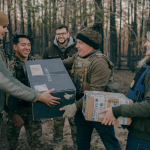
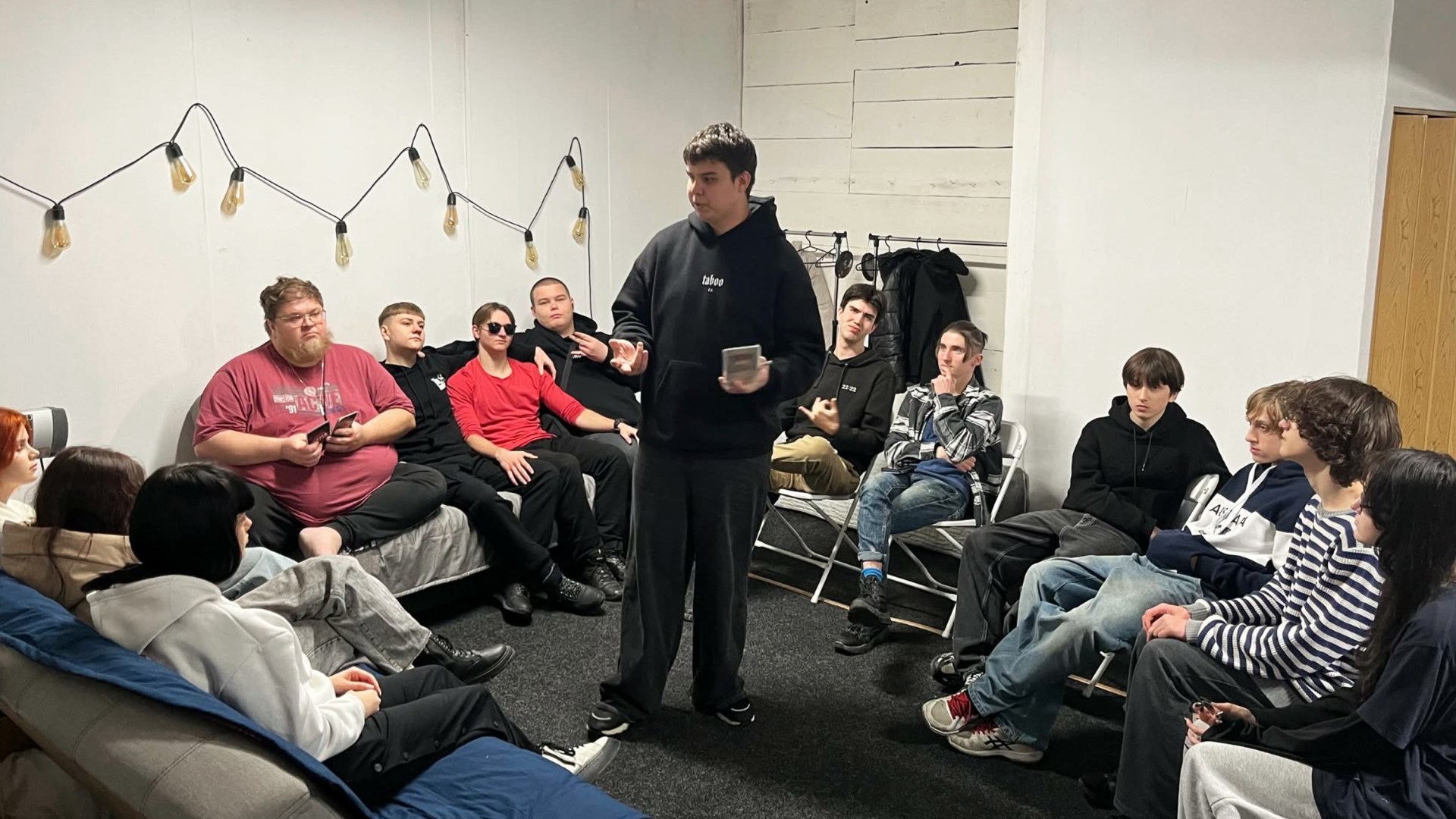
Pastor Alex Zaytsev, on the end of the couch in a red shirt, hosting his teen ministry.

Pastor Alex Zaytsev, on the end of the couch in a red shirt, hosting his teen ministry.

Christianity Today January 8, 2026
Image courtesy of Pastor Eugene Grinishin

Ukrainian American pastor Alex Zaytsev has witnessed Russia’s war machine wreak havoc and tear families apart. When the full-scale invasion began in 2022, he initially remained in his apartment in the eastern city of Avdiivka and opened his church building as a bomb shelter for locals.

Yet a month later, Russian attacks on his town intensified and Zaytsev fled 25 miles northwest to Pokrovsk, where he helped with evacuations and aid deliveries. Zaytsev was born in eastern Ukraine and grew up in Washington state before returning to Ukraine in 2016 to serve as a pastor and missionary with Church Without Walls.

As the war dragged on, Zaytsev encountered teenagers—bored and restless—roaming the streets. Schools and businesses had closed, and virtual classes were unpredictable. So Zaytsev launched a teen ministry in one of his denomination’s church plants in Pokrovsk. Each morning, he unlocked the church building and welcomed the teenagers inside.  

“My mission was to share the gospel with them,” Zaytsev told Christianity Today. “And I did this until it became too dangerous to stay in Pokrovsk.”

After Russian troops conquered Avdiivka in February 2024 and began advancing toward Pokrovsk six months later, Zaytsev moved again. This time he fled farther west to Ivano-Frankivsk, and he did not go alone—he brought along 20 teenagers seeking to escape the war’s frontlines. Another pastor joined him, and together they rented several apartments and a multilevel house for the group. Many had come from troubled backgrounds, and their parents had decided to stay behind or delay evacuation. 

Zaytsev said Ukrainians are tired of war. Moscow is bombing civilian centers on a near-daily basis, families are split up, and soldiers are dying. More than 14,000 Ukrainian civilians have died since the war began four years ago, and nearly 4 million people have been internally displaced.

“Almost everybody has lost somebody, and quite a few people have lost very much,” Zaytsev said.

After seeing Moscow’s troops attack his city, he questions any cease-fire plan that does not include solid security guarantees. “Will other countries help us if we get attacked again? That’s the primary question that a lot of people have,” he said.

After a flurry of US-led negotiations in recent months, a new cease-fire proposal offers some hope for weary Ukrainians.

President Donald Trump met with Ukrainian President Volodymyr Zelensky in Florida last week to discuss Ukraine’s new 20-point plan to end the war with Russia. Zelensky said the two countries agree on most of the points, and Trump claimed a deal to end the war is “maybe very close.”

The plan allows Ukraine to maintain a peacekeeping force of 800,000 troops and join the European Union. It also includes explicit promises that Washington and its European allies would come to Ukraine’s aid in future conflicts. After his meeting with Trump, Zelensky said the president offered 15 years of security guarantees—short of the decades the Ukrainian president believes are necessary to prevent another war but a substantial improvement from prior US proposals.

The Trump administration’s original 28-point peace plan from last fall made major concessions to Russia and required Ukraine to reduce the size of its military, cede land, and agree not to join NATO. It offered only vague US defense assurances.

During talks with Ukrainian and European officials in mid-December, Washington agreed to provide Ukraine with “NATO-like” security guarantees—a hopeful sign for Ukrainians who have grown increasingly worried about the United States pulling its support. NATO’s Article 5 requires members to treat an attack against one of its countries as an attack against all and to respond with whatever measures are deemed necessary. Negotiators have not released details of the security protections, which still require congressional approval.

On Tuesday, Trump’s special envoy Steve Witkoff and his son-in-law Jared Kushner met with leaders from more than 30 European nations to discuss Ukraine’s long-term defense assurances. The UK and France agreed to establish military hubs and build protected weapons facilities in Ukraine when the war ends. In September, French President Emmanuel Macron said that 26 countries from the so-called “coalition of the willing” had committed to sending troops to Ukraine in the wake of a cease-fire.

Yet sticking points remain, including convincing the Kremlin to accept new Western-backed security guarantees and negotiating territorial concessions.

Russia wants to control five Ukrainian regions, including cities such as Pokrovsk that it has not been able to conquer despite multiple attempts over nearly two years. Kyiv says ceding any territory to Russia would violate its constitution, while European leaders argue that such a concession would reward Russia for its aggression.

Putin has shown little interest in ending the war and has repeatedly demanded that any negotiated cease-fire address the origins of the conflict—in essence, Russia’s maximalist demands from day one of its invasion. Moscow has increased its attacks on civilian centers and launched massive strikes on Ukraine’s energy infrastructure, leaving entire regions without power as temperatures dropped below freezing last month.

Zaytsev said most residents of Avdiivka will not return home even if peace talks are fruitful. The war destroyed much of the city, including a massive coke plant that helped fuel the local economy.

While 15 of the 20 teenagers who left with Zaytsev eventually reunited with their parents, five are still under Zaytsevhis care. Some come from troubled backgrounds, with alcoholic parents who struggled to care for them. All five teens came to faith in Christ through the Church Without Walls ministry.

In the meantime, Zaytsev is teaching the teenagers practical life skills like taking the garbage out before it stinks up the house, avoiding junk food combinations—such as energy drinks, chips, and gummy bears—on an empty stomach, showering regularly, using deodorant, and limiting themselves to a small (not big!) squirt of body spray. He has also taught them how to bargain-shop for coffee for church services, plan games for youth group gatherings, and manage conflict. The teens help prepare Communion, coffee, and cookies for the Sunday morning worship services.

The church Zaytsev planted in Ivano-Frankivsk 18 months ago grew quickly to about 40 people due to the influx of internally displaced people in the region. Two months ago, the 32-year-old pastor launched a second church plant there.

As world leaders continue negotiations and discuss funding to rebuild Ukraine, Zaytsev is laying the groundwork for healing and forgiveness among both teens and adults. He acknowledges that forgiveness may be difficult as long as Ukrainians are under constant attack, yet he reminds his congregants that it will be an important future step.

Zaytsev points them to the passages in Genesis that speak of Joseph forgiving his brothers for selling him into slavery. “This should be an example for us to strive for—that we also will have to forgive people who have caused us extreme pain,” he said.

Theology

Why Christians Ignore What the Bible Says About Immigrants

Columnist

Believers can disagree on migration policies—but the Word of God should shape how we minister to vulnerable people.

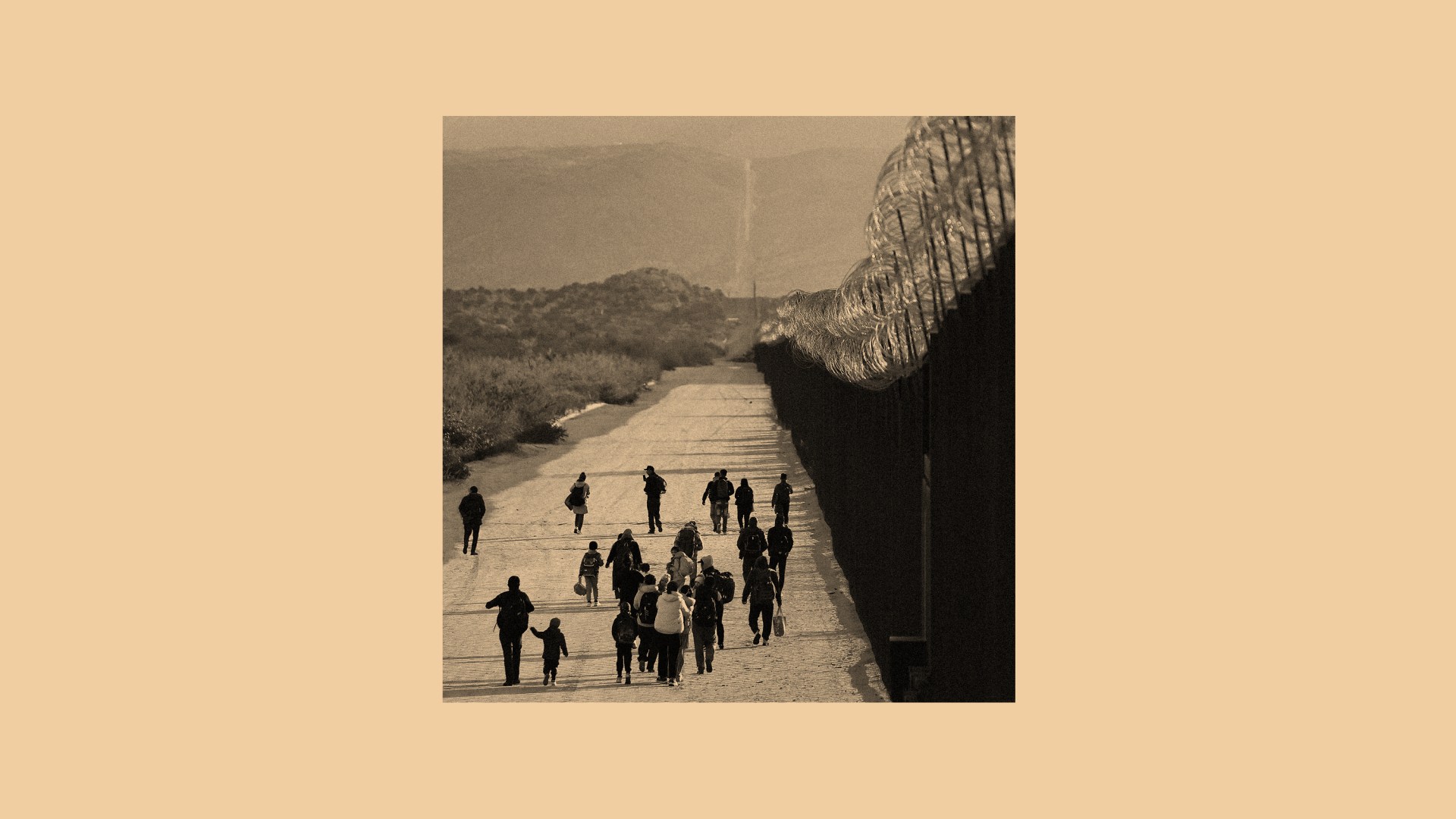
A photo of families and children walking along a US border.
Christianity Today January 7, 2026
Illustration by Christianity Today / Source Image: Getty

This piece was adapted from Russell Moore’s newsletter. Subscribe here.

Nothing can provoke anger quicker than mercy, when it’s directed to the wrong kind of people.

Marking the church’s Year of Jubilee, Pope Leo XIV invoked biblical language calling for kindness to migrants as human beings made in the image of God. There’s nothing the least bit controversial about this. It’s what the Bible says, what Christians have always believed, what official Catholic teaching makes explicit. The pope did not call for countries to stop enforcing their borders, nor did he give any specific policy proposals for how a nation should best balance security and mercy. He simply called on Christians to refuse harshness or mistreatment of vulnerable people.

Some people didn’t like this.

The blowback the pope received was not from fellow bishops or clergy or, as far as I know, from any large numbers of churchgoing Roman Catholics. Instead, political activists and social media conflict entrepreneurs blasted him, not so much for what he said as for the fact that he spoke to the issue at all.

Difficulty speaking to immigration is not a specifically Catholic problem—in fact, it may be more of a problem for other Christian groups. After all, every pope in recent years and many bishops have spoken consistently to this point. And, of course, the pope is the pope. He can’t be fired the way the pastor of a storefront Bible church in Aurora, Illinois, or Athens, Alabama, can. Some of these pastors are trying to figure out how to care for people in their communities who want to hear the gospel but are fearful of being arrested by immigration officials on their way to church.

This is not a simple matter of “Well, people who broke the law should be accountable.” Some of these people are following the right process—but may be unable to show up for court to adjudicate their cases for fear of being arrested in line. Some of them have broken no laws at all; they are Americans but have someone in their household, maybe a mother or a father, who is not. And some of them were doing everything right—filling out the right documents, working to provide for their families—when their asylum claims or refugee status was abruptly withdrawn.

One pastor said to me, “Most of my people want to know how best to pray for and to serve their neighbors here, but if I answer their questions from the pulpit, a small minority of the congregation is going to say that I’m ‘supporting illegals.’” One preacher, an immigration hawk who supports mass deportation, said he has the same problem when he tells people the church’s job is to minister to everybody, regardless of where they’re from or what they’ve done. Yet another minister confessed, “I don’t even know what my views on immigration or ICE are; I’m not trying to weigh in on that. I just want to remind people to love their neighbors, full stop. That’s Jesus. How is that controversial?”

Well, it turns out Jesus is very controversial—and always has been.

As a matter of fact, when it comes to the language of Jubilee, Jesus kept preaching until he reached the point where his hearers were outraged, for all the same reasons we see today.

In his hometown synagogue, Jesus turned to the scroll of Isaiah and read a passage that echoes directly the language of Jubilee from the Torah: “The Spirit of the Lord is upon me, because he has anointed me to proclaim good news to the poor. He has sent me to proclaim liberty to the captives and recovering of sight to the blind, to set at liberty those who are oppressed, to proclaim the year of the Lord’s favor” (Luke 4:18–19, ESV throughout). This reading was not controversial—even when Jesus made the audacious claim “Today this Scripture has been fulfilled in your hearing” (v. 21).

Luke recounts, “And all spoke well of him and marveled at the gracious words that were coming from his mouth” (v. 22).

Most of us would call it a day and leave the teaching at this level of abstraction. Jesus, though, knew the applause meant they didn’t really get what he was saying. They wanted Jubilee for the poor and the captive so far as it applied to them, struggling people in an impoverished backwater of an occupied Roman territory.

But Jesus kept talking and implied this mercy of God applied even to people they didn’t like. He referenced from the Bible that the great prophet Elijah was sent to care not for one of his own people but for a Canaanite widow outside the borders of Israel. Jesus then pointed out, even more harshly, that Elisha bypassed countless Israelites with leprosy to heal a foreigner—not just a foreigner but a Syrian, and not just a Syrian but a Syrian soldier.

Again, Jesus did not even apply these scriptural principles at this point. He simply pointed out what the Bible had said. But “when they heard these things, all in the synagogue were filled with wrath” (v. 28).

Jesus did not bumble into this crisis accidentally. He knew exactly what he was doing—and walked right toward it. Mercy destabilizes the moral bookkeeping of who is “deserving” of it. That’s true for all of us, and our responsibility is to keep hearing the Word of God until it reaches where we do not want it to go, where our passions rise up and say, “No, not that far.”

The Bible does not give a comprehensive public policy for migration or asylum. Christians of good faith can disagree on those things. But the Bible does give a comprehensive view on what we are to think of human beings, including migrants. The church has a mission to shape consciences around how we minister to scared and vulnerable people, regardless of whether we think they should have stayed somewhere else. And Jesus has already taken the question of “Who is my neighbor?” off the table (10:29).

What Jesus did with Jubilee is radically shocking. He took a year out of the calendar and announced it was pointing not to a date but to a person—to him. He is the kingdom. He is the deliverance. He is the Jubilee. What’s dangerous about this is not where it’s complicated (What counsel do I give someone who is illegally here but in danger back home and has nowhere else to go?). What’s dangerous is where it’s very, very clear—because it asks us whether our deepest loyalties are still capable of being interrupted by the Word of God.

The question is not whether the Bible is clear enough but whether we are still capable of being changed by it. That was controversial in Nazareth then. It’s controversial in Nairobi or Naples or Nashville now.

Russell Moore is editor at large and columnist at Christianity Today and leads its Public Theology Project.

Books
Review

Apologetics Can Be a Balm—or Bludgeon

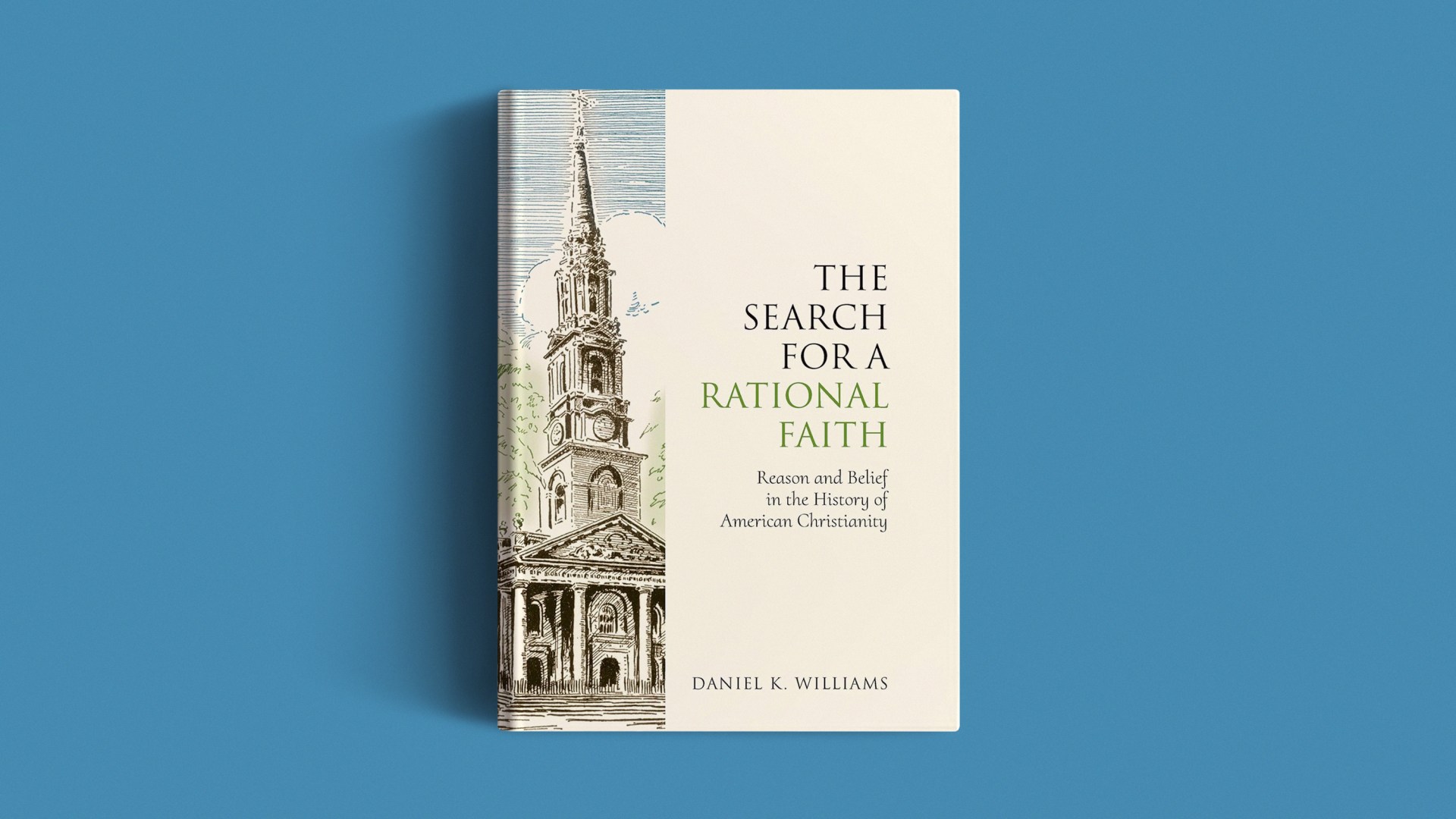
A new history of American apologetics from Daniel K. Williams offers careful detail, worthwhile lessons, and an ambitious, sprawling, rollicking narrative.

The book cover.
Christianity Today January 7, 2026
Illustration by Christianity Today / Source Images: Getty, Oxford University Press

Is Christian faith reasonable? This question has haunted and delighted the Christian mind since Justin Martyr addressed it in the second century. Believing that the gospel constitutes the truest story about the world, Christians have still had to grapple with how our beliefs interact with outside claims to knowledge and experience of the world. 

This tension has led many Christians either to entirely reject or to subordinate themselves to the world’s learning, but it has also been fuel for Christian intellectual culture. And it’s not just a question for intellectuals, an esoteric or cerebral pastime. Everyday believers confront related questions too: Should we accept the scientific evidence for macroevolution, climate change, or vaccine efficacy? Should we attempt to predict the date of the rapture? Should we buy into conspiracism like QAnon?

This cluster of big questions animates Daniel K. Williams’s riveting new book, The Search for a Rational Faith: Reason and Belief in the History of American Christianity. Over the past decade, in books like God’s Own Party and The Election of the Evangelical, Williams (a CT contributor) has become one of our nation’s great historians of 20th-century faith and politics. 

In The Search for a Rational Faith, Williams turns his attention to new material: the history of ideas and, largely, prior centuries. He offers an intricate intellectual and cultural history of the enterprise that attempts to defend and promote the intellectual plausibility of Christian faith. (Today we call this enterprise apologetics, but in earlier eras it was known as natural theologyChristian philosophy, or, predominantly, Christian evidences.) Williams surveys apologetics in American Protestantism from the Puritans of the 1600s to Tim Keller in our time, covering a remarkable amount of historical ground in an ambitious, sprawling, rollicking narrative.

Historicization is particularly imperative for apologetics because it’s a discourse too often reduced to abstract ideas shorn of any messy human life—more like mathematics than preaching or conversation. Likely because of this, the history of apologetics has been an undertold story, even as an aspect of broader intellectual histories. 

That makes Williams’s contribution all the more impressive. This book will join classics by Avery Cardinal Dulles (A History of Apologetics) and Alister McGrath (Christian Apologetics) in examining not only apologetics’ content but also its historical drama amid different social contexts and cultural pressures.

Williams’s book chronicles three epochal shifts in Anglo-American Protestant apologetics. First is a movement away from the Calvinist suspicion of reason’s capacity in the domain of spiritual truths. 

Early Puritan Calvinism had its own internal scholasticism and intellectual flair, of course, but the Puritans’ ideas about sin made for a grim view of the capacity of human reason outside illumination by the Holy Spirit. This perspective precluded any hopefulness about unconverted people reasoning their way to knowledge of God. Conversion simply had to come first, and counterarguments to Christianity were dismissed as the moral corruption of the damned. 

American Christians’ wide embrace of a more optimistic Arminian rationalism in the 18th and 19th centuries, however, opened new space for rational arguments about faith. This theological perspective allowed that the human intellect, though insufficient and distorted by sin, could still reason its way to God and God’s basic truths. And if that were true, then empirical evidence could buttress the credibility of Christian belief and belief in the Bible. 

The result was a new flowering of apologetics aimed at providing robust evidence for faith. In America, this Arminian approach fit well with the emerging political scene and benefited from a culture in which Christianity was basically seen as plausible, even among doctrinal outliers such as the deists and Unitarians. This evidentialism became integral to American intellectual culture writ large, including US college curricula, and seemed to harmonize insights from science, logic, history, theology, and morality. In a particular achievement of the book, Williams shows how this widespread apologetics culture influenced the American founders and the cultural penumbra of 19th-century American education.

Then came thinkers like Immanuel Kant, Georg Wilhelm Friedrich Hegel, and Charles Darwin—and the second major shift. The questions they raised about history, science, and knowledge itself proved deeply destabilizing for the centuries-long apologetics tradition. In Williams’s telling, biological evolution as such was not the primary challenge early on; that was readily finessed by many Christian intellectuals of the time. Far graver difficulty came from historical and religious pluralism and new views of the Bible and its authority in human life.

The third major transition, then, was the shattering of the apologetics tradition as it crashed upon the rock of 20th-century complexity. Mainline Protestants mostly lost faith in the older evidentialism, but at the same time they crafted alluring cases for Christianity grounded in experience, ethics, or civilization. (More recently, many of the erstwhile New Atheists who are newly Christian-curious have gravitated toward such pragmatic, instrumentalist arguments as well.) But eventually, Williams claims, mainliners relinquished even this, entering our own time with only a social-justice framework bereft of any notion of common human truth or rationality to which we can appeal. 

This is a somewhat misleading analysis. It’s not as if mainline Protestants have entirely abandoned attempts to compellingly present the Christian faith, though certainly they largely spurn the term apologetics, and their philosophical infrastructure is different. Social-justice traditions themselves can exercise a type of “apologetics of goodness,” the enticing beauty of the lived witness of the saints. In this case, the actual living out and practicing of the way of Jesus’ life and ministry are the embodied persuasion and enticement to Christian faith. 

Nevertheless, Williams ends the book seeing evangelicals as the last Protestants to take up apologetics as such in our time, viewing this effort as largely a successful project, especially in its cultural apologetics mode. Yet for all the book’s strengths, I’m left with the unresolved incongruity of, on the one hand, Williams’s claim that evangelicals are the lone (Protestant) defenders of a rational faith and, on the other, the reality that some sectors of evangelicalism seem mired in an anti-truth, anti-scientific, postmodern nihilism of power.

There are a few other limitations to consider, none of which should be taken as impugning a monumental accomplishment overall. The sidelining of Catholic and Orthodox apologetics (the former banished to a Siberian appendix) unfortunately reinforces long-standing patterns in American historical work of overlooking those traditions’ contributions to American life. Here the omission also misses an opportunity for thinking about the dynamics of intra-Christian apologetics. 

Admittedly, Williams has so much material on the Protestant world that the decision was justifiable. Still, I wish we could have gotten a better index of the popular reception of apologetics on the ground, how average Christians across traditions received and lived these arguments from the intellectual elite.    

My biggest concern about the book, however, is that despite serious progress compared to previous works, it needed to delve deeper into the shaping interplay between culture and ideas. For example, apologetics has historically been a very masculinized discourse, but Williams could have been insightful with more substantive attention to female apologists like Mary Astell, author of 1705’s The Christian Religion, as Professed by a Daughter of the Church of England, or Rebecca McLaughlin, a contemporary writer mentioned cursorily. The masculine style of Protestant apologetics deserves more exploration for both its peculiar allures and its blind spots. 

Similarly, neurodivergence would have been a helpful issue to explore. Apologetics has played a striking role in the autistic community, both as a project to sooth social frictions and as a catalyst of disenchantment when apologists overpromise and underdeliver.

Likewise, Williams mostly deals with intellectual titans—and does so superbly. But he gives precious little space to the pop apologetics of consumer culture, which has arguably been more influential for a century. On this level, apologetics functions less to convert unbelievers than to help believers bolster their own faith. This can be an authentic intellectual discipleship, but it can also be triumphalist, self-aggrandizing, and ultimately self-deceiving. Adding more on this type of material would have enhanced the book. 

The oversight reaches catastrophic proportions with Williams’s entire avoidance of the sheer devastation of the Ravi Zacharias case. This case is so important because it inescapably links apologetics to its social ramifications, dragging it out of its fortress of abstractions. That the best-known Christian pop apologist of the recent past was empowered by that very enterprise to take up serial sexual predation and heinous sexual sin provokes existential questions: about apologetics ensconced in Christian mass marketing and celebrity culture, about Christian conduits of trust and authority, about how views of truth get untethered from beauty and goodness, about how apologetics can be morally simplistic and tragically unloving, about how arguments are always borne by people, flawed people.

Even so, this book tables a rich intellectual feast. It has all the hallmarks of Williams’s previous, excellent work: textured attention to the intricacies of primary sources and sophisticated thinking about historical patterns. 

The Search for a Rational Faith offers vividly fresh horizons on Western intellectual giants like Isaac Newton, Robert Boyle, and John Locke for their contributions to Christian apologetics (even when they have eccentric doctrinal beliefs). It also provides some deep cuts on obscure but intellectually potent figures. The book will fascinate anyone interested in apologetics directly, as well as anyone interested in American religions, intellectual history, and higher education more broadly. 

There are also lessons for readers to glean. The role of doubt is crucial—and something with which so many of Williams’s figures struggle. His account explores doubt’s role in the mature faith of intellectually curious believers, a worthwhile contrast to some populist Christian cultures’ tendency to smother and expel doubt. There was (at least in certain forms and degrees) deconstruction way before deconstruction was cool, and Williams finds glimpses of intellectual anguish even in the faith of those most publicly zealous for the integrity and stability of their rational arguments for Christianity. 

That, however, leads to a countervailing challenge: the role of certainty. So much of the apologetics tradition has been lustful for rational certainty in a way that betrays an underlying anxiety. That is not the foundation of every search for a rational faith, but a search born of anxiety may fall into a kind of idolatry, wanting certainty of conceptual conviction more than the truth of God himself. 

At their best, apologetic arguments can be a balm, healing the wounds of anxiety, error, ignorance, and limited perception. But arguments can also be a bludgeon, wielded to domineer, ravage, and demonize. Out of the same mouth can come both blessing and cursing. “My brothers and sisters, this should not be” (James 3:10).

The Search for a Rational Faith could be an occasion for a renewal of apologetics and a celebration of what it has accomplished historically. But let it also be an occasion of reckoning with the hardest, most agonizing, and self-reflective questions about apologetics, as befits followers of the one who said the truth will set you free.

Daryn Henry is an assistant professor of religious studies at the University of Virginia and the author of A. B. Simpson and the Making of Modern Evangelicalism.

Theology

Who We Are and Whose We Are

Only Christ can teach us the truth about ourselves and enable us to fulfill our God-given purpose in an era of confusion about gender and sex.

An illustration of a name tag.
Illustration by Chris Neville

Who am I? And how might I know? 

These questions are as old as humanity, asked in the ancient world just as today. Already in the fourth century BC, the call to “know thyself” was inscribed above the entrance to the temple of Apollo at Delphi. 

Centuries earlier, King David asked a similar question about human significance: “What is man that you are mindful of him, and the son of man that you care for him?” (Ps. 8:4, ESV throughout). Drawing from Genesis 1, he answered,

Yet you have made him a little lower than the heavenly beings
and crowned him with glory and honor.
You have given him dominion over the works of your hands;
you have put all things under his feet. (vv. 5–6)

While the Bible has much more to say about what it means to be human, David’s words here alert us to something fundamental: “Who am I?” is inseparable from the questions “What am I?” and “What is my purpose?” 

It isn’t possible in this brief article to survey all that Scripture has to say on these questions. My aim here is more modest: to highlight four different approaches to reaching answers—approaches that are competing with one another not only in the world but also in the church.

The traditional approach (sometimes called essentialism) sees identity as something that is given to us to be received and lived accordingly. There’s great wisdom here, for it doesn’t take much reflection to realize that who and what we are is determined by a range of factors over which we have no control, such as where we are born, to whom we are born, what sex we are, or what name we are given.

In fact, identifying people in terms of such features is thoroughly biblical. Recall the moment, recorded in John 1, where Philip says to Nathanael, “We have found him of whom Moses in the Law and also the prophets wrote, Jesus of Nazareth, the son of Joseph” (v. 45). Name, place, sex, and relationship are key elements of identity—even for Jesus!

These features are still core to how we self-identify today. My name is X; I was born in the city of Y in the year Z; I’m the child of A and B; I’m married to C and am the father of D. In short, the traditional approach is alive and well.

Yet it stands in marked tension with a more contemporary approach known as constructionism. In this view, identity is something we create; it’s a project we undertake, not a gift we receive. Consequently, many no longer ask, “Who am I?” but rather, “How do I identify?”

There’s a measure of truth here as well, for many things about us are not set in stone. This is why we (rightly) speak of identity development in children. As we grow, we have all kinds of experiences and make all kinds of decisions that help form who we are and how we show up in the world. Identity is thus made up of both primary and secondary elements. The primary pieces are those we can’t choose or change, while the secondary things are more superficial, voluntary, or experiential.

But that kind of distinction rubs against the autonomous spirit of our age, which is determined to displace reception with construction. Many, therefore, claim that givenness can be overridden by choice. “We get the body we get at birth,” argues Juno Dawson, who identifies as transgender, but “changes are within our grasp. We can go against the grain. … None of us are beholden to our bodies.”

Rather than choosing between essentialism and constructionism, some have opted for a middle way that affirms portions of both. The synthesis approach (sometimes called interactionism) recognizes the difference and relationship between the fixed and the flexible elements of identity. The traditional approach never denied that there are things about us that can be changed—our names, for example, or where we live—so the distinction is really one of detail and degree.

In any of these approaches, the challenge for the secularist is the “Sez who?” problem. Who says what can and can’t be changed? Who says what’s primary and what’s secondary? Who says that a person born with a male body can’t be or become a woman (or vice versa)?

The answer to the latter question is straightforward from a biblical standpoint. For if there’s one thing Scripture makes abundantly clear, it is that God takes our bodies very seriously; they are key to who and what we are. (For more details, see The Body God Gives.) But if we abandon that worldview—and particularly if we replace it with a constructionist perspective—the answer may not seem so obvious.

Though in some regards less confused, even traditional and synthesis approaches to identity will run into trouble if they ignore God. Not just by failing to acknowledge his existence but—since we were made by him and for him as Augustine well said—not finding rest (or ourselves) until we find it in him. We will thus never begin to know who we are until we first know whose we are.

Theologian Michael Horton expresses it succinctly: “The ‘self’—understood as an autonomous individual—does not exist.” That’s why the so-called paradox of identity (we don’t find ourselves by looking into ourselves) is not really so paradoxical. We don’t find ourselves by looking inward, because we are not self-derived. We find ourselves only by looking outward to others and, ultimately, upward to our Creator.

And just as we didn’t create ourselves, so we cannot redeem ourselves. This is why we Christians speak of finding our identity in Christ. Is it any wonder Jesus said, “Whoever loses his life for my sake will find it” (Matt. 10:39)? For only he, the Savior of sinners, can teach us the truth about ourselves, transform us into our true selves, and enable us to fulfill our God-given purpose.  

Robert S. Smith is the author of The Body God Gives: A Biblical Response to Transgender Theory, CT’s Book of the Year Award of Merit selection.

News

A House of Worship Without a Home

One year after the Palisades and Eaton fires, congregations meditate on what it means to be a church without a building.

Pacific Palisades Presbyterian Church and Calvary Palisades Church a year after the fire.

Pacific Palisades Presbyterian Church and Calvary Palisades Church a year after the fire.

Christianity Today January 7, 2026
Mia Staub / Edits by CT

Pastor Justin Anderson drove up the winding road to his new congregation’s church campus, nestled between two steep green hills and moments from the Pacific Ocean. The previous Sunday, he’d preached his first sermon to his new flock. Now it was Tuesday; the church’s school was in session, and its offices were alight with staff members ready to greet the week.

Anderson didn’t know that this first Sunday would be his only Sunday at Calvary Palisades. He didn’t know that on this particular Tuesday, January 7, 2025, the Los Angeles–area Palisades fire would begin to burn.

In that morning’s staff meeting, church employees gathered near a window, looking at smoke in the hills. Fifteen minutes later, they got an evacuation notice. Teachers, administrators, and church staff marched 460 students to a parking lot for parents to pick them up. Eventually, traffic got so bad that the last 150 students walked with staff members along the Pacific Coast Highway (PCH), searching the lines of stopped cars for their families.

Anderson and the head of the church school tried to walk back up the hill to the campus to see what they could do. “We were completely surrounded by fire when we left. We’re coming back thinking, This thing’s gone. We got to Sunset [Boulevard] and PCH, and [officials] turned us away, wouldn’t let us back up the hill.”

Around a dozen places of worship were destroyed by the fires that hit Los Angeles this same time last year. Combined, the fires burned over 37,000 acres, destroyed over 16,200 structures, and claimed 30 lives.

As with any natural disaster, volunteers stepped up to help, and churches sprang into action. Firefighters from Mexico, Canada, and other states flew in to douse the blazes. Within days, community members were hosting supply drives in parking lots. (I heard a story about a woman who drove two hours from San Diego to bring her homemade tamales.) My own church made a database to connect people across the city who could open their homes for the displaced.

For a time, a city fragmented by highways and hills became a tight-knit community, offering a glimpse of what the kingdom of God must look like. According to GoFundMe’s 2025 report, Los Angeles was last year’s most generous city. Calvary Palisades alone said it received over $500,000 of support from around the world. Immediate needs like temporary housing, food, and clothing were shared about and met.

But as with any natural disaster, the news cycle moved on. Eventually, volunteers went home and supplies were exhausted. The Palisades and Eaton fires were declared 100 percent contained on January 31.

One year after the fires, church buildings still lay burned, damaged, or leveled, gated off and covered in sawdust. The work of recovery for the communities of Christians impacted by the Palisades and Eaton blazes is far from over. They’ve had to reimagine what worshiping together will look like in the months and years ahead while grieving their lost sacred spaces.

Rev. Dr. Grace Park described pacing the empty parking lot where Pacific Palisades Presbyterian Church (PPPC) used to be as akin to hearing that someone you love has died but not being able to see the body. She didn’t get closure.

The morning the fire began, the Santa Ana winds were abnormally strong, with gusts reaching up to 100 miles per hour. Park, one of PPPC’s pastors, stayed home on account of the weather. By 10 a.m., her phone was lighting up; church members and staff were evacuating their homes. Park and the church’s senior pastor, Matthew Hardin, traded texts and phone calls as the church school cleared out.

Later that evening, Park saw PPPC on television.

There was an NBC news reporter in our parking lot. (Our parking lot was quite large, and fire trucks were coming in there to park.) It was a live news feed, and the news reporter was saying, “I’m here in the parking lot of the Presbyterian church. I’m here with fire trucks. … There’s an ember. It just alighted on the church’s roof.” We’re watching it live, and I cannot believe it. I thought, She’s there. Fire trucks are there. They’re on it. They’re going to be on it. They’ve got to put this out. And then as the sun set, we just continued to get more photos of the church. It was on fire. We literally were just watching [the reporter] at the church as it burned down.

The first Sunday following the fires’ outbreak posed a challenge for preachers across the city. What message wouldn’t sound cliched or flippant? How do you speak to some church members who lost homes or even loved ones and others who emerged unscathed with a vague sense of survivor’s guilt? And practically speaking: Where do you meet when your regular meeting place is gone?

Palisades Presbyterian immediately received messages from synagogues and other houses of worship offering the church the use of their spaces. Ultimately, they spent that first Sunday at a church in Westwood. After a while, they moved to a church in Culver City. Now, they are meeting in the afternoons at a church in Brentwood.

“It was just like 9/11. … People were pouring in because they needed something to hold onto,” Park said of high attendance in the disaster’s aftermath. “We knew that people were going to come in, and then, after a while … they might leave.” Before the fire, the congregation had 100 people. Now, attendance is closer to 50.

Expressions Church, a young church in Altadena, led a prayer walk for its first post-fire service. Pastor Christopher Spolar had planted the congregation three months before, in October 2024, and the small community had been meeting in a rented space.

“It’s the Lord, I guess, that just kind of gave me this sense of peace or calm,” Spolar remembers. “Not panic, but as soon as I heard [about the Eaton fire], I just felt like … The building is gonna be gone.”

Sure enough, like Park, Spolar turned on the television to a newscaster standing in front of flames engulfing his church campus. “The Lord was saying to me, if the walls of the church had been burned down, be the church beyond the walls,” he said.

That first Sunday, Spolar read through parts of Acts, reminding his congregation of the early church’s humble beginnings. About 20 people showed up to worship with an acoustic guitar at Victory Park, its grounds streaked with burn marks. Then they prayer walked the neighborhood, visiting various checkpoints marking off areas where people were not allowed to pass as the fire continued to rage.

Expressions is now housed in the building of another church that closed in December. The theme of its one-year anniversary was “faithfulness.”

“Our vision is to help people live with Jesus and love like Jesus … . Our two big pieces are gospel witness and holistic renewal,” Spolar said. “And we got to be a part of that holistic renewal in a way that we never would have imagined.”

Members of Expressions Church, including those who couldn’t return to their own homes, helped distribute food, water, toiletries, and toys for kids. One year later, they’ve given out more than $100,000 in gift cards and hotel stays, meeting the spiritual and material needs of their community, even while grieving their own loss.

For its first post-fire Sunday, Calvary Palisades hosted an online service. Then they moved into a Seventh-day Adventist church in Santa Monica, which allowed them to host services  for the next couple months. Then they moved into an empty chapel in Bel Air. On September 7, before the first day of the 2025–2026 school year, the congregation returned to their damaged sanctuary to hold baptisms among the burn scars and studs.

Rebuilding churches is a battle on multiple fronts. If they decide to rebuild old sanctuaries, congregations must file insurance claims and organize permitting and construction logistics. In the meantime, they rent temporary spaces, order replacements for incinerated hymnals and Bibles, navigate parking in new neighborhoods, and communicate new (and constantly shifting) meeting times to worshipers as they move from location to location—all in the midst of caring spiritually and emotionally for congregants, pastors, and their city at large.

“For the first month after the fire … I was curled up in fetal position in my bed and not eating. I was constantly on. The phone was ringing up to 2 o’clock in the morning … and it would start ringing at 5 o’clock in the morning, and you can’t not answer it because you know that people are just in trauma,” Park said.

At Calvary Palisades, you can still smell the smoke in the sanctuary. The bones of the building miraculously survived, but it will be a few years before its interior is fully restored. As has been the case for many homeowners and businesses, the church’s insurance coverage was not enough to cover the extent of the damage it endured.

“Where does that money come from when your congregation is in the place that it’s in, and the difficulty of asking people to participate in a building campaign when they’re trying to build their homes?” Anderson said.

Planning for the future is both hopeful and painful. “They lost the future that they had thought that they had,” said Park of her church. “They lost the future that they believed was there for them.”

She added, “We are very intentional in making sure that the church continues. … But we are committed to making sure that our church is there for our people.”

Expressions Church has seen its attendance shrink. At Christmas 2024, the community peaked at around 100 people; now, they’re about two-thirds that size. Attendees left California permanently, departed the state temporarily to stay with relatives, or moved into different neighborhoods in Los Angeles with more available housing stock.

Even if a congregant’s house won the “dark lottery,” as Spolar put it, and survived, the surrounding community will have changed. Neighbors have left; a convenient grocery store might be gone; or a favorite coffee shop is under construction.

Amid the soot, relics survive. Calvary’s stained-glass window and cross are intact, surrounded by the studs of the sanctuary. Expressions Church recovered its lectern, from which Spolar preaches in a new space down the street.

Park hadn’t expected to find anything when she visited the burn site. But there it was, standing amid the rubble: the Presbyterian church’s large steel cross. The next day, they retrieved it with a truck.  

“It was very ironic,” Park said, “and made me realize what a weird sense of humor God has, to give us that as a gift to say, ‘It’s okay. There’s hope here. And there’s life in the ashes, and there’s life that can be had, and there’s hope that can rise from all this.’”

As I drove through the Palisades in November of last year, I was struck by new greenery shining on the blackened hills. Regrowth and rejuvenation is possible, I remembered. God’s mercy continues after the world burns. That’s one lesson churches in Los Angeles learned this year.

“The building burned down,” Park pointed out, but “we didn’t lose our church. We lost the building. … Church is not brick and mortar. … The church is her people.”

News

Norman Podhoretz Leaves a Legacy of Political Principle

The Jewish intellectual upheld the Judeo-Christian tradition.

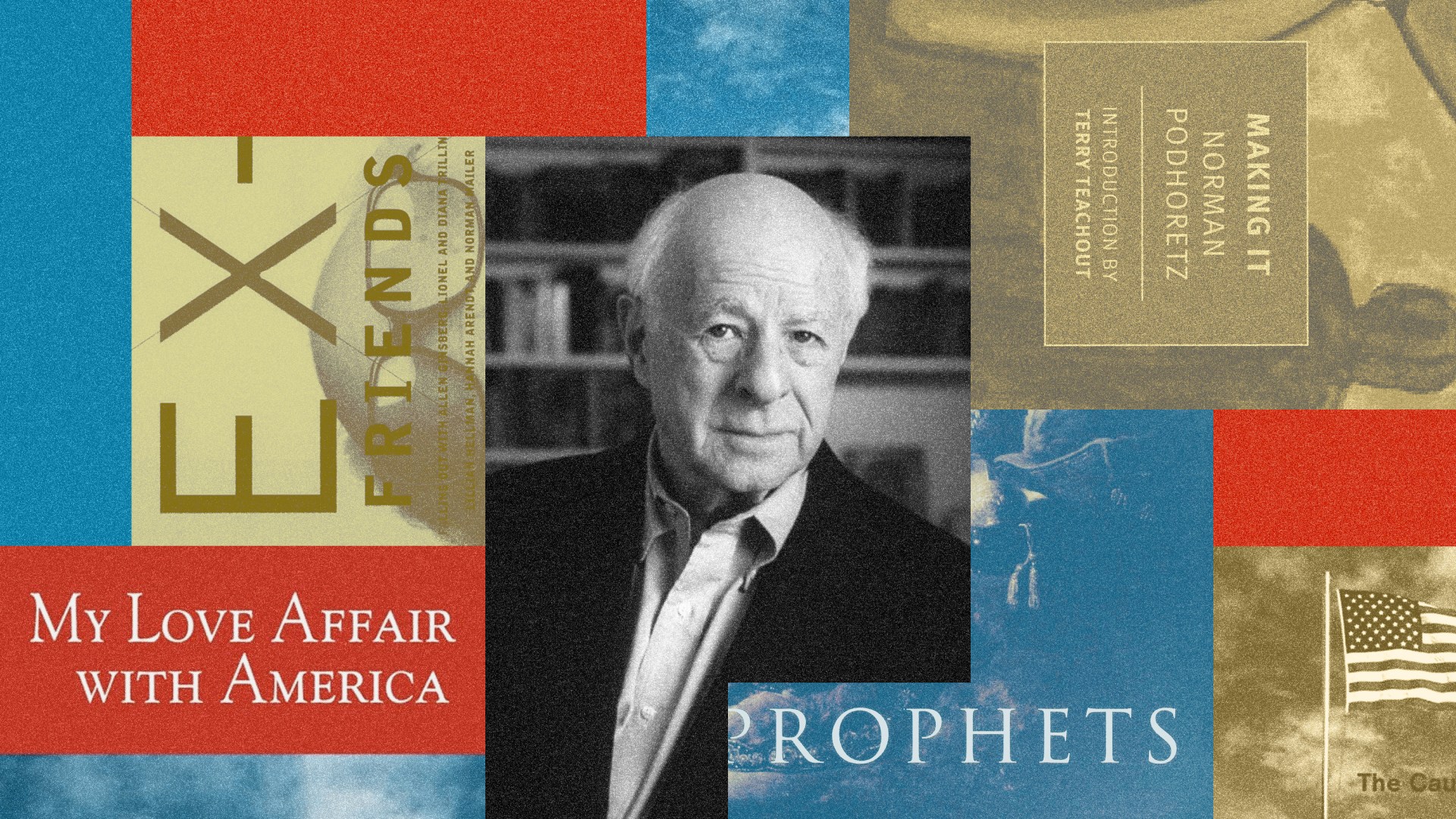
A collage of Norman Podhoretz and several of his books.
Christianity Today January 7, 2026
Illustration by Christianity Today / Source Images: Google

 “If I wish to name-drop, I have only to list my ex-friends.” 

So wrote editor and essayist Norman Podhoretz in the early pages of a 1999 book titled (unsurprisingly) Ex-Friends. Podhoretz, who died last month at age 95, was until his mid-30s part of New York’s left-of-center intellectual community. He broke with it once the “New Left” became more extreme and friendly to Marxism and communism. 

Born in Brooklyn in 1930, Podhoretz was the son of Jewish immigrants who came to America from a region that has changed hands between Poland and Ukraine in the century since. In 1956, he married the writer Midge Decter, and they stayed married for 66 years until her death in 2022. Podhoretz helped to raise four children, 13 grandchildren, and 16 great-grandchildren.

In the 1970s, Podhoretz, Irving Kristol, and others became known as neoconservatives, liberals (as Kristol put it) “mugged by reality.” They’d grown up in one intellectual ethos and found its principles lacking as the Cold War and Russia’s totalitarian influence continued. 

As the child of immigrants, Podhoretz grew up understanding the reality of pogroms, gulags, and Communist atrocities, so for friends and colleagues to express any kind of sympathy for Marxism was a moral atrocity.

Podhoretz was willing to lose status in those intellectual and social circles to maintain his principles. As editor in chief of Commentary magazine from 1960 to 1995, he made the magazine a leading neoconservative voice. 

“Neocons” were not social conservatives but believed America possessed a moral excellence because of its commitment to democracy and human rights and had a duty to extend its influence where it reasonably could. They also resolved to resist the spread of totalitarian influence around the globe.  

Podhoretz and Kristol edited and published work from Daniel Patrick Moynihan, Jeane Kirkpatrick, James Q. Wilson, Michael Novak, Charles Krauthammer, and many others. Podhoretz authored many books, including his autobiographical Breaking Ranks and (my personal favorite) My Love Affair with America. Each showed conviction, love of country, literary sensibility, and often caustic wit.   

Podhoretz’s death comes as the notion of even having political principles has become tenuous. On the left and right, many politicians and pundits refuse to criticize their own side. The principled and courageous perspective that marked Podhoretz’s life and writing, with a willingness to leave former allies, is rare. The few politicians who do it—like Liz Cheney and Adam Kinzinger, who broke with their party over January 6—often pay a price for being courageous, and lose their seats. 

Today, publications like The Dispatch and The Free Press exist because their founders and many of their writers were unwilling to embrace progressive shibboleths or MAGA elements and thus had to leave institutions where they’d once belonged. Last month, Ben Shapiro, founder of The Daily Wire, demonstrated moral courage at a TPUSA event and may pay a price for it. 

As a Christian who believes that human beings are made in the image of God, I resonated with Podhoretz’s perspective. We should we care about democracy and human rights around the world because humans are made in God’s image. Why should we battle Marxist and Islamist dictatorships and hope to see human flourishing expand through free markets, entrepreneurism, and innovation? Because people are made in the image of God. For Podhoretz, religion was not central, but his point of view had deep roots in the Judeo-Christian tradition.  

Podhoretz also understood the importance of stewardship regarding the Western canon of literature, philosophy, and stories. He was grateful for the gifts our forebearers bequeathed to us, and we should remember how his ideas shaped the understanding of Ronald Reagan, Kirkpatrick, and others who led the global movement to defeat the Soviet Union.

Podhoretz’s body of work reminds us that we don’t need to “make America great again,” because its principles, legal structure, history, and symbols are already great. It’s a treasury to be stewarded, as the Constitution says, to made more perfect rather than deconstructed. 

Podhoretz’s legacy of principled stands based on deep moral conviction deserves remembering. As our Jewish friends often say at a moment of loss, may his memory be a blessing to us—a nation in search of its soul—at this fraught moment. 

Culture

Hold the Phone?

Faced with encouragement to lessen technology use, younger Christians with far-flung families wonder how to stay connected.

A person standing in front of several giant phones.
Christianity Today January 7, 2026
Illustration by Elizabeth Kaye / Source Images: Getty, Unsplash

When I was a little girl, my dad, an immigrant from Czechia, bought international phone cards to call my grandma. As Voice over IP technology improved, we switched from phone to Skype and, later, to FaceTime video calls to stay in touch. 

Most days now, my dad washes the dishes with my grandma propped up on the kitchen counter via FaceTime. They discuss family news and the latest headlines in Czechia. 

My Saturdays bear many similarities to my dad’s hours at the kitchen sink with Grandma. The apple hasn’t fallen far from the tree. My fiancé and I are also long-distance, and we rely on WhatsApp video calls, Uber Eats deliveries, and Spotify playlists as our digital love language. 

Sebastián and I call on WhatsApp and add his mom to the video call. Laughter imported from Bogotá, Colombia, comes through instantly as his mom’s bright smile fills the screen. Salsa music from passing traffic wafts its way into my apartment from over 2,000 miles away. 

After we hang up, silence hangs in my room, quiet whiplash from the laughter and new, real memories of this virtual world travel.

Fascinating research is emerging about the ways digital technology shapes long-distance romantic relationships in particular, but remote communication may be important to any long-distance relationship. Those who have family and friends abroad often rely on technology that allows them to maintain and strengthen relationships virtually.  

For Christians who know the temptations of technology, what do we do when our loved ones are far away and we can’t just unplug? What is the Christian response to using digital technology when we worship a God who promises to meet us not just intellectually but also physically through bread and wine? How can we give thanks for technologies that keep us connected while also admitting their pitfalls?

As Christians everywhere wrestle with these questions, many are finding that long-distance relationships mediated through technology are not sustainable unless supplemented by meaningful time together in person. 

Kate Millar, 25-year-old poet and writer from Edinburgh, Scotland, spent three years in New York City writing poetry and working for Poets House. During most of her time in the US, her core relationships were mediated through FaceTime calls and shared Spotify playlists. 

While in the US, Millar didn’t have a robust social network and had to rely on her mom and best friends, who lived 3,000 miles away in Scotland. For the first few months, Millar convinced herself it was possible to live two lives—one as a Scottish friend and daughter and another as a writer and New Yorker. 

Millar spent up to three hours of her day in a virtual liminal space where she wasn’t really present in her Brooklyn apartment, instead using her imagination and a phone call to transport herself home. Digital technology, Millar found, implied she could always live elsewhere, untethered by physical limitations. 

“Technology makes me want to live beyond my limits,” she said. “It promises limitlessness, and in some ways it gives it to us. We shouldn’t shun it for the ways that we can be expanded by it, deepened by it, and show each other love by it. But if it swells up to be more than that, if it’s our only mediator for relationships, that’s when it gets a little bit sketchy.” 

The ability to be disembodied attracted Millar. 

“Long-distance relationships make you disconnected from your body,” Millar said. “I was totally down for that. When I first moved to New York, I thought, I’m not a body. I’m just vapor. But we are embodied.” 

Technology and a church tradition that emphasized an intellectual understanding of God hindered Millar’s ability to delve into the messy world of embodiment as a finite being. 

“I didn’t value the Eucharist because I thought what my body can faintly taste is nothing compared to what my mind can grasp,” Millar said. “But my mind can barely grasp anything. Sometimes my body knows things before my mind does.” 

Millar found that the lack of “physical witness” takes a toll on relationships. To limit her technology use, she considered getting the Brick, a palm-sized physical device that works with a corresponding app to restrict access to the most addictive parts of a smartphone. The only way to regain access is to tap the phone against the device. 

Another option Millar considered was the Light Phone, a small “dumbphone” designed to reduce digital distraction by eliminating features like email, social media, and web browsing. But the current iteration of the Light Phone does not enable video calling.

“I didn’t have the luxury of making those technological choices because I would have amputated myself from really important relationships,” Millar said. 

Instead, Millar decided to compare her virtual world of long-distance relationships with the French concept of billet-doux, or artifacts of love exchanged between lovers, such as pressed flowers or postcards. Millar believes there are many billet-douxonline that can convey care and encouragement in relationships even beyond those of romantic partners.  

Sending your friend a meme, a new song, or a photo of something funny you see on your walk are all examples of technological billet-doux

Millar thinks it’s unfair to vilify digital technology because, in her mind, for many people who are far from home, reliance on it is a necessity, not a choice. 

Many digital technologies were a blessing and provision for her in a time of great loneliness while she was away from home. She wonders how healthy or useful it is to theorize about omitting tech altogether. Many issues of conviction and discernment are not black-and-white when it comes to how we live our daily lives as Christians. 

“Because this is the way it is,” Millar said, “let’s live in it and make the most of it. Be aware of the shortcomings and aware of the unexpected blessing.” 

Marko Vuletic, senior international relations major at Wheaton College, uses digital technology to sustain his long-distance relationship with his Canadian fiancée. 

“Technology is not inherently evil,” Vuletic said. “Like pretty much any invention or new thing, it can be wielded and used for good.”

From virtual Netflix dates to video calls to show his fiancée the beautiful fall leaves on campus, digital technology helps mediate connection when the two can’t be together. 

Nevertheless, Vuletic is still wary of allowing his online interactions to permeate his physical life. During his Sunday Sabbath he strives to opt out of tech use, instead writing poetry or going on a walk. Without a doubt, he said, he infinitely prefers time in person with his fiancée. However, he feels that navigating complex arguments remotely has helped the couple mature much faster. 

“I feel like now, after three and a half years, the way we talk and argue is like a married couple,” Vuletic said.

But Vuletic doesn’t want connecting with his fiancée online to be an excuse for unchecked screen time. He uses Revelation 20:12 as the trellis for his digital-technology framework. “And I saw the dead, great and small, standing before the throne, and books were opened.”

“I do not want to stand before God and have him say, ‘So you spent x amount of thousands of hours scrolling?’ What am I going to say? ‘Yeah, and I’m proud of that’? I’m going to be filled with regret.” 

Vuletic worries for younger generations, considering his age group part of the “transitional” group when it comes to tech use.  

“We can remember scraping our knees and playing outside,” he said, “not stuck inside on a screen.”

Thinking ahead, he and his fiancée have already decided they want to limit tech use as much as possible for their future kids, potentially fasting from technology on Saturdays and Sundays. 

Vuletic tries not to let anxiety about the dangers of technology consume him, instead trusting in the Lord. 

“God has given me life at this point of time, 2025,” he said. “How can I faithfully follow what Scripture tells me about not being of the world and being set apart, and still somehow exist in the world?” 

To practice living in this tension, when Millar moved back to Scotland, she took a job at a bakery that was a 20-minute drive from her home but quickly decided to switch to a bakery that’s a 45-minute walk away. She treasures the time to be silent and fully present as she walks to work. Now she serves bread and baked goods to her neighbors. 

“My offline life [requires me] to accept the reality I’m in rather than trying to strain toward some other imaginary reality I feel I could work toward,” Millar said. 

She learned about the value of embodied faith and life after her season in New York City where she burned out from trying to live in two countries at the same time. 

“That’s the myth technology promised me,” Millar said. “I was promised to be able to live in Scotland at the same time as living in New York.” 

Millar has learned to focus on her in-person relationships and to put less pressure and fewer expectations on her long-distance friendships. 

“I’ve removed myself of that burden to keep something feeling as if it’s in person,” she said. “I’ve removed technology from that burden and the other person from that burden. We don’t have to replicate an in-person relationship over the phone.” 

Millar admitted it’s hard to practice what she preaches. A tangible way of living out faith communally is “showing up to church on Sundays and praying with my parents,” she said. While she’s not yet rooted in community the way she’d like to be once she’s more settled in Scotland, it’s something she’s working toward. 

Daniel and Kerri Soriano, a young married couple from Aurora, the second-most-populous city in Illinois, believe living multigenerationally with Daniel’s parents, who are Mexican immigrants, helps them withstand the temptation to overly rely on technology to facilitate relationships. 

“My superpower in thinking about this is I have parents [and grandparents] that grew up in poverty,” Daniel said. 

Daniel remembers growing up in Aurora, a city that is over 40 percent Hispanic and Latino, and visiting his neighbors whose homes were full of the latest video game consoles and Apple products. 

“They were a couple years ahead, when it came to technology, than my household,” he said. 

There was an economic difference between the families, but also his parents just didn’t have digital technology as “part of their wiring,” Daniel said. He believes living multigenerationally is a great antidote to the technological rat race. 

“Being connected perpetually to the generation before us is a way to say we’re not in a rush to keep up with other people or families on the block. In fact, we’re fine looking weird to other people,” he said. 

While the incessant need to be like everyone else drove him to idolize digital technology when he was a teenager, Daniel is now wary of its promises. His dad communicates with extended family in Mexico and Indiana via WhatsApp, and since Daniel and his father live together, Daniel can watch him model his phone use in real time.

Kerri Soriano appreciates her father-in-law’s effortless disconnect from the addictive cycles many are prone to. 

“When Daniel is going through depression, [his dad] asks if Daniel has gone outside today, touched a tree, or looked up at the clouds,” Kerri said. “There’s something so childlike and innocent and pure about him.” 

When the couple discusses buying a new phone, Daniel’s dad is quick to chip in: “Why? Does it not work?” 

Daniel considers his father’s naiveté about technology distinctly grounding. He believes that, for those who come from a different generation or don’t have as many privileges as many Americans do, the addiction to digital technology is puzzling. 

“A lot of the questions we struggle with as a society are confusing for them,” he said. 

Daniel’s dad doesn’t criticize technology altogether—he enjoys listening to music that brings him joy, his audio Bible, or recorded prayers. He appreciates digital technology’s capacity to keep him connected to loved ones who live far away. 

“The way he interacts with technology is super admirable,” Kerri said. 

Kerri, an expecting mother, often feels overwhelmed by the plethora of podcasts, YouTube videos, and online mom groups offering parenting advice. She enjoys asking her parents-in-law what they did as first-time parents without many of the technologies that appear so integral to raising children in 2025. 

“They have really simple answers,” she said. “Sometimes really complex thoughts and questions have very simple answers.” 

‘The Image of God Was Always In My Mother’

Responses to our September/October issue.

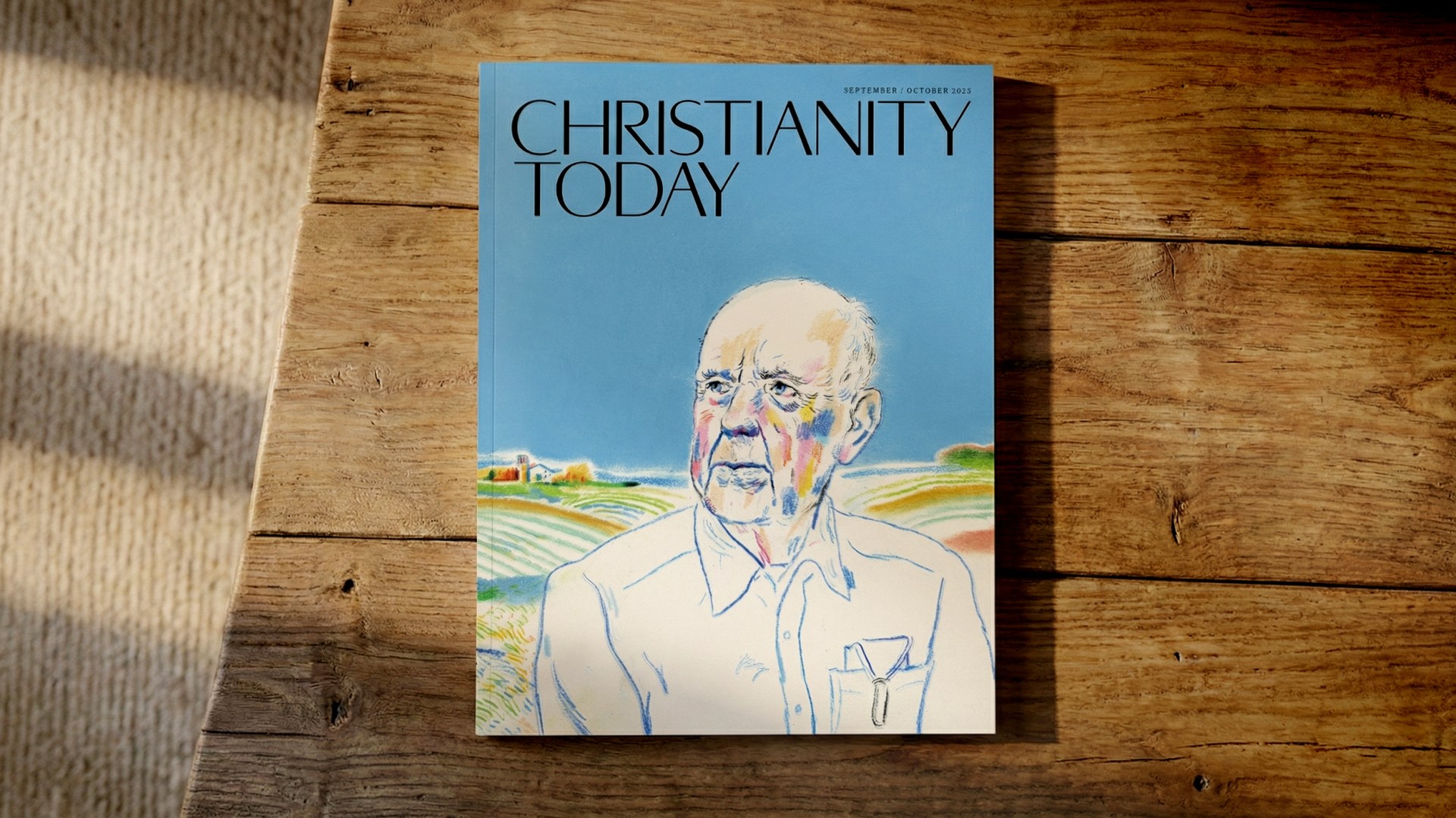
A copy of Christianity Today magazine, September/October issue, lying on a table.
Source: Sora

Sometimes being an editor is like being a sculptor. That’s how it felt to work on Isaac Wood’s essay “Faith After the Flood” (p. 42) in our September/October 2025 issue. Isaac, a reporter living in East Tennessee, initially turned in thousands of words about how churches responded to Hurricane Helene, his writing brimming with quotes from volunteers and descriptions of donated food, clothes, and gas, as well as reflections on how service might be a way to get disillusioned young people back in the pews.

In email and phone conversations stretching across months, Isaac and I talked through how we might cut back and organize all this material to best convey its message (while keeping a great line about a possum) plus allow him space to tell his own story of belonging to a Johnson City church.

When you read an essay in CT, know that what you’re encountering is never a first draft. It’s a collaboration between not only the writer—who gets most of the credit, of course!—but also editors, our design team, and copyeditors, all believers working together to narrate a particular instance of God’s work in the world.

Kate Lucky, senior editor, features

It Was ‘Good,’ Not Perfect

I wonder why John Swinton takes issue with the concept of “an assumed norm of bodily or cognitive integrity.” If we believe God designed the human body, it follows that he intended it to function in a certain way and that departures from that design represent dysfunction. Of course it does not diminish the value of a person made in God’s image to recognize that in this fallen world, where creation is indeed groaning, people may live—and thrive—with limitations that God never intended them to confront.

The real issue in the encounter of the author’s friend with the well-meaning elder is not whether disability was part of human existence from the beginning but whether we in the church can indeed honor and receive those who suffer from it without the assumption that God now intends his people to live free from the effects of the Fall.

Beth Webster, Turlock, CA

John Swinton’s essay brought to mind my mother and father. My mother in her final years suffered from dementia. Initially, though she could no longer talk, when she saw a resident in need, she sought to comfort them. For the most part, my father was with her every day. For a while, he was able to take her for drives in the country. He walked with her (later wheeled her) on the sidewalks outside the facility and along the hallways in the adjoining hospital. He played orchestra videos and brushed her teeth. Together, they delivered hospital patients’ mail. When she died, it was not a blessing. He missed her terribly. They were married 60 years, and now their relationship and half of who he was had been ripped away.

After my mother died, young women on staff told our family that my father’s love and dedication demonstrated how they wanted their own marriages to be. It was a hard time, but to the end, the image of God was always in my mother. It was reflected in the love demonstrated every day by my father and in the inspiration their relationship gave others, as well as in the opportunity my mother gave the staff to care for another in great need.

John Page, Cary, NC

Sacred Reverb

Molly Worthen writes that “today’s contemporary worship music” is “trying to use music to do as Paul did [in becoming ‘all things to all people’]: to entice seekers, disciple those already in the church, and worship God.” This implies that there should be no difference between the styles of music at an evangelistic service and at a worship service. This is open to question, primarily since the Book of Acts does not record any instances of music being used as a tool for evangelism and secondly because countless generations of Christians have been strengthened in their spiritual walks by distinctively “sacred” music. Examples include plainchant, Bach chorales, and Black spirituals.

Worthen quotes Bryan O’Keefe as saying that when he hears contemporary Christian songs, he starts to “mentally connect them to [his] own experience.” Obviously, the key issue here is relevance. But what about the flip side of the coin? That is, what about the experience of transcendence a listener has when he hears plainchant? Or the lofty, otherworldly spirituality of Giovanni Pierluigi da Palestrina? Such music is not intended to be “relevant.” Rather, it’s up to the listener to relate to the music. Surely this is appropriate for the worship of a transcendent God whose ways are higher than our ways.

John Harutunian, Newton, MA

As a young person in the 1970s and ’80s, there are many choruses I recall from Sunday school, youth camp, and even our weekly Cru meeting on campus. This was an era of the sole guitar leading music. Many of these were direct quotes of a line or two of Scripture, put to music and often repeated multiple times. Even today, 40–50 years later, I still hear those songs in my head when I am reading devotionally, so much so that when writing in my Bible I put little musical notes next to verses I recall the songs to.

Bob Mac Leod, Orlando, FL

An Exhortation to the Exhausted Black Christian

“This is going to sound revolutionary for some Christians. And that is a problem.

Sean Tripline, Facebook

Church Life

Disintegration is the Church’s Greatest Threat

CT Staff

A note from Mission Advancement about the Big Tent Initiative and One Kingdom Campaign.

An illustration of a church slowly dissolving.
Illustration by Rick Szuecs / Source image: Envato

A group of disparate disciples, now made kindred, stood atop the Mount of Olives processing revelations from Jesus (Acts 1:12). They had very little uniformity before, and now they had a common anxiety on the journey back to Jerusalem. They wondered, What type of witnesses shall we be if the kingdom of Israel is not to be immediately restored? 

These were not the ideal suspects for a revolutionary movement. The roll call consisted of fishermen, unlearned disciples of a beheaded vagabond, a Zealot, a promiscuous woman, and a tax collector. They’re the casting troupe in a sports film about underdogs turned overachievers. Yet this group did just that: overachieve.

After being indwelt with the Spirit of God, these peculiar people preached to thousands, healed many, and established an institution that would change the world. The Book of Acts shows us how the church withstood oppressive regimes and grew despite persecution.

However, the church also faced internal turbulence. Discrimination found its way into the fellowship of this newly minted family. To deal with this, they were to “choose seven men from among you who are known to be full of the Spirit and wisdom” and “turn this responsibility over to them” (Acts 6:3).

Today we are similar witnesses, facing a similar set of discriminations and hoping for a similar solution. Can we appoint people to wisely address the dividing wall of hostility in the church? We at CT pray that we can be called ones who are full of the Spirit and wisdom to take on that responsibility. That is exactly what the Big Tent Initiative intends to do.

Christianity Today’s Big Tent Initiative brings people closer to stories and individuals they might not have had access to before. The Big Tent Initiative displays God’s wisdom through the tapestry of his people. This is not a new posture for CT, though it is currently under threat. 

In 1957, Christianity Today’s founder, Billy Graham, tore down the dividing wall of his crusades by adding Howard Jones as an associate evangelist and inviting Broadway star, singer, and actress Ethel Waters as a featured soloist. This was done as a direct reproach of segregated gatherings.

In 1974, Graham wrote about “the greatest of all threats—disintegration from within.” The same solution in the days of Acts, in Graham’s day, and in ours is to not endorse tribalism that confirms our stereotypes. 

Proximity is the first step to healing. The Big Tent Initiative offers opportunities for proximity and hospitality, increasing the chances of the disintegrated becoming united disciples. There is a great plank in the eye of the American church, and a disparate collection of Christians just might be the exemplar of God’s supernatural overachieving work.

Join us in this essential kingdom work. Learn more about the Big Tent Initiative at SeekTheKingdom.com

Sho Baraka is editorial director of the Big Tent Initiative at CT.

News

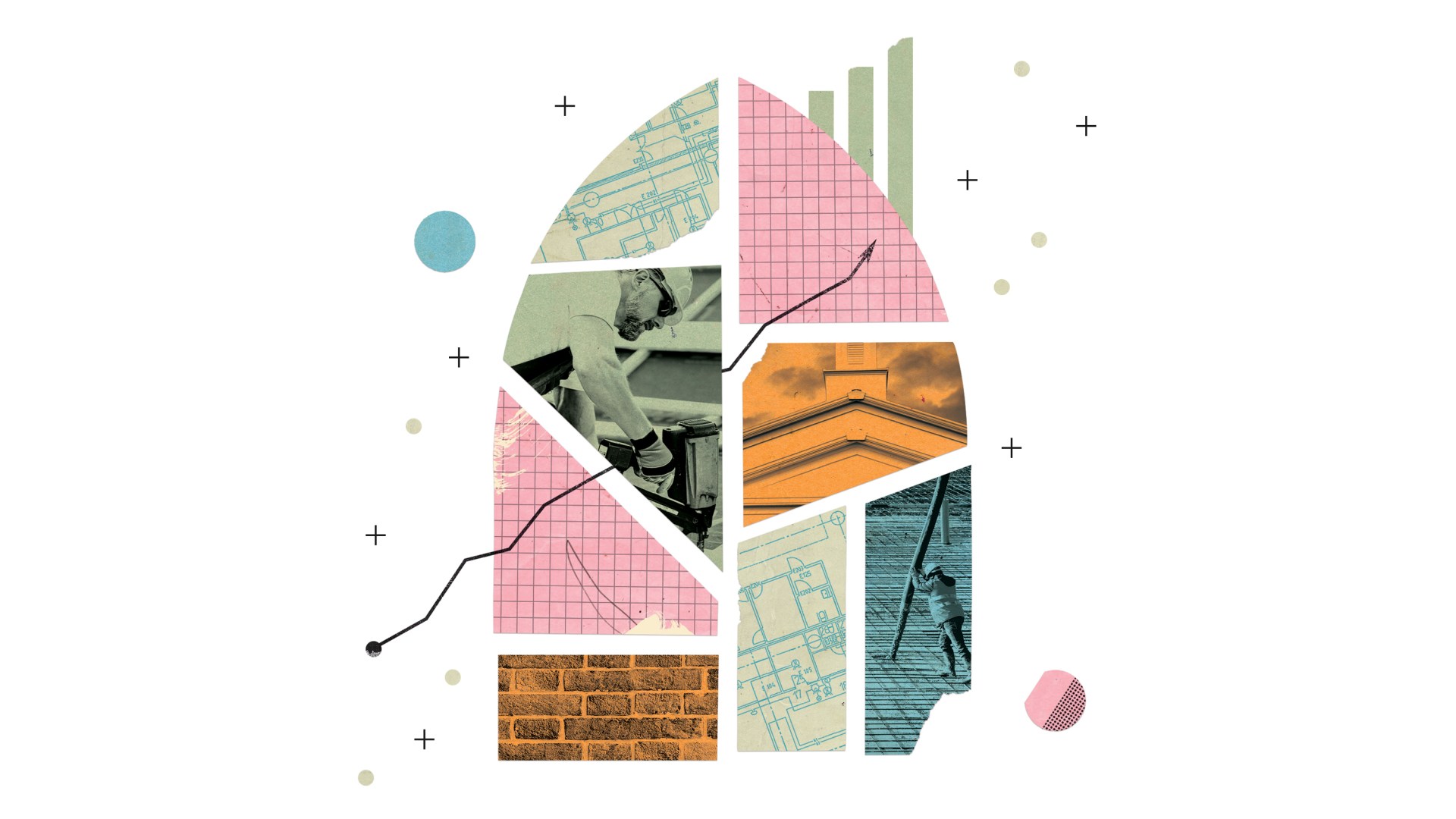
Church Construction Increases Since 2022

And other news from around the world.

A digital collage featuring buildings and construction workers.
Illustration by Blake Cale

 New data from the federal government shows that spending on new construction of churches and other houses of worship increased by 17 percent from June 2024 to June 2025, even as overall annual construction spending dropped by 3 percent. This is the first serious rebound in church construction in 20 years. Spending peaked at $8.8 billion in 2001 and has slid downward since then, reaching a low of $3.4 billion in 2014 and $3.1 in 2021. Spending went up, however, in 2022, 2023, 2024, and 2025. The reasons for the rebound are unclear. Several consultants told The Wall Street Journal that many of the expansions are “multipurpose space,” including childcare facilities, coworking spaces, and coffee shops.

United States: One God, Three Persons, Many Confusions

Seven out of ten Americans are Trinitarians if you ask them whether there is one God in three persons, Father, Son, and Holy Spirit, according to the latest Lifeway Research study of popular theology. But the meaning of the words God and person seem to escape many: A majority also say that Jesus is not God, just a good teacher, and the Holy Spirit is some kind of force, not a personal being. The State of Theology study has found similar levels of Trinitarian confusion going back to 2014.

United States: Plane Crash Claims Two Missionary Lives 

A turboprop plane crash in Coral Springs, Florida, killed two Americans who hoped to deliver medical supplies, water filters, and Starlink satellite internet equipment to Jamaica. The Beechcraft King Air went down right after takeoff on November 10, nearly hitting several houses. Alexander Wurm, 53, got his pilot’s license in 2005 and recently acquired the airplane for Ignite the Fire to help with the group’s humanitarian work in the Caribbean following the devastation of Hurricane Melissa. “He really made a difference in the lives of the people on the ground. … He saved lives and he gave his life,” Crisis Response International founder Sean Malone told the Associated Press. The plane made five separate trips to Jamaica the week before the crash. Wurm’s daughter, Serena, 22, was the other passenger aboard the fatal flight. 

Chile: President with No Faith Praises Prayer

President Gabriel Boric told a gathering of evangelicals in Puente Alto that he does not have “the gift of faith” but is encouraged by their fervent prayers for the country. “Faith and solidarity are fundamental pillars for facing the challenges that await us,” Boric said. Ministers at the annual Servicio de Acción de Gracias Nacional Evangélico (National Evangelical Thanksgiving Service) used the opportunity to speak about the sacredness of life and the need to keep legal restrictions on abortion in place, as well as the dangers of materialism and the practice of judging all policies by economic growth. Multiple candidates are running to replace Boric in 2026.

France: Christian’s Murder Posted to TikTok

 A 45-year-old Iraqi Christian TikToker was murdered near his home in Lyon. Ashur Sarnaya, who used a wheelchair to get around, shared his faith with his 16,000 followers. He was stabbed in the neck at 10:30 p.m. on September 10 and died of cardiac arrest, but not before posting a final video online. There are reports of threatening comments left by Muslims, but it is not clear the attack had anything to do with online trolling.

Germany: Nazi-Vandalized Art Is Reunited

A museum has reunited the severed head of John the Baptist with the rest of a 16th-century artwork by the Reformed painter (and personal friend of Martin Luther) Lucas Cranach the Elder. An art gallery in Nazi-era Germany cut up Cranach’s Salome with the Head of the Baptist, slicing Salome at the midriff, rebranding her as a “Saxon princess,” and reframing the art as a contemporary portrait. The gore of the Reformation-era painting was considered unacceptable to polite 1930s tastes, and the story of John the Baptist’s execution was understood as a warning about the dangers of authoritarian rule, which was impolitic during Adolf Hitler’s dictatorship. The Ducal Museum in Gotha purchased Salome for €144,000 (about $168,000 USD) and is displaying both parts together.

Sudan: Last Minister in Darfur City Flees Church

The last priest in the besieged city of el-Fasher, the capital of North Darfur in Sudan, was forced to leave in September. One side of the ongoing civil war, the Rapid Support Forces, has blockaded el-Fasher since April 2025, when a local militia declared its allegiance to the other side of the civil war, the Sudanese Armed Forces. Many have been killed in the fighting. People are starving as well. Anglican Daramali Abudigin, 44, said he was going to leave in April but then realized there would be no one left to minister to the dying people. The church could not offer people food or safety but held regular worship services.

Ghana: Credentials to Be Checked

 The Assemblies of God has instructed all ministers to stop using the title Dr. if they only have honorary degrees. Ministers with earned academic degrees must submit their credentials to the Ghana Tertiary Education Commission for recognition before they can use Dr. Violating the new rule could result in suspension from ministry. The Ghana government has warned it will tighten regulation of misused academic titles as well as degrees from unaccredited universities and diploma mills. Local observers expect scrutiny of ministers to increase.

Israel: Arab Christian to Lead Global Evangelicals

The World Evangelical Alliance (WEA) found new leadership in Nazareth, appointing Botrus Mansour as the new secretary general and CEO. Mansour, who was trained as a lawyer, has served as the operational director of Nazareth Baptist School, an elder and cofounder of Local Baptist Church in Nazareth, and CT’s Arabic-language translator. He is the first Arab Christian to lead the WEA and said he hopes his experience as a minority within a minority in Israel will help him bring new unity to the WEA. “Living in Israel, the Lord prepared me to love as well as be sensitive and open to different people,” Mansour told CT. “The Bible says that perfect love casts out fear.” Mansour said the WEA will continue to engage in interfaith dialogue, which some national alliances have sharply criticized, but it will not be the main focus.

Iraq: Babylon Back in Business

The restoration of Babylon is nearing completion after 15 years of reconstruction, funded by the US Embassy to Baghdad and multiple World Monuments Fund grants. The north retaining wall of the Ishtar Gate has been fixed, and the Temple of Ninmakh, dedicated to a Sumerian goddess, is set to reopen. The temple will be available for weddings and concerts and open to the city’s growing number of tourists. The number of international visitors, many from Russia and Iran, increased 30 percent from 2023 to 2024. People have not lived in the ancient city since the 1200s.

China: Censored Reporter Leans on Faith

A 42-year-old blogger who was jailed for four years for reporting on the COVID-19 pandemic in Wuhan, where the virus first spread, has been jailed again after she attempted to meet with human rights activists. Prosecutors claimed Zhang Zhan caused a public disturbance and distributed defamatory information that tarnished the country’s international image. The court did not release any documents related to the trial or allow international observers in the courtroom. Local sources say she has been sentenced again, but that cannot be confirmed. Zhang has spoken frequently of how her Christian faith inspires her to report news in the face of authoritarian censorship and how it sustains her in prison. 


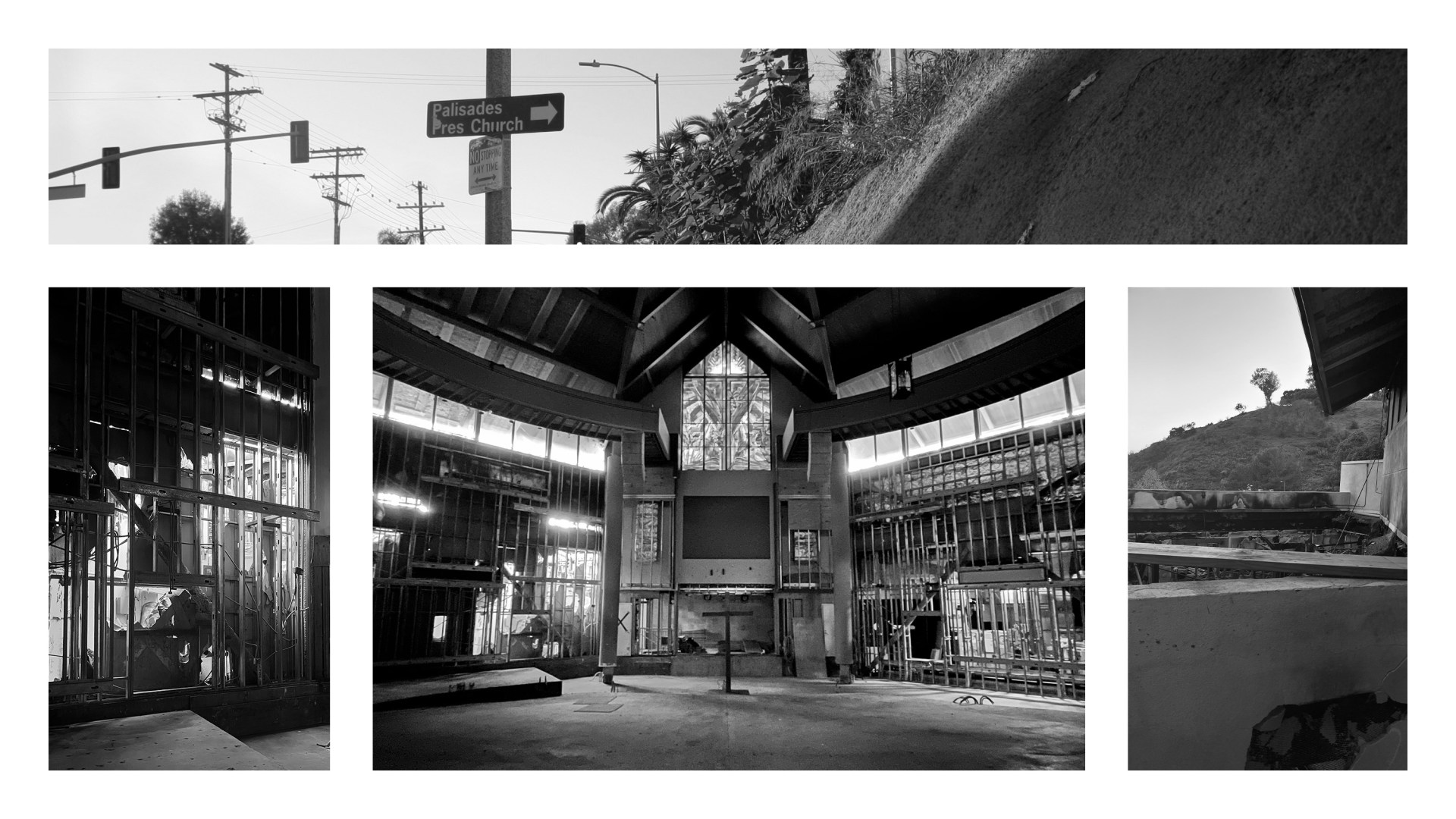
addApple PodcastsDown ArrowDown ArrowDown Arrowarrow_left_altLeft ArrowLeft ArrowRight ArrowRight ArrowRight Arrowarrow_up_altUp ArrowUp ArrowAvailable at Amazoncaret-downCloseCloseellipseEmailEmailExpandExpandExternalExternalFacebookfacebook-squarefolderGiftGiftGooglegoogleGoogle KeephamburgerInstagraminstagram-squareLinkLinklinkedin-squareListenListenListenChristianity TodayCT Creative Studio Logologo_orgMegaphoneMenuMenupausePinterestPlayPlayPocketPodcastprintremoveRSSRSSSaveSavesaveSearchSearchsearchSpotifyStitcherTelegramTable of ContentsTable of Contentstwitter-squareWhatsAppXYouTubeYouTube