Theology

What the Iran War Could Do to Your Soul

Columnist

War, in every case, is hell. Let’s watch out for ourselves, lest it also make us hellish.

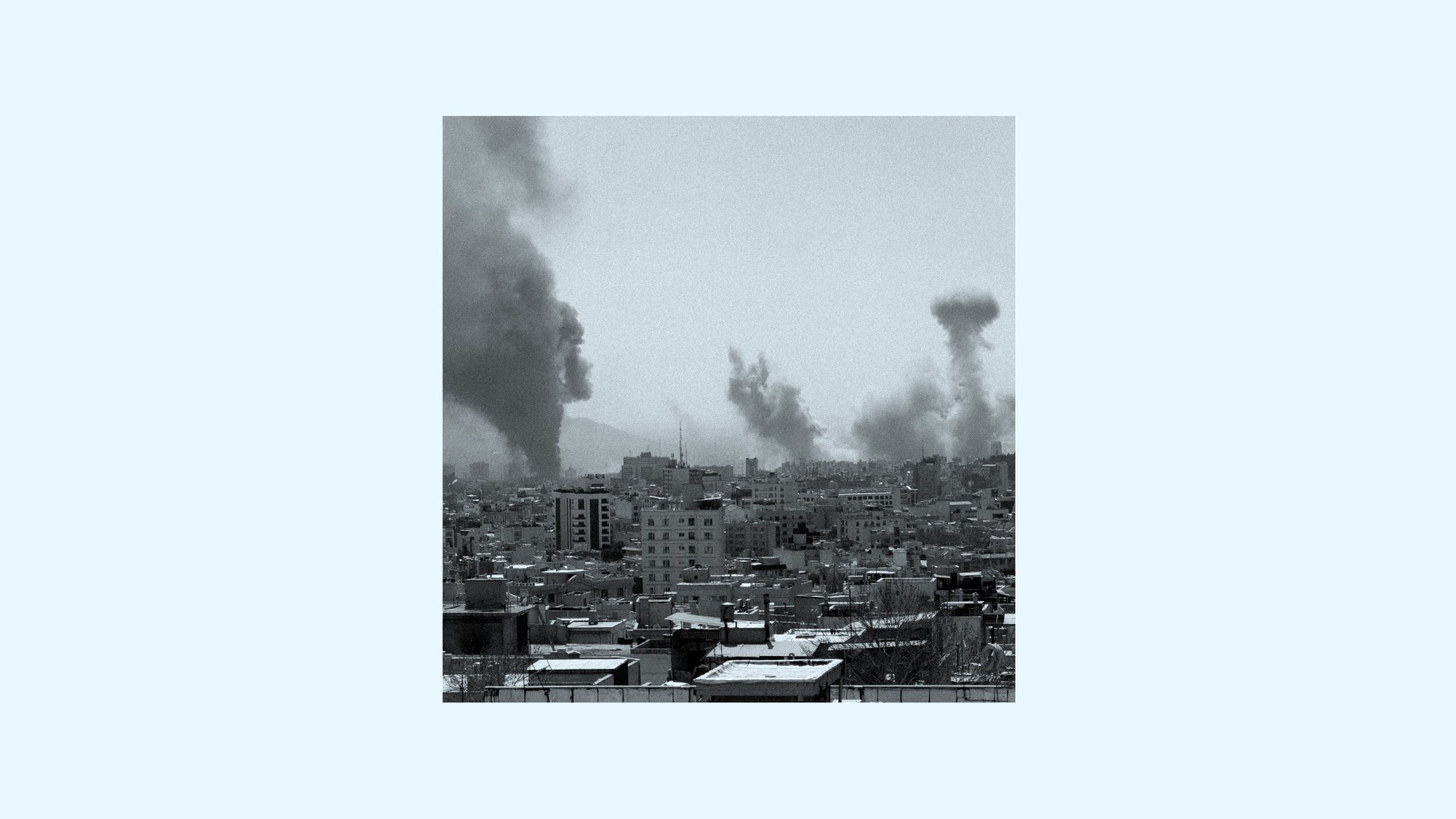
Plumes of smoke rise following reported explosions in Tehran on March 1, 2026.

Plumes of smoke rise following reported explosions in Tehran on March 1, 2026.

Christianity Today March 4, 2026
Illustration by Christianity Today / Source Image: Getty

This piece was adapted from Russell Moore’s newsletter. Subscribe here.

The United States and Israel are at war with Iran. Put aside, for a moment, whether you or I support or oppose this. That’s a massively important debate with massively important implications for the lives and deaths of countless persons, for the meaning of the US Constitution, and for the Iranian people. When I say “put aside” the debate, I don’t mean permanently; I mean just for this moment. Right now, I don’t want to talk about just war theory, Middle East policy, or even the future of the human race. I want to talk about you.

We don’t know if this war, like the last one Israel fought with Iran, will be over in 12 days; if it will last five weeks as President Trump projected; or if, like the Iraq War, it will grind on for years. We also don’t know whether we will forget in a few years the images we see on our screens right now or if we will have them etched in our minds as the beginnings of an era-shaping war. We don’t know.

What we do know, though, is that wars tend to shape more than just nation-states and historical trends. They tend to shape each of us too, sometimes subtly, by redefining what feels normal and what doesn’t. And that brings with it not just geopolitical risk but personal temptation.

This morning I was rereading a speech that a then-young Wendell Berry gave against the Vietnam War in 1968. Berry spoke about what that war, which he opposed, was doing to civilians in Vietnam and to American ideals. But he went further. He gave the example of a war that everyone in that room likely would have seen (as I do) as a just one: World War II. Despite the fact that we “fought on the right side and with good reasons,” he said, even necessary wars tend to “serve as classrooms and laboratories where men and techniques and states of mind are prepared for the next war.”

If he was right on that point, and I think he was, we ought to pay careful attention not only to whether we support or oppose this war with Iran but also why and how. That’s because what turns out to be most persuasive to us is what we take for granted—what we assume when the course of the world seems like “just the way things are” and we can’t even see the moral options and thus ignore them.

So what might be the temptations for you and me?

The first is bloodlust. As most of you know, I am not a pacifist. Unlike my Anabaptist ancestors, I do think there are times when war is morally justified. I wrote each of the Southern Baptist Convention’s resolutions supporting the War on Terror and the Iraq War in the early years of this century. And yet I look back and see in at least my immediate reaction to September 11 a warlike spirit that went beyond patriotism. As we were watching on the twin towers fall, a friend of mine yelled, “We should bomb Afghanistan until nothing is left there but glass!” I felt that too. And bound up with that feeling was a desire for not just public justice but also personal revenge. It felt good to feel that pulse of vengeance. That’s why it is so dangerous.

Those of us who believe in the possibility of just wars should guard ourselves more closely than others because we can easily forget that even when war is the only option, it is always awful. The awfulness of war is especially hard to see in a time when battles seem to us like video games played by other people. If war gives us a charge of delight, something is happening to us.


The second temptation is what the people of old called sloth. That doesn’t mean laziness or inactivity but numbness and deadness. One of the scariest aspects of these hostilities is the way so many people—including Christians—seem to see them as just another part of the cycle of history. And if recent patterns persist, Americans will soon grow bored of hearing about this war and want to move on to other things. Maybe with this war, we can. But sooner or later, there will be a war where we won’t be able to move on.

Wars and rumors of wars ought not to panic us, Jesus said (Matt. 24:6), but we also ought to remember that they are birth pains of the destiny of the entire cosmos. As C. S. Lewis told students at the University of Oxford during World War II, war ought to remind us of what is always true but almost never perceived: We are mortal. We are going to die. Nothing around us is as permanent and stable as it appears. Even if we are not in danger of being drafted or fighting, we ought to pray as those whose lives are a vapor (James 4:14).

And the third temptation is duplicity, and by that I mean something at the very root of the word, what Jesus’ brother called double-mindedness (1:8). We tend to think of a “double-minded” person as someone who can’t make up his mind, but there’s something else there: a disconnect between the conscience and the intellect. In our own time, this reveals itself perhaps most obviously as what some call tribalism.

There’s nothing wrong with changing your mind. As a matter of fact, when our information changes, it would be immoral not to change our minds. We grow and change. I’m not sure my mind would be different about Iraq knowing only what I knew then. But knowing what I know now, I would never have thought about it the same way.

War tends to reveal our inner lives. Right now, some who told us they were “America First,”—defined as, among other things, avoiding Middle Eastern wars—are now cheering the bombing of Iran or even justifying a full-scale invasion and occupation. Now if someone changes his or her mind after being persuaded—after someone makes a case that the previous viewpoint was wrong—that is no flaw. An entire generation of America First isolationists changed their minds (and rightly so, in my view) after the bombing of Pearl Harbor. But if people change their minds just because the leader of their side is for something and those on the other side are against it, they ought to see that they have outsourced their consciences. They are no longer citizens but subjects.

And the same is true for those who would have gladly supported the killing of the Iranian supreme leader if it were done by President Barack Obama or by Kamala Harris but now would be secretly disappointed if the operation is anything other than a disaster. This is not a political campaign. Real human lives—and lots of them—are at stake.

Now, it’s not wrong for someone to trust the character or intellect of some leaders more than others. That’s reasonable. It’s also not wrong if you oppose this war and would have supported it if it had been done the way the Constitution mandates: through the consent of the people’s representatives. The same is true if you oppose it because you are confused by the varying reasons our leaders have given as to why we’re doing it, and doing it now.

But if you would be irritated if the war ends quickly and if the Iranian people are free, because it would help the image of people we oppose or because it would take away the opportunity to say “I told you so” to some really obnoxious people, you are in moral peril.

Some of us are more vulnerable to some of these temptations than to others. Some of you might not be especially given to any of them. (If so, pray for the rest of us.) But the quickest way to yield to a temptation is not to see it at all. “Therefore let anyone who thinks that he stands take heed lest he fall” (1 Cor. 10:12, ESV) is as true in wartime as it is in peace.

War, in every case, is hell. Let’s watch out for ourselves, lest it also make us hellish.

Russell Moore is editor at large and columnist at Christianity Today and leads its Public Theology Project.

Ideas

Ideologies Don’t Save, But We Act Like They Do

Even the most admirable societal aims become spiritual distortions when we treat them as ultimate.

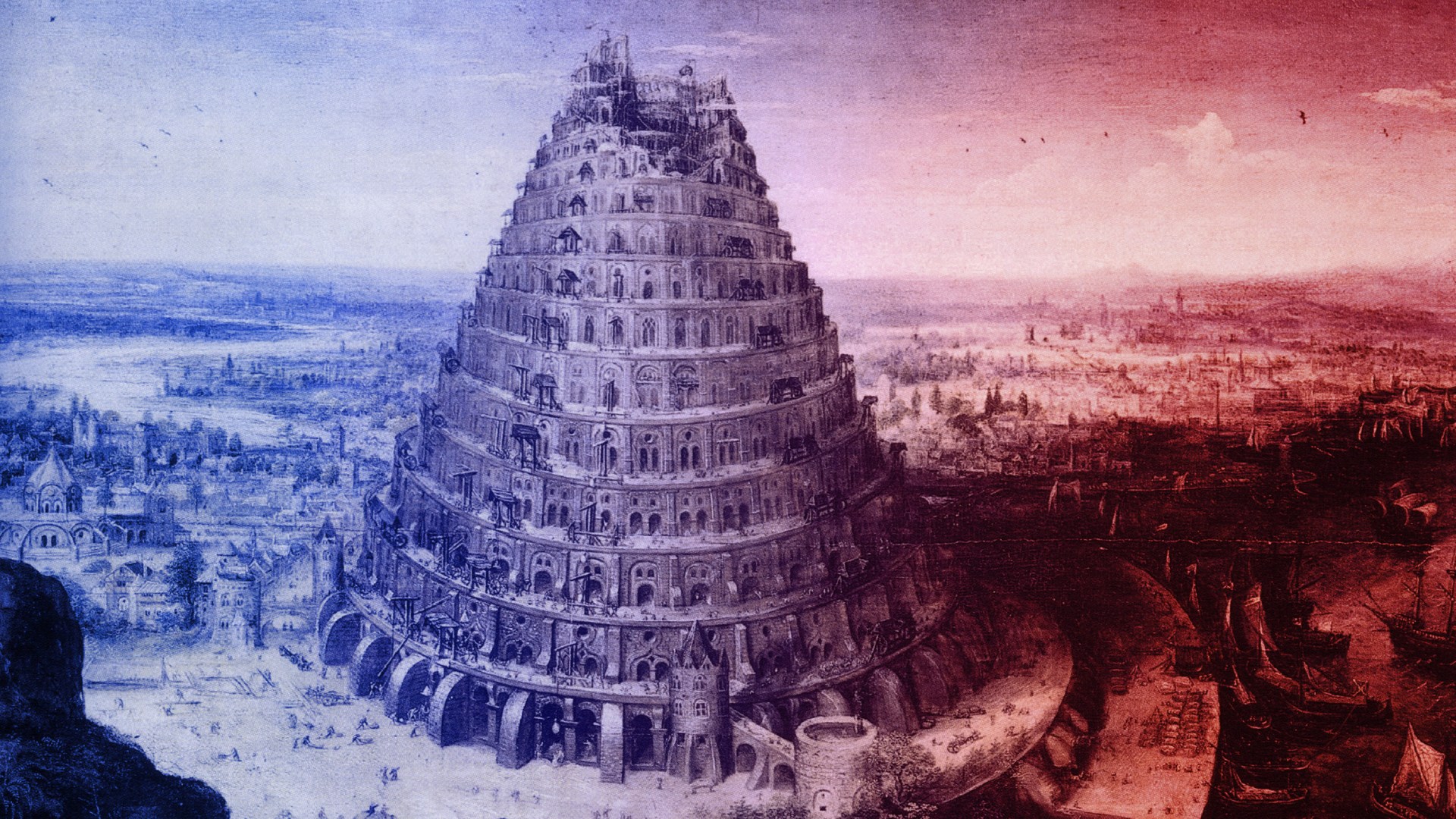
The Tower of Babel by Lucas van Valckenborch

The Tower of Babel by Lucas van Valckenborch

Christianity Today March 4, 2026
WikiMedia Commons / Edits by CT

 In City of God, Augustine defines a people or tribe as “an assemblage of reasonable beings bound together by a common agreement as to the objects of love.”

Augustine had in view the inevitable tendency of human beings to elevate something to an object of adoration—so much so that it shapes how they understand the world and defines their sense of shared identity.

This tendency helps us understand the seemingly intractable and often-contentious divisions we see in our own culture so many centuries later, especially along ideological lines. What separates people groups from one another—and distinguishes communities, factions, and even nations—is not merely their shared beliefs, institutions, or cultural norms. More fundamentally, it is the objects of their common love: where they collectively place their hopes, aspirations, confidence, and trust. It is, in the deepest sense, what they worship.

Not all objects of worship are equal. To set our hearts on created things rather than the Creator is what Scripture identifies as idolatry. We are most familiar with ancient forms of idolatry, in which worshipers crafted idols from wood or stone, often representing elements of creation such as the sun, fertility, or beauty. But idols can also take more subtle and abstract forms—financial success, social prestige, material possessions, or political power—each rooted in some aspect of God’s created order.

As longtime political science professor David Koyzis suggests in his book, Political Visions and Illusions: A Survey and Christian Critique of Contemporary Ideologies, this latter form of idolatry is “so oblique and less overtly experienced as such” that it often goes unrecognized for what it truly is.

Precisely this kind of idolatry lies at the root of many of the ideological conflicts that dominate modern culture. Contemporary ideologies, as Koyzis argues, are “modern manifestations of that ancient phenomenon called idolatry, complete with their own stories of sin and redemption.” Like their historic counterparts, these ideologies take something in creation and elevate it to an object of worship, ascribing to it salvific and redemptive qualities. Instead of telling the biblical story of creation, fall, redemption, and restoration, ideologies offer rival narratives about what has gone wrong with the world and how it can finally be set right.

Classical and social liberal ideologies, for example, tend to elevate the autonomous individual as the highest good, defining the path to human flourishing as liberation from any force that restricts the progressive pursuit of individual self-interest.

Socialist traditions center equality as society’s ultimate aim while defining injustice chiefly in terms of social and economic disparity. Nationalist movements locate the fundamental threat in the erosion of cultural or political boundaries by the incursion of outsiders and seek salvation through national sovereignty and protectionism. Conservative traditions often prioritize inherited institutions and social practices, believing the preservation of traditional norms and values is the only thing that can save society.

It is not difficult to see why adherents of these ideologies so frequently collide with one another. They begin with different diagnoses of what is most wrong with the world, imagine different sources of salvation, and envision fundamentally different accounts of what a healed society should look like.

To recognize that ideologies function as rival objects of devotion is not to suggest that they are equally just, harmful, or destructive in their social consequences, especially in their most extreme manifestations. Scripture itself recognizes degrees of evil and harm. But it does mean that even the most admirable societal aims become spiritual distortions when we treat them as ultimate.

The deeper weakness all ideologies share is their inherent reductionism. Every idol simplifies human life to secure unfettered devotion. Idols convince adherents to place all their hopes in limited worldviews devoid of any nuance or complexity. They narrow the world’s brokenness to limited sets of problems and elevate partial truths into comprehensive solutions. In the end, ideologies make promises that their narrow moral visions cannot fulfill.

Still, the appeal of ideologies lies in the offer of simplicity and a clear path to deliverance at little perceived cost—so long as we fully embrace their vision of the world. As with the idols of the ancient world, devotion to an ideology always extracts a price. False gods always demand a sacrifice. They require us to elevate one aspect of creation while devaluing others, and in doing so, we sacrifice something essential about our shared humanity.

For example, when we idolize individual freedom, obligations to others appear as threats. When equality becomes absolute, we see particularity and meritocratic distribution as manifestations of injustice.

As the late pastor Tim Keller often observed, idols are not usually inherently bad: They are good things twisted into ultimate things. Individual freedom, equality, tradition, and national belonging are genuinely good. They are part of God’s created order and deserve serious moral attention. But it is a distortion to believe that any one of them, elevated above all others, can heal what is most deeply broken in the human condition. They cannot—not even close.

Koyzis presses this further. With their competing objects of devotion, redemptive stories, charismatic prophets, and loyal followers, modern ideologies, in his view, increasingly resemble rival religions. To commit ourselves fully to an ideological vision—to allow its narrative to become the primary lens through which we interpret the problems and solutions of society—is not merely to adopt a set of social convictions. It is to become devotees of the idol that stands at the center of that vision. Thus, the ideological battles of our culture act less like a conflict over competing ideas and more like a war between worshipers of conflicting idols.

Scripture’s warnings against idolatry are among its most persistent and urgent themes. From the command given to Israel to “have no other gods before me” (Ex. 20:3) to the apostle John’s closing exhortation—“Dear children, keep yourselves from idols” (1 John 5:21)—the biblical concern is unwavering.

God’s prophets warned Israel that life among the surrounding nations would bring constant pressure to adopt their gods. The church, living within an increasingly pluralistic and ideologically saturated culture, faces a strikingly similar danger: the temptation to adopt the dominant idols of the age under the guise of political expediency or moral urgency.

Christianity is incompatible with ideological absorption and co-option because the Christian heart cannot belong to any love or object of worship other than the true and living God. The gospel insists that the deepest problem confronting humanity is not merely the loss of freedom, the persistence of inequality, or the erosion of tradition—serious as these realities are. The fundamental problem is sin, of which idolatry is both a symptom and a source. And the ultimate remedy is not found within any part of the created order, whether in human ingenuity, ideological reform, or a favored social policy. It is found in a Savior who entered the world because of our weakness and who alone can restore creation to God’s purposes.

None of this means ideologies have no value in public life. It means their value is greatest when we do not treat them as ultimate. They have a place—but not first place.

Nor does this mean Christians should settle for merely aligning with the lesser evil when it comes to ideologies. The lesser evil is still evil. It is still idolatry; it still falls short of the kingdom of God.

Christians have a responsibility to subordinate every ideological narrative to the truth found in the gospel as they approach the world. Doing so does not remove believers from civic engagement; it frees them to engage in public life without allegiance to any political agenda, without conflating policy prescriptions with the kingdom of God. Precisely because Christianity is not bound to any single ideological vision, it can bridge divisions rather than becoming another faction within them.

When the apostle Paul addressed the Epicurean and Stoic philosophers in Athens in Acts 17, he began by recognizing what was true in their thinking before exposing its limits. Christians are called to a similar posture today. We can affirm the genuine moral insights embedded in ideological traditions—freedom, equality, tradition, and national sovereignty—while refusing to make any of them ultimate.

In doing so, Christians can support political aims and practical solutions without submitting to the deeper narratives of salvation ideologies promise. We can become both a bridge between competing worldviews and a loving rebuke to the impulse to treat partial answers as ultimate truths. Such an environment creates common ground where reasonable dialogue and compromise can occur. This is how politics and social reform work best.

Christianity exerts its greatest influence in public life when it resists being captured by the limited worldview of modern forms of idolatry. Only from that vantage point can believers retain the clarity they need to address the real challenges facing our societies—while waiting in hope for the restoration only Christ can bring and no ideology can ultimately deliver.

Domonic D. Purviance is a pastor at Cornerstone Church in Atlanta. He cofounded King Culture, a nonprofit organization that equips men to reflect the selfless leadership of Christ.

Ideas

Can Reading Fix Young Men’s Modern Malaise?

Contributor

Good literature can steady and orient unmoored men in their early years. But for renewal, they need to read Scripture.

A young man in a phone reaching for a book.
Christianity Today March 4, 2026
Illustration by Elizabeth Kaye / Source Images: Getty

One answer keeps surfacing for men’s struggles in our modern world: books.

In podcasts, essays, Substack newsletters, and social media feeds, many across the ideological spectrum are increasingly offering reading as a form of quiet repair. Men are restless because they scroll, shallow because they swipe. Replace feeds with novels, the argument goes—Homer instead of TikTok, Dostoevsky instead of dopamine—and something weighty will return.

That hope recently took center stage when Bari Weiss introduced a new podcast from The Free Press hosted by Shilo Brooks. Framed as a response to the cultural and spiritual drift of young men, Old School treats reading for pleasure not merely as enrichment but as intervention, a way to restore attention, seriousness, and moral depth in a distracted age. The question that sets its tone, and now hovers over the wider conversation about today’s young men, is simple: “Can reading fix men?”

There is something true in that instinct. Leisure reading in the United States has been declining for decades. According to recent research, the share of Americans who read for pleasure on an average day has dropped drastically over the last 20 years. Another survey found that roughly 40 percent of adults did not read a single book in 2021. These declines are not evenly distributed. Men are less likely than women to read for pleasure even as they consume digital media incessantly.

The effects of this shift show up in habits of attention and imagination. Deep reading requires patience, sustained focus, and an ability to deal with complexity without immediate payoffs. Skimming screens, by contrast, trains the eye to flicker and the mind to wander. Over time, these patterns shape the way a person thinks, feels, and relates. They shape not only what a man knows but also how he knows it.

Books help not just with our immediate cognition but also with thinking well. They can offer models of bravery, friendship, and sorrow. They can expand the moral imagination in ways screens rarely do. These are genuine goods to long for.

So yes, reading can aid young men. It can steady them. It can orient them toward what is meaningful. But I really have to split with the premise there. Reading cannot fix men.

Part of the appeal of Old School is in the name itself—a gesture toward the good old days when men were well-read, serious, and formed by books rather than short-form videos. Much of the current push for reading carries the same nostalgic undertone: If we could just recover older habits, texts, and rhythms, perhaps we could recover good, virtuous men.

But the past we are tempted to romanticize was not made up of healed men—even literate ones. Those generations read deeply and wrote eloquently, and they still wrestled with cruelty, addiction, violence, despair, and antisemitism. A love of books did not keep men from hating their neighbors or destroying themselves. Reading shaped their minds; it did not cure their hearts.

That distinction matters because the crises young men face today are not primarily intellectual. Porn addiction persists not because men lack stories or imagination but because desire has been trained without restraint. Gambling thrives not because young men misunderstand the odds but because their hope has narrowed to the next win. Antisemitism spreads not because they lack information but because resentment and fear have found a home in their hearts.

Reading can help a young man recognize what is good more clearly. It can sharpen his judgment and widen his empathy. But it cannot give him the power to choose what is good when it costs him something. It can guide his thinking; it cannot heal his heart. And that is why, for all its real benefits, reading alone will never be enough to fix what is broken.

Scripture tells a different story.

When the apostle John addresses young men in 1 John 2, he describes them as strong and then explains why: “The word of God lives in you” (v. 14). Strength, in John’s account, grows from indwelling truth. God’s Word has taken up residence within them. It shapes how they respond when pressure comes and desire asserts itself.

This claim rests on a distinctly Christian understanding of Scripture. The Bible has never been simply a source of insight or instruction. Christians throughout history have confessed it as God’s Word, made effective by the work of the Holy Spirit. Scripture does not remain external to the reader. It acts upon the heart, exposing motives, steadying the will, and forming new habits of love and obedience over time.

Jesus models this kind of formation in the wilderness (Matt. 4). When temptation comes, his response is immediate and grounded in the Scripture he already knows: “It is written …”

For centuries, the church recognized the importance of this internal formation. People learned Scripture by heart, recited it in prayer, and carried it through daily life.

The psalmist describes God’s Word as something hidden within, close at hand when we need guidance most. Augustine once described Scripture as letters from home, words that reach beyond information to reshape our loves and desires. For him, Scripture was not simply something to be understood; it was something that understood him. Through it, God addressed the disorder beneath his restlessness.

That same disorder remains among young men today. And it explains why renewed interest in reading, for all its promise, has left something unresolved. Books prepare the mind and sharpen moral awareness. Scripture addresses the deeper struggle beneath behavior—the place where temptation takes hold and habits form.

Some young men sense this difference. Bible sales have increased in recent years, and churches across the country report more young men showing up—often unsure of what they believe but aware that distraction and self-improvement have not provided what they hoped for. Reading great literature has helped some of them recover attention and seriousness. For others, it has revealed a hunger that reading alone cannot satisfy.

I share much of Shilo Brooks’s instinct and appreciate the vision behind Old School. I want young men to read more. I want them to recover depth and patience in a culture that rewards neither. Books are a gift worth reclaiming.

And yet something far more vital is at work in Scripture. God uses it by his Spirit to form people from the inside out. Over time, it cultivates strength that endures—strength that holds in moments of temptation, steadies the will, and reshapes desire.

If young men are going to overcome the crises pressing in on them, if they are going to be strong in today’s world, it will not be because they finally chose the right reading list. It will be because the Word of God lives in them.

Luke Simon is the codirector of student ministries at The Crossing in Columbia, Missouri, and an MDiv student at Covenant Theological Seminary. He has written on Gen Z, technology, masculinity, and the church. You can follow him on X.

News

The Syrian Pastors Who Stayed

Violent clashes have led many Christians to emigrate, yet some church leaders see a revival brewing.

Pastor Mazen Hamate during a back-to-school event that his church hosted for Syrian children in September 2025.

Pastor Mazen Hamate during a back-to-school event that his church hosted for Syrian children in September 2025.

Christianity Today March 4, 2026
Image courtesy of Hunter Williamson

For pastor Valentine Hanan, war and displacement have been a part of his life since the Syrian civil war began in March 2011. Raised in Aleppo, he has moved four times with his family to escape the fighting. During the overthrow of President Bashar al-Assad by a coalition of Islamist rebel forces in December 2024, he returned to Aleppo, where he serves believers from the Kurdish minority group at Christian Evangelical Alliance Church of Aleppo.

Throughout 2025, Hanan and his church weathered sporadic armed clashes in the city. But in January this year, tensions between the Syrian government and Kurdish militants escalated to new heights. Fierce fighting in the Aleppo neighborhoods of Sheikh Maqsood and Ashrafieh forced Hanan and other church members living in the area to flee their homes.

The Kurdish-led Syrian Democratic Forces (SDF) previously controlled those areas, yet the new government led by Ahmed al-Sharaa has been negotiating with the SDF since last year to integrate its military into the Syrian army. As political disagreements caused talks to drag on, intense fighting erupted, first in Aleppo and then across SDF-held territory in north and east Syria.

Under bullets and sniper fire, Hanan took his wife and children to his parents’ home in a different part of the city. He then joined the church in opening its doors to the displaced, providing refuge, meals, and medicine for more than 50 families.

On January 11, after days of clashes that left at least 23 people dead and another 150,000 displaced, the SDF withdrew from Sheikh Maqsood and Ashrafieh as the Damascus government announced its control over the area. That night, Hanan and a friend made their way back to Sheikh Maqsood to inspect the impact of the fighting. As he passed destroyed homes, he smelled the stench of blood and saw bodies strewn on the streets.

“For four days, I struggled with the images of the bodies I saw,” Hanan said.

Some church members found their homes pillaged and destroyed when they returned. The church bought mattresses, kitchen utensils, and other items for those in need. Church services and meetings soon returned to normal, although church leadership initially decided to limit the size of home groups as they assessed the situation, cautious that large gatherings of Kurds could raise suspicion.

The ongoing armed conflict in Syria has driven out much of the country’s historic Christian community over the past 15 years. Before the war, an estimated 2.1 million Christians lived in the country. Today, only about 300,000 remain, according to Open Doors. While there is no reliable data on how many Syrian Christians have migrated since the end of the civil war, church leaders note an uptick in emigration due to the current violence and instability.

Despite the Christian exodus, Hanan and other Syrian pastors say they believe it is their God-given responsibility to stay and serve their church communities. Hanan stresses that although he recognizes the risks and challenges he faces as a Kurdish Christian in post-Assad Syria, he has never considered leaving.

“My vision is the salvation of my people,” Hanan said. “I feel that it’s a responsibility. God put me in this place. It’s not a coincidence that I’m here.”

Since the end of Syria’s civil war, government forces have carried out attacks on minority groups like the Alawites in the western coastal provinces and the Druze in the southern Sweida region. The violence has led to widespread fear and distrust of Syria’s new Sunni Islamist government, casting doubt on its promises to form an inclusive state that respects and protects the rights of all its citizens.

As Kurdish Christians, Hanan and his congregation have even more reason to be cautious. Kurds have long faced marginalization and discrimination in Syria. Furthermore, Hanan and all the members of the Kurdish ministry in the church come from Muslim backgrounds. Given the government’s Islamist roots, some church members are concerned about how government forces would react to Kurdish converts.

Hanan, however, noted that thus far, he and his congregation have not faced any persecution from the authorities for their faith. To the contrary, Hanan said local authorities treat him with respect because he is a pastor. Although government forces have not systematically targeted Christians, extremist groups have. The bloodiest incident occurred in June, when an obscure Islamist group carried out a suicide bombing at a Greek Orthodox church in Damascus, killing at least 25 people and wounding dozens more.

The attack shook the Christian community, increasing their fear and unease that the government would not protect them, church leaders told CT. With Christians now in the cross hairs, pastors note that Christians are once again considering leaving the country.

“For many years, emigration decreased and kind of stopped in the Christian community,” said an assistant pastor of an evangelical church in Jaramana, a town on the outskirts of the capital, Damascus. He asked not to be named due to worries he could be targeted for criticizing the government. The slowdown in emigration among believers stemmed from a resignation they felt about the situation in Syria and the challenge of resettling in other countries, he added.

“But with the arrival of this government, more people have left, and this was multiplied by the ongoing massacres and attacks on various Syrian communities, including the church explosion,” he added.

The assistant pastor said he knows several Christian families who have recently left Syria and another who is planning to leave due to concerns about safety and security.

In addition, the war left Syria with a ruined economy, abysmal services that leave people with only several hours of state-provided electricity each day, and poor living conditions. Over 90 percent of the population lives below the poverty line, according to a 2025 report by the International Federation of Red Cross and Red Crescent Societies. For the past several years, economic hardship has been another leading driver of emigration, especially for young people who see no future in the country.

Mazen Hamate, pastor of Redeemer Evangelical Baptist Church in Tartus and Safita, noted that people desire to leave Syria—either temporarily or permanently—“due to the accumulation of frustrations, disappointments, the deterioration of living conditions, and the lack of job opportunities as a result of the sanctions that were imposed on the country.”

Much of Hamate’s prewar congregation left the country, and among the new members attending today, some are also looking to emigrate. While foreign investment and the lifting of sanctions have brought some hope, he noted that people have yet to receive any meaningful relief from Syria’s dire economic crisis.

Most Syrians stay because they don’t have the money or means to emigrate, the assistant pastor in Jaramana said. Others stay because they don’t want to leave their families or businesses behind. Still others, like the pastors with whom CT spoke, stay because they feel called to serve in churches and ministries.

“We believe that we live once. That’s why it’s important to live a worthwhile life,” the assistant pastor said. “To live this worthwhile life is to follow God’s calling, even if that’s not what’s most comfortable for us.”

In the past two years, he has shepherded his congregation through violence and hardships. In late April 2025, clashes broke out between Sunni and Druze gunmen in Jaramana after an audio clip of a man—allegedly a Druze leader—criticizing the Islamic prophet Muhammad went viral. The fighting forced the church to temporarily suspend its meetings, and for a few days it became difficult for people to get food and other provisions. The assistant pastor and his wife took shelter in the center of their home, away from the windows in the rest of the house that were exposed to the fighting. Although friends in Damascus invited them to stay in their home, the couple felt it was important to remain in Jaramana to be close to members of the church.

“The vast majority of the church members live in Jaramana,” he explained. “We decided to stay here to try and give people reassurance that we are with you, we are not leaving, we’re here—especially since most of them didn’t have any other place to relocate to.”

Since he started serving in ministry some two decades ago, the assistant pastor has been inspired by Matthew 4:24, which notes how Jesus’ reputation spread throughout Syria as he healed people.

“My prayer is that not only the news but the power of the gospel will spread, change, and transform Syria,” he said.

Back in Aleppo, Hanan shares a similar vision for Kurds, as Christians make up only a small percentage of the ethnic group.

Despite the recent fighting in Aleppo and northeast Syria, Hanan is hopeful. He sees how previous conflict and displacement led to the establishment of a new Kurdish church in Hasakah, a city east of Aleppo. As a result of the fighting in January, he said, more Kurds are looking for an alternative to Islam and are believing in Jesus. Church meetings are now full of members and new faces.

“Our vision is to change history,” Hanan said. “Before in history, there was no such thing as Kurdish Christians. Now this has become a reality.”

Ideas

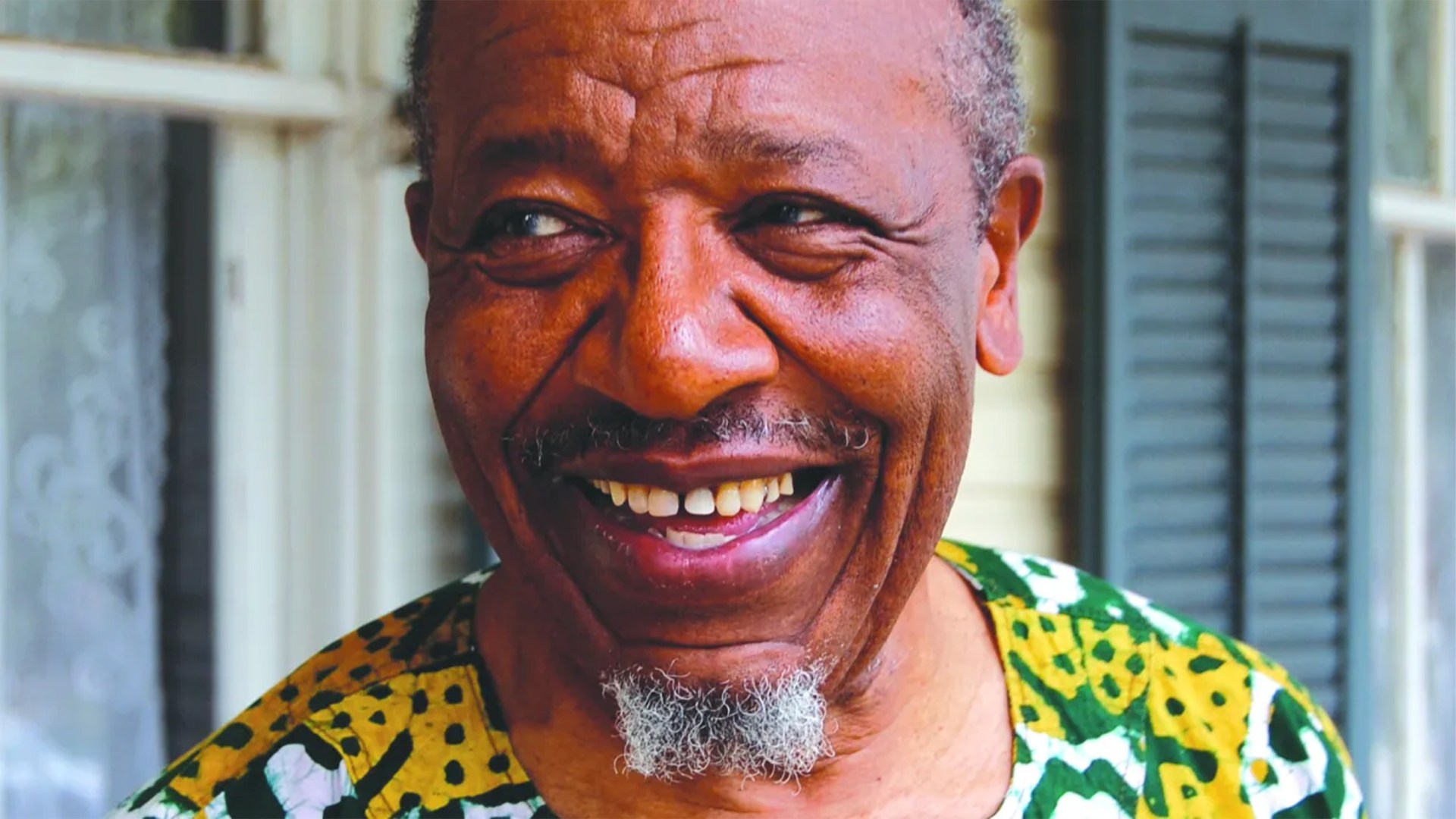
John Perkins, in Life and Facing Death

Editor in Chief

“If we are going to help others understand who Jesus is, our own lives must reflect his character and love.”

John Perkins
Christianity Today March 4, 2026
Courtesy of Baker House

“The most influential African American Christian leader since Dr. King.” That’s what University of Virginia religious studies professor Charles Marsh in 2008 called John M. Perkins, who is 95 and under hospice care. But I know Perkins from interviewing him several times, hearing his Bible studies during the 1990s at Christian Community Development Association conferences, and reading his books. 

Perkins had his greatest influence in the late 20th century. His most-read book, Let Justice Roll Down, came out 50 years ago, so now some have forgotten him—but this great leader deserves remembering both for his own achievements and the way his life demonstrates God’s mercy. 

Psychologists talks about ACEs—adverse childhood experiences that can scar a life—and Perkins had a handful of them. His mom died when he was seven months old and his father disappeared. Perkins in Let Justice Roll Down described how his father came back four years later: “He arrived late one Friday night. … He woke me up, and I saw him in the glow of the lamp. … He hugged me in strong arms. And he talked to me. My daddy!”

Then came misery: The next afternoon, “when he said he would be going … there was only one thing on my mind: I would go with him. [Dad Perkins] saw me following. ‘Go back. Go back.’ The way he ordered me back sounded strange, like he was confused somewhat. Yet he didn’t really sound like he was angry with me, so I followed, but at a careful distance. … He came back … and whupped me with a switch from a tree.” When his dad left, “with him went my newfound joy in belonging, in being loved, in being somebody for just a little while. Years would pass before I would know this joy again.”  

Perkins’s grandma and other relatives, who worked as sharecroppers, raised him. He dropped out of school in the third grade and gained his first lesson in economic exploitation at age 12. He worked all day hauling hay, expecting to be paid $1.50 or $2, a typical day’s pay in 1942. Instead, a white man paid him 15 cents. “I took a long look at what had just happened to me and really began thinking about economics,” he said.

It got worse. In 1946 older brother Clyde Perkins returned home from fighting in World War II. Clyde and his girlfriend were waiting in a noisy ticket line at the movie theater. A deputy sheriff told everyone to shut up. Clyde and his girlfriend chatted some more.  The officer clubbed Clyde, who grabbed the blackjack. The lawman pulled his gun and shot Clyde twice in the stomach, killing him.

John Perkins the next year moved to Southern California, worked as a janitor, married Vera Mae Buckley in 1951, did army service in Okinawa during the Korean War, and came back to factory work. He was a bitter man until his little son, Spencer, came home from Bible classes singing “Jesus Loves the Little Children,” red and yellow, black and white. Perkins began studying how that could be so. He soon professed faith in Christ.

That faith moved him to move back to Mississippi in 1960 with Vera Mae and their five children. Perkins became a civil rights leader over the next decade, supporting voter registration efforts in 1965, school desegregation in 1967, and an economic boycott in 1969 of stores that wouldn’t hire Black employees. 

Perkins said his nonviolent approach didn’t come easily: “I had learned to hate all the white people in Mississippi,” he wrote in One Blood (2018). “I hated their control over our lives. … If I had not met Jesus I would have died carrying that heavy burden of hate to my grave.”

Again from Let Justice Roll Down: “The most terrible thing about the situation in the South was that so many of the folks who were either violently racist or who participated in discrimination and enslavement through unfair and unlawful business practices called themselves Christians.”

But suffering led Perkins to compassion. “I know what it feels like to be at the low end of the totem pole. I know what it feels like when ‘good’ people look down their noses at you. Something on the inside dies over and over again,” he said. “I love it that Jesus comes after those kinds of folks. … If God Himself loves and wants the outcasts, why don’t we?” 

To help the outcasts, Perkins founded Voice of Calvary and Mendenhall Ministries, which developed health clinics, theology classes, a housing cooperative, and thrift stores. During the 1980s, Perkins created institutions to help other outcasts: the Harambee Christian Family Center, the John and Vera Mae Perkins Foundation, and the Christian Community Development Association.

Lawless law officers in 1970 beat him because of his civil rights efforts. Brandon, Mississippi, deputy sheriffs and highway patrolmen stuck a fork up his nose and down his throat. They beat him to the floor and kicked him in the head, ribs, stomach, and groin. One physical result: two-thirds of his stomach had to be removed. One spiritual result, Perkins later related: “When I saw what hate had done to them, I couldn’t hate back. I could only pity them. I didn’t ever want hate to do to me what it had already done to those men.” 

Perkins told me six years ago he believed that those who beat him knew deep down they were wrong, and that sometimes made them even more brutal. He said some, then and now, talk loudly to cover up the whispers about right and wrong in their own heads. In his book He Calls Me Friend, Perkins noted, “Our culture applauds people who are brash and arrogant. The self-promoter gets the most attention and the most encouragement. But God intends for his friends to be marked by gentleness.”

I asked Perkins five years ago if he thought America still had a lot of racism. He responded, “To say people are racist is to say there’s more than one human race. There’s not. We are one blood. But we forget that. We sing God loves all the children of the world, but we don’t mean it. We say all people are created equal. We get fuzzy about that and cry about that, but we don’t mean it.”

My follow-up question: “When you can cut the racial tension with a knife, do people start carrying knives?”He replied, “Black folk are broken just as much as white folk, and white folk are broken just as much as black folk. But we’ve lost tolerance. You can’t even get anybody to answer a pollster now. But maybe that’s why voting in secret is good. I don’t want my neighbor thinking I hate him because I vote against his idea.”

Here’s what Perkins said “progress” would look like now: “Churches grow better when they enter into the pain of society. We weaken the church when we turn it into a prosperity gospel.” He added, “In Acts, they didn’t sit at home waiting for food to come by chariot. They went out to homes and started classes.” He added, “I tell people they’re broken, but I can’t do that if I don’t tell them I’m broken too.”

Yes, the most influential African American Christian leader since Dr. King is dying. But John Perkins privately and publicly emphasized not how he made a difference but how Christ has. “If we are going to help others understand who Jesus is, our own lives must reflect His character and love,” he wrote. That’s why we must love political opponents and others, he said: “It is at this precise moment that the watching world gets a glimpse of Him.”

Marvin Olasky is editor in chief of Christianity Today.

News

Excerpts from a Judge’s Ruling in Favor of Minnesota Refugees

Judge John R. Tunheim said the US government had made a “solemn promise” to the persecuted whom it had welcomed to the country.

Federal agents walk through a neighborhood in Minneapolis, Minnesota on Feb. 5.

Federal agents walk through a neighborhood in Minneapolis, Minnesota on Feb. 5.

Christianity Today March 4, 2026
Photo by Stephen Maturen / Getty Images

Federal district judge John R. Tunheim issued a lengthy ruling on Friday, February 27, forbidding the federal government from arresting and detaining Minnesota refugees who have no grounds for removal and are awaiting their green cards. CT has covered in Minnesota the arrests of Christian refugees and the stories of others who have been living in hiding as a result of this historically unprecedented federal policy. 

This injunction applies only in Minnesota; refugee advocates have said tens of thousands of refugees could face arrest nationally. The government has not yet appealed the judge’s ruling, but it had argued in a February 18 memo that it could indefinitely detain any refugees in the US who have not yet received green cards (lawful permanent resident status). 

The full ruling is here, and the government’s memo that argues its authority for indefinite refugee detention is available here.

Excerpts from Tunheim’s ruling:

When the clock strikes 12:00 a.m. on the 366th day after a refugee was lawfully admitted to the United States, according to the Government, 8 U.S.C. § 1159(a) gives Department of Homeland Security officials the power to arrest and detain that refugee with no limits on the length of detention. Because § 1159(a) provides no such power, the Court will issue a preliminary injunction enjoining Defendants from arresting or detaining refugees in Minnesota on the basis that have not yet been adjusted to lawful permanent resident status—which, by law, cannot occur until one year has passed. The Court will not allow federal authorities to use a new and erroneous statutory interpretation to terrorize refugees who immigrated to this country under the promise that they would be welcomed and allowed to live in peace, far from the persecution they fled.

The Government’s position flatly contradicts the plain meaning of § 1159(a) and contravenes forty-five years of agency practice.

Decades ago, as a nation, we made a solemn promise to refugees fleeing persecution: that after rigorous vetting, they would be welcomed to the United States and given the opportunity to rebuild their lives. We assured them that they could care for their families, earn a living, contribute to their communities, and live in peace here in the United States. We promised them the hope that one day they could achieve the American Dream.

The Government’s new policy breaks that promise—without congressional authorization—and raises serious constitutional concerns. The new policy turns the refugees’ American Dream into a dystopian nightmare.

D. Doe, a refugee, was at home with his family on January 11, 2026, when a man in plain clothes knocked on the door. D. Doe answered the door, and the man told him that he had hit D. Doe’s car—but his description did not match D. Doe’s car. 

The man left, and returned a few minutes later, this time describing the correct car.   When D. Doe went outside to check the damage, he was surrounded by armed men and arrested. After being taken to a detention center in Minnesota, he was immediately flown to Texas, where he was interrogated about his refugee status. He was kept in “shackles and handcuffs” for sixteen hours. D. Doe was ultimately released on the streets of Texas, left to find his way back to Minnesota. 

[O]ne refugee—a junior in high school—was arrested and detained after she was pulled over on her way to school. She told the ICE agents that she was a minor and provided them with her driver’s license, which showed that she was a minor. ICE agents handcuffed her and forced her to leave the vehicle on the road. ICE agents told her that she was going to be sent to Texas or Chicago. ICE then learned that a judge had ordered them not to transport her outside of Minnesota, and an ICE agent had her call her parents to come get her. The ICE agent told her to tell her family that if they came to get her, ICE would send them all to Texas. Her family decided not to pick her up. At that point, ICE took her to a hotel where she spent the night in [the] same room with two ICE agents. Although she had her own bed, she did not have her own room. The next day, she was released and allowed to leave with her lawyer. 

[T]he Refugee Detention Policy likely violates substantive due process.

Defendants’ reading of § 1159(a)(1) would give DHS the authority to detain unadjusted refugees indefinitely—a result the Supreme Court rejected in the context of noncitizens who have already been ordered removed.

[T]he record at this stage reflects that refugees subject to Defendants’ Refugee Detention Policy have been—or face a substantial likelihood of being—arrested, handcuffed and shackled, detained, and transported out-of-state away from family and counsel. The Court therefore concludes that Defendants’ sweeping and severe deprivations of liberty are not narrowly tailored to the interests they assert. 

The protections of the Fourth Amendment apply to arrests of noncitizens.

Importantly, refugees—who have been vetted and admitted to the country—commit no crime or removable offense in failing to obtain a green card one day after they become eligible to do so; nor do they lose their status as lawfully admitted to the United States.

Defendants argue—as they did in their motion to dissolve the TRO—that the balance-of-the-harm and the public interest factors favors weigh in favor of Defendants because a preliminary injunction itself would inflict irreparable injury on Defendants.

Given the unlawfulness of DHS’s Refugee Detention Policy, the public interest is not served by allowing Defendants to carry out such policy. 

Indeed, Defendants’ enforcement of an expensive and expansive Refugee Detention Policy likely hinders Defendants’ lawful pursuit of serious immigration violations.

The Government’s actions in this case beg the question: Why? Why would our Government adopt a policy under which refugees—who have been thoroughly vetted, lawfully admitted to the United States, and resettled in communities with Government support—are subject to arrest and detention the moment that one year has passed since their lawful arrival? Why subject them to warrantless arrests, place them in shackles, and transport them to distant detention facilities—facilities whose conditions likely resemble the refugee camps they once lived in—simply to conduct the required one-year interview that precedes adjustment to lawful permanent resident status? Why? The Government suggests that they are looking for terrorists, but there is not a shred of evidence in the record that the Named Plaintiffs or the putative Class they seek to represent pose serious national security risks. The Government suggests that prior Administrations did not vet refugees thoroughly enough. But again, there is no evidence in the record or elsewhere that suggests that prior Administrations were deficient in evaluating refugees for admission.

Refugees are not illegal immigrants who have crossed our borders without permission.

The refugees covered by this injunction have not been charged with any ground of removability, nor is there reason to believe that they would evade the interview and inspection required to obtain lawful permanent resident status. 

The Government has offered no legitimate rationale or legal authority to justify their indefinite detention.

In the Refugee Act, this Nation extended a helping hand to those escaping persecution. We made a simple promise: pass the vetting, follow the law, and you will be given a chance at a new beginning in safety. That promise was not symbolic. It was concrete. It meant the opportunity to work, to worship, to raise children without fear, and to build a future under the protection of American law. Stability—not more fear—was the commitment.

The Government’s proposed new interpretation upends that commitment without clear authorization from Congress and rests on constitutionally precarious grounds. Defendants seek to transform a system built on promised opportunities and freedom into one of uncertainty and indefinite confinement. Until the legality of this dramatic shift is addressed at trial, the Court will not allow those who relied on this Nation’s promise of safety to be met instead with handcuffs. The Constitution requires steadiness, fidelity to statute, and respect for promises made. The rule of law demands no less.

Books

Janette Oke Wrote Her First Novel at 42. Then She Wrote 70 More.

The When Calls the Heart author launched the modern Christian romance genre, seeking to tell stories of faith in hardship.

A photo of Janette Oke.
Christianity Today March 3, 2026
Image courtesy of the Oke family.

Janette Oke, author of the popular Christian romance book Love Comes Softly, remembers first hearing Lucy Maud Montgomery’s Anne of Green Gables read aloud while sitting at her wooden desk in a one-room schoolhouse in Alberta, Canada.

Each day after her class’s noon break, her teacher would read to the class a chapter from the book. As she listened, the characters seemed to jump off the page. She recalled identifying with the needy yet loveable Anne as she got into various scrapes and navigated the perils of the transition to adolescence.

Over the course of Oke’s decadeslong career—which spans 75 books and a dozen movie and TV adaptations—she has worked to craft similarly relatable characters. 

“As you write, you must be very conscious of the fact that whoever you create … becomes alive for the reader,” Oke said. “The character must become a person … so you don’t just tell about her, you invite her into the reader’s life.” 

Oke, who recently turned 91, told CT that after the publication of her latest book last year, she’s done writing novels. During her five decades as an author, she wrote stories of faith through hardship, often set in the Canadian frontier, that have inspired readers for generations and launched an industry of evangelical romance books. 

Oke was born in Alberta in 1935 to a farming family. At the time, the Canadian frontier was no distant memory: Canada had only established Alberta as a province 30 years before her birth, and Oke remembers her neighbors living on farms built on land they settled themselves. She noted that the pioneer days were “the base on which our lives were built.”

From the time she was a child, Oke (born Janette Steeves) was interested in writing. When Oke was about 8 years old, her mother fell ill and had to be hospitalized. Oke wrote a poem expressing how much she missed her. While she remembers the poem being “rather silly,” her mother loved it and would later ask her to recite it when friends or neighbors came to visit. 

“It was rather embarrassing for a child,” she said. “On the other hand, it was inspiring because I saw that something I had written had touched the heart of someone else.” 

Oke’s mother, who was a Christian, felt it was important to take her children to a small local church. At age 10, Oke attended a summer Bible camp at the encouragement of her pastor and remembers feeling like she needed to respond during an altar call. She and her sister both stepped forward. 

“That was when I really understood that one had to actually apply your belief to your heart,” Oke wrote. “From then on, I attempted to live according to God’s word and his plan.”

As a teenager, Oke wrote poetry for fun, but after graduating from high school, she decided to attend Mountain View Bible College in Didsbury, Alberta. There, she met her future husband, Edward Oke, through her sister, who helped Edward’s mother with housekeeping to earn some extra money. She remembers a time when he came to help her while she was dusting and sweeping the school’s small chapel. 

“I was surprised,” she said, her smile evident even over the phone.

The pair married after graduation and moved to Indiana, where Edward studied at Bethel College while serving as a youth pastor for a nearby congregation. Soon after their arrival, Oke suffered a miscarriage. Two years later, she gave birth to a baby boy, who then died minutes later. 

“People did not want to keep talking about my baby because they felt it was painful for me and a reminder,” Oke said. “And yet, I felt that was exactly what I needed to do. I felt very empty.” 

The Okes had four more children, three sons and a daughter. In 1960, the family moved back to Canada, where Edward became the pastor of a church in Montgomery. Three years later, he became president of Mountain View Bible College. 

The busyness of motherhood and supporting her husband’s ministry left Oke with little time for writing novels until she was 42. By then, her four children had reached their teenage years, and she felt a prompting from the Lord to finally write the story that had been simmering in the back of her mind for years.

“I had the thought, What would happen to a woman in the days of the pioneers if she were heading west and something happened to her spouse? What options did they have? There were few—if any—suitable jobs available for women, and she wouldn’t have had the money to turn around and go home,” she said. 

Amid all the ruminating, “I felt like I knew the characters well,” Oke said. “I mentally allowed them to visit me. I don’t know how else to say it.”

Oke started writing the book in longhand, stealing bits of time throughout the day. During one family vacation, she wrote during the car ride to their destination, balancing “partially used scribblers from the kids’ school years” on her knee. She finished the first draft of Loves Comes Softly in just two or three weeks.

The story centers around 19-year-old Marty Claridge, who heads out west with her husband, Clem, deeply in love and ready for adventure. But when Clem dies on the journey, Marty receives an offer of marriage from a widower whose young daughter is in need of a mother. The book considers whether love and faith in God are enough to carry a person through life’s greatest difficulties.

The book became a family project. Oke’s four children helped type up a later draft, and Edward visited the library to research information on the publishing industry. During a visit from her sister, the pair worked together at the dining room table, Oke editing one copy as her sister read through the original. While trying to focus on the task at hand, Oke couldn’t help but sneak glances at her sister’s face. 
“That was, I think, a little message from God to me, because I could see in her face different emotions as she was reading through the script. And I could tell it was connecting,” she said.

“God gives us a lot of little boosts if we are being obedient.”

Yet when she pitched her book to publishers, Oke couldn’t find any interest in a Christian romance novel. At the time, Christian publishers were focused on self-help and Bible studies. While Oke sees the value in these types of books, she knew fiction would reach an audience nonfiction could not.

When her manuscript reached the desk of Carol Johnson, then the editorial director of Bethany House, she realized it was something special, Oke said. The other women in the office agreed. Yet Bethany House had never published a novel in its 20-year history.

“The gals kind of had to fight for it,” Oke recalled.

Bethany House decided to publish Love Comes Softly in 1979. It went on to sell more than 1.8 million copies, making it her all-time most popular title. The book and its sequels helped make Bethany House one of the most dominant forces in Christian fiction publishing. 

Love Comes Softly not only launched Janette’s celebrated and remarkable publishing career; it marked the beginning of Bethany House Publishers’ inspirational fiction line and is widely regarded as giving rise to the Christian fiction genre in our market,” said Rochelle Gloege, senior acquisitions editor at Baker Publishing Group, which purchased Bethany House in 2003.

Oke went on to write seven more books in the Love Comes Softly series, following its main characters into old age. Beginning in 2003, the books were adapted into several made-for-TV movies.

In 1983, Oke published When Calls the Heart, a novel about a young woman who takes up a teaching position on the Canadian frontier and finds herself falling in love with a Mountie. To date, the book has sold over 1.2 million copies. The resulting six-book series was adapted into a Hallmark show in 2014 and has recently been renewed for a 14th season. In total, Oke’s books have sold over 30 million copies. 

Despite her novels addressing all kinds of adversity, Oke’s work is at times labeled “feel good” storytelling. Commenting on the When Calls the Heart television series and other similar programs, The Washington Post referred to them as stories where “the main characters do the right thing. The problems get worked out. The guy and girl … always end up together.” This criticism comes from Christians as well, who decry a need for authors to write more about real issues. 

But Oke says it’s been her life’s mission to communicate her faith through her writing, to inspire her readers to believe that if you surrender your life to Jesus, he will be there even in the deepest, darkest valley. Oke hasn’t just written that reality—she’s lived it.

Before coming up with the idea for her most recent novel, Oke thought she was done with writing. But while reading through Revelation and the Gospels more than three years ago, she felt that familiar tug at her heart once more. Oke noticed in the passages the correlation between Christ’s first and second coming and the need for his followers to be ready.

“I heard this voice say, ‘I want you to write that,’” she recalled.

What flowed forth was The Pharisee’s Wife, which follows the story of Mary, a young woman who catches the eye of a Pharisee and gets swept away into the world of the religious elite during the time of Jesus’ ministry on earth. 

Oke said that while writing the book, she felt God’s guidance in a way she hadn’t previously. With other novels, she planned meticulously before beginning to write. But this time, she had less knowledge of what direction the book would take. Yet each next step came to her mind as she wrote. 

At one point, she said, she felt God prompt her to write about a certain character dying for his faith.  

“And I thought, Oh no, Lord! I loved him. I didn’t want anything like that to happen to him. He was my favorite character. But I knew I had to follow that.” 

She added, “Now, I’m not saying that I got it all right, but I felt that I stayed as true to God’s direction as I could.”

Oke hopes The Pharisee’s Wife, which was released in March 2025, will serve as a reminder for readers to be prepared for Jesus’ return. As she draws closer to the end of her life (“I am over the big 9-0 already,”) she hopes that the legacy she leaves isn’t simply her written words but  also how she lived. 

“It’s so important when we go about our day that if we claim to be a follower of Jesus, we talk like it,” she said. “We don’t get angry and upset about little things. We don’t pick at people. We try to show light and present him in a favorable way.” 

In her gentle Canadian voice, she issued a simple challenge: “Can you present to people an image of the Jesus they need to know?”

Books
Review

American Christianity Is More Than Its Politics

Matthew Avery Sutton’s impressive new history is insightful, helpful, colorful—and incomplete.

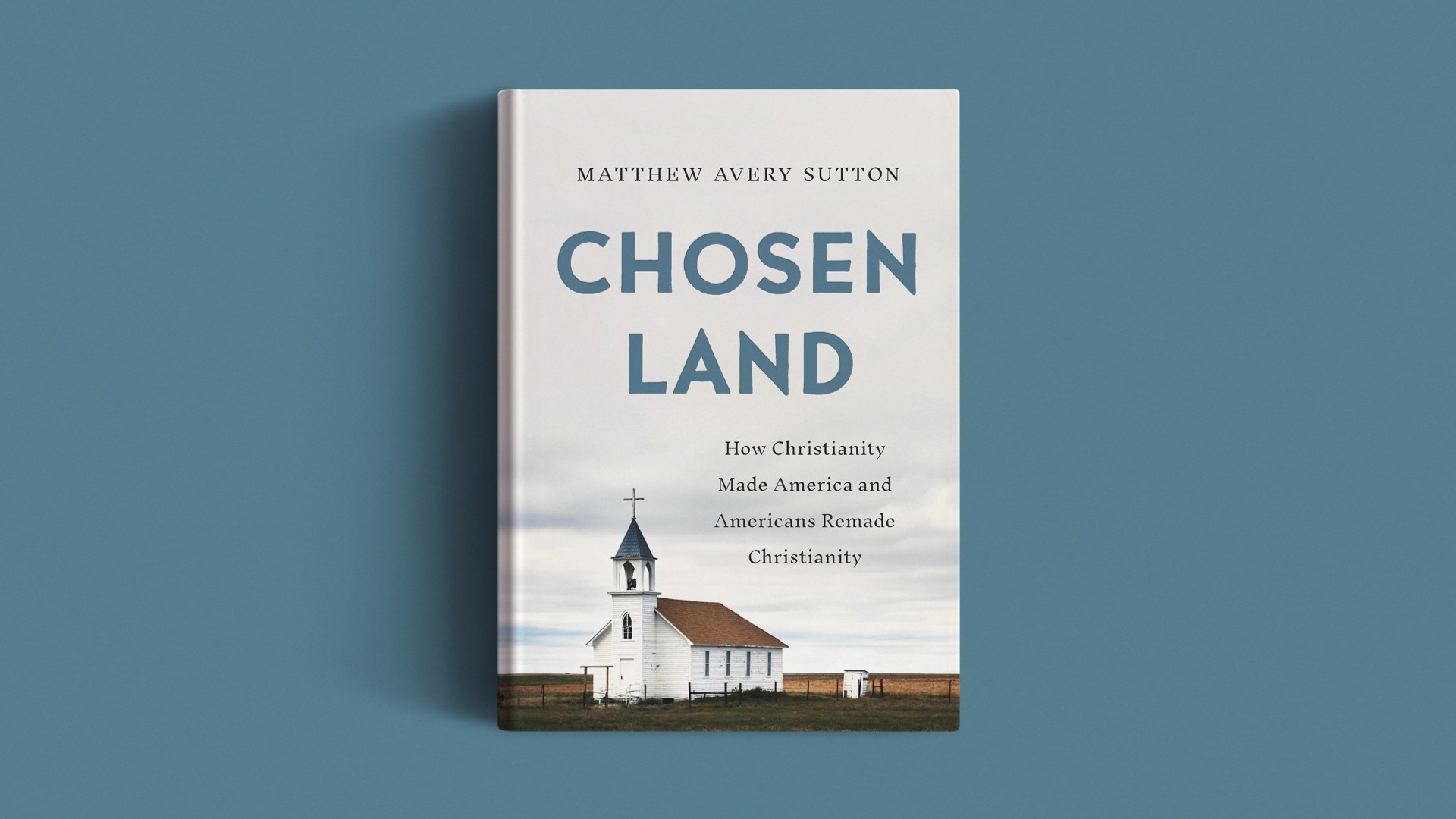
The book on a blue background
Christianity Today March 3, 2026
Illustration by Christianity Today / Source Images: Getty, Basic Books

Writing a comprehensive history of American Christianity is a mammoth undertaking that few historians attempt. It’s been more than half a century since the best-known landmark in the field—Sydney Ahlstrom’s 1,100-page A Religious History of the American People—and after that, some scholars expected we’d never see such an ambitious work again. 

Yet in Chosen Land: How Christianity Made America and Americans Remade Christianity, Matthew Avery Sutton has perhaps accomplished something even more impressive. Not only has he produced a comprehensive history of Christianity in American public life; he has also made it a highly engaging read. And he has done so in half the pages Ahlstrom required. (Full disclosure: I read part of this book in draft form and offered Sutton my feedback before it went to press, which is why my name is listed in the acknowledgments.)

Unlike some magisterial histories, so densely packed with information that they function more as reference works than as readable books, Chosen Land is the type of popular work you can read on a plane or a bus. It’s filled with colorful stories and even more colorful quotations, and it covers an enormously wide range of material. But in its focus on Christian pursuit of power, Sutton’s book offers a better history of American Christian politics than of American Christianity itself.

Beginning with the Spanish Catholics who brought Christianity to the Americas in the 16th century and continuing through the stories of the New England Puritans, the Virginia Anglicans, and the frontier revivalists, Sutton’s 500-year narrative covers all the major Christian leaders in America (and numerous others whose stories are much less remembered). With an eye to telling the stories of the marginalized, Sutton is particularly attentive to the lives of women, racial minorities, and their respective oppressors.

The story of American Christianity, Sutton argues, is the story of America itself, because for most of our history, nearly all the significant political players in every major debate were Christians. It was Christians who made the American nation, and as they did, they created a version of the faith that is uniquely American. They built a country that was uniquely—but not, as many American Christians tend to assume today, monolithically—Christian. Far from propagating an unchanging “Christian worldview,” for most of US history, the nation’s Christianity was a fractious set of competing perspectives. 

Long at the center of those fights, Sutton contends, were four opposing groups of Christians: conservatives, revivalists, liberals, and liberationists. Though all wanted in some way to make America Christian, they had very different views on what that might mean.

For most of their history, conservatives (not to be confused with modern political conservatives, though some have certainly been conservative in politics as well as religion) mainly wanted one thing from the government: to be left alone to practice their own religious tradition. Nearly all 19th- and early 20th-century Catholics fell into this conservative tradition, as did most 19th- and early 20th-century Lutherans, some Dutch Reformed Christians, and some Episcopalians. 

For these conservatives, the historic liturgical practices of the faith—the recitation of the creeds, preservation of the sacraments, and authority of the Christian tradition—were both supremely important and sufficient for salvation. They did not see the church as a liberating social force or an agent of moral reform. They did not join the 19th-century religious campaigns against alcohol or slavery, nor did they campaign for legislation to make America a more overtly Christian nation.

Instead, conscious of their status as religious minorities in a nation that was dominated by Protestant revivalists and liberals, they wanted to protect their own traditions from a potentially hostile state. Only in the 20th century did many of these groups make common cause with revivalists in an effort to defend against liberal attacks on the historic verities of the tradition or the nation’s Christian-inspired moral framework.

Sutton uses the term revivalist to denote Christians whom many other historians have called evangelical. This is the stream of Protestant Christianity that emerged from the Great Awakenings of the 18th and 19th centuries and gave rise to the fundamentalist movement of the early 20th century and the preaching campaigns of Billy Graham in the postwar era.

Unlike Sutton’s conservatives, revivalists were (and are) mission oriented. Driven by a sense that individuals’ relationships with God are sustained not through sacraments, liturgy, and ecclesiastical connections but through conversion and Spirit-induced revivals, revivalists have always wanted to convert the lost at home and abroad. That mission has led them to build large organizations and, at times, to seek political power.

While revivalists want to Christianize the nation, liberals are pluralists and rationalists who historically favored a publicly Christian democracy and educational system only if it could be nonsectarian and harmonized with modern science. Though the number of liberals has shrunk dramatically in recent decades, for much of the late 19th and 20th centuries, they dominated American Christianity, especially in the North. Many 19th-century Congregationalists were liberals in this sense, but so were some Methodists and Northern Baptists. 

Though sometimes incorrectly labeled liberalliberationists were committed not to rationality but to freedom for the oppressed. Consisting disproportionately of African American Christians, liberationists of the 19th and 20th centuries preached a Jesus who emancipated the oppressed and challenged the white power structure. They were the catalyst for the Civil Rights Movement and the voice of justice for the oppressed. 

Today, Sutton argues, these four strands of American Christianity have largely narrowed to two, at least as far as debates about religion in American politics go. 

On one side are those he says want to “reassert Christian dominance in American governance,” a category that now includes most revivalists and conservatives. This group wants to see abortion made illegal, traditional views of sex and gender reflected in public law, and (above all) a Christian-based framework adopted for the nation’s legislation and politics.    

On the other side are liberationist and liberal Christians who believe Christianity has a place in public life but only if it is pluralistic, inclusive, and focused on social justice for the oppressed. In pursuit of policy goals like environmental and racial justice or the rights of immigrants, they’re sometimes in an uncomfortable alliance with a growing group of religious nones who believe Christianity should be excluded altogether from the public square.

Sutton tries to be fair to each of his subjects, but his sympathies are clearly with the marginalized. Thus, for much of his narrative, the liberals seem out-of-touch, the revivalists appear to be agents of oppression, the conservatives cooperate in preserving inequities, and the liberationists alone offer a prophetic word to a society that is structured around the oppression of the weak. 

During the Civil Rights Movement, for instance, liberationists such as Martin Luther King Jr. and Fannie Lou Hamer drew on Christian principles to challenge the nation’s racial injustice. Meanwhile, white liberal churches offered only belated support and denied their “complicity in racism,” Southern revivalists actively opposed the Civil Rights Movement, and conservatives showed little interest in the problem. 

And looking at the two broad streams of today, it’s not difficult to guess which Sutton prefers. As he says, Christians of the late 20th century faced a bifurcated choice: “Would they rally behind Christian nationalism or stand as prophetic voices against injustice?”

Sutton’s 500-year analysis offers a helpful corrective to two historical misconceptions that stem from our unusual contemporary situation of rising irreligiosity paired with minority governance by the conservative-revivalist alliance. 

One misconception is the belief of many nones that American politics were largely secular until the religious right polarized the country beginning in the 1980s. Actually, Sutton correctly contends, American politics and society have always been deeply infused with Christianity, because Christians created and repeatedly reshaped the nation’s culture and politics. 

The second misconception is the unconsidered belief of many Christians that Christianity in our country is monolithic—and that if we could just make society and politics more Christian, a Christian-based morality would automatically follow. 

On the contrary, as Sutton’s narrative reminds us, American Christians have not all believed the same things. There were prominent Christians on both sides of debates over slavery in the 19th century, Prohibition in the 20th, and the gay rights movement in the late 1960s (which received support from some liberal Christian ministers who were gay, even though the vast majority of Christian churches opposed homosexuality). 

This was also the case with abortion rights—a cause that was supported by most mainline Protestant denominations, even as Catholics (and eventually evangelicals) opposed it—and with school-prayer debates too. The organization leading the campaign against religion in public-school classrooms was explicitly religious and was originally named Protestants and Other Americans United for Separation of Church and State. 

Similar conflicts continue today as the conservative-revivalist coalition meets a liberal-liberationist alliance that carries on old battles under a newly nonreligious label.

But what should we as Christians do with all this? It’s discouraging, after all, to realize that the faith we profess has so often been used as an agent of oppression and that American Christians have spent much time infighting on a quest for power.

There’s no question that this is part of the American story, and that should be an admonition for us, especially if we’re tempted to quest for political power ourselves. But the narrative of Chosen Land is not the only story. Sutton’s attention to power makes for a first-rate history of American Christian politics—yet that’s not quite the same thing as a history of American Christianity.

Sutton says very little about theological belief, spiritual practice, and transformed lives. He devotes two pages to Jim and Tammy Faye Bakker, three to David Koresh, five to Donald Trump, and six to Jim Jones, but never mentions the Christian origins of Habitat for Humanity and World Vision or Rick Warren’s announcement that he was giving away 90 percent of his income through “reverse tithing.” Nor does Sutton mention the Bible translations American Christians have read or say much about their prayers or hymns. Perhaps such discussions of religious devotion do not fit into a narrative of “how Christianity made America,” but they are certainly a central part of the American Christian story.

Evangelical historian Mark Noll concluded his history of American Christianity, The Old Religion in a New World, with a chapter titled “Day-to-Day Christian Spirituality and the Bible,” a discussion of Bible reading and sermons. Sutton concludes with a discussion of religious rhetoric at Trump’s second inauguration in 2025 and the observation that the inauguration symbolized what, he claims, American Christianity always was: “a battle for power in order to define the nation’s soul through its politics, policy, and culture.”

If we look only at Christianity’s public face in the United States, Sutton’s observation may be more correct than we’d like to admit. But Noll’s earlier history suggests there is another side of American Christianity that is equally important: the transformation of individual human hearts.

Chosen Land is a superbly written history of American Christians’ political culture and our relationship with the country. It gives us a new understanding of the place of religion in American exceptionalism and public life. It gives us new tools to understand our political history and current moment.

What it doesn’t give us is everything we need to know about American Christians’ faith. Sutton is unsurpassed when he tells us how American Christians have loudly prayed “on the street corners” (Matt. 6:5). That’s a story we need to know. But until we also examine what Christian believers are saying to God when they go into their inner rooms, much more remains to be told of the story of the kingdom of God in America.

Daniel K. Williams is an associate professor of history at Ashland University and the author of books including Abortion and America’s Churches: A Religious History of “Roe v. Wade.”

News

Indian Court Rules Christians Can Hold Home Prayer Meetings

Despite this good news out of the state of Uttar Pradesh, believers remain concerned about the abuse of anticonversion laws.

The inner block of Allahabad high court.

The inner block of Allahabad high court.

Christianity Today March 3, 2026
Subhashish Panigrahi / WikiMedia Commons

A pastor in a remote village in India’s largest state of Uttar Pradesh remembers the Sunday in March 2023 when persecution became real to him. He was leading a group of 13 people in worship as they sat cross-legged on a mat covering the cement floor in his home. In time with the music, he shook a tambourine while parishioners clapped loudly.

Suddenly, about 20 men dressed in saffron entered the small room shouting, “Jai Shree Ram! (Hail the Lord Ram).” They dragged the pastor by his collar out the door as they beat him. Police quietly waited outside as the mob chased out the worshipers. Soon after, authorities booked the pastor under Uttar Pradesh’s anticonversion law, claiming he was forcibly converting Hindus. CT agreed not to use his real name or identifying information, as he fears reprisals for speaking out.

After nearly three years and multiple court hearings, he secured bail under stringent conditions. Charges against him are still pending, even as a Christian relief organization aids him in his legal battle. He is currently stuck in a limbo, neither cleared of the case nor convicted of any wrongdoing. Since he is on bail and charges against him are still being heard, he is cautious about divulging specific information. 

Until that fateful morning, violence against Christians seemed distant to the pastor, something that he would read in the news involving big churches. “I never imagined they would find us,” he said. “We were just worshiping quietly in a remote village in our own home.”

Last month, the Allahabad high court, which has jurisdiction over Uttar Pradesh, ruled in a separate case that prayer meetings held on private property do not require any prior permission. The ruling has encouraged the pastor as well as other Christians arrested for house church gatherings. 

The high court invoked Article 25 of the Indian Constitution, affirming that freedom of religion is a fundamental right and religious prayer meetings within one’s own private premises are not unlawful. 

The ruling is significant given that the number of violent incidents against Christians in Uttar Pradesh has ranged from 100 to 300 in the past five years, according to the United Christian Forum (UCF). Since 2014, when the Hindu nationalist Bharatiya Janata Party (BJP) came to power across the country, Uttar Pradesh has recorded a total of 1,317 incidents, much higher than any other state in India. The real figures could be even higher, as the UCF’s data is based on self-reporting by the victims of persecution.    

“Most attacks are meant to halt the spontaneous and organic growth of Christian faith happening through house churches,” said A. C. Michael, the national coordinator of UCF.

Some hailed the verdict as a landmark development. Others described it as “a warning against arbitrary police action.” A few reacted with more cautious optimism, stressing that reining in vigilante groups and enforcing the court’s order remain a challenge. 

Yet it doesn’t assuage Christians’ main concern: the government’s abuse of anticonversion laws. “I see Christians celebrating the high court verdict, but the elephant in the room is unconstitutional anticonversion laws,” said a Christian lawyer who practices in the Allahabad high court who asked not to be named for security reasons.

In the same week as the Allahabad ruling, the Supreme Court of India issued notices to the central government and 12 states, including Uttar Pradesh, asking for their response to a petition by the National Council of Churches alleging that anticonversion laws violated Christians’ fundamental rights. The development signals a potential constitutional review of the laws. Of the 12 states where these laws are operational, nine are governed by the BJP.

Called the “Freedom of Religion Act” in most states, the anticonversion laws criminalize any form of religious conversion away from Hinduism. Central to these laws are underlying assumptions that conversion to non-Hindu religions is forced and individuals can never accept another faith voluntarily. As a result, the words converted or conversion in India now have pejorative connotations.

Broad and vague language in the acts, such as forced conversion, fraud, and allurement has emboldened Hindu nationalist groups to accuse any gathering of Christians as breaking the law and led police to make arbitrary arrests.

These laws mandate that individuals who want to change their faith must submit a preconversion declaration to local authorities 60 days prior. Police then look into the reason and circumstances leading up to the conversion. Post conversion, the individuals must submit a secondary declaration to formalize their new faith with the state authorities.

These laws reverse the burden of proof, requiring the accused to prove that the conversion was not fraudulent or forced. Anyone can initiate police action over a conversation. 

“The Acts which are in challenge, they are structured in such a manner that it incentivizes certain vigilante groups to take action, because there are rewards out there,” argued Meenakshi Arora, the lead lawyer for petitioners challenging these laws in the Supreme Court. In some instances, Hindu nationalists have even offered bounties for killing Christians. “So even if there is really no case at all,” she said, “someone will make a case, somebody will be arrested, etc., because there is a reward for those on the vigilante side.”

Since the offenses are considered criminal, police can make arrests without a warrant and obtaining bail is extremely difficult. Convictions can result in jail terms ranging from one year to life imprisonment, along with hefty fines.

For instance, the state of Rajasthan enacted the most stringent anticonversion law, punishing offenders with life imprisonment for mass conversion (when two or more people are converted) and fines up to 10 million Indian rupees (about $100,000 USD). Penalties are harsher when the people converted are women, minors, or members from marginalized communities, such as Dalits and Adivasis (Indigenous people).

Yet conviction rates are extremely low. This supports the claim made by Christian leaders that these laws are merely instruments of intimidation meant to disrupt religious activities and prolong the legal battle for the accused. Between November 2020 and July 31, 2024, only four out of 835 conversion cases registered in Uttar Pradesh ended in a conviction. Still, police in the state made 1,682 arrests on charges of unlawful conversion.

In several states, anticonversion laws now shape ordinary Christian life. Pastors organize prayer meetings knowing that it could lead to detention. Social workers live in the shadow of fear, hoping their acts of service are not misread as an inducement to convert someone. Even Christian prayers at birthday parties can lead to arrests, police action, and criminal charges.

Amid the persecution, new converts continue to embrace the Christian faith and find strength in the communities forged through house churches, according to local pastors.

“There is real fear among Christians,” said Vijayesh Lal, general secretary of the Evangelical Fellowship of India. “Yet faith continues. Churches continue. Our posture as Christians is not adversarial. It is constitutional. We seek neither privilege nor exception, only equal protection under the law.”

addApple PodcastsDown ArrowDown ArrowDown Arrowarrow_left_altLeft ArrowLeft ArrowRight ArrowRight ArrowRight Arrowarrow_up_altUp ArrowUp ArrowAvailable at Amazoncaret-downCloseCloseellipseEmailEmailExpandExpandExternalExternalFacebookfacebook-squarefolderGiftGiftGooglegoogleGoogle KeephamburgerInstagraminstagram-squareLinkLinklinkedin-squareListenListenListenChristianity TodayCT Creative Studio Logologo_orgMegaphoneMenuMenupausePinterestPlayPlayPocketPodcastprintremoveRSSRSSSaveSavesaveSearchSearchsearchSpotifyStitcherTelegramTable of ContentsTable of Contentstwitter-squareWhatsAppXYouTubeYouTube