Church Life

In Hong Kong, One Pastor Ministers to a Gen Z Protester in Prison

Amid high rates of depression and anxiety among young people, Christian leaders boost efforts to address mental health challenges.

A cutout woman with a photo of people walking quickly in a train station
Christianity Today January 10, 2025
Illustration by Mallory Rentsch Tlapek / Source Images: Unsplash

In the last two years, KK Ip, who pastors an evangelical, multicultural church in Hong Kong, has traveled to a prison located on the border between China and Hong Kong several times.

Every visit takes more than 3 hours. Much of it is commuting time, but once he arrives at the prison, he often waits for 45 minutes before the prison guards escort him to a meeting room.

There, Ip meets with a young woman who was arrested in 2019 for protesting against Hong Kong’s now-scrapped extradition bill. Although she was not involved in any violent acts, the government sentenced her to nearly four years in prison in 2023.

During their half-hour-long interactions, Ip chats with her about her thoughts and the conditions inside the prison. Over time, he sensed her despondency and anxiety over the uncertainty of the prosecution process and its potential outcomes.

“Planning for the future seemed pointless” to the young woman, Ip said.

Before her trial began, Ip prayed with her for guidance in her future career. And as trust began to develop between them, she became more “grounded and hopeful for the future,” he said. She will be released from prison next year.

The Gen Zer, whose name is withheld for security reasons, is not a believer. But Ip has found ways to convey God’s love and grace to her through these in-person visits and also through writing letters to her regularly (he once sent a postcard while vacationing in Greece), sharing insights and encouragement.

“Christ’s sacrifice [has] liberated us from the imprisonment of sins, and I believe in extending that love and support to the youth in our city,” Ip said. “I want her to know that there are people willing to walk with her no matter how far away [they are].”

Ip is not alone in his conviction to care for Hong Kong’s depressed and anxious Gen Zers, who are experiencing a tumultuous political, economic, and social climate. Other pastors and ministry leaders in the city are taking steps to address these mental health issues in creative ways, from creating handy tools to build emotional literacy to opening up spaces for conversations about these challenges inside and outside the church.

In the six years since the 2019 pro-democracy protests, Hong Kongers have dealt with some of the strictest COVID-19 measures in the world: Its borders were shut in 2020, and visitors had to enter mandatory hotel quarantines. Then, the authorities implemented a tough national security law in June 2020.

While more than 123,800 locals have immigrated to Britain and thousands have received permanent residence in Canada, an influx of people from the mainland has moved in. Since December 2022, around 55,000 people from China have moved to Hong Kong on “top talent” visas.

These rapidly evolving changes in Hong Kong society have taken a toll on Gen Zers’ mental health. Almost half of 18-to-24-year-olds in the city reported having moderate to severe depression with symptoms of anxiety and insomnia, according to a survey last year by the Mental Health Association.

Nearly half of youth aged 12 to 24 said they consider themselves failures, based on a Hong Kong Christian Service survey last year. But only a third of Gen Zers will seek professional help for their mental health problems, a poll by the Chinese YMCA of Hong Kong found.

As Hong Kong churches grapple with dwindling congregations and threats to their religious freedom, Gen Z Christians are also experiencing greater levels of depression and anxiety. Stories of young believers struggling with their mental health are common, said Fox Lo, associate general secretary of the Fellowship of Evangelical Students (FES).

One university student who wanted to further her studies had to drop out of school because her experience of depression and anxiety hindered her from finishing her papers, Lo said.

“Some people say there is no PTSD in Hong Kong because there is no post-trauma,” he added. “The trauma continues every day.”

Lo and others at FES believe the Bible can address the trauma that many young Hong Kongers are experiencing, especially in showing that God cares about humanity’s complicated range of emotions.

When the protests erupted in Hong Kong in 2019, Lee Chiu Mei was in college. Many of his classmates joined the protests outside his school.

“The news information was too overwhelming every day, and I had no time to process my feelings,” Lee, 24, said. Church was not an ideal space to discuss the fiery political issues and divisions sweeping the city, as he did not feel comfortable articulating his personal views there.

After observing that young people like Lee had difficulties expressing how they felt about Hong Kong’s political climate in 2019, Lo hit on the idea to creatively convey the Beatitudes in Matthew 5 as a comforting message for Gen Z believers. Along with other student leaders at FES, he created a deck of cards depicting these Bible verses to help young people share vulnerably about their emotions.

One card, for instance, depicts a heart being poured out onto clasped hands with this verse printed behind it: “Blessed are the poor in spirit, for theirs is the kingdom of heaven” (Matt. 5:3). Another card showcases a person in tears slumped over a rock, while the other side declares, “Blessed are those who mourn, for they will be comforted” (Matt. 5:4).

While the protests were taking place, Lee met with a small group of Christian students at his school, all of whom he was meeting for the first time. He selected a card from the deck before him, gazing at the illustration on it. He described how he felt looking at the image, read the accompanying Beatitude, and imagined how Jesus would respond to his current circumstance. The other students also shared their reflections.

The cards helped Lee and his peers share their worries with each other—something they normally would not do, as they feared arrest for speaking critically of the government.

“I finally felt that I had the space to express these feelings and that I had someone to accompany me to face the trauma caused by society, to pray for each other, and to leave everything to God,” Lee said.

The second version of the cards, which features the Psalms, was published in 2023 for use in college ministry events during the pandemic and continues to be used today.

There are no illustrations on the cards, but there are words describing emotions, like “angry,” alongside verses like Psalm 35:17: “How long, Lord, will you look on?” On another card, the word shameful accompanies Psalm 40:11: “Do not withhold your mercy from me, Lord; may your love and faithfulness always protect me.”

When students don’t know which card to choose, FES’s leaders ask them to select cards they find interesting. Doing so allows them to explore more nuanced emotions under the general feeling of sadness they may be carrying, said Lo.

Instead of intellectualizing their emotions, looking at the cards and identifying words or images that speak to them offers Gen Z believers the space to express how they feel, pushing against the norm in most Hong Kong churches.

“Churches are afraid that if [people share] too much about their struggles or depressive feelings, it would discourage people not to pursue faith and not go to church,” said Barry Cheung, FES’s general secretary.

Another Christian ministry, Breakthrough Hong Kong, is encouraging Gen Z to bring conversations about depression and anxiety to the public square.

The group’s Emo Error Gym (emo is short for emotions) began as a two-day interactive display in a shopping mall in Tsuen Wan last year. A question on a large board asked people to respond to the question “What’s your emo level?” Young Hong Kongers wrote their responses on pieces of paper shaped like leaves, which were hung up on a brown cardboard tree for passersby to look at.

“I couldn’t socialize with others normally because of depression, and my friends don’t even know about it,” one person wrote. Another person wrote, “I do not like the way I am right now.”

“When other people read these notes, they know they are not alone,” said Wilson Lam, Breakthrough’s associate general secretary.

Breakthrough uses this display to connect Gen Z Hong Kongers to its ministry, which focuses on reaching youth for Christ through digital media, books, and social-support services like counseling. This March and April, the exhibit will be held at five universities in Hong Kong.

Allowing Gen Zers to acknowledge the anxiety and depression they are facing helps guide them toward a more holistic understanding of health and personhood, said Lam.

“In school and society, young people focus on doing,” which often leads to burnout and feelings of isolation, said Lam. “From a Christian perspective, the ‘being’ is more important than the ‘doing.’”

One church, meanwhile, hopes to bring these conversations inside its walls and to become a safer space for Gen Z to have conversations about depression and anxiety.

The Methodist International Church of Hong Kong is in the process of converting a floor in its church building into a center for young people. Slated to open later this year in the Wan Chai neighborhood, the space will be open to Gen Zers who want to socialize, study, and have conversations on any topics they choose.

Gen Zers “need an opportunity to talk openly in settings where there is no stigma attached to talking about one’s sadness, hurt, anger or confusion,” said Lance Lee (no relation to Lee Chiu Mei), a psychologist and pastor at the church.

Through the center, the church also aims to offer support groups, pastoral counsel, and a full range of coaching, counseling, and Christian psychotherapy services.

Doing so is part of a church’s calling and “a root to evangelism, to witness, to the expansion of the kingdom even for people who believe God or religion is irrelevant,” Lee asserted. “People need space where they can bring all of who they are and be met by a Jesus who knows me, loves me, and wants to embrace me deeper.”

For Lee, creating room for conversations around depression and anxiety within the church is not the end goal. Rather, he believes that doing this will give Gen Zers “hope, inspiration, and excitement that the God who is with us in this really has a way for us to be happy in Hong Kong five to ten years from now.”

Ip, the pastor, continues to minister to the young woman in prison. Sometimes their conversations are trivial; other times they have broached religion. “To imitate Christ, we must take up the cross and care for and love those who feel hurt or wronged,” he said.

Additional reporting by Jessie Chiang and Isabel Ong

Ideas

When Reading the Psalms, Don’t Skip the Superscriptions

Columnist; Contributor

They’re part of the Bible’s original text, and frequently essential to understanding it.

A small woman pointing at a superscription in a Bible
Christianity Today January 10, 2025
Illustration by Mallory Rentsch Tlapek / Source Images: Getty, Unsplash

Some passages of Scripture get ghosted. Occasionally, you see this happen when you ask someone to read a particular chapter aloud. The words are all right there on the page. But the person reading them literally acts as if some are simply invisible.

I am not talking about the portions that we generally avoid reading aloud. There are plenty of those: long lists of names, numbers, offerings, or building projects where the words are unpronounceable, the story is obscure, and the repetition is intense (looking at you, Numbers 7). I have argued before that there is gold to be found in lists and building projects too. Instead, I am talking about something stranger: the way that many (if not most) Christians treat some of God’s inspired words as if they do not exist.

I am referring, in particular, to the superscriptions in the Psalms. I have noticed it frequently in my church: If, for example, someone is given Psalm 51 to read, the reading typically begins with the first verse—in this case, “Have mercy on me, O God, according to your unfailing love.” Which means it omits what the passage says immediately beforehand: “For the director of music. A psalm of David. When the prophet Nathan came to him after David had committed adultery with Bathsheba.” Most people hardly realize they have missed anything. If you mention it afterward, they might be puzzled, as though someone had suggested reading the contents page or the index.

No doubt much of the problem stems from the ways Bibles are formatted. Because our Bibles tend to include so many introductions, headings, subtitles, chapters, and verse numbers (let alone cross-references and study notes), additions to the text of Scripture often account for more words than the text itself. It is hardly surprising that people assume original titles like “To the choirmaster” and “Of David” belong in the same category as editorial insertions like “The Call of Abram” or “The Birth of Jesus.” But they don’t. They are part of the Hebrew text, and frequently essential to understanding it.

Psalm 51 is a good example. This beautiful prayer of repentance reads completely differently when we know what David has done to earn Nathan’s rebuke and how his sin has been exposed. Plenty of psalms start similarly, by providing a narrative location for the song that follows. Knowing that a poem is “a Psalm of David. When he fled from his son Absalom” (3:1) adds spiritual and emotional heft to the words “But you, Lord, are a shield around me, my glory, the One who lifts my head high” (3:3)—not least because Absalom has lifted his own head, and indeed will meet his doom as his head is lifted in a tree (2 Sam. 18:9).

In the first verse of Psalm 57, David states, “I will take refuge in the shadow of your wings until the disaster has passed.” His prayer makes new layers of sense when we know it comes from inside a cave while Saul is trying to kill him. Even the simple phrase “in God I trust” (56:4) sounds very different on the lips of a political prisoner—according to the psalm’s superscription, David composed it as a Philistine captive—than it does on a dollar bill.

Some psalms, like these, begin with comparatively long and detailed superscriptions. But the short and subtle ones can be equally revealing. Many believers know the lines “Unless the Lord builds the house, the builders labor in vain” (127:1), and we freely apply them to our commercial or charitable initiatives. The resonances are quite different, however, when we start as the psalm does: “A song of ascents. Of Solomon.” The application quickly changes when the author is Solomon and the “house” is the temple. The “labor” becomes less metaphorical when we realize they took seven years and prepared God’s dwelling for centuries.

A few songs later comes an even more familiar line: “How good and pleasant it is when God’s people live together in unity!” (133:1). Again, though, look what happens when you read the superscription first: “A song of ascents. Of David.” Except, perhaps, for Cain and Abel, no brothers in Scripture dwelt in unity less than David’s sons. Amnon raped his sister; Absalom killed his brother and arranged a coup to overthrow his father; Adonijah attempted a coup as well, before being killed on the orders of his brother Solomon (who then killed numerous other people). Suddenly the opening line of the psalm sounds less like a platitude—a comforting reflection at the start of a prayer meeting, say—and more like the desperate longing of a father who has seen endless conflict among his own children. In the Psalms, as in all Scripture, knowing the “who” and “why” can alter the “what.”

So if anyone asks you to read a psalm, start with the superscription. You will be glad you did.

Andrew Wilson is teaching pastor at King’s Church London and author of Remaking the World: How 1776 Created the Post-Christian West.

News

Irish Evangelicals Stand Against Growing Approval for Assisted Dying

With the UK making moves to legalize the practice, Protestant and Catholic leaders reiterate a pro-life defense for the vulnerable.

A stone building in Dublin

Leinster House in Dublin serves as Ireland's parliament building.

Christianity Today January 10, 2025
Dave Walsh Photography / Getty Images

When the government put its abortion ban up for a referendum vote seven years ago, Evangelical Alliance Ireland executive director Nick Park and his team crisscrossed the country to speak at Catholic Masses about the issue.

Now, the evangelical advocates say they are ready to launch a similar tour across Irish churches if assisted dying comes up for legislative debate.

In a country with a history of deep sectarian divides, the pro-life cause remains a source of unity and shared convictions among Christians in Ireland. As the neighboring United Kingdom advances a bill to allow terminally ill patients to end their lives, Ireland’s Protestant and Catholic leaders have grown more concerned about the issue and the possibility of similar moves degrading the value of life in their own country.

“I think it would be an absolute tragedy,” Park said in an interview. “Once you start chipping away at a basic core gospel principle that human life is sacred, it has unforeseen consequences.” 

Last March, the Irish legislature’s Joint Committee on Assisted Dying published a report recommending that assisted dying be legalized in certain restricted circumstances. In October, the Dáil, the lower house of the Irish legislature, voted 76 to 53 in favor of noting the report, a move that drew criticism from Christians across the country. 

In response, Catholic bishops in Ireland called on members of the church to advocate against such proposals. 

“Assisted suicide, far from being an expression of autonomy, is a failure of care,” they wrote. “By legislating for assisted suicide or euthanasia, the State would contribute to undermining the confidence of people who are terminally ill, who want to be cared for and want to live life as fully as possible until death naturally comes.”

A bill to legalize assisted dying was proposed in the Dáil, but the dissolution of the legislature and the ensuing November 29 general election precluded any deliberation on it. 

The election results could decrease the chances of legislation on assisted dying or at least delay such proposals for months: The key sponsor of the previous assisted dying bill lost his seat in the election, and the two parties that won the most seats are consumed with the task of forging a coalition government

Still, faith leaders in Ireland worry that the recent vote in the UK could renew momentum for a similar movement in Ireland. A recent poll conducted by the Irish Examiner found that 57 percent of people in rural Ireland support legalizing assisted dying, while 21 percent are opposed.  

When the UK bill was being debated, the Methodist Church in Ireland released a statement saying, “Once assisted suicide is approved by the law, a key protection of human life falls away.”

The Church of Ireland, which is the country’s largest Protestant denomination, argued that legalizing assisted dying would put pressure on the elderly and other vulnerable populations to end their lives.

“As Christians we believe that all life is created in the image of God, as a gift from Him, and has intrinsic value, regardless of who we are, our personal circumstances and our abilities and limitations,” its statement read. “If we accept that, in some cases, there are those who by means of age, disability or illness would qualify for assisted suicide, have we not judged their life to have less value?”

Dr. Michael Trimble, a consultant in acute internal medicine with the Royal Victoria Hospital in Belfast and a member of the Church of Ireland’s Church and Society Commission, said in an interview that legalizing assisted dying in Ireland would likely have a detrimental impact on vulnerable populations. (The UK bill currently does not apply to Northern Ireland, and a majority of the Northern Ireland members of Parliament voted against the UK bill.) 

“Once you’re over the line that assisted suicide is acceptable, then the slippery slope is very real,” Trimble said, “If you cross the robust barrier of ‘We don’t kill people,’ it’s very hard to put up any other barriers that are strong enough to withstand challenge.” 

“If the church is not speaking out on behalf of the vulnerable, then it’s failing in its mission,” he added. 

Park said his organization is prepared to coordinate with both Protestant and Catholic communities to advocate against future proposals for legalizing assisted dying.

“It’s been a key cornerstone of Irish society for a long time that people that are ill, people that are disabled, people that have a life that some would say is a lower quality of life, are actually very special and have a lot to contribute to society,” he said. 

Approving assisted dying would be a drastic departure from how Irish society has treated vulnerable people in the past, Park said. 

“When you have somebody with special needs, the Irish-language term for that person is literally translated as ‘child of God.’ And I think that shows something about where the Irish heart has always been,” Park said. “But now this idea that somebody, because of terminal illness, that their life isn’t as important, that would be quite a shocking turnaround for us.”

News

From Plains to the Presidency, Jimmy Carter Remembered at National Funeral

Grandson said his 100-year life testified to the “goodness of God.”

Cathedral with a flag-draped casket surrounded by clergy

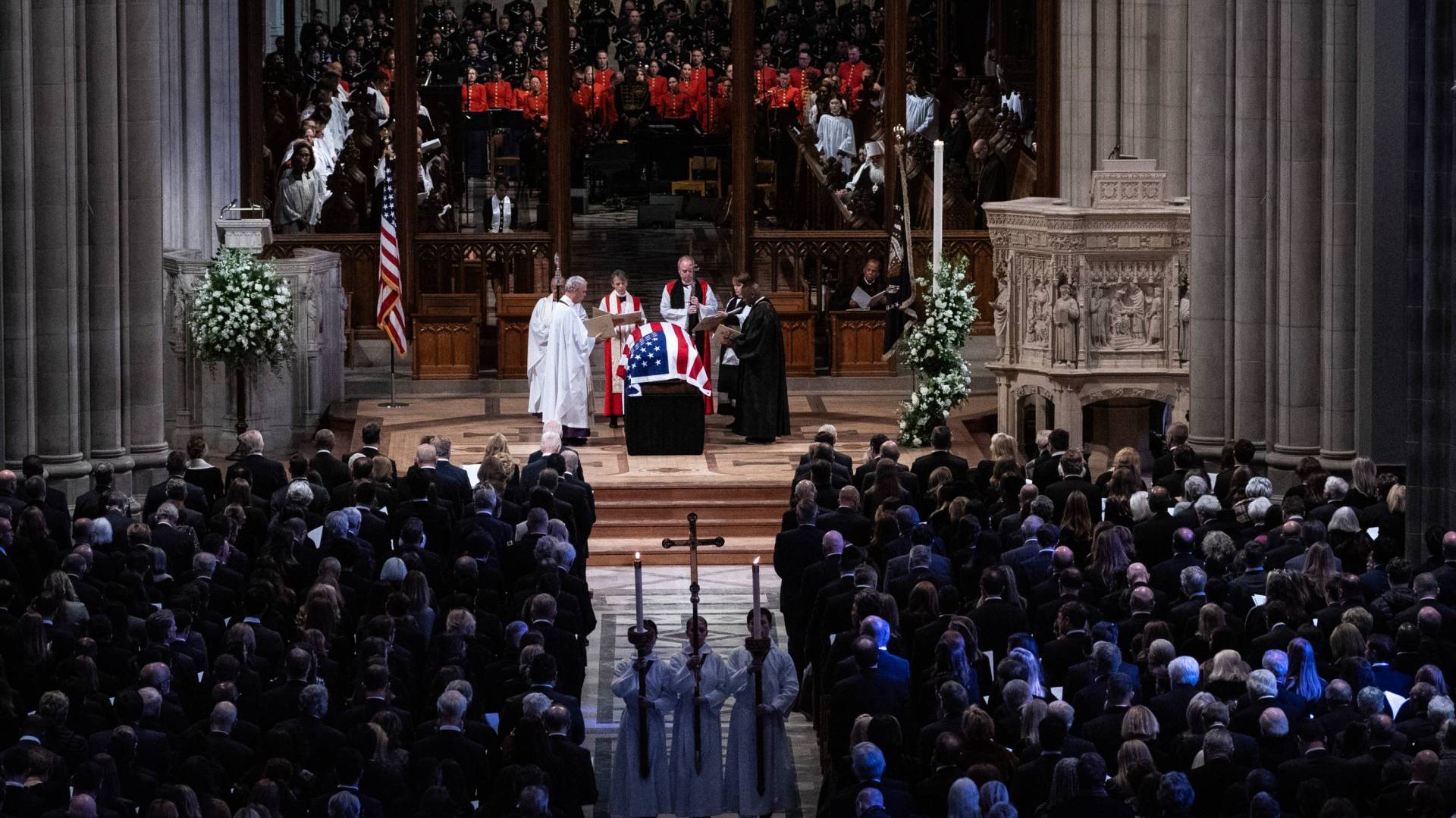
The state funeral for President Jimmy Carter was held Thursday at the National Cathedral in Washington, DC.

Christianity Today January 9, 2025
Haiyun Jiang - Pool / Getty Images

After a week of remembrances, the nation bid farewell to its longest-living president, former president Jimmy Carter, in a hymn-laden, Scripture-laced service that stretched an hour past its expected end.

Carter, a progressive Baptist who described himself as born-again and who elevated evangelicalism to the public eye during his campaign, arranged for faith to be front and center in his state funeral. 

Held at the Washington National Cathedral, the service included the hymns “Come Thou Almighty King,” “Amazing Grace,” and “Be Still My Soul.” The choir also sang “Eternal Father, Strong to Save,” also known as the “The Navy Hymn,” in honor of Carter’s service in the Navy. 

Carter died December 29 at 100 years old. His flag-draped casket was met outside the doors of the church building by Marshall Hollerith, dean of the National Cathedral, and Mariann Edgar Budde, bishop of the Episcopal Diocese of Washington.

The casket entered the cathedral to the rich accents of civil rights champion and ordained minister Andrew Young—a former Democratic congressman from Carter’s home state of Georgia—reading passages from John’s gospel and Job: 

I am the resurrection and the life, saith the Lord. He that believeth in me, though he were dead, yet shall he live. … I know that my redeemer lives, and that he shall stand upon the latter day upon the earth. And though this body shall be destroyed, yet shall I see God, who I shall see for myself and my eyes shall behold, and not as a stranger.

On the front row sat the Carter children: Jack, Chip (James Earl III), Jeff, and Amy. Across the aisle sat the former presidents and their spouses: Bill and Hillary Clinton, George W. and Laura Bush, Barack Obama, and Donald and Melania Trump. Vice President Kamala Harris sat in the row just ahead with husband Doug Emhoff and President Joe Biden alongside Jill Biden.

The 39th president’s grandson, Josh Carter, opened by speaking of grandfather’s commitment to Maranatha Baptist Church in his hometown of Plains, Georgia, noting that “from World War II to COVID, he taught Sunday school.”

On Sunday mornings, people from all over the country would be lined up, sometimes from the night before, to hear his grandfather preach. “My grandfather would address the most diverse Sunday school every Sunday,” his grandson said. Jimmy Carter’s final lesson, in 2019, was reportedly about “being ready to go to heaven.” 

Faith, and his church, were “central to his life.”

“He worshiped the Prince of Peace,” the younger Carter said. At the end, his tribute turned into something of a gospel sermon, where he read a long passage of Scripture: Romans 8:1–18, 38–39.

Carter was very public about his faith, participating at times in door-to-door evangelism and speaking about his faith to world leaders during his time in office, according to Randall Balmer, a professor of religion at Dartmouth College and the author of a Carter biography focused on faith.

Balmer, who met with Carter multiple times, said the former president shared that he and his wife, Rosalynn, had a habit of reading the Bible every night, often in Spanish, as a way to keep their devotional lives—and their Spanish—sharp.

Carter outlived at least two people he had originally asked to deliver eulogies at his funeral. The sons of the late president Gerald Ford and Carter’s late vice president, Walter Mondale, spoke in their stead.

Steven Ford, actor and Gerald Ford’s third son, told the Carter family that “God did a good thing when he made your dad.”

He shared an anecdote, provoking laughter, about how both Ford and Carter made a pact to speak at each other’s funerals. Carter fulfilled his pledge by speaking at Ford’s state funeral service in 2006. 

Former president Ford’s prepared tribute included a homage to Carter’s 77-year marriage to Rosalynn Carter, who passed a year before the president: “In a life rich with blessings, none was greater for Jimmy than his love he shared with Rosalynn and the love the two of them shared with their children,” his son read.

“We add our prayers to the prayers of tens and millions around the world,” Ford said to the Carter family at the end of his speech.

Ted Mondale, former Minnesota state senator, delivered a eulogy written by his late father that touched on Carter’s support for making human rights a centerpiece of foreign policy, striving to bring peace to the Middle East, addressing climate and environmental issues, and supporting women’s rights.

Stuart Eizenstat, Carter-era White House domestic affairs advisor, also mentioned the former president’s policy wins—and the difficulties that beleaguered Carter’s one term—stubborn inflation, foreign policy woes, a protracted hostage crisis.

Jason Carter, former Georgia state senator and chair of the board of the Carter Center, spoke of the man he knew as “Papaw” who would sometimes answer the door in shorts and Crocs. He spoke of his grandfather’s down-to-earth nature in washing Ziploc bags to reuse, struggling with adopting new technology (like the cell phone), and papering his fridge with pictures of his grandchildren.

“From the moment that he woke up until he laid his head, his life was a testament to the goodness of God,” Jason Carter said, referencing Bethel Music and Jenn Johnson’s worship song “Goodness of God.”

He also spoke about Carter’s philanthropic, post-presidency work, such as nearly eradicating diseases like the Guinea worm and building houses with Habitat for Humanity.

Another grandson, James Carter, read the Beatitudes passage in Matthew 5:1–16.

President Joe Biden’s tribute touched on Carter’s faith in God and vision for America: “Throughout his life, he showed us what it means to be a practitioner of good works, and a good and faithful servant of God.” He added, “Today, many think he was from a bygone era, but in reality, he saw well into the future.”

Near the close, Young spoke about the unlikely friendship he, a Black man, developed with Carter, who grew up in the thick of the Jim Crow segregated South. Carter would later appoint Young to be his ambassador to the United Nations.

“James Earl Carter was truly a child of God,” Young said.

One of the only secular songs, John Lennon’s “Imagine,” featured Garth Brooks and Trisha Yearwood serenading the crowd.

At the end of the service, clergy led a recitation of the Lord’s Prayer and circled the casket to lay their hands in a benediction, including Budde, the bishop; Tony Lowden, Carter’s longtime personal pastor from Maranatha Baptist Church; and Sean Rowe, presiding bishop and primate of the Episcopal Church. 

Carter’s casket departed to the powerful sound of a 10,000-plus pipe organ and choir singing “All Hail the Power of Jesus’ Name.”

The state funeral is one of the last events closing nearly a week of remembrances—from military salutes, to services in Georgia, to a period of lying in state that was open to the public in the US Capitol building.

Carter was president from 1977 to 1981 before losing his reelection bid to former president Ronald Reagan. 

Later Thursday, there will be a private funeral service at Maranatha Baptist Church. Then, Carter will be buried in his hometown of Plains, Georgia, next to Rosalynn, who died November 19, 2023. Carter is survived by more than 30 family members.

Editor’s note: This article has been updated to correct the Bible citations for the passages read by Andrew Young and Laura Bush’s name.

News

Your Pastor Won’t Text You to Ask for Gift Cards

Leaders are working to keep their flocks from getting fooled by impersonation scams, which use church details to prey on members’ generosity.

Christianity Today January 9, 2025
Illustration by Elizabeth Kaye / Source Images: Getty

When David Ogan, a priest in the Orthodox Church in America, had a family emergency while traveling, fellow Orthodox from around the country were willing to send money to help. They took his calls, heard the story of what happened, and wired him the funds he needed right away. After all, the church upholds acts of mercy, a selfless form of Christian love in action.

Except the calls weren’t from Ogan, and there was no emergency.

When Ogan started getting calls directly from concerned Christians—Was Father Ogan all right?—the Clarksville, Tennessee, priest immediately recognized the situation as a scam. But how?

At first, Ogan thought the scammers were impersonating an uncle who shares his name and runs a prison ministry in Nashville. But then, Ogan learned they had shared his address, the name of his church, and even his children’s names in their calls.

One of their targets, Philip Kontos, a priest in Florida, estimates he sent $650 by Zelle. The scammer claimed to be Ogan calling from a relative’s phone. Kontos sought to verify the story before he sent anything, but the scammer’s story matched Ogan’s details in the Orthodox Church in America’s expansive online clergy directory. Sending help by Zelle made sense, given the urgent need the man described.

Only after he’d sent the money—and a follow-up call went unanswered—did Kontos start to wonder. When he dialed the number for Ogan in the online directory, Kontos reached the real priest and learned the truth.

Welcome to clergy-impersonation scams, a widespread but targeted form of phishing.

Similar scams use the names of bosses, banks, or family members to seek money transfers, financial details, or gift cards. Criminals can play on an additional level of trust and the inherent generosity in church communities when they simulate requests from a member’s pastor or priest.

According to the annual data book put out by the US Federal Trade Commission (FTC), impersonation scams were the second most common complaint in 2023, after identity theft. That year, the FTC received 853,935 complaints of imposter scams, amounting to losses of nearly $2.7 billion.

Those are only the complaints on record; a 2021 study found only 4.8 percent of people report their experience with fraud to the Better Business Bureau or a government agency.

“It’s a very underreported crime,” said John Breyault, a fraud expert and vice president at the National Consumers League. With fraud, “we tend to blame the victim,” which leads to silence.

Neither the FTC nor the National Consumers League tracks clergy impersonation specifically, but these scams target Protestant, Catholic, and Orthodox churches in states from Alaska to Missouri, Texas to Florida.

“He used all the right words; he used the terminology,” said Kontos of the man who called him at 3 a.m. one day, claiming to be Ogan. “He used a nickname for the wife that was appropriate. … He seemed legit.”

Possibly, the scammer gleaned the term matushka, a word many Orthodox Christians use for a priest’s wife, from the directory, which provides detailed information about each clergy member in the United States. Public listings include an address (sometimes one’s home), phone numbers, emails, and the name of the priest’s wife, if he’s married.

In Levelland, Texas, a small town west of Lubbock, Presbyterians have a much different set of common terms. But scammers got close enough to pull off a fraud there, too. Cindy Terzenbach, a long-time parishioner at First Evangelical Presbyterian Church, said all the details sounded plausible when she got a text from someone who claimed to be her pastor, Jon Sharpe.

According to the message, he was in a meeting but needed her help with something. “I would jump in front of a truck for him,” Terzenbach said. Tired from an early day that started at 4:30 a.m., she didn’t at first ask “her pastor” why his number had changed.

His request to buy gift cards seemed plausible, based on a prior church job she’d had. One text even pledged to send a prayer letter with the cards, “which sounds like something he would do,” Terzenbach said.

“What these scams rely on is the criminal scammer building trust with the victim,” Breyault said. “The scammers are very organized. … Like any other business, [they] want to get ROI [return on investment],” so they do their research.

Glyn Gowing, a computer science professor who created the cybersecurity program at LeTourneau University in Longview, Texas, said scammers often research churches, whether through directories, social media, or other means.

“What they’re trying to do is convince the victim that the scammer is a member of this community,” he said. “One of the ways they do that is to have knowledge of other things in the church.” This might include researching differences in church terms, like matushka or prayer letter.

The second time I got a phishing text related to an Anchorage church I’m connected to, it claimed to be from the new interim pastor. A year or two before, I’d gotten a similar text that claimed to be from the prior pastor.

In the first case, I had his number and texted his wife to check if he’d changed it or had his phone hacked or stolen. But the interim pastor was so new I didn’t yet have his number. Only after the scammer mentioned gift cards did I check with someone else.

Terzenbach, unfortunately, had bought and sent pictures of three $100 gift cards before the scammer’s charade finally slipped. Then she called her pastor and learned the truth. When he said it wasn’t him, “I just started bawling,” she said. “It tore my heart out.”

Sharpe eventually reimbursed Terzenbach, one of four people at the church to get the texts. He believes the scammer got their numbers in a Telegram hack of some kind. Sharpe had asked to join a private Telegram group the very same day the texts went out.

How can churches and parishioners protect themselves? Gowing, Breyault, and others offered several tips for preventing phishing scams and protecting against fraudulent calls or messages.

Protecting Networks

Impersonator scams rely on knowledge of people’s relationships and networks. Protecting that information limits scammers’ ability to target a church or denomination.

Limit apps’ access to your contacts. Gowing said messaging apps like Telegram, Signal, and WhatsApp usually seek to access all his contacts, but he doesn’t grant that access. “I know it’s a pain” to manually add those you want to chat with, he said, but it’s safer.

Limit online access to community information, especially directories. Both Breyault and Gowing said churches and denominations should be careful what they put in publicly available listings, especially online. Gowing’s church uses printed handouts only and urges people to safeguard them. When the church issues new directories, it reminds people to shred the old ones.

At senior pastor Brad Strait’s Presbyterian church near Denver, the staff had taken precautions with their directory. But with 1,400 members, church staff couldn’t know everyone. Based on fraudulent emails and letters sent in his name, Strait believes a scammer pretended to belong to the church and got the directory from a staff member that way. As in other cases, the letters sought money through gift cards rather than parishioners’ usual avenues of giving.

Cherry Creek Presbyterian has since made its directory even harder to obtain, Strait said. The church also requires more vetting before someone can access it.

When asked about its online, public directory, the Orthodox Church in America did not answer questions. A church spokesman said by email that the church was not aware of what had happened with Ogan and had no comment.

Let people choose what to list. Gowing, at LeTourneau, said he doesn’t include his phone number in his church’s directory. Strait said that after scammers accessed the Cherry Creek Presbyterian directory, the church gave its members more choice in what their listing shows.

The Orthodox Church in America did not answer questions about how much choice its clergy have over the details included in its public directory.

Encourage discretion in online posts and streams. Breyault said scammers might follow churches or even clergy on social media. If a church streams services that include detailed announcements and contact information, leaders might want to reconsider how they distribute some details.

Discretion also takes education, which Gowing’s and Strait’s churches have both provided. If parishioners like to post pictures of church bulletins online, encourage them to think before they include detailed contact information in posts.

Recognizing Scams

Even with prudence, any church that seeks to embody Jesus will at some point encounter those who seek to take advantage of its openness and hospitality. As Ogan suggested, Jesus’ advice in Matthew 10:16 applies: “Be as shrewd as snakes and as innocent as doves.”

Help people recognize red flags. Scammers tend to use consistent strategies. Breyault said these include a sense of urgency and unusual method of payment—for example, gift cards or a third party like Zelle, PayPal, or Cash App. The texts Terzenbach and I both received claimed the pastor needed help while in a meeting. In Kontos’s case, the caller claimed to have recently had a car accident.

Gowing said urgency is “usually a sign that something is weird, especially if you don’t recognize the phone number. Be willing to say no. … Any reasonable person, given today’s environment, will understand that you did not immediately jump and send them a $300 gift card.”

Another red flag depends on whether a church has clear processes for seeking money, helping congregants, and so on. In the Orthodox church, Ogan said priests have clearly identified people they should contact when a problem happens. If a person deviates from the typical process, it should raise a question: why?

At Strait’s church, leaders repeatedly stressed that they’d never ask people for gift cards. “I’ve said that from the pulpit; we’ve sent out an email,” he said. The church also hosted seminars on fraud to help parishioners better recognize scam attempts.

Ogan said he’s received cybersecurity training through multiple other organizations he’s worked with, but not the Orthodox Church in America. Kontos, who sent money to the person posing as Ogan, said he’s never received cybersecurity training through the church.

Slow down and test claims through other channels. Urgency discourages a holistic, thoughtful response. Slowing down allows for that. If you don’t recognize the phone number or email a “clergy member” uses, Gowing recommends calling or contacting the person through a different means. If the person claims to be traveling and unable to access their device or account, call someone else who could verify that.

At the same time the fraudulent emails started going out, Strait said his wife got a message claiming she’d won two tickets on United Airlines and needed to provide her Social Security number for a tax form. The claim sounded so bizarre they almost wrote it off as fraud. But something made them check before dismissing the email entirely.

After contacting a United executive, Strait and his wife eventually learned the contest was legitimate and she really had won! They ultimately used the tickets to visit Asia.

“So you never know,” he said, “and that’s the problem, that you have to be very careful.”

As Terzenbach warned, “You don’t know what’s real and not real anymore—especially with AI.”

But not knowing doesn’t mean you can’t learn. Ogan compared responding with heart and head to a kind of emotional sobriety. “When we forget to apply that sobriety to our core as a human being, we often get preyed upon and let down,” he said.

Using head and heart together helps avoid scams and fraud while preserving compassion and the ability to help, when appropriate. Or as Strait summarized their process, “We did not enter our data. We stopped and we talked about it.” He said they asked themselves, “How can we learn if this is true?”

Talk about when fraud happens. Breyault said it’s important for churches “to stress that this happens to everyone. Fraud is one of the most common types of scams for people to fall victim to. … If we are comfortable sharing our stories about what happened, … then we can start to see change.”

News

Syrian Christians Are Anxious About New Regime

Through prayer and protest, believers struggle to interpret the promises of newly ascendant Islamist leadership.

Christian Syrians lift crosses and independence-era flags as they rally in the Duweilaah area of Damascus

Christian Syrians lift crosses and independence-era flags as they rally in the Duweilaah area of Damascus.

Christianity Today January 9, 2025
Louai Beshara / Getty

For years, “Maria” (we’re using a pseudonym, given the political situation) thought little about her apparel or how to greet her colleagues. A Christian and longtime Syrian government employee, she kept her head uncovered and wore Western business-casual attire. She greeted her coworkers with “sabah al-khayr,” which means “good morning” in Arabic.  

But an alliance of rebel forces, some connected to jihadist groups, has now seized government power. The new leaders in Damascus repeatedly say Christians, some of whom had allied with the Assad regime, face neither persecution nor displacement. Yet small aspects of Maria’s work life have already begun to change.

Recently, a new boss for her department informed the office that coworkers would now greet each other with “salamu alaykum,” Arabic for “peace be upon you.” That’s the standard greeting between religious Muslims. Maria wonders if changes might be gradual, that next week, or next month, or next year, she will be required to wear a hijab.

Maybe the new greeting requirement is a good sign. Since many radical Muslims refuse to exchange peace greetings with nonbelievers, maybe this new boss is inviting Maria into the traditional religious exchange. The new regime might be Islamic, but it might also be welcoming. Maybe.

Some gestures may have big meanings. The new government declared December 25 and 26 national holidays. Roughly 125 miles north of Damascus, in the Christian-majority town of Suqaylabiyah, hooded figures dressed in black burned the community’s Christmas tree two days before the holiday. Within a day, the new authorities vowed to replace the tree’s charred remains.

In Damascus, the country’s capital, residents of the Christian neighborhood of Bab Sharqi hung up a neon sign with “Merry Christmas” in cursive lettering. As in years prior, they set out Christmas trees on the “street called Straight” (Acts 9:11, ESV) a road which for centuries has commemorated the conversion of Paul.

But disturbed by Christmas tree arson, hundreds of Christians filled the Bab Sharqi streets on Christmas Eve, carrying crucifixes and Syrian flags. Some shouted, “We demand the rights of Christians.”

What are those rights? Pastor “Bassem,” who heads an evangelical church in Aleppo in northern Syria, watched a video of rebels entering a church in Latakia, a city on the Mediterranean coast that is also an Assad stronghold. They promised the Christians good treatment, but Bassem wonders how to interpret frequent declarations of religious tolerance.

Islamic law, Bassem noted, traditionally assures “people of the book”—Christians and Jews—of their place in a Muslim society. But for Bassem, behind such announcements rests an attitude of religious superiority: You are under our rules, but you will be okay. Maybe.

He does reflect on how, as the rebels advanced in November and early December, the clash between the fighters and military could easily have been violent. As forces advanced to the outskirts of Aleppo, Bassem gathered around 150 people in his congregation for a prayer meeting. Other churches in his evangelical network met similarly throughout Syria to pray that “there be no bloodshed.”

The new Syrian government’s consistent rhetoric of tolerance has some analysts asking: Is the talk merely an attempt to assuage a nervous international audience? Following the initial weeks of relative calm, the US removed a $10 million bounty on the new leader Ahmed al-Sharaa, formerly with al-Qaeda. But it kept in place economic sanctions enacted against the previous regime, pending further developments.

Theology

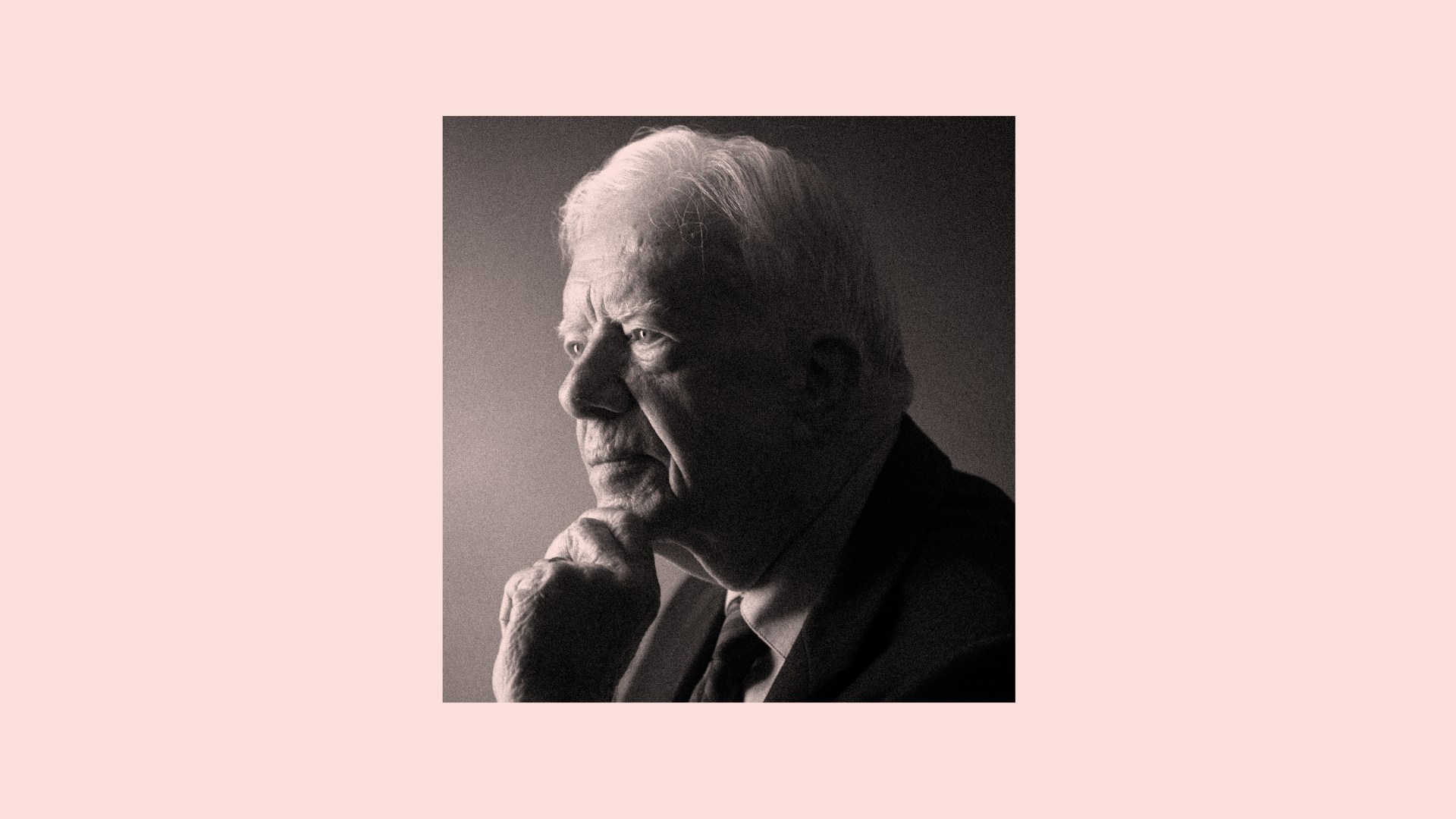
Jimmy Carter at the Judgment Seat

Columnist

The former president’s death at 100 has a lesson for the American church.

Christianity Today January 8, 2025
Illustration by Christianity Today / Source Images: Getty

This piece was adapted from Russell Moore’s newsletter. Subscribe here.

Since the dawn of the modern media era, every American president’s funeral has been televised live. Since the dawn of the social media era, all those aspects of a presidential postmortem—the announcement of death, the lying in state, the funeral procession, the eulogies—are video-clipped and discussed across platforms.

Until the death of Jimmy Carter, though, we’ve not been accustomed to seeing a livestream of the judgment seat, when the deceased stands to give an account of his life and to hear the pronouncement of his eternal destiny. The judgment seat was not that of Jesus Christ, though—our technology is still not that good—but of the guardians of politicized American Christianity.

What I mean by this is not that some American Christians demonstrated a mean-spirited glee in denouncing at death someone they deemed an “enemy.” For those of us who grew up in the funeral culture of the Bible Belt South, we were taught this was at best impolite and at worst impious.

Those standards are long gone, but I was still disheartened to see how some American Christians have taken to social media to imply that Carter, who professed faith in Jesus Christ publicly and privately for the full lifetime of almost every person alive today, might be in hell.

Those outside of the evangelical Christianity subculture might not be aware that on some matters, we have developed unwritten rules of Jesuitical complexity to enable us to disobey certain clear directives of Jesus without having to admit to doing so. The elderly women in my home church would never approve of bragging about themselves, but doing so is made alright by adding the words “if I do say so myself” right before or after the boast.

Similarly, it might be hard to justify questioning the eternal destiny of a professing Christian, given Jesus’ command not to judge one another. All one need do, though, is add some caveats such as “No one knows the heart” and “God is the judge, but …” and “We can only hope” (with an implied shake of the head and shrug of the shoulders). Then one is allowed without penalty to say of one’s just-dead enemy what secularists can say more directly but never as literally: “Go to hell.”

What should interest us in all of this is not that religious people can be judgmental; the empty tomb was still warm when the earliest disciples started arguing about who was in and who was out. Instead, what we should note is not the judgment but the criteria by which it is made. That is what is revelatory about the state of the American evangelical Christianity of which Jimmy Carter was once, in the minds of much of the American public, the grinning face.

When revealing himself to his followers, the fundamental question Jesus asked was “Who do you say that I am?” (Matt. 16:15, ESV throughout). This had to do, first of all, with who Jesus is, and then with what he has done.

The apostle Paul wrote, “If you confess with your mouth that Jesus is Lord and believe in your heart that God raised him from the dead, you will be saved” (Rom. 10:9), assuring that “everyone who calls on the name of the Lord will be saved” (v. 13).

There is a category in the New Testament, some may say, for one who claims the name of Christ but has not really believed in him—what the 20th-century martyr-theologian Dietrich Bonhoeffer famously called “cheap grace.”

Just a few years ago, he and I talked privately about all of those commitments, extensively, and about sharing the gospel with those who haven’t heard it. That’s not really in question.

So is the implication that Jimmy Carter might not have been a “real” Christian an indication of a kind of “works righteousness”? Does it mean his faith was opposed to the New Testament apostles’ gospel of grace, a gospel that cannot be earned but can only be received by simple, trusting faith?

As much as we should reject that kind of false gospel, at least it would be understandable. After all, the gospel of grace was so startling—to religious people—that the apostle Paul had to clarify repeatedly that it did not mean “Sin all you want, because Jesus” (Rom. 3:5–8).

Works righteousness seems plausible enough that it could “bewitch” the faith of entire first-century churches (see the Book of Galatians), precisely because God does, in fact, call us to obedience and holiness. A faith that does not work itself out in love is, James writes, “dead” (2:17).

Almost no one charges Carter with rejecting the affirmations of the person and work of Christ found in the New Testament and reiterated in the historic creeds: the deity and humanity of Jesus, his atoning work on the cross, his bodily resurrection from the dead. Almost no one questions Carter’s own sense of what the gospel was—that he saw himself as a sinner who could not justify himself in the eyes of God and as one who trusted in the blood and righteousness of Jesus for eternal life. Carter himself made that clear publicly.

Virtually no one questions the personal character of Carter, who was faithful to his wife, Rosalynn, to the point of asking that she be home for hospice so he could hold hands with her in bed. He can’t even be charged with self-righteousness over his sexual morality, given his infamous “lust in my heart” interview, which almost derailed his 1976 presidential campaign. In it, he pointed out that he could not judge others because, by Jesus’ Sermon on the Mount standards, his internal heart-wandering meant he was an adulterer too, in need of God’s grace.

The expressed doubts over whether Carter was a “real” Christian has to do instead with a different standard—that of belonging to the right political tribe and holding to the right political and social opinions. Therein lies the tragedy of 21st-century American Christianity.

On many of those political tribal opinions, I too would differ with Carter, and I too would see many of them as of great importance. For over 30 years, I’ve worked in the pro-life movement in opposition to abortion. Carter said he personally opposed abortion and thought it should not be government funded, but he thought the state should allow it. I think he was gravely wrong on that. Carter also believed that Jesus’ principles of nonretaliation and opposition to the taking of life meant that capital punishment is always immoral. I disagree.

Before the abortion debate became what it was in the mid- to late-1970s (largely due to the advocacy and public education work of mostly Roman Catholic pro-life thinkers and activists), not a few very conservative evangelical Christians, such as Southern Baptist conservative patriarch W. A. Criswell and Christianity Today’s founding editor in chief Carl F. H. Henry, were in the same camp as Carter—personally disapproving of abortion but believing it should be legal in many cases. I’m glad they changed their minds.

The question is, though, after they changed their minds, should they have sought baptism? In other words, were they non-Christians when they had the wrong view? Would they have gone to heaven if they had died five minutes before they came to the right view?

Many have noted that virtually no one who question Carter’s personal salvation—given his positions on justice issues for unborn children (in addition to other, much less important, social and political matters)—questions the personal salvation of 18th- and 19th-century professing Christians who opposed the abolition of a system that kidnapped, bought, and sold people as chattel property, separated families, exploited their labor, and systematically raped those made in the image of God.

And most of those who would question whether Carter was “really saved” also defend those who deny historic, creedal, and doctrinal non-negotiables on matters such as the doctrine of God and the Trinity. They defend such people not just as Christians but as Christian teachers and leaders, so long as they are in-bounds on what really matters: support of the right politicians and opposition to the wrong ones. That’s what the old “fundamentalists” would have called “modernism.”

That kind of Christianity is easier than both the true gospel of grace and the false gospel of works. To hold to a true works righteousness, after all, one would have to at least pretend to obey the moral demands of God—both in pursuit of public justice and in fidelity to personal virtues. We all fall short, though, of the glory of God. So to pretend to be justified by such things requires deception of others (Rom. 2:17–24) or of self (1 John 1:8).

American Christianity has found a much easier form of works righteousness—one that doesn’t require, well, work. One can be in a horrible marriage, filled with envy or rage or pride, piling up wealth for oneself while disregarding neighbor, but be justified as a “real” Christian by pontificating all the right political and social positions.

That doesn’t cost a thing. In fact, if you do it right, it can even make you rich.

Justification by ideology alone is also much easier than faith. To follow Jesus, after all, means declaring personal moral bankruptcy. It means giving up hope in being good enough or right enough to be the right kind of person for heaven.

It means realizing that external conformity—whether of hard things, like building houses for the poor or eradicating guinea worm, or easy things, like expounding a “Christian worldview” in which, surprisingly enough, the principles and priorities are the same as those of your political party—can never be enough. You must be born again.

For years, a certain kind of politicized evangelical has used Jimmy Carter as an example of why personal character and piety is not enough for public leadership: “The qualifications to be president are different than the qualifications to be a Sunday school teacher.”

Fair enough. But what if, all along, what they really meant is that they want the qualifications for a Sunday school teacher to be the same as those of a politician?

The sort of world that defines one’s politics as the whole of one’s identity is bad for a country, bad for a person. But the sort of world that defines one’s gospel by such things is infinitely worse.

If Jesus is right about the gospel, Jimmy Carter is in heaven. And so are a lot of other people—a number no man can count—who were wrong on some or another serious political or moral or social question. As a matter of fact, I think that description will include every human being there, except for the one actually sitting on the judgment seat.

Russell Moore is the editor in chief at Christianity Today and leads its Public Theology Project.

Ashley Lande
Testimony

I Turned to New Age Psychedelics for Salvation. They Couldn’t Deliver.

Shrooms glittered on the surface—but hid a dark chasm underneath. That’s where Jesus found me.

Photography by D.C. Williams for Christianity Today

As I danced down the sidewalk, the monstrous cockroaches that emerged in hordes at night fled beneath my bare feet.

I was 23, very high on LSD, and starring in a rousing dance number of my own creation, choreographed to music only I could hear. I was aflame with infinite love light beauty wisdom awareness truth compassion (whichever abstract word or emotion I felt), a litany I shared with baffled friends once I’d reached my destination. I believed I was alive—really, truly alive. And LSD got me there.

A year earlier, a self-styled acid guru had offered me the drug at a low point in my young life, and I’d accepted. It changed everything—the series of botched jobs I’d had since graduating college didn’t seem to matter anymore.

My second trip on LSD felt so transcendent that I called my dad the day after to tell him, tearfully, that I believed in God now. Of course, I omitted the fact that I’d come by this revelation while on drugs and that I couldn’t begin to define this “god.” To my dad, a believer, it must have appeared to be a step forward, or at least a step away from the combative atheism of my youth.

After that, I became a rabid proselytizer for psychedelics. I had felt an unbearable chasm between me and the source of life, whatever or whomever that was. I thought maybe LSD could bridge it—and it seemed to for a while.

“It’s like it breaks you out of linear time!” I yelled to a bewildered former colleague at a noisy bar, scrawling an illustration on a napkin. “It’s like you inhale the whole world.”

I couldn’t have said where LSD was taking me. Here, there, everywhere, and that was enough for me. Or so I thought. But soon, a shadow of dread, barely perceptible, eclipsed my ecstasy. Where was I going? I couldn’t have said. What was life? What was death? Did it matter?


I met my husband at our drug dealer’s house during a snowstorm, in a giddy fever of acid-saturated infatuation, and we were married in less than a year. We were certain we were on the cusp of a psychedelic revolution.

After our first child was born, though, I began to question the New Age ideals I’d embraced, the ones that dovetailed so readily with my LSD trips. I believed we were all one and we were all God: The icon of the Hindu goddess Kali on our wall was as much a manifestation of God as the Ganesh statuette on a shelf. There was no such thing as sin. Suffering was an illusion to be overcome.

Yet the suffering of childbirth had felt very, very real. And the harder I tried to police my own thoughts, the more I found I couldn’t purify my own rancid heart, even though the concept of sin was anathema to the circles in which I ran.

A friend gave us a children’s book that aimed to introduce New Age concepts such as how we will be absorbed back into cosmic oneness upon death. “I am my ball, I am my feet,” the little boy in the illustrations stated happily. “I am the puppy across the street!”

I’d uncritically accepted these concepts when they came through more sophisticated words—but now that they were distilled into a child’s simple declaratives, my heart reared back in disgust. I looked at my precious son, golden haired with squishy toddler rolls, and I realized I didn’t want him to be absorbed back into the oneness. My heart rebelled and grew faint at the very idea, yet I didn’t know where else to turn.

Rock TexturePhotography by D.C. Williams for Christianity Today

With my pregnancy and the birth of our son, our psychedelic use had largely given way to practices like yoga and meditation, but we still relished the rare night to ourselves when we could trip. It was better this way, I convinced myself—rarer and therefore more transcendent.

But the truth was I could no longer seem to have a good trip. There was, at best, a hum of dread underlying the whole experience—or, at worst, terror and disintegration. And I couldn’t seem to shake the idea that LSD was no longer a glimmering path to destinations beyond.


Kerry was a childhood friend of mine who had never abandoned the Christian faith in which she was raised, and she embraced it with a fresh fervor in college. It made me roll my eyes. I cringed at the earnestness of her genuine belief that there was a God who acted directly in her life, and I felt allergic to hearing anything about Jesus.

We reconnected after we both had children, and she invited me into her home for playdates. She had a son a year or two older than mine and a daughter named Joella, an adorable baby with large blue eyes and a pigtail on each side of her head.

Joella and her older brother would sit next to my son and sift through Cheerios while I would talk to Kerry about whatever New Age theory I was into lately. Kerry would never balk or start in outrage at anything I said, but she would also never affirm me, only quietly and gently refute me with Bible verses, many of which she had memorized.

The Word of God had no immediate effect on me, but her persistence in reciting from it was like a consistent flow of water over rock. In the still of the night, after I’d gone home, my confident dismissal of it didn’t seem so firm. But I couldn’t yet yield to the mysteries of sin, blood, sacrifice, and God-with-us that Christianity offered.

And then Joella died.

Three weeks after her diagnosis, the leukemia did its evil work. She had just turned two. At her funeral, I approached the tiny casket, trembling, while my own eight-week-old baby moved imperceptibly in my womb.

Almost as confounding as the tragedy itself was how Kerry and her husband were being sustained through it by something that I couldn’t yet fathom. They were heartbroken yet not completely destroyed. They grieved, but as Paul says in 1 Thessalonians 4:13, they did not grieve as those without hope. I was mystified.

Kerry told me the hymn “It Is Well with My Soul” had ministered to her and her husband in the wake of Joella’s passing. Horatio Spafford composed it just days after losing four of his daughters at sea, she said. I put it on a playlist but then promptly forgot about it.

It wasn’t until several months later that I listened to the hymn. Sitting on the front porch while my children played, my attention was drawn to the rich harmony of voices coming through the screen door:

My sin, oh, the bliss of this
glorious thought!
My sin, not in part but the whole,
Is nailed to the cross,
and I bear it no more.

Suddenly, all the trifling New Age conceptions of what ailed humanity were insufficient to account for the sordid mess of history. There was something very wrong with me, with us. The tragic death of a child woke me up to the fact that the world was broken, and so was I. All my journeys into the psychedelic hinterlands, all my attempts to clear my mind through meditation, all my grueling yoga sessions for the sake of some elusive “enlightenment” were worse than worthless. I couldn’t save myself. But Jesus could.

Jesus on the cross. Jesus resurrected. God who became flesh to save us. There could be no other savior, no other path to transcendence, I knew. It was humbling and wondrous to realize that Jesus Christ would not be co-opted into my pantheon of gods. He made a claim upon my whole life that demanded a response.

When my husband got home from work that evening, I told him we needed to toss all our syncretistic bric-a-brac. With gods like these, I thought as I pulled down the image of Kali, with her lei of decapitated heads, who needs demons? My husband readily agreed. All the while, God had been at work in his life too.

A couple months later, I met Kerry at a busy playground. While the buzz of screaming children whirled around us and our own children played in the sand nearby, I tearfully told her that I had embraced Jesus as my Lord and Savior.

“Praise God!” she said, her own eyes glistening with tears.

My husband and I started going to church regularly, and we never tripped again—though it took years to heal from the damage I’d inflicted on my fragile mind with drugs. I don’t thank the Lord enough for restoring me to relative sanity after how many times I assailed my brain with chemicals.

In the end, I finally found the thing that would make everything okay forever—in the last place I wanted to look.

Ashley Lande is a writer and artist living in rural Kansas with her husband and four children. She is the author of the memoir The Thing That Would Make Everything Okay Forever: Transcendence, Psychedelics, and Jesus Christ.

Church Life

The False Gospel of Our Inner Critic

Guest Columnist

Our capacity to experience intimacy with Jesus is linked to our internal dialogue.

The shadow of a man being mean to himself
Illustration by Keith Negley

The well-worn cliché is true: They don’t teach you everything you need to know in seminary.

When I was pastoring, I navigated my church through a highly combative and politically volatile building project. We had been meeting in a school cafeteria and were trying to transition to our own building. I had never led a church through a capital campaign, and I had little understanding of local politics. The mistakes I made were legion.

The problem with leadership mistakes is that most of them are on display for others. It’s one thing to make a mistake contained to yourself or your close circle; it’s another to make mistakes in public for all to see. Public mistakes are exposing, and my inner critic had much to say: You should know better—even though I had never done it before. More pointedly: See how stupid you are? Everyone can see it.

I have battled a low-grade feeling of stupidity my whole life and never outgrown it. Even as an adult, it doesn’t take much for me to feel stupid—and consequentially, exposed. Leading through a building project helped me get very familiar with my inner critic. (Are you familiar with yours?) I decided it was time to learn to wrangle it, so I began to pay close attention to its messages.

Here are the statements it would tell me over and over: You should know better by now. You are stupid and everyone knows it. You are not worth being loved. You are not worth people’s time.

It is quite arresting to read the message of my inner critic written plainly like that. If I don’t wrangle him, his words become like a stagnant pond in my soul, breeding and growing all manner of shame toxins. How can we learn to turn down the noise of our inner critic and hear what God has to say about us?

When I dug deeper inside my soul to learn what was going on, I realized my inner critic was speaking a “gospel” to me. I had never considered that I was believing a false gospel when I gave this unwelcome character a seat at the table.

Every gospel—every belief—offers you something (a promise), tells you what you must do to get it (a path), and reminds you there is a cost (a payment). When I look back at the ancient Egyptian religion or even the Roman Empire in Jesus’ day, I see path, promise, and payment on display.

Rome offered the promise of peace, for example, but the path to get it cost a tremendous payment in taxes, slavery, and often the deaths of loved ones.

When I was a teenager in Australia, the gospel promise I chased was belonging. The path was to make a girl laugh, get good grades, or be a standout athlete. In the words of the late, great Meat Loaf, “Two out of three ain’t bad.” I would happily get a C in physics if I could get a girl to laugh. For those who like to keep score, I was zero for three in the gospel of teenage boys.

My inner critic’s gospel promises protection. He stands like a sentry guarding me from outside threats, and he condemns me out of a weird self-protection. He tells me it is better to criticize myself than to let my guard down, be vulnerable, and receive the criticism of others. Better to condemn myself than to perceive the crushing condemnation of others.

But my goodness, my inner critic makes me pay. As I examined my belief structure, I discovered that I never got the promise of protection; instead, I just got condemnation.

In every gospel except one, the humans do the paying and the “gods” get the benefit. If we look back at ancient Rome, we see that the people did all the paying and Caesar got all the benefit. Not many in the Roman Empire would have described their lives as peaceful—quite the opposite.

My teenage gospel also made me pay. I would spend hours agonizing over what I said to someone and how I might fit in the next day at school. It is only in Jesus’ gospel that God pays and we benefit. As I paid attention to this simple “path, promise, and payment” idea, I realized I could compare the gospel of my inner critic to the gospel of Jesus and see who is telling the truth. I doubt you are in much suspense at this point.

John reminds us in 1 John 3:19–20,

This is how we know that we belong to the truth and how we set our hearts at rest in [God’s] presence: If our hearts condemn us, we know that God is greater than our hearts, and he knows everything.

John shows us how our inner critic condemns us when we feel vulnerable and exposed, but he also reminds us that we are safe in God’s presence. We can instruct our inner critic to stand down and relax. It does not need to protect us from outside harm, because God is our refuge and strength. And, thankfully, he—not others and not our inner critics—has the final say over who we are.

Fans of the Netflix show The Crown are aware that there are rules when you are summoned to Buckingham Palace. If King Charles were to ever summon me, I would happily—and dutifully—go.

But there are strict rules for meeting a human king. Traditionally, the king gets the first word, and the king gets the last word. You are permitted to speak in the middle of the dialogue. I’ve found this helpful as I approach my sovereign, King Jesus.

Because the gospel of Jesus Christ is true, because God is who he says he is, and because I am who he says I am, I orient my life around his Word first. When my inner critic speaks up, I let him run his mouth for a while, but once he’s done, I read God’s Word as the last word.

I tried to fire my inner critic once, but he still showed up to work the next day. He’s not going anywhere. I cannot eliminate his words, but I can contain them so he no longer gets the last word.

Steve Cuss is the host of CT’s podcast also called Being Human.

Theology

How a Book Club Taught Me to Live and Die

Columnist

The point was not the reading—it was the friendship.

A circle of chairs made out of books
Illustration by James Walton

Addressing the complaint that her writing wasn’t uplifting enough, Flannery O’Connor once quipped, “One old lady who wants her heart lifted up wouldn’t be so bad, but you multiply her 250,000 times and what you get is a book club.” She did not mean this as a compliment.

For most of my life, I would have taken O’Connor’s side in this (as I would in most arguments). Even apart from the least-common-denominator “book of the month” clubs she implied, the term book club often connotes a grown-up version of middle school kids trying to start an oral class report on Moby-Dick with “Herman Melville was a very, very important man.”

That all changed for me about five years ago, when I joined a book club that changed my life.

I was reluctant to do it because the last thing I wanted was another Zoom meeting in my schedule. But being present on those Wednesday nights has become one of the most important ways I have survived the tumultuous last several years.

At some point, I noticed that what was most important about this book club was not the intellectual conversations about books. As time has gone on, it takes us longer and longer to get to whatever book we’re discussing that week. Instead, we talk about what’s really happening with us—who’s thinking about changing jobs, who’s worried about a son or daughter, whose elderly parent is falling more these days, whose friend is grappling with depression.

Over time, one member and then another, and then two others, grew ill with cancer. Two of them went through treatment and are doing well. Two of them—Tim Keller and Michael Gerson—died. Almost all of them logged in to the book club from their hospital rooms to talk about Dallas Willard and Alexis de Tocqueville, while what we were all really learning from one another was how to die well.

We seemed to know that in days filled with medical charts and blood levels, there was something healing for them—for all of us—to talk about Abraham Kuyper or Jacques Ellul. And the subtext of all those conversations, even for this group of bookish, cerebral men, was saying, “We love you, we’re with you, and you’re not alone” to the one in the hospital room.

One day, I said to my wife, “The secret of all this is that it’s not really a book club; the books are the excuse we give ourselves to make sure we’re all there.” In that sense, the reason I keep coming back is akin to the lonely man whom songwriter Don Williams talks about, the one who insists about his neighborhood bar, “I just come here for the music.”

Political scientist Robert Putnam, who wrote Bowling Alone, a study of the American loss of community, told The New York Times this year that his lament for the loss of bowling clubs is sometimes misunderstood. We need those kinds of mediating institutions—outside the family and outside the state—in order to build civil society, he said, but “you don’t bowl so you can build a better community, you bowl because it’s fun.”

“And in the doing of the bowling, in a team, you’re hanging out with folks and sometimes you’re talking about the latest TV show, or occasionally you might talk about the garbage pickup in town. And that’s democracy.” In other words, we come to community not by setting out to “commune” but by coming at it sideways.

C. S. Lewis described the love of friendship itself as dependent on that kind of dynamic. Friendship, he said, is not mere companionship—doing the same thing together—but it starts out that way: “Friendship must be about something, even if it were only an enthusiasm for dominoes or white mice.” Or books. He continued,

The Companionship was between people who were doing something together—hunting, studying, painting or what you will. The Friends will still be doing something together, but something more inward, less widely shared and less easily defined; still hunters, but of some immaterial quarry; still collaborating, but in some work the world does not, or not yet, take account of; still travelling companions, but on a different kind of journey. Hence we picture lovers face to face but Friends side by side; their eyes look ahead.

One doesn’t apply somewhere to find friends—the way one might find a date on an app or a job on the internet. Often, we have to have something we love in common to keep us coming back, to keep us from withdrawing into ourselves. For my group, it was books. And maybe for us, that was the best way to do it.

Reading, after all, is a solitary activity. It’s hard to read in community. One has to ponder, to think. As a matter of fact, scholars tell us that literacy is what led to the concept of individuality, which has led civilization to great good—human rights and dignity, democracy, scientific research that has saved billions of lives. But it’s also brought loneliness and isolation.

And yet even reading—one of the most individual of acts—can be used to gather people together, to talk, to discuss, to realize the sort of exclamation that Lewis described as the fundamental core of friendship: “You too? I thought I was the only one.”

A book club is not for everybody. For some people, it’s building barns or sitting in a deer stand or, yes, bowling. But when—in any of those circumstances—one finds a genuine circle of friends who trust each other, who aren’t afraid to lose face in front of or be vulnerable with each other, what’s gained is immeasurable.

I suppose I realized this when, one night after book club, I realized I had to update my funeral plans, tucked away in the “just in case” file for my wife.

A lot of the people I had written down to give eulogies or pray prayers no longer speak to me—mostly over our differing views on politics. I noticed that the people I wanted to be sure were there included the men I gather with on Wednesday nights to talk about books. Twice before, we’ve gathered at a funeral for one of us, and it comforts me to know they might gather at mine.

Being a reader is not just about the mind. It’s not even just about the heart. Sometimes, a reader multiplied by 12 or 13 is a book club. Unlike Flannery O’Connor, I mean that as a very good thing.

Russell Moore is editor in chief at Christianity Today and leads its Public Theology project.

addApple PodcastsDown ArrowDown ArrowDown Arrowarrow_left_altLeft ArrowLeft ArrowRight ArrowRight ArrowRight Arrowarrow_up_altUp ArrowUp ArrowAvailable at Amazoncaret-downCloseCloseellipseEmailEmailExpandExpandExternalExternalFacebookfacebook-squarefolderGiftGiftGooglegoogleGoogle KeephamburgerInstagraminstagram-squareLinkLinklinkedin-squareListenListenListenChristianity TodayCT Creative Studio Logologo_orgMegaphoneMenuMenupausePinterestPlayPlayPocketPodcastprintremoveRSSRSSSaveSavesaveSearchSearchsearchSpotifyStitcherTelegramTable of ContentsTable of Contentstwitter-squareWhatsAppXYouTubeYouTube