

Church Life

This Ex-Atheist Has Some Explaining to Do

Novelist Christopher Beha’s move from unbelief to faith in Christ confounded those who know him. His new book walks skeptics through his conversion.

An illustration of the interviewee Christopher Beha.
Illustration by Tim Bouckley

Two years ago, CT declared New Atheism dead, referring to an angry and vitriolic form of unbelief that arose in the early 2000s. Writer and editor Christopher Beha tackles today’s atheism—what he calls “romantic idealism”—more than 20 years later in his book Why I Am Not an Atheist: The Confessions of a Skeptical Believer.

Beha defines romantic idealism as an irrational worldview that elevates free will and personal experience, whereas older forms of atheism focused on scientific materialism that looks to the physical world as the extent of existence.

Why I Am Not an Atheist explores these two forms of unbelief, documenting Beha’s own journey out of organized religion, through atheism and agnosticism, and eventually back to the Catholic church. 

Beha, a former Harper’s Magazine editor known for his novels, including What Happened to Sophie Wilder and The Index of Self-Destructive Acts, spoke over the phone with Christianity Today from his home in Brooklyn Heights, New York, about his journey as a skeptic. This interview has been edited for length and clarity.

Kara Bettis Carvalho: Tell me why you wanted to write this specific book.

Christopher Beha: I had made this return to faith after leaving a Catholic church in my childhood, being an atheist for a long time, being somewhat of a seeker, and eventually finding my way back into the church. And there were a lot of people in my life who found this development puzzling—not, I really want to emphasize, that anyone was hostile or antagonistic about it—but they found it puzzling and inconsistent with what they understood about me and my intellectual values.

It’s one of those things that people often have a hard time having conversations about. And I found that when I could talk at some length with people about these things, those conversations were often very valuable. But it was difficult for me to give a short, encapsulated answer to the question of why I’m not an atheist anymore. So I kind of sat down in an effort to answer the question in a way that I hope will be of interest to people of any faith background who are interested in the journey that one person went on that led them out of and back into the Christian faith.

KBC: You discuss two different categories of atheism: scientific materialism and romantic idealism. How did you come to those categories?

CB: Part of my goal was not just to give an account of a plausible form of religious belief to people who are atheists but to give a fair and, in some ways, compelling account of atheism to religious believers. Because if you’ve been raised in a religious faith and you’ve never had that faith shaken, it may be that the idea that people could not believe in God seems a little nuts.

As someone who has been on both sides of the fence, I think I can describe both sides fairly and from the inside in a way that I hope would make them mutually comprehensible. If you’re describing atheism and what it would mean to hold atheist beliefs to a person who has spent their whole life within a religious tradition and is not really familiar with these things, the first thing you could note is that there isn’t just one kind of atheism, in the same way that religion is not a monolithic category. Even Christianity is not monolithic.

Some of the loudest atheists would like to claim as much because they would like a monopoly on what people who don’t believe in God do believe. That’s where the New Atheists are obvious spokespeople. Roughly speaking, the tradition that the New Atheists advocated was scientific materialism.

Scientific materialism is the belief that physical matter is all that exists, that we come to have knowledge about the physical world through the empirical sciences. Accordingly, knowledge about the physical world delivered through the empirical sciences is the only real kind of knowledge.

Scientific materialism often goes hand in hand with an ethic of utilitarianism, which attempts to ground ethics in the physical sensations of pleasure and pain and then tries to similarly quantify those sensations in a way that allows us to make a science of ethics.

Utilitarian scientific materialism is what most people imagine to be atheism. When I started on my own intellectual journey through this at the beginning of the 21st century, at the height of New Atheism, that really was the dominant form.

But that version of atheism does not apply to many of the most famous atheist thinkers. It does not apply at all to Nietzsche, for example, who is possibly the most famous atheist philosopher. Nietzsche was incredibly hostile to the utilitarians. And it doesn’t apply to many of the thinkers who followed Nietzsche, including Heidegger and the whole line of existentialists through Camus and others. They tend to coalesce into a tradition that I call romantic idealism.

If materialism tells you physical reality is all there is, idealism tends to emphasize not objective reality but subjective mind or subjective experience of reality. And it tends to have an ethic of authenticity. Our job—our sort of life project—is creating our own meaning in this desolate, godless existence by somehow living in a way that is authentic to our subjective experiences. 

These two traditions can give you one view or the other, but they do a very poor job of synthesizing the two. And what I eventually came to think is that the tradition that could synthesize these two and give you the best of both atheist traditions was a theistic tradition—one that understood the physical world as created by something other than our own minds, and thus something we can’t entirely control and within whose terms we have to live. But this view also recognizes the reality of our subjective selves within that world, the reality of other subjective selves, and our obligation to recognize their lives as just as meaningful as our own.

KBC: CT has covered the New Atheist movement over the years, including some of those who have converted, as you mention in your book, to Christianity. But it doesn’t necessarily seem that your goal is to convert anyone. So who are you trying to persuade? What is your goal in this intellectual journey through these two ways of thinking?

CB: I don’t know that I’m trying to persuade anyone. That sounds like a cop-out, probably, or just a rhetorical move, but it’s true. I want to convey as accurately as possible what I believe, and I would like to make those beliefs comprehensible to others.

There is a dream of a particular kind of philosopher that the truth can be proven in the way of a mathematical proof, that one can start from certain premises and work logically out from them and then arrive at points that are indisputable. And I don’t believe that, in part because I do believe that so much of what we think about reality has to do with our subjective experiences. And my sense is that our subjective experiences are widely different. So what I can say is “This feels true to me, and here’s why it feels true.”

The New Atheists loomed large for me because they were a big deal at the time I became an atheist. But I don’t think they have a particularly large influence at this moment. I don’t hear a lot of people citing Christopher Hitchens. 

And it does seem like what I’ve called romantic idealism is increasingly, among younger people, the primary mode of atheism. Again, there is a strong ethic of authenticity. There is a sense that we are capable of creating ourselves from nothing, that we are not created by something larger than ourselves, and that we don’t have to conform to that creation. This view says, “My great responsibility in life is to be authentic to myself, and if other people don’t like my behavior, they have to get with the program.” 

KBC: You talk about love being one of the things that drew you out of your introspection and gave you meaning. How did understanding God as love change your spiritual understanding of who he is?

CB: Love is a thing that both of those atheist traditions have a hard time engaging with. The scientific materialism tradition understands the feelings that we call love as being essentially neurochemical responses to brain chemistry, and it understands us as having evolved the capabilities for these feelings for evolutionary reasons (for mating and kinship). 

We all know that’s not a very convincing description of the feelings we actually have. But the romantic idealists don’t do a great job with it either. They are very attuned to these profound psychological states, but they do not think of them as something emanating from outside ourselves. And they do not do a great job of taking seriously the object of our love and thinking about what a commitment to that object would actually mean.

This view says we are meant to act, again, in a way that is authentic to our passions. But it is not going to make great demands on us and insist that we put someone other than ourselves at the center of our lives.

So if you think of love as coming from outside ourselves—as neither a chemical state nor simply a psychological state—then what is it? And that’s the question that starts to bring you down the tradition that says that God is love, that love is God, and allows you to understand all of creation as a product of this love. And that understands this love as a gift to us but also a gift that creates certain obligations, because we are being commanded to love God and love others, to love the rest of God’s creation with the same love that he bestows on us.

KBC: We have a broad decline in religion, especially in the West, but we’re also seeing a lot of young people who are increasingly spiritual. And in our current moment, some American Christians are feeling that maybe we’re on the brink of revival, and they feel some kind of spiritual awakening happening. How do you see our current spiritual moment?

CB: Almost everybody thinks we’re in a tough place right now—and not just economically and politically, but psychologically. People are struggling. People are very unhappy. There’s a lot of different things this can be blamed on, but it does seem that one thing it can’t be blamed on is religion, for the simple reason that the rise of these problems has coincided with the decline of religion.

If you go back again to the New Atheists, circa 2001, you had an evangelical Christian as president; and you had someone like John Ashcroft as his attorney general attempting to dictate many of the rules, the laws of the United States; and then you had foreign threats that struck people as being very bound up with certain expressions of Islam, et cetera. It was at least plausible for some people to say, “Religion and theistic belief in particular—that’s our real problem. That’s at the core of why we have all the problems we do.”

I don’t think anybody could say that right now with a straight face, wherever they are on the political spectrum or whatever they have identified as our problems. That in itself raises an opportunity to say to people, “Okay, we ruled out the idea that ‘religion poisons everything,’ as Hitchens put it. Let’s talk through what the real problems are, and let’s open ourselves up to the possibility that some form of religion might be among the possible solutions.”

KBC: Is the present-day lack of religion caused by people’s serious philosophical dilemmas and intellectual challenges? Or is it more about selfishness—desires around different vices, pleasures, sex, that kind of thing, and the moral code that religion demands?

CB: It is perfectly possible to, just as a kind of metaphysical matter, believe in God and then live whatever life you want. And you may eventually start finding that you are drawn away from some of those vices.

You may give out an Augustinian “Lord, give me chastity, but not yet.” I don’t find that—for anyone I know—the thing keeping them from belief is a sense that they want to be able to live a self-indulgent life that Christianity forbids. 

I’m coming at it as a Catholic. For Catholics, obviously the institution of the church is very important. And in my lifetime, the Catholic church has done a lot to undermine its own authority as an institution. We live in a time where people are very suspicious of institutions in general because many institutions have done a lot to undermine their authority.

The hypocrisy of church leadership, not just Catholic church leadership but across the board, has been a real problem. People see some of the behavior of those who lead various churches, and they find the idea that these people are going to act as moral arbiters to be kind of a joke. 

Again, that doesn’t have to mean you then stop believing. You could just exist outside a tradition while still believing. But I do think various
Christian institutions have something to answer for in this decline. 

Secular society offered a competing worldview that struck many as persuasive for a long time, but for a whole host of reasons that too has lessened recently.

When you talk about the possibility of revival, that’s part of it. So the secular institutions too have done a lot to undermine their own authority in recent generations. 

KBC: This kind of gets back to the original questions you asked throughout the book: “What can I know?” “What must I do?” and “What may I hope?” Do you see any objective answers to those questions? Even Jesus saying he’s the Way, the Truth, and the Life implies there is one way. Do you see one true, objective answer?

CB: I think the way is love and the two commandments Jesus held above all others—to love God with all your heart and love your neighbor as yourself.

The problem that Christian existentialists like Kierkegaard talked about at great length is what Jesus doesn’t give you—in the way of other traditions that are highly legalistic—which is a day-by-day, minute-by-minute of every rule you’re supposed to follow and the assurance that as long as you’re following all of those rules you’re one of the good ones. He says, “Love.” And you can’t always be sure you’re doing it right. We all need to be approaching it with humility. 

Jesus also teaches that we’re all fallible and that we should spend a lot more time thinking about the ways we are coming up short ourselves in that commandment to love than thinking about what other people should be doing differently. 

We see through a glass darkly. I do think there is an objective truth. At the same time, I don’t think I have a complete understanding of that truth, because part of what I think about that truth is that it outstrips human understanding.

I expect I’m always going to be working through these questions. There is never going to be the time when I tell myself I can stop asking these because now I “have the answer.” This again gets to the existential part of it. Even if you have the right answer, you must keep answering it. I guess that’s the best I can do.  

Kara Bettis Carvalho is a features editor at Christianity Today.

Church Life

Tarot Cards, Shrines, and Priestesses

Staff Editor

The quest for an authentic spiritual heritage has led some Black Christian women down a dangerous path.

An illustration of a woman’s silhouette filled with various icons, such as a sun, a globe, a serpent, a Bible, and others.
Illustration by Ben Jones

By the time Day Sibley decided to embrace Ifa, a divination practice from the Yoruba people of Nigeria, she had long been on a search for identity that she could never quite fulfill.

She grew up in a nominally Christian home in Las Vegas, where her family sometimes talked about God and went to church only on holidays. As a child, she could tell you that Christ died for our sins, but what exactly that meant was unclear to her.

As the years went by, Sibley faced bullying at school, a breast cancer diagnosis for her step-grandmother, and the perennial question about suffering: Why do bad things happen to good people? She inquired of those around her only to hear, essentially, “That’s how life is.” At the age of 12, Sibley became an agnostic, doing “what I want, when I want,” as she put it.

For more than a decade, life stayed that way. Christian friends came along during a brief period when Sibley was searching for God. But their fellowship quickly disintegrated when they became more devoted in their faith and she didn’t. She was wrestling with her identity on several fronts, including sexually and racially. After the killing of Trayvon Martin in 2012, Sibley became involved with the Black Lives Matter movement.

But despite her activism, she didn’t feel comfortable being Black. Some of her peers had labeled her cultural interests and the way she spoke as “white,” which left a lingering feeling that she needed to prove her identity. All of this pushed her closer to African spirituality. But the catalyst came in 2017 when she landed in the hospital after eating a marijuana-laced brownie (thereby discovering she was allergic to pot).

While in an unconscious, coma-like state for a day, Sibley said she heard a woman’s voice that resembled her grandmother’s say, “You only have one life.” It sparked curiosity. A few months later, she was driven by a desire to return to her roots to purchase a voodoo doll while traveling in New Orleans.

At home in Vegas, she found a local Ifa priestess and started the initiation into the West African religion. “I thought this would be the answer,” Sibley said. But soon enough, she came to find out that it wasn’t.

The quest to find a spiritual heritage that predates colonialism and the transatlantic slave trade has led many Black people to embrace traditional African religions such as Ifa or others from across the African diaspora including Cuban Santería, Brazilian Candomblé, and Haitian Vodou (which blends in Catholic imagery and is closely associated, but distinct from, Louisiana Voodoo).

The practices tend to be transactional, with adherents making offerings of libations, money, or other goods to appease spirits or to receive guidance and their hearts’ desires. Though the religions are not new, they have proliferated—particularly among Black women—in recent years. Social media has played an outstanding role, as has the growing political and racial polarization and the rise of religious deconstruction.

In the US, African spirituality is one of several Black conscious communities that range from the Nation of Islam and Black Hebrew Israelites to Kemetic spiritualists promoting ancient Egyptian religious practices. Proponents of these communities emphasize ethnocentric religious rituals and often tell half-truths about the Christian faith, leveraging the true harm done by white Christians against Black people throughout history while obscuring Christianity’s deep history in Africa.

I have encountered advocates of these movements in my personal life, particularly while doing evangelism in Atlanta and Brooklyn. My social media feeds—which have accurately detected that I’m a Black woman— periodically also serve me this kind of content.

These practices have a strong appeal because Black people have had their identity stripped and their dignity tarnished, most often by a twisted version of white European Christianity that lacked Christ.

Given the misuse of the Bible to justify slavery and the whitewashing of Christianity to portray a blue-eyed Jesus, it’s understandable why many initially have reservations. The problem has been compounded by centuries of racial injustice, recent killings of unarmed Black people, and evangelical support for President Donald Trump, who dabbles in racially inflammatory rhetoric.

While the Black church has functioned as a balm over racial pain for centuries, its theology has been contested by those who view Christianity as a religion “forced” upon Black people.

Many of these objections have been around for decades. But “the game has changed” with the rise of the internet and social media, which allow falsehoods about Christianity to have a longer lifespan, wrote author Eric Mason in Urban Apologetics: Restoring Black Dignity with the Gospel.

Adherents of Black conscious communities advertise their practices as a source of pride, evidence of an uncolonized mind, and a way to reclaim one’s roots. There’s not good data on how many Black people have embraced each practice, but one Pew Research Center survey conducted six years ago found that one in five Black adults pray at a home altar or shrine at least a few times a month.

Black Americans who have turned to these practices come from a variety of different spiritual backgrounds. Some, like Sibley, began as agnostic. Others left the Christian faith after experiencing church hurt, doubting what they believe, or having disagreements around sexual ethics. Some have left Black churches because they’ve seen hypocrisy there, said Lisa Fields, the president of an apologetics organization called the Jude 3 Project.

A similar trend is happening in the United Kingdom, where Fields has given talks about the topic. She told me most people aren’t devoted to one religion. They’re choosing a hodgepodge of spiritual practices, from Ifa to crystals to Kemetic science, to construct their own faith. “People don’t want to be tied down to any particular set of beliefs,” Fields said.

Still, there are general trends. Urban religions like the Nation of Islam or the Black Hebrew Israelite movement have always appealed more to men. Women, meanwhile, have tended to gravitate toward African traditional religions, where they’re often cast as divine.

In these communities, terms like queen and goddess often fly around, giving comfort and validation to Black women who feel undervalued in their communities and in broader Western culture. Some Christian women even fall into the practices out of a false belief that such things will provide answers to social ills in a way that’s compatible with Christianity.

In early 2020, Sibley decided to take charge of her spiritual practices after having a bad experience at the home of an Ifa priestess. The woman, Sibley said, was ripping off her clothes and yelling at other initiates who were attending a spiritual celebration.

Sibley went home and decided to conduct her own ancestral veneration, mixed with tarot and Neopaganism. She said she would ask for things during rituals like romantic relationships, friendships, or a new job. Sometimes she didn’t get what she wanted. Sometimes she did but it was short-lived. “I noticed they give you what you want but not what you need,” she said.

Sibley has since come to believe she was unknowingly communicating with demons. Over time, she asked for a higher-paying job and other things but noticed the spells she used were no longer working. She also began having nightmares every night and felt she was being attacked spiritually by her former priestess, whom she often saw in her dreams. Sibley then decided to retaliate with her own spells.

When things didn’t get better, she confided in a Christian friend, who took her to a local Pentecostal church. The pastor there prayed for her.
Then, she said, he conducted an exorcism on her. She accepted Christ into her life.

When she got home, she began throwing away everything she used for witchcraft. Sibley said she even teamed up with her friend to bury some of those items in the Las Vegas desert, but when the two were unexpectedly surrounded by a swarm of flies, they dropped everything and left.

She began praying to God about her life and her family. Bad things continued to happen: Two family members got into a car accident. Her insomnia affected her job, and she was fired from her role.

But she kept praying, and slowly things got better. Her newfound faith created distance between her and some old friends, and God opened the door for new Christian friends and fellowship. She found a new job as a substitute teacher. And her parents began warming up to the Christian faith. While her prayers don’t always get answered in the way she wants, she has discovered God’s path is better than her own desires.

“I am very blessed,” Sibley said. Some people die under those false practices, she added, but “it made me bolder in Christ.”

The glorification of African religious practices religious practices isn’t found only on social media. It’s also expressed at the pinnacles of pop culture.

Ryan Coogler’s hit movie Sinners, released in 2025, offered a warm depiction of Hoodoo, an African American folk religion related to Ifa. Some African spiritualists rejoiced last year when actor Michael B. Jordan seemingly revealed during a media interview that his middle name was given by a babalawo, or a priest in the Ifa religion. Pop star Beyoncé often incorporates references to African spiritual traditions in her songs and music videos.

“People have interpreted demonic teaching in many ways in a beautiful, elevated art form. So it doesn’t seem dangerous and incompatible with the faith,” said Sarita Lyons, a prominent Bible teacher and author of Church Girl: A Gospel Vision to Encourage and Challenge Black Christian Women.

Writer and influencer Jackie Hill Perry has warned her followers to exercise wisdom and discernment when consuming different art forms, including Beyoncé’s music. But serious Christian voices issuing those warnings have been few and far between.

Lyons said Black Christians in particular can find themselves in a tenuous place trying to maintain a sense of solidarity and refrain from criticizing another Black man or woman. But we can support our brothers and sisters without sacrificing Christ, she said. “The Christian is called to be serious,” Lyons added. “We aren’t called to be tightrope walkers. Sometimes, we have to turn our backs on the things that the world applauds.”

Lyons grew up Christian but practiced the Yoruba religion in college some decades ago. At the time, she said she was looking for something that would rescue her from white supremacy and affirm her identity. What she found was a “lifeless life- boat” that appeared to have rescuing power but failed to deliver her.

These days, Lyons is a well-known urban apologist making a strong defense of the gospel while paying attention to cultural context. For anyone interested in stepping into this space, Lyons says it’s important to talk about these harmful practices without demonizing everything African.

While every culture on every continent contains aspects that don’t glorify God, the Bible should serve as a guide in sorting through what to confront and throw out, what to reform or clarify, and what to keep.

For Bethaney Wilkinson, letting the Bible dictate what to throw out meant burning all her tarot cards in the tradition of the sorcerers in Ephesus who brought their scrolls together and lit them on fire publicly (Acts 19:19). The backyard bonfire came a few years after she started practicing alternative spiritualities, mixing tarot with African religions and spiritual breathwork.

Like Sibley, Wilkinson’s religious journey began in childhood. As a Black girl in a small town in Georgia, she too felt racially disoriented. She received good grades in school and was teased by her peers as an “Oreo,” a disparaging term for a Black person who displays traits or preferences typically associated in US culture with white people. But comments about her hair texture and the experiences she had with some white adults, who seemed hesitant to allow their kids to come over to her house, made her acutely aware she wasn’t white.

When she was a teenager, she started attending a local church with her family and became a Christian. Soon after, she left her small town and attended Emory University, where she studied African American studies and sociology. That and her involvement in InterVarsity Christian Fellowship gave her a deeper understanding of race, racial justice, and the racial reconciliation conversations taking place within evangelicalism.

After graduating in 2012, Wilkinson started teaching racial justice seminars with a racially diverse group of people at evangelical churches in the Atlanta area. Most churches welcomed the message, but some congregants seemed suspicious. The work, combined with the racial and political divides in the country, eventually became too exhausting.

The evangelical world, Wilkinson felt, brought too much pain and disappointment. Polarization worsened and the healing she expected was nowhere to be found. She started deconstructing her faith four years later and began working on diversity initiatives at a secular nonprofit group.

Looking back, she said, she believed in Jesus and knew she had real experiences with God. But after college, “I probably had given myself over more fully to secular activism” and was being discipled by it, she said. “It became more about how we’re impacting the world and what’s our impact for God, and not true intimacy with Christ.”

A few years later, Wilkinson had surgery to remove some fibroids. That, coupled with other personal challenges she was facing at the time, sparked her interest in well-being. She followed a wellness guru on social media who dabbled in New Age and African spirituality and attended a Black women’s retreat in Arizona that focused on healing the womb. There, she saw people doing rituals such as ancestral veneration and New Age full-moon observances.

When she returned home, Wilkinson started practicing tarot. She had read it was an African practice but later found out it came from Italy. Other practices soon followed. Then, “my life went to s—,” she said.

Though her consulting business was booming, Wilkinson said she became dependent on alcohol, developed a skin condition that dermatologists couldn’t identify, and experienced a “deep, deep emptiness.” Her marriage also felt dysfunctional.

Around the same time, her husband started attending an Orthodox parish near their home in Georgia. She visited the church once to support him, but she was opposed to the idea of joining a congregation, especially an Eastern Orthodox parish that believed religious authority rests solely in the hands of men. The emptiness, however, felt untenable. So one day she prayed: “Jesus Christ, I don’t know what’s happening, but please help me.”

As she attended more services at the church despite hesitations, God slowly began to answer that prayer. The more she went, the more she felt at peace and began to enjoy the spiritual life of the congregation.

“God started to chip away at my fears and my anxieties about the Christian faith while also gently humbling me,” she said.

Wilkinson eventually burned her tarot cards, deleted her astrology apps, and devoted her life back to Christ. She came to see that dignity and justice for Black people is indeed in the heart of God. But the only way to achieve true social and racial healing is in the “radical surrender to the way of Christ, which includes repentance, forgiveness, and loving your enemies.”

After a lengthy catechumen process, she was received into the parish last April as a member. During that time, her skin healed and she overcame her dependency on alcohol. She said her marriage is better than it’s ever been.

“I’m not saying that life is perfect,”she added. “But it is dramatically better than it was when I was pulling tarot cards.”

Correction (January 30, 2026): A prior version of this article said “stepmom” where it should have referred to Sibley’s step-grandmother. It also referred to Wilkinson as “Wilkerson” in one paragraph.

Haleluya Hadero is the Black church editor at Christianity Today.

Culture

From Communism to Christ

Editor in Chief

God drew me out of Marxism to himself. But that’s only half the story.

Illustration of CT's Editor in Chief Marvin Olasky.
Illustration by Paige Stampatori

Several episodes in season 5 of The Chosen begin with Jesus and the apostles gathered for the Last Supper, a Passover meal. In a ritual familiar from my Jewish childhood, they recite a traditional Passover song in Hebrew, “Dayenu” (“It would have been enough”).

It’s about God’s miracles during the events described in Exodus. An English translation goes like this: “Had he brought us out of Egypt but not carried out judgments against them, it would have been enough. … Had he split the sea but not carried us through on dry land, it would have been enough.” And so on, until the building of the temple. 

Our minds reel against such statements. Had God at the Red Sea not carried the Israelites through, they would have been dead. But the idea is that we should have complete confidence in God’s sovereignty. He is God. We are not. We are to be grateful for everything God does.

Testimonies often center on a brief time of transition to faith in Christ. True enough, but looking back from age 75, I also see a long dayenu and would like to tell the rest of the story, a lifelong one, in 2,000 words that could be reduced to one: gratitude

First, the short testimony. It began in 1971 when I graduated from Yale. Professors there had seeded my mind with Marxist ideas, but the soil was the Vietnam War and my own arrogance. The day after graduation, I began bicycling from Boston to Oregon. Ten weeks later I started work at a small newspaper and quarreled with the local political and business leaders, since nothing short of being a know-it-all ideologue was enough for me.

In 1972, I joined the Communist Party USA, took a Soviet freighter across the Pacific, and traveled to Moscow on the Trans-Siberian Railway to be a foreign correspondent. That didn’t work out, so then came reporting at The Boston Globe, Russian language study at Yale, and enrollment at the University of Michigan with the intention of becoming a professor. Nothing short of indoctrinating students in Marxism was enough for me.

But on November 1, 1973, All Saints Day, at 3 p.m., everything changed. In my off-campus room, I was reading Vladimir Lenin’s essays on socialism and religion. He writes, “We must combat religion—this is the ABC of all materialism, and consequently Marxism.” I suddenly thought, What if Lenin’s wrong? What if God exists? 

Not sleeping, not drinking or drugging, not hallucinating, I sat in my red chair by my bed for eight hours and could not shake that thought. At 11 p.m., I rose and until 1 a.m. walked the cold, dark university campus. No longer wanting to combat religion, no longer a materialist, I tore up my Communist Party card three days later. But other than a vague sense that God exists, what did I believe? 

In 1974, I was required to gain a good reading knowledge of a foreign language in order to move toward that title of nobility, PhD. My bookcase “happened” to contain a souvenir copy of the New Testament in Russian. Good for reading practice, I thought. Five chapters in, the Sermon on the Mount grabbed me. All the Marxists I knew believed in “two eyes for an eye,” but Jesus spoke of loving our enemies and turning the other cheek.

Later in 1974, to meet another requirement, I had to teach whatever course the faculty assigned me. My lot was early American literature. Forced to cram by reading Puritan sermons, I learned that God mercifully saves sinners like me, regardless of all the commandments we have broken.

In 1975, one more requirement: Develop and teach an undergraduate course. Mine was a seminar on Westerns such as High Noon. In them, heroes had to risk their lives for what they believed. I knew I should do the same. Books by Christian existentialists Gabriel Marcel and Walker Percy also were instructors. Still, I knew no Christians and the libertine college-town atmosphere of Ann Arbor, Michigan, had its appeals.

Then Susan—a smart, pretty, and kind agnostic—came into my life. I realized I felt what the protagonist in a novel Percy would publish four years later described: “Am I crazy to want both, her and Him? No, not want, must have. And will have.” 

Susan stood by me as I finished my dissertation and survived the fierce opposition of a progressive professor. In 1976 she and I married and moved to San Diego for my teaching job at the state university there. Feeling a pull to go beyond spiritual groping, I looked in the yellow pages for a nearby church. A Conservative Baptist around the corner appealed—not Marxist, and Christians still baptized, didn’t they? 

The pastor preached the same simple sermon week after week: Ye must be born again. No intellectual razzmatazz. It was exactly what we needed to hear. Soon, we both admitted our need, professed faith in Christ, and lived happily ever after.

This is true enough in one sense. Susan and I will mark our 50th anniversary in June. That’s the major project of my life and what I am proudest of, particularly because a lesser part of it is my doing. Glory to God. Gratitude to Susan. Thankfulness for our four children and seven grandchildren. 

But the long testimony involves what we learn after conversion, as God teaches us. 

God used the writings of many former Communists in my journey to Christ. I carried into my Christian life Whittaker Chambers’s view of the world, a view that saw a titanic struggle between the West and Communism, between freedom and slavery. I was frustrated that many people in the US didn’t understand the stakes. 

I was right to oppose the left, but in my immature understanding of the Bible I took metaphors about spiritual warfare and applied them to the material world. 

Falling back on Marxist-like thinking about how to get things done, I embraced “Christian reconstructionism” because it offered a God-ordained blueprint for government. Theonomists such as R. J. Rushdoony and Gary North seemed serious about pursuing it in American life. 

Their books in some ways prefigured the current “Seven Mountains” thinking influential among Christian allies of Donald Trump. North was a little like Lenin, who rejoiced when his Bolshevik ideas took root among some peasants. He excitedly told me in 1983 that his hyper-Calvinist ideas—gain power, pass laws to restore morality—were infiltrating Pentecostal ranks.

My dalliance with theonomy took place while I desperately needed church community and found it via correspondence courses in those pre-Internet days. My “community” was like-minded theonomists who lived thousands of miles away. Puffed up with knowledge, I criticized ordinary pastors and Christians I met in real life. And yet, the theonomists I knew were unloving. Petty disputes permeated their ranks. Perhaps I had the same disease. 

As a Christian conservative, I faced hostility from fellow professors at The University of Texas at Austin and attributed it to theology and ideology—but some of it was on me because I disliked faculty meetings and rarely socialized with people in my department. 

God didn’t leave me in my pride, though. In 1989, I took a leave of absence from the university and moved with my family to Washington, DC, to research at the Library of Congress what became two history books, one about poverty and the second about abortion. 

During those two years, two things happened. First, I learned about the incredible, often-lost history of Christians who helped the poor or women contemplating abortion. Just like me, they read the Bible and asked what difference the gospel should make. Instead of talking primarily about political change, they became doers of the Word. They set up a great diversity of organizations and ministries to help single moms, orphans, immigrants, and homeless people. Accounts of their work changed me.

Second, while there, my family and I attended Wallace Memorial Presbyterian Church, pastored by Palmer Robertson and Bill Smith. Week after week we heard biblical preaching that penetrated my prideful soul. Robertson especially took the time to challenge my theonomic understanding that the laws governing ancient Israel should govern America. He taught that we live in a modern Babylon or Rome where many people worship false gods. We are called to show people a different way to live but not to smash their idols, which the ancient Israelites were commanded to do.

We moved back to Austin. Those two history books came out in 1992. Neither sold well, but some influential Republicans read The Tragedy of American Compassion and passed it to others. 

Newt Gingrich read it just as he became speaker of the House, the first Republican in that position in 40 years. Cameras and microphones recorded his every gesture and word. In his introductory speech to Congress in January 1995, and for months thereafter, Gingrich commended my research and ideas on helping the poor. 

That opened an opportunity to travel the country, learning about existing Christian poverty-fighting organizations and publicizing their work. Just like their forebears in the 18th and 19th centuries, these believers had read the Bible and had seen how God cares for the poor—and that we should do likewise. It was a fruitful period, because that message seemed to resonate with ordinary people and with politicians in Washington. 

It was a heady time for me personally—and a kindness that it hadn’t happened a decade earlier, when it might have shipwrecked my faith. I went to fancy dinner parties, hit the talk-show circuit, and met with politicians of all stripes. Many seemed serious about passing a charity tax credit that would encourage on-the-ground efforts. It even seemed as though some Democrats would get on board, but amid debates about decentralization and deficits, the tax credit idea died. But the on-the-ground movement lived.

Back in Austin, George W. Bush and I talked and bonded about Christ and baseball. He made “compassionate conservatism,” a phrase from my book, his campaign theme when running for reelection as governor in 1998 and president in 2000. His positive vision of a “culture of life” and “armies of compassion” seemed popular with an electorate that had suffered through years of tawdry Beltway scandals. 

But hopes that compassion would translate into a winning political program died after 9/11. The Bush presidency became a wartime presidency. The failure of compassionate conservatism cured me of any remaining love for politics, and my temporary fame was enough for a lifetime. Dayenu.

Looking back, it’s clear that from 1973 to 1976 I rode a slow train from Marxism to Christ, but the testimony does not end there. A 1989–1995 slow train transported me from theonomy to a Christ-centered view of social change: “one by one from the inside out.” That’s where I have been since. 

What I saw around America also left me with some confidence that our country will survive hard times. We need more than ever a journalism that watches and listens rather than pontificates. Sadly, those who turn barstools into pulpits seem to have the largest megaphones. 

That brings me to another big cause of my lifetime—Christian journalism. In 1986, Joel Belz pioneered a new publication, World. It lost money for six years. I was at a board meeting in 1992 when two members looked at the balance sheet and proposed euthanizing the magazine. In my one It’s a Wonderful Life moment, I sputtered, “You can’t shut it down. Christian journalism is crucial.” 

The board agreed to keep World alive, but only if I became a hands-on editor (and soon after, editor in chief). We made the magazine livelier and grounded in reporting. During the 1990s, the magazine went from 10,000 to 100,000 subscribers. 

In the next two decades, the journalistic and the personal became interwoven as Susan and I taught journalism seminars in our home and had interns living with us for two months at a time. We covered refugees and other immigrants sympathetically. We ran features showing how crime hurt the most vulnerable citizens. We regularly covered abortion, but not primarily as a political issue. We ran profiles of people who lived self-sacrificially and investigative stories about leaders who sacrificed others. We believed in truth and fairness and tried to avoid the kind of sensational language that seeks to inflame. 

American politics changed, and so did the business side and board of World. On November 1, 2021, All Saints Day, I resigned. Of “retirement age” but not ready for golf. I did some freelance writing, finished work on several books, devoted more time to service as a church elder, and took regular dog walks with advice-seekers. In good health, with a loving wife and extended family, dayenu. It was enough. 

In April 2024, Tim Dalrymple, at that time CEO of Christianity Today, called me: Would I be a consultant? That yes was easy. At the end of 2024, when CT asked me to work full-time, the opportunity to have one last rodeo was appealing. I began serving as executive editor for news and global. One of my first acts: Encourage CT to give out its first annual Compassion Awards. Dayenu

Last fall, Russell Moore and other leaders asked me to become editor in chief so Russell could devote more time to the writing and speaking he loves and excels at. This new turn in my long calling was exciting and unexpected. When I edit, I feel God’s pleasure. What comes next, I don’t know. But I do know I’m in good hands, the best hands: Jesus forever and Susan for as long as we both shall live. 

Marvin Olasky is editor in chief at Christianity Today.

News

Author Philip Yancey Confesses Affair, Withdraws from Ministry

The writer said he will retire from speaking and writing and grieves “the devastation I have caused.”

Philip Yancey

Author Philip Yancey

Christianity Today January 6, 2026
Courtesy of Philip Yancey

Christian author Philip Yancey said in an emailed statement to CT that he had engaged in an affair with a married woman for eight years and would retire from writing and speaking.

Yancey started his writing career in 1971 at Campus Life magazine, which became a part of CT a few years later. He wrote for CT for decades, reporting and later becoming a regular columnist and editor at large. His books, including What’s So Amazing About Grace?, have sold more than 15 million copies. He often wrote about faith in the face of pain and suffering.

Yancey, 76, has been married to his wife, Janet Yancey, for 55 years. He said he was sending the news “due to my longstanding relationship with CT” and continued:

To my great shame, I confess that for eight years I willfully engaged in a sinful affair with a married woman.

My conduct defied everything that I believe about marriage. It was also totally inconsistent with my faith and my writings and caused deep pain for her husband and both of our families. I will not share further details out of respect for the other family.

I have confessed my sin before God and my wife, and have committed myself to a professional counseling and accountability program. I have failed morally and spiritually, and I grieve over the devastation I have caused. I realize that my actions will disillusion readers who have previously trusted in my writing. Worst of all, my sin has brought dishonor to God. I am filled with remorse and repentance, and I have nothing to stand on except God’s mercy and grace.

I am now focused on rebuilding trust and restoring my marriage of 55 years. Having disqualified myself from Christian ministry, I am therefore retiring from writing, speaking, and social media. Instead, I need to spend my remaining years living up to the words I have already written. I pray for God’s grace and forgiveness—as well as yours—and for healing in the lives of those I’ve wounded.

Yancey also provided a statement from his wife:

I, Janet Yancey, am speaking from a place of trauma and devastation that only people who have lived through betrayal can understand. Yet I made a sacred and binding marriage vow 55½ years ago, and I will not break that promise. I accept and understand that God through Jesus has paid for and forgiven the sins of the world, including Philip’s. God grant me the grace to forgive also, despite my unfathomable trauma. Please pray for us.

In 2023, Yancey was diagnosed with Parkinson’s disease. He wrote for CT about how the disease had been slowly disabling him and how his wife had been preparing for the journey of caretaking.

But he still had public speaking engagements this year. Yancey had been scheduled to speak at Lake Avenue Church in Pasadena, California, on Wednesday at a service marking the one-year anniversary of the devastating Eaton fire, but now the church does not list him as the featured speaker in its announcement. Yancey’s social media pages appear to have been deleted.

News

After Maduro’s Capture, Venezuelan Pastors Pray for Peace

Meanwhile, the diaspora celebrates the strongman’s ouster.

Nicolas Maduro in handcuffs as he is escorted to a federal courthouse in Manhattan on January 5, 2026.

Nicolas Maduro in handcuffs as he is escorted to a federal courthouse in Manhattan on January 5, 2026.

Christianity Today January 6, 2026
XNY / Star Max / Contributor / Getty / Edits by CT

In the early hours of January 3, airstrikes on Fuerte Tiuna, Venezuela’s largest military complex, woke up Ender Urribarrí and his family. From their Caracas apartment, they saw explosions as US forces sought the capture of Venezuelan president Nicolás Maduro and his wife, Cilia Flores.

“We managed to get out as soon as the first detonations occurred and before they closed off access to and from the city,” said Urribarrí, who leads Iglesia Evangélica Encuentro con Dios in Colonia Tovar. He quickly sent a prayer request to his church’s 24-hour WhatsApp prayer group and immediately received responses from several parishioners offering to pray for them.

“Right now, everything is a blur,” he said.

By Saturday afternoon, Maduro and Flores were en route to New York, where they face US federal charges of drug trafficking and terrorism. Maduro, who had governed Venezuela since Hugo Chávez’s death in 2013, was serving his third term as president after declaring himself winner of a disputed election in May 2024. Under his rule, 8 million people left the country due to hyperinflation, political repression, gang violence, and a shortage of food and medicine.

Exiled Venezuelans cheered Maduro’s ouster, gathering on the streets of the US and some Latin American countries to celebrate the news. Yet questions remain about the country’s future, and global leaders question the Trump administration’s handling of the strikes.

Meanwhile locals had a more muted response due to fear of reprisals from police forces and pro-Chávez groups. Several Venezuelan pastors with whom CT spoke declined to comment on Maduro’s capture, including Urribarrí, who stated that discretion is best until the storm subsides.

Since Saturday, a tense calm has prevailed in Venezuela. In many cities, the streets were deserted, as public transportation stopped over the weekend. Meanwhile, long lines formed outside stores as locals stocked up on food and gas.

“The country is at a standstill,” said pastor Georges Doumat of Apostolic and Prophetic Ministry of the Most High God on Venezuela’s Margarita Island. “Some people have gone out in search of food, in search of fuel, but we as a church are doing what we are supposed to do.”

Many churches in Venezuela decided not to hold in-person services on Sunday due to fears of further attacks. Doumat’s congregation, however, was able to meet because they gather inside a shopping mall. He added that many parishioners were unable to attend due to the lack of public transportation.

Doumat preached on Psalm 65, providing “a word of hope in the Lord about a new year that is beginning with all the … difficulties we are facing,” he said. “But we have the firm hope and faith that this year will be the year in which God will give peace and freedom to Venezuela.”

The US attack followed months of increased tensions between the two countries, including strikes on alleged Venezuelan drug-smuggling boats as well as a CIA-led drone strike on a docking area in Venezuela believed to be used by drug cartels.

Saturday’s operation involved more than 150 aircraft to dismantle Venezuelan air defenses so military helicopters could deliver troops, according to Gen. Dan Caine, chairman of the Joint Chiefs of Staff. He added that during the mission, no US military forces were killed. Meanwhile, a senior Venezuelan official told The New York Times that at least 80 Venezuelan military and civilians were killed.

Trump initially stated Saturday that the US would run Venezuela during the transition of power, yet Secretary of State Marco Rubio walked back the statement, adding that the US would continue to enforce an oil quarantine on Venezuela. The South American country has the largest crude oil reserve in the world. 

Venezuelan vice president Delcy Rodríguez, who was sworn in as interim president Monday, criticized the US’s “illegitimate military aggression” and maintains that Maduro is still the president of Venezuela.

On Monday, Maduro appeared before a New York judge and declared his innocence. “I’m not guilty. I am a decent man,” he said. “I am still president of my country.”

Hours after Maduro’s arrest, the Evangelical Council of Venezuela issued a cautious message, avoiding celebration and calling for peace. “We encourage everyone to limit their exposure to social media and the constant flow of information,” said the statement, signed by executive director pastor José G. Piñero. “We suggest setting aside time each day to seek informed opinions and dedicating the rest of the time to prayer, fraternal communion, service, and other activities that build the well-being of our families and advance the kingdom of God.”

In contrast, many in the Venezuelan diaspora expressed excitement at the news. Around 25 percent of the Venezuelan population has left the country, with many migrating to Colombia, which shares a complex 1,370-mile border with Venezuela.

“The world was asking for [Maduro] to be removed because he continued to harm not only Venezuela but an entire continent,” said pastor Aristóteles López, the founder of March for Jesus in Venezuela, who now lives in West Palm Beach, Florida. “We are witnessing very relevant and historic changes for Venezuela and Latin America.”

López said that while he and his family haven’t joined the celebratory rallies in the streets, he is glad justice is finally coming for “one of the leaders of the dictatorship.” He added, “I think that beyond celebrating, we need to be careful about what’s coming for our country. I don’t think these are easy days.”

On X, Argentine-Venezuelan Christian singer Ricardo Montaner, who lives in Miami, posted a prayer for God to “watch over and bless the Venezuelan people, take away the wicked, and let peace reign, and let your love and mercy guide the future of all who love you.”

Christian leaders of other Latin American countries also expressed hope for change in Venezuela. “Days of restoration, of justice, of returning home, of hugs that heal, and of hope that becomes a song are coming,” said Colombian Christian singer Alex Campos in a video posted on Instagram. Mexican Christian influencer Daniel Habif posted a video of himself smiling with tears of joy in his eyes: “We’re not dreaming. It’s happening. It just happened!”

Meanwhile, the leftist leaders of Brazil, Mexico, Colombia, Chile, Spain, and Uruguay jointly denounced the US action, describing it as a contradiction of the United Nations Charter and a violation of Venezuela’s national sovereignty, a violation that sets a “dangerous precedent for peace and regional security.”

“We defend relations between states based on respect for sovereignty, dialogue, and collaboration, never on imposition or the use of force,” said Mexican president Claudia Sheinbaum. “Cooperation, yes; subordination, no.”

About 30 percent of the Venezuelan population are evangelicals. In recent years, Maduro intensified his strategy to favor evangelical leaders by giving them cash, sound equipment, and chairs for their churches as a political strategy to win votes in presidential elections. Yet the Evangelical Council of Venezuela rejected the political influence on the church, stating, “The evangelical soul is not for sale. It has already been bought with an infinite price.”

Over in Margarita Island, Doumat noted that even as many churches remained closed over the weekend, Christians still gathered online for worship. “Our trenches are everywhere; we don’t need to be in a building to cry out to the Lord and for the Lord to answer us,” he said. “It’s a tense time, a difficult time for us as a country.”

Theology

Church Scandals Don’t Negate God’s Faithfulness

Contributor

That fallen pastor or troubled tradition was never responsible for the truthfulness of the gospel. That is God’s work, and God never fails us.

Light glowing through cracks.
Christianity Today January 6, 2026
Illustration by Elizabeth Kaye / Source Images: Unsplash

Imagine a well-known denomination is enjoying a season of prosperity. Attendance is high. Ministry is faithful. Prayers are answered. God feels near. The good times last for years. 

But then, cracks appear. Long-held doctrine comes under doubt. Prominent ministry figures are exposed in corruption or abuse. Questions arise first about the leaders, then about the theology undergirding their ministries. Finally, questions are raised about the tradition itself. Was there ever anything good there? Or was it always rotten?

Sound familiar? If you guessed that I’m thinking of third-century North African Christianity, you’re correct—and that history is far from the pristine vision of unity and holiness we might imagine. Church history may not repeat itself, exactly, but it sure does rhyme. 

Around the year 250, a crisis arose after Christian bishops fled the city of Carthage in the midst of persecution. After two and half centuries of off-and-on persecution, martyrdoms, and Christian survival amid a hostile Roman empire, the fleeing bishops were a grave scandal. Their escape caused a crisis of faith in both their pastoral leadership and the theology they’d proclaimed. 

At the heart of the controversy was a popular priest named Cyprian. He’d been named as a deacon and then a priest not long before this persecution began. Already a figure of some controversy, Cyprian fled even as other Christian leaders—including Pope Fabian—were put to death. In Cyprian’s absence, many other Christians either abandoned the faith or wrote letters falsely claiming they had renounced the faith in order to survive. 

After the most intense persecution ended, the church in North Africa underwent a new crisis: How should Christians who had remained faithful treat those, like Cyprian, who had fled or even lapsed in their faith and then returned once it was safe? More broadly, what do we do with a church that fails to live up to its ideals? 

For the North African church, the question only became acute five years later, in 255, when a collection of ministers fell into heretical teaching about the Holy Spirit. Cyprian, who by then had been reinstated to ministry, took a hard-line position: Heretics could not be faithful ministers of the gospel, he said, and not only were these pastors themselves spiritually bankrupt, but also every baptism they’d performed was invalid. 

“How can he who baptizes give to another remission of sins who himself, being outside the Church, cannot put away his own sins?” Cyprian argued. “For when we say, ‘Do you believe in eternal life and remission of sins through the holy Church?’ we mean that remission of sins is not granted except in the Church, and that among heretics, where there is no Church, sins cannot be put away.”

Baptism by heretics is not at issue in the American church today. But we too are forced to ask what to do with a broken tradition and ministerial failure. If a denomination is corrupted, a local church split by scandal, or a pastor exposed in sin, what should we do? Is all their work bankrupt? Are all their teachings, baptisms, works of mercy, and gifts of the Spirit simply to be discarded? 

Cyprian’s opinion on this was not the final word for early Christians. Two centuries later, the church father Augustine articulated a very different position, one that would become the norm for most Christians since. A bad minister, he reasoned, does not negate the work of the Spirit. God can even work in and through heretics, as well as ministers whose failure is unknown to us, Augustine argued. 

This is so because the fallen pastor or troubled tradition was never responsible for securing the truthfulness of the gospel. That is God’s work, and God never fails us.

Augustine’s wisdom has been needed many times since. When starting this article, perhaps your mind went to 1940s Germany, 18th-century France, 15th-century Italy, or 21st-century America—for I think every generation has its own experience of a Christian tradition that has come up short, whether through outright failure or ambient disappointment. This is one of the oldest stories of Christianity. 

In fact, we see it in Galatians 2, where Paul recounts the incident of Peter and his companions refusing to eat with the Gentile believers. As Paul tells it, this was not just Peter’s error but that of a whole “circumcision group” (v. 12), and the error was spreading, including to Barnabas.

It is easy for us, reading Galatians, to see Paul’s argument as a wholesale rejection of any place for tradition within God’s work. But that is not what Paul is saying. He follows the story of conflict with Peter by explaining the centrality of the Holy Spirit in creating God’s people. 

It is the Holy Spirit who enlivens us to carry the work of Jesus forward. It is the Holy Spirit who illuminates not only how the law is fulfilled but also how we are set free to be God’s people (5:2–6). Paul is not negating the law or rejecting tradition, for he calls his audience to continue things which the law also commends (vv. 19–21). He is showing that it is God who brings life to traditions, meant for our blessing, that cannot be lived apart from God’s Spirit (3:19–22). 

This story of Peter and Paul provides a pattern for us still. Tradition and God’s presence belong together. These bones live because—and only because—God makes them alive. 

To live inside any Christian tradition, then, is to live inside a tradition that has disappointed us and that will undoubtedly disappoint us in the future. Long before there were pastors sexually abusing their congregants, there were racist Christians. Before there were Nazis, there were Christians killing each other over baptism and Communion. Before there were three popes all claiming to be legitimate at once, there were Christians accumulating exorbitant wealth at the expense of fellow believers. 

Yet for all that history of heresy and sin, in every era over the past two millennia, God’s Spirit brought forth salvation, increased our understanding of Christ’s work, and expanded the gospel’s reach into new peoples and lands. In every era, the traditions of Christianity have proliferated through faithfulness and failure. 

We can’t forget these failures, but neither should we focus on failure alone. In a social media age, failures both ordinary and extraordinary are always on display, serialized in podcasts, pouring into our minds a continual stream of bad news. The omnipresent cares of today make it easy for us to forget that things have always been broken—and that God’s Spirit has always worked through our broken traditions anyway. 

This is as true of evangelicalism as it is of every other Christian tradition. The evangelical movement has changed dramatically in the last 20 years, and some of these changes strike at the very heart of what has made evangelicalism good. Many institutions that once fortified American evangelicalism—colleges, publishing houses, ministry networks, and more—have spread groundless conspiracy theories (or worse) alongside the gospel. There is no way to sugarcoat it: Evangelicalism does disappoint us.

Some Christians have left evangelicalism because of these disappointments, departing either to some other tradition or to nothing at all. We’ve seen a surge of interest in traditions, both ancient and novel, that might offer some immunity to changes of this type. 

I understand the impulse but don’t think that’s the solution. The bad news in a fallen world is that it’s not a matter of whether a tradition will be broken but how. The good news—the gospel—is that God brings broken people and broken traditions back to life. For now, as always, the point is not that a tradition is perfect but that God works through it, truly and faithfully, for it has always been God’s work to save.

Myles Werntz is the author of Contesting the Body of Christ: Ecclesiology’s Revolutionary Century. He writes at Taking Off and Landing and teaches at Abilene Christian University.

Books
Review

The Insufficient Secular Case Against Porn

A new book from Jo Bartosch and Robert Jessel makes a compelling and rightfully angry case against pornography but fails to articulate a better sexual ethic.

The book cover.
Christianity Today January 6, 2026
Illustration by Christianity Today / Source Images: Getty, Polity Books

If you’re a Christian reading Pornocracy, the slim new polemic from British advocates Jo Bartosch and Robert Jessel, I bet you’ll find yourself nodding along. 

Here’s the thesis: Pornography is bad. So far, so agreed. Yet Bartosch and Jessel make explicit that they aren’t writing from a traditional Christian sexual ethic. Their justified anger is decidedly not about the degradation of God’s good creation. It arises less from a moral framework about what sex should be and more from an understanding of what it most certainly shouldn’t be: violent, exploitative, and harmful to women and children.

That negative framework is good so far as it goes, but it doesn’t go far enough.

The evidence the two writers provide for what they do claim is familiar. But seeing so many facts thus marshaled in one place is disturbing to say the least. Highly addictive and extremely accessible, pornography websites push their gradually desensitized users toward ever-more-extreme material, recommending scenes of rape, incest, and “pseudo-child abuse” (in which young-looking adults wear braces and lick lollipops). 

What users watch online seeps off the screen. In 2023, a French agency “reviewed millions of videos on the biggest international pornography websites, and found that 90% featured verbal, physical and sexual violence towards women,” Pornocracy notes. In turn, studies have documented an actual increase in choking and slapping among young people during sex. Another analysis revealed the popularity of keywords like “barely legal” or “teen.” Some men convicted of possessing child sexual assault material, Pornocracy points out, “had no sexual interest in children before using porn.” The “pursuit of variety”—a search for “schoolgirl”—eventually led them somewhere criminal. 

Most porn users are men, and Bartosch and Jessel are sympathetic to their plight. “Generations raised with smartphones have now seen scenes of rape, choking, and incest before experiencing their first (real-life) kiss,” they lament. Too many young men have lost their “ability to enjoy fulfilling, respectful relationships,” instead programmed to “react to what they see on screen rather than to value and find mutual pleasure with their partners.” Porn teaches boys that “to be a man is to be impervious to intimacy and empathy.”

But the most pronounced victims of the porn industry, Bartosch and Jessel make clear, are women—exploited for “cash, clicks, and subscriber counts” online, subjected to increasingly rough sex in the bedroom, and humiliated by deepfakes. For those who argue that access to pornography is a “human right” and protest that opposition is “prudish,” the writers have nothing but white-hot scorn. 

As “zombie feminists have continued to censoriously carp about microaggressions and trivialities,” they cry, middle school girls are exploited by classmates who strip them naked with AI applications. Grown women walk around with bruises on their necks.

Pornocracy is a wrathful book. Bartosch and Jessel occasionally rage at the right; they’re dismissive, for instance, of a populist conservative movement that would strip women of the right to vote as a reaction against “divisive identity politics.” But mostly, they’re mad at the left. Unapologetic members of the trans-exclusionary radical feminist (TERF) movement, they draw throughlines between queer theory, contemporary sexual education in schools, the rise of gender-nonbinary identifications, and violence against women.

However warranted, disdain as a modus operandi doesn’t always serve this book well. The authors’ decision to choose the most provocative examples to make their points (like a dance troupe of drag performers with Down syndrome) or being cute with language about serious subjects (like a chapter on gender nonconformity promising to “[follow] in the high-heeled footsteps of men who claim to be women”) sometimes makes their arguments feel more like viral tweets designed to provoke than the powerful, often common-sense claims that they are.

At their best, Bartosch and Jessel evince empathy for the young people whose sexual orientation and gender identity has been deformed by pornography, saving scorn for the platforms and institutions playing on these “malleable minds.” That includes major organizations like the World Health Organization (WHO) and the United Nations Educational, Scientific and Cultural Organization (UNESCO), whose “sex positive” guidelines Bartosch and Jessel castigate for providing “legitimacy and a framework” to create “highly sexualized and inappropriate lessons for children.”

On these matters, perhaps too aggressive is better than too tame. Scripture is crystal clear about how Christians are to respond to wickedness: “The fear of the Lord is to hate evil,” proclaims one proverb (Prov. 8:13). “Hate what is evil; cling to what is good,” echoes Paul (Rom. 12:9). 

Evangelical readers can say amen to the fierce assertion that “pornography is shameful, and by ignoring or downplaying its dangers, our society’s leaders become bystanders whose silence allows evil to proliferate.” But we can’t help but notice the absence of the rest of the biblical sexual ethic—Christianity’s positive vision of sex within faithful, monogamous marriage between a man and a woman.

Some of the book’s reform proposals are correspondingly practical and predictable, including stricter age verification for online porn consumption, vetting the private pornography use of high-ranking legal officials and politicians before they’re promoted, changing sex education curricula in schools, and making prostitution illegal. 

Other takeaways are more abstract. In a closing note, Bartosch cites the work of lesbian feminist Julia Long, a separatist who believes “women should simply ditch men.” Bartosch is sympathetic. “It makes better sense for women to swear off men than to put up with a partner that uses pornography,” she writes, though she does not believe “women will ever leave men en masse” and isn’t “sure that would be a desirable model of society.” 

I take her point—women shouldn’t put up with their husbands’ pornography use out of fear of being typecast as puritan moralists. But even holding up separatism as an understandable impulse strikes me as a step in the wrong direction when it comes to mending the relationship between the sexes. It also ignores the many women who watch pornography. What are we to do with them?

Jessel offers a more gender-agnostic recommendation: Shame. Not, he clarifies, “the shame imposed by hierarchs and moralists” who “until quite recently, damned people for being same-sex attracted, and women for having any sexuality at all.” He doubles down: “My objections to pornography have little or nothing to do with faith-based morality. They are strictly Darwinian: shame tells us when we’re doing something that will harm ourselves, or the tribe.” It’s shameful, he insists, to “masturbate to scenes of coercion,” to “get off on incest and misogyny and much more besides.” 

Amen again! Those activities are shameful indeed. But here, the Christian must offer something more. The same Scripture that tells us to hate evil and ruthlessly root it out of our hearts is also relentless in its assertion that we’ll always fall short; that repentance and corresponding mercy, not diffuse guilt and moral bootstrapping, must proceed from changed hearts and lives. 

In their acknowledgments, the writers thank “religious conservatives” for being allies in the good fight. To the force of what these two secular thinkers have presented, may we add not only our hatred of evil but our proclamation of what’s good and the extension of a vision of grace to even the chief of sinners.

Kate Lucky is a senior features editor at Christianity Today.

Books
Excerpt

Fighting Addiction Starts with Forgiveness

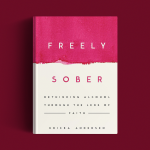
An excerpt from Freely Sober: Rethinking Alcohol Through the Lens of Faith on God’s grace in setting the captives free.

The book cover.
Christianity Today January 6, 2026
Illustration by Christianity Today / Source Images: Getty, IVP

I’d gone through the entire day feeling good, energized, and productive without wanting to drink. I assumed the feeling would continue as the day progressed. But my cravings returned as reliably as the rising sun.

As usual, I dreaded making dinner, so when I saw my neighbors outside with their kids in the afternoon, I avoided cooking. I brought my own children over to play and pushed responsibility out of my mind. As was so often the case, the wine at their house was flowing freely. I often went there, quietly hoping they’d offer me a glass, as they almost always did.

Accepting the glass really didn’t feel like a deliberate choice.

Wine with friends on a beautiful Tuesday afternoon—that’s a very normal thing to do. Normie drinkers do that, and I was definitely normal—at least I tried to be.

I drained the glass within ten minutes. My friend graciously offered a refill. Who was I to refuse? I could get a little buzz, which would help with the dinner dread, and my husband wouldn’t even know I’d been drinking. Or I could tell him it had just been a little.

Once home, I was brooding with self-hate for decisions I knew had brought this on. I chugged a glass of water, made a pile of cheese quesadillas, and ate until I felt sick. I hoped without hope that the food would soak up the alcohol. That’s it, I told myself. I’m quitting drinking tomorrow.

Fifteen years after these awful tendencies had begun in my life, they were still running rampant and worse than ever. I knew there was a better way, but everything seemed pointless compared to a buzz. Yoga, meditation, prayer, exercise—sure, I thought those might help a little, but they were so tame compared to the chemical high of alcohol.

That was how my mind operated back then—almost feral when it came to a fix. If you look closely at both people and animals, there’s a natural, almost primal instinct to fix what feels off—as fast as possible.

Animals and humans cope with pain differently, but it’s for the same primary reason: When a core need goes unmet, we reach for something to fill the gap. When social, emotional, and spiritual deficiencies overshadow our sense of security, belonging, and purpose, our brains search for anything that will ease our pain. Drinking is simply one method of temporarily meeting our unmet needs.

This is the theology of addiction I wish I had heard in the beginning of my recovery journey. It echoes the truth I mentioned earlier: You can’t self-discipline your way out of addiction. You can’t pray hard enough or be “spiritual” enough to beat alcohol dependence on your own. That’s not because you’re weak—it’s because life is challenging and substance reliance is powerful. By grace, Christians are uniquely empowered—not merely by mental or emotional tools but by a spirit made alive through the Holy Spirit (Gal. 5:16).

As Christians, we carry something our secular counterparts don’t: a spirit made alive by the Holy Spirit. Recovery isn’t just behavior modification—it’s soul-level renewal, dealing first with any spiritual roots that may be feeding our addiction, empowered by the Spirit of God within us.

Thankfully, we can implement self-forgiveness, which can help us overcome the Enemy’s greatest tool: shame. We can do this by applying Scripture and evidence to understand God’s perspective, instead of continually relying on our own faulty beliefs.

This theology reminds us that addiction is far deeper than a sinful choice. It’s more like being in bondage. Maybe that sounds dramatic to you. But even if you wouldn’t describe yourself as a captive, isn’t alcohol dependence exhausting? Praise God, Jesus came to set the captives free (Luke 4:18). And we don’t have to earn that freedom by perfect behavior or religious effort; instead, we receive it through acceptance, surrender, and grace.

Remember the beautiful words God gave to Paul: “My grace is sufficient for you, for my power is made perfect in weakness” (2 Cor. 12:9, ESV throughout). You might feel weak, as if you’ve failed. But the gospel assures us that we need not be strong. God’s grace is not for some future, better version of you—it’s for right now, in your raw, real efforts to make better choices. God sees your desire for change and meets you there in whatever wilderness surrounds you.

Psalm 34:18 reminds us, “The Lord is near to the brokenhearted and saves the crushed in spirit.” Being crushed in spirit resonates with me bigtime. How many times did I disappoint myself? How many times did I end up back at square one? This Bible verse was often my only solace. You and I don’t need to prove ourselves to God. He already knows us, loves us, and is committed to our restoration.

Today, I’m able to look at my experience through the lens of mental health and addiction theology. I can better understand Scripture and God’s perspective on these matters in my heart, and I can see each step of my journey to today with grace and truth.

“For I do not do what I want, but I do the very thing I hate,” wrote Paul (Rom. 7:15). For me, that may be the most relatable verse in the entire Bible.

Sound familiar?

The verses after that one can be a comfort for us, though: “As it is, it is no longer I myself who do it, but it is sin living in me. For I know that good itself does not dwell in me, that is, in my sinful nature. For I have the desire to do what is good, but I cannot carry it out” (vv. 17–18, NIV).

We are all born with a sinful nature, unable to overcome it without the grace of Christ. He atoned for every part of our nature, including those elements that feel out of our control. We relieve performance pressure by accepting this fallible nature and believing that any good in us comes from God alone. It’s not possible to “do what is good” without God. And while giving everything to God may seem difficult, there’s hope in day-to-day, even moment-to-moment, surrender.

In the case of addiction, the “sinful nature” of seeking alcohol has compulsively taken root in the brain. The addicted or dependent brain turns off certain natural functions that must be intentionally retooled to work correctly again. In the grip of addiction or dependence, our brains naturally gloss over painful memories or consequences. Often, our minds deceive us, downplaying the anxiety, hangovers, headaches, and regret, convincing us that the situation isn’t that bad or that we don’t have a “real” problem. But we need to see through these biased memories and misunderstood myths.

In the video “How an Addicted Brain Works,” a Yale Medicine team explains that “addictive substances trigger an outsized response when they reach the brain,” which ultimately causes “dopamine to flood the reward pathway, ten times more than a natural reward.” I want to emphasize again what researchers explain about alcohol and the reward system: “Achieving that pleasurable sensation becomes increasingly important, but at the same time, you build tolerance and need more and more of that substance to generate the level of high you crave.”

Once we’re aware of scientific realities, we can begin to view our own situation from a more rational perspective. So, please, forgive yourself for what you didn’t know. Forgive yourself for taking all the blame and being lied to by the world about the harms of alcohol.

Once you take all the pressure off yourself, you can healthily take up a mantle of responsibility—which is graciously lightened by our Lord: “‘My grace is sufficient for you, for my power is made perfect in weakness.’ Therefore I will boast all the more gladly of my weaknesses, so that the power of Christ may rest upon me” (2 Cor. 12:9). Thank God he didn’t make us dependent solely on our own strength. Today’s world tells women to save themselves, love themselves, and find themselves. That’s the wrong answer. We have a role to play, but we are not the remedy. He’s the solution.

In a sermon, the pastor Alistair Begg once said, “Don’t ask me what I feel about myself. Ask me what I know about God.” I want to tattoo that on my forehead. Our feelings are fleeting and unreliable. But what’s true about God? God’s truth is immovable, unchangeable, covenanted. Don’t just say you believe it. Actually believe it.

Our triggers have power only when we deliver their demands. They’ll soon shut down when they realize we refuse to do so anymore. We know that God is sovereign and that only he holds the swirling of the universe in his hands. By the power of the Holy Spirit, God has given you the ability to say no. And he’s promised to help you do it.

Pain is inevitable, but we have control over how we cope with it. You’ve been using unhealthy tools to cope with uncomfortable parts of life, but now you know there are alternatives for that.

When we think of “spiritual” tools, we might think of prayer, Scripture, and worship. We can rely on these, but God has provided us even more to help us overcome—friendships, family relationships, mentors, marriages, church family, biblically grounded books, podcasts, support groups. And we have healthy coping mechanisms like breath work, exercise, laughter, and music. We can put God first in our journey and also deploy the many modes of recovery that prove helpful.

When we “work it”—as they say in Alcoholics Anonymous, the tools and healthy ideas we’re learning now—we are free to make better choices in the future. Forgive yourself for choices you made long ago without fully understanding their consequences. In hindsight, you might have chosen differently.

Adapted from Freely Sober by Ericka Andersen. Copyright (c) 2026 by Ericka A. Sylvester. Used by permission of InterVarsity Press.

Church Life

Death of a Eulogy

Christian funerals are increasingly secular. But how can Christians go quiet on the gospel at these of all moments?

A Funeral by Anna Ancher

A Funeral by Anna Ancher

Christianity Today January 5, 2026
WikiMedia Commons

I’m troubled by a trend I’ve seen with funerals. 

For the last decade, I’ve been the preaching minister at a rural congregation in the Bible Belt South. My outpost is nowhere near Nineveh. In fact, if anywhere enjoys protection by the ghosts of Christendom past, it’s here. A lot of conservatism lives in my backyard—conservatism of every kind, but especially theological conservatism. The impulse is strong to protect the deposit of faith from our forebears and guard against worldly powers that would undermine our beliefs. If the Christian funeral is going right anywhere, it ought to be going right here. 

But I’m not confident it is. For instance, a few months ago I preached at the funeral of a great Christian man from our church, one who had lived a long and prosperous life as Psalm 91:16 envisions: “With long life I will satisfy him and show him my salvation.” 

The problem when someone lives so long, however, is that the funeral is not usually well-attended. He had outlived most of his congregational contemporaries, so it was a small gathering primarily comprising extended family members I did not know. Still, these were Christian folks. After the service began and it was my turn to speak, I started, as I like to do, with some remarks of sympathy for the family and a few anecdotes about the deceased, qualities I’d admired, that sort of thing. 

Then, somewhere in the middle of the eulogy, I made the turn to the gospel, the only hope we Christians have and the sole hope of this man now slumbering in the Lord. But a strange feeling came over me, and as I spoke I was alarmed by the body language of my listeners (always distressing for public speakers). It seemed I had mostly lost them. 

Some were fidgeting again with their programs. (Now what was the next item on the agenda? Oh, right, the closing prayer.) Some were checking the time. Their lack of interest after ten minutes seemed to interrogate me: What are you talking about? And are you almost finished? We just wanted a nice service, not a sermon.

What I felt in that moment I intuit elsewhere and in other ways. More folks are opting for whichever form of funeral can call the least amount of attention to death. Even the word itself—funeral—is out of style, and I hear ever more of memorials, celebrations of life, private gatherings. We would not like a preacher, people say. Someone from the family will say a few words instead

When I am asked to speak, I sometimes hear similar messages in the tone and subtext of the family’s desires for the service: Don’t go too long. Accentuate the positive. Our loved one wouldn’t want us to be morose.

It leaves me wondering if that’s really what the deceased wanted. How can Christians come to the end of their lives and, on death’s doorstep, abandon the gospel? A funeral strikes me as exactly the wrong time to drop this theme.

Of course, I understand it when nonbelievers want to avoid talk of death. These choices make sense from unchurched families. But I’m talking about the funerals of women and men who, from every indication of their lives, were on the right side of this story. These were churchgoing, Bible-reading, Christian-radio-listening folks, people who heard 70 or 80 Easter sermons about Christ as the resurrection and the life, the victor over death itself (1 Cor. 15:20–32). 

How can such Christians come to the end of their lives—lives of taking up crosses, following the Crucified One, dying daily, knowing that Christ alone conquered death—only to ask for a low-key funeral with no clear presentation of the gospel? And how can Christian families be content with a service more likely to share hobbies than the truth itself? What does this say about the faith of those in our pews or the direction things are heading for American Christianity? 

I’ve come to think that parishioners’ desires for basically secular funeral services with a Christian veneer reveal that our theology is not sufficiently robust. Their attitude calls into question whether I am proclaiming the gospel often enough, clearly enough, or winsomely enough. Parishioners’ desires for tepid preaching at Christian funerals portends the failing of our hope. 

To be sure, funerals accomplish many things. They are mostly for the family, for the living, I hear often. I wonder if this is true. Either way, celebrating or remembering life is a good work. Still, Christians are supposed to be all in on the Resurrection. 

Few moments in life warrant as clear and confident an articulation of the gospel than a funeral. That doesn’t mean overdone, opportunistic sermons that capitalize on a captive and grieving audience to win souls. In my experience, funerals that seek to convert the living most often only irritate them. What I am prescribing is a eulogy that simply and clearly articulates, clings to, and celebrates the Christian hope. 

Congregants may have little appetite for a witness that takes death seriously while proclaiming escape in Christ’s empty tomb. Such loss of appetite for the gospel (especially in the wake of death) is troubling, but it is also a firm reminder of the important work ministers do. We are not the first to say the words “Now I would remind you, brothers, of the gospel” (1 Cor 15:1, ESV). In every age, this will be our fundamental task, for our people (saved and sanctified though they are) are prone to forget it. 

Matthew D. Love teaches preaching and ministry at Harding School of Theology.

Ideas

Christianity Today: A Declaration of Principles

Editor in Chief

Where we stand at seven decades—and how readers can help.

Hands holding a CT magazine.
Illustration by Christianity Today / Source Images: Getty

The evangelical world includes a vast variety of perspectives, ethnicities, and geographies. It’s blue-collar and advanced degrees, covenantal and dispensational, Reformed and charismatic, and none of the above, all under the same tent.

Christianity Today lives in that big tent. In common with our fellow evangelicals, we believe in the authority and sufficiency of the Bible and the centrality of the gospel of Jesus Christ. We desire to live out our faith in service to others and to see more people in more places embrace the life-transforming Good News.

CT is committed to orthodox Christian doctrines on the Trinity, Scripture, Adam and Eve, the Fall, Christ’s redemptive work on the cross, resurrection, and biblical inerrancy. We affirm the Nicene Creed and the Apostles’ Creed as well as CT’s own statement of faith. These commitments shape our journalism and all content production at every stage.

We apply these understandings when thinking through much-debated current issues. CT is pro-life. That includes more than opposing abortion—we also oppose euthanasia and eugenics—but certainly not less. CT hosts disagreement on tactical questions about the best ways to end the evil of abortion but not on the ethic of life. All of us, born and unborn, regardless of ability or disability, are created in God’s image.

We believe that God designed sexual activity to be in the context of a marriage between a man and a woman and that all Christians are called to chastity—abstaining from sex before marriage and practicing fidelity within marriage. We believe the sexed bodies given by God determine whether we are men or women. To be blunt, CT is not theologically affirming on LGBTQ issues and does not publish affirming perspectives.

As a US-based media ministry, we endorse and uphold the US Constitution with its checks and balances, rule of law, and Bill of Rights. We are not opposed to progress but biased toward due process and time-tested wisdom. We oppose extremists on the right and the left who put power above persuasion. 

We believe Christians are called to show compassion to the poor, the homeless, and immigrants. We see that many governmental aid programs have failed, so we look for ways to further charity. We oppose racism, antisemitism, and ethnic hatred. 

We try to approach every issue through the lens of Scripture, and therefore we oppose any attempt to put humanity’s purported wisdom above God’s. We remember that all have sinned (including ourselves) and fallen short of the glory of God, so we are skeptical of ideological pronouncements (including our own).

We own our mistakes with humility and make corrections. We value street-level reporting over suite-level orating and do what it takes to speak the truth. We are critical at times but steadfast in our desire to uplift the church as the bride of Christ. We do not lobby for or against legislation or endorse or oppose candidates for office, though certainly we praise and critique policies and politicians. And though many of our journalists do vote, per our editorial code of ethics we are not permitted to donate to campaigns or political action committees.

We aim to be transparent. Journalism as an industry has seen rapid change over the past four decades, much of it mystifying to the reading public. CT has begun to publish our internal editorial policies, including our corrections policy, our fact-checking policy, and a statement on how we investigate abuse allegations

Within our commitment to evangelical orthodoxy, we welcome readers and writers from an array of denominations and theological traditions. You’ll find in our pages differing opinions on baptism, predestination, and roles of women in the church and home. On these and other weighty matters of faith and practice on which evangelicals disagree, we work to represent a variety of views in our pages—and to represent them fairly.

Now that I’m 75, I feel all the more strongly about affirming the basics while learning from others in areas of disagreement. I hope for more time with my wife of 50 years and within my journalism profession of 55 years. But I also look forward to life on a new earth where we will see Jesus face to face and I’ll be able to sit in a Library of Congress reading room where every volume is filled not just with imaginings but with truth. 

In the meantime, I want to learn more from not only CT staff and freelancers who work within our commitments but also readers. What is your response to this declaration? Please let us know by sending an email to editor@christianitytoday.com. We’ll publish a diversity of letters in an upcoming issue.

Update (March 19, 2026): This statement was lightly updated in the course of preparation for print publication.

Marvin Olasky is editor in chief of Christianity Today.

addApple PodcastsDown ArrowDown ArrowDown Arrowarrow_left_altLeft ArrowLeft ArrowRight ArrowRight ArrowRight Arrowarrow_up_altUp ArrowUp ArrowAvailable at Amazoncaret-downCloseCloseellipseEmailEmailExpandExpandExternalExternalFacebookfacebook-squarefolderGiftGiftGooglegoogleGoogle KeephamburgerInstagraminstagram-squareLinkLinklinkedin-squareListenListenListenChristianity TodayCT Creative Studio Logologo_orgMegaphoneMenuMenupausePinterestPlayPlayPocketPodcastprintremoveRSSRSSSaveSavesaveSearchSearchsearchSpotifyStitcherTelegramTable of ContentsTable of Contentstwitter-squareWhatsAppXYouTubeYouTube