Books
Excerpt

You Know Them As Fantasy Writers. They Were Soldiers Too. 

An excerpt from ‘The War for Middle-Earth: J.R.R. Tolkien and C.S. Lewis Confront the Gathering Storm, 1933–1945.’

The book cover on an orange background.
Christianity Today November 28, 2025
Illustration by Christianity Today / Source Images: Getty, Thomas Nelson

Halfway through the Great War, on November 30, 1916, a small group of European leaders managed to attend the funeral of Franz Joseph, ruler over the Austro-Hungarian Empire. In a ceremony scripted by the emperor before his death, the grand cortege carrying his coffin halted outside the Capuchin monastery in Vienna, where all the Hapsburg emperors were laid to rest.

The herald, speaking on behalf of the dead emperor, knocked on the monastery door.

“Who is knocking?” shouted the abbot inside.

“I am Franz Joseph, emperor of Austria, king of Hungary.”

“I don’t know you.”

Again the herald shouted: “I am Franz Joseph, emperor of Austria, king of Hungary, Bohemia, Galicia, Dalmatia, Grand Duke of Transylvania, Duke of—”

“We still don’t know who you are,” interrupted the abbot.

At this moment, the herald fell on his knees and in front of all assembled declared, “I am Franz Joseph, a poor sinner, humbly begging God’s mercy.”

“Enter then,” the abbot said. And the gates opened.

The funeral symbolized an outlook already in an advanced stage of decay by the early 20th century. Settled beliefs about the religious dimension of human life were becoming unsettled. Assumptions about good, evil, and morality seemed to have vanished into the killing fields of the 1914–18 war. By the end of the conflict, the emotional and spiritual lives of millions of ordinary Europeans were caught up in a no man’s land of doubt and disillusionment.

Two of the most influential writers of the 20th century, J. R. R. Tolkien and C. S. Lewis, were soldiers in the Great War. They fought in the trenches in France, in what one contemporary called “the long grave already dug.” They emerged from the mechanized slaughter of that conflict physically intact, but just barely.

No man could pass through the fires of the Somme and Arras and remain unchanged. For Tolkien, his war experience left an enduring sadness. Yet he also found that his imaginative cast of mind, his early taste for fantasy, was “quickened to full life by war.” For Lewis, the conflict deepened his youthful atheism—the growing conviction that if God existed, he was a sadist. Paradoxically, the war years also launched Lewis on a spiritual quest, a desire for “Joy” which ultimately led him on a remarkable journey of faith.

The lives of these two men intersected as they were launching their academic careers at Oxford University. They soon formed a bond that, given the reach and influence of their novels, must rank as one of the most consequential friendships of modern times.

There was nothing inevitable about it. Tolkien was a devout Catholic, Lewis an Ulster Protestant and lapsed Anglican. At their first English faculty meeting, they circled each other like tigers in the wild. Yet they soon discovered that they loved many of the same things: ancient myths, epic poetry, and medieval stories of honor, chivalry, and sacrifice.

The horror of the First World War had instigated a cultural backlash, setting loose forces that tore at the moral and spiritual foundations of Western civilization. Both men were determined to fight back. They formed the nucleus of a group of like-minded writers, all resolved to establish a beachhead of resistance amid the raging storm of ideas.

But barely 20 years after surviving what was the most devastating conflict in history, Tolkien and Lewis would watch in anguish as new forces of aggression gathered and dominated Europe’s geopolitical landscape. The onset of the Second World War utterly transformed not only their lives but also their literary imaginations. Their most beloved works—including The Hobbit, The Lord of the Rings, The Screwtape Letters, Mere Christianity, and The Chronicles of Narnia—were conceived in the shadow of this conflict.

“Talent alone cannot make a writer,” observed Ralph Waldo Emerson. “There must be a man behind the book.” Behind the extraordinary works of Tolkien and Lewis stood a cloud of witnesses: individuals whose contributions to the literary canon of Western civilization provided inspiration for their epic novels. Both authors instinctively looked to this inheritance and were nourished by it in wartime.

As a result, they acquired something that our modern era has mostly abandoned: perspective. Rooted in the great books of the Western tradition, they knew where to look for wisdom, virtue, courage, and faith. Intimate knowledge of the past braced them for the crisis years of 1933 to 1945. In this, they reinforced each other’s best instincts. “My entire philosophy of history,” Lewis once told Tolkien, “hangs upon a single sentence of your own.”

Could an entire philosophy of history be summed up in a single sentence? Which one? Lewis is citing a passage from The Lord of the Rings, in which Gandalf explains to Frodo Baggins something of the ancient struggle for Middle-earth. “There was sorrow then, too,” the wizard says, “and gathering dark, but great valor, and great deeds that were not wholly vain.”

The lives of Tolkien and Lewis were already embedded in this story when another disastrous war unleashed upon the earth a storm of human misery. “Middle-earth, I suspect, looks so engagingly familiar to us, and speaks to us so eloquently,” writes biographer John Garth, “because it was born with the modern world and marked by the same terrible birth pangs.” We cannot fully appreciate the achievements of these two remarkable authors until we understand their historical context and the deep awareness it gave them of life’s sorrows.

Yet suffering is only part of their story, held in check by something stronger: gratitude. The Roman statesman Marcus Tullius Cicero called this quality “not only the greatest of virtues, but the parent of all the others.” Like no other authors of their age, Tolkien and Lewis used their imagination to reclaim—for their generation and ours—those deeds of valor and love that have always kept a lamp burning even in the deepest darkness.

Joseph Loconte is an author, historian, and filmmaker. He serves as Director of The Rivendell Center in New York City.


Culture

May Cause a Spontaneous Outburst of Festive Joy

8 new Christmas albums for holiday parties, praise, and playlists.

Several Christmas album covers.
Christianity Today November 28, 2025
Illustration by Christianity Today

It’s time—time to banish the KPop Demon Hunters soundtrack from my house with an updated playlist of Christmas music. 

Each year, as I start sifting through new Christmas releases, I start to worry—What if I can’t find enough? What if there’s nothing all that interesting?—but that foreboding feeling quickly melts away. So many musicians are still writing new Christmas songs and rearranging old ones. 

Yet this was the first year I’ve had to navigate an alarming amount of AI-generated Christmas music. AI-generated Christian artist Solomon Ray is at the top of the iTunes chart with a new Christmas album, and Amazon Music’s list of forthcoming holiday releases is at least half AI music. 

Maybe that’s why I gravitated toward albums that feel human. I found myself captivated by Andrew Osenga’s warm, textured voice, Sarah Willis’s experimental classical–Latin jazz fusion, Victory Boyd’s understated arrangements of carols, and Rend Collective’s trademark combination of folk and unironic enthusiasm.

I’ve heard so many versions of “Silent Night” and “Feliz Navidad,” but musicians are interpreters who can always find something new to say in a song. I think I have a new appreciation for that gift this year. 

Christmas Hymns, Victory 

Detroit-raised singer and songwriter Victory Boyd has a voice that will immediately pull you out of the holiday music lull. She possesses singular warmth and interpretive sensibility; she is a magnetic vocalist, sometimes compared to Tracy Chapman and Nina Simone. 

On Christmas Hymns, Boyd brings her R & B, soul, and jazz fusion to ten familiar songs, starting with a sparse, tender arrangement of “The First Noel” that showcases her expansive range. Listeners might expect that gentle, quiet energy to crescendo throughout the album, but it doesn’t. Boyd chooses to offer an album of hymns on voice and guitar, each one slow and contemplative, inviting attention to the well-worn lyrics and the quality of her voice. 

The final track, “O Come Let Us Adore Him,” feels like an earnest invitation to rest and worship and adore; Boyd softly closes the album with a greeting, “Merry Christmas.” 

It’s Almost Christmas Collection, Praytell (Jon and Valeria Guerra) 

Jon Guerra, a cerebral singer-songwriter whose 2023 album Ordinary Ways received critical acclaim, performs as the duo Praytell with his wife, Valerie. The Guerras recorded It’s Almost Christmas ten years ago, but this new collection isn’t a glorified rerelease. The updated version has twice the number of tracks, adding new selections such as “Wonderful Christmastime,” “It Came Upon a Midnight Clear,” and “Silent Night.” 

The string orchestrations on the album shimmer; Valerie Guerra is a violinist, and the Guerras’ knack for arranging shows up in both the lush orchestral underlays and the deft use of solo string lines. The 24 tracks on the album offer spirited renditions of “Rockin’ Around the Christmas Tree” and “Frosty the Snowman” alongside devotional songs like “Lord Remind Me,” a call to reflect on the Incarnation as a source of hope: 

When I hear the news and hear another war has begun 
And I wonder if God’s on the side of either one
I hear bullet, nail, or handcuff, he bore all of them 
And in the light my heart’s as dark as anyone’s 
Lord, remind me 

She Composed: The Holidays, Chloe Flower 

Chloe Flower might be the only classical musician who can say that she has collaborated with Celine Dion, Lil Baby, Meek Mill, 2 Chainz, Nas, and Cardi B. Some call her the “Millennial Liberace”—she’s glamorous, virtuosic, and dramatic, and she’s long had an interest in elevating the work of female composers. 

Her new album is a collection of arrangements of winter and holiday works by female composers, who so often get overlooked in the world of classical music. “I’ve heard so many versions of ‘Sleigh Ride’ and [George Frideric] Handel’s ‘Messiah, HWV 56,’” Flowers said in an interview earlier this month. “But there’s actually so many women-composed holiday music out there that haven’t been given the opportunity to be performed.” 

If you’re ready for some instrumental holiday music beyond Handel’s Messiah and Tchaikovsky’s Nutcracker Suite, Flower’s new album may be a good addition to your seasonal playlist. “Dance of the Caribou” is a cinematic piece for piano and orchestra, with sonic sparkle added by prominent sleigh bells. The album features two versions of “Snow Song” by Florence Price, the first African American woman to have her work performed by a major American orchestra. 

Christmas Hymns, Andrew Osenga 

Andrew Osenga, former member of The Normals and Caedmon’s Call, has a gift for making simplicity sound lush. The selections on Christmas Hymns are modestly arranged for guitar, occasional piano, and voices, but the layers of each sound and their treatment fit together to create something that enfolds the listener. 

Osenga whispers more than he shouts; “O Holy Night” is barely sung. I found myself thinking of the winter nights I’ve murmured that song to a baby or drowsy toddler in hushed tones.  

(I’m aware that there are two albums on this list titled Christmas Hymns, but I can promise that listening to both won’t feel redundant. They are both meditative and decidedly non-hype in flavor. But this year, I welcome the invitation to slowness, meditation, and whispering hope.)

A Very Laufey Holiday 2025, Laufey 

Icelandic singer and songwriter Laufey (Laufey Lín Bing Jónsdóttir) has garnered acclaim for her eclectic jazz-classical-pop music, winning Best Traditional Pop Vocal Album at the 2024 Grammy Awards. Her voice is perfectly suited to an album of Christmas jazz and pop standards, so if you’re looking for something holiday-party-ready, this is for you. 

Laufey’s smooth vocal delivery shines on the first tracks, “Santa Claus Is Comin’ to Town” and “Santa Baby.” Her gift for vocal and instrumental arranging is apparent throughout the album, especially on tracks like “Christmas Dreaming,” which features close vocal harmonies and string interludes. It’s a little schmaltzy, but it’s easy to forgive because, first of all, these are Christmas standards, and second, Laufey has made it her mission to reinvigorate interest in classical music and jazz among those who might otherwise write off the genres as relics. 

Christmas in Belfast, Rend Collective 

Since 2012, Northern Irish group Rend Collective has been releasing worshipful songs with folk and Celtic inflections. Fans flock to their concerts because of the group’s infectious enthusiasm and joy; they’re a Christian group that doesn’t take itself too seriously. 

The playfulness (and dare I say, fearless cheesiness) of the song “Christmas in Belfast” exemplifies the lightheartedness that Rend Collective has become known for. Thirty years ago, Christian bands would have been advised to avoid singing about celebrating in pubs and throwing back pints, but here, Rend Collective gives us a Christmas drinking tune. And why not? 

There’s also a driving instrumental arrangement of “Carol of the Bells” and a stomp-and-holler folk rendition of “Feliz Navidad.” 

The final track’s title is “A Spontaneous Outburst of Festive Joy,” a guitar-driven, wordless jam session that closes the album with what feels like the beginning of something. A voice calls out transitions between sections of the song, and the instruments linger on suspensions and build toward a climax that never really arrives. It evokes the kind of hope we feel every Christmas as we celebrate an arrival in the midst of our already and not yet. 

Cuban Christmas, Sarah Willis and Sarahbanda 

Sarah Willis is a French horn player with the Berlin Philharmonic. This album is a compilation of original Latin jazz arrangements. If you’re wondering how those fit together, I don’t blame you. In 2020, Willis released the first installment of the three-album Mozart y Mambo project, which showcased arrangements of Mozart’s works fused with Cuban dance rhythms. Since then, Willis and her “Sarahbanda” have been making music that combines classical orchestration with Afro-Cuban style. 

Cuban Christmas is a vibrant collection of festive renditions of holiday pop standards (“The Christmas Song,” “White Christmas,” “Feliz Navidad”) and classical works like selections from Tchaikovsky’s Nutcracker Suite and the “Allegro” from Bach’s Brandenburg Concerto No. 3. 

The album showcases Afro-Cuban rhythm and grooves; listeners will hear mambo, salsa, rumba, and so on underlying and reframing recognizable tunes. 

It’s an album that you might put on for a party then find yourself tuning into again every once in a while—“Wait, the ‘Dance of the Sugar Plum Fairy” doesn’t usually have a groove.” 

The Advent Sessions, Caroline Cobb 

Singer and songwriter Caroline Cobb’s live Advent album is the perfect accompaniment for the dark winter days leading up to Christmas Eve. It’s restrained and lyrically rich, showcasing the versatility of Cobb’s voice and her ability to bring power, sensitivity, grit, and lightness. 

The album opens with “We Wait for You,” a mid-tempo ballad full of poetic images of a broken, expectant world: 

A broken mirror, painted black 
There is no light reflected back 
Thorns grow up where there was green 
All sorrow, shame and broken things
Paradise has barred its doors 
It’s guarded by the flaming swords 
We can’t go back, we can’t go back

“Pave Every Road (Isaiah)” is an upbeat, blues-inflected folk-rock track with a simple, repeated refrain: “I see the sun rising.”

The album closes with “The Year of His Favor (Isaiah 61),” a simple and reflective meditation on a prophetic text, with a triumphant bridge that invites the listener to pause on this hopeful vision of justice and the coming kingdom: 

The broken dance, the blind will see
The sick are healed, the mute will sing
The dead alive, the sinner free
The kingdom’s here, at last, the King!

Listen to selections from this year’s Christmas releases:

And catch up on some of our previous picks:

News
Excerpt

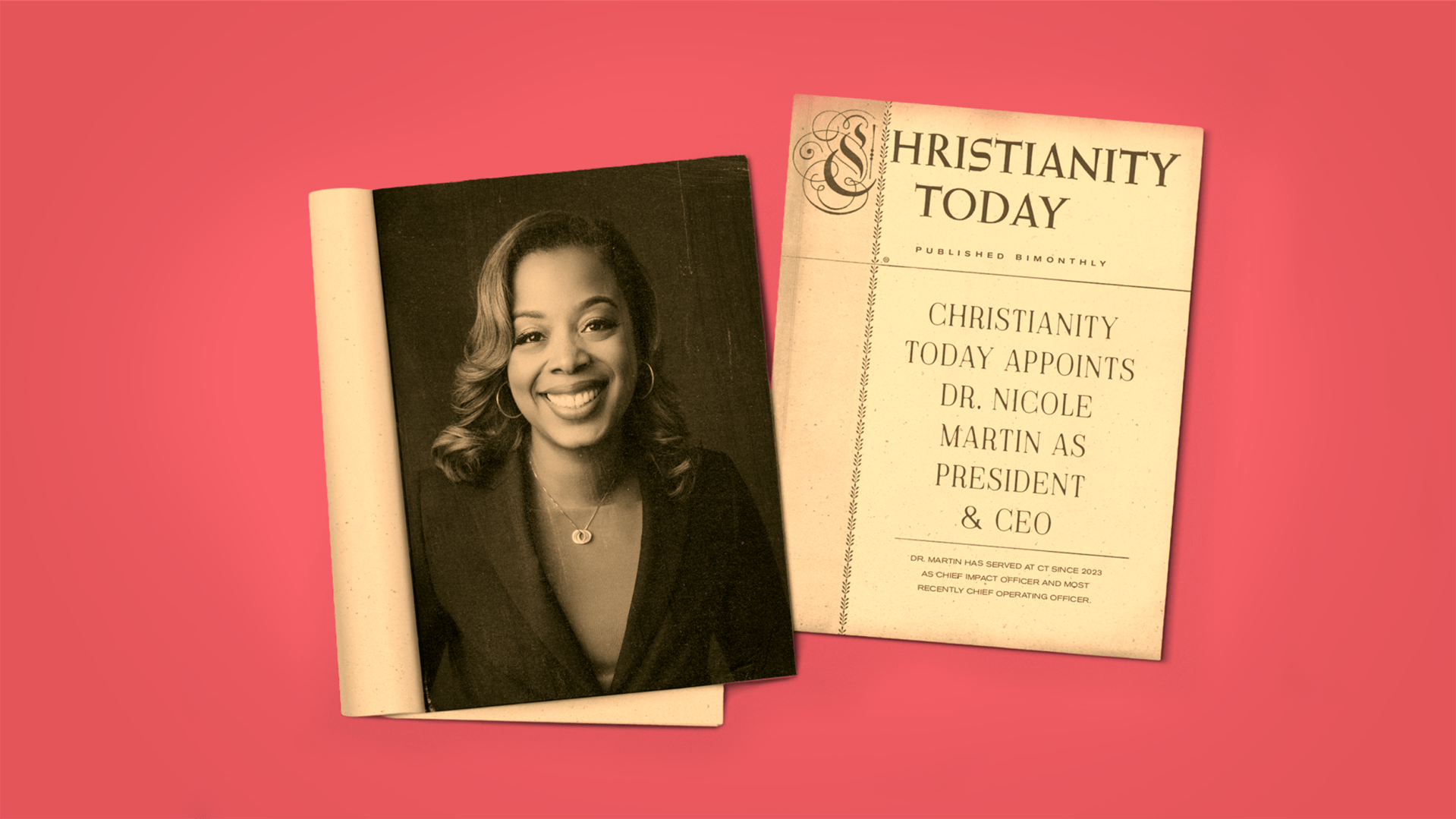
Meet CT’s New President

Nicole Martin seeks to mend evangelical divides and uphold biblical truth.

Christianity Today November 28, 2025
Illustration by Rick Szuecs / Source images: Envato / Nicole Martin


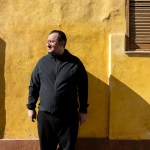
The Bulletin sat down with CT’s new president and CEO, Dr. Nicole Martin, and Walter Kim, a CT board member and president of the National Association of Evangelicals, to talk about the direction of Christianity Today under Dr. Martin’s new leadership. Here are edited excerpts of that conversation from episode 229.


Nicole and Walter, what is your CT story? 

Nicole Martin: I remember getting to know CT in graduate school at Gordon-Conwell Theological Seminary. I had obviously heard of CT and knew a lot about it. I was living in Charlotte, North Carolina, and I remember that every seminary class had some reference to CT articles. 

When I was actually teaching in seminary, it was a big deal to be published in CT. It’s always been part of my academic life and my ministerial life as I’ve leaned into what it means to think intellectually and deeply about faith. 

Walter Kim: I grew up in an immigrant household that was not churchgoing or deeply faith-formed. When I became a Christian in high school, I discovered a world that I didn’t know existed. I didn’t know Christian colleges or Christian publications existed. I didn’t even know that Christian books were a thing. I spent a lot of my teen and college years imbibing resources that helped me grow in my faith, that helped me make sense of this radical transformation that happened to me as a young teenager.

CT came along toward the end of my college years, early in my ministry. I came on staff with Cru, and Leadership Journal was instrumental in helping me understand ministry. With that, the world of CT opened up more generally to me, helping me form a worldview that was deeply immersed in Scripture, inspired by the Spirit, and conversant with the issues in culture. My mind was catching up to the conversion of my heart that happened in my early high school years. 

How do you see Billy Graham’s fingerprints still on CT’s vision today?

Martin: When Billy Graham talks about what he wants Christianity Today to be, he longs for a space to be created beyond just a publication. He wants CT to give a sense of belonging to people who do not find their faith in society. Graham wants CT to uniquely offer Christians a place where they can find themselves deeply embedded in Scripture. That is something that we have done and continue to do. Billy Graham was defining a framework of belonging with theologically grounded evangelicalism and space where we can contend with and talk about big ideas. 

I was reading about Carl Henry’s vision for creating a space where various views can be shared on one particular topic. I see that playing out now in our Big Tent editorial pieces, where we get differing views on one particular topic. We’re leaning into a future, but we’re anchoring that in a past and a story that Billy Graham himself tried to create.

Kim: I recently returned from the World Evangelical Alliance General Assembly, which was held in Seoul with nearly a thousand delegates from 120 countries around the world. Its location in Seoul was striking because Billy Graham preached there during a set of evangelistic campaigns that had over 1 million people in attendance. 

I think about the 120 countries that were represented at the WEA General Assembly. Billy Graham preached in many of those countries. There’s a lineage, a genealogy that you could trace. Christianity Today’s global imprint right now is far greater than ever before, and it matches Billy Graham’s ministry in those early years as he brought the gospel to the world. 

What are the stories of CT? Yes, there are cultural engagements on a variety of issues of the moment that we need to address. There’s a global community that we are seeking to speak about, speak from, speak to, speak with together as a community. But at the center is this firm belief that Jesus is the savior of the world. That still beats at the heart of CT. That focus is simple and direct. 

We are trying to hold the mystery of faith together—Jesus fully man, fully God—the simplicity of the gospel, coupled with the complexity of its application and all the dimensions of life. CT is seeking to hold those things together, fully committed to the truth, simplicity, and directness of the gospel yet realizing that it becomes incarnate in the complexity of life—global life, national life, the range of issues. That is an extraordinary, God-given, and, hopefully, Spirit-tended mission.

Martin: Billy Graham had a unique capacity to draw together parts of the church that may not have come together outside of him. He demonstrates that the answer to unity within and between denominations isn’t a question of what, it’s a question of who. 

As I have wrestled with this, I keep returning to the ways God has allowed me to serve in many different capacities and participate in different networks. I hope this experience allows me to be a “who” that helps to make this big tent evangelicalism possible. 

My experience draws on my seminary influences in the Presbyterian church and evangelicalism. I’ve been in spaces where there may be a predominantly white understanding of what it means to be Christian, and I bring that together with my life and work in predominantly Black and Hispanic spaces. God has shaped me not to settle in one space but to branch across many spaces. 

Billy Graham’s passion was for Jesus at the core. We know Billy Graham because of his ministry to elevate the name of Jesus Christ, and I can think of no better way to live my whole life than to lift the name of Jesus Christ through the church. 

I am deeply connected to local churches, and I want to see CT amplify the stories and ideas of the kingdom of God through the church in a way that holds together the framework of the big tent with very clear tent pegs of theology. We’re not afraid of the tenets of evangelicalism. We can make room for the many voices that God has given us within that.

How do you seek unity in the midst of social and political division while also holding fast to the non-negotiables of evangelical faith?

Kim: The church was birthed in this beautiful vision at Pentecost, with a variety of nationalities that were touched by the proclamation of the gospel and powered by the Holy Spirit. Just four chapters later, in Acts 6, the church is threatened with its first division. It doesn’t take very long, just a few chapters. That division was about the distribution of food to the Hellenistic versus the Hebraic Jewish converts, communities of widows. It was over justice issues, economic distribution, and ethnicity. 
New Testament Scripture tried consistently to address the tensions of division. It’s not like Paul wrote Romans for Martin Luther to discover it 1,500 years later and say, Oh, justification by faith! No, Paul talked about it in Romans because of the division between Jew and Gentiles. 

The same thing is true with Ephesians and the “dividing wall of hostility” (2:14). Or Colossians, We’re all one in Christ. There’s not Scythian or Barbarian, on and on (3:11). Almost every epistle drips with this realization that the church was powerfully given this message of redemption and, every step of the way, sin, nature, or Satan would seek to divide.

The work of CT is not unique to this time. We have some unique things about our polarization, but this is actually the work the church has confronted from its birth in Acts 2. Every moment, sin and Satan seek to divide. 

The shape of Scripture guides the shape of CT’s ministry. So what does it look like for us to recover a robust understanding of the salvation that we have in Christ that, from its onset, is a message that not only saves individual souls but communities? 
How do we do this while we recognize that, every step of the way, our own sin nature, the work of Satan, and the fallenness of the world will consistently chafe against that vision of the message of reconciliation? 

We need to pray. We need voices that remind us of the chorus that exists in the church that points to the different facets of this message of reconciliation.

The fact that it’s a message of reconciliation assumes that reconciliation needs to take place. It assumes tensions and divisions. Let’s not be surprised that the problems we have today were problems that existed 2,000 years ago. We have the same resources of the Spirit’s power, the humble community of our life together in Christ, the voices of a global community that helps us learn together in this message of reconciliation. 

Billy Graham held a pro-life conviction. He was very compassionate toward women facing unplanned pregnancies and the choice of abortion. Does CT’s leadership speak with a unified voice on this? 

Martin: We have not ever changed that stance. CT is pro-life. I am personally pro-life. Our leadership values and understands a pro-life stance. 

We often think of pro-life as a political term, but the idea of valuing life and humanity is a biblical premise. We can uphold the biblical value of life and do that in a way that extends to the whole life, from the moment of birth to the moment of death. We honor the imago Dei in each person and do so in a way that also understands grace for challenging times. 

We often get stuck when we politicize biblical principles, and we demonize those who have to make hard choices. But the gospel is full of grace, and the gospel is full of abundant life. I’m excited to lean into who we’ve always been, who I’ve always been. This is who Billy Graham was. This is who CT is, was, and will be. I’m excited to carry that forward. 

Kim: I love how CT has pursued issues in the pro-life movement. My 21-year-old daughter has Down’s syndrome. When I think about the pro-life issue in my daughter’s case, the majority of prenatal diagnoses globally have often been encouraged by the medical community toward abortion. If we’re going to address pro-life issues, we need to have more than just a vision of the unborn baby. We need a vision of the human, of dignity, a transformational vision of life more generally as part of a pro-life agenda. 

CT finds creative ways to expand our imagination on complex issues like this. Issue A is related to issues B, C, and D. A fuller, more sustainable solution nests these issues, acknowledging life as rich and beautiful, but also as complicated as it actually is.

The board considered 130 candidates. What were you looking for, and how did that process work?

Kim: It’s not just about CT. It’s about how any faithful ministry seeks a faithful process. We assembled a search committee from within the board that was representative of different streams of evangelicalism, different perspectives, different gifts and life experiences, to ensure that the breadth of evangelicalism was represented. 

We retained CarterBaldwin—a humble recognition that sometimes we can’t see what we can’t see. Sometimes we need other people whose expertise we can rely on. They were fantastic in the interviewing process. 

Above all, in this moment where we often see crises in leadership, we wanted to find someone who was godly. Someone who had Christlike character, whose relationship with Jesus was marked by the fruit of the Spirit, a humble curiosity, and a deep conviction that held truth and grace together. 

We wanted someone with the ability to cast a vision and actually run an organization. Vision casters aren’t always great administrators, and great administrators may not be the most comfortable person up front. We wanted to find someone that actually has both a godly character and a savvy understanding of the developing media ecosystem. 

Finally, we looked for someone who didn’t just conceptually understand Christianity as a global phenomenon from its inception to its current state. We wanted a person who could tell this story not as an outside observer but through their own life—journalistic excellence with Christian solidarity and sympathy. 

CT is a media company, but it’s also a company that is seeking to form the faith, not just for the present moment but for what God is unfolding in the years to come. 

A Tip for Monday Blues from a Legendary Journalist

An inside scoop on CT journalism.

An illustration of a hand holding a calligraphy pen with a hand written letter in the background

Christianity Today November 27, 2025
Illustration by Christianity Today

It’s Monday, and we all might feel the weight of the work week ahead. I have on my desk legendary journalist Robert Caro’s book Working, which I sometimes open to a random page when I feel stuck in the writing or reporting process. 

Caro, who in the book mentions cutting 350,000 words from his magnum opus The Power Broker, says that he is “naturally lazy,” which I just don’t believe. But it’s nice to hear him say that. His rules for himself, even as a writer who may not see anyone else in a day, are to wear a suit and tie so he feels like he’s doing a job and to always produce at least three pages each day. He talks about being in a bad mood when he’s trying to boil down an idea about a historical figure like Robert Moses, but he knows the purpose of that kind of slow, mental work.

“The more light that can be thrown on the actual processes we’re voting about, the better,” he said in Working. “We live in a democracy, so ultimately, even despite a Robert Moses, a lot of political power comes from our votes. The more we understand about the realities of the political process, the better informed our votes will be. And then, presumably, in some very diffuse, inchoate way, the better our country will be.” 

Whether or not we’re wearing business suits every day, it’s helpful to think that our small, faithful efforts at our jobs can make a difference in some “inchoate way.”

Church Life

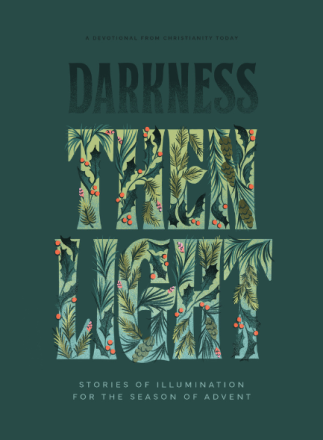
Darkness, Then Light

Introducing Christianity Today’s 2025 Advent devotional.

Illustration by Jill DeHaan

Christmastime has arrived in all its luster, but I’m having one of those nights when sleeping has become a wild ambition. The cares of the world are weighing down on my soul, and the ticking hand of my analog clock has turned into a deafening roar. For me, it is better to simply admit defeat and abandon any hope of attaining some sweet slumber. I silently shuffle down the dim hallway, trying to keep my steps delicate as the Christmas tree finally comes into view from the corner of the room. I glance at the garland and lights, woven between the pine needles in suspended animation, still magically twinkling from the night before. Even in this depressingly early hour, it manages to bring a faint smile to my sleepy face.

Of course, this is predawn, when everything appears darker and quieter than at any other time of the day. I settle into a room we call the library and gaze through the glass windowpane as the first hints of light declare morning’s arrival. Although my eyes are tired and dull, my mind happens to be as alert as ever. As I sit before the Lord in stillness, he provides me with a much-needed remembrance at Christmastime: My story is not always what it seems. It appears darker and quieter at times. It feels lost in a forest of shadows and obscured images. What I’m learning is that these are the predawn moments of my life.

Advent has a way of reminding us of this dark but divine truth every year. During the dimmest hours of the night, we are moments away from the morning light—a light that never fails to arrive and welcome us into God’s evergreen mercies. 

The stories you are about to read contain vivid portraits of humanity, steeped in the aching depths of darkness and the vibrant births of new light—two realities that permeate and shape our existence. These are honest and revealing narratives from women and men that give testimony to the unveiling of Christ, whose arrival was like the brightest light piercing the bleakest  darkness. 

My hope is that as you reflect on these personal stories of darkness and light, you will be reminded of the predawn moments of your own life and rejoice in the light that never fails to arrive in hope and glory.

Christ is born!

Ronnie Martin is director of leader care and renewal for Harbor Network and pastor in residence at Redeemer Community Church in Bloomington, Indiana.

Church Life

Let There Be Hope

God is still at work amidst darkness.

Illustration by Jill DeHaan

Midnight stole upon us while the sun remained high in the sky. It was a Saturday. The phone rang. I answered. And just like that, night fell. Words upon words, like soot-black spatters of darkness, rained from the phone and smothered me. It was the call that other parents get. You know, the ones of whom we say, “Oh, those poor parents. My heart breaks for them.” Only it was not other parents. Not this time. And the heart crushed and ground to fragmentary shards lay dead but stubbornly alive within my own chest.

Luke had fallen to his death. A sentence grammatically simple. A fact devastatingly horrid. On this side of the resurrection, he will remain, with every passing year, 21 years old.

He had died on a hike while studying abroad in Chile. In the weeks we waited for his body to be flown home, in the time between his funeral at home and his second funeral and interment at the United States Naval Academy, and in the months following, I arose early and walked for miles in the dark. Praying psalms. Weeping rivers of tears. Launching a million and one whys to heaven’s throne of grace.

Day by torturous day, unbeknown to me at first, the Spirit of God was doing what he has been doing since the dawn of life: accomplishing his best work in the dark. The Lord’s creation of all things began in the dark. “Let there be light,” he said, and there was light. His creation of each of us began in the darkness of the womb. “Let there be birth,” he said, and there was birth.

Within me, the voice that spoke, initially in a whisper but with gradually intensifying volume, uttered these four words: “Let there be hope.” And there was hope.

Our Father was accomplishing his work within me in the dark. He taught me, when the present is covered with the shadow of death, to borrow light from the past. There is hope because the young man whose body we buried had been united by baptism to the living body of Jesus, who had also been buried, then rose triumphant, his foot on the neck of death for us.

The Lord taught me to bank on light from the future as well, for no matter how fierce the growl of midnight grief, it whimpers in defeat when dawn begins to laugh. And the dawn of resurrection comes. It shone during the first advent of Jesus, when he vacated his borrowed tomb, and that resurrection dawn will dispel every vestige of night at his second coming.

I have learned that tears and smiles can coexist in a soul full of the hope of what Jesus has done, is doing, and will do for us. Never will I be the same, and I am grateful for that. Through wounds and tears, in darkness and grief, I have learned that “even the darkness will not be dark to you,” O Christ (Ps. 139:12), for you are the Light of the World.

Chad Bird is a scholar in residence at 1517. He is the cohost of the podcast 40 Minutes in the Old Testament and the author of several books, including Untamed Prayers: 365 Daily Devotions on Christ in the Book of Psalms.

Church Life

Christmas in Wartime

How can Christians possibly pause for Advent in a world so dark?

Illustration by Jill DeHaan

We drove down busy streets, sirens intermittently breaking up the feigned normalcy of a city in wartime. Ukrainians worked and shopped, worshiped and worried throughout Kyiv, miles from the front but seconds from a missile strike.

We toured a children’s hospital with an entire ward reduced to a pile of rubble, the target of a Russian bomber. We visited an underground shelter where students, at a moment’s notice, could leave their desks and go study while the world burned. We spoke with Ukrainian children rescued from kidnapping and exploitation by the Russians and now cared for by an evangelical Christian ministry.

But it was the final scene in Kyiv last December that brought a steady flow of tears to my eyes. As we dragged our luggage through the train station and readied ourselves to board for an overnight trip to Krakow, we heard a Ukrainian band belting out Christmas carols. It seemed an act of defiance by these sturdy people, as if to say, We will celebrate Christmas. Not even war will erase our hope.

The festivity and joy of this season is always, every year, juxtaposed with the backdrop of brokenness. This year is no different. Economic uncertainty in the West. Civil war, again, in Sudan. A Middle East aflame.

How can Christians possibly, audaciously, pause for Advent in a world so dark? A lyric of a favorite hymn says it clearly: “A thrill of hope, the weary world rejoices.” The birth of Jesus came at a time no less troubled than our own, to a people pressed down and weary, to a world on edge. Accompanying Jesus’ birth was the jealous slaughter of young boys by the mad monarch, Herod. Violence. Poverty. Corruption.

When will this cycle ever end? Yet those who believed knew the birth of this baby boy to a peasant couple was the beginning of something new. Zechariah said as much in his prayer:

Because of our God’s merciful compassion,
the dawn from on high will visit us
to shine on those who live in darkness
and the shadow of death,
to guide our feet into the way of peace.
(Luke 1:78–79, CSB)

As the prophet Isaiah foretold, those who have walked in darkness will now see a great light. This Light, John would later write, has come into the world and the darkness will not overcome it. It will not overcome him.

You may not be feeling the light this Christmas. Your world may seem dreary, full of grief and woe. I’ve known this feeling. I’ve walked among those who could see only darkness. Yet Advent offers us genuine hope inside our groaning. God became flesh, inhabited our world, and—by his life, death, and resurrection—defeated the darkness that envelops the world, envelops us.

It’s audacious, really, to celebrate Christmas, to sing “Joy to the World” in the midst of war. We can, though, for we know that the baby who lay in that dark cave is the King of the world. He is light, and in him is no darkness at all. A new world awaits.

Daniel Darling is an author and pastor. He is the director of the Land Center for Cultural Engagement at Southwestern Seminary and author of several books, including The Characters of Christmas.

Church Life

The Christmas Cloud

Christmas feels decidedly unmerry when our emotions don’t align with truth.

Illustration by Jill DeHaan

Call it the “Christmas cloud”—that unwelcome shadow suspended over many in December. For the Christian, it’s hard to admit. Who wants to be the Grinch throwing cloud shade on Christ’s birthday? After all, “it’s the hap-, happiest season of all,” right? But for too many, happiness describes our songs, not our souls.

We feel emotionally exiled to the outdoors—peering through frosted windows at friends and families enjoying Christmas cheer. Inside is warmth and wonder. Outside, we’re wrapped in scarves of sadness. We wonder, God became man to save my soul—so why doesn’t that touch my happy place?

Christmas feels decidedly unmerry when our emotions don’t align with truth. No one told us life might include decking the halls while feeling dark, displaced, and shamelaced. We ask, Why does Christmas make me feel more alienated from the very things I know are good? How do I get out from under the cloud?

Start here: Christmas clouds don’t erase light.

Clouds may block the sun so we don’t see or feel its effects. But the sun’s power isn’t compromised. As a Floridian, I know this. We have two seasons: hurricane season and whatever you call the other six months. But even when storms loom, every Floridian knows the sun is still there. When entombed by ominous clouds, sunshine remains an unstoppable reality.

Same with Christmas. It’s not first a feeling; it’s a fact. “In him was life, and the life was the light of men. The light shines in the darkness, and the darkness has not overcome it” (John 1:4–5, ESV throughout).

The King of light invaded our darkness. He came as light-embodied and light-dispensing. “The true light, which gives light to everyone, was coming into the world” (v. 9). Christ was simultaneously light and lighter.

Don’t reduce Christmas to how you feel. I’m not saying ignore emotions—but don’t anchor your celebration to them. What makes Christmas merry isn’t your mood. It’s that Christ’s light is true. And he gave it to you.

Remember, you didn’t receive Christ as an ever-present emotion. You didn’t become a follower of a feeling. Something far greater happened. “God, who said, ‘Let light shine out of darkness,’ has shone in our hearts to give the light of the knowledge of the glory of God in the face of Jesus Christ” (2 Cor. 4:6). Beams of gospel light pierced your clouded heart. The cloud parted, if only for a moment. You responded to the gospel. The Light won.

So let Christmas remind you: When light and darkness clash, light wins. Every time. And if this Christmas feels too cloudy, reach back to the clarity of when Christ first came to you.

Also remember: Christmas clouds remind us we’re not home yet.

No holiday romances our imagination more than Christmas. But this isn’t heaven—not even close. Maybe your cloud points to something more holy: You’re homesick.

During Christmas, we’re pinged by a distant homeland. The season becomes God’s annual reminder that we’re not home yet. A new earth is ordered and on the way. Christmas incites longings to be whole with friends and family—to be fully known, forever loved, physically whole, and eternally safe. Christmas stirs an emotional foretaste of what will soon be fully satisfied. Proceed through the season “knowing that he who raised the Lord Jesus will raise us also with Jesus and bring us with you into his presence” (2 Cor. 4:14).

So don’t curse the Christmas cloud—let it direct your gaze. Christ has come. Christ is here. Christ will come again.

That’s not a feeling. That’s a fact bright enough to break through any cloud.

Dave Harvey (DMin, WTS) is the president of Great Commission Collective and serves on the board of Christian Counseling & Educational Foundation (CCEF). His most recent book is The Clay Pot Conspiracy: God’s Plan to Use Weakness in Leaders, and he writes regularly at Revdaveharvey.com.

Church Life

Hold On, Dear Pilgrim, Hold On

Isaiah speaks to the weary awaiting light in the darkness.

Illustration by Jill DeHaan

I once lived in a neighborhood where the pecan trees rose a hundred feet high into the burning Texas sky. The two trees in the backyard and one in the front towered over our home with a kind of regal elegance and regularly bore buttery nuts in the late spring.

In 2005, they turned strange, however. All summer long, they began losing limbs, in some instances at a wild, feverish pace. Thick, scaly branches ripped away, cracking the air with a screeching sound, then plummeted noiselessly to the ground. All down my block, branches crashed on top of cars and roofs and lawns, yielding a great whine of chainsaws.

Good things that should have been strong and enduring were falling apart.

Much the same can be said about this past year: marriages broken by infidelity; families torn apart by political animosities; congregations damaged and then fractured by the abuse of authority; cities roiled by cycles of protest and counterprotest, some of them turning brutally violent; landscapes ravaged by fires.

Seeing so many things break down in the world around us can cause even the sturdiest among us to begin to lose it. We lose hope. We lose the will to care. And when left to our own devices, dark despair settles in and corrodes our senses of what’s real and good and worthwhile.

This is where the words of the prophet Isaiah speak to us across the centuries to convey a word of hope. “Hold on, dear pilgrim,” he tells us. “Hold on.” Then the Lord speaks in Isaiah 35:3–4:

Strengthen the feeble hands,
steady the knees that give way;
say to those with fearful hearts,
“Be strong, do not fear.”

Blind, deaf, lame, and mute—of both body and heart—will be made whole. Wastelands will blossom. The hot sands will become a cool oasis. Wrongs will be made right, and the redeemed will return home dancing with halos of everlasting joy. It will not always be dark and dreadful.

When things in our lives and the world around us keep falling apart, in ways that might seem utterly pointless or downright merciless, it’s easy to lose hope. And when we lose hope, the world can feel terribly bleak and not worth bothering about.

God knows our hearts need help in such times. He knows our hands will grow weak and our hearts fearful. He knows we’ll want to give up, even if only in small ways. So, it is to us, here and now, that he speaks a word of promise: “Gladness and joy will overtake [you], and sorrow and sighing will flee away” (v. 10).

We lost one of the pecan trees at our old Austin home, and the two that remained looked haggard and spindly. I imagine many of us feel similarly today. We feel worn down by all the things that are breaking down. But to each of us, our Lord speaks: “Be strong, and do not be afraid. I am coming. I am coming and will set all things right.”

W. David O. Taylor is associate professor of theology and culture at Fuller Theological Seminary and the author of Open and Unafraid, A Body of Praise, and Prayers for the Pilgrimage. He posts about art and theology @davidtaylor_theologian on Instagram.

Church Life

Dirty Frank

Sometimes God sends prophets. God sent me a dog.

Illustration by Jill DeHaan

When I was in my 20s, my brother gave me his dog.

Professor Frank. Eighty-five pounds of black-and-white stray mutt. Red collar.

His tail, a cedar of Lebanon, thumped against walls, shins, the very world itself, and your soul. But his heart weighed 99 pounds. His love reverberated through the plywood of the mobile home I rented, thump, thump, thump, like the heart of God pulsing through redemptive history.

We would cruise around the sacred hills and hollows in my black Ford F-250. Then we picked out a house. Frank slept in the mudroom. His tail gave a pulse to our home.

I met a girl. Frank thought she was sure neato keen. We got married. She died.

A man has a way of turning in on himself. All the hues of the day simmer down to nothing much worth watching, so you stare at the wall a bit. Shadows lengthen, but you don’t bother turning the light on. The garbage has more bottles in it than you care to admit, and perhaps you catch a glimpse of yourself in your truck window and realize the bags beneath your eyes reveal that the rhetoric of faith seldom pans out into gold. Maybe you turn on a show to ignore. I merely sat and watched reruns in my head, with no love left to give.

The pulse of the house went quiet. Behemoth’s tail failed to wag in the mudroom. I went to see the mutt, and he barely bothered to look up. The dog missed her too. He mourned with a broken heart. Nothing’s sadder than a brokenhearted dog.

I lay prostrate on the unswept mudroom floor, like I was at one of those churches where you let everybody know you’re about to get serious with the praying. I lay down next to my mutt friend, petted him for a while, and finally said, “I miss her too, boy.”

Like a dead man shocked back to the land of the living, I heard the house’s pulse resume, thump, thump, thump, as Frank’s tail returned to life.

Sometimes all we need to start inching away from the darkness is an acknowledgment of the wreckage. “Oh, I see there’s parts of you all over the highway, and your heart is nowhere to be found.” The wreckage has gone beyond the repair of human hands, but the cognizance goes a long way.

I suppose that’s why the prophet Isaiah let us all know that the Christ would be “a man of sorrows and acquainted with grief” (53:3, ESV).

The Lord Jesus is a wild man. He sent prophet after prophet to Jerusalem—even showed up himself to gather his people as a hen gathers her chicks beneath her wings. But they would not have it (Matt. 23:37).

He sent me a dog.

E.M. Welcher is the pastor of Grace Baptist Church in Vermillion, South Dakota. He is the author of Advent: A Thread in the Night, Nightscapes: Poems from the Depths, and Resplendent Bride: Essays on Love and Loss. Find him on Substack.

addApple PodcastsDown ArrowDown ArrowDown Arrowarrow_left_altLeft ArrowLeft ArrowRight ArrowRight ArrowRight Arrowarrow_up_altUp ArrowUp ArrowAvailable at Amazoncaret-downCloseCloseellipseEmailEmailExpandExpandExternalExternalFacebookfacebook-squarefolderGiftGiftGooglegoogleGoogle KeephamburgerInstagraminstagram-squareLinkLinklinkedin-squareListenListenListenChristianity TodayCT Creative Studio Logologo_orgMegaphoneMenuMenupausePinterestPlayPlayPocketPodcastprintremoveRSSRSSSaveSavesaveSearchSearchsearchSpotifyStitcherTelegramTable of ContentsTable of Contentstwitter-squareWhatsAppXYouTubeYouTube