Repercussions of Supreme Court Prayer Ruling

A fortnightly report of developments in religion

For the vacationing Supreme Court it was a summer set aside for trips abroad (Chief Justice Warren), for the August convention of the American Bar Association (Justice White), or for merely puttering around the back yard (Justice Black). Meanwhile, the war of words set off by the court’s June 25 ruling on New York school prayers rankled in the U. S. religious community and even set churchmen at odds with each other.

Protestants were split over the ruling in which the court by a six-to-one majority declared unconstitutional the state of New York’s recommended use of a 22-word interfaith prayer composed by its Board of Regents. Baptist leaders generally applauded the decision, with the notable exception of Billy Graham, while a number of other denominational leaders came out strongly against it, including theologian Reinhold Niebuhr and Episcopal Bishop James A. Pike.

Evangelical opinions were mixed, their main agreement lying in expressed fear that the ruling indicates a trend toward secularization of society. Some were gratified that a blow had been struck at a least-common-denominator type of religion. As the days passed, however, support grew for the view that the position on church-state separation implicit in the Supreme Court action was—as CHRISTIANITY TODAY had editorialized (July 20, 1962)—both defensible and commendable.

But would the ruling be improperly exploited by irreligious secularists? What would the Supreme Court say about Bible reading and recitation of the Lord’s Prayer in public schools? Did the Constitution need an explanatory amendment on church-state matters?

These were some of the questions that provided fuel for the fire aroused by the June ruling.

Scores of politicians fanned the flames, assailing the court ruling and calling for a constitutional amendment. By mid-July 49 resolutions had been introduced in Congress for such an amendment.

Chances for passage were not as yet clear.

Roman Catholics initially seemed to be unanimous in their denunciation of the ruling. Subsequently, however, a few of their publications broke ranks. The newsweekly of the Portland (Maine) Diocese eventually endorsed the court’s action “heartily.” An article in Novena Notes, a weekly publication of the Servite Fathers of Chicago, also came to the court’s defense. The article, written by the Rev. James M. Dore, asserted that “only an alarmist would interpret the Supreme Court decision as a certain sign that the country is being sold into the bondage of atheism.”

Delegates to the Denver convention of the National Education Association, representing more than 800,000 teachers, turned down three attempts to state some degree of support for the decision.

What Churchmen Are Saying

The National Council of Churches was officially noncommittal. A joint personal statement was issued by President J. Irwin Miller and General Secretary Roy G. Ross noted that “no one can speak officially” for the council. Their statement did not indicate whether they approved of the Supreme Court’s action. However, Dr. Dean M. Kelley, director of the NCC Department of Religious Liberty, said “many Christians will welcome the decision.” He added that “it protects the religious rights of minorities and guards against the development of ‘public school religion,’ which is neither Christianity nor Judaism but something less than either.”

Dr. Reinhold Niebuhr, professor emeritus of Union Theological Seminary, said the court’s verdict was “the basis of a new suppression.” “The First Amendment was not opposed to, or in favor of (religion), but simply prohibited the establishment or suppression of it. This provision of the Constitution merely meant to prevent the establishment of a particular religion or the suppression of a particular religion, which is necessary in a pluralistic society and a basis for all religion.”

The Christian Century solicited approval of the following statement from a number of Protestant leaders: “We are in agreement with the Supreme Court that ‘It is neither sacrilegious nor antireligious to say that each separate government in this country should stay out of the business of writing or sanctioning official prayers and leave that purely religious function to the people themselves and to those the people choose to look to for religious guidance.’ We call upon the American people to study this decision prayerfully and without political emotion. We believe the court’s ruling against officially written and officially prescribed prayers protects the integrity of the religious conscience and the proper function of religious and governmental institutions.” The signatories included Hampton Adams, Theodore Adams, Roland H. Bainton, George C. Bonnell, Aubrey N. Brown, Jr., Mrs. Porter Brown, C. Emanuel Carlson, Edwin T. Dahlberg, Truman B. Douglass, Harold E. Fey, W. Barry Garrett, A. Raymond Grant, J. Wallace Hamilton, Kyle Haselden, Herschel H. Hobbs, Joseph H. Jackson, Frank E. Johnston, Charles D. Kean, Dwight E. Loder, John Wesley Lord, Malvin H. Lundeen, Carlyle Marney, Martin E. Marty, Edward O. Miller, Samuel Miller, W. Hubert Porter, Richard H. Raines, Mrs. J. Fount Tillman, Edwin Tuller, Cynthia Clark Wedel, and Frank II. Woyke.

Episcopal Bishop James A. Pike said the Supreme Court “has just deconsecrated the nation.” He called for a constitutional amendment to override the verdict. Pike is a member of the bar of the U. S. Supreme Court. For five years he taught in the field of church-state relationships at Columbia University.

The Very Rev. Francis B. Sayre, Jr., dean of Washington Cathedral, said the decision “appears to have broken further the spiritual bond between the Christian faith and our democracy.… I thought President Kennedy missed the point when he advised us to pray at home for this nourishes only our private lives as individuals, but what of our corporate life as a nation? If we cannot prayer together as a country then what will become of our common democracy?”

Protestants and Other Americans United for Separation of Church and State predicted that the case “will loom as a landmark of religious freedom. The decision strikes down a law under which public officials in New York state sought to use coercive processes of government to make a prayer of their own composing required for an important segment of the population.… The Court did not outlaw prayer; it merely made prayer free of political limitation and control.”

The National Association of Evangelicals issued a 1,295-word statement by its executive committee. The statement noted that Justice Black’s majority opinion “carefully avoided striking down the prayer on the simple grounds that it is a religious activity within a governmental institution. Instead the prayer in question was called unconstitutional because it was written and sanctioned by an official government body … We do not take issue with the point of law on which the majority of the Justices ruled. Indeed if this has served to uphold the constitutional stipulation that church and state must be kept separate we commend the Court for its sensitivities to the dangers involved in even the most minute intrusion upon religious freedom by any agency of the goverment.”

The statement added: “However, the trend toward secularism which is inherent in this decision gravely concerns us … That this (New York) prayer constitutes an ‘establishment of religion’ is certainly arguable.” The NAE urged its constituents to remain alert to future developments:

“Let us watch with prayerful interest the decisions which will come from the next term of the Supreme Court regarding Bible reading and the Lord’s Prayer in public schools. If these rulings do not dispel the confusion created by the current decisions then we should give our support to remedial legislation which will preserve the rights of the majority to maintain our great and vital school traditions.”

Methodist Bishop Fred Pierce Corson charged that the decision “makes secularism the national religion”.… World Outlook, a publication of the Methodist Board of Missions, said the court “erred badly”.… The Christian Advocate, official biweekly organ of The Methodist Church, defended the decision and said it “may well be a step forward wherein God can finally climb off the coins and into the hearts of the American people.”

The president of the Southern Baptist Convention, Dr. Herschel H. Hobbs, said that “what appeared to me to be a tragedy is now clear to me to be one of the greatest blessings that could come to those of us who believe in the absolute separation of church and state”.… National Association of Free Will Baptists called for a constitutional amendment that would permit voluntary, non-sectarian religious exercises in public schools.… The Baptist General Conference in America deferred action on similar proposals at its annual convention in Muskegon, Michigan.

New Cabinet Member

Anthony J. Celebrezze, nominated to succeed Abraham A. Ribicoff as U. S. Secretary of Health, Education and Welfare, will be the second Roman Catholic member of President Kennedy’s cabinet. Attorney General Robert Kennedy is the other.

Church-state observers in Washington have a special interest in HEW affairs. They will probably try to sound out Celebrezze, Democratic mayor of Cleveland, on his views toward federal aid to church-related schools.

Christmas Stamp

The proposed Christmas stamp to be issued by the U. S. Post Office Department probably will show a holly wreath on a door, according to Religious News Service. Franklin R. Bruns, Jr., former director of philately of the Post Office Department, was quoted as saying that there is a commercial motive behind issuance of the stamp. He said the stamp will be issued in either the four-cent or five-cent denomination, depending on whether a five-cent first class postage rate is approved: “Hundreds of thousands of greeting cards are sent unsealed at the printed matter rate of three cents, and the Post Office hopes mailers will want to use the Christmas stamp and, therefore, will send their cards at the first class rate.”

Bruns, who is now acting curator of the Cardinal Spellman Philatelic Museum at Regis College, Weston, Massachusetts, made the comment in a syndicated column on philately.

Plight Of A Book

The 55-member Southern Baptist Sunday School Board voted last month against publishing a second edition of Ralph Elliott’s controversial book, The Message of Genesis.

Elliott immediately charged that there had been a “breach of ethics.” He pointed out that the annual session of the Southern Baptist Convention in June in San Francisco had voted not to ban the book. He said he believed the “basic agreement not to reprint the book was made behind the scenes at San Francisco” in an attempt to avoid the bad publicity of banning the book and yet to achieve the same purpose.

The first printing, which amounted to nearly 5,000 copies, has been exhausted. A spokesman said there had been 1,000 additional back orders.

The book rights may revert to Elliott, in which case he will probably seek another publisher.

Worm’S Eye View

Russian cosmonaut Gherman Titov is fond of saying that he saw no God in space during his 17 orbits of the earth last year. “This,” says evangelist Billy Graham, “is like a little earthworm sticking his head a fraction of an inch out of the ground and saying, ‘I don’t see any Khrushchev, therefore there is no Khrushchev’.” The remark came during Graham’s appearance last month at the Seattle World’s Fair where he spoke to 20,000 persons.

The evangelist proceeded to California for an eight-day crusade in Fresno. Deploring the world-wide Communist infiltration he warned, “We need not fear their philosophy, or the danger that they will make war, but we need to fear their dedication.… One of the things needed is a change in human nature. I think we cannot have moral regeneration without spiritual revival.”

The crusade was supported by some 500 churches in the San Joaquin valley and drew an aggregate attendance estimated at 160,000.

Missionary Statistics

Contributions to Protestant foreign missionary endeavors totaled more than $170,000,000 last year, according to a comprehensive survey published by the Interdenominational Foreign Mission Association.

The survey, results of which are disclosed in IFMA’s Missions Annual—1962, shows a total of more than 28,000 foreign missionaries now in service, as reported by missionary boards. Among individual agencies listed, the Southern Baptist Convention shows the largest number of foreign missionaries—1,468.

Next are Seventh-day Adventists with 1,450; Sudan Interior Mission, 1,299; United Presbyterians, 1,269; Methodists, 1,146; and the Christian and Missionary Alliance, 860.

The figures cited above exclude home staff and home missionaries.

Here is a breakdown by associational groupings:

Protestant Panorama

• Representatives of four major Protestant bodies contemplating merger will hold their second meeting in Oberlin, Ohio, March 19–21, 1963. The site was selected by the Executive Committee of the Consultation on Church Union, formed as a continuing organization by the denominational delegates at their first meeting in April at Washington, D. C.

• The Presbytery of Philadelphia will deny accredited church support to Presbyterian Children’s Village of suburban Rosemont because the 84-year-old orphanage will not adopt an integration policy.

• Some 300 members of the Bellevue Baptist Church of Memphis, Tennessee, are holding separate services at a downtown theater because they are miffed at Pastor Ramsey Pollard, former Southern Baptist Convention president, according to a Baptist Press report.

• The Wesleyan Methodist Church of America is marking the 100th anniversary of its Home and Foreign Missionary Society with special services in the United States and abroad.

• The Japan Council of Evangelical Missions voted to merge with the Evangelical Missionary Association of Japan. The merger must still be approved by the missionary association.

• Trans World Radio plans to establish a powerful new short-wave missionary station on the Caribbean island of Curacao.

• An evangelistic campaign in Reykjavik, Iceland, led by Dr. Oswald J. Smith, was described as the largest ever held in the country. Smith spoke through an interpreter. The interdenominational meeting was held in the largest Lutheran church on the island.

• Arizona Bible Institute will merge with the Bible Institute of Los Angeles and will be operated as an affiliate school.

Convention Circuit

Rotterdam, Holland—A leading denominational churchman denounced the World Council of Churches’ overemphasis on organization at a meeting of the International Congregational Council.

Dr. Russell Henry Stafford, who has been president of the ICC since 1958, hailed the “growing orderliness of mutual regard and cooperation” within the World Council, but declared that “none of us wants a Geneva Vatican.”

Stafford cited the danger of “confusing uniformity with unity.” He said that uniformity was “a matter of organization” while unity, being spiritual, does not involve “any mechanism of constitution and by-laws.”

He suggested abandoning the word “church” in ecumenical fellowship and substituting a phrase like “the world Christian movement.”

In its eagerness to draw “as many Christian divisions” as possible into one world organization the council may set up barriers for its own “safeguarding” that will bar small groups “Christian in spirit yet unable conscientiously to assent to the standards thus established,” Stafford observed.

Stafford was succeeded as ICC president by Dr. Norman Goodall, associate general secretary of the WCC.

The 550 delegates subsequently adopted a resolution urging world confessional church bodies to subordinate their activities to those of ecumenical organizations such as the WCC. In other action during the nine-day assembly the delegates turned down a membership application from the National Association of Congregational Christian Churches in the United States. The group is made up of about 200 Congregational churches that did not join the merger with the Evangelical and Reformed Church.

Calgary, Alberta—“The world will lose the battle to save the underdevedoped countries unless Christians come to the rescue.”

The speaker was the Prime Minister of Canada, John Diefenbaker. The occasion was the sixth triennial assembly of the Baptist Federation of Canada.

“Christian faith and ideals are the best weapons against communism in the contest for men’s souls,” said Diefenbaker, a Baptist layman. “This is a big challenge, but it must be met before communism ruins it.”

Some 500 delegates were on hand for the assembly, representing 1,170 churches with 137,000 members in the dominion.

One report asserted paradoxically that in Canada “Baptists outnumber Baptists approximately three to one.” It was a way of stressing the fact that while Baptists make up nearly four per cent of the Canadian population, membership figures of Baptist churches in Canada show little more than one per cent. One of the chief concerns expressed in the assembly was that of trying to reach the large group of “unaffiliated Baptists.”

The assembly coincided with the celebration of the 50th anniversary of the founding of the Canadian Baptist Foreign Mission Board, which carries on work in India, Bolivia, and Angola.

Delegates adopted a resolution giving encouragement to a more thorough study of religious liberty in the provincial and federal jurisdictions in Canada. Another resolution declared that “one of the basic tenets of our Christian heritage (is) that all men are equal in the sight of God” and reaffirmed belief “in such fundamentals of democracy as freedom of speech, freedom of the press, freedom of assembly … without discrimination by reason of race, national origin, color, religion, or sex.”

The assembly also looked into relations with Southern Baptists and some observers even thought the topic a grim reminder that positive “freedom” can easily degenerate into irresponsible “license.” Bad feeling reportedly has been created by certain “missionary activities” of the Baptist General Convention of Oregon-Washington (Southern Baptist). As a result, a number of churches have been planted in Western Canada which are allied with the convention. Satisfaction was expressed, however, over the attitude of Southern Baptist leadership. Delegates of the “Southern” churches in Canada have not been seated at Southern Baptist Convention sessions.

Delegates appealed to labor and management leaders to keep Sunday work at a minimum. They criticized proposals to create legal lotteries.

The year 1963 will mark the bicentennary of organized Baptist work in Canada. The first Baptist church was founded in 1763 near Sackville, New Brunswick, by the Rev. Nathan Mason and 12 fellow Baptists who moved from Swansea, Massachusetts.

Anderson, Indiana—Dedication services for two new buildings were features of the 73rd annual International Convention of the Church of God. One is the 7,500-seat Warner Auditorium, which replaces a frame structure destroyed in a storm two years ago. The other is the $500,000 Anderson College Graduate School of Theology building.

The Church of God with headquarters in Anderson now has more than 200,000 members in 3,200 churches and mission stations throughout the world.

The Rev. R. Eugene Stener, director of the Division of Church Services, emphasized the church’s “vertical fellowship with God” in address to the assembly.

“The church does not exist for itself but for the glory of God,” he said.

“If we lose the vertical dimension,” he warned, “the church is merely an organization; it becomes only a human agency. The church needs to be saved from helpless humanism.”

Winona Lake, Indiana—Delegates to the 78th annual conference of the Evangelical Free Church of America were advised that their denomination has experienced a 10 per cent growth in membership during the past year and that per capita giving jumped from $209.54 to $223.51.

President Arnold T. Olson also announced that the church’s new $400,000 international headquarters building in Minneapolis will be dedicated this fall.

Lexington, Kentucky—Delegates to the North American Christian Convention were told that their church must give up some of its “complacent” attitudes and participate more fully in the movement toward Christian unity. The Rev. Fred Thompson, Jr., minister of the First Christian Church of Chicago, spoke to some 7,000 delegates representing the evangelical wing of the Christian Churches (Disciples of Christ).

He said that although the Disciples have an “historic commitment to unity” they have often failed to put it into practice successfully.

Thompson urged local churches to join the National Association of Evangelicals and to affiliate with local federations of churches “where such participation allows us to remain true to our commitments.”

Warm Beach, Washington—“Science directs us to a better way of living, but Christianity directs us to a better life,” says Dr. Edwin K. Gedney, president of the Advent Christian Church. Gedney made the observation during the 37th biennial meeting of the denomination’s General Conference. He added;

“Science is giving us the greatest knowledge the world has ever known, but the genuine wisdom is found in religion.”

Executive Secretary J. Howard Shaw reported that the denomination now comprises 435 congregations with a membership of 31,000.

Seattle, Washington—Dr. Karl A. Olsson, president of Chicago’s North Park College, called for more conversations between clergy and laymen in a speech before the 77th annual General Conference of the Evangelical Covenant Church of America.

“We must break down the wall between the ‘professional’ piety of the clergy and the ‘amateur’ piety of the laity,” he declared, “if we would not wish to create and sustain a Christian ghetto while the world boils outside its walls.”

Conference sessions were attended by some 1,000 delegates and visitors. The denomination has some 60,000 members.

Among actions of the delegates was a resolution endorsing an extensive study of Christianity and communism. Another resolution reaffirmed the denomination’s “forthright stand against racial prejudice in every form.”

Nashville, Tennessee—An appeal to a dissident state convention was made at the 26th annual meeting of the National Association of Free Will Baptists. Delegates voted unanimously to “seek a cordial Christian relationship” with the North Carolina Free Will Baptist Convention, oldest and formerly the largest of Free Will Baptist state conventions. The North Carolina convention withdrew from the national association last March, taking with it about half the state’s 45,000 Free Will Baptists. The other half has formed an association of its own and was officially received into membership by the national body.

Some 2,000 delegates and visitors attended the three-day convention. The Free Will Baptist denomination, which dates back to 1727, now has some 225,000 members in 31 states, with the heaviest concentration in the South.

The current squabble had its origin in the Edgemont Free Will Baptist Church of Durham, North Carolina, where the pastor, the Rev. Ronald W. Creech, was ousted by the state convention’s Western Conference. A minority group backed by the state convention filed suit against the congregation’s majority led by Creech.

The national association stood behind the congregation’s majority group on grounds that a majority of the local church members have a right to run the church’s affairs. The state Superior Court ruled in favor of the majority group of the church, said to be the state’s largest Free Will Baptist church.

The national association favors a congregational form of church government and contends that disagreement over polity is the basic issue in the dispute. The state convention, which supports a more connectional polity, maintains that the controversy involves additional factors, including theological differences on the security of the believer. The controversy over Creech entailed his criticism of Mount Olive (North Carolina) Junior College, a regionally-accredited school operated by the state convention. Creech feels that Mount Olive’s policies on separated Christian living have been too liberal. College officials say the real issue is Bible school curriculum versus Christian liberal arts.

Painesville, Ohio—Another Lutheran merger was virtually assured when the annual convention of the National Evangelical Lutheran Church unanimously pledged “whole-hearted support” of proposed union with the Lutheran Church—Missouri Synod. Organized in 1898 by Finnish immigrants who broke off from the Finnish Evangelical Lutheran Church (Suomi Synod), the NELC has been in pulpit and altar fellowship with the Missouri Synod since 1923. According to conditions which the 12,000-member NELC set up for the merger, a permanent “Board for Finnish Affairs” will be maintained even after the merger. The board will oversee recruitment and training of Finnish students, publication of Finnish religious literature, and establishment and maintenance of church work where the Finnish language is used.

Cape May, New Jersey—Statements supporting the United Nations and opposing capital punishment were approved at the biennial Friends General Conference. The assembly, attended by some 3,000 Quakers, was held in a large tent. A convention hall which was to have been the meeting place was destroyed by last March’s ocean storm.

School Priorities

Which comes first in a Christian college: academic achievement or development of Christian character?

A report from the third quadrennial Convocation of Christian Colleges, held June 17–21 in Northfield, Minnesota, indicates that Christian educators differ sharply on that question.

A specific breakdown of opinions, however, was unavailable inasmuch as no attempt was made during the convocation to reach definite conclusions or to establish a consensus. Dr. James M. Godard, executive director of the Council of Protestant Colleges and Universities, said the group tried merely to “delineate and recognize” issues common to most of the 165 participating colleges.

In three featured lectures, Dr. John Dillenberger of San Francisco Theological Seminary presented a case for increased separation between church and university. The difference between the church and the university, he said, was that “to the church Christ is the truth while to the university, truth may be Christ.”

Dillenberger asserted that in the modern era “there can be a church-related college, but there can no longer be a Baptist or Methodist or Presbyterian college.” He asserted that there is no longer even a denominational theology and “differences are now greater within denominations than between them.”

The convocation was sponsored by the Council of Protestant Colleges and Universities with the cooperation of the Commission on Higher Education of the National Council of Churches.

Christian Depression

The number one health problem among Christians is depression, according to Dr. David F. Busby, a psychiatrist who treats missionaries and ministers.

Busby, of Niles, Illinois, told delegates to the North American Christian Convention that Christians in general tend to identify psychological problems with sin.

“Sin can be and is the main contributing factor in mental illness, but I do not believe that the Bible offers any guarantee by the Lord against breakdowns among his people,” he said.

Describing his experience with treating students at Moody Bible Institute in Chicago, Busby said that many felt their depression was caused by “something wrong in their spiritual lives.”

“The truth was that they were often going without adequate sleep, or food, or protection in bad weather,” he said. “They wanted God to take their depression away, but they were violating his natural health laws.”

Anglicans In Session

During the summer session of the Church Assembly at Westminster the Archbishop of Canterbury announced the resumption of conversations with Presbyterians, his own impending visit to the Patriarch of the Russian Orthodox Church in Moscow, and the appointment of three Anglican observers to the Second Vatican Council in Rome. The assembly’s reaction ranged from cool silence through audible approval to overwhelming applause at the third announcement. Dr. Ramsey went on to name the Anglicans chosen: the Bishop of Ripon, Dr. J. R. H. Morman; Dr. Frederick Grant, formerly dean of Seabury-Western Theological Seminary; and the Venerable Charles de Soysa, Archdeacon of Colombo.

“The deep doctrinal differences between the Church of Rome and our own Church,” said the archbishop, “do not alter the call that comes to all Christians to pray for the forthcoming Vatican Council that it may by God’s blessing serve the cause of Christendom in truth and righteousness.”

Since the Reformation official contacts between Romans and Anglicans have been few and far between. Archbishop Laud in the seventeenth century records that he was offered a cardinal’s hat if he could reconcile the two—and replied that while Rome remained as she was he could not do so. At the first Vatican Council in 1870, an appeal from Pius IX to all separated Christians to return to Rome evoked some unfriendly comments from the rest of Christendom. During the present century, however, there has been an increasingly friendly exchange of views, climaxed by the former Archbishop of Canterbury’s 1960 papal visit.

The assembly discussed the use of a single lectionary for the whole church, in place of the several currently in use. Presenting an official report, the Bishop of Winchester, Dr. S. F. Allison, suggested that the employment of a uniform lectionary would foster daily home Bible reading. Many agreed with the principle, although one speaker deplored the “lust for uniformity.” Some raised strong objection to details in the proposed new lectionary. A layman pointed out that the Epistle to the Romans, which he described as “the key to the whole of the Scriptures,” was read in church on Sundays only three times in the course of the year if the new table were followed. This was in marked contrast to the many lessons from the Apocrypha.

An Oxford scholar criticized the new lectionary because it contained too much Old Testament typology, while a London professor complained that the Old and New Testament lessons for given days were totally unrelated. Finally, after going from the united assembly to the House of Clergy, the new lectionary was rejected.

Later in the week there was a long debate on intercommunion, when evangelicals fought their customary losing battle against those who hold that “the bishops are the guardians of the sacraments,” which sacraments are efficacious only “if the person has had episcopal hands laid on him.” Though Church of England practice varies towards non-Anglicans, the high church party’s bloc vote carried the day in the assembly in upholding an exclusiveness (except in exceptional circumstances) expressed in the catchword, “We don’t want a free-for-all.”

J. D. D.

Whose Table?

A flurry of protests in the Church of England greeted the Bishop of Leicester’s decision to invite all baptized delegates at a forthcoming ecumenical youth conference at Leicester to receive communion.

“This action,” complains the General Council of the Church Union, “offends and thereby exacerbates differences within the Anglican communion and is likely to impair both the work of the ecumenical youth conference and other efforts to promote Christian unity.” The Church Union, which represents a pronouncedly high church position, holds to the letter of the Prayer Book in stating that no one should take Holy Communion before or until they have been confirmed.

Said Dr. Arthur Kirby, a free church minister concerned with the conference arrangements: “The Church Union statement … is unreasonable. It claims that the joint communion service would offend the convictions of Anglicans, but what of the convictions of free church members? Refusal by the bishop would offend them.”

Said the bishop, Dr. Ronald Williams: “What I am doing is in line with general informed opinion in the Church of England as witnessed at the meeting of the World Council of Churches in New Delhi when the Archbishop of Canterbury took part in a similar service.”

Warm approval of Dr. Williams’ action is expressed in a statement from the the Council of the Church Society (i.e. the evangelical wing) which “welcomes this return to the historic Church of England practice of inviting baptised communicants of other denominations to the Lord’s Table.”

J. D. D.

Trying Again

At the college of the Venerable Bede, in the shadow of the ancient cathedral at Durham, private talks were resumed last month between representatives of the national churches of England and Scotland. It was the first official meeting since the Presbyterian General Assembly rejected a significant Anglican bishops’ report three years ago. Prior to this decision, various smoke screens had confused issues: an ill-informed press campaign which regarded the imposition of episcopacy of Scotland as the badge of national inferiority; sporadic sniping by high church Anglicans on both sides of the border; and a general misconception that the purpose and sole topic of the negotiations was the terms on which the Church of Scotland would accept bishops.

Conferees stress that they do not presently intend to undertake negotiations for reunion between the two churches, but to prepare the way for any future meetings. Conversations have been going on for some 30 years, but four problems still remain unresolved. These are: the meaning of unity as distinct from uniformity in church order; the meaning of “validity” as applied to ministerial order; the doctrine of Holy Communion; and the meaning of “the apostolic succession” in relation to all these matters.

Also taking part in the discussions at Durham were delegates from the Presbyterian Church of England and the Episcopal Church in Scotland.

J. D. D.

Canonical Sleepwear

“No Ecclesiastical Person shall wear any Coif or wrought Night-cap, but only plain Night-caps of black silk, satin, or velvet.”

The need for revising such passages of the Church of England Canons is only too apparent, but revision requires Parliamentary sanction, so the Archbishops of Canterbury and York have sent a letter to inform and enlist the support of members of the Houses of Lords and Commons. Their consent is necessary also for revision of the Book of Common Prayer, which has its 300th birthday this year.

“The thought which is being given to these problems in our own Church,” says the Archbishops’ letter, “is being matched in other parts of the Anglican communion and, indeed, throughout Christendom.” What is desired is not a complete alternative Prayer Book (request for which was refused by Parliament in 1927–28), but merely what the letter calls “experimental variations in public worship.”

J. D. D.

A Jewish Toll

Twenty-eight Jews were reported to have been among the 46 persons sentenced to death in the Soviet Union since last fall for so-called “economic offenses.”

A British Jewish leader charged last month that there is a growing conviction Soviet authorities are using Jews as scapegoats for economic ills in the Soviet Union.

Sir Barnett Janner, chairman of the Board of Deputies of British Jews, said Jews around the world are watching with increasing concern the mounting toll. He declared that in no other country in peacetime would such offenses merit such savage penalties.

Sir Barnett commented that the 28 death sentences among Jews represents not only “an inexplicably high proportion of the total, even after making full allowance for the fact that Jews are largely city dwellers, but the accounts of the court hearings—conducted often as show trials—reveal a distinct anti-Jewish bias.”

Parochial Protest

Roman Catholic parents and clergy are protesting the lack of government aid to church-related schools in Goulburn, Australia. To do so they have closed eight parochial schools, from primary grades through college, thereby flooding the public school system with an additional 2,200 pupils. Goulburn’s public schools have a normal enrollment of 2,900.

Catholic Archbishop Eris O’Brien of Canberra and Goulburn termed aid to the church-related schools “a sound business proposition.” He said that the schools had been closed “to draw attention to the extent of the dependence of the state upon the contribution which the Catholic schools make to education.” Protestant leaders generally condemned the action, though Anglican A. C. King, Dean of Goulburn, termed the decision “courageous.”

Bomb In The Basilica

A small time bomb was exploded in St. Peter’s Basilica last month. The blast came an hour and 20 minutes after the gigantic mother church of Roman Catholicism had been closed for the night and a patrol of Vatican police had just completed a routine inspection of the empty structure.

Vatican authorities requested the help of the Italian armed forces in finding the person responsible.

The explosion caused only slight damage. It splintered the ledge of a monument to Pope Clement X and shook up a nearby organ. Five days later another explosion rocked Italy’s Tomb of the Unknown Soldier in Rome.

Indian Ecumenism

A commission representing five South Indian Lutheran churches and the Church of South India moved closer toward organic union in a spring meeting at Bangalore. It adopted and recommended a litany for immediate use in the churches and a statement of faith to be referred to the negotiating churches for acceptance. The statement was unanimously adopted by the commission although it represents various Lutheran traditions, among them the Missouri Synod. If accepted the statement will be included in the constitution of the united church.

Africa On The Bridge

New anti-Christian legislation will greatly hinder missionaries in the African Sudan where Christians number just four per cent of a predominantly Moslem population. The new regulations ban Christian social activities, except by permission of the Council of Ministers, and forbid missionary interference in the Sudan’s foreign relations—appeals by the missionary to his embassy and the release of reports for foreign publication. The legislation caps a decade of missionary persecution in which church schools have been confiscated, missionaries expelled and the contracts between nationals and missionaries curtailed.

Moslem-Christian relations also are an issue in Nigeria where the people of the south, largely pagan or Christian, denounced last month the proposal of Premier Ahmadu Bello to establish a commonwealth of Muslim nations.

At the other end of the Moslem-Christian scale, the two nations of strongly Christian Ruanda-Urundi were moving toward a difficult but so-far peaceful independence. Catholics number 2,000,000 and Protestants 200,000 in a total population of nearly 5,000,000.

Missionary Slayings

A Canadian Mennonite missionary to Somalia was stabbed to death last month by a Moslem who had charged that the Mennonites menaced his faith, which is the state religion of the Somali Republic.

Religious News Service identified the victim as Merlin Grove, whose wife was critically injured. Grove was acting director of the Somalia Mennonite Mission at Mogadishu.

He was attacked at his desk as he enrolled students for an English language class. His wife heard him cry out and ran from her home nearby, followed by the couple’s three children. An aide attempted to wave her back from the scene, but she fell to the ground and was stabbed in the abdomen by the Moslem.

Evangelical Press Service reported last month that a missionary from New Zealand, Graham Roy Orpin, 26, died May 19 in a hospital at Pitsanuloke, Laos, after he was robbed and shot by tribal bandits.

Orpin served with the Overseas Missionary Fellowship. Early in June his wife gave birth to a boy.

People: Words And Events

Deaths:Dr. H. Richard Niebuhr, 67, leading Protestant scholar and brother of noted theologian Reinhold Niebuhr; in Greenfield, Massachusetts. H. Richard Niebuhr was Sterling Professor of Theology and Christian Ethics at Yale University Divinity School. He was ordained in the Evangelical and Reformed Church … Miss Esther Ellinghusen, 66, who with Dr. Henrietta C. Mears founded Gospel Light Press; in Hollywood, California.

Elections: As president of the American Bible Society, Everett Smith … as national YMCA president, Judge Beach Vasey … as executive director of the Lord’s Day Alliance of the U.S., Dr. Harold E. Mayo … as president of the American Society for Church Architecture, William S. Clark … as president of the Baptist Federation of Canada, Dr. A. J. Langley … as moderator of the National Association of Free Will Baptists, the Rev. W. Stanley Mooneyham … as bishop of the Korean Methodist Church, the Rev. Hwan Shin Lee.

Appointment: As president of Hope College, Dr. Calvin Vunder Werf … as Protestant chaplain to American residents in Moscow, the Rev. Donald V. Roberts, Presbyterian minister. (The appointment of Roberts was announced by the National Council of Churches. An NCC official termed the post of “important ecumenical significance.”) Two men have confessed to the robbing and killing.
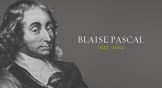
Scribbled Notes: Pascal’s Illumination at the Cross

We are commemorating this month the tercentenary of the death of Blaise Pascal.

Pascal said in his Pensées that the last thing we discover when writing a book, is what to put first. After having devoted some 380 pages to the consideration of the emergence of Pascal’s genius (Pascal: The Emergence of Genius, with an appendix on recent research, Harper Torchbook No. 82, paperback), I came to the sudden realization that, with due respect for the scientific achievements of adolescence and youth, the great divide along the Pascalian quest for truth was marked by a unique experience at the Cross. Only after he had surrendered to that Love which, according to Dante, “moves the sun and the other stars,” did Blaise apprehend in its fullness the truth, the living truth, truth to be done. Only then did the landscape of God’s reality begin to make sense.

In order to secure a glimpse of understanding into this miracle—for a miracle it truly was—let us freely recall that before his ultimate surrender to the Crucified and Living Lord, this amazing genius had, within 15 years, completed the circle of human sciences. At the age of 16, he had produced a treatise on conic sections which had laid down the groundwork for projective geometry. At the age our young people become concerned about College entrance examinations, he had invented and constructed the calculating machine. Having then turned to physics, he had demonstrated the phenomena of atmospheric pressure, brought to naught one of the greatest errors of ancient physics, invented the barometer and the hydraulic press, and formulated with perfect rigor the essentials of scientific methodology. Soon thereafter, during his so-called wordly period, he had given full status to the intuitive function of the mind. Being taken to the gambling table by his new friends had provided him with the opportunity of originating the calculus of probabilities. And yet he remained at sea about the human situation, about what we commonly call the meaning of it all. Hence this uneasiness known as the anguish of Pascal.

What lends so much power to Pascal’s thoughts on what he called “the misery of man without God,” is that he himself experienced that misery during his worldly period. It was then that he confessed to being in “a great abandonment on the side of God.” The total impact of this experience was one of “fear and trembling,” as dramatically expressed in the anguished outcry, “The eternal silence of those infinite spaces frightens me,” perhaps the greatest free verse in world literature in the original French. What kind of a place was this universe? He then could only view it with quiet desperation. “For, I ask, what is man in nature? A nothing compared with the infinite, an all compared with nothing, a mean between nothing and all. Infinitely unable to grasp the extremes, the end of things and their principle are hopelessly hidden from him in an impenetrable secret; for he is equally incapable to see the nothing whence he springs, and the infinite in which he is swallowed up.” Worse yet, just as he is hemmed in between everything and nothing, his human infirmity condemns him to perceive but “the appearance of the middle of things, in an eternal despair of ever knowing either their principle or their end.” Indeed it is at this point that the misery of his pitiable state is laid bare, one of inconsistency, feebleness, corruption, malignity. He is at the mercy of the most deceptive powers, be they imagination, vanity, ennui, pride, self-love, sickness, or any form of blindness. A sense of futility attends his vain efforts at reading the script of his own life.

And yet, the paradox is that his is actually aware of his own misery. He thinks. He desires the good. He loves truth and he loves glory. The fact is, he cannot bear to be despised. Just as there is in him an agonizing anguish at the feeling of being thrown out in the midst of those dumb, and dark, and frightfully infinite spaces, there is an aching anguish of revolt against the unbearable implication of such a lot. A lump chokes his throat, and causes him to set his face against the baleful decree. All this notwithstanding, the measure of human anguish is not yet full. For at the very moment the man without God, weary of conjecture, gropes for some kind of stable certainty, he realizes that time is growing short. Death may be near. The wind of eternity strikes his face. What is the meaning of all this for him? Is there a meaning to it at all. Is there, anywhere, any ultimate sure foundation? Any sense to this striving which does not seem to achieve anything final? What kind of place, this universe? What is a man to do in the situation? These, our questions, are now asked in a minor key. In the words of Pascal:

“We sail over a vast expanse, ever uncertain, ever adrift, carried to and fro. Whatever point we think to fix and fasten ourselves to, shifts and leaves us; and if we pursue it, it escapes our grasp, slips away, fleeing in eternal flight. Nothing stays for us. This is our condition, natural, yet most contrary to our inclination; we have a burning desire to find a sure resting place, and a final fixed basis whereon to build a tower rising to the Infinite; but our whole foundation cracks, and the earth yawns to the abyss.”

The Light of the Bush

At this dark hour of his quest for truth, Pascal turned to the Bible. He opened it at the beginning of John 17 where Jesus is shown preparing himself for his sacrifice on the Cross. Having given up all inclination to struggle, or the slightest pretense to a power he might call his own, he groped for Jesus in order to watch with him. And all of a sudden, during the night of November 23, 1654, his room was flooded by the very light of the bush, that burned and did not burn out. A divine message came to him which he feverishly scribbled on a slip of paper. He afterwards copied the text of this revelation on a parchment which was discovered only after his death, sewn in the lining of his coat. The original slip of paper has been preserved among his manuscripts, at the National Library in Paris. This is the way it begins:

“In the year of grace, 1654, on Monday, 23rd of November.… From about half past ten in the evening until about half past twelve,

Fire

“God of Abraham, God of Isaac, God of Jacob, not of the philosophers and scholars.

“Certitude. Certitude. Feeling. Joy. Peace.

“God of Jesus Christ.… “Forgetfulness of the world and of everything, except God.

“He is to be found only by the ways taught in the Gospel.…

“Joy, joy, joy, tears of joy.…” Beethoven’s Ninth Symphony will not surpass such heights.

Soon after this heavenly vision, Pascal went for a retreat to Port Royal, an institution of a fundamentally biblical character. There, with his brethren in the faith, the Jansenists, he was invited to direct his thoughts towards the mystery of the death of our Lord. The moment, the hallowed moment, came, when he actually heard the Crucified speak to him:

“Console thyself; thou wouldst not be seeking me, had thou not already found me.

“I was thinking of thee in my agony; I have shed such and such drops of blood for thee.…”

Pascal then fell on his knees at the foot of the Cross with the words of utter commitment:

“Lord, I give thee all.”

Calvary the Great Divide

It is as fascinating as profoundly moving, to realize how Calvary marked the great Divide along the path of Pascal’s quest for truth. Henceforth, the genial penitent was given the power to see through the misery of man without God, as well as through the contradictions of the philosophers throughout the ages. His eye beheld the landscape of creation with singleness of purpose, as necessity was laid upon him to enter the lists against the Jesuits, in defense of the Jansenists. Thus his Provincial Letters written in a thoroughly biblical vein, have taken their place as one of the classics of Christian ethics. As a great work of art too. For what is a work of art, if not truth in a beautiful garb? Indeed the Provincial Letters turned out to be the first masterpiece of modern French prose. They moulded that genuine eloquence which makes light of eloquence, in this case, the noble language that Racine and Bossuet were to speak; they gave Molière the model for the most perfect form of wit, and to theologians the model for the most powerful reasoning. Again, the illumination of his mind made of him one of the first Christian laymen. In this capacity, his biblical approach to the cure of soul proved admirable. One immediate reason for this is not far to seek: we only know that which we are. By then, Pascal had become a saint! He practiced those everyday virtues which are the edification of genuine piety. The proud, haughty man of old, had become as humble and submissive as a child. Now a simple penitent, he knew that God owed him nothing but chastisement, and that the slightest good received from on high was by pure grace.

Not that his genius had lost any of its power. One night when he had a violent toothache, he solved the mathematics of the cycloid, which had defeated the specialists since the days of Galileo. Yet he refused to take credit for this achievement, having since the night of the Memorial given up the use of his name. Let us further mention another example of what utter commitment on Calvary can do to illuminate a man’s whole being—mind, soul, and spirit. Shortly before his death, Pascal was standing on his crutches at a street corner in Paris. They had a traffic problem in those days. As he watched people hurry by in all sorts of vehicles, Pascal asked: Why don’t people who go in the same direction travel together? To make a long story short, he “invented” the bus, and organized the first bus company. Whereupon he asked for an advance on his share to send the money to the poor of the Blois region who had suffered from a bitter winter. He loved the poor because Jesus loved them. He wanted to die among them. This privilege having been denied him, he opened his own home to a destitute family. The children of these needy people having been taken ill with smallpox, he refused to let them go. He turned over his house to that family, and went to die in the house of his brother-in-law (August 19, 1662). He was only 39.

The stray bits of paper on which he had scribbled notes in view of a vindication of Christianity, were found in his drawers after his death, with only a beginning of classification. All together, they constitute an unfinished symphony which pertains as much to God as to man. They are now available as one of the truly great books under the title, Pensées—Thoughts.

Once the Crucified and Living Lord has enabled a man to answer with a divine simplicity, his questions, “What kind of place am I in?”, and “What should I do in the situation?”, not only does this man’s mind become illuminated, but his whole being becomes Christ-like. Indeed the ultimate outcome of such a God-inspired quest for truth is the elaboration of character in the most beautiful meaning of the word—that of a Christ-like effigy deep within. And this is holiness. As the Protestant thinker, Alexandre Vinet, feelingly pointed out, it is good that such vocations, such souls as Pascal’s should exist; it is upon such over-abundance of spiritual life that the Christianity of us all is nourished.

EMILE CAILLIET

Princeton, New Jersey

Ideas

Hope in a ‘Post-Christian’ Era

The opinion is current in some Protestant circles today that the tide of history has turned against the Christian church and that the efforts of believers must be directed toward retrenchment or, perhaps ultimately, toward a radical transformation of the gospel message.

What indications are cited in support of this diagnosis? In contrast to the nineteenth century, when Protestantism launched a massive program of world evangelism, Christianity is challenged by the increasing attempt of Eastern religions to “evangelize” the West. Hindu and Buddhist missionaries are now preaching in many American cities. Moslems now worship in an impressive mosque constructed in our nation’s capital. And the tenets of Islam, Buddhism and other world religions are increasingly studied among the peoples of Europe and North America. For these faiths, the task of “enlightening the darkened continents” has just begun.

At the same time, the wavering phalanx of Protestantism has been beleaguered by the astounding growth of the so-called religious “sects.” Our country has itself made room for over 200 of these aberrant denominations, and one of them boasts over 35,000 “missionaries” (not adherents) in the New York metropoliant area alone. In the New York subways the new Swedenborgian Church promotes itself as “a member of the Protestant Council.”

Considered in itself, few would deny that the Protestant church has suffered greatly in the twentieth century. Despite the so-called religious revival of the 1950’s, church identification still means less to many people than it did even a decade or two ago; and membership is beginning to decline numerically. Even more alarming for the organized church is a corresponding decline in the number of candidates presenting themselves for the Protestant ministry. In the Church of England, for instance, the average age of the clergy was over fifty in 1958, yet Anglican seminaries are graduating only 500 students each year to fill an estimated 600 vacancies. Not without cause has the inner vitality of the Protestant church and its relevance to the secular world been called in question.

Has Christianity really had it? Wouldn’t it be wise to accept such a verdict upon history and to desert a sinking ship?

God forbid.

To this increasingly popular diagnosis, believers may first respond by refusing to identify the causes of an established church with the cause of Christianity. When the Gospel first entered the world there were no Presbyterians, Methodists, or Baptists; yet Christianity was vital enough, relevant enough, to transform the Roman world. If God wills, he may pursue his cause without our institutions, even despite them, and achieve his purpose in calling out a people for himself. Christ was speaking to the defenders of “the establishment” when he observed that “God is able of these stones to raise up children unto Abraham.” It would not be an ultimate tragedy, then, if history were to pronounce its quietus on much of what now passes for organized Christianity. Christianity itself would nonetheless prevail. It would prevail because it is the work of God and not the work of men.

But when we have dissociated the cause of Christianity from the cause of an established church, we open the door for perceiving what is truly of God within historic Protestantism. When we can see beyond “denominational programs” we may note the extent to which the Gospel is faithfully preached and the Christian witness propagated—in our country and abroad. About us we see personalities changed by the power of God’s Spirit. There are repeated indications of revival. Dedicated men and women are giving their lives in obedience to the missionary imperative. The decisive question, and the one which may determine the destiny of the Protestant churches in Europe and America, is whether Christians will be able to distinguish what is genuinely Christian, what is distinctively of God, from the encrustments which seem to embellish but actually impede the Church’s growth.

As the tide of history wrestles with the Church it may perform a valuable service. It may be used of God to strip away the barnacles, to purge us of the dross, and to reveal in increasingly sharp relief the mysterious but dynamic power of God’s Spirit working in our midst.

America has included in its Oath of Allegiance the vivid phrase “one nation under God.” Let us have “one Church under God,” called into being, empowered and sustained by the Holy Spirit alone and dedicated to the directives of Scripture alone. Let us recapture that dynamic of the Christian faith which was characteristic of the apostolic church. Today’s theological world is enamored with the theme of apocalyptic judgment. Let us have judgment on the so-called organized Church. Let the church repent. But let us see what has always been present; namely, the power of God to transform the lives of men, to forgive their sins and to inspire them with a vision of those yet unreached by the Christian gospel.

With such a church God may again demonstrate—as he has repeatedly done on behalf of those who trust him—that his activities with men are not regulated by the so-called historical trends. To a world threatened by the Marxist philosophy the Protestant church could itself be the strongest refutation of a deterministic concept of history. Our God is the God of history, the Lord of every event. “Behold, the Lord’s hand is not shortened that it cannot save; neither is his ear heavy that it cannot hear.”

If the trends of history are not irreversable, the challenge which confronts the church may be used of God for her inward renewal. God may even revitalize human institutional structures if they are placed at his disposal, and if we consider them dispensable. If Toynbee is right when he observes that the dynamic of history may be understood as “challenge and response,” then every historical challenge may be expected to present its own opportunity. Only let us see the challenge as one given by God and as an opportunity for all who will answer it by faith.

Ours is a new bold age for religious dialogue. “For the first time in history,” as Gordon Gould has observed, “all faiths, ideas, and ideologies are forced to compete with one another in the open marketplace of the human soul.” In such open competition, evangelicals may sense an opportunity to present the case for biblical theism and to display the vitality of revealed religion with new vigor and new hope.

Faulkner’S Death Coincides With Decline Of The Novel

William Faulkner, who was hailed by many as the greatest novelist of the twentieth century, wrote a dense, labyrinthine, but emotionally electrifying prose. In novels like The Sound and the Fury, Absalom, Absalom! and Requiem for a Nun he set the tone for a generation of American novelists. Strangely enough, his death comes at a time when interest in the novel appears to be declining. Magazines like the Saturday Evening Post, long noted for their fiction, are expanding their use of short stories and feature articles in preference to more extended compositions. Moreover, the decline of interest in the novel seems to disclose a decline in the art form itself.

Through its denial of eternal values and a preoccupation with ignoble subjects, defended as reflections of “real life,” the novel has departed in our day from two elements which the eighteenth and nineteenth centuries generally considered essential to a great work of art—a certain idealism as reflected in a choice of themes and characters and a prevailing interest in the transcendent dimension of life. One only needs to reflect on the heroic character of Ahab in Moby Dick, on Peter and Prince Andre in War and Peace, on the Deersla-yer and on Thackeray’s Amelia to recognize the important place which evil, virtue, the purpose and activity of God, redemption and many other “eternal” themes have had in making these classics great. These themes figure highly in the Bible. Can a novel which overlooks them or which buries such concerns in the trivial and base lay claim to enduring interest and attention?

We do not suggest that the novel is doomed to extinction. But it needs to be reborn. It needs new life, a new understanding of its function. Couldn’t a Christian writer show the way? More than ever today there is need for a great Christian novel.

The Oncoming Generation: Two Went West; One Hung Up

Children can be more eloquent in expressing the human hopes and tragedies of an age than the most articulate philosophers. For Americans the future has traditionally been a land of bright hope and beckoning promise. It drew the early Americans into vast frontiers of unyielding forests to carve an empire beyond their wildest, brightest hopes. This spirit is not yet dead.

Recently The Washington Post carried a story of a 12-year-old boy and his 8-year-old brother who in the face of disappointment decided to strike for the West and better things. Told that the family plans to move to a farm in Arkansas had been delayed, they left home together, taking with them only homemade fishing poles, 16 cents, their dog, and the bright dreams of a better future. Left on a bed was a note to Mom and Dad which said: “If you go on with the plans about the farm, you will see us there in 1964.” By such an amazingly confident and venturesome spirit, America was built. Though the builders were older, their deeds could hardly equal the eloquence of these two American youngsters.

But children, just because they are children, can speak also the language of tragedy with unequaled eloquence. The same day, the same newspaper reported that an Alexandria telephone operator heard a small voice over the line asking for help, and for a policeman. A calm, small voice told the operator: “There’s blood all over my mommy’s bedroom.… Mommy said something to me, but now she doesn’t talk anymore.” “How old are you?” asked the operator. “Six,” Clancy replied. He was asked to hold on until the police came. When a policeman came, the child and his four-year-old sister opened the door. Returning to the phone young Clancy told the operator: “Thank you, a policeman is here”—and hung up.

The eloquence of children speaking of hope and tragedy cannot be surpassed—just because they are children they convey a poignancy which grownups, though they be philosophers or poets, cannot exceed. And what grownup could really scold the two who left disappointment behind and went West, or the one who remained with the blood and “hung up”?

Telstar Launching Suggests Fulfillment Of Bible Prophecy

For centuries the prediction of John in the Revelation—“behold, he cometh with clouds; and every eye shall see him” (1:7)—has captured and puzzled the imagination of those who know John’s prophecy. In a world in which space and time seem insurmountable factors, how can “every eye” see Him when He comes? Defenders of Scripture have only been able to answer that God has a way. Doubt has varied from “spiritualization” of this assertion to a frank denial of its possibility, even to doubt that Christ will return at all.

Now “Telstar” has been launched, and suddenly the world is alive with the possibilities for mass communication. The first experimentations have been amazingly successful. That this is only the beginning of a world-wide network of television broadcasts seems a certainty. Thus, seemingly overnight, technology has demonstrated the possibility of a fulfillment of John’s prophecy, not as poetry, but literally and in precise detail.

World-wide evangelization is also a biblical prophecy. Now the evangelization of the world by radio and television is within sight of actual achievement, and mission boards should be keenly alert to the possibilities opened up by this new technological advance. Once again time has demonstrated the possibility of a literal fulfillment of prophecies for long thought unrealistic. So it is. So it will continue, until the Word of God stands forth—accurate, authoritative and fulfilled in its least detail.

The Lure Of American Money And Our Confused World Image

Inconsistencies in American foreign aid ought to embarrass national policy-makers, even if they remain unperturbed. Daily newspapers simultaneously trumpeted three items: (1) After Peruvian armed forces staged a bloodless coup, the U.S. suspended diplomatic relations and interrupted further commitments under the Alliance for Progress; (2) Senate and House conferees approved President Kennedy’s requested leeway to give or lend any aid (except surplus farm commodities) to Communist nations such as Poland and Yugoslavia; (3) A compromise bill now before Congress includes President Kennedy’s request for authority to buy up to half of a $200 million bond issue of the financially wobbly United Nations. It seems that the only line to form on the right in Washington is the endless parade of handout seekers.

Labor Sunday Message Has A Strange ‘Gospel’

The National Council of Churches is requesting member churches to read from their pulpits a 1962 Labor Sunday document approved by the Executive Board for the Division of Christian Life and Work. The message contains many good points. But certain deviations can hardly be traced to the Founder of the Christian religion. The Church is indeed called to minister to the poor. But the N.C.C. message pledges her also to work for abolishing poverty around the world, to explore wider social insurance against the exigencies of unemployment and old age and more nearly universal coverage of workers through minimum wage laws.

Supportive texts—if they are anywhere to be found—might read something like “the poor ye shall no longer have with you,” “give us today our future bread,” and “be discontent with your wages.” Their motivation derives, of course, not from Jesus Christ but from modern seers of the social order. Interestingly enough, the N.C.C. document declares point blank that God has given the Church the responsibility for eradicating poverty “at home and abroad.”

This revision of the Church’s mission brings to mind a meeting sponsored by the Albany Area (New York) Council of Churches and the National Council recently on the subject of unemployment. At the session’s close the chairman asked everyone in attendance to join in reading a prayer containing these words:

O righteous God, we acknowledge our common guilt for the disorder of our industry which thrusts even willing workers into the degradation of idleness and want, and teaches some to love the sloth they once feared and hated.

We remember also with sorrow and compassion the idle rich.… Forgive them for loading the burden of their support on the bent shoulders of the working world.… Grant them strength of soul to rise from their silken shame and to give their brothers a just return of labor for the bread they eat.…

The prayer had not a word of rebuke for labor, not a word of commendation for industry. Used because of “the pertinency of this prayer to our times,” it was borrowed actually from a work of Walter Rauschenbush published in 1925. CHRISTIANITY TODAY thinks that the judgment of the Bible needs to be applied to both management and labor, to both rich and poor. When the scales are as unbalanced as in this instance, partisan propaganda has usurped the ministry of the Gospel.

Labor Sunday 1962 offers more than an occasion to interpret the Christian meaning of work; it affords an opportunity also for the churches to set their ministry squarely in the context of biblical imperatives.

Time To Recapture The Joy Of Labor

Labor has come a long way since the day of child labor and the sweatshop. Yet all the improvements in working conditions, shorter days, higher wages, fringe benefits, increased security through organization, seem not to have brought an increase in the pleasure of labor. Featherbedding, goldbricking, organized insistence on a 25-hour work week (with 40 hours of pay) suggest that men desire the products of labor but dislike the activity which produces them. While many fight for right to work laws, fewer people seem to enjoy any exercise of the right.

Americans need to recall the decade of the Thirties when an economic depression revealed the utterly demoralizing effect of unemployment. Unable to find work, men felt meaning and purpose drain from life. The young who regard it as something to be avoided as far as possible, wait too long if they wait until the age of forced retirement to discover the sheer joy of work.

In biblical thought labor is not untouched with sweat and anguish, but the Bible cannot be summoned to support the notion that labor itself is an evil, undesirable thing. Labor in 1962 faces greater problems than ever before in history as the threat of automation is added to a seemingly insoluble unemployment problem. Yet labor will lose everything if in its problemsolving process it loses the joy and dignity of labor. This is a matter of the heart and spirit of a man, a matter that cannot be solved by labor legislation or gains at the collective bargaining table, a matter worthy of reflection as America again celebrates Labor Day.

40: Death and Immortality

Death is a universal experience, yet men will not think about it until compelled to. They plead that death is incomprehensible, that there is no evidence of survival after death. They are offended by the thought of hell and embarrassed by the thought of heaven. The triumphs of modern science and the secular and atheistic philosophies of life and of the state have produced this reaction. The weakening of man’s personal dignity, wholesale extermination by means of the atom bomb, slave labor camps, the secularization of human life, have blurred the concept of eternal life. Many, including religious people, are not interested in, attracted by, or concerned about, a future life. Belief in immortality may not have been extinguished but it has been eclipsed.

Meantime, death remains an ineffaceably solemn fact. Why? Because of the relation between death and sin. Men die because of sin. Man’s creation in the imago Dei probably implies a relation between God and man in which death had no part. Man was not originally immortal; death is not now inescapable, but it was probably inoperative in man’s original perfection. But with sin came death. Death is inevitable not because man is a creature of nature but because he is a sinner. Sin makes death a “bondage of corruption” and gives it its painful power and penal character. Death being separation from God (Ps. 88:3–5; Isa. 38:9–20) is both a physical and a spiritual event. Christ triumphed over sin by triumphing over death. Sin’s curse “compelled” Christ to die a death that destroyed death and him who had power over death. Death’s solemnity stems from its connection with sin.

This solemnity arises from man’s ineradicable conviction that he survives death. In spite of death’s inevitability and seeming finality, man knows he is deathless. In their best moments even agnostics and rationalists find their certainty of extinction after death fading. Belief in survival after death is not only universal but very ancient. The Egyptians held it; in Greece it was adopted by the Orphics, from whom Plato received it; the Hebrews accepted it; Jews in Christ’s day held it; Christianity has always believed it; and for primitive man, too, immortality was a certainty, not a conjecture. Survival after death was how man interpreted the ineradicable intuition rooted in the imperishable core of his being.

Yet there is no scientific “proof” or material knowledge of immortality. The belief cannot be based upon scientific discovery or philosophical conclusions. Life after death belongs to a realm of experience of which science knows nothing. Even the psychical researches of the spiritists have produced little of real value. Their claim to have proved the soul’s survival after death is not made out. Certainty of identification of any disembodied spirit is rarely claimed.

Is there, then, no certainty of hope of immortality? There are three considerations. (1) Man’s personality. Doubt that there exists as the core of the personality a persistent entity called the soul or the self is a rejection which goes back to David Hume. For Bertrand Russell “the most essential thing in the continuity of a person is memory.” If then memory does not survive death the hope of immortality is groundless. Personal identity and continuity in life after death imply memory since, if a person’s memories of life on earth are eliminated at death, he would not be the person identical with the earthly counterpart. But since memory is closely connected with the brain memory should disappear when the brain disintegrates, hence belief in immortality has no scientific basis. But this ancient objection assumes that the brain is causally related to the mind; in fact science does not know how they are related. At best scientific evidence against immortality is negative in that the evidence against it is not forthcoming.

(2) Man’s rationality. Mind and body are interdependent but does a physiological change in the brain produce thought? If so, how do physical changes produce psychical phenomena? Materialists answer that man’s mental life springs from entirely physical changes but that this causality does not work in reverse. Some psychologists reply that mental and physical events are not interdependent; at best there is a correspondence between them. Others suppose an interaction between the physical and psychical. That is, the first view denies life after death; the other two, especially the third, support such a hope by implying that mind is a higher mode of existence than body and is not necessarily dependent on the physical organism for existence.

(3) Man’s morality. Since the source and satisfaction of moral principles transcend this time-space world they commit men to living as if they were immortal. Morality means that if man is not immortal then he ought to be. Morality is a guarantee that life is worth living. But this also means that religious faith is an indispensable factor in the hope of immortality. Faith in God commits one to the belief that the universe is rational and moral, that it is on the side of justice and truth, and that in a life beyond death evil and good shall receive their just reward. Faith finds in the revelation of God to the Hebrews and through Christ God’s pledge and promise that life survives death. Several things call for attention here.

Scripture. (1) Immortality in the Old Testament. There death as well as life involves men in relations with God. At death the body remained on earth, the nephesh passed into Sheol (Isa. 38:17; Pss. 16:10; 86:13), but the breath, spirit or ruach, returned to God (Eccl. 12:7) not Sheol. But in Sheol, a place of darkness, silence and forgetfulness, life was foreboding and shadowy. In spite of consciousness, activity and memory the “dead” subsisted rather than existed (Job 10:21 f; Pss. 39:12 f.; 115:17 f., Isa. 14:9–12). Death was a passing beyond Jehovah’s hand (Isa. 38:10 f., 18) for ever (Job 7:9), hence the despair in Psalm 88:10–12, and the not very bright hope in Job 7:9. Sheol had little religious significance. The prophets are all but silent on the subject although when the hope of individual immortality clarified, the prophetic insistence on the value of the individual contributed to the hope. But through the dark despair attaching to life in Sheol gleams of hope appear (Pss. 16:8–11; 73:23 f.). God’s presence, providence and guidance throughout life guarantees that death is not extinction. “Afterward thou wilt receive me into glory.” Belief in immortality springs from faith in God, from the nature and fidelity of the God with whom one fellowships daily.

(2) In the apocryphal (cf. 2 Esdras 7:43; Wisdom 9:17) and apocalyptic literature the hope of immortality is clarified still further. When the resurrection was more clearly formulated the question of the dead sharing Messiah’s Kingdom was raised. Would the body be raised along with the soul and spirit, and would it be identical with the earthly? The answer was that the resurrected would have angelic bodies (Enoch 51:4; 62:15 f.). Here also the fusing of Jewish national and individual hopes of immortality was effected.

(3) Jesus’ argument against the Sadduces (Mark 12:18–27). It is really based on Psalm 73:23 f. The Sadducees rejected belief in immortality on the assumption that life after death would be merely continuous with the life in this world. In reply Christ says two significant things, (a) Life after death is different from life in this world. After death men will be “as the angels”; therefore marriage, for example, in the hereafter becomes unthinkable. To reject belief in this new mode of existence is “not to know the power of God.” (b) The Sadducean rejection also revealed ignorance of “the Scriptures.” The presuppositions from which belief in immortality springs have been present from the patriarchal period. The God of Abraham, Isaac and Jacob is the God of the living, which includes the “dead” patriarchs. God called them into fellowship with himself; therefore they were dear to him, hence he could not possibly leave them in the dust. That is, Christ based belief in immortality upon God’s faithfulness, the only finally valid argument for life after death. The only alternative is to deny its premises.

(4) The Church argued from the same ground. Why was Christ’s resurrection the ground of the Christian’s resurrection (1 Cor. 15:20–22; 6:14; 2 Cor. 4:14; Rom. 8:11)? Because God loosed the bonds of death from Jesus since “it was not possible that he should be holden of it” (Acts 2:24). Otherwise God’s own nature, his sure mercies towards his own, the meaningfulness of the Incarnation, would have been denied. So Christ’s resurrection guarantees the Christian’s immortality since Christ pledged him a share in his risen life (John 14:1–3) and joined him to himself by unbreakable bonds (John 6:39, 40, 44, 54). That is, the Christian’s belief in immortality, Christ’s resurrection, and the Old Testament patriarchs’ hope, all stand on the same foundation.

(5) Natural immortality and eternal life are not synonymous. The first makes it possible to receive the latter, which is God’s gift. Eternal life is both infinity and a quality of life. It is life lived now but in a new dimension (Rom. 14:17; Col. 1:13; 2:12 f.; 3:1 f.). It consists in a knowledge of God (John 17:3; 5:24) which though imperfect is true. It is heart knowledge not head knowledge. In this world it issues in morality in that it issues in love (1 John 3:14); in the hereafter it will find an environment consistent with itself and will issue in absolute perfection.

(6) Judaism teaches that the dead are in Sheol awaiting resurrection, or are in an intermediate state of imperfect bliss, or are already in the kingdom though not till the Last Day do they attain to perfect bliss. Here again Judaism insists upon the immortality of the community and the individual; without the former the latter is imperfect. In orthodox Christianity the dead, redeemed and unredeemed, are in their final abode, and are disincarnate until the general resurrection when their mortal shall put on immortality. Both Jesus and the New Testament church treated the present condition of the dead with marked reserve. Although in heaven or hell (Luke 16:19 ff.) their fate is declared only at the judgment (Matt. 25:31 ff.). The Christian at death confidently resigns his spirit to the Father (Luke 23:46) and enters the blessedness of fellowship with him (Luke 23:42 f.; Phil. 1:23). Neither the Roman doctrine of purgatory nor intercession for the dead has any biblical foundation.

Resurrection. The resurrection impinges upon the subject of immortality. In the future state existence will not be patterned upon the Hebraic hope nor upon the Hellenic divorce between the spiritual and the physical. Continuity and identity, some form of physical likeness, an assurance of mutual recognition, are implied in the phrase “a spiritual body.” The continuity and identity may be in moral personality rather than in material particles, but a “bodily” form “as the angels” (Mark 12:25), infinity with loss of finitude, is assured. Scientific study and philosophical thought today support the credibility of this hope. No longer is personality divorced from the physical organism. Matter is energy organizing itself in particular patterns. The body is not identical with a particular collection of molecules. Through a seven years’ mutational period the body remains identically itself, not because material particles are immutable but because they are organized after the principle of the body’s self-identity. The body is essential to the self. Consciousness involves body as well as mind. The physical body’s identity and continuity with the spiritual body, and the transmutation that will be involved is “a mystery,” but a relation between the self here and the self there is certain. “The law of the spirit of life” is now operative in the body. “This mortal” is significant for the future “immortality.” It secures not only survival of the soul but the future life of the whole man, the restoration and recognizability of the total personality, clothed in “a spiritual body.”

Destiny. If, then, our continuity and identity between this life and the hereafter is primarily moral this world must be moral, and this life must be a period of probation. Moral choices between right and wrong determine character and eternal destiny. After death we shall be seen for what we are, and judged for what we have become as moral personalities. Christ taught the possibility of the loss of the soul in hell. All will not end well irrespective of choice and conduct. Hell is the sinful self existing in separation from God since man, being moral and spiritual, can find no satisfaction except in God. To reject the gift God desires to give—himself—is the fire that dieth not. But this is self-inflicted alienation. Darkness is given to those who prefer it. By contrast heaven is the beatific vision, ever deeper communion with God, the perfection of God’s image, the fulfillment of spiritual nature, the maturing of higher capacities, the perfection in holiness, “serving God day and night.” Death, then, is the most solemn crisis of the soul, the entrance to judgment, the step into eternity. If in this life only we have hope, death is terrible tragedy, unrelieved pessimism, the dark night of the soul. If Christ is our hope, death has already lost its dominion (Rom. 8:2), it is the threshold of life; death is “present with the Lord” and reunion with the blessed dead in communion with whom the beatific vision will be shared.

Bibliography: C. R. Smith, The Bible Doctrine of the Hereafter; J. Baillie, And the Life Everlasting; W. A. Brown, The Christian Hope; C. Allington, The Life Everlasting; W. R. Matthews, The Hope of Immortality; W. Milligan, The Resurrection of our Lord; M. Ramsey, The Resurrection of Christ; J. Denney, Studies in Theology; H. V. Hodson, ed., The Great Mystery of the Hereafter.

Minister

St. David’s Church

Knightswood, Glasgow, Scotland

Faith and the Supernatural

Surrounded by the natural, the explainable, and the obvious, even the Christian may fail to appreciate that the God in whom he trusts is supernatural, that his Son is the supernatural Saviour and that the Holy Spirit is supernatural in his being, presence and power.

But such is the case and the more we realize this fact the greater our comfort, hope, and usefulness as Christians.

There is not a moment of our lives that we do not, consciously or unconsciously, exercise faith-in a person, an object or a law. This is based on our confidence in and experience with the person or situation before us. We sit in a chair because we believe it will bear our weight. We ride in an elevator because we believe it is constructed and maintained to carry people safely from one floor to another. We ride in an automobile because we have confidence that it can take us to our destination.

In fact, every phase of our daily lives is predicated on faith. That these objects of our confidence are real and generally trustworthy is an unending source of comfort and satisfaction. Remove such confidence and life becomes a nightmare.

But for the Christian there exists a greater source of confidence, inexhaustible in its help, comfort and blessing. Our confidence is in God and all that implies. David in Psalm 40:4 says: “Blessed is that man that maketh the Lord his trust …” It is God, the sovereign, omnipotent, omniscient and omnipresent God—the one who is loving, kind and gracious—in whom we can trust.

How can natural man discover the fact of the supernatural and act thereon? Only by the Spirit of the living God can these things assume their proper relationship in our lives and this comes through an act of faith alone.

David, a “man after God’s own heart,” a sinner transformed to saint through a penitent and believing heart, wrote these words in his later years: “For thou art my hope, O Lord God: thou art my trust from my youth” (Ps. 71:5).

Such confidence is needed today, and it comes to those who turn in faith to the One who is altogether trustworthy.

“Trust” is a wonderful word. It carries with it the connotation of “refuge”—a place of safety, peace and calm in the midst of stress and danger.

Has there ever lived a generation more needy in this respect? We see a world in chaos, directed in large measure by men who leave God out of their reckoning. We see scientific achievements which stagger the imagination, along with moral and spiritual poverty even more staggering in its effect on the world.

We look at the waves of uncertainty and hear the winds of perversity and are prone to forget that God is still sovereign and that those who put their trust in him will never be ashamed.

All are aware of the natural world in which we live and the natural phenomena by which we are surrounded, and we regard these as determinative and final. What a tragic mistake! Our hope is in the supernatural One and we are indwelt by and surrounded by his supernatural presence.

The writer of Proverbs 28:5 places the world and the divine order in their proper perspectives: “Evil men understand not judgment: but they that seek the LORD understand all things.” This does not claim omnipotence for the Christian but it does proclaim the omnipotence of his God and his willingness to guide those who put their trust in him.

One of the characteristics of our times is the fear of man. We are fearful what politicians may do to our own land. We fear what the Communists are doing around the world. We fear any number of man-made sources of unrest and uncertainty. But the Bible tells us: “The fear of man bringeth a snare: but whoso putteth his trust in the LORD shall be safe” (Prov. 29:25).

Unregenerate man is always a potential menace for he is actuated by motives independent of godly control. Fear of what he may do, or has already done, is a constant source of personal and world unrest.

But this should not affect the Christian, so far as tranquility of mind is concerned. He must look beyond natural, unregenerate man, to the supernatural God and his power to save, guide and keep.

Our Lord gives us the true perspective in these words: “And fear not them which kill the body, but are not able to kill the soul: but rather fear him which is able to destroy both the soul and body in hell” (Matt. 10:28).

While we are dealing with God who is supernatural, we are also surrounded by the machination of Satan who is also supernatural in his presence and power, although limited by God’s decree.

The supernatural forces of evil make imperative for us the presence of the Spirit of God in our hearts, supernatural in being and power, who can transform us into the likeness of Christ, while protecting us from evil.

To deny the supernatural is folly; to underestimate its place in our lives is to be unrealistic; to step out in faith in God and all of his promises is not only our privilege, it is our duty.

Belief in God’s supernaturalness is an essential part of the Christian faith. From such belief proceeds those practical benefits without which Christianity has no essential reality.

No man has seen God at any time. His Son came into this world and died centuries ago. The Holy Spirit is real but he is invisible. Only by faith do we see God revealed in Christ. Only by faith do we accept his Son. Only by faith do we sense the presence of his Spirit.

But lack of material evidence in no way invalidates the reality of God. He who is a Spirit must be worshiped in spirit and in truth. This remains outside the realm of what the world calls natural.

Paul expresses the thought in these words: “Blessed be the God and Father of our Lord Jesus Christ, who hath blessed us with all spiritual blessings in heavenly places in Christ” (Eph. 1:3). It is obvious that we are dealing with those supernatural realities which proceed from faith, supernatural in their origin while often most tangible in their results.

The prophet Isaiah clearly shows the difference between those who walk in the light of the supernatural God and those who walk merely by human sight: “Who is among you that feareth the LORD, that obeyeth the voice of his servant, that walketh in darkness, and hath no light? let him trust in the name of the LORD, and stay upon his God.” And then the contrast: “Behold, all ye that kindle a fire, that compass yourselves about with sparks: walk in the light of your fire, and in the sparks that ye have kindled. This shall ye have of mine hand; ye shall lie down in sorrow” (Isa. 50:10, 11).

Failure to walk by faith in the light of God’s supernatural being and presence brings sorrow, frustration and confusion.

But for those who by faith live in the conscious presence of the eternal God there is peace of heart and purpose of living.

Eutychus and His Kin: August 3, 1962

Pilgrim’S Analysis

Eutychus Associates, meeting in emergency session, have adopted a crash program to save Christianity Today from becoming Christianity Yesterday. (According to Time magazine, a tart Barth retort threatened the change of name. A little attention to the vocabulary of Ecclesian could have avoided this critical situation. According to Time, for example, you took “a rough swipe” at clerical complacency in a recent editorial. Small wonder that you are “often irritating.” Have you forgotten that where there’s smoke there must be filters? If you would only “fill a charismatic role by challenging irenic ministerial koinonia to a more dynamic confrontal,” instead of taking “rough swipes,” you wouldn’t irritate anyone. The first phase of our program is a summer course in Ecclesian for your staff.

A second problem is your theology. Time doesn’t mind your being alert, literate, and highbrow, but it doesn’t see any future in your fundamentalism. Here you could take a cue from a profile of a wealthy Anglican priest that appears on the same page with Time’s report on CT. The Reverend Timothy Wentworth Beaumont says, “We need to purge the Gospels of out-of-date accretions and produce an act of worship in modern idiom.” Perhaps you could employ Mr. Beaumont to edit CT, or if he is too busy with his other publishing activities, at least to edit the Gospels. The older critical editions are quite out of date now. A Unitarian minister recently suggested a loose-leaf Bible. That might be best, though it could be difficult to keep the Gospels up-to-date on a fortnightly basis.

The third phase of our program is the most important. If you are to reflect Christianity today, you need a foundation grant for behavioral research. What scientific studies have you made to discover what kind of Christianity exists today, or what kind your readers want? Our panel of associated sociologists, social psychologists, and psycho-socialists can provide you with leading questions for such a survey: Does the church of your choice really fit your personality?

EUTYCHUS (TODAY)

Karl Barth

Concerning the editorial on “The Enigma in Barth” (June 8 issue) … how does one in this case determine which verse or passage is a theological error and which is theological truth? There is no way on the basis of human intellectuality to do so. In the first place because there is no such thing as theological truth. In the second place the discernment is to be between theological error or half-truth or part-truth, and the whole revealed truth of God; such truth is not theological but is God’s revealed truth. And no one may know which is which except with full commitment of his understanding to the Spirit of God.… He can witness to what he knows by experience and that is as far as he can go. That was ar far as the prophets and the apostles could go. They were called to be witnesses, not teachers, other than to match as closely as possible the experience of others with their own experience of God.…

I regard it as an unfair presumption to posit an enigma in Barth, simply because he has failed as all theologians have failed and will fail, to find an adequate method of knowing the Word of God on the basis of human understanding and experience, separated from the Spirit of God. Has he “made it the aim of his life to defend the independence of theology?” Then he has not come any closer to God with his positive technique than he was in liberalism with the negative technique; for no matter how carefully one tries to formulate a theology “entirely from the Word of God,” there is that problem of separating the Word of God from the ancient theologies that it sought to answer and to correct. By human endeavor and with all sincerity and honesty, the best of man’s thinking is incapable and inadequate for doing what only the Holy Spirit is to do.…

THOMAS D. HERSEY

The Methodist Church

Norway, Iowa

The issue of the Bible’s specific authority is not settled. It may be that neither camp has hitherto developed the insight and language to express properly what at this place has to be confessed.…

My father has never said either in his Dogmatics or in the panel discussions in Chicago that the Bible docs err. CHRISTIANITY TODAY always gave the impression as if in so many words he had said precisely this.… As I remember, he spoke of “tension, contradictions and—perhaps—even errors that might be found in the Bible.” It seems to me that, since we are not seated in judgment above both God and the Bible, we are not qualified to adjudicate either way: the Bible contains, or contains not, any errors. God only can know this. Whether by error in all quarters the same thing is understood, is a problem at any rate. The hare a ruminant? One or two angels sitting or standing at the tomb? Virgin Birth and Bodily Resurrection? A lot depends on whether or not he who speaks in a negative or positive way of errors has made it very clear to all concerned what he meant by that word.…

MARKUS BARTH

The Divinity School

The University of Chicago

Chicago, Ill.

• Not only Karl Barth’s references to contradictions in the Bible, but his refusal to identify, any part of the Bible with divine revelation are part of the controversy. He writes: “We do the Bible a poor honour … when we directly identify it … with revelation itself” (Church Dogmatics, I/1, p. 126). “We distinguish the Bible as such from revelation” (I/2, p. 463). “The Bible “witnesses to God’s revelation.… The Bible is not a book of oracles” (p. 507). Contrast the Apostle Paul: “The Jews were entrusted with the oracles of God” (Rom. 3:2, NEB). Barth again: “The vulnerability of the Bible, i.e., its capacity for error, also extends to its religious or theological content” (p. 509). “Paul did not speak of verbal inspiredness” (p. 518). But contrast 1 Thessalonians 2:13: “We thank God continually, because when we handed on God’s message, you received it, not as the word of men, but as what it truly is, the very word of God …” (cf. 2 Tim. 3:16NEB)—ED.

I, for one, would be careful not to dismiss a man of Barth’s caliber (and any other for that matter) because his “system” has, from my perspective, a fundamental contradiction in it. It would seem that Barth might be speaking out of two very real and sincere convictions, both motivated by God’s Holy Spirit. One, that the Bible is, indeed, the sole source of Christian theology. Two, that he, as a Christian, must be intellectually honest with God in order to be truly in fellowship.…, even if it involves seeing errors and contradictions in Scripture. I I am sure this is why Barth will not let himself say, as you would seem to like to have him say, that the Bible alone is the Word of God. I am pleased that he will not sacrifice honesty for the sake of a “system”.…

CHARLES O. DUNDAS

The Methodist Church

Houston, Minn.

Although I find myself radically opposed to Barth, on philosophical grounds, I wonder if you have been fair to him.… If revelation is the setting forth of certain propositional statements about the nature of God, man and nature, then the Bible or the Koran either is or is not a completely trustworthy account of those statements. If it is not, you are quite right in stating that one then must bring to bear some extra-canonical criterion of Truth to determine which are and which are not trustworthy.

However, it seems to me that you are trapped by your insistence that revelation is propositional in character and that the propositions have the eternal character of the Aristotelian categories or the Platonic Forms. If the God of Israel is the Living God which is surely the testimony of Scripture, then revelation has the character which it has between persons—a progressive unveiling of character.

ROY E. LE MOINE

Columbus, Ga.

• Our Lord said: “So long as heaven and earth endure, not a letter, not a stroke, will disappear from the Law until all that must happen has happened” (Matt. 5:18, NEB); “I am not myself the source of the words I speak to you: it is the Father who dwells in me doing His own work” (John 14:10, NEB). The absolute contrast between personal and propositional-verbal revelation is not found in the Bible, but is rooted in contemporary religious philosophy.—ED.

Barth’s doctrine of Scripture makes for a magnanimity, but the doctrine of biblical infallibility makes for pusillanimity. Barth has a word for all Christians, but the inerrantists are in monologue. Barth is devoutly humble, but biblicist rationalism erodes both humility and true devotion.…

Are we to depend on nothing that contains errors? If the Bible has errors, is it therefore undependable—is the child not to depend upon the father because the father is imperfect?…

Barth’s doctrine of Scripture … I have often used: “The Bible is a pointer, a fitting instrument to point men to God, who alone is infallible.” Whole sectors of modern life are open for the Christian witness by this approach, whereas the dogmatic approach produces an isolationist pride that cannot hold dialogue with the world because, like communism, it is not really listening.

WILLIS E. ELLIOTT

Office of Evangelism Literature Secy.

The United Church of Christ

Cleveland, Ohio

• Even taken pragmatically, an authoritative “the Bible says” still seems a more potent evangelistic weapon (in the Graham crusades) than the plea that a “fallible Bible” witnesses to an infallible God.—ED.

The thing which makes the Bible unique, trustworthy and transcendent above other literature is not its freedom from “inherent fallibilities,” but the gripping realization that this book is a first-hand record of the One who is ultimately and universally “Truth”.…

We are dealing with the magnificence of a Being who is greater than human concept or definition.…

E. C. CREECH

Portland, Ore.

Your criticism of Karl Barth … is sort of like the moon calling the sun inadequate. If we shoot down Professor Barth on the grounds of scriptural authority, we must also shoot down Martin Luther and hence the whole Reformation.

Barth stands clearly in the light of the Reformers, including Luther, who defined the Word of God as, “That living, time-transcending approach of God to man, climaxed in Jesus Christ, and continuing through the Holy Spirit.” Here we find no reference to the Word of God being identified with an “infallible” Bible.… The infallibility of the Bible is not a Reformation doctrine.…

God’s Holy Truth is self-authenticating to the human mind and spirit. Such majesty and omniscience has no need of an infallible medium through which to pass and in which to work.…

GILES E. STAGNER

First Methodist Church

Peabody, Kan.

• Luther writes: “Not only the words, but also the diction used by the Holy Ghost and the Scripture is divine …”; “You should so deal with Scripture that you believe that God Himself is speaking …”; “… We refer all of Scripture to the Holy Ghost …”; “God’s will is completely contained therein, so that we must constantly go back to them. Nothing should be presented which is not confirmed by the authority of both Testaments and agrees with them. It cannot be otherwise, for the Scriptures are divine; in them God speaks and they are His Word …”; “The saints were subject to error in their writings and to sin in their lives; Scripture cannot err” (quoted by M. Reu, Luther and the Scriptures [Wartburg Press, 1944], pp. 58, 92, 63, 17, 35).—ED.

No Abdication Here

I was happy to read Dr. Carnell’s statement of clarification … as quoted by Dr. Harold Lindsell (Eutychus, June 8 issue), for I too had misunderstood his stand.

I came from the panel discussions with almost the same opinion as that expressed by Dr. Clark (May 11 issue). When Dr. Carnell failed to raise what he called the many “corollary questions” that Dr. Barth’s answer brought to mind, I was discouraged. If only he had raised even the one crucial question as to criteria … then my mind would have been set at ease.

Instead, he thanked Dr. Barth earnestly for his honesty and forthrightness, and left the whole issue there just begging for an answer.

I honestly felt that something had happened and that, in failing to defend it, Dr. Carnell had abdicated the orthodox position by default.

But it was not that at all! It was a mechanical thing—a concern over time and arrangements with the University. If only the audience had been told this.

JOHN F. JAMIESON

First United Presbyterian Church

East Chicago, Ind.

Like Real Gone!

Man, that Leitch fellow, in his review of Salinger’s Franny and Zooey and The Catcher in the Rye (Current Religious Thought, June 22 issue) really sent me—way out—looking, looking for the answer to his question, “Just how do we make the Gospel break into all that worldly conditioning?”

May I suggest to bugged Mr. Leitch that he can get some help from reading another book, The Church’s Mission to the Educated American by J. H. Nederhood (Eerdmans). Chapter V … [titled] “The Church as Mission and the Educated: The Approach” might give him some confidence and hope. It did for me.

R. F. REHMER

University Lutheran All-Student Church

Purdue University

West Lafayette, Ind.

Nae On Communism

Your otherwise very fine coverage of the NAE convention (News, Apr. 27 issue) omitted one sentence from our resolution on communism and thereby failed to convey the true position of our organization. The omitted opening sentence stated “Whereas communism and Christianity are both life related movements, the National Association of Evangelicals believes that the church must speak to the subject directly.”

The NAE has an aggressive program in this field known as “Freedom through Faith” and endeavors to help the church meet squarely the issues presented by atheistic communism. As our resolution stated, we feel that this must be done in relationship to the total ministry of the church and that a spiritual awakening “is the most effective way to combat communism.”

GEORGE L. FORD

Executive Director

National Association of Evangelicals

Wheaton, Ill.

Heaven: By Imputation Only

Concerning “The Perseverance of the Saints” (May 25 issue):

The arguments on every side

Rage on and still, I will confide,

Leave me confused, my simple brain

Cannot discern nor ascertain

Who is correct and who is wrong,

Whose side is weak, whose side is strong.

The Calvinist with pride contends

That grace, partaken, never ends,

But my Arminian friend says lost

Is he who sins. The awful cost

Will cancel grace. But who is right?

I cannot say, have not the light.

With seminary exegete

I cannot argue or compete

But care to say right here that I

Have faith in God and may reply

That one thing in my heart is sure:

That God saves him whose heart is pure.

The Bible’s clear to me in this.

If sin is absent, we’ll not miss

The opportunity to be

With Jesus through eternity.

And there the faithful Methodist

Will love the loyal Calvinist.

JAMES H. MUMME

Mexican Evangelistic Mission

Phoenix, Ariz.

Nonconformist Or Anglican?

I was most interested in the column by Eutychus (Apr. 27 issue) concerning the pastor who kept Easter for five Sundays after Easter.

Eutychus says “he is a dogmatic nonconformist.” On the contrary. He could be an Anglican. We observe the five Sundays after Easter as Eastertide.

J. E. M. MASSIE

The Church of St. Edmund the Martyr

Arcadia, Fla.

The Life of True Love: The Song of Songs and Its Modern Message

Probably no portion of Scripture, except the Book of Revelation, has seen more weird exegesis than the Song of Songs. Commentators have conjured up all sorts of visions out of the sensuous, direct, love language of the book. And this is understandable, for the Song of Songs is a puzzle. How should we classify its literary form? Is it history, allegory, parable, prophecy, drama? The history of scholarship has shown consistent disagreement.

The translators of the King James Version, clearly thinking it to be allegory, as the page tides indicate, were following centuries of tradition in Judaism and Christianity. The Jews saw the whole Song as God in his dealings with Israel. Thus the Shulammite’s words in 1:5: “I am very dark, but comely,” were made to mean that Israel was black with sin because of making the golden calf at Mt. Sinai, but had become “comely” by receiving the Ten Commandments. The Christian Church took over this approach but saw it in terms of Christ and his relationship with the Church. Thus 1:5 was interpreted by some to mean “black” with sin, but “comely” through conversion to Jesus Christ. It is this approach that has prevailed in large sections of the Christian Church, and most devotional commentaries on the Song of Songs are illustrations of this practice. However, the allegorical interpretation has been rather consistently abandoned in contemporary scholarship, partly because of the artificiality and extravagance of its exegesis, and also because of further understanding of the role of such poetry in the ancient Near East.

What, then, is the Song of Songs? Various points of view clamor for acceptance. Some think it is drama with two main characters—Solomon and a Shulammite shepherd girl. As Solomon comes to center his love solely on the girl (6:8–9), the lesson is taught of the evils of polygamy. Others see a drama with three characters—Solomon, the Shulammite maiden, and her country lover. The plot is then interpreted to show the maiden resisting the advances of Solomon and remaining true to her espoused country boy, even though carried off to the palace. Thus we learn of the importance of remaining faithful to the marriage vow. Yet others think the Song is a cult liturgy showing the influence of Canaanite fertility worship, or a collection of songs sung at wedding ceremonies, or a series of general love lyrics, some perhaps connected with the occasion of a marriage, but most simply expressing the deep love of a man and a woman.

The Exhaltation of Love

The literary form and original purpose cannot be determined with certainty. But one thing is clear, and here all are agreed. The Song of Songs is a poem, or a series of poems, in which love is exalted. The theme throughout is pure, passionate, sexual, hungry love. Even the allegorical approach cannot disguise this. The traditional allegorical interpretation is not satisfactory. The view that it is a collection of love songs has much to commend it. The ancient Near East has evidence that similar songs were sung at wedding festivities. But because there is apparently a continuing plot, the Song may be seen as an extended parable, after the order of Proverbs 7:6–27, designed to teach various lessons about love. But even here there is no consistency, and there are sections which must be seen simply as love poems. In any case, what is important is not to solve the literary riddle, but to concentrate on expounding the central theme of love and its implications, all given within the context of exuberant flights of poetry. This means, as with all poetry, we must read with our emotions. We must feel, almost more than read, what is being conveyed. The literalist will just get nowhere with the Song of Songs. This means, too, that the profundity of the book’s symbolism must be studied. Double meanings abound. When, for example, the maiden awakens her lover under the apple tree (one of many common symbols for love in the ancient world), she is also indicating her longing to arouse his sleeping desires (8:5). What, then, is the modern message of the book?

The Wholesomeness of Sex

It is a strange paradox that among those most vociferous about their belief in the Bible “from cover to cover” is often found an attitude that sex is “nasty.” The Victorian embarrassment with sexual matters has not disappeared from the contemporary scene. The Bible should have given the lie to this kind of attitude. It is, to be sure, fully aware of lust and the misuse of sex; but at the same time it is forthright in approving the wholesomeness of sex. The passionate, physical attraction between man and woman, who find in this the fulfillment of their deepest longings, is seen as a healthy, natural thing. When God made man, He saw that he was “good,” and commanded him to procreate (Gen. 1:28, 31). Rachel, Jacob’s wife, is described as “beautiful and lovely,” while Daniel was considered “handsome”: (Gen. 29:17; Dan. 1:4). But in the Song of Songs, we find a whole book taken up with the most detailed appreciation of the physical world and its beauty. A man and woman’s love for each other, and it is certainly not “platonic” love, is set in the midst of expressions about the smell of perfume, the singing of the birds, the beauty of the flowers, and the physical attributes of each other. The completion of love is symbolized by a gazelle upon the mountains of spice (2:17; 8:14; cf. 1:6). One cannot gloss over its many physical or sexual allusions (1:13–17; 2:5–6, 8–17; 4:1–3, 6, 16; 5:10–15; 6:1–3; 7:1–3, 6–9, 12–13; 8:3).

So the Song of Songs has an important emphasis here. There is a basic, God-ordained wholesomeness to sex, to the use of our bodies in this manner. We are to remember that God established a physical attraction between the sexes; this is not wrong. And in the marriage relationship, as the Song stresses, sex is to have its normal, healthy role in providing fulfillment and joy for both partners. It is not something to be shunned, but to be praised.

The Meaning of Beauty

Because the Song is full of sexual descriptions, we tend to think it is all a glorification of physical beauty. This is not true. Beauty is much more. Many physical descriptions are metaphors for different qualities of attractiveness that are not necessarily related to bodily form. In other words, to be beautiful in the Song is not necessarily to have a beautiful physical form.

The Song often speaks simply in general terms about beauty and uses the metaphors of delicious fruit, jewels, beautiful colors, pleasant smells to convey the idea that the lovers have charm (1:9–11; 4:13–16). Thus the man calls his love “a lily among brambles,” while she speaks of him as “an apple tree among the trees of the wood” (2:2,3). The idea is that the whole personality of the lovers is refreshing, attractive, pleasant. A person may belong exclusively to another in the marriage relationship, but without charm love may eventually be killed.

Elsewhere the man describes his bride as gentle and well-spoken, showing us more specifically what beauty and charm mean, and indicating that love cannot live where bitter words and domineering spirits abide.

How sweet is your love, my sister, my bride;

how much better is your love than wine,

and the fragrance of your oils than any spice.

Your lips distil nectar, my bride;

honey and milk are under your tongue;

the scent of your garments is like the scent

of Lebanon (4:10, 11; cf. 5:13, 16).

Humility and selflessness are other qualities which go to make an attractive person. This is the meaning of an oft-misunderstood passage, the last part of which was quoted above.

I am a rose of Sharon

a lily of the valleys

As a lily among brambles,

so is my love among maidens (2:1, 2; cf. 1:5, 6).

The word “rose” is better translated “crocus,” but in any case the sense is clear. The maiden speaks first and expresses her sense of unworthiness—she is only a simple meadow flower, just a blossom of the field. She wonders why she deserves to be loved. But the young man answers her and turns her words into a compliment—she is indeed a blossom, but one of such beauty that all others are like brambles. In all these descriptions one is reminded of Paul’s words in Philippians 4:8—“whatever is lovely”; many girls are pretty, but not all are lovely.

The Ingredients of Love

Sex is not necessarily love. Important as sex is, it may become a degrading thing, practiced as an animal might. Sex must be joined with other motives and feelings. Here is where the Song of Songs also contributes a modern message. The book is not simply a Kinsey report on the sexual behavior of the ancient male and female. It speaks of other elements in the love relationship that make it full and meaningful.

Exclusiveness. The contemporary world has popularized infidelity to the marriage bond, has televised comedies on the theme of adultery, and has left the impression that love is where you find it in the satisfaction of lust. Not so the Song of Songs. It speaks of the exclusive love of two people, each wrapped up in the other, each pure, each faithful to the other, each innocent of any involvement with others. So the maiden tells her lover that she has reserved the fruits of love exclusively for him (7:13).

Consider also the metaphor of the tower used to describe various parts of the maiden’s body:

Your neck is like the tower of David,

built for an arsenal,

whereupon hang a thousand bucklers

all of them shields of warriors. (4:4)

Your neck is like an ivory tower

Your nose is like a tower of Lebanon,

overlooking Damascus.

Your head crowns you like Carmel (7:4, 5).

Here the metaphor of the “tower” signifies inaccessibility, insurmountability, purity, virginity, faithfulness—an apt figure to express the exclusiveness of a lover. It is the picture of a maiden with head held high, standing aloof from all advances. Other parts of the book speak of this moral purity. The fierce eyes (6:5) and the formidable army (6:4) are expressive of protected virginity. The “dove” hidden in the clefts of the mountain is an image of innocence and purity (1:15; 2:14; 5:2). The private “garden,” set exclusively for the enjoyment of the lover, is another one (4:12; cf. 8:12). The maiden pictures herself as a bed of lilies (denoting chastity and purity) among which the lover pastures his flock (2:16, 17). And the man expresses his faithfulness by saying: “there are sixty queens and eighty concubines, and maidens without number. My dove, my perfect one, is (the) only one” (6:8, 9). In other words, there may be many pretty girls, but there is none like his lover, and he is in love with her alone.

Steadfastness. It is one thing to be faithful for a time; it is another to remain so. The climax of the book, perhaps, is in the familiar lines:

Love is strong as death

jealousy is cruel as the grave.

Many water cannot quench love,

neither can floods drown it.

If a man offered for love

all the wealth of his house,

it would be utterly scorned. (8:6, 7)

Here is what true love is—invincible, steadfast, victorious. Real love overcomes differences of opinion, selfishness, bad habits, not by overlooking them, but by transforming each lover out of his ways. Love is not merely beautiful, as in the oft banal words of contemporary songs, but is a powerful force that overcomes all efforts to destroy it. Thus love that is steadfast is truly victorious; it has had to win a hard-fought battle. But if it is genuine love, it will have transformed each lover, just as in the beginning love made all nature seem alive and new (cf. 2:10–13).

Love as the Power of Life

There are other lessons about love in the Song of Songs—the joy that it brings to the one loved, how it lays hold of one’s whole life, so that separation can never be a permanent situation, how it cannot be taken for granted (cf. 2:5–6; 3:1–5; 5:2–8; 8:14). But there is something else which cannot be forgotten. The Song of Songs is in the canon; the Old Testament is Christian Scripture. The difference that Christ has made must be integral to our use of the book. The Christian faith has brought a new power, a new force into the love relationship. It can transform the commonplace and help us to achieve the true use of sex and real fulfillment in love that mere biological and romantic love cannot. And something more. It can help us to understand that our love for one another is an imperfect example of God’s love for us. The maiden said that “love is strong as death”; Paul tells us that God’s love in Christ has overcome death (Rom. 8:35–39).

ROBERT B. LAURIN

Associate Professor of Old Testament

California Baptist Theological Seminary

Covina, California

The Bible and Modern Man

One of modern man’s specialties is modern man! Never before in history has man been more adept at self-analysis or better equipped to look deep within his own predicament than at the present. Man in the nuclear age is painfully, agonizingly aware that something is wrong with him. He is nervous. He is afraid. On the one hand he is the slave to schedule, on the other, he is bored and lonely in his leisure.

Our playwrights by the dozens, our poets, novelists, philosophers and artists, our sociologists and our psychologists, no less than our men of religion, have been fairly screaming the weaknesses of modern man. Evidence is piled on top of evidence that man is sick. So exhaustive have been our analyses that even our symptoms have symptoms and our analysts rush to consult their analysts. But what is really wrong with modern man? Who knows?

Our difficulty seems to be that, while most of our analysts can describe our symptoms with great accuracy and even lay bare many of our basic ills, few of them indeed can provide us any clear understanding of the way out. In fact, many of them would feel that to suggest the cure would be to dull our understanding of the malady itself.

It is right at this point that the Bible jumps down off its shelf, dusts itself off and strikes back hard. No! shouts the Bible, the way out does not obscure the malady. Precisely the opposite! It is only as we know the cure that we are able to face up to and deal realistically with our sickness. Our malady, says the Bible, like a cancer in the vital organs, is so deep and threatening that it cannot be known for what it really is without some knowledge of its cure. Unaided man can no more understand, accept or cure his illness than an insane man can handle his mental derangement or a man with a ruptured appendix successfully operate on himself. It is only as God, through the biblical revelation, makes known to man who he is and what he can become that man is able to understand and accept himself as truly needy and ready to receive treatment. Our deepest human problem, then, can be understood only in the light of its solution and can be faced only by virtue of the hope given in Christ.

The Bible tells how the first man, Adam, was created whole and unbroken in a world pronounced good. It says further that, although Adam, and after him all mankind, by the assertion of self-will rebelled and shattered the wholeness of relationship, God has provided for man’s restoration by a new creation in Christ—the new man: Man as he was meant to be and still can, in some measure, become.

Against this background of original goodness and wholeness in creation and in the light of the new creation in Jesus Christ, man then, both ancient and modern, can be seen as broken: alienated from God, estranged from and at enmity with his brother and deeply divided in his inmost self. As alienated from God, man is guilt-ridden and painfully aware of shame and weakness, hiding, like Adam and Eve, from the God who made him. Breaking loose from the sovereignty of the Creator God, he goes forth to build his world after the pattern of his own self-centeredness, constructing one civilization after another as towers of Babel against the sky, monuments to his own human pride.

Man, as against the background of creation and in the light of Christ, is also seen as broken from his brother. Like Cain, he learns to envy, then murder, and then cover up his violence with an uneasy bravado. And so man becomes a fugitive and a wanderer in a world now turned against him, marked out for an endless chain of blood revenge.

Fragmented To The Core

Most serious of all, man is now fragmented to the very core of his being. He does not understand himself. In fact, he is no longer a true self. The things he would do, he does not, and that which he would not, that he does—at odds within himself, torn and harassed. His name is legion, for he is no longer a man but a bundle of conflicting emotions.

This is man, says the Bible, man at every stage of his so-called development, from the stone-age to the nuclear—but this is man only as understood from the vantage point of a solution already provided in Christ. This is modern man with all his sophistication and achievement, embarrassed by God, alienated from his brother and caught in recurring war, broken deep within and unable to cover up or cope with his anxieties and basic dreads.

But will the Bible really jump down off its shelf, dust itself off and talk back to modern man? No—of course not. And that’s the rub. Man must, of his own free will, pick the Bible up, blow off the dust, turn off his television set, and search through the book as eagerly as a hungry man grubs for food.

Coming Up For Air

A holy man of India was once asked by a young disciple how to find God. In response the swami took the disciple down into the river Ganges and forcibly pushed him under the water. He held him down for a whole minute, then a minute and a half, though the man started to struggle, and then, by dint of great strength he kept him under for two whole minutes, finally letting him up puffing and sputtering. “When you were under the water what did you desire more than anything else in the world?” he asked the half-drowned disciple. “Air!” gasped the youth, “air!” “When your whole being cries out for God as your body cried out for air, you will find him,” rejoined the master. When a man desires to know the biblical answer to man’s life with this same ferocity, he will find it.

The Book Of Life

The Bible is not an easy book. Indeed quite the contrary, it is difficult to read—full of strange names and stranger language. What is more, it often hurts and stings. Instead of speaking for man to soothe and comfort man, it speaks for God to judge and redeem man. There will be much in it that modern man may not understand, and indeed many of its puzzles still baffle some of our most brilliant intellects, but what man does understand may leave him uneasy and smitten, yet strangely warmed and lured into reading.

To get the most out of the Bible one should first secure a readable translation, preferably one that speaks the living English language of our day. Then one must read hungrily and extensively, and yet give the Bible time. Valuable guides to biblical reading and understanding are available at most any religious bookstore. But do not neglect the Bible itself. Return to it again and again from the reading of books about it, for it authenticates those books rather than the reverse. Read on and on in the Bible, keeping in mind that, for the Christian, Christ is the key to its meaning—not just the words of Christ, nor this or that one of his deeds—but the total redemptive purpose and accomplishment of God in Christ: his life, death resurrection and exaltation, Christ’s total place in the history of God’s dealing with men.

After mastering the central theme of the restoration of all life in Christ and his body, the Church, then embark upon a lifelong exposure to the various parts of the divine record: the epic stories of patriarchs, prophets, priests and kings, the strong emotions and sweet comfort of the poetry, the wisdom of the sages, the preaching of the great Hebrew prophets, and then in the New Testament, the incomparable power of the gospels, the exciting adventures in Acts, the practical churchmanship and enriching exhortations of the epistles and the climaxing drama of divine sovereignty depicted in the Apocalypse.

In the Bible, modern man is revealed as broken and needy and it is in Christ, who himself was broken on the cross for man, that wholeness can be restored and the need of modern man be met. For what man cannot know for himself apart from God’s revelation and what man cannot do for himself apart from God’s redemptive act are both known and done in the living Christ proclaimed in scripture. Modern man needs the Bible. The Bible can speak to modern man.

Man Is No Univac!

Just over 200 years ago the French philosopher-physician Lamettrie published his daring book, L’Homme Machine. He was a thoroughgoing materialist, as the title of his book suggests; and like everyone of his kind—from Democritus in ancient Greece to Bertrand Russell in our own day—he denied the spiritual principle in man, regarding the human organism as nothing more than complicated machinery.

Even in his presumably “enlightened” age this teaching was too much for many people, and Lamettrie fearing persecution left his native land to live as an exile in Berlin. But were the French savant living today, he would not find his theory altogether unpopular; and he could write about “Man the Machine” with little fear of being penalized for so doing. He would find support in many quarters, not least among people known as “Cyberneticists.”

Man’S Use Of Man

Cybernetics is a most important revolutionary development in modern science. The term itself comes from the Greek word for “steersman,” and is intimately related to the Latin term—so familiar in American politics—“gubernatorial.” Its contemporary usage is indebted to Dr. Norbert Wiener, noted professor of mathematics at Massachusetts Institute of Technology. About 15 years ago he published his striking volume Cybernetics, followed in 1950 by a supplementary work on The Human Use of Human Beings.

This new development in science is closely associated with the so-called “electronic brain,” of which Univac is probably the best-known example. The ordinary man may know nothing about “cybernetics” strictly speaking, but he has some inkling of the amazing powers of Univac and similar contraptions. Here is the wonder of wonders—a machine, so it is claimed, that can think, remember, choose, calculate fantastic sums, and even correct its own mistakes.

Cybernetics is the highly specialized study that attempts to draw a strict parallel between the human brain and its most striking mechanical offspring. With this undertaking per se Christian people cannot properly quarrel. To investigate the similarities between the human brain and these gigantic calculating machines is legitimate scientific enquiry; and to try to secure “a machine-eye view of the way in which we behave as human beings” is a praiseworthy enterprise.

It is truly astounding what these “electronic brains” can do; and many are in operation today, in industry, in the armed services, and in various scientific fields. Some are used to calculate shell and rocket-missile trajectories; others solve intricate problems of astronomy, atomic energy, nuclear fusion and fission, aircraft design, and so on. And their construction is as fantastic as their accomplishments. They are made up of thousands of radio and transistor tubes, of innumerable soldered parts, and many miles of wiring. These machines function at the behest of the expert operator. The mathematical engineer feeds into the large-scale computer information in the form of coded markings on punch-cards, magnetic tape, or motion picture film. Buttons are pressed, switches are thrown, and millions of calculations are made in rapid order.

Machines And Their Makers

The cost of creating an “electronic brain” such as Univac is colossal. But this is infinitesimal in comparison with producing one really commensurate with its human counterpart, with its ten billion neurons, its myriads of neural arcs, not to mention the immense output of electrical energy needed to operate a colossus so huge that a large factory would be required to house it. The cost, even at “cut-rate” prices would run into trillions of dollars for one machine alone.

How immense are the mechanical brains so far constructed! And how tiny in comparison is the brain of their human creator! Man’s brain measures about eight inches in length, eight inches in width, and four inches in height; and it weighs about three pounds. It acts as its own dynamo, generating about 25 watts, just enough to light a bedside reading lamp. Many millions of dollars have gone into electronic research, but the secret of man’s mind ever eludes mere scientific investigation. The question still remains: What is the real difference between the “electronic brain” and the brain of man, its creator?

An Overdrawn Comparison

That there is some kind of parallel between them need not be denied. But many people, dazzled by the astounding accomplishments of the mechanical brain, overdraw the parallel. They speak of the machine as “thinking,” “remembering,” “choosing,” and go on to argue that it is not basically different from the human brain, and vice versa. And by implication they claim that the human organism, in the totality of its body-mind unity, is merely a machine, and nothing more.

This obviously is a repudiation of the Christian concept of man as a free, moral, spiritual personality, made in and for the image of God. The biblical revelation sets forth the true nature of man. The Genesis account of man’s creation, confirmed by the whole of Holy Writ, makes clear three things:

The first is that man, like the rest of nature, is the result of the Divine handiwork. His life is indeed rooted in the material universe; he is no ethereal being, no ghostly visitor from the realm of pure spirit.

But as the Genesis narrative further suggests man also belongs to a higher realm than the material. He is related not only to the finite world, but also to a sphere that transcends the finite.

A further truth follows: in the hierarchy of nature he has unique capacities that give him a unique status. Wrought into the constitution of human nature are godlike qualities. Although these qualities are now distorted by an ugly twist in man’s being, man posseses the power to reason, the ability to distinguish between right and wrong, the capacity for moral choice.

Thus the image of God in man is essentially rational, moral, spiritual. Man therefore cannot be reduced to the level of the animal, nor the status of a mere machine. True, there are creaturely characteristics in his make-up—the food-seeking impulse, the sex drive, the will-to-live, and so on. It is also true that there are mechanical factors in his constitution. For example, the heart is a delicate pump which together with the body’s arteries and veins compose an intricate hydraulic system. The digestive processes, whereby dead food is converted into vital energy and living tissue, are chemical in character. Our reflex actions are mechanical operations dependent on electrical stimulation. Indeed, the brain with its myriads of nerve cells, nerve fibers, and nerve endings has often, with good reason, been likened to a great telephone exchange.

As Christians we need not be afraid to recognize this aspect of human nature. Physically, chemically, electrically, man is a machine. But with this allimportant proviso: he is a self-propagating, self-repairing, self-directing, self-knowing, self-conscious machine—facts which lift him clear out of the realm of the purely mechanical. The simplest “electronic brain” would be impossible without the creative genius of man. A computer like Univac can perform breathtaking operations, but it cannot do so without man’s conceiving and constructing ability; and even the “breathtaking” experience is man’s experience, not the machine’s. Indeed were man only a machine he would never have discovered the fact.

The bald truth is that every machine, from the simplest to the most complex, is ultimately dependent upon the human agent. It is man-dependent not only for its creation, but also for its continuance. Homo sapiens is always behind the machine, even if sometimes very much in the background. The mental processes of the so-called L’Homme Machine—especially the intuition of selfhood, the awareness of personal identity—cogently demonstrate that in the human person there is something so much higher than the merely mechanical as to belong to a totally different category. A chess-playing machine has been invented. But the contraption does not know that it is playing the “royal game,” nor can it enjoy what it is doing. A computing machine can perform the most amazing operations, but it cannot understand what it is doing; even if it makes a mistake and corrects the error, it is not aware of the fact.

Some Important Contrasts

It is clear that the cyberneticists cannot justly repudiate the Christian concept of man as made in and for the Divine Image. The mechanists need to remember something said by the renowned British physiologist, the late Sir Charles Sherrington. In a New York Times Magazine article (“Mystery of Mysteries: the Human Brain,” Dec. 4, 1949), he argued that between the calculating machine and the human brain there is no fundamental similarity, and urged that the analogy between them be revised. He pointed out that in a weaving-shed the machinery weaves faster than the human hand, “but to liken the loom to a human hand, apart from one very limited meaning, is erratic and misleading.” How much more erratic and misleading is it to draw a strict parallel between the human person—the brain and the mind that functions through it—and the calculating machine! Well may we ponder Plato’s reminder: “It is not your eyes that see, but you who see through them”! And that is much more than a purely mechanical operation.

Some people no doubt find satisfaction in tracing the similarities between the human brain and the “electronic brain.” But they should note that it is the human person, functioning through the brain, that does the tracing. No machine can study the similarities between itself and its human creator. Or, if it does, it is only because a human hand, the tool of a human person, fed the data into the machine and threw the operating switches. The end result of the most intricate calculation consists of words, figures, symbols which mean nothing to the machine; they have meaning only for the scientist. Strictly speaking the machine does not calculate; it is the operator who calculates with the aid of the man-made machine. All that the machine does is to carry out the mechanical and electrical operations predetermined by its creator. No wonder a British electronics engineer calls his computer TOM—T.O.M. “Thoroughly Obedient Moron.”

The new science of cybernetics cannot justly gainsay the truth that under God man is a “creator.” Because he is made in the Imago Dei he shares in and mediates the creative power of the Almighty—a fact borne witness to by his science, his industry, his art, his architecture, and his literature. True, it is a limited creative power, dependent upon divinely provided material, but real nonetheless. And as a “creator under God” man is greater than any machine he creates. Well might Thomas Carlyle say of the human person: “We are the miracle of miracles—the great inscrutable mystery of God. We cannot understand it; we do not know how to speak of it; but we may feel and know, if we like, that it is verily so.”

Shifting Balances: Missionaries or Marines?

The collapse of the sanguinely conceived and short-lived East-West condominium in Laos and the immediately consequent American military build-up in continguous Thailand enforces vividly the degree of the United States’ politico-military involvement in the affairs of remote countries with which few American communities have in the past had any direct connection. Such direct associations as they have had have in the past been almost exclusively through the few American missionaries in the area. This missionary monopoly of contact with exotic peoples is now being rapidly broken up and superceded by an intercultural confrontation along a very long line, mediated, on our side, by military and other governmental personnel, businessmen, and an increasing host of sightseers.

To be sure, American politico-military involvement in East and South-East Asia is nothing entirely new. Commodore Perry entered Tokio Bay ahead of modern missionaries. American troops acted in concert with those of several European nations and Japan in lifting the Boxers’ siege of the Legation Quarter in Peking, and for decades we had several hundred troops stationed there. I have myself, eight months before Pearl Harbor, crossed the Mekong and Salween rivers as a hitch-hiking missionary in the company of U. S. naval ratings in a latitude between Laos and that border territory which shows this extraordinary spectacle of four of the world’s mightiest rivers—rivers which after fanning out embrace the great and ancient peoples of China and Burma and everything between—the Irrawaddy, the Salween, the Mekong, and the Yangtze, all flowing for some distance parallel to one another and all within hailing distance of one another. (The U. S. S. Villalobos was a voluntary exile in the upper reaches of the Yangtze after the Japanese conquered central China and was serviced overland by truck convoys, first from Hanoi and then, after the fall of Indo-China, from Lashio, in Burma.) But before the Second World War American military presence in Asia was restricted almost totally to the Philippines.

Today, however, we have a new and terrific establishment on Okinawa, atride the eastern approaches to the continent of Asia, and so formidable a U. S. naval aggregation as the Seventh Fleet is permanently stationed 2,000 miles nearer, as the crow flies, to Suez than to San Diego. In a number of areas that until a few years ago were as unfamiliar to the average American as the other side of the moon there are now a hundred or more nonmissionary Americans to every American missionary present. Only the recent deployment of American troops in Thailand has given perhaps 1,500 or 2,000 American communities an unwonted direct association with that country—all of it military. And where the experience of Americans away from home has been of monsoon rains and of seeing rice planters with Cambodian mud oozing up between their toes and of presenting flannelgraph Bible stories to illiterate village women, it is now on a far greater scale one of monsoon rains, more Cambodian mud, and of leaves spent in the cabarets of Bangkok.

Shrinkage Of Foreign Missions

This change is highly significant. It marks the comparative shrinkage of foreign missions to small potatoes, in our international relations. Actually the number of American foreign missionaries has increased since the last war, so that today it is about 30,000, and our annual foreign missions expenditures, including the very considerable part which is direct subvention to younger churches in foreign lands, now stand at about 200 million dollars. But in contrast to this is the fantastically mushrooming cost of our military establishment, which, though we have enjoyed a kind of a peace for the last 17 years, is now approximately 50 billion dollars a year. It is impossible to apportion this immense expenditure according to the cost of maintaining our power in specific areas of the world, for as great a force will be exerted in each arena as the maintenance of our power will require and as we can afford. Nevertheless the totality of our military establishment is in fact a kind of foreign mission, for no country in the world will fight a domestic battle if it can choose to fight on foreign soil. But while it is only reasonable to assign the totality of military costs to the totality of conflicts which we fear may take place, it is possible to ascertain certain particular costs of keeping particular areas on our side. The particular costs of keeping South Vietnam on our side the past seven years is reported to be 2½ billion dollars. And despite this enormous one-country subvention the pro-Communist forces in that land are said to have increased 500 per cent in the last two years by our own estimate.

Penalty For An Ungodly Choice

It would be utter improvidence not to inquire whether there is any relation between these two involvements, the missionary and the military. Maligners of Christian missions of course assert that the two belong simply under one head. While resolutely denying this we must not deny that both might be an assignment by God and might therefore both be carried out with his approval and blessing. They are thus not mutually exclusive in any absolute sense. On the other hand, war is one of God’s major ways of punishing mankind and is a substantial part of the cost of mammon-worship and other idolatry. This being so, the tendency must be that failure to evangelize the world implies a world at war, and to a considerable degree we are faced with the alternatives, missionaries and the military, with the penalty for an ungodly choice being a terrific drain on national resources, possibly even unto national extinction.

But this disjunction, missionaries or marines, must not be conceived of either crassly or subtly as an economic issue but as the question of the highest service of God. My present work for him is in East Africa. With his blessing the preaching of the Gospel has received a wonderful response from the Bantu peoples. But the response from the quarter million Indian immigrants has been almost entirely negative. In one or two recent baptisms or attempts at baptism that I know about personally, of two Indian girls, the opposition of the Asian community concerned was bitter and powerful almost beyond belief. We get on beautifully with the courteous and helpful Indian merchant as long as it is a matter of groceries and building material—even for the chapel!—but once it is a question of some members of his family being converted to Christ, affability yields to the intensest antagonism. Even so I think I might succeed in baptizing some Moolji Jivanjee if I could only guarantee, indubitably undertake, that his returns from his investment would thereby be increased, say by only one quarter of one per cent. Certainly I could if the baptism and the discipleship could be strictly secret! Now it is of course not in this spirit that the disjunction of missionaries and marines is to be weighed. Indeed, what God wants is not a little more for his program at the cost of what is not his program (mammon-worship is definitely not his program; the consequent military activity may well for some be a part of his positive program).

The principally lamentable thing about this relegation of foreign missions to a very inferior place in our international relations and about its displacement as a major concern by the military is the justice of the whole shift. Before the marines had ever arrived on the scene in great numbers Christian missions were no longer conducted as the major and passionate concern.

Even in circles where theology remains truly biblical the expected consequences in the matter of evangelization are so denatured by the prevailing mood of universalistic optimism and listlessness that when one, for instance, sings the great missionary hymns of the Church (“From Greenland’s Icy Mountains,” “The Morning Light Is Breaking,” “Jesus Shall Reign Where’er the Sun,” and so on), even while admiring their esprit and vigor one wonders where the writer derived his compulsive sense of mission. It is hardly to be found in the home churches these days. Nor is it characteristic of us missionaries ourselves. The great pioneers would find our company for a week an unaccountably strange experience. To take only South-East Asian examples, Adoniram Judson would find few companions in present day missionary circles who would really share the pain of his soul as he looked upon Gautama-devoted Burma, and I am afraid few of us would hold out in the Rangoon of his day, awaiting the accessibility of royal Ava. Few of us if we sat by Morrison’s side as he translated the Scriptures into Chinese in the East India Company’s precincts in Canton would really have the expectation from that Word that he had as he thought in love upon the Chinese of a century and a half ago. Few if they worked the lower basin of the Salween from a palanquin as did the diseased and saintly Boardman would burn with compassion for the Karens as he did. Few as they consider China totally closed again in our day, perhaps more relentlessly than a century before the end of the Ming dynasty, now bother to rise in the night as Xavier then did to ask, “Rock, when wilt thou open to my Lord?”

We still have the Bible, many of us still believe all of it to be verily the Word of God, but few of us give its words unbounded credence; few of us take sin and grace and salvation and damnation and the holy war against the world for the facts that they are, sufficiently to do what is really appropriate and consequential. Therefore we deserve to be crowded to the wall by the marines. Any race is to the strong.

It’s the hour to recoup and to advance. Missions must again become the passion of the Church. The world to be evangelized is today ten times the size of that to which the original apostles were commissioned. The ratio of one professional missionary to two or three thousand church members at home is disobediently small. Great grace of wisdom must attend the direction of missions in our time. Mission board executives and the missionaries themselves must steer judiciously in the new seas. On the one hand the Scylla of failure to cooperate as fully as possible with the younger churches of foreign lands must be studiously avoided, and on the other the Charybdis of deputizing these churches to do the work with only subventions of money from the West. With the Christians in the largest of the pagan nations constituting at the most a few per cent of the population, the Western Churches cannot resort to a Hessianizing of foreign missions by reserving their own sons and daughters while paying for the services of others. The evangelization of the world requires the offering of every treasure by every individual Christian. If great national doors have been politically closed to external missionaries, then such a missionary with a call from God to enter but still without the relevant visa is as truly bound as Peter while chained between two guards—and as properly the object of the Church’s importunate prayer as he. Peter at least had reached his field and was blessed with good sleep. The same angel is mighty today to the opening up of great gates and should be proven as to the reality of this strength.

The Task Before Us

In addition to the reconsecration and vast enlargement of the professional missionary forces as well as their preparation and equipment (with at least the degree of thoroughness and provision exercised in the astronaut program), particularly in matters biblical, there is the task of making the whole of America’s secular contact with the heathen world an informal Christian mission. All of the American troops now deployed in Thailand should be true Christians witnessing as earnestly for Christ in their capacity as any of the missionaries stationed in that country. Then there is the rapidly growing number of expatriate Americans in business. Our foreign investment now stands at about 40 billion dollars. Trust the investors of so great a sum to care enough about its security and productiveness to be making exhaustive studies of the lands and the peoples concerned and to have established a web of personal contacts and of public relations reaching from coolies to cabinet ministers. This whole apparatus in so far as it is legitimate is earmarked by God for consecration to himself as bearer of his saving Gospel.

Finally, there is the whole of our national life. We should be to the last American a godly people, proclaiming by word and life the praises of Him that through Christ blesses us in our earthly citizenship and has reserved for us a state in heaven in regard which the whole of our Americanism is to be ancillary. The text of 1 Peter 2:11 f. (R.S.V.) enjoins us: “Beloved, I beseech you as aliens and exiles to abstain from the passions of the flesh that wage war against your soul. Maintain good conduct among the Gentiles, so that in case they speak against you as wrongdoers, they may see your good deeds and glorify God on the day of visitation.” The evangelization of the world requires the explicit preaching of the Gospel. But it requires just as much the commendation of that Gospel by the regenerate lives of those who profess it. Our so-called Christian country has a long way to go to qualify as an unambiguous commender of the Gospel. The other day we had a letter from a fellowmissionary working with one of the most primitive tribes of East Africa. She told of her husband’s complaining to an African Christian leader about the marital unfaithfulness of local Christians. The leader answered, “But we don’t have the divorces that you have.” It would surely be grossly untrue to say that the Gospel has not yet exerted a great and effective power in American life. It has. Only in a country deeply affected by the Gospel can a top official be forced to resign from office for having accepted the gift of a vicuna coat. In non-Christian society bribetaking and influence-peddling are universal and it is in conceivable that honest functionaries could ever be found. On the other hand our Christian witness before the pagan world is rapidly deteriorating. What American missionaries of 100 years ago—or even 30 years ago—would on opening their home papers and magazines have read that the president of one of the nation’s most exclusive women’s colleges had in a convocation of the whole college enjoined the students not to have premarital sex relations, or that in a poll of the student body she had been supported by a bare majority of just two per cent. The pagan world knows enough about profligacy. It is holiness in the social order that we so often fail to reflect to the world; holiness that incites others to wonder and moves them to inquire about the message that has the power to bring it about.

While missionaries or marines may thus perhaps epitomize the issue before us, resolution to make it missionaries rather than marines must mean incalculably more than a mere underscoring of one recruiting agency rather than another, or the appropriation of millions and billions of dollars to one budget rather than another. The change required is much greater than this. Uncle Sam himself requires a change, a personal change, a change of conversion to God and the godly life.

addApple PodcastsDown ArrowDown ArrowDown Arrowarrow_left_altLeft ArrowLeft ArrowRight ArrowRight ArrowRight Arrowarrow_up_altUp ArrowUp ArrowAvailable at Amazoncaret-downCloseCloseellipseEmailEmailExpandExpandExternalExternalFacebookfacebook-squarefolderGiftGiftGooglegoogleGoogle KeephamburgerInstagraminstagram-squareLinkLinklinkedin-squareListenListenListenChristianity TodayCT Creative Studio Logologo_orgMegaphoneMenuMenupausePinterestPlayPlayPocketPodcastprintremoveRSSRSSSaveSavesaveSearchSearchsearchSpotifyStitcherTelegramTable of ContentsTable of Contentstwitter-squareWhatsAppXYouTubeYouTube