Inkwell

Elizabeth Bruenig’s Advice for Young Christian Writers

A chat with a Pulitzer Prize–nominated journalist.

A collage of newspaper pieces and postcards.
Inkwell July 24, 2025
Illustration by Elizabeth Kaye / Source Images: WikiMedia Commons, Pexels

This piece was adapted from a newsletter series for Inkwell and written by former CT NextGen fellow Chris Kuo. Subscribe to the Inkwell Substack here.

Storytelling calls to me because I love the craft of writing and revising, the deliberate, recursive process of tinkering with words, sentences, and story structure. But I also love telling stories because of their ability to transform us—the best ones re-enchant what has grown familiar and introduce us to new, surprising ways of inhabiting the world, altering our thoughts and forming our loves.

Elizabeth Bruenig, a staff writer at The Atlantic, has mastered this type of storytelling. I’ve admired Bruenig’s work for a while now, ever since I heard her speak at an event during college. Over the years, I’ve grown to recognize her distinctive style, the way her opinion pieces blend on-the-ground reporting, rich sensory detail, and reflections on weighty political or philosophical topics.

By many measures, Bruenig has reached the pinnacle of American journalism. She is a two-time finalist for the Pulitzer Prize and has worked in several of the most prestigious newsrooms.

In a phone call with Inkwell, Bruenig reflected on how her faith influences her work, offered candid observations about newsroom culture, and gave some advice to young journalists. The interview has been edited for length and clarity.

In your day-to-day work, do you consider yourself a Christian journalist? How do those identities intersect?

I consider myself a Christian and a journalist. The Christian prefix fits over everything I do. I’m a Christian mom, I’m a Christian wife and I’m a Christian journalist, a Christian writer. There’s a really long history of Christian writers. Starting in the early church, Augustine was a Christian writer, so I don’t think it’s hard at all to fit those identities together. The way it affects my work is in my choice of coverage, in my approach to interacting with people, and in my areas of interest. The death penalty is the most obvious because it’s a life issue. And that’s very important to me.

Some Christians who might consider journalism can be intimidated by the atmosphere they might perceive as hostile to faith in some of these elite newsrooms. Have you felt that way?

There are a lot of talented Christian journalists laboring away without making a big deal about it, which is something I didn’t recognize at first as a Christian myself who makes a big deal out of it, which is maybe not what I should be doing. But there are lots of people who are practicing their faith and doing their journalism work in these big institutions day in and day out.

But I don’t think people are mistaken when they detect a certain liberal bent in a lot of mainstream journalism, and I don’t think that’s necessarily the result of any wrongdoing. It’s just when you have people who have those politics, it affects their worldviews and their coverage. It happens to everyone.

There is some hostility. People obviously have a problem with some of the politics that seem to result from the Christian faith at times. There are people at work who won’t even speak to me, which is fine. I understand these are serious issues, and people have all kinds of different views on them that are very personal and closely held. I don’t want to force myself on anyone who doesn’t want to be my friend.

But I think the important thing is if you can go to work every day and do something that glorifies God, in some small way, even if it’s just having an interaction with a source where you’re empathetic and kind, or putting some stuff down on paper that really thinks through Christian virtues and Christian ideas like mercy and forgiveness. I think that’s all you really need.

My family is my rock, and the people who know me and are in my real daily life like me. So I can get by without being widely acclaimed or thought of as a cool journalist on the scene.

What is your relationship like with your editors?

I’ve always had a lot of editorial freedom, which is a gift and something that I appreciate quite a lot. I think generally the editors I’ve worked with have been fairly open-minded, and the country is 62 percent Christian, so there is a big audience out there for people who want to think through topics related to Christianity.

Do you ever think about an alternate career path?

I do think about going back and getting my PhD and finishing it, maybe once my kids are grown. They’re six and nine. I think if I go back and get my degree, it won’t be to have a career in academia. That was my dream for a long time. But you just have to listen to where life is leading you.

Is it important that there are journalists who are Christian in newsrooms like The New York Times or The Atlantic?

I do think it matters. In part, from a standpoint of a magazine trying to reach audiences, there are lots of people in the United States who take the principles of Christianity really seriously. And for people who don’t, Christianity still impacts their daily lives because Christian politics is a real active thing in the United States, as you pointed out.

Not every Christian journalist has to write about Christianity; that’s a weird quirk of my writing. But those ideas and those sensibilities matter. It helps that the journalist can understand where Christians and politics are coming from, and to distinguish the good from the bad in what they’re doing.

What advice would you give to young Christian journalists and writers?

I think the best way to develop your craft of writing is by reading. Every year, somebody puts out the 100 best American essays of the year, and I always buy them and read them because that’s how you learn: by seeing people demonstrate the craft. If you’re trying to do magazine journalism, read a lot of magazine journalism. If you’re trying to do straight news reporting, read a lot of straight news reporting.

Build relationships. Relationships are really key in this industry and probably every industry. If you’re concerned about newsrooms having certain antagonisms, I would just suggest building a lot of close relationships in your real daily life. Consider your profession as a public-facing thing that you do that’s important and meaningful, and it gives you an opportunity to worship God, but it can’t be your whole life.

You don’t go into your career and make it your whole life. I have relationships with lots of people in real life who don’t even know I’m a writer. It’s just not relevant to our conversations. My friends don’t read my writing. It’s just a separate part of my life. And that helps me stay a little sane. At the end of the day, you close your computer, and you have a household of people who love you, and that’s what really matters.

Check out more of Elizabeth’s work:

Behind the scenes with Bruenig

In her words, Bruenig’s foray into journalism happened largely by accident.

After graduating from Brandeis University in 2013 and earning an MPhil in Christian theology from Cambridge University, Bruenig began a doctoral program at Brown University in religion and philosophy, with the plan of becoming a Christian academic.

Around the same time, her husband Matt landed a job in DC. Tired of maintaining a long-distance relationship, Bruenig dropped out of her program and moved to be with her husband. To earn some income, she started writing for the magazine The New Republic, a move that quickly launched her career as a journalist.

In the decade since, Bruenig has established herself as a voice of moral clarity on a wide-ranging set of topics, from abortion and the death penalty to sexual abuse in the Catholic church and the politics of Bernie Sanders. Informed by her Catholicism and her political convictions—she is both pro-life and proudly socialist—her most distinctive work probes the many facets of human nature, wrestling with concepts of guilt and mercy, judgment and justice.

In the piece that made her a Pulitzer finalist for feature writing in 2019, she describes the ostracization of a teen sexual assault victim in Bruenig’s hometown in Texas. Over the course of 10,000 words, Bruenig grapples with what justice means for someone who has been lied to, mistreated, and discredited.

The art of storytelling, she concludes, can be an act of justice—an attempt, however halting, at seeking the truth and righting old wrongs: “This is my imperfect offering toward that end: a record of what happened, and the willingness to have been troubled by it all these years. It still troubles me now—it will always be unresolved—and I hope that it troubles you, because the moral conscience at ease accomplishes nothing.”

That sentiment is what animates Bruenig’s reporting: the wielding of words, details, and images to trouble her reader’s conscience, and her own, to shake us out of our ease and stir us to action.

Chris Kuo is a writer and reporter with bylines in The New York Times, The Los Angeles Times, Fare Forward, and Christianity Today.

Inkwell

The End of Personal Aesthetics

Fashion and clothes were my identity. Then Christ’s robe unraveled me.

Inkwell July 24, 2025
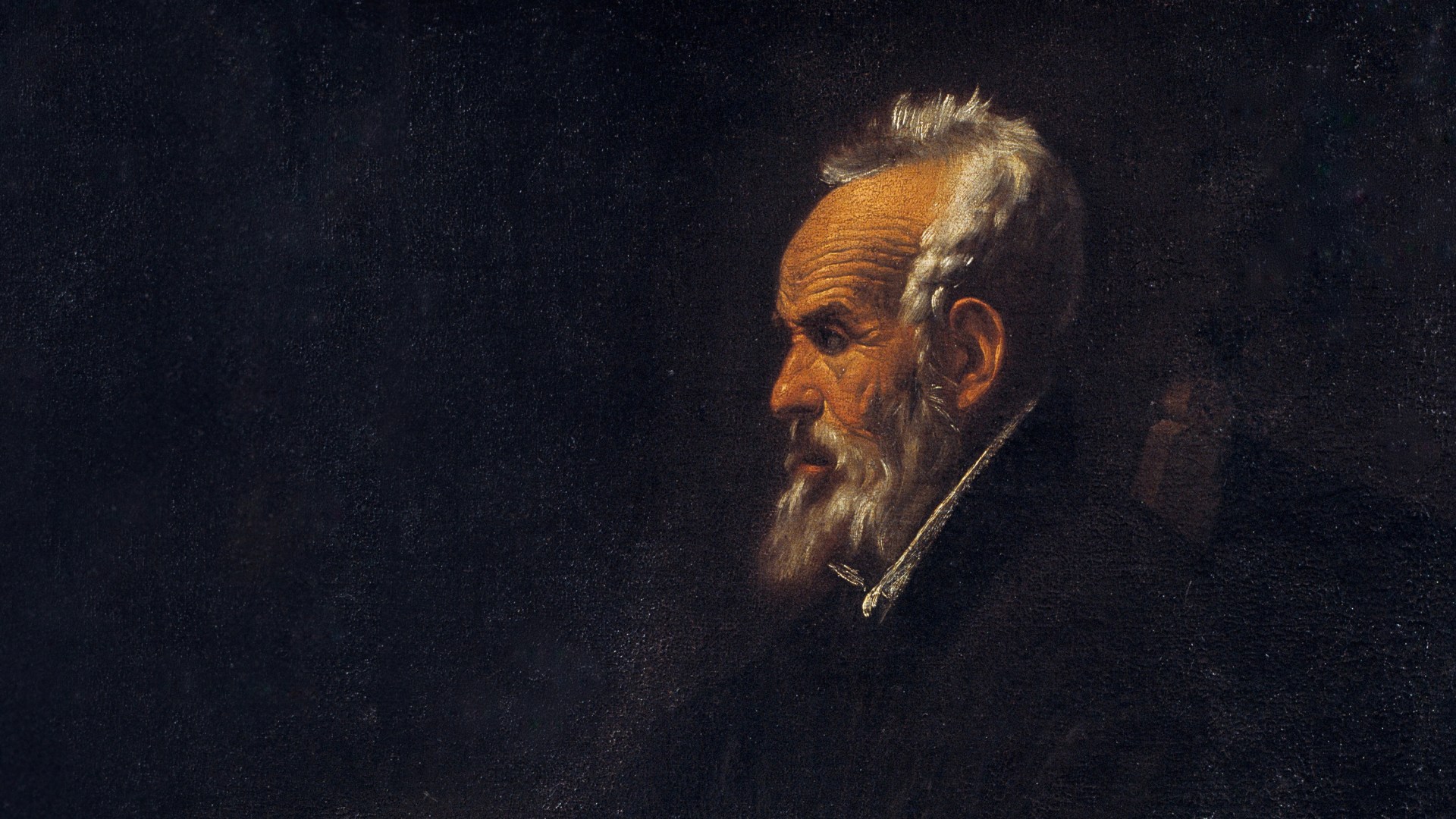
"El Jaleo" (1882) by John Singer Sargent

August in Manhattan is brutal, I think most would agree—it’s humid in a particular way that I’ve yet to experience elsewhere. The concrete bakes on all sides, turning the sidewalks into a large, hazy mirage. The city clings to exposed skin, and the long subway-platform wait times bring the dread of clean work clothes being sweated through. No matter how breezily or practically I dressed for the weather when I lived there, summer wrapped itself around me, its oppressive presence a constant companion on my daily commute. 

The experience of New York City is intermingled in my mind with the weather that each season brings and the clothing it necessitates. Despite the difficult reality of having lived year after year in the most populated city in the United States—scraping by with a full-time job and multiple adult roommates—the thought of summer in New York still brings a joyful tinge to my heart; it rests in my mind as an open door, a new chapter. 

In August of 2013, I moved from a small town in rural Ohio into the bustling uptown of Manhattan. I was 24 years old, and this was my first time living outside of my parents’ home. I had moved to the city to pursue a master’s degree in fashion and textile history with a focus in museum practice from a leading fashion school. This step felt validating on a professional level, but I also believed God had put me in the right place.

As one would imagine, New York was an eye-opening place for someone like me. I had been raised in the Midwest my entire life, cultivating a love for the fine arts and the experience of museums—but never venturing too far from my backyard. As I woke up in Manhattan, I found I had the center of arts and culture at my fingertips; famous artists and designers could realistically be sharing my sidewalk space. The visual stimuli alone were enough to excite and then exhaust me day in and day out.

I quickly declared my love for New York in my heart, vowing I would live there permanently after I was finished with school. My feelings were much like those of Joan Didion at the beginning of her essay “Goodbye to All That”: 

I can remember now, with a clarity that makes the nerves on the back of my neck constrict, when New York began for me, but I cannot lay a finger upon the moment it ended. … I was in love with New York. I do not mean “love” in any colloquial way, I mean that I was in love with the city, the way you love the first person who ever touches you and you never love anyone quite that way again.

In graduate school, I marveled at the writings of fashion and art scholars like Caroline Evans and Anne Hollander. They saw the worth of studying fashion in the same way that art has been studied for centuries, and each had a shrewd eye to the current cultural norms surrounding humanity’s deep inclination to get dressed. 

My eye took in the sartorial markers all around me and I began to experiment at a fast pace with my personal style. Prior to my move to New York, I had been cultivating a love of clothing and self-presentation. Some of my earliest childhood memories revolve around playing dress-up—as a ballerina, a waitress, a swimming athlete, or a performer. All of these roles required specific outfits, and I found clothing to be a way to express my different interests and to build upon my own personality. 

Clothing became an outlet to self-expression and identity, an outlet I carried with me through adolescence and into adulthood. But in New York, these youthful ambitions took on a more serious and encompassing role; clothing now communicated to my friends and peers my self-perceived importance.

Childhood traumas had left me struggling in adulthood to feel like I was enough—within my family structure, my friendships with other women, and in tumultuous romantic relationships with men. My shyness at times was overpowering, especially in group settings. It seemed there was always someone funnier or more interesting or more educated, and those whose attention I desired seemed to gravitate toward these people instead of toward me. 

Both consciously and subconsciously, the way I dressed helped me fit into situations I found uncomfortable. Fashion made me interesting and desirable. It started conversations between strangers, elicited compliments and niceties. It signaled aspects of my personality or knowledge and projected a false sense of confidence that carried me through exhibition openings and job interviews. 

My anxiety and self-hatred were perfectly masked behind things like a vintage Givenchy dress bought at the Manhattan Vintage Show the second year I lived in the city. Navy blue with white stripes, the dress was 1960s Audrey Hepburn–era Givenchy (the actress and the designer had a glamorous and legendary working relationship for several decades). I thought the dress was perfect; it signaled that I was aware of culture, modernism, and design history. 

But the fact is, I had used some of my loan money from school to pay for it. Using clothing to express status brought with it the cyclical desire for newness, consumption, and simply keeping up. The thing that I had idolized and followed to this new city was ultimately the thing that would buckle and crumble under my insecurities.

I saw my struggles reflected back to me through the eyes of literature. The character of Pauline in Toni Morrison’s The Bluest Eye pursues clothing and beauty as a way to be accepted by other women—to disastrous effect on her marriage and family. “Along with the idea of romantic love, she was introduced to another—physical beauty. Probably the most destructive ideas in the history of human thought. Both originated in envy, thrived in insecurity and ended in disillusion.”

All along, I neglected to consider the threads wrapped around me in light of the faith I claimed to hold deeply in my heart. Christ was Lord of all, I had always been taught, but when it came to how I identified, he played a miniscule role. The longer I lived in New York pursuing a career after graduate school, the more dysfunctional my social anxiety became and the more quickly I slipped into sadness or anger.

At the time, I was attending a Bible-teaching church in the Hell’s Kitchen neighborhood of Manhattan. I had visited within the first few weeks of living in the city, and when I met a mutual friend of a companion back in Ohio, I felt confident it was the place I was supposed to worship. 

Attending this church was my first time choosing a church outside of my family structure, and it was here that the Lord graciously began working in me to free me from legalistic ideas and extrabiblical strictures. It was here that the idea of Christ began to give me a heavy feeling in my chest and brought tears to my eyes. Jesus was so much bigger and more complex than I had ever realized.

When I finally looked to Scripture, I saw that the human experience of clothing when expressed by Jesus—or even individuals such as the Old Testament priests—stood in stark contrast to the way I experienced clothing and identity. For example, in John 19 it reads:

When the soldiers had crucified Jesus, they took his garments and divided them into four parts, one part for each soldier; also his tunic. But the tunic was seamless, woven in one piece from top to bottom, so they said to one another, “Let us not tear it, but cast lots for it to see whose it shall be.” This was to fulfill the Scripture which says, “They divided my garments among them, and for my clothing they cast lots.” (vv. 23–24)

During this period in history, clothing was an expensive necessity, and the average person did not own more than one or two garments for daily use. It’s no wonder Christ’s clothing was something the soldiers saw fit to divide amongst themselves, just as one would divvy up money or other valuables.

Jesus’ seamless robe has been regarded by the historic church as a symbol of his purity and perfect covering. Sometimes the tunic is equated with the priestly undergarments found in the Torah, connecting Christ to the practice of intercession for sins. 

A robe constructed without seams means the entire garment was woven in one piece, an extremely challenging and impressive feat for the production methods of the time. It’s speculated by historians that to make such a garment would require an incredibly skilled craftsperson capable of weaving in the round on a warp-weighted loom. Even by current weaving standards, this is a difficult and uncommon task. During Jesus’ time, a garment such as this would have been priceless. Christ’s tunic was the perfect covering, seeming to almost defy human creative ability.

Soon after this passage in John, Christ dies and makes a way of salvation possible for all people; I knew this story intimately. But it struck me anew that Christ, stripped of his own perfect garment, completely covers us—he himself is the seamless robe that gives us lasting identity. We could not make such a garment ourselves.

I came to find out that Christ does not merely hide one’s self-hatred but abolishes it—not to give us the air of intelligence or knowledge but to provide earth-shaking wisdom. His love is not fleeting, passing over that which is more interesting in one person for another. His love is all-encompassing and focused completely on each of those who have given their lives to him. 

He is capable of loving in a way that transcends human ability but fulfills our deepest desires. And those in Christ are able to feel fully covered in its glorious manifestation. With our spirits clothed in this righteousness, our outward presentation no longer holds the kind of weight or destruction of self that it previously did. We are free to present and use clothing to build up and honor Christ’s newness in us, not be torn down in ourselves and our identities.

What was murky started to become clear: There were multifaceted implications of clothing in my day-to-day life, both in the way God had designed them to function and the way in which I, in my humanity, had warped that design. 

Scripture is explicitly clear that craftsmanship and beauty matter to God, but not merely superficially. Beauty comes from and is offered for the one from which all beauty flows. When I warped things like clothing or fashion to function solely to glorify self instead of God, it became a means of destruction instead of real creation.

In the same way that Didion chronicles leaving New York upon her marriage to author John Dunne at the end of “Goodbye to All That,” I also eventually left New York to live in Philadelphia after getting married in 2018. Sometimes it’s best to let your first love fade into the hazy August mirage. 

Like Didion, I hold fond, almost mythic memories of my time in the city. But “at some time the golden rhythm was broken” and it was time to step into something new and lasting. In many ways, years later, I am still leaving New York in my mind, still unpacking my worldviews from that time and holding them up against the clear light of the Word. But that is the way Christ works; he is gentle and kind in freeing us from ourselves.

My loves continue to grow, reoriented and made new. I still enjoy fashion deeply, but its practical role has changed. To know that I am cared for beyond all measure as I am, clothed in Christ’s perfect garment, has freed me to enjoy beauty and abundance in my true identity.

This essay was originally published in Ekstasis magazine.

Sarah Finley Purdy is a graduate of the Fashion Institute of Technology and has worked for the Calvin Klein archives and the Costume Institute at the Metropolitan Museum of Art. She is now a grant writer for the Kent State University Museum, raising funds for their world-class fashion collection, while living with her husband and daughter in Cleveland.

Church Life

Loving Muslim Neighbors Without Watering Down Your Faith

The Egyptian head of a network of interfaith centers relates how early Arab Christians taught him to engage Islam.

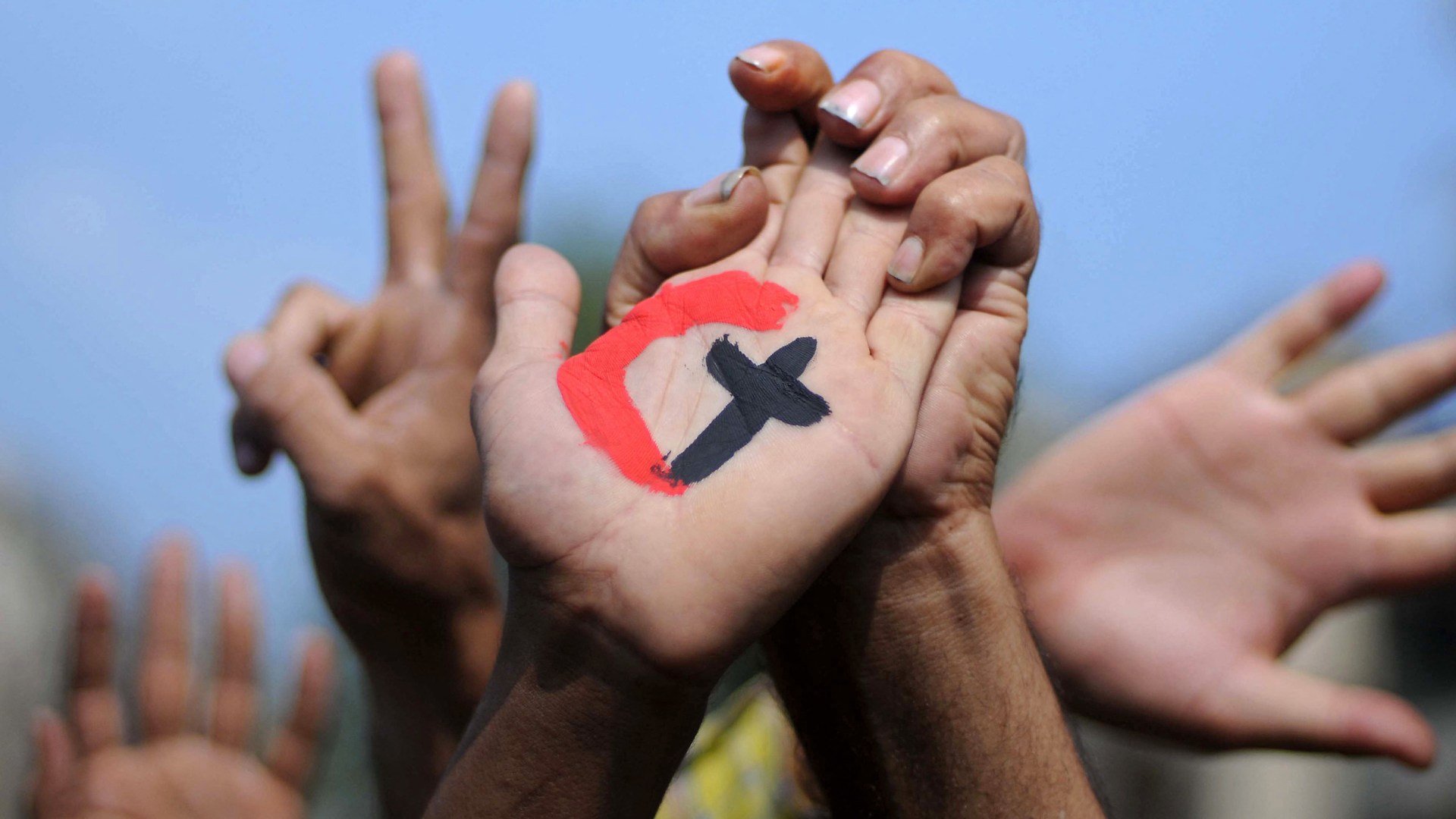
A cross representing Christianity and a crescent representing Islam painted on the palm of a demonstrator during a rally in support of national unity in Egypt.

A cross representing Christianity and a crescent representing Islam painted on the palm of a demonstrator during a rally in support of national unity in Egypt.

Christianity Today July 23, 2025
MOHAMMED HOSSAM / Contributor / Getty

This is part two of a three-part series about a network of interfaith centers in the Muslim world. Click here to read part one.

When Wageeh Mikhail was a boy, a Muslim mob attacked his Presbyterian church and killed his Sunday school teacher in the Upper Egyptian city of Minya. Though he remembers little about the event itself, he recalls praying for the assailants. And he still feels emotional remembering how he honored the childhood lessons that told him to love his enemies.

It was not the last time he had to.

Three decades later, in the aftermath of the Arab Spring, Islamist supporters of Egyptian president Mohamed Morsi alleged that Christians had collaborated against him and used that pretext to set dozens of churches on fire. In some locations, Muslims defended the local houses of worship.

Among these was Mikhail’s childhood church. The subsequent Sunday, grieving members worshiped in the burned-out pews—this was the extent of their protest. And across the country, Christians refused to escalate the conflict. 

Though Mikhail was living in Cairo at the time, he mourned from afar and again remembered his Sunday school lessons. Today, Mikhail is the director of the Network of Centers for Christian-Muslim Relations (NCCMR) and has a clear message: Muslims are not the enemies of Christians.

“Islam has been a practical and theological challenge to the Christian faith,” he said. “But we must work together.”

CT previously introduced Ramon Llull, a 13th-century Franciscan hermit from the re-Christianized island of Majorca in modern-day Spain, who advocated winsome relations between Muslims, Christians, and Jews. During the Crusades, he penned a novel in which a representative sage from each religion argued persuasively about his faith, without rancor, and the three remained friends.

NCCMR is similarly countercultural today but in a different direction. In a world in which interfaith dialogue can seek a relativistic commonality among the monotheistic religions, NCCMR’s partners, representing 18 centers in 13 countries with five additional applicants, recognize the call to conversion as an essential part of each religion. At formal events, the members agree to forgo Christian evangelism and comparable Muslim da’wa. Yet as individuals they are free to witness. Mikhail emphasized that all participants believe in freedom of religion—and its propagation.

“Christians have to evangelize,” he said. “The one who said ‘Do not kill’ also said ‘Go and make disciples.’”

NCCMR has faced sensitive issues beyond evangelism. During last year’s inaugural meeting, several attendees voiced concerns over rumors of an international conspiracy to merge Islam and Christianity into one religion. Mikhail assured them the network’s mutual commitment was to honor each faith as an exclusive religion with claims to divine truth.

Keeping in spirit with Llull’s characters, members agreed to avoid arguments and direct challenges over their respective religion’s superiority. Yet the network also made clear that NCCMR is not for religious leaders who assert that all paths will lead to God.

Mikhail appreciates Llull. But his vision for dialogue comes from his ancestors. In the early 1990s, he studied at the Evangelical Theological Seminary in Cairo (ETSC). Though many of his professors were Egyptian, they used textbooks largely imported from the US. From this he assumed that all good theology came from the West.

An American reoriented his theological geography. In Mikhail’s third year at ETSC, Mark Swanson, now professor of Christian-Muslim studies and interfaith relations at the Lutheran School of Theology at Chicago, offered a course on Arab Christian heritage. Mikhail’s perspective radically changed.

In time, he discovered the “beautiful” 9th-century conversation between an Abbasid caliph and a Melkite bishop. He admired the “deep and difficult” defense of the Trinity by a 10th-century Jacobite theologian from modern-day Iraq. And he noted the apologetic works of a 13th-century Coptic bishop in Egypt, which contributed to the local revival of the Orthodox church.

Arab Christians have lived under Muslim rule for the last 1,400 years, but the realities of their situation have varied widely. Periods of harsh persecution bracket periods of cooperation, beginning with the Islamic conquests and the imposition of second-class dhimmi status on those named “People of the Book” by the Quran, namely Christians and Jews.

Mikhail, however, highlights how Muslims and Christians built the Abbasid civilization together. Hunayn ibn Ishaq, a Christian from the Church of the East in modern-day Iraq, was the chief translator associated with Beit al-Hikmah (the House of Wisdom), rendering Greek philosophy into Arabic. For 300 years, Mikhail points out, the Assyrian Christian Bukhtishu family served as the doctors of the caliphs and founded the leading medical school in Persia.

Unfortunately, Muslim treatment of Christians often depended on the whim of the leader, Mikhail said. Within a generation, the Abbasid-era golden age gave way to the destruction of churches and imposition of a special dress code for Christians and Jews. 

Historian Philip Jenkins has highlighted how times of Christian persecution often correlated with outside pressure on the Islamic empires. Yet these were not always characterized by a sectarian lens, Mikhail noted. Arabic literature at the time of the European Crusades labeled them as the “Wars of the Franks,” emphasizing the political dimension over the religious.

On the shelf in Mikhail’s office sit 36 well-worn, pastel-colored volumes from a 40-plus series of early Arabic manuscripts of Christian-Muslim encounter. As opposed to the Latin dialogue of 12th-century Peter Abelard’s Dialogue of a Philosopher with a Jew and a Christian, or even Llull’s winsome yet foreign-crafted debates, this Lebanon-published collection chronicles how local Arab believers dealt with the ascendant Islamic faith.

These manuscripts include the ancient treatises Mikhail celebrated above, but most are not available in English. He hopes the NCCMR can secure funding to translate them one day. The respectful approach of historic Arab Christianity can serve not only as a retort to polemic tendencies in the West, he said, but also as a reminder to global Muslims that the church of Jesus was first—and remains—an Eastern faith.

The network has launched a one-year diploma program in Muslim-Christian relations, which it aims to build into a master’s program. Other projects in development include a dictionary of Muslim-Christian relations and a yearly rotating symposium. NCCMR’s recent webinar featured an Islamic defense of religious liberty, which CT will report on in the next piece in this series. Christians need to learn Islam from Muslims, Mikhail said, as Muslims need to learn Christianity from Christians. This can happen only in dialogue.

“Bitterness must not shape our future,” Mikhail said, “only hope and love.”

News

Kenyan President to Build Multimillion-Dollar Church on Official Residence Grounds

Christian leaders disagree about Ruto’s plan to build an 8,000-seat church on government property.

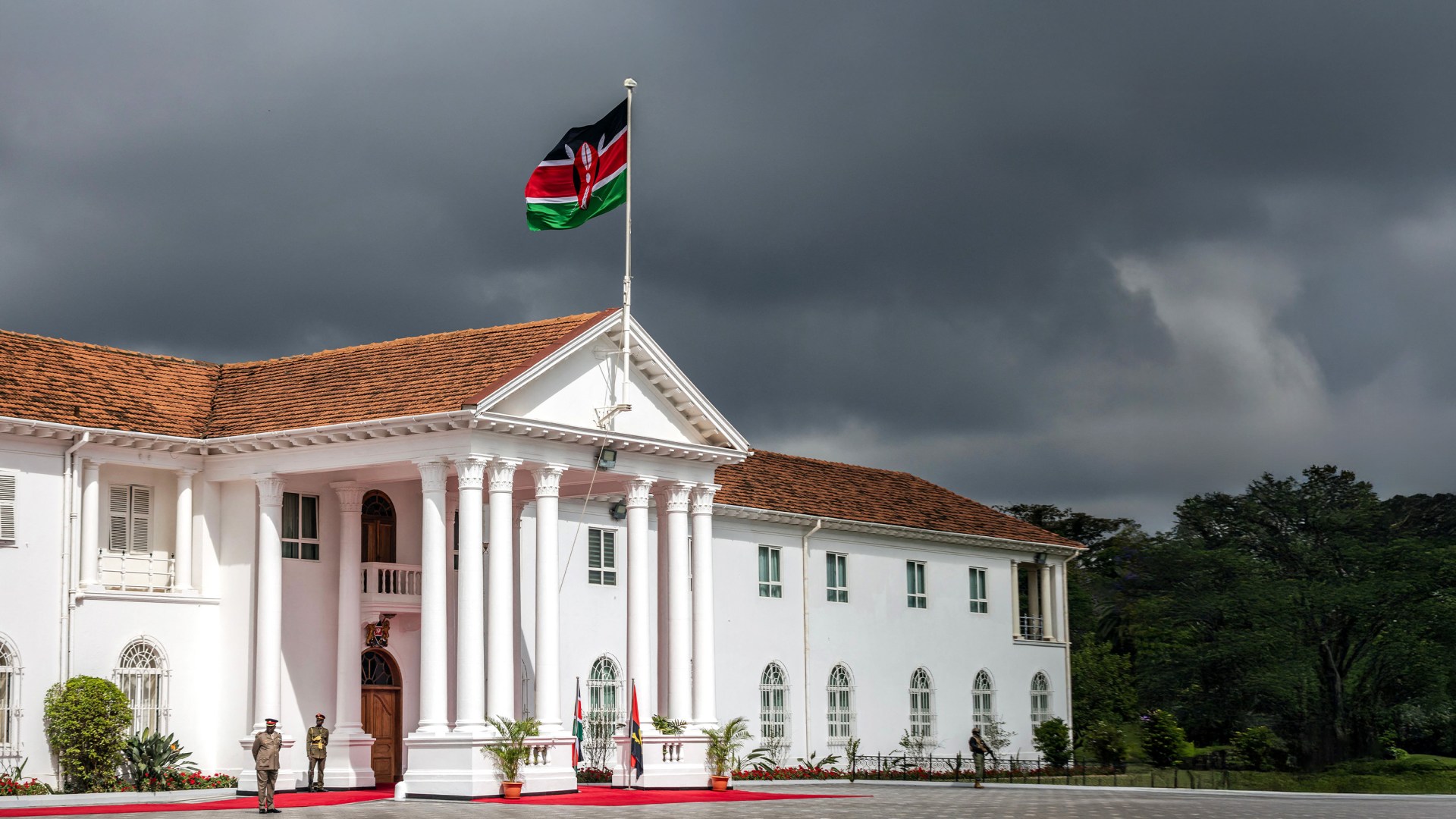
The State House in Nairobi, Kenya.

The State House in Nairobi, Kenya.

Christianity Today July 23, 2025
LUIS TATO / Contributor / Getty / Edits by CT

A dilapidated tin-walled mabati chapel on the grounds of State House—the presidential residence in Nairobi, Kenya—has become the center of drama between President William Ruto and his critics. The presence of the small temporary chapel had never been controversial.

This month, though, Ruto is defending a plan to pull down the old structure and replace it with an 8,000-seat church, according to media reports. Ruto quoted Haggai 1:4 to guests at State House on July 7: “Is it a time for you yourselves to be living in your paneled houses, while this house remains a ruin?” Ruto promised to build a permanent chapel at State House during his 2022 presidential race.

Some Kenyans have reacted angrily to the building’s proposed 1.2 billion shilling ($9 million USD) price tag. Critics say Ruto should not prioritize building an expensive church while the country suffers from the high cost of living and a struggling public health sector. They blame some of these problems on taxes imposed by Ruto’s government. 

Social media commenter Dannish Odongo said, “I’m a Christian but that’s wrong. The state and the church should be separated. Think about when a person who’s not a Christian will be in power. Would you be okay if a Hindu uses state resources to build a temple? Or a traditional believer uses state resources to build their altar?”

Ruto said he is using his own funds, not public funds, to build the church. Some Kenyans doubt the president’s claim. According to the Salaries and Remuneration Commission, the president earns 17.32 million Kenyan shillings ($133,500 USD) in a year. Building the church himself would cost Ruto the equivalent of his salary for 69 years.

Ruto has been cagey about his wealth. But in 2021, he told media he makes 1.5 million shillings ($11,500 USD) daily from his poultry farm, denying accusations of amassing his wealth from corrupt deals.

Fred Matiang’i, former cabinet secretary for the Ministry of Interior, told a parliamentary committee that Ruto owns “18,500 acres of real estate property, two high-end hotels, five helicopters,” and a poultry farm. Media reports also said he owns 400,000 shares of telecom giant Safaricom and a further 8,000 shares of Kenya Airways.

This March, former deputy president Rigathi Gachagua—impeached last year after falling out with Ruto—claimed Ruto had amassed a wealth of 3 to 4 trillion shillings (about $23 to $30 billion USD) since assuming office in 2022. Gachagua did not provide any evidence to support his allegation.

Brian Okoko Njeka, a lawyer and a Christian, said the project “reeks of corruption—a president boasting to build a church of such magnitude with his personal money is a direct insult on the face of poor Kenyans. It is immoral and a mockery to the seat of the presidency.”

Okoko said he sees the president’s decision to build the church as a political move and an opportunity to entice Christians into supporting his political agenda.

But Idris Duba, a worship pastor with the Kenya Assemblies of God in Nairobi, told CT, “For proper context, there was an existing church. He is building a better one. I have no problem with him doing that, because it was already there … and it is not that the money he is using is from the public, because according to what he says, he is using his resources.”

Presidential adviser David Ndii said the church will serve more than 1,000 staff members who live and work in the State House compound, along with their families. The State House has not yet revealed who will run the church or how its services will be conducted.

According to the 2019 Kenya National Bureau of Statistics report, 88 percent of Nairobi’s population of over 4 million identify themselves as Christians. One of the largest church buildings in Nairobi is the Winners Chapel, with a seating capacity of 12,000.

Other African leaders have built expensive churches in their countries, but not at their official residences. Mobutu Sese Seko—who ruled Democratic Republic of the Congo beginning in 1965—built a chapel in 1978 “made of marble, decorated with gold objects and other precious metals.” Rebels destroyed the structure when they deposed Mobutu in 1997.

Nana Akufo-Addo, Ghana’s president from January 2017 to January 2025, began to build a cathedral that drew sharp criticism from citizens about its financing and prioritization over other national needs. The expected cost of $100 million quadrupled due to inflation, though the cathedral remains unfinished.

President Obiang Nguema of Equatorial Guinea, in power since 1979, reportedly built a church with 1,000 seats in Mongomo, his hometown. Critics said he fixated on building a place of worship at the expense of “building schools, hospitals and housing.”

In Kenya, Anglican archbishop Jackson Ole Sapit quickly questioned the construction of the church in State House grounds, saying it violates the constitutional principle of separation of church and state.

Article 8 of Kenya’s Constitution defines Kenya as a secular state with no official religion. A lawyer petitioned the High Court in Nairobi to stop the construction, arguing the president’s action endorses Christianity as a superior or state religion, contrary to what the constitution envisaged. He also argued such a project requires Parliament’s approval.

The High Court sitting in Nairobi has given the attorney general seven days to respond to the petition on Ruto’s behalf.

Church Life

How a 13th-Century Spaniard Modeled Interfaith Friendship

The Franciscan hermit’s lessons live anew in a network for Muslim-Christian dialogue.

Ramon Llull

Ramon Llull

Christianity Today July 22, 2025
WikiMedia Commons / Edits by CT

Sitting with a student distraught by religious war, a God-fearing academic lamented the chaos in Syria, the destruction of Iraq, and the existential tensions seemingly ever-present in the Holy Land.

“What a great fortune it would be if … every man on earth could be under one religion,” he said. “[Then] there would be no more rancor or ill will among men, who hate each other because of the contrariness of beliefs.”

The academic’s answer, unfortunately, underestimates the human capacity for conflict. Beyond the bloody geopolitics, Islam, Christianity, and Judaism have split into sects and factions, to the point of killing fellow believers who share the same text yet hold different beliefs.

But for some, the “rancor and ill will” have prompted a corrective impulse to unite the faiths through interfaith dialogue. And the impulse is not new. The God-fearing academic? He’s a character from a book written in the 13th century by Ramon Llull, a Franciscan hermit and early proponent of an initiative still controversial among many believers today. Countercultural even then, The Book of the Gentile and the Three Wise Men addressed a world severely lacking in peaceful religious pluralism.

When Llull published his book in the 1270s, Crusaders were strengthening castles in Syria. The Mongol horde had sacked Muslim Baghdad—but then suffered defeat in Palestine, in the fields of Galilee. Llull wrote from what is now Spain, during the Reconquista, a military campaign to restore the Iberian Peninsula to Christendom. The Muslim realm, which they named Al-Andalus and became known as Andalucia, had been comparatively tolerant of Christians and Jews.

Llull lived on the island of Majorca, where his father settled after James I of Aragon declared victory in 1229. In the decades that followed, Christian kings in the liberated lands increased restrictions on non-Christian monotheists resident since the 8th century Islamic conquest. Some they forcibly converted, and within a few centuries, they expelled nearly all Muslims and Jews.

Llull, writing in Latin, Arabic, and his native Catalan, advocated for converting the non-Christians by rational argument, not the sword. While he did defend the Christian conquest of Muslim lands, he also founded missionary schools and traveled to North Africa, where he disputed with Islamic scholars.

Few of his contemporaries attempted the same. In fact, the literature concerning religion in the Middle Ages—across faiths—reflects a martial spirit that concludes with the authors’ faith triumphing decisively.

In the 12th century, for instance, Petrus Alfonsi published Dialogues Against the Jews, in which his imagined conversation partner converts to Christianity. Reversing the victor, Judah Halevi wrote The Kuzari: In Defense of the Despised Faith, in which a regional king embraces Judaism after hearing the cases of Islam and Christianity. A century later, Salih ibn al-Husayn al-Ghaffari made clear the Muslim case, composing The Shaming of Those Who Have Corrupted the Torah and the Gospel.

Llull operated differently. Though scholars maintain the book demonstrates a slight bias toward Christianity, he presents each of the three wise men’s discussion of their faith in straightforward terms. And when the philosopher chooses his religion in the end, the friends ask him not to reveal it. The book ends with the reader in ignorance, as the Muslim, Christian, and Jew desired to continue enjoying their conversation.

This conclusion might not sit well with Western evangelicals who may fear that the interfaith movement blurs the lines of doctrine and downplays the uniqueness of Jesus. Llull’s characters did not do so. Did the Christian lose an opportunity to encourage rival religious adherents toward the faith, some might ask, rather than just discussing belief?

Evangelicals in the Muslim world, however, might feel like the characters made a winsome decision to preserve peace and friendship in joint consideration of God. After all, since their community is usually less than a percentage point of the population, they must think about how to engage Islam peacefully.

Today, these realities have spurred some to partner with other Christians to create outposts for interfaith dialogue. They respect Muslims as citizens, neighbors, and fellow God-fearers—while holding to the Nicene Creed.

Last year, these pioneers and their Muslim counterparts met in Istanbul to launch the Network of Centers for Christian-Muslim Relations (NCCMR), a community of 18 entities stretching from Nigeria to Indonesia. In some countries, their religious communities are at odds. In others, people of different faiths for the most part live seamlessly among one another. 

In our next piece, we will introduce Wageeh Mikhail, director of the NCCMR, and learn how his personal history of religious violence shaped his path to this work.

Culture

Rapper nobigdyl. Wants Listeners to See Jesus in Their Enemies

The Fan Favorite winner in NPR’s Tiny Desk contest speaks with CT about the message of “imago interlude” and the prophetic voice of Christian hip-hop.

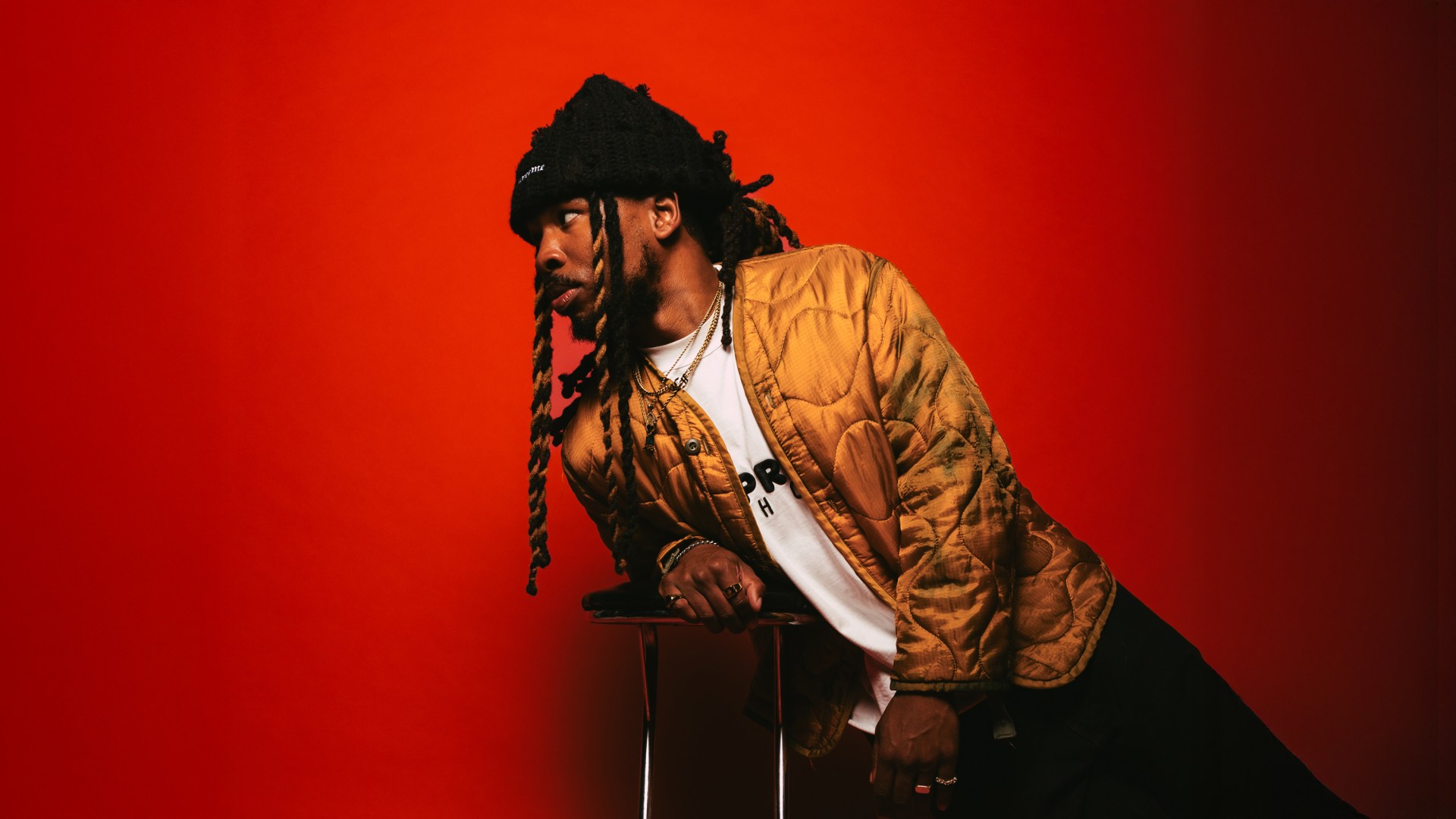
nobigdyl. leaning on a stool in front of a red background
Christianity Today July 22, 2025
Courtesy of nobigdyl.

When Dylan Phillips started working in the Christian hip-hop industry, he was too cautious to try to make it as a rapper. Phillips, who now performs as nobigdyl., started out as a road manager, supporting the careers of artists like Derek Minor. Minor eventually fired Phillips in 2014 in what was meant to be a friendly push into the spotlight.

That push put Phillips on a career trajectory that the pragmatic artist and entrepreneur had not set out to follow. Over the past ten years, he has become a successful solo artist and leader in the Christian hip-hop niche. Phillips has over 1 million monthly listeners on Spotify. His independent artist collective, indie tribe, hosts an annual festival in Nashville called Holy Smoke! His latest album, Seoul Brother, is a collaboration with Kato On The Track, an Atlanta-based Korean American artist.

In May 2025, Phillips won Fan Favorite in NPR’s Tiny Desk Contest for the second year in a row—and this year, the entry that won was a recording of the song “imago interlude.” The video begins with a close-up shot of the rapper’s T-shirt, printed with the words “you don’t know jesus til you see him in your enemy.” The first line of the song is a confrontation: “Christian music or music that Christians use / To get their fix just another hit of the clicks and views.”

In “imago interlude,” it’s clear Phillips isn’t afraid of making his listeners uncomfortable. He hypothesizes that some Christians consume faith-based music while neglecting to love their neighbors. He’s not shy about wading into divisive political territory, rapping about wars and humanitarian crises:

I look for Jesus and I didn’t see him on the news.
Saw him in Palestine; the power lines were out of juice,
He was a 9-year-old; her body had been battered, bruised.
Saw him in Zion too, a missile through a tattered roof,
A father clinging to his child, pleading out to you.
Saw him in Kyiv and Moscow.
The bleeding won’t stop now.

“Imago interlude” also showcases Phillips’s eclectic musical vocabulary, infusing jazz harmonies and funk-inflected instrumentation with complex rhythm and dense lyricism. Artistically formed by an array of genres and scenes, his music resists regional classification.

The 27-year-old rapper grew up moving frequently—his dad worked in logistics for Walmart, so by the time Phillips was 18, he had lived in seven states. The near-constant movement allowed him to absorb the musical traditions of the West Coast, Appalachia, and the South. He remembers going to jazz clubs in California to watch his uncle, Grammy-winning drummer Derrek Phillips, perform with bands and combos. Those venues also introduced him to spoken-word and slam poetry.

Although Phillips’s parents are not musicians themselves, Phillips described them as “music connoisseurs,” filling their home with the music of Elton John, James Taylor, Counting Crows, Third Eye Blind, and a rotation of Motown standards. As a student at Middle Tennessee State University, Phillips studied music business.

Now, in a performing career he never expected to have, Phillips is reflecting on the shape of the Christian music industry and trying to carve out a new, sustainable space for hip-hop artists. He spoke with CT about how the world of Christian hip-hop is changing and what he thinks artists offer the American church in tumultuous times.

This conversation has been edited for clarity and length.

The opening line of “imago interlude” is striking, confronting listeners with the idea that Christian music is being used for “clicks and views.” What were you thinking about when you wrote those opening lines?

Initially I was thinking about how Christian music shouldn’t just be for us. We shouldn’t be circling the wagons and making sanitized music to throw on for our tribe, something for Christian consumers to use as an alternative to other music when they want something for the kids. Christian music shouldn’t be something that we as artists use just to get a bigger and bigger platform or go viral.

It should have something to say for the culture and to the culture.

If we’re creating and if we think that God has crafted us and fine-tuned us to make this specific art that we are making, then there are people that need to hear the specific messages that God is sending through us.

So those lines were a critique of the individualistic, me-centered, capitalist idea that “Oh, I’m just making this music to go up the ladder.”

The shape of the industry has changed so much in the past 15 years. These days, going viral is potentially a career-making moment for artists. How do you balance the desire to find your audience and listeners with the conviction that virality and views shouldn’t be the primary driver of what you create?

 I think it’s about continually recalibrating toward my belief that God is the greatest creator. I believe that he used art, conversation, and people to reach me in his kindness and love and mercy. He’s doing that for the world.

So whatever I’m doing creatively, I want it to reflect his excellence and the gift that he has given me. My job is to say yes to him and honor him in that, and platform and virality may come with that.

Platform is not the enemy, you know? I mean, in broad terms, there’s nothing more viral than the Bible. The Psalms are the most popular songs ever.

I always think, Can I make something that’s part of the soundtrack of a life walking with God?

And not every song is going to be as deep as “imago interlude.” Sometimes it’s a song that inspires joy in people, something they can go grocery shopping to.

The point is, am I chasing that platform, or am I seeing that platform as an opportunity to help people walk with God?

You spent so much of your childhood moving across the country, and the different musical influences you’ve encountered show up in your music. You’ve also experienced lots of different church music traditions. How have those varied practices and sounds influenced your art and faith? 

I spent most of my life in the COGIC church [Church of God in Christ], which is a Pentecostal Holiness denomination.  In COGIC churches, the choir culture, the vocal and instrumental training, and the coaching in general, it’s incredible. The musicianship is actually crazy.

As a kid, I remember watching these 15- and 16-year-olds on the drums and keys. They seemed like adults to me at the time. And to this day I can remember the runs and rhythms they were playing. Stuff I didn’t even know was possible. And they were self-taught, mentored by other people in the church.

But while we were attending COGIC churches, my mom wanted us to try Awana. It’s not a COGIC thing, so she would take us to the Southern Baptist church across town on Wednesdays. Eventually I started going to the youth group there, and that’s where I first heard music by David Crowder, Switchfoot, and Lifehouse—CCM [contemporary Christian music]. I had never heard that stuff before.

It’s easy to dunk on CCM, but in my opinion, there’s a lot of really inspiring melody there. I learned a lot from it.

What’s it like to be a Christian hip-hop artist based in Nashville? Nashville is this musical power center, but country music and CCM are the dominant musical forces, and historically, hip-hop’s power centers have been in Los Angeles, Atlanta, New Orleans, or New York. How has your location in Nashville influenced your work?

Yeah, Nashville hasn’t always been a power center for hip-hop.  But, you know, the elements of excellent hip-hop music have actually always been in Nashville; it’s just that country music and Christian music get the front-page treatment.

The music history in Nashville is way more eclectic than most people realize. Nashville’s called Music City because of the Fisk Jubilee Singers. Gospel music, blues, jazz, rock-and-roll, rockabilly, R & B, all of that is in the DNA in Nashville, and those are all predecessors to hip-hop, which is essentially a remix of those genres.

And there’s always been a rich Black cultural heritage in Nashville as well. There are multiple HBCUs [historically Black colleges and universities], some of which are 150 years old at this point. The Civil Rights Movement came through Nashville. A lot of the training for peaceful protests happened at Fisk University.

There is a hip-hop community here, and there actually is a distinct style. It’s very musical, a lot of melody, a lot of jazz, and that makes sense because of the history of Nashville.

You write lyrics about Christian music being “used,” sometimes hypocritically. And CCM does have a reputation for being positive, upbeat background music. Do you think Christian hip-hop is able to offer something that CCM generally doesn’t? Are there messages or ideas that hip-hop artists are willing to engage that tend to be watered down in other popular Christian music?

 Yeah, I think there’s a very independent spirit in Christian hip-hop. On the whole, most of us are not signed to major labels, so we’re not part of this system that can lend itself to sanitization and being safe. Christian hip-hop can provide a less censored, less biased, prophetic voice.

I think about artists like Propaganda; he’s gonna say what he believes is beautiful and true regardless of what he loses or gains. He’s proven that over and over again. Jackie Hill Perry, she’s gonna do the same thing.

Lecrae is much more of a household name and accepted by the mainstream, but he’s obviously proven that too. He was No. 1 overall on Billboard at one point, and then he started speaking out about police brutality and lost some of that platform he had within CCM.

Christian hip-hop has this unique tradition and history. We’ve shown that we’re gonna say what’s beautiful and true, regardless of the consequences.

News

World Vision CEO: Foreign Aid Cuts Can’t Be Replaced Overnight

On a recent visit to Ethiopia, aid recipients applauded Edgar Sandoval. “They probably didn’t know that the program was coming to an end,” he said.

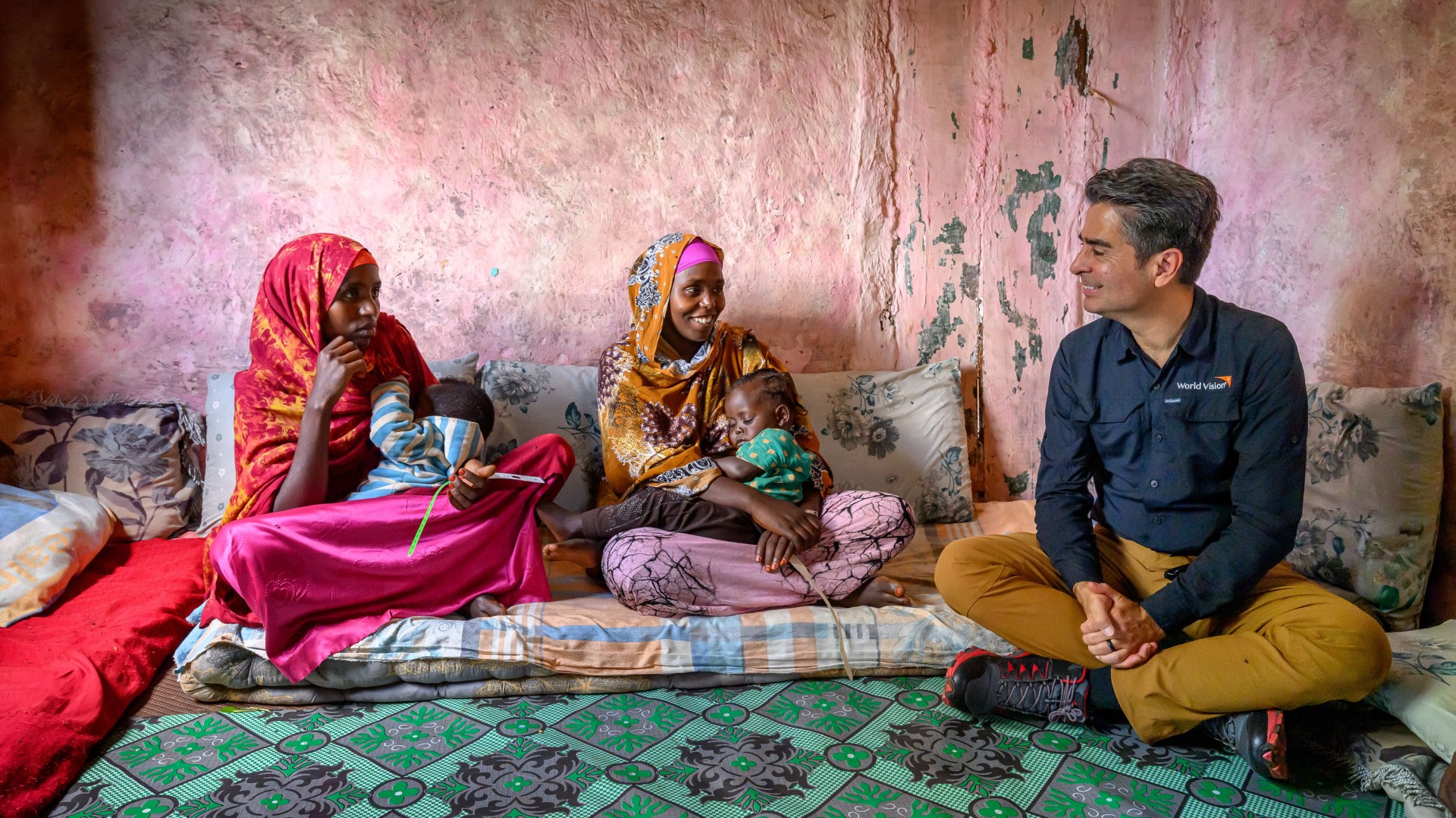
World Vision CEO Edgar Sandoval in Ethiopia

Edgar Sandoval in Ethiopia

Christianity Today July 21, 2025
Jon Warren / World Vision

Founded 75 years ago, World Vision has grown into the largest evangelical humanitarian organization in the world. World Vision’s US office, the largest of its many global affiliates, is also one of t­he top recipients of US foreign aid grants.

This year, the Trump administration froze or canceled most projects overseen by the US Agency for International Development (USAID), the now-shuttered humanitarian arm of the federal government. In March, as Christian humanitarian groups met with State Department officials to try to save some programs, leaders from World Vision said the charity might need to lay off as many as 3,000 employees due to the funding cuts.

While other faith-based aid groups have spoken out publicly, World Vision has remained mostly quiet. The foreign aid shutdown came just after World Vision launched an ambitious new goal of reaching 300 million people worldwide through its sponsorship, water, health, and food programs.

In early July, CEO Edgar Sandoval spoke with Andy Olsen, CT’s senior features writer, about World Vision’s staffing cuts and the role of government funding in faith-based aid. The conversation is below, edited for length and clarity.

We are talking a few days after the official closure of USAID. Over the last few years, World Vision has received more than $400 million a year in foreign aid grants—including cash and noncash items like food commodities. That’s roughly a third of your annual revenue. How have government funding cuts and pauses affected your budget?

Even before the USAID cuts, there was already a significant gap in funding. There were more humanitarian needs than available funding. And now with these cuts, depending on what happens next year, it only makes a challenging situation even more challenging.

We have a very diversified portfolio of funding, as you know, and the vast majority is private donations. But the US government is an important part of our portfolio. In 2025 we’re looking at losing about $170 million, which amounts to about 10 percent of our total budget.

Before we heard about the stop-work orders, we had already heard about a desire to review foreign aid. I welcome that wholeheartedly. We should always be looking at getting more efficient and better at what we do. I spent 25 years of my life, before coming to this Christian ministry, in corporate America. We were constantly looking at inefficiencies and getting rid of them. Any well-functioning body has some level of inefficiency.

Now, a lot of this funding is truly lifesaving funding for people who live in the most unimaginably challenging environments and conditions. There are no local markets. There are no infrastructures. These people need a safety net to help them build a life and a livelihood. So when we received stop-work orders, we immediately got to work looking for waivers for some of our programs that were lifesaving. Even though it was challenging and a bit confusing at times, we were able to restore many of the grants that were stopped temporarily.

Can you help me understand how World Vision’s programs break down between privately funded work and government-funded work? Are those funding streams and the programs they support entirely separate? Or are they intertwined in such a way that the impacts of cuts are felt across the organization?

Yes and yes. Our flagship program is our child-sponsorship program. And that is very strong and continues to get stronger over recent years. We also layer other private funding in the communities where we’re doing child sponsorship, to accelerate the impact. What we do with US grants is extend our reach at a massive scale. In some instances, the grants are in the communities where we work with sponsorship, but in many instances they’re not—particularly for humanitarian crises and natural disasters.

What makes these cuts very challenging is that we’re not talking about, call it, one-off programs, like installing a water well or a clinic. We’re talking about massive programs at scale. We’re talking about lifesaving food assistance to 500,000 people, vaccinations to 400,000 people, every month monitoring entire regions for diseases and disease prevention. Replacing that funding doesn’t happen overnight. The vast majority of our funding is donor designated, meaning it was donated for a particular purpose in a particular place for a particular time period. And we honor donor promises. We can’t just unplug and do something else to cover the gap.

Are there programs that World Vision has outright had to cut? Are there communities in the world that last year were receiving support from a World Vision program and now are not?

Yes, absolutely. I’ll give you an example. I was in Ethiopia a week and a half ago. What I saw was both encouraging and devastating. I visited one of our warehouses where we store food. This is food that’s been sourced from American farmers—sorghum, peas, et cetera. We were doing one of the last food distributions for that area. It’s an area that’s been going through a very challenging drought. I saw the crops dying because there’s no rain, and this is supposed to be the rainy season. People are working hard, but the rain doesn’t come, and they can’t feed their children.

When I walked into the community for our food distribution, the community just broke out in a big applause. What struck me at the time is, first, they probably didn’t know that the program was coming to an end. But second, they were clapping for America. They know this is from America. They told me, We’re so grateful for America. America has a good heart. Americans are generous. Please tell Americans how much we appreciate them and that they are helping us save our children’s lives.

There is a chance that we may restart in January if we get a reinstatement on the grant. But as of right now, we’re planning to shut it down.

Speaking of food aid, I was reading a statement that Secretary of State Marco Rubio issued on July 1, officially announcing the closure of USAID. He wrote, “Where there was once a rainbow of unidentifiable logos on lifesaving aid, there will now be one recognizable symbol: the American flag. Recipients deserve to know the assistance provided to them is not a handout from an unknown NGO, but an investment from the American people.”

Anyone who’s worked in foreign aid is accustomed to seeing bags of rice or whatnot that are stamped with the American flag and the motto “from the American people.” Do you see evidence to support the critique that aid recipients somehow don’t understand where the aid’s coming from?

The flag is there on every bag. And “from the American people.” I feel proud to represent America when I go out there and see the help that the US government is bringing to these families.

We just want to help people thrive. We think foreign aid—when properly administered like we do through World Vision and many other organizations—it saves lives. It saves lives here in America. It saves lives across the world. It creates resilient communities. It eradicates disease completely, and it creates goodwill. And all of that I think leads to a safer, stronger, more prosperous USA. Whether I put World Vision’s logo or not is not the key priority for us.

World Vision food distribution in Harbo, EthiopiaJon Warren / World Vision
World Vision food distribution in Harbo, Ethiopia

The administration has said that foreign aid needs to advance the nation’s interests, that a key objective of foreign aid is to encourage global political and ideological alignment with the current administration. I don’t think that’s an entirely new way for American presidents to approach aid. I’m curious how a Christian organization like World Vision navigates those kinds of expectations while also managing the more straightforward humanitarian and faith objectives of its programs.

We are a Christian ministry motivated by our faith, following what we believe are God’s wishes for every follower of Jesus Christ, which is to help the poor and the oppressed. We appeal to many different sources of funding. The vast majority are Christian private donors. But we believe God has blessed World Vision with the capabilities to do things at a scale that not many organizations can, Christian or secular. If we can be viewed as a partner of choice to the US government to accomplish that work, to help people lift themselves out of extreme poverty, to live through food emergencies, to have vaccinations so that the children don’t die, we’ll do that.

Once the administration and Congress decide what they’re going to fund, we are just focused on maintaining our status as a partner of choice to implement and to implement with excellence. For instance, World Vision is the number one nonprofit provider of clean water in the world. We’re the number one distributor of the World Food Program. In fact, we distribute more American farming commodities around the world than anybody else. And so that’s what we’re focused on. As part of the knowledge that we’ve gained over the years, we’re advocating for ‘Hey, keep some key programs that the government funds.’

An important point here that I’d like to make is this: Foreign aid is less than 1 percent of the federal budget. The American people know that foreign aid is good. In fact, the vast majority overwhelmingly support keeping the 1 percent. The issue is that most Americans believe that the foreign aid budget is somewhere between 10 and 20 percent of the total budget. But when you actually explain and they understand that it’s 1 percent or less, they overwhelmingly support it.

But to be clear, World Vision staff are not submitting reports to the government outlining how your programs are serving US interests. This is not a thing?

I’m not aware of submitting any reports of that nature. We agree with the government on objectives, on the type of outcomes that we’d like to see, and then we measure those, and we measure those with a lot of discipline and with a lot of work. That’s the only way we’ve been able to earn and maintain our preferred status, not only with the government but with most of our private donors. We do reports for them all the time to make sure that their investment is achieving what we said it would.

That said, I would be very quick to say that all of these things, again, they do help America. For instance, let’s just take the emergency food that I mentioned. That infrastructure supports an estimated 60,000 jobs right here in the US, when you consider the entire supply chain, from the farmers to the trucks that transport farm commodities to the ports.

Can we talk a little bit about layoffs? What the impact has been?

The decision to let go of staff is one of the hardest decisions a leader can make. We don’t make those lightly. It was challenging to have to say goodbye to about 11 percent of our staff here in the US, which is proportional to the 10 percent cuts that we saw. It’s particularly challenging in a ministry like ours where people have been called to do this work.

On the field-staff side, because it’s directly funded by grants, there have been stops and starts as we have reinstated grants. Initially we thought there would be maybe 2,000 or so people that we would have to let go. The actual number has turned out be a lot less. I don’t think we’ve let go even 900 so far, because many other programs were reinstated. But if they go away completely, then we may have to do some more things, particularly on the field side.

I’d like to talk about public perception. As you are well aware, Elon Musk called USAID “a criminal organization” and “one of the biggest sources of fraud in the world.” Secretary Rubio said executives at aid organizations “enjoyed five-star lifestyles funded by American taxpayers, while those they purported to help fell further behind.” The leaders that he’s talking about are people like you. How do you wrestle with that?

Well, I’m not sure they’re talking about me. I can only comment about what I’ve seen in all of my travels to all of the countries. I have seen fully committed Americans who’ve given their entire professional lives to serve their country. They are doing really good work.

Both the statistics and the stories bear that out. Let’s look at what’s happened with foreign aid and with America’s leadership in foreign aid over the years, over the decades. We’ve had 26 million people who are alive today because of PEPFAR, the signature American program against HIV and AIDS. We have 7.8 million children who were born HIV free as a result of that program. The world has eradicated smallpox. We’ve had, I think, more than a 95 percent reduction in polio. Malaria in Africa has been cut by 50 percent. Child mortality has been cut by out whopping 59 percent.

I just came back from Ethiopia, as I mentioned. I spoke to a community leader. This strong man, he broke down and started to tear up as he played back to me the possibility that the food would stop coming to his community. He was very grateful to Americans. He said, “If and when the food leaves, death will come into my community.”

Are we in a moment when World Vision has to sell itself or resell itself to Christians who have grown skeptical of faith-based aid in recent years?

We’re always telling our story and telling the story of what God is doing through World Vision. I don’t know that that’s necessarily “selling” World Vision or “selling” aid to the most vulnerable. I think Americans have incredibly generous hearts. They are very generous. We’re just all bombarded with so many priorities and with so many things, and it is our role to remind people of what God expects of every Christ follower. There are over 2,000 scriptural references to helping the poor and the oppressed. I mean, it couldn’t be more clear.

Have you met recently with members of the administration or senior leaders at the State Department?

We have a lot of engagement with the Hill, with our administrators. I was there back when the cuts began, and I travel regularly also to meet with them. What I would say is that there’s still a level of uncertainty, but I remain hopeful. I believe that our leaders want to do the right thing. They understand lifesaving aid is important, and it is my hope that they will see organizations like World Vision as one of those that they can count on to deliver on their objectives.

How often do you get to the field?

Three times a year or so.

Do you have a favorite place?

Every time I visit a country, it becomes my favorite. I’m just so inspired by the work that our staff does. They’re so committed. They put themselves in the hardest places. They serve their communities. Eighty percent of our staff live in the communities where we serve, and many of them do so at a great personal cost. They leave their families in other cities for months at a time. And when I ask them, “Why do you do this?” it doesn’t matter whether I’m in Africa, Latin America, Asia. Wherever I am, the answer is the same: “Our calling from God to serve our people.”

News

Kenyans Struggle to Find Good Shepherds Online

Internet ministries bring new opportunities and theological challenges for Christians.

An emoji sheep in a green tech maze.
Christianity Today July 21, 2025
Illustration by Elizabeth Kaye / Source Images: Getty, Google

Cameras switch on and monitors come alive as pastor James Mwita steps behind the pulpit and into the camera’s view at St. Peter’s Methodist Church. It’s Sunday morning in a quiet neighborhood in Langata Constituency, Nairobi, Kenya. The hum of a laptop signifies two congregations—one sitting in the pews, the other present behind pixels.

Mwita’s sermons now reach thousands across Kenya and the globe, and other pastors have similar goals. With nearly 72 million mobile devices and over 56 million active mobile data subscriptions for a population of 57 million, Kenya is among the ten most digitally connected countries in Africa. TikTok, YouTube, Facebook, and Instagram have become fertile ground for Christian content.

But this digital revival comes with its own challenges. As the gospel goes viral, questions have arisen about the depth of community and accuracy of doctrine presented on social media.

During the COVID-19 pandemic, churches like Christ Is The Answer Ministries (CITAM)—an English-speaking church in Nairobi—restructured entire ministries to thrive online. The church offers YouTube devotionals and virtual forums attracting Kenya’s youth demographic: 18-to-35-year-olds. In its research the church found that over 20 million youth barely attend church, creating an opportunity to reach young Kenyans digitally.

Meanwhile, TikTok-famous pastors like Victor Kanyari have stirred controversy for earning thousands via livestreams with gimmicks and “indecent content.” Kanyari has earned over 400,000 Kenyan shillings (about $3,090 USD) on TikTok.

Kanyari is a preacher based in Nairobi and the founder of the Salvation Healing Ministry. His ministry operates independently of any denomination, and he has not yet disclosed any formal ordination credentials.

Jeffter Wekesa—another online pastor without public ordination records—runs a fully virtual church from his Nairobi home. He preaches exclusively over YouTube and TikTok. His social media ministry earns between 100,000 and 300,000 Kenyan shillings (about $770–2,320 USD) per month. His teachings from his living room focus on hope amid crisis and revolve around Kenya’s socioeconomic struggles—unemployment and youth unrest.

Mwita said sometimes people online worship in pajamas and forget service times. “They think, ‘I’ll watch it later,’” he explained. “But they rarely do.” He warned that a consumer approach to online church can create a culture of “passive consumption rather than active participation.”

Some online-only ministries have minimal oversight or theological scrutiny. Without accountability from elders and deacons, online preachers risk spreading incomplete or unbalanced theology. Church leaders in Kenya say members must be equipped with doctrine to withstand false teaching.

The 2023 Shakahola Forest incident in Kilifi County, Kenya, exposed how unregulated teachings can lead to catastrophic outcomes. Pastor Paul Nthenge Mackenzie of Good News International Ministries—an apocalyptic, online, fringe church—persuaded followers to retreat into the forest to starve to “meet Jesus.” Over 400 believers, including children, died from starvation, suffocation, and strangulation.

Government investigators confirmed Mackenzie used twisted interpretations of Scripture—preaching against education, medicine, and even national identity systems—as part of a doomsday narrative that encouraged isolation and blind obedience. A forensic psychologist testified that many followers exhibited “empathy delusion,” even assisting in the deaths of their loved ones as an act of faith. 

Other online ministries struggle with distance in emotional matters, especially during moments of grief or counseling sessions. Mwita has used virtual discipleship to keep a British teenager engaged with church and help an American woman through personal crisis, but he recognizes the limitations of online ministry.

“Pastoral care through a screen is not always enough,” Mwita admitted. “You can’t read tears over a livestream.” Many rural members who come to depend on livestreams face unstable internet connections or lack digital devices altogether, further isolating them from church.

Mwita, hoping to build relationships, trains pastoral leaders to follow up with digital attendees, offers personal spiritual support, and guides new Christians through discipleship materials. St. Peter’s also holds Zoom and WhatsApp Bible studies, virtual Q and A forums, and small group prayer meetings.

“We send weekly SMS reminders, devotional PDFs, and WhatsApp videos. We treat our online audience like members, not spectators,” he added. But Mwita warned of spiritual shallowness: “It’s easy to become a consumer rather than a disciple—to scroll instead of seek.”

Mwita’s antidotes: teach about spiritual disciplines, encourage digital detoxes and screen-time balance, and blend online and in-person worship. “Online ministry can transform lives,” he said, “but only if we lead with intention, care, and community. Otherwise, we risk having churches with screens but no souls.”

News

War Interrupts Biblical Archaeology

Israel-Iran conflict stalled excavation efforts, forcing international teams to flee.

Archaeologist doing excavation work in Israel
Christianity Today July 21, 2025
Meahem Kahana/AFP via Getty Images

James R. Strange, professor of New Testament at Samford University, was hoping to excavate a lot of ancient pottery from Jesus’ time at Tel Shikhin, a small village in the Galilee region.

Missiles interrupted his plans.

“We had essentially one week,” Strange told CT. “When Israel launched its offensive into Iran and Iran responded, … that made staying untenable.”

Conflict in the Middle East has once again had the unintended effect of stalling efforts to excavate biblical history. Across Israel, digs were canceled when war broke out in mid-June. Though the war between Israel and Iran lasted only 12 days, it came in the middle of the dig season, when weather conditions and schedules align for archaeological work. 

Scholars and volunteers who had hoped to contribute to our understanding of the world of the Bible found themselves instead ducking into bomb shelters and tracking reports of airport closures. 

Strange was convinced it was time to leave when he had to take cover in a bomb shelter across the street from their Nazareth hotel four times in one night. But then Ben Gurion Airport—the main international airport in Israel—closed. Strange and his team ended up making their way to Jordan and flying home from Amman three days later.

The Associates for Biblical Research team that was excavating Tel Shiloh had an even more circuitous path out of the country. Dig director Scott Stripling called it a “reverse Exodus.” 

The group woke up in a Jerusalem hotel on June 13. News of war and warnings about imminent attacks were consuming the whole country. Stripling decided they should continue with the last day of their archaeological dig anyway. 

“The best thing for us to do was to go to work,” he told CT. “I thought, for the spiritual and mental health of our team in the time of crisis, the best thing they can do is to stay in the routine.”

When it was time to leave, though, things got a bit complicated. Stripling said the team took a bus to Eilat in the south of Israel, crossed the border to Egypt, took another bus across the Sinai Peninsula to Cairo, and then flew back to the United States.

Americans excavating Caesarea Maritima, one of Israel’s most-visited archaeological sites, also went home after just one week of digging.

Some archaeologists did not make it to Israel this year because of the military conflict. Wheaton College professor Daniel Master was planning an excavation at Tel Shimron in the Galilee. Lipscomb University archaeologist Steven Ortiz was going to direct a dig at Khirbet Ether. Both men’s flights were canceled. They hope to return to the field in 2026. 

The excavation at Abel Beth Maacah, a site near the Lebanese border, was put on hold last year because of the fighting between Israel and Hezbollah. Dig codirector Robert Mullins from Azusa Pacific University and archaeologist Cynthia Shafer-Elliott from Baylor University could not go this year either.

“My university is currently not allowing travel to Israel,” Shafer-Elliott said.

However, codirector Nava Panitz-Cohen, from the Institute of Archaeology of the Hebrew University of Jerusalem, will have some of the team back in the field at Abel Beth Maacah later in the summer. 

Panitz-Cohen said the dig will proceed with archaeology students from Israeli universities and the international students who stayed in the country through the conflict.  

Excavations at Hippos, on eastern shore of the Sea of Galilee, and Hazor, nine miles north of the Sea of Galilee, are expected to continue with majority-Israeli teams.

Some archaeology work in Jordan kept going too. The dig at Khirbet Safra, a site overlooking the Dead Sea, its biblical name is unknown, continued uninterrupted. Excavation director Paul Z. Gregor, a professor from Andrews University in Berrien Springs, Michigan, said the archaeologists “were able to complete our season of excavation as planned” before going home at the end of June. 

An excavation planned at Abila, the site of a New Testament city located in northern Jordan, just two miles from the Syrian border, was not as lucky. David Vila, professor at John Brown University, was wrapping up a tour of Jordan with his students and preparing to begin three weeks of excavation of June 16. 

He saw the Jordanian air force scramble jets to shoot down missiles. Then President Donald Trump started talking about the possibility of US involvement in the war, and it seemed like a good time to return to the US.

“The US bombed Iran, it turns out, about one hour after our flight took off,” Vila said.

An unexpected hiatus from excavation isn’t all bad news for archaeology, though. Digging in the dirt is the hard-but-fun part. It’s also just the start of the process. Scholars must study what the excavations have turned up, write about their discoveries, and publish the results in peer-reviewed journals. 

Not getting into the field gives them additional, much-needed time to do the slow work of scholarship. 

James Fraser, director of the W. F. Albright Institute for Archaeological Research in Jerusalem, noted the COVID-19 pandemic, too, forced digging to stop, and that turned out to be a productive time for many archaeologists.

“We’re harvesting the fruit of that now,” he said. “We’ve launched several books here at the Albright over the last several months, all of which would not have come to fruition, I think, without that enforced period.”

Fraser said if archaeologists in Israel are not able to go to their excavations, they are always welcome to come to the Albright, where he has been director since a few days after Hamas launched an attack on Israeli civilians. 

“All researchers, regardless of background, can come and sit in the library,” he said, “discuss their findings, and join in shared pursuit of research excellence.”

Gordon Govier writes about biblical archaeology for Christianity Today, hosts the archaeology radio program The Book and The Spade, and is the editor of Artifax

Correction: A previous version of this article said Strange and his wife took cover in a bomb shelter; she was not in Israel at the time of the attack.

News

Congress Restores PEPFAR Funds in Last Minute Reprieve

The White House tried to the cut the HIV/AIDS relief program by $400 million, but Republicans pushed back.

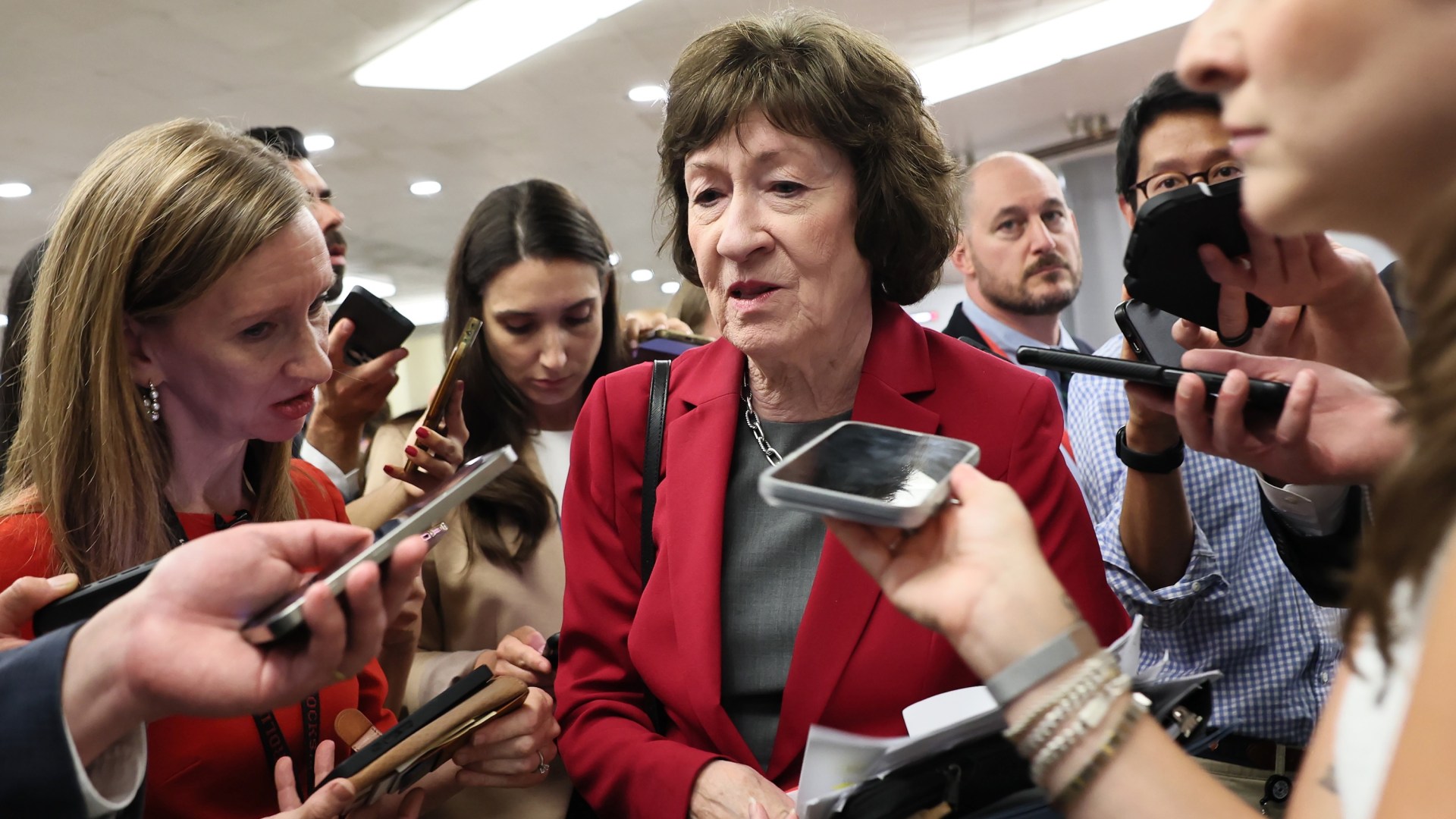
Republican Sen. Susan Collins opposed cuts to PEPFAR in the Republican rescissions package that passed Thursday night.

Republican Sen. Susan Collins opposed cuts to PEPFAR in the Republican rescissions package that passed Thursday night.

Christianity Today July 18, 2025
Michael M. Santiago / Getty Images

The White House wanted cuts to the global HIV/AIDS program PEPFAR, and in a rare pushback, congressional Republicans said no.

After months of advocacy from faith and global-health communities, Congress decided in last minute negotiations this week to restore $400 million in funding to the program.  

PEPFAR was the only foreign aid program to win a reprieve in a package Republican lawmakers designed to pull back previously authorized funding to federal programs, also called rescissions.

The White House had pushed the PEPFAR cuts, with the rescissions package formalizing the Department of Government Efficiency (DOGE)’s targeting of foreign aid earlier this year; about $8 billion of the $9 billion in cuts that Congress passed late Thursday night came from USAID (US Agency for International Development) funding. 

Advocates saw PEPFAR’s reprieve as a symbolic win that the program has bipartisan support going forward. 

“It was a great shot in the arm that the outreach done by the faith community, the advocate community, is really working,” said Catherine Connor, the vice president of public policy at the Elizabeth Glaser Pediatric AIDS Foundation, in an interview with CT. The organization is a major implementer of PEPFAR. 

PEPFAR, or the President’s Emergency Plan for AIDS Relief, is a roughly $6.5 billion program that contracts with some Christian clinics and relief groups and supports about 20 million people on life-saving antiretroviral drugs. It launched in 2003 with bipartisan support and has saved more than 26 million lives around the world.

The biggest slice of PEPFAR’s budget goes to buying antiretroviral drugs and other medical supplies, and organizations implementing PEPFAR on the ground have reported to CT that drug supply disruption has been one of their major issues this year.

Those fighting HIV/AIDS have had a goal of ending the disease as a public health threat by 2030, but the administration’s drastic cuts brought the likelihood of achieving that into question. The Trump administration largely shuttered USAID, which oversees half of PEPFAR’s funding, and the State Department absorbed the agency’s remaining staff and programs.

After the Trump administration proposed the $400 million in cuts to the program, some Republican senators, led by Maine’s Susan Collins, pushed back.

The White House relented.

“PEPFAR will not be impacted by the rescissions,” said White House budget director Russell Vought, who has overseen the slashing of federal agencies, in the Capitol on Wednesday.

Shortly before the White House reversed its position on PEPFAR cuts, Family Research Council’s Tony Perkins published an op-ed supporting the $400 million cuts and pushing the administration to cut further. Perkins wrote that the program had been “co-opted to promote abortion access and LGBT ideology abroad” and that it was funding “pastry cooking for male prostitutes.”

Under the Biden administration, some conservative evangelical groups attacked the program as a “slush fund for abortion,” and national pro-life groups said they would consider votes in favor of PEPFAR’s five-year reauthorization as not pro-life.  

PEPFAR did find violations of US law against abortion funding in one place: Mozambique, where four nurses had performed 21 abortions. It was the first time any abortions in the program had been found in 20 years. The US froze funding to the providers when it discovered the violation.

A recent study published in The Lancet estimated that the overall drastic cuts to USAID, including PEPFAR, would result in 14 million deaths of adults and children in the next five years.

Even with the restoration of PEPFAR funds, “The global health apparatus and the general development platform is being hit hard,” said Connor.

USAID programs that treated tuberculosis, malaria, and malnutrition have been slashed. This week, Republican lawmakers added language to the rescissions package to try to protect some of that care. They circulated an outline, reviewed by CT, about the amended rescissions package promising that it would protect “lifesaving HIV/AIDS, Tuberculosis, Malaria, Maternal and Child Health and Nutrition (including polio)” as well as “U.S. commodity-based food aid.” Food for international malnutrition programs comes from US farmers.

But it’s unclear how those programs are protected, since the $400 million for PEPFAR was the only program specifically saved from the rescissions.

“We’re thankful for the many Christians who have used their voices to advocate for PEPFAR in recent days, making telephone calls and sending emails to their congressional offices,” said Matthew Soerens, vice president of advocacy and policy at World Relief, in a statement. “It’s clear that many Senators’ offices were listening to these constituents’ perspectives, and I’m especially grateful for the leadership of Senate Appropriations Committee Chairwoman Susan Collins.” 

On the ground, cuts have already done damage. But those working on PEPFAR weren’t expecting a win.

Patricia Kamara, the head of the Christian Health Association of Liberia, had gone to congressional offices to lobby for PEPFAR and other global health funding last month. CT spoke to her in Washington at the time, and she was discouraged. Essential drugs have been difficult to obtain in Liberia since the cuts, she said.

The sudden cuts felt like “stabbing in the back,” she said, but Christian facilities would find a way to stay open and serve their patients.

Kamara and others will continue looking for funding wherever they can find it. President Donald Trump’s budget for fiscal year 2026 has proposed deep cuts to PEPFAR and global health, in addition to the rescissions.

“It takes a lot of effort to keep pushing back against the political headwinds,” said Connor. “The good news here is Congress has sent a strong signal this week that they value PEPFAR’s work and they want to continue to support life-saving work.”

addApple PodcastsDown ArrowDown ArrowDown Arrowarrow_left_altLeft ArrowLeft ArrowRight ArrowRight ArrowRight Arrowarrow_up_altUp ArrowUp ArrowAvailable at Amazoncaret-downCloseCloseellipseEmailEmailExpandExpandExternalExternalFacebookfacebook-squarefolderGiftGiftGooglegoogleGoogle KeephamburgerInstagraminstagram-squareLinkLinklinkedin-squareListenListenListenChristianity TodayCT Creative Studio Logologo_orgMegaphoneMenuMenupausePinterestPlayPlayPocketPodcastprintremoveRSSRSSSaveSavesaveSearchSearchsearchSpotifyStitcherTelegramTable of ContentsTable of Contentstwitter-squareWhatsAppXYouTubeYouTube