Usually at this time of year, Adakole Odaudu is at his farm to check on his crops. He normally gets up early during the summer rainy season in Benue State, Nigeria, to help his hired hands identify which portions of the farm need weeding. He guards against pest infestations that might threaten his okra harvest.
Yet Odaudu told CT that when his niece recently visited from Abuja—the nation’s capital—to attend a funeral in Benue, he could offer only a little okra to eat. In the past, he would have sent her back with at least a bag of gari—a food made from cassava, guinea corn, and rice. But this time, he couldn’t.
“I felt ashamed because it was meager,” he said.
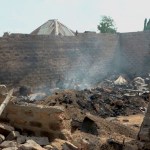
Since a June 14 attack on Yelwata by Fulani herdsmen, who are predominantly Muslim, Odaudu said he hasn’t dared make regular visits to much of his land. He owns 14 hectares (just under 35 acres) of farmland but now survives on only three hectares close to his village, Otukpo Nobi. He can grow okra and cassava there but not rice or yams.
The Yelwata attack has strained Benue’s famous hospitality. Usually, farmers dash out to the gardens or fields to harvest fresh food to entertain guests. But now, residents of Benue fear venturing out.
This fear hamstrings Benue’s agrarian economy. The Fulani are a people group numbering more than 40 million: Two centuries ago, Fulani in what is now northern Nigeria fought a series of holy wars “purporting to purify Islam” and became for a time a ruling aristocracy. Recent attacks by Fulani herdsmen not only have left hundreds dead or displaced and farmlands destroyed, but they’ve also prevented those who remain from producing food staples used across Nigeria.
More attacks in Benue threaten Nigeria’s agricultural economy. More than two-thirds of the residents of Benue, “Food Basket of the Nation,” work as farmers. Heavy crop losses or failure to harvest will raise the price of groceries across Nigeria, especially for yams, maize, and soybeans.
According to the Nigeria Economic Summit Group (NESG), because of the rising costs, the country’s “food inflation rate is the second-highest in Africa and the fifth globally.”
NESG reported that among the major drivers of food inflation is “persistent insecurity in major food-producing areas in the country, which continues to disrupt supply chains and drive up prices.”
Odaudu now employs only two or three hired hands, far below the ten he would normally need. In the past, Nigerians would have considered him wealthy—he owned enough land to both feed his family all year and have crops left over to sell. Now he’s just trying to feed his family.
He hasn’t fled Otukpo Nobi but stated he can’t sleep peacefully anymore. Gunshots too often tear through the night air and prevent villagers from sleeping.
“We struggle to feed now,” he said. The harvest, once sold, will barely allow him to sustain the family all year.
Some Benue residents feel hopeless.
“All we can do is pray,” Odaudu said, “but we don’t even know if God hears our prayers.”
Odaudu is not a Christian—he believes in the ancestral spirits of the land. But he said his sister is a Christian, and he welcomes every prayer now.
“My sister prays, and she prays for peace every day,” he noted.
The latest attack made a bad situation worse, according to Benue resident Titus Tsendiir. The teacher from Makurdi, the Benue State capital, told CT that if nothing is done to check the attacks and restore peace, then farming will halt and prices of staple foods will rise.
Tsendiir invested his earnings from teaching—over 400 thousand naira (about $260 USD)—into his rice farm in 2023. But due to recent violence, he couldn’t harvest his crops.
“I’m not going to the village to farm anything like rice and all those things again,” he told CT.
He said after President Bola Tinubu’s June 18 visit to the state after the Yelwata attacks, some residents went to their farms to spray chemicals and prepare the land for farming but fled when they heard gunshots.
“Before we knew, the younger brother to our chief was killed [by] that gunshot,” he said. “As I speak to you, he has not been buried yet.”
Both religious and occupational differences influence the conflict. Most attacks by Muslim Fulani herders target Christian farming villages, which often belong to the Tiv ethnic group. While some reports point to clashes between nomadic herders and farming communities as the primary source of conflict, Tiv paramount ruler James Ayatse, Tor Tiv V, claimed motives are darker.
“Your Excellency, it’s not herder-farmers’ clashes; it’s not communal clashes; it’s not reprisal attacks or skirmishes,” Ayatse stated in a townhall meeting with President Tinubu. “What we are dealing with … is a calculated, well-planned, full-scale genocidal invasion and land-grabbing campaign by herder terrorists and bandits which has been [going] on for decades.”
Tsendiir said the Pentecostal Fellowship of Nigeria is organizing a protest march, but the “attacks have continued.”
He added that the responsibility lies with government to restore peace quickly.
“If people return now and are able to farm, at least they will be able to salvage something this year.”