News

Preservation Grants Help Black Churches Hold On to Their History

Over a hundred congregations have received up to a half-million dollars to repair deteriorating buildings and restore their place in their communities.

Cynthia Gibbs, chair of the Taveau Legacy Committee, is part of a group working to restore historic Taveau Church in South Carolina.

Cynthia Gibbs, chair of the Taveau Legacy Committee, is part of a group working to restore historic Taveau Church in South Carolina.

Christianity Today October 7, 2025
Image Courtesy of Cynthia Gibbs / Edits by CT

Cynthia Gibbs grew up five miles from Taveau Church, a small wooden building weathered by decades of declining membership and a deteriorating physical structure.

Outside Charleston, South Carolina, the church sits on land once owned by Henry Laurens, one of America’s founding fathers, a wealthy planter and slave owner.

At nearly 200 years old, the structure had become a shell of its former self with its story largely untold.  

“Church has always played a critical role in our history,” said Gibbs, chair of the Taveau Legacy Committee. “When these sacred structures deteriorate and disappear from the landscape, so does all that history and its importance as to who we are as a people and all the contributions we have ever made.”

Black congregations of enslaved people and former slaves worshiped in Taveau decades before the Civil War, and subsequently the church also served as a Reconstruction-era schoolhouse, according to Gibbs. 

The church served as a house of worship for over 175 years, first for Black Presbyterians and then for Black Methodists in South Carolina. Once the church fell to about a dozen members in the 1970s, it merged with a nearby United Methodist Church and stopped using its old building.

Even active congregations struggle to raise funds or secure financing for major building projects. For dwindling historic churches whose buildings have fallen into disrepair, it can be impossible. 

Project costs add up quickly, and it’s hard to estimate how extensive or pricy a restoration could get. Older structures can require more specialized labor and supplies. Crumbling foundations and rotting wood need replacing, as do outdated plumbing and electric lines. Plus, historic buildings can be subject to regulations for preservation.  

Many historic churches rely on grant funding to help cover needed repairs. Taveau began restoration two years ago. Gibbs is hopeful that future South Carolinians will be able to visit the building and learn about its history, thanks in part to funding from the Preserving Black Churches initiative of the African American Cultural Heritage Action Fund.

The grant program provides $50,000 to $500,000 to churches with an active congregation or those being considered for new uses in the community. The initiative has awarded $275,000 to help in Taveau’s revitalization and efforts to make it a destination site.

In 2025, 30 historic Black churches were awarded a total of $8.5 million in funding to support preservation work, including structural restoration and management of the funds.

Overall, $21.67 million has been awarded through 113 grants since 2023, many going to buildings in Alabama, Georgia, and Ohio.

The grants also cover technical and marketing assistance. Grant recipients are launching programs, fueling community revitalization, and educating the public on the sites’ history.

“For generations, Black churches have anchored communities and fueled movements,” said Brent Leggs, executive director of the African American Cultural Heritage Action Fund and senior vice president of the National Trust for Historic Preservation. 

“Yet too many are at risk due to decades of disinvestment,” he added. “These places are not just buildings—they are living monuments to American resilience, leadership, and cultural brilliance. Equitable preservation ensures these sacred spaces are protected, celebrated, and passed on with pride.”

The African American Cultural Heritage Action Fund was launched in 2017 by the Washington, DC–based National Trust for Historic Preservation. Preserving Black Churches had its first cohort in 2023. So far, grant recipients include:

·     The African Meeting House in Boston, where William Lloyd Garrison founded the New England Anti-Slavery Society in 1832.

·      St. James African Methodist Episcopal Church in Columbus, Georgia, the second-oldest AME church in the state. The building was completed in 1876. Over the years, water damage has affected its twin turrets and steeple and its wooden doors, believed to have been carved by former enslaved craftsmen.

At Taveau, Gibbs and others hope to rehabilitate and restore the structure, which sits on 3.7 acres and includes a cemetery, and turn it into a destination site.
The building, a surviving example of rural antebellum architecture, was built in 1935 and became a center for Black Methodists in 1847 and a hub of Gullah Geechee life (a culture that developed among African descendants on the coastal Carolinas and beyond). The funding will go toward exterior restoration to keep the church structure standing.

Historic Black churches are most common in the South and in older cities, places with high concentrations of Black residents, according to Nichole R. Phillips, director of the Black church studies program at Emory University’s Candler School of Theology.

“In some respects, the importance of preserving Black churches is because the Black church is really under threat,” with more Black Protestants attending multiethnic churches, she said.

Congregations age. Younger families leave, sometimes citing the lack of women in leadership, lack of LGBTQ affirmation, or moral standards they view as outdated. And, increasingly, younger generations didn’t grow up in the Black church in the first place.

Still, churches support educational programs and scholarships. They spur local businesses. They bring people together for fellowship. The ramifications of losing a church can ripple through the community.

The grants are key because they give churches the opportunity to invest in capital projects, extending the life of the structure and keeping the doors open, Phillips said.

Another beneficiary is The House of God Church in Nashville, a Holiness-Pentecostal denomination that includes 237 churches. Founder Mother Mary Magdalena L. Tate established the denomination in 1903 in Tennessee.

​“This gives our churches a better physical structure and gives them an opportunity for those historic churches to be viable,” said Delvin Moody, program director at the Keith Center, which serves as the historic and preservation grant office for the denomination.
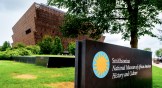
The denomination has always been self-funded, and only recently looked to philanthropic grants for funding. The House of God Church received a $150,000 capacity grant that was used to hire an executive director and cover administrative costs associated with its five-year plan.

They plan to examine the infrastructure of the historic churches in the denomination and develop preservation efforts based on data. 

Roughly 85 active congregations are deemed historic and will be aided through the Keith Center’s work “to make sure they’re strong and can plan for the future,” he said. 

“They became a physical representation of our history, and when you don’t see the building, or see a building that is dilapidated or not functioning, then you miss the opportunity for younger generations to inquire,” he said. “The role of the Black church is multifaceted.”
News

Two Years After October 7, Christians See Fruit amid the Suffering

Churches in Israel and Egypt provide food, aid, and a listening ear to those scarred by war.

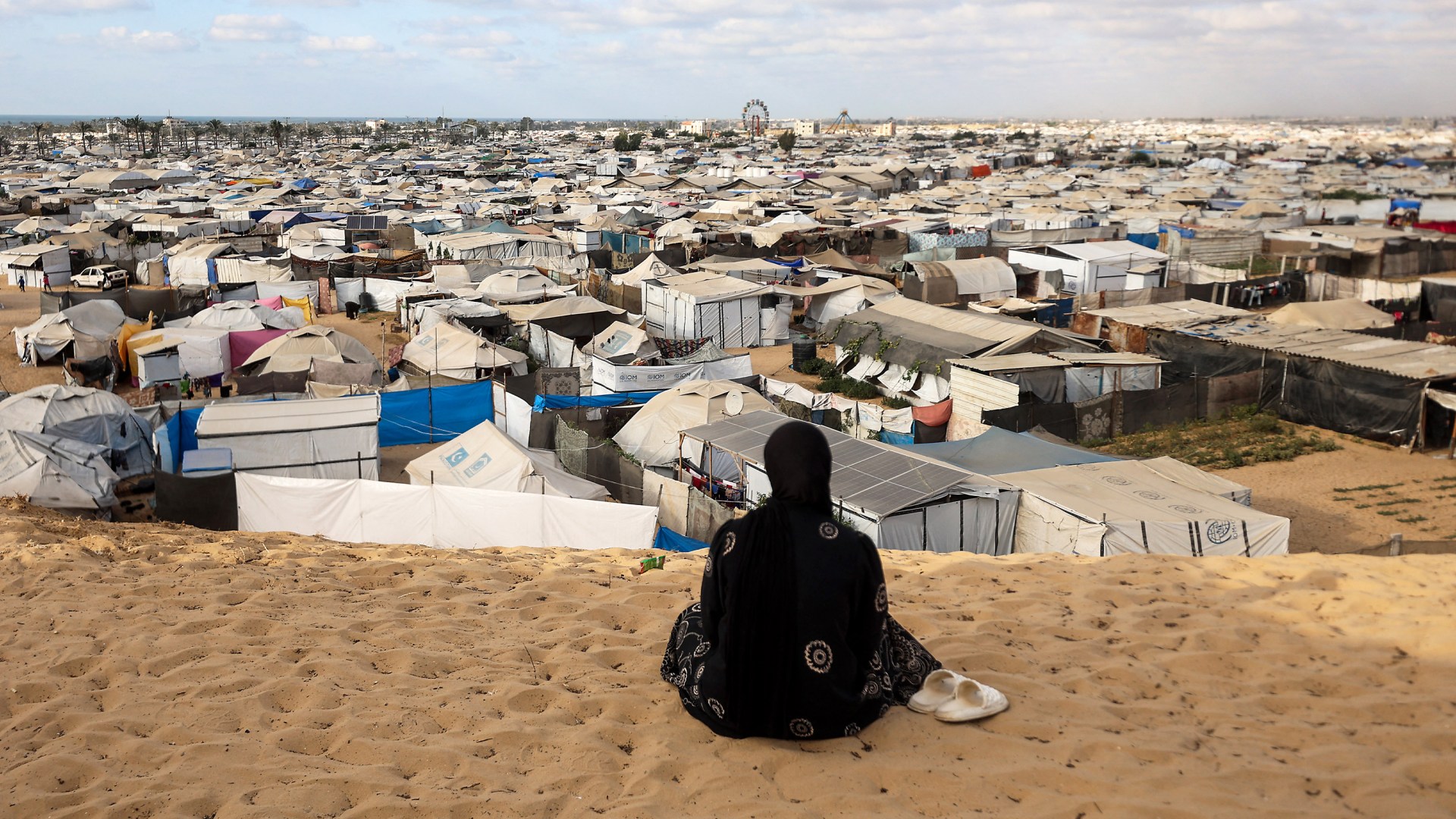
A woman overlooks a camp for displaced people in the southern Gaza Strip, on September 29, 2025, as the conflict between Israel and Hamas continues.

A woman overlooks a camp for displaced people in the southern Gaza Strip, on September 29, 2025, as the conflict between Israel and Hamas continues.

Christianity Today October 7, 2025
Omar Al-Qattaa / Contributor / Getty

Images from the October 7, 2023, Hamas attack and its aftermath are forever seared in the mind of Israel Pochtar. 

Pochtar, a pastor at Congregation Beit Hallel in the city of Ashdod, Israel, recalled the early-morning sirens that jolted him awake and sent him peering through the windows of his apartment on the 30th floor. He watched rocket after rocket fire from Gaza, 23 miles to the south. Smoke billowed from buildings in nearby Ashkelon. 

He turned to social media and saw videos of Hamas terrorists killing Israeli police officers. He thought it was fake news. 

Only after seeing news reports of Hamas brutally murdering more than a dozen elderly Israelis who had gathered for a trip to the Dead Sea did he comprehend the unfolding horror: 1,200 dead and 251 taken hostage, with evidence of rape, torture, and entire families burned alive. 

As he drove one of his sons to a nearby military base to report for duty as part of a massive call-up, he saw fear and confusion in the eyes of soldiers. “No one was smiling, and no one was making jokes,” Pochtar noted. He prayed for his son, said goodbye, and burst into tears. 

Then he began identifying ways his church could serve a fearful and broken population. 

Four months later, Fawzi Khalil, the director of relief ministries at Cairo’s Kasr el-Dobara Church, visited Egypt’s border with Gaza, where he encountered the suffering of Palestinian refugees.

Palestinians caught in the cross hairs of Israel’s retaliation on Gaza crossed the border into the Egyptian town of Sheikh Zuweid and filled a sports center that had been converted into a field hospital. An estimated 300 wounded people lined the floor of the stadium, many with missing limbs. The scene reminded Khalil of a scene in Gone with the Wind where hundreds of injured Civil War soldiers filled a train station floor.

Khalil heard people moaning and crying out in pain, and he lamented that he had no medical training. “Then the Holy Spirit spoke to my heart and said, ‘Just give them food to eat,’” Khalil said. 

He returned to Kasr el-Dobara, the largest Protestant church in the Middle East, with more than 9,000 members, and launched a ministry to Palestinian refugees. 

Two years later, Gaza is in ruins. Dozens of Israeli hostages—20 of them believed to be alive—remain in captivity. More than 67,000 Palestinians have died throughout the course of the war, according to the Hamas-run Gaza Health Ministry, which does not distinguish between civilians and combatants in its death toll. On the world stage, Israel’s isolation has deepened as more Western countries recognize a Palestinian state. 

Last week during Israeli prime minister Benjamin Netanyahu’s visit to the White House, US president Donald Trump laid out a 20-point peace plan and gave Hamas “three or four days” to accept it or face “a very sad end.” 

The plan, which Israel immediately accepted, requires the release of all hostages within 72 hours of Hamas’s approval, followed by the release of 250 Palestinian prisoners serving life sentences and 1,700 Palestinians detained in the wake of the October 7 attacks. As part of the plan, Arab and Muslim countries agreed to help disarm Hamas, a condition the terrorist group has repeatedly refused. A board of foreign officials, headed by Trump, would oversee the establishment of a transitional government.

On Friday, Hamas accepted some elements of the plan, including the release of all hostages and the termination of its power structure in Gaza, but said other points required further discussion. On Monday, Israel and Hamas held indirect negotiations in Egypt in an attempt to iron out their disagreements. 

Amid the uncertainty, Christians in the region continue to share a message of hope. Both Pochtar and Khalil said they have witnessed God at work through the suffering.

After securing funding through World Relief in early 2024, Khalil began making weekly trips to northern Sinai with teams from his church in Cairo. They delivered food, blankets, clothes, and medicine to Palestinians who arrived in Egypt with few resources. 

A journalist from Gaza told Khalil about five Palestinians in Cairo who needed assistance. The church provided them with food and helped them with rent. From there, the word spread.

“Those five people told 50 others about this crazy church that came and visited with them and cried with them and gave them food,” Khalil said. “And then the 50 told another 500.” Today, 600 members of the church make weekly visits to 5,000 Palestinian residences in Cairo.

Estimates from 2024 placed the number of Palestinian refugees in Egypt at around 100,000, but Khalil believes the current number is double that. Most lack the proper documentation to work or enroll their children in school, he noted.

In one of Kasr el-Dobara’s conference rooms, Khalil welcomed Imam Saad, a Palestinian woman who worked in women’s health for 25 years at a Gaza City hospital. Her eyes reflected the sorrow she has carried for the past two years as a refugee, worried about her family in Gaza and surviving in Cairo without income. 

A contact in Gaza connected her to the church for support. “You respected us as Palestinians,” she said to Khalil, extending her gratitude. 

The church avoids mass distribution of aid. “We know that deep in their hearts they need prayer and they need you to cry with them,” Khalil explained. “They don’t cry when they are in a big room, but once you visit them in their home, they cry and cry, and you hear a lot of their stories.”

During one recent home visit, Khalil met a man from Gaza who had taken a bullet to the neck that paralyzed him. He made it across the border and was living in Cairo with his grandfather, who began weeping when Khalil arrived. The grandfather said he was afraid his grandson would be left alone after his death, and was glad to see someone willing to help. 

“I told him, ‘The church is your home,’” Khalil said as tears streamed down his cheeks. The church provided a specialized wheelchair to help him in daily life. 

During the past two years of ministry to Palestinian refugees, most of whom are Muslim, no one has refused the help of the church, Khalil said. 

Meanwhile, in Israel volunteers from Congregation Beit Hallel, which Pochtar founded 17 years ago, also visit people in their homes. During the first year of the war, a group of 120 people from the church assisted the elderly and young mothers whose husbands were called to serve in the Israel Defense Forces (IDF).

Donning helmets and military vests, the ministry teams delivered food, water, and other necessities when it was too dangerous for people to leave their homes or bomb shelters. Over the past 24 months, Hezbollah in Lebanon, the Houthis in Yemen, and the regime in Tehran have launched tens of thousands of rockets, missiles, and drones into civilian centers in Israel.

“The difficulty is waking up in the night and running with your kids to the bomb shelter and especially [for] those who have less means and are living in the cheaper apartments,” Pochtar said in the early months of the war. “We try to visit them during the day and bring them food, prayers, [and] encouragement.” 

More recently, the ministry has delivered food, bulletproof vests, mattresses, and other supplies to soldiers serving across the country. More than 1,000 Israeli security personnel have died during the past two years, including an elder’s son from Pochtar’s congregation who died during Hamas’s initial attack.

Pochtar said that since the war began, Israelis have started to seek God. “Many were disappointed in the government, in our military, because the military wasn’t ready to protect them,” he explained. “But it caused people to seek heavenly help.”

Pochtar has seen an increase in people coming to his congregation with questions about faith. Growth is also happening in other ways. More young people in his congregation are getting married—a trend he’s observed across the country.

“This war has helped many to reevaluate their lives, and many are actually proposing to their girlfriends and getting married,” Pochtar said. “And now we have a baby boom.”

Today when Pochtar gazes at Gaza through his window, he rarely sees rockets firing from the enclave. Fewer lights twinkle in the nighttime horizon, as Israel’s offensive has destroyed two-thirds of Gaza’s infrastructure.

He prays for his two sons who continue to serve in the IDF and for the release of the remaining hostages in Gaza.

As the future of Trump’s peace plan is yet to be seen, both Pochtar and Khalil are praying for changed hearts in the region.

“If the Jewish become Christians and the Muslims become Christians, then the peace of God will reign,” Khalil said. “I want the leader of Hamas to live in peace and to know Christ. And the most radical right Jewish leader, I want him to know Christ and to live in peace.”

Ideas

The CDC Listened to Vaccine-Hesitant Moms in My Living Room

I was surprised to find myself hosting an off-the-record chat with people worlds apart on public health. But I hope that night was a seed of something new.

A syringe laying on a couch.
Christianity Today October 6, 2025
Illustration by Elizabeth Kaye / Source Images: Getty, Unsplash

Late last spring, when measles was spreading in a West Texas town less than an hour from my house, I invited a different sort of possible disaster into my home. 

My husband and I pulled dining room chairs and stools into a circle in our living room and welcomed an unlikely bunch: local pediatricians, some vaccine-skeptical mothers, and two senior members of the measles response team from the Centers for Disease Control and Prevention (CDC). Our plan was to sit together and talk.

The story of this gathering is an interesting one. It started a few weeks after the outbreak began, shortly after the first child died. An editor from The New York Times asked me to write an essay about why conservative West Texans were increasingly refusing the measles vaccine despite the risks of the disease. I took the assignment, but it turned into an essay about crumbling trust in public health institutions since the pandemic. 

After the article published, my inbox was swarmed with responses. Some of it was hate mail from people who thought I was dangerous—or dangerously stupid. But I also got notes from people working in public health and vaccine development who wanted to talk. Among them was Jonathan Yoder, a fellow Christian and deputy director in the CDC’s Division of Infectious Disease Readiness and Innovation.

“Your article touched on some very important issues of credibility, humility, and trust that I think are the critical pieces for moving forward in a post-pandemic world,” he said in his email. “We have a good deal of work to do to build bridges in this polarized environment. Are you interested in having a further conversation on this topic?” I was.

A few days later, while I was waiting for my daughter to finish a theater class, Jonathan called. I almost laughed at the absurdity: I’m a writer and a mother and the communications director at our church. I have no expertise in public health or medicine. That I’d be consulted by a CDC official about measles felt almost ridiculous, and I said so: “People in your position don’t normally talk to people in mine about professional concerns.”

“Yeah,” he said with a chuckle, “I think that’s part of our problem.”

We chatted for half an hour, our conversation ranging from how his faith shaped his career to his current work on the measles task force to our mutual frustration with how science became politicized during the pandemic. We didn’t agree on everything, of course, but we shared about our families and the things we had in common. As we talked, I felt my anger and suspicion toward the CDC start to soften. 

Those feelings, to be clear, were nearly subconscious. I’m not walking around seething at the CDC. But like many other politically conservative Americans, including many evangelicals, I’d come to think of the CDC as a monster that kept children—my children—out of school during the pandemic. I’d begun to associate the agency with old people dying alone in nursing homes, with small businesses being forced to shut down because of how their states interpreted the agency’s recommendations, with people I know losing their jobs because they refused to be vaccinated. 

My distrust of the CDC never led me to change my mind about the value of standard childhood vaccines. Yet it isn’t hard for me to understand why some people did alter their opinions. Since the pandemic, it’s understandable that the CDC is the object of so many people’s anger, suspicion, and sense of betrayal. I could feel the edges of that bitter terrain within my own heart.

That conversation changed things for me. I wasn’t talking to an opaque government institution. I was talking to Jonathan. We saw some things differently, but we agreed on a lot. And in our respective spheres of influence, we were both trying to figure out how to put back together what was broken, how to build bridges that the last half decade had washed away.

A few weeks after that first call, Jonathan accepted my invitation to move the conversation offline. We invited more folks to join us: his colleague who works with the CDC’s childhood vaccine program, my pediatrician and other doctors she knew nearby, and a couple mothers who don’t vaccinate their kids and were brave enough to talk about it to the CDC. With mutual assurances that everyone would stay civil, we set a time and arranged the chairs.

I was nervous that evening. I lit a candle, picked up a stray sock, said a little prayer, and fluffed a few pillows. The first guests looked as anxious as I felt. Only Rusty, our overly friendly goldendoodle, seemed perfectly unfazed. He bounced around in pure delight: So many new friends here to see me!

We introduced ourselves, then started talking. It was easier than I expected. That night was off-the-record, but I can tell you everyone was curious and kind. We didn’t hide our differences of opinion, but we listened and asked sincere questions. It’s harder to reduce people to an opinion you dislike when you’re looking them in the eye.

By the end of the night, everyone looked a little dazed. We weren’t sure what had happened or what good it could do in the world. The divides we tried to reach across—between the pro- and anti-vax, those who trust public health agencies and those who don’t—are too big to overcome in my living room. But perhaps we each made some change in the world within, learning to see a person where once we saw only a problem. And in the weeks that followed, I came to think that was no small thing.

In early April, the CDC began mass layoffs, with plans to eliminate one-fifth of its workforce. Anytime I’d hear about more upheaval, I’d text Jonathan to see how he was faring. Then, in early August, a gunman opened fire at the CDC’s Atlanta office, firing off multiple rounds and killing a police officer. I texted again, telling Jonathan I was praying for him and his colleagues. A few weeks later came even more reports of chaos at the agency: One month after her Senate confirmation, CDC director Susan Monarez was fired by Health and Human Services Secretary Robert F. Kennedy, and several more high-level CDC officials resigned in protest.

I understand that for Americans who have been harmed by CDC recommendations, this chaos might seem like good news. But when I picture the CDC now, I think of riding on a train with no brakes, an airplane that has lost an engine, a ship navigating ice without instruments. Maybe the CDC is too big. Maybe it’s been going the wrong way. But if it goes down, the damage will be enormous.

Though many Americans seem to have an appetite for institutional destruction these days, I feel no nostalgia for the years when mothers worried about polio. And I worry about unforeseen and unintended consequences of rapid and ill-considered change. What will we fail to notice until it’s too late? Until the damage is already done?

Amid all this, I find myself often thinking back to that conversation in my living room. Maybe the problem is we’ve made our world small in all the wrong ways: We reduce living, breathing human beings to pixels on a screen, flattening them into a list of opinions to be graded against our own. 

Or maybe the problem is we’ve made our world large in all the wrong ways: Rather than talking to our neighbors across the street, we shout at the cable news panels beaming in from across the country. 

Or maybe the problem isn’t just scale but a lost sense of reality, a lost feel for truth and love and community. We’ve become so disoriented, so unsure of what’s real, that we tear down the very people and institutions we need to live well.

That conversation in my living room escaped these problems, I think. We made our world small in the right way and large in the right way, and we were able to do that because, for all our differences, as Christians, Jonathan and I agreed about truth. We agreed about what is good and necessary in following Christ: humility over hubris, listening over speaking, and reconciliation over revenge. 

Last month, I reached out to Jonathan again—this time on the record—to see how he’s thinking about institutional trust and public health going forward. “Maybe in the 1950s, there was a time when we would all just trust our doctor or the health authorities,” he told me in an interview. “But that that ship has sailed.”

“To be effective now, we need to make sure that we’re meeting people where they are, understanding what their motivations are, and understanding what’s important to them,” he continued. “We can’t conclude that they don’t love their children or judge that they don’t love their community just because they make a different decision from the one we recommend.”
That’s possible only if experts listen at least as much as they speak—and if they respond to rejection of their advice with patience rather than force. When it became clear that the community at the center of the Texas measles outbreak wouldn’t accept vaccines, for example, Jonathan and his team changed tactics. They focused on educating the public about other ways to keep measles from spreading, like staying home when sick and knowing when to seek medical care.  

“We don’t want to just put up a barrier that says, ‘If you’re not going to get vaccinated, we don’t really have anything else to offer,’” Jonathan told me. “In the case of measles, I doubt we will change the recommendation to get vaccinated. But it doesn’t mean that’s the only thing we have to offer to help you keep you and your family healthy, to keep your community safe.”

I don’t know how much or how quickly this approach can change public perception of the CDC—let alone foster trust in institutions more broadly. I do know that it’s vital for Christians in civil service and other public roles to stay the course, to treat their work as an outpouring of their faith. I imagine this must be particularly difficult right now, not only because of political upheaval but also because seeking to be a trustworthy person at an institution that has lost public trust must be deeply disheartening.

But we need trustworthy people more than ever. Our society can’t function without good institutions, and Christians are uniquely positioned to work toward the reconciliation we need. After all, outrage is not a sufficient response to everything we oppose or don’t understand.

That’s not to say outrage is never warranted. Like many, I’ve long thought we need a post-COVID-19 reckoning on public health, especially after learning some of the ways in which science was manipulated and information was controlled during the pandemic. Shouting, “Trust the science!” and issuing edicts that demolish people’s lives and livelihoods was not right during COVID, nor will it be right in public health crises to come.
But reckoning and retribution, as we’ve seen of late, are not the same thing. Chaos and confusion are not the way of Christ, for “God is not a God of disorder but of peace” (1 Cor. 14:33). Christians in positions of institutional authority can and must model a gentler and better way, a way that values people above ideology and remembers that no human expert is the source of ultimate truth. 

“Science should be humble, right? Science should be saying that what I know today is only a fraction of what I’ll know tomorrow, and so I shouldn’t hold on to what I know today as if it’s revealed truth,” Jonathan mused. “We could talk about what we are learning in better ways. A stance of humility would certainly go a long way.”  

Just as at my house that night, this might not seem like much of a solution. It’s no dramatic reform or sweeping federal initiative. But it does make a difference. It is a mustard-seed transformation. It is a small ministry of reconciliation (2 Cor. 5:18). It is a step back toward trust.

Carrie McKean is a West Texas–based writer whose work has appeared in The New York TimesThe Atlantic, and Texas Monthly magazine. Find her at carriemckean.com.

Inkwell

Reading at the End of the World

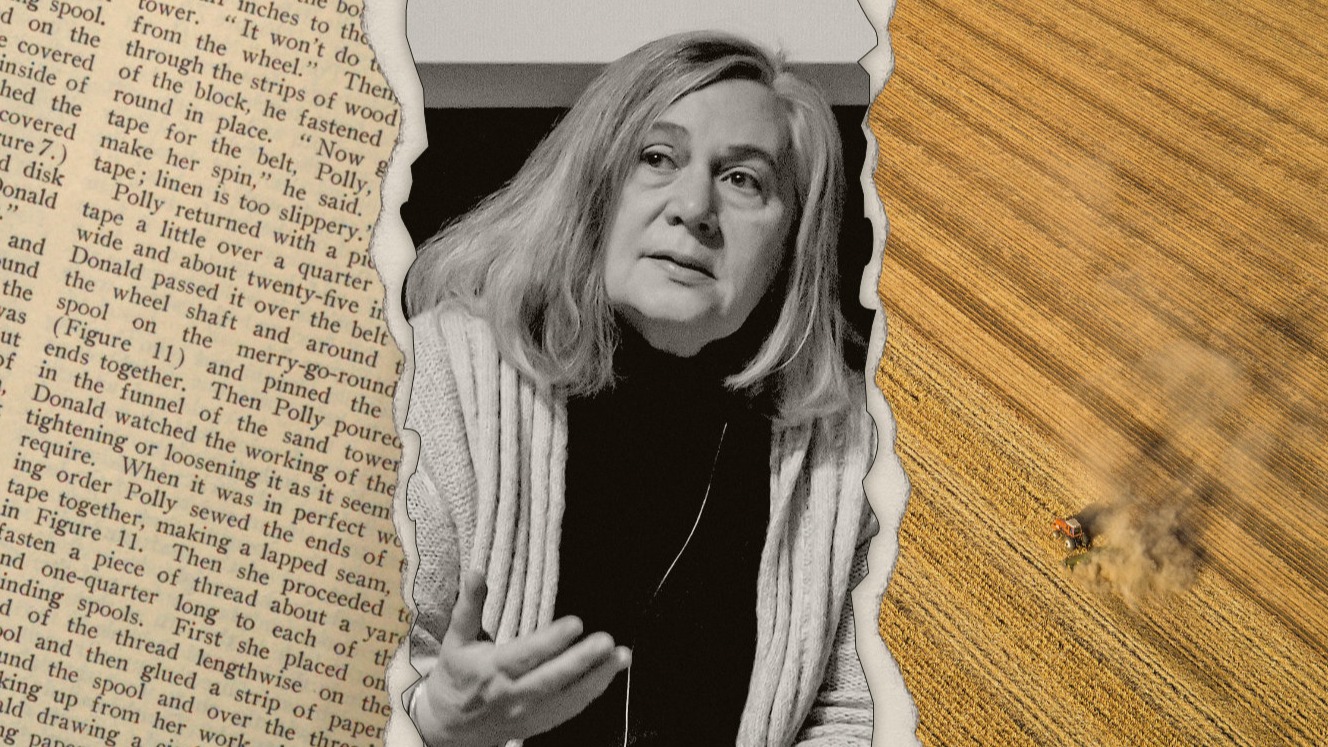
A chat with renowned novelist Marilynne Robinson and how reading can train us in hope.

Inkwell October 4, 2025
Images from Wikimedia. Edits by Inkwell.

The street preachers are not all wrong, you know.

We always have grounds to suppose the world is ending. Or a world, at least. Democracy, free speech, Kentucky’s topsoil—any system, institution, or resource that requires tending remains at risk of negligence and then destruction. 

My friends wouldn’t label me a cynic, but I do try to stay levelheaded about these things. I am acquainted with the ways of weeds. I’ve seen good marriages choked by sins of omission as well as commission. Things fall apart, and nature abhors a vacuum. A little folding of the hands to rest, and there goes your car’s transmission.

Entropy abounds, yet few of us are content to sit by and watch the world burn. We feel responsible to do something to put things right, to stave off what little chaos we can. For Christians, this sense of obligation stems from Scripture’s many injunctions to seek justice, love mercy, promote peace, care for the poor and vulnerable—in short, to love our aching world. There are so many causes that would enlist our loyalties, so many sorrows we might alleviate. The challenge, of course, lies in deciding what to do with the time we have left.

Perhaps the last thing you’d think to do is pick up a book. What good is reading at the end of the world? Why read when you could volunteer at a soup kitchen, call your state representatives, or pull weeds?

For help parsing such questions, I recently contacted one of the most prodigious readers I could think of: Marilynne Robinson. Few living authors have so profoundly probed and disclosed the human condition as Robinson. In both her essays and novels—including the Pulitzer Prize–winning Gilead—she helps us consider the intrinsic dignity of life and language in the face of catastrophe, and the hope it takes to keep reading.

In an email interview, Robinson shared about her recent reading interests, art and politics, artificial intelligence, Shakespeare, and more. This interview has been edited for length and clarity.


Polls continue to indicate that Americans are reading fewer books for less time. Perhaps our Founding Fathers would be alarmed, but should we be? Are there goods inherent to reading books that can’t be enjoyed through other media?

A book is an ingratiating thing. It is actually yours, so long as it is in your hands. You invest memory in it as a physical object. You can mark it up, return at will to a place you have found moving or problematic, and be reminded that you change as a reader, even while enjoying the pleasure of memory. Nothing is going to go wrong with it. It never needs a charge. You can buy a book and shelve it as a promise to yourself, an aspiration.

I am not surprised that innovative forms of information and entertainment have their appeal, their own beauty. But the book—the codex—has been around for 2,000 years at least, for very good reasons.

What’s one book that preoccupies your mind these days? Why do you think that is?

My interests are always a little unusual, however predictable they may seem in retrospect. I’m reading, in translation, an essay on English law probably written by Henry de Bracton, a 13th-century jurist. I’m looking at the intertwining of humane impulses with autocratic ones to try and understand how liberal democracy arose, how its adversaries survived within it, and how these adversarial views are rationalized and encoded in earlier law.

Many “new” enthusiasms are really the resurgence of old habits and antagonisms. They are irrational, in other words, and they have an entrée into political discourse because they are also traditional.

It seems we may be on the cusp of an artificial intelligence revolution. Many have voiced concerns over the implications of generative AI for human agency, labor, and creativity. Some artists are advocating for a New Romanticism, claiming “it’s 1800 all over again.” What do you make of these developments as a writer? Where might we seek wisdom for facing AI in the years ahead?

It’s hard to distinguish a “revolution” of this kind from an effective sales campaign. It is true that vast amounts of money are being poured into this technology. It is also true that it is not becoming more reliable or necessarily returning improved profits. So much has been invested in it that more investment is needed to cover potential losses, which would certainly stagger the economy if or when the whole boondoggle collapses, leaving environmental disasters behind.

As far as creativity is concerned, AI can make coherent rehashes of randomly collected data. Artists should address their work to people who want more, who want meaning, for example.

In your article “Imagination and Community,” you argue that democracy and other large-scale communities require “imaginative love” for others with whom we may deeply disagree. Do you believe fiction can nurture such love?

Yes, if it chooses to.

Speaking of democracy, you recently described America as “two nations” contending for authority, resources, and cultural influence. How else can writers contribute to cultural reform without succumbing to mere culture war or propaganda?

Writers can produce work that is simply good in itself—sound, beautiful, attentive to the felt experience of life. We have let too much be absorbed into “politics.” In practice, politics can be beautiful in their own way when they are based on courtesy, good faith, and worthy motives. But ideally, they are a backdrop for the important work of inquiry, creativity, advancement, and just living life.

We have made a kind of religion of politics, a low-ceiled, incurious, angry one with nothing of the beauty or moral seriousness that dignifies authentic religion. At the moment, politics is very much overburdened by significances that it is not suited to carry. Art should be art, religion, religion, and politics, politics.

Turning from politics to literature, what has a writer like Shakespeare taught you about generosity?

An interesting question. He certainly exemplifies empathy. There is hardly anyone on whom his attention rests who is not given a moment of grace. I have been thinking lately about how Shakespeare was among the earliest writers in the English language to take on high subjects and popularize them further by staging them in a public theater.

An old poet in one of Shakespeare’s late plays, Pericles, says that in the deep past, songs were sung “to make men glorious.” I take him to be speaking for Shakespeare when he wishes he could have more time, and “spend it for you like taper light.”

Shakespeare, of course, knew what he was doing, giving people what was their own and would be more their own for his glorious gift. This was also the realization of his own nature as a poet, not in a self-aggrandizing sense but in the pleasure of the bond realized in providing people with their story in their language, made glorious. This is a transcendent generosity, full of the blessings of giving and receiving.


After my exchange with Marilynne, I checked out Pericles from the library and read it for the first time. The nautical play follows Pericles, Prince of Tyre, as he flees assassination by a depraved king and sails the perilous Mediterranean to rescue his wife and daughter from disaster. In the end, however, it is not Pericles who saves his family but a series of happy coincidences, which we are meant to see as divine interventions.

Early in the play, the then-bachelor Pericles is shipwrecked at Pentapolis, where friendly fishermen have just conveniently caught his shield and armor in their nets. This enables him to enter a nearby contest for the hand of beautiful Princess Thaisa. Six knights present their shields with a different emblem and phrase. Pericles goes last, his armor rusty and battered. His shield shows “a wither’d branch, that’s only green at top” and the motto, In hac spe vivo, or “in this hope I live.” Intrigued, Thaisa falls for Pericles, the two are promptly married, and they sail off into the next tempest.

Books often behave like Pericles’s shield, washing up on the shores of our lives in times of need. A book may sit unread on my shelf for years—an old aspiration or a gift from a friend—before some mysterious providence moves me to tolle lege, to “take up and read.”

Certainly, this was the case with Robinson’s novel Gilead. The book had been circulating among my peers for some time before I got around to reading it in the fall of 2018, having recently moved back to South Dakota from New Jersey. A proud but vocationally bewildered seminary grad, I found comfort in the steady voice of her character John Ames. Here was a man sharp enough for Barth and Herbert yet humble enough for Iowa!

In one remarkable passage in Gilead, Ames recalls a country church that had been struck by lightning and burned when he was a young boy. After searching the charred ruins for Bibles and hymnals, his father helped pull down the building in the rain. Ames watched from a nearby wagon with the other children as the adults worked, the women passing out food:

I remember my father down on his heels in the rain, water dripping from his hat, feeding me biscuit from his scorched hand, with that old blackened wreck of a church behind him and steam rising where the rain fell on embers, the rain falling in gusts and the women singing “The Old Rugged Cross” while they saw to things, moving so gently, as if they were dancing to the hymn, almost. In those days no grown woman ever let herself be seen with her hair undone, but that day even the grand old women had their hair falling down their backs like schoolgirls. It was so joyful and sad.

The protagonist remembers the scene as one of communion, which makes me wonder: Can a book be a means of grace? I don’t mean the sacramental means of grace, but a particular paperback (or hardcover) expression of God’s general providence, no less, by which he feeds us as from his fatherly hand. Grace sanctifies and strengthens us to endure the pitiless storms of life. It aims to make us glorious. Likewise, good poems, stories, and essays encourage the kind of slow interiority necessary for virtue at the end of the world.

Nothing so mundane as reading can prevent an AI apocalypse, environmental degradation, or the collapse of civilization as such. Even so, perhaps reading can remind us, as Robinson suggests, that creation’s fate does not finally depend on human will or technique, but on God, who has mercy.

Reading thus trains us in hope. To pick up a book in this world is to raise a shield bearing “a wither’d branch, that’s only green at top.” In hac spe vivo.

Cameron Brooks is the author of Forbearance (Cascade Books, 2025). He holds an MA from Princeton Theological Seminary and an MFA from Seattle Pacific University, but he calls South Dakota home. Visit camerondavidbrooks.com for more.

News

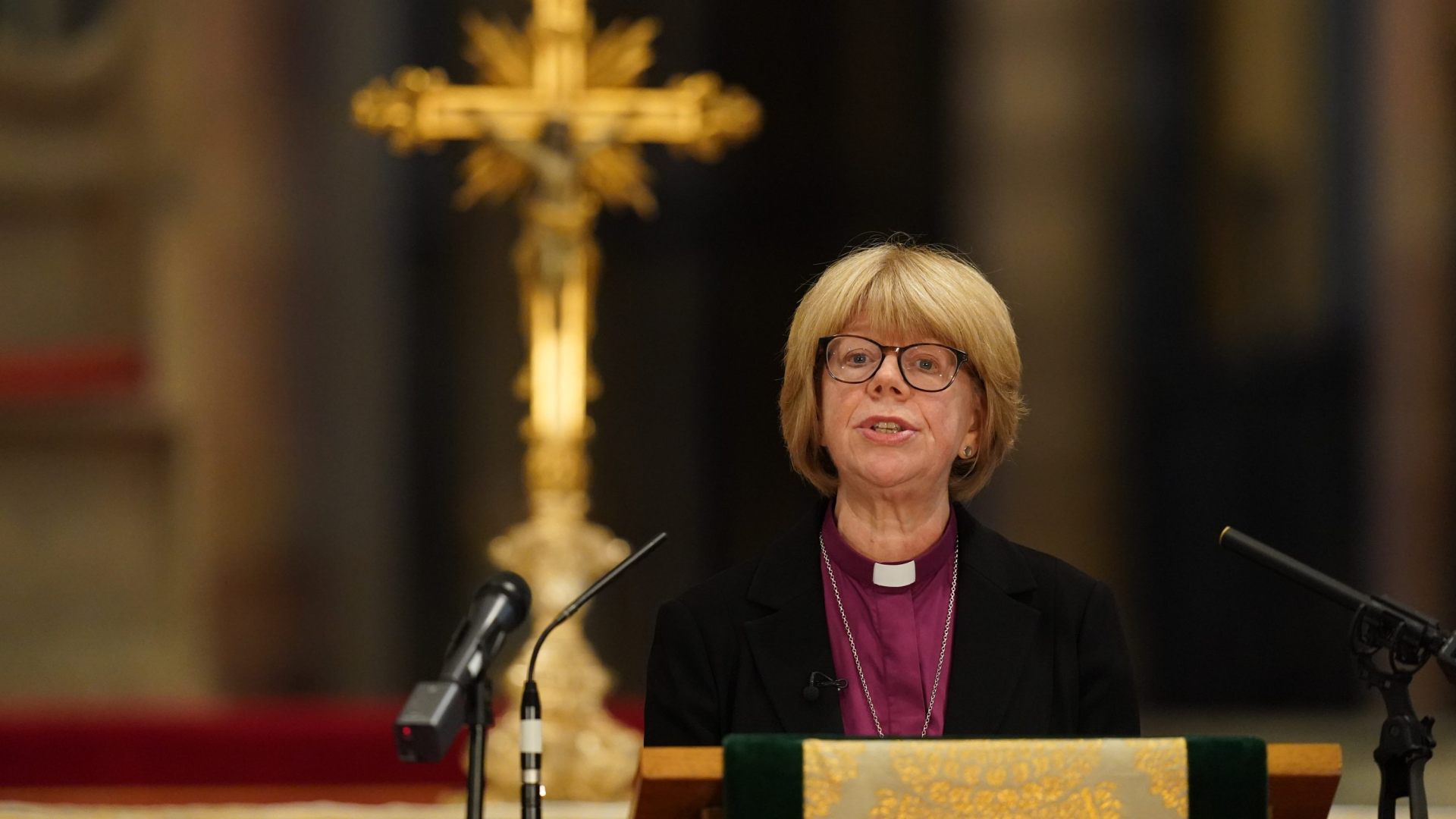
New Archbishop of Canterbury Steps into Anglican Divides

Conservatives call on Sarah Mullally, the first woman at the spiritual helm of the Church of England, to uphold biblical faith amid same-sex blessings debate.

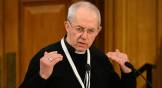
A woman at a lectern in a clerical collar in front of a gold cross.

Archbishop of Canterbury-designate Sarah Mullally in Canterbury Cathedral

Christianity Today October 3, 2025
Gareth Fuller / PA Images via Getty Images

Eleven months after Justin Welby’s resignation, the Church of England announced that London bishop Sarah Mullally will succeed him next year, becoming the first woman to lead the national church and global Anglican body as Archbishop of Canterbury.

Welby stepped down in November 2024 over a scandal involving church abuse cover-up. He had held the position since 2013. Many evangelicals—who make up around a third of the Church of England—had welcomed his leadership. A former oil executive turned vicar who had grown up in evangelicalism, Welby sometimes worshiped at Holy Trinity Brompton, birthplace of the Alpha course and the UK’s best-known megachurch.

As archbishop, Welby advanced significant reforms, turbocharging church planting and streamlining bureaucracy to kickstart evangelism. But he also became associated with a highly divisive plan to introduce services of blessings for gay couples, which triggered a bitter civil war between mostly evangelical conservatives and their liberal antagonists.

By the time Welby left under pressure, he had burned through much of his goodwill among fellow evangelicals. Welby’s somewhat tangential association in the 1980s with John Smyth—an influential evangelical lay leader who beat young men and had his crimes covered up by the evangelical establishment—ended up being the thing that toppled him.

As she takes office, Mullally inherits the safeguarding scandals, which have continued unabated since Welby left, and the same-sex blessings saga.

Bishops approved in principle plan to outsource safeguarding investigations and discipline to an independent body beyond the control of the bishops, but much of the detail remains to be worked out. And while gay couples can today request blessings as part of regular Sunday services, the church continues to debate adding standalone blessings closer to weddings, as well as relaxing the ban on gay clergy getting married themselves.

For several years, Mullally led the Living in Love and Faith project, which produced the prayers, though she stepped back from holding a prominent role as churches implemented the blessings.

Some evangelical leaders have cautiously welcomed her appointment, despite their deep theological disagreements. Mullally has experience working with conservatives in the Diocese of London, which contains opposition both to the blessings and to women’s ordination. John Dunnett, the head of the Church of England Evangelical Council, noted that as bishop she has shown a knack for strategic flexibility and a graciousness to compromise across deep theological divides.

The evangelical council, which has led opposition to the blessings, has called for prayers for Mullally as she takes up the role, warning of the difficult and fractured inheritance she takes on.

“We pray that God will enable Bishop Sarah to hold to the apostolic faith and call the Church of England to recommit to the historic doctrines and formularies entrusted to it,” the group said in a statement, adding that either the church must halt its “drift away from a Biblical understanding of marriage and sexual ethics” or evangelicals must find a separate future.

Similar sentiments landed from Church Society, another group of evangelical Anglicans. The organization said it hoped to meet with the new archbishop soon “to discuss the urgent need for reformation and renewal of the Church of England in biblical faith.” It also lamented that Mullally will be the third archbishop in a row who does not speak up for the traditional doctrine of the church on marriage and sexual ethics.

Women have been able to become bishops in the Church of England since only 2014. In conservative and complementarian parishes that will not work under women, a male “flying bishop” provides oversight.

With this setup, Mullally’s accession to the top job does not significantly threaten evangelicals who oppose women’s ordination. Bishop of Ebbsfleet Rob Munro, the complementarian evangelical flying bishop, welcomed her promotion.

He said while her appointment would present new “challenges” for the churches under his care, he knew Mullally had a “long track record of gracious engagement and real understanding of the particular theological convictions we hold.” Munro said he had no doubt she would uphold the 2014 settlement that preserved conservatives’ place in the church.

A female archbishop was a bigger issue for Gafcon, the international network of conservative Anglican churches beyond the UK. A statement by its leader, Archbishop Laurent Mbanda of Rwanda, said Gafcon received the news of Mullally’s accession with “sorrow” because the selection would “further divide an already split Communion.”

Mbanda suggested that because not all Anglicans worldwide recognize female bishops, it would be impossible for Mullally to act as a “focus for unity.” But even more problematic, he added, was her liberal approach to same-sex relationships.

“Bishop Mullally has repeatedly promoted unbiblical and revisionist teachings regarding marriage and sexual morality,” Mbanda said.

Cementing a break already declared with her predecessor, Mbanda said the Church of England had in effect relinquished its leadership of the Anglican Communion.

Gafcon plans to hold a conference of conservative bishops in Nigeria in March—shortly before Mullally is formally installed as archbishop—to take the lead on resetting the Communion.

The fractures with Gafcon and conservative Anglicans globally were largely irreconcilable long before Mullally was tapped as the 106th Archbishop of Canterbury. The position historically leads the Anglican Communion as “first among equals,” but Welby had already shown interest in new arrangements rather than the job automatically going to Canterbury.

Still, Mullally’s selection does reinforce the fissures between the mother church in England and its more conservative affiliates.  

Closer to home, many conservative clergy and parishes have warned they too may formally quit the church if it does not turn back from blessing gay couples. Their leaders in groups such as Church Society and the Church of England Evangelical Council have demanded the hierarchy carve out a new ecclesiastical structure for them with their own bishops, synods, and canon law—effectively a church within a church—as their price for staying. The bishops have shown no interest in meeting this demand and are instead considering an expanded version of the flying bishops setup, officially known as delegated episcopal oversight.

Some evangelicals have opted to remain in the Church of England, reasoning that their liberal opponents will fade out faster than their more populous congregations, allowing them to eventually steer the church back toward their positions.

Church of England leaders generally expect Mullally to plough forward with the existing approach rather than shift either way on same-sex blessings. Currently, no one can compel churches or vicars to use the blessings against their conscience. The church parliament meets in February for a final debate on the issue, prior to Mullally formally becoming archbishop.

Leaders also look to Mullally for a similar middle-of-the-road course when it comes to church growth and evangelism. She is not seen as an energetic church planter in the mold of Welby, but neither has she shown much interest in demands from other bishops to funnel money currently spent on innovation and evangelism back toward traditional parish ministry.

News

FDA Approves Generic Abortion Pill

Students for Life leader calls the move “a stain on the Trump presidency.”

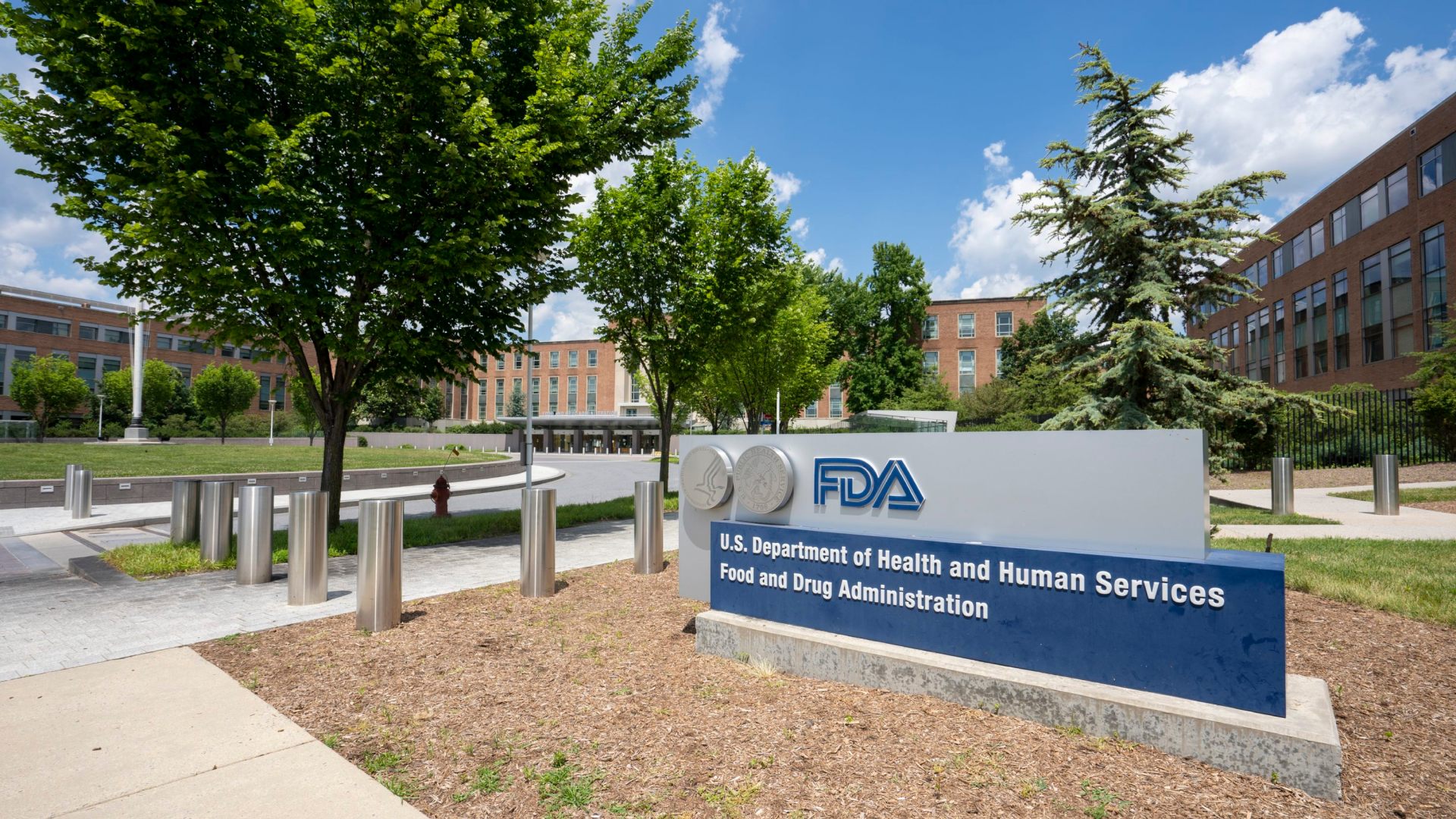
Sign in front of FDA headquarters in Silver Spring, Maryland.
Christianity Today October 3, 2025
iStock Editorial / Getty Images Plus

Today’s primary abortion battleground is the prescription pad.

Now that most abortions are chemical rather than surgical, pro-life advocates have amped up pressure on lawmakers and officials to restrict access to abortion pills—but the US Food and Drug Administration (FDA) this week approved another generic version of the drug mifepristone.

The move is a reversal from just over a week before, when Health and Human Services Secretary Robert F. Kennedy Jr. and FDA commissioner Marty Makary confirmed plans to reexamine the safety of mifepristone.

Conservatives had been asking for the review for months, prompted in part by a study from the Ethics and Public Policy Center (EPPC).

“The FDA just said it would do a new serious safety study—so why approve another generic now?” asked Lila Rose, president of Live Action.

Kennedy claimed the FDA gave the drug a green light only because federal law requires the agency approve generics that are identical to brand-name drugs already on the market.

The FDA first authorized a generic version of mifepristone from GenBioPro in 2019. The company says it accounts for two-thirds of mifepristone in the US. Drugmaker Evita Solutions expects its newly approved generic to be available starting January 2026.

“This reckless decision by the FDA to expand the availability of abortion drugs is unconscionable,” Marjorie Dannenfelser, president of Susan B. Anthony Pro-Life America, said in a statement. “These dangerous drugs take the lives of unborn children, place women and underage girls at serious risk, empower abusers, and trample the pro-life laws enacted by states across the nation.”

Dannenfelser fundamentally opposes abortion for ending life in the womb but also noted that the drugs can result in hemorrhaging, infection, and sepsis in patients.

Doctors prescribe mifepristone, along with a dose of misoprostol, to induce abortions up to 10 weeks of pregnancy. The drugs can be dangerous to women in pregnancies further along as well as in ectopic pregnancies, when the embryo grows outside the uterus.

The EPPC study reported higher levels of complications resulting from medication abortions—1 in 10 by its count—as more women take the pills without adequate medical oversight. Last year, a quarter of abortions occurred without patients seeing a doctor in person, instead getting medication prescribed through telehealth visits.

Kennedy said women taking mifepristone have fewer safeguards since the Biden administration dropped requirements for providers to dispense the drugs in person, often after a sonogram. In a September 19 letter, Kennedy and Makary told a group of Republican state attorneys general that their concerns over mifepristone “merit close examination” and that HHS is “committed to studying the adverse consequences.”

Pro-life leaders see the recent drug approval as undercutting that commitment. Dannenfelser criticized the Trump administration’s handling of the issue and told The Washington Post that it should be an “easy lift” for officials to restore the previous safety regulations. “‘Powerless’ is an adjective no one uses to describe this administration when facing trouble,” Dannenfelser said.

Students for Life president Kristan Hawkins said the approval was “a stain on the Trump Presidency and another sign that the deep state at the FDA must go.” She blamed officials for “putting industry interests over patient safety.”

Missouri senator Josh Hawley said he’s “lost confidence in the leadership at FDA.”

Former vice president Mike Pence called the decision “a complete betrayal of the pro-life movement that elected President Trump” and said Kennedy, once an independent who favored legal abortion, was unfit to lead HHS.

During his confirmation hearing in March, Makary faced questions over whether he would continue to permit access to mifepristone by telehealth.

The Biden administration made permanent what was at first a pandemic provision. Senators accused Makary of hedging on the issue when the former Johns Hopkins surgeon said, “I have no preconceived plans on mifepristone policy except to take a solid, hard look at the data and to meet with the professional career scientists who have reviewed the data at the FDA.”

When the FDA first approved mifepristone and misoprostol for abortion in 2000, they made up just 5 percent of abortions in clinical settings. That figure is now 63 percent. Abortion by mail has taken off among women in states where there are few abortion businesses or where post–Dobbs abortion bans are in effect.

Pro-life advocates have raised safety concerns around the potential for partners to obtain abortion pills and give them to pregnant women without consent. In the UK, a “Pills by Post” program that also took off during the pandemic faces similar scrutiny. There, a man who spiked a woman’s drink with drugs from the program received a sentence of 17 years in prison.

In December, a new Texas law will make it possible for anyone to sue a doctor who prescribes abortion pills, a company that mails them, or an individual who orders them for others. Successful plaintiffs who are related to the unborn child can receive at least $100,000 from the defendant. Others can receive $10,000 and must donate the rest of the penalty amount to a charity or nonprofit.

Church Life

Fighting Korea’s Loneliness Epidemic with Cafés and Convenience Stores

Seoul recently introduced free public services to tackle social isolation. Christians have been doing that for years.

The interior of the Gwanak mind convenience store.

The interior of the Gwanak mind convenience store.

Christianity Today October 3, 2025
Image Courtesy of Jennifer Park

During the day, 30-year-old Hae-ri Jeong seemed busy and cheerful as she taught English and served as a youth group leader at her church in Seoul. Yet at night, she would return to her empty apartment and feel disappointed and anxious over a recent breakup with her boyfriend. At times, the emptiness overwhelmed her.

“It was hard to open up even to my close friends,” she recalled. “I was afraid it would seem too trivial or make me look even more pitiful.”

One night this summer, she stared at her phone in her hand for a long time before calling the local mental health crisis hotline. When the counselor told her, “You can say anything to me,” Jeong burst into tears. After a lengthy conversation, the counselor guided her to a government-run center called a “mind convenience store” near her house, where she could meet with a counselor in person.

Jeong is one of many Seoul residents struggling with loneliness. In the past two decades, the proportion of single-person households has grown from 16 percent to 40 percent. An estimated 130,000 people between the ages of 19 and 39 are socially isolated. Nationwide, the government recorded more than 3,600 cases of godoksa, or “lonely deaths”—where a person dies alone and remains undiscovered for an extended period—in 2023. South Korea has had the highest suicide rate among OECD (Organization for Economic Cooperation and Development) countries for the past two decades.

In response, the Seoul government pledged to spend 451 billion won ($321 million USD) over the next five years on its “Seoul Without Loneliness” project, which would include expanding the 24/7 hotline and community spaces. One of its initiatives is opening mind convenience stores, which provide citizens a place to rest, enjoy tea or simple meals, and receive psychological assessments or counseling, all free of charge. Meanwhile, Christian groups in Korea have long sought to create third spaces, such as cafés, for people to gather and build community.

Convenience stores like 7-Eleven or FamilyMart are ingrained into everyday life in East Asia, where they often appear on every block. The clean, brightly lit stores are filled with food, drinks, stationery, and toiletries and allow customers to purchase train tickets and receive packages. Recent books, like Kim Ho-yeon’s The Second Chance Convenience Store, have depicted convenience stores as places for lonely misfits to find community.

That idea led to the city’s creation of mind convenient stores. CT visited the Gwanak branch in Sillim-dong, Seoul, on a rainy September weekday. Inside, AstroTurf covers the floor as several grannies chat in lawn chairs surrounded by trees and potted plants. A counter offers tea to brew in a glass teapot, while shelves of instant noodles cover a wall. An adjoining room serves as a movie theater and lecture hall with a ceiling-mounted projector and flexible seating.

The space also includes several private counseling rooms and onsite counselors. After registering as members of the mind convenience store, participants can earn points by taking part in counseling sessions or volunteer activities. They can then use the points to join other programs or receive food within the store.

According to social worker Joo-a Son, more than 660 people submitted membership applications to the branch between April and August this year, and more than 100 people use the space daily. Some visitors come just to sit quietly for a while before leaving.

“For those people who have been isolated for a long time, even making an appointment for counseling can be burdensome,” she explained. The center, which is open from 10 a.m. to 7 p.m. on weekdays and until 1 p.m. on Saturdays, helps participants build ongoing relationships within the community.

One visitor, 45-year-old Cheol Kim, had long struggled with financial hardship and depression, which led to suicidal thoughts. One day he noticed a banner on the street advertising the center. He stepped inside, where he was able to eat and receive free counseling. “I felt the kindness and warmth of the welcome here, and it gave me the courage to overcome depression,” Kim said.

Churches and Christian ministries have also long sought to help lonely people in Korea’s big citiesby creating spaces for community to grow. For instance, Pastor Hyo-seong Kim opened up Youth Space Eum on the fourth floor of a commercial building in the Gwanak district ten years ago in response to the rise of single-person households. Local churches and Baekseok University, a Christian college 50 miles south of Seoul, helped found and sponsor Eum, which includes rooms for people to study or hold seminars.

“I wanted to help people struggling with loneliness and to meet them outside the church so I could learn their language and culture,” Kim said. “We opened this space to everyone, whether Christian or not.”

At first glance, Eum looks like a typical café, with a long wooden table and bookshelves lining the walls. A coffee machine is available for visitors to use at no cost. Yet Eum does more than provide a space for friends to catch up or remote workers to set up camp. It holds monthly community gatherings, annual trips, and ongoing counseling by Kim. Through partnerships with the government and businesses, it also offers job-counseling and mentorship programs.

“Faith-based values are at the core,” Kim said, “but what we aim is to reach out to young people to provide practical help.” Kim believes that churches need to care for people who fall through the cracks of social services. “Isolation cannot be solved with short-term projects,” he noted. “Sustainability is what matters most.”

Every summer, Eum hosts a Worship & Lifestyle & Balance camp on Jeju Island. It invites about a dozen young people to eat, rest, and fellowship together for four days. At the close of each day, they share their reflections and encourage one another. “It is a time of worship, but what is most essential in this time is a spirit of hospitality and the courage to be loved,” Kim said. “In the midst of weary lives, participants experience the love God has given and from that love find renewal of body and spirit that points them toward their ultimate direction.”

Meanwhile, in Busan, the second-largest city of South Korea, Christians also work to tackle loneliness by running a place called Promised Land, a basement venue designed as a gathering place for young people.

As visitors descend the narrow staircase to the entrance, the noise of the street fades into silence. At the bottom, a wooden door opens into a room that feels more like a hidden retreat center than a performance hall. Inside, rows of wooden chairs rest on stacked pallets, facing a stage carpeted in green turf. The walls are covered with signs of community life—photographs of visitors, colorful flyers, and a poster for a Christian play called Mother.

Founded in 1998 by Seung-hak Kim and Jung-hee Choi of Donggwang Church in Busan, the café began as a place for small gatherings. When Whoojin Park began volunteering two years later, it was on the verge of closure due to unpaid rent. Park took over ownership, covering the rent first through fundraising and then by taking on other part-time jobs.

“[Promised Land] should not become the possession of a particular church or organization but remain a faith-based commons where anyone can enter, stay, converse, and find renewal,” Park said.

Two decades later, as the COVID-19 lockdowns cut into the café’s business yet again, Promised Land began to rent out the space to Christian and local community groups. It has hosted plays, concerts, art exhibits, poetry readings, and seminars.

On Sundays, the space is closed to the public and used as a worship site for church plants on a one-year rotating basis. More than 14 congregations have gathered there so far. The hall remains open to small groups who wish to use it for worship or community meetings. Rather than charging fixed rental fees, the venue invites contributions through freewill offerings, a practice intended to keep the space accessible, with lower barriers.

Promised Land hopes to create an “urban mission infrastructure” that responds to the isolation and loneliness of people. Park highlighted the importance of place. He has preserved the same basement venue for nearly three decades because “only a space that holds memory can reconnect people with their past selves.”

Back in Seoul, Jeong noted that her late-night phone call to the mental health hotline was the first step of her journey toward healing. “I felt my anxiety calm down during the conversation,” she said. “It didn’t solve the problem itself, but just being able to open up to someone gave me comfort.”

Looking back, Jeong said she hopes others will not carry their burdens alone. “I want to tell people not to be afraid of reaching out for help,” she said. “Even when life feels empty, God’s love never abandons us. That truth has carried me—and I believe it can remind others that they are not alone.”

Culture

You Haven’t Heard Worship Music like This

John Van Deusen’s praise is hard-won and occasionally wordless.

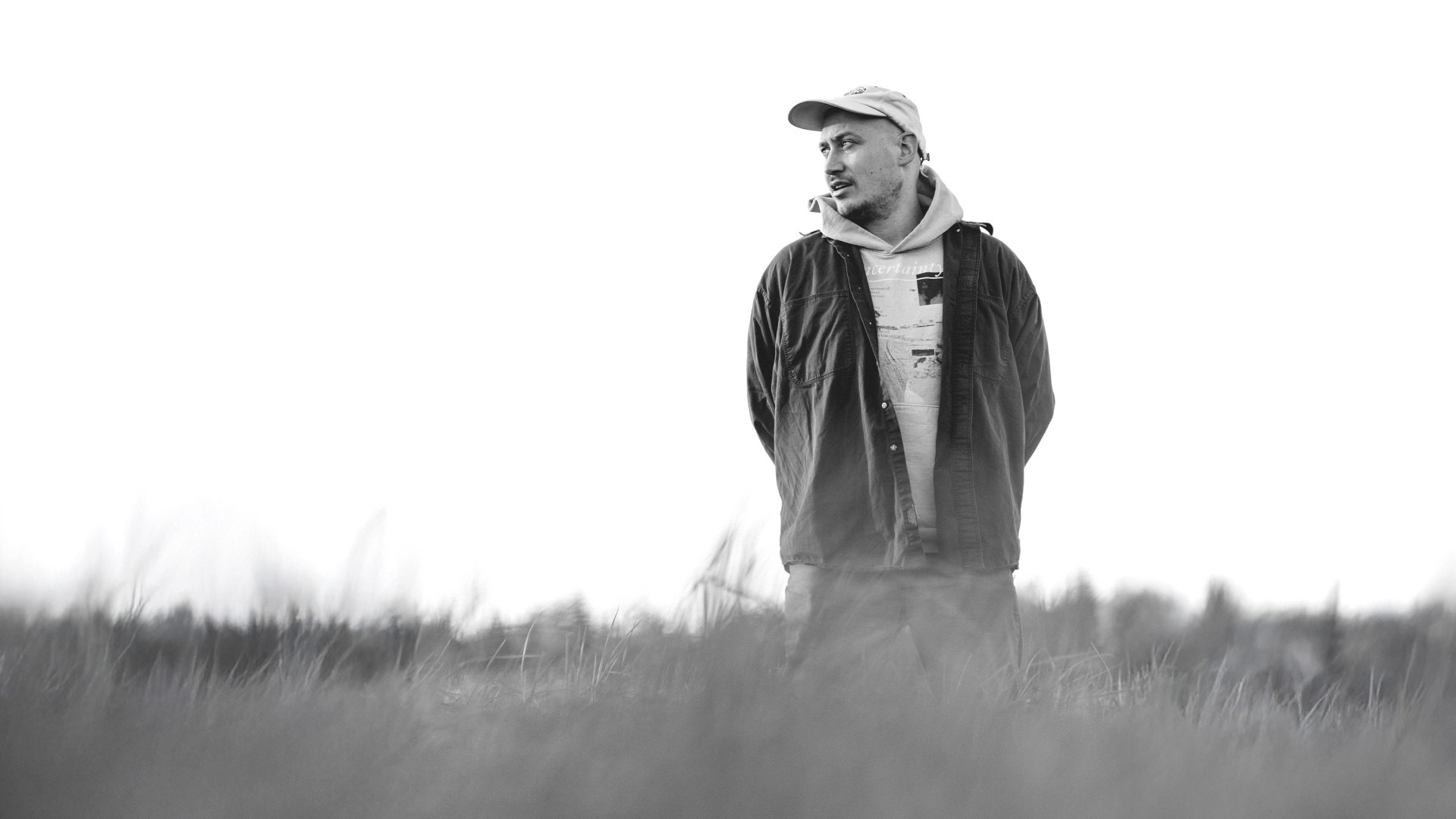
A photo of John Van Deusen.
Christianity Today October 3, 2025
Image Courtesy of Anotherland / Edits by CT

There’s a song on John Van Deusen’s epic new album, As Long as I Am in the Tent of This Body I Will Make a Joyful Noise (Pt. 1), called “I’m Coming Back to the Heart of Worship.” You’d be forgiven if you assumed this is a cover of the Matt Redman classic. After all, Van Deusen himself is a worship leader at a church in his hometown of Anacortes, Washington, and he’s clear that this recording—unlike many others from the two decades he’s been making them—is indeed a worship album.

But careful readers will notice that Van Deusen’s tune, while it borrows the lyric from Redman’s song, has a different title. (The original is called “Heart of Worship.”) And any listener will soon understand that Van Deusen’s “version” is a joyful subversion. It’s loud; distorted; played in an odd, shifting time signature; and, most noticeably, absent of any lyrics or vocals.

This isn’t typical of the whole album, much of which has more in common with mainstream contemporary worship music—big, anthemic crescendos; simple, repeated choruses; and lyrics focused on personal devotion to Jesus. Tent of This Body interprets the genre through Van Deusen’s immersion in Pacific Northwest indie rock and his personal struggle with what it means to love and praise God in the midst of disorientation and depression.

Still, the raucous, instrumental “I’m Coming Back to the Heart of Worship” does feel like an important statement.

“It’s not a flippant ‘Your song sucks; mine is kind of cool and weird,’” Van Deusen told me in a Zoom call from his home in Anacortes. “It’s actually a nod. It’s my way of saying,‘I see you, Matt Redman.’ [And] it’s meant to say to the 14-year-old in Tennessee who might, for whatever reason, stumble upon this, ‘Hey, this is worship.’”

Van Deusen said he wants Tent of This Body both to be widely accessible and to push the boundaries of Christian music. This isn’t surprising given his artistic history. The son of a pastor, Van Deusen was a prolific songwriter from his teen years, cutting his teeth in Western Washington’s vibrant (and secular) indie rock scene alongside peers like Death Cab for Cutie in Bellingham, Washington; Modest Mouse in Issaquah; and Phil Elverum of The Microphones and Mount Eerie in Anacortes. Van Deusen won a Seattle-wide contest for under-21 musicians with his band The Lonely Forest, which made some half-dozen albums. The band toured extensively, was signed to a major-label imprint by Chris Walla of Death Cab for Cutie, and then broke up, all before Van Deusen turned 25.

While The Lonely Forest made rousing, even inspirational music—“Turn Off This Song and Go Outside” and “We Sing in Time” are as bombastic and uplifting as anything Switchfoot did in the early 2000s—Van Deusen describes his time in the band as rich and exciting, but also difficult, fraught with addiction and friction in his young marriage. That led him to leave the group and recommit himself to his faith.

The four-part solo album series Van Deusen released after The Lonely Forest’s breakup, (I Am) Origami, reflects this shift in priorities. It lays bare the sometimes-challenging balance between finding a steadfast faith in Christ and feeling alienated from the trappings of evangelical Christian culture—a chafing which many former (and current) evangelical musicians have experienced. Some, like Pedro the Lion’s David Bazan, end up leaving the faith. Others, like the band Luxury, find a home in another Christian tradition. Some contend with deconstruction and end up reaffirming their beliefs, like Joshua Porter of the band Showbread, who is now a pastor at an evangelical church. 

Probably the best-known album from Origami, 2018’s Every Power Wide Awake, is unabashedly worshipful, the product of Van Deusen’s own prayer life and Scripture reading as well as Oswald Chambers’s devotional classic My Utmost for His Highest. But it sounds almost nothing like stereotypical worship music, having much more in common with Seattle indie rock bands like Death Cab for Cutie or Sunny Day Real Estate. (For what it’s worth, The Gospel Coalition ranked Every Power Wide Awake at No. 4 on its list of “The Best Christian Albums of the 2010s.”)

Van Deusen describes the experience of seeking out art beyond the evangelical media culture of his youth in a way that will be familiar to many of his generation: “I left Switchfoot, Newsboys, and Audio Adrenaline for Radiohead and Nirvana. I found in other musical artists lyrical truth that felt authentic. And so I fled to this new land.”

But once he arrived and “tried to live a life without Christ,” he realized he was “really hungry for something more. … That’s where my second and, truthfully, the real spiritual journey for me within a religious context began.”

Van Deusen still often speaks of living in the “dissonance” between the Northwest’s musical culture, in which “you should probably be ashamed of yourself if you are going to make music that is religious,” and the world of church music.

“When I walk into a writers’ retreat with a bunch of Christian songwriters,” he said, “I’m thinking, Have you guys listened to The Microphones or Mount Eerie, or have you ever heard Sonic Youth? Did you watch Twin Peaks? Do you read far-future science fiction? Every once in a while, someone is like, ‘Yes.’ But in general I just don’t fit in.”

“And yet at the same time,” he continued, “I love my Lord and Savior so much. I love singing about him. I love talking to him. I love hearing other people talk about him. … When I get around other believers in Christ, even those who have different political views, when we start to talk about God’s love, God’s forgiveness, his grace, his mercy, his artistic brilliance that literally goes beyond comprehension—I love it!”

It’s a beautiful and productive tension that comes out on Tent of This Body, where noisy jams, Weezer-style power pop, sound collages, and bombastic ’90s rock drums rub shoulders with polished-sounding praise choruses that wouldn’t be out of place at a Hillsong-style church service—the repeated refrain of “Hallelujah, what a love” on “You Never Let Go” or “Jesus, you are our home” on “You Are Our Home.”

Van Deusen hopes Tent of This Body will encourage listeners to imagine worship music as something broader than they might otherwise have, and perhaps to write praise tunes on their own terms—including out of a place of pain. While the sound-collage track “Self-Aware, Ready to Die” is only 30 seconds long, it hints at the depression Van Deusen described experiencing while making the album.

“I often felt this heavy sense of simultaneously feeling bliss in worshiping God and taking creative risks and being who I think God has made me to be, while also feeling a really heavy sense of ‘I don’t know how much longer I can exist in this dissonance’ that we’ve described—not just the dissonance of culture but just my personal dissonance of existence,” he said.

Though these songs are overwhelmingly praise-oriented as compared to the occasionally darker (I Am) Origami series, the praise is still hard-won (or, to venture Leonard Cohen’s brilliant but now-cliché lyric, it’s a “broken hallelujah”). Songs like the raucous “Let Me Rest My Head,” which begs, “Silence all the feedback / Screaming and warning” or the plaintive “Answer Me God,” which demands, “What must I do to reach Your ear down here?” exist alongside the hopeful assuredness of “Knowing” and “You Never Let Go,” which sing of God’s faithfulness and providence.  

“It’s a strange thing to make a worship record where I’m singing honestly and earnestly and I’m worshiping and I’m praising and I’m thanking God while also recognizing that this dissonance I feel, it doesn’t dissipate just because I’m doing the worshiping,” Van Deusen said. “I don’t know how to talk about that.”

Sometimes, though, you don’t have to talk about it. As in “I’m Coming Back to the Heart of Worship,” some things can be expressed with less—or more—than words.

Joel Heng Hartse is the author of several books, including Dancing About Architecture Is a Reasonable Thing to Do: Writing About Music, Meaning, and the Ineffable. He is a senior lecturer in the Faculty of Education at Simon Fraser University in British Columbia. 

Ideas
Excerpt

‘Don’t Take It If You Don’t Need It’

The Trump administration releases new recommendations for Tylenol use during pregnancy.

A bottle of Tylenol.
Christianity Today October 3, 2025
Valerie Macon / Contributor / Getty

Last month, the White House announced new research aimed at treating and reducing autism. One headline claim linked acetaminophen (Tylenol) use during pregnancy with increased autism diagnoses. Administration plans include a push for label changes, notices to physicians, and a public awareness campaign. 

We want CT readers to be informed about the risks and benefits, so The Bulletin sat down with Dr. Lydia Dugdale, practicing clinician and director of the Center for Clinical Medical Ethics at Columbia University, to learn more. Here is a tightened excerpt from the interview. Listen to the full conversation in episode 211.

What research did the White House press conference present?

In a study funded by the National Institutes of Health, researchers from Harvard, the University of Massachusetts, UCLA (University of California, Los Angeles), and the Mount Sinai Hospital explored the relationship between Tylenol and various neurodegenerative disorders, including autism and ADHD. This study prompted the conversation about Tylenol and pregnant women. 

This team found 46 studies in the scientific and medical literature: 27 of 46 showed a positive association between Tylenol taken during pregnancy and neurodegenerative disease in the child. Nine studies showed nothing. Four showed a protective effect: You were less likely to have a child with these diseases. 

Some of these studies were done very well, and some were less accurate. The higher the quality of the study, the stronger the association between prenatal Tylenol use and a diagnosis of ADHD, autism, or other neurodegenerative disorders. In all, 8 of the 46 studies looked specifically at prenatal Tylenol use and autism. Five of those eight showed a positive association. 

These studies show correlation, not causation?

To do a causation study, you’d need to take a group of women who are pregnant, have them take 2,000 milligrams of Tylenol a day, and see if it eventually hurts their children. That would be completely unethical. You cannot do that sort of study, especially when we have this data that’s concerning.

The data suggest correlation, not causation. The trimester of Tylenol ingestion mattered, and the amount of Tylenol ingested mattered. In this study, women who took more Tylenol were more likely to have a child with autism. We cannot say one causes the other, but this gives us pause. 

The rhetoric we’ve heard forever is Tylenol is completely safe. But I can tell you from 25 years in medicine that our understanding of science changes. This is where physicians need a lot of humility in giving out this advice.

What is the current recommendation on Tylenol in pregnancy? 

The researchers on this study said the safest thing still in pregnancy is Tylenol. Tylenol brings down fever and treats pain. If a woman is pregnant and has a high fever, the fever itself can damage the child. We do need to treat fever. If pain is insurmountable, we do need to treat pain. But everything in medicine is a balance between risks and benefits. 

The first and most important action is to talk with your doctor. I’m not giving out medical advice. Having said that, the study showed that the more you take, the higher the risk. So the recommendation is to take Tylenol when needed under the guidance of a physician so your doctor keeps track of how much you’re taking. Don’t take it if you don’t need it. 

Having had kids myself, I know lots of aches, pains, and strange feelings come with pregnancy. You might be inclined to reach for a Tylenol just to take the edge off. If you are someone who is used to popping a pill when you’re feeling any kind of discomfort, pause. If you don’t need to take it, please don’t take it. But certainly if you’re having a fever or severe pain, talk to your doctor and then take it judiciously.

How do Christians keep scientific developments like this in perspective in a broken world? 

All of us have to make decisions and live in the world with what we know. And what we know is changing constantly. A certain amount of “let go and let God” attitude is helpful here. 

You think about the children who had thalidomide exposure in the 1950s and ’60s. These children were born with no arms because their mothers were given an anti-nausea medicine that everybody swore was safe. That’s nobody’s fault. No one was out to cause these birth defects. We all live in a world where we are scarred and where we try to make the best decisions with the information we have.

Part of every human story is that sometimes we just make the wrong decision. Sometimes, we know what’s good and true and beautiful, and we refuse to do it because of our own fallen natures.

We need to have a certain amount of grace on ourselves and on one another, recognizing that ultimately all of this will be redeemed. That’s the hope that we hold on to. 

The information provided in this article is for general knowledge and informational purposes only and does not constitute medical advice.

Apple PodcastsDown ArrowDown ArrowDown Arrowarrow_left_altLeft ArrowLeft ArrowRight ArrowRight ArrowRight Arrowarrow_up_altUp ArrowUp ArrowAvailable at Amazoncaret-downCloseCloseEmailEmailExpandExpandExternalExternalFacebookfacebook-squareGiftGiftGooglegoogleGoogle KeephamburgerInstagraminstagram-squareLinkLinklinkedin-squareListenListenListenChristianity TodayCT Creative Studio Logologo_orgMegaphoneMenuMenupausePinterestPlayPlayPocketPodcastRSSRSSSaveSaveSaveSearchSearchsearchSpotifyStitcherTelegramTable of ContentsTable of Contentstwitter-squareWhatsAppXYouTubeYouTube